
The Scope and Purpose of a Home Inspection
Purchasing property involves risk
The purpose of a home inspection is to help reduce the risk associated with the purchase of a structure by providing a professional opinion about the overall condition of the structure. A home inspection is a limited visual inspection and it cannot eliminate this risk. Some homes present more risks than others. We cannot control this, but we try to help educate you about what we don’t know during the inspection process. This is more difficult to convey in a report and one of many reasons why we recommend that you attend the inspection.
A home inspection is not an insurance policy
This report does not substitute for or serve as a warranty or guarantee of any kind. Home warranties can be purchased separately from insuring firms that provide this service.
A home inspection is visual and not destructive
The descriptions and observations in this report are based on a visual inspection of the structure. We inspect the aspects of the structure that can be viewed without dismantling, damaging, or disfiguring the structure and without moving personal items and interior furnishings. Areas that are concealed, hidden or inaccessible to view are not covered by this inspection. Some systems cannot be tested during this inspection as testing risks damaging the building. For example, overflow drains on bathtubs are generally not tested because if they were found to be leaking they could damage the finishes below. Our procedures involve non-invasive investigation and non-destructive testing which will limit the scope of the inspection.
Responsibility of the Inspector
This inspection is governed by the Washington State Home Inspector Standards of Practice (SOPs), which dictates the minimum requirements for a real estate inspection.
The inspector IS required to:
- provide a narrative style report;
- inspect only those components and conditions that are present, visible, and accessible at the time of the inspection;
- indicate whether each item was inspected, not inspected, or not present;
- indicate an item as item of concern if a condition exists that adversely and materially affects the performance of a system or component OR constitutes a hazard to life, limb or property as specified by the SOPs; and
- explain the inspector's findings in the corresponding section in the body of the report form.
- a full list of required inspection items can be found by reviewing each section of the law
The inspector IS NOT required to:
- identify all potential hazards;
- enter unsafe spaces, or walk on unsafe roofs;
- turn on decommissioned equipment, systems, utilities, or apply an open flame or light a pilot to operate any appliance;
- climb over obstacles, remove ceiling tiles, move furnishings or stored items;
- prioritize or emphasize the importance of one deficiency over another;
- provide follow-up services to verify that proper repairs have been made; or
- a full list of optional and excluded items can be found by reviewing each section of the law
Responsibility of the Client
While items identified as Concern, Repair, Maintenance, or Due Diligence in this inspection report DO NOT obligate any party to make repairs or take other actions, in the event that any further evaluations are needed, it is the responsibility of the client to obtain further evaluations and/or cost estimates from qualified service professionals regarding any items so classified. It is recommended that any further evaluations and/or cost estimates take place prior to the expiration of any contractual time limitations, such as inspection periods.
Please Note: Evaluations performed by service professionals in response to items reported as Concern, Repair, Maintenance, or Due Diligence on the report may lead to the discovery of additional deficiencies that were not present, visible, or accessible at the time of the inspection. Any repairs made after the date of the inspection may render information contained in this report obsolete or invalid.
This is not an inspection for code compliance
This inspection and report are not intended for city / local code compliance. During the construction process structures are inspected for code compliance by municipal inspectors. Framing is open at this time and conditions can be fully viewed. Framing is not open during inspections of finished homes, and this limits the inspection. All houses fall out of code compliance shortly after they are built, as the codes continually change. National codes are augmented at least every three years for all of the varying disciplines. Municipalities can choose to adopt and phase in sections of the codes on their own timetables. There are generally no requirements to bring older homes into compliance unless substantial renovation is being done.
This is just our opinion
Construction techniques and standards vary. There is no one way to build a house or install a system in a house. The observations in this report are the opinions of the home inspector. Other inspectors and contractors are likely to have some differing opinions. You are welcome to seek opinions from other professionals.
The scope of this inspection
This inspection will include the following systems: exterior, roof, structure, drainage, foundation, attic, interior, plumbing, electrical, crawlspace, and heating. The evaluation will be based on limited observations that are primarily visual and non-invasive. This inspection and report are not intended to be technically exhaustive.
Your expectations
The overall goal of a home inspection is to help ensure that your expectations are appropriate with the house you are proposing to buy. To this end we assist with discovery by showing and documenting observations during the home inspection. This should not be mistaken for a technically exhaustive inspection designed to uncover every defect with a building. Such inspections are available but they are generally cost-prohibitive to most homebuyers.
Your participation is requested
Your presence is requested during this inspection. A written report will not substitute for all the possible information that can be conveyed verbally by a shared visual observation of the conditions of the property.
How to Read This Report
Getting the Information to You
This report is designed to deliver important and technical information in a way that is easy for anyone to access and understand. If you are in a hurry, you can take a quick look at our "Summary Page” and quickly get critical information for important decision making. However, we strongly recommend that you take the time to read the full Report, which includes digital photographs, diagrams, descriptions, videos, and links to additional information.
The best way to get the layers of information that are presented in this report is to read your report online, which will allow you to expand your learning about your house. You will notice some words or series of words highlighted in blue and underlined – clicking on these will provide you with a link to additional information.
This report can also be printed on paper or to a PDF document.
Chapters and Sections
This report is divided into chapters that parcel the home into logical inspection components. Each chapter is broken into sections that relate to a specific system or component of the home. You can navigate between chapters with the click of a button on the left side margin.
Most sections will contain some descriptive information done in black font. Observation narrative, done in colored boxes, will be included if a system or component is found to be significantly deficient in some way or if we wish to provide helpful additional information about the system or the scope of our inspection. If a system or component of the home was deemed to be in satisfactory or serviceable condition, there may be no narrative observation comments in that section and it may simply say “tested,” or “inspected.”
Observation Labels
All narrative observations are colored, numbered and labeled to help you find, refer to, and understand the severity of the observation. Observation colors and labels used in this report are:
Summary Page
The Summary Page is designed as a bulleted overview of all the time sensitive observations noted during inspection. This helpful overview is not a substitution for reading the entire inspection report. The entire report must be read to get a complete understanding of this inspection report as the Summary Page does not include photographs, photo captions, or informational comments.
Report Limitations
This report is provided for the sole benefit of the named client and is based on observations made by the named inspector on the date the inspection was performed (indicated above).
ONLY those items specifically noted as being inspected on the report were inspected.
This inspection IS NOT:
- a technically exhaustive inspection of the structure, its systems, or its components and may not reveal all deficiencies;
- an inspection to verify compliance with any building codes;
- an inspection to verify compliance with manufacturer's installation instructions for any system or component and DOES NOT imply insurability or warrantability of the structure or its components.
NOTICE CONCERNING HAZARDOUS CONDITIONS, DEFICIENCIES, AND CONTRACTUAL AGREEMENTS
Conditions may be present in your home that did not violate building codes or common practices in effect when the home was constructed but are considered hazardous by today's standards. Such conditions that were part of the home prior to the adoption of any current codes prohibiting them may not be required to be updated to meet current code requirements. However, if it can be reasonably determined that they are present at the time of the inspection, the potential for injury or property loss from these conditions is significant enough to require inspectors to report them as items of Concern, Repairs, Maintenance, or Due Diligence. Examples of such hazardous conditions include:
- malfunctioning, improperly installed, or missing ground fault circuit protection (GFCI) devices and arc-fault (AFCI) devices;
- ordinary glass in locations where modern construction requirements call for safety glass;
- malfunctioning or lack of fire safety features such as smoke alarms, fire-rated doors in certain locations, and functional emergency escape and rescue openings in bedrooms;
- malfunctioning or missing carbon monoxide alarms;
- excessive spacing between balusters on stairways and guard rails;
- improperly installed appliances;
- improperly installed or defective safety devices;
- lack of electrical bonding and grounding; and
- lack of bonding on gas piping, including corrugated stainless steel tubing (CSST).
Please Note: items identified as Concern, Repairs, Maintenance, or Due Diligence in an inspection report DO NOT obligate any party to make repairs or take other actions. The decision to correct a hazard or any deficiency identified in an inspection report is left up to the parties to the contract for the sale or purchase of the home.
This property inspection report may include an inspection agreement (contract), addenda, and other information related to property conditions.
Summary
Concerns
- ESDWH-1 Exterior Siding, Doors and Windows (House):
Louisiana Pacific OSB siding has been used to side much of this house. This siding, commonly referred to as "LP siding" is installation sensitive and is vulnerable to premature failure where poorly installed and / or exposed to the weather. Based on the age of the home it is likely LP's Inner Seal siding. This siding product is made of wood chips and glue, and has been the subject of a class action law suit regarding premature failure. The suit has long been settled and no more settlement funds are available. Visual inspection today showed that the siding is failing where exposed to the weather. I recommend additional inspection by a qualified siding contractor or building envelope specialist. Repair / update the siding as recommended and be sure to fully evaluate the scope of this project such as the potential need for replacement of weather barriers, trim, flashings, caulk and paint.
Examples of observations noted during inspection include:
- buckling panels
- swelling at edges
- probe penetration
- RCGH-1 Roof, Chimney and Gutters (House):
This roof is covered with an architectural composition shingle. The roof looks to be close to the end of its useful service life and localized areas of failure were noted. Roof replacement can be more cost-effective than repairs depending on the scope, cost and urgency of needed repairs.
Recommendation:
Hire a qualified roofing contractor to further evaluate this roof and repair or replace as recommended.
Examples of specific observations noted during inspection include:
- Extensive granular loss was noted on some of the field shingles. Once shingles loose their granular coatings they will deteriorate more quickly from UV exposure.
- Signs of prior unprofessional repairs the repaired areas are susceptible to future leaks at any time.
- RCGH-2 Roof, Chimney and Gutters (House):
Numerous repairs are needed to the masonry chimney. Some of the items noted could result in moisture control problems or even structural problems. I recommend additional inspection of the masonry chimney by a qualified mason or chimney sweep. Implement repairs as recommended. Examples of observations noted during inspection include:
Chimney Structure
- The masonry chimney is leaning above the roofline - this can indicate a need for bracing or other stabilization repairs
- ESA-1 Electric Service (All):
Not enough permit stickers were found on/near the electric panels to account for the apparent work found. Often you can search online records for permit history based on the address, however, that service may not be available in all jurisdictions. Inspector suggests that you search the local permitting database for any information about this particular installation, since the electrical system appears to have had substantial work done since the remodel.
Issues noted that require research:
- Unprofessional/DIY/Homeowner level wiring practices found (see photos)
If you can find no evidence of the system having been reviewed and approved to meet applicable electrical codes, then I suggest you hire a licensed electrician to review the entire system and repair as needed so that it meets current safety codes.
- P-5 Plumbing:
Water heater in unit A is actively leaking and needs immediate attention.
- AB-1 All Bathrooms:
High moisture meter readings were taken around the basement bathroom toilet, indicating there is likely leakage and concealed water damage. The toilet was also noted to be loose or poorly mounted to the floor which makes toilets more vulnerable to leaks. water stains were also noted on the flooring around the toilet. It is difficult to determine the extent of the needed repair at this time. Repairs can be simple or more complex depending on the moisture source and the condition of materials below the toilet. Further investigation is required to determine an accurate scope of repair. Hire a licensed plumbing contractor to further evaluate and repair the toilet and the finish floor and sub-floor as needed.
- A-1 Attic:
Vermiculite insulation was noted in the attic of the HOUSE. This insulation is a mineral that was mined from the earth. Most of this insulation in Western Washington comes from the mine in Montana that was found to be contaminated with asbestos. A class action law suit alleged that this insulation is unsafe and could expose home owners to asbestos fibers. According to the EPA, there is no safe level of exposure to asbestos. I recommend hiring a specialist to test this material for asbestos and remediate as recommended. Asbestos identification and testing is beyond the scope of this inspection. Testing procedures tend to range between $10-$300 depending on the extent to which the material is tested. Professional abatement costs tend to be in the range of $9-$15 / sq/ft.
From the EPA website---
If You Have Vermiculite Insulation
YOU SHOULD ASSUME THE VERMICULITE CONTAINS ASBESTOS AND DO NOT DISTURB IT! Any disturbance could potentially release asbestos fibers into the air. If you absolutely have to go in your attic and it contains vermiculite insulation, you should limit the number of trips you make and shorten the length of those trips in order to help limit your potential exposure.
We recommend that you:
- Leave vermiculite insulation undisturbed in your attic or in your walls.
- Do not store boxes or other items in your attic if it contains vermiculite insulation.
- Do not allow children to play in an attic with vermiculite insulation.
- Do not attempt to remove the insulation yourself.
- Hire a professional asbestos contractor if you plan to remodel or conduct renovations that would disturb the vermiculite in your attic or walls to make sure the material is safely handled and/or removed.
For more information about this product see https://www.epa.gov/asbestos/protect-your-family-asbestos-contaminated-vermiculite-insulation
Repairs
- G-1 Grounds:
The concrete driveway flatwork needs to be re-surfaced - see cracking and surface deterioration. Have the driveway and parking surface further investigated and repaired as recommended by a qualified contractor.
- G-2 Grounds:
The exterior basement well stairs are missing a graspable handrail for safety. This should be a round railing 1 and 1/4 inches - 2 inches in diameter. If the railing is not round it must have a finger groove that is 3/4 of an inch down from the tallest point of the rail. The graspable handrail should also be 1.5 inches from the wall. 2x material is not considered a graspable handrail. Have a qualified contractor build suitable railings to reduce the potential for falls.
If this is to be a rental property in the City of Seattle, the lack of a handrail is an RRIO violation that will need to be rectified.
- G-4 Grounds:
Localized wood decay was noted in the child's play shed. Repair wood decay as needed and all conditions conducive to wood decay.
- RCGH-3 Roof, Chimney and Gutters (House):
The flashings around the skylight are not executed in a standard fashion. While this may work, the result is an unreliable installation that could leak at any time. I recommend having these further evaluated and repaired as recommended by a qualified roofing contractor to ensure reliable performance.
- RCGH-4 Roof, Chimney and Gutters (House):
It is important to keep gutters free of leaves and/or moss. Debris filled gutters can overflow and cause water to come in contact with the building exterior, or water can accumulate around the foundation. It would be prudent to start your ownership with a fresh cleaning, to create a baseline for future maintenance.
Recommend cleaning gutters and downspouts now and as necessary in the future.
- Blockages were noted in the gutter system that need to be cleared.
- EDFW-1 Electric Distribution and Finish Wiring:
Numerous defects and red flags were noted in the wiring systems of both structures... indicating old, unreliable and incomplete wiring practices. I recommend additional inspection of the entire wiring system, and repair as needed, by a licensed electrical contractor as additional repairs could be required that are latent or concealed. This should be considered urgent for safety reasons.
Examples of observations and defects found during inspection include:
Branch Wiring and Wiring Cables
- Open junction boxes were noted that are missing cover plates.
- Surface-run cable wiring was noted. Exposed non-metallic sheathed cable requires protection from physical damage. Protection methods can include specific conduit material or raceways. This is a potential safety issue.
- The cable wiring does not appear to be correctly rated for exterior use. This should be rated as sunlight resistant.
- Extension cord is being used for permanent electrical wiring. This is not allowed.
Conduit and Raceway
- Knob and tube wiring was noted. This is an older soldered wiring system that is not commensurate with modern wiring standards.
Junction Boxes
- Open junction boxes were noted. These should be covered to prevent access to the wiring.
Switches
- Mystery switches were found that don't seem to be operating any lights.
Lights
- Inoperative lights were noted - this could be from burned out light bulbs or there could be a larger problem with the switch or circuit.
Interior Receptacles
- Some receptacles were noted to have faulty wiring to them. Lights on the tester did not operate properly.
- Reverse polarity was noted at some receptacles. This indicates less than professional workmanship and can present a safety hazard as the hots and neutrals are wired backwards.
- Open grounds were noted - these is where three-prong plugs are missing the required grounds. These are often found in older homes where there is just a two-wire system.
- Bootleg grounds were noted. This is when a jumper wire is installed between the neutral wire and the ground. This is a potential safety hazard.
Kitchen Wiring
- The kitchen appears to be under-wired - modern standards recommended at least two 20-amp circuits for countertop receptacles.
- GFCI protection for the kitchen is incomplete - all countertop receptacle should be GFCI protected for safety.
- EDFW-3 Electric Distribution and Finish Wiring:
The use of GFCI (Ground Fault Circuit Interruption) protection is inconsistent with modern minimum standards for safety. GFCI protection is recommended for the electrical receptacles in the following locations: the two dedicated kitchen appliance circuits, all receptacles within 6 feet of a sink, bathrooms, exterior, garage, unfinished basements, laundry and all wet and damp locations. GFCI's protect against electrocution by limiting the duration of an electrical shock. These are an important modern safety feature that have proven to save lives. Hire a licensed electrician to further evaluate and update GFCI protection to current standards for improved safety.
Which outlets are missing protection?
- Laundry and utility sink outlets should be protected. (Effective 2005)
- Kitchen outlets should be protected. (Effective near sinks 1987, Expanded to all countertops 1996)
- 2-wire circuits w/3-prong plugs should be protected.
- P-3 Plumbing:
Localized functional flow problems were noted at some of the supply plumbing in this home. This could be due to localized restrictions such as a partly closed valve or clogged aerator. Hire a licensed plumber to further evaluate and repair.
- P-6 Plumbing:
A number of repairs are needed to the water heaters. I recommend additional inspection and repair of the water heaters by a qualified plumbing contractor. Examples of repair items and other observations noted during inspection include:
SEISMIC RESTRAINS
- The water heater is missing proper seismic restraints. These should be two listed straps bolted securely to the wall. One strap at the top 1/3 and one at the lower 1/3rd of the tank.
EXPANSION TANK
- The water heater is missing an expansion tank.
PADS AND PANS
- The water heater is lacking a proper drain pan. These are required where a water heater leak could cause water damage.
- The water heater is lacking a proper foam insulation pad - these are required for electric water heaters installed on concrete floors.
- P-8 Plumbing:
While testing the plumbing system today, the water in unit B tested as too hot - 132 degrees F. This is a serious scald hazard. To prevent scalding, state law requires indoor hot water temperatures to not exceed 120 degrees. Have this further evaluated and repaired by a licensed plumber or simply turn down the temperature as desired to eliminate a scald hazard.
- I-1 Interior:
Several cracked tiles were noted in the floor during inspection - see the basement kitchen. Have these cracked tiles replaced by a tile specialist. Please note that cracked tile can be an indication of poor site preparation and additional cracking could continue.
- K-1 Kitchen:
The trap seal for the HOUSE kitchen sink waste piping is too deep - this seal should not exceed 4 inches. This could lead to sediment build-up in the pipes. Hire a licensed plumber to further evaluate and repair.
- K-2 Kitchen:
The anti-tip device needs to be properly installed to prevent this range from tipping during operation of the oven door. This is a small clip that secures the back adjustable foot of the range to the floor.
- AB-2 All Bathrooms:
The faucet handle in the bathroom shower just spins around and you have to be careful to get the shower shut off. Have this mixing valve installation repaired by a licensed plumber.
- AB-3 All Bathrooms:
The bathtub stopper appears to be broken - I could not get it to function properly. Repair or replace as needed.
- AB-5 All Bathrooms:
The bath fans are loud during operation. Based on the age and visible condition of the fans, I recommend updating these fans.
Maintenance Items
- ESA-2 Electric Service (All):
Most of the dead front covers are missing many of the screws needed to adequately secure the cover. Install missing screws as needed for improved safety and please note that screws with pointy ends are not allowed.
- SII-2 Sewer Inspection Information:
MODERATE ROOT INTRUSION
The root intrusion seen during your sewer scope inspection is MODERATE. Root intrusion is considered moderate if it is blocking 25-50 percent of the pipe. The moderate root intrusion seen here may or may not be impacting the performance of the side sewer. This root intrusion is likely to increase in size and severity over time. Moderate root growth may be treated with a commercially available sewer root control product such as Root-X, or it can be mechanically removed using a rotary cutter or wet-jet. The roots should be removed, and the side sewer should be re-inspected every 2-3 years to determine if the roots have returned.
Roots are a common problem within side sewers, especially older concrete and clay pipe side sewers that weren’t constructed with watertight joints. Once roots seek out a water source in sewer pipes, they continue to thrive and grow. This results in cracked pipes and sewer backups when debris isn’t able to pass through the roots. Pipes that are cracked from roots should be repaired in a manner that doesn’t allow the roots to grow back into the sewer system. Roots that are coming into joints that aren’t cracked may be routinely removed by cleaning the sewer pipes. The frequency of removal will depend on how aggressive the root growth is. The only way to permanently remove roots from a side sewer is to construct a watertight sewer pipe either through replacement or rehabilitation.
- SII-3 Sewer Inspection Information:
SEWER SCOPE VIDEO LINK
Here is the video recorded during your sewer scope inspection. Please contact our office if you have any questions or need assistance viewing the video. Be sure to have the sound on, since I narrate what I'm seeing...
Optimized Inspection Services
866-747-6493
- AB-4 All Bathrooms:
All grout around tiles require maintenance. Grout should be regularly cleaned and sealed with grout sealer to minimize water penetration behind the tile, especially inside older shower surrounds. This should be a routine maintenance procedure, plan on annual cleaning and sealing of grout. Prior to sealing, replace any failing grout and caulking at inside corners. The inspector suggests starting with a new grout sealing when you take possession of the home, to create a baseline for future maintenance.
Due Diligence Items
- GC-1 General Comments:
In 1978, federal laws were passed to prohibit use of lead and asbestos in building materials. Manufacturers of building materials were allowed to sell existing stocks of materials that were manufactured with lead and asbestos, so even buildings constructed as late as the mid-1980's could possibly contain lead or asbestos. Identification and testing for lead and asbestos and other environmental testing is beyond the scope of this home inspection. If you wish to seek additional information, I recommend contacting an environmental lab or industrial hygienist.
- ESA-3 Electric Service (All):
Have the electrical grounding system checked by a licensed electrician. I found only one ground rod outside and the house doesn't appear to have a plumbing ground to go along with it. The grounding system is an important safety feature which protects occupants from stray voltages that could be harmful. General standards are to have TWO grounding rods at least 6 feet apart if there is not a metal piping system that can be grounded, or an UFER ground employed. Ground rods are preferable to plumbing grounds since the majority of modern plumbing is non-conductive.
There is no way in the context of a home inspection to verify the "effectiveness" of the grounding system as much of the system is not visible and there are not practical tests one can perform in the way we can test a furnace or a plumbing fixture.
- EDFW-2 Electric Distribution and Finish Wiring:
There is some old knob and tube wiring in the home - I did see some in the attic, and I found ungrounded receptacles (given the age of the home it is likely these are wired with knob and tube). K+T is an old style of wiring where two conductors are run outside of a sheathed cable and supported on ceramic knobs and protected by ceramic tubes where the wire passes through framing. Knob and tube wiring does not meet today's standards and alterations and extensions to this wiring are seldom done correctly and tend to produce safety hazards. Many homeowners insurance companies will not insure homes with this type of wiring and many electricians will recommend complete removal and replacement of this older wiring. I recommend consulting with a licensed electrical contractor about options for repairing / updating this wiring. There are ways to improve this system and take pressure off existing knob and tube that can make it safer. Installation of additional circuits and of arc fault protected breakers can help make the system safer and more reliable. Complete removal and replacement of all knob and tube is recommended but more expensive and the necessity and urgency for replacement is subjective. Many homes of this age still employ at least a few knob and tube circuits. You need to update to a level you feel comfortable with.
- EDFW-4 Electric Distribution and Finish Wiring:
During the home inspection, I visually verify the presence of smoke alarms, and will sometimes test a representative sample by pressing the test button on the alarm. This is NOT an accurate test of the sensor, merely a test to see if the unit is currently powered. For reliability, fire marshals recommended replacing smoke alarms every 10 years (min) and changing batteries bi-annually. The latest data indicate that we should be using photoelectric technology in our smoke alarms for improved fire detection and to reduce problems with false alarms. It is beyond the scope to determine if these units are photo-electric or ionization types. It is surprisingly complex to accurately test a smoke alarm system and determine the reliability, age, and type of sensor technology used. A complete evaluation of smoke alarms is beyond the scope of a home inspection. For optimal fire safety, I recommend replacing all units when you take ownership as a way to create a baseline for future maintenance, and to assure that you have the most recent technology installed.
- EDFW-5 Electric Distribution and Finish Wiring:
The inspector documented that the building is served by a communications utility. You will need to contact the service provider directly to determine the speeds available and whether or not the building is wired for distribution. Evaluation of low voltage wiring is beyond the scope of this inspection. Inspector noted signs of telephone wire and coaxial cable installed to the home.
If you desire a different broadband service provider than what is currently available on premises, it is up to you to determine whether or not they provide service to this address.
- HCFV-1 Heating, Cooling, Fireplaces and Ventilation:
Several Cadet wall heaters were noted during inspection. In 2002, Cadet Manufacturing Company recalled certain in-wall electric heaters, due to a potential for overheating and starting fires. The inspector verified a few of the heaters were not involved in the recall, but not all of them. You should take a moment to pull the cover off each heater and clean the elements. At that time, you should verify whetehr or not they were part of the recall actions.
- Affected models
- The recall included the ZA, FW, FX, LX, TK, Z, RA, RK, RLX, RX, RW, and ZC models.
- Problem
- If an RM or ZM model heatbox was used to replace a ZA or RA model heatbox and installed in a ZAC wall can, it could potentially run continuously regardless of the thermostat or room temperature. This could lead to overheating and potentially start a fire.
- What to do
- Consumers should stop using the heater immediately and contact Cadet at (800) 567-2613 to schedule a free repair.
- P-4 Plumbing:
Some of the supply plumbing in this building is old galvanized steel piping. While no leaks were noted at the time of inspection, updating and on-going repairs should be expected. Old metal pipes are subject to internal corrosion which can cause problems at any time. During any renovations to the home be sure to have this old piping evaluated and updated as recommended by a licensed plumber. It is impossible to predict the useful life of galvanized metal pipe. It is important to recognize that with galvanized pipes it is not a question of if it will need replacement, rather a question of when will it need replacement. Eventually, all galvanized pipes will need to be replaced.
Inspector suggests additional inspection by a plumber to see if you can get an idea of the remaining useful lifespan, and cost of replacement.
- P-7 Plumbing:
The Kenmore water heater is 15 years old... The average life of a water heater is statistically 8-12 years though in practice, it can vary widely between 8-20 years depending on water quality, maintenance schedules (such as frequency of flushing the tank and replacing sacrificial anodes), and environmental concerns. Inspector suggests you budget to replace this water heater at any time. Water was hot at the time of inspection.
✒
- Inspector suggests that you should consider replacing this unit before it fails.
Upgrade Items
- P-1 Plumbing:
The main water shut off for this home is located in the basement
- The inspector did not test this valve for functionality, that is outside the scope of a home inspection.
- An old gate valve is installed as the main shutoff valve. These can be an unreliable means of shutting water off to the home. Sometimes old valves like this may work to turn off the water but cannot be turned back on, or they leak after use. I recommend updating to a modern ball valve for improved reliability and ease of use.
- SII-1 Sewer Inspection Information:
While there appeared to be no issues requiring urgent action or repair within this side sewer line, if you are risk-averse you may wish to seek insurance protecting against future potential repairs. There is an insurance company that provides just such insurance at a very reasonable monthly rate, be sure to review the limitations and exclusions before accepting any insurance policies. For further information contact https://nationalwatercompany.com/contact/
- AB-6 All Bathrooms:
Inspector ALWAYS suggests installing a timer switch for bath fans so they run for an extended time after immediate use. Proper moisture control requires the fan to be operating at least 30 minutes after you have vacated the space. Alternatively, you can replace the simple switch with a humidistat controlled switch that makes this operation automatic.
Items To Monitor
- G-3 Grounds:
The basement stair well drain appears to be unobstructed, but always a good idea to monitor these basement well drains and keep them clear, especially in the rainy season.
- P-2 Plumbing:
The main water pipe from the meter to the home is likely galvanized steel pipe. Be advised that this type of pipe may require repair/replacement at any time, w/o warning. Evaluation of the current condition or expected remaining life expectancy of this pipe is beyond the scope of this inspection, as the pipe is buried and not visible. Keep this pipe in mind for updating should you do any other digging in the front of the home between the house and the water meter.
It is important to recognize that with galvanized pipes the question is not whether or not it will fail, the question is when will it fail. Eventually, all galvanized pipes will need to be replaced.
✒
- Please also note that when updating older metal pipes, there is a risk of disabling important grounding systems for your electrical service. During updates to older metal pipes, consider having your electrical grounding and bonding systems further investigated and repaired as recommended by a licensed electrical contractor.
In the meantime before you get around to replacing this line you may wish to buy insurance that will provide repairs in case of leaks. Check out a company called "national water company", located in Moses Lake. As with any insurance policy, be sure to read it thoroughly and understand the limitations prior to acceptance.
📃 Your Optimized Inspection Report
Grounds
Drainage and Site
Driveways/Walkways/Flatwork
Window and Stairwells
Exterior Stairs
Outbuildings, Trellises, Storage Sheds, Barns
Electric Service (All)
Electric Service Permits Found
Electric Service
Electric Service Equipment (All)
Electrical Grounding System
Electrical Bonding System
Electric Distribution and Finish Wiring
Branch Wiring
Receptacles and Fixtures
Smoke and Carbon Monoxide Alarm Systems
Low Voltage Wiring
General Comments
Building Characteristics, Conditions and Limitations
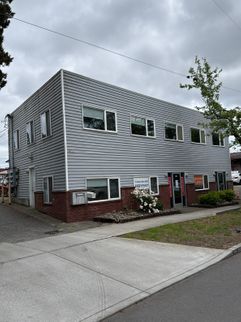
Type of Building : Mixed Use Commercial
Approximate Square Footage: 3900-3999
Approximate Year of Original Construction: 1955
Attending the Inspection: Buyer
Occupancy: Occupied
Weather during the inspection: Sunny
Approximate temperature during the inspection: 65 - 70[F]
Ground/Soil surface conditions: Dry
For the Purposes of This Report, the Front Door Faces: North, Facing the alley
Purpose of Inspection? : Buyer Procured - Real Estate Transaction
In 1978, federal laws were passed to prohibit use of lead and asbestos in building materials. Manufacturers of building materials were allowed to sell existing stocks of materials that were manufactured with lead and asbestos, so even buildings constructed as late as the mid-1980's could possibly contain lead or asbestos. Identification and testing for lead and asbestos and other environmental testing is beyond the scope of this home inspection. If you wish to seek additional information, I recommend contacting an environmental lab or industrial hygienist.
Branch circuit wiring installed in buildings prior to the late 1980s is typically rated for a maximum temperature of only 60 degrees Celsius. Knob and tube wiring, typically installed in homes built prior to 1950, may be rated for even lower maximum temperatures. Newer electric fixtures including lighting and fans typically require wiring rated for 90 degrees Celsius. Connecting newer fixtures to older, 60-degree-rated wiring is a potential fire hazard. Repairs for such conditions may involve replacing the last few feet of wiring to newer fixtures with new 90-degree-rated wire, and installing a junction box to join the old and new wiring. It is beyond the scope of this inspection to determine if any such incompatible components are installed. Based on the age of this building, be aware that such components may be present.
This home was occupied at the time of the inspection. Inspection of occupied homes presents some challenges as occupant belongings can obstruct visual inspection of and access to parts of the building. We do our best during inspection to work around belongings to discover as much as possible about the house without moving or damaging personal property, however, the presence of personal items does limit the inspection.
Grounds
Drainage and Site
Clearance to Grade: Standard
Downspout Discharge: Above grade
Site Description: Flat, Minor slope
Driveways/Walkways/Flatwork
Driveway/Parking Lot: Concrete
The concrete driveway flatwork needs to be re-surfaced - see cracking and surface deterioration. Have the driveway and parking surface further investigated and repaired as recommended by a qualified contractor.
 |  |  |
Window and Stairwells
Basement Well (Drain Looks Ok - Monitor, Graspable Handrail - Missing)
The exterior basement well stairs are missing a graspable handrail for safety. This should be a round railing 1 and 1/4 inches - 2 inches in diameter. If the railing is not round it must have a finger groove that is 3/4 of an inch down from the tallest point of the rail. The graspable handrail should also be 1.5 inches from the wall. 2x material is not considered a graspable handrail. Have a qualified contractor build suitable railings to reduce the potential for falls.
If this is to be a rental property in the City of Seattle, the lack of a handrail is an RRIO violation that will need to be rectified.

The basement stair well drain appears to be unobstructed, but always a good idea to monitor these basement well drains and keep them clear, especially in the rainy season.

Exterior Stairs
Exterior Stairs: Standard
Outbuildings, Trellises, Storage Sheds, Barns
Storage shed
Localized wood decay was noted in the child's play shed. Repair wood decay as needed and all conditions conducive to wood decay.
Exterior Siding, Doors and Windows (House)
Siding and Trim
Siding Materials : Aluminum, LP Style Siding
Trim Material: Wood, Metal
Louisiana Pacific OSB siding has been used to side much of this house. This siding, commonly referred to as "LP siding" is installation sensitive and is vulnerable to premature failure where poorly installed and / or exposed to the weather. Based on the age of the home it is likely LP's Inner Seal siding. This siding product is made of wood chips and glue, and has been the subject of a class action law suit regarding premature failure. The suit has long been settled and no more settlement funds are available. Visual inspection today showed that the siding is failing where exposed to the weather. I recommend additional inspection by a qualified siding contractor or building envelope specialist. Repair / update the siding as recommended and be sure to fully evaluate the scope of this project such as the potential need for replacement of weather barriers, trim, flashings, caulk and paint.
Examples of observations noted during inspection include:
- buckling panels
- swelling at edges
- probe penetration
 |  |  |
 |  |  |
Exterior Doors
Exterior Door Styles: Solid core, Metal, Solid core, Wood, Glass panel doors
Exterior Window Frames
Window Frames: Vinyl, Wood
Exterior Siding, Doors and Windows (Commercial)
Siding and Trim
Siding Materials : Vinyl
Trim Material: Vinyl
Exterior Doors
Exterior Door Styles: Glass panel doors, Solid core, Metal
Exterior Window Frames
Window Frames: Metal
Fuel Storage and Distribution
General Comments
No fuel sources, fuel storage devices or fuel burning appliances were found on site during our visual inspection.
Roof, Chimney and Gutters (House)
Roof Materials
Method of Roof Inspection: Walked on roof
Roof Style: Gable and Hip
Flashings, Valleys and Penetrations: Non-Standard
Roof Covering Materials: Architectural grade composition shingle
Approximate Age of Roof Covering: Unable to determine visually
Overlay Roof: Unable to determine visually, but may be 2 layers
This roof is covered with an architectural composition shingle. The roof looks to be close to the end of its useful service life and localized areas of failure were noted. Roof replacement can be more cost-effective than repairs depending on the scope, cost and urgency of needed repairs.
Recommendation:
Hire a qualified roofing contractor to further evaluate this roof and repair or replace as recommended.
Examples of specific observations noted during inspection include:
- Extensive granular loss was noted on some of the field shingles. Once shingles loose their granular coatings they will deteriorate more quickly from UV exposure.
- Signs of prior unprofessional repairs the repaired areas are susceptible to future leaks at any time.
 |  |  |
 |
Chimneys
Present
Chimney Material: Masonry
Numerous repairs are needed to the masonry chimney. Some of the items noted could result in moisture control problems or even structural problems. I recommend additional inspection of the masonry chimney by a qualified mason or chimney sweep. Implement repairs as recommended. Examples of observations noted during inspection include:
Chimney Structure
- The masonry chimney is leaning above the roofline - this can indicate a need for bracing or other stabilization repairs
 |  |  |
 |
Skylights
Insulated curb style
Not opened: No crank found
The flashings around the skylight are not executed in a standard fashion. While this may work, the result is an unreliable installation that could leak at any time. I recommend having these further evaluated and repaired as recommended by a qualified roofing contractor to ensure reliable performance.
 |  |
Gutters and Downspouts
Gutter and Downspout Materials: Aluminum
It is important to keep gutters free of leaves and/or moss. Debris filled gutters can overflow and cause water to come in contact with the building exterior, or water can accumulate around the foundation. It would be prudent to start your ownership with a fresh cleaning, to create a baseline for future maintenance.
Recommend cleaning gutters and downspouts now and as necessary in the future.
- Blockages were noted in the gutter system that need to be cleared.
 |  |
Roof, Chimney and Gutters (Commercial)
Roof Materials
Method of Roof Inspection: Walked on roof
Roof Style: Low slope
Flashings, Valleys and Penetrations: Present and Visually Standard
Roof Covering Materials: TPO membrane
Approximate Age of Roof Covering: Unable to determine visually
Overlay Roof: No
This building has a single ply membrane installed on the flat portions. These are typically PVC or TPO material and will be identified in the report if distinguishing characteristics are found. These membranes are fantastic at reflecting UVs and reducing heat build-up. The membranes vary in thickness, usually between 50 and 80 millimeters. The thicker membranes being generally more durable and longer-lasting. These are difficult installations to check for proper installation as most of the critical installation details are concealed from view and there are a number of different installation techniques including self-adhering membranes and heat welded and mechanically fastened membranes. It is also critical that the insulation and air barriers below the membrane be reliably installed and these are not available for visual inspection. The following are a few videos showing examples of some installation techniques for some of the more common single ply materials:
 |  |  |
 |  |  |
Gutters and Downspouts
Gutter and Downspout Materials: Flat roof scupper drains
Electric Service (All)
Electric Service Permits Found
Not enough permit stickers were found on/near the electric panels to account for the apparent work found. Often you can search online records for permit history based on the address, however, that service may not be available in all jurisdictions. Inspector suggests that you search the local permitting database for any information about this particular installation, since the electrical system appears to have had substantial work done since the remodel.
Issues noted that require research:
- Unprofessional/DIY/Homeowner level wiring practices found (see photos)
If you can find no evidence of the system having been reviewed and approved to meet applicable electrical codes, then I suggest you hire a licensed electrician to review the entire system and repair as needed so that it meets current safety codes.
 |  |  |
Electric Service
Service Entrance: Buried
Electric Service Equipment (All)
Service Entrance conductor Size: Copper, #2, 125 amps, Aluminum, 1/0, 125 amps
Main Panel Approved Amperage: 100 amps, 125 amps
Main Electric Panel Location: Various locations (6 Panels)
Panel Manufacturer: Square D, Siemens / I-T-E Imperial
Most of the dead front covers are missing many of the screws needed to adequately secure the cover. Install missing screws as needed for improved safety and please note that screws with pointy ends are not allowed.


Electrical Grounding System
Grounding System: Grounding Rod Noted
Have the electrical grounding system checked by a licensed electrician. I found only one ground rod outside and the house doesn't appear to have a plumbing ground to go along with it. The grounding system is an important safety feature which protects occupants from stray voltages that could be harmful. General standards are to have TWO grounding rods at least 6 feet apart if there is not a metal piping system that can be grounded, or an UFER ground employed. Ground rods are preferable to plumbing grounds since the majority of modern plumbing is non-conductive.
There is no way in the context of a home inspection to verify the "effectiveness" of the grounding system as much of the system is not visible and there are not practical tests one can perform in the way we can test a furnace or a plumbing fixture.
Electrical Bonding System
Bonding System: Bonding Noted on Water Pipes
Bonding connections were noted on the water pipes.
Electric Distribution and Finish Wiring
Branch Wiring
Wire Material: Copper
Wiring System Components: Non-metallic sheathed cable, Knob and tube
Numerous defects and red flags were noted in the wiring systems of both structures... indicating old, unreliable and incomplete wiring practices. I recommend additional inspection of the entire wiring system, and repair as needed, by a licensed electrical contractor as additional repairs could be required that are latent or concealed. This should be considered urgent for safety reasons.
Examples of observations and defects found during inspection include:
Branch Wiring and Wiring Cables
- Open junction boxes were noted that are missing cover plates.
- Surface-run cable wiring was noted. Exposed non-metallic sheathed cable requires protection from physical damage. Protection methods can include specific conduit material or raceways. This is a potential safety issue.
- The cable wiring does not appear to be correctly rated for exterior use. This should be rated as sunlight resistant.
- Extension cord is being used for permanent electrical wiring. This is not allowed.
Conduit and Raceway
- Knob and tube wiring was noted. This is an older soldered wiring system that is not commensurate with modern wiring standards.
Junction Boxes
- Open junction boxes were noted. These should be covered to prevent access to the wiring.
Switches
- Mystery switches were found that don't seem to be operating any lights.
Lights
- Inoperative lights were noted - this could be from burned out light bulbs or there could be a larger problem with the switch or circuit.
Interior Receptacles
- Some receptacles were noted to have faulty wiring to them. Lights on the tester did not operate properly.
- Reverse polarity was noted at some receptacles. This indicates less than professional workmanship and can present a safety hazard as the hots and neutrals are wired backwards.
- Open grounds were noted - these is where three-prong plugs are missing the required grounds. These are often found in older homes where there is just a two-wire system.
- Bootleg grounds were noted. This is when a jumper wire is installed between the neutral wire and the ground. This is a potential safety hazard.
Kitchen Wiring
- The kitchen appears to be under-wired - modern standards recommended at least two 20-amp circuits for countertop receptacles.
- GFCI protection for the kitchen is incomplete - all countertop receptacle should be GFCI protected for safety.
 |  |  |
 |  |  |
 |  |  |
 |  |  |
 |  |
There is some old knob and tube wiring in the home - I did see some in the attic, and I found ungrounded receptacles (given the age of the home it is likely these are wired with knob and tube). K+T is an old style of wiring where two conductors are run outside of a sheathed cable and supported on ceramic knobs and protected by ceramic tubes where the wire passes through framing. Knob and tube wiring does not meet today's standards and alterations and extensions to this wiring are seldom done correctly and tend to produce safety hazards. Many homeowners insurance companies will not insure homes with this type of wiring and many electricians will recommend complete removal and replacement of this older wiring. I recommend consulting with a licensed electrical contractor about options for repairing / updating this wiring. There are ways to improve this system and take pressure off existing knob and tube that can make it safer. Installation of additional circuits and of arc fault protected breakers can help make the system safer and more reliable. Complete removal and replacement of all knob and tube is recommended but more expensive and the necessity and urgency for replacement is subjective. Many homes of this age still employ at least a few knob and tube circuits. You need to update to a level you feel comfortable with.
Receptacles and Fixtures
COMMON GFCI COMMENTS: Inconsistent With Modern Standards
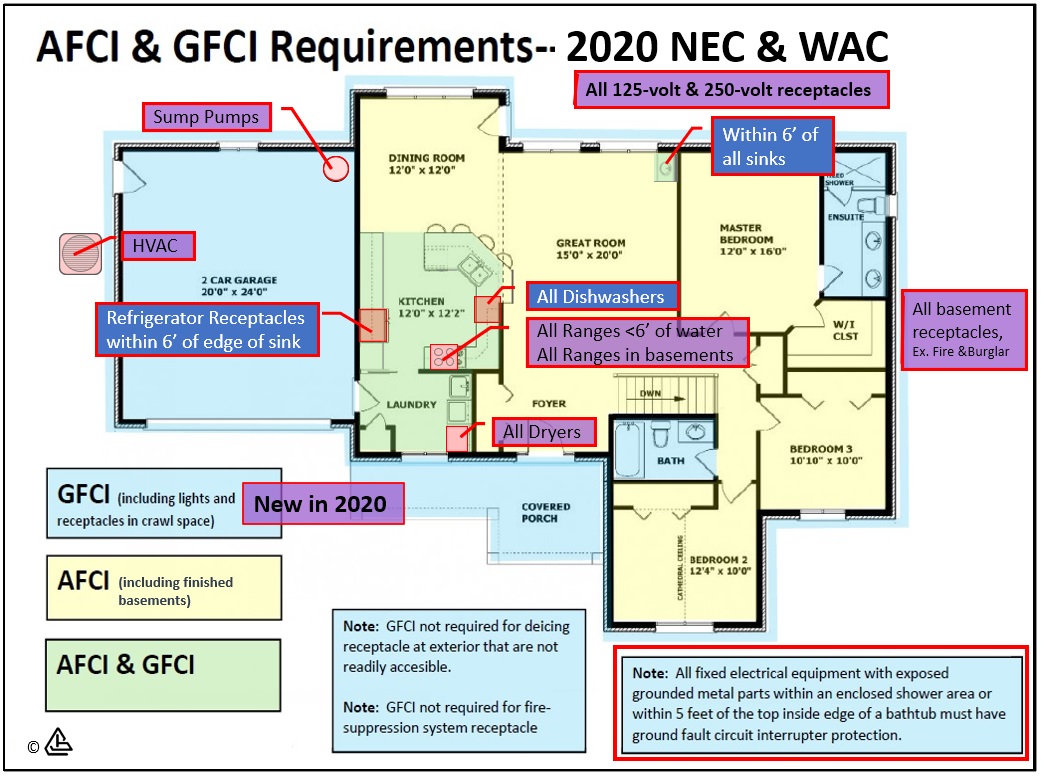
The use of GFCI (Ground Fault Circuit Interruption) protection is inconsistent with modern minimum standards for safety. GFCI protection is recommended for the electrical receptacles in the following locations: the two dedicated kitchen appliance circuits, all receptacles within 6 feet of a sink, bathrooms, exterior, garage, unfinished basements, laundry and all wet and damp locations. GFCI's protect against electrocution by limiting the duration of an electrical shock. These are an important modern safety feature that have proven to save lives. Hire a licensed electrician to further evaluate and update GFCI protection to current standards for improved safety.
Which outlets are missing protection?
- Laundry and utility sink outlets should be protected. (Effective 2005)
- Kitchen outlets should be protected. (Effective near sinks 1987, Expanded to all countertops 1996)
- 2-wire circuits w/3-prong plugs should be protected.
Smoke and Carbon Monoxide Alarm Systems
CO Alarms: Present
Smoke Alarms: Present
During the home inspection, I visually verify the presence of smoke alarms, and will sometimes test a representative sample by pressing the test button on the alarm. This is NOT an accurate test of the sensor, merely a test to see if the unit is currently powered. For reliability, fire marshals recommended replacing smoke alarms every 10 years (min) and changing batteries bi-annually. The latest data indicate that we should be using photoelectric technology in our smoke alarms for improved fire detection and to reduce problems with false alarms. It is beyond the scope to determine if these units are photo-electric or ionization types. It is surprisingly complex to accurately test a smoke alarm system and determine the reliability, age, and type of sensor technology used. A complete evaluation of smoke alarms is beyond the scope of a home inspection. For optimal fire safety, I recommend replacing all units when you take ownership as a way to create a baseline for future maintenance, and to assure that you have the most recent technology installed.
The installation of carbon monoxide alarms is required by Washington State law (WAC 51-51-0315) in ALL homes and condominiums being sold in Washington State, regardless of source. The location should be: at least one alarm outside of all sleeping areas and one on each floor of the house. Best practices are to have these alarms hardwired with a battery back-up - though requirements are for the installation to meet manufacturer's specifications. Carbon monoxide is a colorless, odorless gas that can cause sickness, nausea and even death. Alarms have a useful service life of roughly 6 years, so changing them more frequently than smoke alarms is recommended.
Low Voltage Wiring
The inspector documented that the building is served by a communications utility. You will need to contact the service provider directly to determine the speeds available and whether or not the building is wired for distribution. Evaluation of low voltage wiring is beyond the scope of this inspection. Inspector noted signs of telephone wire and coaxial cable installed to the home.
If you desire a different broadband service provider than what is currently available on premises, it is up to you to determine whether or not they provide service to this address.
 |  |
Heating, Cooling, Fireplaces and Ventilation
Heating System
Energy Source: Electricity
Heating Method: Electric wall heaters
Manufacturer: Cadet
Several Cadet wall heaters were noted during inspection. In 2002, Cadet Manufacturing Company recalled certain in-wall electric heaters, due to a potential for overheating and starting fires. The inspector verified a few of the heaters were not involved in the recall, but not all of them. You should take a moment to pull the cover off each heater and clean the elements. At that time, you should verify whetehr or not they were part of the recall actions.
- Affected models
- The recall included the ZA, FW, FX, LX, TK, Z, RA, RK, RLX, RX, RW, and ZC models.
- Problem
- If an RM or ZM model heatbox was used to replace a ZA or RA model heatbox and installed in a ZAC wall can, it could potentially run continuously regardless of the thermostat or room temperature. This could lead to overheating and potentially start a fire.
- What to do
- Consumers should stop using the heater immediately and contact Cadet at (800) 567-2613 to schedule a free repair.
 |  |
This building has electric wall heaters. These can get very hot during operation. Be sure to keep all drapes, curtains, furniture, electric cords and other flammable items away from these heaters when they are on. Also be careful with small children as baseboard heaters can present a burn hazard if left accessible. If you are concerned about the safety or efficiency of these heaters, consider upgrading the system.
- Ceramic electric heaters are a bit safer and run at lower temperatures - see one made by Convect Air
- A ductless heat pump system is safer, more energy efficient and has the benefit of cooling. These are expensive to install but will save on heating costs over the long run and will likely provide superior comfort.
Plumbing
Water Service Supply
Pipe Material: Galvanized
Water Supply: Public water
Main Water Shut-off Location: Water Shut Off Location Noted
The main water shut off for this home is located in the basement
- The inspector did not test this valve for functionality, that is outside the scope of a home inspection.
- An old gate valve is installed as the main shutoff valve. These can be an unreliable means of shutting water off to the home. Sometimes old valves like this may work to turn off the water but cannot be turned back on, or they leak after use. I recommend updating to a modern ball valve for improved reliability and ease of use.

The main water pipe from the meter to the home is likely galvanized steel pipe. Be advised that this type of pipe may require repair/replacement at any time, w/o warning. Evaluation of the current condition or expected remaining life expectancy of this pipe is beyond the scope of this inspection, as the pipe is buried and not visible. Keep this pipe in mind for updating should you do any other digging in the front of the home between the house and the water meter.
It is important to recognize that with galvanized pipes the question is not whether or not it will fail, the question is when will it fail. Eventually, all galvanized pipes will need to be replaced.
✒
- Please also note that when updating older metal pipes, there is a risk of disabling important grounding systems for your electrical service. During updates to older metal pipes, consider having your electrical grounding and bonding systems further investigated and repaired as recommended by a licensed electrical contractor.
In the meantime before you get around to replacing this line you may wish to buy insurance that will provide repairs in case of leaks. Check out a company called "national water company", located in Moses Lake. As with any insurance policy, be sure to read it thoroughly and understand the limitations prior to acceptance.
Distribution Pipe
Supply Pipe Materials: Copper, Galvanized Steel
Functional Flow: Inconsistent (Old Pipes - Red Flag)
Localized functional flow problems were noted at some of the supply plumbing in this home. This could be due to localized restrictions such as a partly closed valve or clogged aerator. Hire a licensed plumber to further evaluate and repair.

Some of the supply plumbing in this building is old galvanized steel piping. While no leaks were noted at the time of inspection, updating and on-going repairs should be expected. Old metal pipes are subject to internal corrosion which can cause problems at any time. During any renovations to the home be sure to have this old piping evaluated and updated as recommended by a licensed plumber. It is impossible to predict the useful life of galvanized metal pipe. It is important to recognize that with galvanized pipes it is not a question of if it will need replacement, rather a question of when will it need replacement. Eventually, all galvanized pipes will need to be replaced.
Inspector suggests additional inspection by a plumber to see if you can get an idea of the remaining useful lifespan, and cost of replacement.
Waste Pipe and Discharge
Discharge Type: Public sewer scoped
Waste and Vent Pipe Materials: Galvanized steel, ABS plastic
Location of Sewer Cleanout: Basement
An evaluation of the sewer line below the ground is usually beyond the scope of a typical home inspection. However, a sewer camera inspection has been performed as part of this home inspection... see the next chapter to view the video and review the results of that inspection. Sewer scopes are performed using video cameras and can reveal the materials, condition and likely reliability of the sewer line.
This shows the location of the sewer cleanout found during inspection - basement.

Water Heaters
System Type: Tank
Data Plate: Shown Here
Age: More than 15 years old
Water heater in unit A is actively leaking and needs immediate attention.

A number of repairs are needed to the water heaters. I recommend additional inspection and repair of the water heaters by a qualified plumbing contractor. Examples of repair items and other observations noted during inspection include:
SEISMIC RESTRAINS
- The water heater is missing proper seismic restraints. These should be two listed straps bolted securely to the wall. One strap at the top 1/3 and one at the lower 1/3rd of the tank.
EXPANSION TANK
- The water heater is missing an expansion tank.
PADS AND PANS
- The water heater is lacking a proper drain pan. These are required where a water heater leak could cause water damage.
- The water heater is lacking a proper foam insulation pad - these are required for electric water heaters installed on concrete floors.
 |  |  |
 |  |  |
 |  |
The Kenmore water heater is 15 years old... The average life of a water heater is statistically 8-12 years though in practice, it can vary widely between 8-20 years depending on water quality, maintenance schedules (such as frequency of flushing the tank and replacing sacrificial anodes), and environmental concerns. Inspector suggests you budget to replace this water heater at any time. Water was hot at the time of inspection.
✒
- Inspector suggests that you should consider replacing this unit before it fails.

This shows the data plates for the heaters... Some heaters provide hot water to multiple "suites" and all heaters require some work.
 |  |  |
 |
Water Temperature
Water Temperature Measured During Inspection: Testing Note, Hotter than 130 Degrees F
While testing the plumbing system today, the water in unit B tested as too hot - 132 degrees F. This is a serious scald hazard. To prevent scalding, state law requires indoor hot water temperatures to not exceed 120 degrees. Have this further evaluated and repaired by a licensed plumber or simply turn down the temperature as desired to eliminate a scald hazard.

p20(1)-1.jpg) |
The water heater temperature is just right at the time of inspection - measuring 110-120 degrees F. The range of 100-120 degrees F is the generally recommended temperature. This is nearly impossible to measure precisely during a home inspection as water temperature can vary between fixtures. I try and test the water temperature in several places and report the highest reading. Adjust water heater temperature as needed. For best practice, set water temperature at the water heater to 120 degrees F, as suggested by the RCW.
 (1) (4) (1).jpg) |  |  |
Sewer Inspection Information
Sewer Scope Inspection Information
Information: Information, No Issues, Insurance option
While there appeared to be no issues requiring urgent action or repair within this side sewer line, if you are risk-averse you may wish to seek insurance protecting against future potential repairs. There is an insurance company that provides just such insurance at a very reasonable monthly rate, be sure to review the limitations and exclusions before accepting any insurance policies. For further information contact https://nationalwatercompany.com/contact/
All comments and observations made by the inspector should be considered and actions taken prior to the close of escrow. This includes any recommendation to employ a professional plumber to further evaluate any anomalous findings noted during this inspection. All recommendations for repair, replacement, remediation of limitations and any follow-up re-inspection should be considered and actions taken prior to the close of escrow. Your best interests are your inspector's primary concern however, your inspector is not an expert, licensed plumber. A qualified, experienced professional plumber can provide options and costing estimates that are unknown to your inspector. All costs associated with further inspection fees, and the repair or replacement of any component should be considered prior to the close of escrow.
Access Point
Access Point:Clean Out
SIDE SEWER ACCESSED THROUGH CLEAN OUT
I accessed the side sewer through a 3 inch, ABS clean out. Location: Basement.
Side Sewer Type (Public/On-Site)
Side Sewer Type:Public Sewer System
PUBLIC SEWER SYSTEM
The side sewer serving this property is connected to a public sewer system.
Scope Findings
PIPE MATERIAL(S):PIPE MATERIAL(S)
NO ANOMALOUS FINDINGS:No Anomalous Findings Public Sewer
ROOT INTRUSION:Moderate
OFFSET JOINTS:None Noted
SAGS:None Noted
DEBRIS/GREASE:Typical
CRACKS & FRACTURES:None Noted
HOLES:None Noted
EXPOSED AGGREGATE:Typical
MODERATE ROOT INTRUSION
The root intrusion seen during your sewer scope inspection is MODERATE. Root intrusion is considered moderate if it is blocking 25-50 percent of the pipe. The moderate root intrusion seen here may or may not be impacting the performance of the side sewer. This root intrusion is likely to increase in size and severity over time. Moderate root growth may be treated with a commercially available sewer root control product such as Root-X, or it can be mechanically removed using a rotary cutter or wet-jet. The roots should be removed, and the side sewer should be re-inspected every 2-3 years to determine if the roots have returned.
Roots are a common problem within side sewers, especially older concrete and clay pipe side sewers that weren’t constructed with watertight joints. Once roots seek out a water source in sewer pipes, they continue to thrive and grow. This results in cracked pipes and sewer backups when debris isn’t able to pass through the roots. Pipes that are cracked from roots should be repaired in a manner that doesn’t allow the roots to grow back into the sewer system. Roots that are coming into joints that aren’t cracked may be routinely removed by cleaning the sewer pipes. The frequency of removal will depend on how aggressive the root growth is. The only way to permanently remove roots from a side sewer is to construct a watertight sewer pipe either through replacement or rehabilitation.
 |  |
NO DEFICIENCIES NOTED
I was able to successfully pass the sewer scope camera from the point of access to the tie-in with the main public sewer line. I did not note the presence of any deficiency that appears to be negatively impacting the performance of the side sewer.

PIPE MATERIAL(S)
I noted the presence of the following type(s) of pipe material(s):
The materials are listed below in the order that I encountered them, moving from the point of access toward the main sewer line.
- Cast Iron
- PVC
- Concrete
- ABS
 | |  |
Videos
VIDEO: Video
SEWER SCOPE VIDEO LINK
Here is the video recorded during your sewer scope inspection. Please contact our office if you have any questions or need assistance viewing the video. Be sure to have the sound on, since I narrate what I'm seeing...
Optimized Inspection Services
866-747-6493




Common Side Sewer Repair Processes
Repair Description: Description
Construction Methods to Eliminate Defects in Side Sewers
This section describes various methods available for repairing, replacing, or rehabilitating an existing side sewer. Every side sewer is unique and not all methods are suitable for all circumstances. It is always important to work with a sewer contractor experienced with the particular kind of construction to determine the suitability for each side sewer on an individual basis and to obtain cost estimates for the various methods as they may vary greatly for each project.
Open cut construction
This method of construction is the typical dig and replace that most people are familiar with. This is the most common method of repairing side sewers and consists of digging up the old pipe and replacing it with new pipe. Open cut may be less suitable for areas where there are significant surface improvements that a property owner wants to avoid disturbing and that are costly to replace or when side sewers are fairly deep.
Pipe bursting
This method of construction consists of inserting a new flexible pipe into the old pipe. This method requires digging an installation pit and a receiving pit at each end of the side sewer to allow for the pipe to be inserted and to make final connections at each end. This method is beneficial for sites where there are surface improvements that an owner either chooses not to disturb or that would be expensive to replace. Pipe bursting is not suitable for pipes that are no longer round enough to allow for the bursting machine to penetrate, in pipes with multiple bends, or in pipes that need to have sags corrected as the new pipe will follow the vertical alignment of the old pipe.
Cured In Place Pipe (CIPP) lining
CIPP consists of rehabilitating an existing pipe with a new pipe. A resin-soaked felt tube liner is inserted into the existing pipe, inflated to expand to the shape of the existing pipe, and then cured until the resin hardens to form a pipe within the old pipe. CIPP is also beneficial for sites where there are surface improvements than an owner either chooses not to disturb or that would be expensive to replace. The liner can be inserted through cleanouts in the side sewer and requires no other digging unless needed to install a cleanout. Since CIPP forms to the shape of the existing pipe it is not suitable for pipes that are collapsing or egg-shaped, nor can it be installed in pipes with multiple bends or in pipes that need to have sags corrected as the new pipe will follow the vertical alignment of the old pipe.
Spot repairs
If the majority of a pipe is good condition with little or no defects, a spot repair may be the most suitable and cost effective method for repair. The property owner should consider a full side sewer replacement or rehabilitation if there are multiple defects throughout the pipe. It is generally less costly to hire a contractor once than to have a contractor mobilize to a site multiple times with repeated spot repairs.
Interior
Floors and Floor Materials
Floor Materials: Hardwood, Carpet, Tile
Several cracked tiles were noted in the floor during inspection - see the basement kitchen. Have these cracked tiles replaced by a tile specialist. Please note that cracked tile can be an indication of poor site preparation and additional cracking could continue.
 |  |
Walls, Ceilings, Trim, Hallways and Closets
Wall and Ceiling Materials: Drywall, Plaster, Ceiling tiles
Interior Doors
Interior Doors: Hollow Core
Windows
Window Glazing: Double pane
Interior Window Frame: Vinyl, Metal
Window Styles: Sliding, Casement
Kitchen
Sinks and Faucets
Tested
The trap seal for the HOUSE kitchen sink waste piping is too deep - this seal should not exceed 4 inches. This could lead to sediment build-up in the pipes. Hire a licensed plumber to further evaluate and repair.
.jpg) |  |  |
Ranges, Ovens and Cooktops
Range/ Oven /Cook-tops: Electric, No Anti-Tip
The anti-tip device needs to be properly installed to prevent this range from tipping during operation of the oven door. This is a small clip that secures the back adjustable foot of the range to the floor.
 (2).PNG)
 |
The cooking appliances were tested during inspection and verified operational. Appliances are generally beyond the scope of a home inspection, but may be tested for basic functionality as a courtesy. Basic functionality does not include testing to see if the thermostat/timer is accurate, for example.
 |  |
Refrigerators
Refrigerator: Operating
The image shows the freezer and refrigerator working during inspection.

All Bathrooms
Sinks and Cabinets
Tested
Toilets
Tested
High moisture meter readings were taken around the basement bathroom toilet, indicating there is likely leakage and concealed water damage. The toilet was also noted to be loose or poorly mounted to the floor which makes toilets more vulnerable to leaks. water stains were also noted on the flooring around the toilet. It is difficult to determine the extent of the needed repair at this time. Repairs can be simple or more complex depending on the moisture source and the condition of materials below the toilet. Further investigation is required to determine an accurate scope of repair. Hire a licensed plumbing contractor to further evaluate and repair the toilet and the finish floor and sub-floor as needed.
 |  |
Bathtubs & Showers
Tested
The faucet handle in the bathroom shower just spins around and you have to be careful to get the shower shut off. Have this mixing valve installation repaired by a licensed plumber.

 |

The bathtub stopper appears to be broken - I could not get it to function properly. Repair or replace as needed.

All grout around tiles require maintenance. Grout should be regularly cleaned and sealed with grout sealer to minimize water penetration behind the tile, especially inside older shower surrounds. This should be a routine maintenance procedure, plan on annual cleaning and sealing of grout. Prior to sealing, replace any failing grout and caulking at inside corners. The inspector suggests starting with a new grout sealing when you take possession of the home, to create a baseline for future maintenance.

Bathroom Ventilation
Type: Bath fan
The bath fans are loud during operation. Based on the age and visible condition of the fans, I recommend updating these fans.

 |

Inspector ALWAYS suggests installing a timer switch for bath fans so they run for an extended time after immediate use. Proper moisture control requires the fan to be operating at least 30 minutes after you have vacated the space. Alternatively, you can replace the simple switch with a humidistat controlled switch that makes this operation automatic.
Attic
Attic Access
Viewed at access
I did not climb through the entire attic since there was no compelling reason to do so, and disturbing the insulation causes damage to thermal barriers. Crawling on top of framing risks damaging fixtures, hidden utilities, and ceiling finishes (cracking or nail pops). It is not considered a safe way to access an attic (insulation is often covering systems that can be damaged: can lights, plumbing/gas/sprinkler pipes, etc... Therefore, the inspection of this space is based upon limited visual observations from the access point and/or any installed work platforms.
 |  |  |
Roof Framing and Sheathing
Structural Support: Rafter
Attic Insulation
Insulation Type: Fiberglass
Vermiculite insulation was noted in the attic of the HOUSE. This insulation is a mineral that was mined from the earth. Most of this insulation in Western Washington comes from the mine in Montana that was found to be contaminated with asbestos. A class action law suit alleged that this insulation is unsafe and could expose home owners to asbestos fibers. According to the EPA, there is no safe level of exposure to asbestos. I recommend hiring a specialist to test this material for asbestos and remediate as recommended. Asbestos identification and testing is beyond the scope of this inspection. Testing procedures tend to range between $10-$300 depending on the extent to which the material is tested. Professional abatement costs tend to be in the range of $9-$15 / sq/ft.
From the EPA website---
If You Have Vermiculite Insulation
YOU SHOULD ASSUME THE VERMICULITE CONTAINS ASBESTOS AND DO NOT DISTURB IT! Any disturbance could potentially release asbestos fibers into the air. If you absolutely have to go in your attic and it contains vermiculite insulation, you should limit the number of trips you make and shorten the length of those trips in order to help limit your potential exposure.
We recommend that you:
- Leave vermiculite insulation undisturbed in your attic or in your walls.
- Do not store boxes or other items in your attic if it contains vermiculite insulation.
- Do not allow children to play in an attic with vermiculite insulation.
- Do not attempt to remove the insulation yourself.
- Hire a professional asbestos contractor if you plan to remodel or conduct renovations that would disturb the vermiculite in your attic or walls to make sure the material is safely handled and/or removed.
For more information about this product see https://www.epa.gov/asbestos/protect-your-family-asbestos-contaminated-vermiculite-insulation
 |  |
Signed Contracts

Optimized Inspection Services, LLC.
206-349-0733
OptimizedInspections.com
bryanm@optimizedinspections.com
750