The Scope and Purpose of a Commercial Property Inspection
Purchasing property involves risk
The purpose of a property inspection is to help reduce the risk associated with the purchase of a structure by providing a professional opinion about the overall condition of the structure. A property inspection is a limited visual inspection and it cannot eliminate this risk. Some homes present more risks than others. We cannot control this, but we try to help educate you about what we don’t know during the inspection process. This is more difficult to convey in a report and one of many reasons why we recommend that you attend the inspection.
A Commercial Property Inspection is Visual and not destructive
The descriptions and observations in this report are based on a visual inspection of the structure. We inspect the aspects of the structure that can be viewed without dismantling damaging or disfiguring the structure and without moving items and interior furnishings. Areas that are concealed, hidden or inaccessible to view are not covered by this inspection. Some systems cannot be tested during this inspection as testing risks damaging the building. For example, overflow drains on HVACs are generally not tested because if they were found to be leaking they could damage the finishes below. Our procedures involve non-invasive investigation and non-destructive testing which will limit the scope of the inspection.
This is not an inspection for code compliance
This inspection and report are not intended for city / local code compliance. During the construction process structures are inspected for code compliance by municipal inspectors. Framing is open at this time and conditions can be fully viewed. Framing is not open during inspections of finished homes, and this limits the inspection. All houses fall out of code compliance shortly after they are built, as the codes continually change. National codes are augmented at least every three years for all of the varying disciplines. Municipalities can choose to adopt and phase in sections of the codes on their own timetables. There are generally no requirements to bring older homes into compliance unless substantial renovation is being done.
This is just our opinion
Construction techniques and standards vary. The observations in this report are the opinions of the inspector. Other inspectors and contractors are likely to have some differing opinions. You are welcome to seek opinions from other professionals.
The scope of this inspection
This inspection will include the following systems: exterior, roof, structure, drainage, foundation, attic, interior, plumbing, electrical and heating. The evaluation will be based on limited observations that are primarily visual and non-invasive. This inspection and report are not intended to be technically exhaustive.
Your expectations
The overall goal of a commercial property inspection is to help ensure that your expectations are appropriate with the property you are proposing to buy or lease. To this end we assist with discovery by showing and documenting observations during the property inspection. This should not be mistaken for a technically exhaustive inspection designed to uncover every defect with a building. Such inspections are available but they are generally cost-prohibitive to most owners.
Your participation is requested
Your presence is requested during this inspection. A written report will not substitute for all the possible information that can be conveyed verbally by a shared visual observation of the conditions of the property.
How to Read This Report
Getting the Information to You
This report is designed to deliver important and technical information in a way that is easy for anyone to access and understand. If you are in a hurry, you can take a quick look at our "Summary Page” and quickly get critical information for important decision making. However, we strongly recommend that you take the time to read the full Report, which includes digital photographs, captions, diagrams, descriptions, videos and hot links to additional information.
The best way to get the layers of information that are presented in this report is to read your report online (the HTML version), which will allow you to expand your learning about your property. You will notice some words or series of words highlighted in blue and underlined – clicking on these will provide you with a link to additional information. The HTML version of this report also contains streaming videos. Short video clips often contain important information and critical context and sounds that can be difficult to capture in words and still pictures.
For the most reliable viewing experience, I recommend viewing the report on as large a screen as practical, as much detail can be lost on small devices like smart phones. For similar reasons, reports should only be printed in color to retain as much detail as possible and minimize misinterpretation of photographs.
This report can also be printed on paper or to a PDF document.
Chapters and Sections
This report is divided into chapters that parcel the commercial property into logical inspection components. Each chapter is broken into sections that relate to a specific system or component of the property. You can navigate between chapters with the click of a button on the left side margin.
Most sections will contain some descriptive information done in black font. Observation narrative, done in colored boxes, will be included if a system or component is found to be significantly deficient in some way or if we wish to provide helpful additional information about the system or the scope of our inspection. If a system or component of the property was deemed to be in satisfactory or serviceable condition, there may be no narrative observation comments in that section and it may simply say “tested,” or “inspected.”
Observation Labels
All narrative observations are colored, numbered and labeled to help you find, refer to, and understand the severity of the observation. Observation colors and labels used in this report are:
- Defective/Major Concern:Repair items that may cost significant money to correct now or in the near future, or items that require immediate attention to prevent additional damage or eliminate safety hazards. Item needs immediate repair, replacement or is a safety concern. It is unable to perform its intended function.
- Repair:Repair items noted during inspection. The most common expensive items in a commercial property inspection are found within the following: Roofing Systems, HVAC Systems, Foundation and Structure, Parking Lots and Paving, and Fire Suppression Systems.
- Maintenance:These are repair items that should be considered "routine commercial items," such as servicing the HVAC systems, servicing roof and flat roof drains, life-safety equipment, plumbing and building exterior.
Pest Inspection
All items with the bug logo ( ) are part of a structural pest inspection. If your inspector included a structural pest inspection as a part of the scope of your inspection, you can distinguish pest inspection items by this logo. You can also go to the pest inspection summary page to see a summary of the items that are part of a pest inspection.
Summary Page
The Summary Page is designed as a bulleted overview of all the observations noted during inspection. This helpful overview is not a substitution for reading the entire inspection report. The entire report must be read to get a complete understanding of this inspection report as the Summary Page does not include photographs or photo captions.
Moisture Meter Testing
Where moisture meter testing is indicated in this report a Protimeter Survey Master Dual Function was used.
Summary
Defective/Major Concern Item(s)
No major concerns were noted during this visual inspection.Repair Item(s)
No repairs were noted during this inspectionsMaintenance Item(s)
- 3.2.1 LOTS AND GROUNDS - Vegetation (2):


Full Report
GENERAL INFORMATION
Inspection Information
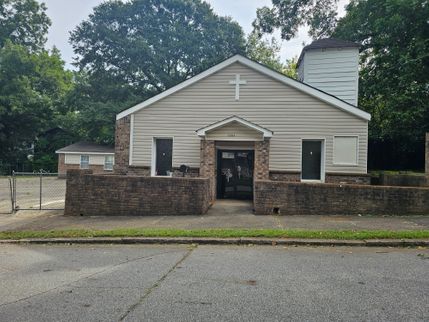
Inspection Completion Information: General Photo(s)
Start/End Time: Start (3PM), Finish, 7pm
Estimated Age: 30
Temperature: 90 degrees
Weather: Clear
Others Present: No one present
Property Occupied: Vacant
Soil Condition: Dry
Space Below Grade: Poured slab
Water: City
Sewage Disposal: City
Building Type: church
ROOF
Roof
Roof Surface: Asphalt Shingle
Method of Inspection: Ground Level
Approximate Age of Roof: 10-15 Years
Flashings: Aluminum
Plumbing Vents: Not Visible
Gutters and Downspouts: No gutters present
Gutter Extensions: Missing in areas
Chimney: Vinyl & frame covered 3 wall pipe

LOTS AND GROUNDS
Lots and Grounds
Grading, Swale, Surface Drainage: Flat
Driveway: parking
Walks: Concrete
Trees and Vegetation: Trees, Shrubs/Weeds
Fence: Good Condition
Vegetation (2)
 |  |
AIR CONDITIONING
AC System
AC System Operation: Unit Number 1
Manufacturer: Goodman
Age (Approximate): 5 Years
Type/Size: 1.5 Ton
Temperature Differential: NA
Area Served: Main
Refrigerant Lines: Good condition
Exposed Ductwork: Good condition
Condensate Removal: Rubber
Filters/Fan/Blower: Good condition
Electric Disconnect: Present
Thermostat: Programmable
Visible Coil: Good condition
EXTERIOR
Exterior
Exterior Siding(s): Brick Veneer
Trim: Vinyl
Fascia: Vinyl
Soffits: Vinyl
Entry Door: GLASS
Windows: Window Glass
Electrical Exterior : 120 VAC/240 VAC
Hose Bibs: No hose bib present
STRUCTURE
Structure
Type: Wood frame
Foundation: Poured
Differential Movement: Cracks noted
Beams: Not visible
Joists/Trusses: Not visible for upstairs
Bearing Walls: Brick
Piers and Posts: Present
Subfloor: OSB
Floor/Slab: Concrete
Signed Contracts
4 Seasons Property Inspections
678-964-7754
WWW.Probuildinginspectors.com
rj@4seasonsinspect.org