

How to Read This Report
This report, whether viewed digitally or in printed form, should be reviewed in full color so that photographs are clearly discernible and on a device or page width of no less than 8.5 inches. References to the right and left sides of the building are based on facing the front of the structure as shown on the report cover. The client has a duty and obligation to read the entire report. Please contact the inspector with any questions or concerns.
This inspection report is intended to identify readily observable major structural deficiencies, inoperative conditions, and noticeable moisture-related concerns in the areas inspected. The report may also note safety concerns and recommended upgrades that should be considered. Conditions may exist that were not observed or reported due to concealed, inaccessible, or obstructed areas.
Photos
Photographs included in this report are provided to help illustrate reported conditions or areas of concern. Photos are representative only and may not show the full scope of repairs required. Repairs should be based on the actual conditions observed at the property, not solely on photographs. When viewing the online report, clicking a photo will enlarge it for closer inspection.
Repairs
Any repairs or corrections should be performed by qualified and competent professionals familiar with the type of work being completed. Obtain competitive bids as appropriate and further evaluation when recommended.
Getting the Information to You
This report is designed to present technical information in an accessible format. The online HTML version allows expanded access to additional information. Some words or phrases may appear blue and underlined; clicking these provides links to supplemental resources. Other text colors, if present, have no specific meaning. Please read all written text.
This report may also be printed or saved as a PDF.
Chapters and Sections
The report is organized into chapters that represent major home systems. Each chapter contains sections addressing specific components. When viewing online, chapters can be accessed using the navigation menu on the left side of the screen.
Observation Labels
Observation labels are used to categorize findings. Not all labels appear in every report. Hazardous, Key Concerns, and Further Evaluation Needed items, when used, will appear in both the report and the summary. Other observation types appear only in the report body. Labels are numbered for reference. Colors and icons, when used, do not indicate severity.
Summary Page
For convenience, this report includes a summary listing non-routine maintenance items that the inspector believes should be addressed prior to marketing the home for sale. The summary contains limited information and does not include photos or detailed explanations. Only items classified as Key Concerns, Further Evaluation Needed, Hazardous, and when applicable New Construction Builder Punch List Items, are included.
The report body contains the most complete information, including descriptions, photographs, captions, and when applicable, diagrams, videos, and links. Refer to the full report body when planning repairs or upgrades. The client is responsible for reading the entire report.
Summary
Key Concerns
- K-1 KITCHEN:
Location Kitchen
Sink Faucet
Faucet was loose. Properly secure faucet as needed.
- K-2 KITCHEN:
Location Kitchen
Sink
Sink was loose.
Properly secure sink as needed to help prevent leaks
- K-3 KITCHEN:
Location Kitchen
Sink
An outdated S type waste trap was observed at plumbing waste drain.
A modern, properly installed P trap is recommended to prevent siphoning of water from trap and possible sewer gas entry into building. Properly correct as needed.
- K-4 KITCHEN:
Location Kitchen
Sink
Waste drain piping was irregular.
Proper correction of irregular waste drain piping is recommended.
- B-1 BATHROOM:
Location Full Bathroom: attached to a bedroom
Area: Bathing Faucet
The tub spout was loose.
Properly secure the tub spout as needed to help prevent leaks. If affected areas are present, correct them properly.
- B-2 BATHROOM:
Location Full Bathroom: attached to a bedroom
Sink
Waste drain piping was irregular.
Proper correction of irregular waste drain piping is recommended.
- B-3 BATHROOM:
Location Full Bathroom: Rear
Sink
An outdated S-type waste trap was observed at the plumbing waste drain.
A modern, properly installed P-trap is recommended to prevent siphoning of water from the trap and possible sewer gas entry into the building. Properly correct as needed.
- P-1 PLUMBING:
Plumbing Supply Piping - CPVC piping at crawl space was not properly supported at some areas.
CPVC piping should be supported each 32-36". Some plumbing supply piping was observed poorly supported or hung. Properly support piping where needed with adequate hangers.
- P-4 PLUMBING:
Exterior Hose Faucet at Rear
Exterior hose faucet was loose and inoperative when inspected. Hose faucet did not appear connected to plumbing system.
Properly correct or replace as needed.
- P-5 PLUMBING:
Water Heater
Questionable Installation
Water heater did not appear to meet manufacturer installation standards for proper installation when inspected.
Refer to installation instructions and have a competent contractor correct as needed for function and safety.
- Water heater proper leak provisions were not installed.
- Pressure temperature relief valve and discharge piping were not installed.
- E-1 ELECTRICAL:
Main Breaker Panel Bathroom, Upgrade Recommended
Multiple corrections were needed at electrical distribution panel.
Refer to the full report for additional information and photos regarding obvious corrections recommended for this electrical panel. A competent electrical contractor should further evaluate this area. Make proper corrections as needed for safety and function now.
- E-2 ELECTRICAL:
Branch Wiring
Multiple corrections were needed to improve the safety of the electrical branch wiring.
These corrections are usually non-recurring once properly completed. A competent electrical contractor should review the installed branch wiring making proper corrections where needed for both safety and function.
- Representative Photos Provided
- E-3 ELECTRICAL:
Electrical Receptacle Outlets
Multiple electrical receptacles were ready for proper correction.
- Some electrical receptacles were observed inoperative, such as in attic and may be abandoned.
- Install proper cover plates where needed at exterior.
- Install proper cover plates where needed at interior.
- Properly correct loose electrical receptacles where needed.
- .
A competent electrical contractor should check all receptacles, making them functional and safe where needed.
- E-4 ELECTRICAL:
Lighting/fans - Make lighting/fans functional and safe where needed.
- Some lighting was inoperative when inspected and may be abandoned.
- Some light fixtures were improperly installed.
Check all lighting/fans making functional and safe where needed.
Representative Photos Provided
- M-3 MOISTURE:
Plastic sheeting, vapor retarder, was not observed properly covering soil areas inside the underfloor crawl space.
A vapor retarder is an important measure to reduce moisture inside underfloor crawl spaces and should be properly added to cover soil areas where omitted or missing.
- R-1 ROOF:
Roof covering was ready for corrections now.
A competent roofing contractor should check entire roof system and associated flashings. Properly repair or replace roof covering system as needed.
Roof Covering was Ready for Correction
- Representative Photos Provided
- Most roofing was observed to be improperly installed. Refer to the installation instructions and make any necessary corrections.
- Flashing appeared irregular at areas. Correct where needed.
- Rake edge trim was omitted at multiple areas of metal roofing.
- Rake edge trim, where installed, was not installed properly.
- Remove vegetation debris from roofing where needed.
- R-2 ROOF:
Consider replacement of all roofing.
Weigh your options for repairing roof covering now and proper complete roof covering replacement now to determine which is the possible better long term solution for your situation. Considering that a properly replaced roofing system may last up to three decades it may make better sense to replace the roofing correctly now rather than to repair an aging roof system.
- R-3 ROOF:
Roof Covering
Coordinate roof covering corrections needed now in conjunction with roof framing corrections needed now.
Further Evaluations
- P-2 PLUMBING:
The plumbing system was inspected and the water supply appeared off to the property. Due to a lack of plumbing supply piping water flow, a complete evaluation of the plumbing system was not performed.
Multiple water faucets were operated with little or no water flow observed.
- Further evaluation of the plumbing system should be completed by a competent plumbing contractor.
- Determine, if possible, why the plumbing system was shut down or inoperative.
- Take steps to prevent recurrence.
- Properly put the plumbing system back in service, correcting as needed for function and safety.
- Verify all appliances and fixtures requiring water are fully functional and safe, correcting where needed.
- P-3 PLUMBING:
Sewer Gas Venting
Obtain further evaluation for the plumbing venting system to be properly corrected, as needed for function and safety.
- P-6 PLUMBING:
Multiple plumbing corrections were needed.
A licensed, competent plumbing contractor should further evaluate the entire plumbing system and properly repair or replace it as needed to make it fully functional and safe.
- Plumbing system appeared to be improperly installed. Consider complete replacement of the plumbing system.
- CS-1 CENTRAL SYSTEM:
Central Heating/Cooling
Central heating and cooling was not functional or properly installed when home was inspected. Install new and proper central heating and cooling to meet your needs, including ductwork.
- Gas furnace was inoperative and improperly installed when home was inspected.
- Gas furnace should not get combustion air from a bathroom. Relocate furnace or bathroom as required.
- Gas furnace flue was improperly installed and did not have proper clearance from combustibles.
- Central cooling was not functional or properly installed when home was inspected.
- Ductwork was irregular and damaged.
- Crawl space did not appear to have sufficient height or access for duct installation. Consider installing new ductwork and furnace inside attic area.
- G2-1 Gas:
Gas Service Confirmed Off Gas valve at utility-owned meter was observed closed when inspected.
The gas service was not on when inspected. Installed accessible gas appliances were inspected but not observed in operation.
- Further evaluation of the gas system should be completed by a competent qualified contractor.
- Determine, if possible, the reason that the gas system was shut down or inoperative.
- Take steps to prevent recurrence.
- Properly put the gas system back in service correcting as needed for function and safety.
- Verify all appliances, piping and fixtures requiring gas are fully functional and safe correcting where needed.
- S-1 STRUCTURE:
Roof Framing
Conditions observed at roof framing that warrant further evaluation by a specialist.
Further evaluation of the roof framing system was needed. A competent, qualified contractor should evaluate the entire roof framing system and all supports, determine corrective measures needed, take action to prevent recurrence, and properly repair affected areas where needed.
- Representative Photos Provided
- Some roof framing was damaged and unrepaired.
- Older roof framing was outdated and ready for strengthening measures.
- Settlement was visible at roof framing.
- S-2 STRUCTURE:
Roof Framing
Coordinate roof framing corrections needed now in conjunction with roof covering corrections needed now.
- S-3 STRUCTURE:
Floor Framing and Supports
Conditions observed at the floor system warrant further evaluation by a specialist.
A competent, qualified contractor should further evaluate the entire floor system and all supports, determining corrective measures needed, taking action to prevent recurrence, and properly repairing affected areas where needed. Making corrections for areas where needed now would help reduce predictable, unnecessary settlement of the structure.
- Representative Photos Provided
- Crawl space did not have reasonable access.
- Most floor framing was not observed when inspected.
- Create proper access to crawl space area.
- Create proper access throughout crawl space area.
- Floor framing was outdated or improper.
- Some floor framing was damaged and unrepaired.
- Older foundation observed in need of corrections.
- M-1 MOISTURE:
Attic
A collection device was observed in the attic area such as to collect water from a small leak.
Obtain further evaluation. Verify no leaks are present or repair as needed.
- M-2 MOISTURE:
Indications were present that an excess moisture condition existed at crawl space.
Further evaluation is needed to determine exact source of unwanted moisture. Properly correct source of moisture. Take steps to prevent recurrence. Properly repair affected areas as needed.
- V-1 VENTILATION:
Crawl spaces either should be properly ventilated or properly encapsulated to help control high humidity and reduce moisture inside crawl space areas. Encapsulated crawl spaces must have a conditioned air space to help control moisture.
When ventilating a crawl space, it is important to have proper intake and exhaust venting to provide adequate cross ventilation.
When a properly encapsulated crawl space is desired, the airspace inside the encapsulated area should be properly conditioned to help control moisture in this space. Conditioning of the crawl space air is accomplished either by properly modifying the existing central heating/cooling ductwork or installing a properly sized dehumidifier with a system of fans. An encapsulated crawl space will also have a properly installed liner present.
Proper ventilation or proper encapsulation was not observed in the crawlspace when inspected to help prevent moisture and condensation problems. Obtain further evaluation to determine the best solution for your situation, ensuring a proper correction that meets your needs.
- Crawl space was not properly ventilated.
- Crawl space was not properly encapsulated.
The Full Report
PLUMBING
Supply Piping
Waste Piping
Apparent Vent Piping
Exterior Hose Faucets
Water Heater
Equipment Observed
Plumbing Other
ELECTRICAL
Electrical Inspection
Electrical Service
MAIN PANEL
Branch Wiring
AFCI
GFCI
Receptacle Outlets
Three Wire Receptacles
Lighting/Ceiling Fans
Lighting/Ceiling Fans
Switches
Smoke Alarms
About the Inspection Process
Home Inspection: Scope and Purpose of a Home Inspection
The Scope and Purpose of a Home Inspection
Purchasing property involves risk
The purpose of a home inspection is to help reduce the risk associated with the purchase of a structure by providing a professional opinion about the overall condition of the structure. A home inspection is a limited visual inspection and it cannot eliminate this risk. Some homes present more risks than others. We cannot control this, but we try to help educate you about what we don’t know during the inspection process. This is more difficult to convey in a report and one of many reasons why we recommend that you attend the inspection.
A home inspection is not an insurance policy
This report does not substitute for or serve as a warranty or guarantee of any kind. Home warranties can be purchased separately from insuring firms that provide this service.
A home inspection is visual and not destructive.
The descriptions and observations in this report are based on a visual inspection of the structure. We inspect the aspects of the structure that can be viewed without dismantling, damaging or disfiguring the structure and without moving furniture and interior furnishings. Areas that are concealed, hidden or inaccessible to view are not covered by this inspection. Some systems cannot be tested during this inspection as testing risks damaging the building. For example, overflow drains on bathtubs are generally not tested because if they were found to be leaking they could damage the finishes below. Our procedures involve non-invasive investigation and non-destructive testing which will limit the scope of the inspection.
This is not an inspection for code compliance
This inspection and report are not intended for city / local code compliance. During the construction process structures are inspected for code compliance by municipal inspectors. Framing is open at this time and conditions can be fully viewed. Framing is not open during inspections of finished homes, and this limits the inspection. All houses fall out of code compliance shortly after they are built, as the codes continually change. National codes are augmented at least every three years for all of the varying disciplines. Municipalities can choose to adopt and phase in sections of the codes on their own timetables. There are generally no requirements to bring older homes into compliance unless substantial renovation is being done.
This is just our opinion
Construction techniques and standards vary. There is no one way to build a house or install a system in a house. The observations in this report are the opinions of the home inspector. Other inspectors and contractors are likely to have some differing opinions. You are welcome to seek opinions from other professionals.
The scope of this inspection
This inspection will include the following systems: exterior, roof, structure, drainage, foundation, attic, interior, plumbing, electrical and heating. The evaluation will be based on limited observations that are primarily visual and non-invasive. This inspection and report are not intended to be technically exhaustive.
Your expectations
The overall goal of a home inspection is to help ensure that your expectations are appropriate with the house you are proposing to buy. To this end we assist with discovery by showing and documenting observations during the home inspection. This should not be mistaken for a technically exhaustive inspection designed to uncover every defect with a building. Such inspections are available but they are generally cost-prohibitive to most home buyers.
Be Proactive Regarding Maintenance:
How much should you budget to maintain a home in the Chattanooga area?
As a general rule, a proper home maintenance budget should be about 2-5% of the value of the home annually. This maintenance budget would include periodic maintenance, general repairs, lawn care, housekeeping and saving any excess funds to budget for predictable replacement of the water heater, central heating/cooling and the roof covering. Should you choose to perform any of these tasks yourself, you should have fewer out of pocket expenditures to properly maintain your home.
General Comments
Building Characteristics, Conditions and Limitations
Type of Building : Single Family Home
Site Built
Approximate Square Footage: 1061
Approximate Year of Original Construction: 1960
Weather during the inspection: Cloudy
Ground/Soil surface conditions: Dry
Approximate Low Temperature During Inspection: 75[F]
Approximate High Temperature During Inspection: 78[F]
INTERIOR
Interior Access / Ceilings / Walls / Floor Coverings
Interior Access: Empty of Furnishings
Home was empty of furnishings when inspected.
________________________________________________________________________________________________________________________________________________________________
Ceilings
Interior Ceiling Materials: Drywall
Interior Ceiling Condition:
- Some settlement type cracking observed.
- Wear and damage observed, budget reconditioning
 |  |  |
 |
________________________________________________________________________________________________________________________________________________________________
Walls
Interior Wall Materials: Drywall and Paneling
Interior Wall Condition:
- Some settlement type cracking observed.
- Wear and damage observed, budget reconditioning
 |  |  |
 |  |  |
________________________________________________________________________________________________________________________________________________________________
Flooring
Interior Flooring Materials: Carpet and Engineered Flooring
- Wear and damage observed, budget reconditioning
 |  |  |
 |  |  |
Not Level Older
Flooring
Some flooring appeared out of level. This is not uncommon for older structures. Monitor area correcting to meet your standards.
Doors
Doors at Interior: Missing
Some doors were missing or not installed. Correct to meet your needs.
 |  |
Doors Replace Repair
Replace, repair or upgrade interior doors to meet your needs. Properly correct any affected adjacent areas, if present.

________________________________________________________________________________________________________________________________________________________________
Replace, Repair, Check All
Replace, repair or upgrade doors to exterior to meet your needs. Properly correct any affected adjacent areas if present. Check all doors to exterior properly making doors functional, secure and weather tight to meet your needs.
 |  |  |
Glazing/Glass
Single pane glass was present.
Windows
Metal framed windows were present.
Escape and Rescue
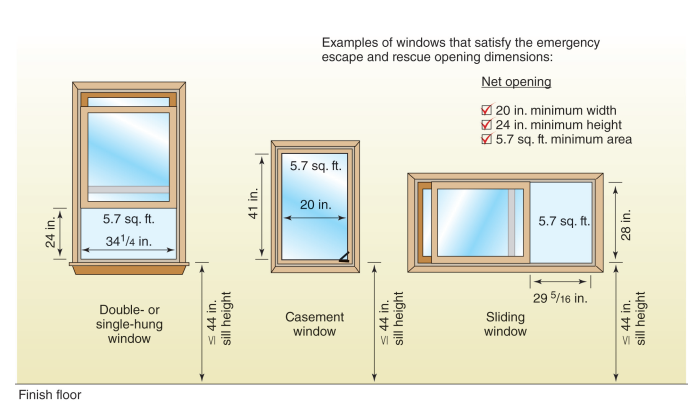
Consider upgrading emergency escape and rescue window openings.
Window for one or more possible sleeping areas did not appear to meet modern safety standards for an emergency escape or a rescue opening from a sleeping room. Evaluate your risk exposure, correcting or making contingency measures as needed. Consider this area for appropriate upgrade or improvement.
 |  |
Multiple Blocked
Access to multiple windows was blocked by furnishings and/or personal property. Inspector was unable to operate a representative number of windows. Properly correct or maintain windows to meet your needs.
 |  |  |
Window List, Budget Replacement
Windows needed correction when inspected. Windows were ready for corrections. Window conditions observed appear below in a bulleted list below. Check all windows correcting as needed for function and safety.
- Some window operation could be improved.
- Some windows did not operate properly.
- Some windows dropped swiftly when open.



Budget replacement windows. The condition and operation of existing windows justifies consideration of installing upgrade replacement windows rather than performing the exhaustive corrections needed at present to the installed windows.
KITCHEN
Inspection Process
Kitchen Inspection Process
Kitchen Inspection Process
Kitchen inspection was of the readily accessible and visible portions of the kitchen. The kitchen inspection includes the countertops and a representative number of cabinets. Kitchen faucets, when functional, are run for longer than one minute checking for observable leaks and hot/cold orientation.
The following built-in kitchen appliances, where installed, were inspected and on/off operated testing the main function of each appliance using the normal operating controls:
- Cooktop / Oven / Range (cook surface with integral oven)
- Microwave
- Garbage Disposal
- Trash Compactor
Installed dishwashers are run through a normal cycle. Obvious functional issues and leaks observed around the dishwasher are reported, if present.
Ventilation equipment, such as range hoods, are inspected, on/off operated and are reported as ductless, ducted or recirculating. It is beyond the scope of this inspection to determine the effectiveness of the kitchen exhaust fan, such as to verify air flow quantity or discharge location.
Appliance inspection does not cover clocks, timers, self cleaning function, calibration, automatic functions or optional equipment on appliances.
Refrigerators are considered personal property and are not evaluated. Refrigerator presence or absence is noted. Faucets for refrigerator ice makers are not tested whether the refrigerator is present or not as there is no basin to catch the water from the ice maker faucet.
Equipment that appears to be shut down, inoperable or intentionally taken out of service is noted but will not be operated by the inspector. Shut down equipment may be unplugged, breaker off, water off, gas off or otherwise taken out of service.
Installation conditions and functional issues for this area requiring correction should be performed by a competent qualified contractor.
Kitchen
Kitchen Area:
Kitchen
Countertop: Tile
- Installation appeared incomplete
Cabinets: Wood painted
- Wear and damage observed, budget reconditioning
Floor Covering: Engineered Flooring
- Wear and damage observed, budget reconditioning
Sink: Double Bowl Stainless Steel
- Excess personal property beneath the sink greatly restricted the view of the area.
Disposal: Not Present
Dishwasher: Present
Range: Range (Electric Top/Oven)
Present and On/Off Tested functional
Microwave: Not Present
Kitchen Exhaust: Ductless unit appeared functional.
Refrigerator: Present but not evaluated
Trash Compactor: Not Present
 |  |  |
 |  |  |
 |
Location Kitchen
Sink Faucet
Faucet was loose. Properly secure faucet as needed.


Location Kitchen
Sink
Sink was loose.
Properly secure sink as needed to help prevent leaks


Location Kitchen
Sink
An outdated S type waste trap was observed at plumbing waste drain.
A modern, properly installed P trap is recommended to prevent siphoning of water from trap and possible sewer gas entry into building. Properly correct as needed.

Location Kitchen
Sink
Waste drain piping was irregular.
Proper correction of irregular waste drain piping is recommended.

BATHROOM
Inspection Process
Testing Limitations
Bathroom Inspection Process
The following opinion was based on an inspection of the readily accessible and visible portions of bathroom areas.
Hand washing faucets, when functional, are run for approximately one minute checking for observable leaks at the faucet and beneath the sink as well as checking Hot/Cold orientation.
Bathing area faucets, when functional, are run for approximately five minutes checking for observable leaks and Hot/Cold orientation.
Toilets, when functional, are flushed twice. Inspector checks for leaks around toilet, checks that toilet fills and shuts off, and checks to see if toilet appears securely mounted.
Effectiveness and discharge locations for mechanical bathroom exhaust vents are not confirmed during inspection.
Installation conditions and functional issues for this area requiring correction should be performed by a competent, qualified contractor.
Bathroom
Full Bathroom Water Off
Location Full Bathroom: attached to a bedroom
Bathing Area: Combination tub and shower
- Properly maintain tile work to meet your needs.
Hand Washing: Vanity with basin
- Signs of past leakage observed. Maintain area to meet your needs.
Toilet: Water tank type
- Confined seating observed at toilet. Upgrade if needed.
Ventilation:
- Window present to ventilate bathroom.
Floor Covering: Engineered Flooring
- Some wear noted, recondition to your standard
 |  |  |
 |
Sink/Faucet: Waste (Mechanical Stopper)
Location Full Bathroom: attached to a bedroom
Sink
Mechanical stopper was in need of repair. Correct to meet your needs.

Toilet: Rocked
Location Full Bathroom: attached to a bedroom
Toilet
The toilet rocked back and forth when checked to see if it was secured in place. Properly correct to your standard.
Location Full Bathroom: attached to a bedroom
Area: Bathing Faucet
The tub spout was loose.
Properly secure the tub spout as needed to help prevent leaks. If affected areas are present, correct them properly.


Location Full Bathroom: attached to a bedroom
Sink
Waste drain piping was irregular.
Proper correction of irregular waste drain piping is recommended.

Bathroom
Full Bathroom Water Off
Location Full Bathroom: Rear
Bathing Area: Shower
- Properly maintain tile work to meet your needs.
Hand Washing: Vanity with basin
Toilet: Water tank type
- Confined seating observed at toilet. Upgrade if needed.
Ventilation:
- Window present to ventilate bathroom. Make operable.
- Door to exterior present to ventilate bathroom.
Floor Covering: Engineered Flooring
- Wear and damage observed, budget reconditioning

 |  |  |
 |
Location Full Bathroom: Rear
Sink
An outdated S-type waste trap was observed at the plumbing waste drain.
A modern, properly installed P-trap is recommended to prevent siphoning of water from the trap and possible sewer gas entry into the building. Properly correct as needed.

LAUNDRY
Laundry Connections
Laundry: Connections Not Observed
Laundry connections were not located for inspected property. Verify with owner should connections not be readily visible. Add laundry connections if needed.
PLUMBING
Supply Piping
Supply Piping: CPVC
Not Supported Properly: CPVC
Out of Service: Water Appeared Off
Plumbing Supply Piping - CPVC piping at crawl space was not properly supported at some areas.
CPVC piping should be supported each 32-36". Some plumbing supply piping was observed poorly supported or hung. Properly support piping where needed with adequate hangers.
 |  |
The plumbing system was inspected and the water supply appeared off to the property. Due to a lack of plumbing supply piping water flow, a complete evaluation of the plumbing system was not performed.
Multiple water faucets were operated with little or no water flow observed.
- Further evaluation of the plumbing system should be completed by a competent plumbing contractor.
- Determine, if possible, why the plumbing system was shut down or inoperative.
- Take steps to prevent recurrence.
- Properly put the plumbing system back in service, correcting as needed for function and safety.
- Verify all appliances and fixtures requiring water are fully functional and safe, correcting where needed.

Waste Piping
Waste Piping: Plastic
Apparent Vent Piping
Further Evaluate Venting
Sewer Gas Venting
Obtain further evaluation for the plumbing venting system to be properly corrected, as needed for function and safety.
Exterior Hose Faucets
Exterior Hose Faucet at Rear
Exterior hose faucet was loose and inoperative when inspected. Hose faucet did not appear connected to plumbing system.
Properly correct or replace as needed.
 |  |
Water Heater
Demand Water Heater
Maintaining Your Demand Water Heater
Demand water heaters require periodic flushing to maintain proper operation. Similar to a coffee maker, demand water heaters are flushed with a diluted vinegar solution to help reduce mineral deposits that can affect demand water heater performance. Refer to the use and care manual for the installed demand water heater performing periodic maintenance when needed.
Link to general periodic cleaning of demand water heater, heating elements.
Demand Water Heater Adequacy
Demand water heaters use flow rates and temperature rise to determine the number of fixtures that can be served by a particular model of a demand water heater. The inspection performed does not determine if any installed water heater is adequate to serve all of the installed plumbing fixtures. Should the installed system prove inadequate, properly correct the water heating system to meet your needs.
Water Heater
Size: Demand type water heater / Year of Manufacture: 2018
Fuel: Electric / Location: Bathroom
Water Heater was not functional during inspection, verify Hot/Cold orientation at plumbing outlets, correct if needed.
Typical service life of a water heater is 8-12 years.
 |  |
Access: Service Access
Water Heater
Water heater had less than expected clearance in front of service access panels. Consider area for proper upgrade.
Leak Mitigation: Installed at Interior
Water Heater
It is recommended that water heaters installed at or adjacent to interior-type areas have contingency measures installed to mitigate expected leakage or rupture of the water heater.
Such measures would collect and drain unwanted water to the exterior to prevent damage to interior finishes. Consider upgrading the water heater installation to help reduce unnecessary damage when the water heater leaks.
Water Heater
Questionable Installation
Water heater did not appear to meet manufacturer installation standards for proper installation when inspected.
Refer to installation instructions and have a competent contractor correct as needed for function and safety.
- Water heater proper leak provisions were not installed.
- Pressure temperature relief valve and discharge piping were not installed.

Equipment Observed
Plumbing Equipment Observed Present But Not Tested or Evaluated: ________________________________________________________________________________________________________________________________________________________________
Pressure Reducer Location: Unknown
Plumbing Supply Piping
A plumbing system pressure reducer was not located.
Verify location of installed pressure reducer or add as needed, if needed.
________________________________________________________________________________________________________________________________________________________________
Property Owner - Plumbing Supply Piping - MAIN WATER SHUT OFF VALVE - Apparent Location - Note Such Valves are Not Operated : Water Shut off Not Observed, unknown if present
Plumbing Other
Abandoned Plumbing Consider Removal
Consider properly removing any abandoned plumbing. Verify apparent abandoned plumbing is no longer needed before removal.

Multiple plumbing corrections were needed.
A licensed, competent plumbing contractor should further evaluate the entire plumbing system and properly repair or replace it as needed to make it fully functional and safe.
- Plumbing system appeared to be improperly installed. Consider complete replacement of the plumbing system.
CENTRAL SYSTEM
Central Heat/Cool
Central Heating/Cooling
Central heating and cooling was not functional or properly installed when home was inspected. Install new and proper central heating and cooling to meet your needs, including ductwork.
- Gas furnace was inoperative and improperly installed when home was inspected.
- Gas furnace should not get combustion air from a bathroom. Relocate furnace or bathroom as required.
- Gas furnace flue was improperly installed and did not have proper clearance from combustibles.
- Central cooling was not functional or properly installed when home was inspected.
- Ductwork was irregular and damaged.
- Crawl space did not appear to have sufficient height or access for duct installation. Consider installing new ductwork and furnace inside attic area.


Gas
Gas Fuel Piping
Natural gas piping observed at inspected property. Properly maintain gas piping as needed for function and safety.
Gas Off: Gas Confirmed Off
Periodic Maintenance Needed: Consider Painting Gas Piping
Consider properly painting gas piping at exterior to help inhibit rust and corrosion at gas piping.
 |  |
Gas Service Confirmed Off Gas valve at utility-owned meter was observed closed when inspected.
The gas service was not on when inspected. Installed accessible gas appliances were inspected but not observed in operation.
- Further evaluation of the gas system should be completed by a competent qualified contractor.
- Determine, if possible, the reason that the gas system was shut down or inoperative.
- Take steps to prevent recurrence.
- Properly put the gas system back in service correcting as needed for function and safety.
- Verify all appliances, piping and fixtures requiring gas are fully functional and safe correcting where needed.

 |
Space Heating
Space Heater
Type: Portable Supplemental Heating
Portable heating units are considered personal property and are not evaluated. Portable heating units may or may not indicate inadequacy of the installed central heating system. Evaluate your comfort needs. Perform upgrade if necessary.
 |  |
Space Cooling
Space Cooling
Type: Portable Cooling Unit
Portable cooling units are considered personal property and are not evaluated.
 |  |  |
 |
ELECTRICAL
Electrical Inspection
Electrical System Inspection
What is an electrical system?
The electrical system consists of an electrical service, distribution equipment, and branch wiring. The electric metering equipment is usually at the electrical service. Distribution equipment typically consists of one or more installed breaker panels, with branch wiring extending to all equipment, receptacles, lighting outlets, and devices, such as light switches. The inspection report focuses on wiring operating between 100-250 Volts. While the system's Amperage and Voltage are recorded, it is not measured during the inspection. Most low-voltage wiring is excluded from the performed inspection. Low-voltage items, such as heating and cooling thermostats, are used to determine the function of such equipment.
There are now a wide variety of lighting bulbs or lamps that will fit into lighting fixtures. Some choices may not be appropriate for some lighting fixtures. It is beyond the scope of this inspection to verify that each lamp or bulb is suitable for the installed lighting fixture. The inspector recommends reviewing the bulb or lamp installations for each fixture, making corrections as needed for safety and proper function. Common errors include installing 100-watt bulbs in fixtures rated for 60-watt maximum bulbs, and using interior-rated bulbs in exterior or damp locations. Other types of errors also exist.
The following opinion was based on an inspection of the readily accessible and visible portions of the electrical system. The Inspector is responsible for checking a representative number of installed lighting fixtures, switches, and receptacles. A competent, licensed electrical contractor should correct electrical installation issues and address any functional issues that require correction. Most, if not all, electrical corrections should be considered a safety concern.
Electrical Service
System Amperage and Voltage, identified but not measured: 200 Amps - 120/240 Volts
Electrical Service Type: Overhead, Representative Photo
Electrical Service Representative Photo

No Adverse Conditions Were Observed
MAIN PANEL
Main Electrical Panel
Main Breaker Panel Bathroom, Upgrade Recommended
- Breaker panel shown with cover removed by inspector.
 |  |  |
Service Entrance Conductors: Copper, Stranded
Index: Vague
Electrical circuit directory appeared vague. Proper correction is recommended.

Access: Area Not For Storage, Working Access
The dedicated service access area to the electrical panel is not designed for storage. Do not store items blocking safe access to the electrical panel.
Observed electrical equipment panel should have unobstructed dedicated safe service access area of no less than 30" in width and 36" depth as measured out from the inspected electrical panel. This clear area is needed for safe access to this type of equipment. Consider relocating equipment or obstruction as needed to provide minimum safe working access to the electrical panel.

Location Issue: Bathroom
For safety and access a breaker panel should not be installed inside a bathroom. Appropriate correction is recommended.

Enclosure: Screws, KO Open, Protect Wiring at KO
Correct electrical panel screws as needed for safety.

Fill open knockouts where present.

Properly protect wires with clamp connectors where missing at knockouts.

Wiring: Remark White 240V Breaker
White wires observed attached to 240V breakers. Remark or correct improperly colored wiring inside panel where needed for service personnel safety.

Wiring: Sheathing Excess
Remove excess sheathing at wiring inside electrical panel where needed.

Upgrade: Distribution Equipment Upgrade Recommended
In the inspector's opinion, now is the time to consider an electrical upgrade for the distribution electrical equipment. Updating this older equipment properly will improve safety and convenience.
Main Breaker Panel Bathroom, Upgrade Recommended
Multiple corrections were needed at electrical distribution panel.
Refer to the full report for additional information and photos regarding obvious corrections recommended for this electrical panel. A competent electrical contractor should further evaluate this area. Make proper corrections as needed for safety and function now.
Branch Wiring
Material: Copper
Wiring Method: Non Metallic Sheathed Cable
Branch Wiring
Multiple corrections were needed to improve the safety of the electrical branch wiring.
These corrections are usually non-recurring once properly completed. A competent electrical contractor should review the installed branch wiring making proper corrections where needed for both safety and function.
- Representative Photos Provided

 |  | |
 |  |  |
 |  |  |
 |  |
AFCI
AFCI Residential
What is Arc Fault Circuit Interrupter (AFCI) Protection?
AFCI protection is designed to break the electrical circuit when it detects electric arcs that are a signature of loose connections in home wiring. Loose connections, which can develop over time, can sometimes become hot enough to ignite house fires.
Most, but not all, homes will have a need for additional AFCI protection based on varied municipal enforcement and the numerous changes for which areas require AFCI protection. Evaluate your risk exposure. Consider adding AFCI protection where needed for improved safety, particularly where construction was completed 2002 or later.
Modern Locations Where AFCI Protection is Known to Improve Safety:
Dwelling Units. All 120-volt, single-phase, 10-, 15-, and 20-ampere branch circuits supplying outlets or devices installed in the following locations:
Kitchens,
Family Rooms,
Dining Rooms,
Living Rooms,
Parlors, Libraries,
Dens,
Bedrooms,
Sunrooms,
Recreation Rooms,
Closets,
Hallways,
Laundry Areas,
or similar areas.
Testing AFCI Function
The inspector uses push button at AFCI breakers, where installed, to confirm AFCI protection trips. Once tripped, the inspector checks indexed electrical circuits to determine where AFCI protection is present or missing.
Obvious locations lacking AFCI protection are listed in the body of the report.
Obvious broken, non working and improperly wired AFCI receptacles or breakers are listed in the summary of the report. Evaluate your risk exposure.
-2.jpg) | 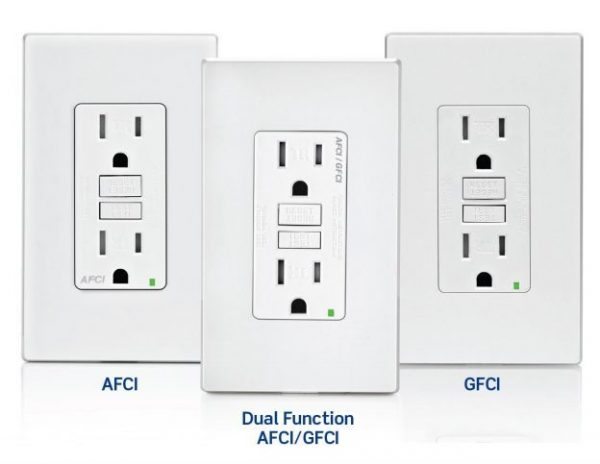 |
No AFCI Built Before 2002
Areas That Did Not Appear AFCI Protected
No AFCI protection was observed at inspected property. AFCI protection is not expected for homes built before 2002. If installation of AFCI protection is desired, consult a knowledgeable, competent, qualified electrical contractor for specific requirements in your area.
GFCI
GFCI Residential
What is Ground Fault Circuit Interrupter (GFCI) Protection?
GFCI protection is an electrical safety device that interrupts an electrical circuit when the current passing through a conductor is not equal and opposite in both directions, therefore indicating an improper flow of current such as leakage of current to ground or current flowing to another powered conductor. The device's purpose is to reduce the severity of injury caused by an electric shock.
Most, but not all, buildings will have a need for additional GFCI protection based on varied municipal enforcement and the numerous changes for which areas require this type of protection. The list below is based off the 2023 standard that may or may not have been adopted by the local municipality. Evaluate your risk exposure. Consider additional GFCI protection where needed for improved safety.
Modern Locations Where GFCI Protection is Known to Improve Safety in Dwelling Units.
(A) Dwelling Units
All 125-volt through 250-volt receptacles installed in the following locations and supplied by single phase branch circuits rated 150 volts or less to ground shall have ground-fault circuit-interrupter protection for personnel:
(1) Bathrooms
(2) Garages and also accessory buildings that have a floor located at or below grade level not intended as habitable rooms and limited to storage areas, work areas, and areas of similar use.
(3) Outdoors
(4) Crawl spaces - at or below grade level
(4) Basements
(5) Kitchens
(6) Areas with sinks and permanent provisions for food preparation, beverage preparation, or cooking
(7) Sinks - where receptacles are installed within 1.8 m (6 ft) from the top inside edge of the bowl of the sink
(8) Boathouses
(9) Bathtubs or shower stalls - where receptacles are installed within 1.8 m (6 ft) of the outside edge of the bathtub or shower stall
(10) Laundry areas
(12) Indoor damp and wet locations
Some exceptions apply, see current standard for a list of exceptions.
(B) Pertains to Other Than Dwelling Units
(C) Crawl Space Lighting Outlets. GFCI protection shall be provided for lighting outlets not exceeding 120 volts installed in crawl spaces.
(D) Specific Appliances. GFCI protection shall be provided for the branch circuit or outlet supplying the following appliances rated 150 volts or less to ground and 60 amperes or less, single- or 3-phase:
(1) Automotive vacuum machines
(2) Drinking water coolers and bottle fill stations
(3) High-pressure spray washing machines
(4) Tire inflation machines V
(5) Vending machines
(6) Sump pumps
(7) Dishwashers
(8) Electric ranges
(9) Wall-mounted ovens
(10) Counter-mounted cooking units
(11) Clothes dryers
(13) Microwave ovens
(E) Equipment Requiring Servicing. GFCI protection shall be provided for the receptacles required near Equipment Requiring Servicing.
(F) Outdoor Outlets. For dwellings, all outdoor outlets, including outlets installed in the following locations, and supplied-by single-phase branch circuits rated 150 volts or less to ground, 50 amperes or less, shall be provided with GFCI protection:
(1) Garages that have floors located at or below grade level.
(2) Accessory buildings
(3) Boathouses
Note: Some exceptions apply, see current standard for a list of all exceptions.
Testing GFCI Function
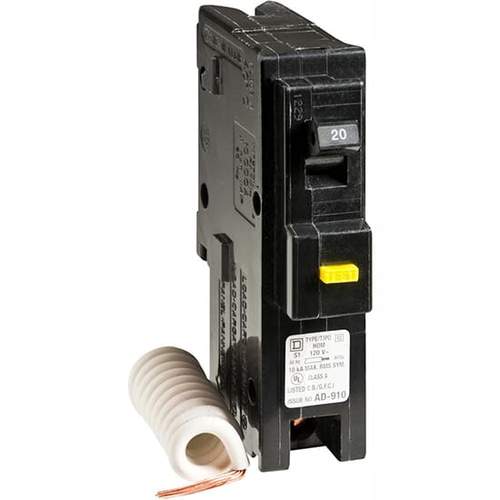
The inspector uses an electrical tester at accessible 120V electrical receptacles that simulates a remote ground fault current to confirm which areas lack proper GFCI protection at tested 120V electrical receptacles.
Obvious locations lacking GFCI protection are listed in the body of the report.
Obvious broken, non working and improperly wired GFCI receptacles or breakers are listed in the summary of the report.
 | -1.jpg) |
GFCI Older Home
GFCI protection was ready for upgrade at older inspected property. Consider modernizing electrical installation adding this shock protection for all electrical areas where GFCI protection is known to improve safety. If installation of additional GFCI protection is desired, consult a knowledgeable, competent, qualified electrical contractor for specific requirements in your area.
Receptacle Outlets
Electrical Receptacle Outlets
Multiple electrical receptacles were ready for proper correction.
- Some electrical receptacles were observed inoperative, such as in attic and may be abandoned.
- Install proper cover plates where needed at exterior.
- Install proper cover plates where needed at interior.
- Properly correct loose electrical receptacles where needed.
- .
A competent electrical contractor should check all receptacles, making them functional and safe where needed.

 |  | |
 |  |  |
Three Wire Receptacles
Three Wire 240V Receptacles Observed
Some older 240V 3 wire electrical receptacle circuits were observed. Typically, these circuits would serve electric clothes dryers or electric kitchen ranges but may also serve other areas. Evaluate your risk exposure and consider upgrade replacement of any 240V 3 wire receptacle circuits where present with a modern 240V 4 wire receptacle circuits for improved safety. Properly maintain older 240V 3 wire receptacle circuits to meet your needs and for safety, if not upgrading older circuits now.
Lighting/Ceiling Fans
Photo Cell
Photo cell was installed at some exterior light fixtures. Fixtures with photo cells are designed to operate after dark. Verify such lighting fixtures operate properly or correct as needed for function and safety.
Lighting/Ceiling Fans
Correct Lighting Where Needed
Lighting/fans - Make lighting/fans functional and safe where needed.
- Some lighting was inoperative when inspected and may be abandoned.
- Some light fixtures were improperly installed.
Check all lighting/fans making functional and safe where needed.
Representative Photos Provided
 |  |  |
Switches
Switch Location Informational Note
Regarding Lighting Switch Locations:
While exact placement of lighting switches is considered a design issue, installing lighting switches at appropriate locations is useful to improve safety. Generally, a light switch would be located within arms length of the entry point of a room so that the lighting for the room you are entering may be switched on from an area near the doorway. Installing a switch at an inconvenient location, such as on the hinge side of a door, would not be desirable. Where the stairway between floor levels has six risers or more, a wall switch would be located at each floor level and at each landing level that includes an entryway to control the lighting for the stairway. Evaluate your need in regard to lighting switch locations. Consider updating switch locations for improved safety if desired.
Smoke Alarms
Smoke Alarm Installation: Where Should Smoke Alarms be Installed?
Depending on the age and location of the home, installation of smoke alarms are either recommended or required for improved safety.
Modern smoke alarm systems typically are hardwired to the electrical system and will have battery backup so that they will function when the power is off to the building. Modern smoke alarm systems typically have all smoke alarms interconnected so that when one alarm sounds then all smoke alarms will sound simultaneously. This is useful for heavy sleepers and in larger homes.
Modern smoke alarm systems typically have smoke alarms installed at the following locations:
- In the immediate vicinity outside sleeping areas
- Inside sleeping areas
- At least one per floor level including basements
- Near stairs
- In unfinished basements
- (some installations will require additional smoke alarms)
It is important to note that a single smoke alarm can satisfy multiple areas if carefully placed.
It is common to have a single smoke alarm near the top of the stairs and just outside multiple sleeping areas.
Properly maintain smoke alarm system as needed for life safety.
Regarding Testing Smoke Alarms:
Test smoke alarms weekly to ensure proper function for life safety. Replace batteries when needed. Properly replace smoke alarms when not functioning correctly and at least once every ten years. Smoke alarms should be at least the photoelectric type and dual sensor photoelectric and ionization smoke alarms are available, and preferred. Refer to installation and care instructions for proper locations and periodic maintenance.
The inspector does not test smoke alarms. For safety, the inspector only accesses smoke alarms from the installed flooring. To prevent damage, the inspector does not remove smoke alarms or open smoke alarm covers.
Not Observed
Smoke alarms were not observed installed at inspected property. Consider adding smoke alarms where needed for improved safety.
STRUCTURE
Attic Access
Attic Access: Scuttle Hole
Attic Access: Traversed Ceiling Joists
Attic area viewed by traversing ceiling joists where visible and walkable. Some areas of attic may not have been viewed.
Roof Framing
Roof Framing: Representative Photos
Representative Photos Roof Framing
 |  |
Framing: Rafters
Sheathing: Wood
Roof Framing
Conditions observed at roof framing that warrant further evaluation by a specialist.
Further evaluation of the roof framing system was needed. A competent, qualified contractor should evaluate the entire roof framing system and all supports, determine corrective measures needed, take action to prevent recurrence, and properly repair affected areas where needed.
- Representative Photos Provided
- Some roof framing was damaged and unrepaired.
- Older roof framing was outdated and ready for strengthening measures.
- Settlement was visible at roof framing.


Roof Framing
Coordinate roof framing corrections needed now in conjunction with roof covering corrections needed now.
Ceiling Framing
Ceiling Framing: Wood
Wall Framing
Framing Access: Finished Prevented
Finished areas prevented the view of structural components, so the inspector did not observe structural areas. Concealed areas were not part of the inspection performed.
Underfloor Access
Crawl Space: Ductwork
Visibility or access limited at crawl space due to installed ductwork. Ductwork, as installed, greatly restricted crawl space access.
Crawl Space: Door Damaged, Improve Crawl Space Access
Crawl space door observed damaged. Install proper hinged door with latch for ready access to crawl space.
Consider improving access to the crawl space area by installing a reasonable, tool-free, unobstructed access opening that is at least 16" x 24" to properly access the crawl space.


Floor System
Floor Framing and Supports
Conditions observed at the floor system warrant further evaluation by a specialist.
A competent, qualified contractor should further evaluate the entire floor system and all supports, determining corrective measures needed, taking action to prevent recurrence, and properly repairing affected areas where needed. Making corrections for areas where needed now would help reduce predictable, unnecessary settlement of the structure.
- Representative Photos Provided
- Crawl space did not have reasonable access.
- Most floor framing was not observed when inspected.
- Create proper access to crawl space area.
- Create proper access throughout crawl space area.
- Floor framing was outdated or improper.
- Some floor framing was damaged and unrepaired.
- Older foundation observed in need of corrections.

 |  | |
 |  |

Other Concerns
Wood to Ground Contact
Wood to ground contact is undesirable. This condition should be considered for proper correction.
- Wood to ground contact observed at crawl space.

INSULATION
Above Ceiling Insulation
Recommended Insulation
Recommended attic insulation depth above living spaces for this area of the country is R-38 to R-60 to help lower utility costs. This recommendation comes from the US Department of Energy. Evaluate your comfort level and utility costs correcting insulation depth if needed.
Consider Improving Insulation: Missing, Energy Audit Recommended
Insulation was missing at most above ceiling areas. The inspector recommends that insulation be properly installed where missing to lower utility costs.
 |  |
Consider obtaining evaluation by an energy auditor for property to improve energy efficiency and comfort.
Wall Insulation
Insulation: Wall Insulation Not Observed, Undetermined
MOISTURE
Attic
Attic
A collection device was observed in the attic area such as to collect water from a small leak.
Obtain further evaluation. Verify no leaks are present or repair as needed.

Crawl Space Underfloor
Crawl Space: Practical Steps Crawl Space Moisture
Practical steps to better moisture condition at a typical crawl space after ensuring no possible plumbing leaks into crawl space are present.
- Properly divert any storm water and all gutter down spouts a minimum 10 feet away from foundation.
- Correct any exterior grading issues that prevent storm water from flowing away from foundation.
- Improve air flow through crawl space to provide proper cross ventilation.
- Improve crawl space dirt floor vapor retarder to help keep moisture at soil.
- Properly drain any excess bulk moisture from crawl space, if present, to prevent accumulation.
- Take more aggressive steps if necessary such as installing a dewatering system and proper encapsulation of crawl space with conditioned air space.
Indications were present that an excess moisture condition existed at crawl space.
Further evaluation is needed to determine exact source of unwanted moisture. Properly correct source of moisture. Take steps to prevent recurrence. Properly repair affected areas as needed.
 |  |
Vapor Retarder
Plastic sheeting, vapor retarder, was not observed properly covering soil areas inside the underfloor crawl space.
A vapor retarder is an important measure to reduce moisture inside underfloor crawl spaces and should be properly added to cover soil areas where omitted or missing.
VENTILATION
Attic Ventilation
Attic Exhaust Vents: Ridge Roof Vent
Attic Intake Vents: Soffit Vents Where Installed
Foundation Ventilation at Underfloor Crawl Space
Not Properly Ventilated or Conditioned
Encapsulation: Guide to Closing and Conditioning Ventilated Crawlspaces 2013
Guide to Closing and Conditioning Ventilated Crawlspaces 2013 PDF
Useful information should you wish to encapsulate a crawl space.
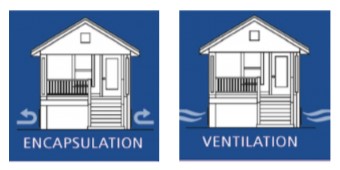
Crawl spaces either should be properly ventilated or properly encapsulated to help control high humidity and reduce moisture inside crawl space areas. Encapsulated crawl spaces must have a conditioned air space to help control moisture.
When ventilating a crawl space, it is important to have proper intake and exhaust venting to provide adequate cross ventilation.
When a properly encapsulated crawl space is desired, the airspace inside the encapsulated area should be properly conditioned to help control moisture in this space. Conditioning of the crawl space air is accomplished either by properly modifying the existing central heating/cooling ductwork or installing a properly sized dehumidifier with a system of fans. An encapsulated crawl space will also have a properly installed liner present.
Proper ventilation or proper encapsulation was not observed in the crawlspace when inspected to help prevent moisture and condensation problems. Obtain further evaluation to determine the best solution for your situation, ensuring a proper correction that meets your needs.
- Crawl space was not properly ventilated.
- Crawl space was not properly encapsulated.
ROOF
Roof Covering
Observation: Representative Roof Covering Photos
Representative Roof Covering Photos
 |  |  |
Method of Roof Inspection: Viewed from ground with binoculars
Roof Style: Gable
Approximate Age of Roof Covering: Unknown
Roofing Material: Metal - Corrugated Metal Roofing Panel
Consider Replacement All Roofing, Coordinate Roof Covering with Roof Framing
Roof covering was ready for corrections now.
A competent roofing contractor should check entire roof system and associated flashings. Properly repair or replace roof covering system as needed.
Roof Covering was Ready for Correction
- Representative Photos Provided
- Most roofing was observed to be improperly installed. Refer to the installation instructions and make any necessary corrections.
- Flashing appeared irregular at areas. Correct where needed.
- Rake edge trim was omitted at multiple areas of metal roofing.
- Rake edge trim, where installed, was not installed properly.
- Remove vegetation debris from roofing where needed.


Consider replacement of all roofing.
Weigh your options for repairing roof covering now and proper complete roof covering replacement now to determine which is the possible better long term solution for your situation. Considering that a properly replaced roofing system may last up to three decades it may make better sense to replace the roofing correctly now rather than to repair an aging roof system.
Roof Covering
Coordinate roof covering corrections needed now in conjunction with roof framing corrections needed now.
SIDING and TRIM
Exterior Elevations
Photos: Exterior Photos
Photos of Exterior elevations
 |  |  |
 |  |
Siding
Consider Complete Replacement
Consider complete replacement of siding and trim now as a more cost effective long term solution rather than replacing portions of damaged siding and trim now then replacing additional portions of damaged siding as it continues to age.
Siding - Vinyl
Vinyl Siding, Vinyl Eaves with Metal Trim
Siding: Close to Ground
Siding observed too close to ground. The inspector noted that portions of the siding or trim were too close to ground level, making the siding or substrate subject to damage. Siding and untreated substrate should be a minimum of 6" above soil. Properly provide separation at siding/trim and untreated substrate from soil. If it is not cost effective to lower the soil grade or raise the siding and substrate area then you should budget periodic replacement of affected areas.
 |  |
Siding: Corrections Needed
Exterior siding/trim was ready for proper corrections when inspected.
Inspector Observations - Representative Photos Provided
- Deferred Maintenance Observed
- Vinyl Siding Was Ready to be Washed
- Loose Siding Observed
- Physical Damage Observed
- Temporary Repairs Observed
- Correct vinyl siding installation such that sealant is not required on vinyl siding installation.
What you should do.
- Properly replace or repair exterior siding and trim as needed. Properly correct any adjacent affected areas damaged by deferred maintenance. Affected adjacent areas that are concealed or not readily accessible are not part of the inspection performed.

 |  |  |
 |  |  |
 |  |  |
 |  |  |
 |  | |
 |  |  |
 |  |  |
Siding: Melted High Temperature Heat Source, Sheathing Missing at Attic
Vinyl Siding -
Some vinyl siding was observed to have melted due to a high-temperature heat source. Properly replace melted siding where needed. Determine the cause of the high temperature of the heat source. Take proper steps to prevent recurrence.
Vinyl Siding -
Some siding visible at attic lacked sheathing behind siding. This is common for age of construction and should be considered for correction. Monitor siding installation budgeting corrective measures as necessary. Upgrade this area when replacing siding or if condition worsens before that time.
 |  |
Trim
Trim Material: Wood where installed
Trim: Corrections Needed
Exterior trim was ready for proper corrections when inspected.
Inspector Observations - Representative Photos Provided
- Deferred Maintenance Observed
- Failing Paint Observed
- Physical Damage Observed
- Rot Observed
What you should do.
- Refurbish area before painting. A quality paint or stain job will include washing/cleaning all areas to be painted, repair/replacement of damaged siding and trim, seal all gaps, prime all unpainted areas and sufficient paint coverage to achieve desired color without bleed through.
 |  |
LOTS and GROUNDS
Driveway
Gravel
Driveway: Recondition
Driveway was ready for reconditioning. Deferred maintenance was observed. Properly correct or upgrade area to meet your needs.

Walkway
Walkway: Recondition
Walkway was ready for reconditioning. Deferred maintenance was observed. Properly replace or repair area to meet your needs.

Porch
Porch: Recondition
Porch was ready for reconditioning. Deferred maintenance was observed. Properly correct or upgrade area to meet your needs.

Patio
Concrete
Roof Structure: Present
Area had a roof structure.
Restrictions: Personal Property
Personal property was present, limiting the view of some areas.
Patio: Serviceable
Patio was serviceable, fulfilling its function.

Stairs and Railings at Exterior
Diagram: Older Railing & Stairs
Railings and Stairs at older home as expected, did not meet current safety standards. Railings and stairs were ready for modernization for improved safety. Evaluate your risk exposure. Consider proper repair or replacement of stairs and railings where needed now for safety and function.
.jpg) | .jpg) |  |
 |
Vegetation
Vegetation Maintenance, Overhanging Branches
Overhanging tree branches appeared too close above roofing. Air circulation and sunlight help prevent deterioration of roof components. Branches should be properly trimmed back to alleviate this condition.

Properly maintain vegetation to meet your needs. Vegetation should not touch building exterior or overhang roof. Vegetation should not interfere with access or servicing of electrical, gas or heating/cooling equipment.
Site
Site: Adjust Grade
Some exterior grade work may improve storm water runoff away from foundation. Slope grade a minimum of ten feet away from and around structure so that water does not collect at foundation.
 |  |  |
End of Report
Thank You Note
Thank you so much for trusting me to perform your inspection!
Please reach out if I may assist you further.
Roger Williamson
423-301-1000
HomePro Inspection Inc
Signed Contracts

HomePro Inspection Inc
423-301-1000
https://HomeProInspection.com
roger@homeproinspection.com
226 TN
.jpg)
.jpg)
.png)