.png)
Explanation of Observation Labels
- Repair/replace:These are damaged, deteriorated, or otherwise faulty items that are in need of repair.
- Recommended Safety Improvement:Recommendations for improving the safety of the home or bringing it up to current safety standards.
- Recommended Improvement/Upgrade:
Observations that are not necessarily defects, but could be improved or upgraded for safety/efficiency/reliability reasons, or to bring them up to modern standards. - Routine Maintenance:These are repair items that should be considered "routine home ownership maintenance," such as servicing the furnace, cleaning the gutters or changing the air filters in the furnace.
- Monitor:Items that should be watched to see if repair, correction, or updating may be needed in the future.
- Due Diligence:Observation such as a buried oil tank that may require further investigation to determine the severity and / or urgency of repair.
- Note:Refers to aside information and /or any comments elaborating on descriptions of systems in the home
- Disclaimer:Information and/or comments that explain limitations of the inspection
Summary (The full report with pictures can be found below the summary)
Repair/replace Items
- G1-2 Grounds:
The brick sidewalk on the right side of the house has settled unevenly. Recommend repair as necessary for a smooth walking surface.
Recommended contractor:Landscaper - G1-3 Grounds:
The fence gate on the left side of the house is falling apart. Have a qualified person repair as necessary.
Recommended contractor:Carpenter - E1-1 Exterior:
Louisiana Pacific OSB siding has been used to clad this house. This siding, commonly referred to as "LP siding", is installation sensitive and is vulnerable to premature failure where poorly installed and / or exposed to the weather. Based on the age of the home it is likely LP's Inner Seal siding. This OSB siding product was the subject of a class action law suit regarding premature failure. The suit has been settled and no more settlement funds are available. Some of the siding on this house is expanding and delaminating on the bottom edges, and the siding around the rear sliding glass doors is completely rotted out. Once the delamination process starts, it is difficult to stop and the siding will eventually get to the point where it needs to be replaced. Have a qualified person repair as necessary.
Recommended contractor:Siding Specialist - E1-2 Exterior:
Wood decay was noted in a couple areas on the exterior. Have a qualified person repair as necessary.
Recommended contractor:Handyman - E1-6 Exterior:
A wall vent on the exterior of the home is missing a louver. Have a qualified person repair or replace as necessary.
Recommended contractor:Handyman - G-2 Garage:
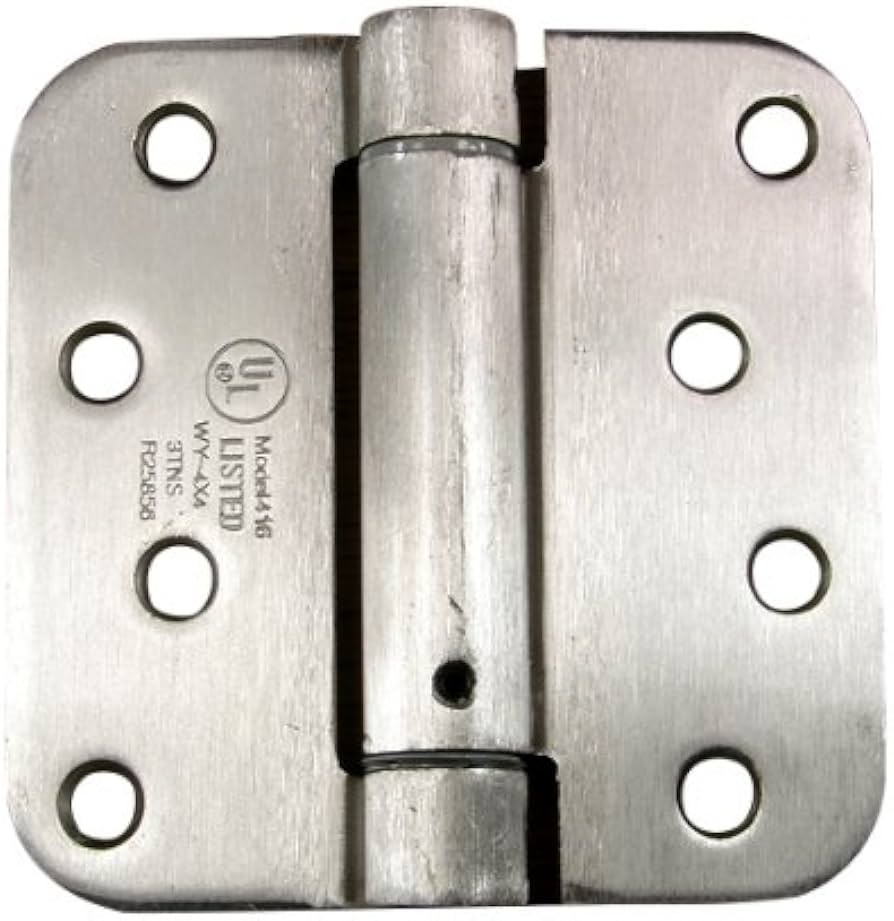
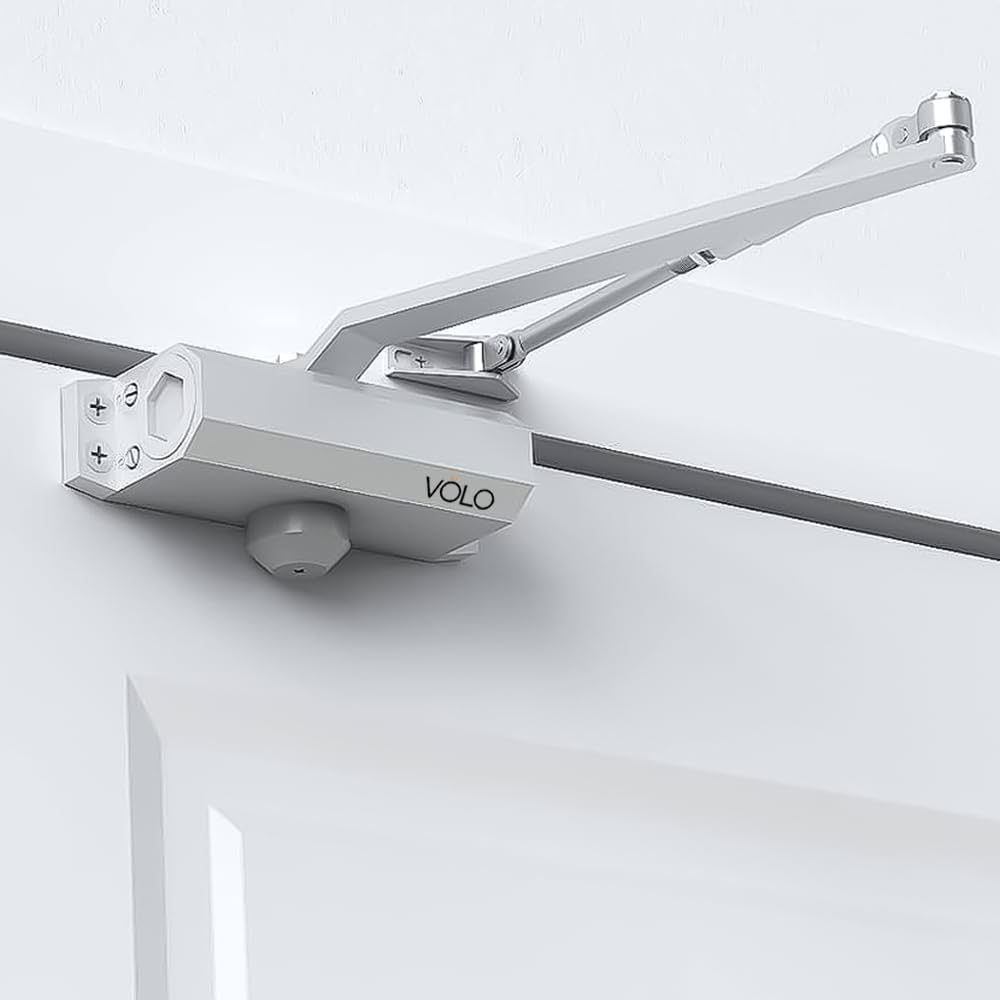
The door from the house to the garage should have a self-closing device or spring loaded hinges installed on it to keep it closed when not in use. This helps slow the spread of fire and smoke into the house in case of fire.
Recommended contractor:Handyman - G-3 Garage:
The pulldown ladder in the garage does not appear to be a fire rated model. This represents a breach in the fire separation of the house and garage. I recommend adding 5/8" drywall to the face of the plywood panel to slow the spread of fire should one break out in the garage.
Recommended contractor:Handyman - R-3 Roof:
All of the fascia tails are not covered by a shingle or flashing. Exposed fascia tails are notorious for rotting out over time. Install a shingle or flashing here to prevent wood rot from developing.
Recommended contractor:Roofer - R-6 Roof:
One of the downspout drains is damaged. Have a qualified person repair as necessary.
Recommended contractor:Handyman - R-7 Roof:
The downspout of the back left corner of the house is loose. Resecure as necessary.
Recommended contractor:Handyman - A-2 Attic:
Some of the insulation in the attic has been compromised or pushed around by workers. Re-distribute or add insulation as needed to ensure equal distribution.
Recommended contractor:Handyman - E-2 Electrical:
Screws with sharp ends, like wood screws, are not recommended to secure the dead-front cover to the electric panel as these can damage wiring insulation. Replace the current sharp screws with blunt-tipped screws.
Recommended contractor:Handyman - E-5 Electrical:
The switch for the light in the laundry room is defective. Have a qualified person replace this switch.
Recommended contractor:Electrician - I-1 Interior:
A loose piece of baseboard trim was noted in the laundry area. Have a qualified person repair as necessary.
Recommended contractor:Handyman - K-1 Kitchen:
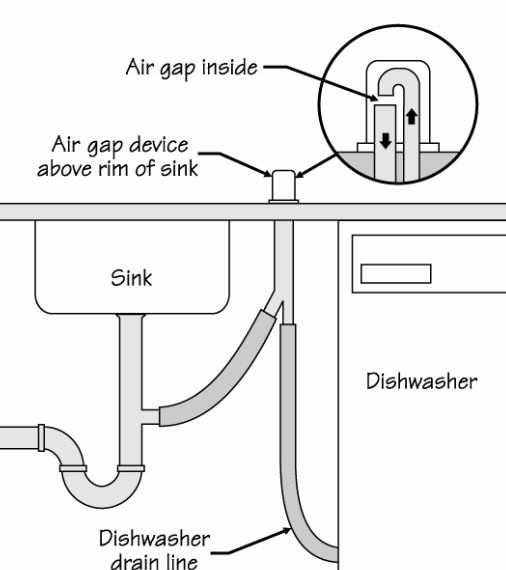
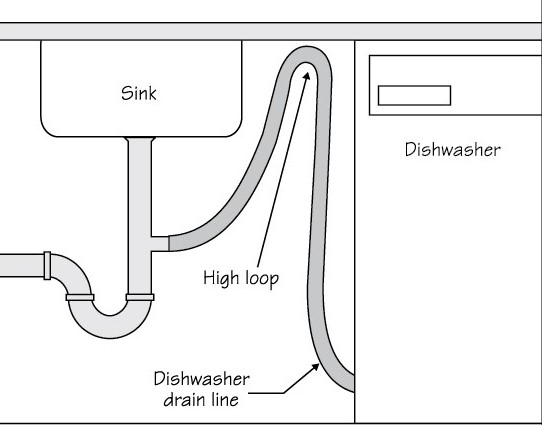
There is no visible air gap or high loop installed on the dishwasher drain hose. A dishwasher air gap serves as a safety feature to prevent contaminated water from flowing back into the dishwasher and potentially causing health hazards. When a dishwasher drains, it pumps out wastewater that is full of food particles and other debris. This wastewater flows into the kitchen sink drain and is carried away by the plumbing system. However, if there is a blockage or backup in the plumbing system, this wastewater can flow back into the dishwasher, contaminating it with harmful bacteria and other pathogens. A dishwasher air gap device works by creating a literal air gap between the dishwasher drain hose and the plumbing system. This prevents contaminated water from flowing back into the dishwasher if there is a blockage or backup in the plumbing system. If an air gap cannot be installed, at least run the drain line as high up in the cabinet as possible to create a high loop. (This was an older way of protecting the dishwasher before air gap devices were required).
Recommended contractor:Handyman - K-2 Kitchen:
A strain relief clamp is missing where the electrical wiring enters the garbage disposal. Strain relief clamps hold the wire to prevent strain on the wiring connections and also protect the wire from the sharp housing of the junction box. Have a qualified person repair as necessary to prevent damage to the wire and/or wiring connections.
Recommended contractor:Electrician - B-2 Bathrooms:
The tub spout in the guest bath is leaking and requires repair or replacement to prevent leaks into the wall.
Recommended contractor:Plumber - CS-3 Crawl Space:
One of the crawl space vent screens is damaged and could allow rodent entry. Use 1/4 inch wire mesh screen and be sure all openings are well sealed to prevent rodent entry.
Recommended contractor:Handyman - CS-4 Crawl Space:
Evidence of rodent activity was noted in the crawl space. I am unable to verify if this is an active condition from a single inspection. I recommend further evaluation by a qualified pest control operator. If rodents are active, the pest control operator should locate and seal any access openings and perform abatement measures to eliminate further activity. Clean up the space as deemed necessary by the pest control operator.
Recommended contractor:Pest Control - CS-5 Crawl Space:
Some of the insulation in the crawl space is falling down or missing. Have a qualified person re-install as necessary.
Recommended contractor:Insulation Company
Recommended Safety Improvement items
- G-4 Garage:
A bollard is recommended in the garage to protect the furnace and water heater from physical damage from cars. A bollard is a metal post that acts to protect appliances in the garage such as furnaces and water heaters, from physical damage that could be caused by a car.
Recommended contractor:Handyman - G-5 Garage:
An older model garage door opener was noted with no laser eyes in use as a safety feature. These are less safe than modern openers which will reverse when the laser beam between the sensors is broken. This safety feature is especially important for children and pets. Updating the garage door opener is recommended for improved safety.
Recommended contractor:Garage Door Specialist - E-4 Electrical:
GFCI protection is missing at the laundry electrical receptacle. GFCI (Ground Fault Circuit Interrupter) receptacles protect the user from electric shock in wet or damp areas such as a laundry room and/or near water sources such as a laundry sink. Install GFCI protected receptacles where necessary for improved safety. For more information click here. (The first picture shows me using a receptacle tester to simulate a ground fault and observing that it did not remotely trip a GFCI receptacle or circuit breaker)
Recommended contractor:Electrician - E-6 Electrical:
No carbon monoxide alarm was found in this home. Carbon monoxide alarms are required in all homes being sold in Washington State. The alarm should be placed in the hallway or common area near the bedroom(s). Install as necessary.
Recommended contractor:Handyman
Recommended Improvement/Upgrade Items
- E1-5 Exterior:
The rear sliding glass door do not have a screen door. These are not required, but are nice to have. Install if desired.
Recommended contractor:Handyman - R-8 Roof:
There is no gutter/downspout installed on the rear patio roof. I recommend installing a gutter and downspout here.
Recommended contractor:Gutter Specialist - E-3 Electrical:
No electric receptacle was observed at the kitchen island. At least one GFCI protected receptacle should be installed at islands with counter tops longer than 12 inches to prevent appliance cords from crossing paths where people walk. I recommend having a qualified contractor install receptacles at the island per standard practices.
Recommended contractor:Electrician - CS-2 Crawl Space:
Although the crawl space entrance has a cover on it, these are difficult to make rodent proof. In addition to the cover, I recommend sealing the opening with a frame of pressure treated wood that fits snugly into the opening in the foundation that is covered with 1/4" wire mesh.
Recommended contractor:Handyman
Routine Maintenance Items
- E1-4 Exterior:
The exterior paint should be touched up where it is chipping/peeling off to prevent moisture damage. Pictures below show a few examples.
Recommended contractor:Painter - R-4 Roof:
Minor moss build-up was noted on some parts of the roof. This can be bad for the roof as it can trap moisture, inhibit proper drainage, lift shingles, and damage the surface of the shingles. Moss treatment/removal is recommended. Pressure washers should not be used to clean the moss as they can damage the shingles.
Recommended contractor:Handyman - R-5 Roof:
Some of the gutters are clogged with organic debris. Gutters that can't drain properly can overflow, corrode, and loosen or fall off under the weight of the water. Recommend cleaning the gutters and downspouts to ensure they are unobstructed for proper drainage.
Recommended contractor:Handyman - HCF-1 Heating, Cooling and Fireplaces:
Annual servicing of the gas furnace is recommended for safe and reliable heat. No records were present to indicate that the furnace has been serviced in the last year. The design life of most furnaces is around 20-30 years when serviced regularly, and this one is 4 years old. I recommend having a licensed HVAC contractor clean and service the furnace. Note that the furnace was tested during the inspection and was fully operational.
Recommended contractor:HVAC Company - FSD-2 Fuel Storage and Distribution:
Some of the gas piping at the exterior of the building is rusting and appears to have inadequate protection from the elements. To ensure reliable performance and reduce the chance of a leak developing, I recommend cleaning and painting with rust inhibitive paint.
Recommended contractor:Handyman - B-1 Bathrooms:
Cracked caulking was noted in the primary bath shower. Re-caulk as necessary to prevent moisture intrusion.
Recommended contractor:Handyman
Monitors
- R-2 Roof:
It looks like this roof has been pressure washed above the kitchen area and now has granule loss and physical damage which makes it more difficult to predict the remaining useful service life of this section of the roof. Once the granules are missing from the surface, the shingles will deteriorate faster than normal. Keep this in mind and prepare to replace this section before the rest of the roof.
- P-4 Plumbing:
The water heater is 9 years old. Like all appliances, water heaters have a limited lifespan and eventually, they need to be replaced. The lifespan of a water heater depends on several factors, including the quality of the unit, the frequency of use, and the level of maintenance it receives. Generally, most water heaters have a lifespan of between 8 and 12 years. However, with proper care and maintenance, some water heaters can last up to 15 years or more. Pictures included for reference.
Due Diligence Items
- P-1 Plumbing:
No main water shut off was found in the home. There is typically a shut off at the meter, but this can be a time-consuming and difficult shut-off to access in an emergency. There may be a shut off that I was simply unable to locate during the inspection. If no readily accessible shut off exists, I recommend having a licensed plumber install one in a convenient location.
Notes
- G-1 Garage:
The overhead garage door is dented in a couple spots, however, the door seems to work just fine.
- R-1 Roof:
The roofing material on this home is an architectural grade shingle. These are often rated as 30-year shingles, but typically need to be replaced before the 30-year mark. This roof is estimated to be around 11 years old.
- E-1 Electrical:
For informational purposes, this home has a 200 amp, Challenger brand electrical panel. Some versions of this brand of panel had issues with overheating and breakers that wouldn't trip. These were mainly from the late 1980's. I did not observe any issues inside the panel during the inspection.
- P-2 Plumbing:
The water pressure was tested and found to be 60 PSI on the day of the inspection. This is within the typically acceptable range of 40-80 PSI.
- P-5 Plumbing:
The hot water temperature was observed to be 107 degrees on the day of the inspection. A home's hot water should not exceed 120 degrees as anything above that poses a scalding risk.
- HCF-3 Heating, Cooling and Fireplaces:
A paper furnace filter was also noted in the hallway ceiling.
- FSD-1 Fuel Storage and Distribution:
For informational purposes, the main gas shut-off is at the meter on the right (viewed from the street) side of the home. Turning this valve 90 degrees will shut off the gas to the whole house. I recommend keeping a crescent wrench handy for this purpose.
- SF-1 Structure and Foundation:
The house appears to be structurally sound overall. The visible framing members are in good condition with no suggested repairs noted. The exposed, accessible portions of the poured concrete perimeter foundation walls appeared to be satisfactory. There were no major cracks, and no significant settling of the foundation or structure observed at this time. There was also no notable structural settling or sloping of interior floors observed. There are no suggested structural repairs at this time.
The Full Report
Grounds
Exterior Photos
Drainage and Lot Location: ✅Inspected
Driveways/Walkways/Flatwork: ✅Inspected
Fences: ✅Inspected
Exterior
Siding and Trim: ✅Inspected
Eaves: ✅Inspected
Exterior Doors: ✅Inspected
Exterior Window Frames: ✅Inspected
Wall vents: ✅Inspected
Attic
Attic: ✅Inspected
Roof Framing and Sheathing: ✅Inspected
Attic Insulation: ✅Inspected
Attic and Roof Cavity Ventilation: ✅Inspected
Electrical
Service Equipment: ✅Inspected
Branch Wiring: ✅Inspected
Receptacles and Fixtures: ✅Inspected
Smoke and Carbon Monoxide Detection Systems: ✅Inspected
Grounding Electrode / Conductor
Plumbing
Water Service Supply: ✅Inspected
Distribution Pipe: ✅Inspected
Waste Pipe and Discharge: ✅Inspected
Water Heater: ✅Inspected
Hot water temperature: ✅Inspected
Washer: ✅Inspected
Dryer: ✅Inspected
Additional Plumbing
Heating, Cooling and Fireplaces
Heating System: ✅Inspected
Heating / Cooling Distribution Systems: ✅Inspected
Additional Heat Sources: ✅Inspected
Kitchen
Sinks and Faucets: ✅Inspected
Cabinets and Countertops: ✅Inspected
Ventilation Method: ✅Inspected
Appliances: ✅Inspected
Bathrooms
Sinks and Cabinets: ✅Inspected
Toilet: ✅Inspected
Bathtub / Shower: ✅Inspected
Bathroom Ventilation: ✅Inspected
General Comments
The purpose of a home inspection is to assess the condition of the residence at the time of the inspection using visual observations, simple tools and normal homeowner operational controls; and to report deficiencies of specific systems and components. A home inspection is not technically exhaustive and does not identify concealed conditions or latent defects.
Grounds
Exterior Photos
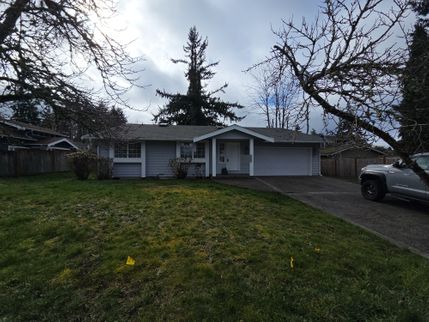
Photos of the exterior of the house on the day of the inspection are included here for reference. The front of the home faces north.
Weather conditions experienced during the inspection: partly cloudy. Temperatures were in the 50-60 degree range. Ground conditions: damp.
 |  |  |
 |  |
Drainage and Lot Location: ✅Inspected
Clearance to Grade: Standard
Downspout Discharge: Above and below grade
Lot Description: Flat
Driveways/Walkways/Flatwork: ✅Inspected
Driveway: Concrete
Walkways: Pavers, Concrete
Patios: Concrete
The brick sidewalk on the right side of the house has settled unevenly. Recommend repair as necessary for a smooth walking surface.
 |  |  |
 |
Fences: ✅Inspected
The fence gate on the left side of the house is falling apart. Have a qualified person repair as necessary.

Exterior
Siding and Trim: ✅Inspected
Siding Material: Louisiana Pacific "LP"
Trim Material: Wood
Louisiana Pacific OSB siding has been used to clad this house. This siding, commonly referred to as "LP siding", is installation sensitive and is vulnerable to premature failure where poorly installed and / or exposed to the weather. Based on the age of the home it is likely LP's Inner Seal siding. This OSB siding product was the subject of a class action law suit regarding premature failure. The suit has been settled and no more settlement funds are available. Some of the siding on this house is expanding and delaminating on the bottom edges, and the siding around the rear sliding glass doors is completely rotted out. Once the delamination process starts, it is difficult to stop and the siding will eventually get to the point where it needs to be replaced. Have a qualified person repair as necessary.


 | ||
 | ||
 |  | |
 |  |  |
 |  |
Wood decay was noted in a couple areas on the exterior. Have a qualified person repair as necessary.

 |  | |
 |  |  |
It is important to note that, wherever decay is found, there is a risk that the decay found is more extensive that what is visible. A full evaluation of decay usually involves opening concealed portions of the structure, which is beyond the scope of this inspection. Also, because decay can progress rapidly, any condition causing the decay should be corrected promptly. Whenever you are informed of decay in any structure, or have reason to suspect it, it is critical that it be fully investigated and that the causes are corrected in a timely manner to contain the extent of the necessary repairs.
The exterior paint should be touched up where it is chipping/peeling off to prevent moisture damage. Pictures below show a few examples.
 |  |  |
Eaves: ✅Inspected
Type: Open rafters
Exterior Doors: ✅Inspected
Type: Solid core, Sliding glass
The rear sliding glass door do not have a screen door. These are not required, but are nice to have. Install if desired.

Exterior Window Frames: ✅Inspected
Type: Vinyl
Wall vents: ✅Inspected
A wall vent on the exterior of the home is missing a louver. Have a qualified person repair or replace as necessary.

 |
Garage
Garage: ✅Inspected
Type: Attached
Automatic Garage Opener: Present
Garage Door Type: Metal
The overhead garage door is dented in a couple spots, however, the door seems to work just fine.
 |  |  |
The door from the house to the garage should have a self-closing device or spring loaded hinges installed on it to keep it closed when not in use. This helps slow the spread of fire and smoke into the house in case of fire.
 |
The pulldown ladder in the garage does not appear to be a fire rated model. This represents a breach in the fire separation of the house and garage. I recommend adding 5/8" drywall to the face of the plywood panel to slow the spread of fire should one break out in the garage.

A bollard is recommended in the garage to protect the furnace and water heater from physical damage from cars. A bollard is a metal post that acts to protect appliances in the garage such as furnaces and water heaters, from physical damage that could be caused by a car.

An older model garage door opener was noted with no laser eyes in use as a safety feature. These are less safe than modern openers which will reverse when the laser beam between the sensors is broken. This safety feature is especially important for children and pets. Updating the garage door opener is recommended for improved safety.
 |  |
Roof
Roof Materials: ✅Inspected
Method: Walked on roof
Style: Gable
Materials: Architectural grade composition shingle
The roofing material on this home is an architectural grade shingle. These are often rated as 30-year shingles, but typically need to be replaced before the 30-year mark. This roof is estimated to be around 11 years old.

 |  |  |
It looks like this roof has been pressure washed above the kitchen area and now has granule loss and physical damage which makes it more difficult to predict the remaining useful service life of this section of the roof. Once the granules are missing from the surface, the shingles will deteriorate faster than normal. Keep this in mind and prepare to replace this section before the rest of the roof.
 |  |  |
All of the fascia tails are not covered by a shingle or flashing. Exposed fascia tails are notorious for rotting out over time. Install a shingle or flashing here to prevent wood rot from developing.
 |  |  |
 |  |  |
Minor moss build-up was noted on some parts of the roof. This can be bad for the roof as it can trap moisture, inhibit proper drainage, lift shingles, and damage the surface of the shingles. Moss treatment/removal is recommended. Pressure washers should not be used to clean the moss as they can damage the shingles.

Gutters and Downspouts
Type: Aluminum
Some of the gutters are clogged with organic debris. Gutters that can't drain properly can overflow, corrode, and loosen or fall off under the weight of the water. Recommend cleaning the gutters and downspouts to ensure they are unobstructed for proper drainage.

One of the downspout drains is damaged. Have a qualified person repair as necessary.

 |
The downspout of the back left corner of the house is loose. Resecure as necessary.
 |  |
There is no gutter/downspout installed on the rear patio roof. I recommend installing a gutter and downspout here.

Attic
Attic: ✅Inspected
Method: Crawled
Pictures of the attic on the day of the inspection are included here for reference.
 |  |  |
 |  |  |
 |  |  |
 |  |
Roof Framing and Sheathing: ✅Inspected
Rafters: Truss
Sheathing: OSB
Attic Insulation: ✅Inspected
Type: Fiberglass
Some of the insulation in the attic has been compromised or pushed around by workers. Re-distribute or add insulation as needed to ensure equal distribution.
 |  |
Attic and Roof Cavity Ventilation: ✅Inspected
Method: Soffit vents, Ridge vents
Electrical
Service Equipment: ✅Inspected
Volts: 120/240
Service Drop: Underground
Meter Base Amperage: 200
Service Entrance (SE) conductor Size: Aluminum, 4/0, 200 amps
Main Panel Amperage: 200 amps
Electric Service Amperage: 200 amps
Main Electric Panel Location: Garage
Overcurrent Protection Devices: Breakers
For informational purposes, this home has a 200 amp, Challenger brand electrical panel. Some versions of this brand of panel had issues with overheating and breakers that wouldn't trip. These were mainly from the late 1980's. I did not observe any issues inside the panel during the inspection.
 |  |  |
Screws with sharp ends, like wood screws, are not recommended to secure the dead-front cover to the electric panel as these can damage wiring insulation. Replace the current sharp screws with blunt-tipped screws.

Branch Wiring: ✅Inspected
Material: Copper
Method: Non-metallic sheathed cable
Receptacles and Fixtures: ✅Inspected
Inspection Method: Random Testing of Accessible Receptacles
Type: Three prong receptacles
No electric receptacle was observed at the kitchen island. At least one GFCI protected receptacle should be installed at islands with counter tops longer than 12 inches to prevent appliance cords from crossing paths where people walk. I recommend having a qualified contractor install receptacles at the island per standard practices.
 |  |
GFCI protection is missing at the laundry electrical receptacle. GFCI (Ground Fault Circuit Interrupter) receptacles protect the user from electric shock in wet or damp areas such as a laundry room and/or near water sources such as a laundry sink. Install GFCI protected receptacles where necessary for improved safety. For more information click here. (The first picture shows me using a receptacle tester to simulate a ground fault and observing that it did not remotely trip a GFCI receptacle or circuit breaker)
 |  |
The switch for the light in the laundry room is defective. Have a qualified person replace this switch.

 |  |


Smoke and Carbon Monoxide Detection Systems: ✅Inspected
Carbon Monoxide Alarms Missing From: All locations
Smoke alarms present: All bedrooms, Each level of the home, All common areas
No carbon monoxide alarm was found in this home. Carbon monoxide alarms are required in all homes being sold in Washington State. The alarm should be placed in the hallway or common area near the bedroom(s). Install as necessary.
Grounding Electrode / Conductor
Could not confirm
Plumbing
Water Service Supply: ✅Inspected
Pipe Material: Copper
Well or Public Supply: Public water
Pressure Reducing Valve: None noted
Main Water Shut-off Location: Unknown
No main water shut off was found in the home. There is typically a shut off at the meter, but this can be a time-consuming and difficult shut-off to access in an emergency. There may be a shut off that I was simply unable to locate during the inspection. If no readily accessible shut off exists, I recommend having a licensed plumber install one in a convenient location.
The water pressure was tested and found to be 60 PSI on the day of the inspection. This is within the typically acceptable range of 40-80 PSI.

Distribution Pipe: ✅Inspected
Visible Supply Pipe Materials: Copper
Functional Flow: Average
Waste Pipe and Discharge: ✅Inspected
Discharge Type: Septic system
Waste and Vent Pipe Materials: ABS plastic
This home appears to employ a private septic system. Please note that an evaluation of this system is beyond the scope of this inspection. All properties on septic are required by the state to have that system inspected by a licensed On-Site System Maintainer (OSM) for the transfer of property. This is the seller's responsibility and is typically paid for by the seller. For more information about septic systems and how they work, please see this web site from the EPA - a homeowners guide to on-site septic systems: https://www3.epa.gov/npdes/pubs/homeowner_guide_long.pdf
 |  |
Water Heater: ✅Inspected
Manufacturer: A.O.Smith
Year Manufactured: 2017
Size: 50 gal
Energy Source: Gas
Temperature Pressure Relief Value and Drain: Present
Seismic Straps: Present
Expansion tank: Present
The water heater is 9 years old. Like all appliances, water heaters have a limited lifespan and eventually, they need to be replaced. The lifespan of a water heater depends on several factors, including the quality of the unit, the frequency of use, and the level of maintenance it receives. Generally, most water heaters have a lifespan of between 8 and 12 years. However, with proper care and maintenance, some water heaters can last up to 15 years or more. Pictures included for reference.
 |  |
Hot water temperature: ✅Inspected
The hot water temperature was observed to be 107 degrees on the day of the inspection. A home's hot water should not exceed 120 degrees as anything above that poses a scalding risk.

Washer: ✅Inspected
Tested
Dryer: ✅Inspected
Tested
Power Source: Electric
Duct to Exterior: Ducted
Additional Plumbing
 Lawn irrigation
A lawn irrigation system was noted for this home. These systems are beyond the scope of standard home inspections and therefore are not inspected.

Heating, Cooling and Fireplaces
Heating System: ✅Inspected
Heating Method: Forced air furnace
Energy Source: Natural gas
Manufacturer: Bryant
Year Manufactured: 2022
Last Service Record: None
Filtration System: Electronic
Annual servicing of the gas furnace is recommended for safe and reliable heat. No records were present to indicate that the furnace has been serviced in the last year. The design life of most furnaces is around 20-30 years when serviced regularly, and this one is 4 years old. I recommend having a licensed HVAC contractor clean and service the furnace. Note that the furnace was tested during the inspection and was fully operational.

 |  | |
 |

This furnace uses an electronic air cleaner to filter the air. These should typically be cleaned 2-3 times per year. Click here to visit a website with instruction on how to do this.
 |  |
A paper furnace filter was also noted in the hallway ceiling.
 |  |
Heating / Cooling Distribution Systems: ✅Inspected
Heat Source in Each Habitable Room: Present
Primary Distribution Method: Ductwork
Additional Heat Sources: ✅Inspected
Description: Electric fireplace
Fuel Storage and Distribution
Gas Meter: ✅Inspected
Gas Shutoff Location: Side of structure
Gas Pipe Materials: Steel and flex pipe
For informational purposes, the main gas shut-off is at the meter on the right (viewed from the street) side of the home. Turning this valve 90 degrees will shut off the gas to the whole house. I recommend keeping a crescent wrench handy for this purpose.
 |  |
Gas, Propane and Oil Piping: ✅Inspected
Some of the gas piping at the exterior of the building is rusting and appears to have inadequate protection from the elements. To ensure reliable performance and reduce the chance of a leak developing, I recommend cleaning and painting with rust inhibitive paint.
 |  |
Structure and Foundation
Foundation: ✅Inspected
% of Foundation Not Visible: 0%
Evidence of Seismic Protection: Not visible
Building Configuration: Crawl space
Foundation Description: Poured concrete
The house appears to be structurally sound overall. The visible framing members are in good condition with no suggested repairs noted. The exposed, accessible portions of the poured concrete perimeter foundation walls appeared to be satisfactory. There were no major cracks, and no significant settling of the foundation or structure observed at this time. There was also no notable structural settling or sloping of interior floors observed. There are no suggested structural repairs at this time.
Interior
Floors: ✅Inspected
Floor Settlement: None noted
Walls, Ceilings, Trim and Closets: ✅Inspected
Wall and Ceiling Materials: Drywall
A loose piece of baseboard trim was noted in the laundry area. Have a qualified person repair as necessary.
 |  |
Windows: ✅Inspected
Window Glazing: Double pane
Interior Window Frame: Vinyl
Kitchen
Sinks and Faucets: ✅Inspected
Type: Stainless Steel
Cabinets and Countertops: ✅Inspected
Countertop Materials: Quartz
Cabinet Material: Wood
Overall condition: Good
Ventilation Method: ✅Inspected
Type: Standard/ducted to exterior
Appliances: ✅Inspected
Refrigerator: Operating
Dishwasher: Operated
Dishwasher Air Gap or High Loop: None noted
Range/ Oven /Cook-tops: Electric
Disposer: Operated
There is no visible air gap or high loop installed on the dishwasher drain hose. A dishwasher air gap serves as a safety feature to prevent contaminated water from flowing back into the dishwasher and potentially causing health hazards. When a dishwasher drains, it pumps out wastewater that is full of food particles and other debris. This wastewater flows into the kitchen sink drain and is carried away by the plumbing system. However, if there is a blockage or backup in the plumbing system, this wastewater can flow back into the dishwasher, contaminating it with harmful bacteria and other pathogens. A dishwasher air gap device works by creating a literal air gap between the dishwasher drain hose and the plumbing system. This prevents contaminated water from flowing back into the dishwasher if there is a blockage or backup in the plumbing system. If an air gap cannot be installed, at least run the drain line as high up in the cabinet as possible to create a high loop. (This was an older way of protecting the dishwasher before air gap devices were required).
 |  |  |
A strain relief clamp is missing where the electrical wiring enters the garbage disposal. Strain relief clamps hold the wire to prevent strain on the wiring connections and also protect the wire from the sharp housing of the junction box. Have a qualified person repair as necessary to prevent damage to the wire and/or wiring connections.

Bathrooms
Sinks and Cabinets: ✅Inspected
Types: Ceramic
Toilet: ✅Inspected
Method: Flushed, Stability (nudge) test
Bathtub / Shower: ✅Inspected
Method: Ran tub(s)/shower(s)
Cracked caulking was noted in the primary bath shower. Re-caulk as necessary to prevent moisture intrusion.
 |  |
The tub spout in the guest bath is leaking and requires repair or replacement to prevent leaks into the wall.

 |  |

Bathroom Ventilation: ✅Inspected
Type: Bath fan
Crawl Space
Crawl Space Access: ✅Inspected
Method of Inspection: Crawled
Pictures of the crawl space on the day of the inspection are included here for reference.
 |  |  |
 |  |  |
 |  |  |
 |  |
Although the crawl space entrance has a cover on it, these are difficult to make rodent proof. In addition to the cover, I recommend sealing the opening with a frame of pressure treated wood that fits snugly into the opening in the foundation that is covered with 1/4" wire mesh.
 |  |
Vapor Barrier: ✅Inspected
Vapor Barrier Material: Plastic on earth
Crawl Space Ventilation: ✅Inspected
Ventilation Method: Exterior wall vents
One of the crawl space vent screens is damaged and could allow rodent entry. Use 1/4 inch wire mesh screen and be sure all openings are well sealed to prevent rodent entry.

 |
Posts and Footings: ✅Inspected
Type: Wood posts, Concrete footings
Insulation: ✅Inspected
Type: Fiberglass
Evidence of rodent activity was noted in the crawl space. I am unable to verify if this is an active condition from a single inspection. I recommend further evaluation by a qualified pest control operator. If rodents are active, the pest control operator should locate and seal any access openings and perform abatement measures to eliminate further activity. Clean up the space as deemed necessary by the pest control operator.
 |  |  |
 |  |
Some of the insulation in the crawl space is falling down or missing. Have a qualified person re-install as necessary.
 |  |  |
Moisture Conditions: ✅Inspected
None noted
Disclaimers
The Scope and Purpose of a Home Inspection
Purchasing property involves risk
The purpose of a home inspection is to help reduce the risk associated with the purchase of a structure by providing a professional opinion about the overall condition of the structure. A home inspection is a limited visual inspection and it cannot eliminate this risk. Some homes present more risks than others. We cannot control this, but we try to help educate you about what we don’t know during the inspection process.
Occasional typographical errors and other minor errors and omissions may occur in the report. I apologize in advance for these. If any of these typos make the report unclear, confusing or incomplete, please contact me immediately for clarification/correction.
A home inspection is not an insurance policy
This report does not substitute for or serve as a warranty or guarantee of any kind. Home warranties can be purchased separately from insuring firms that provide this service.
A home inspection is visual and not destructive
The descriptions and observations in this report are based on a visual inspection of the structure. We inspect the aspects of the structure that can be viewed without dismantling, damaging or disfiguring the structure and without moving furniture and interior furnishings. Areas that are concealed, hidden or inaccessible to view are not covered by this inspection. Some systems cannot be tested during this inspection as testing risks damaging the building. For example, overflow drains on bathtubs are generally not tested because if they were found to be leaking, they could damage the finishes below. Our procedures involve non-invasive investigation and non-destructive testing which will limit the scope of the inspection.
Environmental/Mold Exclusions
The reported or actual health effects of many potentially harmful, toxic or environmentally hazardous elements that may be found in building materials or in the air, soil, water in and/or around any house are varied, and, in some cases controversial. A home inspection does not include the detection, identification or analysis of any such elements or related concerns such as, but not limited to, mold, allergens, legal/illegal drugs and other biological contaminants, radon, bed bugs, cockroaches, fleas, lice, formaldehyde, asbestos, lead, electromagnetic fields, carbon monoxide, insecticides, Chinese drywall, refrigerants and fuel oils. Furthermore, no evaluations are performed to determine the effectiveness or appropriateness of any method or system (e.g., water filter, radon mitigation, etc.), designed to prevent or remove any hazardous or unwanted materials or elements. An environmental health specialist should be contacted for evaluation of any potential health or environmental concerns. The noting of the presence of materials commonly considered to contain asbestos, formaldehyde, lead, mold etc in the inspection report, should not be construed to mean the inspector is inspecting for these things but instead should be seen as a "heads-up" regarding these materials and further evaluation by qualified professionals may be warranted.
This is just my opinion and only for the client listed above
The contents of this report are for the sole use of the client named above and no other person or party may rely on this report for any reason or purpose whatsoever without the prior written consent of the inspector who authored the report. Any person or party who chooses to rely on this report for any reason or purpose whatsoever without the inspectors express written consent does so at their own risk and by doing so waives any claim of error or deficiency in this report.
Construction techniques and standards vary. There is no one way to build a house or install a system in a house. The observations in this report are my opinions based on my training and experience. Other inspectors and contractors are likely to have differing opinions. You are welcome to seek opinions from other professionals in the context of doing your due diligence.
Wood-Destroying Organisms
If, in the course of accomplishing the stated purpose of this inspection, we find the presence of wood-destroying organisms, including insects or decay fungi, or of conditions that contribute to their presence or of damage by such organisms, we will note them in the report. This is a part of the overall evaluation of the structure. However, this is not an Inspection for the presence of pests as defined by the Washington State Department of Agriculture (WSDA). If such an inspection is desired, or if this report notes the presence of pests, a separate WSDA-defined Wood Destroying Organism Inspection is should be obtained from a firm specializing in pest control.
The scope of this inspection
The inspection and report are intended to provide the client with information regarding the condition of the systems and components of the property as observed at the time of the inspection. I examine the readily accessible systems and components using normal operating controls. The inspection is not technically exhaustive and will not identify concealed conditions or latent defects. Any comments offered by me that could be construed as over or beyond the standards of practice or the language of this contract, are offered as a professional courtesy. Refer to the Washington State Standards of Practice and/or Pre-Inspection Agreement for additional information regarding the scope and limitations of the inspection. The Standards of Practice are linked below and describe the "minimum" standards a Licensed Washington State Home Inspector must adhere to: Standards of Practice
All homes are likely to have some faults which may range from cosmetic defects to major safety hazards. Not all defects may be found during the inspection. While some minor deficiencies may be mentioned, the emphasis of this report is to inform the buyer of the property condition by detecting deficiencies or circumstances that may affect the structural integrity of the building and its components and its safe use as a residence.
You are encouraged to obtain competitive estimates for major repair needs. Safety and health issues should be addressed promptly. It is recommended that all corrective work, other than routine maintenance activities, be performed by qualified licensed contractors.
It is beyond the scope of the Standard Home Inspection to identify components within the home that may have been part of a "manufacturer's recall". When possible, appliance Model Numbers and Serial Numbers are included in the report and can be used to check for recall related issues. If you have any question about specific appliances, information can be found at the CPSC (Consumer Products Safety Commission) website or contact the manufacturer directly.
I recommend you obtain as much history as is available concerning this property. This historical information may include copies of any seller's disclosures, previous inspection or engineering reports, reports performed for or by relocation companies, municipal inspection departments, lenders, insurers and appraisers. You should attempt to determine whether repairs, renovation, remodeling, additions or other such activities have taken place at this property, and this report will attempt to identify such items when possible.
Ranges, Dish Washers, and Refrigerators, Microwaves (and the like) are typically tested for basic function (Do they turn on). No assertions are made as to how well they function.
Throughout this report, comments will be made as to the presence or absence of components or parts of components. This must not be construed to mean that these components or parts of components exist (or don't exist) in concealed areas or behind finished surfaces. For example: if foundation bolting was seen in one area, it does not mean that the bolting exists (or doesn't exist) in areas that are concealed. Also if an item was noted as "not being visible," that should not be construed to mean that none of whatever was "not visible" does not exist on the premises---it just means none was noted at the time of inspection and should be seen as a "heads-up" that the concern or condition might be present but hidden, or that the conditions that would allow its presence to be known was not replicated at the time of inspection.
Many of the non-narrative observations/documentation detailed in the report that are related to more "cosmetic" issues should not be construed as "all inclusive" but should instead be seen in as "suggestive" or a "guideline" of conditions that may exist elsewhere in the home. It is not the focus of the report to comment extensively on cosmetic issues, but I do make note of them at times to help complete the "snap-shot" of the home at the time of inspection. For example, "nail-pops" seen in one room are likely to be seen (and should be anticipated) in other rooms even though I may not have noted them in the report.
Throughout the report I may make recommendations as to possible repairs. These recommendations are not intended to be substitutes or construed to be more appropriate than the recommendations of the professionals making the repairs. Conflicts in recommendations should be resolved prior to repairs being made.
Who should make repairs and what should their qualifications be?
Worker qualifications: In the text of the report, in some instances, I recommend that work be done by a "qualified" persons or "qualified" parties. I consider qualified parties, in licensed trades, to be those individuals who hold the necessary licenses to legally work in their profession -- licensed electricians, licensed pest control applicators, licensed plumbers, licensed HVAC professionals, licensed engineers, licensed general contractors, etc. In instances where a task may not, typically, need to be done by a person with a professional license, my recommendation is to hire an individual to do the work who is, based on past training, experience or expertise, qualified to further evaluate the condition or problem listed in the report and to then make appropriate repairs.
A note on moisture meters
Generally, moisture meters are used "qualitatively" as opposed to "quantitatively." This means that actual percentages shown by meter are meant to be indicative of moisture as compared to likely dryer areas. False positives are not always possible to eliminate entirely, but moisture meters can give good guidance. It is impossible to test every surface in a home for moisture. The moisture meter is generally used to check for moisture in areas where concealed leaks may exist, or to confirm the presence or absence of elevated moisture in materials that visually appear to have water stains or were/are water logged.
Receipt -- The Full Report
4444 Anywhere Anytown, WA 99999
| Inspection with digital report | $625.00 |
| $625.00 | |
| PAID |
.png)
Signed Contracts
Sage Home Inspections LLC
206-351-6808
www.sagehomeinspect.com
joe@sagehomeinspect.com
1198