
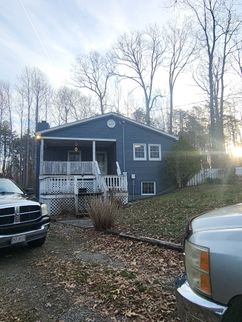
The Scope and Purpose of a Home Inspection
Purchasing property involves risk
The purpose of a home inspection is to help reduce the risk associated with the purchase of a structure by providing a professional opinion about the overall condition of the structure. A home inspection is a limited visual inspection and it cannot eliminate this risk. Some homes present more risks than others. We cannot control this, but we try to help educate you about what we don’t know during the inspection process.
A home inspection is not an insurance policy
This report does not substitute for or serve as a warranty or guarantee of any kind. Home warranties can be purchased separately from insuring firms that provide this service.
A home inspection is visual and not destructive
The descriptions and observations in this report are based on a visual inspection of the structure. We inspect the aspects of the structure that can be viewed without dismantling, damaging or disfiguring the structure and without moving furniture and interior furnishings. Areas that are concealed, hidden or inaccessible to view are not covered by this inspection. Some systems cannot be tested during this inspection as testing risks damaging the building. For example, overflow drains on bathtubs are generally not tested because if they were found to be leaking they could damage the finishes below. Our procedures involve non-invasive investigation and non-destructive testing which will limit the scope of the inspection.
This is not an inspection for code compliance
This inspection and report are not intended for city / local code compliance. During the construction process structures are inspected for code compliance by municipal inspectors. Framing is open at this time and conditions can be fully viewed. Framing is not open during inspections of finished homes, and this limits the inspection. All houses fall out of code compliance shortly after they are built, as the codes continually change. National codes are augmented at least every three years for all of the varying disciplines. Municipalities can choose to adopt and phase in sections of the codes on their own timetables. There are generally no requirements to bring older homes into compliance unless substantial renovation is being done.
This is just our opinion
Construction techniques and standards vary. There is no one way to build a house or install a system in a house. The observations in this report are the opinions of the home inspector. Other inspectors and contractors are likely to have some differing opinions. You are welcome to seek opinions from other professionals.
The scope of this inspection
This inspection will include the following systems: exterior, roof, structure, drainage, foundation, attic, interior, plumbing, electrical and heating. The evaluation will be based on limited observations that are primarily visual and non-invasive. This inspection and report are not intended to be technically exhaustive.
Your expectations
The overall goal of a home inspection is to help ensure that your expectations are appropriate with the house you are proposing to buy. To this end we assist with discovery by showing and documenting observations during the home inspection. This should not be mistaken for a technically exhaustive inspection designed to uncover every defect with a building. Such inspections are available but they are generally cost-prohibitive to most homebuyers.
How to Read This Report
Getting the Information to You
This report is designed to deliver important and technical information in a way that is easy for anyone to access and understand. If you are in a hurry, you can take a quick look at our "Summary Page” and quickly get critical information for important decision making. However, we strongly recommend that you take the time to read the full Report, which includes digital photographs, captions, diagrams, descriptions, videos and hot links to additional information.
The best way to get the layers of information that are presented in this report is to read your report online (the HTML version), which will allow you to expand your learning about your house. You will notice some words or series of words highlighted in blue and underlined – clicking on these will provide you with a link to additional information. The HTML version of this report also contains streaming videos. Short video clips often contain important information and critical context and sounds that can be difficult to capture in words and still pictures.
For the most reliable viewing experience, I recommend viewing the report on as large a screen as practical, as much detail can be lost on small devices like smart phones. For similar reasons, reports should only be printed in color to retain as much detail as possible and minimize misinterpretation of photographs.
This report can also be printed on paper or to a PDF document.
Chapters and Sections
This report is divided into chapters that parcel the home into logical inspection components. Each chapter is broken into sections that relate to a specific system or component of the home. You can navigate between chapters with the click of a button on the left side margin.
Most sections will contain some descriptive information done in black font. Observation narrative, done in colored boxes, will be included if a system or component is found to be significantly deficient in some way or if we wish to provide helpful additional information about the system or the scope of our inspection. If a system or component of the home was deemed to be in satisfactory or serviceable condition, there may be no narrative observation comments in that section and it may simply say “tested,” or “inspected.”
Observation Labels
All narrative observations are colored, numbered and labeled to help you find, refer to, and understand the severity of the observation. Observation colors and labels used in this report are:
- Repair:Repair items noted during inspection. These items are currently affecting the performance and reliability of home systems or, if left unchecked, may affect systems in the future.
- Recommended Maintenance:These are repair items that should be considered "routine home ownership items," such as servicing the furnace, cleaning the gutters or changing the air filters in the furnace.
- Improve:Observations that are not necessarily defects, but which could be improved for safety, efficiency, or reliability reasons.
- Monitor:Items that should be watched to see if correction may be needed in the future.
- Due Diligence:Observation such as a buried oil tank that may require further investigation to determine the severity and / or urgency of repair.
- Efficiency:Denotes observations that are needed to make the home more energy efficient as well as to bring the home up to modern insulation standards. This category typically includes doors, windows, and insulation. Other items, such as lighting and appliances, are not inspected for their energy status.
- Note:Refers to aside information and /or any comments elaborating on descriptions of systems in the home or limitations to the home inspection.
- Description:Detailed description of various aspects of the property noted during the inspection.
Summary Page
The Summary Page is designed as a bulleted overview of all the observations noted during inspection. This helpful overview is not a substitution for reading the entire inspection report. The entire report must be read to get a complete understanding of this inspection report as the Summary Page does not include photographs or photo captions.
Moisture Meter Testing
Where moisture meter testing is indicated in this report a Protimiter Survey Master Dual Function was used.
Summary
Repairs
- G-2 Grounds:
Corrugated storm drain pipe appears to be used for sub-surface drainage work to divert roof runoff away from the building. This product is prone to failure as it is susceptible to crushing and clogging. Evidence was found during inspection that these drains require repair. Debris and damaged drain pipe was noted. Have this further evaluated and repaired by a qualified general contractor or drainage specialist to ensure proper control of roof runoff.
- G-4 Grounds:
Cracks were noted in concrete patio around the pool. This has created a trip hazard due to displacement in some spots. Recommend further evaluation by a qualified contractor.
- G-6 Grounds:
An unreliable connection was noted between the top of the deck/side stairs and the landings. This connection is missing the proper hangers. This could lead to stair failure. Have this connection further evaluated and repaired as recommended by a qualified contractor.
- G-8 Grounds:
Tune-up repairs are needed to the exterior fencing. Examples of observations noted during inspection include:
- Loose boards
- Gates that have been removed
- Deteriorating paint
Hire a handyman to make repairs to this fencing.
- ED-1 Exteriors and Decks:
Localized repairs are needed to the exterior siding and trim. This is important for the siding system to perform as intended. Hire a qualified contactor to further evaluate and repair the exterior trim here. See damaged siding on east side of home and damaged trim at the front corner of the home.
- ED-2 Exteriors and Decks:
The wood door frame at the basement is rotting/damaged at the base near the threshold. Recommend repair by a qualified contractor.
- ED-3 Exteriors and Decks:
The basement door slab does not close properly. The slab also needs to be repainted. Adjust and refinish this door as needed for reliable operation.
- ED-7 Exteriors and Decks:
Damaged trim was noted at a window frame on the west side of the home. Hire a qualified contractor to repair.
- ED-9 Exteriors and Decks:
Numerous repairs are needed to the front deck. Observations noted during inspection include (pictured in order):
- Unfinished boards and deteriorating paint on finished surfaces
- Localized damage to the wood
- Loose stair treads
- Loose guardrail
- Corroded joist hanger fasteners / joist hanger holes with missing fasteners
- Missing joist hangers
I recommend having this deck evaluated and repaired as recommended by a qualified general contractor.
- ED-10 Exteriors and Decks:
The paint is peeling at the ceiling above the front deck. Refinish this ceiling to protect the wood here.
- RCG-3 Roof, Chimney and Gutters:
The gutter at the east end of the home is not properly sloped to drain near the downspout. Hire a qualified contractor for repair to ensure proper roof runoff control.
- ES-1 Electric Service:
Inadequate labeling of the electric panel circuit breakers was noted during inspection. Some of the breakers have been re-labeled with tape. This should be corrected in the context of other repairs for improved safety.
- ES-2 Electric Service:
All wiring from the electric panel should be secured in the first 12" after exiting the panel. Many of the wires coming from this panel were not secured. Hire a qualified electrician to secure this wiring for improved safety.
- ES-3 Electric Service:
Hire a qualified electrician to correct the double lugged neutral conductors in the electric panel - this is when two conductors share the same lug. Double lugged conductors risk poorly protected conductors that are more vulnerable to arcing and overheating.
- EDFW-1 Electric Distribution and Finish Wiring:
The missing cover plates to electric receptacles, switches and junction boxes should be installed to cover all access to wiring at switches and receptacles.
- EDFW-2 Electric Distribution and Finish Wiring:
Multiple inoperative lights were noted. This is likely due to bulbs being burned out, but could be due to an inoperative fixture, circuit or switch. Replace bulbs or repair lights as needed.
- EDFW-3 Electric Distribution and Finish Wiring:
Replace the broken bulbs at the back exterior light fixture.
- EDFW-4 Electric Distribution and Finish Wiring:
The use of GFCI (Ground Fault Circuit Interruption) protection throughout the home is inconsistent with modern minimum standards for safety. GFCI protection is recommended for the electrical receptacles within 6 feet of a water source. GFCI's protect against electrocution by limiting the duration of an electrical shock. These are an important modern safety feature that have proven to save lives. Hire a qualified electrician to further evaluate and update GFCI protection for improved safety. See kitchen and laundry. The kitchen GFCI receptacle did not properly "trip" when tested.
- EDFW-5 Electric Distribution and Finish Wiring:
The wall switch in the west bedroom does not control the ceiling light fixture. I didn't find any other switches for the ceiling fixture. Have this investigated and repaired as needed by a qualified electrician.
- EDFW-6 Electric Distribution and Finish Wiring:
Exposed live wiring was noted in the utility room. This circuit should be disconnected or enclosed in a junction box for improved safety.
- EDFW-11 Electric Distribution and Finish Wiring:
The pull cord for the fan in the east bedroom is seized. Repair as needed for proper operation.
- EDFW-12 Electric Distribution and Finish Wiring:
There seemed to be a smoke alarm missing in the upstairs hallway. Smoke alarms are required outside sleeping areas and 1/ floor. Have smoke alarms installed by a qualified contractor to meet modern standards.
- EDFW-14 Electric Distribution and Finish Wiring:
The doorbells are inoperative. Repair as needed.
- HCFV-2 Heating, Cooling, Fireplaces and Ventilation:
Note that the seller informed me that this heat pump does not work in cooling mode. I did not test the cooling mode due to cold outdoor temperatures. Recommend repair by a qualified HVAC contractor.
- HCFV-6 Heating, Cooling, Fireplaces and Ventilation:
Some of the ductwork in the basement is disconnected and needs to be re-connected. Repair as soon as possible to ensure reliable heating and cooling distribution and energy efficiency.
- HCFV-7 Heating, Cooling, Fireplaces and Ventilation:
The register cover in the basement hall ceiling is missing and requires repair so that ducts can be dampened as desired and for a proper finish.
- P-2 Plumbing:
This building is partially plumbed with Polybutylene (PB 2110) supply tubing - an unreliable plumbing product with a reputation for failing fittings and deteriorating plastic. This is a common plumbing product in 1980's era homes. There has been a class action lawsuit against this product in several states due to its unreliable reputation. Consult with a qualified plumber to further evaluate and repair to ensure reliable performance from the supply piping system. No leaks were noted during inspection. It is possible this tubing could continue to work as intended for years. It is not possible to predict when repair will become needed. Leaving this piping in service involves some level of risk.
- P-3 Plumbing:
Improper fittings appeared to be used to join PEX and copper piping in the utility room. Have this further evaluated and repaired as recommended by a qualified plumber.
- I-2 Interior:
The laminate flooring in the main level bath is pulling up in places. Replacement is needed for proper finish and performance. Consult with a qualified general contractor to repair this finish flooring.
- I-3 Interior:
A hole in the living room ceiling was noted. I also noted damaged/unfinished drywall in the kitchen. Hire a qualified contractor to repair.
- I-4 Interior:
A guardrail is needed for the interior stairs to eliminate a safety hazard, especially for children. Railings with openings no larger than 4 inches are recommended for all stairs with three or more stairs. Handrails that have returns into the walls are needed for the length of the stairs. Hire a carpenter to repair and bring guardrail and handrail up to modern standards.
- I-5 Interior:
The west bedroom door is sticking at the top. The east bedroom closet door is sticking at the bottom. Adjust these doors for proper operation.
- I-6 Interior:
Several panes of glass were presenting with a cloudy appearance which could indicate a lost or failed seal. I recommend cleaning the glass. If cloudiness persists and cannot be cleaned, I recommend having the window glass further evaluated by a glass replacement specialist. Replace all glazing with lost seals as needed. A lost seal is a common term for when there is permanent cloudiness between the panes of glass or between the "insulated glass units," IGU's. This is a cosmetic defect that does not impact the short term performance of the window. See living room:
- K-1 Kitchen:
Poor functional flow was noted at the kitchen sink faucet. This could be from localized restrictions in the aerator or angle stops, or could be indicative of a larger supply piping problem. Have this further investigated and repaired as needed by a qualified plumber.
- K-2 Kitchen:
The refrigerator ice maker and water dispenser were not operating during inspection. I could not verify a water supply to this refrigerator. Have the ice maker and water turned on and made operational or install plumbing as needed.
- B-2 Bathrooms:
The main level bathroom sink faucet is damaged and requires repair or replacement. The faucet was also leaking around the control knobs. Have this fixture further evaluated and repaired as recommended by a qualified plumber.
- B-3 Bathrooms:
The loose toilet in the hall bath needs to be reset and the wax ring and flange should be replaced to prevent hidden plumbing leaks. This is a simple job unless the bolts that fasten the toilet also require repair. Sometimes, loose toilets can even be shimmed for a tight and proper seal by qualified plumbers and sometimes simply caulking can help prevent the toilet from rocking and twisting. Hire a qualified plumber to further evaluate and repair.
- B-4 Bathrooms:
The bathtub drain is slow and appears to be obstructed. Repair as needed for reliable drainage.
- B-5 Bathrooms:
The shower diverter in the bathtub is stuck in the closed position and requires repair for proper operation.
- A-2 Attic:
Cardboard baffles have not been installed in the rafters near the eaves in the attic. This has allowed the insulation to block ventilation from the soffit. This can inhibit proper ventilation of this roof cavity and can lead to heat build-up and seasonal moisture problems. I recommend removing insulation away from the roof decking in these areas as is possible - this will be difficult work due to the tight space restrictions. Baffles should be added where possible.
Recommended Maintenance Items
- G-5 Grounds:
Pruning trees, branches and vegetation away from the house is recommended. Where trees, branches and large shrubs can provide rodent access to the roof, a minimum 6-foot clearance is recommended as many rodents can jump 6 feet. All vegetation, including smaller landscaping such as grasses, flowers and shrubs should be kept 1 foot off the house to eliminate contact which could trap moisture against the building.
- ED-4 Exteriors and Decks:
Remove and reapply failing sealant around the exterior doors and trim as needed.
- ED-8 Exteriors and Decks:
The sealant around the exterior of the windows is showing signs of failure where visible. I recommend repairing failing areas of sealant as needed to ensure a waterproof envelope.
- RCG-1 Roof, Chimney and Gutters:
The sealant around the chimney crown has deteriorated. Remove and reapply sealant here to prevent moisture intrusion.
- RCG-4 Roof, Chimney and Gutters:
The gutters are clogged with organic debris and require cleaning to ensure proper control of roof runoff. Clean the gutters and ensure they are unobstructed, leak free and properly sloped to drain. This is routine house maintenance. I would expect the need to clean gutters and downspouts regularly.
- HCFV-1 Heating, Cooling, Fireplaces and Ventilation:
The heating and cooling system has disposable air filters installed. These should be changed quarterly or more to ensure proper air flow at the handler. Be sure to install the filters with the arrows pointing in the same direction as the air flow.
Note that no filter was installed at the time of inspection.
- HCFV-3 Heating, Cooling, Fireplaces and Ventilation:
The heat pump system was tested during inspection today. I tested the system in heating mode and it appeared to be operating. This is an older unit. I recommend having the system serviced by a professional heating and cooling contractor. The design life of a heat pump system is 15-20 years. This unit is old enough that replacement or updating could be needed at any time.
- HCFV-4 Heating, Cooling, Fireplaces and Ventilation:
The vegetation around the heat pump compressor should be pruned away to allow adequate air flow to the system.
- HCFV-8 Heating, Cooling, Fireplaces and Ventilation:
The heating and cooling ductwork is dirty and needs to be cleaned to improve indoor air quality and efficiency of the HVAC system.
- LF-1 Laundry Facilities:
The dryer exhaust ductwork is dirty and needs to be cleaned for improved safety. This is important regular maintenance to eliminate a potential fire hazard.
Improves
- G-7 Grounds:
The stair treads have openings between the treads that are larger than 4 inches. This could be a safety hazard for children. Hire a handyman to close the risers.
- ED-5 Exteriors and Decks:
Apply sealant to the threshold/frame intersection of the exterior doors to prevent moisture intrusion and wood rot at this location.
- EDFW-7 Electric Distribution and Finish Wiring:
Complete the installation of the kitchen light fixture.
- K-3 Kitchen:
An anti-tip device is recommended to prevent this range from tipping during operation of the oven door. This is a small clip that secures the back adjustable feet of the range to the floor.
- K-4 Kitchen:
The surface light for the microwave did not respond to testing. This likely needs a new bulb.
- B-6 Bathrooms:
The shower head in the main level hall bath is leaking and requires repair. Adjust as needed to prevent leakage at the shower head.
- B-7 Bathrooms:
Sealant should be applied around the bath and shower fixtures to prevent water intrusion behind the fixtures. Be sure to use a tub-rated sealant.
Monitors
- G-3 Grounds:
Inadequate clearance between the siding and the hardscape was noted. This is conducive to wood destroying organisms as it can trap water against the siding. Where possible, an air gap should be provided to allow the wood to keep dry. Generally, a 2 inch clearance is recommended between siding and hardscape. Please note that this is a fairly common installation, and may not be cost effective to correct at this point. It is difficult to predict if or when or if this condition will cause concealed damage to the wood behind.
- P-6 Plumbing:
This water heater is likely close to the end of its useful service life. The average life of a water heater can vary widely between 8-20 years depending on water quality and maintenance schedule such as frequency of flushing the tank and replacing sacrificial anodes. Budget to replace this water heater at any time. Water was hot at the time of inspection.
- SB-1 Structure and Basement:
Small cracks were noted in the foundation as viewed from the utility room. The purpose of the foundation is to connect the weight of the building to well-compacted soils below the house so that the house does not move or settle. Masonry block cracking can indicate poorly compacted soils below the house which could require a repair, but small cracks such as these can also be a sign of routine settlement. It is not possible to determine or verify the cause of these cracks during a visual inspection. The easiest way to prevent on-going settlement in buildings is by controlling roof runoff and site drainage to promote dry soils around the foundation; wet soils do not bear weight well. This will also help to prevent basement moisture problems. In my experience, small cracks like these are common in block foundations of this age. I would monitor these cracks. If continued movement is noted, I would seek additional inspection by a qualified contractor to determine an accurate scope and urgency for repair to ensure a reliable connection between the foundation and well-compacted, weight-bearing soils.
Due Diligences
- RCG-2 Roof, Chimney and Gutters:
This chimney is no longer in use. If you wish to use this chimney in the future, I recommend an inspection of the flue by a qualified chimney sweep.
- EDFW-8 Electric Distribution and Finish Wiring:
Some of the exterior light fixtures appear to be dusk-to-dawn lights on a sensor. Check with the seller to verify that these lights are operational.
- P-9 Plumbing:
The exterior hose bib appeared to be winterized at the time of inspection and could not be tested. Inquire with the seller to see if it is generally operable.
- AP-2 Additional Plumbing:
Swimming pools are not within the scope of a residential home inspection and they are beyond the scope of this inspection. It is recommended that this pool and the related equipment and electrical systems be inspected for operation and safety by a pool specialist.
- I-7 Interior:
Localized mold-like substances were noted on the exterior walls of the east basement bedroom closet. This is often the result of condensation due to poor heating of the closet, poor air flow in the closet and the cold exterior wall. Please note that testing for mold is beyond the scope of a standard home inspection. If you are concerned about mold, I recommend further evaluation by a mold remediation contractor.
- A-1 Attic:
Modifications were noted to the roof trusses. On site modifications to engineered trusses require an engineered repair. Inquire with the seller for plans or permits for the modifications that have been done to the truss system. If no engineering has been done and there is no additional information, I recommend additional inspection by a structural engineer to provide proper drawings and engineering for this roof frame system. Implement additional repairs if recommended.
Efficiencies
- ED-6 Exteriors and Decks:
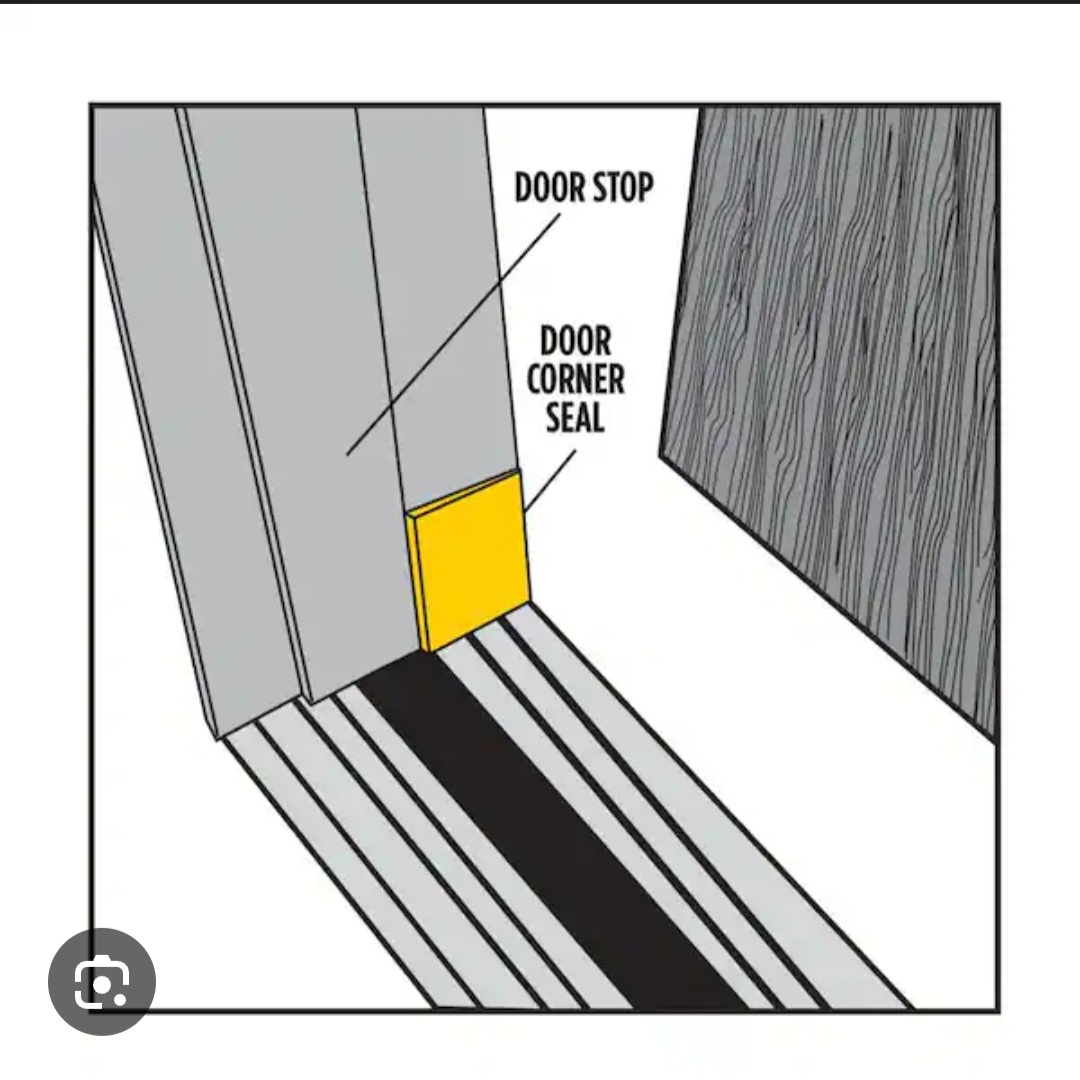
Replace the missing corner pads at the exterior doors to limit air infiltration at this location and increase the energy efficiency of the home.
Notes
- GC-1 General Comments:
This home was occupied at the time of the inspection. Inspection of occupied homes presents some challenges as occupant belongings can obstruct visual inspection of and access to parts of the building. I do my best during the inspection to work around belongings to discover as much as possible about the house without moving or damaging personal property, however, the presence of personal items does limit the inspection.
- G-1 Grounds:
See video of the exterior, as requested:
- G-9 Grounds:
This home has an outbuilding. Please note that these fall outside the scope of a home inspection.
- EDFW-9 Electric Distribution and Finish Wiring:
The current occupant's belongings are restricting access to some of the electric receptacles. This is inhibiting access to and testing of some of the electric receptacles.
- EDFW-10 Electric Distribution and Finish Wiring:
There are no receptacles behind the cover plate at the back of the home.
- P-4 Plumbing:
An evaluation of the sewer line below the ground is beyond the scope of this inspection.
- AP-1 Additional Plumbing:
The ejector pump could not be tested today due to the unfinished state of the basement bathroom.
- I-1 Interior:
Interior pictures, as requested:
- K-5 Kitchen:
The cooktop and oven were tested and operational during the inspection.
- B-1 Bathrooms:
The basement bathroom is being remodeled. I was not able to test any of the plumbing fixtures here today.
Descriptions
- EDFW-13 Electric Distribution and Finish Wiring:
During the home inspection, I try to test a representative sample of the smoke alarms by using the test button on the alarms. This is NOT an accurate test of the sensor - just a test to see if the unit is powered. For reliability, fire marshals recommended updating smoke alarms every 10 years and changing batteries bi-annually. A complete evaluation of smoke alarms is beyond the scope of this inspection. For optimal fire safety, I recommend taking control of these important safety devices and learning about how to service and maintain your smoke alarm system to keep the building occupants safe.
- HCFV-5 Heating, Cooling, Fireplaces and Ventilation:
This shows the data plate from the exterior compressor. 📸
- P-1 Plumbing:
This shows the location of the main water shut off located in the utility room.
- P-5 Plumbing:
This shows the location of the sewer cleanout found during inspection - utility room.
- P-7 Plumbing:
This shows the data plate for this water heater.
- P-8 Plumbing:
A temperature and pressure relief valve (TPRV) is required on all water heaters to discharge any excessive pressure within the tank. A discharge pipe should be attached to the valve and directed to a safe location away from body contact. Most manufacturers suggest that homeowners test these valves at least once a year by lifting the lever to ensure the valve discharges properly and also recommend inspection of these safety devices every three years. The picture here shows a typical TPRV. I do not test these valves due to the possibility that they may leak after testing. A leaking or inoperative TPRV should be replaced immediately by a qualified plumber.
The Full Report
Grounds
General Grounds Photos
Drainage and Site
Driveways/Walkways/Flatwork
Window and Stairwells
Grounds, Trees and Vegetation
Exterior Stairs
Fences
Outbuildings, Trellises, Storage Sheds, Barns
Exteriors and Decks
Siding and Trim
Eaves
Exterior Doors
Exterior Window Frames
Decks, Porches and Balconies
Electric Distribution and Finish Wiring
Branch Wiring
Receptacles and Fixtures
Ceiling Fans
Smoke and Carbon Monoxide Alarm Systems
Low Voltage Wiring
Heating, Cooling, Fireplaces and Ventilation
Air Filters
Cooling Systems and Heat Pumps
Heating and Cooling Distribution Systems
Interior
General Interior Photos
Floors and Floor Materials
Walls, Ceilings, Trim and Closets
Stairs and Railings
Interior Doors
Windows
Indoor Air Quality
General Comments
Building Characteristics, Conditions and Limitations
Type of Building : Single Family (1 story with Basement)
Approximate Square Footage: 2441
Approximate Year of Original Construction: 1989
Attending the Inspection: Seller
Occupancy: Occupied
Weather during the inspection: Clear
Approximate temperature during the inspection: 30F
Ground/Soil surface conditions: Damp
For the Purposes of This Report, the Front Door Faces: North
This home was occupied at the time of the inspection. Inspection of occupied homes presents some challenges as occupant belongings can obstruct visual inspection of and access to parts of the building. I do my best during the inspection to work around belongings to discover as much as possible about the house without moving or damaging personal property, however, the presence of personal items does limit the inspection.
Grounds
General Grounds Photos
See video of the exterior, as requested:



Drainage and Site
Clearance to Grade: Siding Too Close to Hardscape - Not Ideal
Downspout Discharge: Corrugated Storm Drains (With Red Flags)
Site Description: Moderate slope
Corrugated storm drain pipe appears to be used for sub-surface drainage work to divert roof runoff away from the building. This product is prone to failure as it is susceptible to crushing and clogging. Evidence was found during inspection that these drains require repair. Debris and damaged drain pipe was noted. Have this further evaluated and repaired by a qualified general contractor or drainage specialist to ensure proper control of roof runoff.
 |  |
Inadequate clearance between the siding and the hardscape was noted. This is conducive to wood destroying organisms as it can trap water against the siding. Where possible, an air gap should be provided to allow the wood to keep dry. Generally, a 2 inch clearance is recommended between siding and hardscape. Please note that this is a fairly common installation, and may not be cost effective to correct at this point. It is difficult to predict if or when or if this condition will cause concealed damage to the wood behind.

Driveways/Walkways/Flatwork
Driveway: Gravel
Walkways: Concrete
Patios: Concrete
Cracks were noted in concrete patio around the pool. This has created a trip hazard due to displacement in some spots. Recommend further evaluation by a qualified contractor.
 |  |
Window and Stairwells
Present
Grounds, Trees and Vegetation
Trees/Vegetation too near building: Yes - Prune Vegetation off House
Pruning trees, branches and vegetation away from the house is recommended. Where trees, branches and large shrubs can provide rodent access to the roof, a minimum 6-foot clearance is recommended as many rodents can jump 6 feet. All vegetation, including smaller landscaping such as grasses, flowers and shrubs should be kept 1 foot off the house to eliminate contact which could trap moisture against the building.

Exterior Stairs
Exterior Stairs: Stringers (Unreliable Connection At Landing), Risers (Large Openings Between)
An unreliable connection was noted between the top of the deck/side stairs and the landings. This connection is missing the proper hangers. This could lead to stair failure. Have this connection further evaluated and repaired as recommended by a qualified contractor.
 |  |
The stair treads have openings between the treads that are larger than 4 inches. This could be a safety hazard for children. Hire a handyman to close the risers.
 |  |
Fences
Exterior Fencing: Localized Damage to Fencing
Tune-up repairs are needed to the exterior fencing. Examples of observations noted during inspection include:
- Loose boards
- Gates that have been removed
- Deteriorating paint
Hire a handyman to make repairs to this fencing.
 |  |  |
Outbuildings, Trellises, Storage Sheds, Barns
This home has an outbuilding. Please note that these fall outside the scope of a home inspection.

Exteriors and Decks
Siding and Trim
Trim Material: Plastic
Siding Material: Vinyl
Localized repairs are needed to the exterior siding and trim. This is important for the siding system to perform as intended. Hire a qualified contactor to further evaluate and repair the exterior trim here. See damaged siding on east side of home and damaged trim at the front corner of the home.
 |  |
Eaves
Vinyl
Exterior Doors
The wood door frame at the basement is rotting/damaged at the base near the threshold. Recommend repair by a qualified contractor.
 |  |
The basement door slab does not close properly. The slab also needs to be repainted. Adjust and refinish this door as needed for reliable operation.
 |  |
Remove and reapply failing sealant around the exterior doors and trim as needed.

Apply sealant to the threshold/frame intersection of the exterior doors to prevent moisture intrusion and wood rot at this location.

Replace the missing corner pads at the exterior doors to limit air infiltration at this location and increase the energy efficiency of the home.
 |  |
Exterior Window Frames
Vinyl
Damaged trim was noted at a window frame on the west side of the home. Hire a qualified contractor to repair.

The sealant around the exterior of the windows is showing signs of failure where visible. I recommend repairing failing areas of sealant as needed to ensure a waterproof envelope.

Decks, Porches and Balconies
Present
Structure: Wood
Decking Material: Wood
Numerous repairs are needed to the front deck. Observations noted during inspection include (pictured in order):
- Unfinished boards and deteriorating paint on finished surfaces
- Localized damage to the wood
- Loose stair treads
- Loose guardrail
- Corroded joist hanger fasteners / joist hanger holes with missing fasteners
- Missing joist hangers
I recommend having this deck evaluated and repaired as recommended by a qualified general contractor.
 |  |  |
 |  |  |
 |  |
The paint is peeling at the ceiling above the front deck. Refinish this ceiling to protect the wood here.

Roof, Chimney and Gutters
Roof Materials
Method of Roof Inspection: Walked on roof
Roof Style: Gable
Roof Covering Materials: Architectural grade composition shingle
Approximate Age of Roof Covering: 10-15 years
Chimneys
Present
Chimney Material: Masonry behind siding
Chimney Flue Liners: Not visible
The sealant around the chimney crown has deteriorated. Remove and reapply sealant here to prevent moisture intrusion.

This chimney is no longer in use. If you wish to use this chimney in the future, I recommend an inspection of the flue by a qualified chimney sweep.
Gutters and Downspouts
Gutter and Downspout Materials: Aluminum
The gutter at the east end of the home is not properly sloped to drain near the downspout. Hire a qualified contractor for repair to ensure proper roof runoff control.
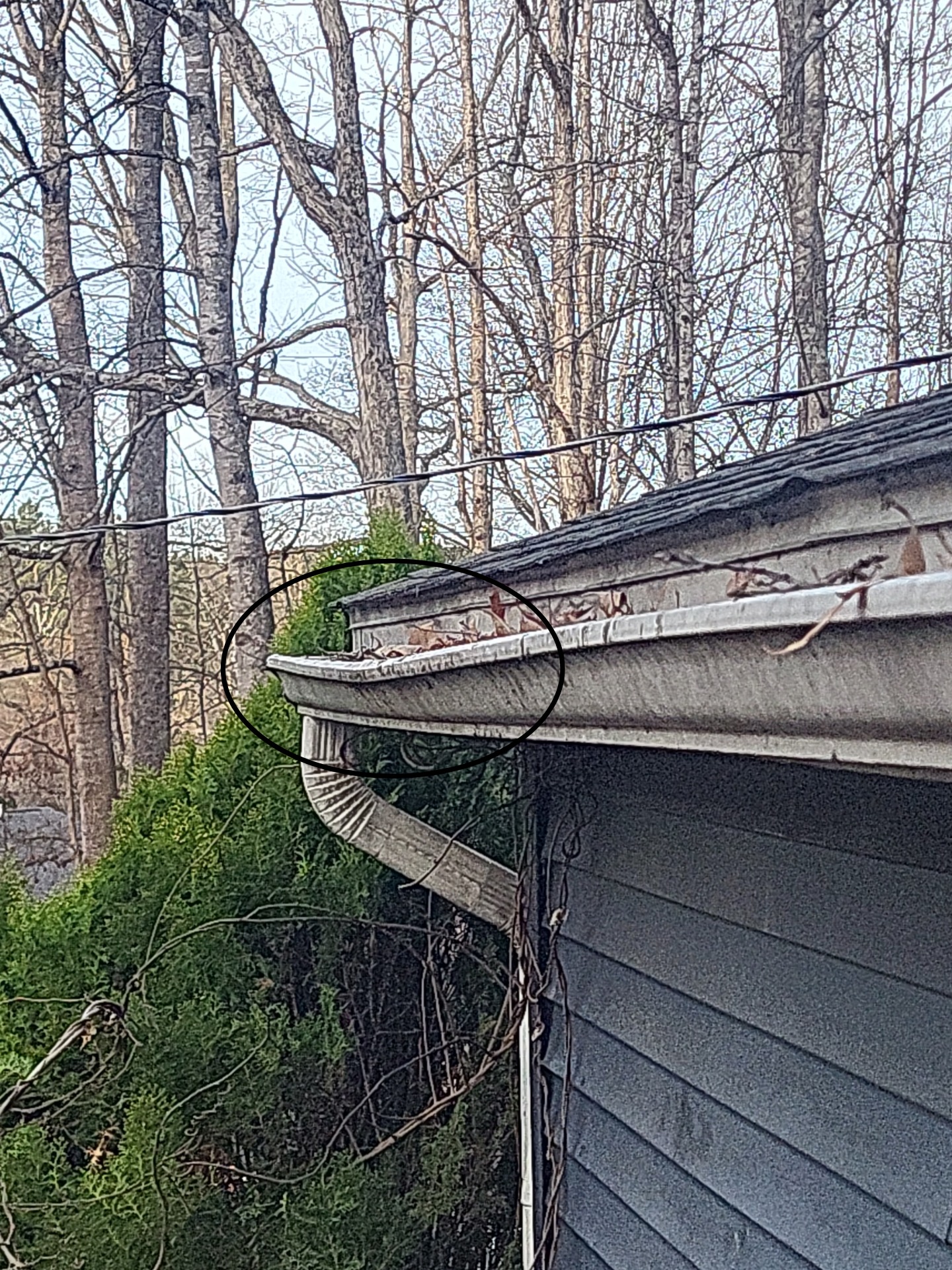
The gutters are clogged with organic debris and require cleaning to ensure proper control of roof runoff. Clean the gutters and ensure they are unobstructed, leak free and properly sloped to drain. This is routine house maintenance. I would expect the need to clean gutters and downspouts regularly.

Electric Service
Electric Service Equipment
Main Panel Amperage: 200 amps
Main Electric Panel Location: Utility room
Panel Manufacturer: Cutler Hammer
Inadequate labeling of the electric panel circuit breakers was noted during inspection. Some of the breakers have been re-labeled with tape. This should be corrected in the context of other repairs for improved safety.

All wiring from the electric panel should be secured in the first 12" after exiting the panel. Many of the wires coming from this panel were not secured. Hire a qualified electrician to secure this wiring for improved safety.

Hire a qualified electrician to correct the double lugged neutral conductors in the electric panel - this is when two conductors share the same lug. Double lugged conductors risk poorly protected conductors that are more vulnerable to arcing and overheating.

Electric Distribution and Finish Wiring
Branch Wiring
Wire Material: Copper, Multi-strand Aluminum
Wiring Method: Non-metallic sheathed cable
Receptacles and Fixtures
Inspection Method: Receptacle Tester, Interior Belongings Obstructing Access
Electric Receptacles: Three wire receptacles
The missing cover plates to electric receptacles, switches and junction boxes should be installed to cover all access to wiring at switches and receptacles.
 |  |  |
 |
Multiple inoperative lights were noted. This is likely due to bulbs being burned out, but could be due to an inoperative fixture, circuit or switch. Replace bulbs or repair lights as needed.
 |  |  |
 |
Replace the broken bulbs at the back exterior light fixture.

The use of GFCI (Ground Fault Circuit Interruption) protection throughout the home is inconsistent with modern minimum standards for safety. GFCI protection is recommended for the electrical receptacles within 6 feet of a water source. GFCI's protect against electrocution by limiting the duration of an electrical shock. These are an important modern safety feature that have proven to save lives. Hire a qualified electrician to further evaluate and update GFCI protection for improved safety. See kitchen and laundry. The kitchen GFCI receptacle did not properly "trip" when tested.
.png) |  |  |
 |
The wall switch in the west bedroom does not control the ceiling light fixture. I didn't find any other switches for the ceiling fixture. Have this investigated and repaired as needed by a qualified electrician.
 |  |
Exposed live wiring was noted in the utility room. This circuit should be disconnected or enclosed in a junction box for improved safety.

Complete the installation of the kitchen light fixture.

Some of the exterior light fixtures appear to be dusk-to-dawn lights on a sensor. Check with the seller to verify that these lights are operational.

The current occupant's belongings are restricting access to some of the electric receptacles. This is inhibiting access to and testing of some of the electric receptacles.
There are no receptacles behind the cover plate at the back of the home.

Ceiling Fans
The pull cord for the fan in the east bedroom is seized. Repair as needed for proper operation.

Smoke and Carbon Monoxide Alarm Systems
Smoke Alarms Noted: In Basement
Smoke Alarms: Present
During the home inspection, I try to test a representative sample of the smoke alarms by using the test button on the alarms. This is NOT an accurate test of the sensor - just a test to see if the unit is powered. For reliability, fire marshals recommended updating smoke alarms every 10 years and changing batteries bi-annually. A complete evaluation of smoke alarms is beyond the scope of this inspection. For optimal fire safety, I recommend taking control of these important safety devices and learning about how to service and maintain your smoke alarm system to keep the building occupants safe.
There seemed to be a smoke alarm missing in the upstairs hallway. Smoke alarms are required outside sleeping areas and 1/ floor. Have smoke alarms installed by a qualified contractor to meet modern standards.
Low Voltage Wiring
The doorbells are inoperative. Repair as needed.
 |  |
Heating, Cooling, Fireplaces and Ventilation
Air Filters
Filtration Systems: Disposable
The heating and cooling system has disposable air filters installed. These should be changed quarterly or more to ensure proper air flow at the handler. Be sure to install the filters with the arrows pointing in the same direction as the air flow.
Note that no filter was installed at the time of inspection.

Cooling Systems and Heat Pumps
Air Conditioning / Heat Pump: Heat Pump Present
Manufacturer: American Standard
Data Plate: Shown here
This shows the data plate from the exterior compressor. 📸

System Type: Air Source
Size: 3 Tons
Energy Source: Electric
Age: 2007
Note that the seller informed me that this heat pump does not work in cooling mode. I did not test the cooling mode due to cold outdoor temperatures. Recommend repair by a qualified HVAC contractor.
The heat pump system was tested during inspection today. I tested the system in heating mode and it appeared to be operating. This is an older unit. I recommend having the system serviced by a professional heating and cooling contractor. The design life of a heat pump system is 15-20 years. This unit is old enough that replacement or updating could be needed at any time.

The vegetation around the heat pump compressor should be pruned away to allow adequate air flow to the system.

Heating and Cooling Distribution Systems
Distribution Method: Forced Air / Ducts
Some of the ductwork in the basement is disconnected and needs to be re-connected. Repair as soon as possible to ensure reliable heating and cooling distribution and energy efficiency.
 |  |
The register cover in the basement hall ceiling is missing and requires repair so that ducts can be dampened as desired and for a proper finish.

The heating and cooling ductwork is dirty and needs to be cleaned to improve indoor air quality and efficiency of the HVAC system.

Plumbing
Water Service Supply
Pipe Material: Plastic
Water Supply: Public water
Main Water Shut-off Location: Water Shut Off Location Noted
This shows the location of the main water shut off located in the utility room.

Distribution Pipe
Supply Pipe Materials: Copper, PEX, PB
This building is partially plumbed with Polybutylene (PB 2110) supply tubing - an unreliable plumbing product with a reputation for failing fittings and deteriorating plastic. This is a common plumbing product in 1980's era homes. There has been a class action lawsuit against this product in several states due to its unreliable reputation. Consult with a qualified plumber to further evaluate and repair to ensure reliable performance from the supply piping system. No leaks were noted during inspection. It is possible this tubing could continue to work as intended for years. It is not possible to predict when repair will become needed. Leaving this piping in service involves some level of risk.

Improper fittings appeared to be used to join PEX and copper piping in the utility room. Have this further evaluated and repaired as recommended by a qualified plumber.

Waste Pipe and Discharge
Discharge Type: Public Sewer - Buyer
Waste and Vent Pipe Materials: PVC
Location of Sewer Cleanout: Basement
This shows the location of the sewer cleanout found during inspection - utility room.

An evaluation of the sewer line below the ground is beyond the scope of this inspection.
Water Heater
Manufacturer: Craftmaster
Data Plate: Shown Here
This shows the data plate for this water heater.
 |  |
System Type: Tank
Size: 50 gal
Age: 2000
Energy Source: Electricity
Temperature Pressure Relief Value: Present - Not Tested
A temperature and pressure relief valve (TPRV) is required on all water heaters to discharge any excessive pressure within the tank. A discharge pipe should be attached to the valve and directed to a safe location away from body contact. Most manufacturers suggest that homeowners test these valves at least once a year by lifting the lever to ensure the valve discharges properly and also recommend inspection of these safety devices every three years. The picture here shows a typical TPRV. I do not test these valves due to the possibility that they may leak after testing. A leaking or inoperative TPRV should be replaced immediately by a qualified plumber.
 (1) (1).jpg)
This water heater is likely close to the end of its useful service life. The average life of a water heater can vary widely between 8-20 years depending on water quality and maintenance schedule such as frequency of flushing the tank and replacing sacrificial anodes. Budget to replace this water heater at any time. Water was hot at the time of inspection.
Exterior Hose Bibs
Winterized - not tested
The exterior hose bib appeared to be winterized at the time of inspection and could not be tested. Inquire with the seller to see if it is generally operable.

Additional Plumbing
Sump Pumps and Drains
Floor Drain: Present
Sump Pumps: Present
Sewage Ejector Pumps
Location: Utility Room
The ejector pump could not be tested today due to the unfinished state of the basement bathroom.

Swimming Pools
Swimming pools are not within the scope of a residential home inspection and they are beyond the scope of this inspection. It is recommended that this pool and the related equipment and electrical systems be inspected for operation and safety by a pool specialist.

Interior
General Interior Photos
Interior pictures, as requested:
 |  |  |
 |  |  |
 |  |  |
 |  |  |
 |  |  |
 |  |  |
 |  |  |
 |  |  |
 |  |  |
 |  |  |
 |  |  |
Floors and Floor Materials
Floor Materials: Carpet, Plastic laminate, Wood
The laminate flooring in the main level bath is pulling up in places. Replacement is needed for proper finish and performance. Consult with a qualified general contractor to repair this finish flooring.

Walls, Ceilings, Trim and Closets
Wall and Ceiling Materials: Drywall, Wood paneling
A hole in the living room ceiling was noted. I also noted damaged/unfinished drywall in the kitchen. Hire a qualified contractor to repair.
 |  |
Stairs and Railings
A guardrail is needed for the interior stairs to eliminate a safety hazard, especially for children. Railings with openings no larger than 4 inches are recommended for all stairs with three or more stairs. Handrails that have returns into the walls are needed for the length of the stairs. Hire a carpenter to repair and bring guardrail and handrail up to modern standards.
 |  |
Interior Doors
The west bedroom door is sticking at the top. The east bedroom closet door is sticking at the bottom. Adjust these doors for proper operation.
 |  |
Windows
Window Glazing: Double pane
Interior Window Frame: Vinyl
Window Styles: Double hung, Sliding
Several panes of glass were presenting with a cloudy appearance which could indicate a lost or failed seal. I recommend cleaning the glass. If cloudiness persists and cannot be cleaned, I recommend having the window glass further evaluated by a glass replacement specialist. Replace all glazing with lost seals as needed. A lost seal is a common term for when there is permanent cloudiness between the panes of glass or between the "insulated glass units," IGU's. This is a cosmetic defect that does not impact the short term performance of the window. See living room:

Indoor Air Quality
Localized mold-like substances were noted on the exterior walls of the east basement bedroom closet. This is often the result of condensation due to poor heating of the closet, poor air flow in the closet and the cold exterior wall. Please note that testing for mold is beyond the scope of a standard home inspection. If you are concerned about mold, I recommend further evaluation by a mold remediation contractor.

Kitchen
Sinks and Faucets
Tested
Poor functional flow was noted at the kitchen sink faucet. This could be from localized restrictions in the aerator or angle stops, or could be indicative of a larger supply piping problem. Have this further investigated and repaired as needed by a qualified plumber.

Cabinets and Countertops
Countertop Material: Granite
Cabinet Material: Wood
Refrigerators
Refrigerator: Operating
The refrigerator ice maker and water dispenser were not operating during inspection. I could not verify a water supply to this refrigerator. Have the ice maker and water turned on and made operational or install plumbing as needed.

Dishwasher
Dishwasher: Operated
Ranges, Ovens and Cooktops
Range/ Oven /Cook-tops: Electric, No Anti-Tip
An anti-tip device is recommended to prevent this range from tipping during operation of the oven door. This is a small clip that secures the back adjustable feet of the range to the floor.
 (2).PNG) |  |
The surface light for the microwave did not respond to testing. This likely needs a new bulb.

The cooktop and oven were tested and operational during the inspection.

Disposers
Disposer: None noted
Laundry Facilities
Washer
Tested
Dryer
Tested
Power Source: Electric
Exhaust Duct: Ducted to Exterior, Cleaning Needed
The dryer exhaust ductwork is dirty and needs to be cleaned for improved safety. This is important regular maintenance to eliminate a potential fire hazard.

Bathrooms
General Bathroom Photos
The basement bathroom is being remodeled. I was not able to test any of the plumbing fixtures here today.
 |  |
Sinks and Cabinets
Tested
The main level bathroom sink faucet is damaged and requires repair or replacement. The faucet was also leaking around the control knobs. Have this fixture further evaluated and repaired as recommended by a qualified plumber.

Toilet
Tested
The loose toilet in the hall bath needs to be reset and the wax ring and flange should be replaced to prevent hidden plumbing leaks. This is a simple job unless the bolts that fasten the toilet also require repair. Sometimes, loose toilets can even be shimmed for a tight and proper seal by qualified plumbers and sometimes simply caulking can help prevent the toilet from rocking and twisting. Hire a qualified plumber to further evaluate and repair.

Bathtub / Shower
Tested
The bathtub drain is slow and appears to be obstructed. Repair as needed for reliable drainage.

The shower diverter in the bathtub is stuck in the closed position and requires repair for proper operation.

The shower head in the main level hall bath is leaking and requires repair. Adjust as needed to prevent leakage at the shower head.

Sealant should be applied around the bath and shower fixtures to prevent water intrusion behind the fixtures. Be sure to use a tub-rated sealant.

Attic
Attic Access
Walked
Roof Framing and Sheathing
Rafters: Truss
Sheathing: OSB
Modifications were noted to the roof trusses. On site modifications to engineered trusses require an engineered repair. Inquire with the seller for plans or permits for the modifications that have been done to the truss system. If no engineering has been done and there is no additional information, I recommend additional inspection by a structural engineer to provide proper drawings and engineering for this roof frame system. Implement additional repairs if recommended.
 |  |
Attic Insulation
Insulation Type: Cellulose
Approximate Insulation R-Value on Attic Floor: 15
Cardboard baffles have not been installed in the rafters near the eaves in the attic. This has allowed the insulation to block ventilation from the soffit. This can inhibit proper ventilation of this roof cavity and can lead to heat build-up and seasonal moisture problems. I recommend removing insulation away from the roof decking in these areas as is possible - this will be difficult work due to the tight space restrictions. Baffles should be added where possible.

Attic and Roof Cavity Ventilation
Attic Ventilation Method: Soffit vents, Gable vents
Structure and Basement
Foundation
% of Foundation Not Visible: 80%
Building Configuration: Basement
Foundation Description: Masonry block
Small cracks were noted in the foundation as viewed from the utility room. The purpose of the foundation is to connect the weight of the building to well-compacted soils below the house so that the house does not move or settle. Masonry block cracking can indicate poorly compacted soils below the house which could require a repair, but small cracks such as these can also be a sign of routine settlement. It is not possible to determine or verify the cause of these cracks during a visual inspection. The easiest way to prevent on-going settlement in buildings is by controlling roof runoff and site drainage to promote dry soils around the foundation; wet soils do not bear weight well. This will also help to prevent basement moisture problems. In my experience, small cracks like these are common in block foundations of this age. I would monitor these cracks. If continued movement is noted, I would seek additional inspection by a qualified contractor to determine an accurate scope and urgency for repair to ensure a reliable connection between the foundation and well-compacted, weight-bearing soils.

Floor, Wall and Ceiling Framing
Wall Framing: Not visible
Floor Framing: 2x
Sub-Floor Material: Plywood
Ceiling Framing: Bottom cord of truss
Checking Out Procedure
Check Out List
Oven:Off
Lights:Seller still in house
Heating and Cooling:Restored to Pre-inspection temperatures
Appliances:Off / finishing cycle
Receipt -- The Full Report
58 Sunset Cir Stanardsville, VA 22973
| Inspection Fee | $475.00 |
| $475.00 | |
| PAID |
.jpg)