.png)
Dear Bang Realty-Oregon, INC.,
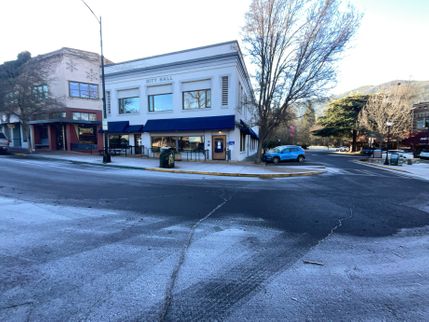
Oregon Property Inspections has completed a property inspection for the property 20 E Main Street, Ashland, OR 97520 on 01-16-2026. The report was conducted in accordance with ASTM Baseline Condition Assessment Process E2018, Certified Commercial Property Inspectors Association, and generally accepted industry standards.
Oregon Property Inspections certifies to the best of its knowledge this report is true and accurate. We hope this report is found to be complete and informative. Please do not hesitate to contact us if you have any questions or if further assistance is needed.
Sincerely,
Oregon Property Inspections
James Hooper
Owner/Project Manger/Site Inspector
Purpose,Scope, & Limitations
Scope
Oregon Property Inspections was retained to conduct a Property Condition Assessment of the subject property. The purpose of the assessment was to provide an objective, independent, professional opinion of the subject property.
The inspection will conform to the ASTM Standard ASTM E2018 protocol for Property Condition Assessments and CCPIA ComSOP standards. The report findings as presented herein outlines the inspector's observations and opinions regarding the apparent physical condition of the subject property as observed at the time of the inspection based solely upon a visual examination of readily accessible building systems and components as presented in the Property Condition Assessment.
Our services included reviewing available and supplied documents relating to the property, interviews of individuals knowledgeable of the property, a visual survey of the property, and preparation of this report. This report presents a summary of the building and site systems observed, our opinion of their general condition, our recommendations, and opinions of immediate and short-term future costs. Recommended work items are identified as immediate and short-term future costs. Immediate costs includes items considered building or fire code violations, items considered life safety concerns, and deferred maintenance items and repairs that, in our opinion, would cause significant additional deterioration if they were not completed. All other items are considered short-term future costs over the 5-10-year evaluation period. We have generally not included repair costs for items considered as maintenance items expected to cost less than $1,000 in any one year.
User Alliance
This report is for the use and benefit of, and may be relied upon by Client and any of its affiliates, and third parties authorized by Client and Focus Building Inspections, including the lender(s) in connection with a secured financing of the property, and their respective successors and assigns.
If this report is to be utilized beyond the initial purpose, Focus Building Inspections reserves the right to assess and obtain further fees for any additional time or reporting necessary for future purpose.
Obsolescence
The client should only rely on the inspection report at the point in time that the inspector’s observations were being made and research was being conducted. The client should deem the report as obsolete to some extent, even while it is being prepared.
Opinion of Costs
Opinions of Costs to Remedy Physical Deficiencies – Opinions of Cost are segregated into immediate costs and short term costs. Immediate Needs are defined as opinions of Costs that require immediate action as a result of any of the following: (1) material existing or potential unsafe conditions, (2) material building or fire code violations, or (3) conditions that if left uncorrected, have the potential to result in or contribute to critical element or system failure within one year or will result most probably in a significant escalation of its remedial cost. The deficiencies and/or items identified are based on our observations unless otherwise noted. Short terms costs are opinions of Costs to remedy physical deficiencies, such as deferred maintenance, that may not warrant immediate attention, but require repairs or replacements that should be undertaken on a priority basis in addition to routine preventive maintenance. Such opinions of Costs may include costs for testing, exploratory probing, and further analysis should this be deemed warranted by the consultant. The performance of such additional services are beyond this guide. Generally, the time frame for such repairs is within one to two years.
Limitations
Oregon Property Inspections has performed the services and prepared this report in accordance with generally accepted consulting practices, and makes no other warranties, either expressed or implied, as to the character and nature of such services or product.
Oregon Property Inspections, its officers, and its employees have no present or contemplated interest in the property. Our employment and compensation for preparing this report are not contingent upon our observations or conclusions.
Information in this report, concerning equipment operation, condition of spaces and concealed areas not observed or viewable and for the disclosure of known problems, if any, is from sources deemed to be reliable, including, but not limited to property managers and maintenance personnel; however, no representation or warranty is made as to the accuracy thereof.
No assessment or inspection can wholly eliminate the uncertainty regarding the presence of physical deficiencies and the performance of a subject property’s building systems. Preparation of an inspection in accordance with the CCPIA and the ASTM guide is intended to reduce, but not eliminate, the uncertainty regarding the potential for component or system failure and to reduce the potential that such component or system may not be initially observed. ASTM also recognizes the inherent subjective nature of a consultant’s opinions as to such issues as workmanship, quality of original installation, and estimating the Remaining Useful Life (RUL) of any given component or system. It should be recognized that a consultant’s suggested remedy may be determined under time constraints, formed without the aid of engineering calculations, testing, exploratory probing, the removal of materials, or design. Furthermore, there may be other alternate or more appropriate schemes or methods to remedy the physical deficiency.
Summary
Executive Summary S
- ES-1 Executive Summary:
The primary building structure consists of unreinforced masonry walls, cast-in-place concrete walls, and light wood-framed construction at later additions. Interior unreinforced masonry partition walls were also observed. These construction types are generally associated with increased seismic vulnerability. A prior seismic evaluation report was provided for review and identifies multiple structural and seismic deficiencies related to diaphragms, unreinforced masonry walls, parapets, anchorage, and load transfer elements. No independent engineering analysis or verification of the seismic report was performed as part of this assessment.
The roofing system, consisting of a TPO membrane over wood decking, was observed to be in poor condition, with evidence of advanced aging, widespread patching, membrane irregularities, deteriorated sealants, and moisture-related impacts to underlying materials. Conditions observed are consistent with a roofing system that is beyond its typical service life. Downspout leakage indicators and loose attachment hardware were also observed at multiple exterior locations.
Exterior wall systems exhibited age-related cracking, weathered parapet and cornice elements, deteriorated exterior trim, and localized wood rot at window trim near roof level. Moisture-related staining was observed at roof-to-wall interfaces and interior faces of exterior walls; affected areas were dry at the time of inspection. Soft and deteriorated mortar was observed at portions of the exterior brick façade.
Within the attic, a split wood rafter was observed, allowing localized movement and separation. Rodent activity was noted, and multiple unsealed wall penetrations were observed that may allow pest entry. Suspected asbestos-containing materials, including plaster and older wallpaper finishes, were observed in several attic locations. Stored legacy equipment, including older HVAC components and an unused water heater, was also present.
The mechanical systems include multiple rooftop HVAC units utilizing R-22 refrigerant. The units were observed to be aged and beyond their typical service life, with dirty air filters and deteriorated refrigerant line insulation noted. R-22 refrigerant is no longer manufactured and is costly to obtain. The domestic water heater, dated approximately 2010, also exceeds its typical service life based on age.
The electrical system appears to be served by three-phase 208Y/120-volt power, with a service size estimated between 400 and 800 amps based on observed equipment labeling. Exposed electrical terminations were observed in attic areas. Knob-and-tube wiring was identified, with some conductors energized and others inactive at the time of testing.
One elevator serves the building. The elevator emergency communication phone did not function when tested.
Life-safety observations included missing exit signage in select areas of the building. Fire protection features such as sprinklers and fire extinguishers were present; no testing or code compliance evaluation was performed.
Overall, the property exhibits conditions typical of an older, historically constructed building with deferred maintenance, aged building systems, and documented structural and seismic concerns. The findings in this report are based solely on visual observations of readily accessible areas and systems and are intended to provide a general understanding of the property’s physical condition at the time of inspection.
Property Condition Assessment
Summary
Property / Inspection Day Details
Type of Building: The main building is a two-story structure constructed with a combination of unreinforced masonry walls, cast-in-place concrete walls, and light wood-framed exterior walls at later additions. The roof framing consists of straight sheathing spanning perpendicular to the roof framing members. Interior partition walls, including unreinforced masonry walls, are present on the main floor.
Property Use : City Hall
Gross (Area of Property): 4771 SQ FT
Attendees: City Employees
Property Contact : Robert Halbritter – City of Ashland Facilities Supervisor
Date of Construction: 1891
State of Occupancy: Occupied
Neighboring Properties : Adjacent commercial buildings, including retail, office, and mixed-use occupancies typical of a downtown core environment
What direction is the front of the structure facing?: E
What were the weather conditions on the day of the inspection?: Clear
Background : The building was originally constructed around 1891 with two additions added since that time. One addition was added around 1913 that expanded the building to the north on both stories and to the south on the first story only. Another addition was added in 1995 that extended the second floor on the south to be in line with the south wall of the 1913 addition. The current size of the building is approximately 7,745 square feet.
Opinion of Costs
Cost to Cure Assumptions & Methodology : The following cost-to-cure estimates represent order-of-magnitude budget ranges prepared for planning purposes only. Costs are based on regional construction averages, observed conditions, known system ages, and professional judgment. No contractor bids, destructive testing, engineering calculations, or specialty testing were performed. Costs reflect probable repair, replacement, or mitigation actions that a typical owner may anticipate within the stated timeframe. Actual costs may vary based on scope refinement, design requirements, market conditions, regulatory requirements, and final contractor pricing.
Immediate Costs : $229,500 – $359,000
Years 1-3 Estimated Exposure: : $167,000 – $267,000
Years 4-5 Estimated Exposure:: $360,000 – $720,000
Key Cost Drivers: Major cost drivers include the roofing system replacement, aged R-22 HVAC equipment, electrical system deficiencies, and documented seismic vulnerabilities associated with unreinforced masonry construction. Deferred maintenance and legacy building systems contribute to elevated near- and mid-term capital requirements.
Cost to Cure
Exterior Property
Topograph, Drainage, & Site
Storm Water Drainage : gravity drain
Site Description: level and flat
Access and Egress: Primary access is provided from East Main Street via the front (east-facing) entrance. Secondary access and egress are provided through additional doors serving the building interior. Access and egress appeared typical for a downtown commercial property at the time of inspection. No evaluation of code compliance, occupant load, or emergency egress adequacy was performed as part of this assessment.
Condition : Fair, Typical for age
Paving and Curbing
Parking: Street
Sidewalks: Yes
Condition : Good
Right Side Sidewalk
Cracking was observed in the concrete sidewalk at the time of inspection.

Frame and Envelope
Superstructure and Substructure
Foundation: Slab on Grade
Roof Decking System : Wood
Framing System : wood
Decking Between Floors: Wood
Attic/Interior Insulation: Loose Fill, Batt
Structural Systems : Unreinforced masonry walls were observed in the building, including exterior walls and select interior partition walls. Unreinforced masonry construction is generally associated with increased seismic vulnerability.
Additional Considerations / Seismic Considerations : A seismic evaluation report was provided for review. The report identifies multiple structural and seismic deficiencies within the building, including deficiencies related to unreinforced masonry walls, diaphragm performance, parapet bracing, and load transfer elements. No verification or independent analysis of the referenced report was performed as part of this assessment.
Additions and Infill Areas : An infill building area is present and is supported in part by unreinforced masonry walls and post-and-beam construction adjacent to an adjoining building. The infill area and adjacent structure appear to be closely spaced, which may present interaction concerns during seismic events. No evaluation of seismic separation or load transfer between structures was performed.
Condition : Fair, Typical for age of property
Moisture staining
Moisture staining was observed on interior faces of exterior walls and roof components. The affected areas were dry at the time of inspection.
 |  |  |
 |
Rafter damage
A split wood rafter was observed in the upstairs attic at the time of inspection. The split condition allows for localized movement and separation.

Used equipment left in attic
Old HVAC equipment and an unused water heater were observed stored in the attic at the time of inspection.
 |  |
Loose Mortar
Soft, loose mortar was observed at portions of the exterior brick wall at the time of inspection. Repointing is needed at the affected areas.

Roofing
Inspection Method : Rooftop
Material: TPO
Drainage: Gutters, Scuppers
Decking: wood
Flashings: Aluminum
Condition: Poor
Downspout concerns
Staining was observed at the exterior wall surfaces below downspouts, along with loose downspout straps. The observed staining is consistent with leakage at the downspout locations.
 |  |  |
TPO roof in possible need of replacement
- Widespread surface discoloration and soiling, consistent with long-term weathering
- Numerous membrane patches at regular intervals, likely associated with fastener plates and prior repairs
- Surface irregularities and wrinkling at seams and patched areas
- Localized membrane deformation around fasteners and penetrations
- Evidence of repeated repairs, indicated by multiple square and circular patch applications
- Loss of uniform membrane appearance, suggesting advanced aging rather than isolated damage
- Deteriorated sealant around corner and walls
 |  |  |
 |  |  |
 |  |  |
 |  |
REPAIR/REPLACE ROOFING SYSTEM
The roofing system is in poor condition. Observations noted during the inspection include:
- Extreme granule lost with several past patch work
- Areas of buckling
- Decay and in despair
- Staining and holes in roof with damaged plywood/beams/timber
- Subfloor with holes caused by moisture via roof
Facades
Cladding: Concrete, Brick
Windows : Wood
Condition: Fair, Poor
Exterior Trim and Railing Condition
Deterioration and material loss were observed at exterior fascia and soffit components, including areas of delamination and exposed substrate. Staining consistent with prolonged moisture exposure was noted at the affected areas. In addition, deterioration and localized wood decay were observed at portions of the exterior railing assembly, including peeling paint, softened wood, and damaged end sections.
 |  |  |
 |  |  |
Parapet and Exterior Trim Condition
The parapet wall, including decorative trim and cornice elements, appeared weathered in areas, with localized water-related staining and material deterioration observed. In addition, exterior wood trim around windows exhibited weathering and signs of prolonged exposure.
 |  |  |
 |  |  |
 |
Exterior wall cracking
Cracking was observed at the exterior concrete wall surfaces, including vertical cracking and cracking adjacent to window openings, consistent with typical age-related cracking.
 |  |  |
 |  |  |
 |  |
Exterior Wall and Roof Interface Condition
Deterioration of the exterior wall finish and moisture-related staining were observed near the roof-to-wall interface, with areas of exposed substrate visible.

Window Trim W/Rot
Deteriorated wood trim was observed at exterior window assemblies at roof level, with signs of rot visible at the time of inspection.

Exterior Wall Penetrations
Unused and used cables were observed passing through an exterior wall vent opening. The wall penetrations were not sealed at the time of inspection, creating openings that allow potential rodent entry into the attic area.

Mechanical, Electrical Plumbing,
Plumbing
Potable Water Source:: Public Water Supply
Water Supply Piping: Copper
Water Heater Age : 2010
Water Distribution : Copper, Galvanized
Drainage/Wastewater Piping: Cast Iron, ABS
Hot Water Production: Hot Water Heater, 19.9, Electric
Condition: Fair
Water Heater Condition
The water heater was observed to have a manufacture date of approximately 2010 based on available labeling. Based on age alone, the unit exceeds its typical service life.
 |  |
Heating, Ventilation and Air Condition
Energy Source: Electric
Manufacturer: Carrier
Location : Roof
Model Number : See Table
Serial Number : See Table
Size of Unit in tons : 1.5, 5 (x2), 3
Distribution System : Central
Refrigeration Type : R-22
Age of equipment : 1999-2003
Condition: Poor
HVAC Rooftop Units (RTU) Table
Rooftop HVAC Condition
The rooftop HVAC units were observed to be aged and beyond their typical service life. The units utilize R-22 refrigerant, which is no longer manufactured and is costly to obtain. Dirty air filters and deteriorated refrigerant line insulation were observed at the time of inspection.
 |  |  |
 |  |  |
 |  |  |
 |
Electrical
Service Size: 400-800 amps
Voltage : 208y/120v, Three-Phase
Wiring Type: Copper
Overload Protection: Circuit Boxes
Receptacle Protection: GFCi
Main Power Shutoff: Exterior Panel, Interior Panel
Condition: Good
Exposed Electrical Terminations
Open junction boxes with exposed electrical wire terminations was observed in attic areas.
 |  |  |
Knob and Tube (KT Wiring) observed
Knob-and-tube wiring was observed. Some conductors were energized at the time of testing, while others were not.
 |  |  |
 |
Vertical Transportation
How many Elevators/escalators/lifts : 1
Age : N/A
Condition : We did not have access to the control room and could not access the control pad to control the elevator to the floors.
Emergency Elevator Phone
The elevator emergency communication phone did not function when tested.

Interior Elements
Finishes
 |  |  |


Restroom
Restrooms were inspected for basic function of accessible fixtures, including toilets, sinks, faucets, visible plumbing, and ventilation. The inspection is visual only and does not include ADA evaluation or dismantling of components.

Kitchen

Life Safety/Fire Protection/Environmental
Life Safety
Emergency Lighting: No
Exit Signs at Proper Egress Points: Yes, No
Smoke/Heat Detectors: Yes
Sprinkler System: Yes
Fire Extinguishers: Yes
Missing Exit Signs In Areas
Exit signage was missing in select areas of the building.

Environmental
Suspected Asbestos
Suspected asbestos-containing materials (ACMs), including plaster and older wallpaper finishes, were observed in several attic locations.
 |  |
Rodent Droppings
Rodent droppings found in various areas of the attic.

Reference Photos
Reference Photos
These photos are general reference photos of the entire scope of the property assessment. They are separated by component. These photos do not detect issues as those are in the report accordingly.
Sidewalks
 |  |  |
 |  |  |
 |  |  |
 |  |
Exterior
 |  |  |
 |  |  |
 |  |  |
 |  |
Electrical
 |  |  |
 |  |  |
 |  |  |
 |  |  |
 |  |
Vertical Transportation

Interior
 |  |  |
 |  |  |
 |  |  |
 |  |  |
 |  |  |
 |  |  |
 |  |  |
 |  |  |
 |  |  |
 |  |  |
 |  |  |
 |  |  |
 |  |  |
 |  |  |
 |  |  |
 |  |  |
 |
Restrooms
 |  |  |
 |  |  |
 |  |
Life Safety
 |  |  |
 |  |  |
 |  |
HVAC
 |  |  |
 |  |  |
Attic
 |  |  |
 |  |  |
 |  |  |
 |  |  |
 |  |  |
 |
Roof
 |  |  |
 |  |  |
 |  |  |
 |  |  |
 |
Executive Summary
Executive Summary
The primary building structure consists of unreinforced masonry walls, cast-in-place concrete walls, and light wood-framed construction at later additions. Interior unreinforced masonry partition walls were also observed. These construction types are generally associated with increased seismic vulnerability. A prior seismic evaluation report was provided for review and identifies multiple structural and seismic deficiencies related to diaphragms, unreinforced masonry walls, parapets, anchorage, and load transfer elements. No independent engineering analysis or verification of the seismic report was performed as part of this assessment.
The roofing system, consisting of a TPO membrane over wood decking, was observed to be in poor condition, with evidence of advanced aging, widespread patching, membrane irregularities, deteriorated sealants, and moisture-related impacts to underlying materials. Conditions observed are consistent with a roofing system that is beyond its typical service life. Downspout leakage indicators and loose attachment hardware were also observed at multiple exterior locations.
Exterior wall systems exhibited age-related cracking, weathered parapet and cornice elements, deteriorated exterior trim, and localized wood rot at window trim near roof level. Moisture-related staining was observed at roof-to-wall interfaces and interior faces of exterior walls; affected areas were dry at the time of inspection. Soft and deteriorated mortar was observed at portions of the exterior brick façade.
Within the attic, a split wood rafter was observed, allowing localized movement and separation. Rodent activity was noted, and multiple unsealed wall penetrations were observed that may allow pest entry. Suspected asbestos-containing materials, including plaster and older wallpaper finishes, were observed in several attic locations. Stored legacy equipment, including older HVAC components and an unused water heater, was also present.
The mechanical systems include multiple rooftop HVAC units utilizing R-22 refrigerant. The units were observed to be aged and beyond their typical service life, with dirty air filters and deteriorated refrigerant line insulation noted. R-22 refrigerant is no longer manufactured and is costly to obtain. The domestic water heater, dated approximately 2010, also exceeds its typical service life based on age.
The electrical system appears to be served by three-phase 208Y/120-volt power, with a service size estimated between 400 and 800 amps based on observed equipment labeling. Exposed electrical terminations were observed in attic areas. Knob-and-tube wiring was identified, with some conductors energized and others inactive at the time of testing.
One elevator serves the building. The elevator emergency communication phone did not function when tested.
Life-safety observations included missing exit signage in select areas of the building. Fire protection features such as sprinklers and fire extinguishers were present; no testing or code compliance evaluation was performed.
Overall, the property exhibits conditions typical of an older, historically constructed building with deferred maintenance, aged building systems, and documented structural and seismic concerns. The findings in this report are based solely on visual observations of readily accessible areas and systems and are intended to provide a general understanding of the property’s physical condition at the time of inspection.
Signed Contracts
-1.png)
Oregon Commercial Property Inspections
State Inspector License No. CCPIA-002354

.png)