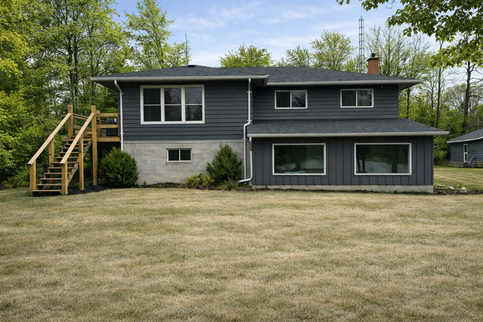
Thank you for choosing Outline Inspections!
How to Read This Report
Getting the information to you
This report presents important technical findings in a clear, easy‑to‑navigate format. If you’re short on time, use the Summary Page in the menu for a quick look at the most significant observations. I still recommend reviewing the full report, which includes photographs, captions, diagrams, descriptions, videos, and links to additional resources. The online version offers the best experience. Any blue, underlined word or phrase can be clicked for more detail. If needed, you can also save the report as a PDF or print a hard copy.
Chapters and sections
The report is organized into chapters that group the home into logical inspection areas. Each chapter contains sections focused on specific systems or components. Most sections include general descriptive information in black text. Narrative observations (displayed in colored boxes) appear when a system or component is notably deficient or when additional context is helpful. If a system or component is in serviceable condition, there may be no narrative comments, and the section may simply note that it was “tested” or “inspected.”
Open 📸The Complete Report in the menu to expand the chapters.
Observation labels
All narrative observations are colored, numbered, and labeled to help you locate, reference, and understand the significance of each item. Observation colors and labels used in this report are:
- Major Concern:A defect that poses a significant risk to the home’s safety, structure, or essential function. These issues require prompt evaluation and repair by a qualified professional to prevent further damage or costly consequences.
- Repair:A defect or condition that should be corrected to restore proper function or prevent further deterioration. These issues should be addressed in a timely manner by a qualified professional to maintain the home’s overall condition.
- Recommended Maintenance:Routine tasks or minor conditions that should be addressed periodically to preserve the home’s performance and prevent future issues.
- Improve or Upgrade:Items that are functioning but could benefit from enhancements, modernization, or improved safety/efficiency. These are optional improvements, not required repairs.
- Due Diligence:Items that require further evaluation, clarification, or documentation from the seller, specialist, or municipality to fully understand the condition or history.
- Recommended Disclosure Items:Conditions or observations that should be formally disclosed by the seller to ensure transparency and support informed decision‑making.
- Monitor:Conditions that are currently acceptable but show signs of wear, aging, or early-stage issues. These should be watched over time for changes or deterioration.
- Inspection Notes:General observations or clarifications that provide context, explanation, or additional detail about the inspection findings. These do not require action.
- Limitations:Factors that restricted visibility or access during the inspection, such as stored items, weather, or concealed components. These limit the ability to fully evaluate certain areas.
Summary Page
The Summary Page provides a bulleted overview of all observations noted during the inspection. This overview is not a substitute for reading the full report. The complete report includes photographs, captions, and context necessary for proper understanding.
📸 The Complete Report
Grounds
Address Identification
Drainage and Site
Window Wells and Stairwells
Driveways/Walkways/Flatwork
Grounds, Trees and Vegetation
Exterior Stairs
Exterior
Siding and Trim
Exterior Vent and Exhaust Terminations
Eaves
Exterior Doors
Exterior Window Frames
Exterior Hose Bibs
Exterior Electric Receptacles and Fixtures
Electric Service
Electric Service Voltage Tested
Electric Service
Electric Service Equipment
Sub Panel
Electrical Grounding System
Electrical Bonding System
Electric Distribution and Finish
Branch Wiring
Receptacles and Fixtures
Smoke and Carbon Monoxide Alarm Systems
Ceiling Fans
Heating, Cooling, Fireplaces and Ventilation
Heating Systems
Heating and Cooling Distribution Systems
Heat Pumps and Cooling Systems
Mechanical Ventilation Systems
Solid Fuel Fireplaces
Plumbing
Water Meter
Water Service Supply
Distribution Pipe
Waste Pipe and Discharge
Sump Pumps and Drains
Sewage Ejector Pumps
General Comments
Building Characteristics, Conditions and Limitations
Type of Building : Detached
Approximate Square Footage: 1000
Approximate Year of Original Construction: 1975
Attending the Inspection: Owner
Occupancy: Occupied
This building was occupied at the time of the inspection. Inspection of occupied buildings presents challenges as occupant belongings can obstruct visual inspection of and access to parts of the building. I do my best during inspection to work around belongings to discover as much as possible about the building without moving or damaging personal property; however, the presence of personal items does limit the inspection.
Animals Present: Yes
Weather during the inspection: Light Rain
Approximate temperature during the inspection: 5°C
Ground/Soil surface conditions: Wet
For the Purposes of This Report, the Front Door Faces: East
OLD BUILDINGS AND LEAD AND ASBESTOS
In 1978, federal laws were passed to prohibit use of lead and asbestos in building materials. Manufacturers of building materials were allowed to sell existing stocks of materials that were manufactured with lead and asbestos, so even buildings constructed as late as the mid-1980's could possibly contain lead or asbestos. Identification and testing for lead and asbestos and other environmental testing is beyond the scope of this home inspection.
Grounds
Address Identification
Address Identification: Address Numbers Present and Well Displayed
Drainage and Site
Siding Clearance to Grade: Standard
Downspout Discharge: Above grade
Site Description: Building Near Stream, Flat (Low Lot - Inquire With Sellers)
This building is located near a stream. This presents risks for seasonal flooding problems and should be further investigated to see if any history of flooding has occurred on the property. At the time of inspection I found no red flags to indicate regular flood damage in the home.
The home is situated on a generally low lot. This could lead to seasonal drainage problems. I recommend inquiring with the sellers and or building department for any history of water problems on the site. Is this home in a flood plain?
Window Wells and Stairwells
None Noted
Driveways/Walkways/Flatwork
Driveway: Gravel
Patios: Pavers
Grounds, Trees and Vegetation
Trees/Vegetation too near building: Yes - Prune Vegetation off House
TREE AND VEGETATION PRUNING
Pruning trees, branches, and vegetation away from the building is recommended. Where trees, branches, and large shrubs can provide rodent access to the roof, a minimum 6-foot clearance is recommended as many rodents can jump 6 feet. All vegetation, including smaller landscaping such as grasses, flowers, and shrubs should be kept 1 foot off the house to eliminate contact which could trap moisture against the building.
✒️
- Some of these mature shrubs are too close to the building.
 |  |
Exterior Stairs
Exterior Stairs: See decks section of this report
Exterior
Siding and Trim
Trim Material: Wood
Siding Material: Wood
SIDING PAINT JOB NEEDED
The exterior siding needs to be cleaned, sanded and re-stained to preserve the siding. Localized wood decay should be repaired prior to refinishing. Regular staining on this type of wood siding is important to slow cupping and splitting of the siding.
- The south-facing siding is showing the greatest amount of weathering
Recommendation
Hire a siding contractor to further evaluate this condition and re-paint / stain the entire exterior. This is routine maintenance but this will be a more expensive upcoming maintenance item. Examples of specific observations noted during inspection include:
Exterior Vent and Exhaust Terminations
Exterior Siding and Vent Terminations: Present
Eaves
Soffit vents noted, Wood soffit
Openings were noted in the eaves of the house that need to be sealed up to exclude rodents from getting into the attic.

Exterior Doors
Exterior Door Styles: Solid core, Glass panel doors, Sliding glass
Exterior Window Frames
Window Frames: Wood
WOOD WINDOWS NOTE
Many of the wood windows in this building are exposed to the weather and will require regular painting and sealing maintenance to preserve the windows and prevent decay. I checked the windows for wood decay and damage during inspection.
✒️
- Localized wood decay

Exterior Hose Bibs
Operating, Update to Frost Free
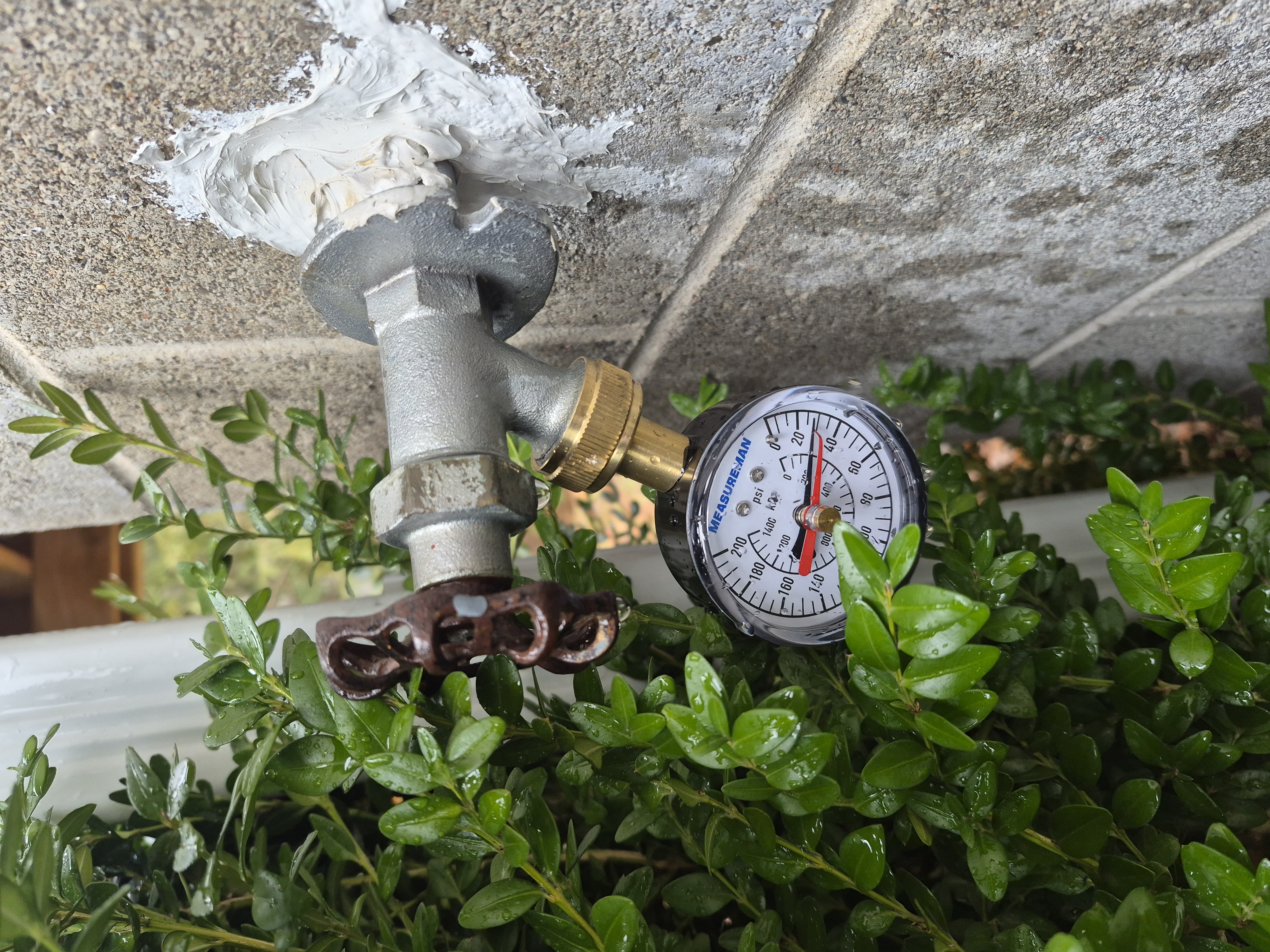
Water Pressure: 25 PSI
LOW WATER PRESSURE NOTED
Low water pressure was noted. A bare minimum of 30 PSI is recommended to serve the home. Often, well systems require servicing and repair to recharge storage tanks and even update pump systems. I recommend having the well system further evaluated and repaired as recommended by a well specialist.
OLDER HOSE BIBS NOTED
Older hose bibs were noted on this building. Updating the hose bibs is recommended. Modern hose bibs are typically "frost free," which are (arguably) more resistant to bursting in cold weather. They also have important vacuum breakers installed which can prevent water from your hoses backing into your water supply system. In the meantime, be sure to winterize your hose bibs during cold weather to prevent from freezing.
 |  |
Exterior Electric Receptacles and Fixtures
Electric Receptacles: Three wire receptacles
The exterior receptacle has been installed at a height that prevents safe and convenient access from ground level. Additionally, non‑metallic sheathed cable was observed running exposed along the exterior wall surface. This wiring method is not suitable for outdoor exposure and is vulnerable to physical and environmental damage. Recommend evaluation by an electrical contractor.

Decks, Porches and Balconies
Wood Decks Porches and Balconies
Present
To see a prescriptive guide for residential wood deck construction click this link:
Structure: Pressure treated lumber
Ledger Board: Standard, Defects Noted (Flashings, Missing, Ledger Board, Bolts, Missing)
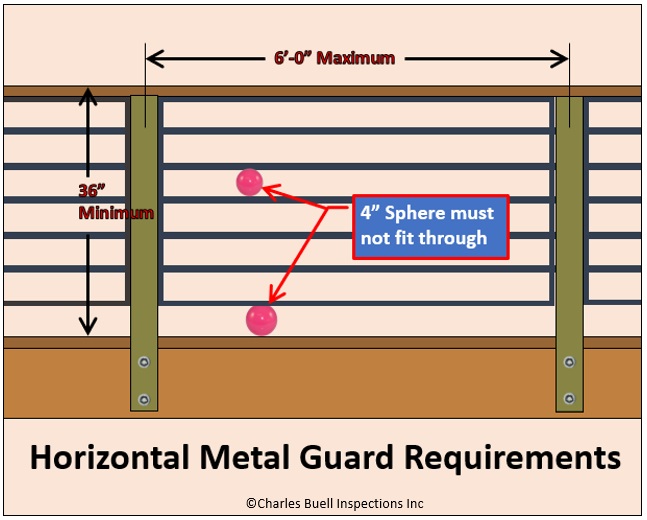
Guardrail: Non-standard, Large Openings, Horizontal Railing
HORIZONTAL GUARDRAIL
The deck guardrail has been run horizontally. While this is generally standard, it does have a safety risk as the railing creates a ladder effect. This can be a safety hazard for young children. Improve as desired for safety.
Decking Material: Softwood
This house has yellow pine decking installed. This decking would benefit from regular maintenance to preserve its condition. Once the wood has adequately dried, a penetrating exterior stain or water‑repellent finish should be applied. Ongoing cleaning and periodic re‑staining will help reduce weathering and extend the service life of the deck.
Posts, Beams and Footings: Post to Beam - Non-standard Connections, Posts Bearing Onto Flatwork
DECK LEDGER BOLTS NEEDED
The deck ledger board has not been reliably connected to the house. This risks deck failure as the ledger attachment to the house can pull free. I recommend installing an attachment system that conforms to recommended minimum standards. The Town of Orangeville provides an excellent Deck Construction Guide for reference.
Recommendation
Hire a qualified deck contractor to further evaluate.
 |  |  |
 |
The deck beams do no appear to be reliably connected to the posts. The beam is not bearing on the posts and nails were used for connection. When not done to normal standards it is difficult to predict how this connection will perform. The Town of Orangeville provides an excellent Deck Construction Guide for reference.
Recommendation
Hire a qualified deck contractor to further evaluate.
 |  |  |
 |  |
Splices were observed in the deck girder spans. Girder members should be continuous or properly supported at posts; splices located between supports can weaken the span and reduce load‑carrying capacity. This condition may compromise the structural performance of the deck.
Recommendation
Hire a qualified deck contractor to further evaluate.
 |  |  |
 |
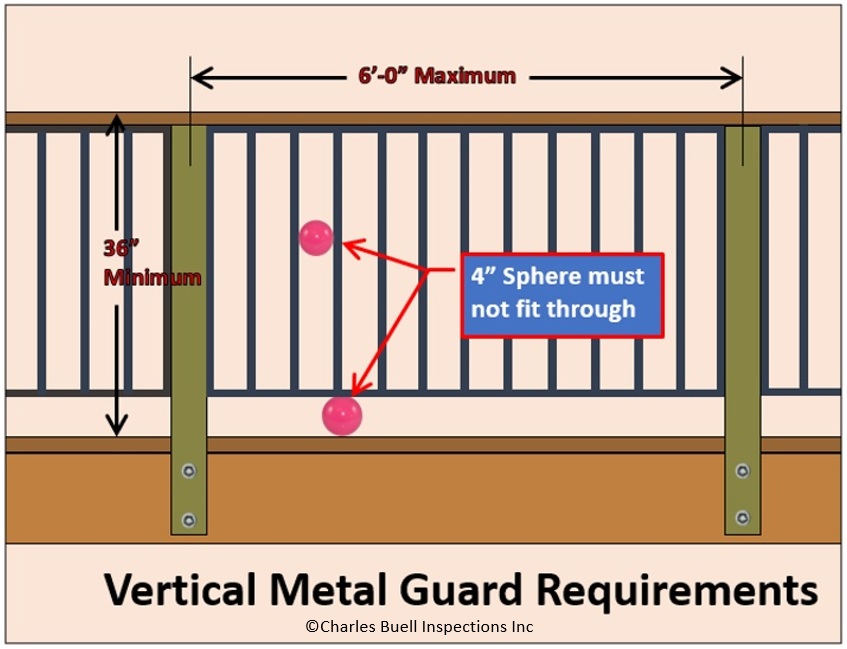
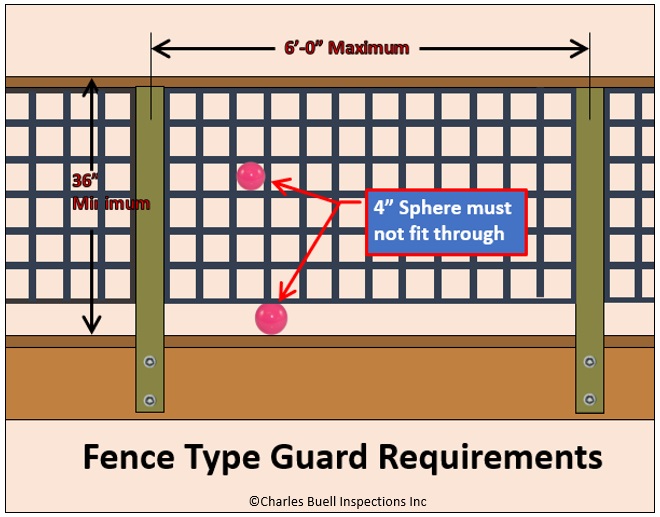
LARGE OPENINGS FOR DECK GUARDRAIL
The openings for the deck guardrail are larger than the modern standard of 100mm. Caution should be used, especially around small children as they can often fit their head between this space of railing. The Town of Orangeville provides an excellent Deck Construction Guide for reference.
Recommendation
Hire a qualified deck contractor to further evaluate.
 |  |  |
 |  |  |
 |
No flashings were noted between the deck ledger board and the home. This could allow water to get trapped between the deck and the house, causing rot and a conducive pest condition. This can be a difficult retrofit once the deck is constructed. No water damage was visible, but this could cause long term moisture control problems at the deck.

Garage
Garage General
Garage Type: One Car Garage, Detached
Extensive repairs are needed to the detached garage. Hire a licensed general contractor to further evaluate and repair. Examples of observations noted during inspection include:
- roof joists bearing weight on non structural wall
- poor garage door support
- damaged light with live electrical
- Wrong screw type in subpanel, missing screws, missing breaker plates, unprotected cables in vulnerable area, poor mounting surface.
- Garage foundation deflecting
- Opening in siding, rotted siding
- large opening in damaged soffit


Garage Doors and Automatic Openers
Overhead Garage Door Type: Vinyl
Garage Occupant Door: Solid Wood
Garage Floor
Garage Slab: Concrete
Roof, Chimney and Gutters
Roof Materials
Method of Roof Inspection: Walked on roof
Roof Style: Hip, Valley
Flashings, Valleys and Penetrations: Present and Visually Standard
Roof flashings are used to keep a roofing system waterproof where the roofing material starts, stops, changes direction, or is penetrated. During the inspection, we look for standard flashing techniques that could be considered normal or standard in our region. Damaged, incomplete or non-standard flashings can be a sign of an older or less reliable roofing system and may require repair. Any non-standard flashings noted during the inspection will be reported below if found.
Roof Covering Materials: Architectural grade composition shingle
Approximate Age of Roof Covering: 2-5 Years
Overlay Roof: No
Shingle Fastening Accessible For Inspection : Yes - Fastening Looked Non-standard
The headwall flashing has separated from the wall, creating a pathway for moisture to enter the structure. Signs of moisture damage are noted on the interior beneath this section. A qualified roofing contractor should repair or replace the flashing to restore proper weather protection.
 |  |  |
 |  |
All exposed fasteners on the roof should be sealed with mastic.
 |  |  |
Chimneys
Present
Chimney Material: Masonry
Chimney Flue Liners: Present
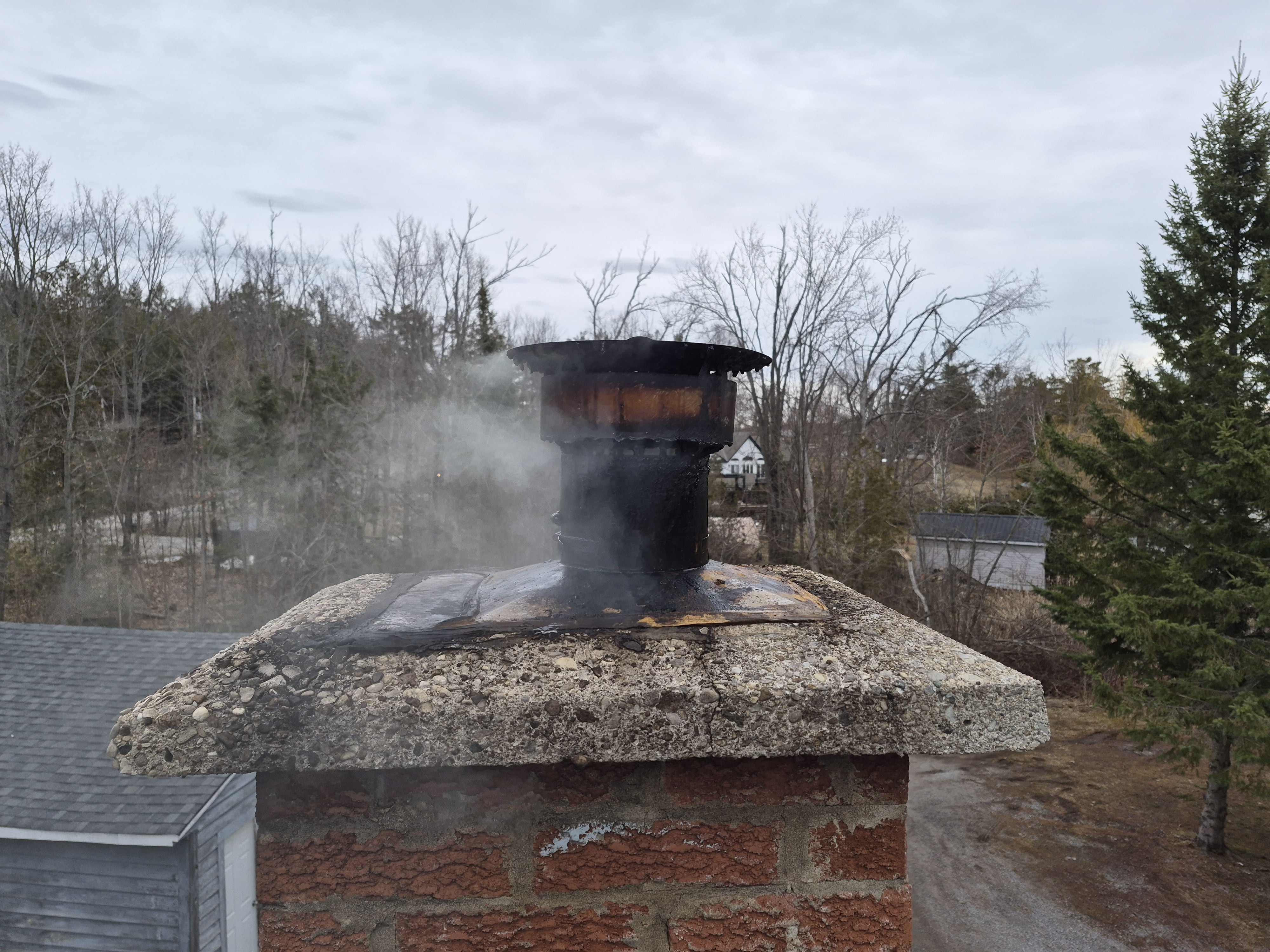
The chimney needs cleaned and repaired. Creosote is building up and can quickly choke a metal chimney cap. The masonry cap is cracked and spalling. Have this further investigated and repaired by a qualified mason or chimney sweep as recommended.
WOOD FIREPLACE CHIMNEY MAINTENANCE
Chimney's should be professionally inspected and cleaned on an annual basis, as well as before their first use in any new season or by a new occupant. Regular maintenance helps ensure the chimney and flue remain free of creosote buildup, blockages, and hidden defects, supporting safe operation and extending the life of the system.
Recommendation
A qualified chimney sweep should be hired to clean the chimney.
- A WETT certified chimney sweep can also perform visual and technical inspections of the fireplace.
Gutters and Downspouts
Gutter and Downspout Materials: Aluminum
Electric Service
Electric Service Voltage Tested
Service Voltage: 120/240
Electric Service
Service Entrance: Above Ground
Meter Base Amperage: 200
The electrical meter base is installed higher than the acceptable mounting range typically required by the local supply authority. Meter bases must be positioned so the meter remains safely and readily accessible from finished grade. Adjustment is recommended to ensure proper accessibility for service personnel.

Electric Service Equipment
Main Panel Amperage: 200 amps
Electric Service Amperage: 200 amps
Main Electric Panel Location: Kitchen
Overcurrent Protection Devices: Breakers
Panel Manufacturer: Federal Pacific Electric
ELECTRIC PANEL UPDATING IS RECOMMENDED
A Federal Pioneer Electric Stab Lok brand electric panel was noted. This is an obsolete brand of panel with a reputation for failing and malfunctioning breakers. Stab Lok electric panels are at greater risk of electrical fire and statistically less safe than any new electric panel. I recommend additional inspection of this electrical service by a licensed electrical contractor; updating this panel is recommended for improved reliability and safety. A number of observations were noted during the inspection:
- Openings in dead front cover
- Burnt neutral wire
- Multiple double tapped hot wires
- Double tapped neutral wires
- Unlabeled "neutral" hot wires
- Poorly labelled panel


Sub Panel
Sub Panel: Present
Sub Panel Voltage: 240 volt
Service Conductor Size: Copper, #8, 40 amps
Sub Panel Amperage: 40 amps
Sub Panel Location: Garage
Electrical Grounding System
Present - Could Not Confirm
During a home or property inspection, every effort is made to inspect the visible components of the electrical system grounding. The grounding system is critical for safely discharging electrical surges, especially in the case of lightning strikes. There is no way in the context of a home inspection to verify the "effectiveness" of the grounding system as much of the system is not visible.

Electrical Bonding System
Non-standard
Have the electrical bonding system checked by a licensed electrician. Adequate bonding could not be verified at the main water pipe or the pipes by the water heater. This is an important safety feature to ensure safe control of stray voltage on metal systems in the house.

Electric Distribution and Finish
Branch Wiring
Wire Material: Copper
Wiring Method: Non-metallic sheathed cable
WIRING REPAIRS NEEDED
Several repairs are needed to the wiring system. Unconventional wiring and receptacles are noted in the attached image. Non-standard cables and splicing techniques are being used.
Recommendation
Hire a licensed electrical contractor to further evaluate and repair.
✒️
- The types of wiring repairs found today indicate work was likely done here by someone who was not a licensed electrician - it would be wise to check for any permit records of history
- The extent and types of repair items noted during inspection suggest there will be additional concealed repair work here.

NM ELECTRIC CABLE IS SUBJECT TO PHYSICAL DAMAGE
Surface-run cable wiring was noted during the inspection. The exposed non-metallic sheathed cable needs to be properly protected inside a conduit or raceway so that the cable is not subject to physical damage. This cable appears to be the feeder for the detached garage, though not visible for the entire run.
Recommendation
Hire a licensed electrician to further evaluate and repair.
 |  |
Receptacles and Fixtures
Inspection Method: Representative Testing
A representative number of receptacles and switches were tested during inspection. Any defects found during inspection are noted in this report. Only visible and accessible receptacles and switches were tested during inspection and personal items and furnishings are not moved to access any receptacles or fixtures. Inspection/testing of the electrical system can be challenging. It should be anticipated that not all defects will be discovered and that some issues found may actually not be defects at all. Tools used to verify proper wiring and function can vary wildly in reliability/consistency. The kinds of tools that could be used to confidently analyze the system and its function cannot typically be done in the context of a Standard Home Inspection. I look for indications of issues, based on the age of the home, types of wiring systems used etc, as well as personal experience and by testing with a variety of common tools. Issues identified, will be further discussed with recommendations in the electrical section below.
Electric Receptacles: Three wire receptacles, Reverse Polarity
GFCI Receptacles (Ground-Fault Circuit Interrupter): Absent in some locations
AFCI (Arc-Fault Circuit Interrupter) : Absent
REVERSE POLARITY
Reverse polarity was noted at one of the electric receptacles. This is when the hot and the neutral wires have been wired backwards. This is a potential safety issue that should be corrected by a licensed electrical contractor.

 |
DAMAGED LIGHT FIXTURES
Damaged light fixtures were noted. Repair / replace as needed.
 |  |
ABSENT GFCI RECEPTACLES
Some areas in the home lack Ground Fault Circuit Interrupter (GFCI) protection. This is common in older homes and is generally grandfathered, meaning upgrades are not required unless electrical work or renovations take place. Although GFCIs may not have been required when the home was built, they are recommended today in areas with a higher risk of shock. Installing GFCI protection is a simple safety improvement that can reduce the risk of electrical shock. Areas where GFCI protection is recommended include (noted absences bold):
- Bathrooms (All Receptacles to be GFCI Protected)
- Kitchens (Receptacles within 1.5m of a sink
- Laundry Areas (Receptacles within 1.5m of a sink)
- Garages (All receptacles must be GFCI protected)
- Unfinished Basements (All receptacles must be GFCI protected)
- Outdoor Areas (All exterior receptacles must be GFCI protected)
- Boathouses/docks (GFCI required for all receptacles)
- Sump Pump outlets (If within 1.5m of a basin or sink)
ABSENT AFCI RECEPTACLES
All areas in the home lack Arc Fault Circuit Interrupter (AFCI) protection. This is common in older homes and is generally grandfathered, meaning upgrades are not required unless electrical work or renovations take place. Although AFCIs may not have been required when the home was built, they are recommended today because they provide added protection against electrical arcing and potential fire hazards. Installing AFCI protection is a simple safety improvement that can improve overall safety. Areas where AFCI protection is recommended include:
- Bedrooms
- Living Rooms
- Dining Rooms
- Family Rooms
- Hallways
- Dens/Offices
- Finished Basements
- Closets
Smoke and Carbon Monoxide Alarm Systems
CO Alarms Noted: On Main FloorIn Basement
CO Alarms: Present
Ontario requires carbon monoxide (CO) alarms in any dwelling that contains a fuel‑burning appliance, a fireplace, an attached garage, or—effective January 1, 2026—is heated by air supplied from a fuel‑burning appliance located outside the dwelling.
Required Installation Locations
For houses, the Ontario Fire Code requires CO alarms in all of the following locations:
• Adjacent to each sleeping area (the hallway or area immediately outside bedrooms).
• On every storey of the home, including storeys without bedrooms (effective January 1, 2026).
For apartments or condo units, alarms are required:
• Adjacent to each sleeping area.
• On every storey of the unit, including those without bedrooms (effective January 1, 2026).
• In public corridors if those corridors are heated by air from a fuel‑burning appliance (effective January 1, 2026).

Smoke Alarms: Present
Ontario’s Fire Code makes smoke alarms mandatory in all residential occupancies. The provincial fire‑safety guidance highlights that most fatal fires occur at night, and working alarms provide the critical early warning needed for escape.
Required Locations
• Every storey of the home, including basements.
• Outside all sleeping areas, typically in the hallway leading to bedrooms.
• Cottages, cabins, and seasonal homes must follow the same rules.
Ceiling Fans
Ceiling Fans: Present and Tested, Wobbling - Need Balancing
The ceiling fan in the bedroom is wobbling during operation at high speed. This can be a simple matter of balancing the fan blades, but it could also indicate an inadequately secured fan, which can present a safety hazard. Have this further evaluated and repaired as recommended by a qualified electrical contractor.

The ceiling fans were tested and operating during the inspection. I do not inspect the ceiling fan mounting as this is inaccessible to inspection. It is important the ceiling fans get well-mounted to the ceiling with proper fan fixture boxes.
Heating, Cooling, Fireplaces and Ventilation
Heating Systems
Energy Source: Electricity
Heating Method: Electric baseboard heaters
This building has electric baseboard heaters. These can get very hot during operation. Be sure to keep all drapes, curtains, furniture, electric cords and other flammable items away from these heaters when they are on. Also be careful with small children as baseboard heaters can present a burn hazard if left accessible. If you are concerned about the safety or efficiency of these heaters, consider upgrading the system. A heat pump system is safer, more energy efficient and has the benefit of cooling. These are expensive to install but will save on heating costs over the long run and will likely provide superior comfort.
Thermostat Location: Main floor
Manufacturer: Unknown, Multiple Types
Age: Could not determine, Multiple Types
INOPERATIVE BASEBOARD HEATERS
Inoperative baseboard heaters were noted - they did not respond to testing. Hire a licensed electrician to repair or replace as needed. Locations noted during inspection include:
- Basement Bedroom (south wall)

Heating and Cooling Distribution Systems
Heat Source in Each Room: Present
Distribution Method: Electric Baseboard Heaters
Heat Pumps and Cooling Systems
No Heat Pump or Air Conditioning Present
Thermostat Location: Main Floor, Hallway
Mechanical Ventilation Systems
Bath Fan Ducting: None noted
Solid Fuel Fireplaces
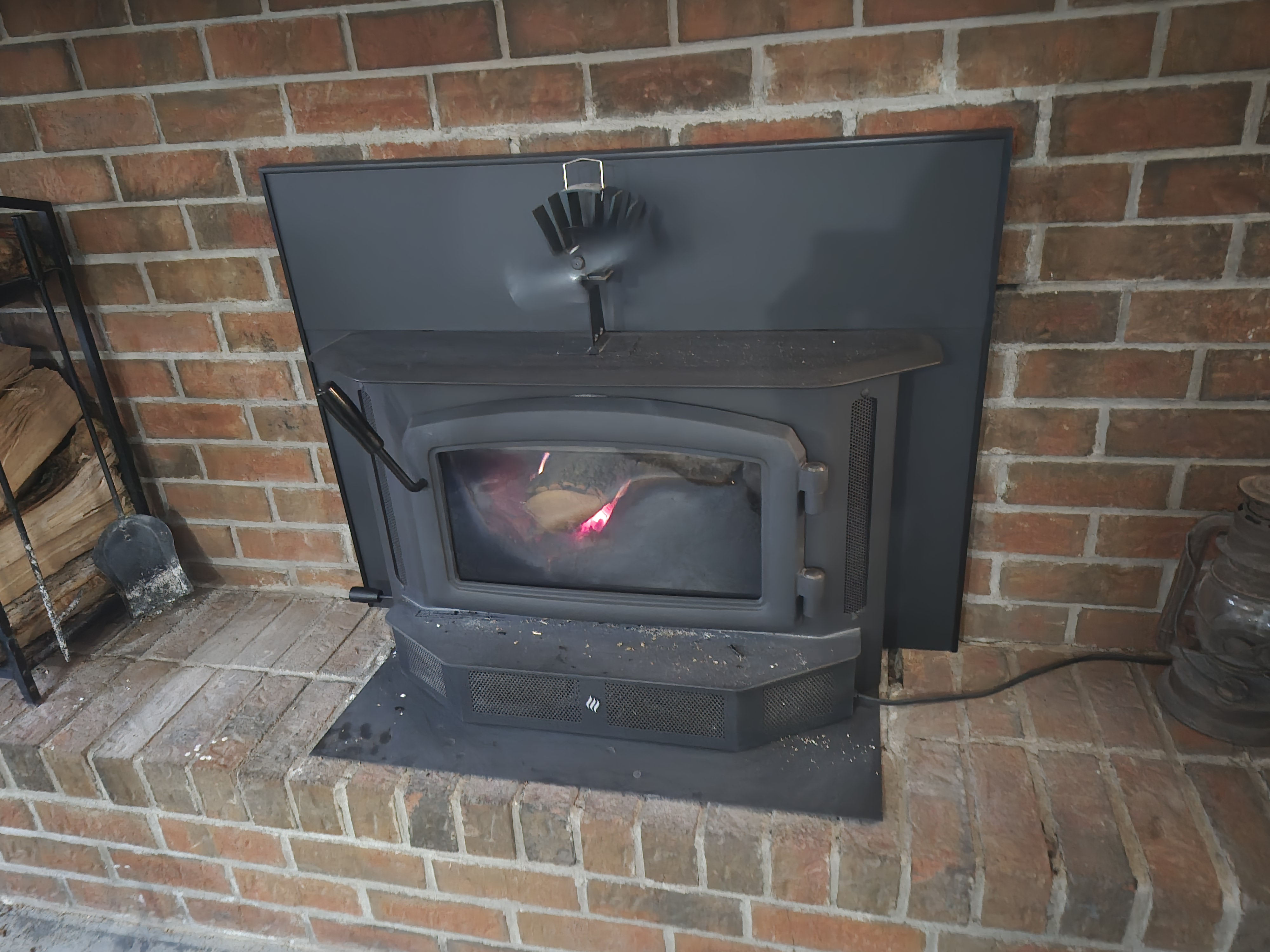
Fireplace Types: Wood stove insert in masonry firebox
INADEQUATE NON-COMBUSTIBLE HEARTH
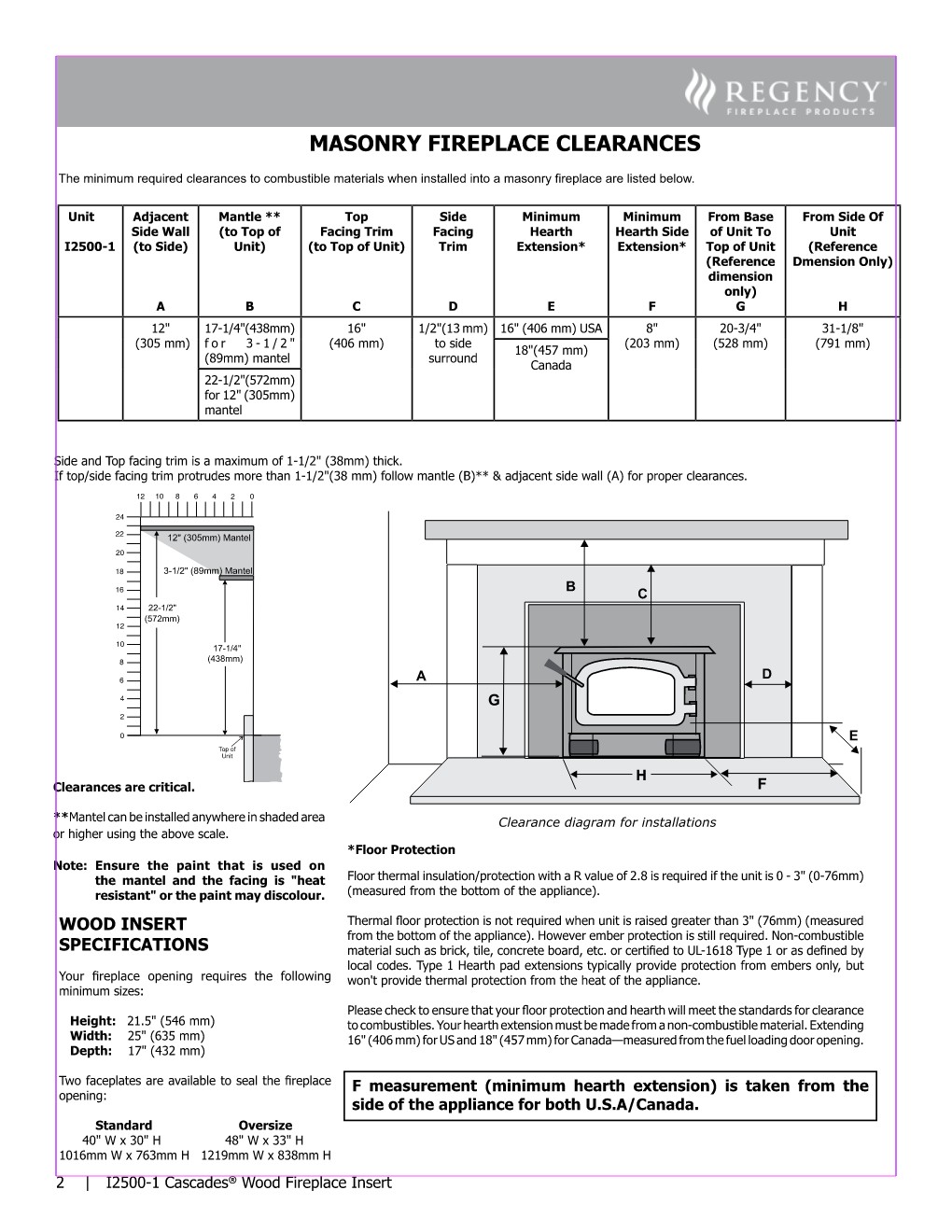
A wood stove has been inserted into a masonry firebox and the non-combustible hearth was not extended. This means the hearth is no longer an adequate size to protect the floor from hot embers. Have this further investigated and repaired by a qualified chimney sweep or mason. Provide an adequate non-combustible hearth for the front of the wood stove for operational safety.
 |  |
WOOD FIREPLACE CHIMNEY MAINTENANCE
Chimney's should be professionally inspected and cleaned on an annual basis, as well as before their first use in any new season or by a new occupant. Regular maintenance helps ensure the chimney and flue remain free of creosote buildup, blockages, and hidden defects, supporting safe operation and extending the life of the system.
Recommendation
A qualified chimney sweep should be hired to clean the chimney.
- A WETT certified chimney sweep can also perform visual and technical inspections of the fireplace.
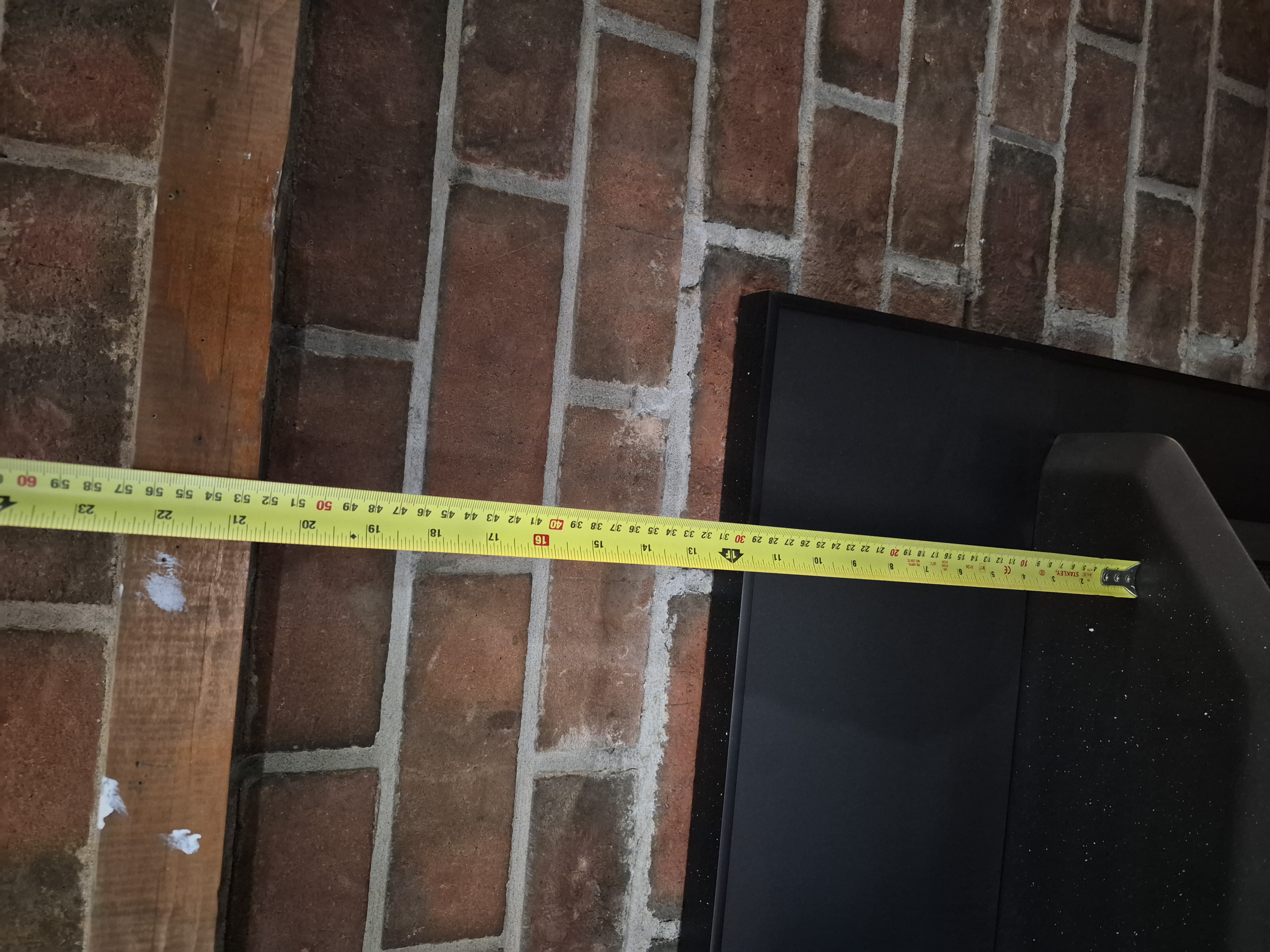
FIREPLACE CLEARANCES - MODEL SPECIFIC
 |  |  |
Plumbing
Water Meter
Not Found - Well
Water Service Supply
Pipe Material: Copper
Water Supply: Private well
Pressure Reducing Valve: None noted
Main Water Shut-off Location: Utility room, Below stairs
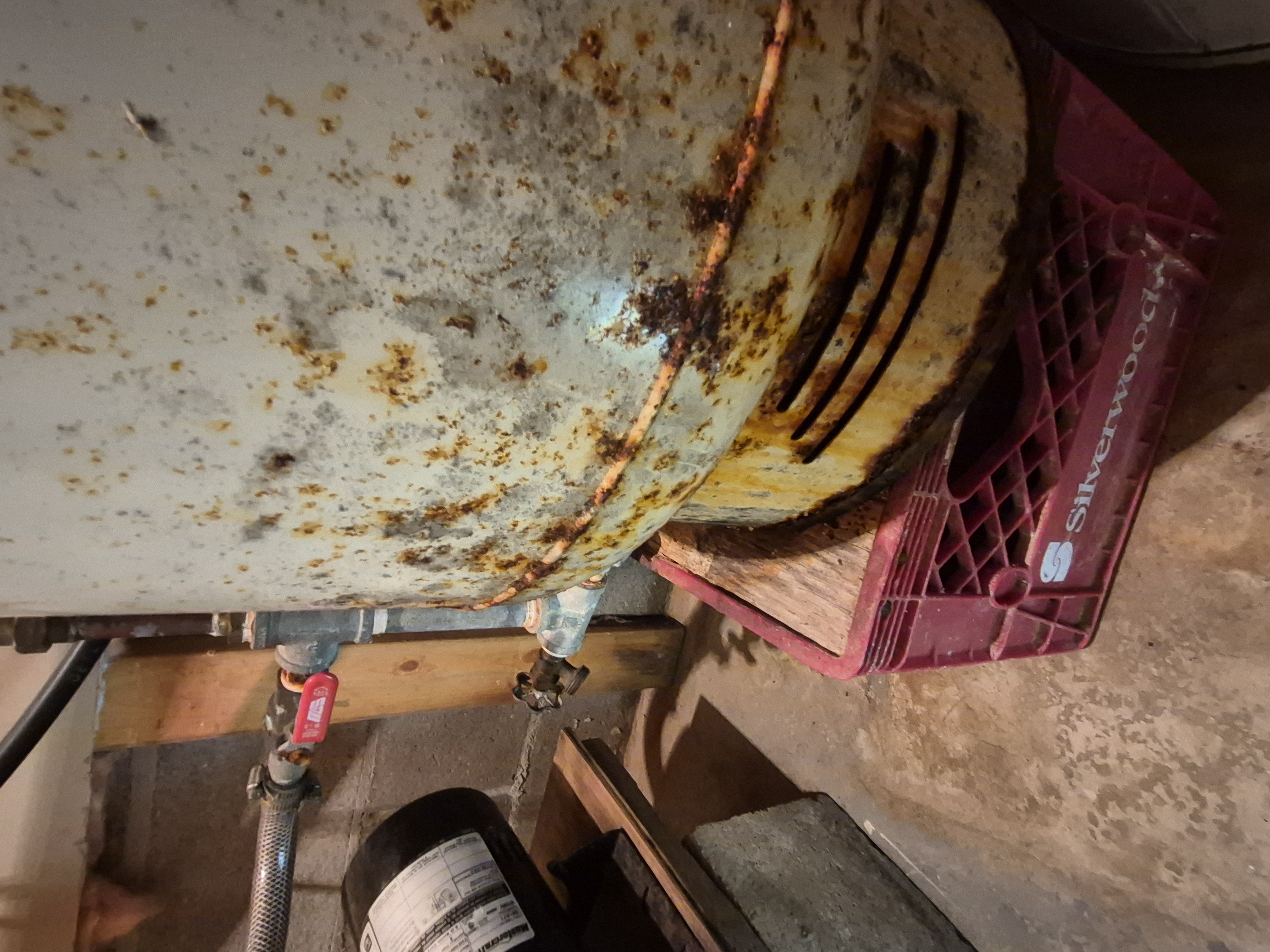
The well pressure tank is resting on an unstable makeshift support (milk crate) and shows visible rust.
Recommendation
Hire a qualified plumber to further evaluate.
PRIVATE WELL
Well equipment was noted for the water supply. Inspection of the well, water supply, and water quality are beyond the scope of this inspection.
Recommendation
I recommend hiring a well specialist to inspect and evaluate the well and well water. Well equipment: the pump and captive storage tank have limited service lives and often require updating on a 20-year schedule. There are other elements of a well system that should be evaluated as well, such as the well production, often tested in a draw-down test, water quality, and well depth.

 |  |
Distribution Pipe
Supply Pipe Materials: Copper
Copper water supply pipes were installed. Copper pipes installed prior to the late 1980s may be joined with solder that contains lead, which is a known health hazard, especially for children. Laws were passed in 1985 prohibiting the use of lead in solder, but prior to that solder normally contained approximately 50% lead. Note that testing for toxic materials such as lead is beyond the scope of this inspection. Consider having a qualified lab test for lead, and if necessary, take steps to reduce or remove lead from the water supply. Various solutions include:
- Flush water taps or faucets. Do not drink water that has been sitting in the plumbing lines for more than 6 hours
- Install appropriate filters at points of use
- Use only cold water for cooking and drinking, as hot water dissolves lead more quickly than cold water
- Treat well water to make it less corrosive
- Have a qualified plumber replace supply pipes and/or plumbing components as necessary
Note,
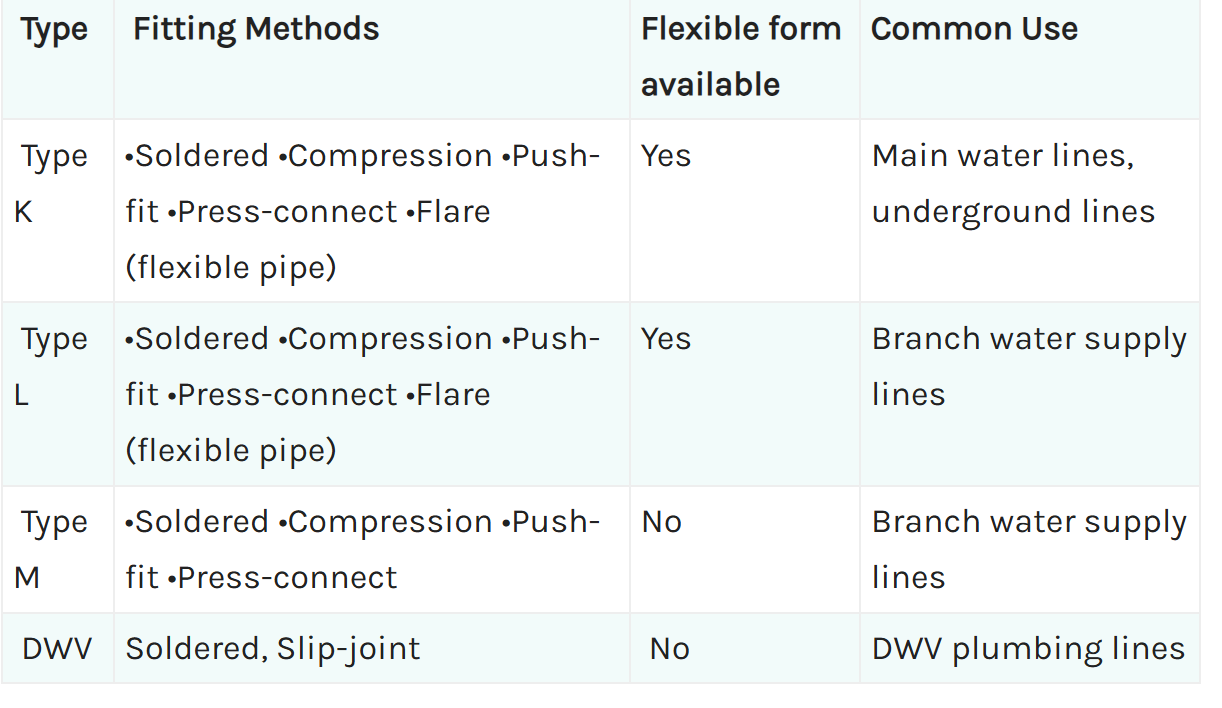
These are a bunch of different types of copper that can be used. The table below shows the different types of copper.
Functional Flow: Marginal, See Exterior Note E-5
Plumbing Testing Proceedures: All Plumbing was Tested
MONITOR PIPES AND PLUMBING SYSTEMS AFTER MOVING IN
I recommend monitoring waste and supply plumbing and plumbing fixtures for several months after moving in. I ran all plumbing fixtures during the inspection. Any leaks or signs of active or past leaks will be noted elsewhere in this report. Daily use of plumbing presents more stress and challenges to piping systems than simply testing them during inspection.
Waste Pipe and Discharge
Discharge Type: Septic System - Buyer
For more information about septic systems and how they work, please see this web site from the government of Ontario - Septic Smart
Waste and Vent Pipe Materials: ABS plastic
Location of Sewer Cleanout: Not Found
A separate greywater discharge system is present, draining laundry to an underground pit not connected to the septic system. Confirm with seller if this is a permitted Class 2 leaching pit under the Ontario Building Code.
Recommendation
Evaluation and correction by a licensed septic contractor.

NO SEWER CLEANOUT WAS FOUND
No cleanout was noted for the sewer line. It is possible there is an accessible cleanout for the sewer line that is concealed behind finishes or belongings. Sewer line cleanouts are necessary for clearing drain obstructions and for inspecting the building sewer with a sewer camera.
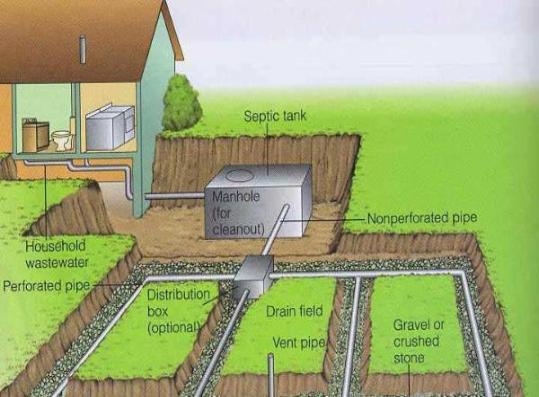
ONSITE SEPTIC SYSTEM
Based on visible components, this property appears to have a private on-site septic system. These are specialty systems and are excluded from this inspection. Comments in this report related to this system are made as a courtesy only and are not meant to be a substitute for a full evaluation by a qualified specialist. Generally, septic tanks should be pumped and inspected every 3 years. Depending on the type of system and municipal regulations, inspection and maintenance may be required more frequently, often annually. I recommend:
- Investigating any information about this system's maintenance and repair history
- Reviewing any documentation available for this system
- Learning inspection and maintenance requirements for this system
- Hire a qualified specialist to evaluate, perform maintenance and make repairs as needed
 |  |
Sump Pumps and Drains
Floor Drain: None noted
Sump Pumps: None noted
Sewage Ejector Pumps
Sewage Ejector Pump: Present
Location: Basement
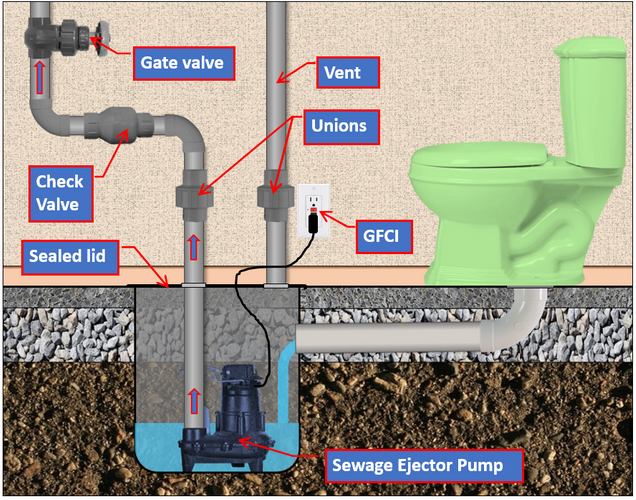
SERVICE THE SEWAGE EJECTOR SYSTEM
A sewage ejector system was noted serving the basement bathroom.
- Opening up the sewage ejector system is beyond the scope of a home inspection.
- I did not see a moisture alarm installed; these are recommended to alert you should the pump fail.
Recommendation
Have the sewage ejector system further evaluated and repaired / serviced as recommended by a qualified plumbing contractor.
 |  |  |
 |
Water Heaters
Water Heater
System Type: Tank
Manufacturer: Giant
Data Plate: Shown Here
This shows the data plate for this water heater.

Size: 47 gal
Age: 2020
Energy Source: Electricity
Drain Pan: None Noted - Recommended
Expansion Tank: None Noted - Well
Relief Valve: Present - Not Tested
A temperature and pressure relief valve (TPRV) is required on all water heaters to discharge any excessive pressure within the tank. A discharge pipe should be attached to the valve and directed to a safe location away from body contact. Most manufacturers suggest that homeowners test these valves at least once a year by lifting the lever to ensure the valve discharges properly and also recommend inspection of these safety devices every three years. The picture here shows a typical TPRV. They may also be found on the side of the heater on some models. I do not test these valves due to the possibility that they may leak after testing. A leaking or inoperative TPRV should be replaced immediately by a licensed plumber.
 (1) (1).jpg)
NO DRAIN PAN FOR WATER HEATER
No drain pan has been installed below the water heater here. A drain pan is recommended under water heaters that are located in finished spaces or where a leak could damage finishes. Where a pan does not already exist, the tricky part is providing a drain to the outside. A pan without a drain is often of limited benefit/protection. For improved protection from accidental water heater leaks and where a drain is difficult to install, consider a pan with a moisture alarm and a flood-safe device.

RUST FORMING
Rust is forming at the base of the water heater, suggesting a past leak or flooding. No active leakage was observed during the inspection. Monitor for any leaks or worsening of corrosion.
Water Temperature
Water Temperature Measured During Inspection: 132 Degrees F
WATER TESTED HOT
Testing of the plumbing system today, the water tested as too hot - 131 degrees F. This is a scald hazard. To prevent scalding, standards recommend indoor hot water temperatures do not exceed 120 degrees. There is some evidence that hot water temperatures should be greater than 130 degrees to prevent Legionnaires' disease from developing in the water heater. If this is a concern, you can heat the water in the tank to 140 degrees F and have a tempering valve installed at the hot water tank. Have this further evaluated and repaired by a licensed plumber, or simply turn down the temperature as desired to eliminate a scald hazard.
 (1).jpg) |  |
Additional Plumbing
Water Softener
Manufacturer: Culligan
A water softener system is installed. These systems reduce mineral content (hardness) in the water supply, helping protect plumbing fixtures and appliances. The unit was not tested for performance as part of a home inspection. Routine maintenance is required for proper operation. Recommend ongoing servicing and filter/salt management per manufacturer instructions. Confirm service history and settings with the current owner.
• Salt Level: Should be maintained per manufacturer guidance; low salt reduces effectiveness.
• Bypass Valve: Ensure the system is not left in bypass unless intentionally isolated.
• Regeneration Cycle: Units require periodic regeneration; settings vary by model and household usage.
• Filters (if present): Pre‑filters or carbon filters may require regular replacement
 |  |  |
Interior
Floors and Floor Materials
Floor Materials: Carpet, Concrete, Vinyl composite tiles
Walls, Ceilings, Trim, Hallways and Closets
Wall and Ceiling Materials: Drywall
Wall Insulation and Air Bypass
Wall Insulation: Not Visible
Interior Stairs and Railings
Standard
Interior Doors
Interior Doors: Hollow Core
Windows
Window Glazing: Double pane
Interior Window Frame: Wood
Window Styles: Double hung, Sliding, Fixed pane
Kitchen
Sinks and Faucets
Kitchen Sinks: Tested, Leaking faucet
KITCHEN SINK FAUCET IS LEAKING
The kitchen sink faucet handle is leaking and needs to be repaired or replaced.

S-TRAP CONFIGURATION NOTED
An S-trap was noted in the kitchen sink. This is an older style of waste piping that risks siphoning the trap and is no longer allowed. This should be further investigated and repaired by a licensed plumber to ensure reliable performance. Often an air admittance valve can be used to correct this configuration. Please note that trap siphoning could allow sewer gas to enter the house.
.jpg) |  |  |
MISSING ISOLATION VALVES
Isolation valves were not installed on the kitchen sink supply lines. Current plumbing standards require accessible shut‑off valves at each fixture to allow localized servicing and to avoid shutting off water to the entire home during repairs.
Recommendation
Hire a qualified plumber to add proper isolation valves for future serviceability.
 | |  |
Laundry Facilities
Washer
Not tested
Dryer
Not tested
Power Source: Electric
Exhaust Duct: Ducted to Exterior
Basement Bathroom
Sinks and Cabinets
Not tested
S-TRAP CONFIGURATION NOTED
An S-trap was noted in the basement bathroom sink. This is an older style of waste piping that risks siphoning the trap and is no longer allowed. This should be further investigated and repaired by a licensed plumber to ensure reliable performance. Often an air admittance valve can be used to correct this configuration. Please note that trap siphoning could allow sewer gas to enter the house.
|  |  |
MISSING ISOLATION VALVES
Isolation valves were not installed on the basement bathroom sink supply lines. Current plumbing standards require accessible shut‑off valves at each fixture to allow localized servicing and to avoid shutting off water to the entire home during repairs.
Recommendation
Hire a qualified plumber to add proper isolation valves for future serviceability.
 |  |
Main Floor Bathroom
Sinks and Cabinets
Tested
S-TRAP CONFIGURATION NOTED
An S-trap was noted in the main bathroom sink. This is an older style of waste piping that risks siphoning the trap and is no longer allowed. This should be further investigated and repaired by a licensed plumber to ensure reliable performance. Often an air admittance valve can be used to correct this configuration. Please note that trap siphoning could allow sewer gas to enter the house.
|  |
MISSING ISOLATION VALVES
Isolation valves were not installed on the main bathroom sink supply lines. Current plumbing standards require accessible shut‑off valves at each fixture to allow localized servicing and to avoid shutting off water to the entire home during repairs.
Recommendation
Hire a qualified plumber to add proper isolation valves for future serviceability.
 |  |
Attic
Attic Access
Viewed at access
SMALL ATTIC ACCESS POINT
The attic access hatch is too small and cannot be entered. Standards for attic access size is 30"/22" to provide access to this space to work and make repairs/improvements.

HATCH INACCESSIBLE
The inspection was limited by the small attic hatch and further restricted by personal belongings stored in the closet.
Structure and Basement
Foundation
% of Foundation Not Visible: 50%
Building Configuration: Walkout
Foundation Description: Masonry block
TYPICAL FOUNDATION CRACKS NOTED
Small cracks were noted in the foundation. The purpose of the foundation is to connect the weight of the building to well-compacted soils below the house so that the house does not move or settle. Concrete cracking can indicate poorly compacted soils below the house which could require repair. It is not possible to determine or verify the cause of these cracks during a visual inspection. The easiest way to prevent ongoing settlement in buildings is by controlling roof runoff and site drainage to promote dry soils around the foundation; wet soils do not bear weight well. This will also help to prevent moisture problems. In my experience, small cracks like these are common in concrete foundations of this age.
- Monitor these cracks. If continued movement is noted, seek additional opinions from a structural engineer or qualified contractor to determine an accurate scope and urgency for repair.

Floor, Wall and Ceiling Framing
Wall Framing: 2x4
Wall Sheathing: Not visible
Floor Framing: 2x8
Sub-Floor Material: Plywood
Ceiling Framing: Not visible
Basement
Partial
Basement Moisture
Signs of Basement Moisture Conditions: Water Stains Noted
WATER STAINS NOTED IN BASEMENT
Water stains were noted on some of the basement finishes, indicating the basement has experienced prior moisture control problems. Inquire with the seller for any history of moisture intrusion and make all repairs to exterior drainage as recommended in this report, as this will reduce the chances of basement moisture. Additional basement waterproofing may be needed. The scope and urgency of additional repairs have a great deal to do with your plans and expectations for this space. The space was dry at the time of inspection, but conditions can change seasonally.
- This basement does not look well-suited to finishing without first waterproofing.

Summary
Major Concerns
- G-1 Garage General:
Extensive repairs are needed to the detached garage. Hire a licensed general contractor to further evaluate and repair. Examples of observations noted during inspection include:
- roof joists bearing weight on non structural wall
- poor garage door support
- damaged light with live electrical
- Wrong screw type in subpanel, missing screws, missing breaker plates, unprotected cables in vulnerable area, poor mounting surface.
- Garage foundation deflecting
- Opening in siding, rotted siding
- large opening in damaged soffit
- RCG-1 Roof Materials:
The headwall flashing has separated from the wall, creating a pathway for moisture to enter the structure. Signs of moisture damage are noted on the interior beneath this section. A qualified roofing contractor should repair or replace the flashing to restore proper weather protection.
- ES-2 Electric Service Equipment:
ELECTRIC PANEL UPDATING IS RECOMMENDED
A Federal Pioneer Electric Stab Lok brand electric panel was noted. This is an obsolete brand of panel with a reputation for failing and malfunctioning breakers. Stab Lok electric panels are at greater risk of electrical fire and statistically less safe than any new electric panel. I recommend additional inspection of this electrical service by a licensed electrical contractor; updating this panel is recommended for improved reliability and safety. A number of observations were noted during the inspection:
- Openings in dead front cover
- Burnt neutral wire
- Multiple double tapped hot wires
- Double tapped neutral wires
- Unlabeled "neutral" hot wires
- Poorly labelled panel
- EDF-1 Branch Wiring:
WIRING REPAIRS NEEDED
Several repairs are needed to the wiring system. Unconventional wiring and receptacles are noted in the attached image. Non-standard cables and splicing techniques are being used.
Recommendation
Hire a licensed electrical contractor to further evaluate and repair.
✒️
- The types of wiring repairs found today indicate work was likely done here by someone who was not a licensed electrician - it would be wise to check for any permit records of history
- The extent and types of repair items noted during inspection suggest there will be additional concealed repair work here.
Repairs
- E-1 Siding and Trim:
SIDING PAINT JOB NEEDED
The exterior siding needs to be cleaned, sanded and re-stained to preserve the siding. Localized wood decay should be repaired prior to refinishing. Regular staining on this type of wood siding is important to slow cupping and splitting of the siding.
- The south-facing siding is showing the greatest amount of weathering
Recommendation
Hire a siding contractor to further evaluate this condition and re-paint / stain the entire exterior. This is routine maintenance but this will be a more expensive upcoming maintenance item. Examples of specific observations noted during inspection include:
- E-2 Eaves:
Openings were noted in the eaves of the house that need to be sealed up to exclude rodents from getting into the attic.
- E-3 Exterior Window Frames:
WOOD WINDOWS NOTE
Many of the wood windows in this building are exposed to the weather and will require regular painting and sealing maintenance to preserve the windows and prevent decay. I checked the windows for wood decay and damage during inspection.
✒️
- Localized wood decay
- E-4 Exterior Hose Bibs:
LOW WATER PRESSURE NOTED
Low water pressure was noted. A bare minimum of 30 PSI is recommended to serve the home. Often, well systems require servicing and repair to recharge storage tanks and even update pump systems. I recommend having the well system further evaluated and repaired as recommended by a well specialist.
- E-6 Exterior Electric Receptacles and Fixtures:
The exterior receptacle has been installed at a height that prevents safe and convenient access from ground level. Additionally, non‑metallic sheathed cable was observed running exposed along the exterior wall surface. This wiring method is not suitable for outdoor exposure and is vulnerable to physical and environmental damage. Recommend evaluation by an electrical contractor.
- DPB-1 Wood Decks Porches and Balconies:
DECK LEDGER BOLTS NEEDED
The deck ledger board has not been reliably connected to the house. This risks deck failure as the ledger attachment to the house can pull free. I recommend installing an attachment system that conforms to recommended minimum standards. The Town of Orangeville provides an excellent Deck Construction Guide for reference.
Recommendation
Hire a qualified deck contractor to further evaluate.
- DPB-2 Wood Decks Porches and Balconies:
The deck beams do no appear to be reliably connected to the posts. The beam is not bearing on the posts and nails were used for connection. When not done to normal standards it is difficult to predict how this connection will perform. The Town of Orangeville provides an excellent Deck Construction Guide for reference.
Recommendation
Hire a qualified deck contractor to further evaluate.
- DPB-3 Wood Decks Porches and Balconies:
Splices were observed in the deck girder spans. Girder members should be continuous or properly supported at posts; splices located between supports can weaken the span and reduce load‑carrying capacity. This condition may compromise the structural performance of the deck.
Recommendation
Hire a qualified deck contractor to further evaluate.
- DPB-4 Wood Decks Porches and Balconies:
LARGE OPENINGS FOR DECK GUARDRAIL
The openings for the deck guardrail are larger than the modern standard of 100mm. Caution should be used, especially around small children as they can often fit their head between this space of railing. The Town of Orangeville provides an excellent Deck Construction Guide for reference.
Recommendation
Hire a qualified deck contractor to further evaluate.
- DPB-5 Wood Decks Porches and Balconies:
No flashings were noted between the deck ledger board and the home. This could allow water to get trapped between the deck and the house, causing rot and a conducive pest condition. This can be a difficult retrofit once the deck is constructed. No water damage was visible, but this could cause long term moisture control problems at the deck.
- RCG-2 Roof Materials:
All exposed fasteners on the roof should be sealed with mastic.
- RCG-3 Chimneys:
The chimney needs cleaned and repaired. Creosote is building up and can quickly choke a metal chimney cap. The masonry cap is cracked and spalling. Have this further investigated and repaired by a qualified mason or chimney sweep as recommended.
- ES-3 Electrical Bonding System:
Have the electrical bonding system checked by a licensed electrician. Adequate bonding could not be verified at the main water pipe or the pipes by the water heater. This is an important safety feature to ensure safe control of stray voltage on metal systems in the house.
- EDF-2 Branch Wiring:
NM ELECTRIC CABLE IS SUBJECT TO PHYSICAL DAMAGE
Surface-run cable wiring was noted during the inspection. The exposed non-metallic sheathed cable needs to be properly protected inside a conduit or raceway so that the cable is not subject to physical damage. This cable appears to be the feeder for the detached garage, though not visible for the entire run.
Recommendation
Hire a licensed electrician to further evaluate and repair.
- EDF-3 Receptacles and Fixtures:
REVERSE POLARITY
Reverse polarity was noted at one of the electric receptacles. This is when the hot and the neutral wires have been wired backwards. This is a potential safety issue that should be corrected by a licensed electrical contractor.
- EDF-4 Receptacles and Fixtures:
DAMAGED LIGHT FIXTURES
Damaged light fixtures were noted. Repair / replace as needed.
- EDF-7 Ceiling Fans:
The ceiling fan in the bedroom is wobbling during operation at high speed. This can be a simple matter of balancing the fan blades, but it could also indicate an inadequately secured fan, which can present a safety hazard. Have this further evaluated and repaired as recommended by a qualified electrical contractor.
- HCFV-1 Heating Systems:
INOPERATIVE BASEBOARD HEATERS
Inoperative baseboard heaters were noted - they did not respond to testing. Hire a licensed electrician to repair or replace as needed. Locations noted during inspection include:
- Basement Bedroom (south wall)
- HCFV-2 Solid Fuel Fireplaces:
INADEQUATE NON-COMBUSTIBLE HEARTH
A wood stove has been inserted into a masonry firebox and the non-combustible hearth was not extended. This means the hearth is no longer an adequate size to protect the floor from hot embers. Have this further investigated and repaired by a qualified chimney sweep or mason. Provide an adequate non-combustible hearth for the front of the wood stove for operational safety.
- P-1 Water Service Supply:
The well pressure tank is resting on an unstable makeshift support (milk crate) and shows visible rust.
Recommendation
Hire a qualified plumber to further evaluate.
- WH-1 Water Heater:
NO DRAIN PAN FOR WATER HEATER
No drain pan has been installed below the water heater here. A drain pan is recommended under water heaters that are located in finished spaces or where a leak could damage finishes. Where a pan does not already exist, the tricky part is providing a drain to the outside. A pan without a drain is often of limited benefit/protection. For improved protection from accidental water heater leaks and where a drain is difficult to install, consider a pan with a moisture alarm and a flood-safe device.
- K-1 Sinks and Faucets:
KITCHEN SINK FAUCET IS LEAKING
The kitchen sink faucet handle is leaking and needs to be repaired or replaced.
- K-2 Sinks and Faucets:
S-TRAP CONFIGURATION NOTED
An S-trap was noted in the kitchen sink. This is an older style of waste piping that risks siphoning the trap and is no longer allowed. This should be further investigated and repaired by a licensed plumber to ensure reliable performance. Often an air admittance valve can be used to correct this configuration. Please note that trap siphoning could allow sewer gas to enter the house.
- K-3 Sinks and Faucets:
MISSING ISOLATION VALVES
Isolation valves were not installed on the kitchen sink supply lines. Current plumbing standards require accessible shut‑off valves at each fixture to allow localized servicing and to avoid shutting off water to the entire home during repairs.
Recommendation
Hire a qualified plumber to add proper isolation valves for future serviceability.
- BB-1 Sinks and Cabinets:
S-TRAP CONFIGURATION NOTED
An S-trap was noted in the basement bathroom sink. This is an older style of waste piping that risks siphoning the trap and is no longer allowed. This should be further investigated and repaired by a licensed plumber to ensure reliable performance. Often an air admittance valve can be used to correct this configuration. Please note that trap siphoning could allow sewer gas to enter the house.
- BB-2 Sinks and Cabinets:
MISSING ISOLATION VALVES
Isolation valves were not installed on the basement bathroom sink supply lines. Current plumbing standards require accessible shut‑off valves at each fixture to allow localized servicing and to avoid shutting off water to the entire home during repairs.
Recommendation
Hire a qualified plumber to add proper isolation valves for future serviceability.
- MFB-1 Sinks and Cabinets:
S-TRAP CONFIGURATION NOTED
An S-trap was noted in the main bathroom sink. This is an older style of waste piping that risks siphoning the trap and is no longer allowed. This should be further investigated and repaired by a licensed plumber to ensure reliable performance. Often an air admittance valve can be used to correct this configuration. Please note that trap siphoning could allow sewer gas to enter the house.
- MFB-2 Sinks and Cabinets:
MISSING ISOLATION VALVES
Isolation valves were not installed on the main bathroom sink supply lines. Current plumbing standards require accessible shut‑off valves at each fixture to allow localized servicing and to avoid shutting off water to the entire home during repairs.
Recommendation
Hire a qualified plumber to add proper isolation valves for future serviceability.
- A-1 Attic Access:
SMALL ATTIC ACCESS POINT
The attic access hatch is too small and cannot be entered. Standards for attic access size is 30"/22" to provide access to this space to work and make repairs/improvements.
Recommended Maintenance
- G1-3 Grounds, Trees and Vegetation:
TREE AND VEGETATION PRUNING
Pruning trees, branches, and vegetation away from the building is recommended. Where trees, branches, and large shrubs can provide rodent access to the roof, a minimum 6-foot clearance is recommended as many rodents can jump 6 feet. All vegetation, including smaller landscaping such as grasses, flowers, and shrubs should be kept 1 foot off the house to eliminate contact which could trap moisture against the building.
✒️
- Some of these mature shrubs are too close to the building.
- RCG-4 Chimneys:
WOOD FIREPLACE CHIMNEY MAINTENANCE
Chimney's should be professionally inspected and cleaned on an annual basis, as well as before their first use in any new season or by a new occupant. Regular maintenance helps ensure the chimney and flue remain free of creosote buildup, blockages, and hidden defects, supporting safe operation and extending the life of the system.
Recommendation
A qualified chimney sweep should be hired to clean the chimney.
- A WETT certified chimney sweep can also perform visual and technical inspections of the fireplace.
- HCFV-3 Solid Fuel Fireplaces:
WOOD FIREPLACE CHIMNEY MAINTENANCE
Chimney's should be professionally inspected and cleaned on an annual basis, as well as before their first use in any new season or by a new occupant. Regular maintenance helps ensure the chimney and flue remain free of creosote buildup, blockages, and hidden defects, supporting safe operation and extending the life of the system.
Recommendation
A qualified chimney sweep should be hired to clean the chimney.
- A WETT certified chimney sweep can also perform visual and technical inspections of the fireplace.
- WH-3 Water Temperature:
WATER TESTED HOT
Testing of the plumbing system today, the water tested as too hot - 131 degrees F. This is a scald hazard. To prevent scalding, standards recommend indoor hot water temperatures do not exceed 120 degrees. There is some evidence that hot water temperatures should be greater than 130 degrees to prevent Legionnaires' disease from developing in the water heater. If this is a concern, you can heat the water in the tank to 140 degrees F and have a tempering valve installed at the hot water tank. Have this further evaluated and repaired by a licensed plumber, or simply turn down the temperature as desired to eliminate a scald hazard.
Improve Or Upgrade Items
- E-5 Exterior Hose Bibs:
OLDER HOSE BIBS NOTED
Older hose bibs were noted on this building. Updating the hose bibs is recommended. Modern hose bibs are typically "frost free," which are (arguably) more resistant to bursting in cold weather. They also have important vacuum breakers installed which can prevent water from your hoses backing into your water supply system. In the meantime, be sure to winterize your hose bibs during cold weather to prevent from freezing.
- ES-1 Electric Service:
The electrical meter base is installed higher than the acceptable mounting range typically required by the local supply authority. Meter bases must be positioned so the meter remains safely and readily accessible from finished grade. Adjustment is recommended to ensure proper accessibility for service personnel.
- EDF-5 Receptacles and Fixtures:
ABSENT GFCI RECEPTACLES
Some areas in the home lack Ground Fault Circuit Interrupter (GFCI) protection. This is common in older homes and is generally grandfathered, meaning upgrades are not required unless electrical work or renovations take place. Although GFCIs may not have been required when the home was built, they are recommended today in areas with a higher risk of shock. Installing GFCI protection is a simple safety improvement that can reduce the risk of electrical shock. Areas where GFCI protection is recommended include (noted absences bold):
- Bathrooms (All Receptacles to be GFCI Protected)
- Kitchens (Receptacles within 1.5m of a sink
- Laundry Areas (Receptacles within 1.5m of a sink)
- Garages (All receptacles must be GFCI protected)
- Unfinished Basements (All receptacles must be GFCI protected)
- Outdoor Areas (All exterior receptacles must be GFCI protected)
- Boathouses/docks (GFCI required for all receptacles)
- Sump Pump outlets (If within 1.5m of a basin or sink)
- EDF-6 Receptacles and Fixtures:
ABSENT AFCI RECEPTACLES
All areas in the home lack Arc Fault Circuit Interrupter (AFCI) protection. This is common in older homes and is generally grandfathered, meaning upgrades are not required unless electrical work or renovations take place. Although AFCIs may not have been required when the home was built, they are recommended today because they provide added protection against electrical arcing and potential fire hazards. Installing AFCI protection is a simple safety improvement that can improve overall safety. Areas where AFCI protection is recommended include:
- Bedrooms
- Living Rooms
- Dining Rooms
- Family Rooms
- Hallways
- Dens/Offices
- Finished Basements
- Closets
Due Diligence Items
- GC-1 Building Characteristics, Conditions and Limitations:
OLD BUILDINGS AND LEAD AND ASBESTOS
In 1978, federal laws were passed to prohibit use of lead and asbestos in building materials. Manufacturers of building materials were allowed to sell existing stocks of materials that were manufactured with lead and asbestos, so even buildings constructed as late as the mid-1980's could possibly contain lead or asbestos. Identification and testing for lead and asbestos and other environmental testing is beyond the scope of this home inspection.
- G1-1 Drainage and Site:
This building is located near a stream. This presents risks for seasonal flooding problems and should be further investigated to see if any history of flooding has occurred on the property. At the time of inspection I found no red flags to indicate regular flood damage in the home.
- G1-2 Drainage and Site:
The home is situated on a generally low lot. This could lead to seasonal drainage problems. I recommend inquiring with the sellers and or building department for any history of water problems on the site. Is this home in a flood plain?
- P-3 Waste Pipe and Discharge:
A separate greywater discharge system is present, draining laundry to an underground pit not connected to the septic system. Confirm with seller if this is a permitted Class 2 leaching pit under the Ontario Building Code.
Recommendation
Evaluation and correction by a licensed septic contractor.
- P-4 Waste Pipe and Discharge:
NO SEWER CLEANOUT WAS FOUND
No cleanout was noted for the sewer line. It is possible there is an accessible cleanout for the sewer line that is concealed behind finishes or belongings. Sewer line cleanouts are necessary for clearing drain obstructions and for inspecting the building sewer with a sewer camera.
- P-6 Sewage Ejector Pumps:
SERVICE THE SEWAGE EJECTOR SYSTEM
A sewage ejector system was noted serving the basement bathroom.
- Opening up the sewage ejector system is beyond the scope of a home inspection.
- I did not see a moisture alarm installed; these are recommended to alert you should the pump fail.
Recommendation
Have the sewage ejector system further evaluated and repaired / serviced as recommended by a qualified plumbing contractor.
- SB-2 Basement Moisture:
WATER STAINS NOTED IN BASEMENT
Water stains were noted on some of the basement finishes, indicating the basement has experienced prior moisture control problems. Inquire with the seller for any history of moisture intrusion and make all repairs to exterior drainage as recommended in this report, as this will reduce the chances of basement moisture. Additional basement waterproofing may be needed. The scope and urgency of additional repairs have a great deal to do with your plans and expectations for this space. The space was dry at the time of inspection, but conditions can change seasonally.
- This basement does not look well-suited to finishing without first waterproofing.
Recommended Disclosure Items
- P-2 Water Service Supply:
PRIVATE WELL
Well equipment was noted for the water supply. Inspection of the well, water supply, and water quality are beyond the scope of this inspection.
Recommendation
I recommend hiring a well specialist to inspect and evaluate the well and well water. Well equipment: the pump and captive storage tank have limited service lives and often require updating on a 20-year schedule. There are other elements of a well system that should be evaluated as well, such as the well production, often tested in a draw-down test, water quality, and well depth.
- P-5 Waste Pipe and Discharge:
ONSITE SEPTIC SYSTEM
Based on visible components, this property appears to have a private on-site septic system. These are specialty systems and are excluded from this inspection. Comments in this report related to this system are made as a courtesy only and are not meant to be a substitute for a full evaluation by a qualified specialist. Generally, septic tanks should be pumped and inspected every 3 years. Depending on the type of system and municipal regulations, inspection and maintenance may be required more frequently, often annually. I recommend:
- Investigating any information about this system's maintenance and repair history
- Reviewing any documentation available for this system
- Learning inspection and maintenance requirements for this system
- Hire a qualified specialist to evaluate, perform maintenance and make repairs as needed
Items for Monitoring
- WH-2 Water Heater:
RUST FORMING
Rust is forming at the base of the water heater, suggesting a past leak or flooding. No active leakage was observed during the inspection. Monitor for any leaks or worsening of corrosion.
- SB-1 Foundation:
TYPICAL FOUNDATION CRACKS NOTED
Small cracks were noted in the foundation. The purpose of the foundation is to connect the weight of the building to well-compacted soils below the house so that the house does not move or settle. Concrete cracking can indicate poorly compacted soils below the house which could require repair. It is not possible to determine or verify the cause of these cracks during a visual inspection. The easiest way to prevent ongoing settlement in buildings is by controlling roof runoff and site drainage to promote dry soils around the foundation; wet soils do not bear weight well. This will also help to prevent moisture problems. In my experience, small cracks like these are common in concrete foundations of this age.
- Monitor these cracks. If continued movement is noted, seek additional opinions from a structural engineer or qualified contractor to determine an accurate scope and urgency for repair.
Signed Contracts
Outline Home Inspections
(705) 879-6142
Outlineinspections.ca
info@outlineinspections.ca