

💡ELECTRICAL CONCERNS
💡FOR THE ELECTRICAL CONTRACTOR This list of electrical concerns can be given to the electrical contractor to bid on necessary repairs.
💡ELECTRICAL CONCERNS
SIGNIFICANT REPAIR-SAFETY ITEMS
- E-1 ⚡ELECTRICAL:
ELECTRICAL SERVICE EQUIPMENT:
There were issues documented below in bulleted lists, narratives and/or pictures related to the electrical service equipment that should be evaluated, repaired or replaced as deemed necessary by the licensed electrical contractor.
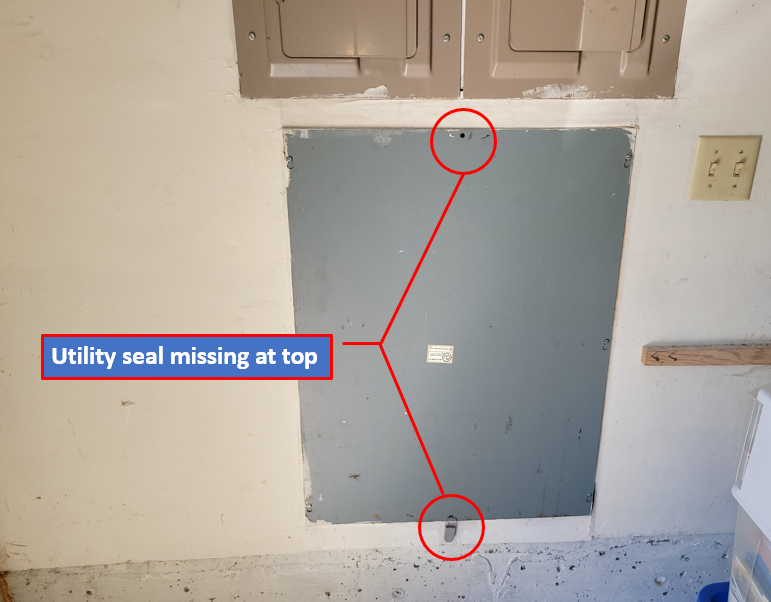
SPLITTER/CT CAN:
- Some Utility Company Seals missing. When the "splitter box" or "CT Can" seals are missing, it is sometimes an indication that alterations to the Electric System have been made. If it has not been re-sealed it may be an indication that the electrical permit was never had a final inspection or that the work was done without an electrical permit. I recommend that the power company be called to install proper seals (which they will usually do at no charge)
PANEL AGE
- ◽More than 40 years, and when panels get this old, most authorities consider them to be approaching their useful life, but many perform well for considerably longer.
🛑 Safety 🔧 Maintenance (as needed) 👁🗨 Monitor annually 🔍 Due Diligence
- E-2 ⚡ELECTRICAL:
ELECTRICAL SYSTEM BONDING:
There were issues documented below in bulleted lists, narratives and/or pictures related to the bonding of metallic systems of a building. Bonding is important for electrical safety to keep grounded metal components at the same potential. I recommend all aspects of required bonding be evaluated and repaired as deemed necessary by the licensed electrical contractor. The items below, should be seen as a guide and not necessarily all inclusive but more representative.
GAS PIPE BONDING:
- ◽Not visible. When metal gas pipes are installed in the building, current standards require that they be properly bonded to the electrical grounding system. The licensed electrical contractor should insure that all metal piping is properly bonded to the building electrical grounding system.
YELLOW CSST:
- ◽🚩Not bonded with #6 copper minimum. Proper bonding should be installed.
LOW VOLTAGE SYSTEM BONDING:
- ◽Was not determined
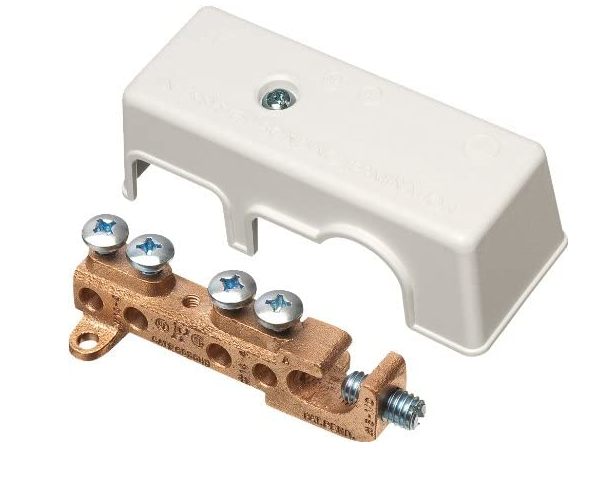
INTERSYSTEM BONDING TERMINAL:
- ◽Upgrade recommended. Connecting all the grounds of all the various low voltage systems present on the property, together at one location, helps keep all the systems at the same voltage potential in the event of static charge surges on the system (lighting etc). An Inter-system Bonding Terminal (IBT) would be required by modern standards and can be easily added by the licensed electrical contractor in the context of other electrical work at the home. This installation can help protect sensitive electronic equipment in the home.
🛑 Safety 🔧 Maintenance (as needed) 👁🗨 Monitor annually 🔍 Due Diligence
- E-7 ⚡ELECTRICAL:
☠️CARBON MONOXIDE CONCERNS:
The CO Detectors of the home had the following concerns. The bulleted lists, narratives and/or pictures below document some of those concerns, but not likely all of them. I recommend evaluation/repairs by the licensed electrical contractor or other qualified parties following manufacturer's instructions.
CO DETECTORS:
- 🚩Missing. I recommend that homeowner/handy-person install carbon monoxide alarm/detector according to the manufacturers specifications wherever missing. These alarm/detectors are currently required in all homes. They are currently required on each floor level of the home and outside each sleeping area of the home. A plug-in type detector with digital readout is preferred. They are required to be maintained to the manufacturer's instructions by the tenant of the home. Sometimes there are combination smoke/carbon monoxide alarm/detectors in the home (verify with builder). Carbon monoxide alarm/detectors had the following issues and/or were missing outside the sleeping room areas:
- ◽Sleeping rooms at the basement level
- ◽Sleeping rooms at main floor level
🛑 SAFETY 🔧 Maintenance 👁🗨 Monitor monthly ➕ Upgrade 🔍 Due Diligence
- E-8 ⚡ELECTRICAL:
SMOKE ALARM CONCERNS:
There were issues documented below in bulleted lists, narratives and/or pictures related to the smoke alarms in the home and proper evaluation/repairs by a licensed electrical contractor or other qualified party should be made.
SMOKE ALARM/DETECTOR:
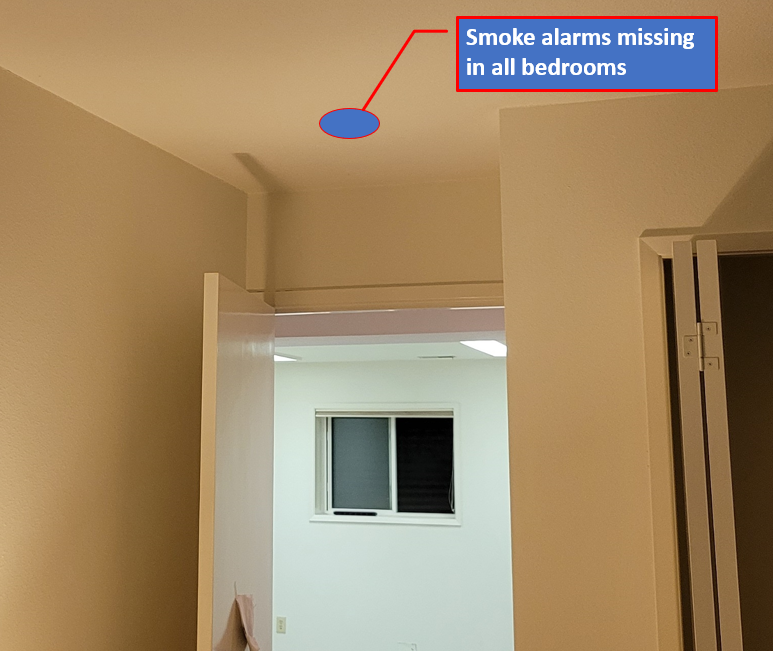
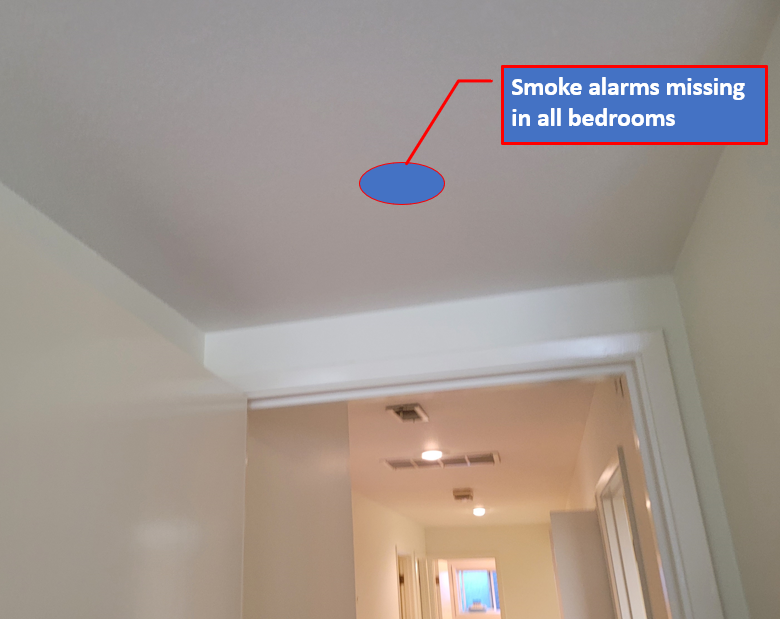
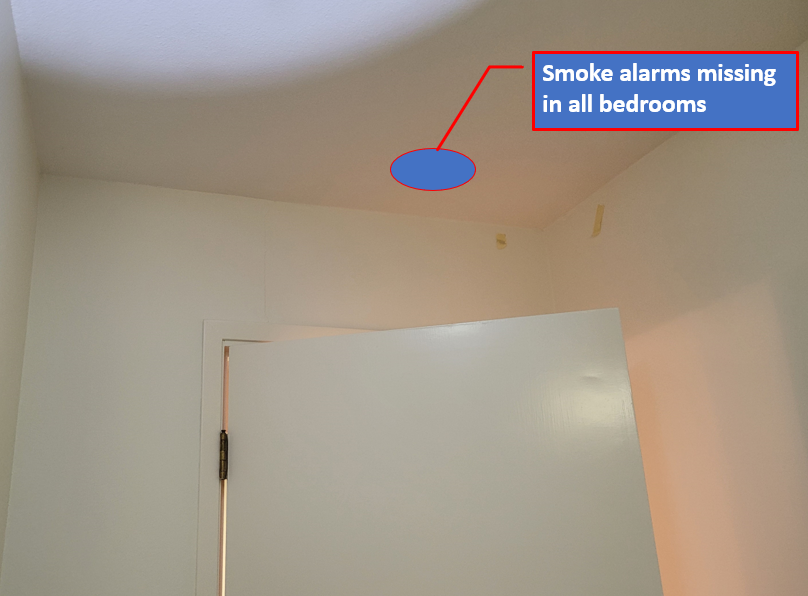
- ◽Smoke alarms should be installed
- ◽🚩Past expected life. Some of the smoke alarms are likely past their expected life. I recommend replacement of all of the alarms, unless it can be shown they are less than 10 years old. If the alarms are more than 10 years old they should all be replaced by a qualified party throughout the home with photo-electric type alarms.
- 🚩None seen. I recommend installation of smoke alarms for improved safety. Smoke alarms were not found in the sleeping rooms or other rooms that could be sleeping areas or at other required locations around the home:
- ◽Inside of basement bedrooms
- ◽Inside of main floor bedrooms
- Likely Ionization Type. Smoke alarm technology is evolving and current wisdom is recommending that only Photoelectric smoke alarms be installed in the building due to the nuisance tripping and other human factors involved with misuse and maintenance associated with Ionization type smoke alarms. It is not possible in the context of the building inspection to determine why types of alarms are installed in the building. You are encouraged to install and maintain any type of alarm in the building and you are encouraged to upgrade alarms to photoelectric type alarms. See the following link for a discussion of Ionization vs. Photoelectric Alarms: Photo-Electric Smoke Alarms and Silent Alarms; Deadly Differences.
🛑 SAFETY 🔧 Maintenance 👁🗨 Monitor monthly ➕ Upgrade 🔍 Due Diligence
REPAIR/REPLACE ITEMS
- E-3 ⚡ELECTRICAL:
AIR CONDITIONER DISCONNECT:
There were issues documented below in bulleted lists, narratives and/or pictures related to the appliance disconnect:
CONDITIONS:
- ◽Liquid type conduit
ELECTRICAL CONNECTIONS:
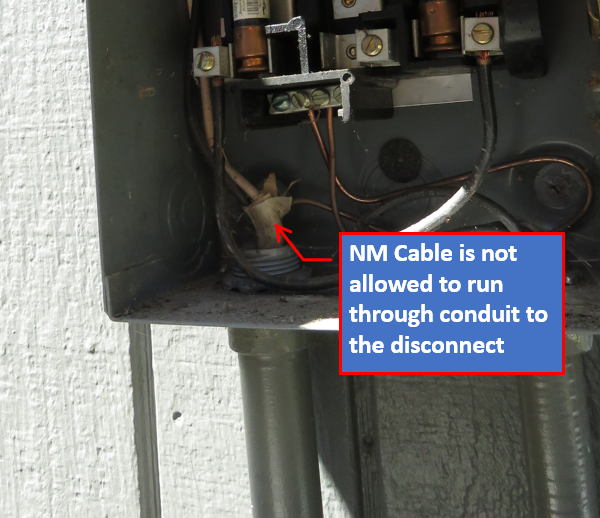
- ◽NM run past building wall, repairs can be made in the context of replacing the unit. Wire rated for exterior would be run from a junction box where the wire comes through the siding and then run up to the disconnect.
I recommend evaluation and repairs by a licensed electrical contractor when they are at the home making other electrical improvements.
🛑 Safety 🔧 Maintenance (as needed) 🔍 Due Diligence
- E-4 ⚡ELECTRICAL:
DISTRIBUTION WIRING CONCERNS:
There were issues documented below in bulleted lists, narratives and/or pictures related to the distribution wiring in the home that should be evaluated and repaired as deemed necessary by the licensed electrical contractor.
GENERAL CONCERNS:
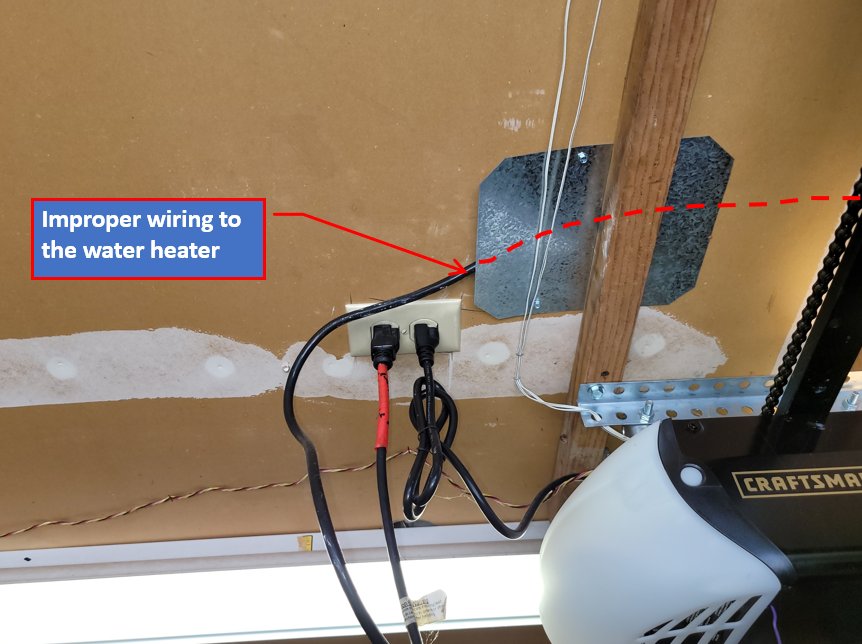
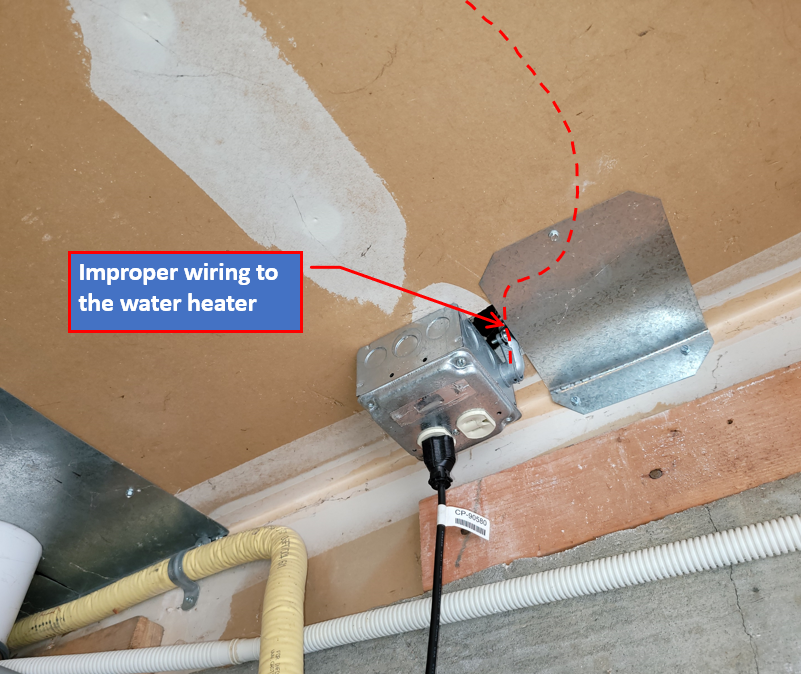
- Being used in a "permanent" manner. Extension cords are not approved for permanent installation. In some instances extension cords can be allowed but typically come with the requirement they be unplugged when not in use. I recommend that the licensed electrical contractor provide a proper receptacle for the appliance.
- ◽Wiring to the on-demand water heater
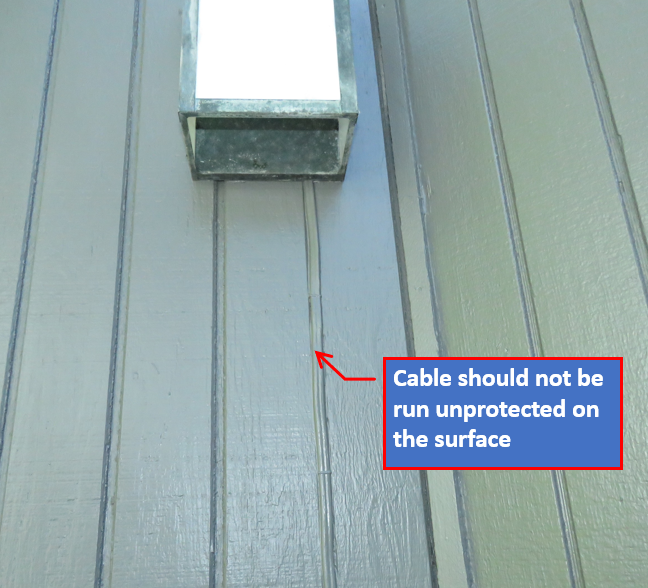
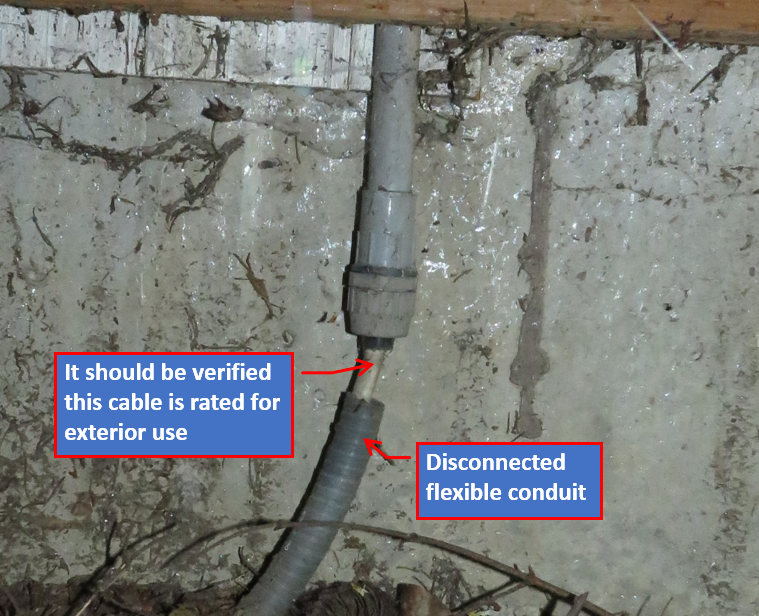
There is wiring to the front entryway light that is not properly in conduit and vulnerable to physical damage. There is also wiring under the deck that goes to the lights on the west side that has become disconnected. All this exterior wiring should be verified as approved for outdoor installation and not just regular NM cable.
🛑 Safety 🔧 Maintenance (as needed) 👁🗨 Monitor annually ➕ Upgrade 🔍 Due Diligence
- E-5 ⚡ELECTRICAL:
RECEPTACLE OUTLET CONDITIONS:
There were issues documented below in bulleted lists, narratives and/or pictures related to the receptacles in the home:
RECEPTACLES GENERAL:
- ◽No longer adequate hold plugs in place, and some locations. Loose receptacles, when discovered, should be replaced.
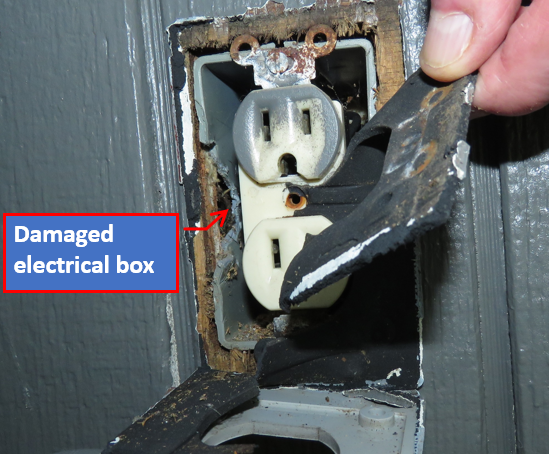
- ◽Broken box at the north receptacle at the front entryway
I recommend evaluation and repairs by a licensed electrical contractor. Other similar conditions should be anticipated.
🛑 Safety 🔨Repair 🔧 Maintenance 👁🗨 Monitor annually ➕ Upgrade 🔍 Due Diligence
- E-6 ⚡ELECTRICAL:
LIGHTING OUTLET CONDITIONS:
There were issues documented below in bulleted lists, narratives and/or pictures related to the lighting components in the home including:
FIXTURES:
- ◽Not functional at Main bathroom
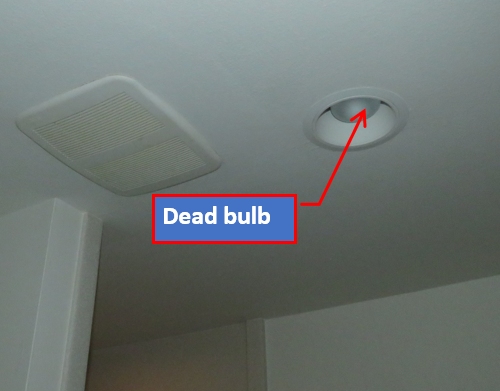
- ◽Burned-out bulbs
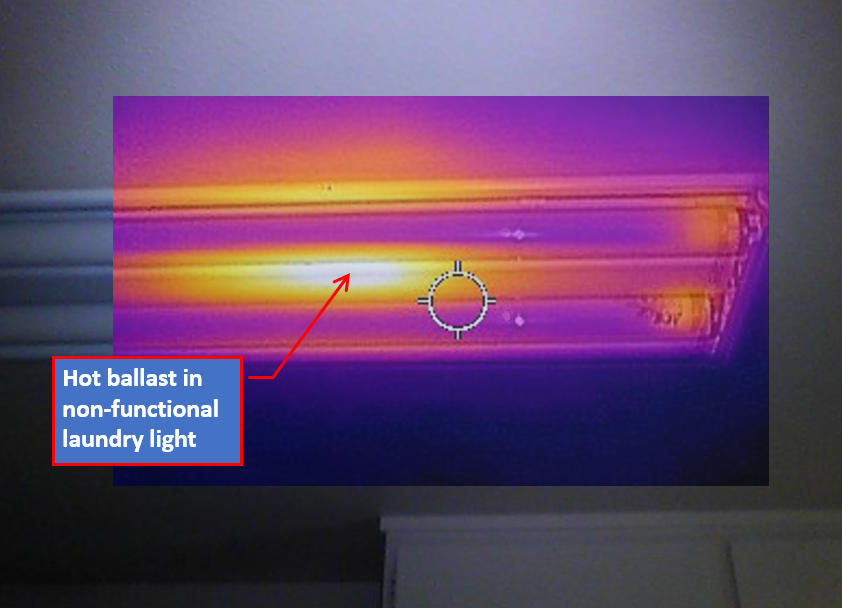
- ◽Not functional at laundry room
SWITCHES:
- ◽Some "worn"/ "loose" switches seen
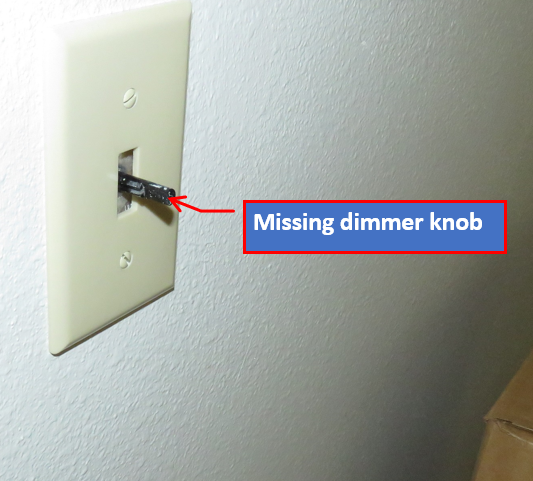
- ◽Most of the toggle type switches could benefit from replacement and one dimmer is missing its knob
- ◽Damaged/not functional at switch for dining room light
EXTERIOR LIGHTS:
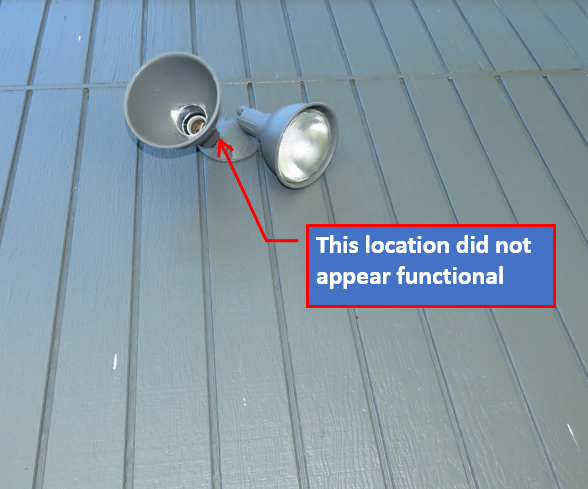
- ◽Not functional at front entryway
While the pictures below document some of these concerns, I recommend all lighting locations be evaluated and repaired as deemed necessary by a licensed electrical contractor.
🛑 Safety 🔧 Maintenance (as needed) 👁🗨 Monitor during use ➕ Upgrade 🌲 Efficiency / IAQ 🔍 Due Diligence

Improvement Items
- ⚡ELECTRICAL:
AFCI/GFCI INFORMATION:
There were issues related to the AFCI's and GFCI's. These bulleted lists, narratives and/or pictures document some of those concerns, but not likely all of them. I recommend evaluation by the licensed electrical contractor in the context of other electrical repairs at the home. Observations/recommendations/issues include;
ABOUT AFCI'S:
- ◽Required for receptacle changes. Current standards also require that whenever receptacles are upgraded that they need to be given AFCI protection when they are replaced in any location that currently requires AFCI protection.
- ◽Older homes can benefit. According to the NEC (National Electric Code): "Older homes are statistically more vulnerable to electrical fires. Extra protection for older homes is provided by the gradual replacement, over time, of non-AFCI-protected receptacles with new AFCI-protected ones." I recommend, for improved safety, that the home be upgraded by a licensed electrical contractor to AFCI protection wherever currently required.
ABOUT GFCI'S:
- ◽Older homes can benefit. Currently all 125-volt & 250-volt, single-phase, 15- and 20-ampere receptacles installed in the following locations shall have ground-fault circuit interrupter protection: bathrooms, garages, detached non-habitable buildings, outdoors, crawl spaces, unfinished or finished basements, kitchen countertop receptacles, within 6 feet of all sinks, boathouses, within 6 feet of a tub or shower, laundry areas, dishwasher branch circuit, crawl space lighting outlets. The home appeared to be wired to current requirements, however not every outlet was checked. Also exterior HVAC under 60 amps require GFCI protection. According to the NEC (National Electric Code): "Older homes are statistically more vulnerable to shocks related to ungrounded circuits. Extra protection for older homes is provided by replacement of ungrounded wiring and installation of GFCI protection.
- ◽Missing--indicates lack of permits. Given the date of the electrical changes to the home, I would consider AFCI protection where currently required as "missing." This is consistent with electrical work being done without a permit. I recommend that all electrical work be evaluated by a licensed electrical contractor and that all required provisions be met.
🛑 Safety 🔧 Maintenance (as needed) 👁🗨 Monitor monthly ➕ Upgrade 🔍 Due Diligence
- ⚡ELECTRICAL:
GFCI PROTECTION CONDITIONS:
There were issues documented below in bulleted lists, narratives and/or pictures related to the kitchen, garage, bathroom and laundry GFCI's. The pictures and bulleted list below document some of those concerns, but not likely all of them. I recommend evaluation and repairs by the licensed electrical contractor in the context of other electrical repairs at the home. Noted concerns include;
KITCHEN GFCI LOCATIONS:
- ◽No GFCI protected receptacles in Kitchen. The kitchen countertop receptacles are not currently GFCI protected. I recommend that as a safety upgrade that a licensed electrical contractor change the receptacles to GFCI type receptacles or if possible that the breakers for these circuits be changed to Dual Function (AFCI/GFCI) Combination type breakers as would be currently required. Additional locations that required GFCI protection should also be upgraded, like Dishwasher, refrigerator receptacles within 6 feet of the sink and any other locations deemed necessary by the licensed electrical contractor.
LAUNDRY:
- ◽Receptacles at countertops not GFCI protected
GARAGE:
- Some Garage Receptacles that were tested, tested as NOT GFCI protected. Current requirements call for ALL 120 volt 15 amp and 20 amp receptacles in the garage be GFCI protected. Upgrading to current standards is recommended for improved safety. Some of the Garage receptacles are not GFCI protected at the following locations:
- ◽Receptacles
- ◽Automatic door opener
- ◽Furnace
- ◽Water heater
EXTERIOR/MISCELLANEOUS:
- ◽Weather resistant type receptacles missing
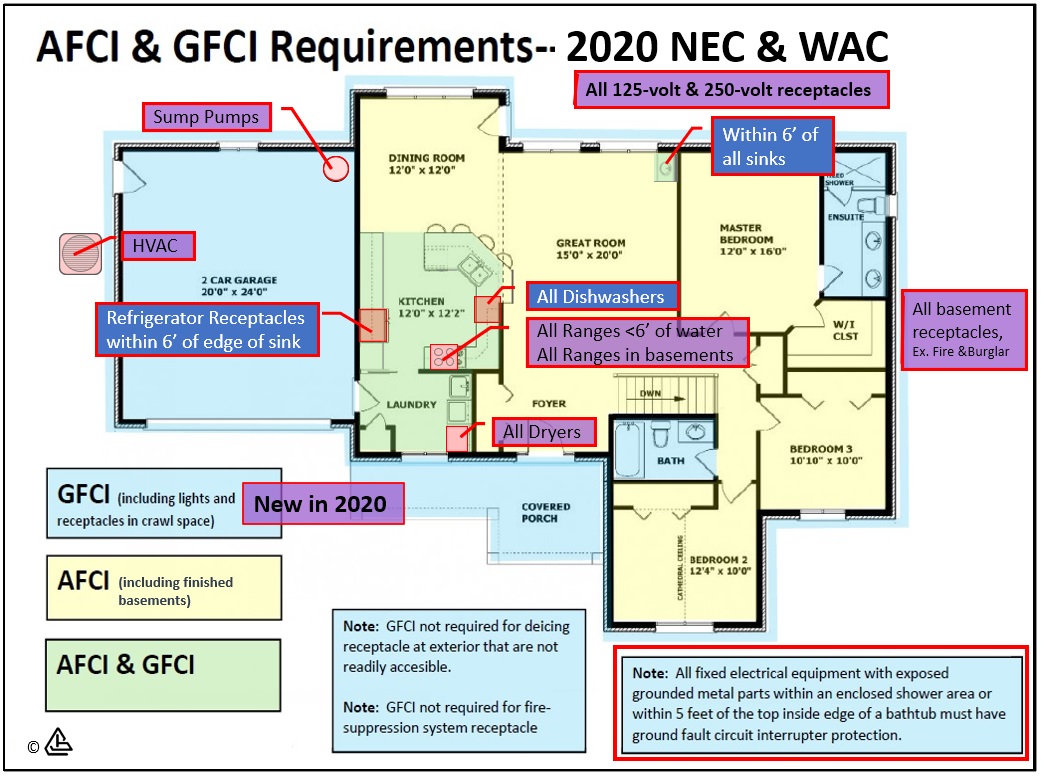
The graphic below shows current residential requirements for GFCI protection and in addition to items described above, it is prudent for the licensed electrical contractor to verify/install GFCI protection at all currently required locations.
🛑 Safety 🔨Repair 🔧 Maintenance 👁🗨 Monitor monthly ➕ Upgrade 🔍 Due Diligence

Charles Buell Consulting LLC
206-478-7371
https://www.charlesbuellconsulting.com
charlie.buell@comcast.net