PURPOSE OF INSPECTION
A real estate inspection is a visual survey of a structure and a basic performance evaluation of the systems and components of a building. It provides information regarding the general condition of a residence at the time the inspection was conducted. It is important that you carefully read ALL of this information. Ask the inspector to clarify any items or comments that are unclear.
RESPONSIBILITY OF THE INSPECTOR
This inspection is governed by the Texas Real Estate Commission (TREC) Standards of Practice (SOPs), which dictates the minim um requirements for a real estate inspection.
The inspector IS required to:
- use this Property Inspection Report form for the inspection;
- inspect only those components and conditions that are present, visible, and accessible at the time of the inspection;
- indicate whether each item was inspected, not inspected, or not present;
- indicate an item as Deficient (D) if a condition exists that adversely and materially affects the performance of a system or component OR constitutes a hazard to life, limb or property as specified by the SOPs; and
- explain the inspector’s findings in the corresponding section in the body of the report form.
The inspector IS NOT required to:
- identify all potential hazards;
- turn on decommissioned equipment, systems, utilities, or apply an open flame or light a pilot to operate any appliance;
- climb over obstacles, move furnishings or stored items;
- prioritize or emphasize the importance of one deficiency over another;
- provide follow-up services to verify that proper repairs have been made; or
- inspect system or component listed under the optional section of the SOPs (22 TAC 535.233).
RESPONSIBILTY OF THE CLIENT
While items identified as Deficient (D) in an inspection report DO NOT obligate any party to make repairs or take other actions, in the event that any further evaluations are needed, it is the responsibility of the client to obtain further evaluations and/or cost estimates from qualified service professionals regarding any items reported as Deficient (D). It is recommended that any further evaluations and/or cost estimates take place prior to the expiration of any contractual time limitations, such as option periods.
Please Note: Evaluations performed by service professionals in response to items reported as Deficient (D) on the report may lead to the discovery of additional deficiencies that were not present, visible, or accessible at the time of the inspection. Any repairs made after the date of the inspection may render information contained in this report obsolete or invalid.
REPORT LIMITATIONS
This report is provided for the benefit of the named client and is based on observations made by the named inspector on the date the inspection was performed (indicated above).
ONLY those items specifically noted as being inspected on the report were inspected.
This inspection IS NOT:
- a technically exhaustive inspection of the structure, its systems, or its components and may not reveal all deficiencies;
- an inspection to verify compliance with any building codes;
- an inspection to verify compliance with manufacturer’s installation instructions for any system or component and DOES NOT imply insurability or warrantability of the structure or its components.
NOTICE CONCERN ING HA ZARDOUS CONDITIONS, DEFIC I ENCIES, AND CONTRACTUA L AGREEMENTS
Conditions may be present in your home that did not violate building codes or common practices in effect when the home was constructed but are considered hazardous by today’s standards. Such conditions that were part of the home prior to the adoption of any current codes prohibiting them may not be required to be updated to meet current code requirements. However, if it can be reasonably determined that they are present at the time of the inspection, the potential for injury or property loss from these conditions is significant enough to require inspectors to report them as Deficient (D). Examples of such hazardous conditions include:
- malfunctioning, improperly installed, or missing ground fault circuit protection (GFCI) devices and arc-fault (AFCI) devices;
- ordinary glass in locations where modern construction techniques call for safety glass; malfunctioning or lack of fire safety features such as smoke alarms, fire-rated doors in certain locations, and functional emergency escape and rescue openings in bedrooms;
- malfunctioning carbon monoxide alarms;
- excessive spacing between balusters on stairways and porches;
- improperly installed appliances;
- improperly installed or defective safety devices;
- lack of electrical bonding and grounding; and
- lack of bonding on gas piping, including corrugated stainless steel tubing (CSST).
Please Note: items identified as Deficient (D) in an inspection report DO NOT obligate any party to make repairs or take other actions. The decision to correct a hazard or any deficiency identified in an inspection report is left up to the parties to the contract for the sale or purchase of the home.
This property inspection report may include an inspection agreement (contract), addenda, and other information related to property conditions.
INFORMATION INCLUDED UNDER “ADDITIONAL INFORMATION PROVIDED BY INSPECTOR”, OR PROVIDED AS AN ATTACHMENT WITH THE STANDARD FORM, IS NOT REQUIRED BY THE COMMISSION AND MAY CONTAIN CONTRACTUAL TERMS BETWEEN THE INSPECTOR AND YOU, AS THE CLIENT. THE COMMISSION DOES NOT REGULATE CONTRACTUAL TERMS BETWEEN PARTIES. IF YOU DO NOT UNDERSTAND THE EFFECT OF ANY CONTRACTUAL TERM CONTAINED IN THIS SECTION OR ANY ATTACHMENTS, CONSULT AN ATTORNEY.
ADDITIONAL INFORMATION PROVIDED BY INSPECTOR
Purchasing property involves risk
The purpose of a home inspection is to help reduce the risk associated with the purchase of a structure by providing a professional opinion about the overall condition of the structure. A home inspection is a limited visual inspection and it cannot eliminate this risk. Some homes present more risks than others. We cannot control this, but we try to help educate you about what we don’t know during the inspection process.
A home inspection is not an insurance policy
This report does not substitute for or serve as a warranty or guarantee of any kind. Home warranties can be purchased separately from insuring firms that provide this service.
A home inspection is visual and not destructive
The descriptions and observations in this report are based on a visual inspection of the structure. We inspect the aspects of the structure that can be viewed without dismantling, damaging or disfiguring the structure and without moving furniture and interior furnishings. Areas that are concealed, hidden or inaccessible to view are not covered by this inspection. Some systems cannot be tested during this inspection as testing risks damaging the building. For example, overflow drains on bathtubs are generally not tested because if they were found to be leaking they could damage the finishes below. Our procedures involve non-invasive investigation and non-destructive testing which will limit the scope of the inspection.
This is not an inspection for code compliance
This inspection and report are not intended for city / local code compliance. During the construction process structures are inspected for code compliance by municipal inspectors. Framing is open at this time and conditions can be fully viewed. Framing is not open during inspections of finished homes, and this limits the inspection. All houses fall out of code compliance shortly after they are built, as the codes continually change. National codes are augmented at least every three years for all of the varying disciplines. Municipalities can choose to adopt and phase in sections of the codes on their own timetables. There are generally no requirements to bring older homes into compliance unless substantial renovation is being done.
This is just our opinion
Construction techniques and standards vary. There is no one way to build a house or install a system in a house. The observations in this report are the opinions of the home inspector. Other inspectors and contractors are likely to have some differing opinions. You are welcome to seek opinions from other professionals.
The scope of this inspection
This inspection will include the following systems: exterior, roof, structure, drainage, foundation, attic, interior, plumbing, electrical and heating. The evaluation will be based on limited observations that are primarily visual and non-invasive. This inspection and report are not intended to be technically exhaustive.
Your expectations
The overall goal of a home inspection is to help ensure that your expectations are appropriate with the house you are proposing to buy. To this end we assist with discovery by showing and documenting observations during the home inspection. This should not be mistaken for a technically exhaustive inspection designed to uncover every defect with a building. Such inspections are available but they are generally cost-prohibitive to most homebuyers.
How to Read This Report
Getting the Information to You
This report is designed to deliver important and technical information in a way that is easy for anyone to access and understand. If you are in a hurry, you can take a quick look at our "Summary Page” and quickly get critical information for important decision making. However, we strongly recommend that you take the time to read the full Report, which includes digital photographs, captions, diagrams, descriptions, videos and hot links to additional information.
The best way to get the layers of information that are presented in this report is to read your report online, which will allow you to expand your learning about your house. You will notice some words or series of words highlighted in blue and underlined – clicking on these will provide you with a link to additional information.
This report can also be printed on paper or to a PDF document.
Chapters and Sections
This report is divided into chapters that parcel the home into logical inspection components. Each chapter is broken into sections that relate to a specific system or component of the home. You can navigate between chapters with the click of a button on the left side margin.
Most sections will contain some descriptive information done in black font. Observation narrative, done in colored boxes, will be included if a system or component is found to be significantly deficient in some way or if we wish to provide helpful additional information about the system or the scope of our inspection. If a system or component of the home was deemed to be in satisfactory or serviceable condition, there may be no narrative observation comments in that section and it may simply say “inspected.”
Observation Labels
All narrative observations are colored, numbered and labeled to help you find, refer to, and understand the severity of the observation. Observation colors and labels used in this report are:
- Major Concern:Repair items that may cost significant money to correct now or in the near future, or items that require immediate attention to prevent additional damage or eliminate safety hazards.
- Repair:Repair and maintenance items noted during inspection. Please note that some repair items can be expensive to correct such as re-finishing hardwood floors, but are considered simply repair items due to their cosmetic nature.
- Improve:Observations that are not necessarily defects, but which could be improved for safety, efficiency, or reliability reasons.
- Due Diligence:Observation such as a buried oil tank that may require further investigation to determine the severity and / or urgency of repair.
- Note:Refers to aside information and /or any comments elaborating on descriptions of systems in the home or limitations to the home inspection.
- Description:Detailed description of various aspects of the property noted during the inspection.
Summary Page
The Summary Page is designed as a bulleted overview of all the observations noted during inspection. This helpful overview is not a substitution for reading the entire inspection report. The entire report must be read to get a complete understanding of this inspection report as the Summary Page does not include photographs or photo captions.
A Quick Look Of Things To Come
Major Concerns
- SS-11 Structural Systems:
Fireplace flue gas discharges to back patio. This is a burn hazard. I recommend modifications by a qualified contractor to prevent someone from being burned.
Repairs
- SS-7 Structural Systems:
The attic pulldown stairs door seal is missing. Install as needed.
- SS-8 Structural Systems:
Damaged fascia. Recommend repair by qualified contractor.
- SS-9 Structural Systems:
The window screens are missing/not installed. Inquire with the seller to make sure window screens are included and installed as desired.
- SS-10 Structural Systems:
Window in the home hard to operate/lock. I recommend that a window contractor adjust and repair as needed.
- ES-7 Electrical Systems:
The exterior receptacle covers are damaged and require replacement. Use the modern "in-use" receptacle covers designed for outdoor use which employ large plastic water-resistant covers.
- Rear of the home
- HVACS-5 Heating, Ventilation and Air Conditioning Systems:
No auxiliary float switch
- HVACS-6 Heating, Ventilation and Air Conditioning Systems:
Rust in auxiliary drain pan
- PS-4 Plumbing Systems:
Multiple plumbing supply issues were noted in the primary bathroom at the time of inspection. I recommend that a licensed plumbing contractor repair and replace as needed.
Sink
- The style of sink does not have a overflow
Bathtub
- The bathtub faucet was damaged and not functional at time of inspection
- PS-5 Plumbing Systems:
Multiple plumbing drain issues were noted at the referenced bathroom at the time of inspection. I recommend that a licensed plumbing contractor repair and replace as needed.
- Primary bathroom
Sink
- The style of sink does not have a overflow
- The sink drain stop did not hold water/was out of adjustment
Sink drain stop
- The style of sink does not have a overflow
- PS-8 Plumbing Systems:
Numerous repairs are needed to the water heater. I recommend additional inspection and repair of the water heater by a licensed plumbing contractor. In general, the average life of most water heaters is 8-12 years. In practice service life has much to do with water quality and maintenance of a water heater. This water heater is roughly 2 years old. Examples of repair items and other observations noted during inspection include:
Exhaust flue
- The exhaust flue is missing the requires 3 screws to hold it together at the top of the hot water heater
Water lines
- The water lines are not insulated on top
- Inlet water valve missing handle
Gas Line
- The sediment trap on the water heater gas supply pipe was installed upside down. Recommend qualified contractor repair as needed.
- PS-9 Plumbing Systems:
Cold water supply valve has a broken handle. Recommend repair by qualified contractor.
- PS-10 Plumbing Systems:
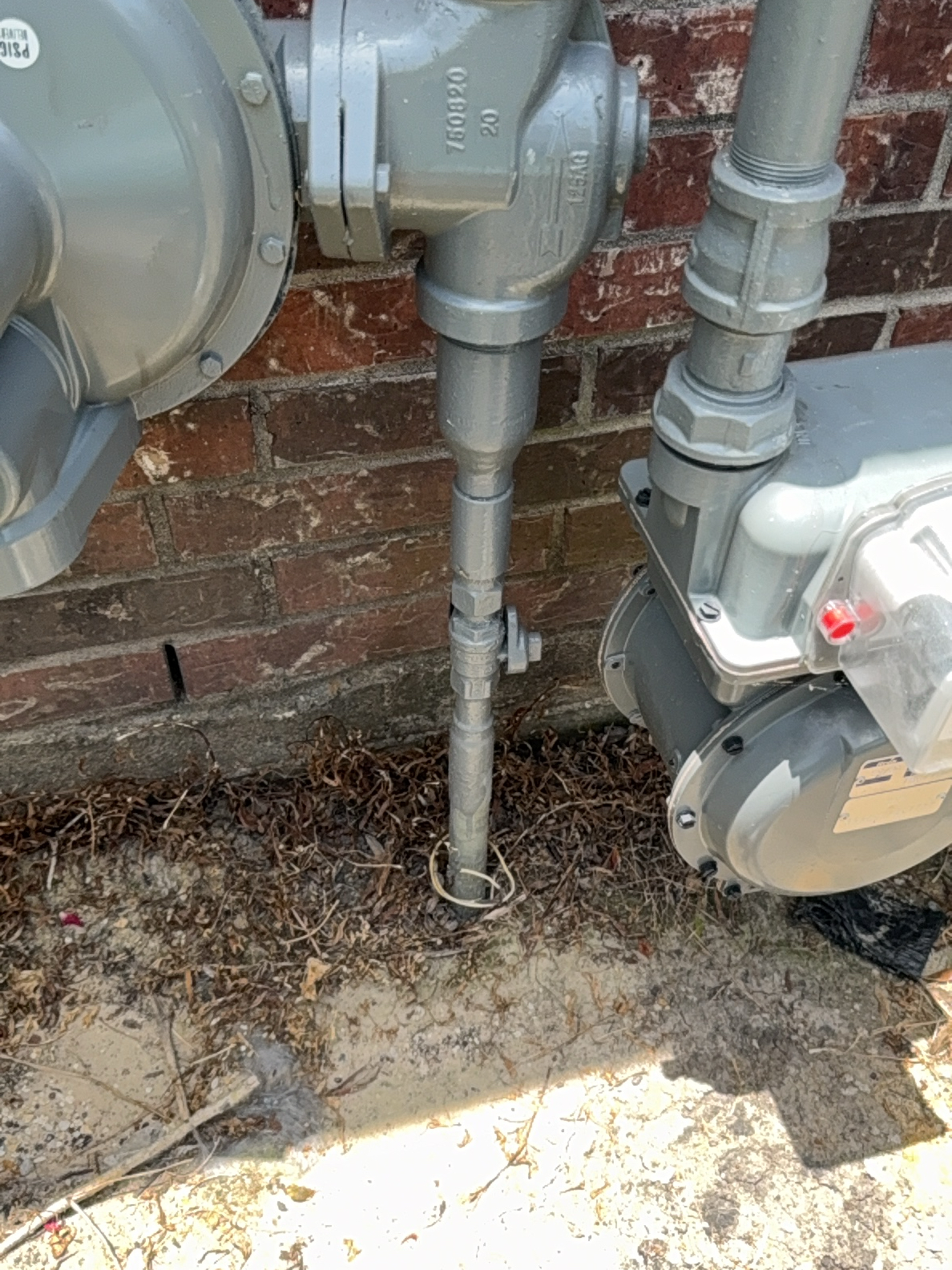
The exterior gas line at the meter is not bonded. Note - This is new requirement and may not be present in all homes. (As-Built). I recommend that a licensed electrical contractor repair/upgrade as needed.
- A-3 Appliances:
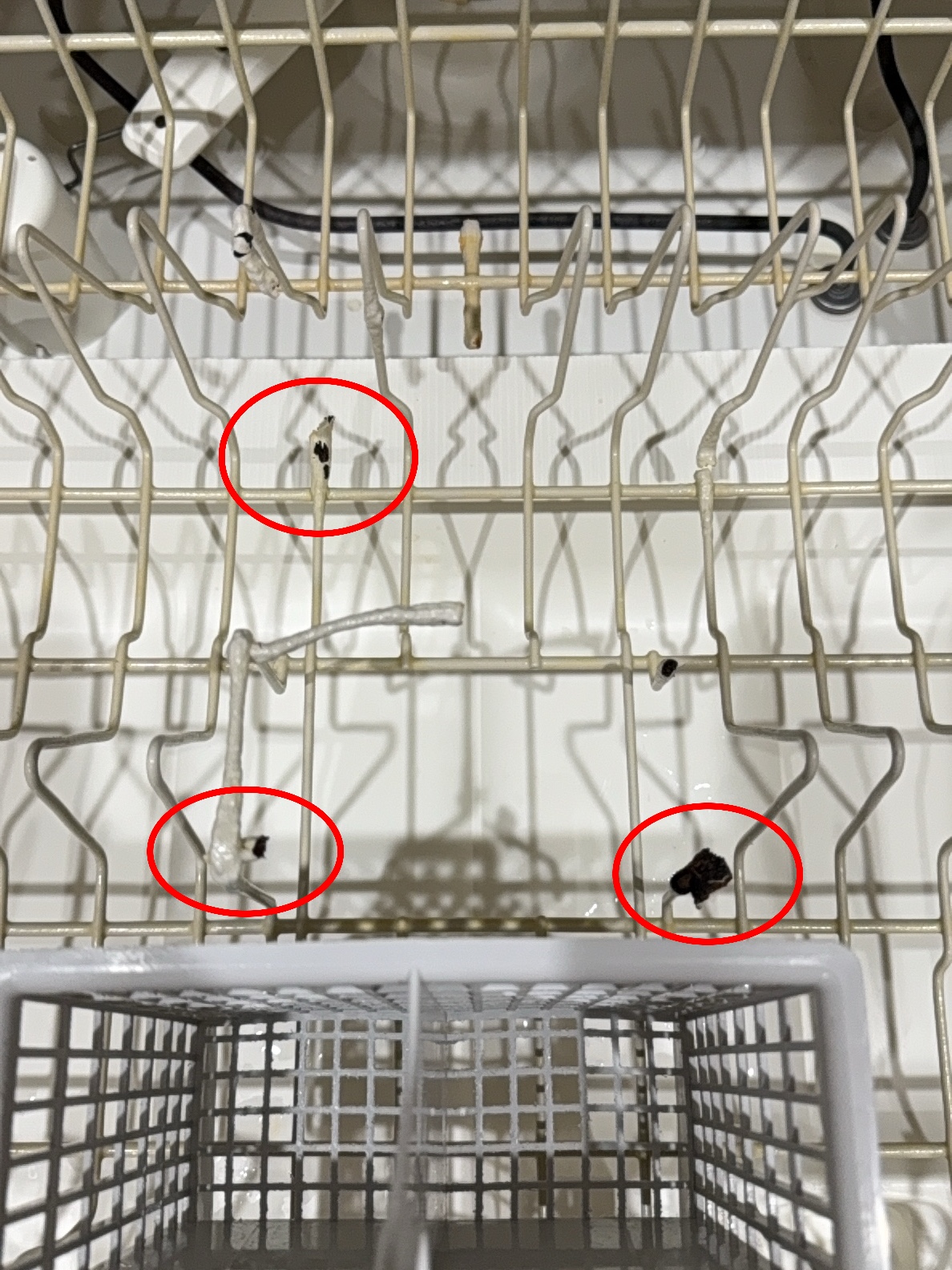
The upper and lower dishwasher racks had damaged/rusted tines. I recommend that a appliance contractor repair or replace as needed.
- A-9 Appliances:
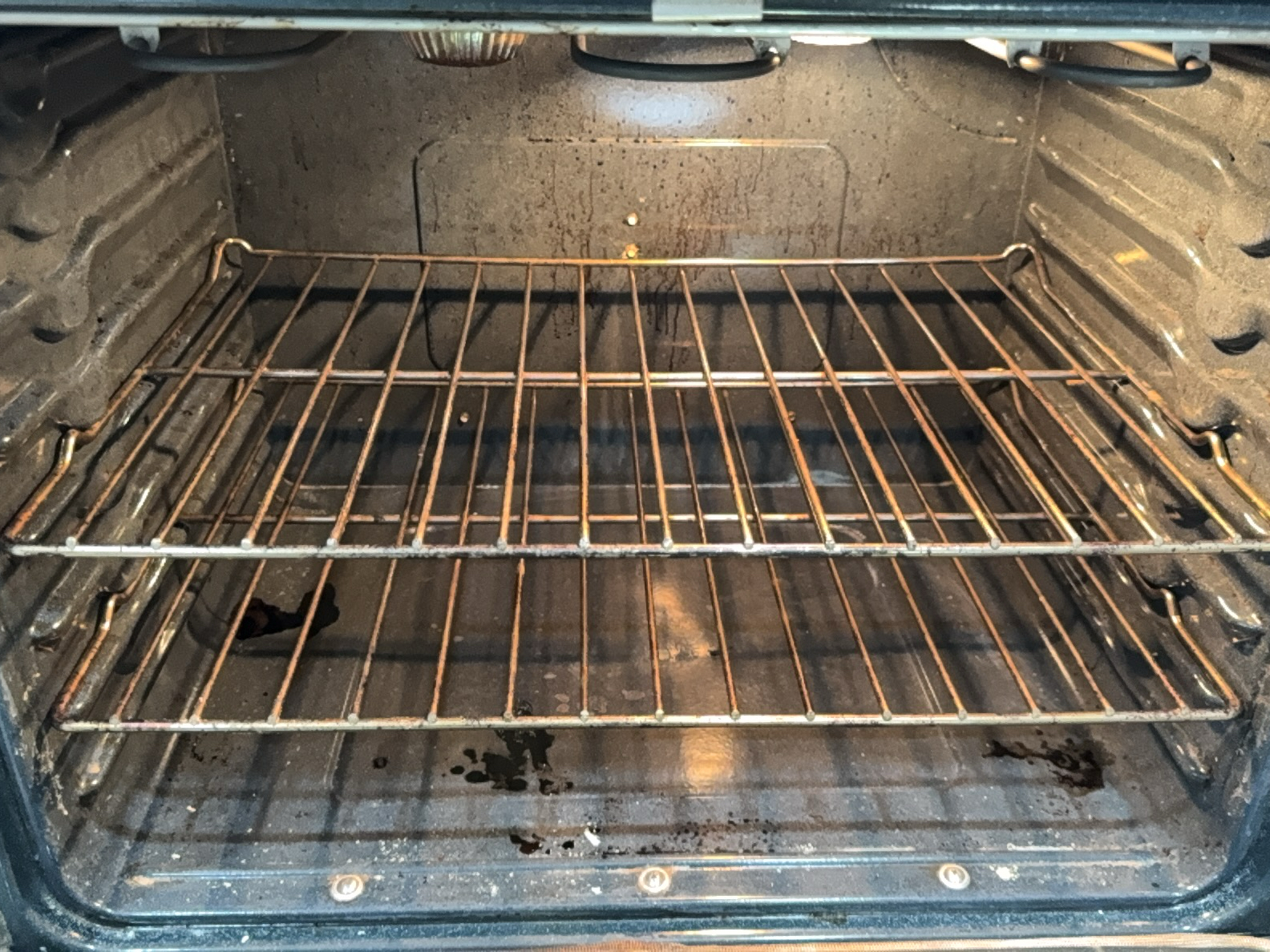
The oven is dirty. I recommend that it be cleaned before operating.
- A-11 Appliances:
Bathroom mechanical ventilation discharges into attic. Recommend qualified contractor repair
Improves
- SS-3 Structural Systems:
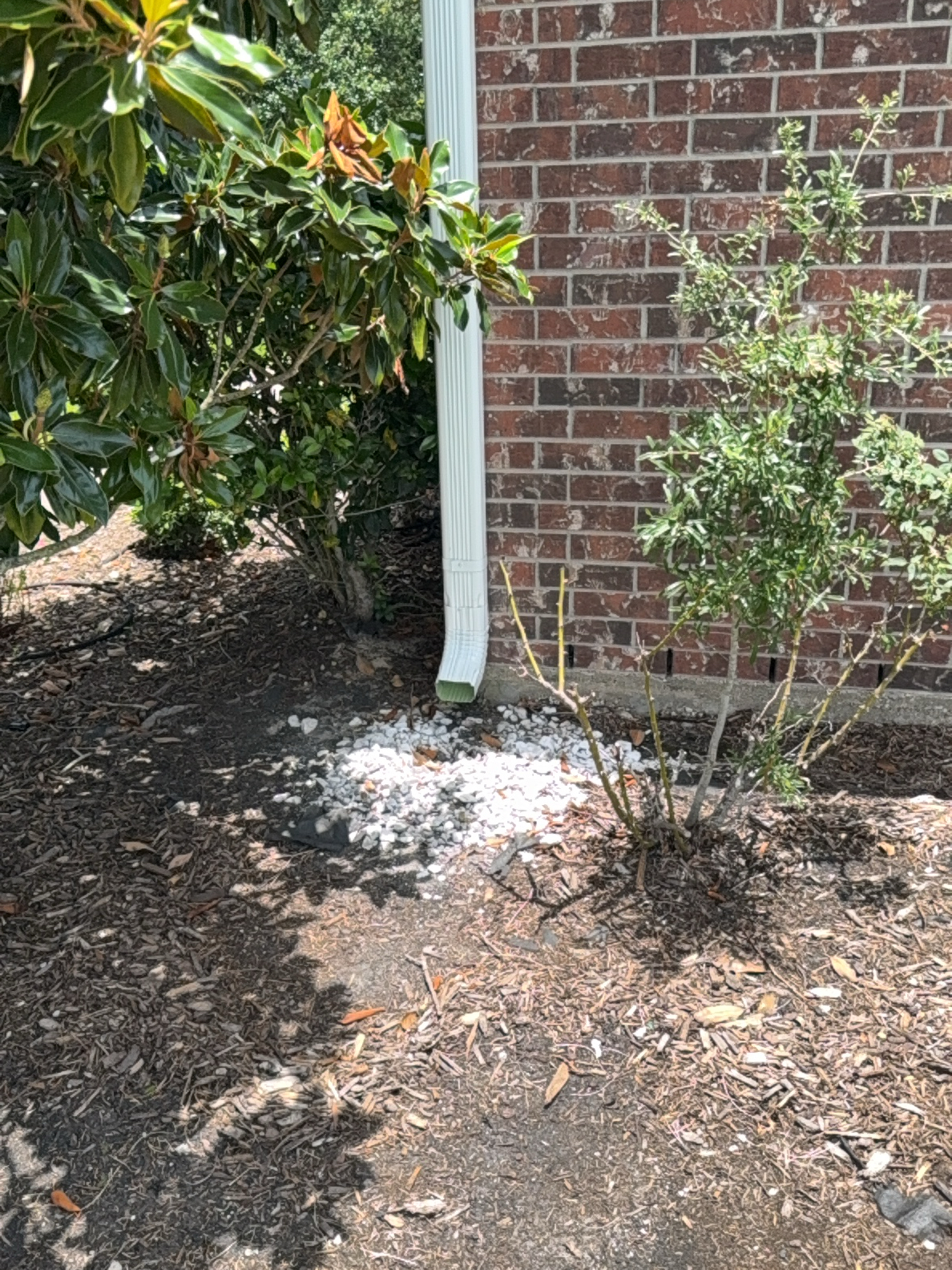
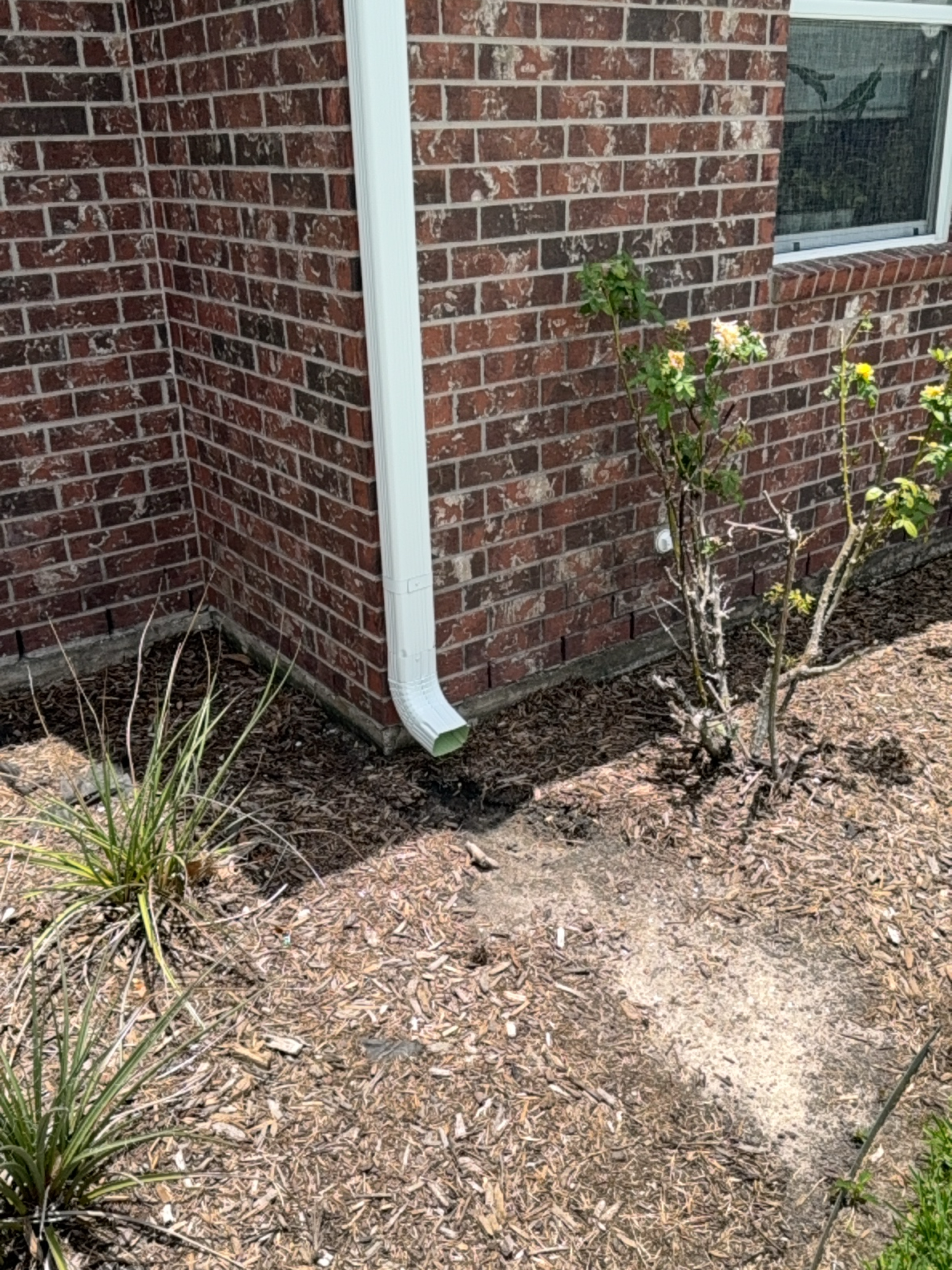
One or more downspouts discharged roof drainage next to the foundation. This condition can effect the ability of the soil to support the weight of the structure above and can cause damage related to soil/foundation movement. The Inspector recommends the installation of downspout extensions to discharge roof drainage a minimum of 6 feet from the foundation.
- throughout the home
Due Diligences
- ES-5 Electrical Systems:
The AFCI circuit breakers were not tested in the electrical panel due to the home being occupied. Testing/tripping these breakers shuts down power to the circuit(s), which resets modems, routers, PC's, clocks, etc. I recommend testing these breakers by pressing the "Test" button on the breaker, once all above items are off/unplugged. If the breakers do not test correctly, I recommend a licensed electrical contractor repair or replace as needed.
- A-12 Appliances:
The dryer duct should be cleaned regularly for improved safety (to prevent clogging which could lead to a fire) and to keep the dryer working reliably and efficiently. Dryer vents should be cleaned yearly for safety. If the dyer vent system has not been cleaned recently, I recommend scheduling a cleaning.
- A-13 Appliances:
The clothes dryer is exhausting out of the roof. This is not a desirable installation as it can be difficult to access the exhaust duct for cleaning and inspection. This is a standard installation in some areas/sub divisions and is a as-built condition. Dryer lint is flammable and a fire hazard when it accumulates.
Notes
- SS-2 Structural Systems:
Common cracks (¼-inch or less) were visible in the driveway at the time of the inspection. Cracks exceeding ¼ inch should be filled with an appropriate sealant to avoid continued damage to the driveway surface from moisture.
- SS-6 Structural Systems:
A foil-like radiant barrier was installed on the underside of roof sheathing in the attic. Radiant barriers reflect heat, reducing cooling costs in warm weather and heating costs in cold weather.
- ES-4 Electrical Systems:
An AFCI breaker is an acronym that stands for Arc Fault Circuit Interrupter.
AFCI (arc fault protection) is now required on all branch circuits supplying outlets or devices installed in residential dwelling unit kitchens, family rooms, dining rooms, living rooms, parlors, libraries, dens, bedrooms, sunrooms, recreation rooms, closets, hallways, laundry areas, and similar rooms and areas.
Arc Fault Circuit Interrupters (AFCIs) are an important electrical fire prevention and safety requirement of the National Electrical Code (NEC®), which first required them beginning in 1999. AFCIs help protect individuals and families from injuries and/or death by detecting dangerous arcing in electrical wires and shutting down an electrical system before a fire can start.
They differ from ground-fault circuit interrupters (GFCIs), which were introduced into the NEC in the 1960s. Where GFCIs are designed to protect people from shock if parts of an electric appliance or tool become energized due to a ground fault, AFCIs are designed to protect branch circuit wiring from arcing faults.
You can tell if you have AFCI breakers by looking at your electrical panel. A few breakers should have buttons for testing and be labeled as “AFCI”. However, this should not be confused with GFCI breakers (Ground Fault Circuit Interrupter) that protect wet areas.
Please note that if you add or replace receptacle outlets to the existing system, they should comply with modern AFCI standards.
Descriptions
- AIPBI-1 Additional Information Provided By Inspector:
The approximate square footage listed here is listed as a courtesy and is based off of public records and disclosure. An evaluation of square footage of the buildings and property lines is beyond the scope of this inspection.
- SS-1 Structural Systems:
(An opinion on performance is mandatory) The foundation is performing as intended. No significant problems were observed.
Foundation construction included a slab-on-grade.
Because the General Home Inspection is a visual inspection, inspection of the slab-on-grade foundation is limited by the fact that typically, most of the foundation and slab is hidden underground or by interior floor coverings. Where possible, I inspect that portion of the foundation visible at the home exterior between grade and the bottom of the exterior wall covering.
- SS-5 Structural Systems:
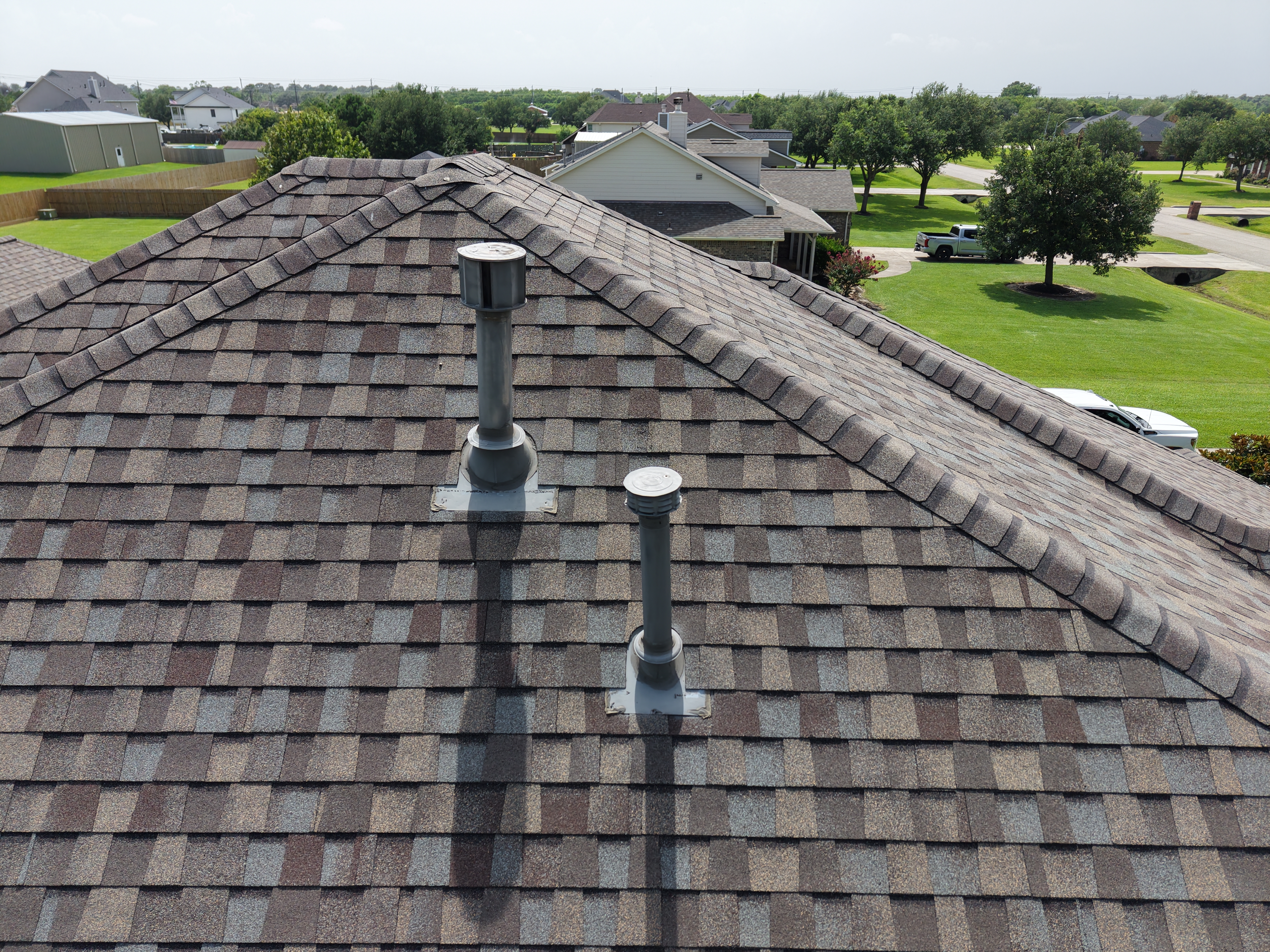
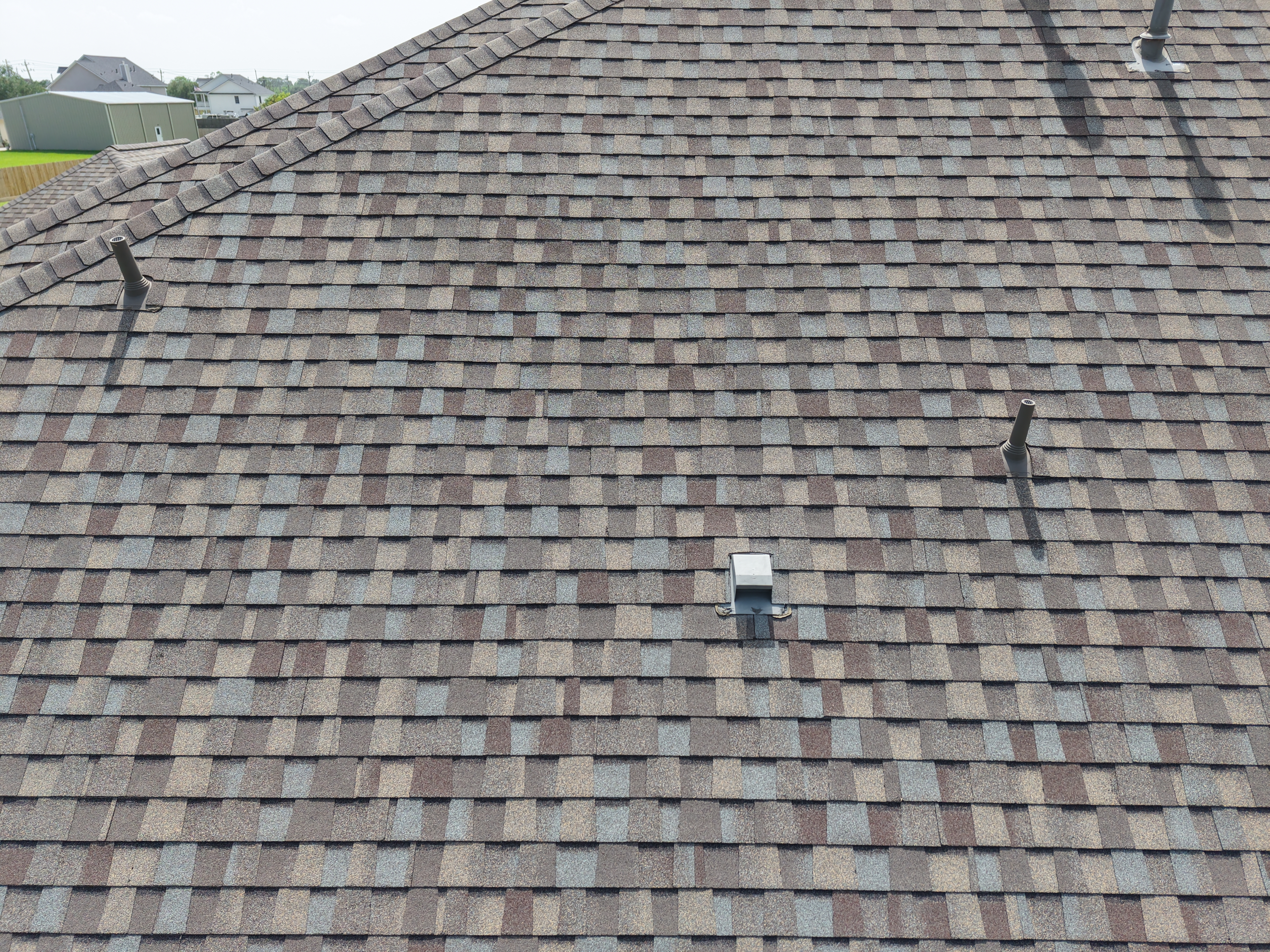
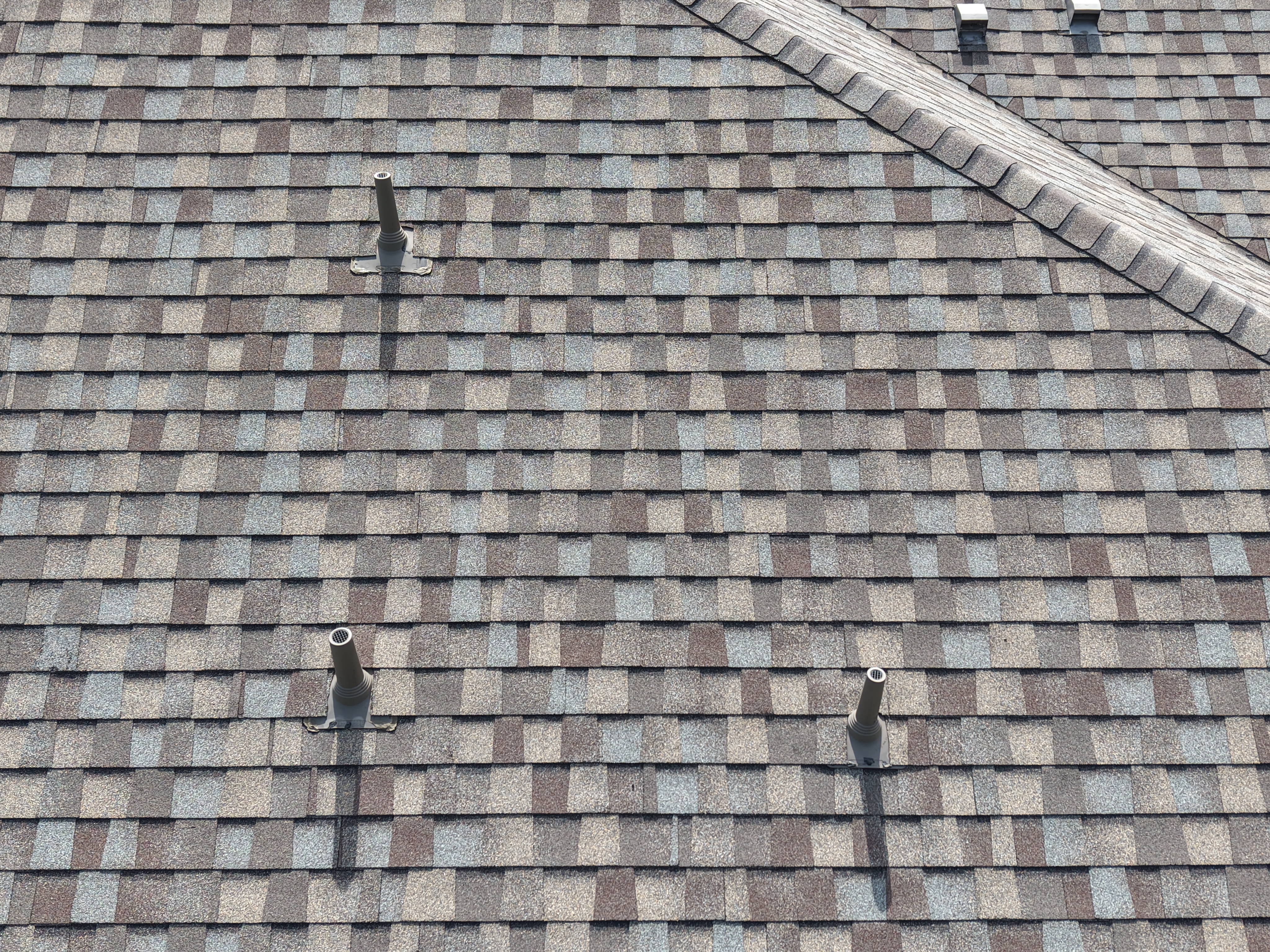
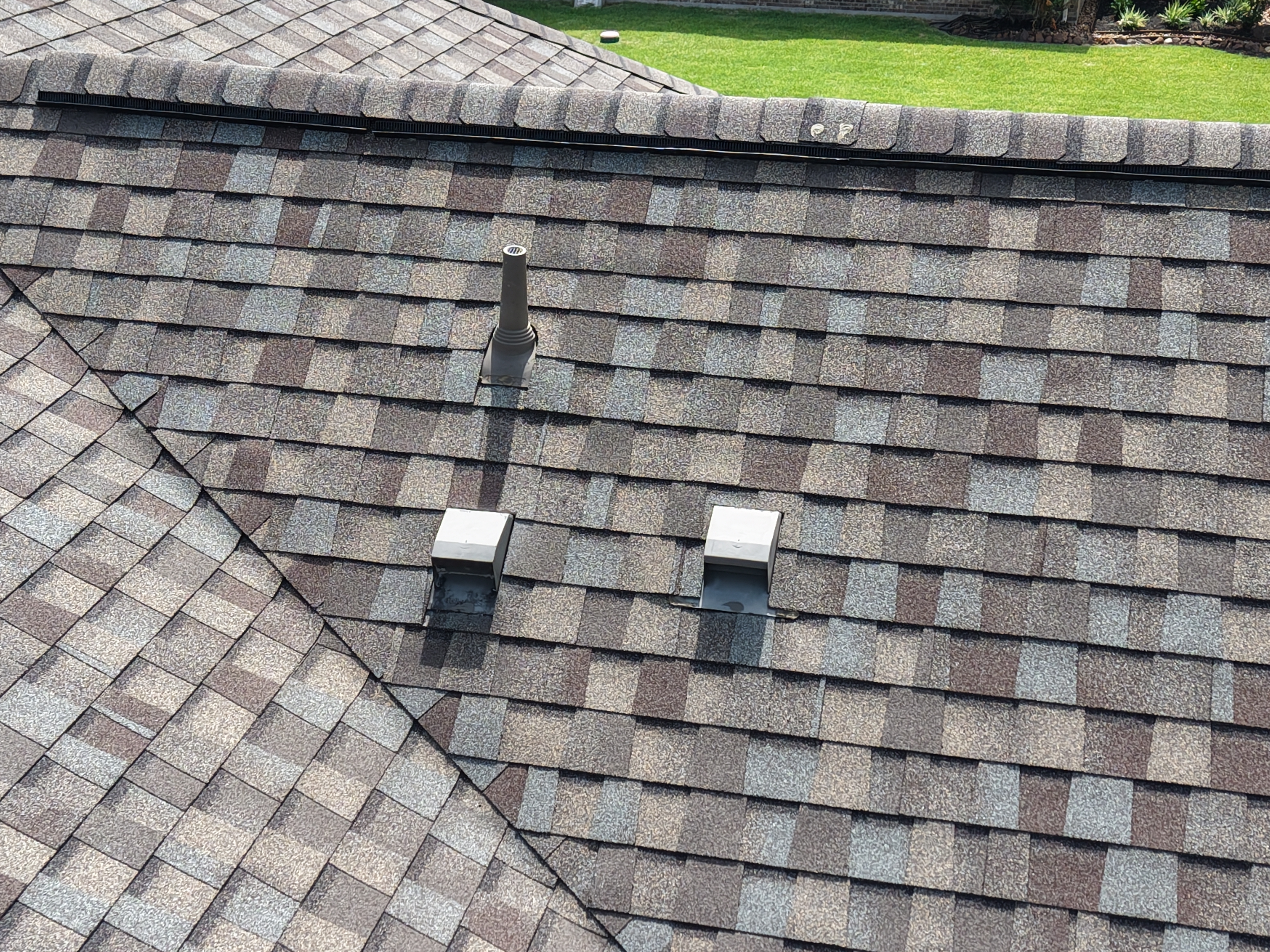
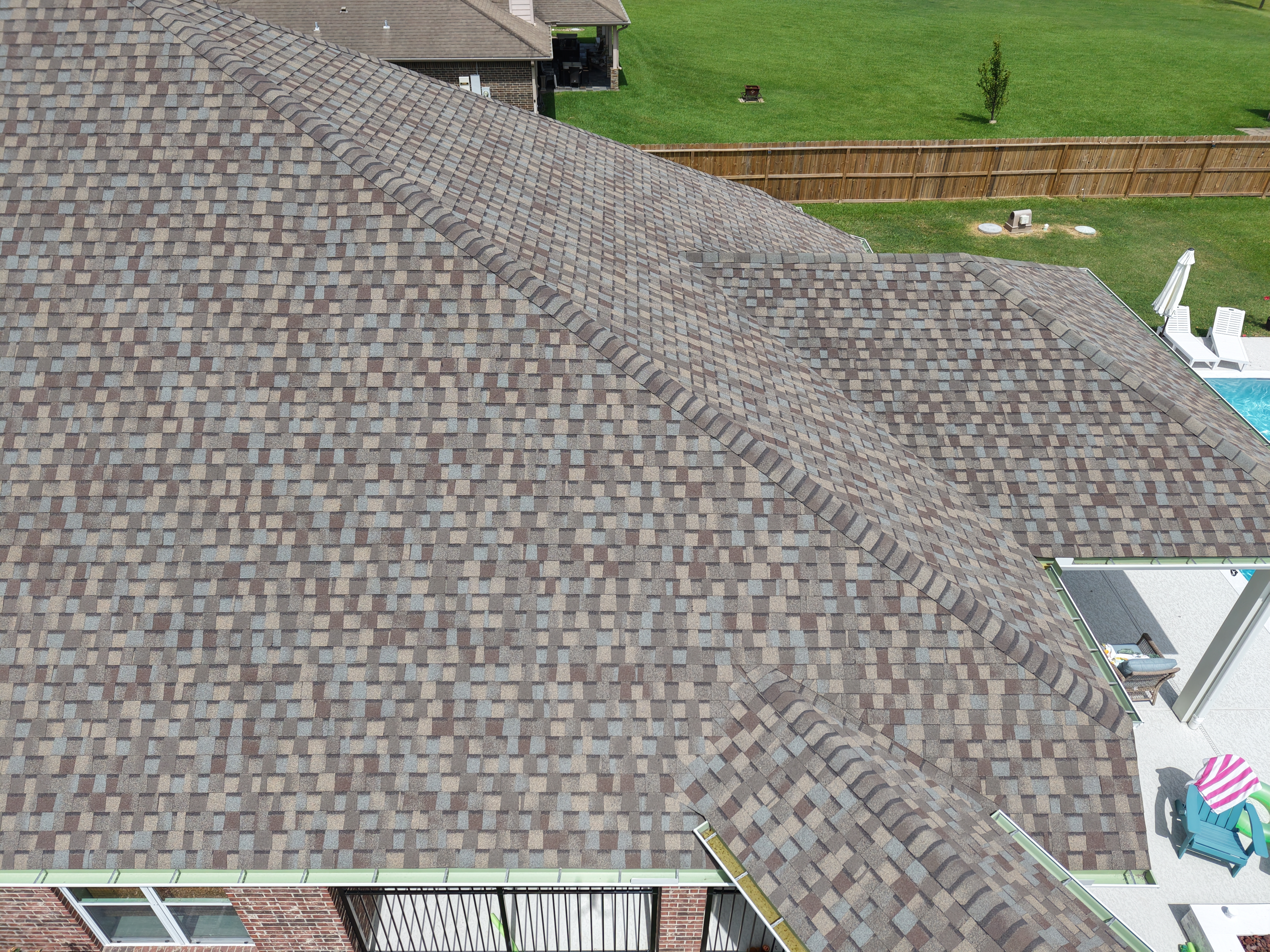
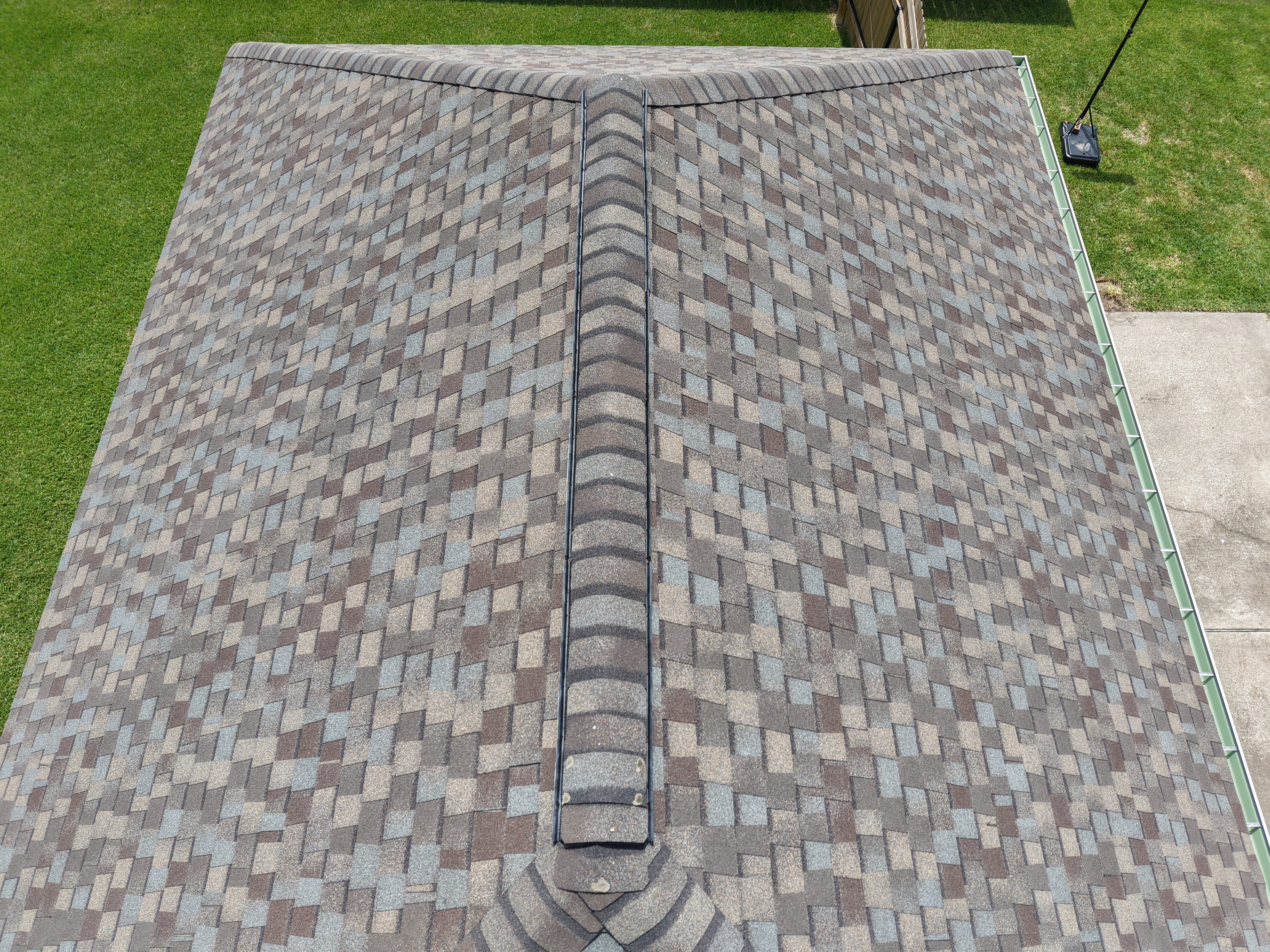
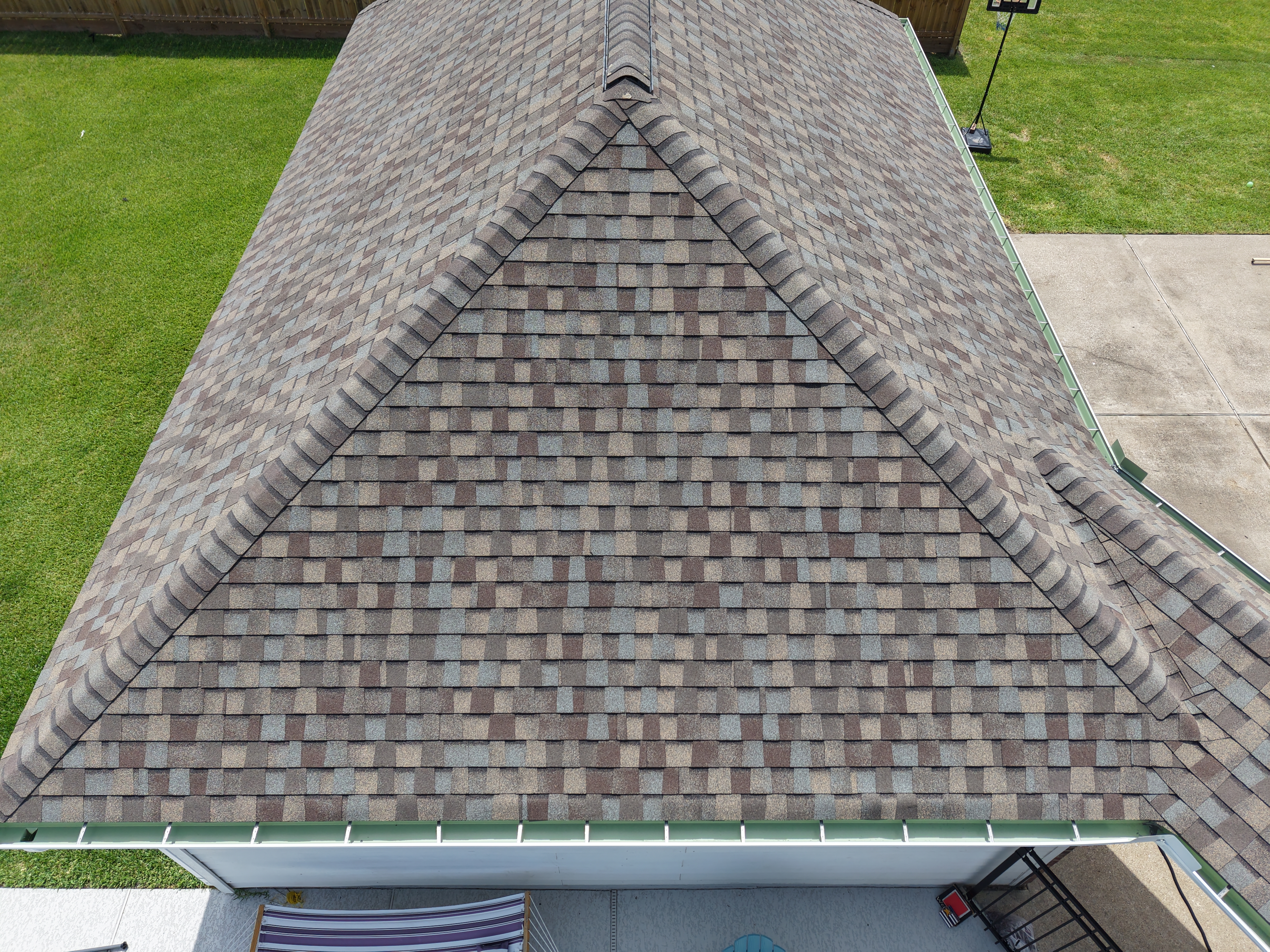
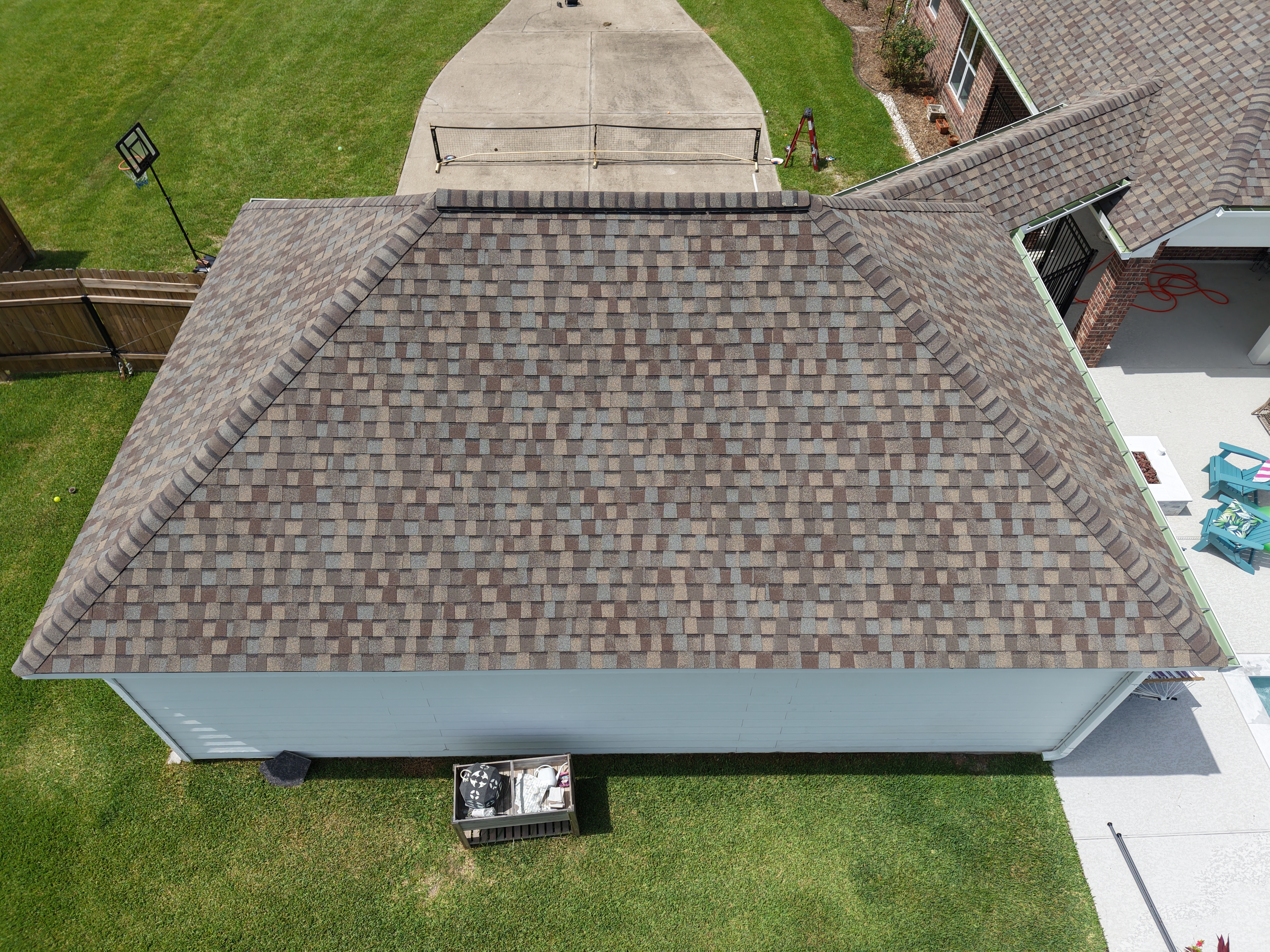
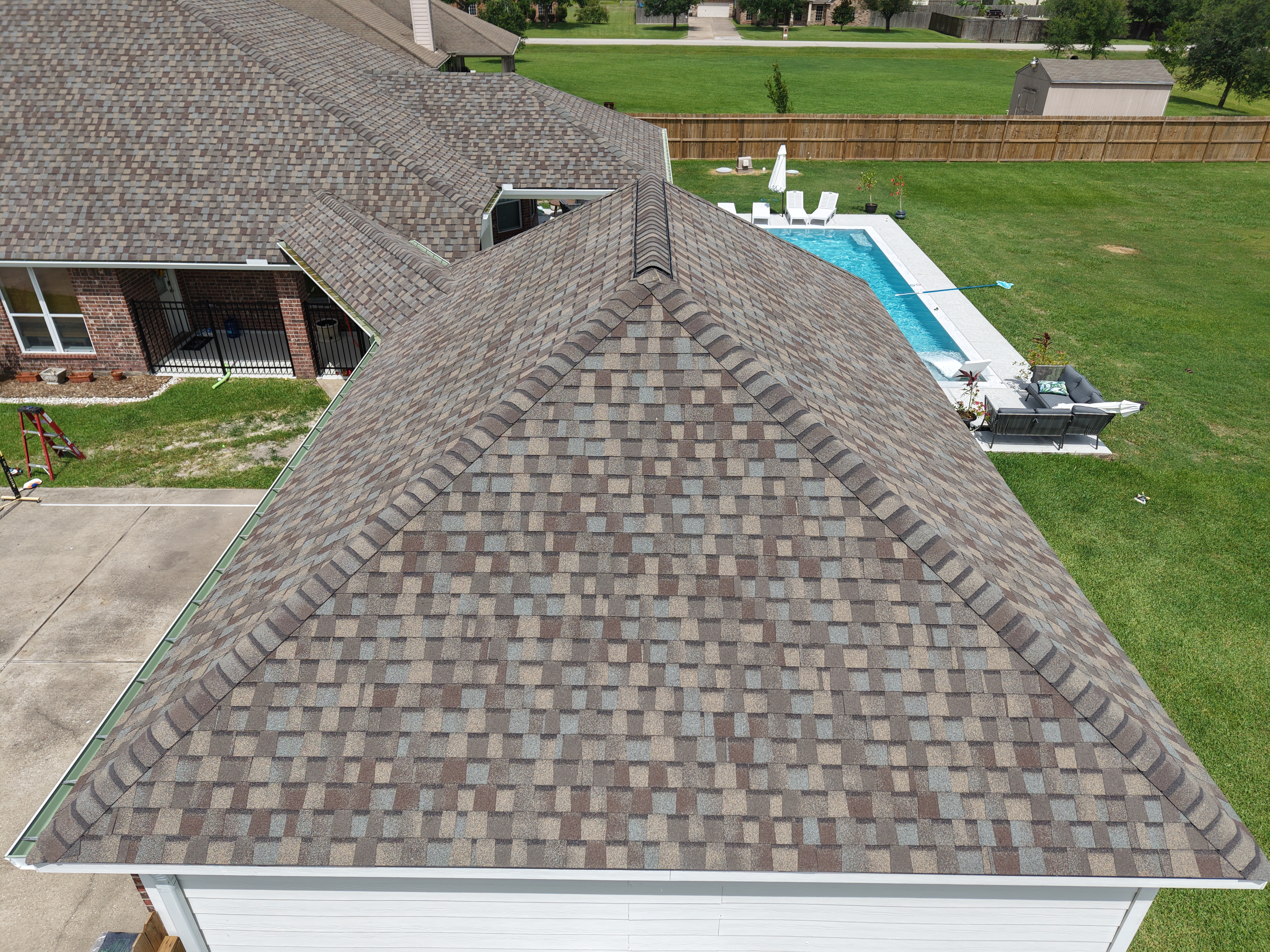
Please note that the steep section of roof was too tall to access by ladder and walk safely. A drone was used to try and get some information about the roof. This is not as good an inspection as walking the roof, but is the best and safest option given limited access. Any and all relevant photos or videos will be included in this report.
- HVACS-1 Heating, Ventilation and Air Conditioning Systems:
This shows the data plate for the Furnace.
- HVACS-2 Heating, Ventilation and Air Conditioning Systems:
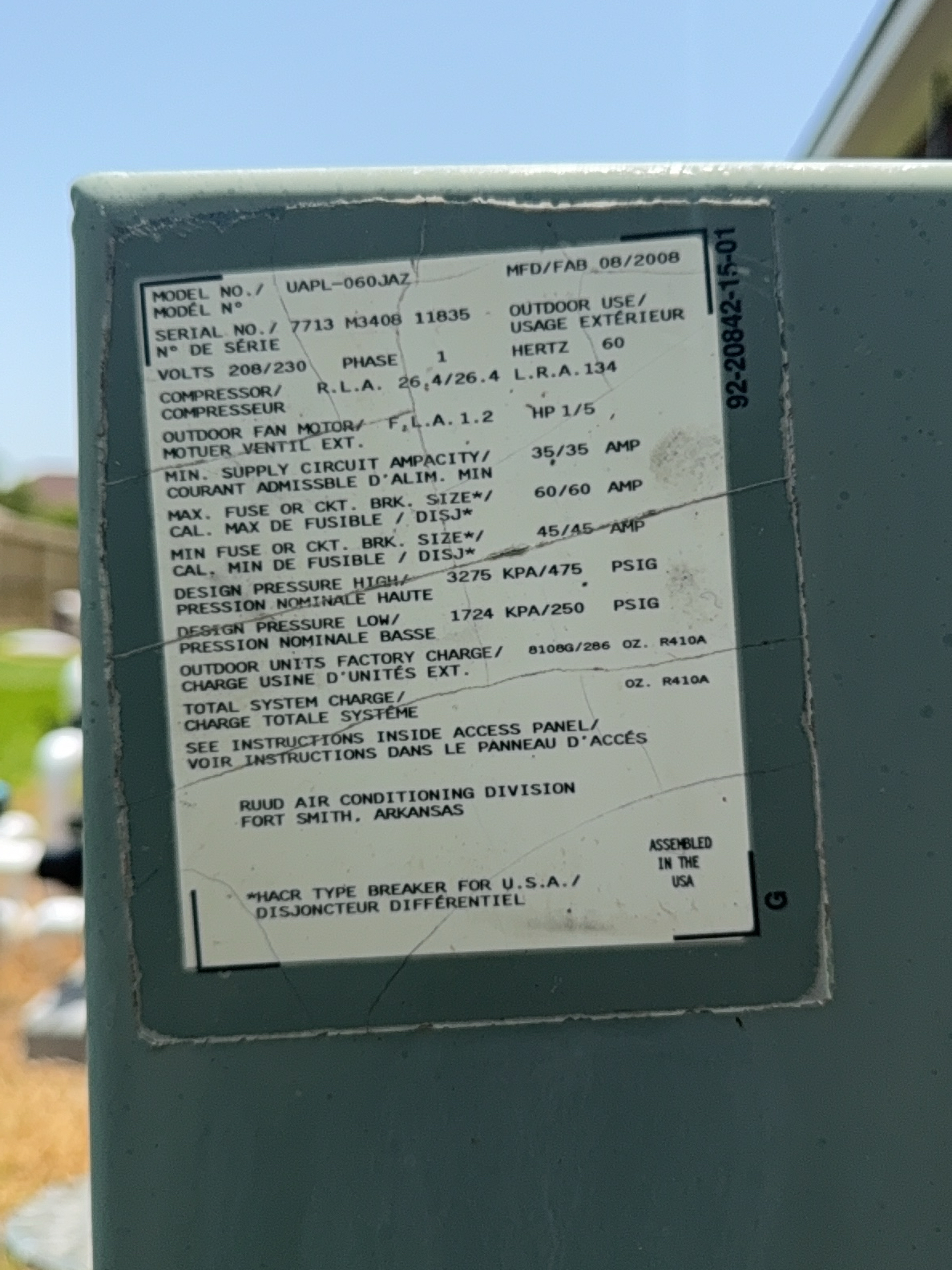
This shows the data plate for the AC unit (condenser).
- PS-1 Plumbing Systems:
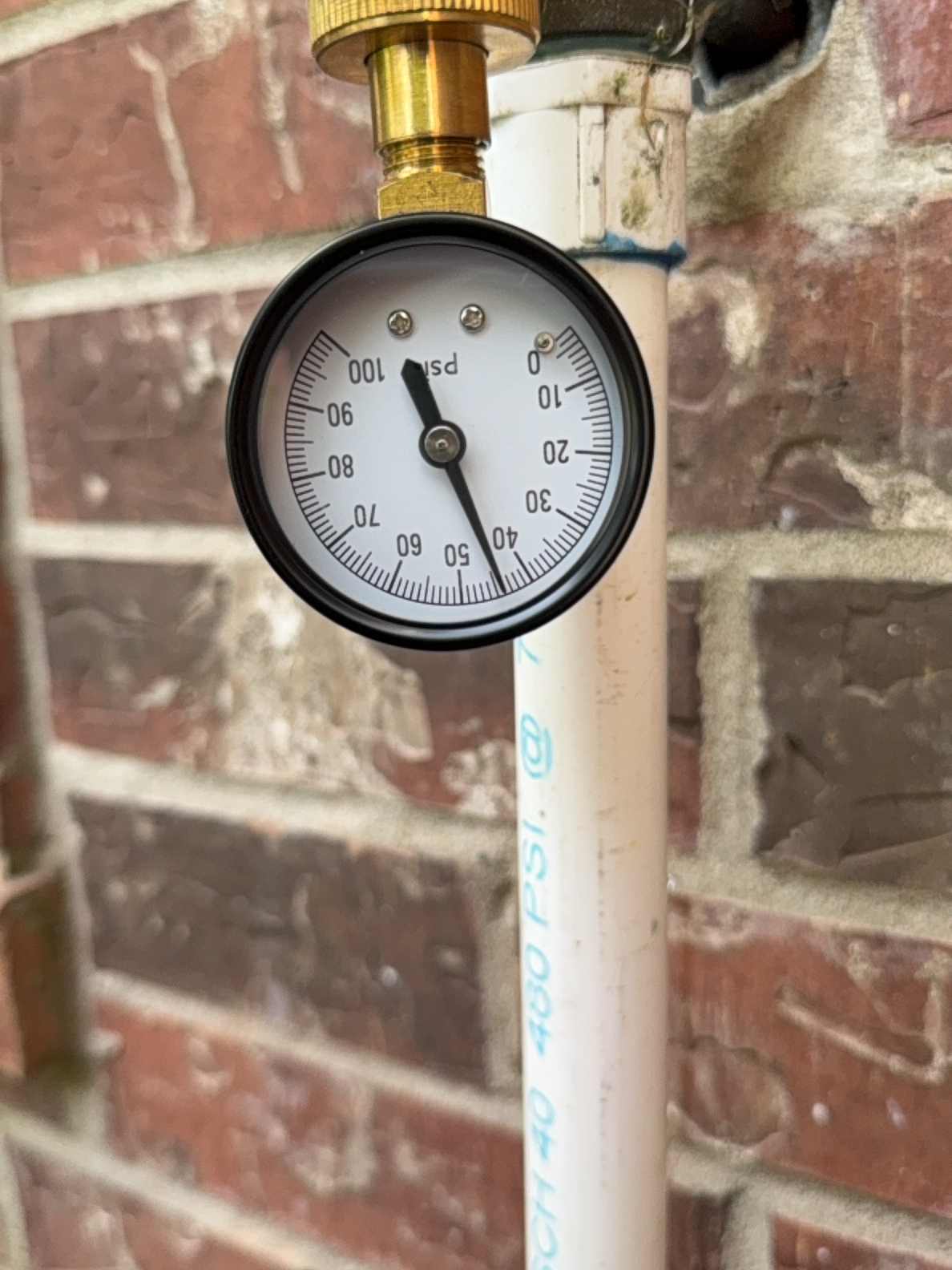
This shows the water pressure tested during inspection.
- PS-6 Plumbing Systems:
This shows the data plate for the water heater.
- A-1 Appliances:
This shows the data plate from the dishwasher. 📸
- A-2 Appliances:
The dishwasher was operated by running a normal wash cycle and was functional at the time of inspection. No leaks or water was present at the base of the unit at the completion of the cycle. The unit's efficiency of cleaning dishes is not tested.
- A-4 Appliances:
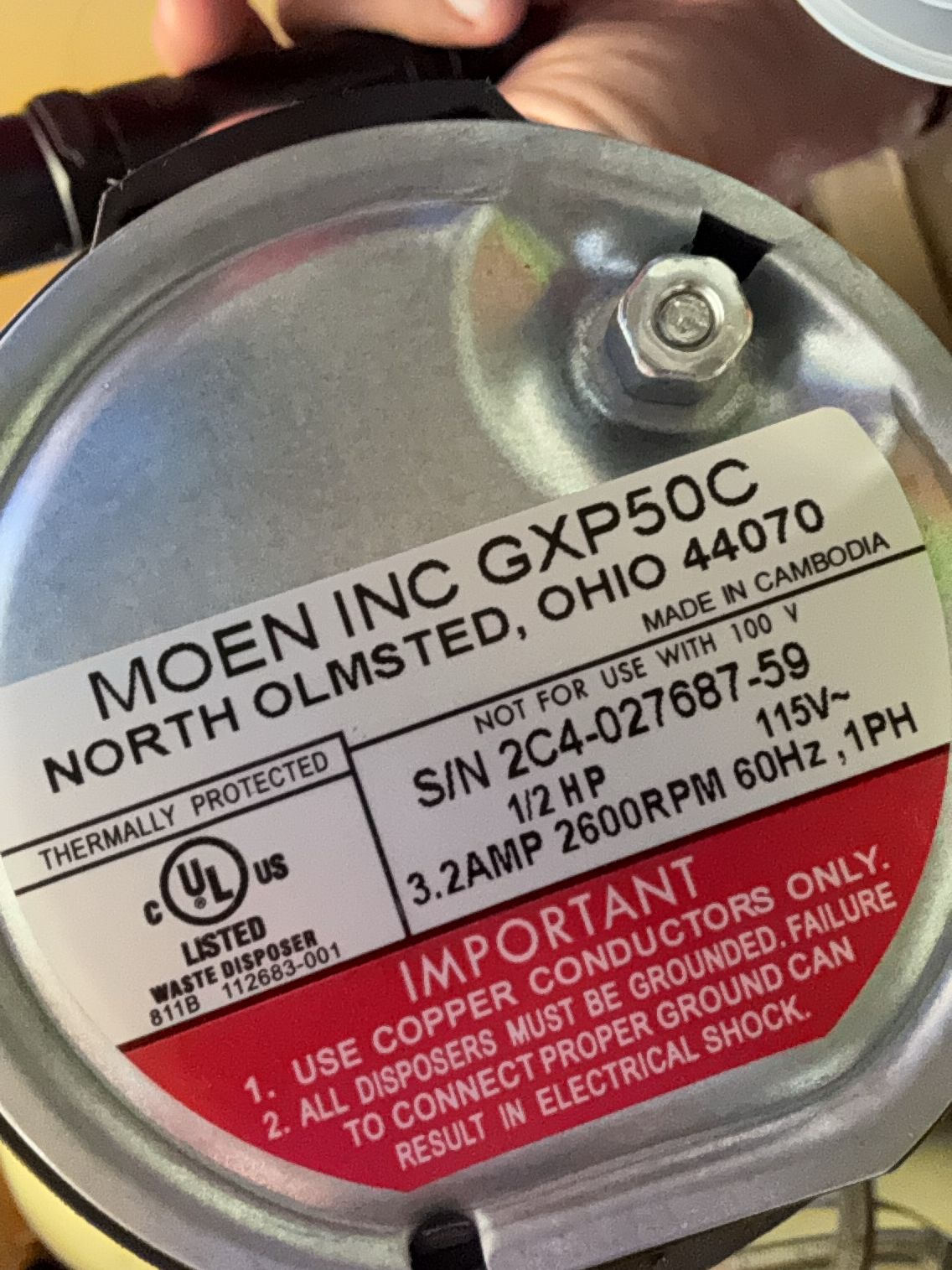
This shows the data plate from the disposer. 📸
- A-5 Appliances:
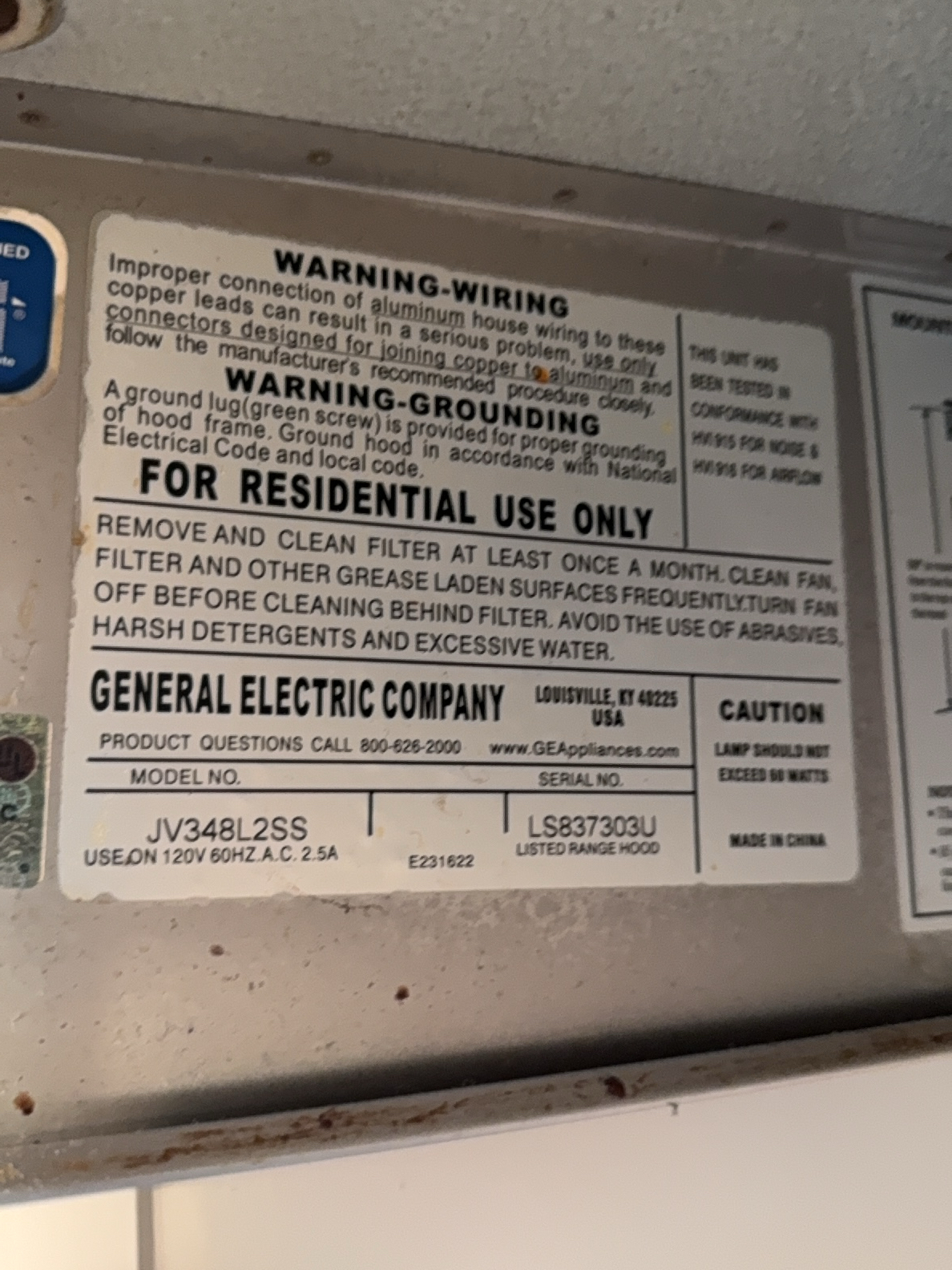
This shows the data plate from the exhaust/Range hood. 📸
- A-6 Appliances:
This shows the data plate from the oven. 📸
- A-7 Appliances:
The oven(s) was operated by placing into "Bake" mode at 350F, and the heat was produced from the burner(s) and/or elements. The oven light is tested for functionality. "Clean" options and other functions are not tested.
The oven temperature is considered out of range -/+ 25 Degrees per the TREC standards of practice. See the referenced number above of your system when testing.
- A-8 Appliances:
This shows the data plate from the cooktop.
- A-10 Appliances:
This shows the data plate from the microwave. 📸
📃 The Full Report
Structural Systems
Foundations
Grading and Drainage
Roof Covering Materials
Roof Structures and Attics
Walls (Interior and Exterior)
Ceilings and Floors
Doors (Interior and Exterior)
Windows
Stairways (Interior and Exterior)
Fireplaces and Chimneys
Porches, Balconies, Decks, and Carports
Other
Heating, Ventilation and Air Conditioning Systems
Heating Equipment
Cooling Equipment
Duct Systems, Chases, and Vents
Other
Plumbing Systems
Plumbing Supply, Distribution Systems and Fixtures
Drains, Wastes, and Vents
Water Heating Equipment
Hydro-Massage Therapy Equipment
Gas Distribution Systems and Gas Appliances
Other
Additional Information Provided By Inspector
Building Characteristics, Conditions and Limitations
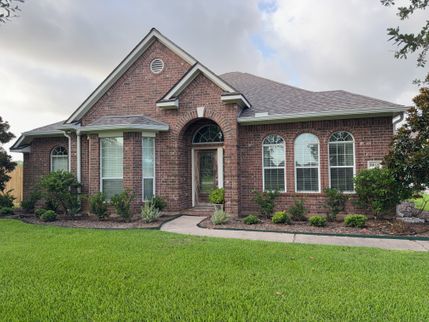
Type of Building : Single Family (1 story)
Approximate Square Footage: 2600
The approximate square footage listed here is listed as a courtesy and is based off of public records and disclosure. An evaluation of square footage of the buildings and property lines is beyond the scope of this inspection.
Approximate Year of Original Construction: 2008
Attending the Inspection: Inspector, Buyer
Occupancy: Occupied
This home was occupied at the time of the inspection. Inspection of occupied homes presents some challenges as occupant belongings can obstruct visual inspection of and access to parts of the building. We do our best during inspection to work around belongings to discover as much as possible about the house without moving or damaging personal property, however, the presence of personal items does limit the inspection.
Animals Present: No
Weather during the inspection: Partly cloudy
Approximate temperature during the inspection: Over 80[F]
Ground/Soil surface conditions: Dry
Rain in Last 3 Days: No
No
Structural Systems
Foundations
Inspected Not InspectedNot PresentDeficient
Type of Foundation(s): Slab
(An opinion on performance is mandatory) The foundation is performing as intended. No significant problems were observed.
Foundation construction included a slab-on-grade.
Because the General Home Inspection is a visual inspection, inspection of the slab-on-grade foundation is limited by the fact that typically, most of the foundation and slab is hidden underground or by interior floor coverings. Where possible, I inspect that portion of the foundation visible at the home exterior between grade and the bottom of the exterior wall covering.
Grading and Drainage
InspectedNot InspectedNot PresentDeficient
One or more downspouts discharged roof drainage next to the foundation. This condition can effect the ability of the soil to support the weight of the structure above and can cause damage related to soil/foundation movement. The Inspector recommends the installation of downspout extensions to discharge roof drainage a minimum of 6 feet from the foundation.
- throughout the home
 |  |
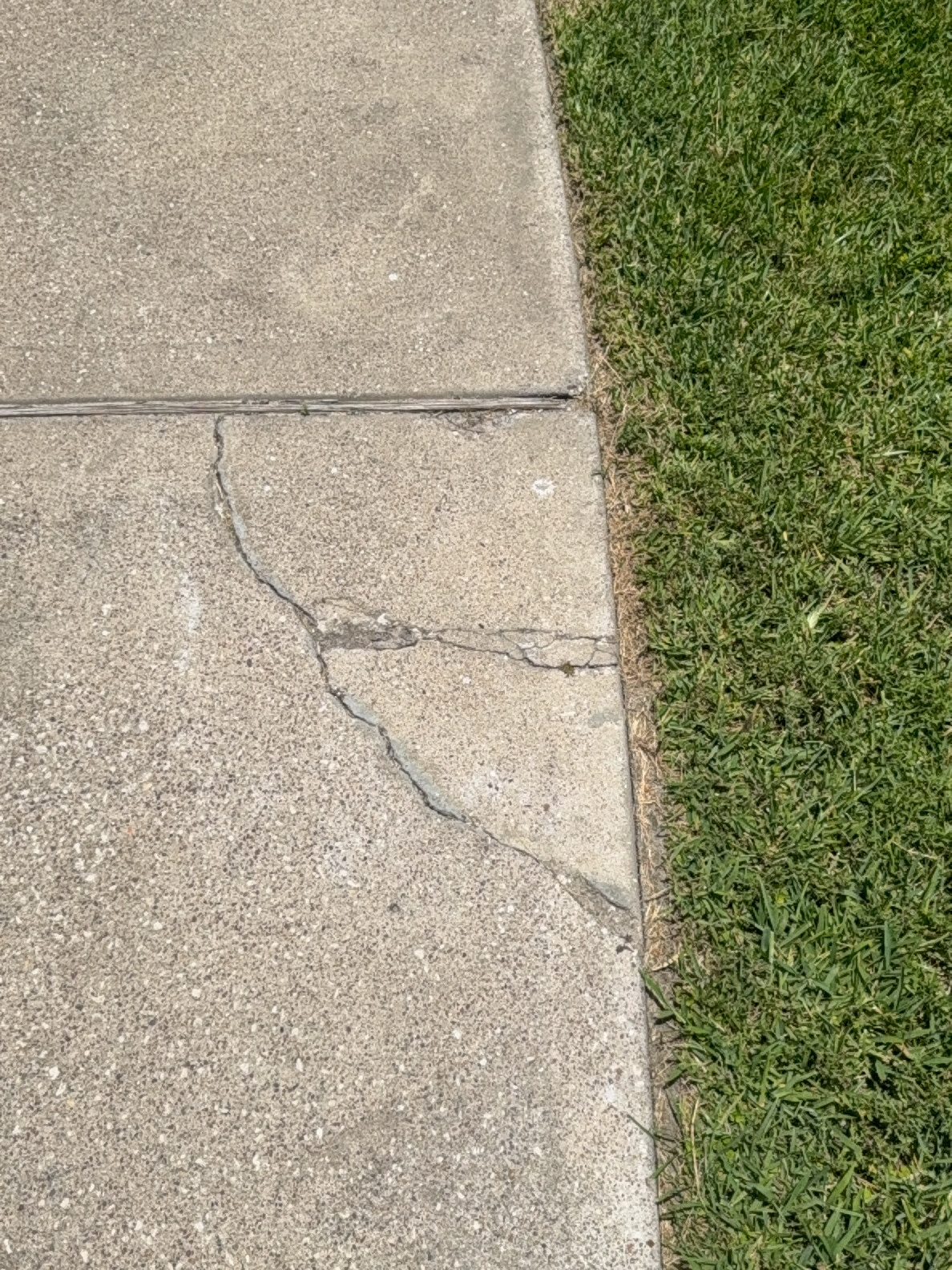
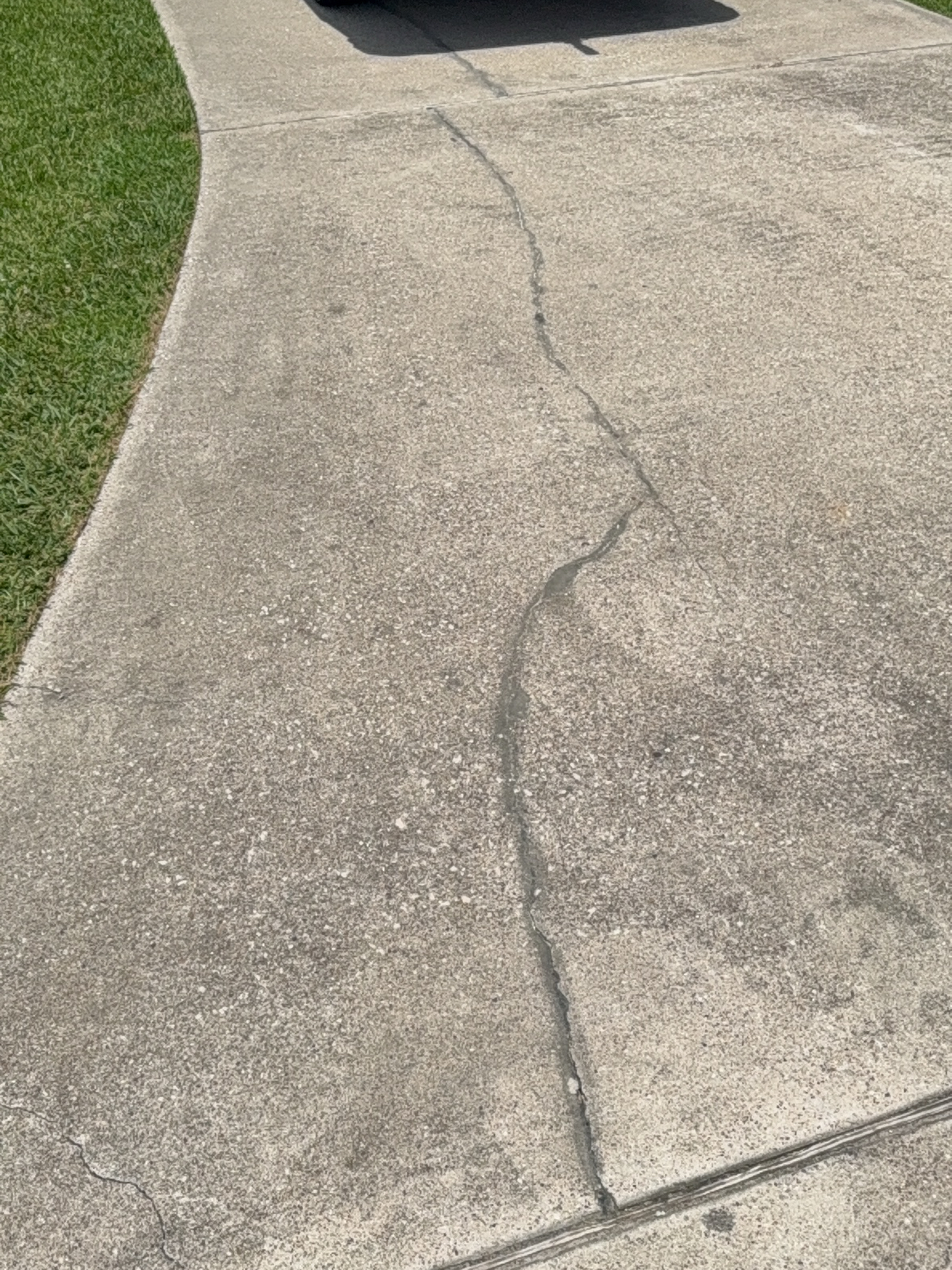
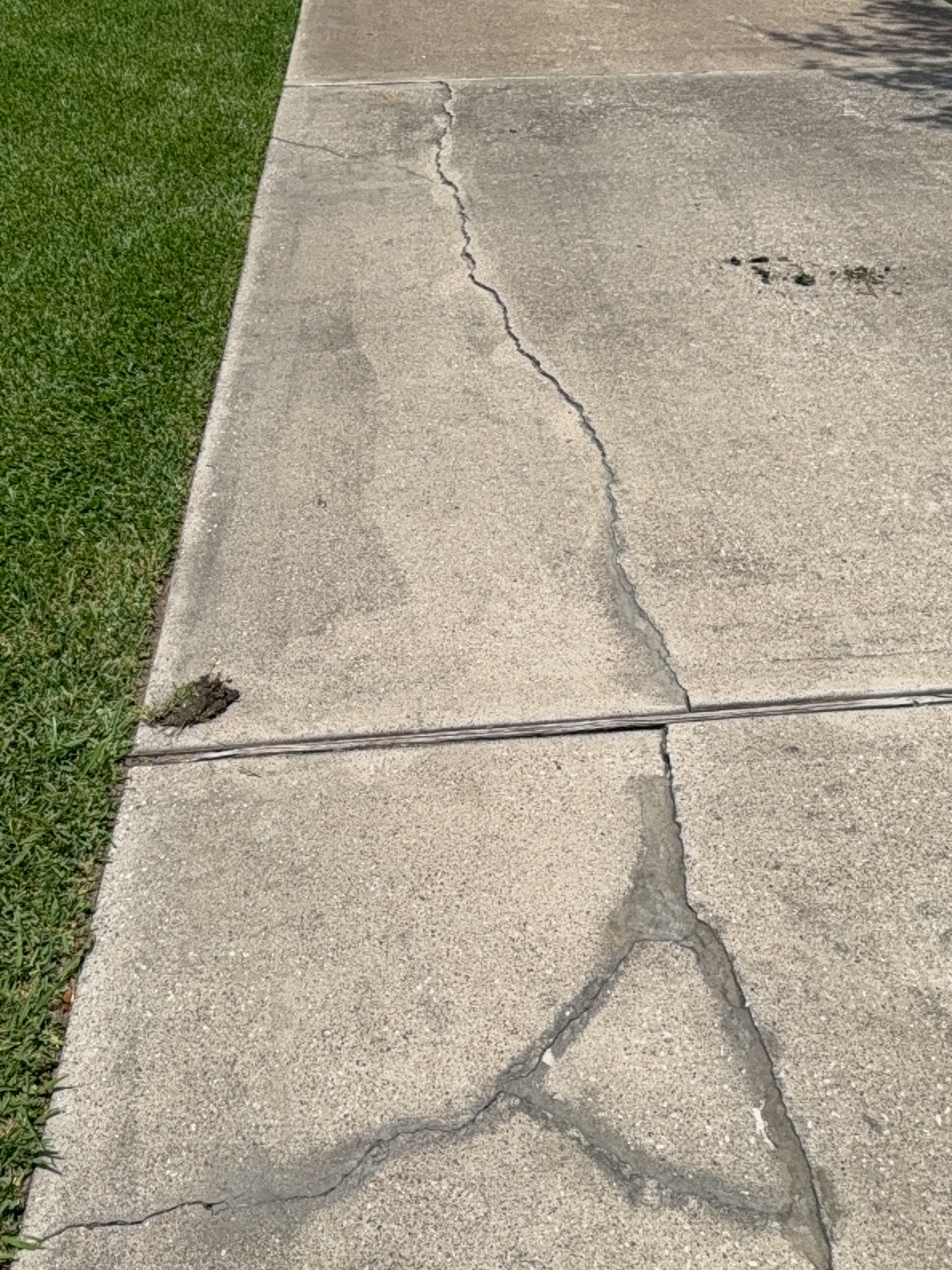
Common cracks (¼-inch or less) were visible in the driveway at the time of the inspection. Cracks exceeding ¼ inch should be filled with an appropriate sealant to avoid continued damage to the driveway surface from moisture.
 |  |  |
Roof Covering Materials
InspectedNot InspectedNot PresentDeficient
Types of Roof Covering: Architectural grade composition shingle, Three-tab composition shingle
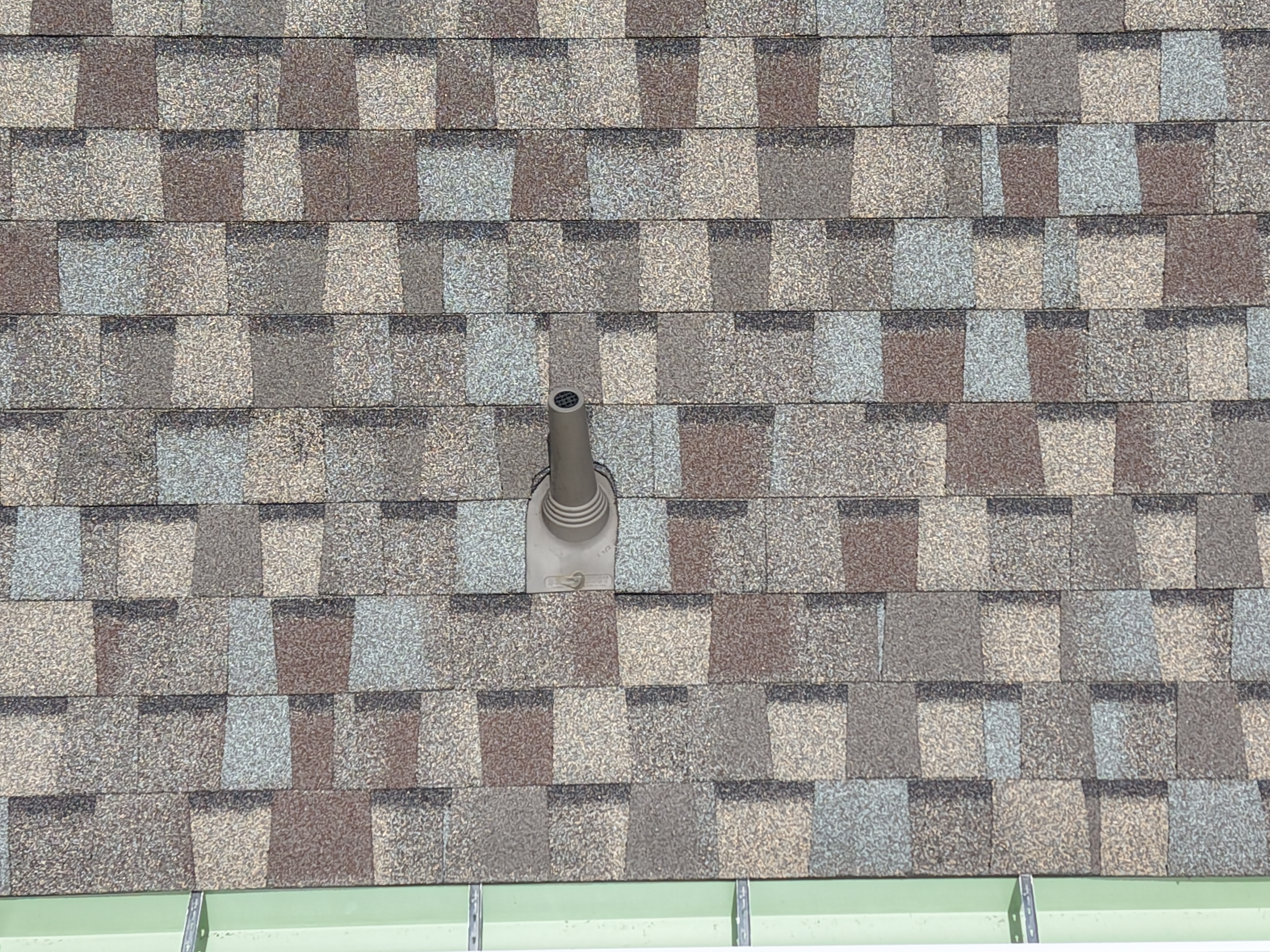
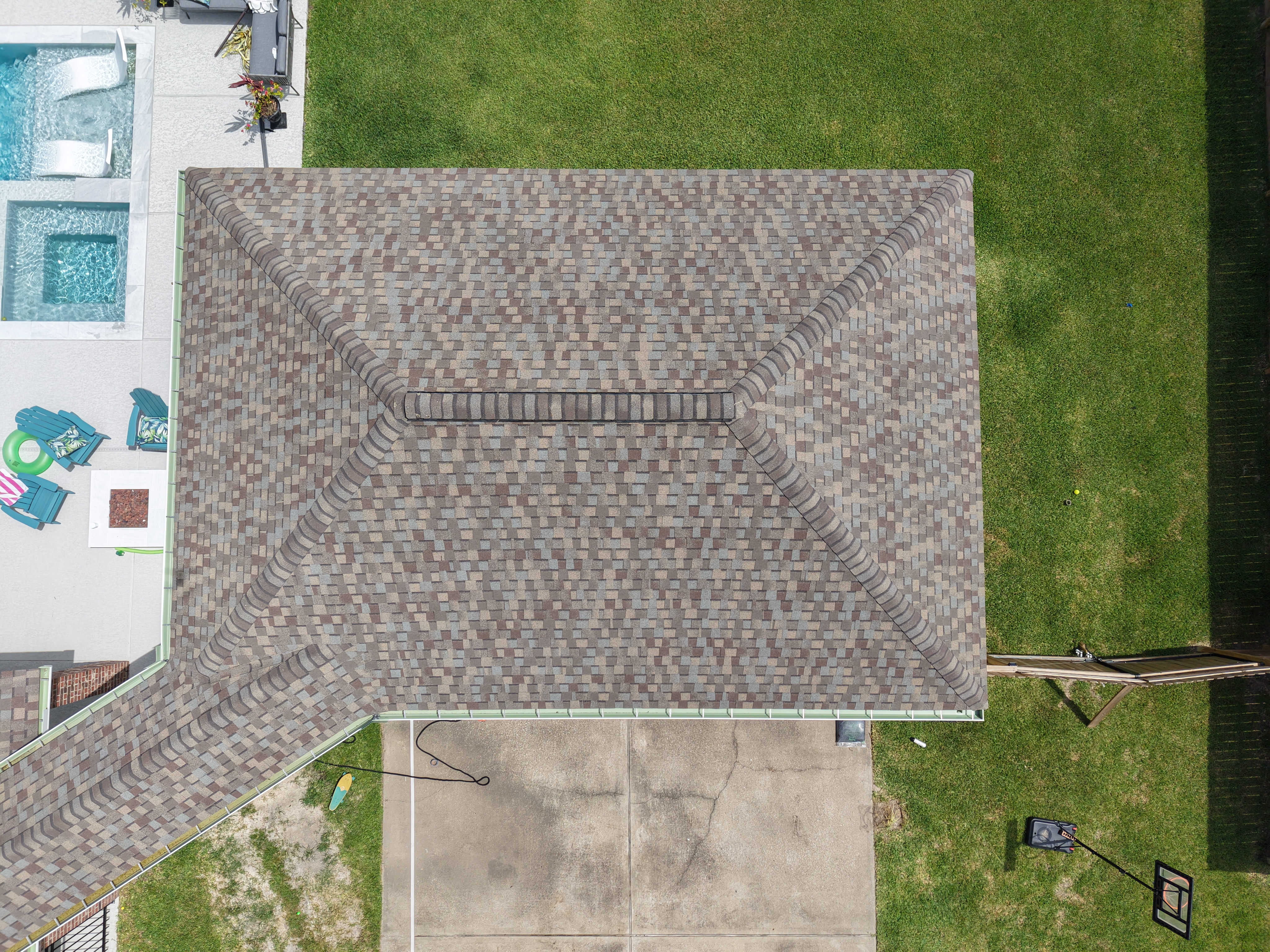
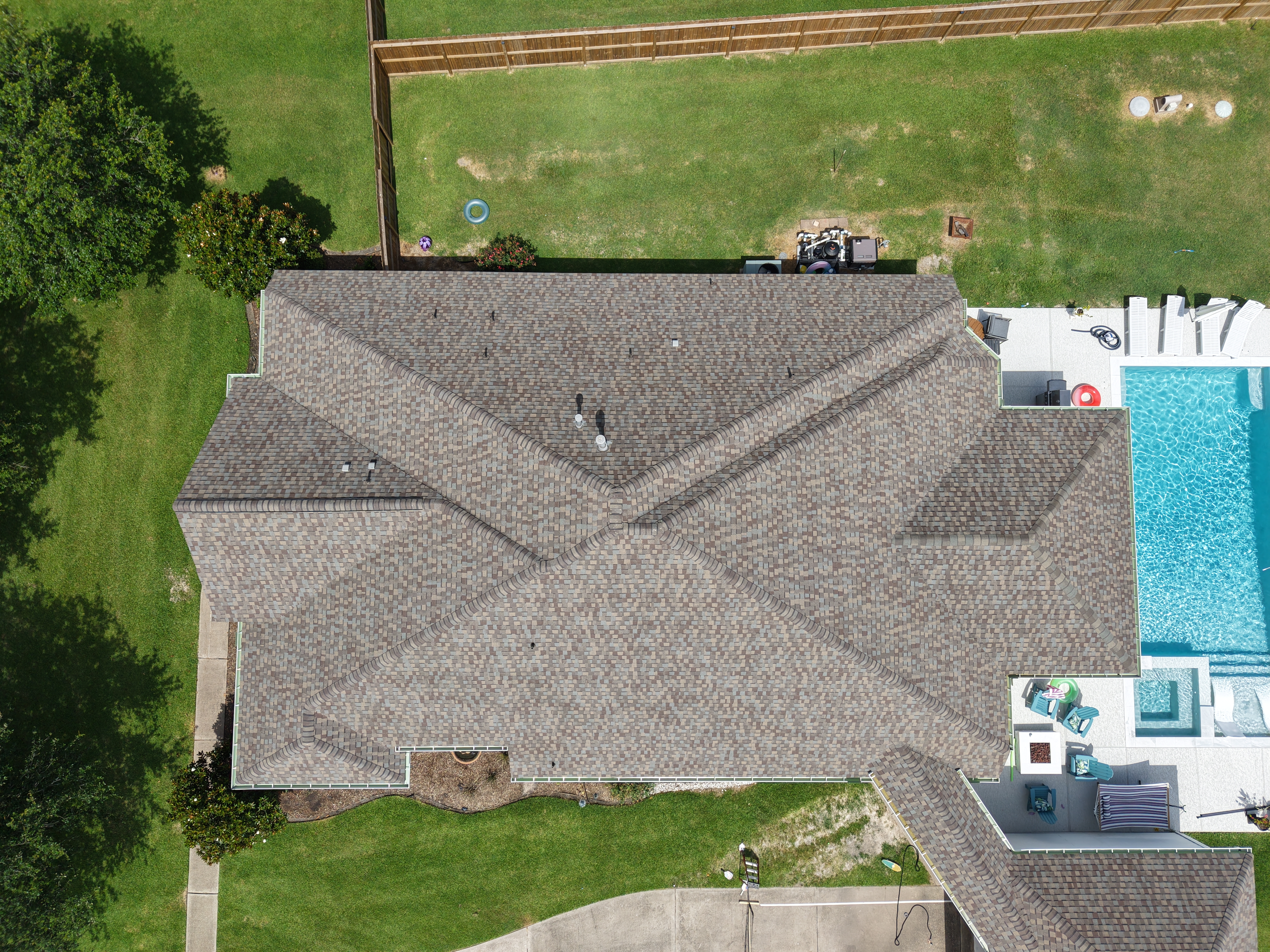
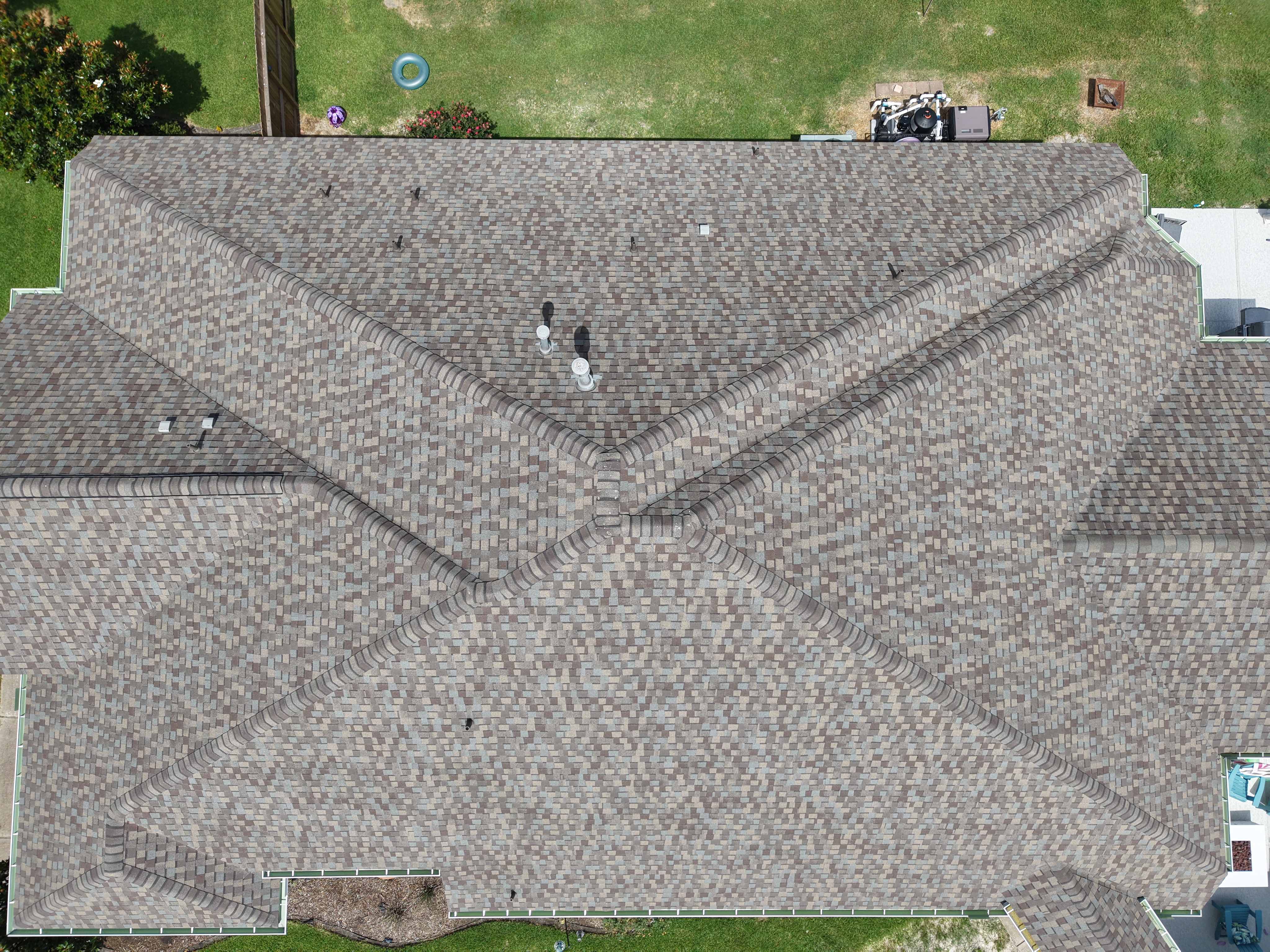
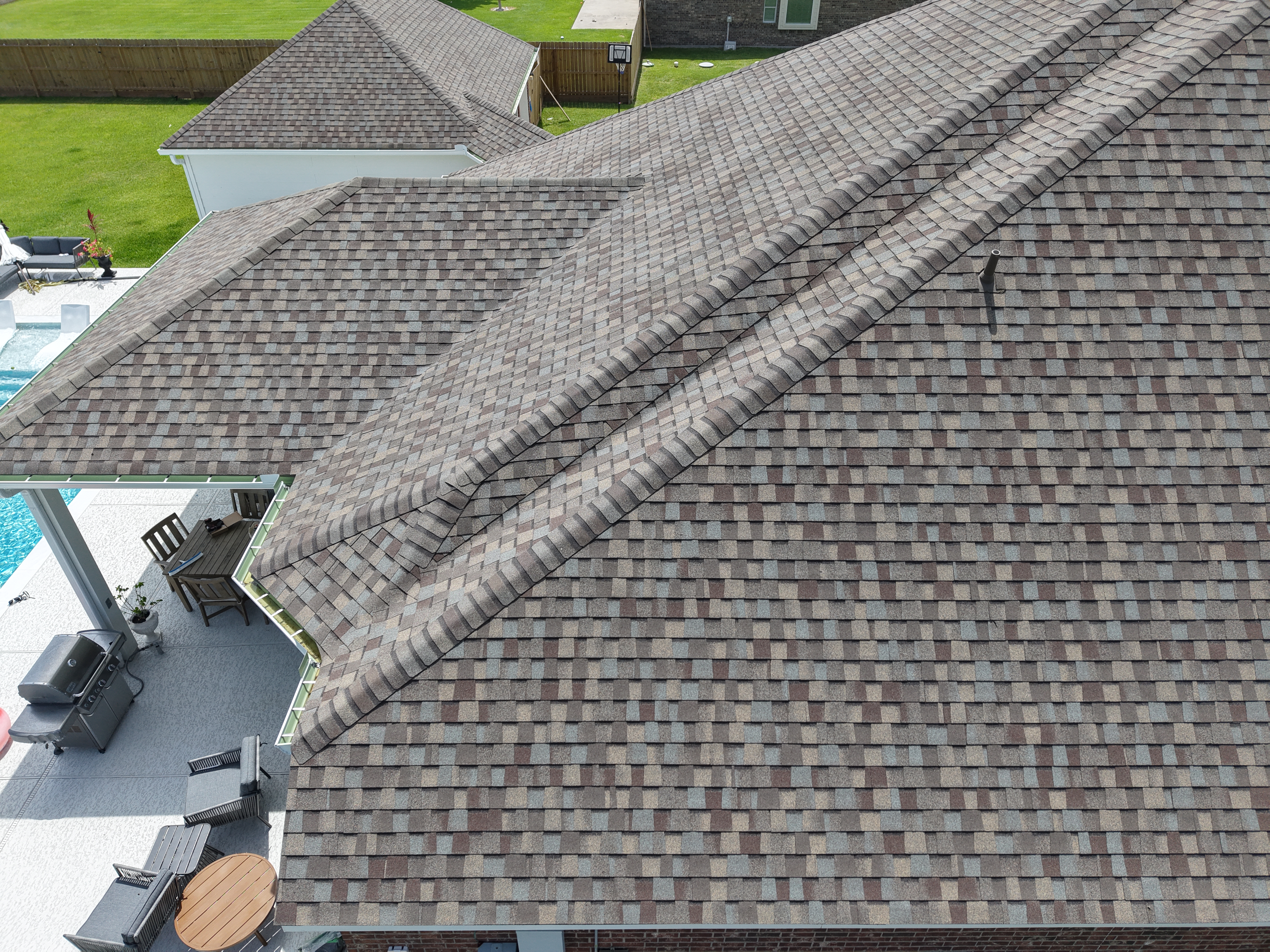
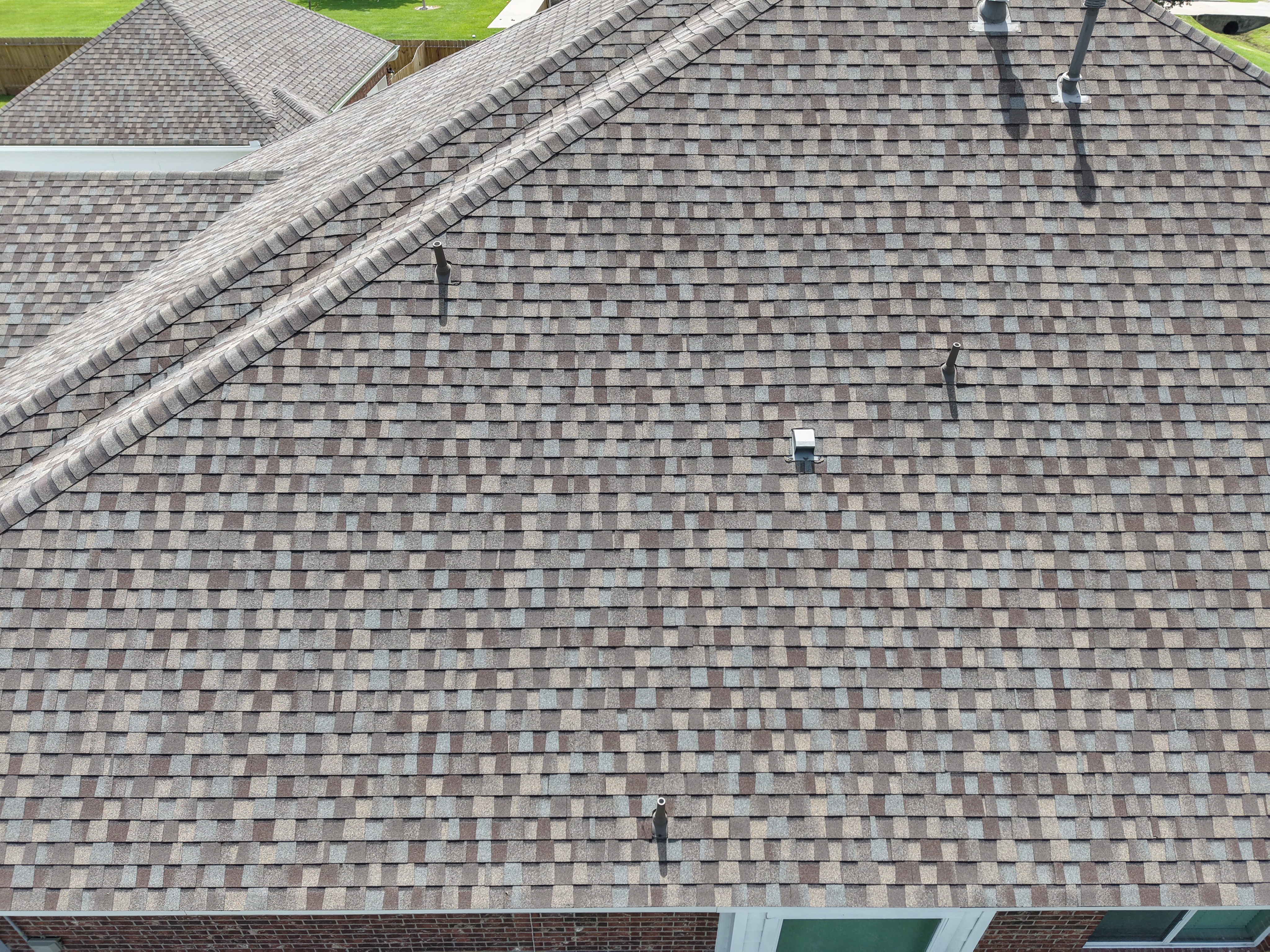
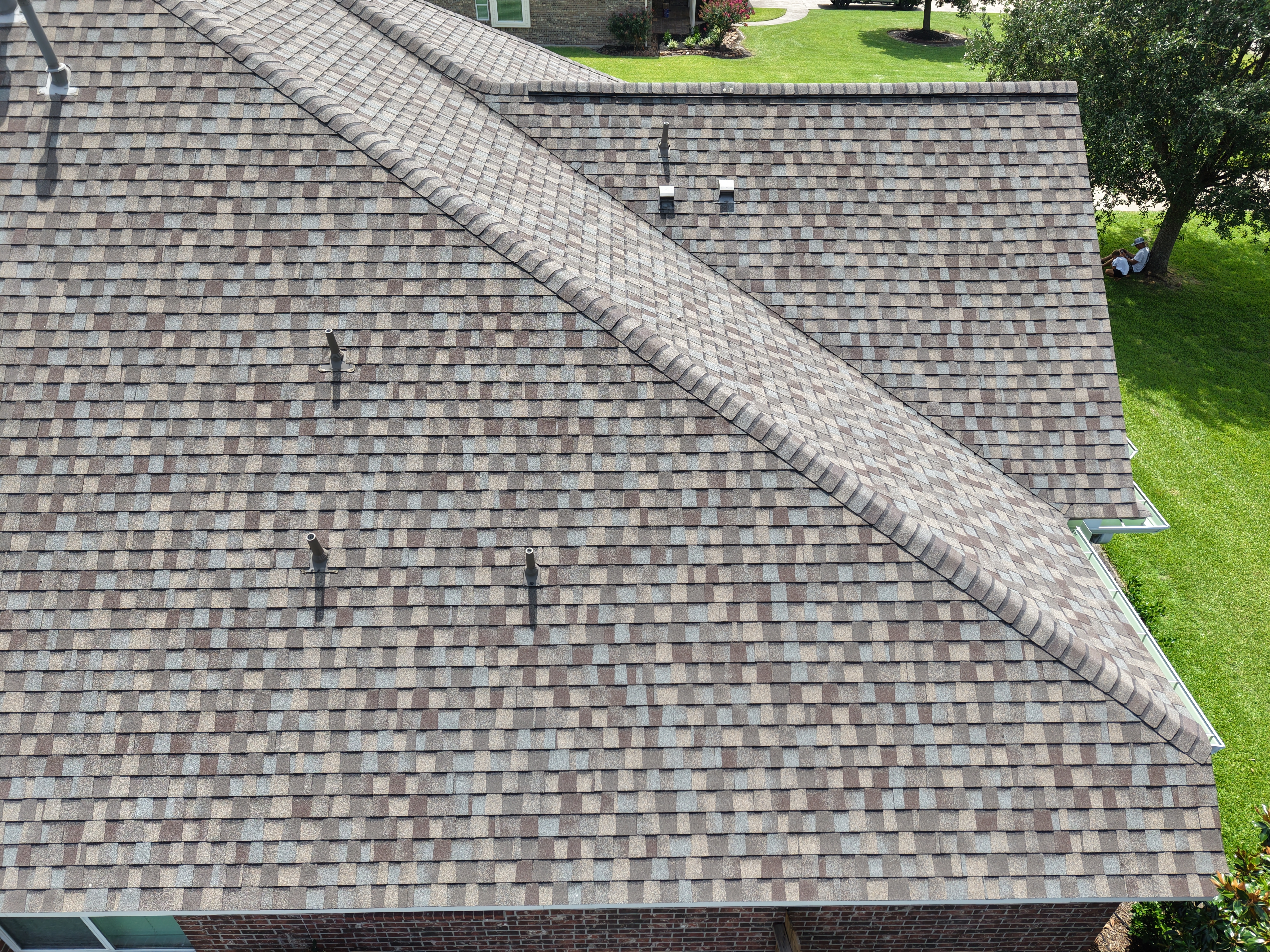
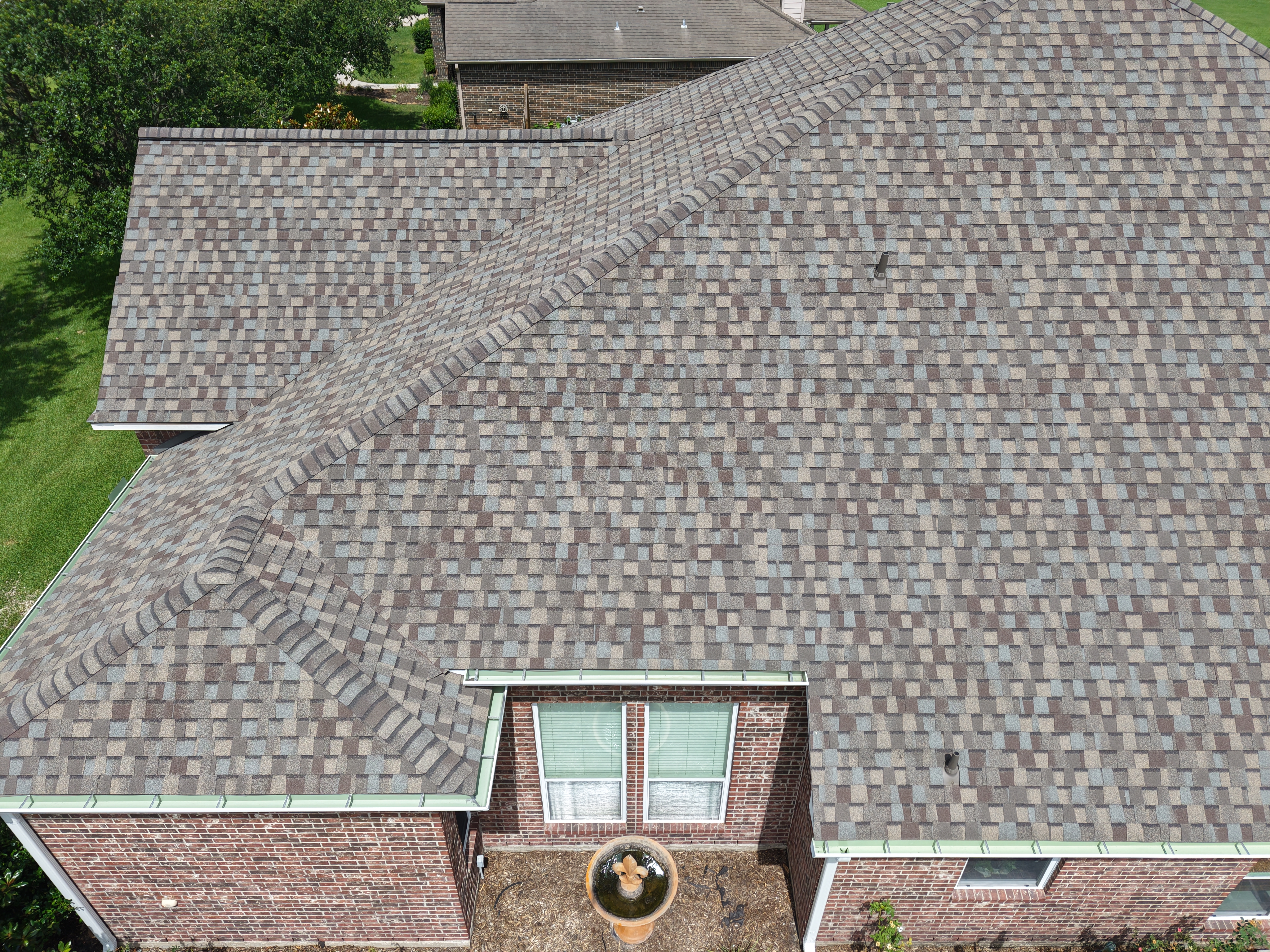
Viewed From: Walked on roof, Partial walked roof- sides of the home were too steep and were not walked, Viewed with a drone
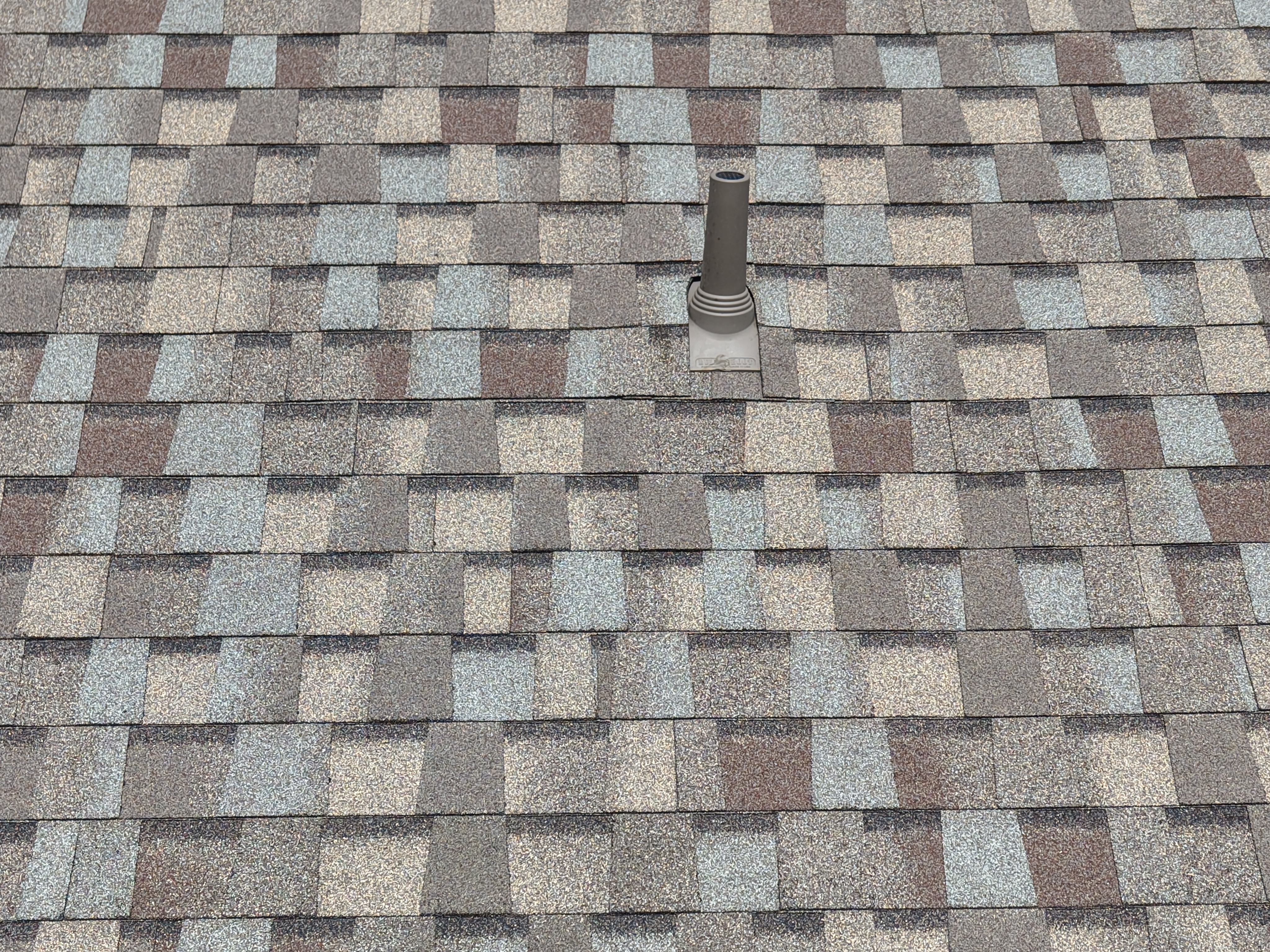
Please note that the steep section of roof was too tall to access by ladder and walk safely. A drone was used to try and get some information about the roof. This is not as good an inspection as walking the roof, but is the best and safest option given limited access. Any and all relevant photos or videos will be included in this report.
 |  |  |
 |  |  |
 |  |  |
 |  |  |
 |  |  |
 |  |  |
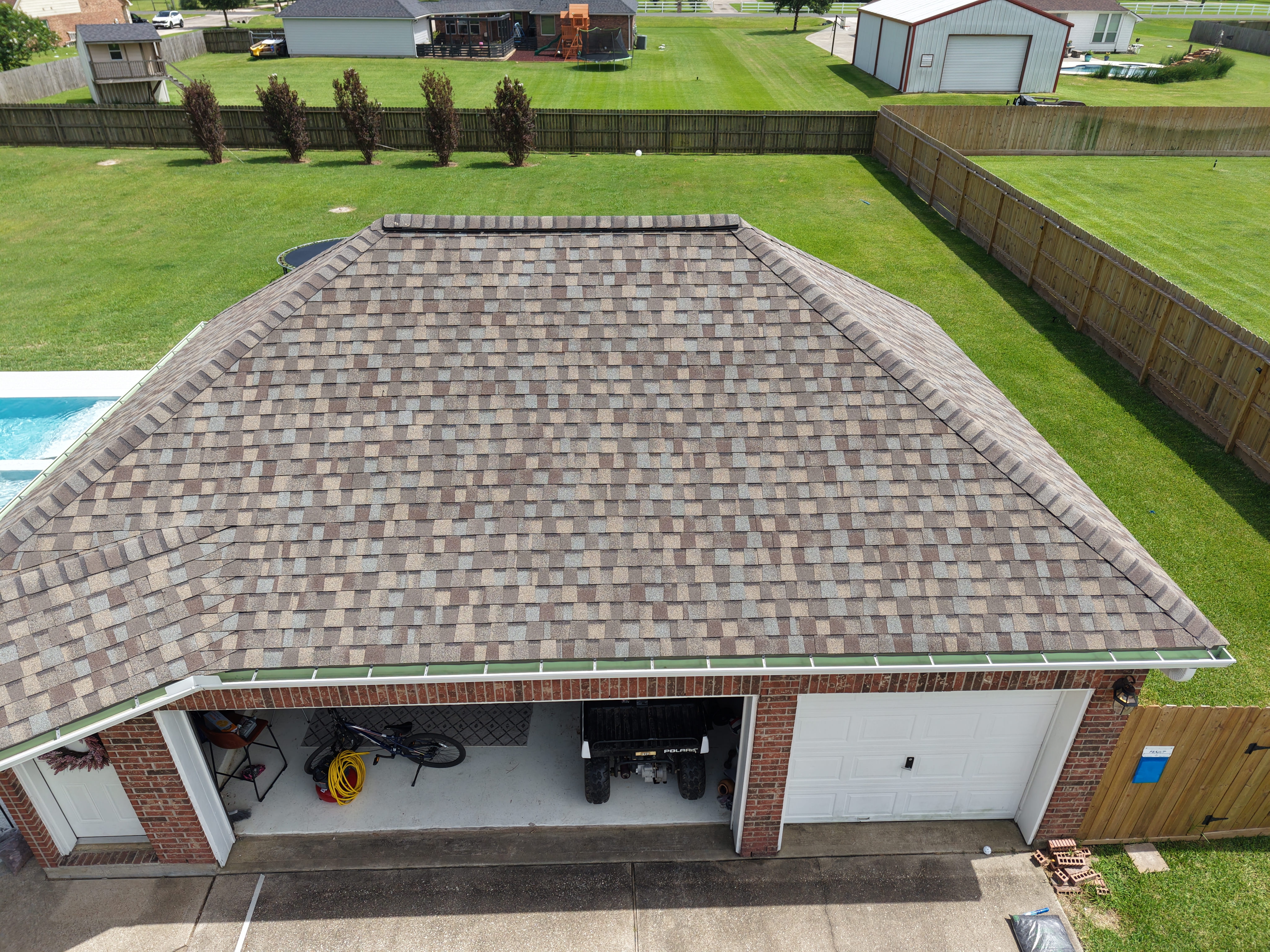 |
The roof surface was walked where possible, but not all areas could be physically walked due to the pitch of the roof. The areas not able to be walked where examined from the ground, ladder and walkable areas of the roof. This should be considered a limited inspection of the roof due to all areas not being able to be walked. If a more thorough inspection is needed, recommend consulting a roofing contractor.
Roof Structures and Attics
InspectedNot InspectedNot PresentDeficient
Attic Ventilation: Soffit Vent, Ridge Vent
Viewed From: Traversed partial- limited due to no floor decking and insulation covering the floor/ceiling joists, From attic decking
Type of Insulation: Blown, Batt
Approximate Average Depth of Insulation: 8/9- inches
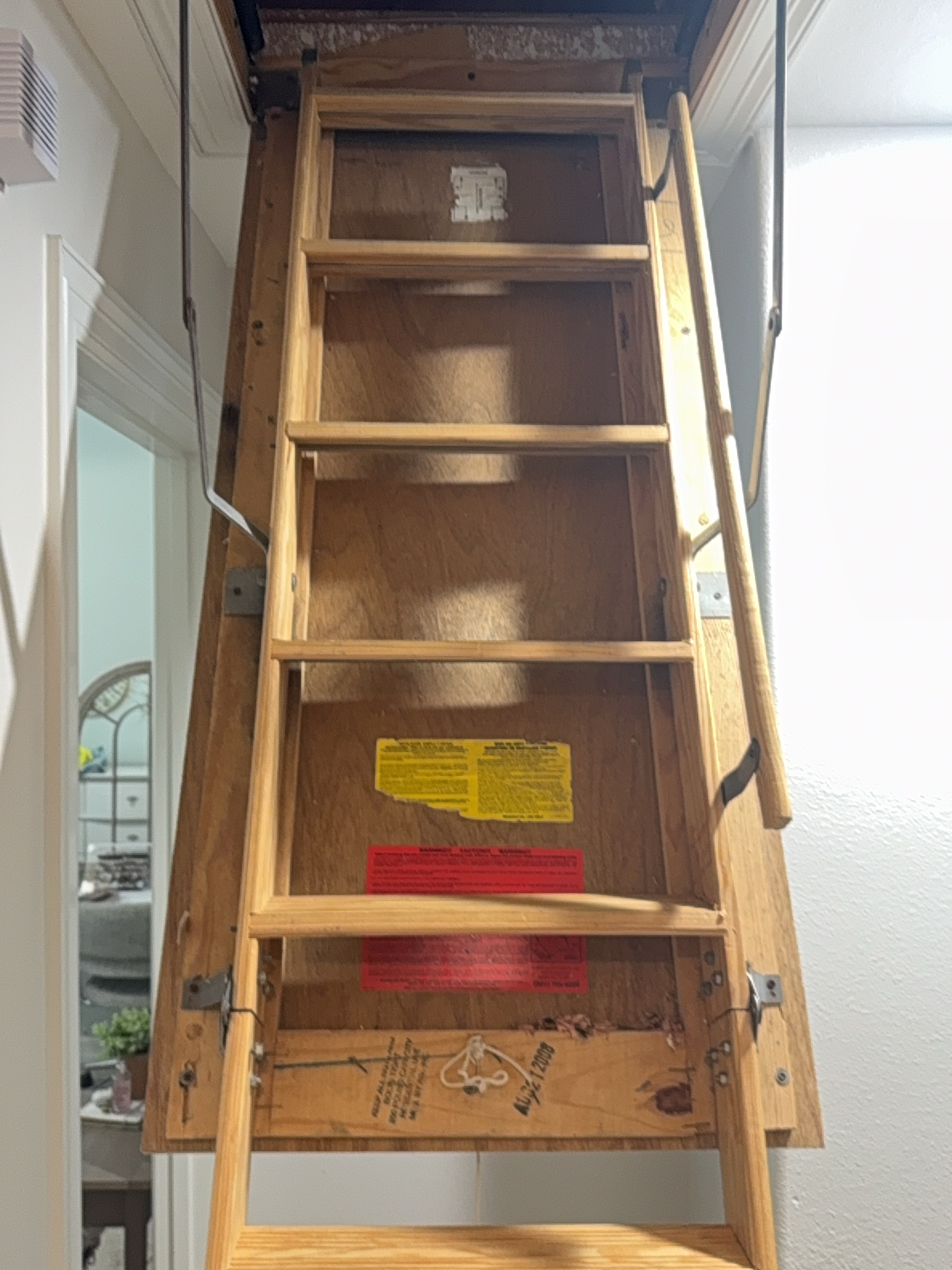
The attic pulldown stairs door seal is missing. Install as needed.
A foil-like radiant barrier was installed on the underside of roof sheathing in the attic. Radiant barriers reflect heat, reducing cooling costs in warm weather and heating costs in cold weather.
Walls (Interior and Exterior)
InspectedNot InspectedNot PresentDeficient
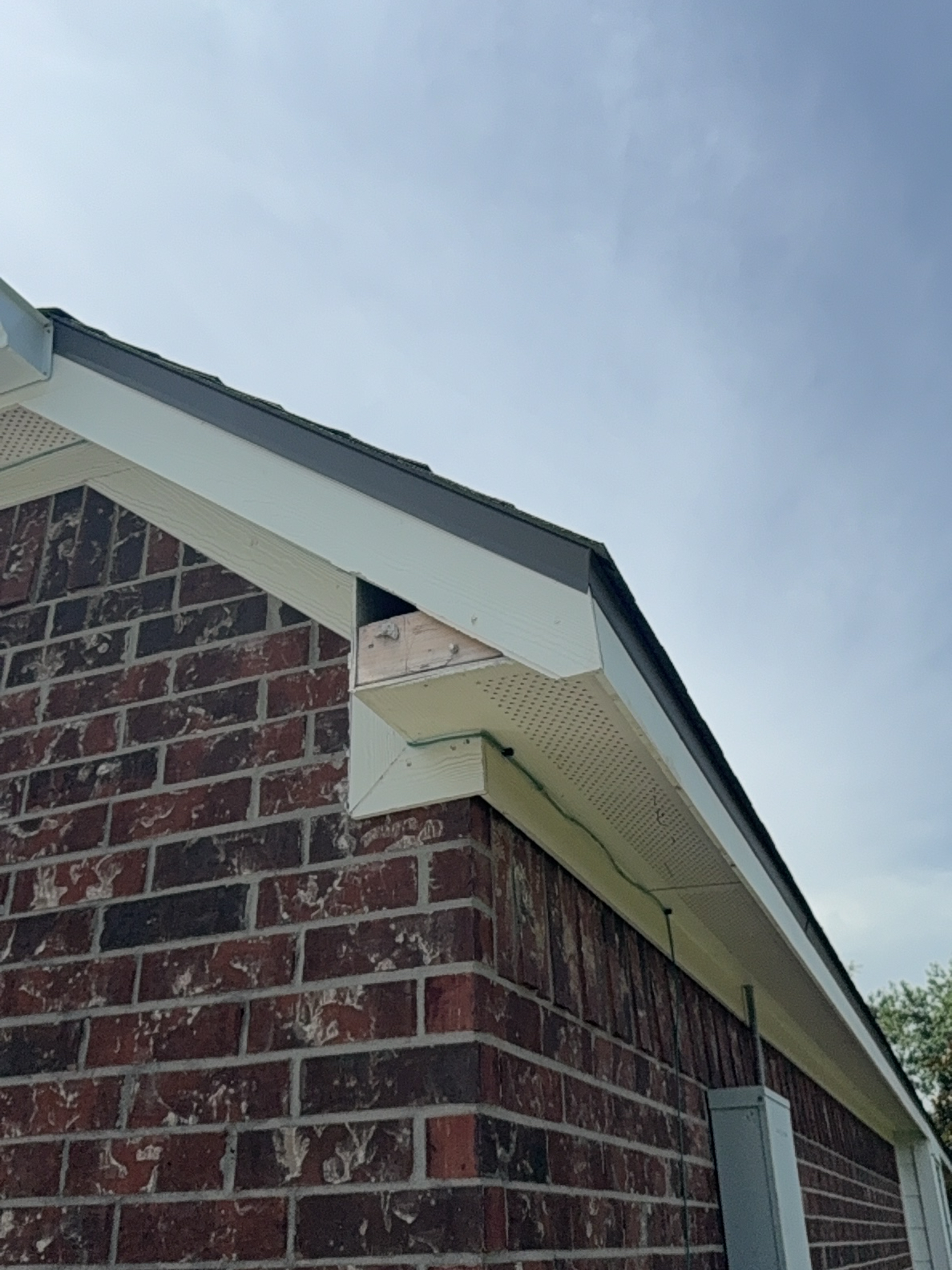
Damaged fascia. Recommend repair by qualified contractor.
Ceilings and Floors
InspectedNot InspectedNot PresentDeficient
Doors (Interior and Exterior)
InspectedNot InspectedNot PresentDeficient
Windows
InspectedNot InspectedNot PresentDeficient
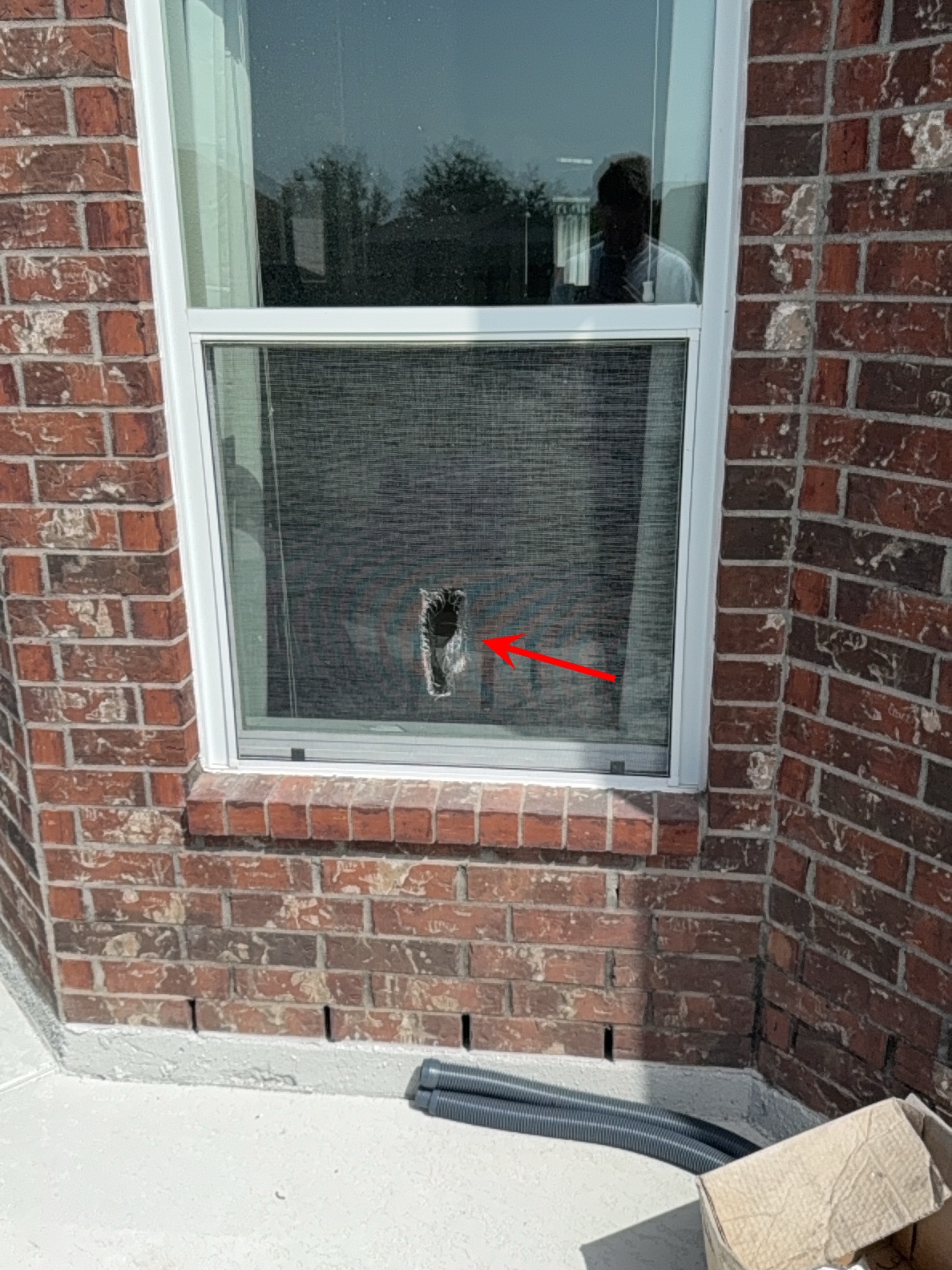
The window screens are missing/not installed. Inquire with the seller to make sure window screens are included and installed as desired.
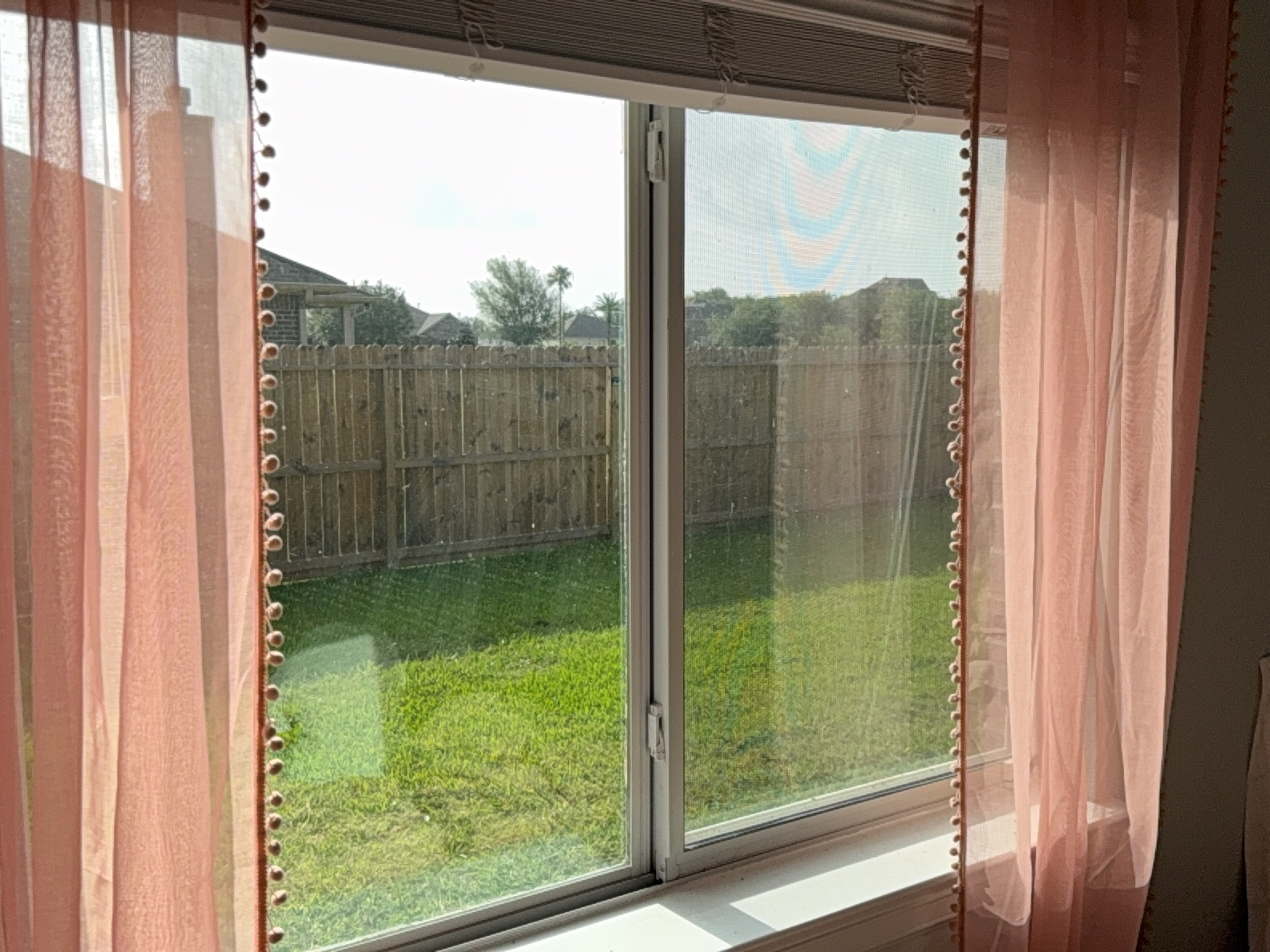
Window in the home hard to operate/lock. I recommend that a window contractor adjust and repair as needed.
Stairways (Interior and Exterior)
InspectedNot InspectedNot PresentDeficient
Fireplaces and Chimneys
InspectedNot InspectedNot PresentDeficient
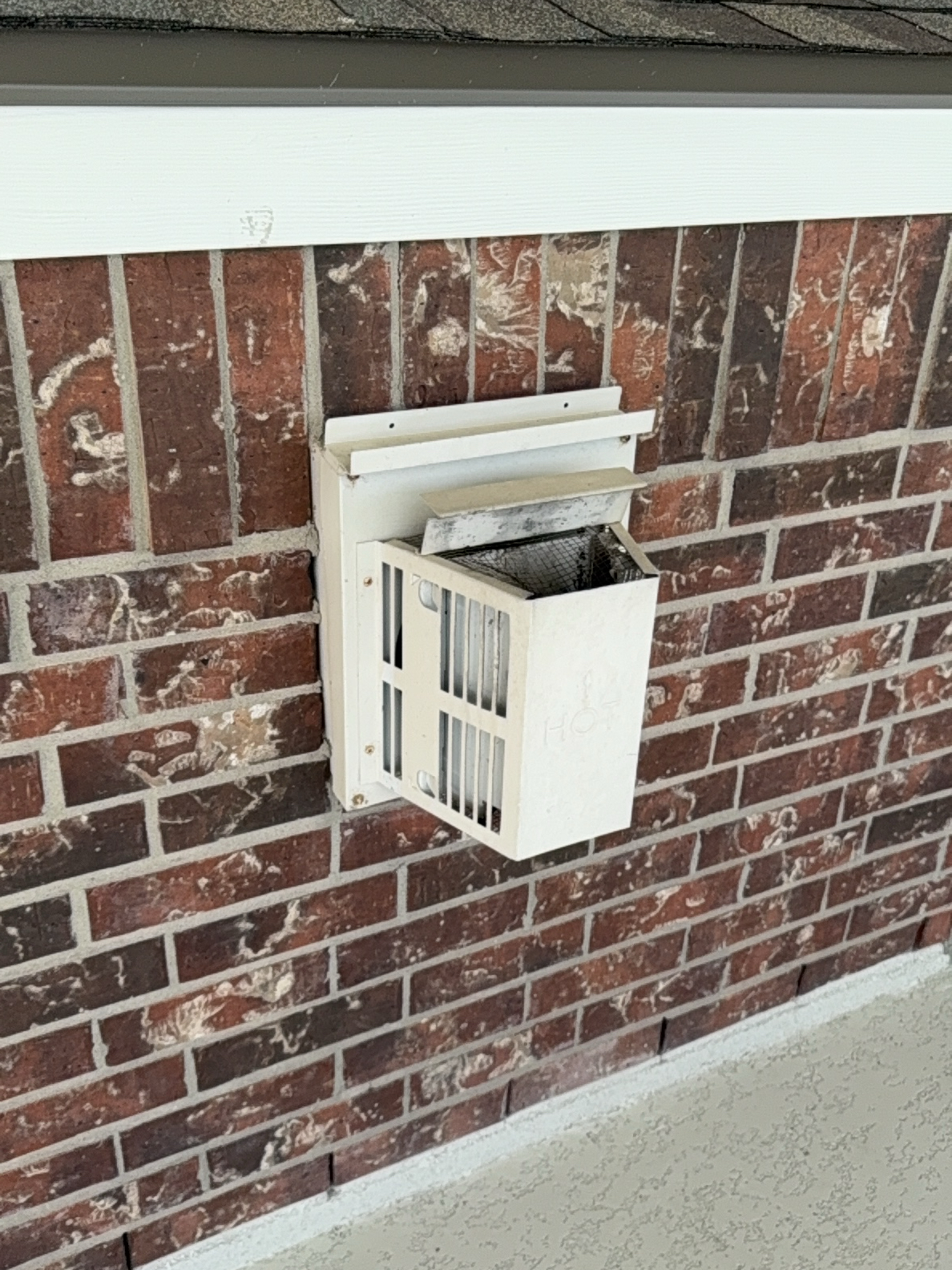
Fireplace flue gas discharges to back patio. This is a burn hazard. I recommend modifications by a qualified contractor to prevent someone from being burned.
Porches, Balconies, Decks, and Carports
InspectedNot InspectedNot PresentDeficient
Other
InspectedNot InspectedNot PresentDeficient
Electrical Systems
Service Entrance and Panels
InspectedNot InspectedNot PresentDeficient
Electrical Service Conductors: Aluminum, 4/0, 200 amps
Panel Type: GFCI's, Circuit Breakers
No surge protection was noted at the electrical equipment today. NEWER CODE - 2020 NEC 230.67(A) The 2020 edition of the National Electric Code requires type I or type 2 surge protection on new or renovated homes. This newer code change reflects the growing complexity of electric appliances in our houses and the growing risk of damage to electrical equipment due to internal or external electrical surges. This short video explains more about electrical surges and surge protection. I recommend upgrading and adding surge protection for improved protection of the electrical appliances in this building. I would do this in the context of other electrical repairs or upgrades.
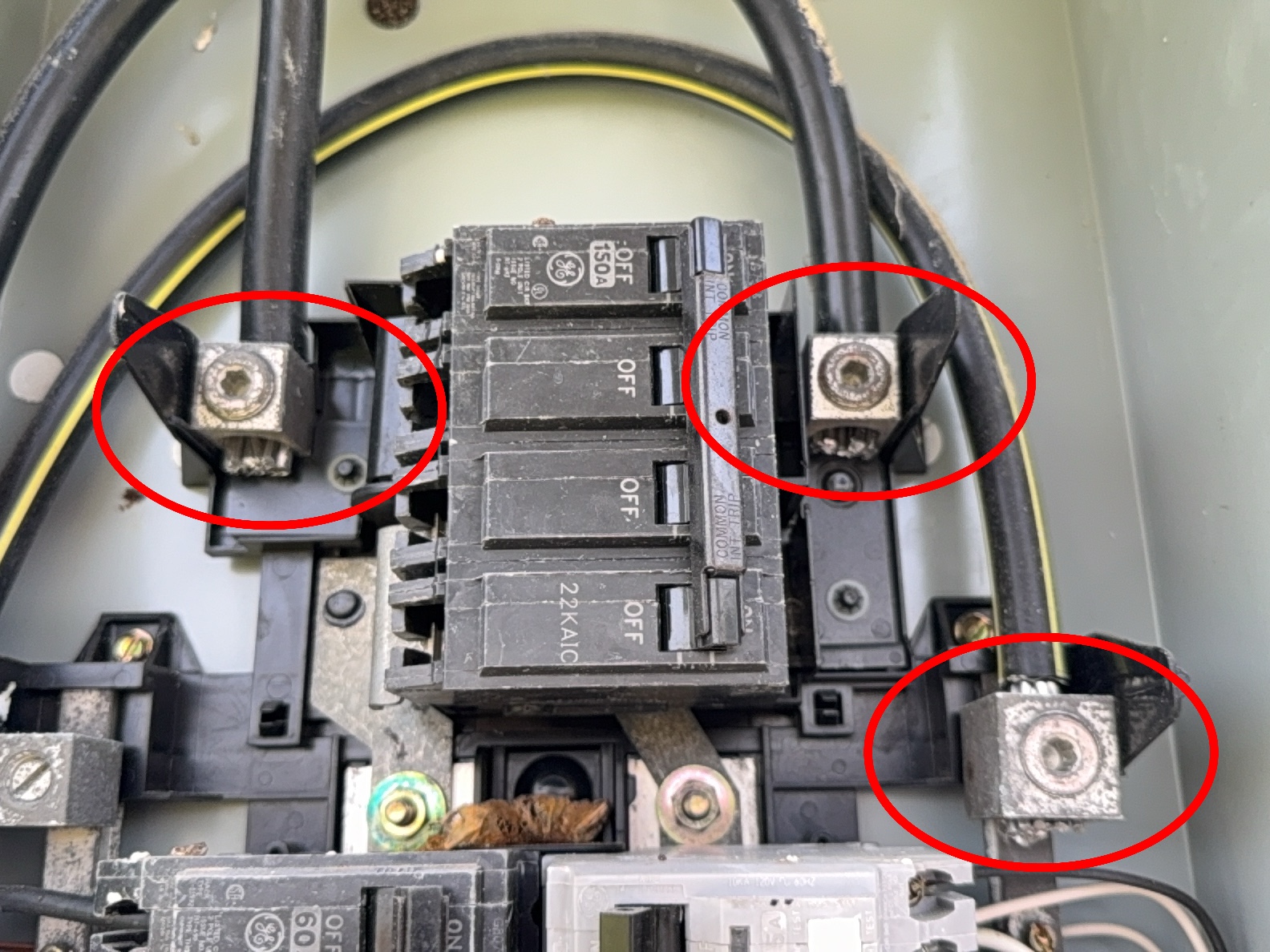
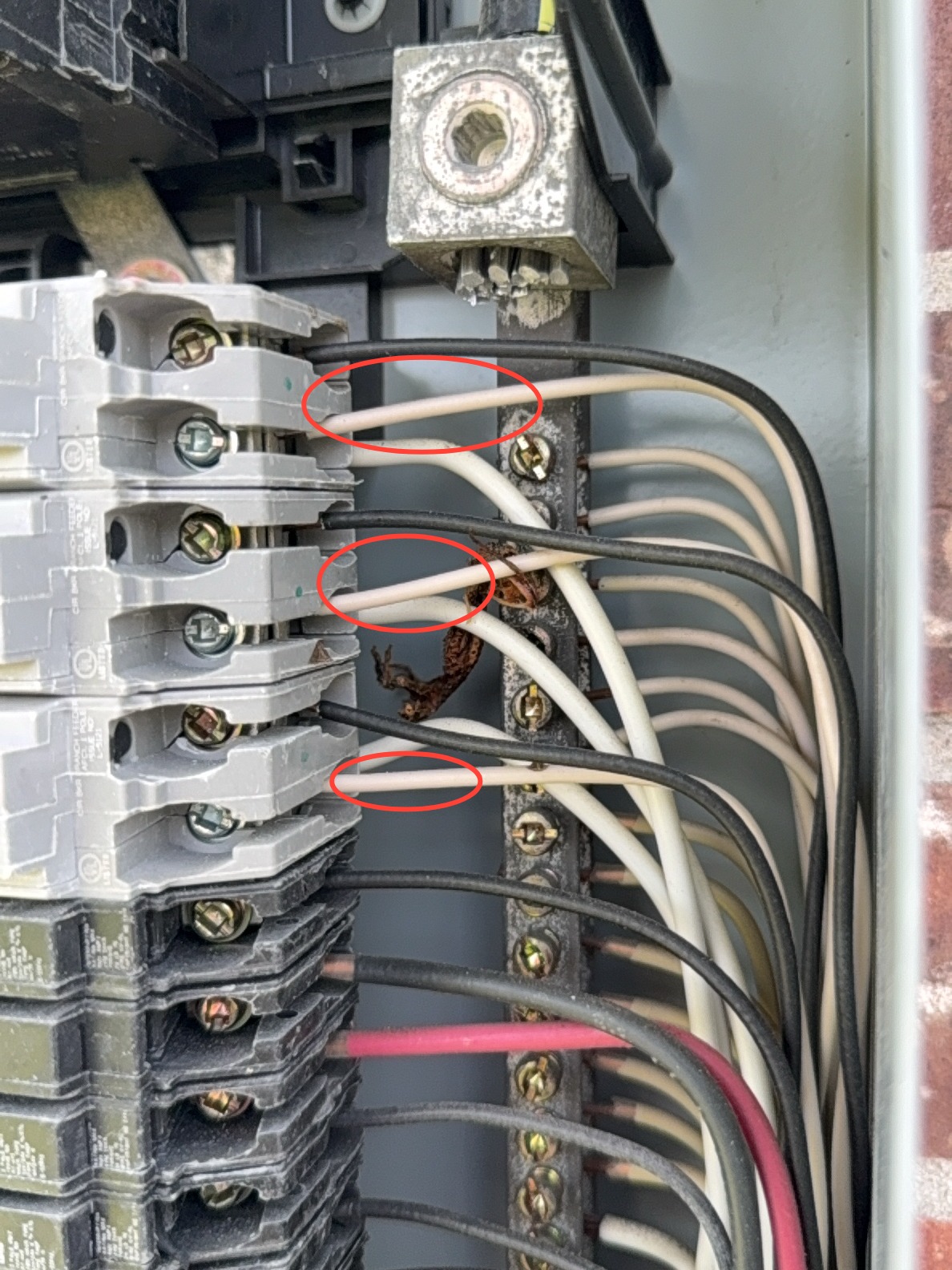
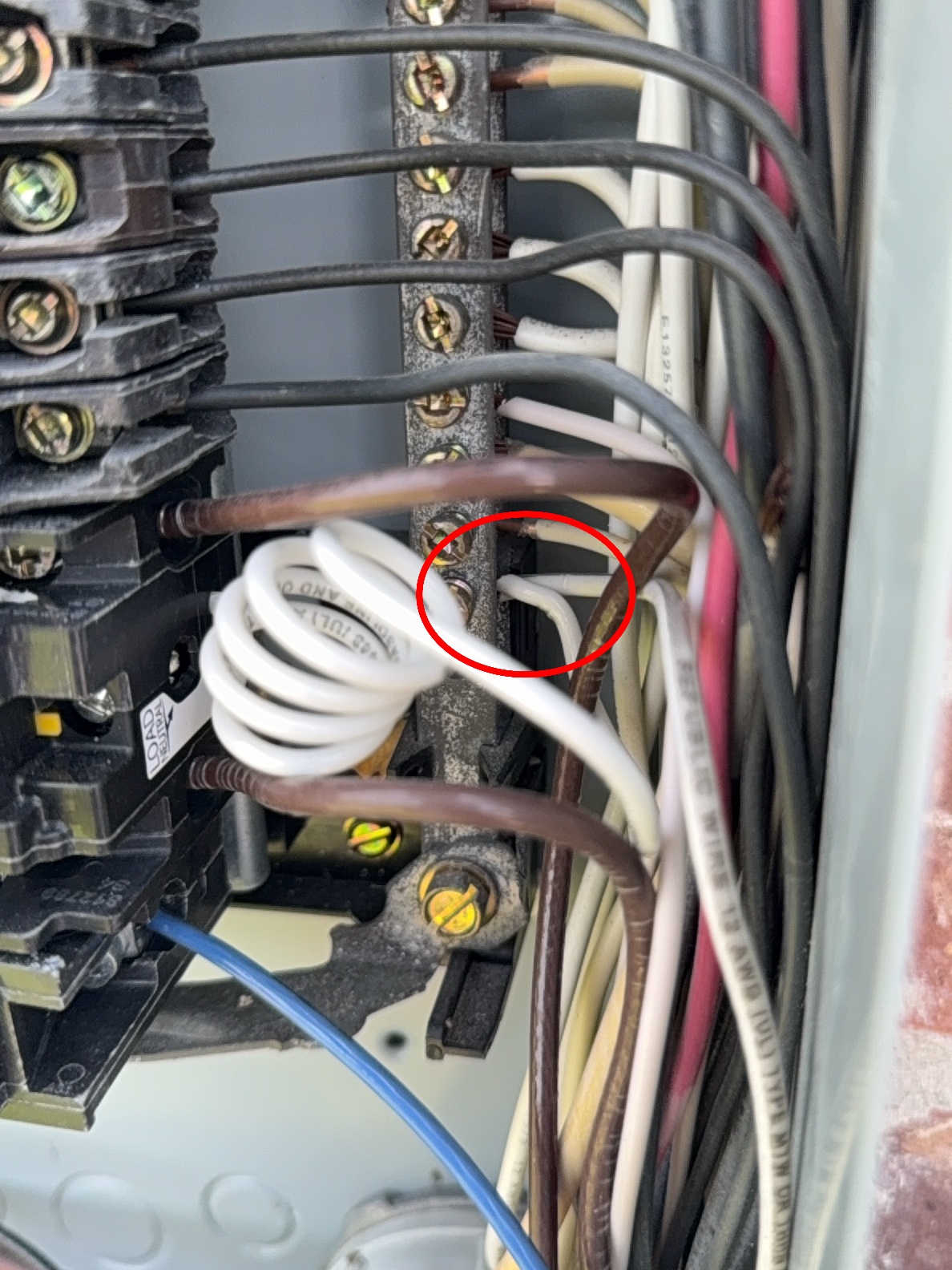
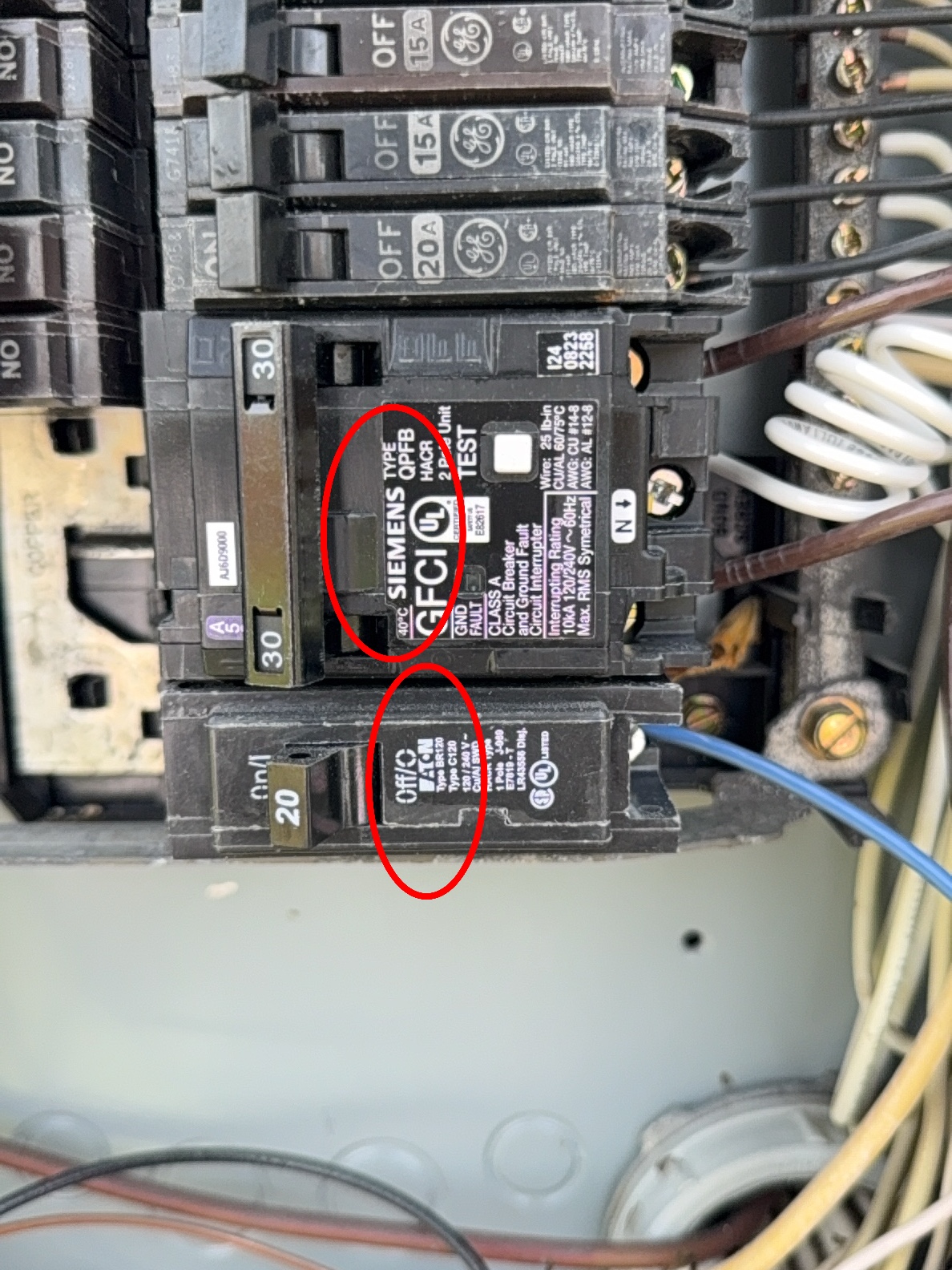
A few defects were noted at the electrical main electrical panel. I recommend that a licensed electrical contractor inspect, repair or replace the defects noted below. Some of the observations noted.
Electrical Panel Box
- The main electrical panel cabinet contained dead lizards on the circuit breakers. I recommend maintenance be performed by a licensed electrical contractor.
Manufacturer's label
- The manufacturer's label was damaged/missing from the electrical panel. The manufacturer's label typically provides information describing the panel such as the name of the panel manufacturer, the panel model number, the panel amperage rating, limitations related to the environment in which the panel was designed to be installed and grounding/bonding information for that particular model. The Inspector was unable to confirm the existence of proper conditions when confirmation would require information taken from this missing label. The panel amp rating could not be verified
Aluminum
- Aluminum service entrance conductors were present, and no antioxidant (AOX) paste was applied where they connect to the lugs on the main breaker/ disconnect. Most panel manufacturers recommend the use of antioxidant paste
Breakers
- The electrical panel was equipped with breaker(s) manufactured by a company other than the panel manufacturer. Panel manufactures warn that the use of other types of breakers voids the warranty, and may void the UL listing. An evaluation of the breakers to determine their acceptability is recommended, with replacement of breakers made as needed.
Wiring
- There were white conductors run to breakers that were not identified as hot (ungrounded conductor). These conductors should be marked with a piece of black or red tape or a sharpie identifying them as an ungrounded conductor.
Neutral wires
- The neutral wires are double lugged at the buss bar in the electrical panel.
Neutral/Ground
- Grounded "neutral" conductors were sharing a terminal with another neutral and/or ground wire(s) (EGC's) on the terminal bar(s)
Branch Circuits, Connected Devices, and Fixtures
InspectedNot InspectedNot PresentDeficient
Type of Wiring: Copper
AFCI's Tested: No Home occupied
Manually Test Smoke and Carbon Monoxide Alarms: Not tested children sleeping in the home, Not Tested Pets in the Home, No
Smoke Alarms present: : Outside each separate sleeping area in the immediate vicinity of the sleeping rooms, In each sleeping room, in the living space of each story of the dwelling;
Absence of Carbon Monoxide Alarms : NO
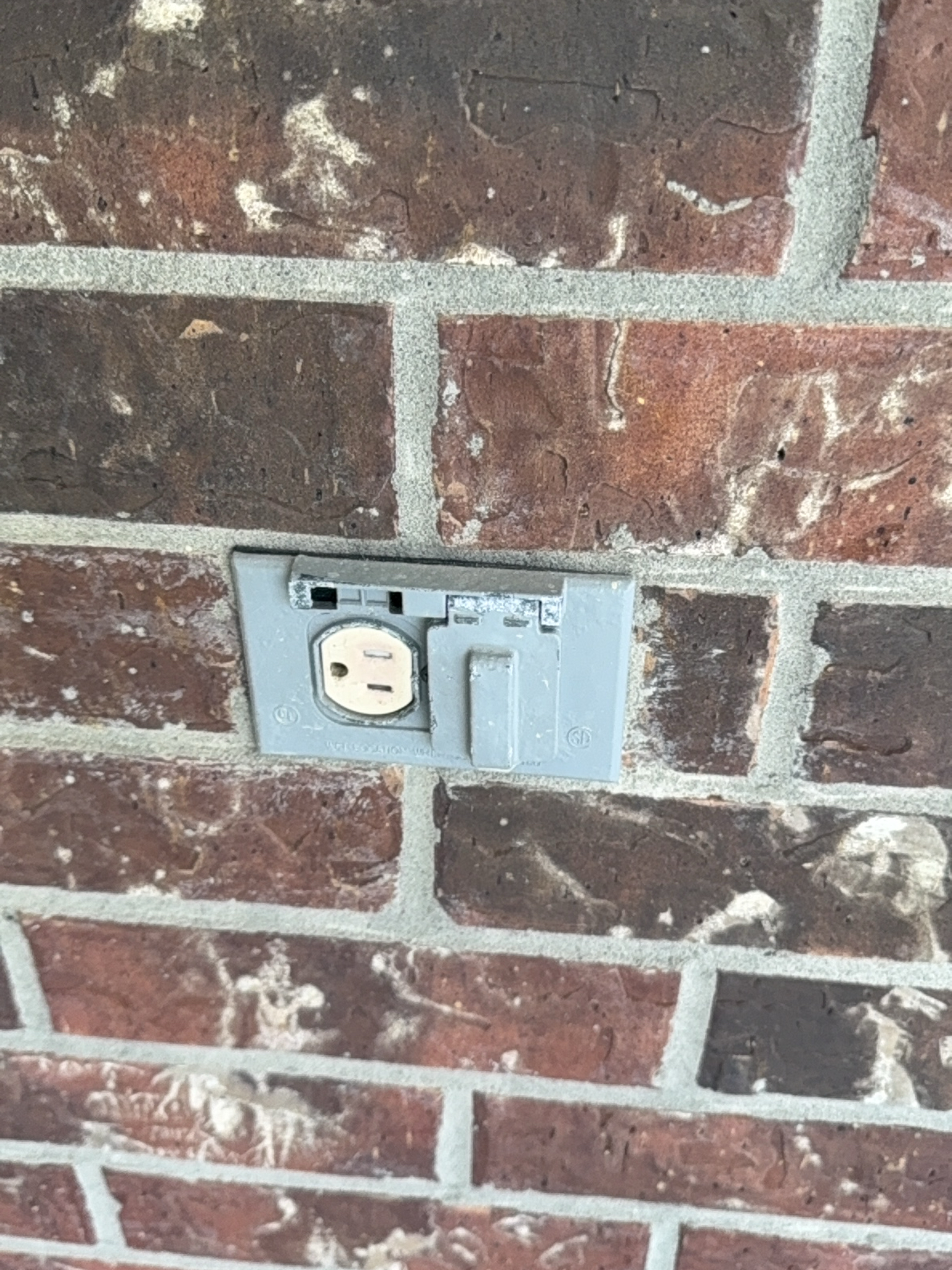
The exterior receptacle covers are damaged and require replacement. Use the modern "in-use" receptacle covers designed for outdoor use which employ large plastic water-resistant covers.
- Rear of the home
The AFCI circuit breakers were not tested in the electrical panel due to the home being occupied. Testing/tripping these breakers shuts down power to the circuit(s), which resets modems, routers, PC's, clocks, etc. I recommend testing these breakers by pressing the "Test" button on the breaker, once all above items are off/unplugged. If the breakers do not test correctly, I recommend a licensed electrical contractor repair or replace as needed.
An AFCI breaker is an acronym that stands for Arc Fault Circuit Interrupter.
AFCI (arc fault protection) is now required on all branch circuits supplying outlets or devices installed in residential dwelling unit kitchens, family rooms, dining rooms, living rooms, parlors, libraries, dens, bedrooms, sunrooms, recreation rooms, closets, hallways, laundry areas, and similar rooms and areas.
Arc Fault Circuit Interrupters (AFCIs) are an important electrical fire prevention and safety requirement of the National Electrical Code (NEC®), which first required them beginning in 1999. AFCIs help protect individuals and families from injuries and/or death by detecting dangerous arcing in electrical wires and shutting down an electrical system before a fire can start.
They differ from ground-fault circuit interrupters (GFCIs), which were introduced into the NEC in the 1960s. Where GFCIs are designed to protect people from shock if parts of an electric appliance or tool become energized due to a ground fault, AFCIs are designed to protect branch circuit wiring from arcing faults.
You can tell if you have AFCI breakers by looking at your electrical panel. A few breakers should have buttons for testing and be labeled as “AFCI”. However, this should not be confused with GFCI breakers (Ground Fault Circuit Interrupter) that protect wet areas.
Please note that if you add or replace receptacle outlets to the existing system, they should comply with modern AFCI standards.

The receptacles in the home are Not Tamper-resistant (TR) at the time of the inspection. This is an as-built condition at the time of construction, but per T.R.E.C standards we are required to note this as a defect. I recommend that a licensed electrical contractor be consulted on installation of tamper resistant receptacle(s) as a safety upgrade. Tamper-resistant (TR) receptacles were first required within the 2008 edition of the National Electrical Code (NEC).
TR receptacles function electrically like a standard receptacle but adds a built-in safety mechanism that helps prevent electricity from energizing anything that is stuck into the receptacle that shouldn’t be. TR receptacles greatly reduce the potential for electrical shocks, and are a necessary and effective way to better protect your family from the dangers associated with electricity.
# 535.229 Standards of Practice: Minimum Inspection Requirements for Electrical Systems.
(b)Branch circuits, connected devices, and fixtures.
1)The inspector shall report as Deficient:
(vi) receptacles less than five and a half feet above the floor that are not tamper resistant;
AFCI breakers were present in the electrical panel only for the bedrooms of the home. They were only required in the bedrooms from 2005 -2008 depending on the local municipality. From 2008 to the present they are required in all locations. This is a as-built condition.
This type of protection is designed to detect and help prevent electrical arcing, which is a potential fire hazard.
Although AFCI protection was not required at the time the home was originally constructed, as general knowledge of safe building practices has improved with the passage of time, building standards have changed to reflect current understanding.
Per T.R.E.C standards of practice, as of 02/01/2022 we are required to note this as a defect. if they are not in ALL the below locations.
535.229. Standards of Practice: Minimum Inspection Requirements for Electrical Systems. The inspector shall: C) report as Deficient: (ii) the absence Arc-Fault protection in the following locations: (I) Kitchens; (II) Family rooms; (III) dining rooms; (IV) living rooms; (V) parlors; (VI) libraries; (VII) dens; (VIII) bedrooms; (IX) sunrooms; (X) recreation rooms; (XI) closets; (XII) hallways; and (XIII) laundry area;
The installation of AFCI breakers is recommended as a safety upgrade for circuits servicing bedrooms and living areas due to their ability to sense damage to wiring and "shut off" if an arc fault is detected in conductors, their connections, or items plugged into receptacles. A licensed electrician can be consulted for more information. It may not be possible to install AFCI breakers in some older panels - and upgrading the panel should be considered in these situations.
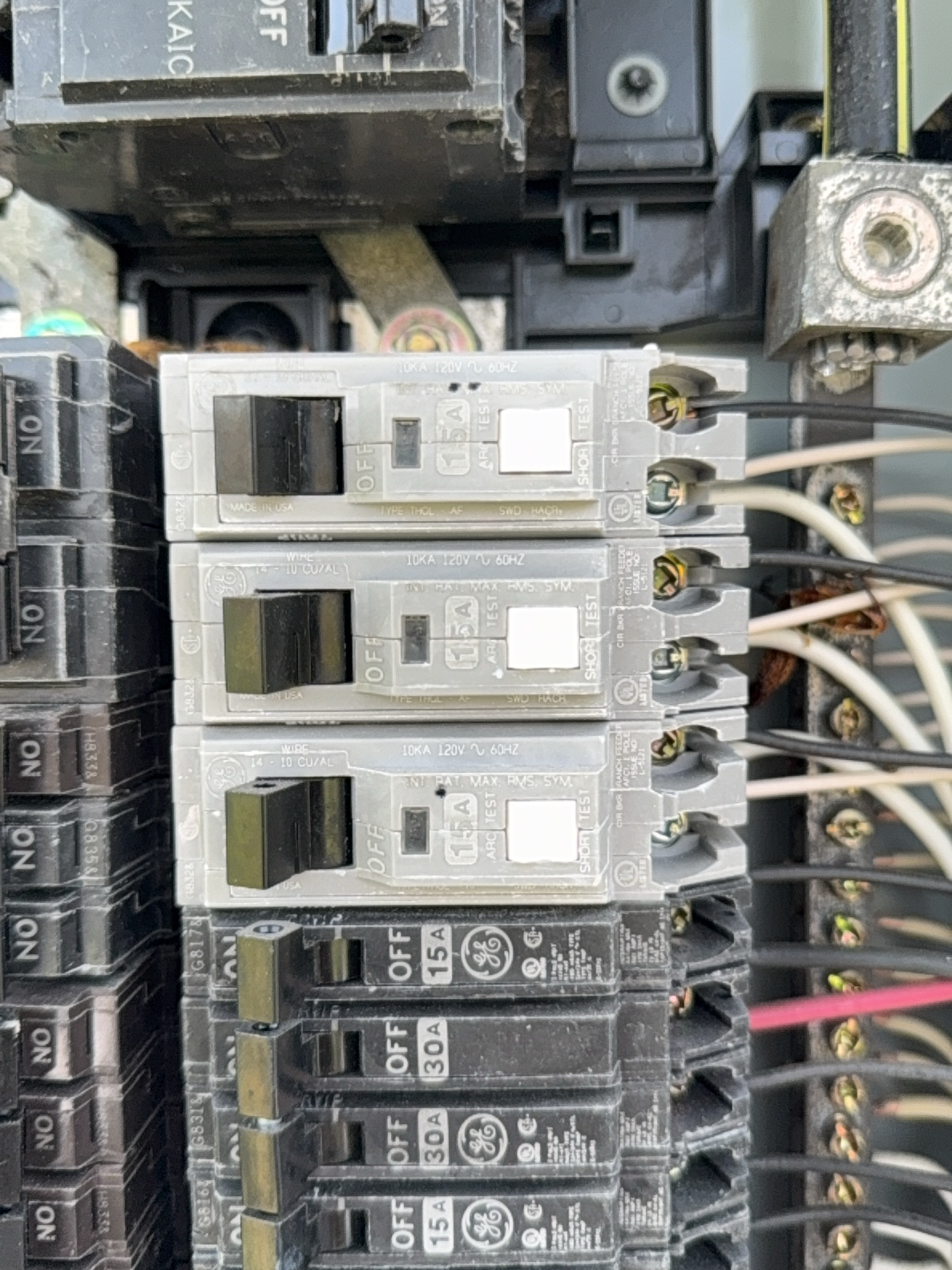
The laundry room receptacle(s) are not all GFCI protected. I recommend that a licensed electrical contractor repair/install as needed.
NEWER CODE - 2017 NEC standards require GFCI (ground-fault circuit-interrupter) protection for all standard receptacles serving laundry areas. This includes the 20-amp designated receptacle for the washer (and gas dryer, as applicable) and any general-use receptacles.
Other
InspectedNot InspectedNot PresentDeficient
Heating, Ventilation and Air Conditioning Systems
Heating Equipment
InspectedNot InspectedNot PresentDeficient
Type of Systems: Central split system Forced Air
Energy Sources: Natural Gas
Heating System Manufacturer: Rheem
Number of Heating systems: One
Approx. Furnace Manufacture Year: 2008
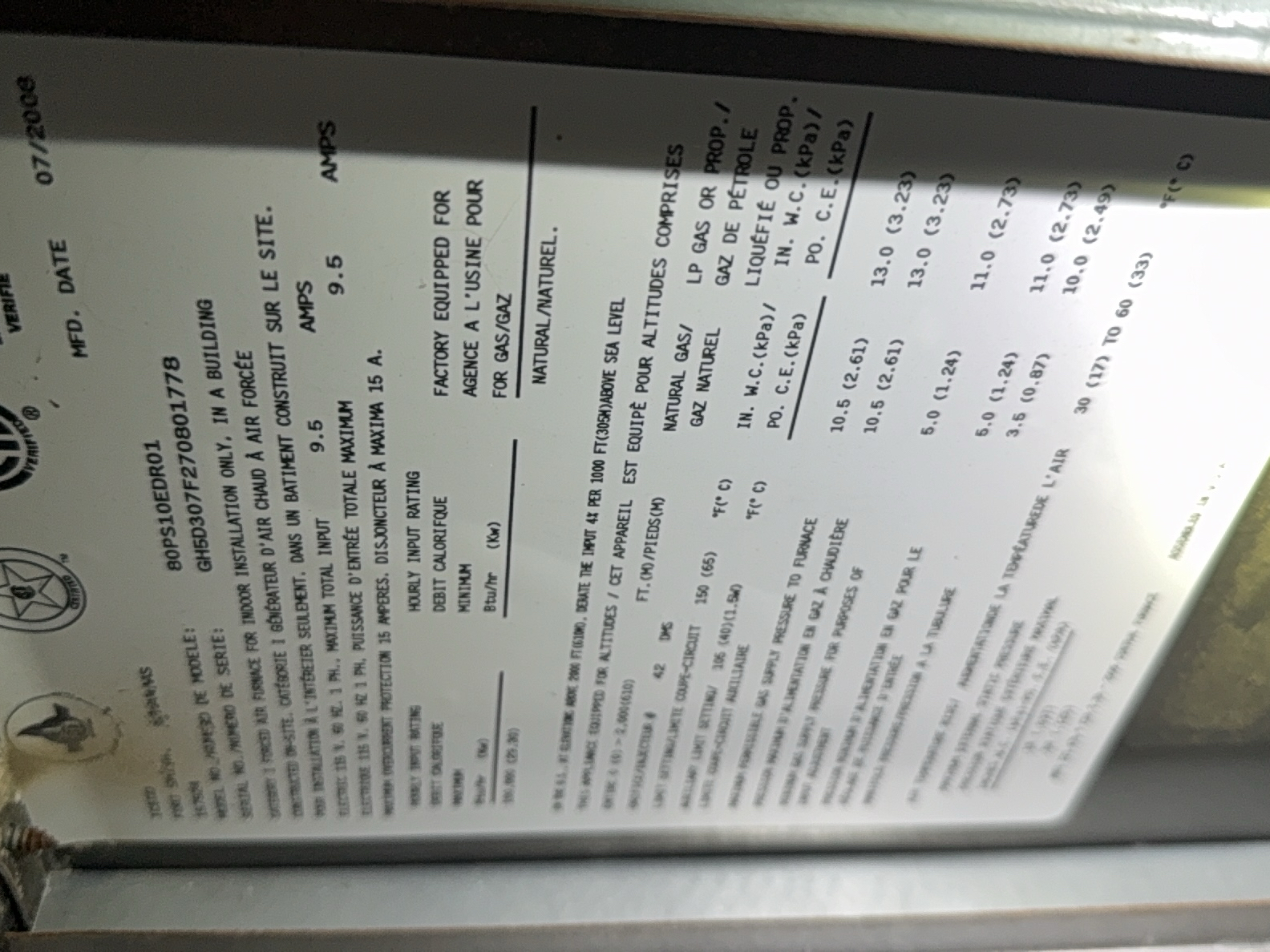
This shows the data plate for the Furnace.
Cooling Equipment
InspectedNot InspectedNot PresentDeficient
Type of Systems: Central split system AC
Central Air Manufacturer: Ruud
Number of AC Units: One
Approx. AC Unit Manufacture Year: 2008
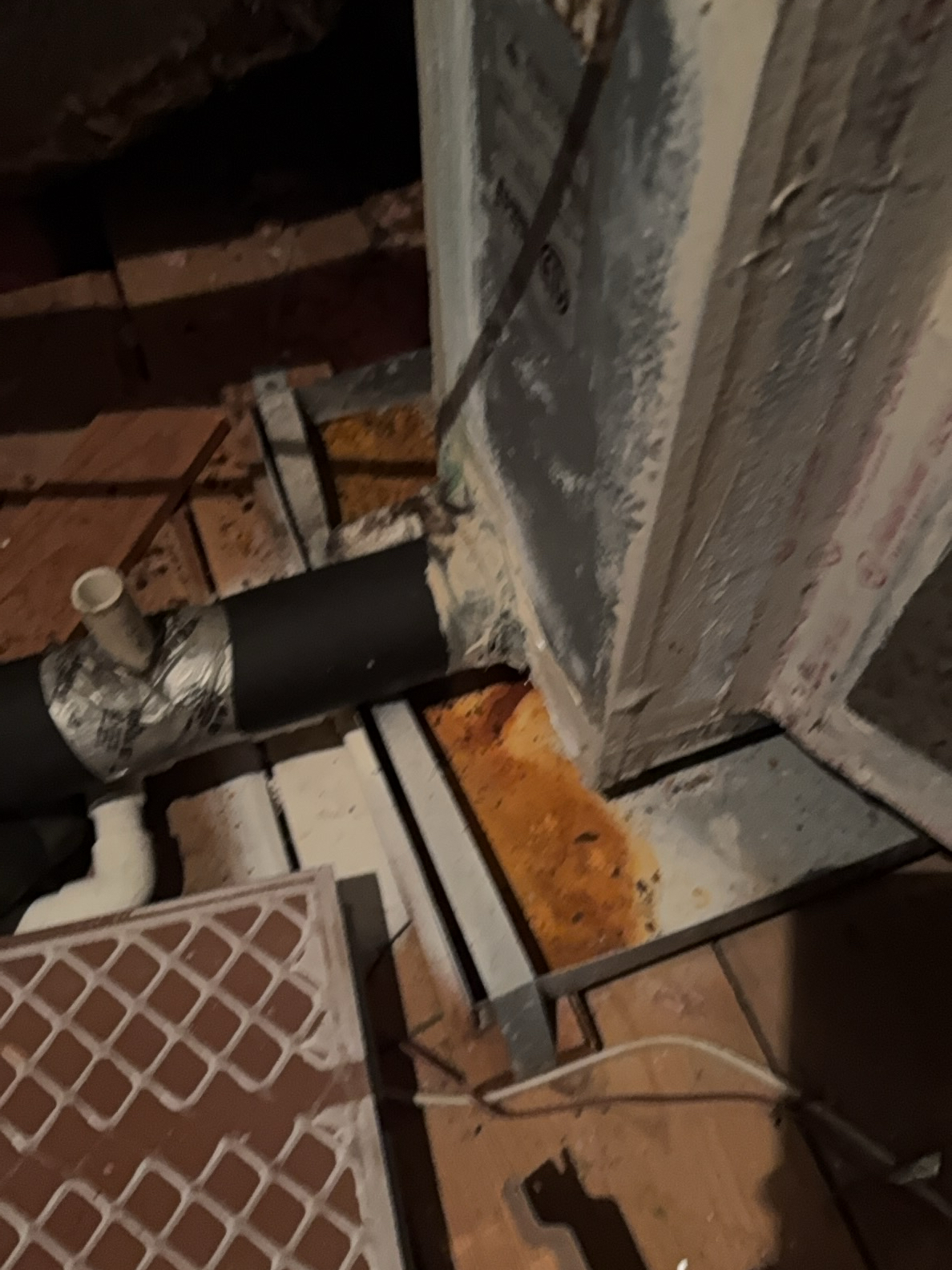
No auxiliary float switch
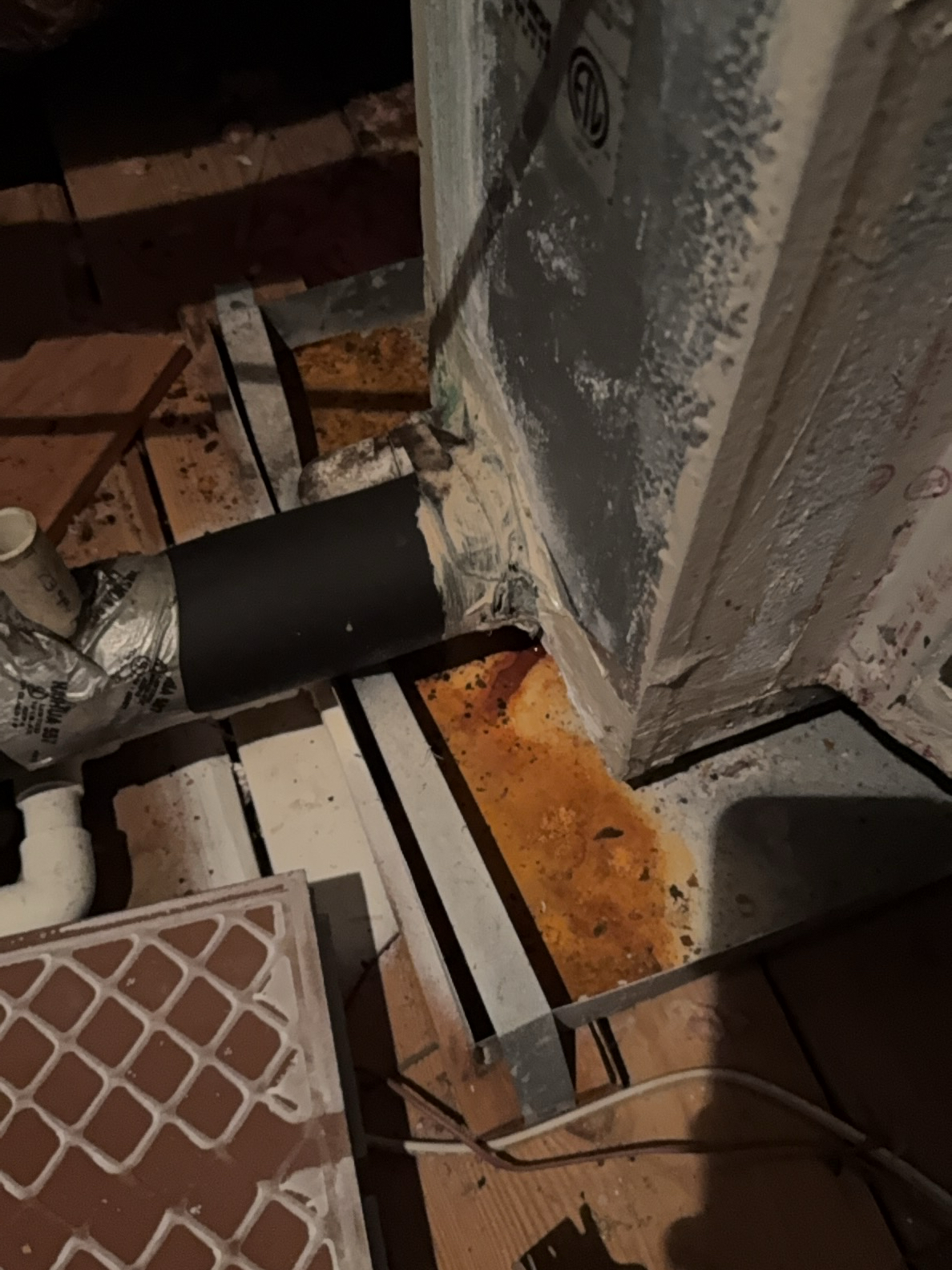
Rust in auxiliary drain pan
This shows the data plate for the AC unit (condenser).
The pad supporting the outdoor condensing unit is not level. Mechanical system requirements state that equipment and appliances supported from the ground shall be level and firmly supported on a concrete slab or other approved material extending not less than 3 inches (76 mm) above the adjoining ground. Such support shall be in accordance with the manufacturer's installation instructions. I recommend a licensed HVAC contractor or other qualified workman review the condition and make corrections.~ IRC - Mechanical Code: M1305.1.4.1
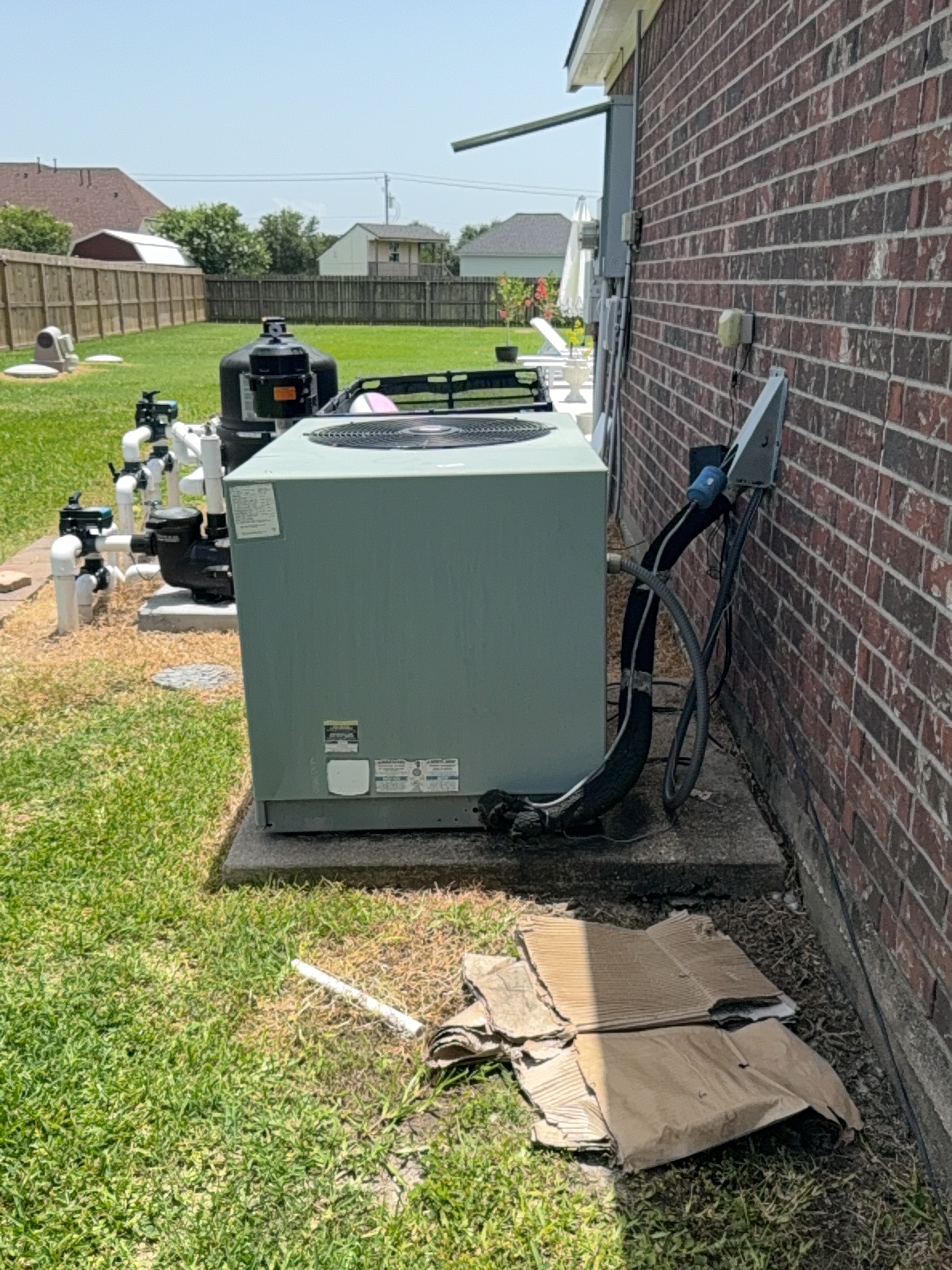
No repairs are needed to the AC. The unit was operating properly. I recommend additional inspection and repair of the AC condenser unit by a licensed HVAC contractor. In general, the average life of most AC units are 13-15 years. In practice service life has much to do with maintenance of a unit. This AC condenser is roughly 17 years old. Examples of repair items and other observations noted during inspection include:
Age
- The AC Unit was at or past its typical service life. Visible signs of deterioration were found but it was functioning at the time of inspection. Major repairs or replacements should be anticipated in the future due to the age of the unit alone. Depending on prior maintenance and other factors the unit could last anywhere from days to years, the remaining life is undeterminable. The average life span is 12-15 Years.
- A typical life expectancy chart can be found here:
- https://www.nachi.org/life-expectancy.htm
The ambient air test was performed by using thermometers on the air handler to determine if the difference in temperatures of the supply and return air is between 15 degrees and 22 degrees which indicates that the unit is cooling as intended. The air temperature on your system read.
- Unit # 1 17-22 Degrees temperature differential. This indicates the range in temperature drop is normal.
Duct Systems, Chases, and Vents
InspectedNot InspectedNot PresentDeficient
Other
InspectedNot InspectedNot PresentDeficient
Plumbing Systems
Plumbing Supply, Distribution Systems and Fixtures
InspectedNot InspectedNot PresentDeficient
Location of water meter: left front
Location of main water supply valve: Laundry room
Static water pressure reading: 45 psi, Testing Photo
This shows the water pressure tested during inspection.
Type of supply piping material: PEX tubing
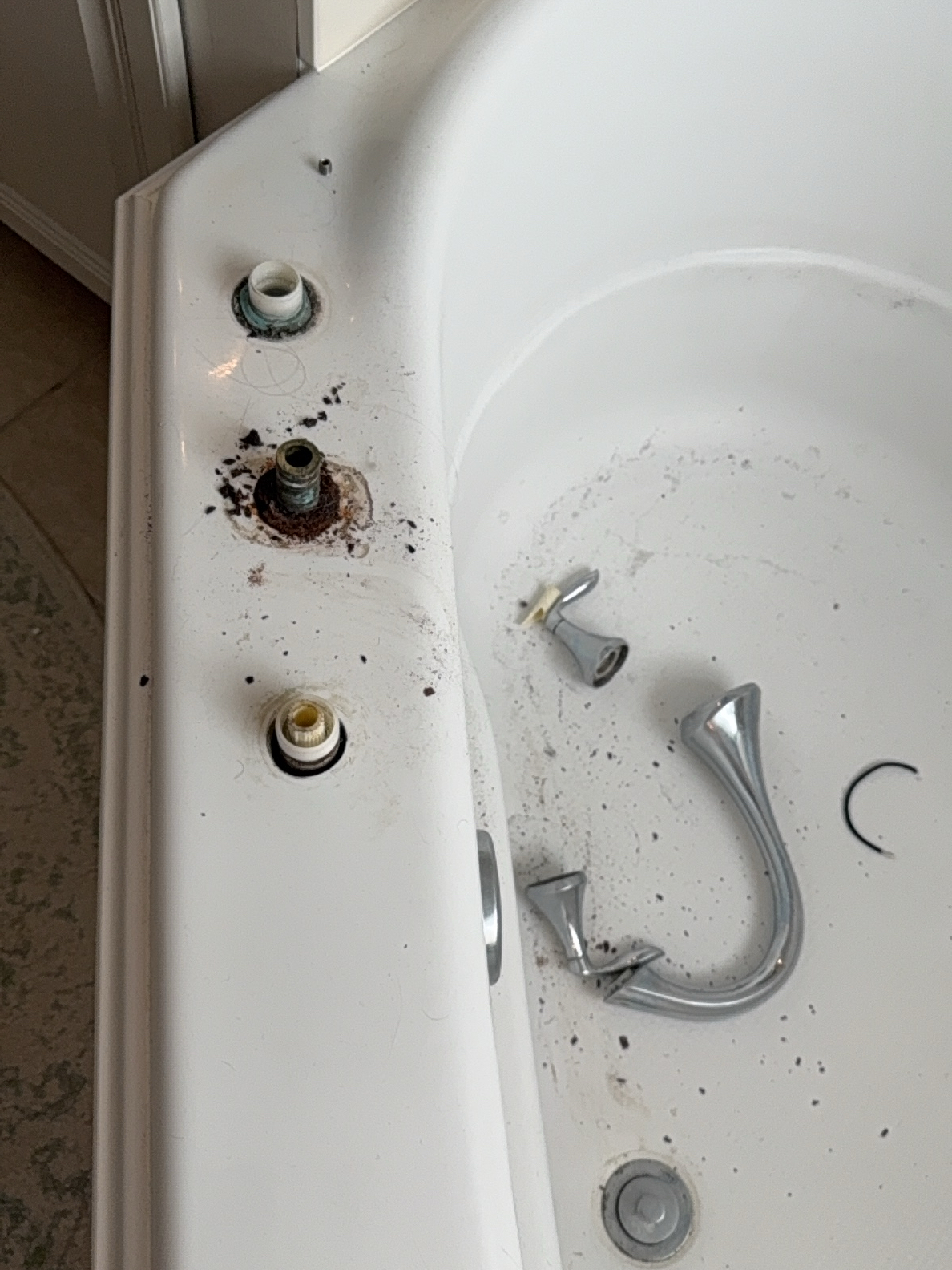
Multiple plumbing supply issues were noted in the primary bathroom at the time of inspection. I recommend that a licensed plumbing contractor repair and replace as needed.
Sink
- The style of sink does not have a overflow
Bathtub
- The bathtub faucet was damaged and not functional at time of inspection
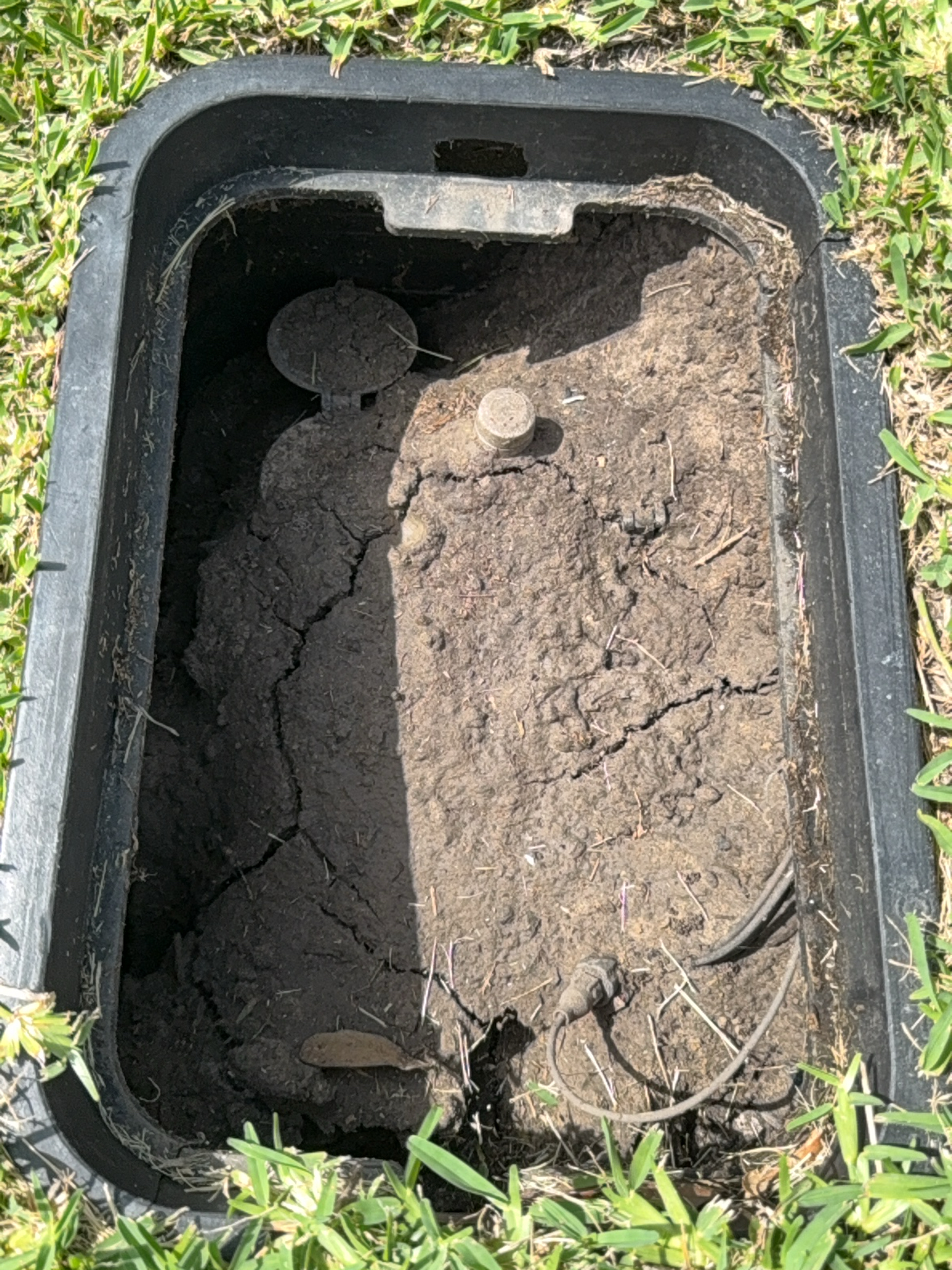
The homeowner water shut off handle was covered/could not be located due to debris/dirt in the access hole. I recommend the access hole be cleaned as needed for complete access.
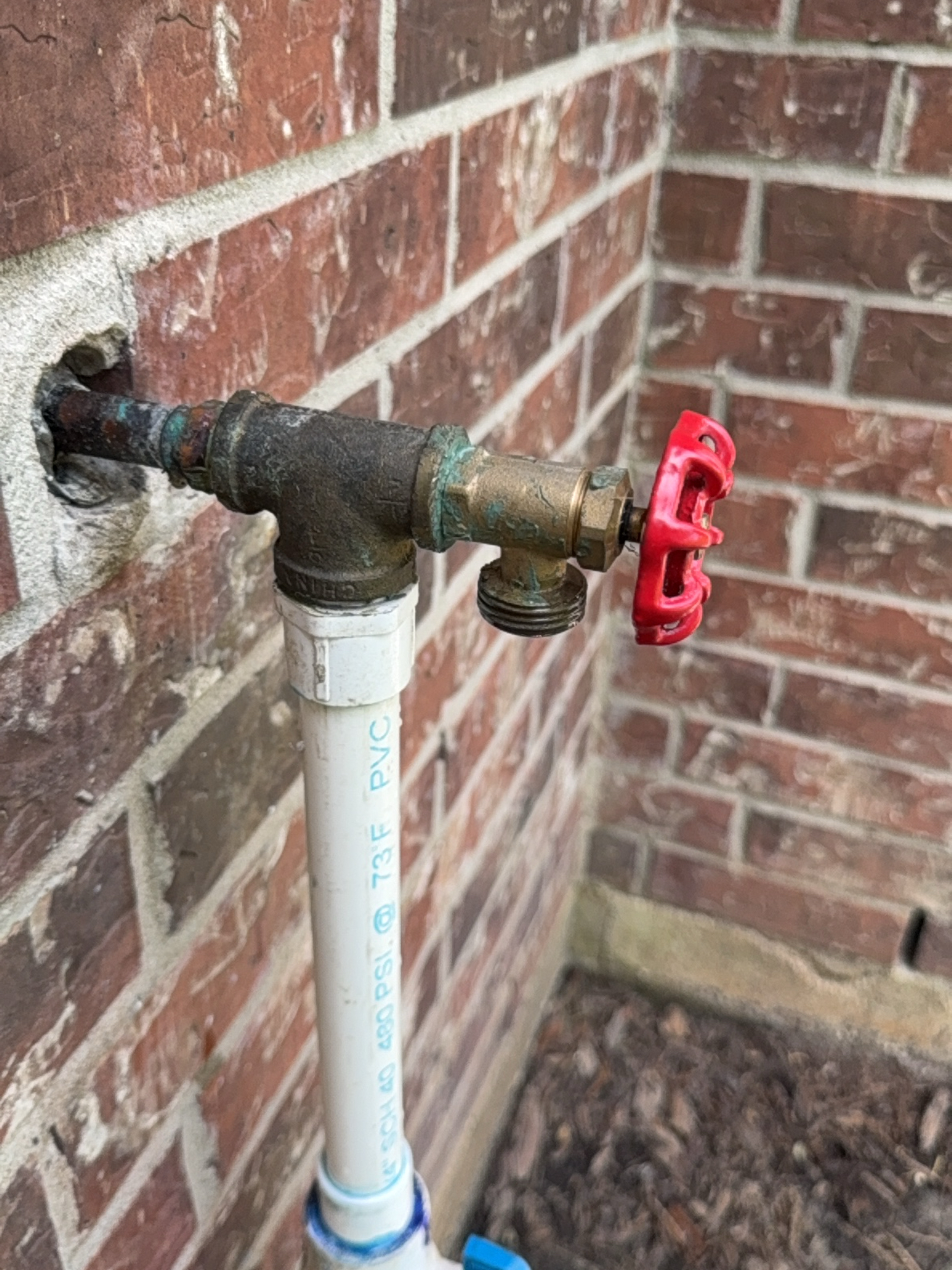
The exterior hose bibb(s) is missing the vacuum breaker. Install as needed.
- left front
Drains, Wastes, and Vents
InspectedNot InspectedNot PresentDeficient
Type of drain piping material: PVC
Plumbing Cleanout Location FYI: Not found - older home
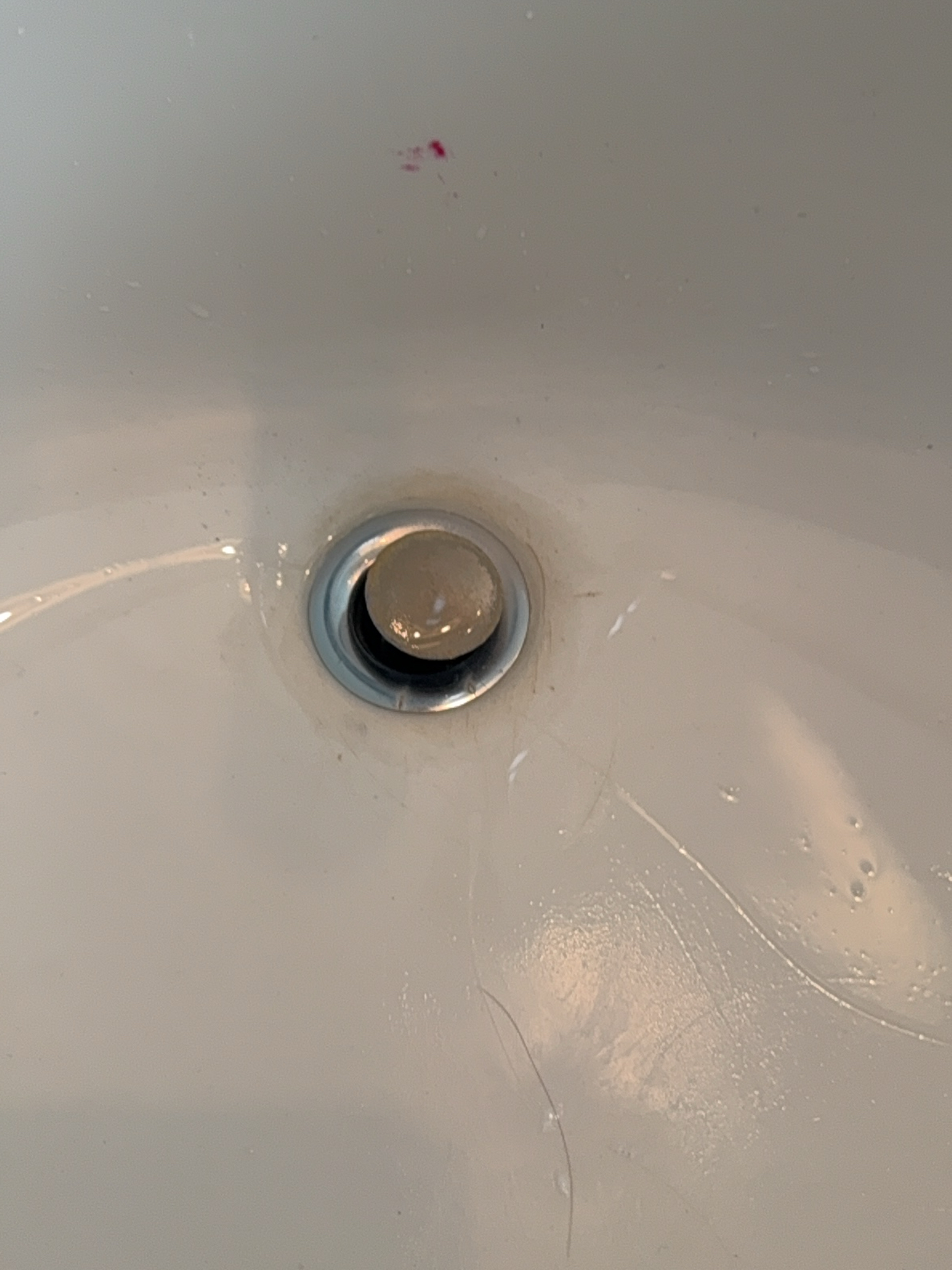
Multiple plumbing drain issues were noted at the referenced bathroom at the time of inspection. I recommend that a licensed plumbing contractor repair and replace as needed.
- Primary bathroom
Sink
- The style of sink does not have a overflow
- The sink drain stop did not hold water/was out of adjustment
Sink drain stop
- The style of sink does not have a overflow
Water Heating Equipment
InspectedNot InspectedNot PresentDeficient
Energy Sources: Natural Gas
Capacity: 40 gallons
Pressure Relief: Tested
Manufacturer: Rheem
Water Heater Location: Attic
Approx. Water Heater Age: 2023
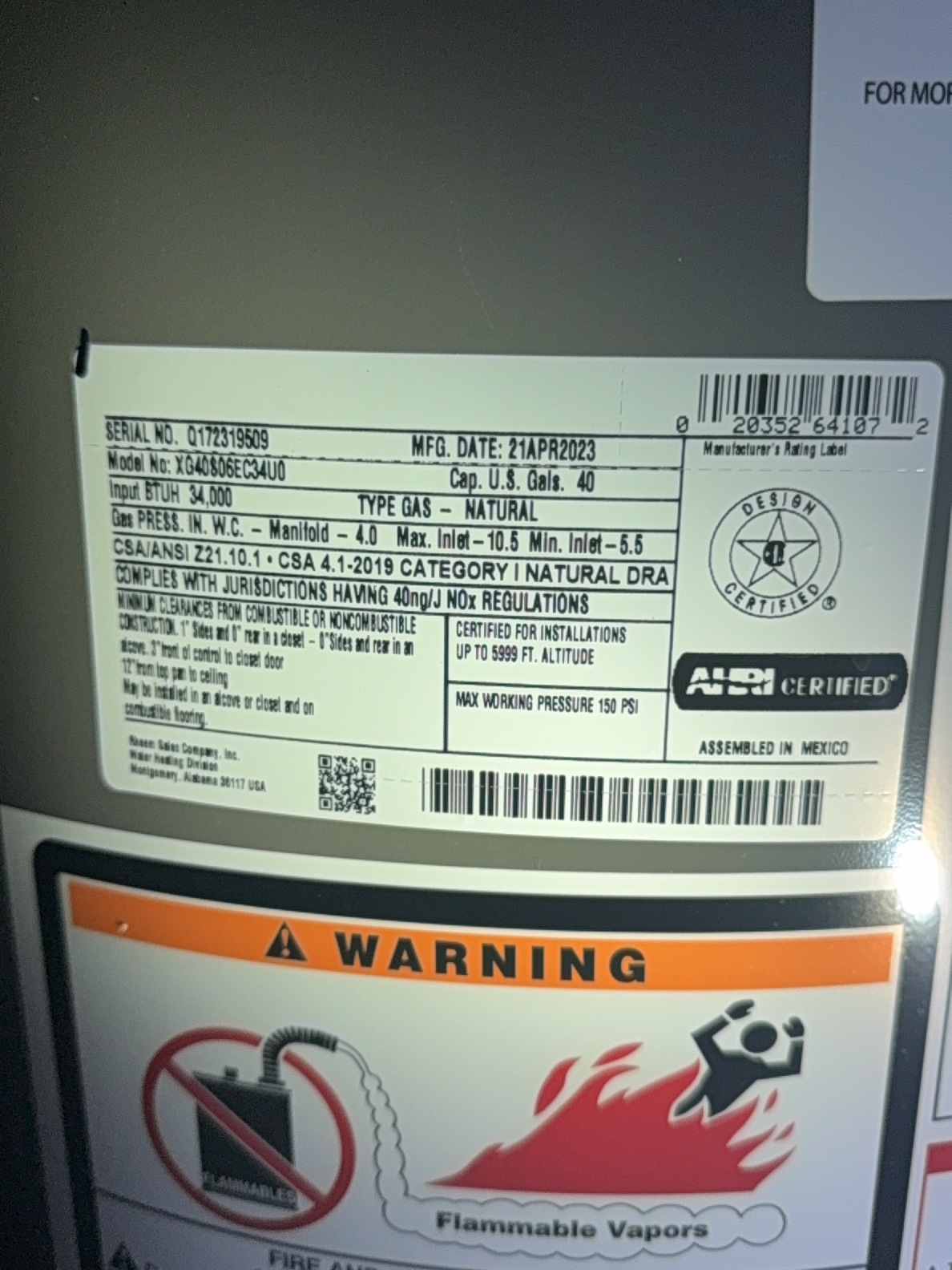
Data Plate: Shown Here
This shows the data plate for the water heater.
Numerous repairs are needed to the water heater. I recommend additional inspection and repair of the water heater by a licensed plumbing contractor. In general, the average life of most water heaters is 8-12 years. In practice service life has much to do with water quality and maintenance of a water heater. This water heater is roughly 2 years old. Examples of repair items and other observations noted during inspection include:
Exhaust flue
- The exhaust flue is missing the requires 3 screws to hold it together at the top of the hot water heater
Water lines
- The water lines are not insulated on top
- Inlet water valve missing handle
Gas Line
- The sediment trap on the water heater gas supply pipe was installed upside down. Recommend qualified contractor repair as needed.
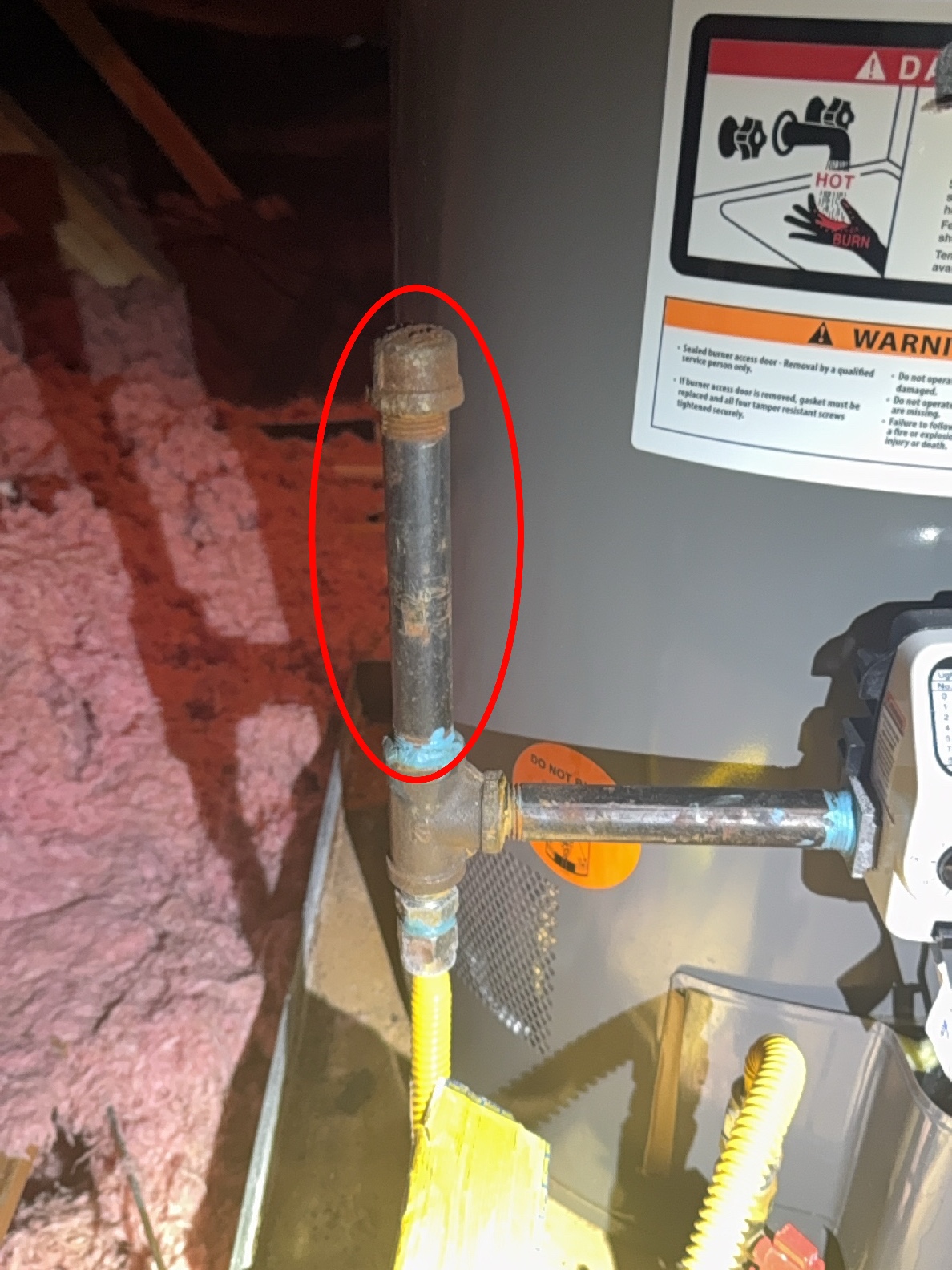
Cold water supply valve has a broken handle. Recommend repair by qualified contractor.
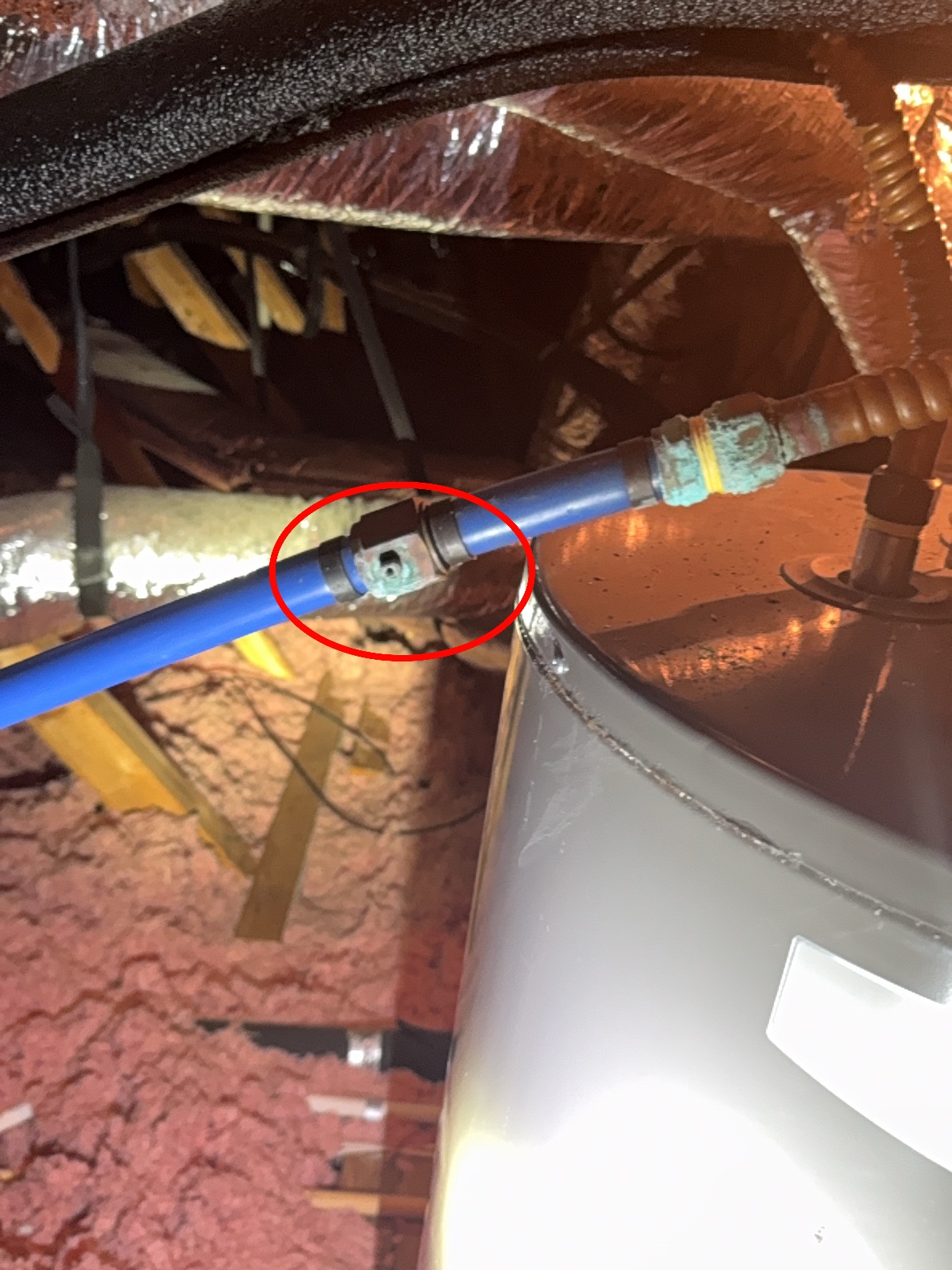
The water heater had a sealed combustion chamber which was not inspected. Opening a sealed chamber could void the warranty. The burn chamber was only inspected through the inspection glass cover.
Hydro-Massage Therapy Equipment
InspectedNot InspectedNot PresentDeficient
Gas Distribution Systems and Gas Appliances
InspectedNot InspectedNot PresentDeficient
Location of gas meter: Left side of house
Type of gas distribution piping material: Black Steel
The exterior gas line at the meter is not bonded. Note - This is new requirement and may not be present in all homes. (As-Built). I recommend that a licensed electrical contractor repair/upgrade as needed.
Other
InspectedNot InspectedNot PresentDeficient
Appliances
Dishwashers
InspectedNot InspectedNot PresentDeficient
Dishwasher Manufacturer: General Electric
The upper and lower dishwasher racks had damaged/rusted tines. I recommend that a appliance contractor repair or replace as needed.
This shows the data plate from the dishwasher. 📸
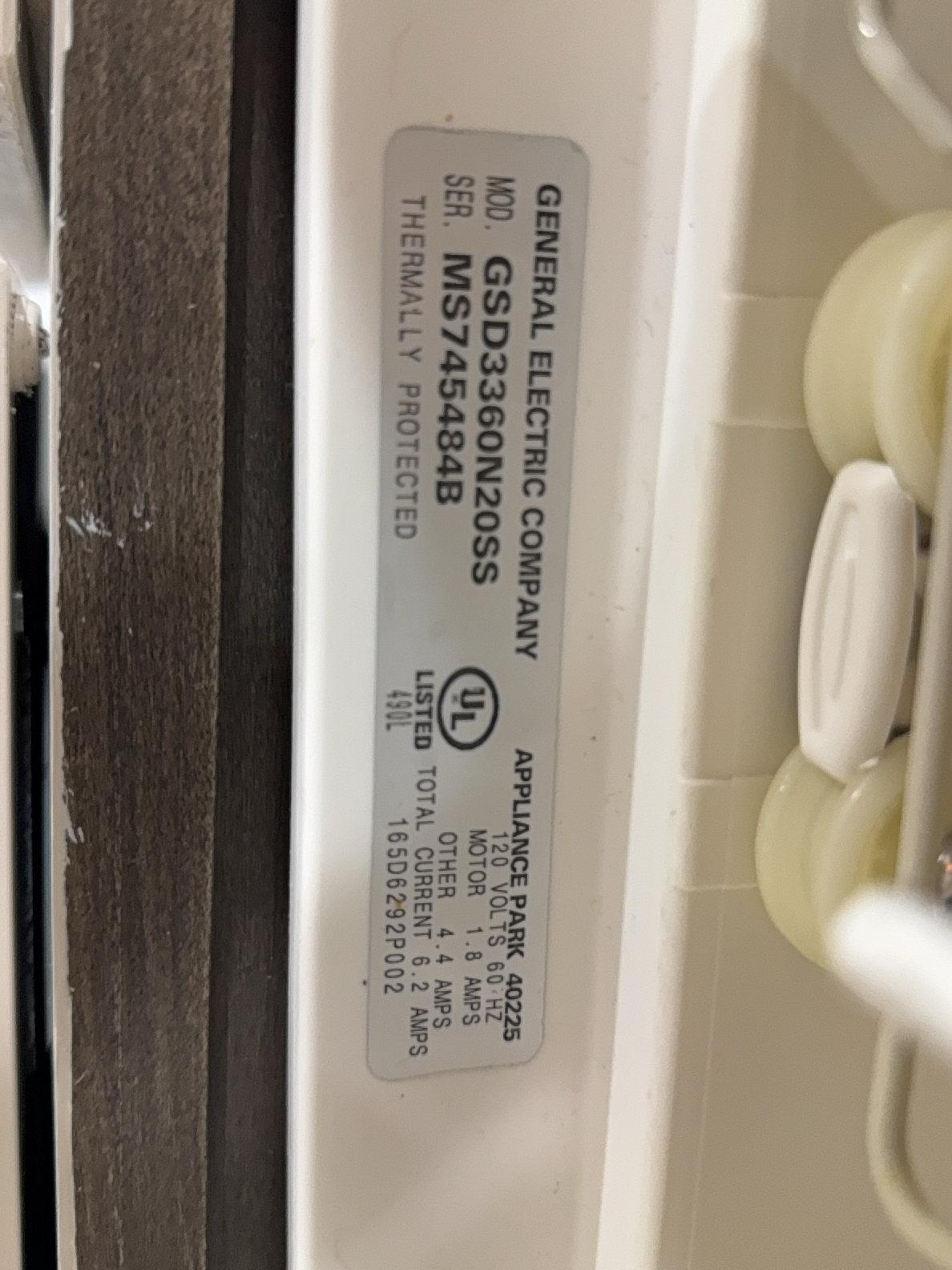
The dishwasher was operated by running a normal wash cycle and was functional at the time of inspection. No leaks or water was present at the base of the unit at the completion of the cycle. The unit's efficiency of cleaning dishes is not tested.
Food Waste Disposers
InspectedNot InspectedNot PresentDeficient
Disposer Manufacturer: Moen
This shows the data plate from the disposer. 📸
Range Hood and Exhaust Systems
InspectedNot InspectedNot PresentDeficient
Range Hood Manufacturer : General Electric
Exhaust/Range Hood : Re-Circulate
This shows the data plate from the exhaust/Range hood. 📸
Ranges, Cooktops, and Ovens
InspectedNot InspectedNot PresentDeficient
Range/Oven Manufacturer : General Electric
Cooktop Manufacturer: General Electric
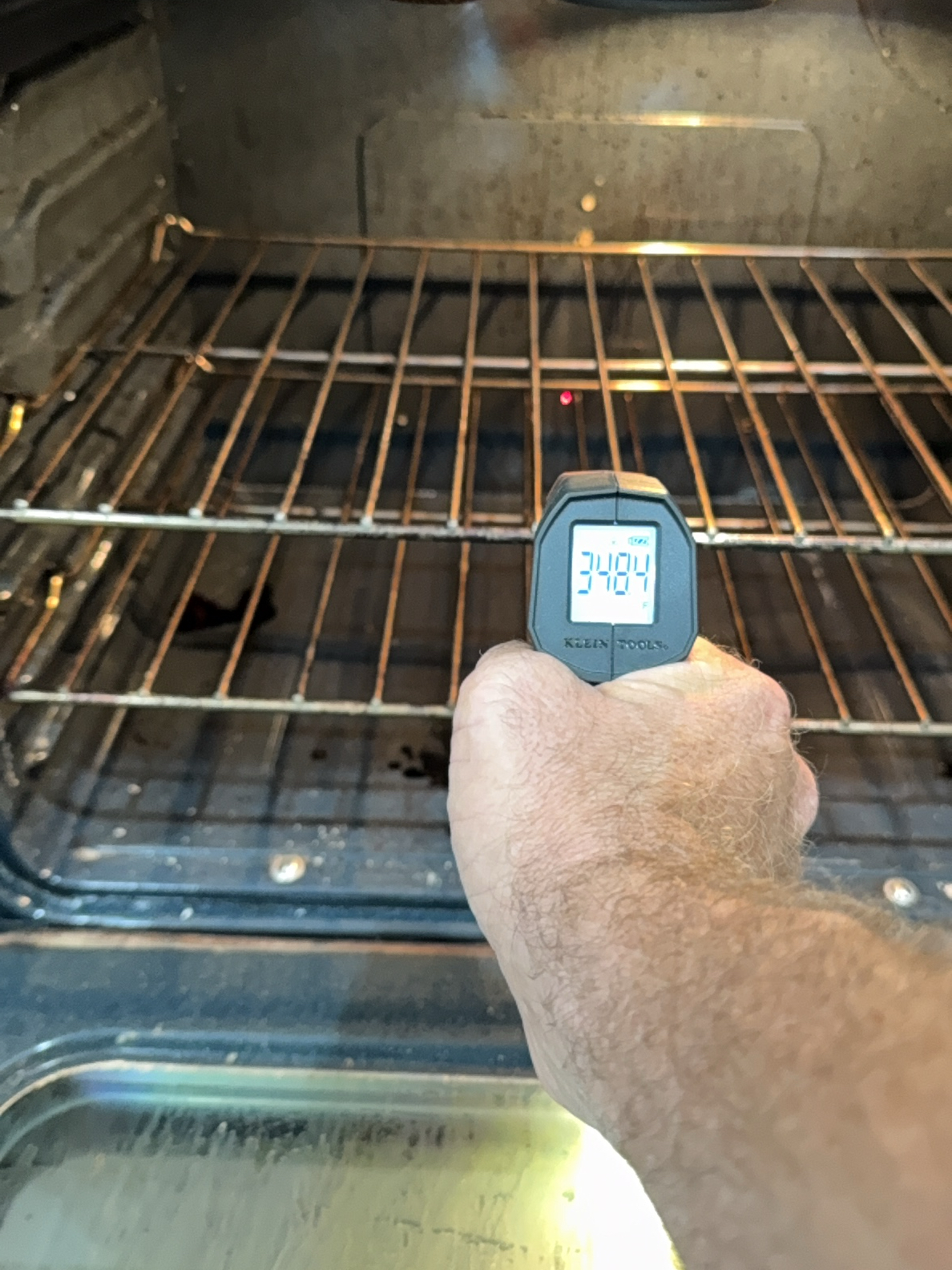
Oven Temperature during testing: 345-350 Degrees
Top Oven Temperature during testing: 345-350 Degrees
Bottom Oven Temperature during testing: 345-350 Degrees
The oven is dirty. I recommend that it be cleaned before operating.
This shows the data plate from the oven. 📸
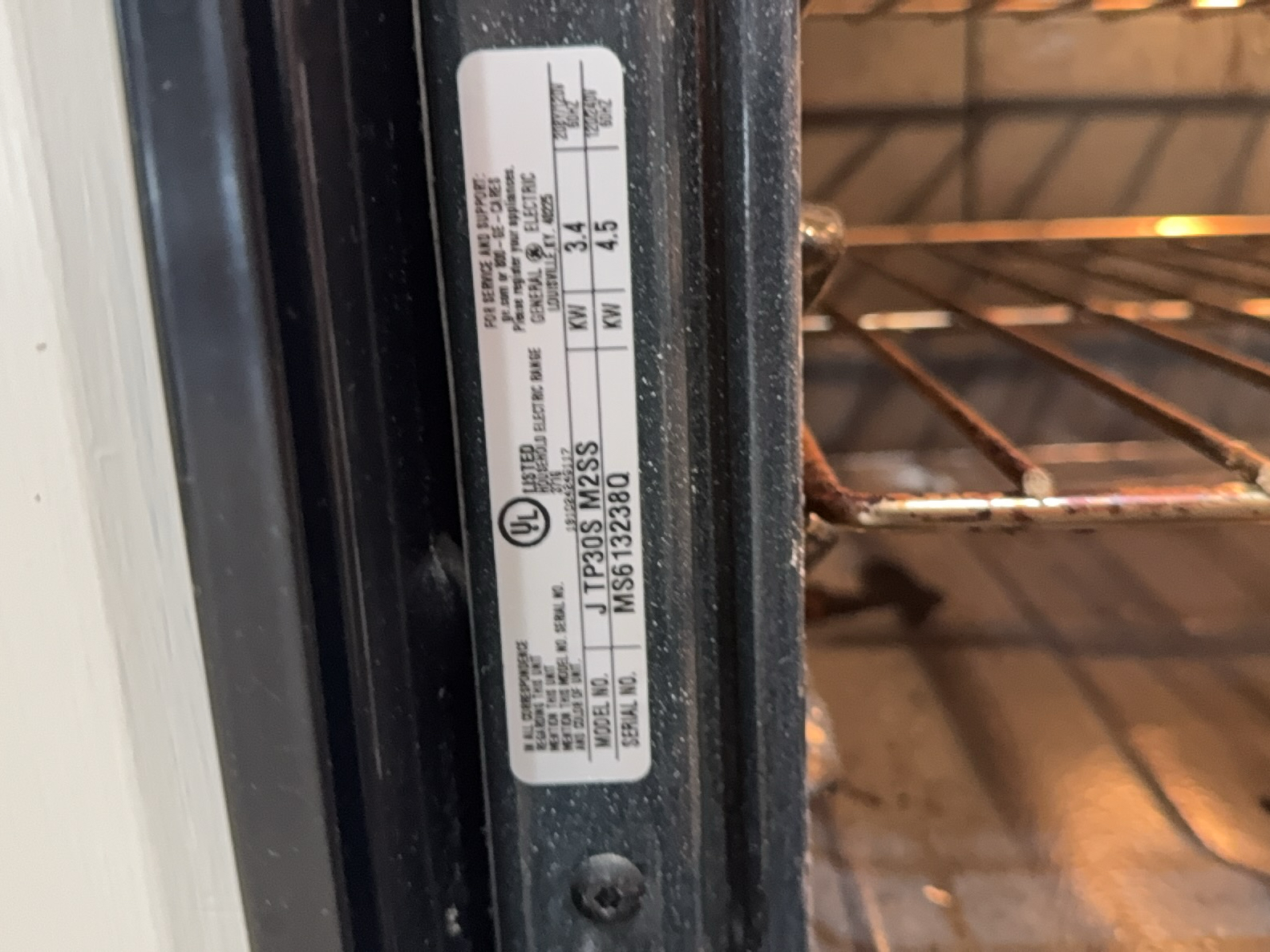
The oven(s) was operated by placing into "Bake" mode at 350F, and the heat was produced from the burner(s) and/or elements. The oven light is tested for functionality. "Clean" options and other functions are not tested.
The oven temperature is considered out of range -/+ 25 Degrees per the TREC standards of practice. See the referenced number above of your system when testing.
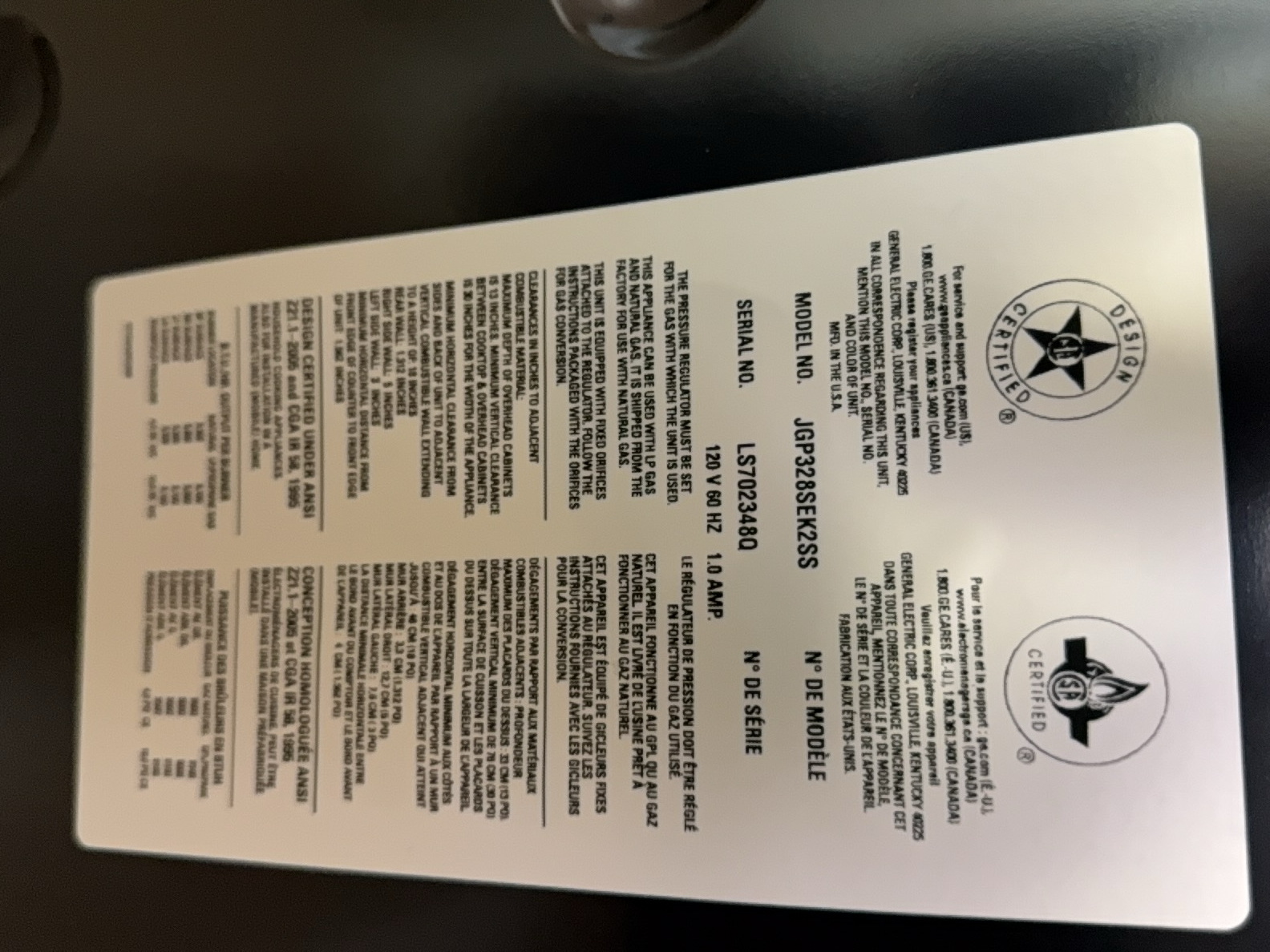
This shows the data plate from the cooktop.
Microwave Ovens
InspectedNot InspectedNot PresentDeficient
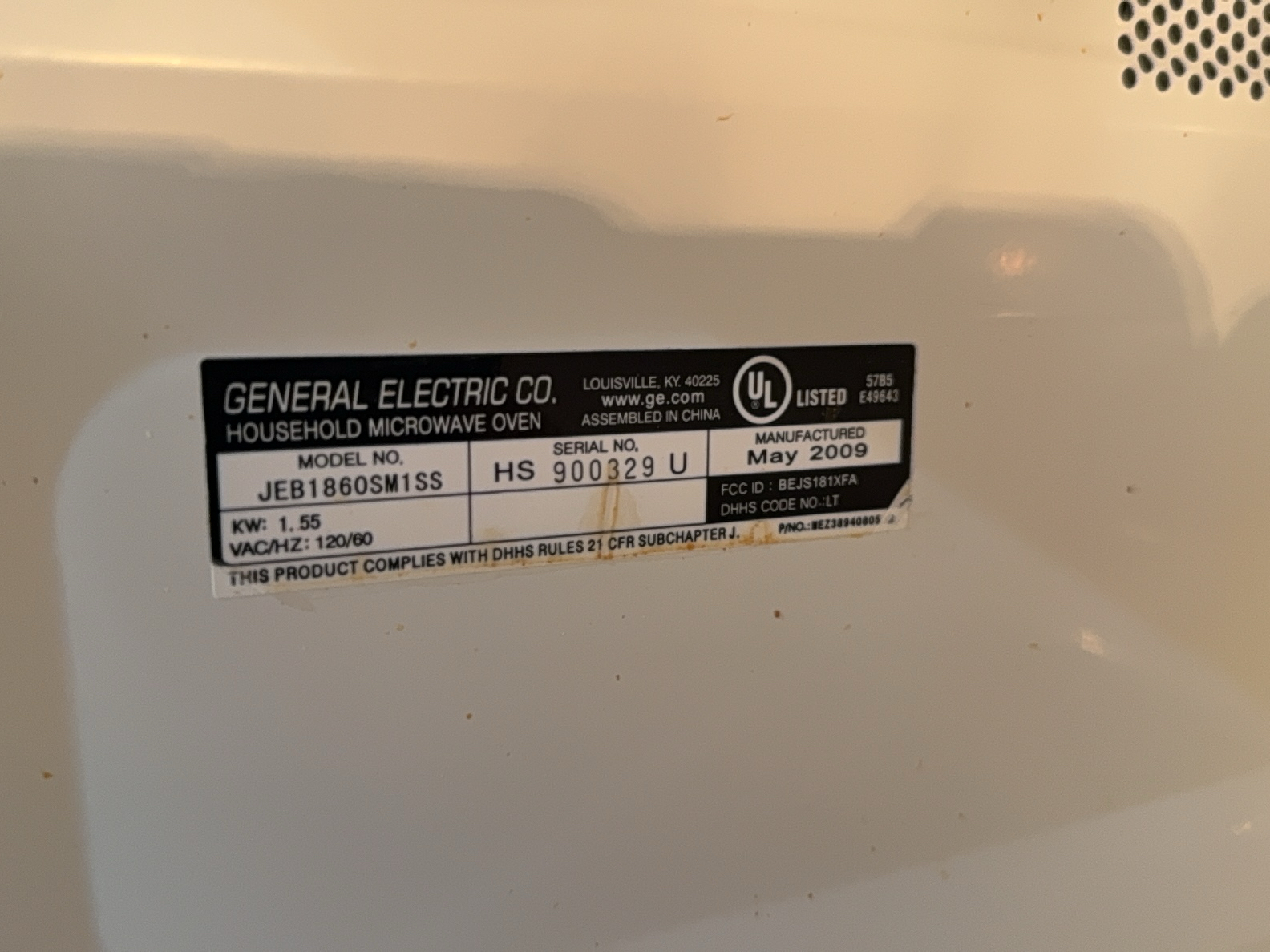
This shows the data plate from the microwave. 📸
Mechanical Exhaust Vents and Bathroom Heaters
InspectedNot InspectedNot PresentDeficient
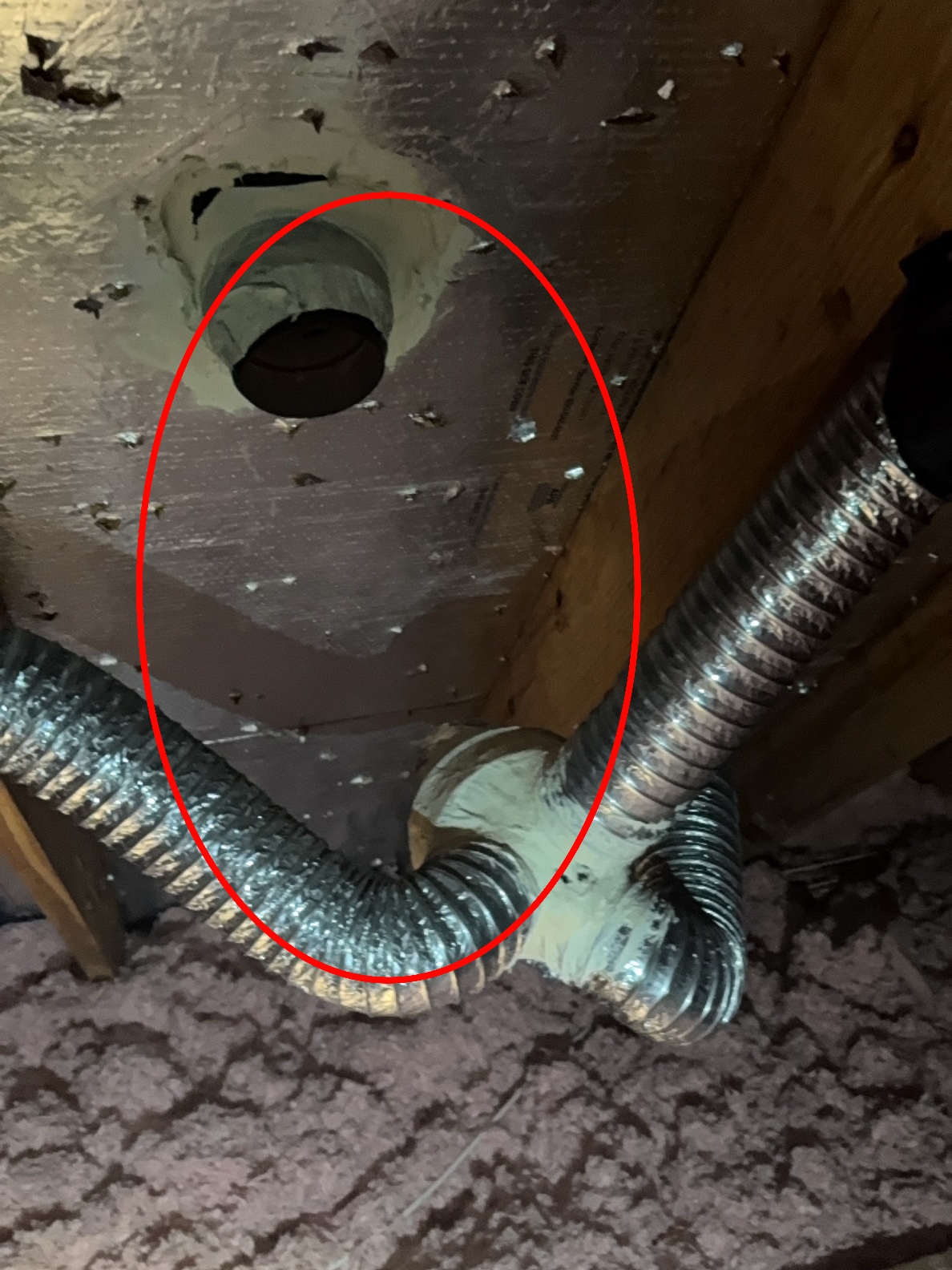
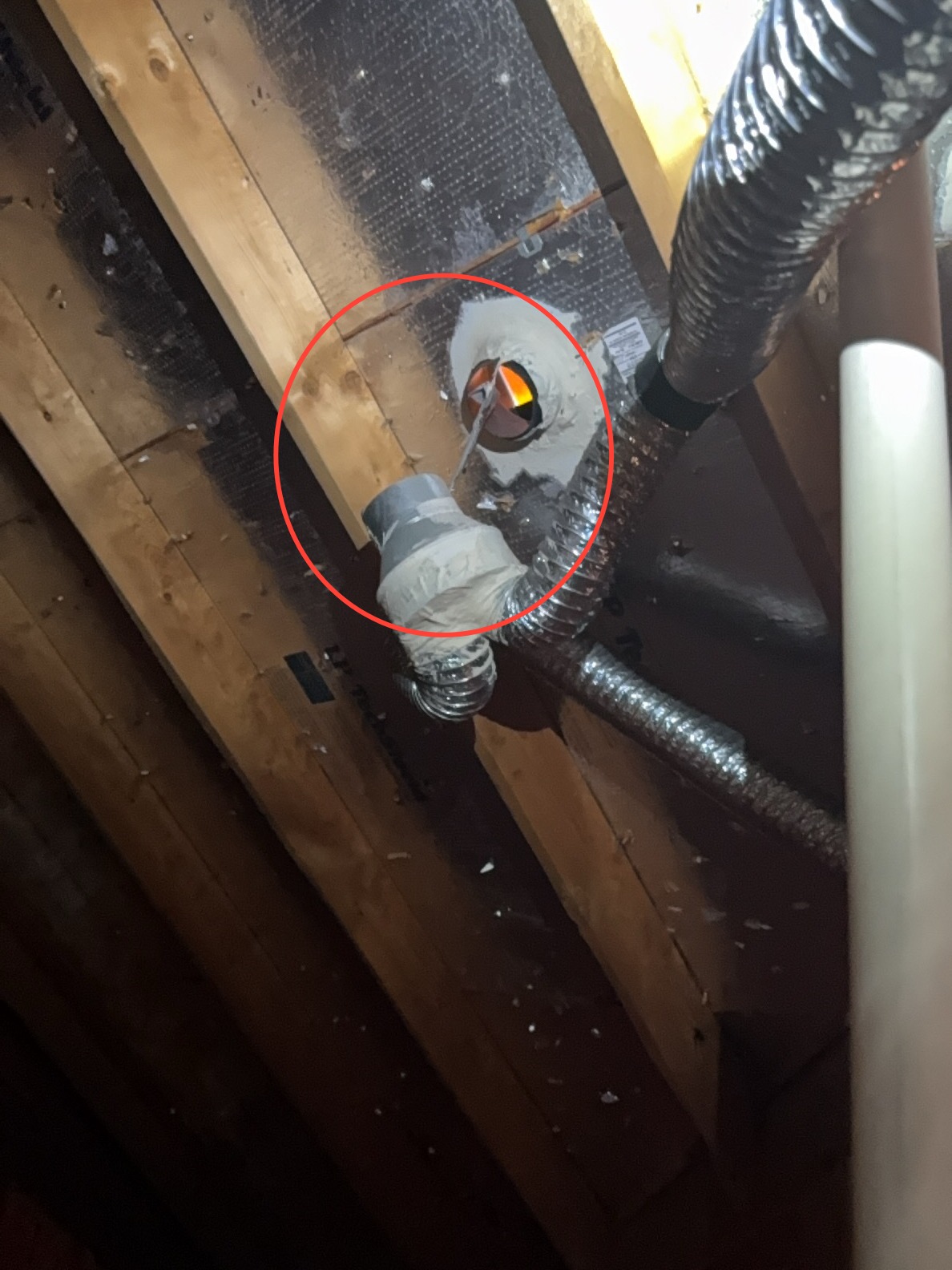
Bathroom mechanical ventilation discharges into attic. Recommend qualified contractor repair
Garage Door Operators
InspectedNot InspectedNot PresentDeficient
Dryer Exhaust Systems
InspectedNot InspectedNot PresentDeficient
Dryer Energy Source:Electric
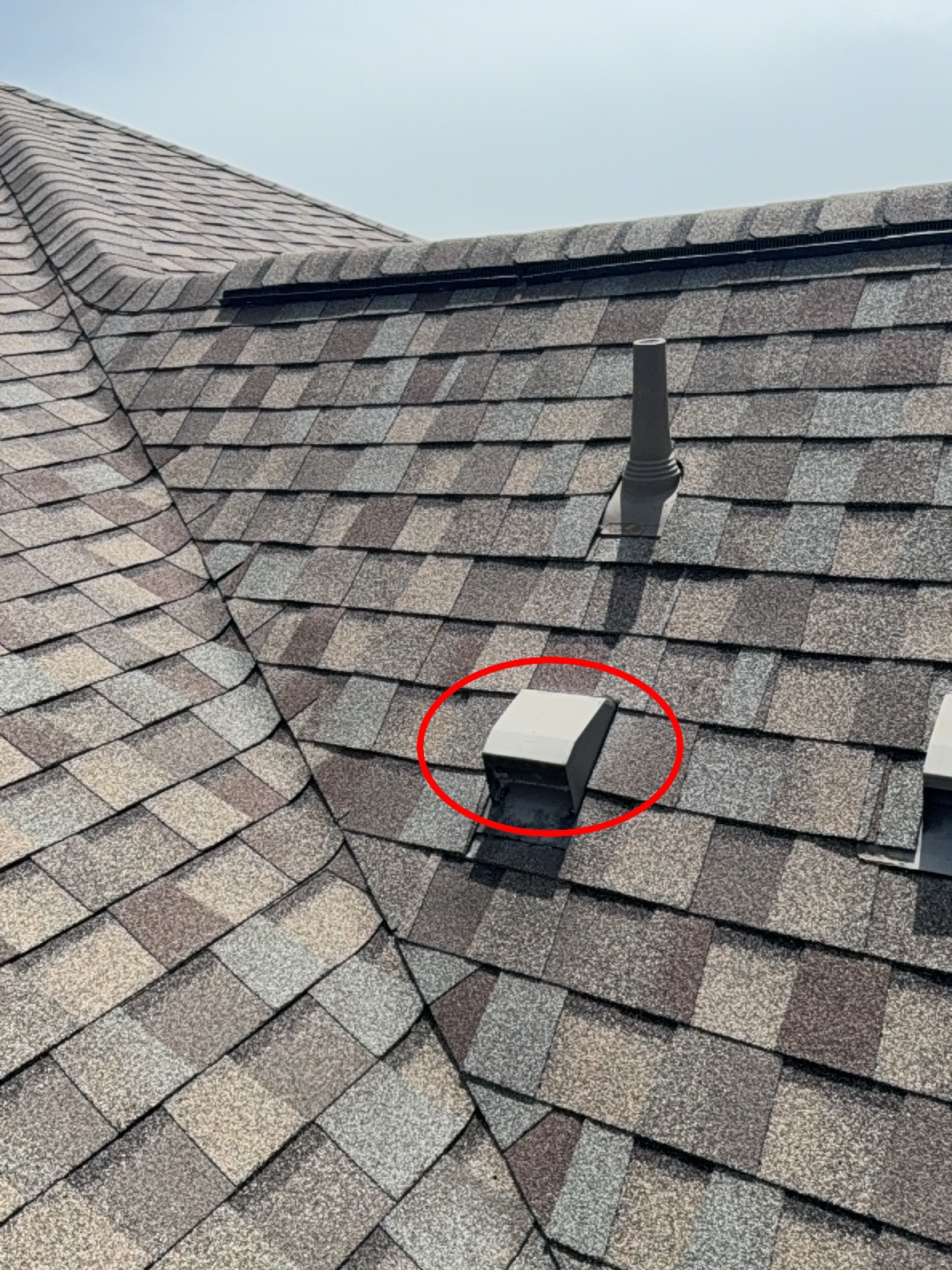
The dryer duct should be cleaned regularly for improved safety (to prevent clogging which could lead to a fire) and to keep the dryer working reliably and efficiently. Dryer vents should be cleaned yearly for safety. If the dyer vent system has not been cleaned recently, I recommend scheduling a cleaning.
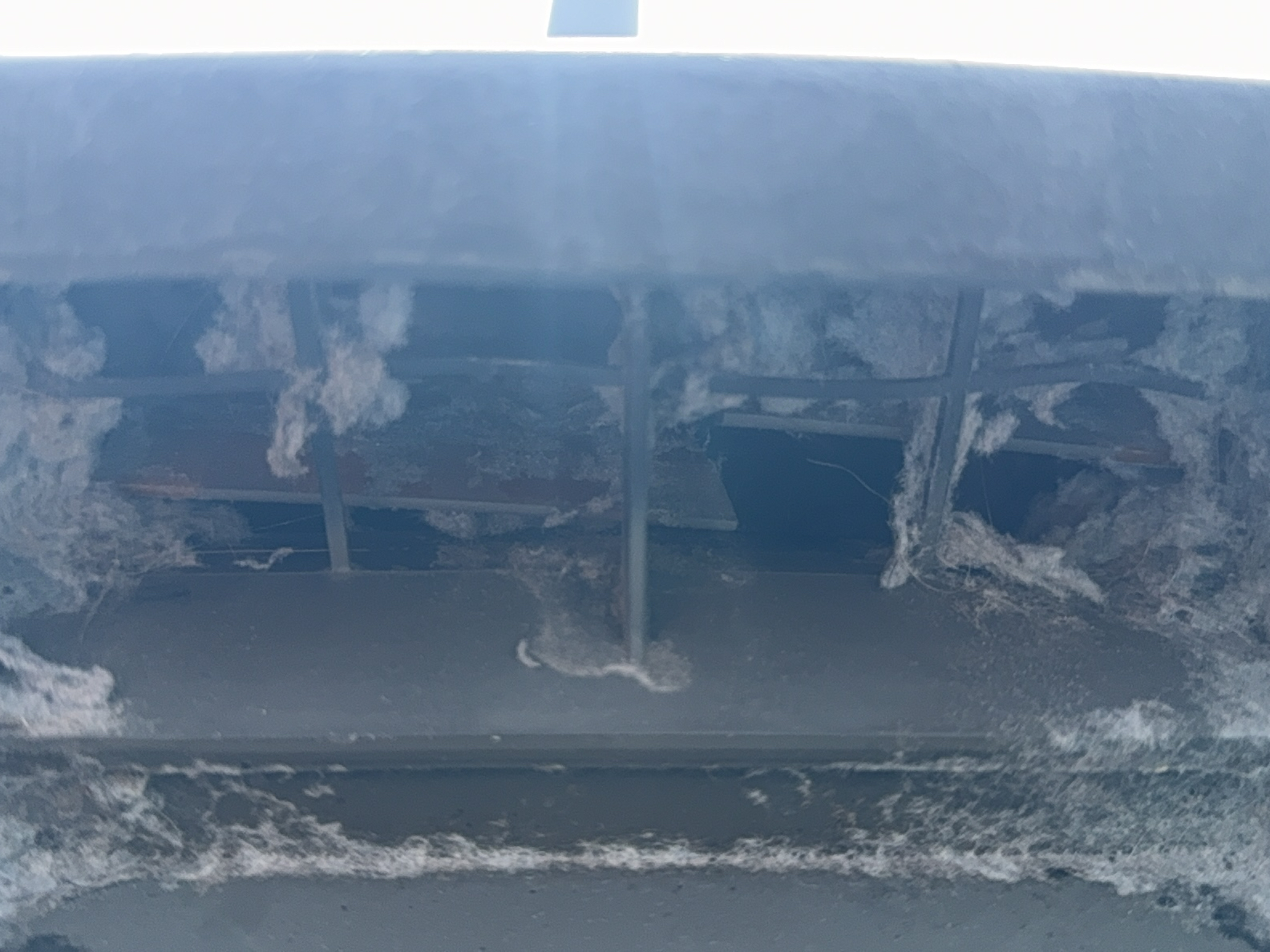
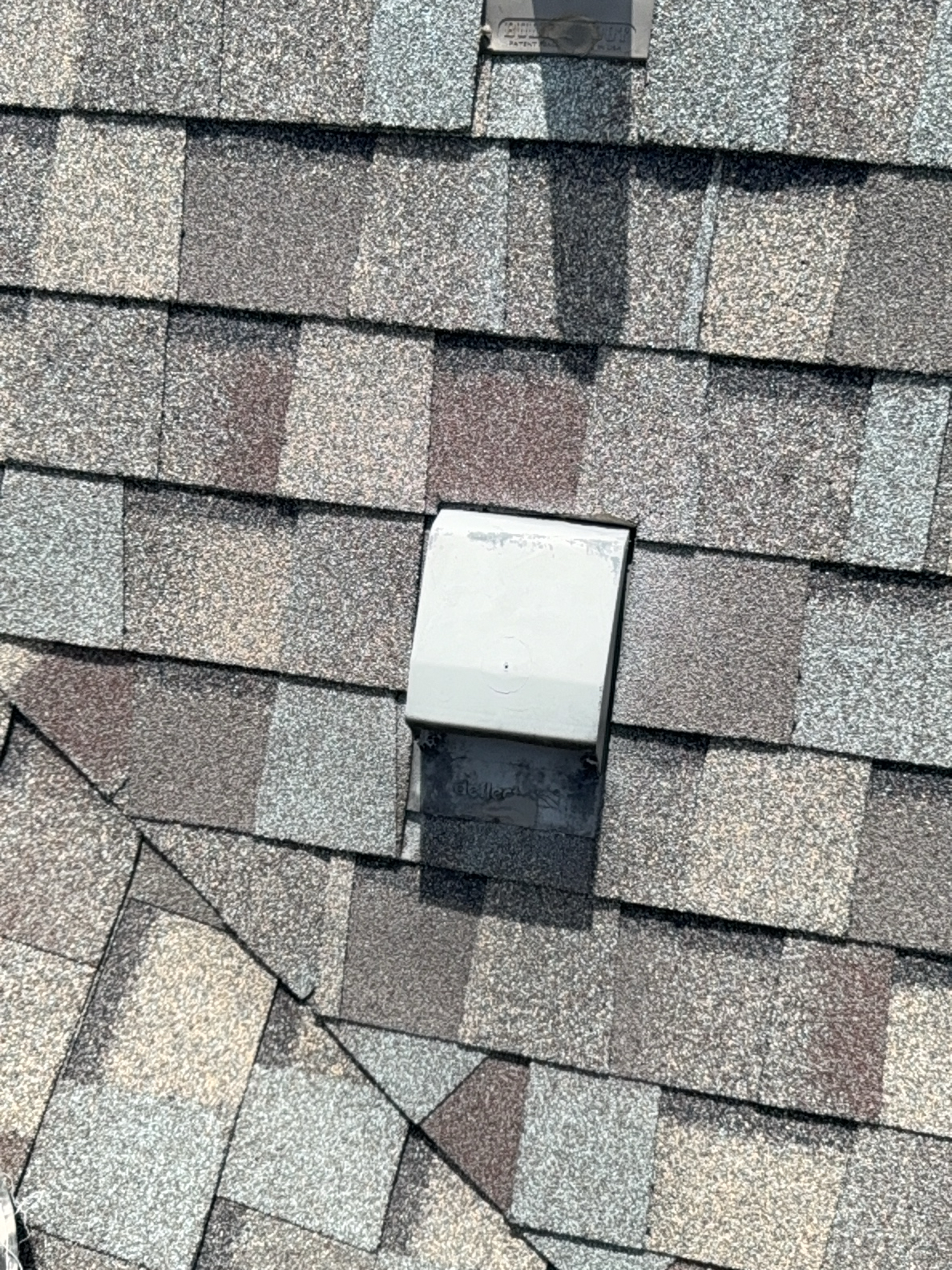
The clothes dryer is exhausting out of the roof. This is not a desirable installation as it can be difficult to access the exhaust duct for cleaning and inspection. This is a standard installation in some areas/sub divisions and is a as-built condition. Dryer lint is flammable and a fire hazard when it accumulates.
 |  |
Other
InspectedNot InspectedNot PresentDeficient
Optional Systems
Landscape Irrigation (Sprinkler) Systems
InspectedNot InspectedNot PresentDeficient
Swimming Pools, Spas, Hot Tubs, and Equipment
InspectedNot InspectedNot PresentDeficient
Outbuildings
InspectedNot InspectedNot PresentDeficient
Private Water Wells (A coliform analysis is recommended.)
InspectedNot InspectedNot PresentDeficient
Private Sewage Disposal Systems
InspectedNot InspectedNot PresentDeficient
Septic Grinder Limitations:Septic Grinder present
Other Built-in Appliances
InspectedNot InspectedNot PresentDeficient
Other
InspectedNot InspectedNot PresentDeficient
Signed Contracts
Tier 1 Home Inspections
832-977-7596
WWW.T1HI.COM
TREC Inspector License No. 26756