The Scope and Purpose of a Home Inspection
Limitations & Scope of report:
This report is furnished to you, at your request, and for your exclusive use as an aid in determining whether major physical condition problems exist in the limited systems that would affect a typical purchaser's buying decision. It is primarily designed to be an educational tool, but we understand that our findings may bring to light conditions you were not aware of before this survey was made. "Major Concern, Repair / Replace, Further Evaluation Recommended, Inspected, Not Inspected, For Your Information, Recommended Maintenance" describes the inspection process best. This report is written for lay persons and is not technically exhaustive. We base our comments on our technical education & training, accepted construction practices & standards, and our experiences with comparable structures.
This survey of visible conditions does not address market value or use suitability of the premises. It is not a Code Compliance or Environmental Survey Report. You may have contracted with us separately for other services beyond the scope of this report.
The comments in this report exercise the judgment of your inspector based on the visible conditions readily accessible at the time of inspection (a "snapshot" of the premises on that day). Emphasis in this report is placed on significantly deficient or aging components and systems. While some less major deficiencies will be discovered and reported on, an all inclusive list of minor building flaws is not provided.
Our visual general survey of conditions does not include moving any furniture or carpeting, dismantling systems, destructive or intrusive testing (see ASHI® Standards of Practice General Limitations and Exclusions). Accordingly, there are limitations to our observations and it should be fully understood that we can only REDUCE YOUR RISK IN PURCHASING. We cannot eliminate it, and we certainly do not assume it by providing this report! We sell you our written opinion and experience on a best effort basis. We have no entrepreneurial interest in any repairs or mitigation work. We are not an insurer; the report should put you in a better position to make an educated decision. Warranties and insurance can be purchased elsewhere.
Heating, cooling, plumbing, electrical systems, and household appliances are subject to sudden and unpredictable failure. As an additional risk-management measure, clients should consider obtaining a mechanical and appliance warranty to help offset the cost of unforeseen failures that occur after the inspection. Remember Murphy's Law: "Anything that can go wrong, will go wrong"......and typically in a Real Estate transaction, it's within the first 3-6 months :-( !
A wood destroying insect infestation inspection report by a licensed Pest Control Operator (insured and registered for chemical applications, who can prepare an estimate and treat the structure), compliments this inspection, may be required by your mortgage lender, and may be recommended in this report.
In our experience, conditions that were not apparent or accessible at the time of inspection will become visible after the premises is turned over, becomes "broom clean," or after repairs and renovations are begun. CONDITIONS IN ANY BUILDING WILL CHANGE AND YOU MUST MAKE A THOROUGH PRE-CLOSING INSPECTION! Budget for contingencies which always arise during repair and remodeling when latent defects are commonly uncovered. Please contact us if you encounter such problems so that we may assist you. We will not entertain any claims made after repairs are completed, you must notify us immediately, in writing, of any such problem so that we can investigate it promptly. Any repairs undertaken are done solely at your own risk! Follow up by qualified specialists may be necessary in order to determine exact repair specifications, for trouble shooting systems or equipment, to obtain more exact remedial costs, and will be recommended herein.
This report is the property of Longs GCS LLC Home Inspection and has been issued for the exclusive use of its client in evaluation of purchase of this property only. Any third party use of this report without the express written permission of Longs GCS LLC Home Inspection is strictly prohibited and may result in legal action.
Items For Follow-up:
Review the Certificate(s) of Occupancy or Compliance issued to close out Building Permits for construction of the premises, with your Attorney. Any major alterations, additions, or conversions made to the premises would require separate building permits, and therefore separate C. O's, from the original one (outside of NYC). Many buildings and homes built before the mid 1920's, outside of NYC do no not have Certificates of Occupancy on record. This report may comment on apparent construction which was done subsequent to the original construction of the premises. We do not recommend that you "inherit" open permits or non-filed major system work at the time of property transfer. It will be expensive and time consuming for you to obtain these certifications later, in our experience.
In accordance with the above, please remember that many buildings must be maintained only to the code in effect, if any, when the building (or additions) were built, not to new construction standards! We do not compare the premises to current code standards in this report, since THIS IS NOT A CODE COMPLIANCE INSPECTION! You may be made to bring old construction up to new standards when legalizing or renovating, consult with the local Building Official or a Code Certified A/E Consultant to determine to what extent this may be required in this premises.
Electrical inspection certificates from the local building official, or an approved inspection agency (such as the NY Board of Fire Underwriters), are required for service upgrades, new panels, and wiring, and expansions to the primary electrical system of any building. Obtain any certificates from the seller for such work noted in this report. They may be required by your insurance carrier.
If your mortgage lender requires a WDI inspection report from a licensed Pest Control Operator, that the premises is free of any wood destroying insects, or is under a current treatment warranty, you must obtain that WDI report or service agreement. Any current treatment service agreement should be transferable to you as the buyer and your mortgage lender. This report will comment on visible signs of termite infestations, control work, damage, or structural repairs, for the visible and readily accessible areas of the premises only, and may make treatment or preventive recommendations.
You must operate & check the systems, equipment, or appliances that are beyond the scope of this Standard Survey Report (household appliances, security systems, central vacuums, intercoms, lawn & fire sprinklers, buried or concealed equipment are examples of these common exclusions, see the attached ASHI® Standards General Limitations and Exclusions), or that were shut down, that were incomplete, or that were not readily accessible, at the time of inspection. We do not activate shut down equipment or trouble shoot systems. There are seasonal limitations to operating certain systems. If you cannot operate or check any of these before the closing of title, consult with your Attorney for the appropriate means of protecting your interests. If we have to return for follow up inspections, you will be charged additional fees.
Obtain written estimates from licensed trade contractors for repairs of any noted deficiencies, and before starting any such work. This survey report attempts to identify visible problems and exact remedies may not be contained herein. It may take follow up investigations by specialists, removals, perhaps destructive testing or trouble shooting, to determine the best and most cost effective corrective action. Refer to the system sheets. Certain structural problems require monitoring before specifying repairs. Any renovations or repairs undertaken by the client without a professionally prepared scope of work are done so at your sole risk! See "Limitations & Scope of Report".
How to Read This Report
Getting the Information to You
This report is designed to deliver important and technical information in a way that is easy for anyone to access and understand. If you are in a hurry, you can take a quick look at our "Summary Page” and quickly get critical information for important decision making. However, we strongly recommend that you take the time to read the full Report, which includes digital photographs, captions, diagrams, descriptions, videos and hot links to additional information.
The best way to get the layers of information that are presented in this report is to read your report online, which will allow you to expand your learning about your house. You will notice some words or series of words highlighted in blue and underlined – clicking on these will provide you with a link to additional information.
This report can also be printed on paper or to a PDF document.
Chapters and Sections
This report is divided into chapters that parcel the home into logical inspection components. Each chapter is broken into sections that relate to a specific system or component of the home. You can navigate between chapters with the click of a button on the left side margin.
Most sections will contain some descriptive information done in black font. Observation narrative, done in colored boxes, will be included if a system or component is found to be significantly deficient in some way or if we wish to provide helpful additional information about the system or the scope of our inspection. If a system or component of the home was deemed to be in satisfactory or serviceable condition, there may be no narrative observation comments in that section and it may simply say “tested,” or “inspected.”
Observation Labels
All narrative observations are colored, numbered and labeled to help you find, refer to, and understand the severity of the observation. Observation colors and labels used in this report are:
- Major Concern:Repair items that may cost significant money to correct now or in the near future, or items that require immediate attention to prevent additional damage or eliminate safety hazards.
- Repair / Replace:Repair and maintenance items noted during inspection. Please note that some repair items can be expensive to correct such as re-finishing hardwood floors, but are considered simply repair items due to their cosmetic nature.
- Further Evaluation Recommended:A qualified licensed contractor should assess this condition in more detail to confirm any needed repairs and associated costs.
- Inspected:The item or system was visually inspected and operated using normal homeowner controls where accessible and safe to do so. No invasive or destructive testing was performed. Evaluation is based solely on conditions observed at the time of the inspection and may not reveal hidden defects or intermittent issues.
- NOT Inspected :The item or system was not inspected due to inaccessibility, safety concerns, lack of utility service, or because it falls outside the scope of a visual home inspection as defined by the applicable Standards of Practice. No observations or evaluations were made, and no representations can be offered as to its condition or functionality. Further evaluation by the appropriate qualified professional is recommended if information about this item is desired.
- For Your Information:FYI" (For Your Information) is a non-critical observation that does not require immediate repair or correction but is noteworthy for maintenance planning, homeowner awareness, or future consideration.
- Recommended Maintenance:These are repair items that should be considered "routine home ownership items," such as servicing the furnace, cleaning the gutters or changing the air filters in the furnace.
- Improve:Observations that are not necessarily defects, but which could be improved for safety, efficiency, or reliability reasons.
- Monitor:Items that should be watched to see if correction may be needed in the future.
- Due Diligence:Observation such as a buried oil tank that may require further investigation to determine the severity and / or urgency of repair.
- Efficiency:Denotes observations that are needed to make the home more energy efficient as well as to bring the home up to modern insulation standards. This category typically includes windows and insulation. Other items, such as lighting and appliances, are not inspected for their energy status.
- Description:Detailed description of various aspects of the property noted during the inspection.
Summary Page
The Summary Page is designed as a bulleted overview of all the observations noted during inspection. This helpful overview is not a substitution for reading the entire inspection report. The entire report must be read to get a complete understanding of this inspection report as the Summary Page does not include photographs or photo captions.
Inspectors Certification:
We hereby certify that:
We are New York State & Connecticut Licensed Home Inspectors.
We have personally inspected the subject premises to the limits noted in this report.
We understand that this report is to be used only by my client in conjunction with the possible purchase/sale/lease of the property.
Our compensation for making this survey report is not in any way contingent upon the results herein.
We have no direct or indirect, present or future personal or corporate interests or
bias with respect to the property, or any benefits from the sale of such property.
We have not revealed the findings and/or opinions of this survey report to anyone other
than my clients or their attorney, unless a very dangerous condition existed that should
be immediately corrected by the owner or occupant.
That to the best of our knowledge and belief, the statements of fact contained in
this inspection report, upon which the opinions expressed are based, are true and
correct.
That the inspection was conducted, and the report issued, in conformance with
the Standards of Practice and Code of Ethics of the American Society of Home
Inspectors, ASHI®, and the NY State & Ct. Home Inspector Professional Licensing Act.
Date: 06-10-2026
By: Christopher R. Long, President
NYS #16000170132 CT.#652 NRSB-RMT #11ST003 NYS Mold Assessor #23-6017V-SHMO
Associate Member ASHI: # 251359
OR:
Timothy R. Canniff NYS#16000058150 CT#1013
Summary
Major Concerns
- ET-1 Environmental Testing:
Suspect mold/fungal growth was visibly noted on the underside of the rough floor framing within the unfinished basement area at the time of the inspection. A tape lift/sample was obtained and is being submitted to an independent laboratory for further evaluation and confirmation of the suspected microbial growth.
If laboratory analysis confirms active mold/fungal growth, recommend development and implementation of an appropriate remediation protocol in general accordance with current Institute of Inspection Cleaning and Restoration Certification (IICRC-S520) Standard and Reference Guide for Professional Mold Remediation. Remediation should be performed by a licensed mold remediation contractor familiar with mold remediation requirements and proper containment, cleaning, and post-remediation verification procedures. Additionally, moisture sources and contributing environmental conditions should be identified and corrected to help prevent recurrence.
- ET-2 Environmental Testing:
Suspect mold/fungal growth was visibly noted on the underside of the stairs leading to the finished basement area as well as on the drywall surfaces within this confined area at the time of the inspection. A tape lift/sample was obtained and is being submitted to an independent laboratory for further evaluation and confirmation of the suspected microbial growth.
If laboratory analysis confirms active mold/fungal growth, recommend implementation of an appropriate remediation protocol in general accordance with current Institute of Inspection Cleaning and Restoration Certification (IICRC-S520) Standard and Reference Guide for Professional Mold Remediation. Remediation should be performed by a licensed mold remediation contractor utilizing proper containment, cleaning, removal of impacted materials where necessary, and post-remediation verification procedures. Moisture sources and environmental conditions contributing to the suspected microbial growth should also be identified and corrected to help prevent future recurrence.
Repair Replaces
- E-7 Exterior:
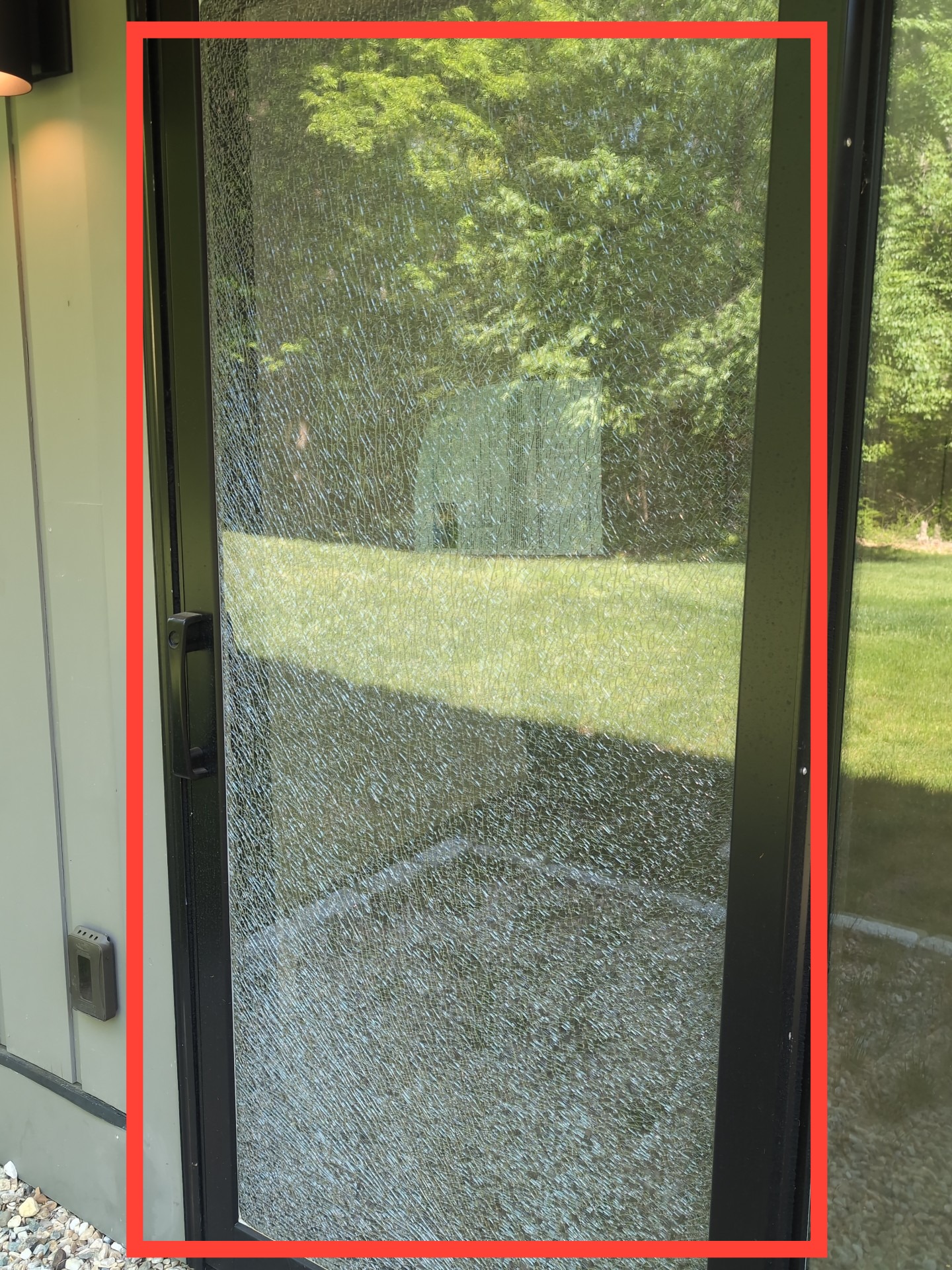
The rear basement sliding glass door glass panel was found shattered at the time of the inspection and is in need of replacement. Broken glass presents a significant safety hazard due to the risk of injury from sharp edges and compromised glazing integrity. Additionally, the damaged door may allow water intrusion, air infiltration, pest entry, and reduced security at the home. Recommend replacement of the damaged glass panel and further evaluation of the door assembly by a licensed glass contractor or qualified door contractor.
- R-10 Roofing:
All gutter downspouts should terminate at minimum 6' in sandy soils, and 8'-10' in expansive soils from the perimeter of the foundation or be piped into sub-surface drains for the prevention of water intrusion into the basement area. I recommend a licensed gutter specialist for repair.
- G-4 Garage:
The metal insulated garage door appeared to be slightly buckled/deformed in the middle section at the time of the inspection, most likely consistent with minor impact damage such as a vehicle backing into the door. Although the garage door remained operational when tested, damaged door panels can place additional strain on the door tracks, rollers, hinges, and automatic opener components over time. Recommend further evaluation and repair or replacement by a qualified garage door contractor as needed to help ensure continued safe and reliable operation.
- G-5 Garage:
Garage / bottom weatherstripping
The rubber weatherstripping at the bottom of the garage door (looking from the exterior) was damaged and in need of replacement at the time of the inspection. Damaged or missing weatherstripping can allow water intrusion, air leakage, pest entry, and debris infiltration, and may also contribute to energy loss and moisture-related deterioration within the garage.
Recommend replacement by a licensed contractor to restore a proper seal at the door opening and improve weather resistance and overall performance.
- HCAC-12 Heating / Central Air Conditioning:
The boiler flue pipe did not appear to be fully inserted into the chimney breech connection at the time of the inspection, nor did it appear to be properly secured with sheet metal fasteners/screws. Improperly installed or unsecured flue piping can allow combustion gases, including potentially hazardous carbon monoxide, to escape into the living space or mechanical room area. Loose or improperly connected flue components may also negatively affect proper draft and combustion performance of the heating appliance. Recommend further evaluation and correction by a licensed oil burner technician or qualified HVAC contractor to help ensure safe and proper venting of combustion gases.
- HCAC-13 Heating / Central Air Conditioning:
The oil burner technician’s combustion test hole in the boiler flue pipe was not sealed at the time of the inspection. An open test port can allow combustion byproducts, including potentially hazardous carbon monoxide and soot, to escape into the unfinished basement area. Recommend sealing or properly plugging the test hole with an appropriate metal bolt or approved plug fitting. Further evaluation and repair by a licensed oil burner technician or qualified HVAC contractor is recommended to help ensure proper and safe venting of combustion gases.
- PS-4 Plumbing System:
The central air conditioning condensate drain line discharged into the home’s plumbing drain system. Although the discharge hose was configured with a trap arrangement, this type of connection is generally not recommended. Improper condensate connections to sanitary plumbing drains can create the potential for sewer gases, bacteria, or drain odors to migrate back toward the air handler or living space if the trap dries out, becomes blocked, or is improperly configured. Additionally, direct or improper connections may create cross-contamination concerns and could contribute to condensate drainage issues or backups under certain conditions.
Recommend further evaluation by a licensed plumbing or HVAC contractor. Improvements may include installation of a proper indirect waste connection with an approved air gap or alternative discharge arrangement in accordance with current accepted installation practices and the authority having jurisdiction.
- PS-6 Plumbing System:
The water stream discharging from the primary bathroom bathtub filler spout/aerator was irregular and sprayed outside of the tub basin at the time of the inspection, resulting in water puddling on the floor beneath the faucet area. Continued water discharge outside of the tub enclosure can contribute to floor deterioration, moisture damage, and possible microbial growth if not corrected. Recommend further evaluation and repair or replacement of the tub filler spout/aerator by a licensed plumbing contractor.
- PS-8 Plumbing System:
The vanity base in the powder room was not securely attached to the wall and appeared loose at the time of the inspection. Additionally, a gap was present between the rear countertop edge and the wall surface due to the lack of a backsplash or properly sealed joint. This condition may allow water intrusion behind the vanity and wall finishes during normal use, potentially contributing to deterioration of cabinetry, wall materials, and possible concealed microbial growth over time. Recommend further evaluation and repair by a licensed contractor, which should include properly securing the vanity base and sealing or installing an appropriate backsplash or waterproof caulking joint at the countertop-to-wall connection.
- PS-9 Plumbing System:
A gap was present between the rear countertop edge and the wall surface in the primary bathroom due to the lack of a backsplash or properly sealed joint. This condition may allow water intrusion behind the vanity and wall finishes during normal use, potentially contributing to deterioration of cabinetry, wall materials, and possible concealed microbial growth over time. Recommend further evaluation and repair by a licensed contractor, which should include properly sealing or installing an appropriate backsplash or waterproof caulking joint at the countertop-to-wall connection.
- PS-10 Plumbing System:
A gap was present between the rear countertop edge and the wall surface in the basement bathroom due to the lack of a backsplash or properly sealed joint. This condition may allow water intrusion behind the vanity and wall finishes during normal use, potentially contributing to deterioration of cabinetry, wall materials, and possible concealed microbial growth over time. Recommend further evaluation and repair by a licensed contractor, which should include properly sealing or installing an appropriate backsplash or waterproof caulking joint at the countertop-to-wall connection.
- I-10 Interiors:
The locking mechanism hardware was missing at these two windows at the time of the inspection, rendering the windows nonfunctional from a proper locking and securing standpoint. Missing window hardware may affect security, weather resistance, and proper operation of the window assemblies. Recommend further evaluation and installation of appropriate replacement hardware by a licensed window contractor or qualified window repair specialist.
- BKA-4 Built-In Kitchen Appliances:
The dishwasher drain hose did not perform a high loop to create a trap under sink. I recommend repair as necessary.
- BKA-7 Built-In Kitchen Appliances:
The kitchen exhaust vent hood was operable when tested; however, the control buttons did not remain engaged in the selected position and required continuous manual pressure in order to operate the unit. This condition suggests defective or worn control switch components. Recommend further evaluation and repair by a licensed appliance repair technician or qualified appliance specialist.
Further Evaluation Recommendeds
- ES-4 Electrical System:
Grounding rod
I could not locate the ground rod. The ground rod may not be present or could be hidden from view by landscaping and or landscaping materials. I recommend an electrical contractor verify or install a ground rod.
The electrical systems bonding/grounding clamp was firmly in place on the copper water line at the well water storage tank.
- PS-7 Plumbing System:
The acrylic slipper tub located in the primary bathroom appeared loose or unstable at the floor connection when pressure was applied at the front skirt during the inspection. Movement at a tub base can contribute to stress cracking, plumbing leakage, damage to surrounding finishes, and premature deterioration if not properly secured and supported. Recommend further evaluation and repair/re-securement as needed by a licensed plumbing contractor or qualified bathroom remodeling contractor.
- I-2 Interiors:
Staining was noted at the corner joint adjacent to the left foundation wall within the finished basement sheetrock area at the time of the inspection. No visible active moisture intrusion was noted during the inspection and the condition appeared cosmetic in nature only at this time. Rust staining at drywall corner bead materials can sometimes occur from past minor moisture exposure, condensation, or deterioration of metal corner components. Recommend monitoring and further evaluation/repair as needed by a qualified contractor, including refinishing of the affected area if desired.
Recommended Maintenance Items
- E-2 Exterior:
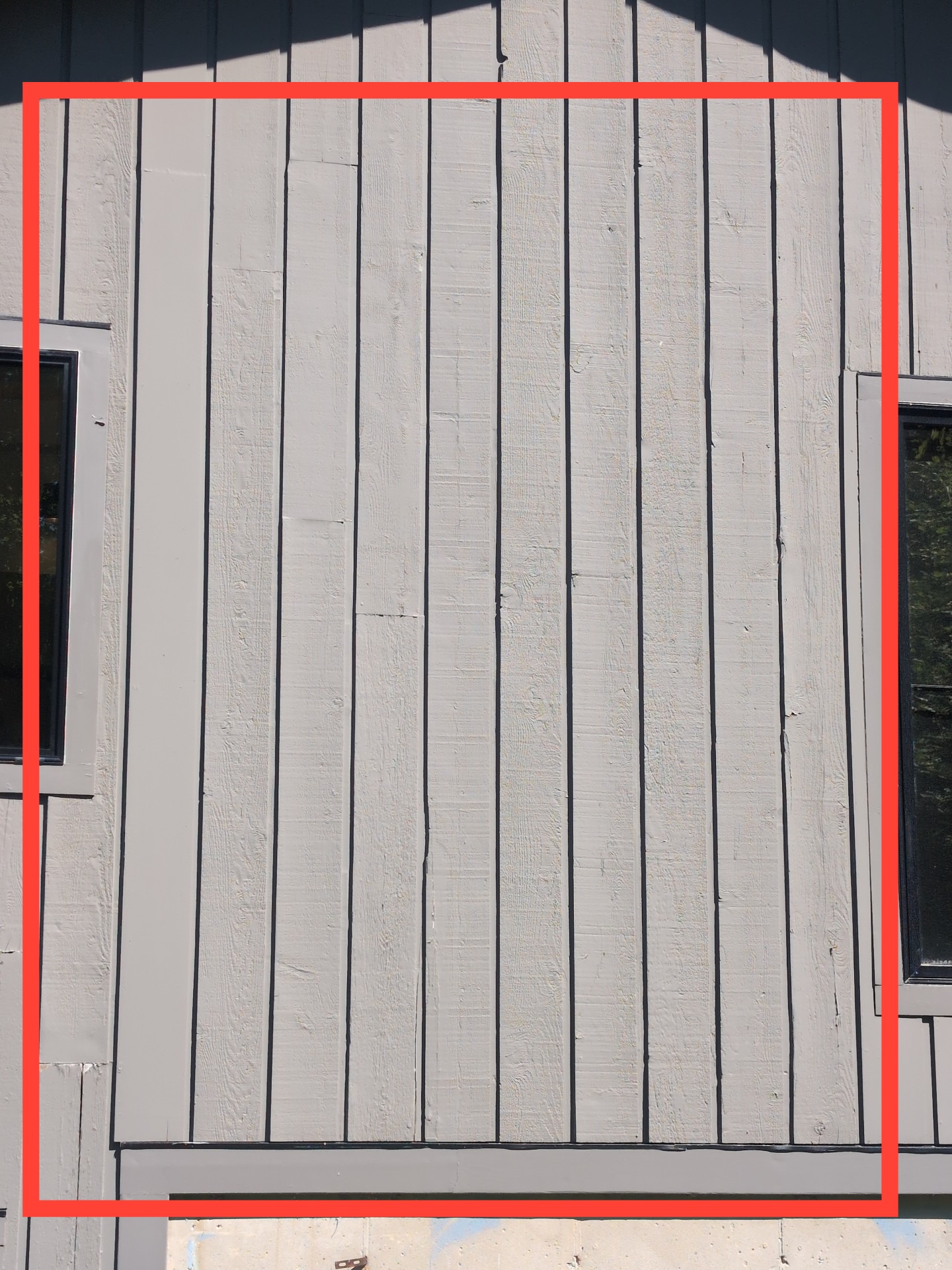
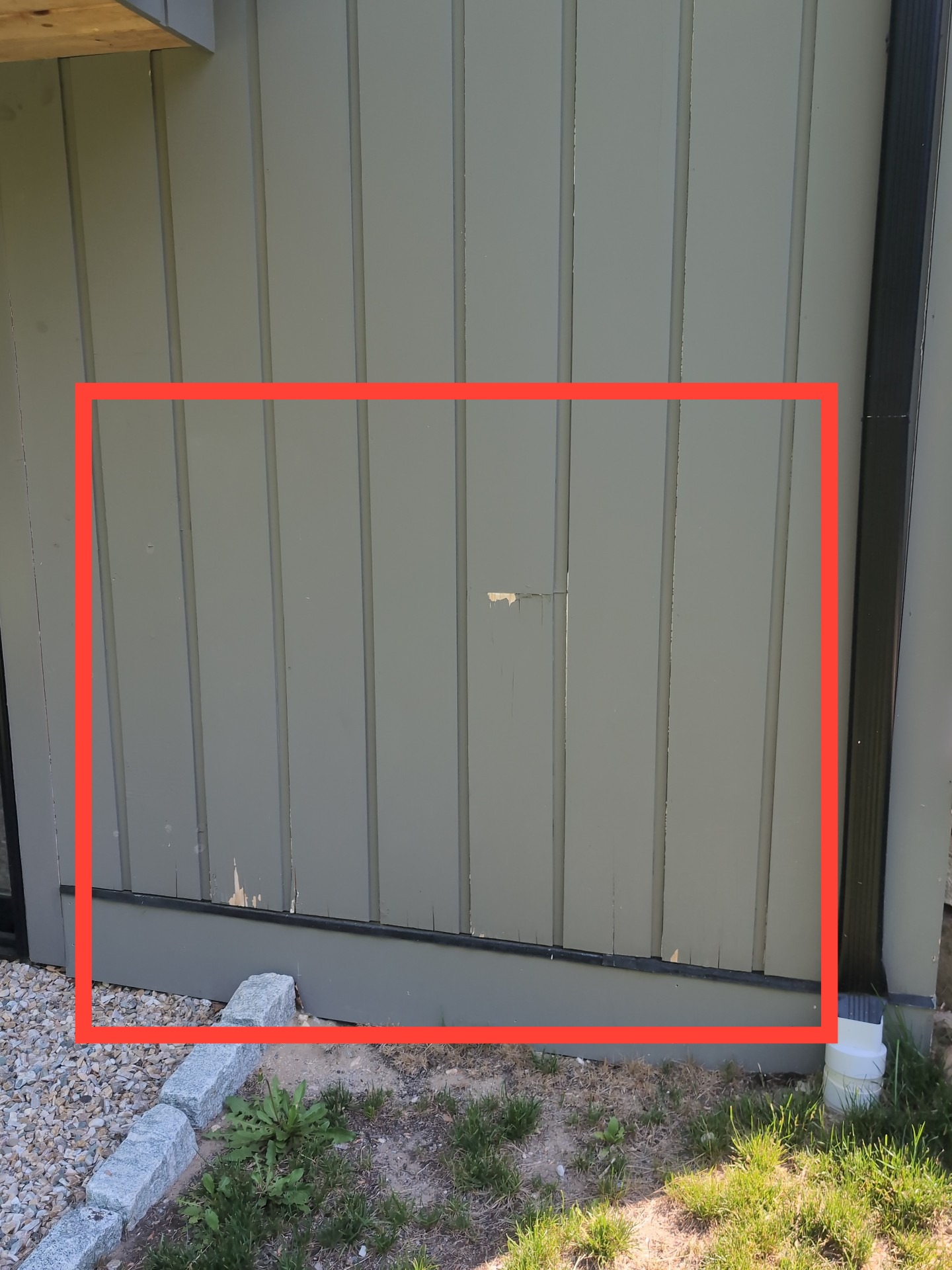
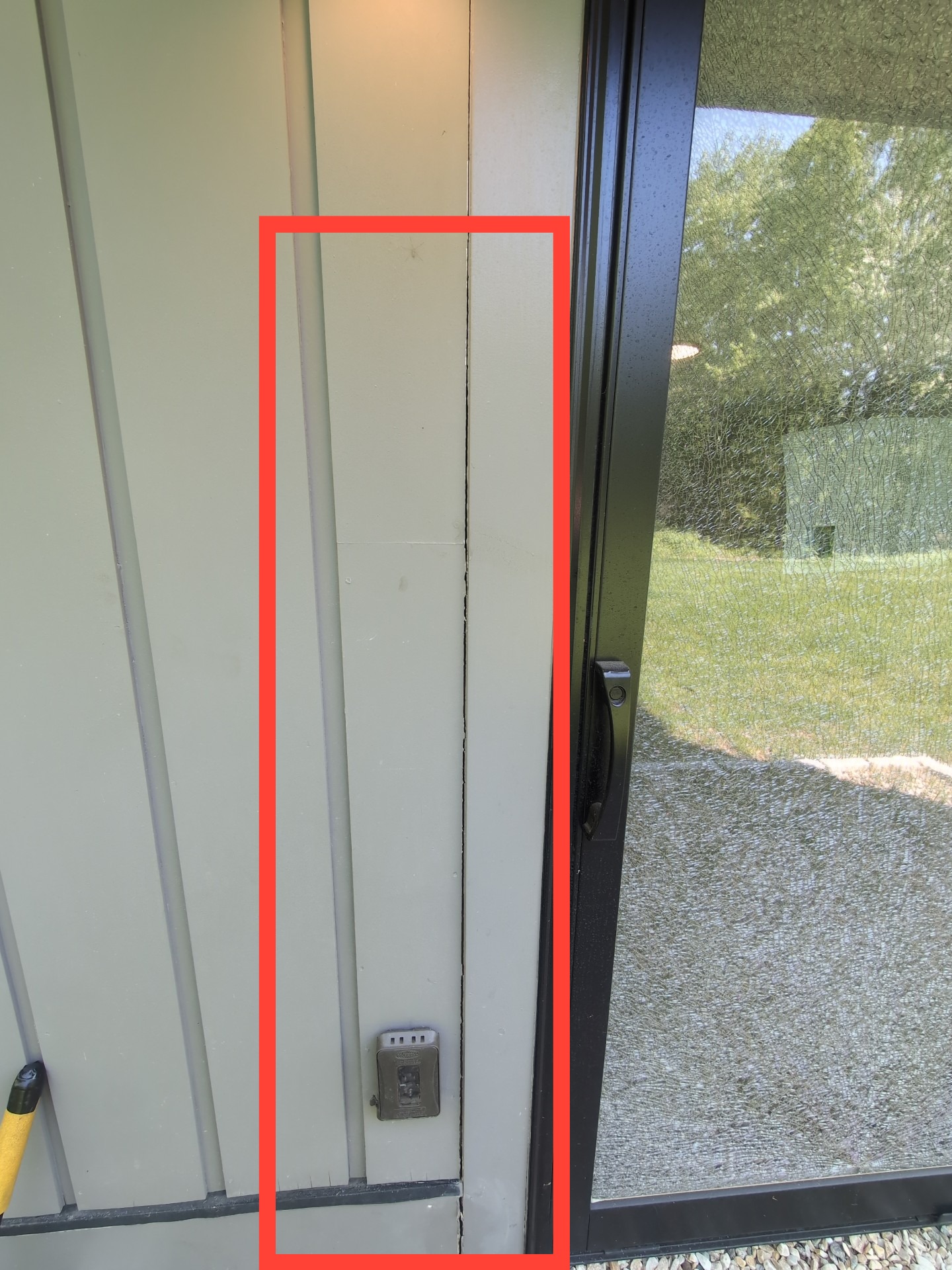
The exterior walls of the home were clad with T-111 wood siding. T-111 is a plywood or engineered wood panel siding commonly utilized on residential structures due to its rustic appearance, relatively low installation cost, and ease of maintenance. Features and benefits of this siding material include a natural wood appearance, ease of repair, and the ability to accept a wide variety of paint or stain finishes. When properly maintained with routine sealing, painting, and caulking, T-111 siding can provide many years of service.
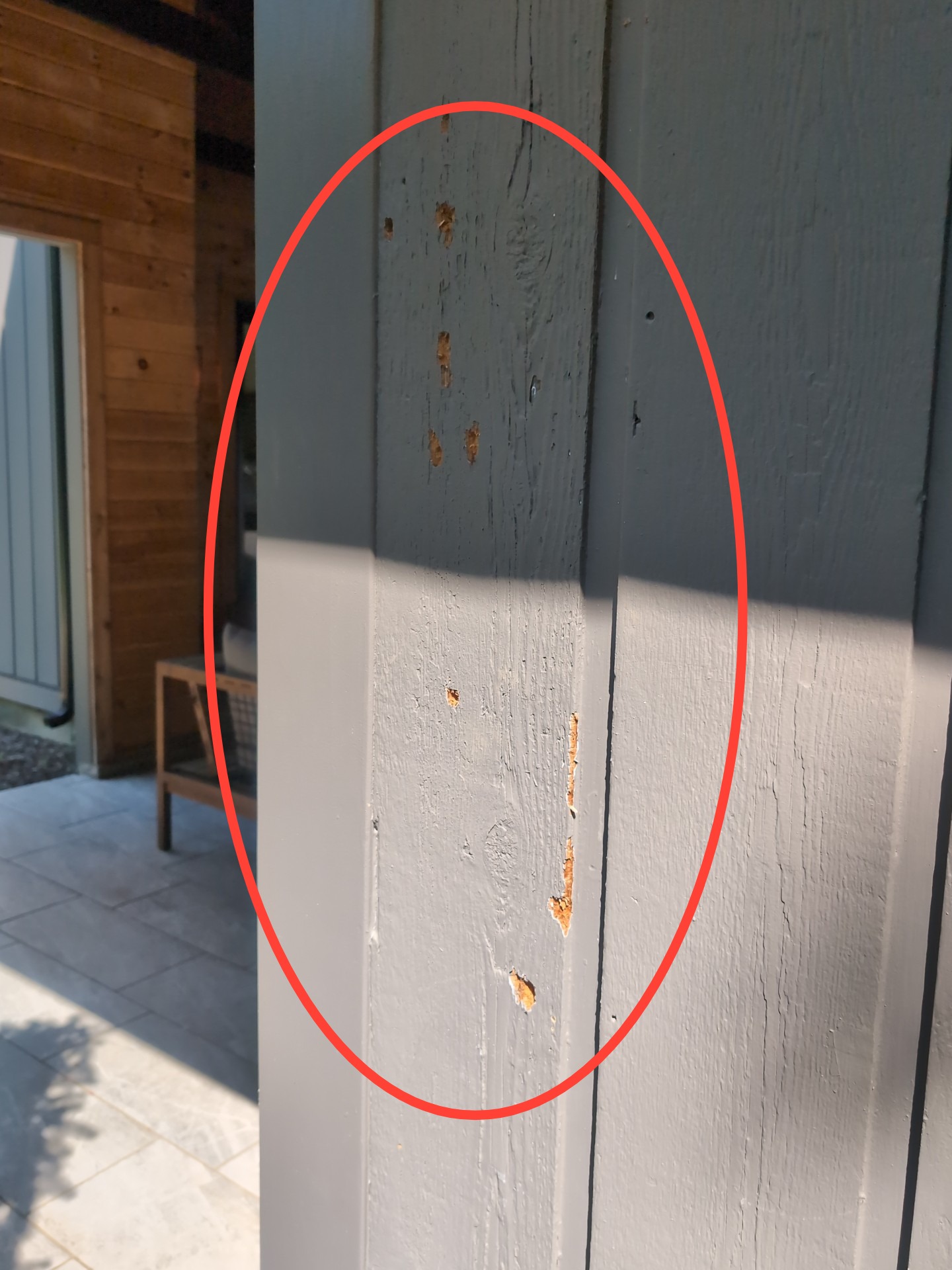
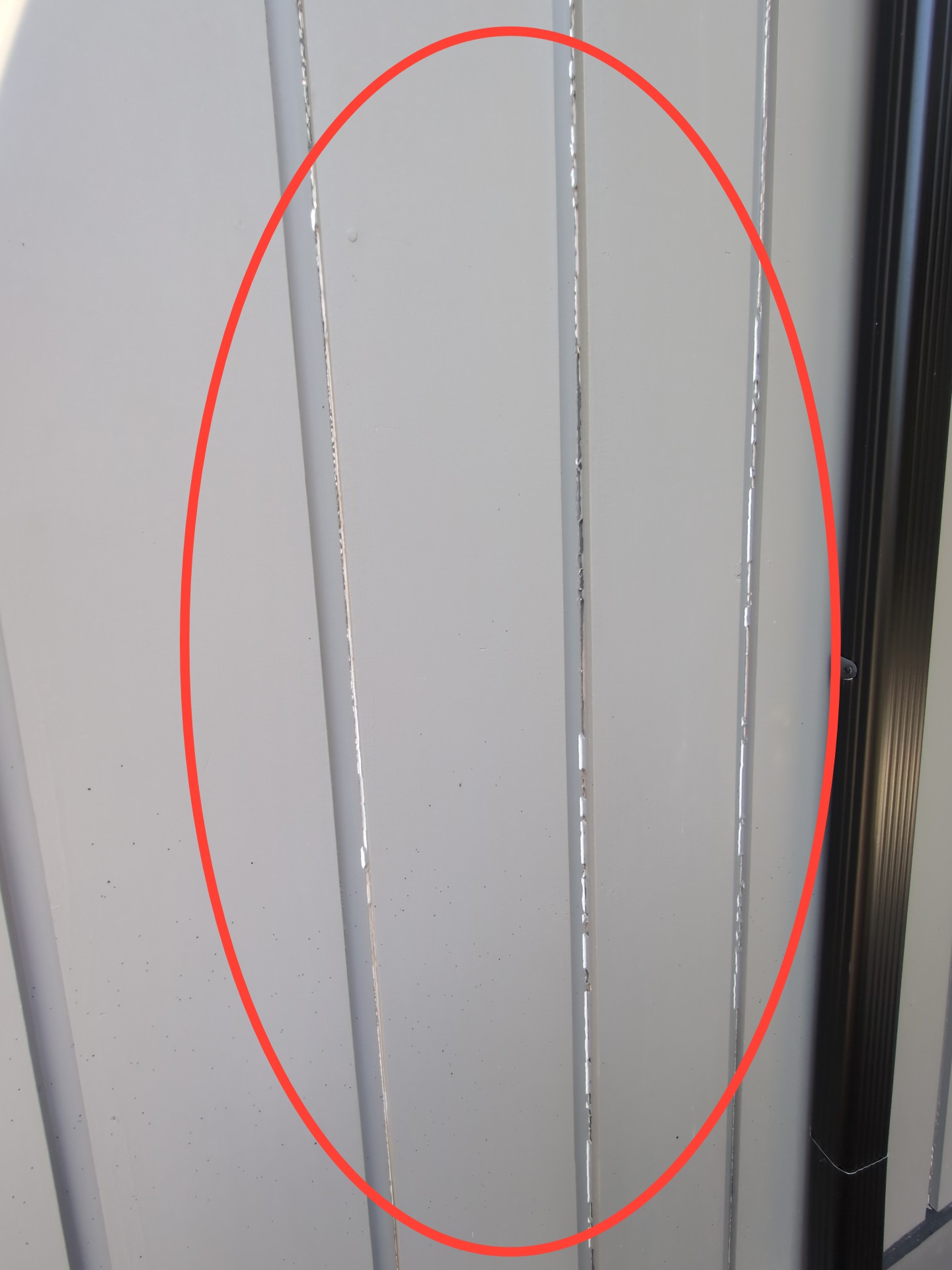
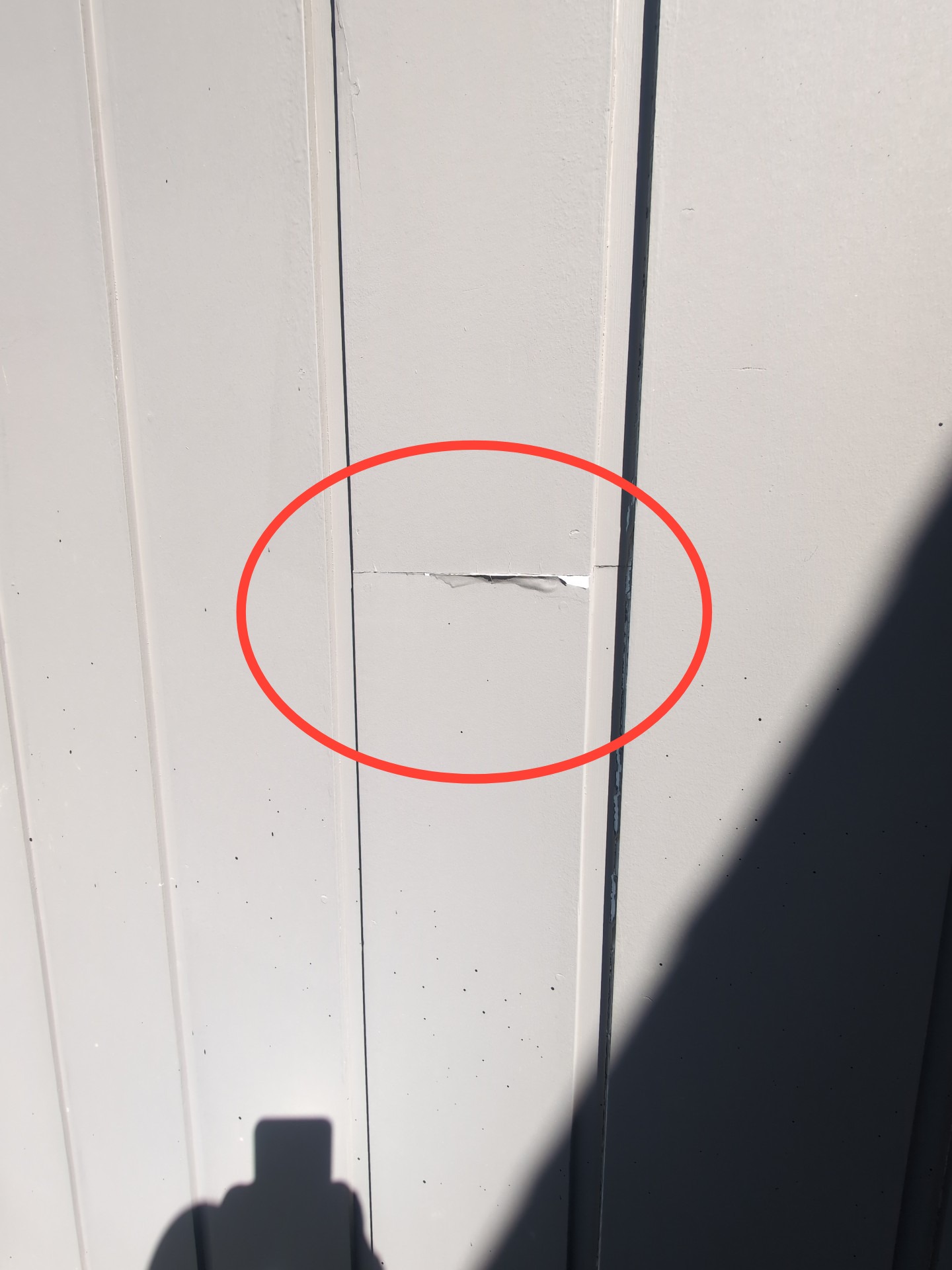
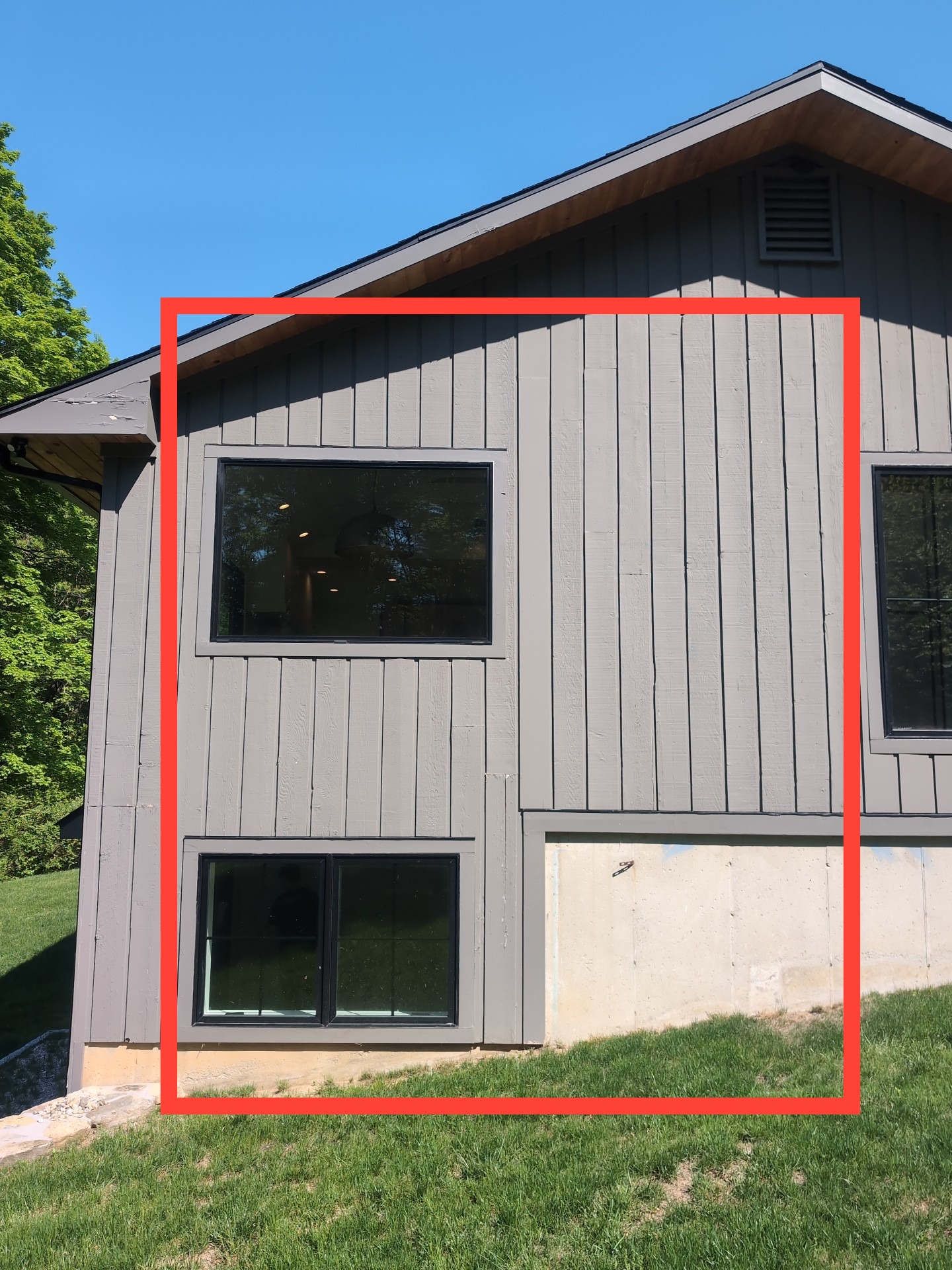
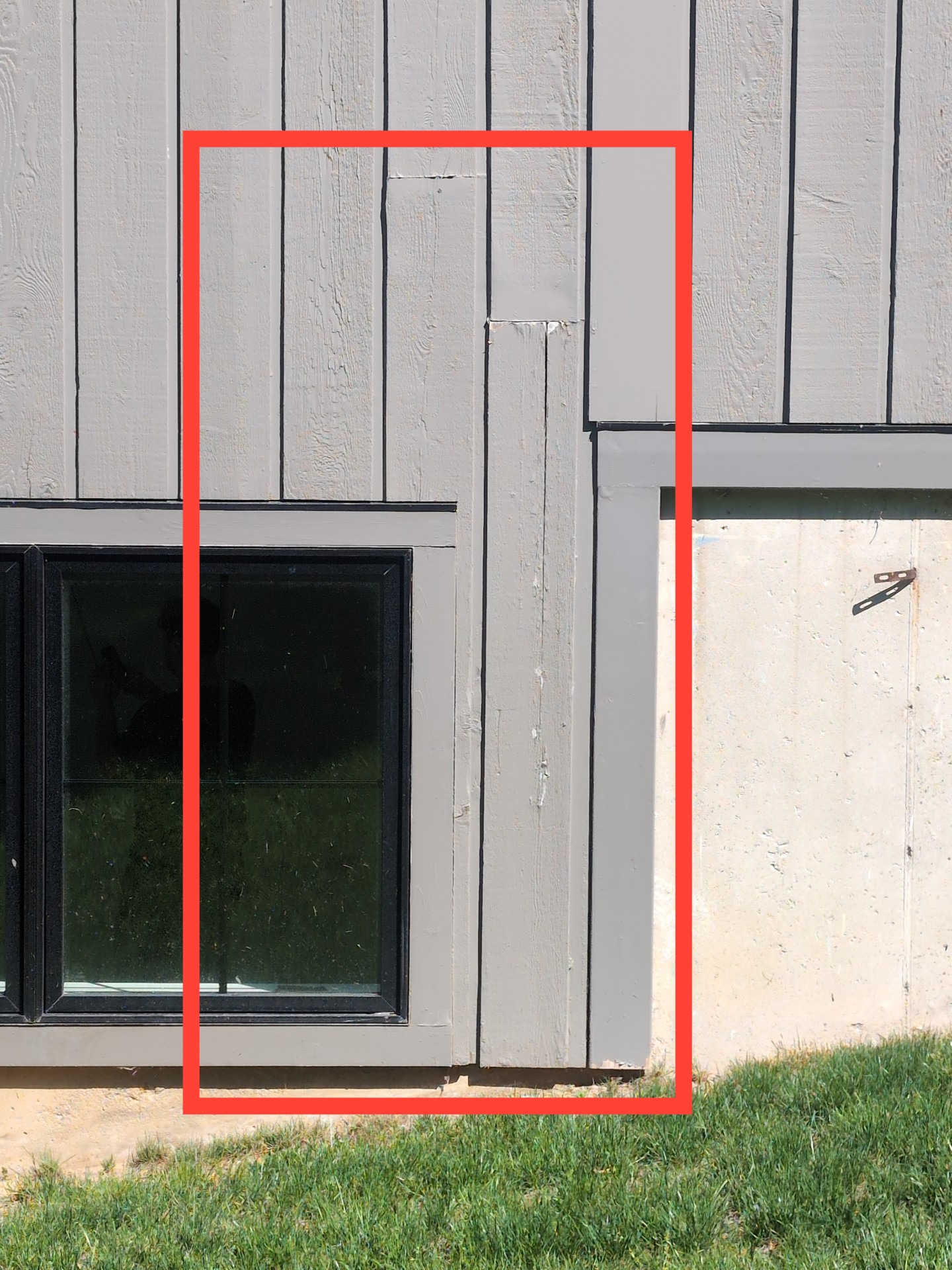
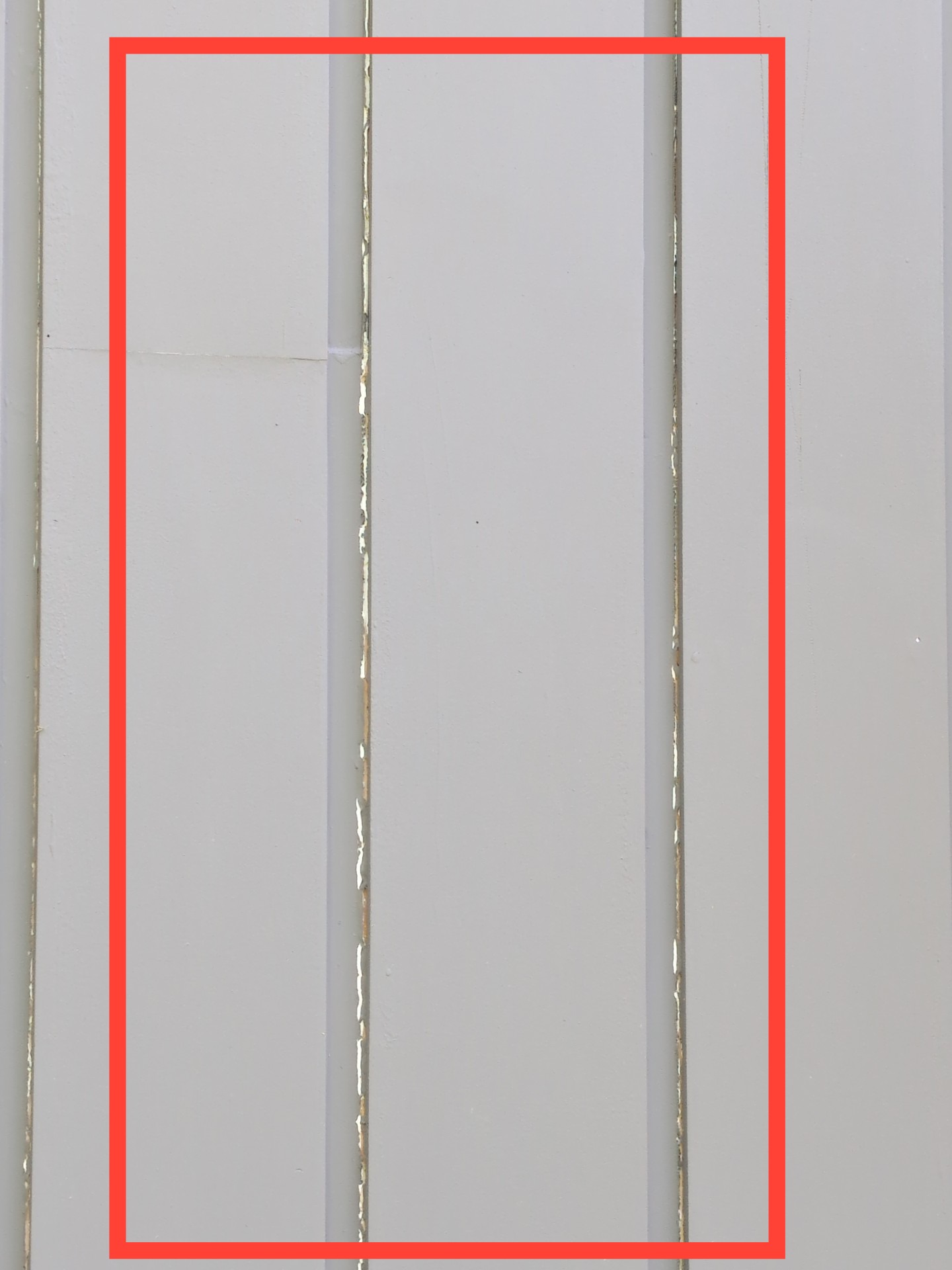
One area of the siding appeared to have minor woodpecker damage noted at the time of the inspection. Additional areas showed minor deterioration of the exterior finish coating along with open seams between siding panels requiring maintenance. Open seams and deteriorated finishes can allow moisture intrusion into the wall structure which may lead to wood rot, insect activity, and hidden structural deterioration over time if left uncorrected.
Recommend further evaluation and typical maintenance repairs by a licensed contractor, which should include repair of damaged siding areas, caulking of open seams and penetrations, and preparation and application of new exterior-grade paint or stain as needed to help protect the siding from moisture intrusion and weather-related deterioration.
- E-3 Exterior:
Artillery fungus, or shotgun fungus, was visibly present on siding areas where wood mulch was present. Artillery fungus is a wood-decay fungus that likes to live on moist landscape mulch. The worst thing about this fungus is that it shoots spores (small black dots) up to 20 feet, which often land on siding, cars and anything else that surrounds the mulch. Additionally, extensive staining can remain after the fungal masses are removed. These stains usually fade with time but can be unsightly. Power washing (and double power washing with a rigorous scrubbing in between) has yielded mixed results and its success appears to be dependent upon the particular type and age of the siding. More effective results have been obtained with new vinyl siding whereas limited success has been reported for old vinyl, aluminum, and older painted wood siding.
- E-4 Exterior:
All penetrations through the T-111 wood siding should be properly filled and sealed with an appropriate exterior-grade sealant. Openings around piping, wiring, light fixtures, hose bibs, vents, and other wall penetrations can allow water intrusion, air infiltration, insect entry, and potential rodent activity into the wall structure. Moisture intrusion behind wood siding can contribute to concealed wood rot, deterioration of wall sheathing, reduced energy efficiency, and possible microbial growth within concealed wall cavities. Recommend sealing and maintaining all exterior penetrations as part of routine exterior maintenance to help prolong the service life of the siding and wall assembly.
- E-5 Exterior:
Finish coating designed to protect the wood siding exhibited moderate deterioration at the time of the inspection. Maintenance performed on an appropriate schedule can significantly extend the lifespan of wood siding exposed to weather. You should ask the seller for information about products and schedules related to and siding maintenance performed in the past. I recommend that finish coat maintenance be performed to prevent deterioration and extend the lifespan of wood siding components. All work should be performed by a qualified contractor.
- E-11 Exterior:
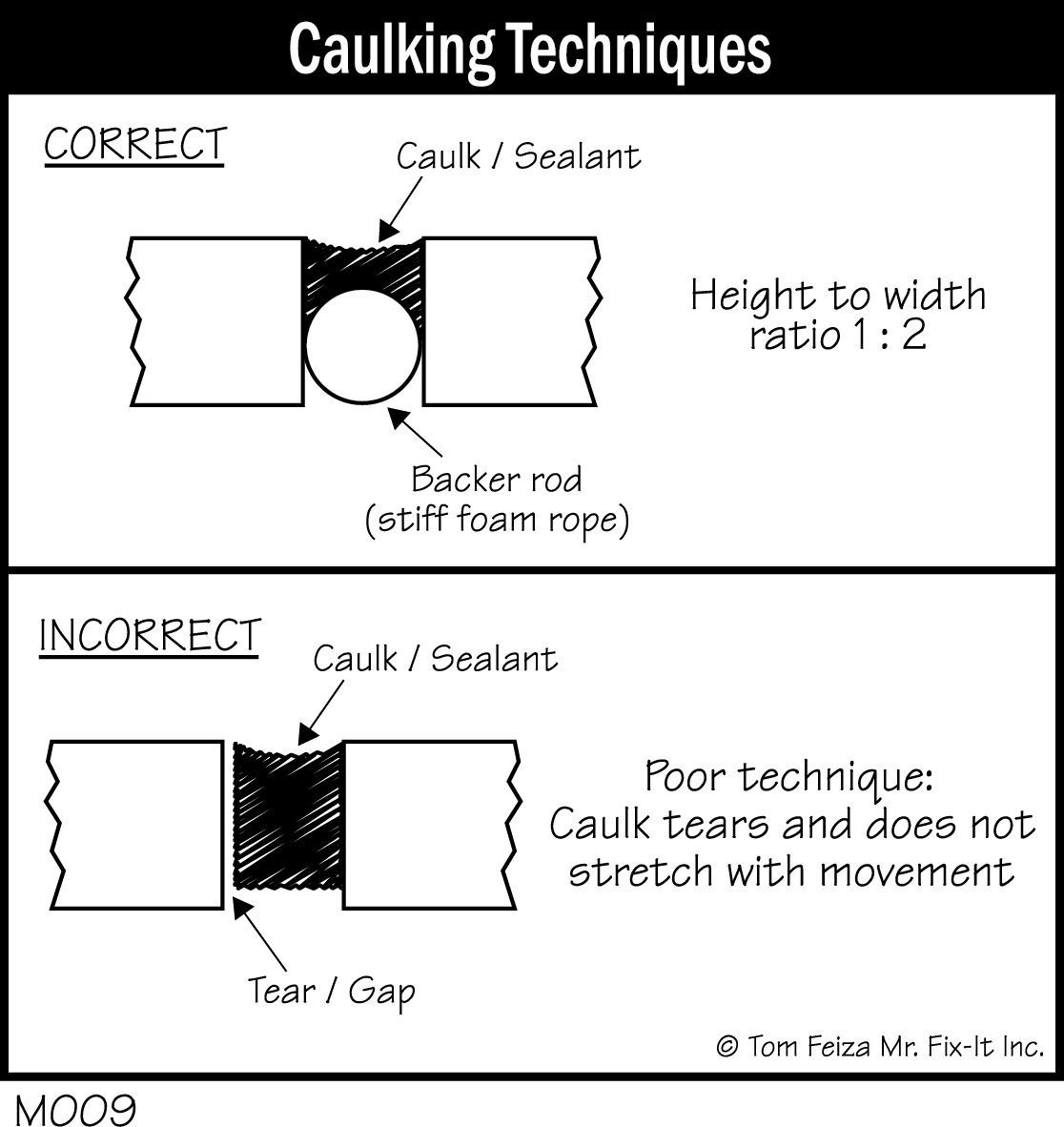
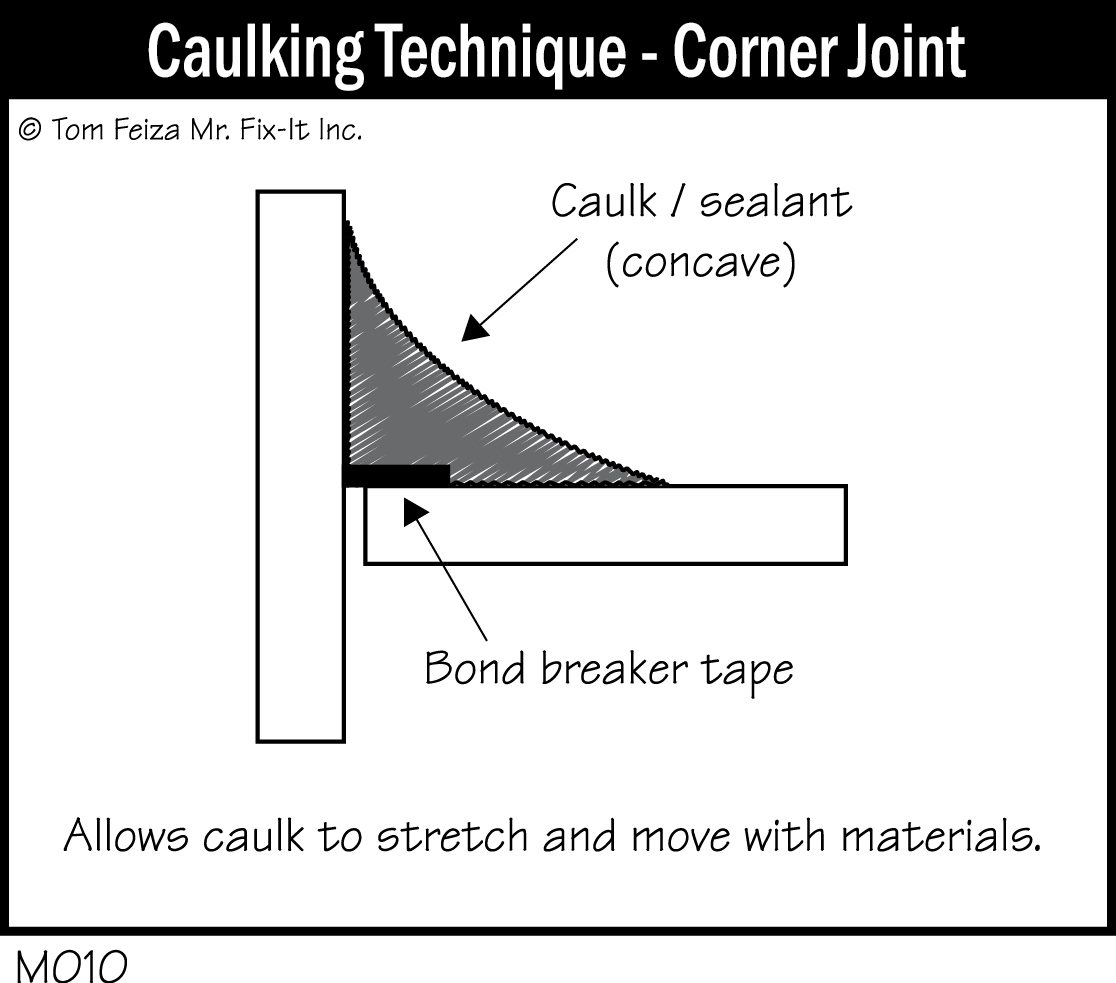
The perimeter of the windows at the exterior of the home will need periodic re-caulking as it dries out and cracks. Caulk helps prevent water and pest intrusion. You also want to make sure the drip edges at the top of the windows are intact and sealed. Annual monitoring are re-application of caulk at these areas is recommended.
- E-15 Exterior:
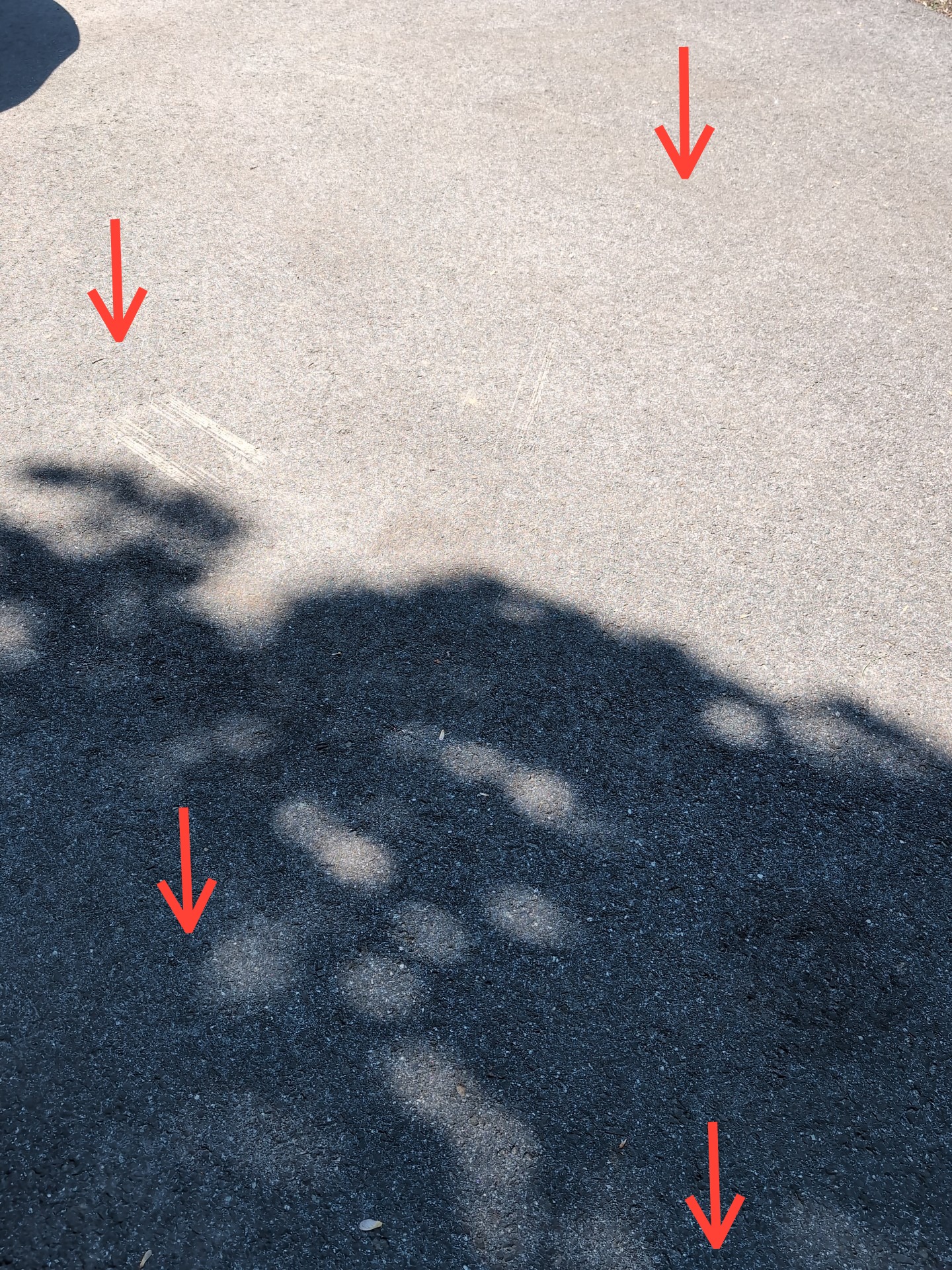
The asphalt driveway was inspected at the time of the inspection. As with all asphalt surfaces, ongoing maintenance is recommended on an as-needed basis. Proper care typically includes filling cracks to prevent water intrusion and freeze-thaw damage, applying a protective seal coat every few years to extend service life, and making localized repairs where settlement or deterioration occurs. Routine cleaning of debris and monitoring for drainage issues will also help minimize premature wear. Recommend you perform these tasks periodically or consult with a qualified paving contractor for professional maintenance and repair as needed.
- E-16 Exterior:
Keep vegetation cut back 12" - 18" minimum from the exterior of the home so the foundation and siding are viewable for detection of possible pest and WDI (wood destroying insect) infestation as well as keeping moisture retainage to a minimum.
- E-18 Exterior:
Eaves, Fascia Boards, and Soffits – Finish Coat Deterioration
The eaves, fascia boards, and soffits around the perimeter of the home are in need of significant maintenance, including scraping, priming, and repainting. Deteriorated or missing finish coatings leave wood surfaces exposed to the elements, which can lead to moisture absorption, wood rot, pest intrusion, and accelerated material deterioration. If not addressed, this may result in more extensive and costly repairs in the future.
Recommendation:
Recommend evaluation and proper surface preparation and repainting by a licensed painting contractor to protect exposed wood components and extend the service life of these exterior elements.
- E-20 Exterior:
Multiple bee nests were noted hanging from the soffit areas of the home at the time of the inspection. Active or abandoned nests can present a safety hazard to occupants and visitors, particularly for individuals with allergies or sensitivities to insect stings. Recommend removal/extermination by a licensed pest control contractor as needed. After removal, recommend sealing and maintaining soffit and exterior areas where feasible to help reduce conditions conducive to future nesting and recurrence.
- E-21 Exterior:
A bird’s nest was noted at the rear decorative/cosmetic gable vent at the time of the inspection. Although this gable vent did not appear to be functional for attic ventilation purposes, bird nesting materials can still contribute to pest activity, staining, deterioration, and possible entry of insects or rodents into concealed wall or attic areas. Recommend removal of the nesting materials and sealing/screening of the decorative vent area as needed to help prevent future bird activity and recurrence.
- E-22 Exterior:
Black ants were noted within the home in multiple locations at the time of the inspection. The presence of ants within the living space may indicate active insect intrusion and could suggest concealed entry points or conditions conducive to infestation, such as moisture intrusion or accessible food sources. Recommend further evaluation and treatment by a licensed pest control contractor. Consider obtaining an ongoing extermination/service contract as needed to monitor, treat, and help prevent future insect activity within the home.
- HCAC-8 Heating / Central Air Conditioning:
Replacement of the HVAC system's air filter is recommended at the intervals specified by the manufacturer, typically every 1 to 3 months depending on filter type, system usage, and household conditions (e.g., pets, allergies, dust levels). A clogged or dirty filter can reduce airflow, decrease system efficiency, strain the blower motor, and negatively impact indoor air quality. Regular filter changes help maintain optimal performance, extend system lifespan, and ensure healthier air circulation throughout the home. Recommend establishing a filter replacement schedule and using filters that meet the system’s specifications.
- HCAC-9 Heating / Central Air Conditioning:
I recommend that all ductwork be cleaned and sanitized by a licensed duct cleaning professional prior to moving into this home. Each year, the average house collects 40 lbs. of dust, dirt, and allergens. This pile-up adds weight to your ducts and pollutes the air you breathe with irritants like dust mites. According to the EPA indoor levels of dust mites are higher than outdoor levels. Dust mites may be the most common trigger of year-round allergies and asthma. This means your home traps allergy and asthma aggravators until you get them out. Cleaning the air ducts is a great way to get rid of dust mites and get back to fresher breathing. However, be sure to research what air duct cleaning methods a company uses. Some air duct cleaning methods use chemical sealants to clean air ducts. This can lead to more irritation once the sealants break down over time and start circulating back into our air ducts. Be sure the company uses a powerful HEPA-filtered vacuum to clean ducts, furnaces, evaporator coils, blowers, and vent covers.
- IV-7 Insulation and Ventilation:
I recommend replacement or vacuuming out of the dryer vent piping annually as lint collects and becomes a fire hazard. I recommend a duct cleaning specialist.
- BKA-9 Built-In Kitchen Appliances:
I recommend replacement or vacuuming out of the dryer vent piping annually as lint collects and becomes a fire hazard. I recommend a duct cleaning specialist.
Improves
- E-12 Exterior:
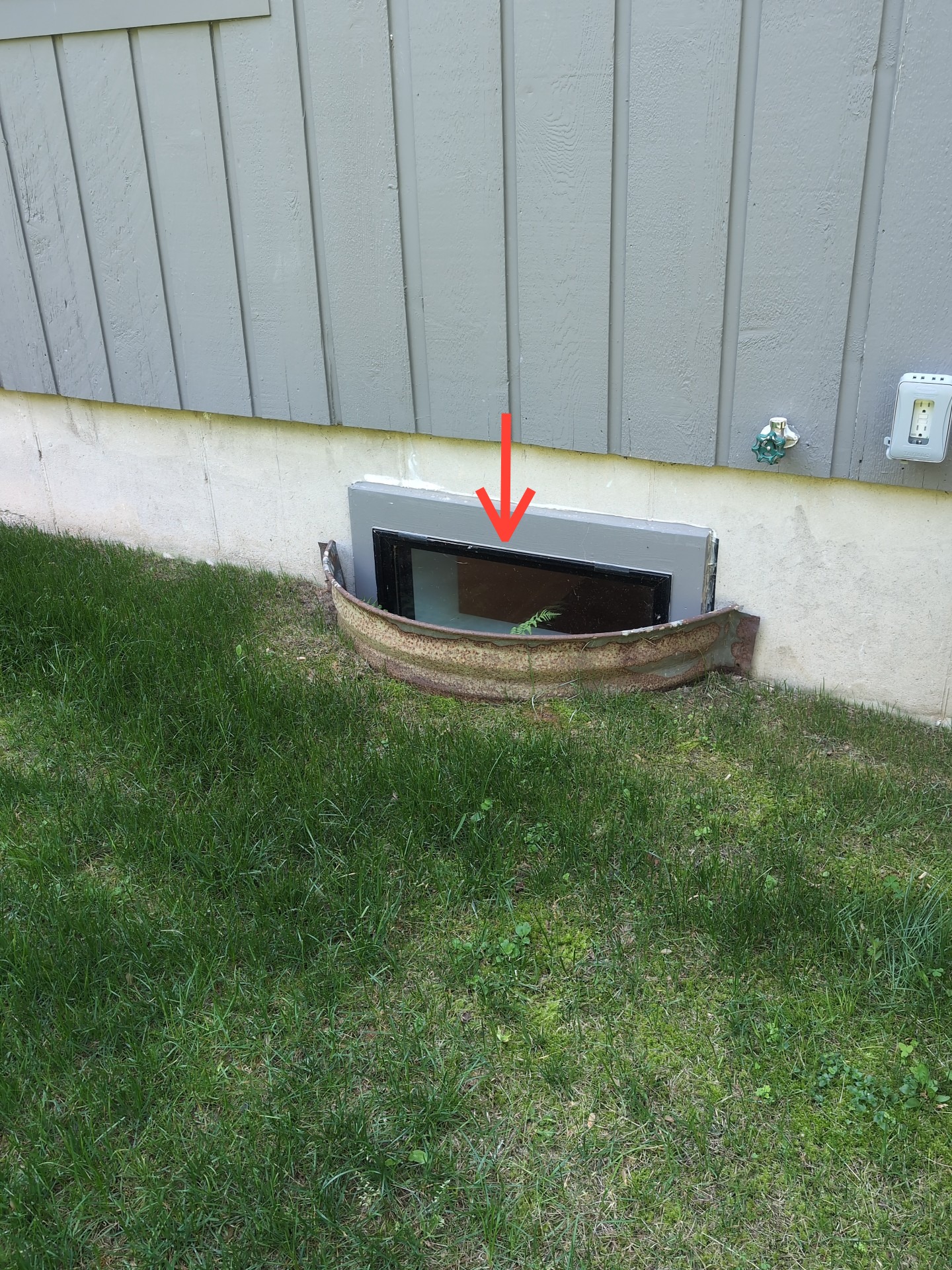
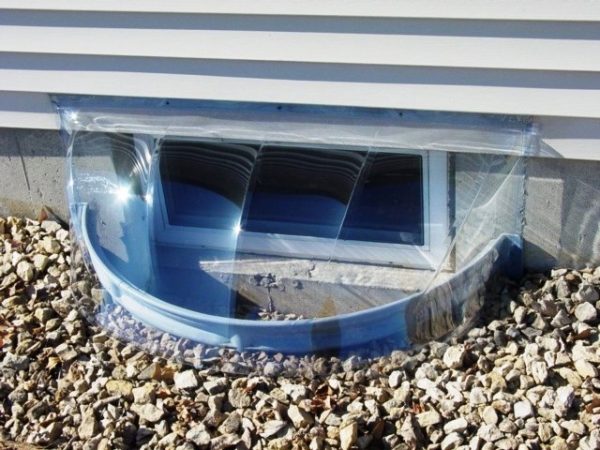
I recommend clear plastic window well bubbles cover the existing open window wells and crawlspace vents. These will help prevent water accumulation and possible intrusion through the existing foundation wall.
- E-14 Exterior:
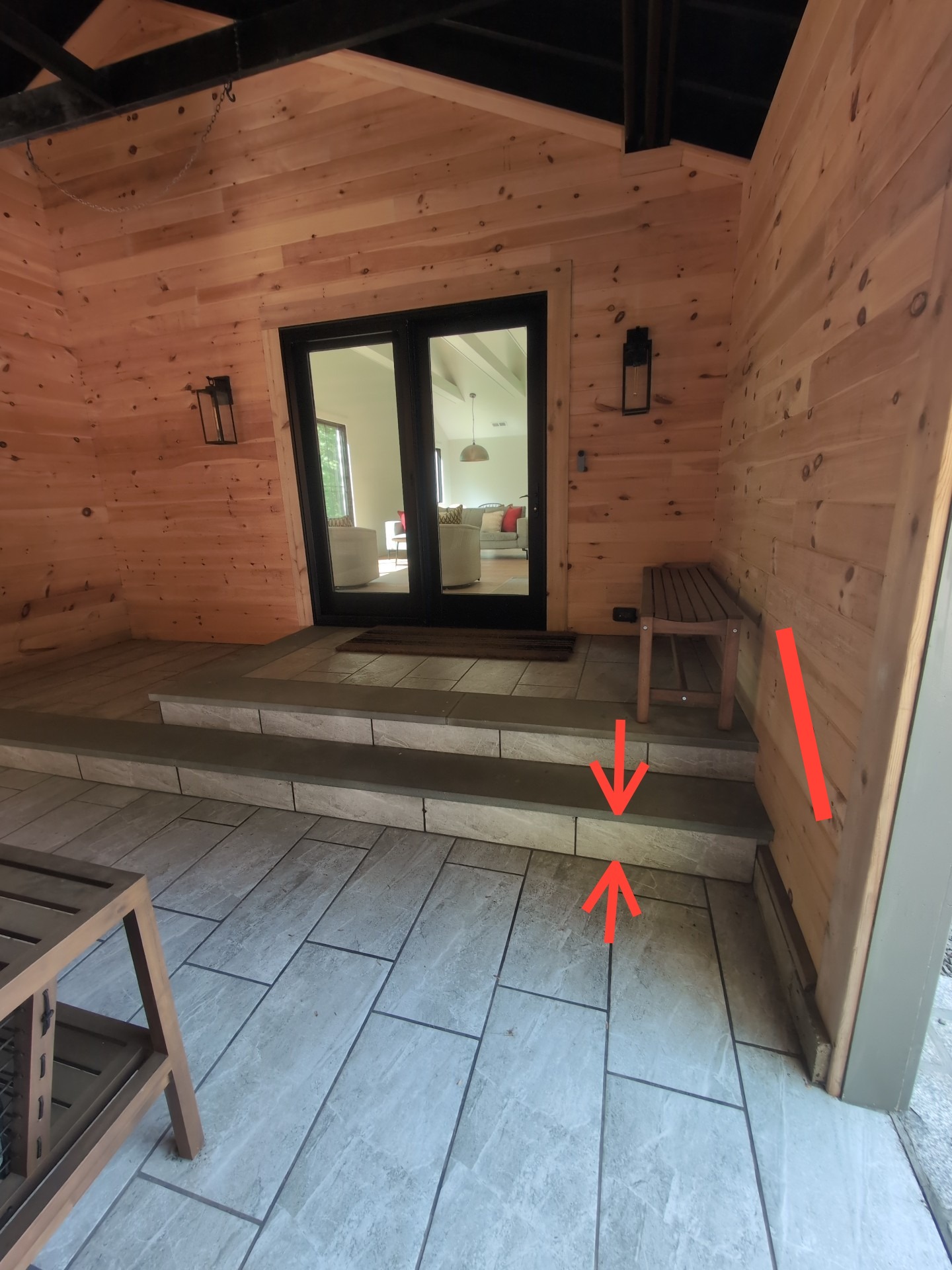
The front breezeway entry steps had an irregular bottom riser height which was noticeably higher than the adjacent stair risers. Variations in riser height can create a potential trip and fall hazard, particularly when ascending or descending the staircase, as users typically expect uniform stair dimensions.
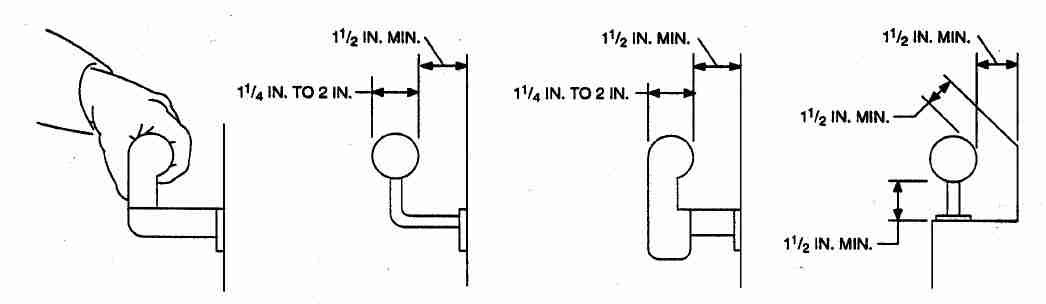
Additionally, a proper graspable handrail was not present at the stairway. A graspable handrail provides additional stability and safety, especially during wet, icy, or low-light conditions. Recommend further evaluation and repair by a licensed contractor to improve stair safety, which should include correction of the irregular riser height and installation of a proper graspable handrail.
- E-17 Exterior:
Consider installation of either a visual barrier/landscape guard or a properly constructed guardrail at the stone retaining wall located at the left exterior side of the home where significant elevation changes were noted within the yard area. The abrupt change in grade could allow someone to inadvertently walk or fall off the retaining wall area, particularly during nighttime conditions, snow cover, or while children or guests are utilizing the yard. Installation of a visible barrier or code-compliant guardrail would help improve overall site safety and reduce the potential for accidental falls. Recommend further evaluation and installation by a licensed contractor as needed.
- G-3 Garage:
Consider sealing/coating the garage floor with a professionally installed coating system such as polyurea or a similar high-performance garage floor coating product. Polyurea coatings are commonly utilized due to their durability, chemical resistance, rapid curing characteristics, and improved appearance when compared to traditional concrete sealers or paints.
Features and benefits of polyurea floor coatings include improved resistance to road salts, oil stains, chemicals, tire marking, moisture intrusion, surface abrasion, and freeze/thaw deterioration. These coatings can also improve ease of cleaning, reduce concrete dusting, and enhance the overall appearance and brightness of the garage area. Professionally installed systems typically include crack repair, concrete surface preparation, and a textured non-slip finish option for improved safety.
Recommend further evaluation by a qualified garage floor coating contractor (A.G. Williams Inc.) if upgrades or long-term concrete surface protection are desired.
- ES-8 Electrical System:
I recommend a small padlock be installed on the fused switch to the exterior AC condenser. This will prevent an inquisitive young child from opening this box and potentially coming n contact with live electrical wires. This is a suggestion only.
- HCAC-7 Heating / Central Air Conditioning:
I highly recommend the installation of a furnace emergency kill switch installed at the entry into the unfinished basement area or at the top of the stairs leading to the finished basement area. I did not see one present on the day of the inspection and recommend a licensed electrical contractor for installation.
An emergency shutoff (kill switch) for a boiler is an important safety feature. The switch allows the heating system to be quickly and safely shut down in the event of an emergency, such as a gas odor, electrical malfunction, overheating condition, or fire. Having an accessible kill switch enables occupants or service personnel to stop furnace operation without needing to access the unit itself, which may be located in a confined or hazardous area.
Emergency shutoff switches also assist emergency responders and service technicians by providing a clear and immediate means of disabling the system before performing repairs or responding to unsafe conditions.
- IV-5 Insulation and Ventilation:
I recommend maintaining basement relative humidity levels at or below 45% to help prevent mold growth, musty odors, and moisture-related damage. This can be effectively achieved by installing a permanently mounted dehumidifier equipped with automatic draining capabilities. Proper humidity control is especially important in below-grade spaces to preserve indoor air quality and protect building materials.
Monitors
- E-6 Exterior:
Wood trim: As wood door trim ages and deteriorates, I recommend replacement with AZEK composite lumber products which are impervious to water and moisture intrusion yet, cut and finish like real wood. As the perimeter trim begins to go bad I highly recommend replacement with this product. A licensed contractor is recommended for installation.
- E-8 Exterior:
The perimeter of the doors at the exterior of the home will need periodic re-caulking as it dries out and cracks. Caulk helps prevent water and pest intrusion. You also want to make sure the drip edges at the top of the doors are intact and sealed. Annual monitoring are re-application of caulk at these areas is recommended.
- E-9 Exterior:
As wood door trim ages and deteriorates, I recommend replacement with AZEK composite lumber products which are impervious to water and moisture intrusion yet, cut and finish like real wood. As the perimeter trim begins to go bad I highly recommend replacement with this product. A licensed contractor is recommended for installation.
- E-13 Exterior:
Wood Trim: As wood window trim ages and deteriorates, I recommend replacement with AZEK composite lumber products which are impervious to water and moisture intrusion yet, cut and finish like real wood. As the perimeter trim begins to go bad I highly recommend replacement with this product. A licensed contractor is recommended for installation.
- E-19 Exterior:
As wood trim ages and deteriorates, I recommend replacement with AZEK composite lumber products which are impervious to water and moisture intrusion yet, cut and finish like real wood. As the perimeter trim begins to go bad I highly recommend replacement with this product. A licensed contractor is recommended for installation.
- E-24 Exterior:
I recommend retainage of a licensed exterminator for prevention and treatment of potential mouse/rodent infestation. An annual pest protection program will help maintain a rodent, pest, and insect free home.
- R-3 Roofing:
Perform regular roof and attic inspections to catch potential issues early. This can help prevent extensive damage and costly repairs.
- R-4 Roofing:
Overall the exterior roof covering was in good visual condition. As areas of algae, moss, & lichens become present, I recommend a low pressure roof bath be administered by a roof cleaning specialist. ROOF CLEANING HYPERLINK
- R-9 Roofing:
Gutter leader lines were observed penetrating directly into the ground; however, the termination point or connection to underground drainage piping could not be located or confirmed. As such, the functionality of the underground drainage system cannot be guaranteed. It is recommended to test the underground piping to ensure proper drainage and to prevent potential water accumulation near the foundation. Annual testing or observation during heavy rainfall is advised to monitor performance. This inspection does not include verification of underground drainage systems.
- SC-3 Structural Components:
White efflorescence (powder substance) on poured concrete foundation wall indicates moisture is in contact with the masonry. This does not necessarily indicate that intrusion will occur. I recommend checking the gutters and the downspout drain lines for proper operation. Also, a water proofing paint could be applied to the interior side of the block if necessary. Efflorescence is found on many homes without water intrusion occurring inside the home. But, it should alert you to the possibility that future steps may be needed.
Due Diligences
- GC-3 General Comments:
OLD BUILDINGS AND LEAD AND ASBESTOS
In 1978, federal laws were passed to prohibit use of lead and asbestos in building materials. Manufacturers of building materials were allowed to sell existing stocks of materials that were manufactured with lead and asbestos, so even buildings constructed as late as the mid-1980's could possibly contain lead, asbestos, and vermiculite. Identification and testing for lead, asbestos, vermiculite, and other environmental testing is beyond the scope of this home inspection. If you wish to seek additional information, I recommend contacting an environmental lab or industrial hygienist.
- HCAC-18 Heating / Central Air Conditioning:
The National Fire Protective Association (NFPA-211) ( as noted In a brochure published by the Chimney Safety Institute of America) highly suggests that a level 2 inspection be performed upon "the sale or transfer of a property". This inspection is to be performed on fireplaces, chimneys, flues or other venting systems, by a Certified Chimney Sweep. We recommend that you consult with your Attorney to determine if the seller will have this inspection performed prior to closing. For additional information contact the Chimney Sweep Safety Institute of America at www.csia.org. Home inspection scope is hearth, hearth extension and damper only.
- PS-3 Plumbing System:
PLEASE NOTE- Sewer Scope Septic: You may want to consider having the main septic system drain line video scoped from the interior of the home to the septic tank connection in the yard. I am unable to visually report on the interior condition of this piping. The potential for tree root intrusion and drainage pipe deterioration could be present. A licensed septic or sewer specialist is recommended and further due diligence should be considered.
- PS-12 Plumbing System:
Water Heater – Temperature Setting
The thermostatic mixing valve should be set to no higher than 120°F. This setting is recommended by the U.S. Department of Energy and safety organizations to reduce the risk of scalding injuries, particularly for children and elderly occupants, as hot water above this temperature can cause burns in just a few seconds.
In addition, keeping the water heater at or below 120°F can help reduce energy consumption and slow mineral scaling or corrosion inside the tank or heat exchanger, extending the appliance’s service life.
- PS-16 Plumbing System:
I am told by the listing agent that a previously installed underground fuel oil storage tank was removed from this property and that soil samples were reportedly obtained at the time of removal to test for the presence of petroleum hydrocarbons/contamination. Recommend obtaining and retaining all available documentation related to the tank removal, including permits, closure reports, soil test results, remediation documentation if applicable, and approvals from the authority having jurisdiction. This documentation may be important for future real estate transactions, insurance purposes, and disclosure requirements when transferring ownership of the property to a future buyer.
- IV-3 Insulation and Ventilation:
Insulation in the attic was a sprayed foam type. Many types of sprayed foam insulation are required to have an ignition barrier installed to help reduce the spread of fire. I recommend that before the expiration of your Inspection Objection Deadline, you consult with the current owner or a qualified contractor to discuss the possible necessity for- and options and costs for installation of- an ignition barrier (if not previously installed).
- WSW-4 Water Systems & Wells:
An unknown floor mounted media type water filter was installed in this home. I recommend asking the current owner what type of filter/conditioner this is.
- SS-1 Septic System:
This inspection did not access the septic fields or determine their location. For a more detailed inspection, I recommend you contact a septic specialist and have them look for junction boxes and "video scope" the septic field locations.
Video inspection can reveal critical hidden issues, including:
- Cracked or collapsed pipes
- Root intrusion
- Blockages or improper slope
- Saturated or failed leach fields
- Evidence of backflow from the absorption area
Identifying these issues early can help avoid costly repairs or system replacement. Because septic systems are buried and not visible during a general inspection, video scoping provides essential information about the system’s actual condition.
Since this is part of a real estate transaction—confirm system functionality, age, and permit records with the local health department. Ask the seller for any maintenance and pumping records.
- SS-2 Septic System:
This property is served by a private septic system. No visual inspection of the septic tank, distribution box, or absorption field was performed, as these components are typically buried and not part of a standard home inspection.
It is important to note that visible inspection of the septic system by a qualified septic professional is strongly recommended as part of the real estate due diligence process. A visual inspection can help identify:
- Cracked or deteriorated tank walls or baffles
- Signs of tank overfilling or backup
- Evidence of sludge accumulation or lack of recent pumping
- Structural damage to distribution boxes or visible pipe work
- Early signs of absorption field failure (e.g., surface effluent, odors, or soggy soil)
Because repairs or replacement of septic systems can be very costly, a visual inspection, in combination with system pumping and optional video scoping, provides a more complete understanding of the system's condition prior to purchase.
I strongly recommend that a licensed septic specialist perform a full system evaluation, including tank pumping and visual inspection, prior to closing. Ask the seller for service records and system permit documentation, if available.
- SS-3 Septic System:
I recommend the use of single ply, "septic safe" toilet paper that does not contain any Aloe. Aloe makes toilet paper float which will eventually make it's way into the absorption fields which will hinder their effectiveness. Feminine hygiene products as well as pre moistened wipes should NEVER be flushed into the septic system. I highly recommend the use of BIOCLEAN septic system additive on a regular basis to keep bacteria levels at their peak. Tank inspection and pumping is recommend every 2-5 years based on the # of household members.
- HWI-2 Home Warranty Information:
PLEASE NOTE: I highly suggest consideration of purchasing an appliance / mechanical system warranty if offered by your Agents real estate company or privately on your own. Typically, a home warranty is a year-long, renewable home service plan that helps with the cost to repair or replace parts of a home’s systems and appliances. It’s not homeowners insurance, but acts as a complement to it – protecting things that your insurance doesn’t. Your home systems and appliances, like your water heater and oven, will break down over time, and sometimes, things just stop working, no matter how old they are. It happens. Typically, appliances and mechanical systems fail when a change in ownership occurs and that’s where a home warranty comes in. We highly suggest purchasing a budget-friendly warranty solution for covered household appliance and mechanical system breakdowns. American Home Shield website or call 877-381-4181
Efficiencies
- HCAC-10 Heating / Central Air Conditioning:
I recommend insulating with foam pipe insulation all exposed near boiler supply and return piping for energy efficiency purposes.
The Full Report
Exterior
Styles and Materials
Wall Cladding Flashing and Trim
Doors (Exterior)
Windows
Decks, Balconies, Stoops, Steps, Areaways, Porches, Patio/Cover and Applicable Railings
Vegetation, Grading, Drainage, Driveways, Patio Floor, Walkways and Retaining Walls (With respect to their effect on the condition of the building)
Eaves, Soffits and Fascias
Wood Destroying Insects (WDI) & Other Pests
Exterior Section Footer:
Roofing
Styles and Materials
Roof Coverings
Flashings
Skylights, Chimneys and Roof Penetrations
Roof Drainage Systems
Roofing Section Footer
Garage
Styles and Materials
Garage Ceilings
Garage Walls (including Firewall Separation)
Garage Floor
Garage Door (s)
Occupant Door (from garage to inside of home)
Garage Door Operators (Report whether or not doors will reverse when met with resistance)
Electrical System
Styles and Materials
Service Entrance Conductors
Service and Grounding Equipment, Main Overcurrent Device, Main and Distribution Panels
Branch Circuit Conductors, Overcurrent Devices and Compatability of their Amperage and Voltage
Connected Devices and Fixtures (Observed from a representative number operation of ceiling fans, lighting fixtures, switches and receptacles located inside the house, garage, and on the dwelling's exterior walls)
Polarity and Grounding of Receptacles within 6 feet of interior plumbing fixtures, all receptacles in garage, carport and exterior walls of inspected structure
Operation of GFCI (Ground Fault Circuit Interrupters)
Location of Main and Distribution Panels
Smoke Detectors
Carbon Monoxide Detectors
Electrical Section Footer
Heating / Central Air Conditioning
Styles and Materials
Heating Equipment
Normal Operating Controls
Safety Controls
Distribution Systems (including fans, pumps, ducts and piping, with supports, insulation, air filters, registers, radiators, fan coil units and convectors)
Presence of Installed Heat Source in Each Room
Chimneys, Flues and Vents (for fireplaces, gas water heaters or heat systems)
Solid Fuel Heating Devices (Fireplaces, Woodstove)
Cooling and Air Handler Equipment
Normal Operating Controls
Presence of Installed Cooling Source in Each Room
HVAC Footer
Plumbing System
Styles and Materials
Plumbing Drain, Waste and Vent Systems
Plumbing Water Supply, Distribution System and Fixtures
Hot Water Systems, Controls, Chimneys, Flues and Vents
Main Water Shut-off Device (Describe location)
Fuel Storage and Distribution Systems (Interior fuel storage, piping, venting, supports, leaks)
Main Fuel Shut-off (Describe Location)
Plumbing Section Footer
Structural Components
Styles and Materials
Foundations, Basement and Crawlspace (Report signs of abnormal or harmful water penetration into the building or signs of abnormal or harmful condensation on building components.)
Walls (Structural)
Columns or Piers
Floors (Structural)
Ceilings (Structural)
Roof Structure and Attic
Structural footer
Insulation and Ventilation
Styles and Materials
Insulation in Attic
Insulation Under Floor System
Vapor Retarders (in Crawlspace or basement)
Ventilation of Attic and Foundation Areas
Venting Systems (Kitchens, Baths and Laundry)
Insulation & Ventilation: Other
Insulation & Ventilation Footer
Interiors
Styles and Materials
Ceilings
Walls
Floors
Steps, Stairways, Balconies and Railings
Counters and Cabinets (representative number)
Doors (representative number)
Windows (representative number)
Interior: Egress
Interior Section Footer
Built-In Kitchen Appliances
Styles and Materials
Dishwasher
Ranges/Ovens/Cooktops
Range Hood (s)
Washer / Dryer
Built-In Appliance Footer
General Comments
Building Characteristics, Conditions and Limitations
Style of Home: Ranch
Standards of Practice: Connecticut State Home Inspection Standards of Practice
Type of Building : Single Family (1 story with Basement)
Approximate Square Footage: 2725
Approximate Year of Original Construction: 1973
Unless the wiring in the building has been fully updated, this building likely has wiring that predates the late 1980's. Branch circuit wiring installed in buildings built prior to the late 1980's is typically rated for a maximum temperature of only 60 degrees Celsius. This includes non-metallic sheathed (Romex) wiring, and both BX and AC metal-clad flexible wiring. Knob and tube wiring, typically installed in homes built prior to 1950, may be rated for even lower maximum temperatures. Newer electric fixtures including lighting and fans typically require wiring rated for 90 degrees Celsius. Connecting newer fixtures to older, 60-degree-rated wiring is a potential fire hazard. Repairs for such conditions may involve replacing the last few feet of wiring to newer fixtures with new 90-degree-rated wire, and installing a junction box to join the old and new wiring. It is beyond the scope of this inspection to determine if any such incompatible components are installed. Based on the age of this building, be aware that such components may be present.
Attending the Inspection: Buyer and Buyer's Agent
Occupancy: Unoccupied
This house was vacant / unoccupied at the time of inspection. Vacant and unoccupied houses present unique challenges for home inspection, especially the piping and wiring systems which have not be subject to regular use prior to the inspection. While these systems can be tested during inspection, this one-time test is different than regular use and it is difficult to know how these systems will respond to regular use after the inspection. For example, septic systems may initially function and then fail under regular daily use. Plumbing traps may operate with no signs of leaks and then let go when being actively used for a few days. Shower pans may only leak when someone is standing in the shower and taking a shower. Seals for plumbing fixtures can dry up and leak when not is use. Sewer lines with roots may allow water flow, but then fail when waste and tissue are flushed; it can take a few days for that to backup. Please understand we are trying our best to look for clues of past or existing problems to paint a realistic best-guess as to the reliability of these systems during inspection.
Animals Present: No
Weather during the inspection: Clear, Hot and Humid
Approximate temperature during the inspection: Over 85[F]
Ground/Soil surface conditions: Dry
OLD BUILDINGS AND LEAD AND ASBESTOS
In 1978, federal laws were passed to prohibit use of lead and asbestos in building materials. Manufacturers of building materials were allowed to sell existing stocks of materials that were manufactured with lead and asbestos, so even buildings constructed as late as the mid-1980's could possibly contain lead, asbestos, and vermiculite. Identification and testing for lead, asbestos, vermiculite, and other environmental testing is beyond the scope of this home inspection. If you wish to seek additional information, I recommend contacting an environmental lab or industrial hygienist.
This home inspection was performed in accordance with the Connecticut Home Inspection Standards of Practice (Connecticut Agencies Regulations §20-491-1 through §20-491-9). The inspection is a visual, non-invasive evaluation of the readily accessible systems and components of the property as they existed at the time of the inspection.
Home inspections in Connecticut are limited in scope and duration and do not include dismantling, destructive testing, engineering analysis, or the prediction of future conditions or remaining service life. Certain conditions may not be observed due to concealed or inaccessible areas, finishes, stored personal belongings, weather conditions, system shutdowns, or normal operational limitations. Some deficiencies may be latent, intermittent, or develop after the inspection.
Systems and components that appeared functional at the time of inspection may fail without warning due to age, wear, environmental exposure, deferred maintenance, or normal usage. The absence of reported deficiencies does not constitute a guarantee or warranty of current or future performance.
Clients are advised to budget for routine maintenance, repairs, and eventual replacement of building components, mechanical systems, and appliances, even where no defects were identified during the inspection.
Mechanical systems and household appliances are subject to sudden and unpredictable failure. As an additional risk-management measure, clients may wish to consider obtaining a mechanical and appliance warranty to help offset the cost of unforeseen failures occurring after the inspection.
This report reflects the inspector’s professional opinion based solely on conditions observed on the day of inspection and should be used as one component of the client’s overall due-diligence process.
Exterior
Styles and Materials
Siding Style: T-111
T-111
Siding Material:Wood
Exterior Entry Doors:CompositeWood
Appurtenance:PatioBreezeway
Driveway:Asphalt
The home inspector shall observe: Wall cladding, flashings, and trim; Entryway doors and a representative number of windows; Garage door operators; Decks, balconies, stoops, steps, areaways, porches and applicable railings; Eaves, soffits, and fascias; and Vegetation, grading, drainage, driveways, patios, walkways, and retaining walls with respect to their effect on the
condition of the building.
The home inspector shall: Describe wall cladding materials; Operate all entryway doors and a representative number of windows; Operate garage doors manually or by using permanently installed controls for any garage door operator; Report whether or not any
garage door operator will automatically reverse or stop when meeting reasonable resistance during closing; and Probe exterior wood components where deterioration is suspected.
The home inspector is not required to observe: Storm windows, storm doors, screening, shutters, awnings, and similar seasonal accessories; Fences; Presence of safety glazing in doors and windows; Garage door operator remote control transmitters; Geological conditions; Soil conditions; Recreational facilities (including spas, saunas, steam baths, swimming pools, tennis courts, playground equipment, and other exercise, entertainment, or athletic facilities); Detached buildings or structures; or Presence or condition of buried fuel storage tanks.
The home inspector is not required to: Move personal items, panels, furniture, equipment, plant life, soil, snow, ice or debris that obstructs access or visibility.
Wall Cladding Flashing and Trim
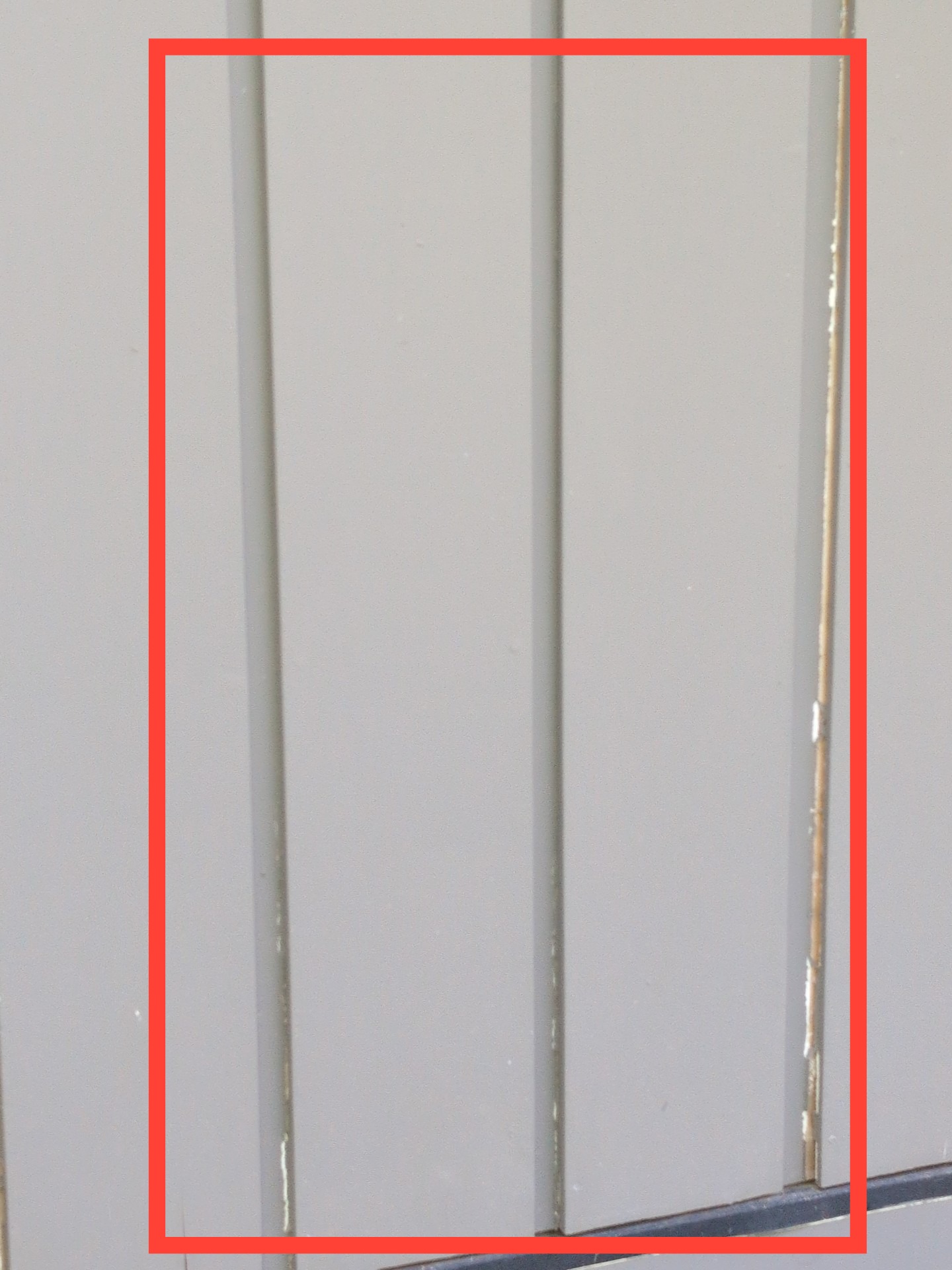
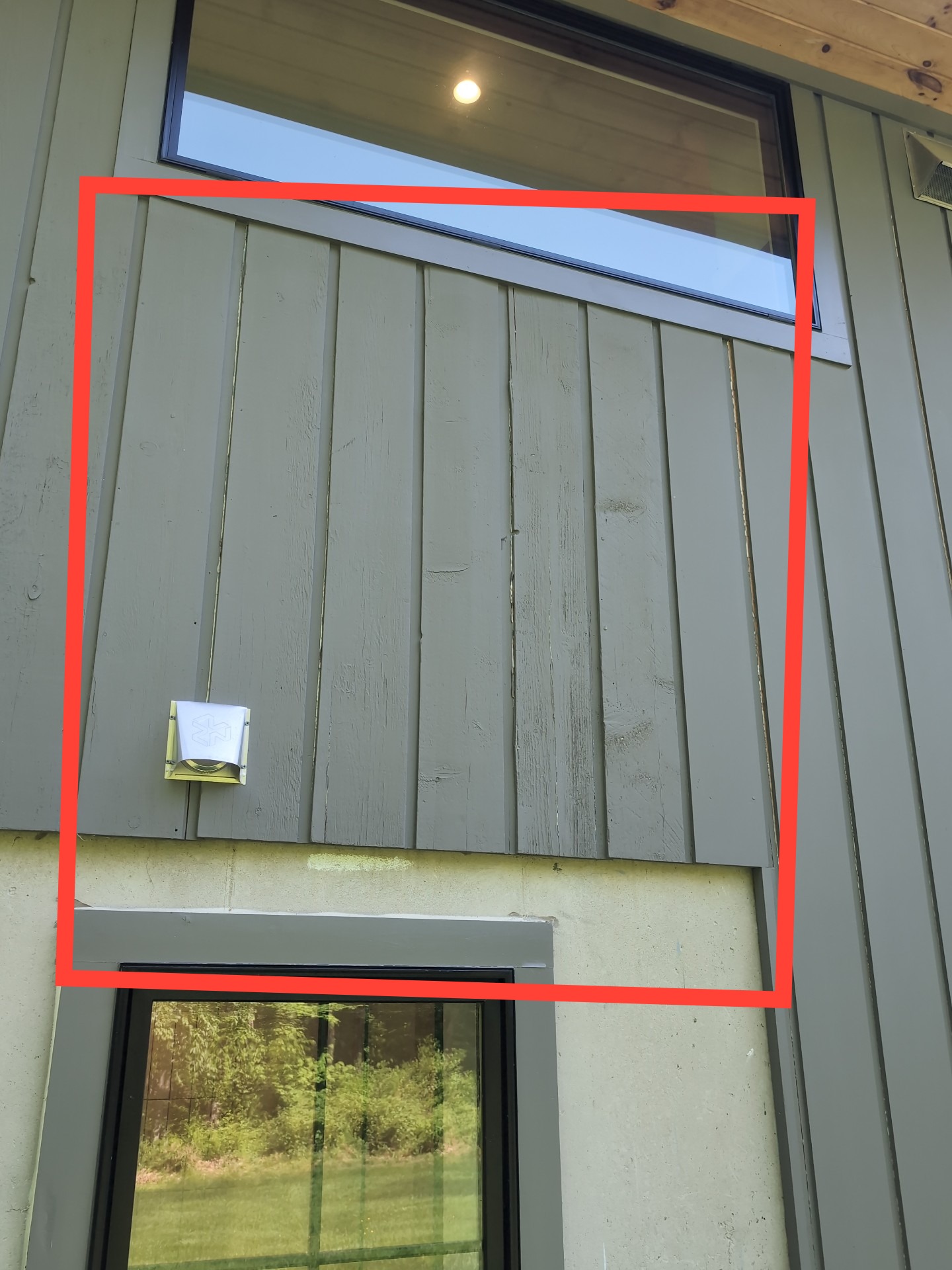
The exterior walls of the home were clad with T-111 wood siding. T-111 is a plywood or engineered wood panel siding commonly utilized on residential structures due to its rustic appearance, relatively low installation cost, and ease of maintenance. Features and benefits of this siding material include a natural wood appearance, ease of repair, and the ability to accept a wide variety of paint or stain finishes. When properly maintained with routine sealing, painting, and caulking, T-111 siding can provide many years of service.
One area of the siding appeared to have minor woodpecker damage noted at the time of the inspection. Additional areas showed minor deterioration of the exterior finish coating along with open seams between siding panels requiring maintenance. Open seams and deteriorated finishes can allow moisture intrusion into the wall structure which may lead to wood rot, insect activity, and hidden structural deterioration over time if left uncorrected.
Recommend further evaluation and typical maintenance repairs by a licensed contractor, which should include repair of damaged siding areas, caulking of open seams and penetrations, and preparation and application of new exterior-grade paint or stain as needed to help protect the siding from moisture intrusion and weather-related deterioration.
 | ||
 |  |  |
 |  |  |
 |  |
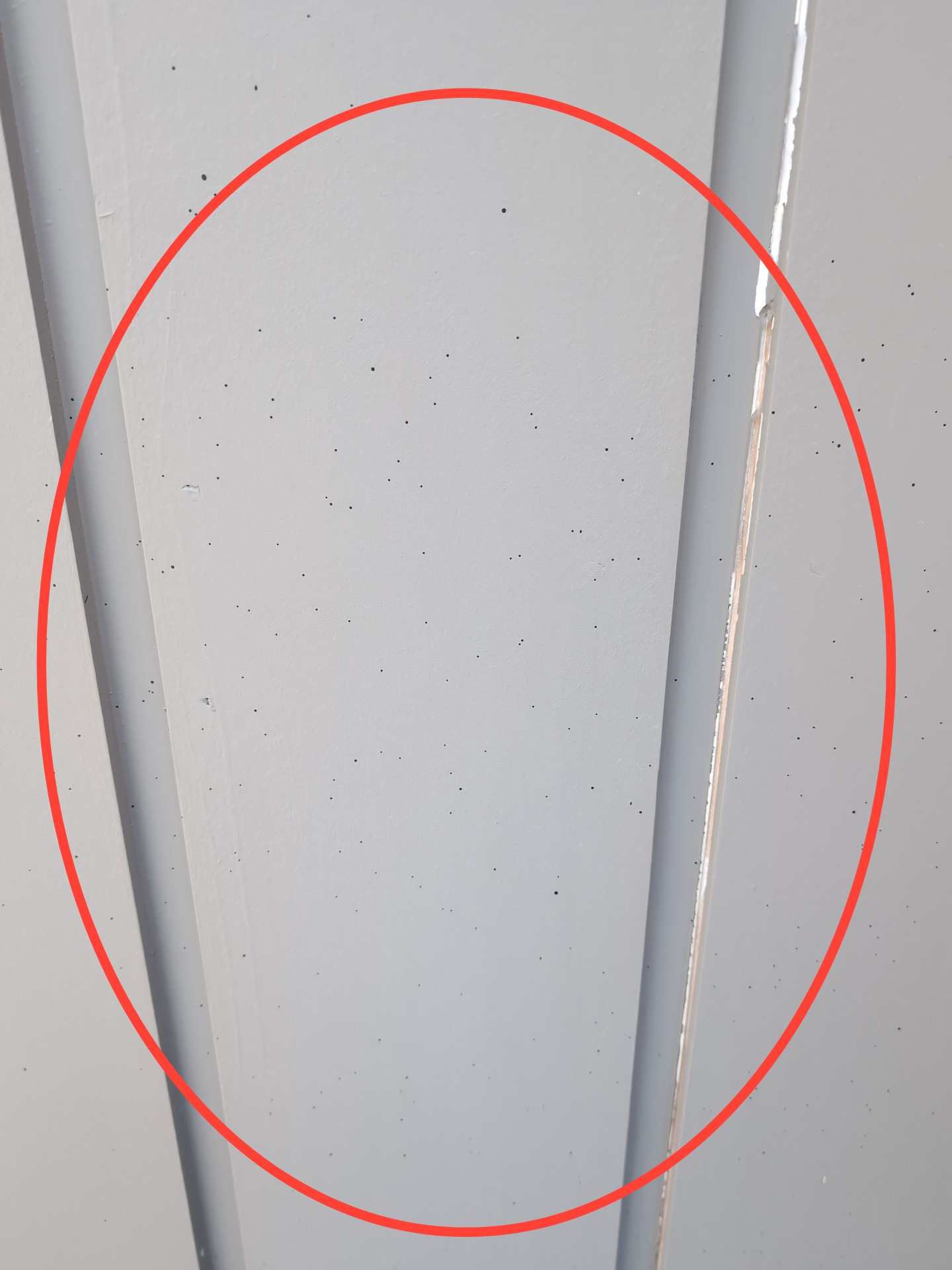
Artillery fungus, or shotgun fungus, was visibly present on siding areas where wood mulch was present. Artillery fungus is a wood-decay fungus that likes to live on moist landscape mulch. The worst thing about this fungus is that it shoots spores (small black dots) up to 20 feet, which often land on siding, cars and anything else that surrounds the mulch. Additionally, extensive staining can remain after the fungal masses are removed. These stains usually fade with time but can be unsightly. Power washing (and double power washing with a rigorous scrubbing in between) has yielded mixed results and its success appears to be dependent upon the particular type and age of the siding. More effective results have been obtained with new vinyl siding whereas limited success has been reported for old vinyl, aluminum, and older painted wood siding.
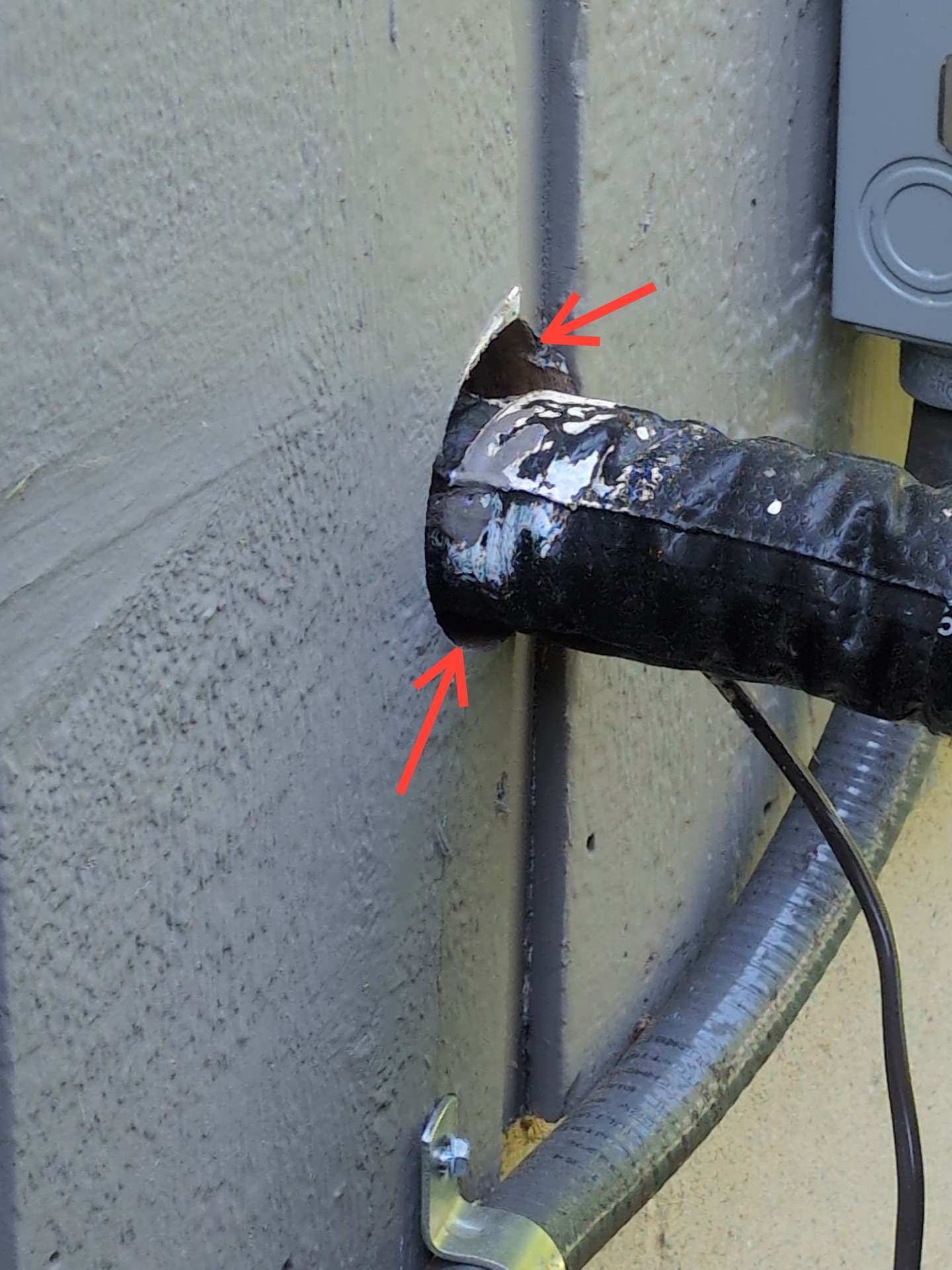
All penetrations through the T-111 wood siding should be properly filled and sealed with an appropriate exterior-grade sealant. Openings around piping, wiring, light fixtures, hose bibs, vents, and other wall penetrations can allow water intrusion, air infiltration, insect entry, and potential rodent activity into the wall structure. Moisture intrusion behind wood siding can contribute to concealed wood rot, deterioration of wall sheathing, reduced energy efficiency, and possible microbial growth within concealed wall cavities. Recommend sealing and maintaining all exterior penetrations as part of routine exterior maintenance to help prolong the service life of the siding and wall assembly.
Finish coating designed to protect the wood siding exhibited moderate deterioration at the time of the inspection. Maintenance performed on an appropriate schedule can significantly extend the lifespan of wood siding exposed to weather. You should ask the seller for information about products and schedules related to and siding maintenance performed in the past. I recommend that finish coat maintenance be performed to prevent deterioration and extend the lifespan of wood siding components. All work should be performed by a qualified contractor.
Wood trim: As wood door trim ages and deteriorates, I recommend replacement with AZEK composite lumber products which are impervious to water and moisture intrusion yet, cut and finish like real wood. As the perimeter trim begins to go bad I highly recommend replacement with this product. A licensed contractor is recommended for installation.
Doors (Exterior)
The rear basement sliding glass door glass panel was found shattered at the time of the inspection and is in need of replacement. Broken glass presents a significant safety hazard due to the risk of injury from sharp edges and compromised glazing integrity. Additionally, the damaged door may allow water intrusion, air infiltration, pest entry, and reduced security at the home. Recommend replacement of the damaged glass panel and further evaluation of the door assembly by a licensed glass contractor or qualified door contractor.
The perimeter of the doors at the exterior of the home will need periodic re-caulking as it dries out and cracks. Caulk helps prevent water and pest intrusion. You also want to make sure the drip edges at the top of the doors are intact and sealed. Annual monitoring are re-application of caulk at these areas is recommended.
As wood door trim ages and deteriorates, I recommend replacement with AZEK composite lumber products which are impervious to water and moisture intrusion yet, cut and finish like real wood. As the perimeter trim begins to go bad I highly recommend replacement with this product. A licensed contractor is recommended for installation.
Windows
The exterior windows were observed to be in good visual condition at the time of inspection. No significant deterioration or damage was noted. Routine maintenance such as periodic painting, caulking, and monitoring for signs of moisture intrusion is recommended to extend the service life of these components.
The perimeter of the windows at the exterior of the home will need periodic re-caulking as it dries out and cracks. Caulk helps prevent water and pest intrusion. You also want to make sure the drip edges at the top of the windows are intact and sealed. Annual monitoring are re-application of caulk at these areas is recommended.
 |  |
I recommend clear plastic window well bubbles cover the existing open window wells and crawlspace vents. These will help prevent water accumulation and possible intrusion through the existing foundation wall.
 |  |
Wood Trim: As wood window trim ages and deteriorates, I recommend replacement with AZEK composite lumber products which are impervious to water and moisture intrusion yet, cut and finish like real wood. As the perimeter trim begins to go bad I highly recommend replacement with this product. A licensed contractor is recommended for installation.
Decks, Balconies, Stoops, Steps, Areaways, Porches, Patio/Cover and Applicable Railings
The front breezeway entry steps had an irregular bottom riser height which was noticeably higher than the adjacent stair risers. Variations in riser height can create a potential trip and fall hazard, particularly when ascending or descending the staircase, as users typically expect uniform stair dimensions.
Additionally, a proper graspable handrail was not present at the stairway. A graspable handrail provides additional stability and safety, especially during wet, icy, or low-light conditions. Recommend further evaluation and repair by a licensed contractor to improve stair safety, which should include correction of the irregular riser height and installation of a proper graspable handrail.
 |  |
Vegetation, Grading, Drainage, Driveways, Patio Floor, Walkways and Retaining Walls (With respect to their effect on the condition of the building)
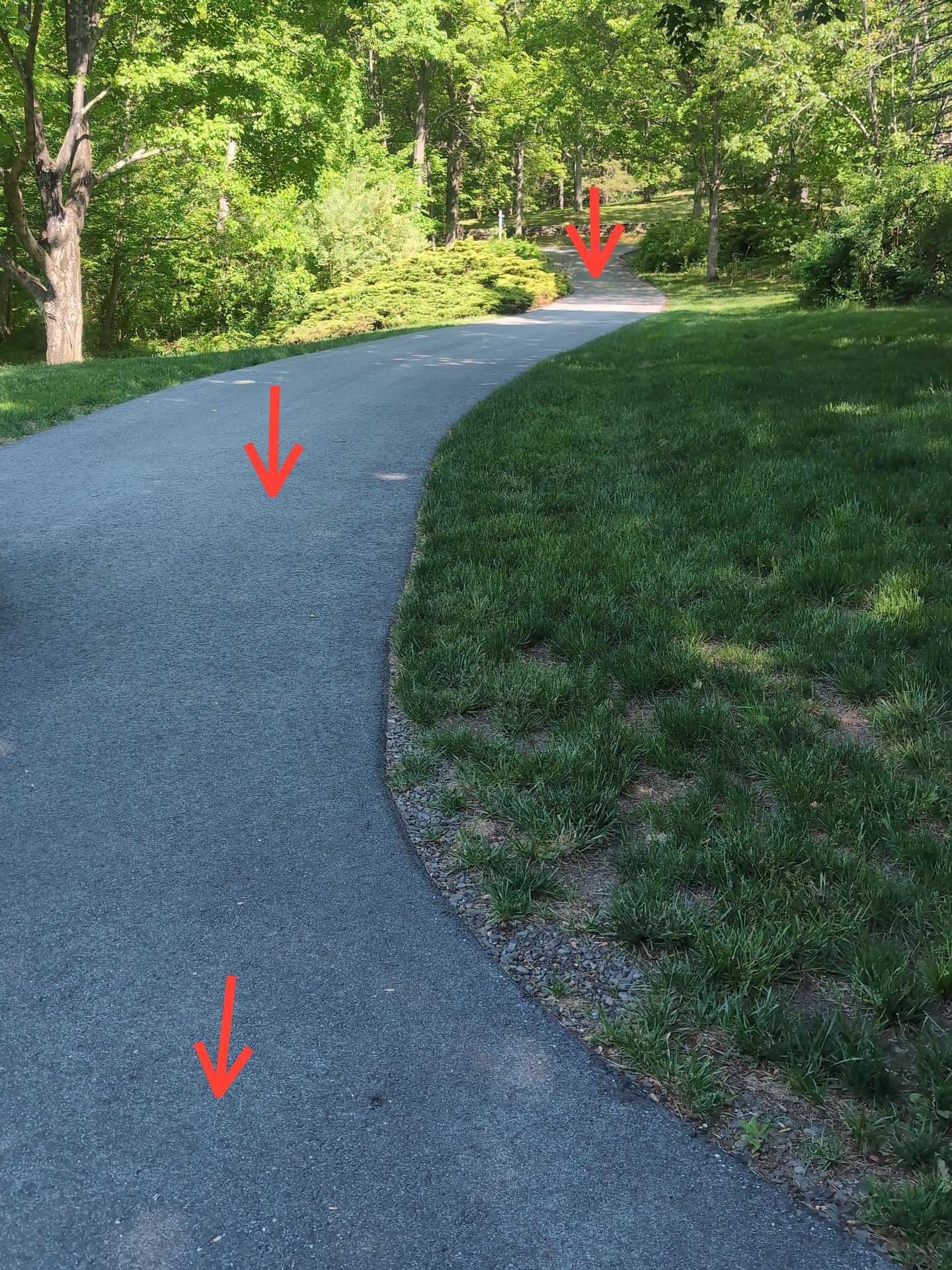
The asphalt driveway was inspected at the time of the inspection. As with all asphalt surfaces, ongoing maintenance is recommended on an as-needed basis. Proper care typically includes filling cracks to prevent water intrusion and freeze-thaw damage, applying a protective seal coat every few years to extend service life, and making localized repairs where settlement or deterioration occurs. Routine cleaning of debris and monitoring for drainage issues will also help minimize premature wear. Recommend you perform these tasks periodically or consult with a qualified paving contractor for professional maintenance and repair as needed.
 |  |
Keep vegetation cut back 12" - 18" minimum from the exterior of the home so the foundation and siding are viewable for detection of possible pest and WDI (wood destroying insect) infestation as well as keeping moisture retainage to a minimum.
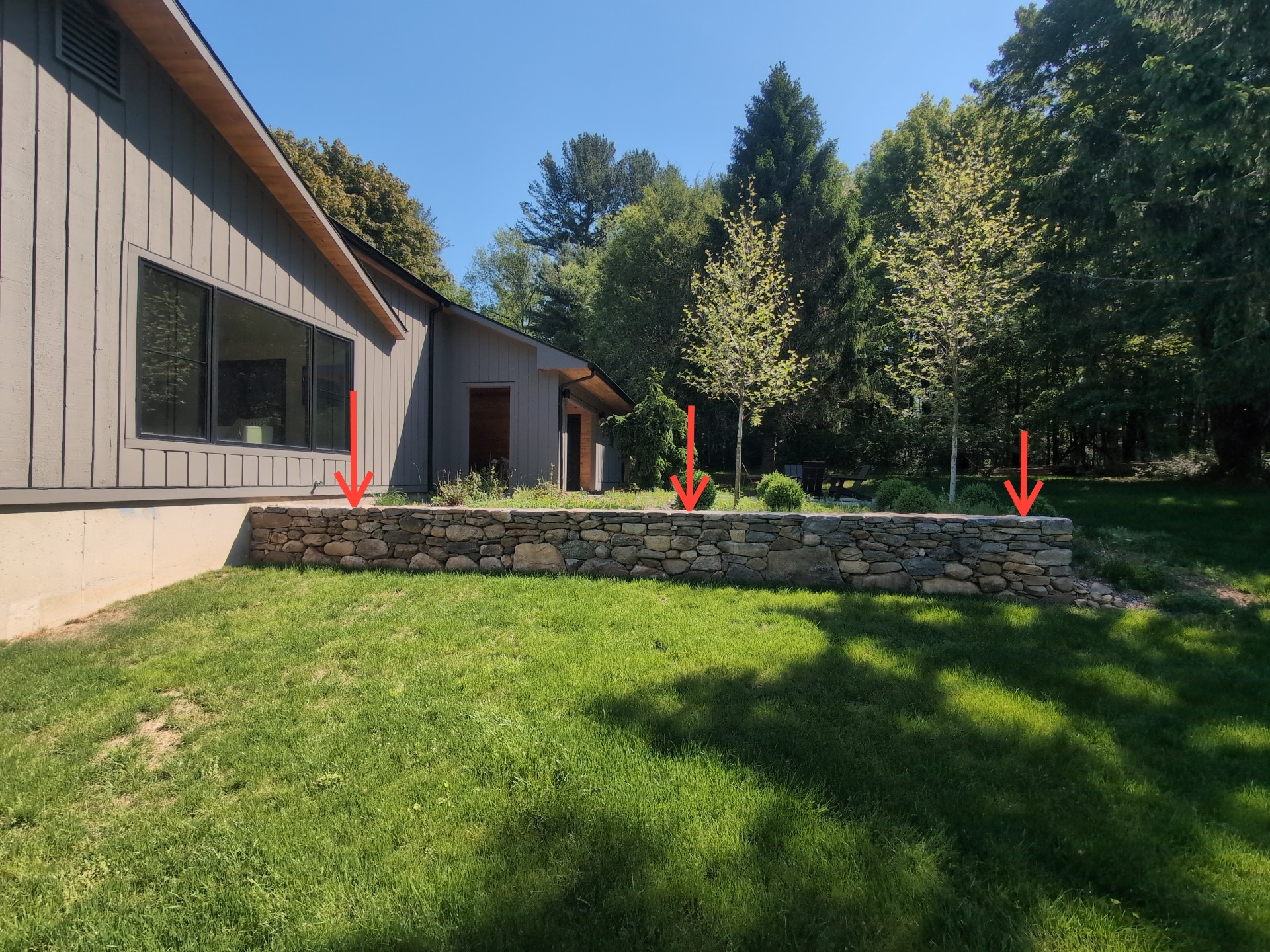
Consider installation of either a visual barrier/landscape guard or a properly constructed guardrail at the stone retaining wall located at the left exterior side of the home where significant elevation changes were noted within the yard area. The abrupt change in grade could allow someone to inadvertently walk or fall off the retaining wall area, particularly during nighttime conditions, snow cover, or while children or guests are utilizing the yard. Installation of a visible barrier or code-compliant guardrail would help improve overall site safety and reduce the potential for accidental falls. Recommend further evaluation and installation by a licensed contractor as needed.
Eaves, Soffits and Fascias
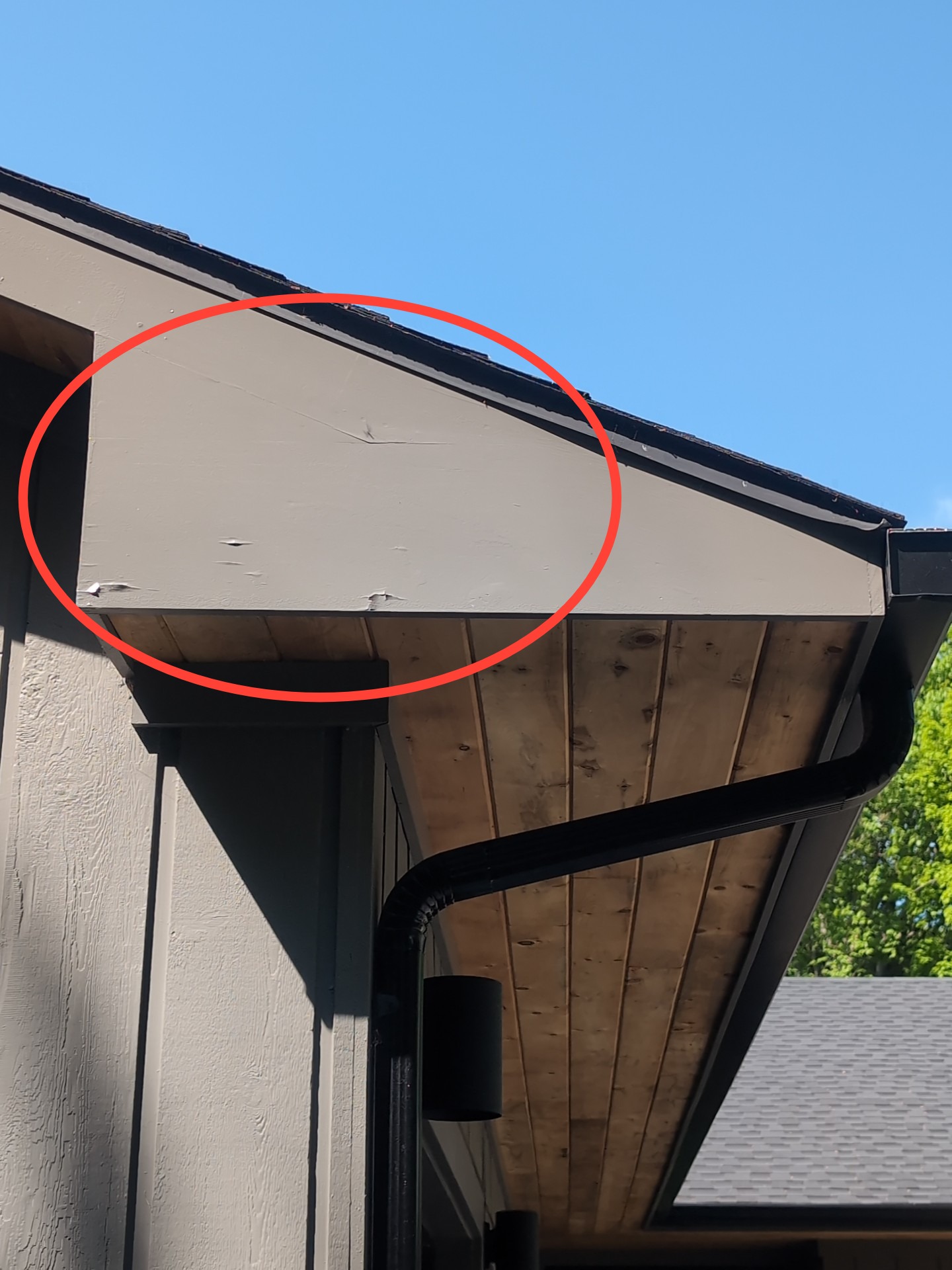
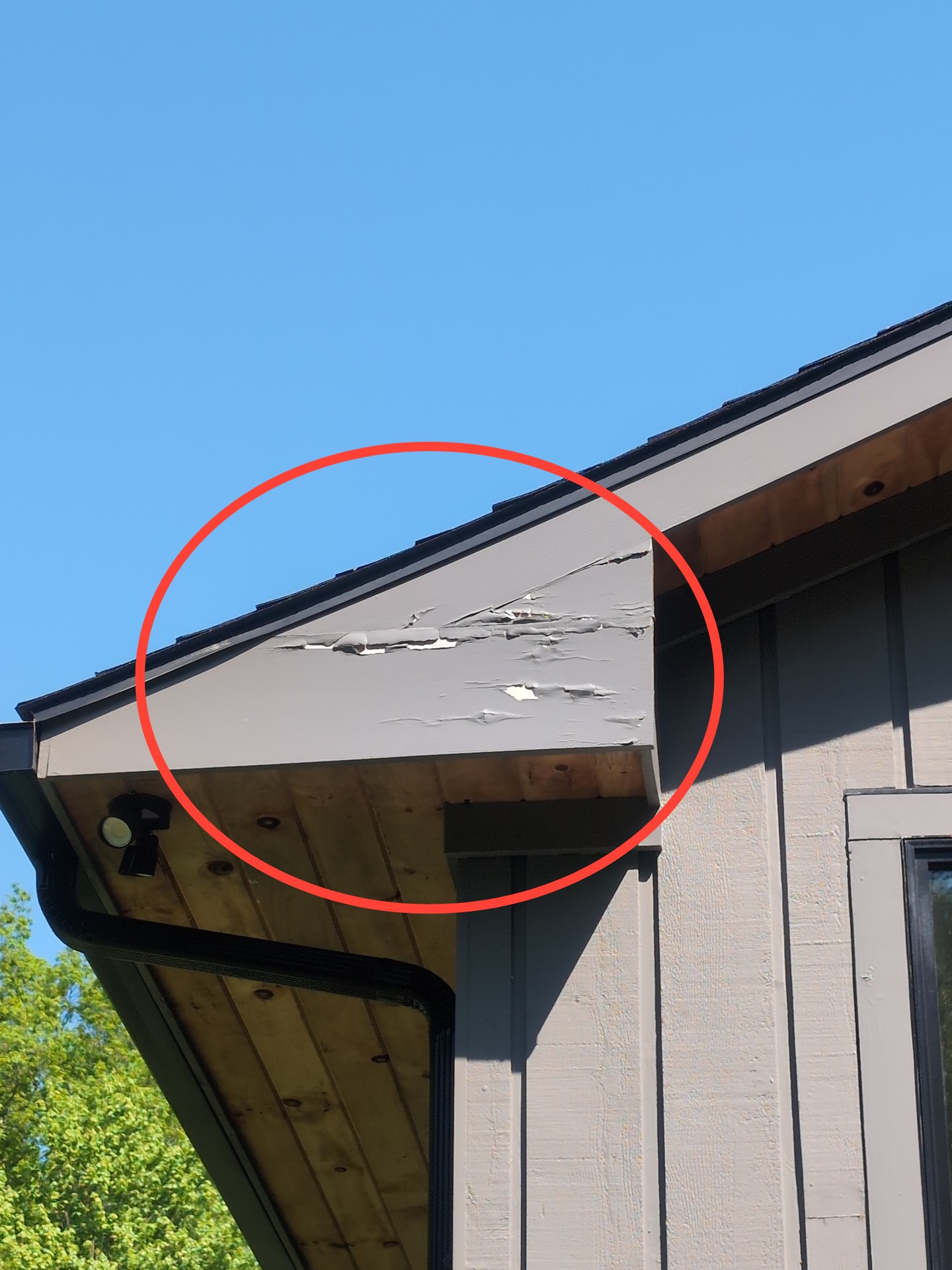
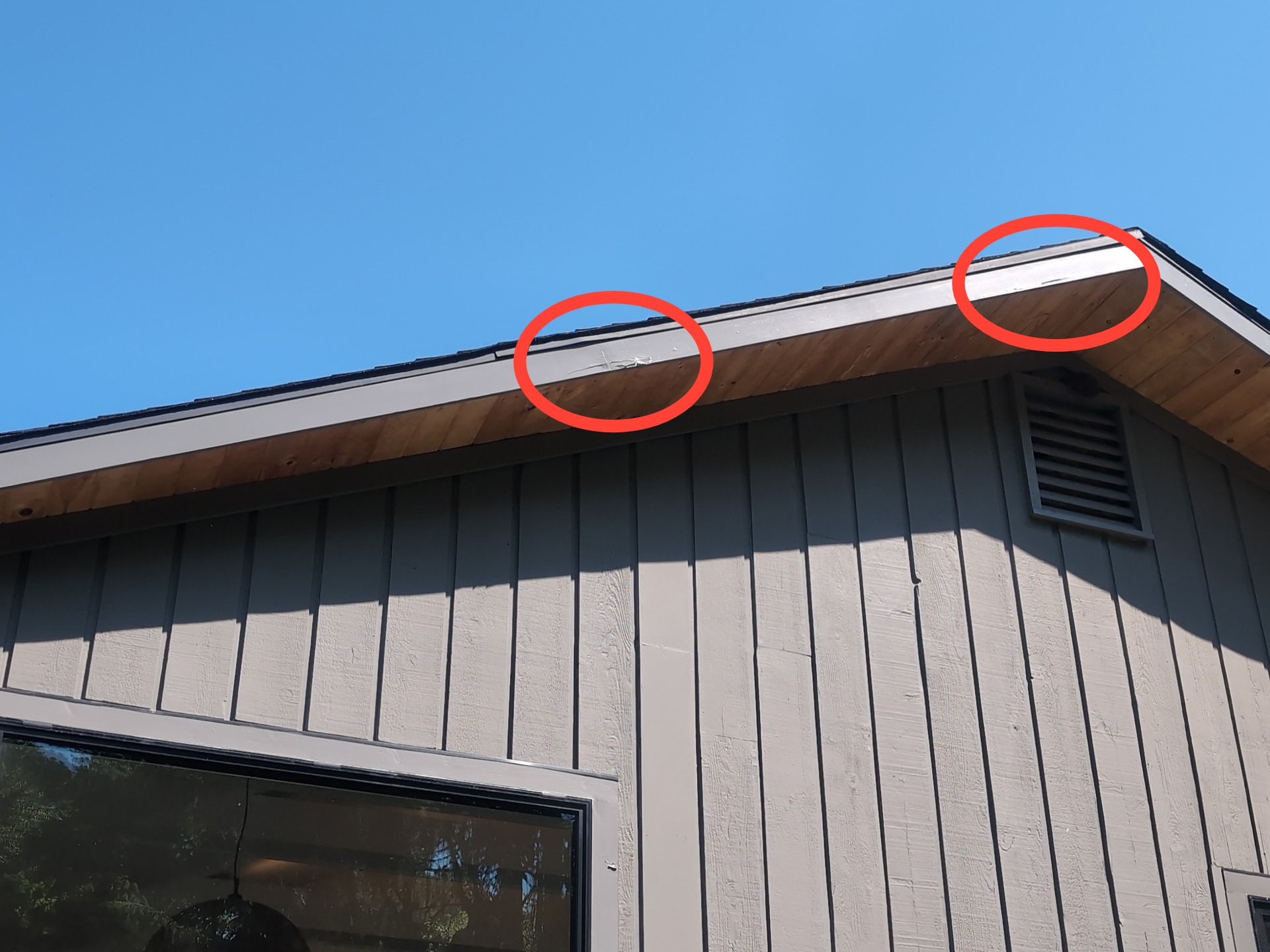
Eaves, Fascia Boards, and Soffits – Finish Coat Deterioration
The eaves, fascia boards, and soffits around the perimeter of the home are in need of significant maintenance, including scraping, priming, and repainting. Deteriorated or missing finish coatings leave wood surfaces exposed to the elements, which can lead to moisture absorption, wood rot, pest intrusion, and accelerated material deterioration. If not addressed, this may result in more extensive and costly repairs in the future.
Recommendation:
Recommend evaluation and proper surface preparation and repainting by a licensed painting contractor to protect exposed wood components and extend the service life of these exterior elements.
 |  |  |
As wood trim ages and deteriorates, I recommend replacement with AZEK composite lumber products which are impervious to water and moisture intrusion yet, cut and finish like real wood. As the perimeter trim begins to go bad I highly recommend replacement with this product. A licensed contractor is recommended for installation.
Wood Destroying Insects (WDI) & Other Pests
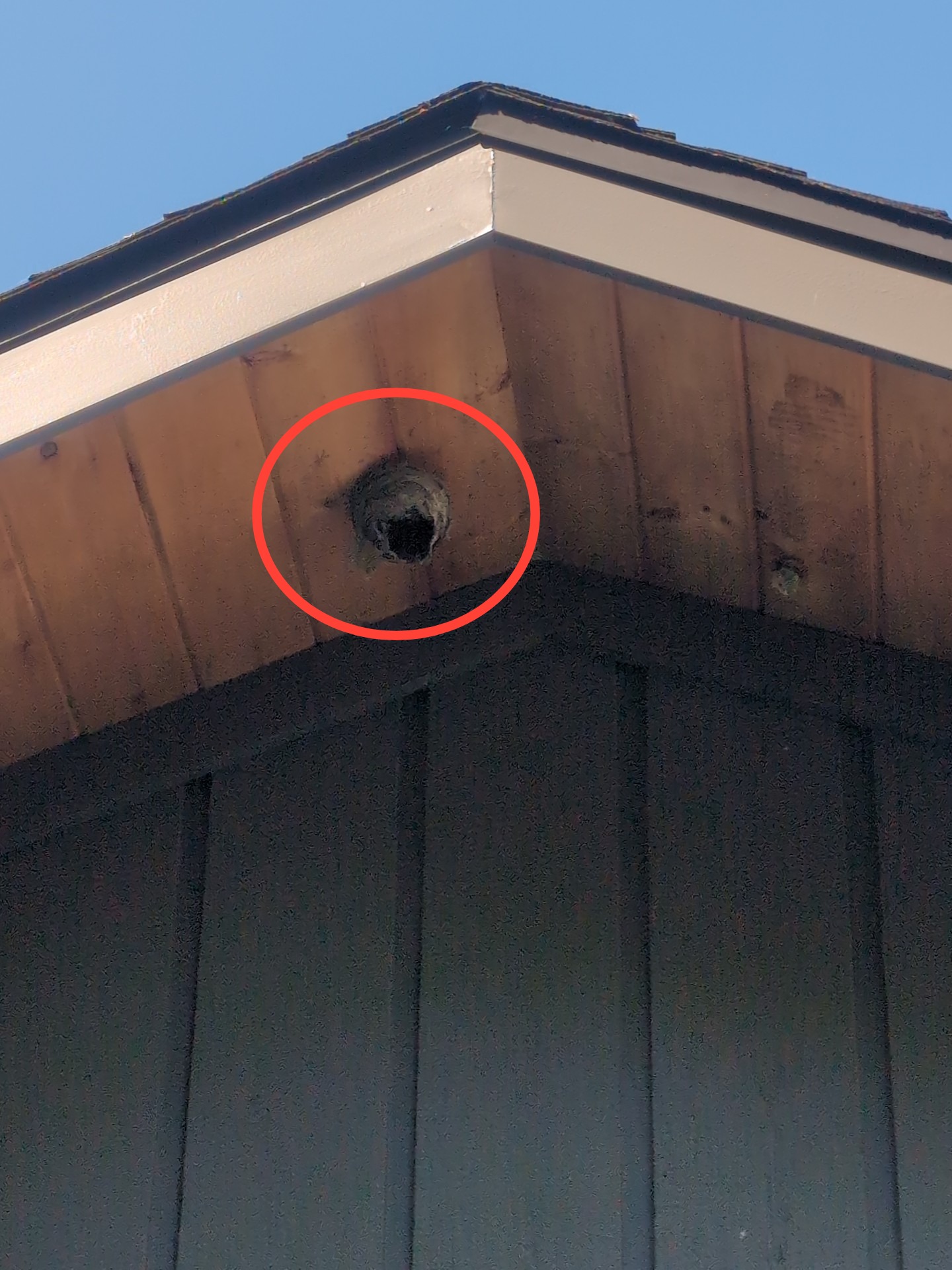
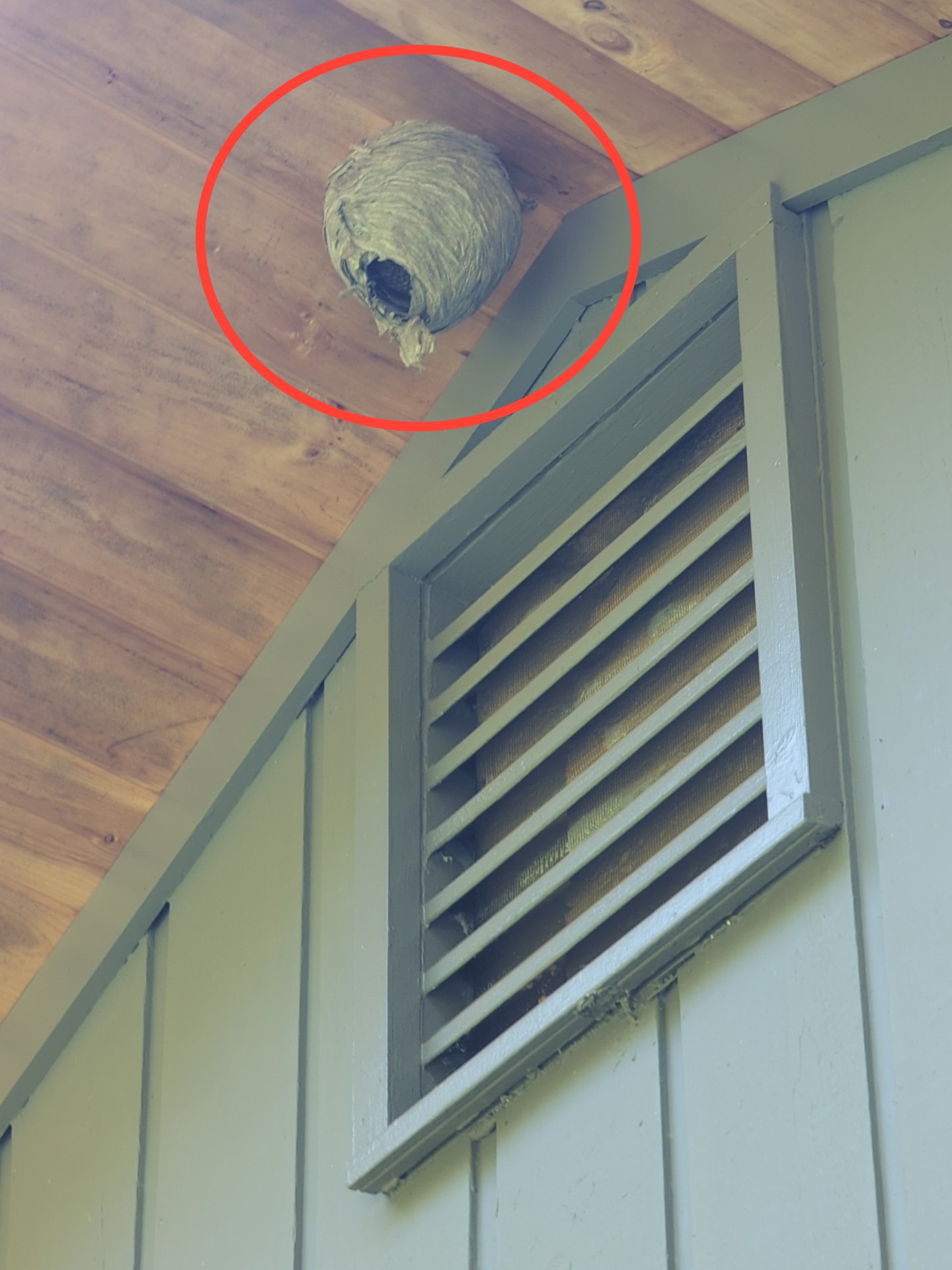
Multiple bee nests were noted hanging from the soffit areas of the home at the time of the inspection. Active or abandoned nests can present a safety hazard to occupants and visitors, particularly for individuals with allergies or sensitivities to insect stings. Recommend removal/extermination by a licensed pest control contractor as needed. After removal, recommend sealing and maintaining soffit and exterior areas where feasible to help reduce conditions conducive to future nesting and recurrence.
 |  |
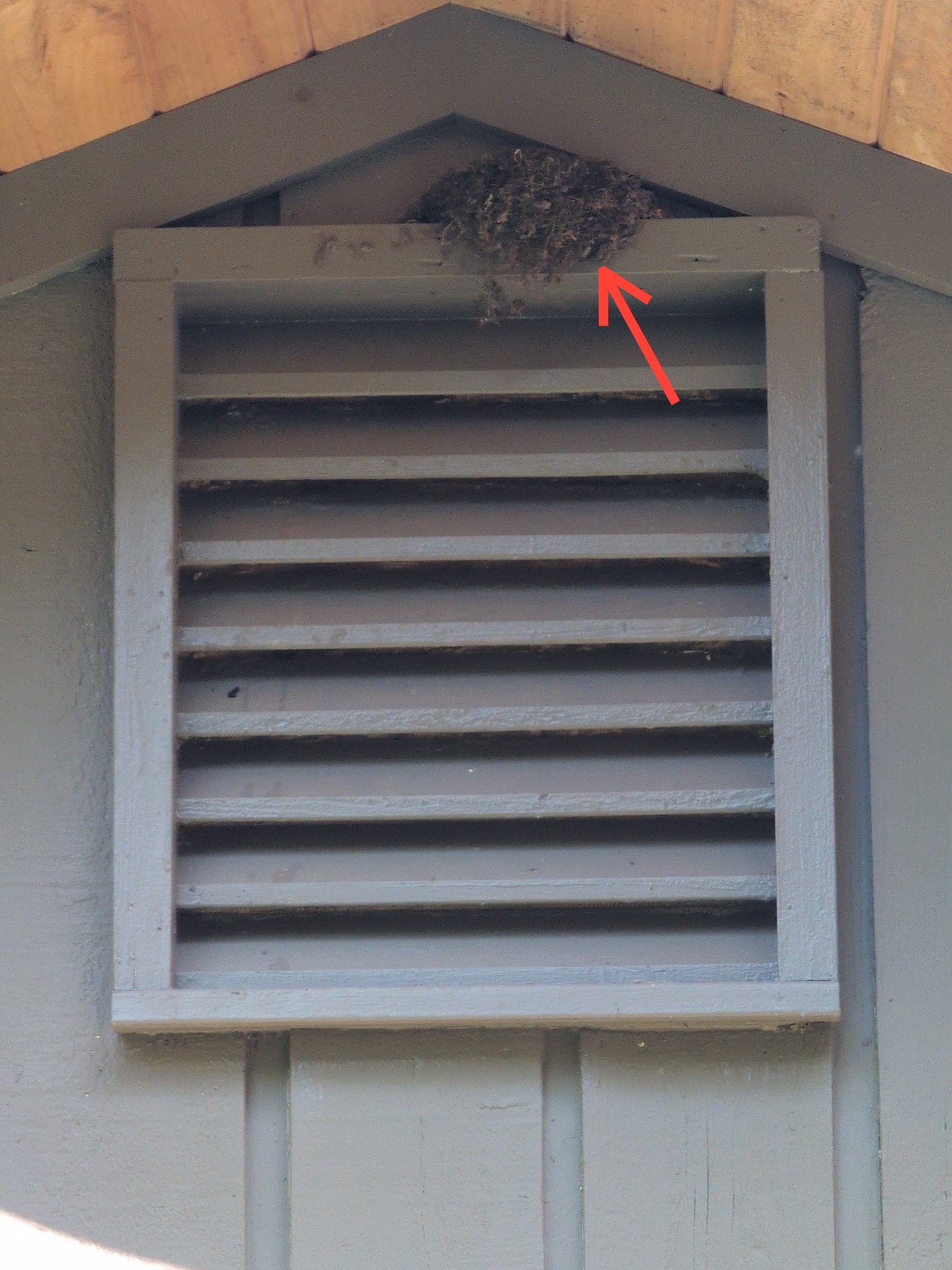
A bird’s nest was noted at the rear decorative/cosmetic gable vent at the time of the inspection. Although this gable vent did not appear to be functional for attic ventilation purposes, bird nesting materials can still contribute to pest activity, staining, deterioration, and possible entry of insects or rodents into concealed wall or attic areas. Recommend removal of the nesting materials and sealing/screening of the decorative vent area as needed to help prevent future bird activity and recurrence.
Black ants were noted within the home in multiple locations at the time of the inspection. The presence of ants within the living space may indicate active insect intrusion and could suggest concealed entry points or conditions conducive to infestation, such as moisture intrusion or accessible food sources. Recommend further evaluation and treatment by a licensed pest control contractor. Consider obtaining an ongoing extermination/service contract as needed to monitor, treat, and help prevent future insect activity within the home.
WDI (Wood Destroying Insects): A limited visual inspection for wood-destroying insects (WDI) was performed at the accessible exterior perimeter of the home and at visible, accessible interior structural areas. I am not a licensed exterminator; however, as per the New York State Standard of Practice for home inspections, I look for observable indications of potential WDI activity such as shelter tubes, frass, wood damage, exit holes, and other conducive conditions.
This inspection was not invasive and cannot identify hidden or concealed WDI activity. Areas concealed by insulation, stored items, wall coverings, finishes, or building components were not accessible and were not inspected. Undetected infestations may be present.
I highly recommend a more comprehensive WDI inspection by a licensed pest control professional to evaluate areas not visible during this inspection, provide definitive findings, and propose treatment options if needed.
I recommend retainage of a licensed exterminator for prevention and treatment of potential mouse/rodent infestation. An annual pest protection program will help maintain a rodent, pest, and insect free home.
Exterior Section Footer:
The exterior of the home was inspected and reported on with the above information. While the inspector makes every effort to find all areas of concern, some areas can go unnoticed. Please be aware that the inspector has your best interest in mind. Any repair items mentioned in this report should be considered before purchase. It is recommended that qualified contractors be used in your further inspection or repair issues as it relates to the comments in this inspection report.
Roofing
Styles and Materials
Roof Covering:ArchitecturalAsphalt/Fiberglass
Viewed roof covering from:"Eye-Stick" 30' camera pole
Sky Light(s):None
Chimney (exterior):Brick
Gutters:Aluminum seamless: standard width
The home inspector shall observe: Roof covering; Roof drainage systems; "Visible" Flashings; Skylights, chimneys, and roof penetrations; and Signs of' leaks or abnormal condensation on building components. The home inspector shall: Describe the type of roof covering materials; and Report the methods used to observe the roofing.
The home inspector is not required to: Walk on the roofing; or Observe attached accessories including but not limited to solar systems, antennae, and lightning arrestors.
Roof Coverings
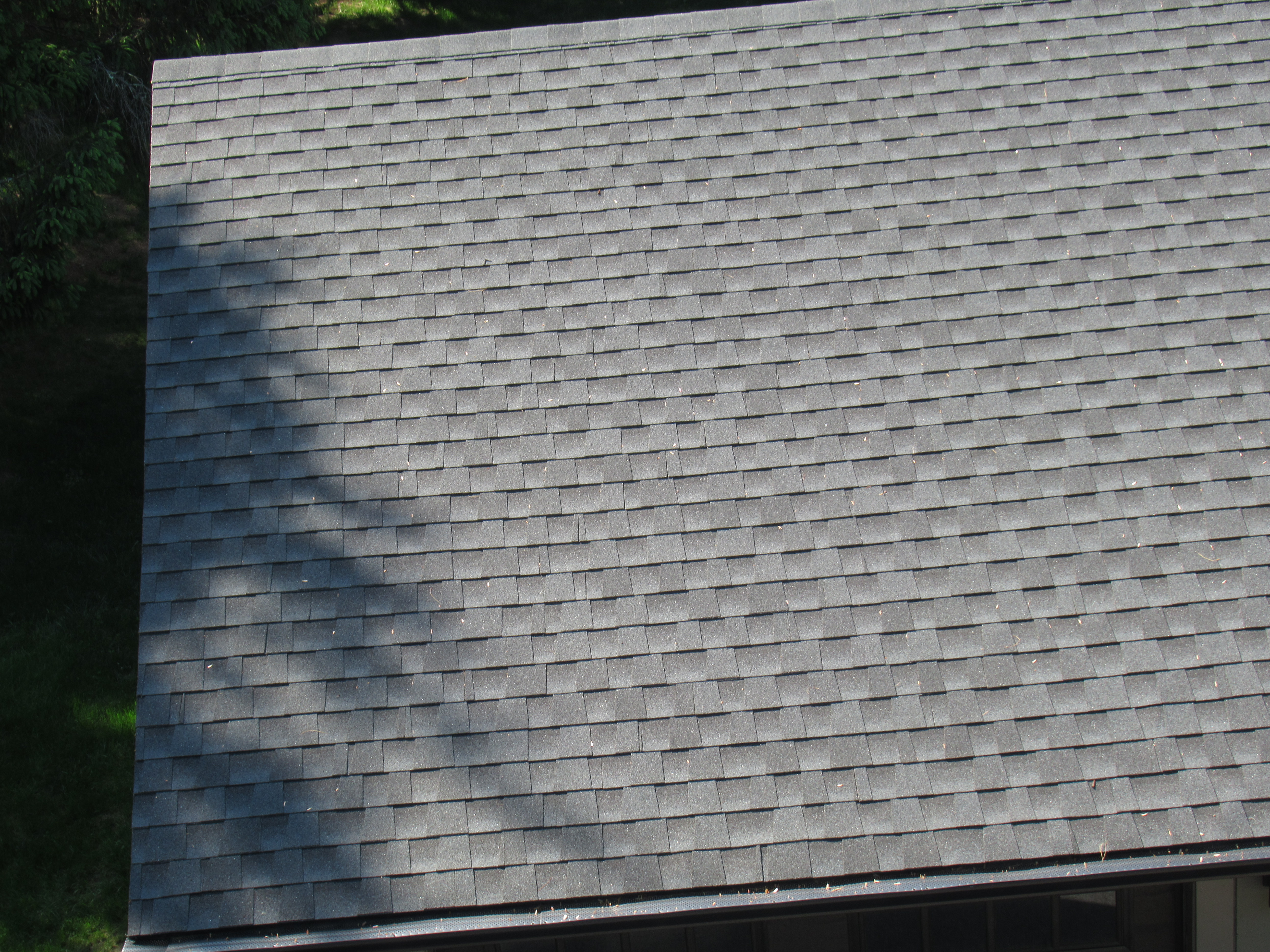
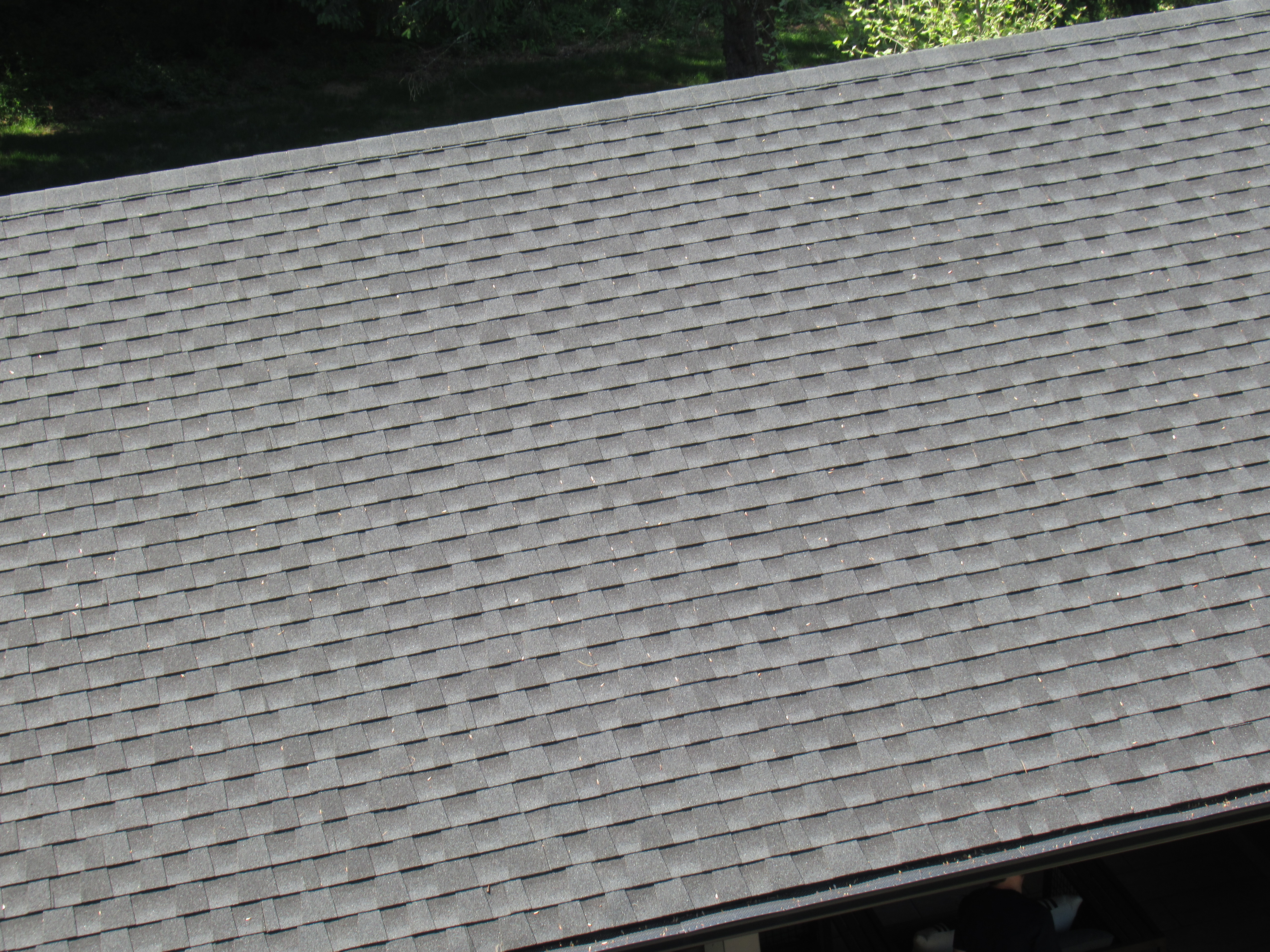
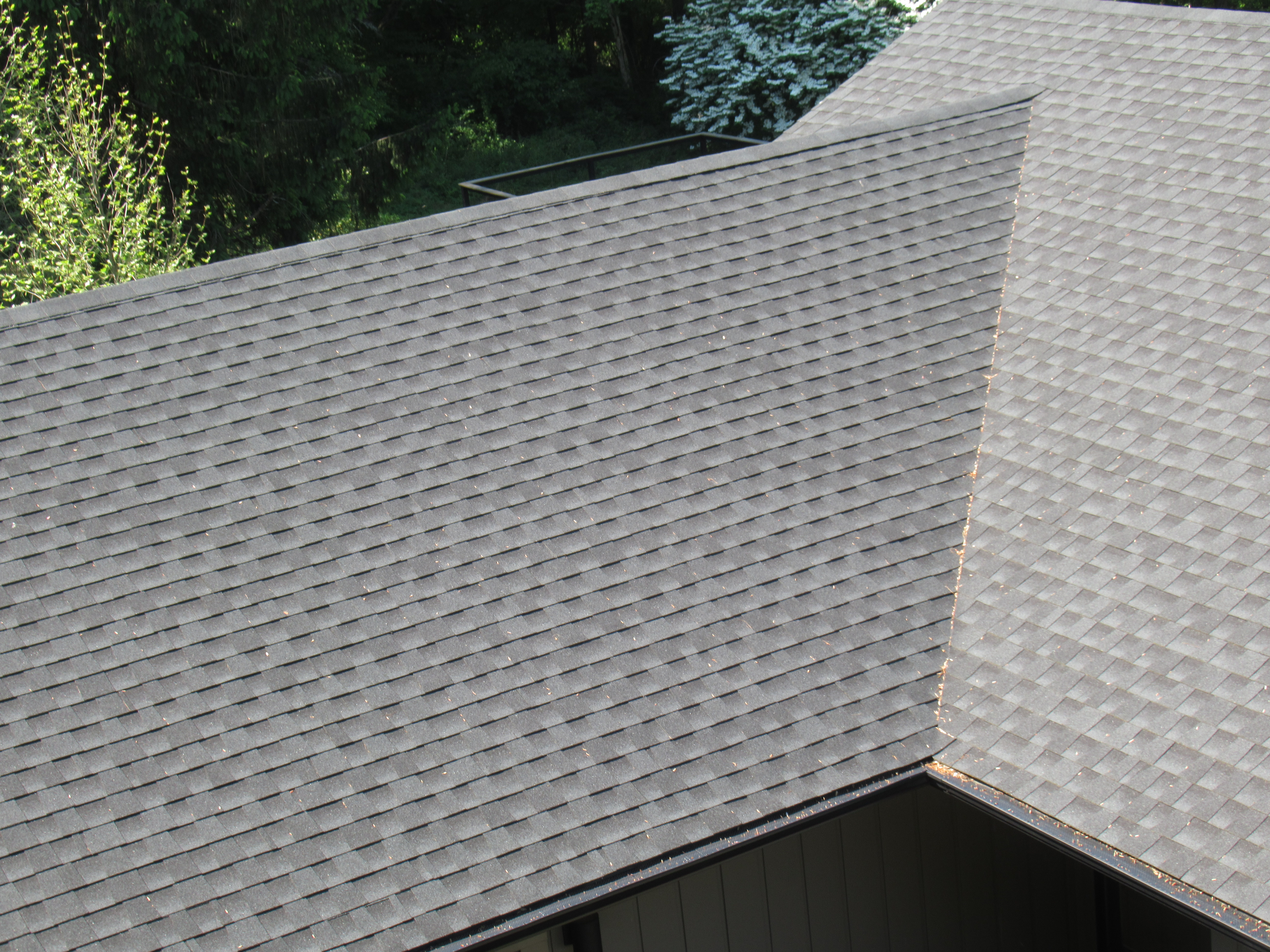
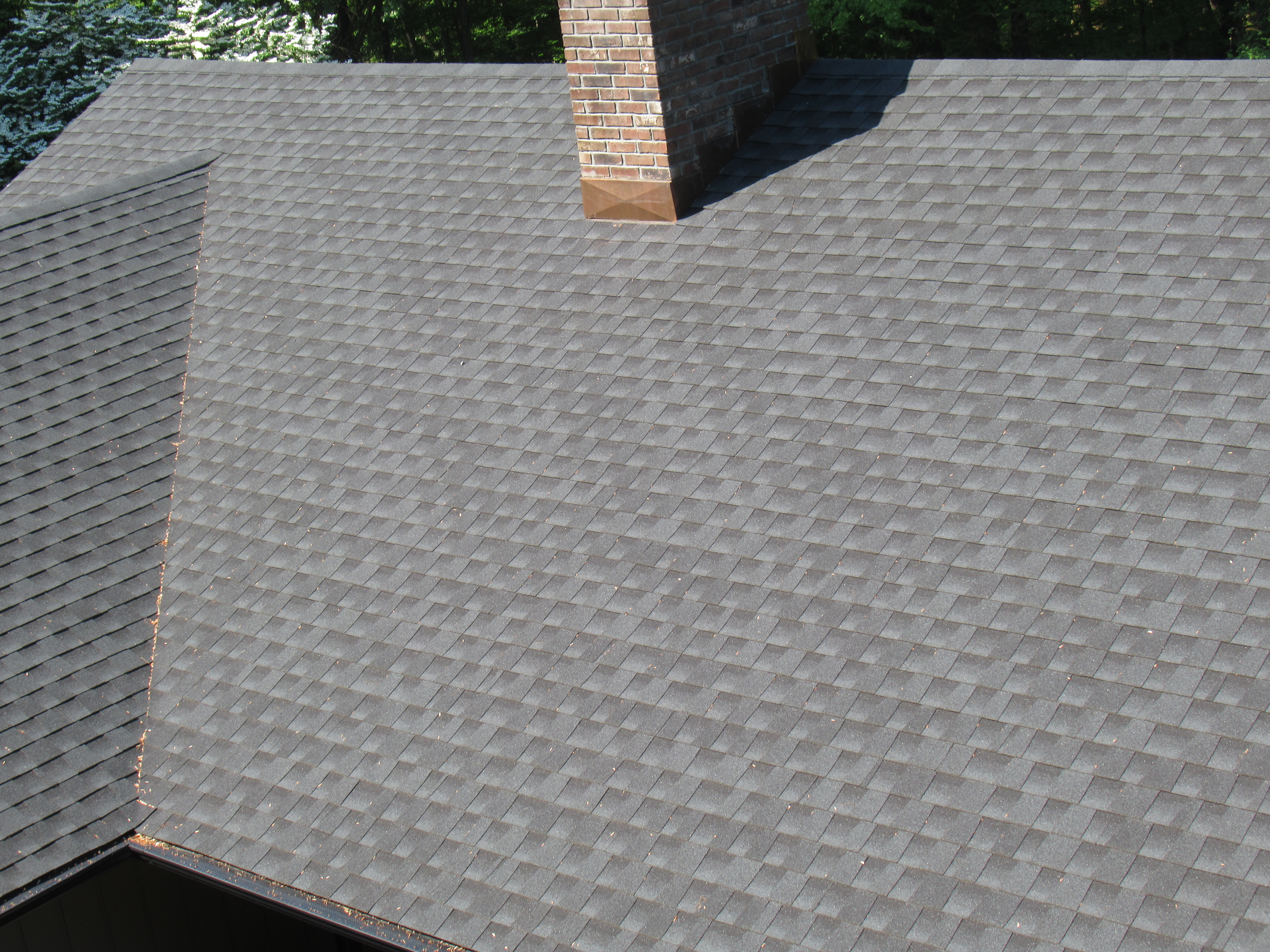
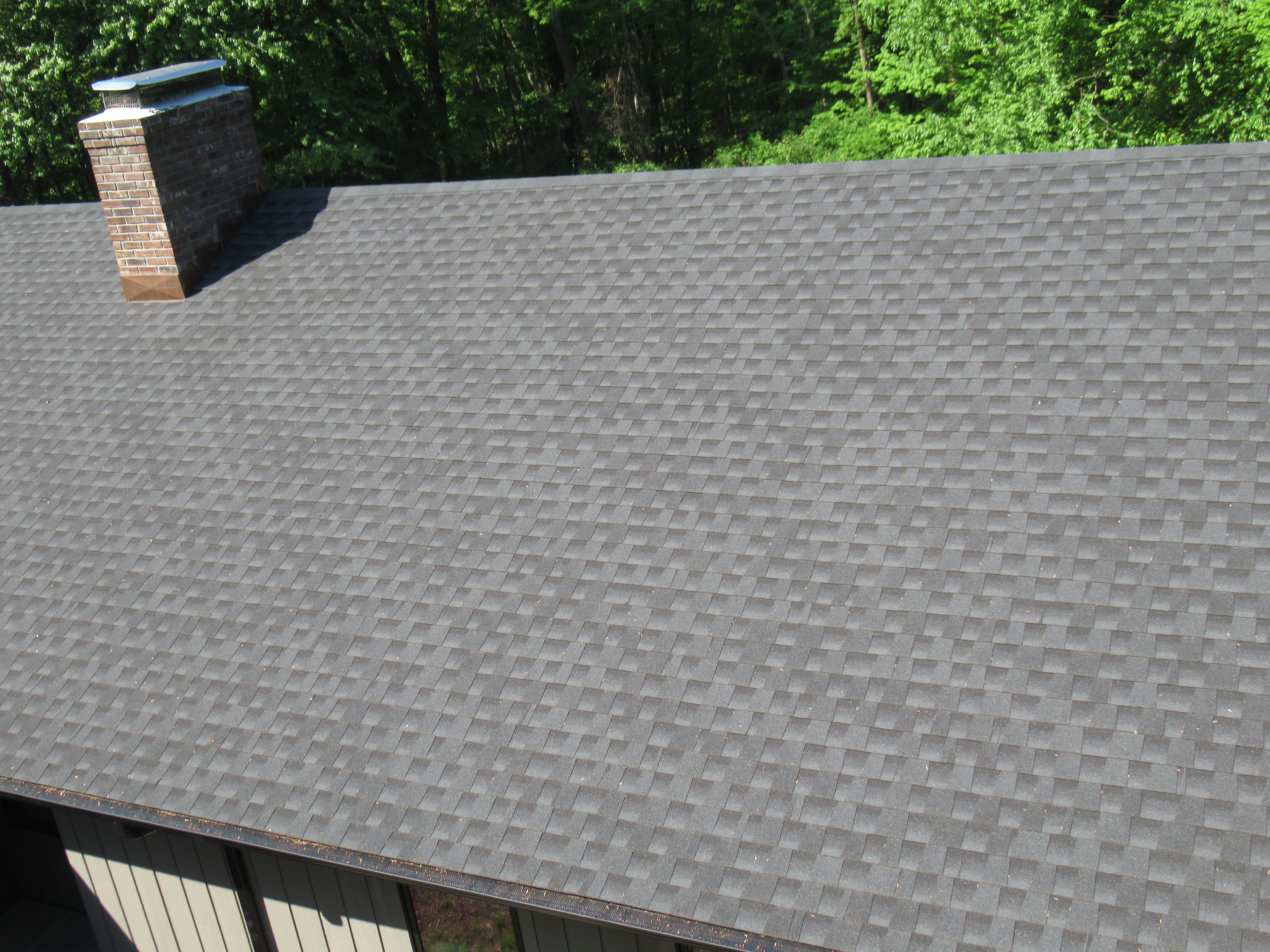
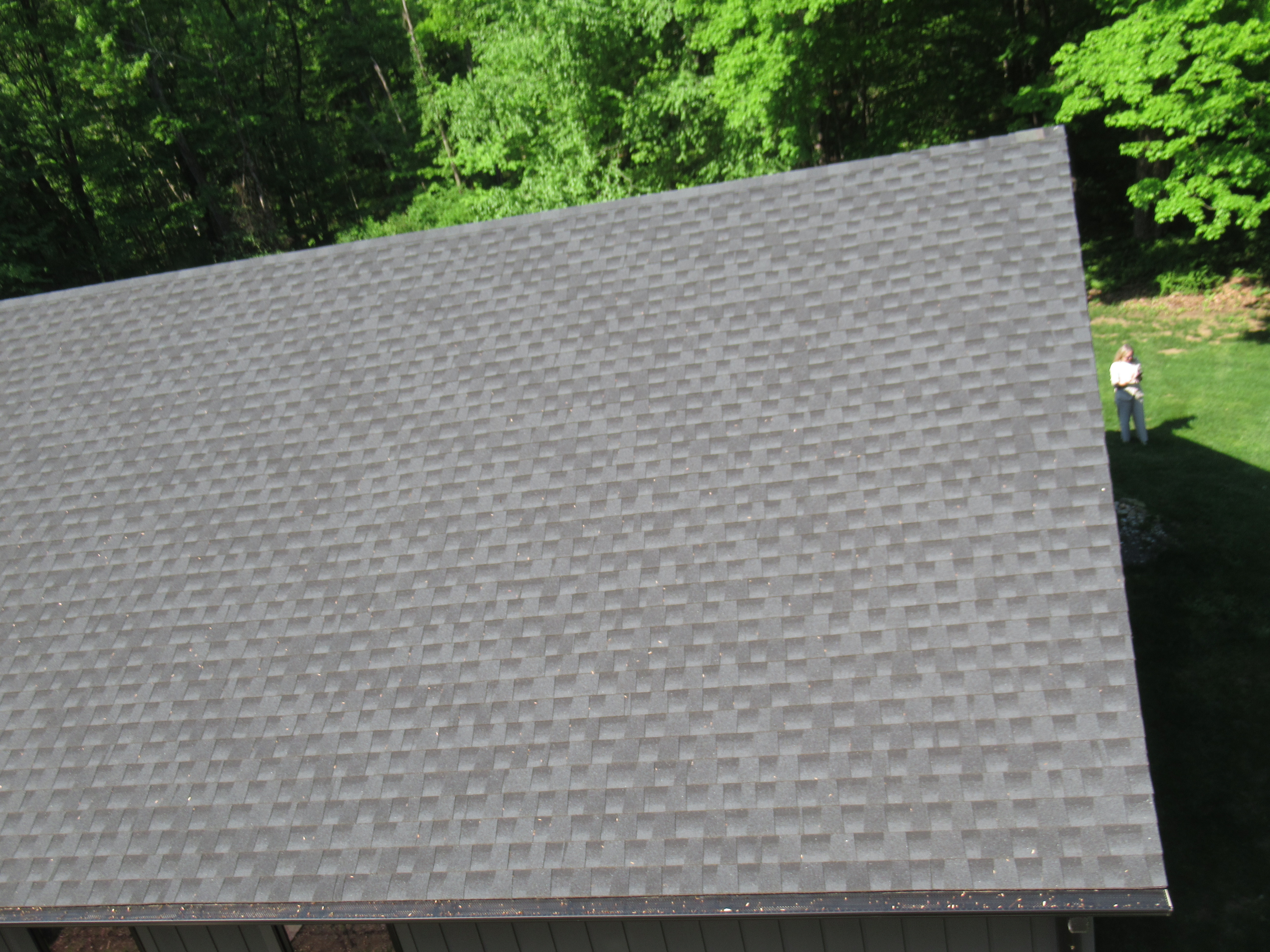
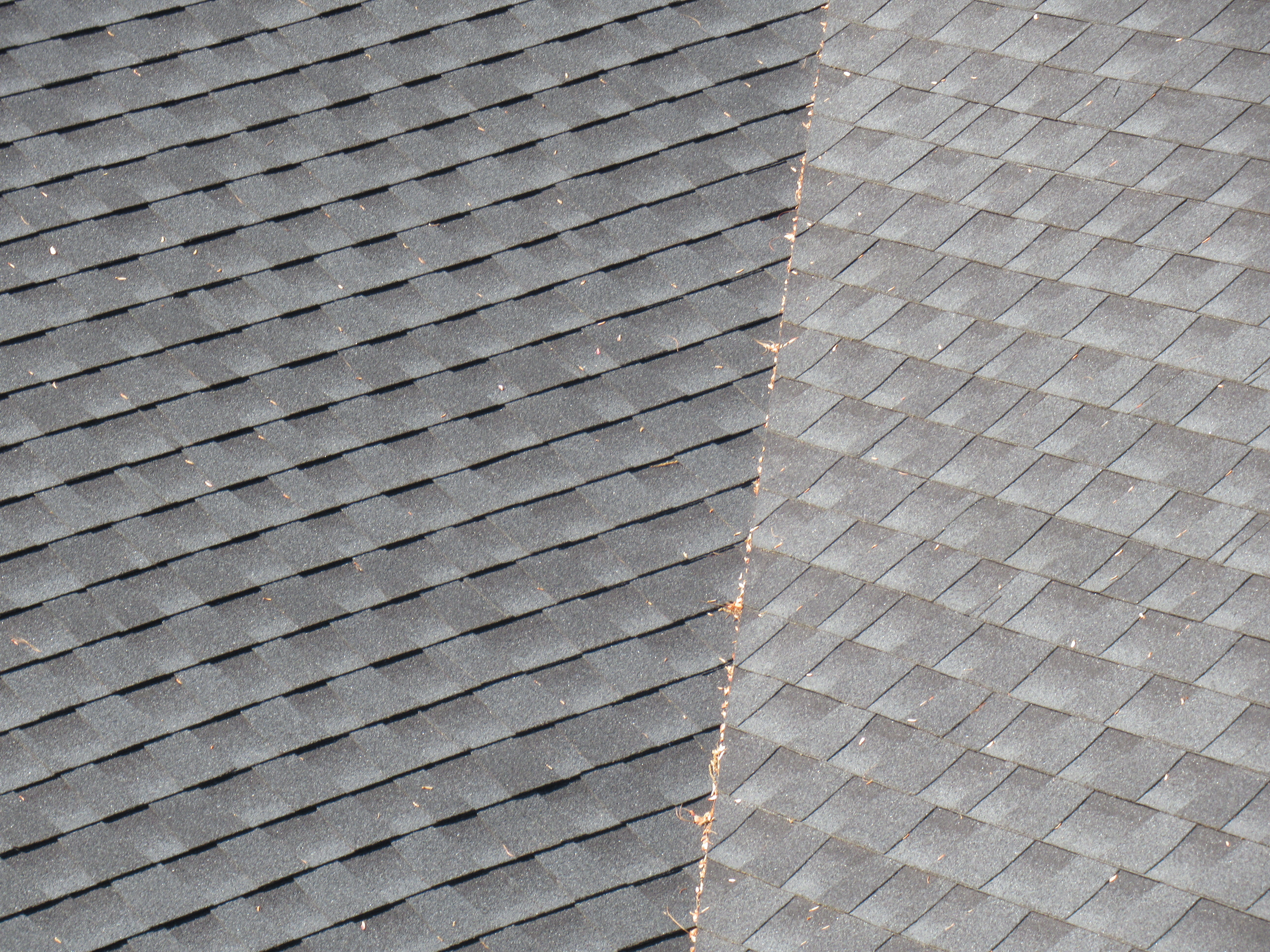
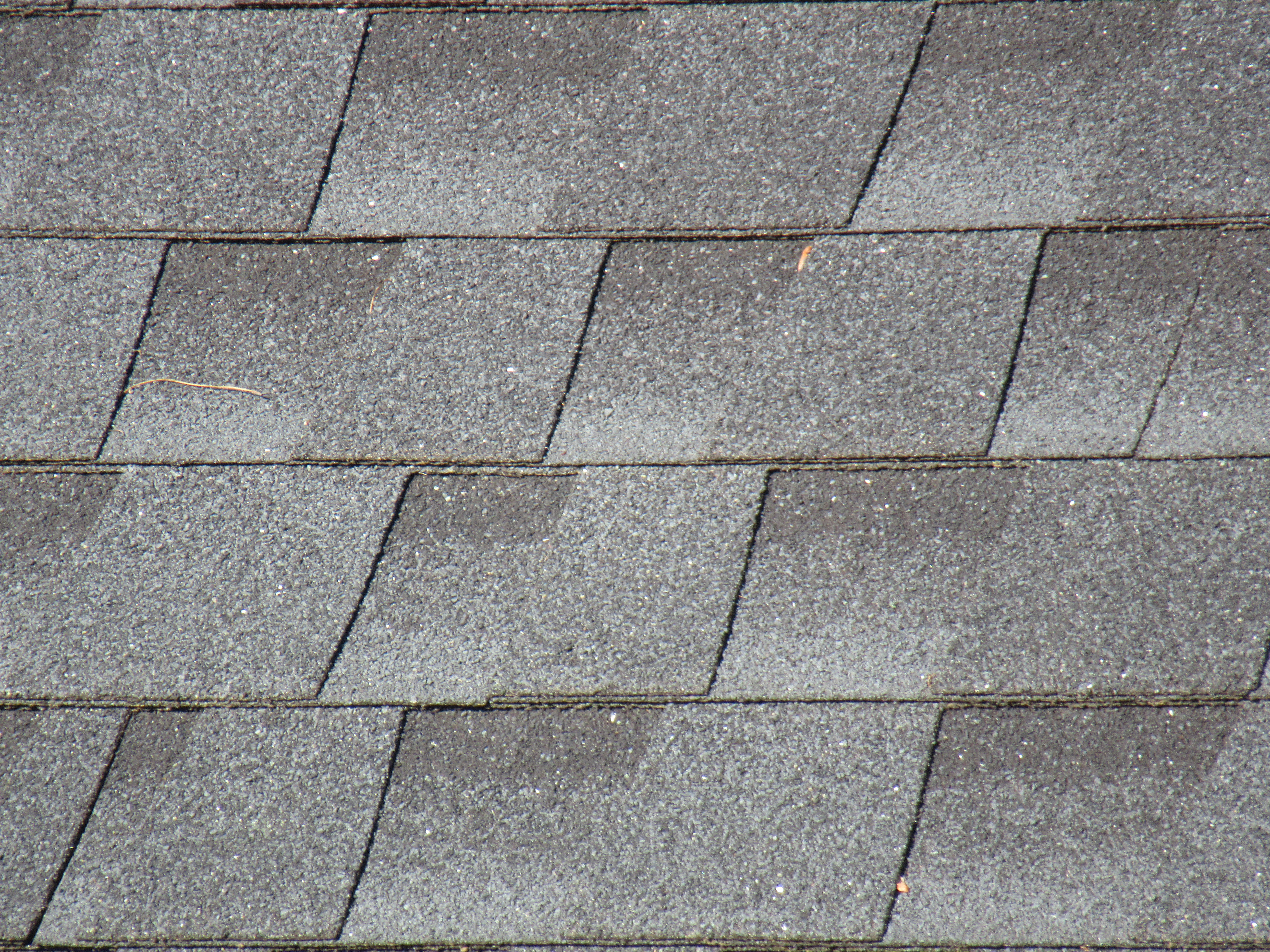
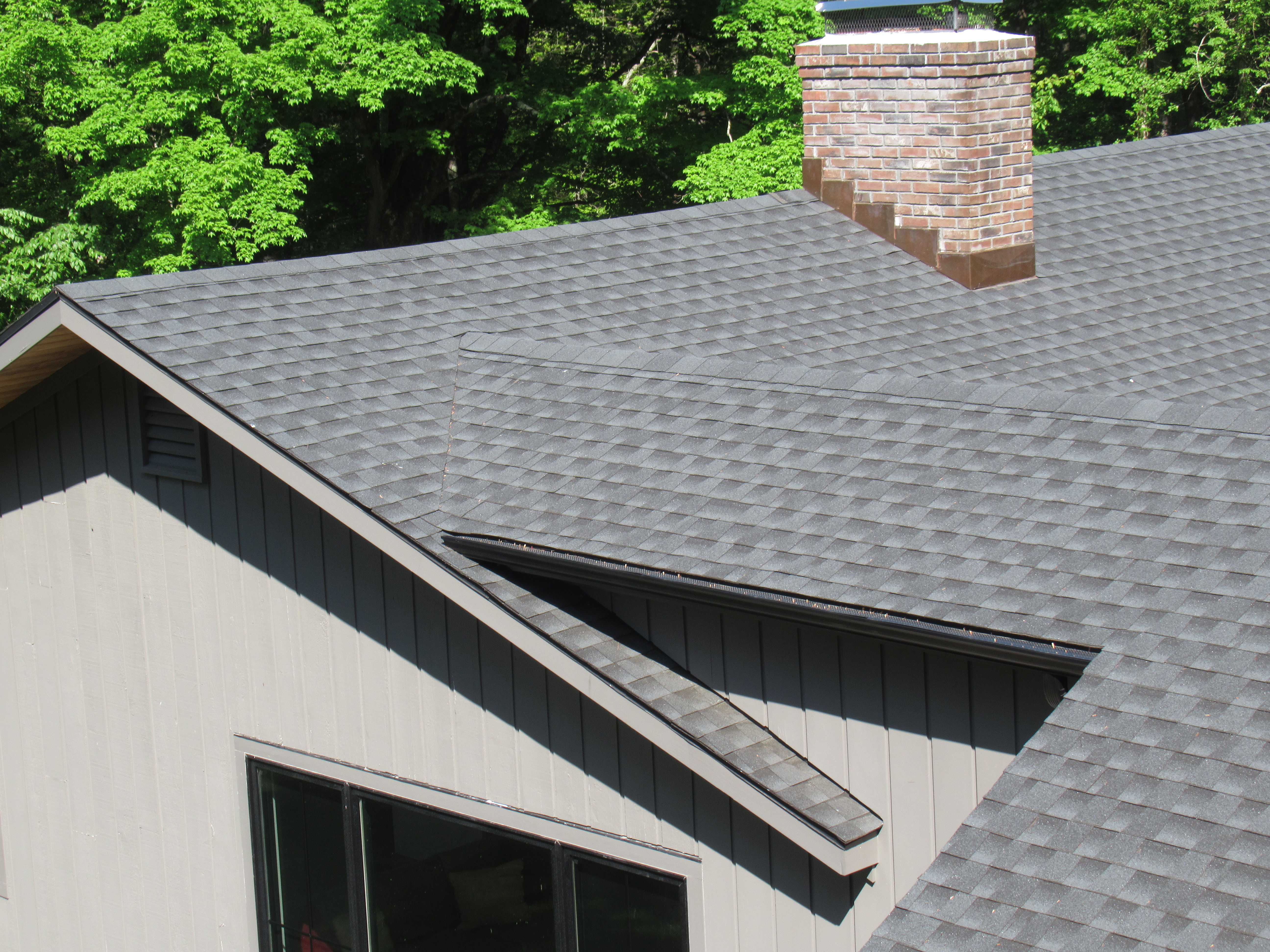
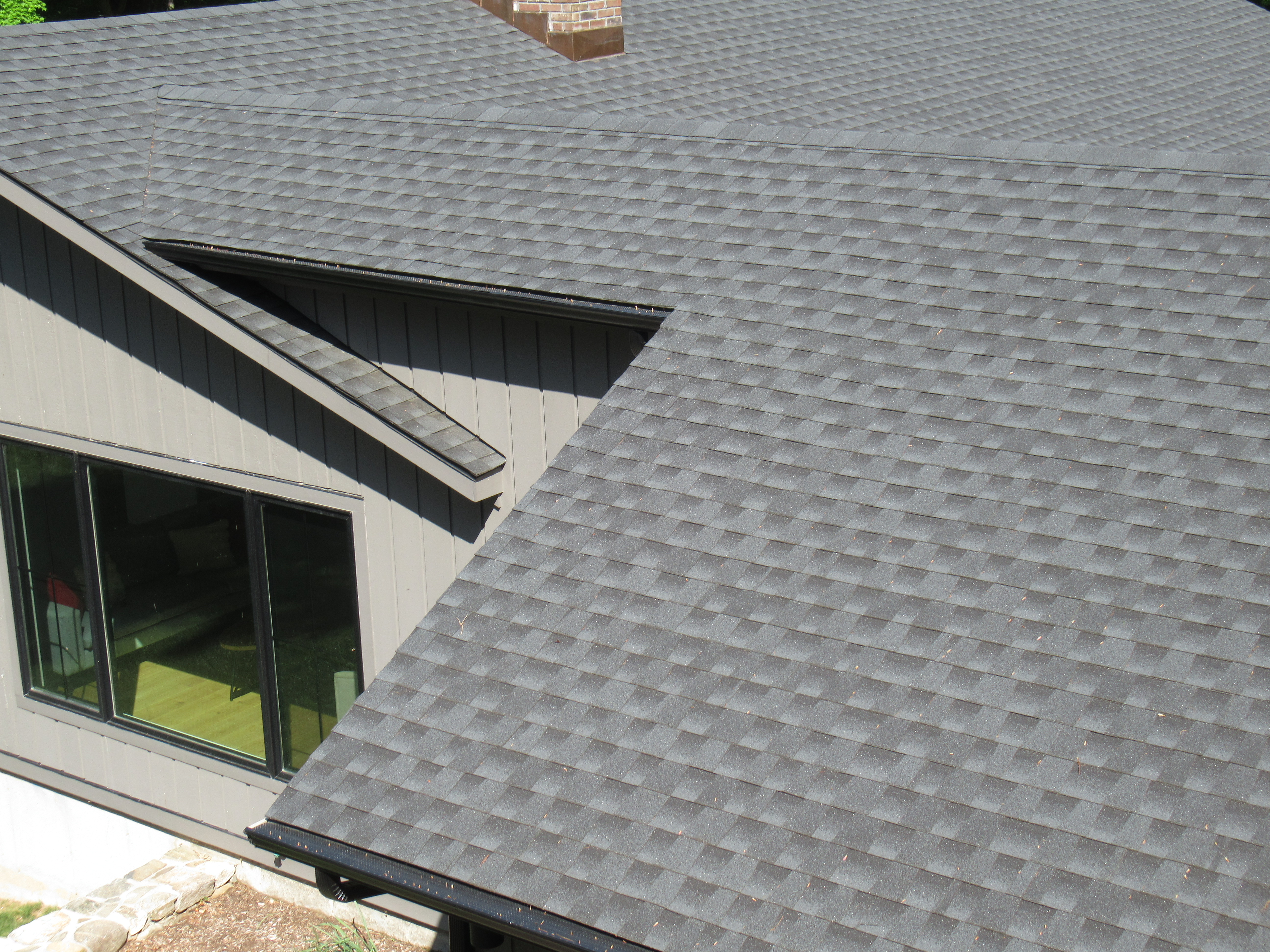
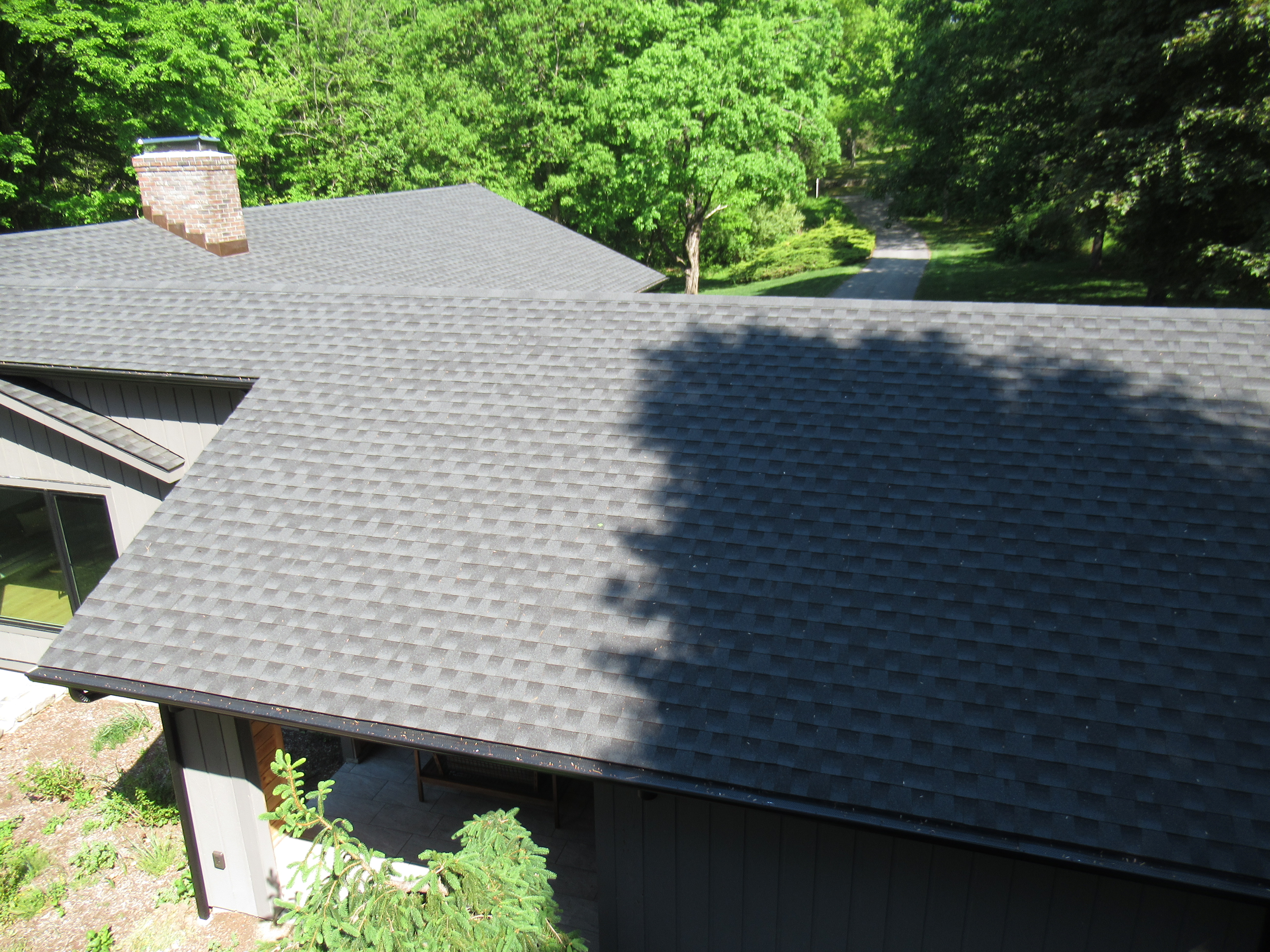
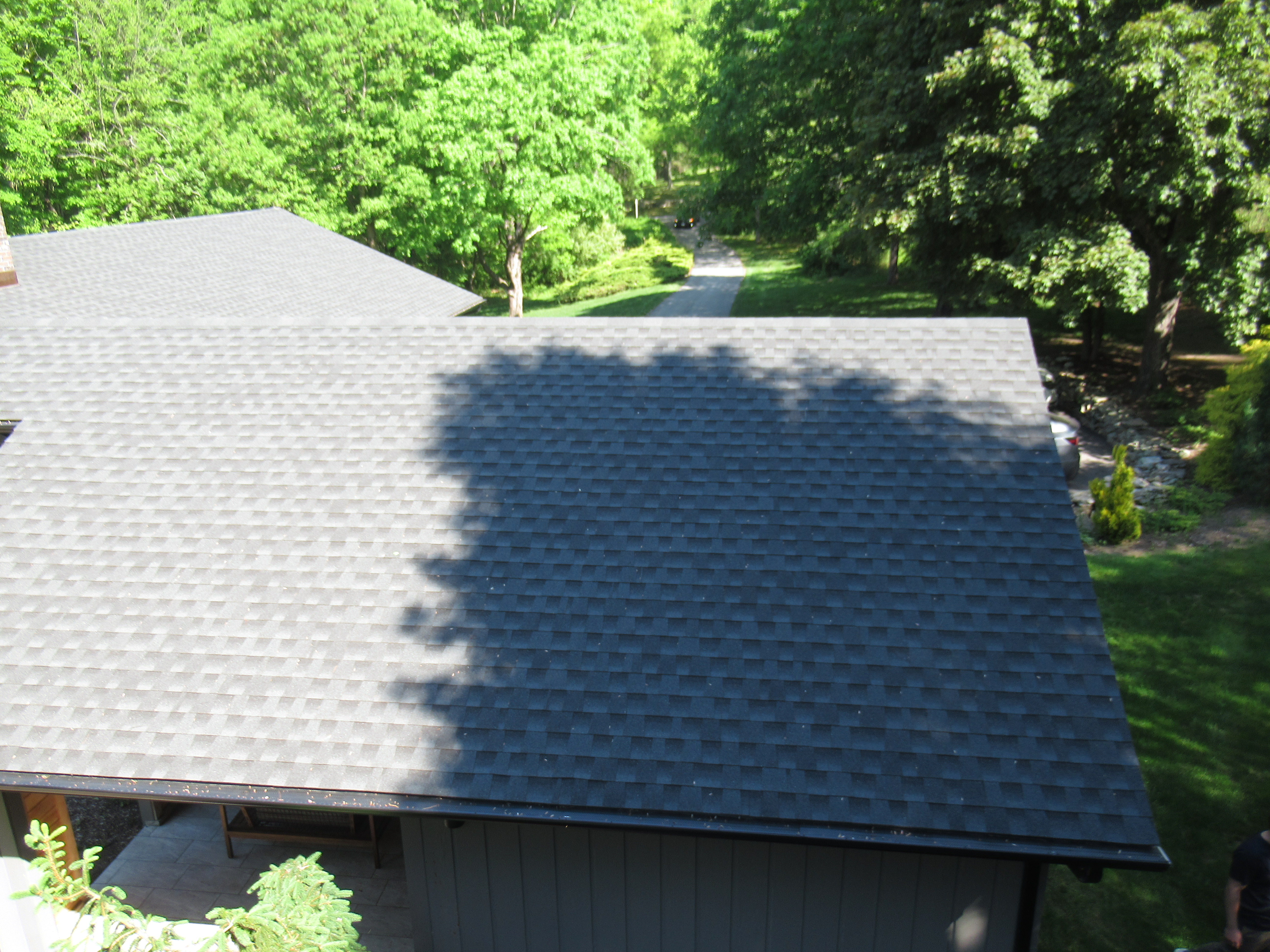
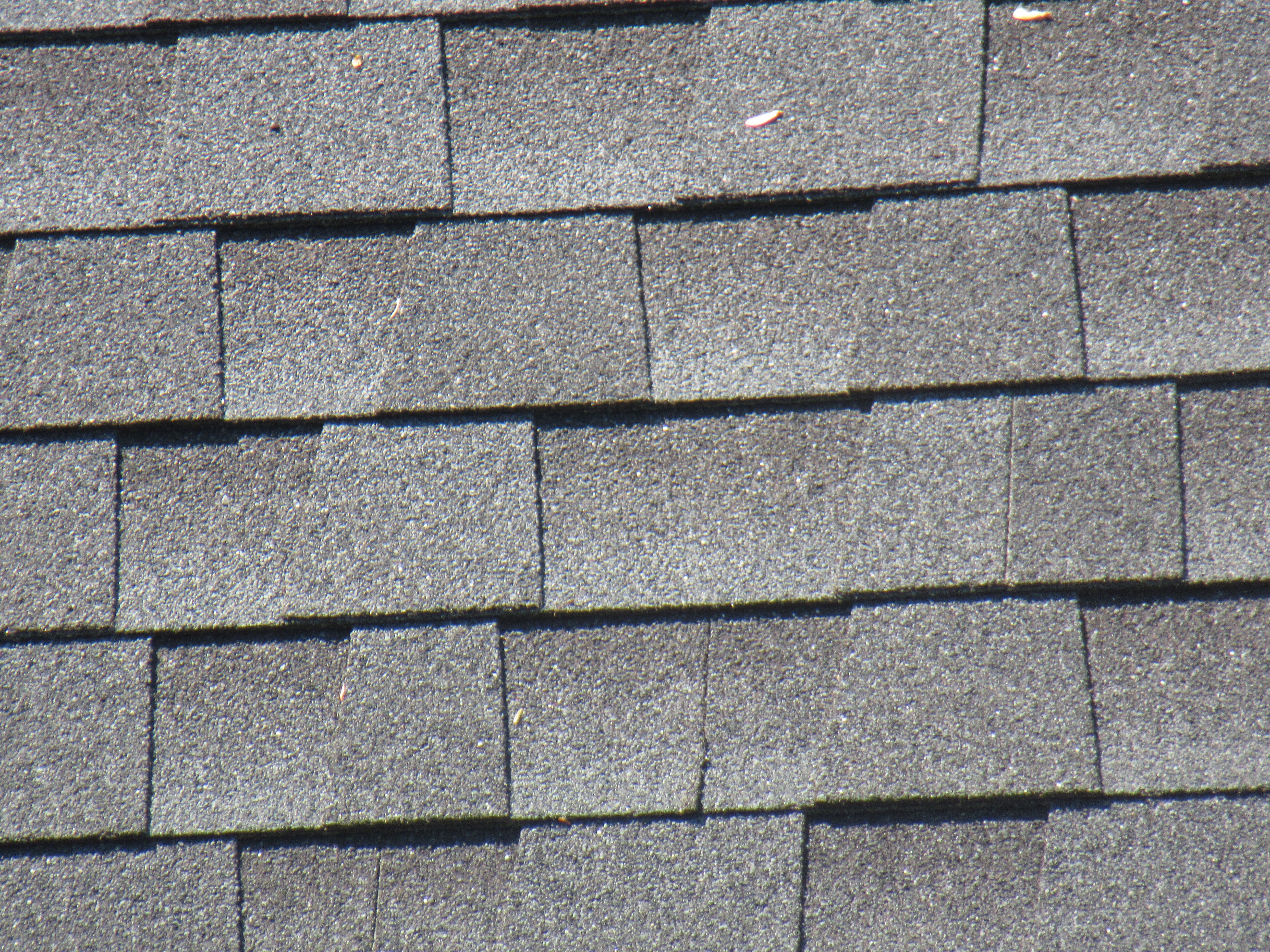
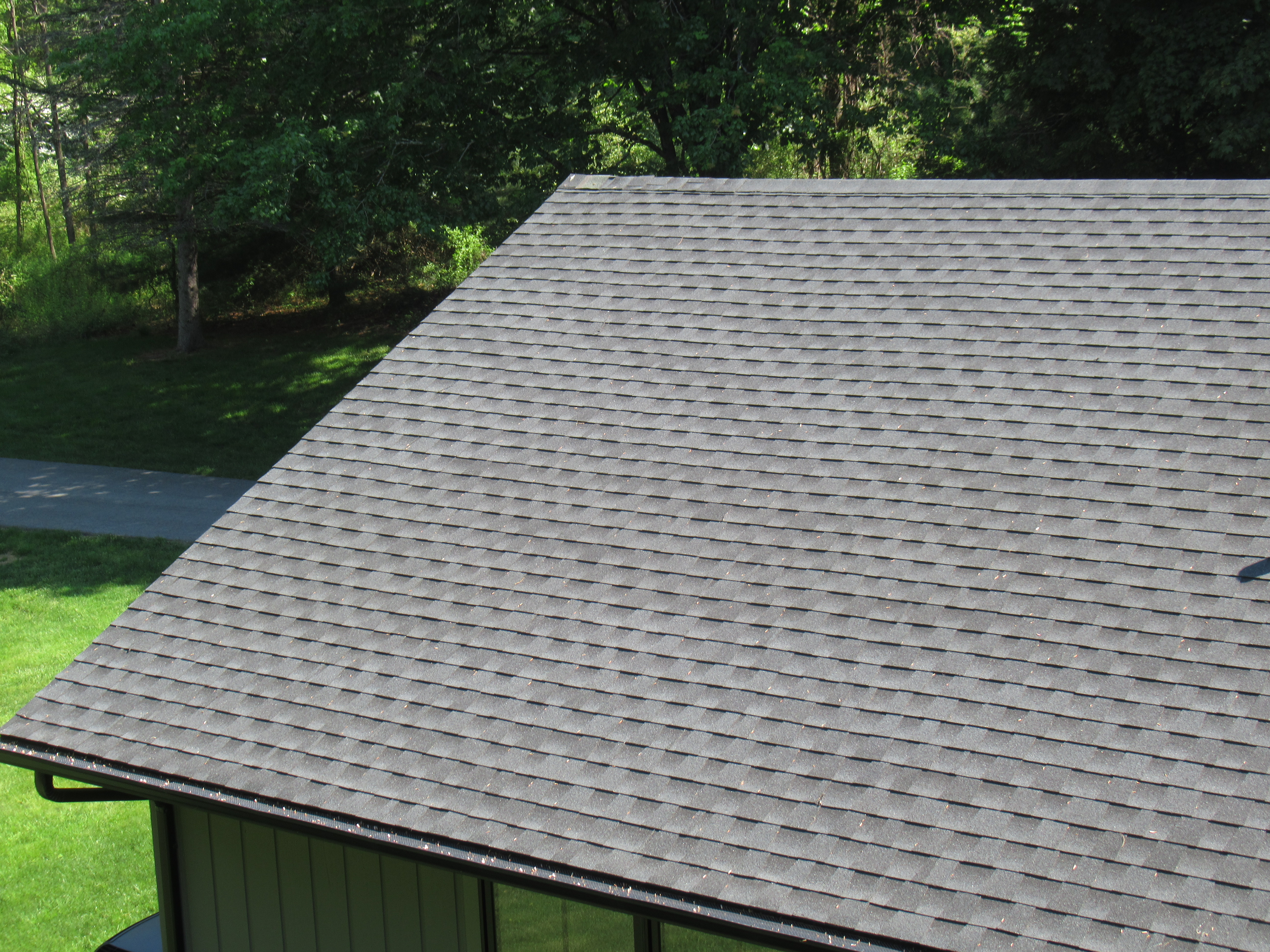
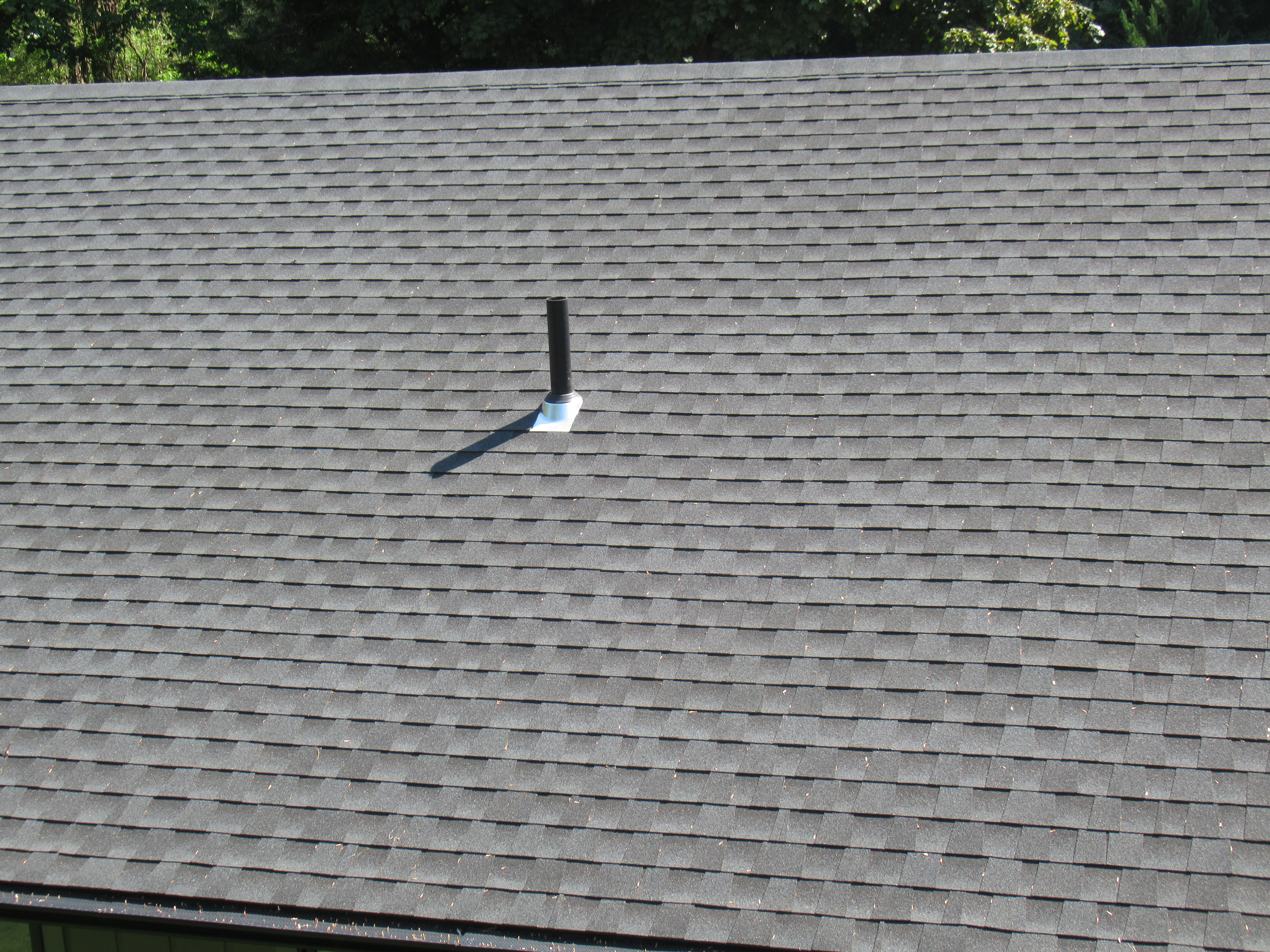
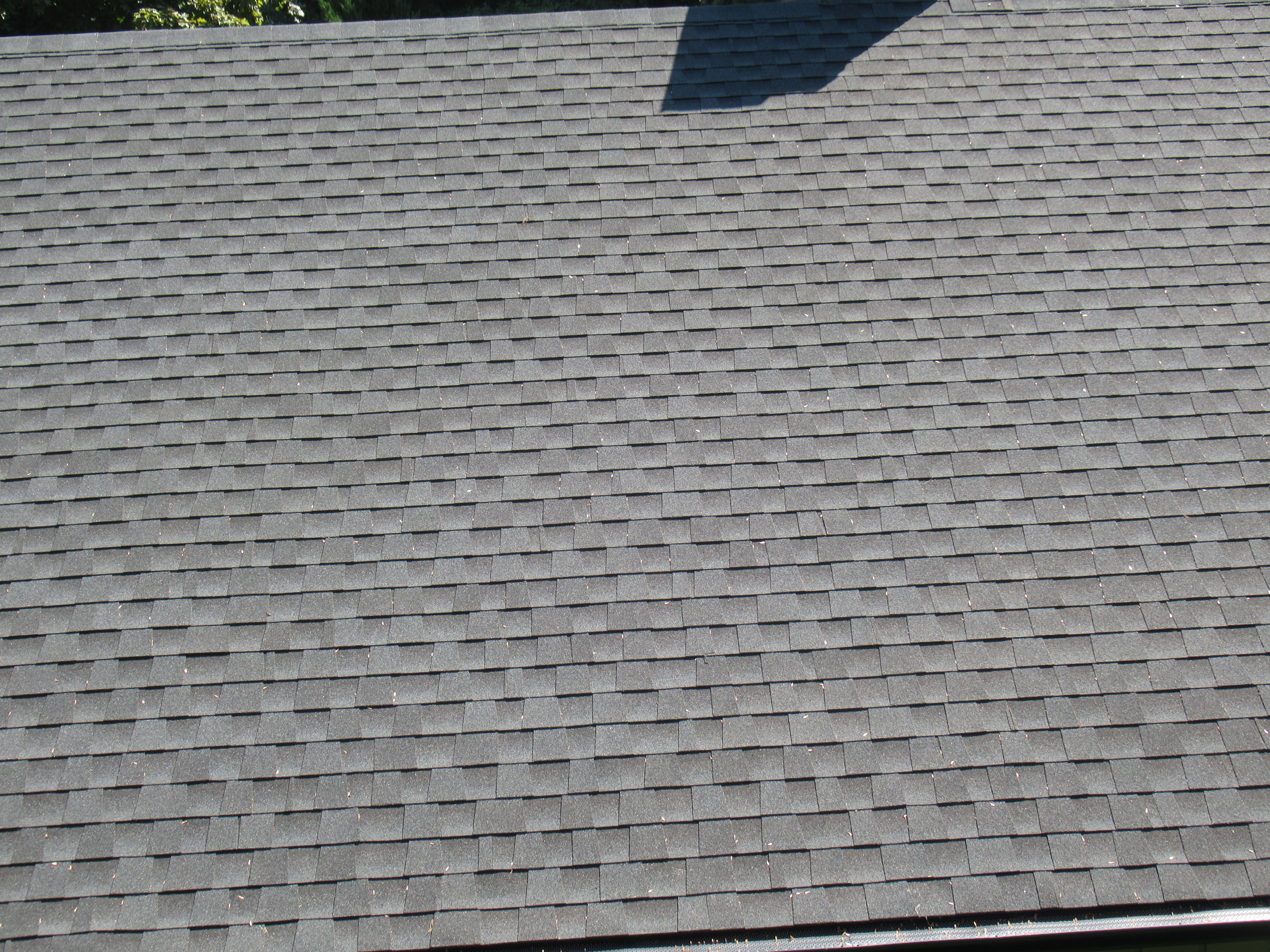
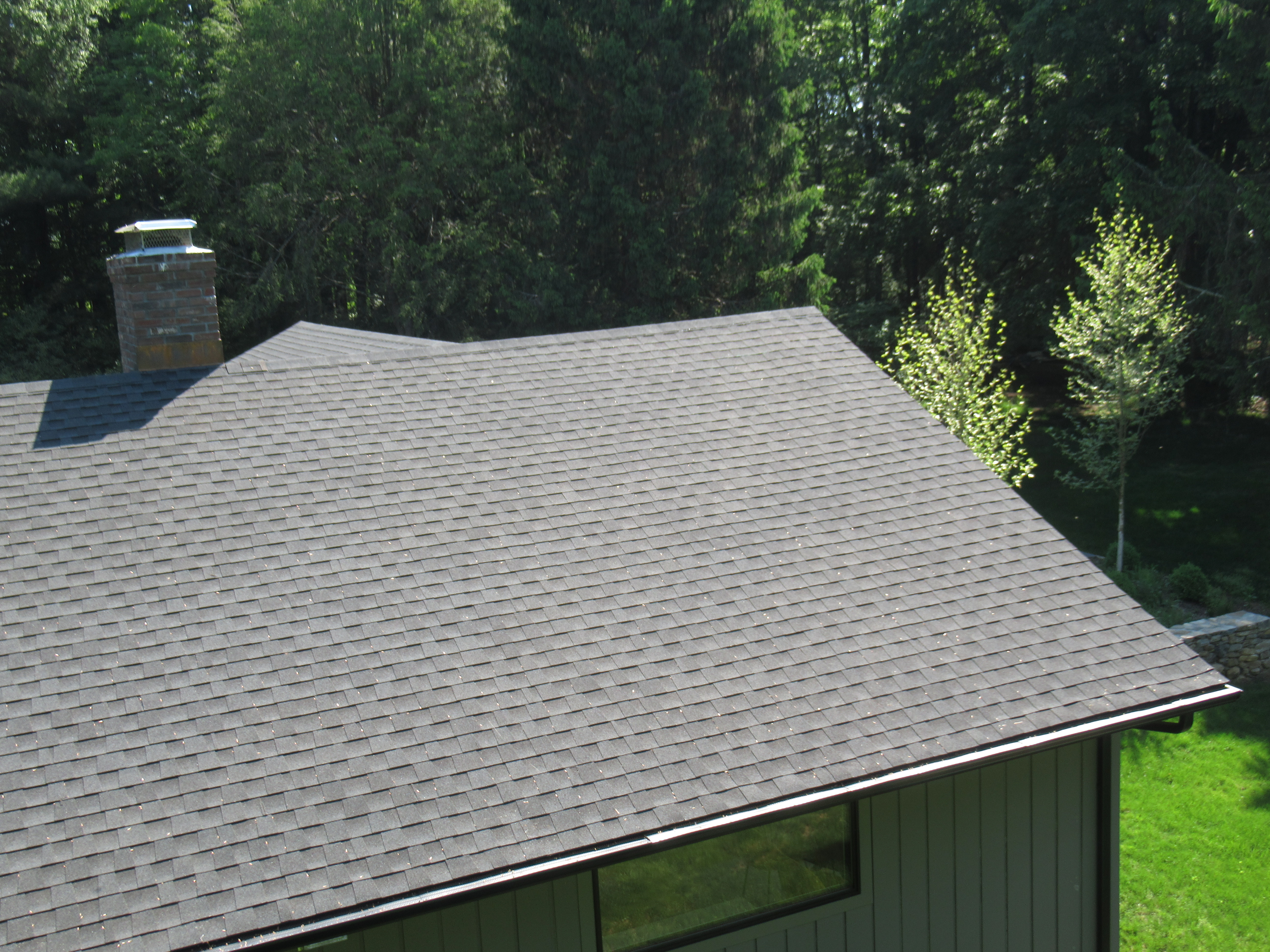
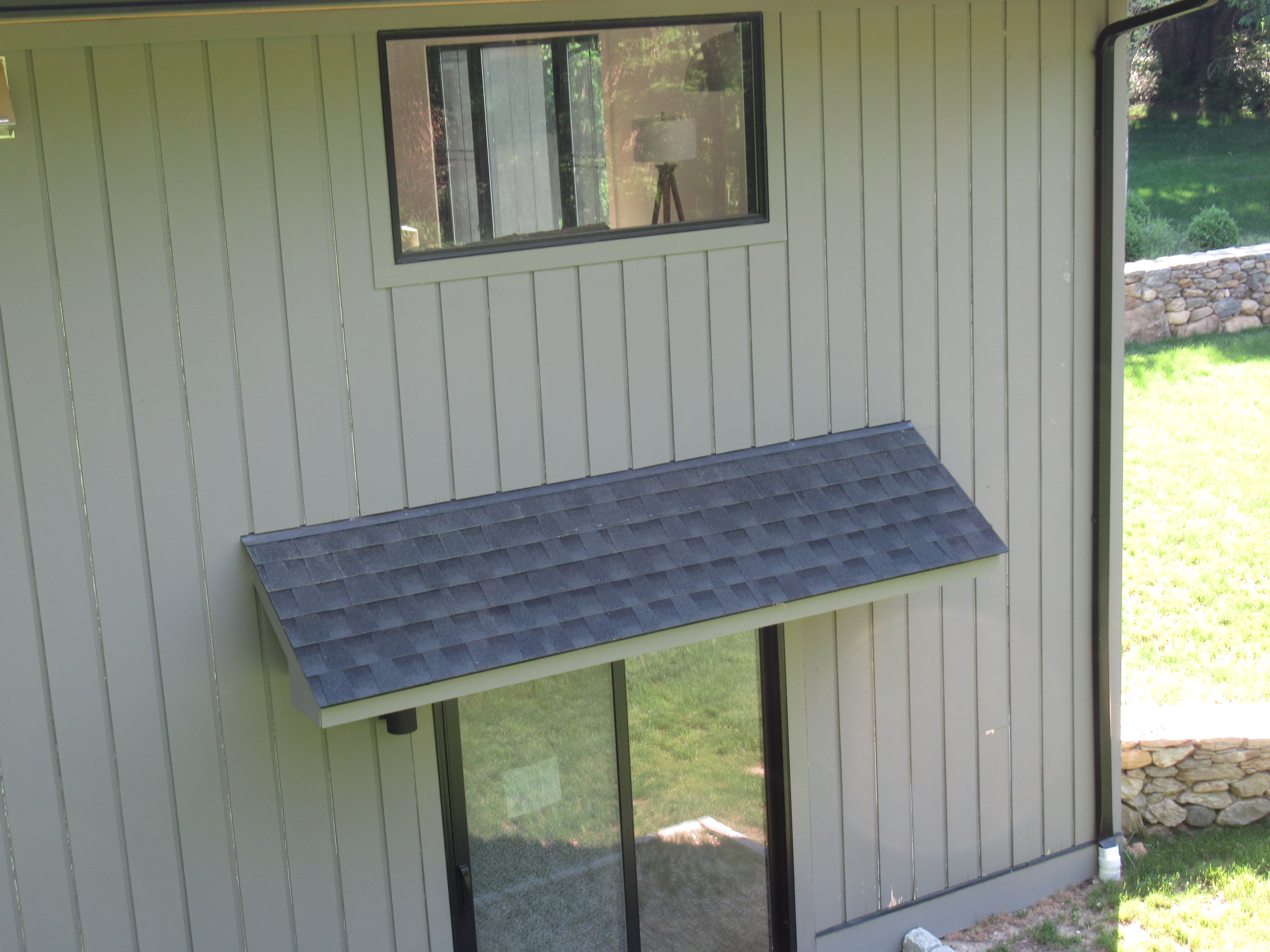
The roof was covered with dimensional fiberglass asphalt shingles, also called "architectural" or "laminated" shingles. Fiberglass shingles are composed of a fiberglass mat embedded in asphalt and covered with ceramic-coated mineral granules. Dimensional shingles are composed of multiple layers bonded together. Shingles with multiple layers bonded together are usually more durable than shingles composed of a single layer. Dimensional shingles usually have a 20-30 year warranty. The actual useful lifespan varies with shingle quality. Determining shingle quality or remaining shingle roof lifespan lies beyond the scope of the General Home Inspection.
The asphalt roof shingles appeared to be in good, serviceable condition at the time of the inspection, with no significant granule loss or wear observed. The protective mineral granule surface remains intact, which is important for shielding the shingles from ultraviolet (UV) degradation and extending their service life.
Recommendation:
No immediate action is required. Continue to monitor the roof covering periodically, particularly after severe weather events, and maintain routine upkeep to help maximize the remaining service life.
 |  |  |
 |  |  |
 |  |  |
 |  |  |
 |  |  |
 |  |  |
Perform regular roof and attic inspections to catch potential issues early. This can help prevent extensive damage and costly repairs.
Overall the exterior roof covering was in good visual condition. As areas of algae, moss, & lichens become present, I recommend a low pressure roof bath be administered by a roof cleaning specialist. ROOF CLEANING HYPERLINK
PLEASE NOTE: A developing trend has some insurers requiring replacement of any roof over 15 years old regardless of roof condition or the manufacturers advertised expected useful life. Without documentation of installation date, estimate of the age of a roof are professional opinions and opinions often vary. Replacing a roof is costly, and consulting with your intended homeowner insurance company is highly recommended about their requirements prior to closing to help avoid unanticipated expenses.
Flashings
Chimney flashing appeared to be in good visible condition at the time of inspection, with no signs of separation, corrosion, or water intrusion noted. Regular monitoring is recommended, especially after severe weather. Periodic maintenance may include re-sealing joints, checking for rust or lifting, and ensuring continued watertight performance to prevent future roof or interior water damage.
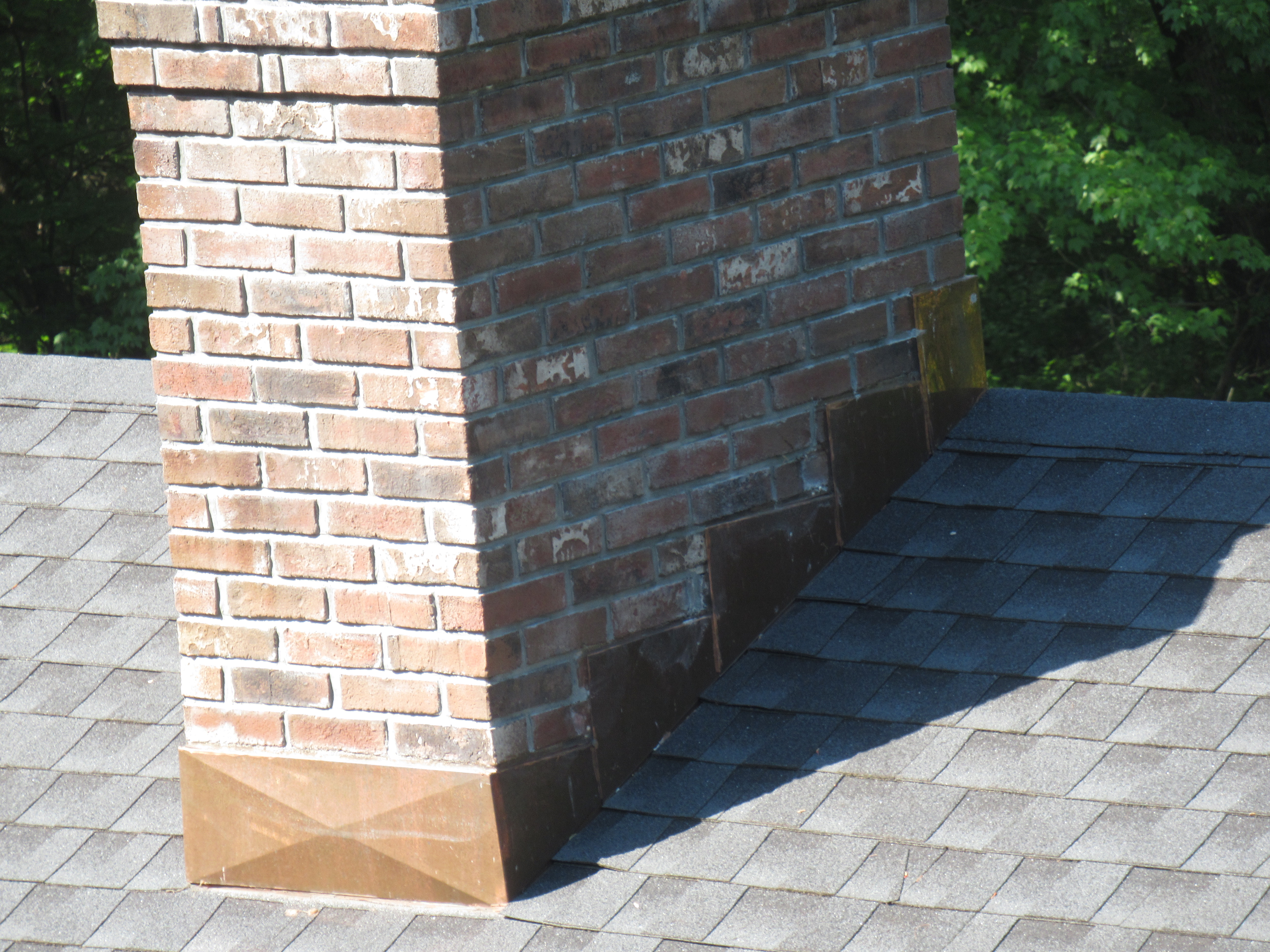 | 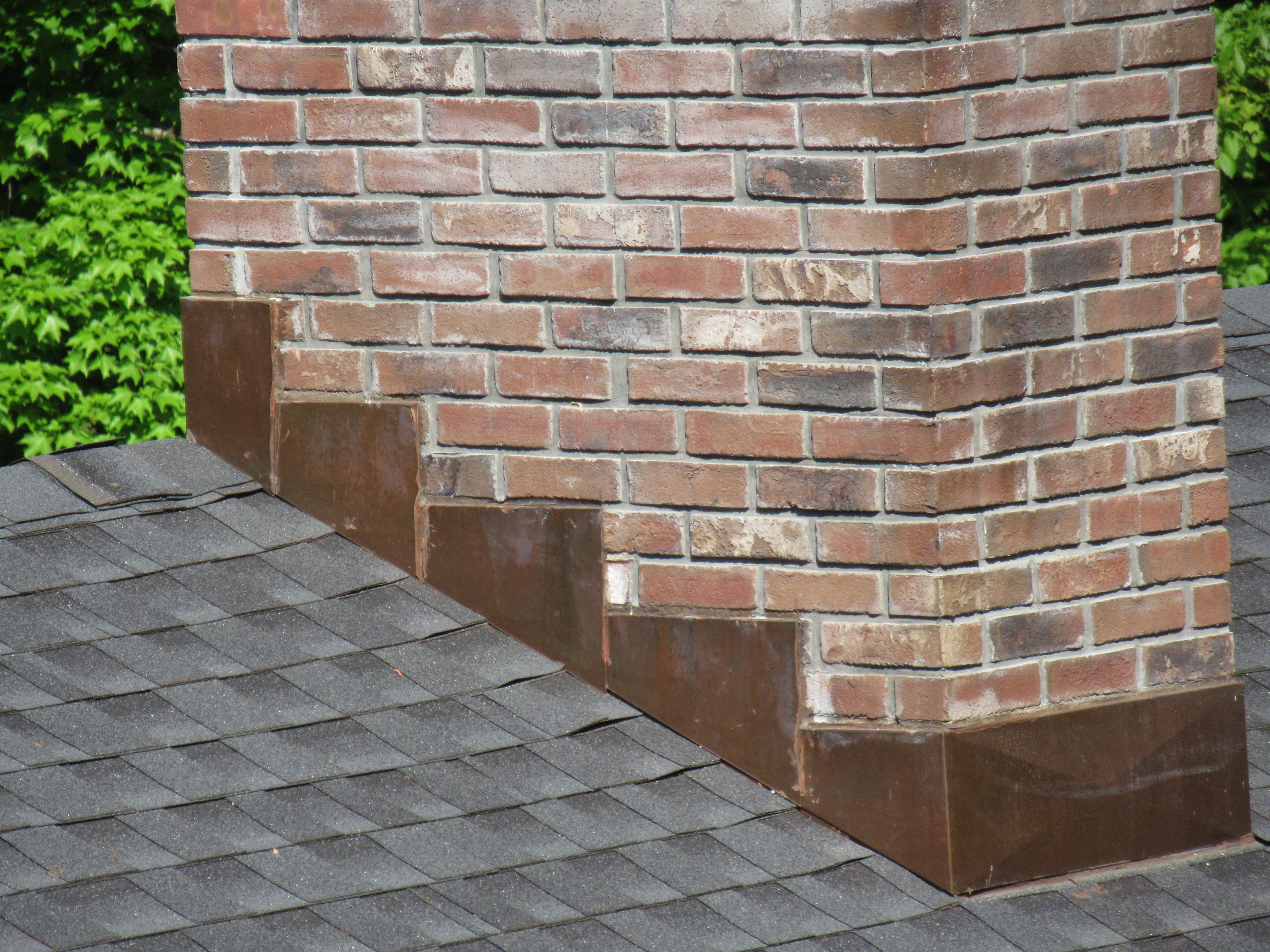 | 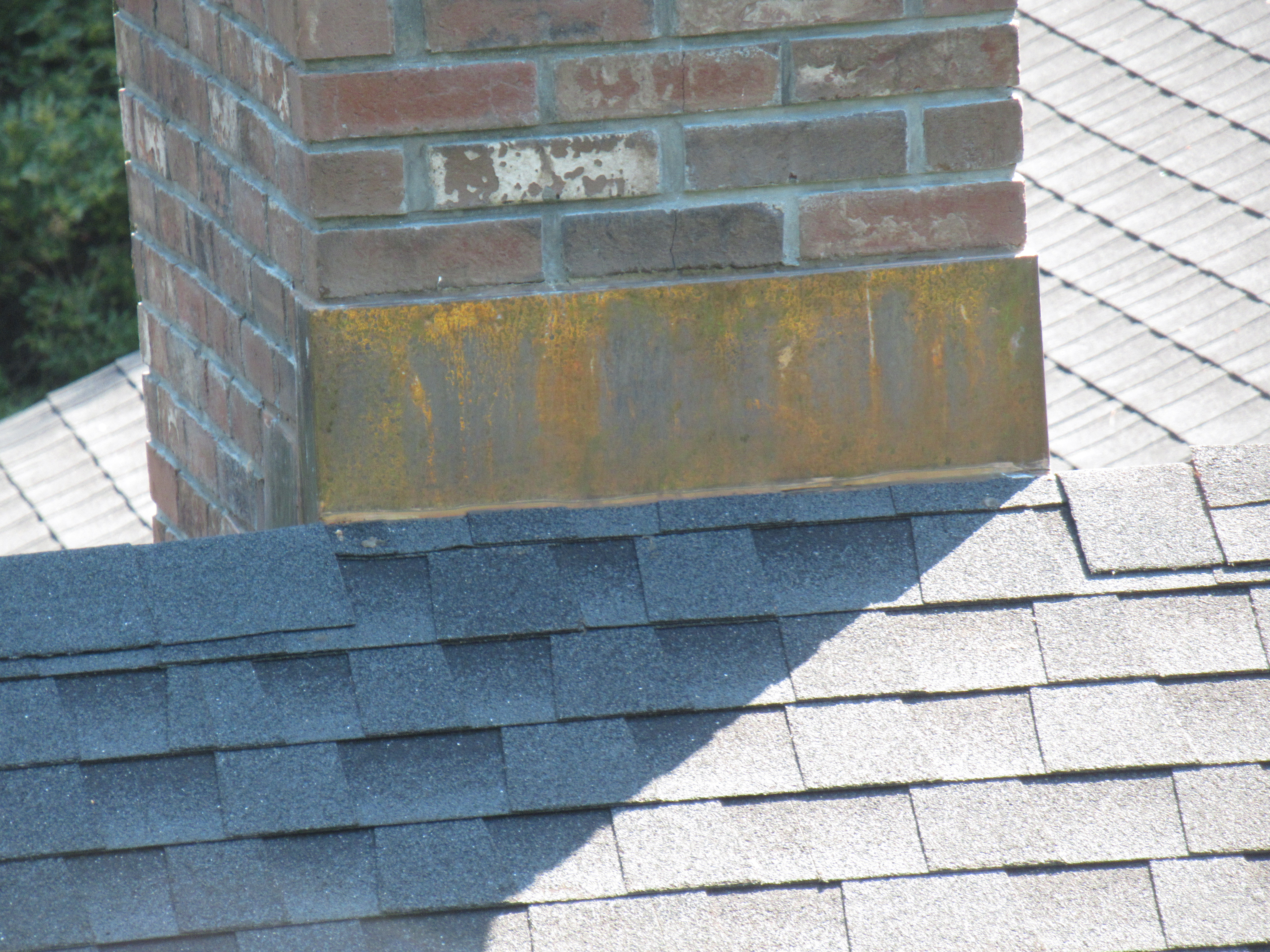 |
Flashing Disclaimer: Only the visible and readily accessible portions of the roof flashing systems were inspected at the time of the evaluation. Flashing components concealed by roofing materials, siding, trim, or other building finishes were not visible and therefore could not be evaluated.
No determination can be made regarding the condition, installation quality, or effectiveness of concealed flashing systems. Any deficiencies may exist in areas not visible during a non-invasive inspection.
Skylights, Chimneys and Roof Penetrations
Plumbing vent stack was fitted with an auto-caulk style flashing, which appeared to be in good visible condition at the time of inspection. No signs of separation, deterioration, or active leakage were noted. Recommend routine monitoring during seasonal roof checks. Maintenance may include re-sealing as needed and ensuring the flashing remains properly seated and watertight to prevent moisture intrusion.
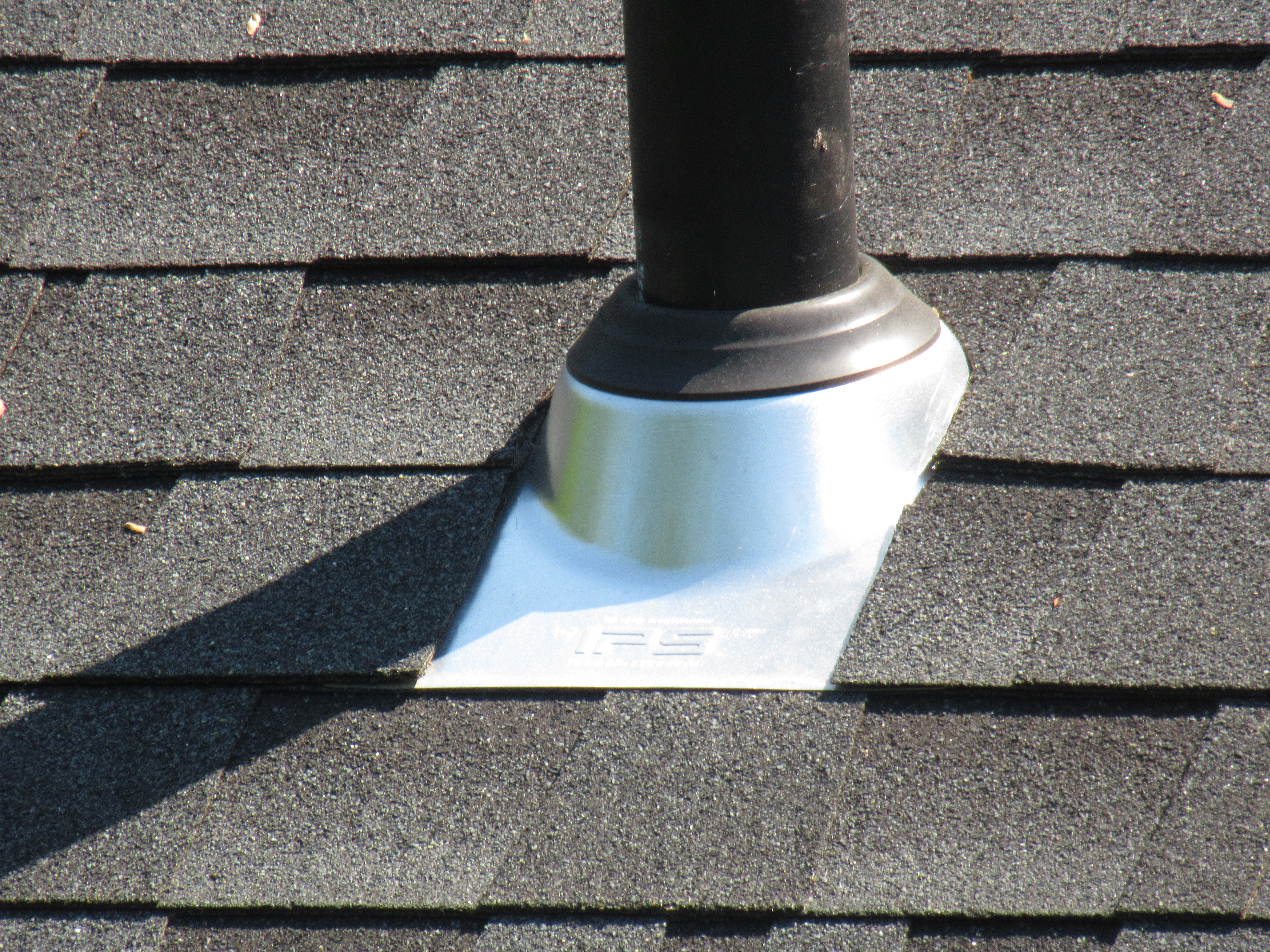
Roof Drainage Systems
Gutter leader lines were observed penetrating directly into the ground; however, the termination point or connection to underground drainage piping could not be located or confirmed. As such, the functionality of the underground drainage system cannot be guaranteed. It is recommended to test the underground piping to ensure proper drainage and to prevent potential water accumulation near the foundation. Annual testing or observation during heavy rainfall is advised to monitor performance. This inspection does not include verification of underground drainage systems.
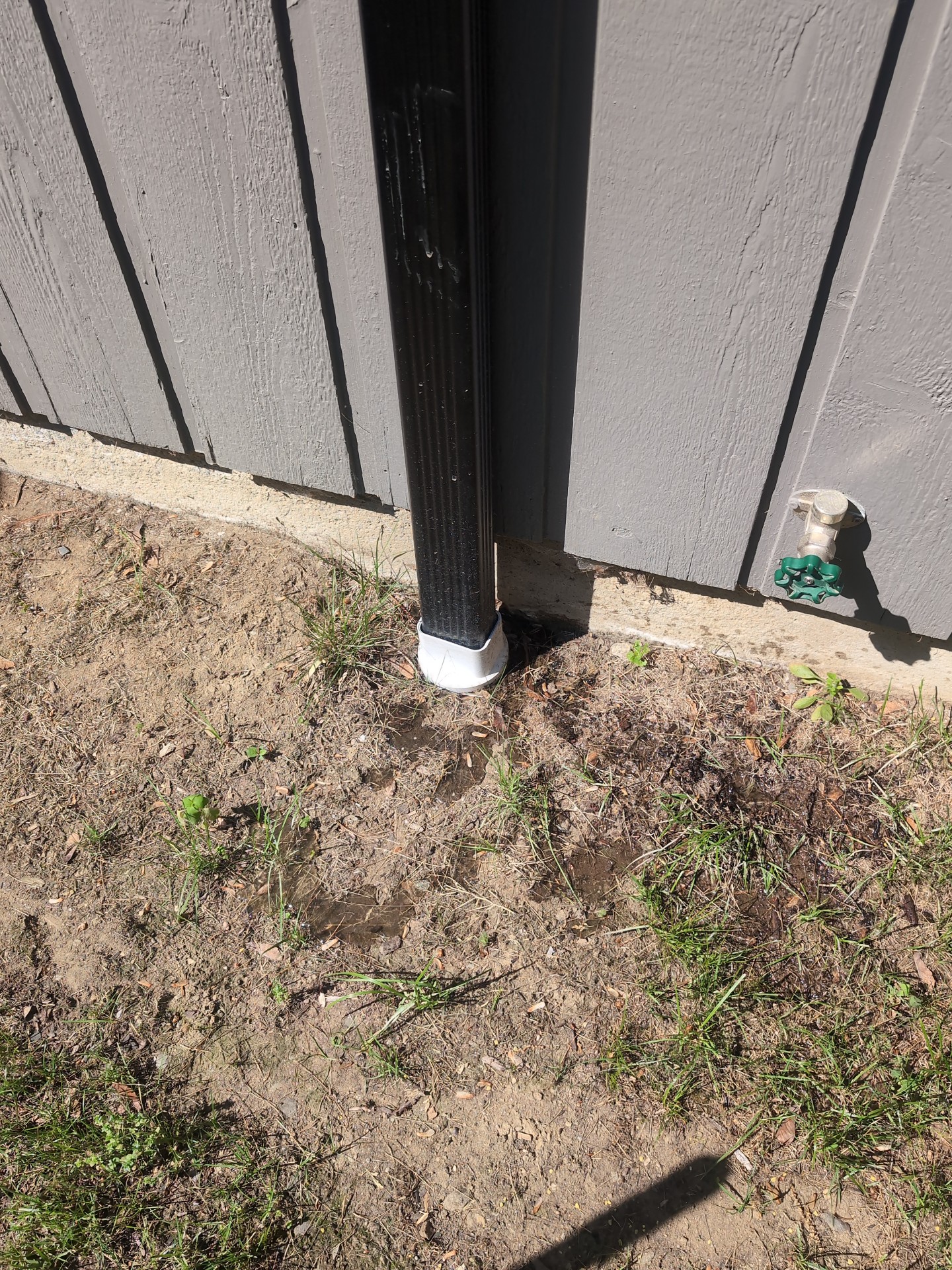 | 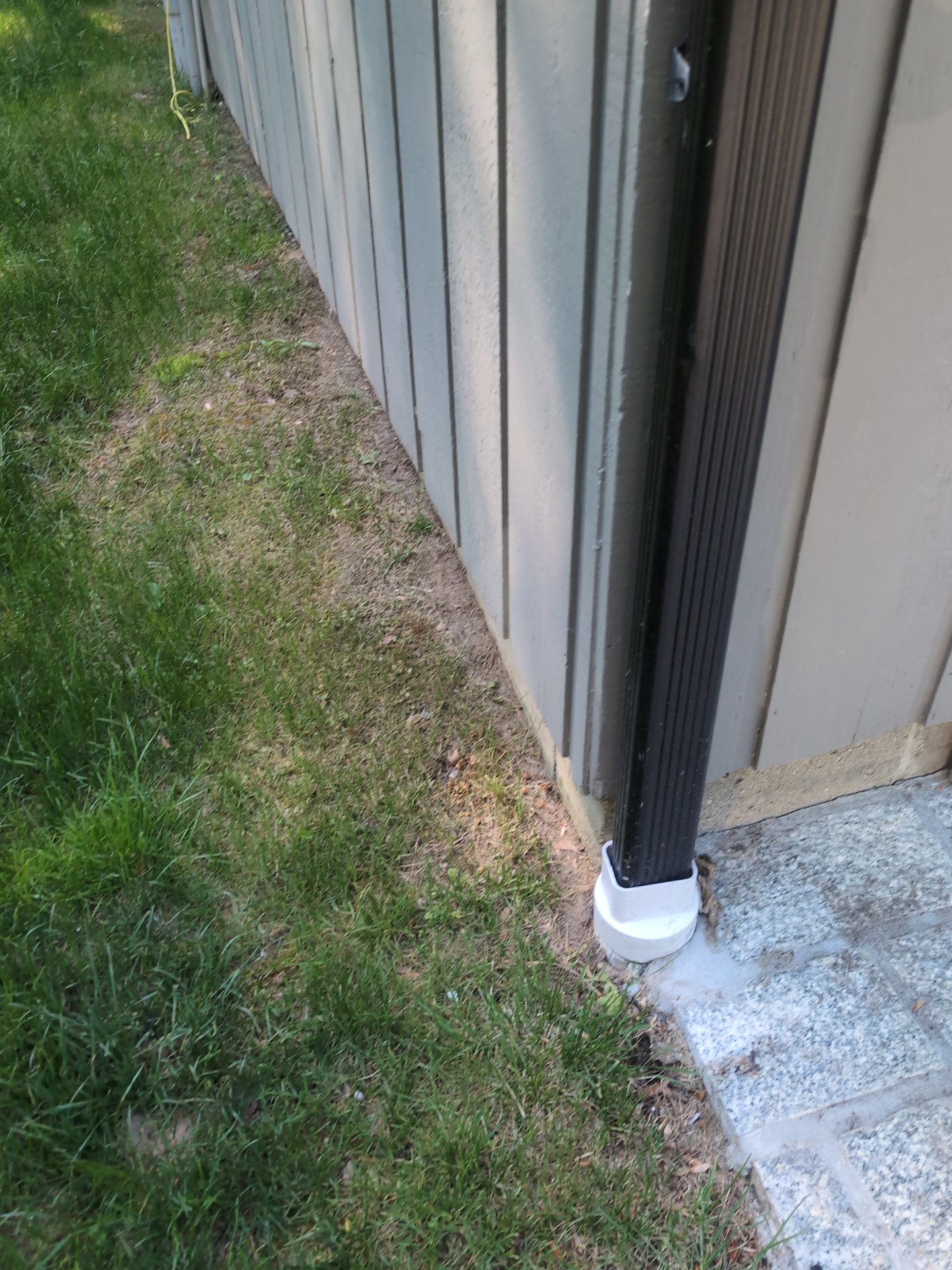 | 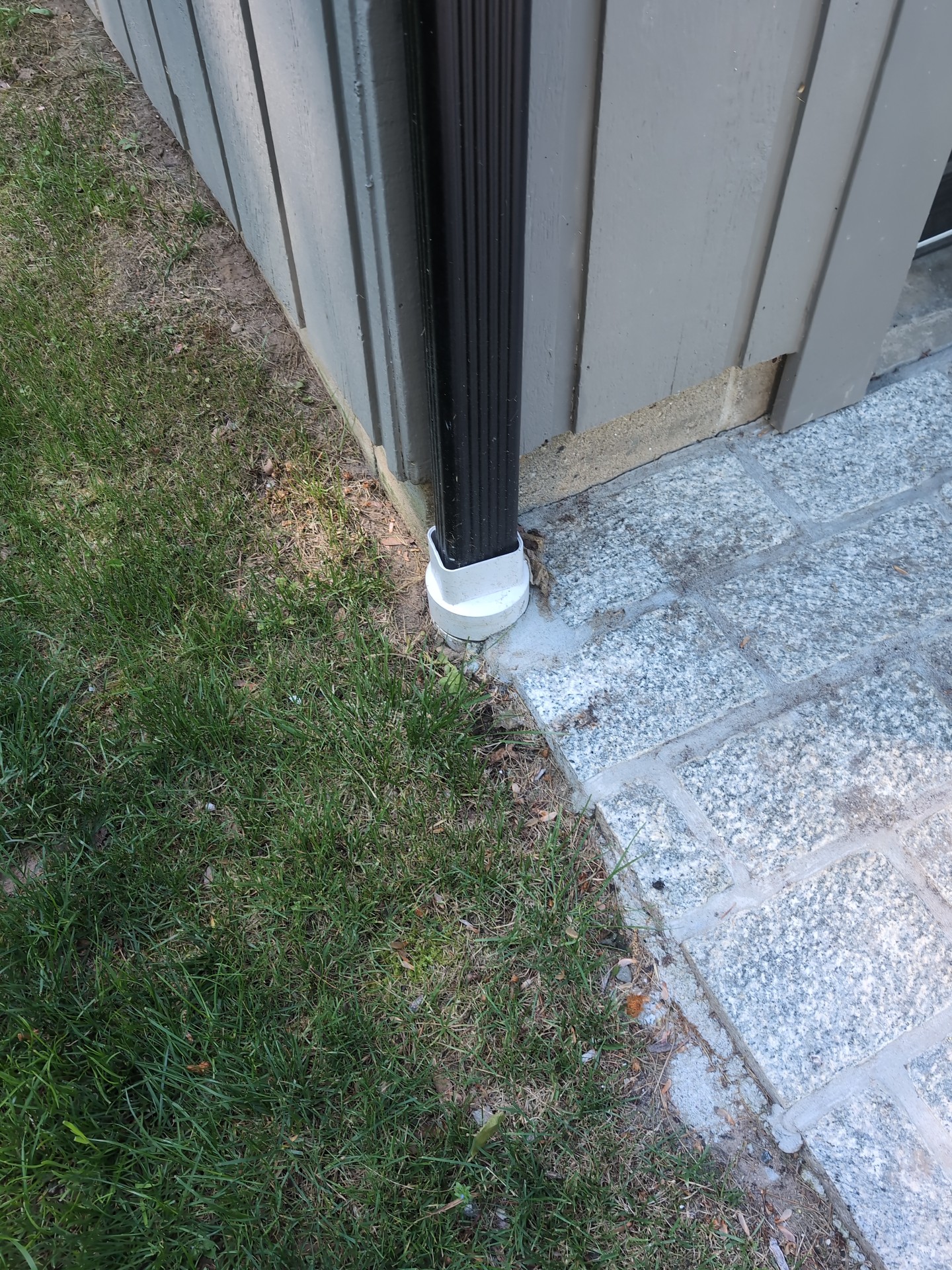 |
All gutter downspouts should terminate at minimum 6' in sandy soils, and 8'-10' in expansive soils from the perimeter of the foundation or be piped into sub-surface drains for the prevention of water intrusion into the basement area. I recommend a licensed gutter specialist for repair.
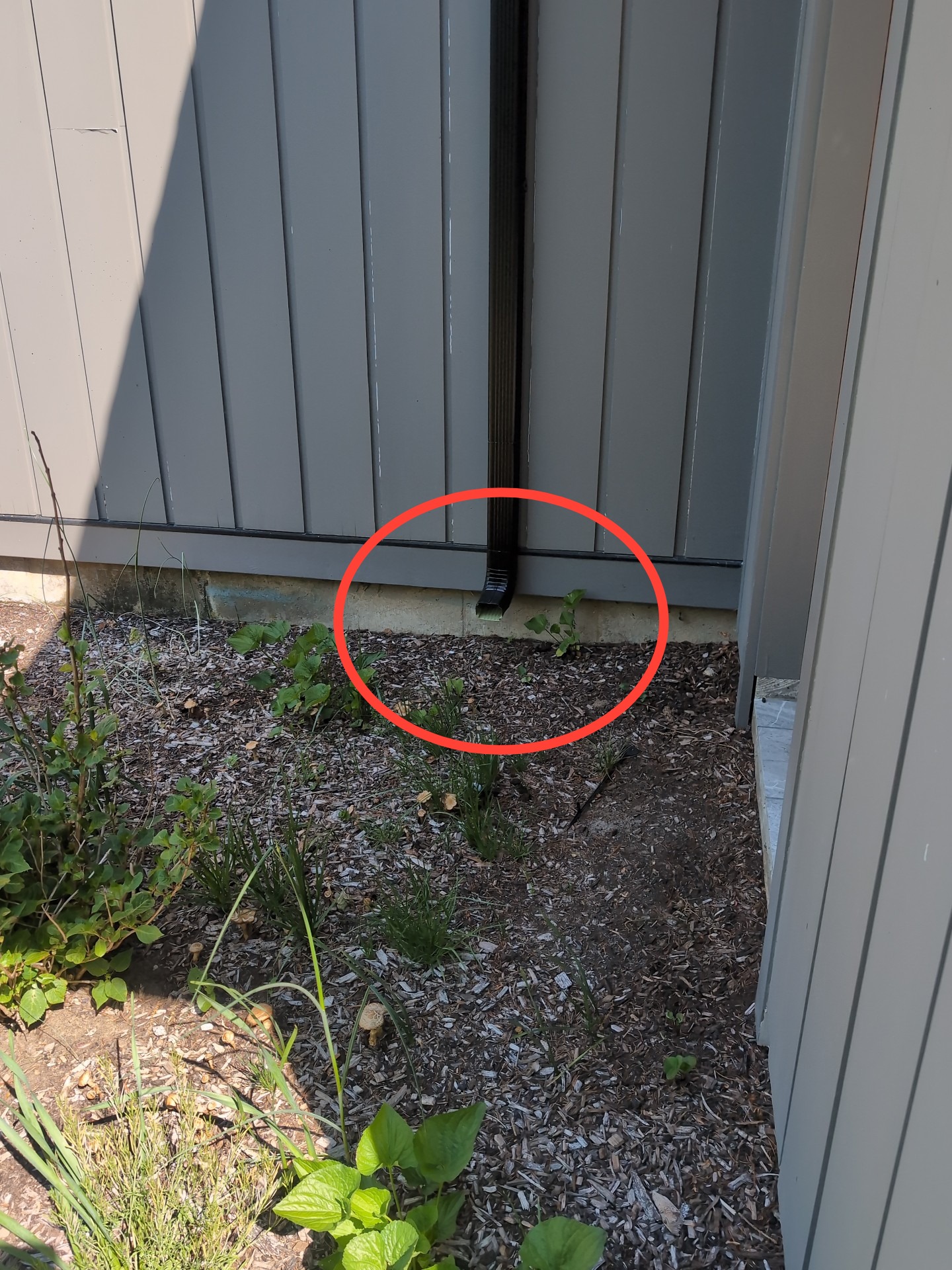 | 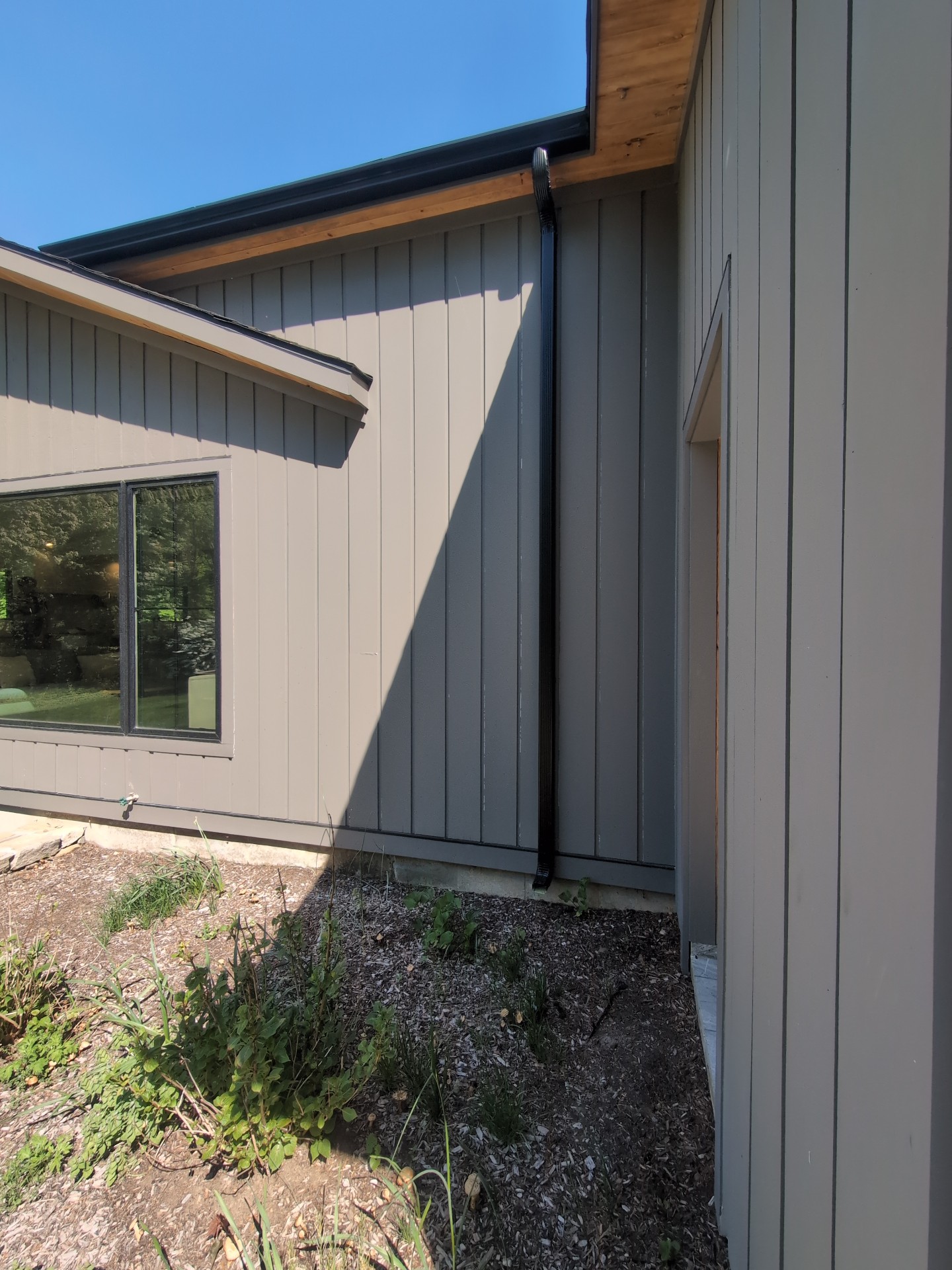 | 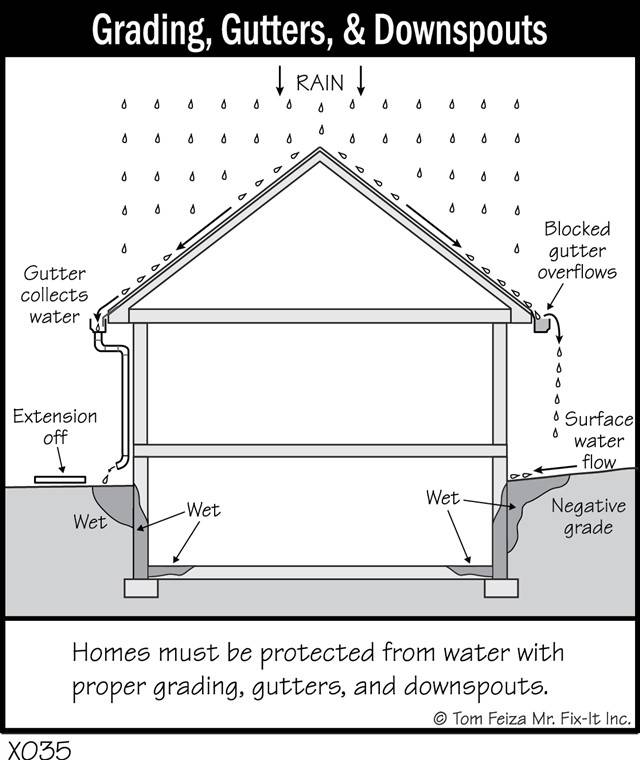 |
Roofing Section Footer
The roof of the home was inspected and reported on with the above information. While the inspector makes every effort to find all areas of concern, some areas can go unnoticed. Roof coverings and skylights can appear to be leak proof during inspection and weather conditions. Our inspection makes an attempt to find a leak but sometimes cannot. Please be aware that the inspector has your best interest in mind. Any repair items mentioned in this report should be considered before purchase. It is recommended that qualified contractors be used in your further inspection or repair issues as it relates to the comments in this inspection report.
Garage
Styles and Materials
Garage Door Type:One automatic
Garage Door Material:Metal, insulated
Auto-opener Manufacturer:CHAMBERLAIN
Garage Ceilings
None present, rough framing only.
Garage Walls (including Firewall Separation)
None present, rough framing only.
Garage Floor
Consider sealing/coating the garage floor with a professionally installed coating system such as polyurea or a similar high-performance garage floor coating product. Polyurea coatings are commonly utilized due to their durability, chemical resistance, rapid curing characteristics, and improved appearance when compared to traditional concrete sealers or paints.
Features and benefits of polyurea floor coatings include improved resistance to road salts, oil stains, chemicals, tire marking, moisture intrusion, surface abrasion, and freeze/thaw deterioration. These coatings can also improve ease of cleaning, reduce concrete dusting, and enhance the overall appearance and brightness of the garage area. Professionally installed systems typically include crack repair, concrete surface preparation, and a textured non-slip finish option for improved safety.
Recommend further evaluation by a qualified garage floor coating contractor (A.G. Williams Inc.) if upgrades or long-term concrete surface protection are desired.
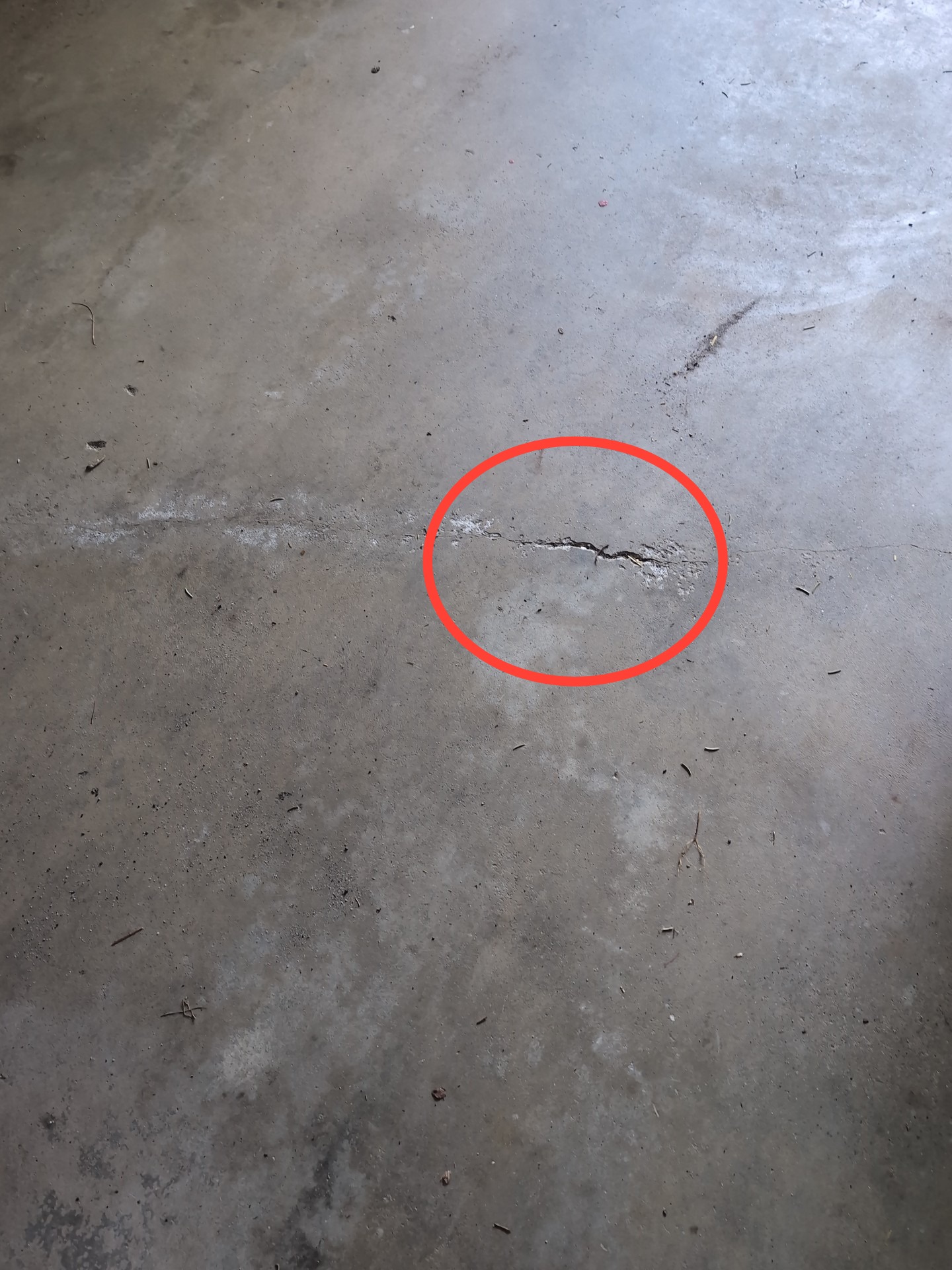 | 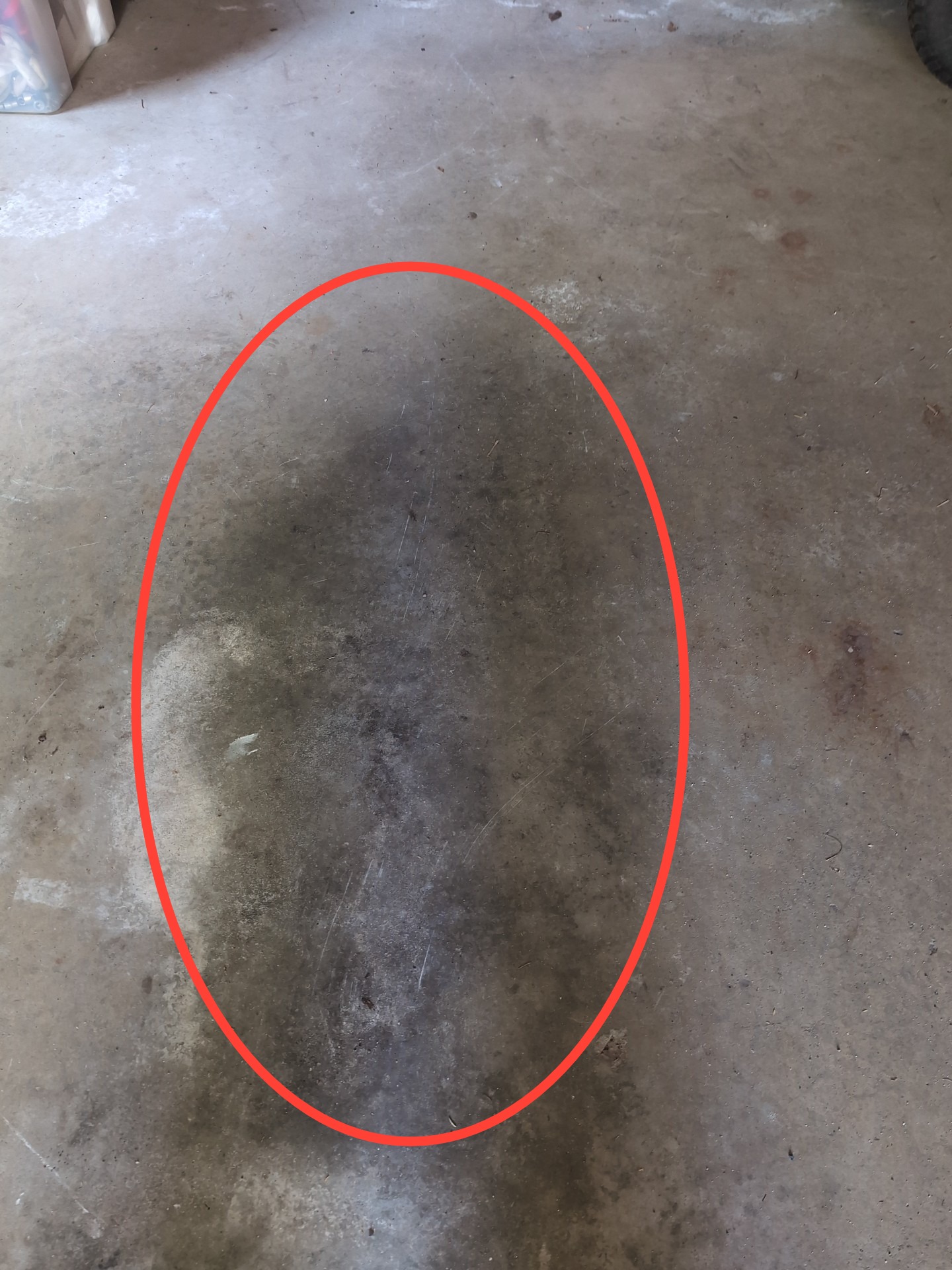 |
Garage Door (s)
The metal insulated garage door appeared to be slightly buckled/deformed in the middle section at the time of the inspection, most likely consistent with minor impact damage such as a vehicle backing into the door. Although the garage door remained operational when tested, damaged door panels can place additional strain on the door tracks, rollers, hinges, and automatic opener components over time. Recommend further evaluation and repair or replacement by a qualified garage door contractor as needed to help ensure continued safe and reliable operation.
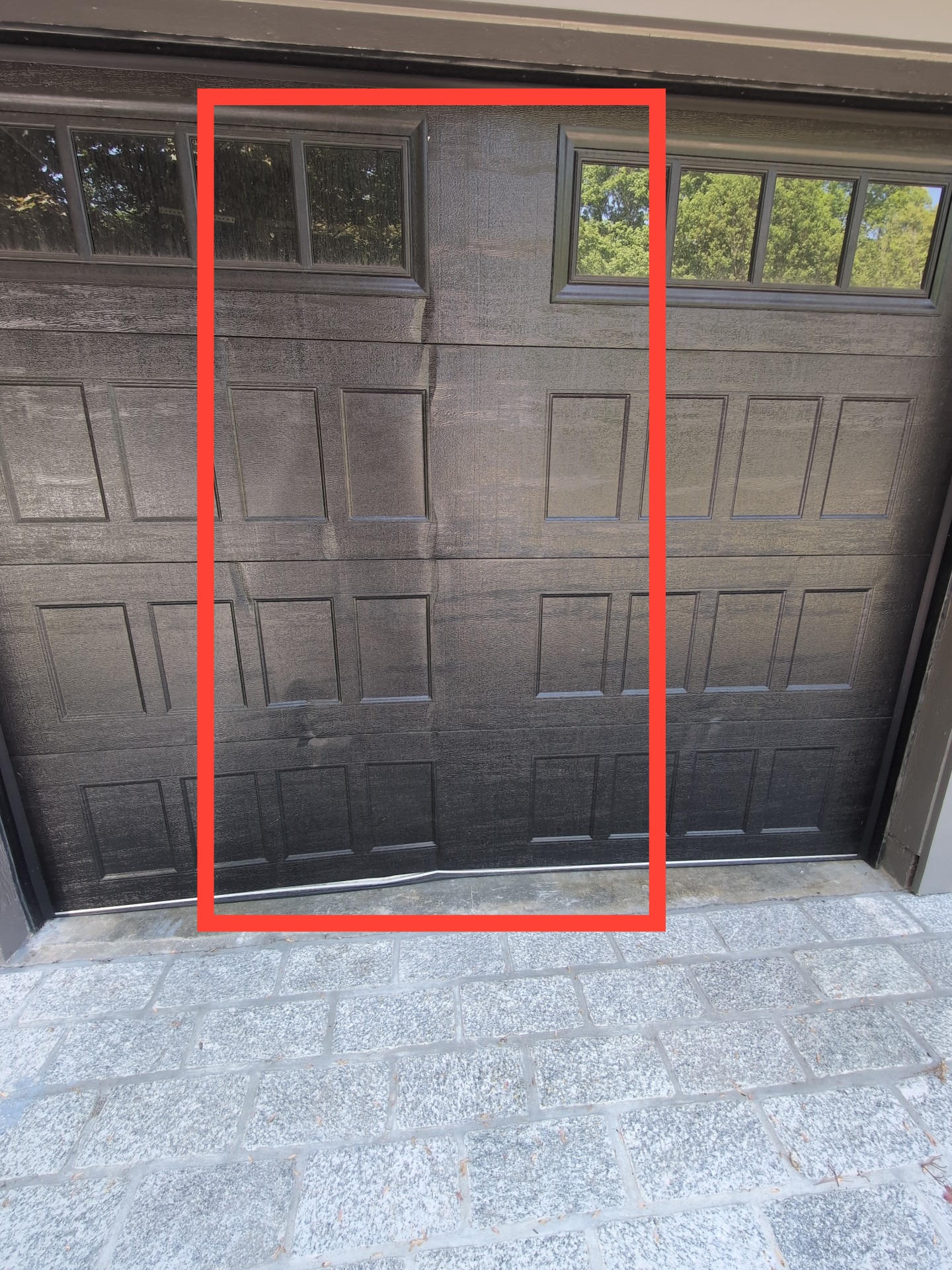 | 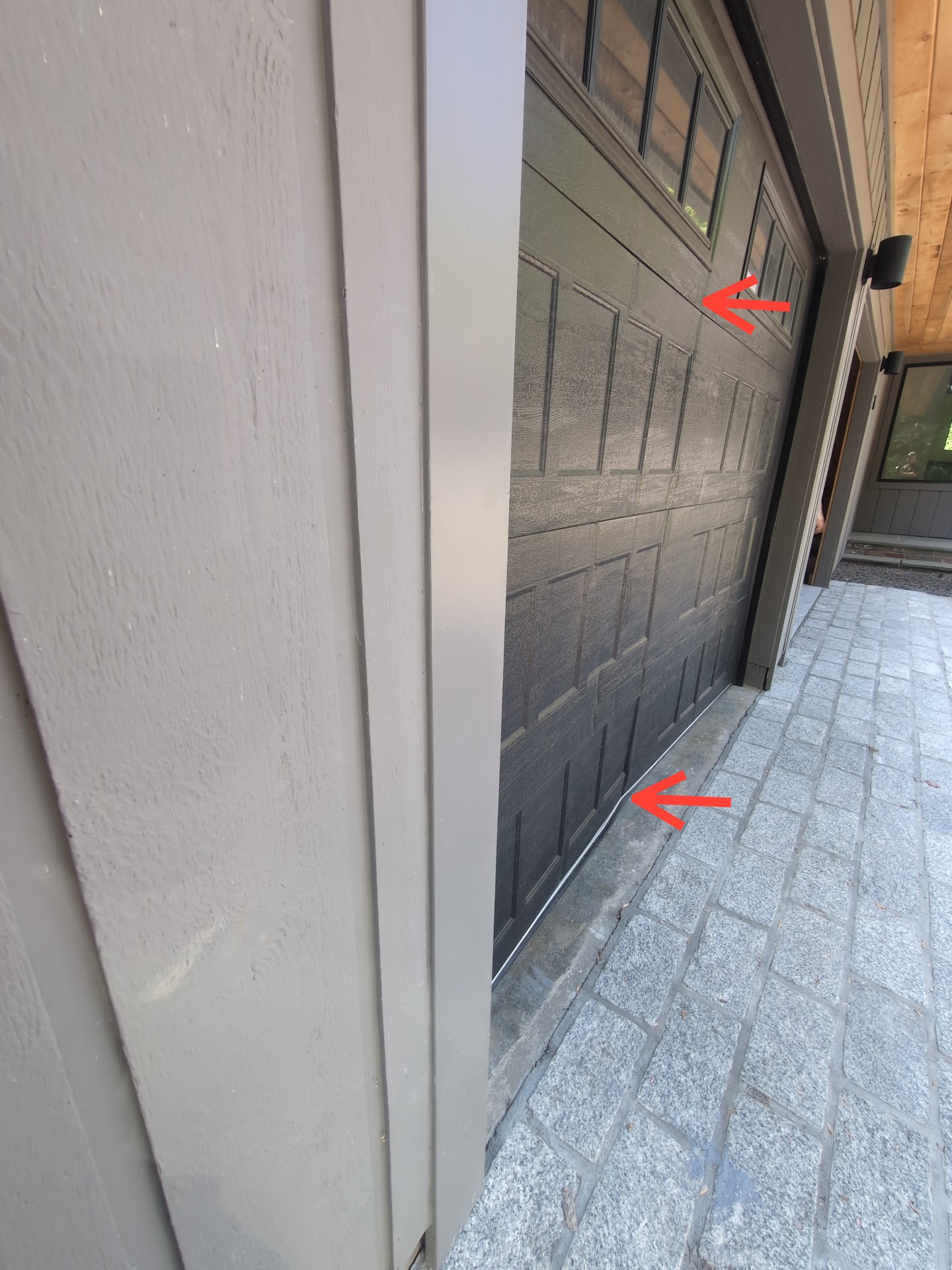 |
Garage / bottom weatherstripping
The rubber weatherstripping at the bottom of the garage door (looking from the exterior) was damaged and in need of replacement at the time of the inspection. Damaged or missing weatherstripping can allow water intrusion, air leakage, pest entry, and debris infiltration, and may also contribute to energy loss and moisture-related deterioration within the garage.
Recommend replacement by a licensed contractor to restore a proper seal at the door opening and improve weather resistance and overall performance.
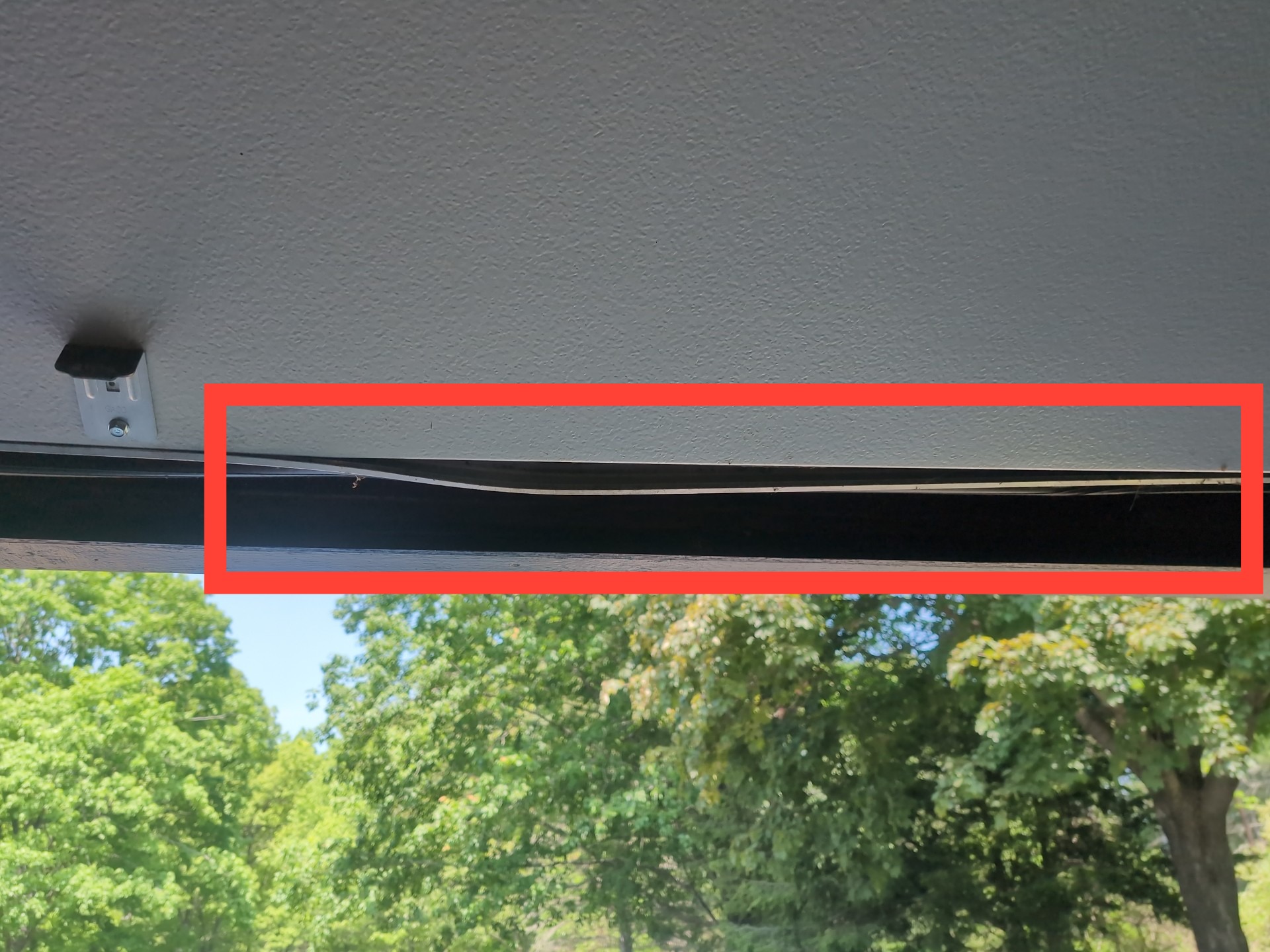
Occupant Door (from garage to inside of home)
Not present, detached garage.
Garage Door Operators (Report whether or not doors will reverse when met with resistance)
The garage doors will reverse when met with resistance. Test safety mechanisms on a quarterly basis and make adjustments as needed.
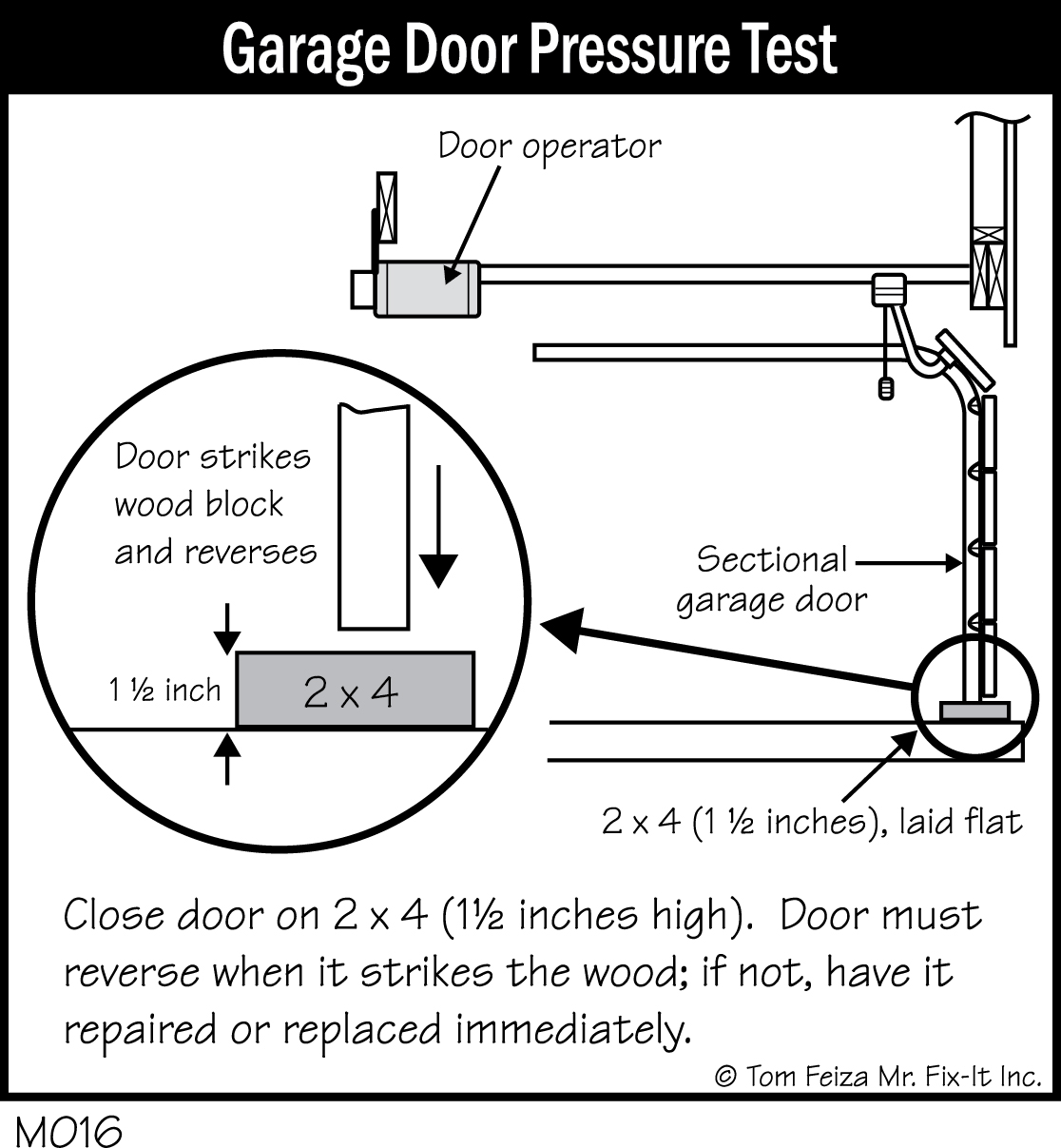
The photo eye sensors are in place for garage door(s) and will reverse the door. Test safety mechanisms on a quarterly basis and make adjustments as needed.
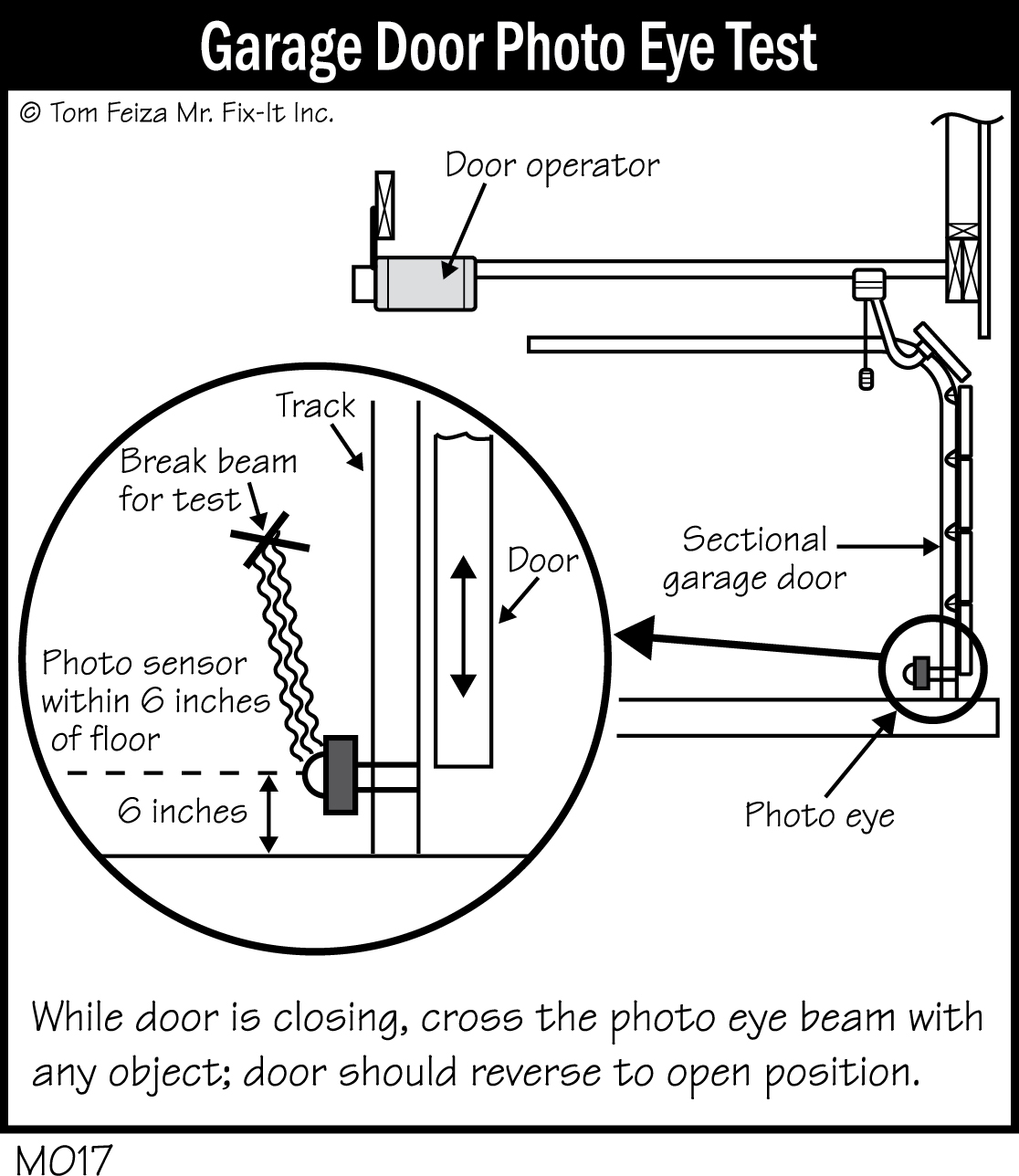
Electrical System
Styles and Materials
Electrical Service Conductors:Below ground
Panel capacity:200 AMP
Panel Type:Circuit breakers
Electric Panel Manufacturer:GENERAL ELECTRIC
Branch wire 15 and 20 AMP:Copper
Wiring Methods:(NM) Non-metalic
The home inspector shall observe: Service entrance conductors; Service equipment, grounding equipment, main over current device, and main and distribution panels; Amperage and voltage ratings of the service; Branch circuit conductors, their over current devices, and the compatibility of their ampacities and voltages; The operation of a representative number of installed ceiling fans, lighting fixtures, switches and receptacles located inside the house, garage, and on the dwelling's exterior walls; The polarity and grounding of all receptacles within six feet of interior plumbing fixtures, and all receptacles in the garage or carport, and on the exterior of inspected structures; The operation of ground fault circuit interrupters; and Smoke detectors. The home inspector shall describe: Service amperage and voltage; Service entry conductor materials; Service type as being overhead or underground; and Location of main and distribution panels. The home inspector shall report any observed aluminum branch circuit wiring. The home inspector shall report on presence or absence of smoke detectors, and operate their test function, if accessible, except when detectors are part of a central system.
The home inspector is not required to: Insert any tool, probe, or testing device inside the panels; Test or operate any over current device except ground fault circuit interrupters; Dismantle any electrical device or control other than to remove the covers of the main and auxiliary distribution panels; or Observe: Low voltage systems; Security system devices, heat detectors, or carbon monoxide detectors; Telephone, security, cable TV, intercoms, or other ancillary wiring that is not a part of the primary electrical distribution system; or Built-in vacuum equipment.
Service Entrance Conductors
No visual issues noted at the time of the inspection.
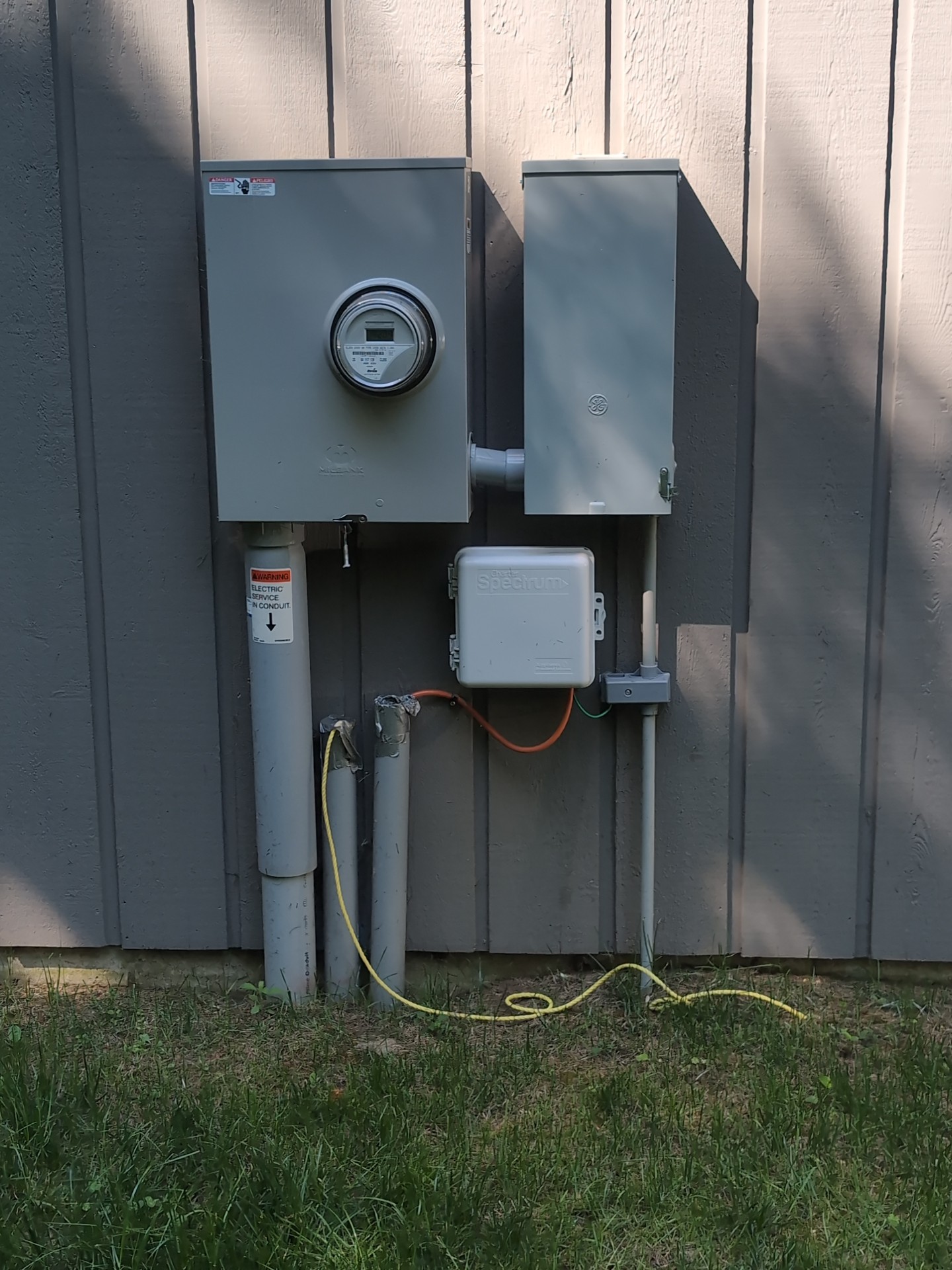
Service and Grounding Equipment, Main Overcurrent Device, Main and Distribution Panels
The main 200 amp capacity overcurrent device is located at the left exterior wall of the garage. This overcurrent device turns all electrical power off to the home. It is located directly to the right of the electric service meter.
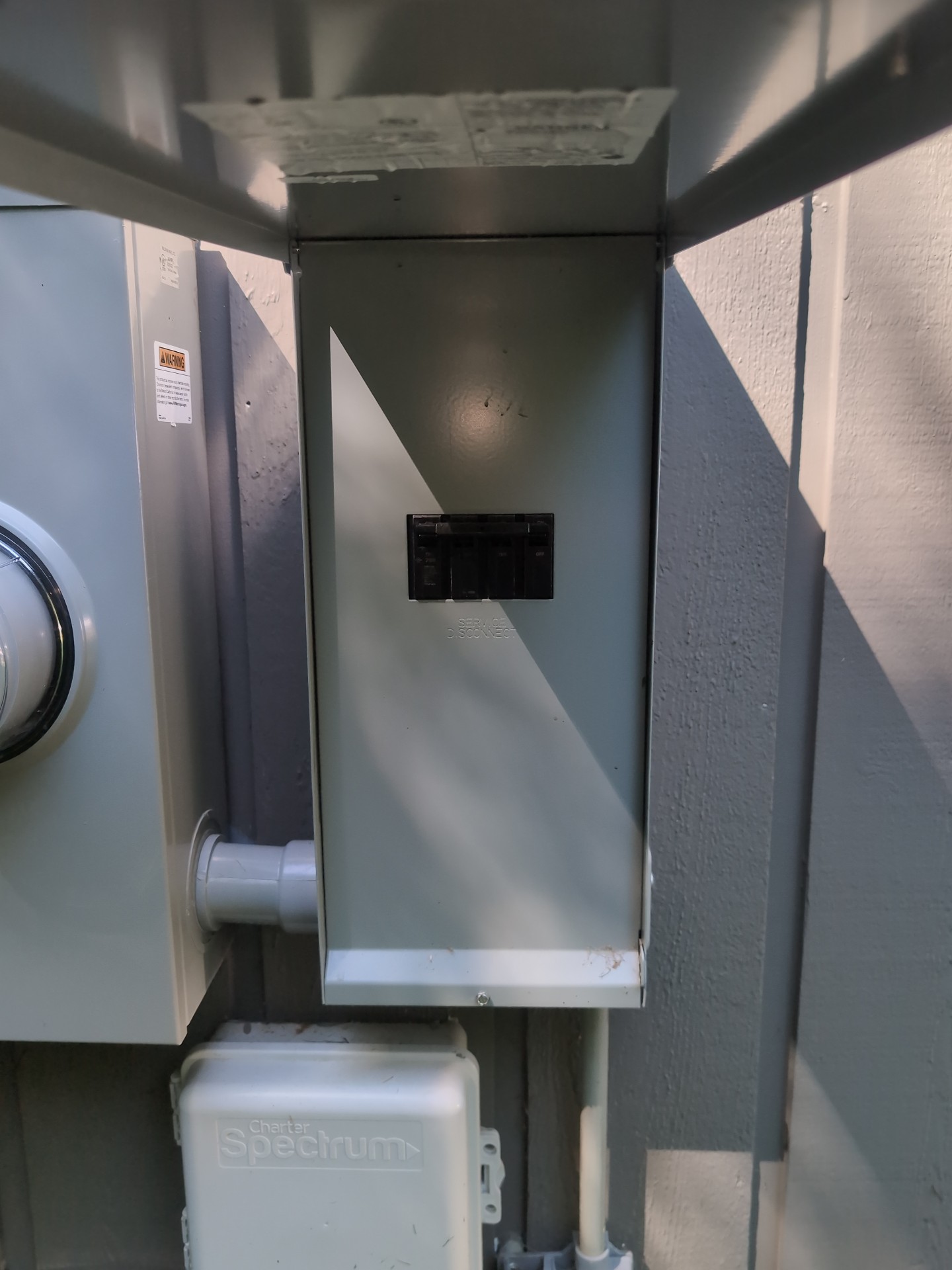 | 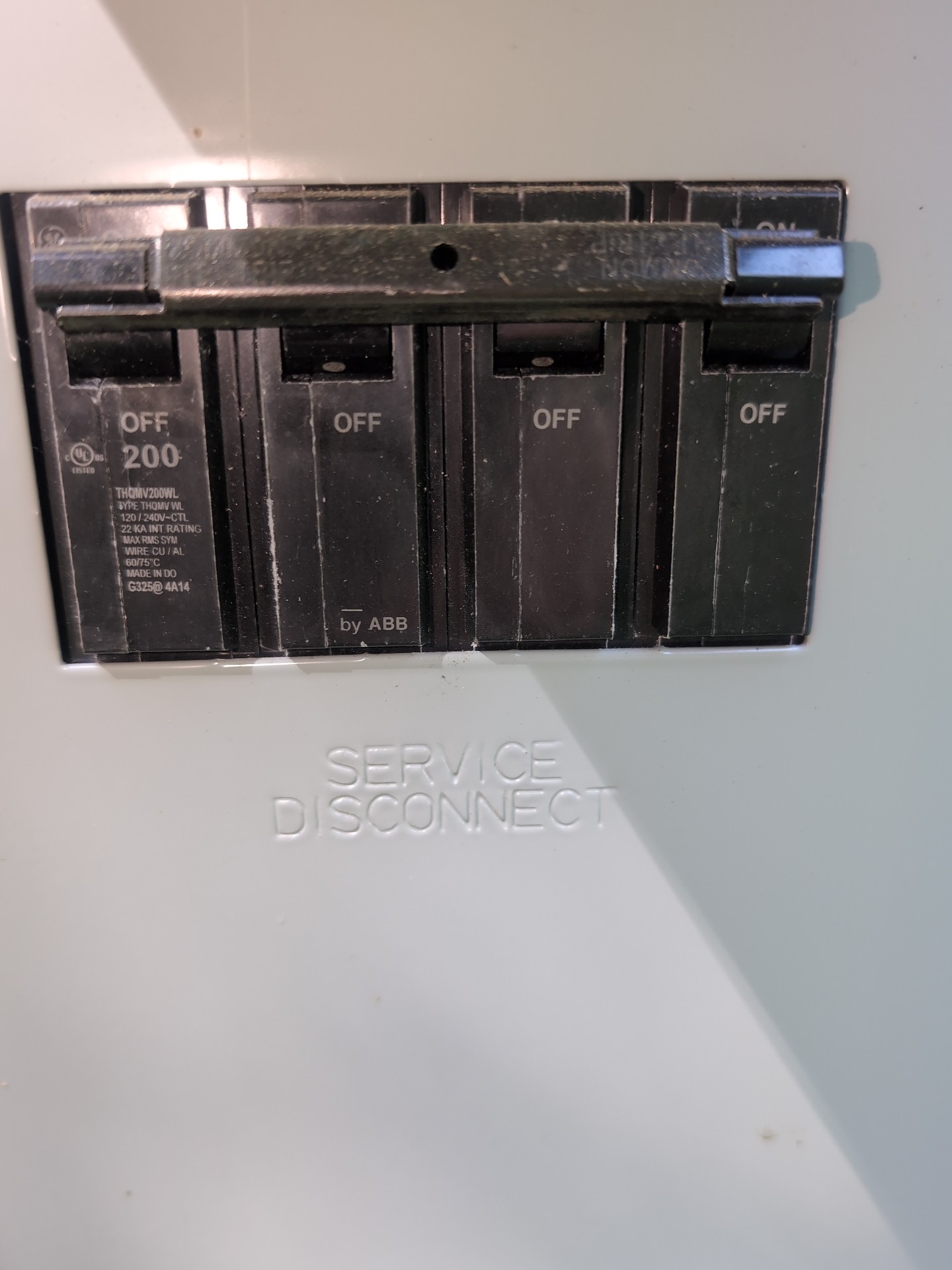 |
Grounding rod
I could not locate the ground rod. The ground rod may not be present or could be hidden from view by landscaping and or landscaping materials. I recommend an electrical contractor verify or install a ground rod.
The electrical systems bonding/grounding clamp was firmly in place on the copper water line at the well water storage tank.
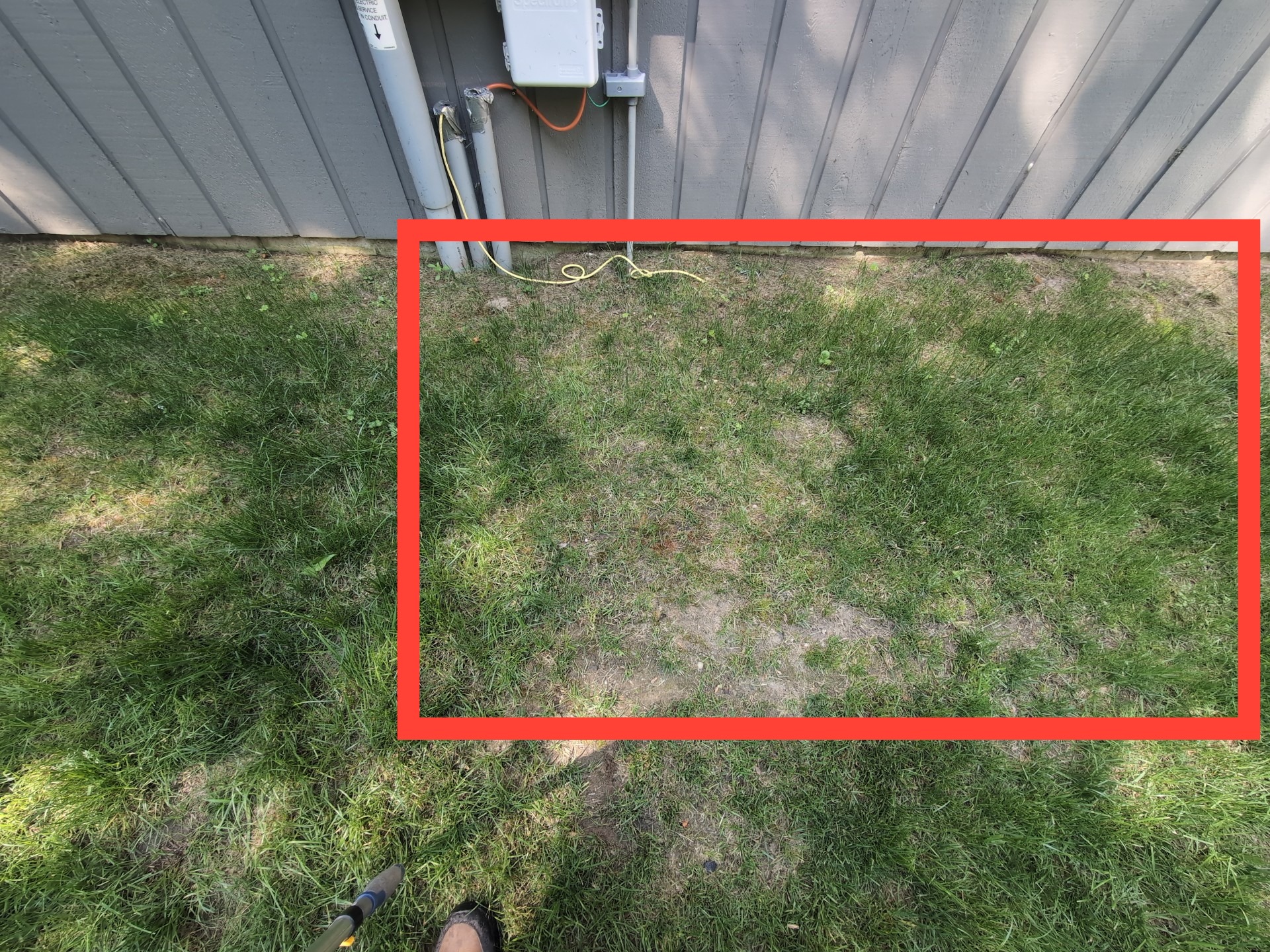 | 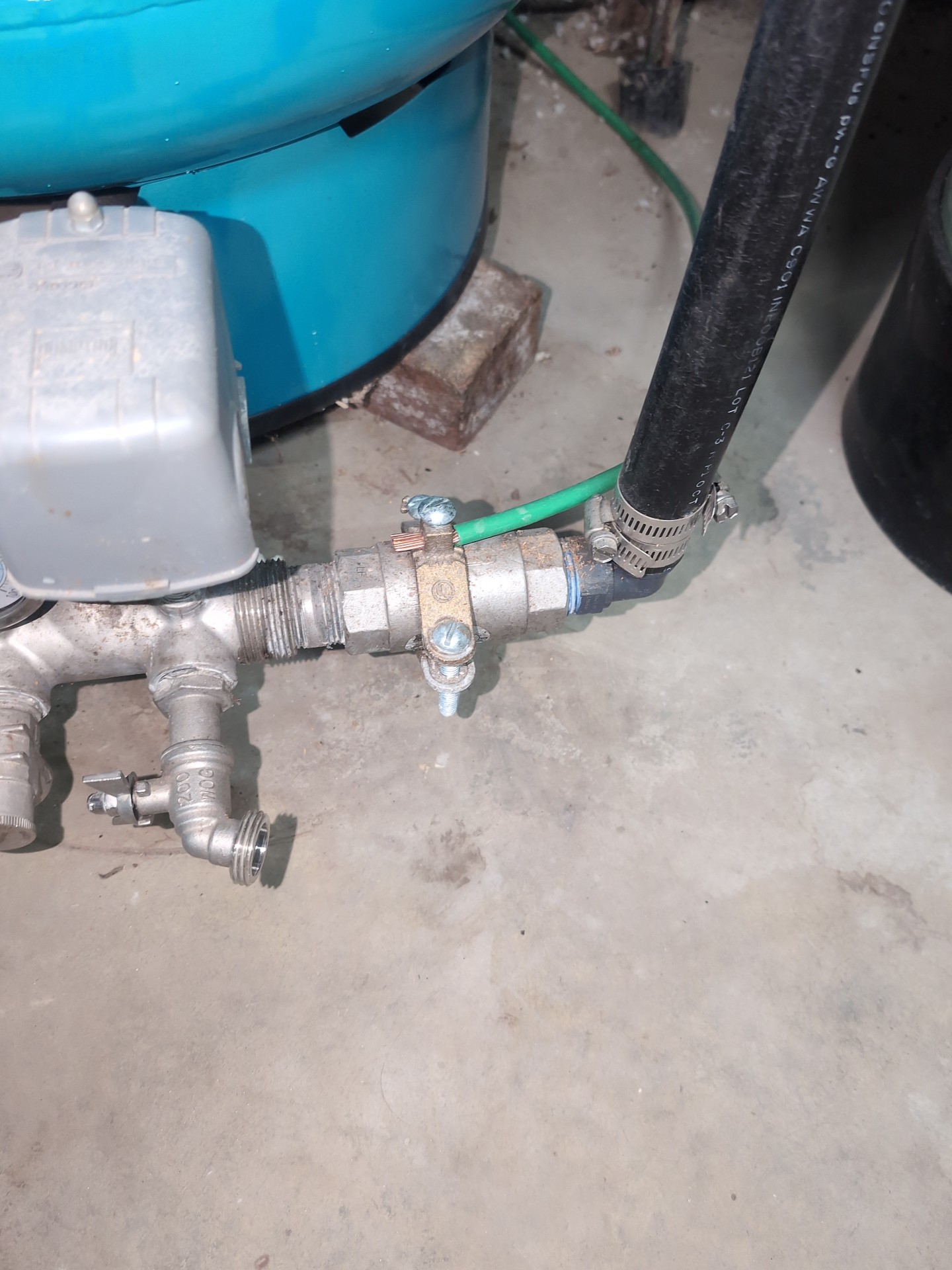 | 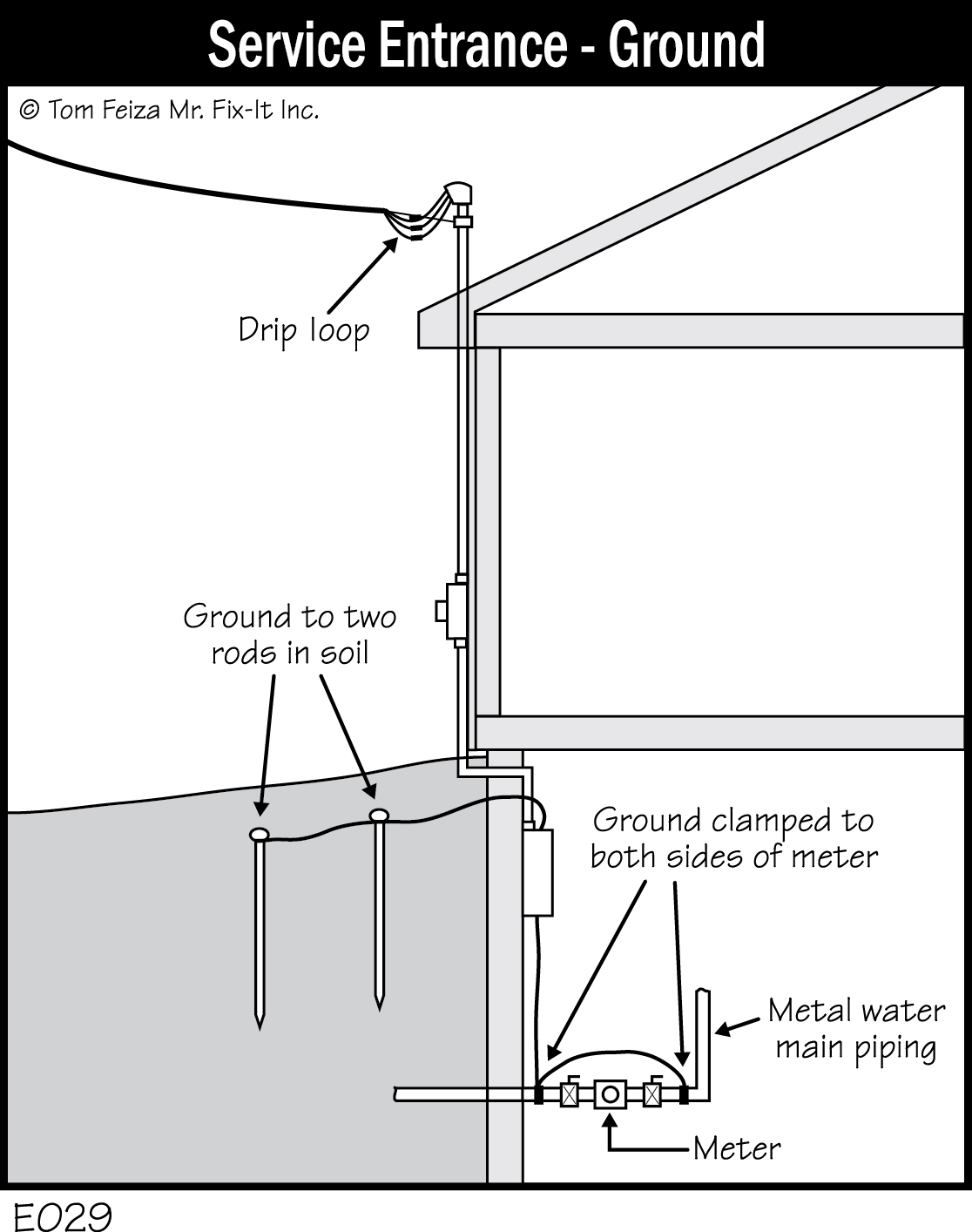 |
Main Service Panel: The main 200 amp capacity electric service panel installed in the detached garage supplies current to 1-15 amp circuit, 4-20 amp circuits, 1-40 amp double pole circuit, 1-50 amp double pole circuit, and 1-100 amp double pole circuit. There were 29 open slots for expansion.
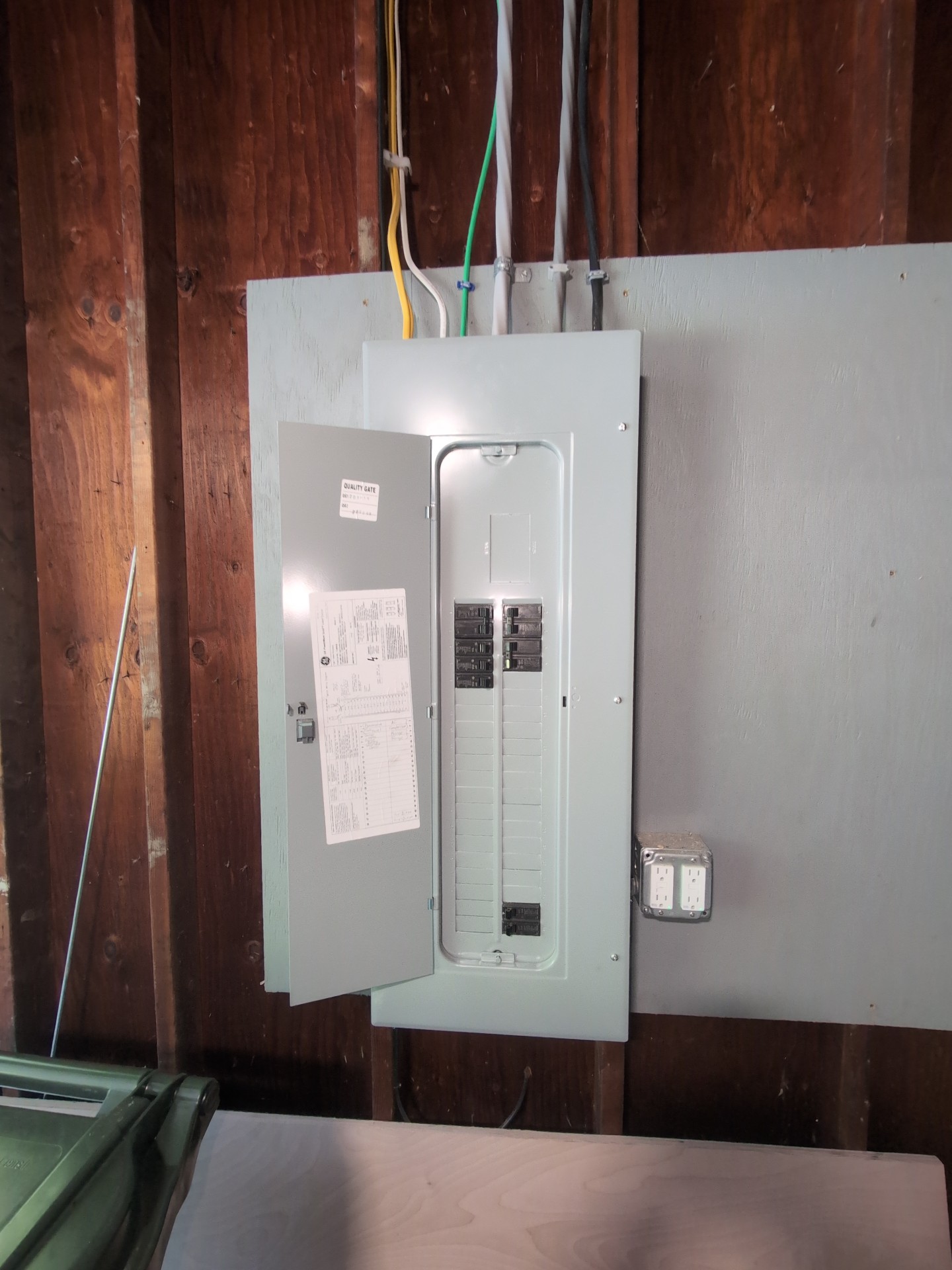 | 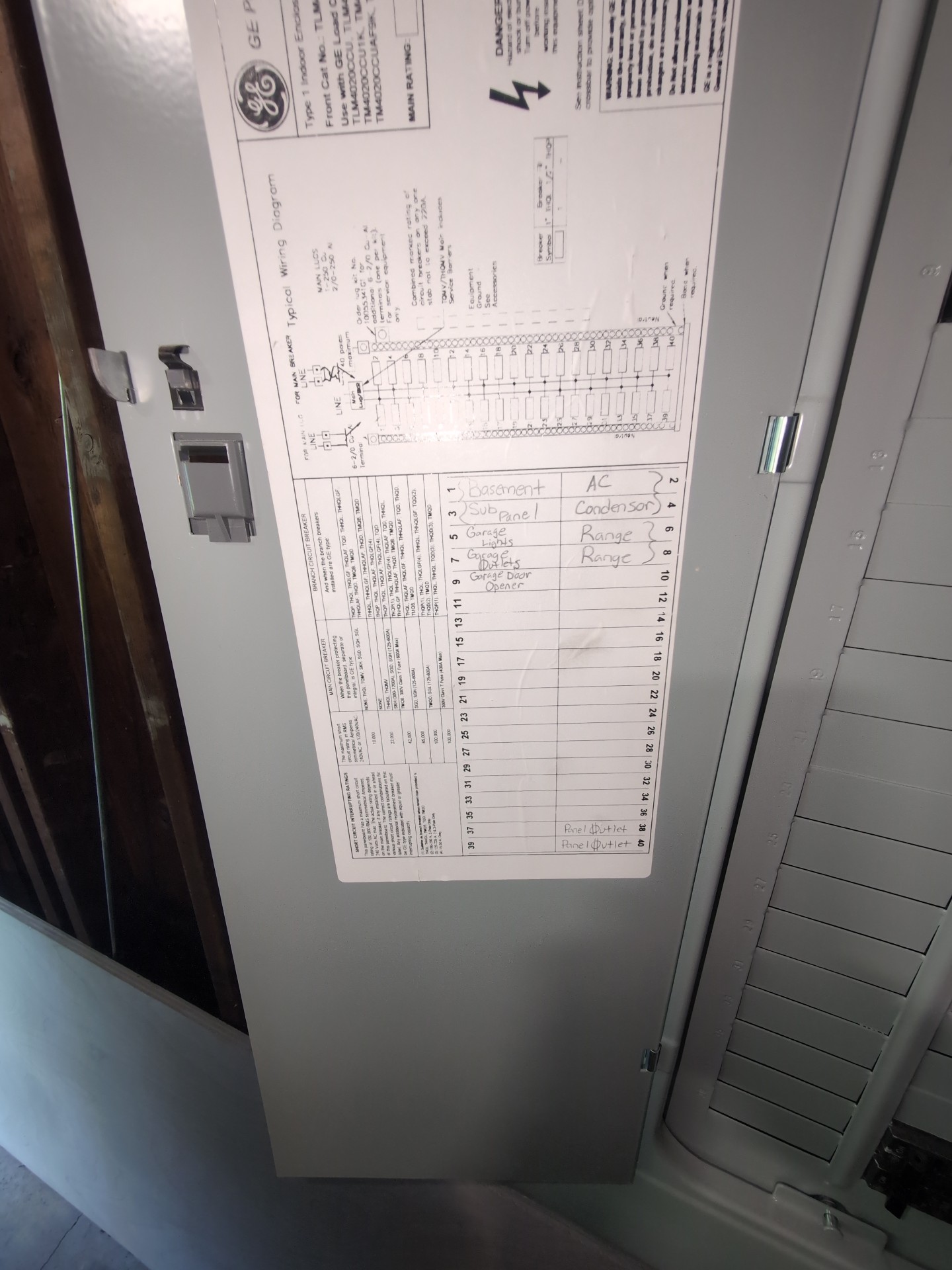 | 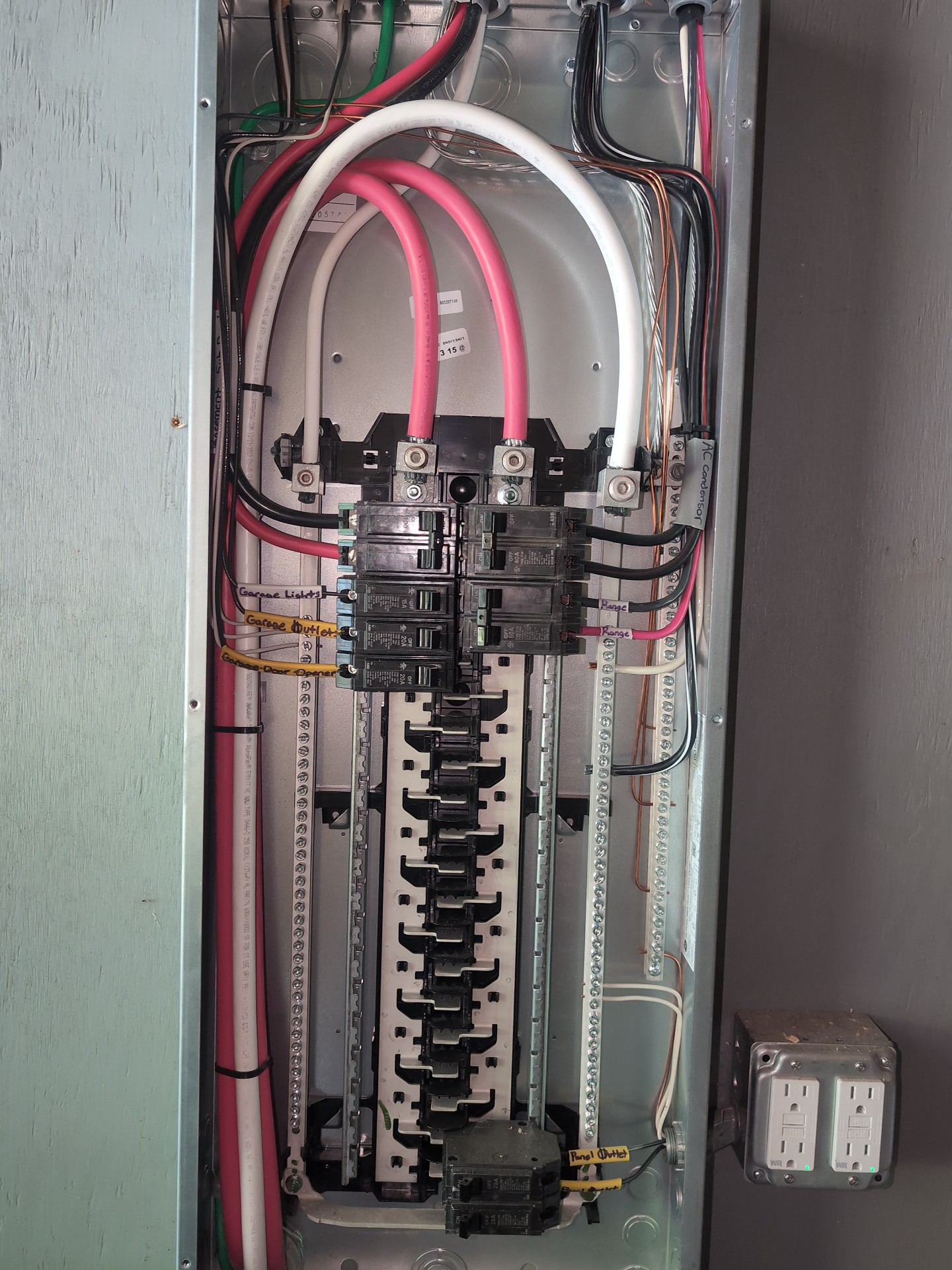 |
Basement Sub-Panel: The 100 amp sub – electric panel installed in the unfinished basement area supplies current to 12-15 amp circuits (10 being AFC I protected), 19-20 amp circuits (8 being AFC I protected), 2-at 20 amp double pole circuits, and 2-30 amp double pole circuits. There was 1 open slot for expansion.
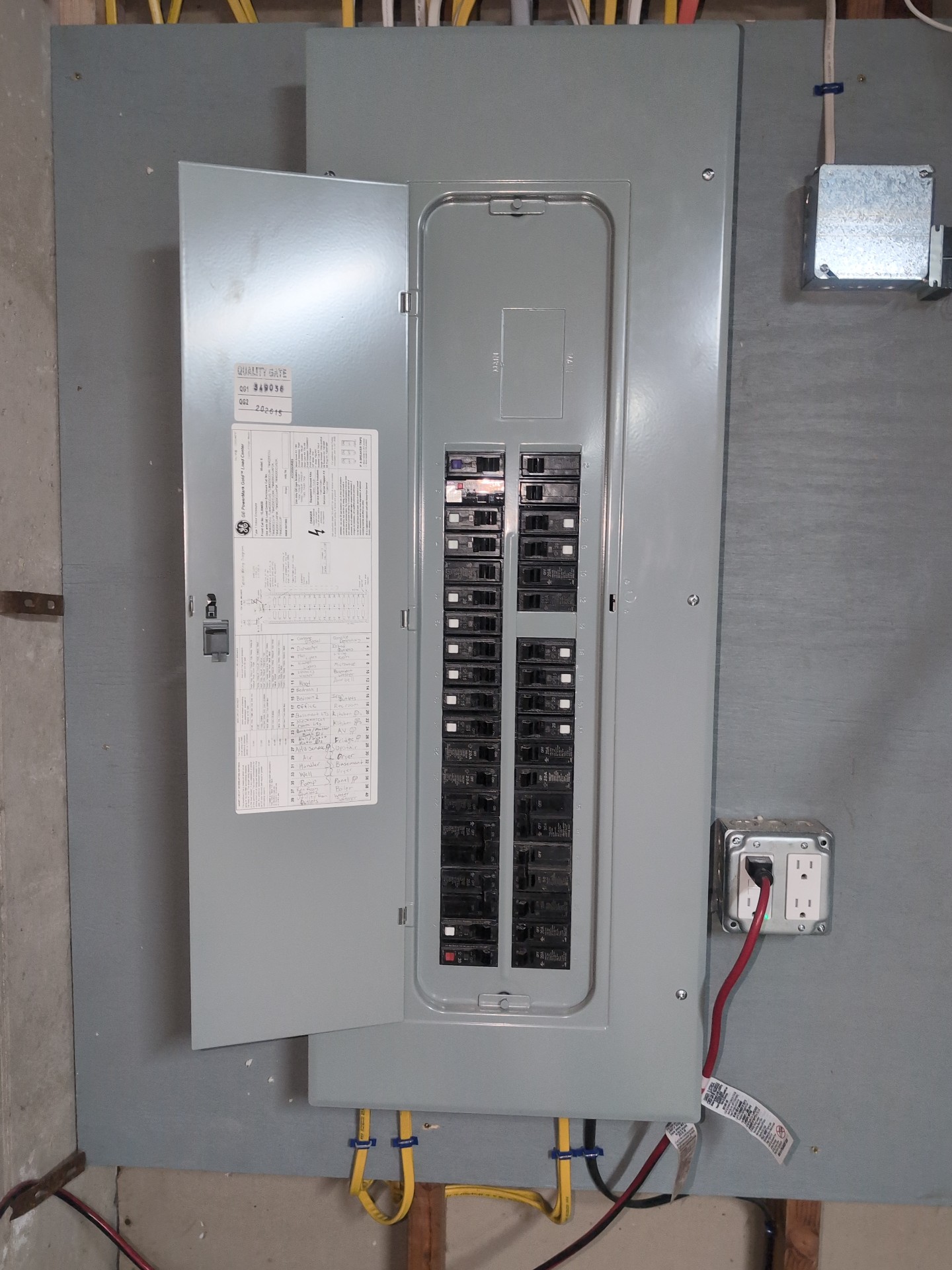 | 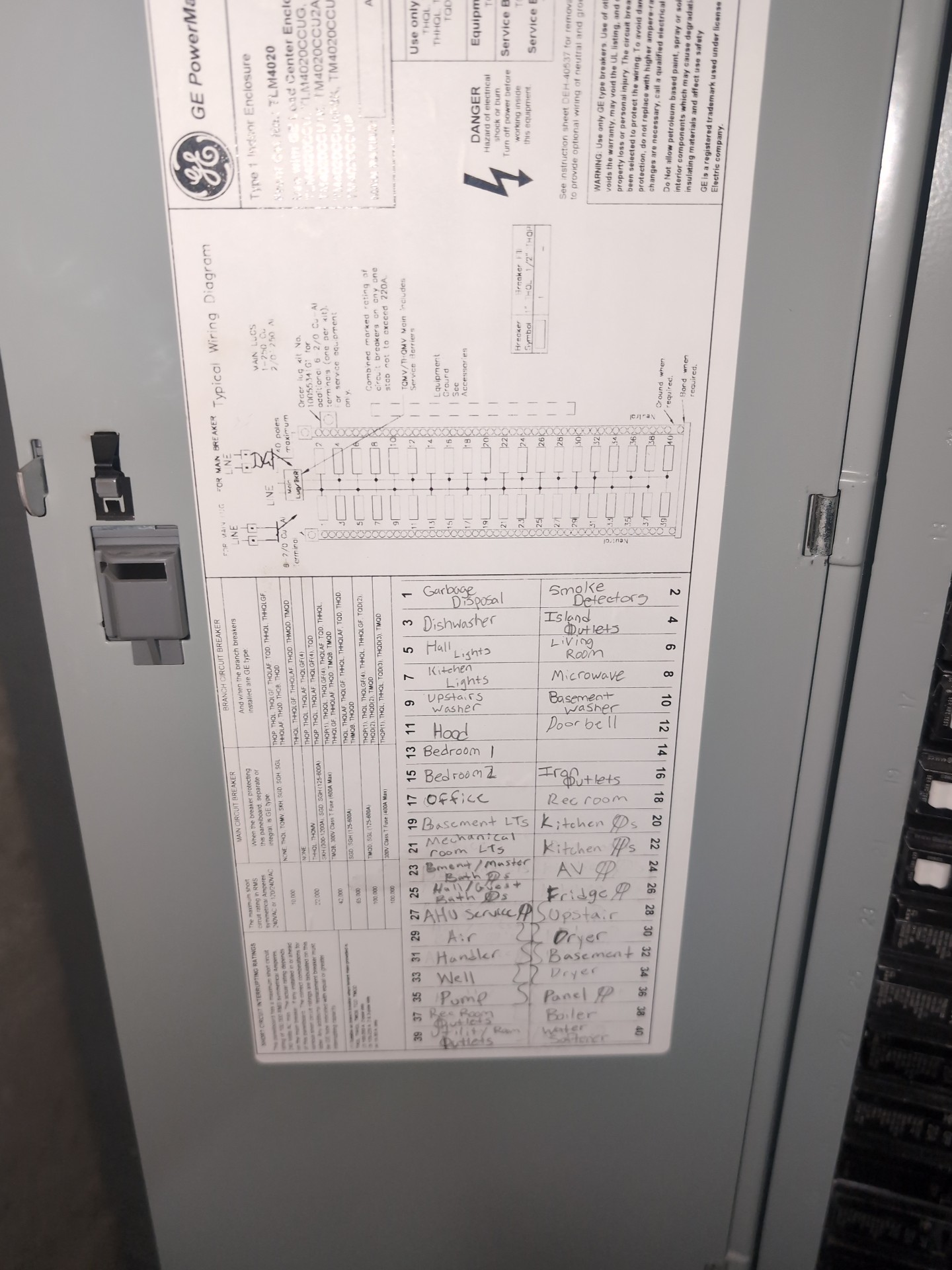 | 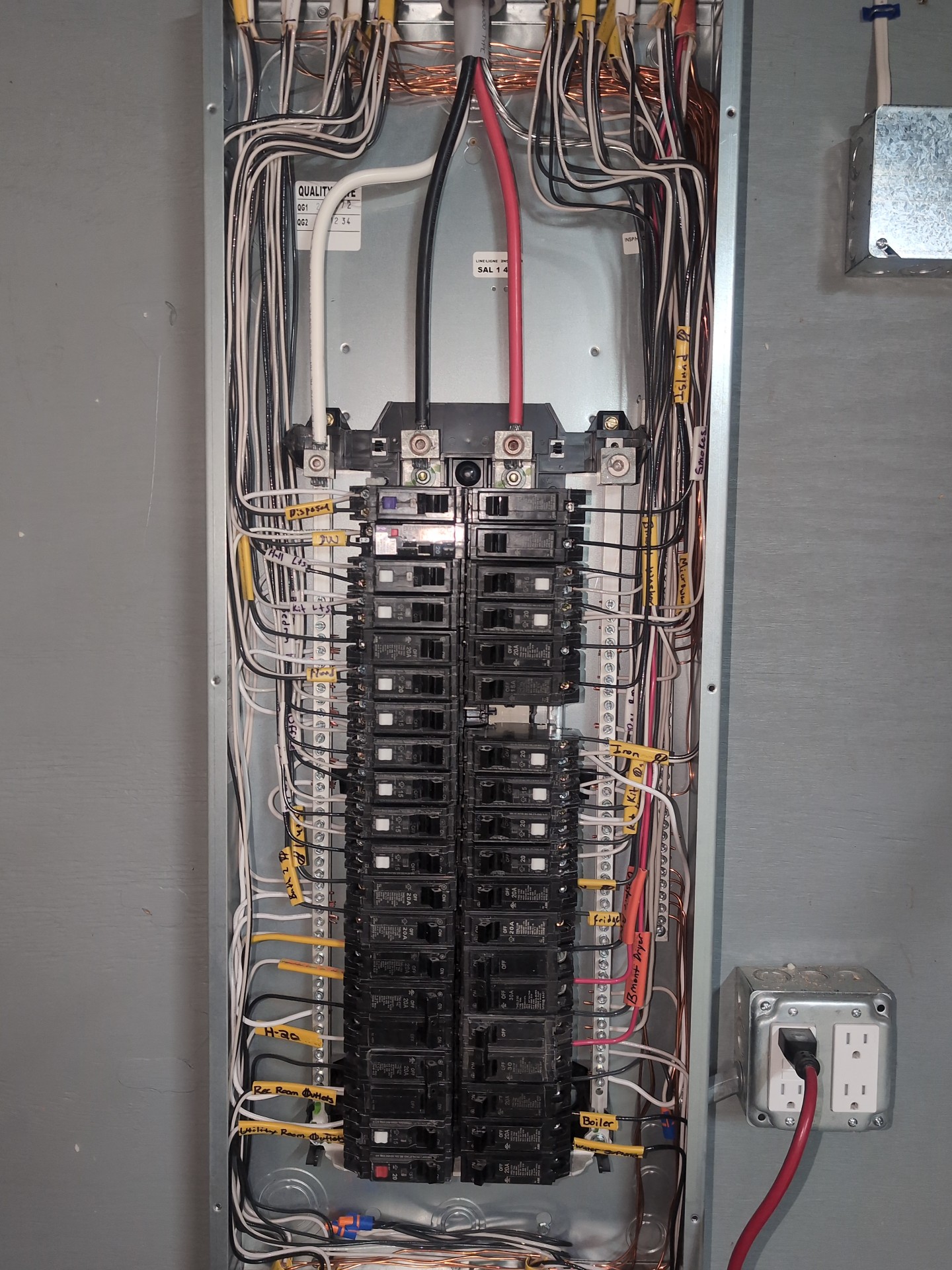 |
Branch Circuit Conductors, Overcurrent Devices and Compatability of their Amperage and Voltage
The electrical panel covers were removed, allowing a visual inspection of the circuit breakers, associated branch circuit wiring, and service entry conductors. No visible deficiencies were noted at the time of the inspection.
Connected Devices and Fixtures (Observed from a representative number operation of ceiling fans, lighting fixtures, switches and receptacles located inside the house, garage, and on the dwelling's exterior walls)
I recommend a small padlock be installed on the fused switch to the exterior AC condenser. This will prevent an inquisitive young child from opening this box and potentially coming n contact with live electrical wires. This is a suggestion only.
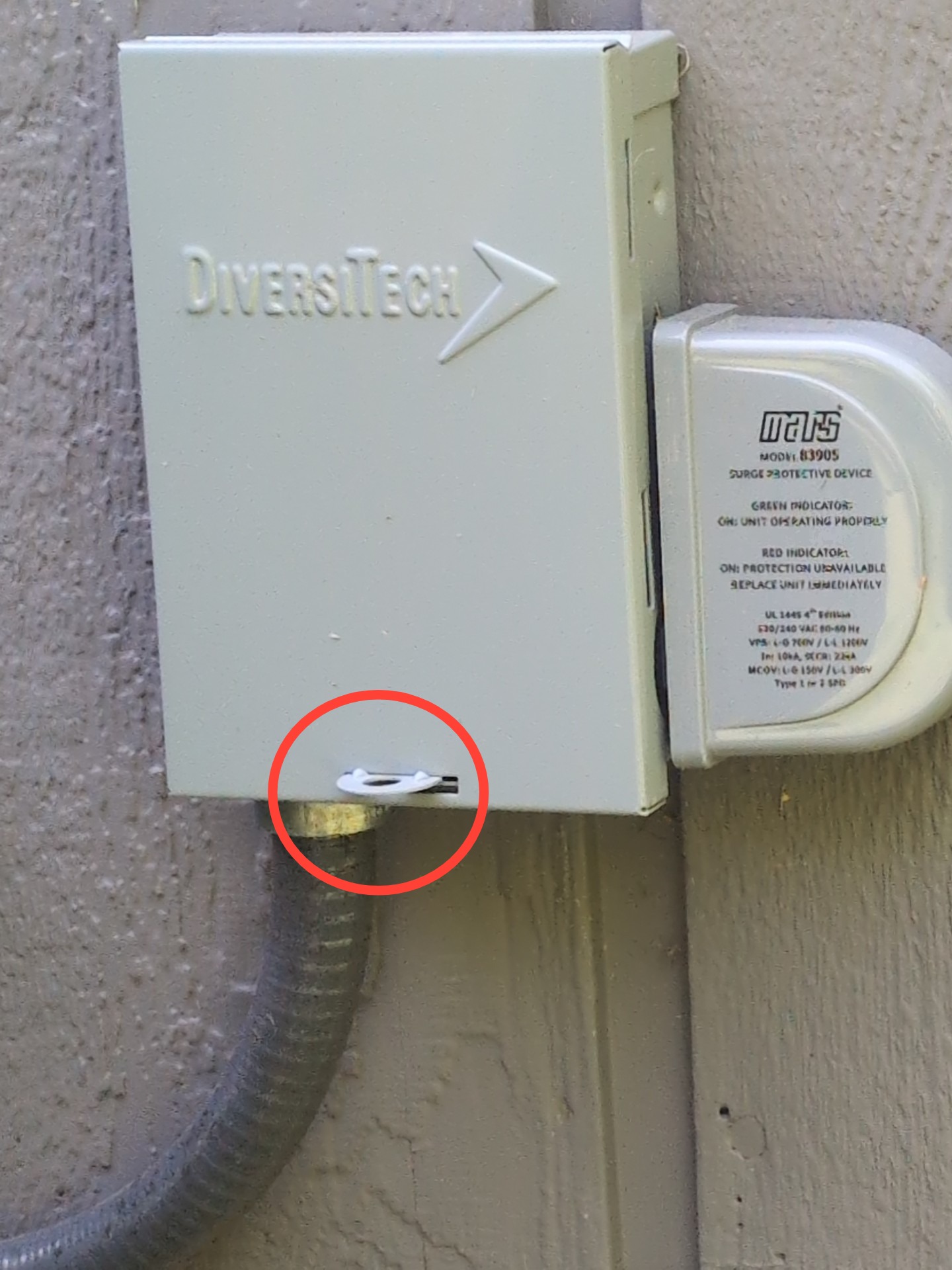
The bathroom vanities were equipped with built-in electrical power outlets and USB charging connections; however, these features were not connected or operational at the time of the inspection. If these built-in electrical features are to be utilized, they should be properly connected to a dedicated or appropriately protected GFCI receptacle installed within the vanity base or cabinet area for improved electrical safety in this moisture-prone environment. Improper installation or lack of GFCI protection could increase the risk of electrical shock or damage to connected devices. Recommend further evaluation and installation by a licensed electrical contractor if these features are intended to be placed into service.
Polarity and Grounding of Receptacles within 6 feet of interior plumbing fixtures, all receptacles in garage, carport and exterior walls of inspected structure
No visual issues noted.
Operation of GFCI (Ground Fault Circuit Interrupters)
The GFCI receptacles which were installed were tested and found to be operable (trip tested with circuit analyzer) at the time of this inspection. I recommend trip testing these life-saving devices on a monthly basis to make sure they are in operable condition when needed.
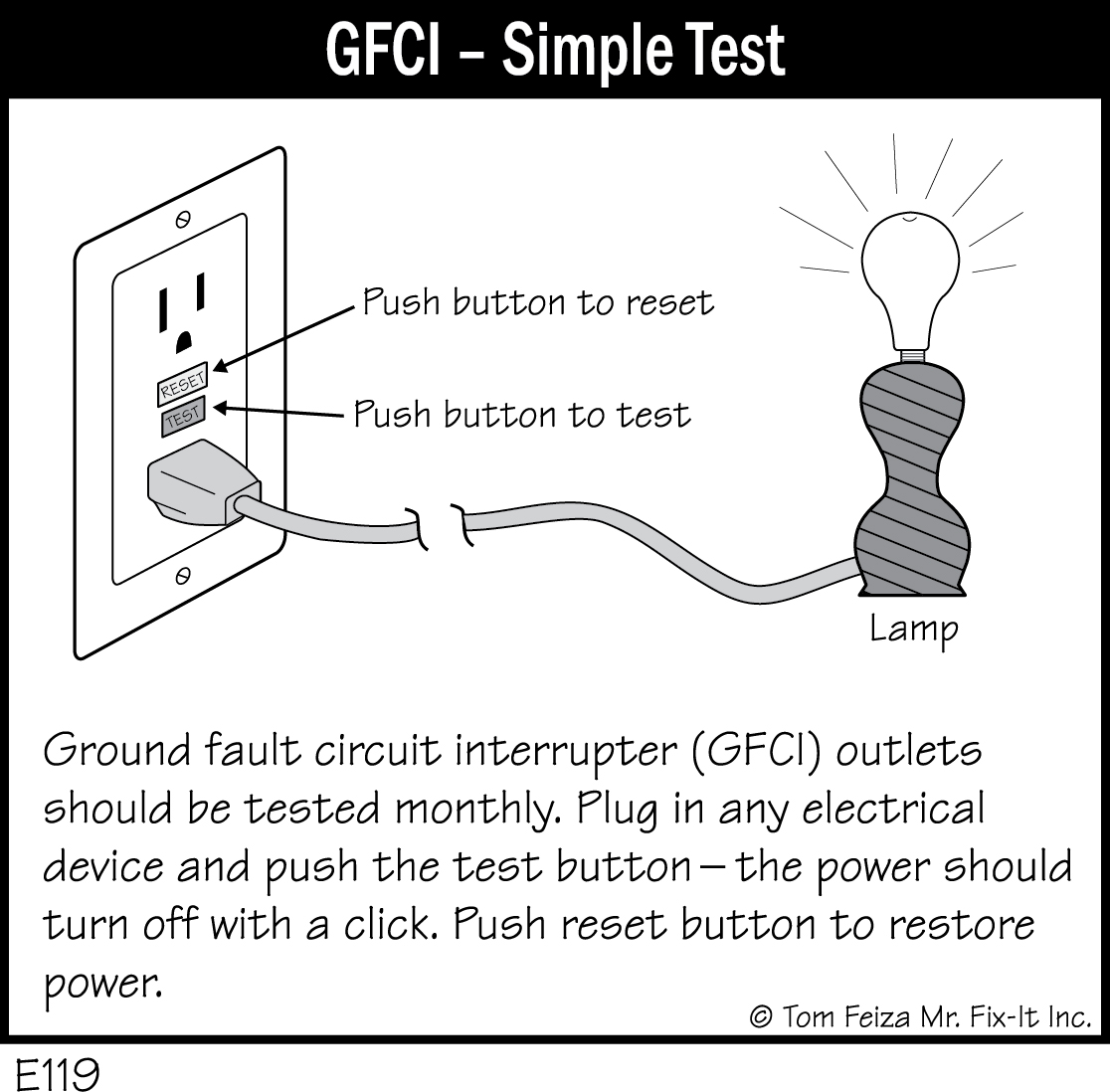 | 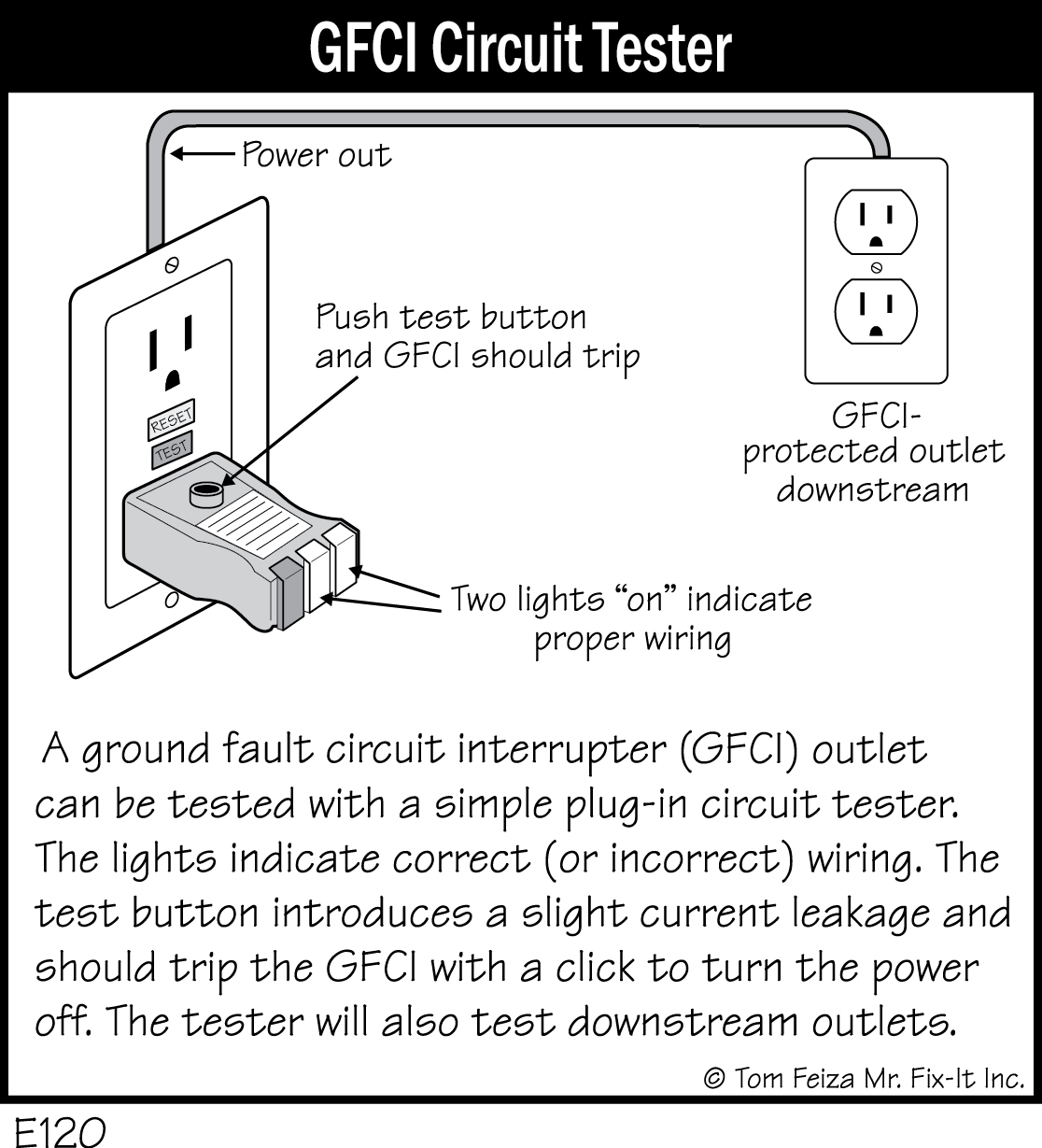 |
Location of Main and Distribution Panels
The main 200 amp electric panel is installed on the left wall in the garage, and a 100 amp sub – electric panel is installed in the unfinished basement area.
Smoke Detectors
Smoke detectors were present and were tested in accordance with the Connecticut Standards of Practice for Home Inspections. These life-safety devices responded at the time of testing; however, no determination can be made regarding their ongoing reliability or remaining service life. Recommend retesting all smoke detectors on a monthly basis and maintaining them in accordance with the manufacturer’s recommendations to help ensure proper operation and occupant safety.
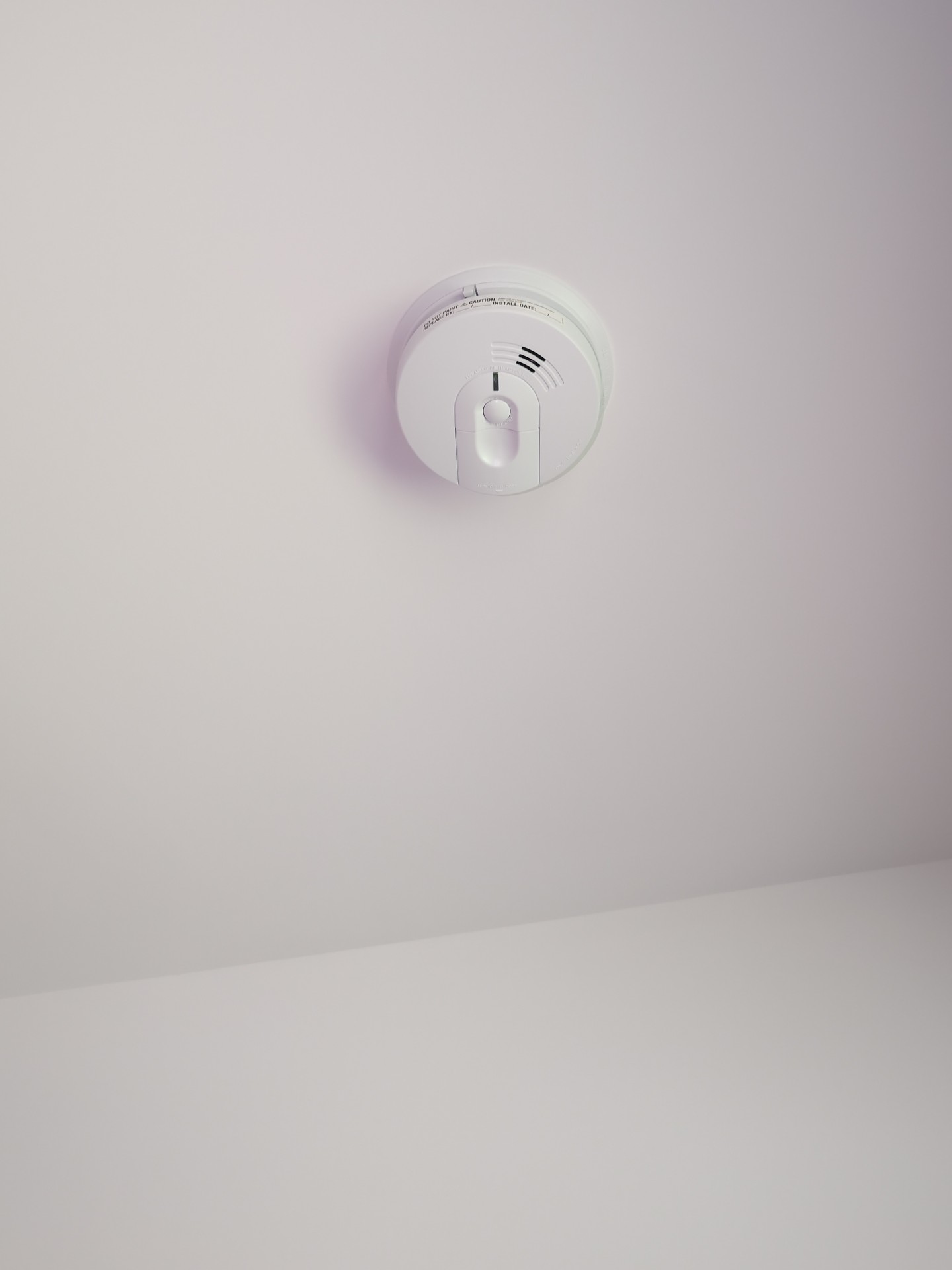
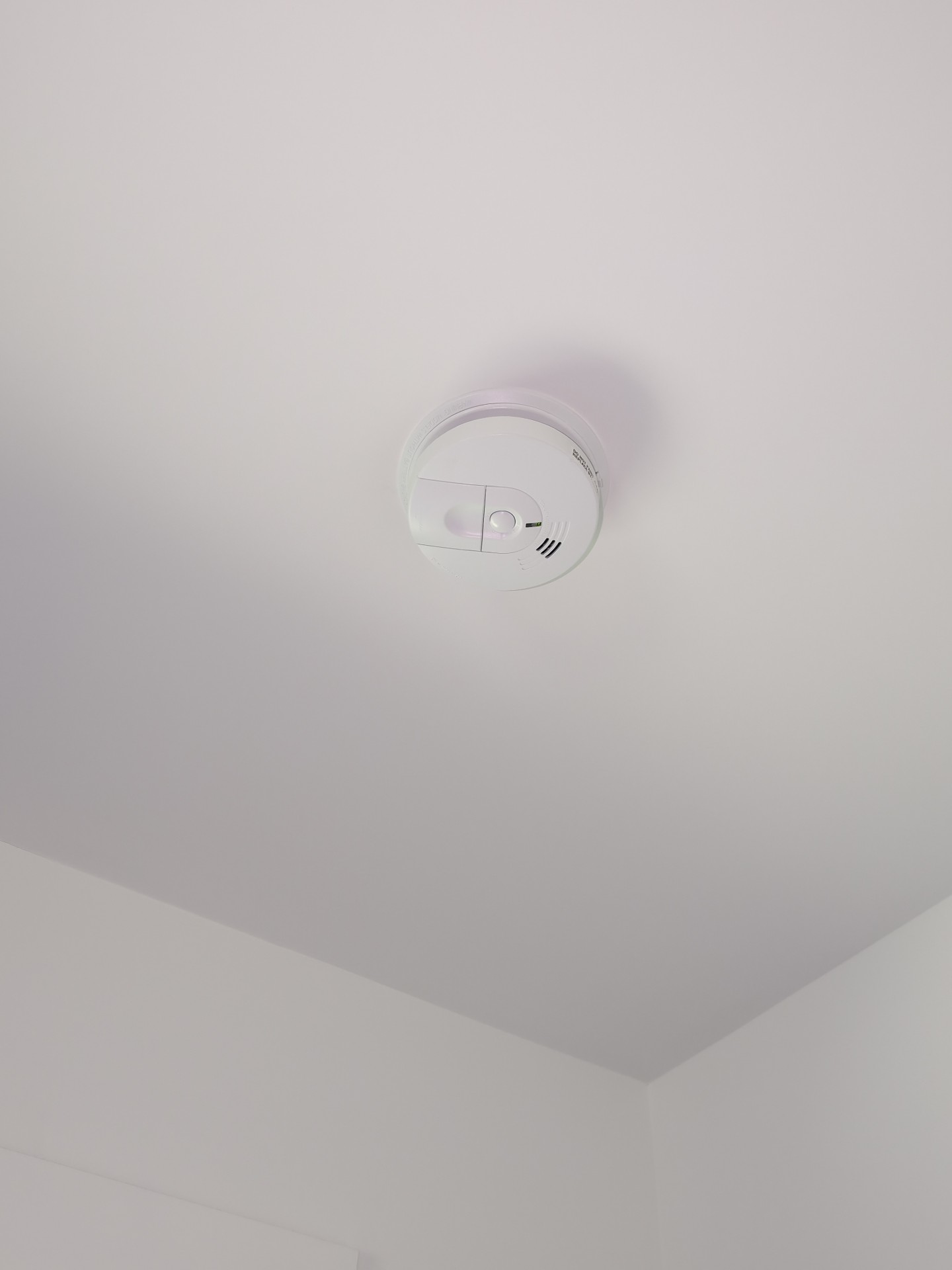
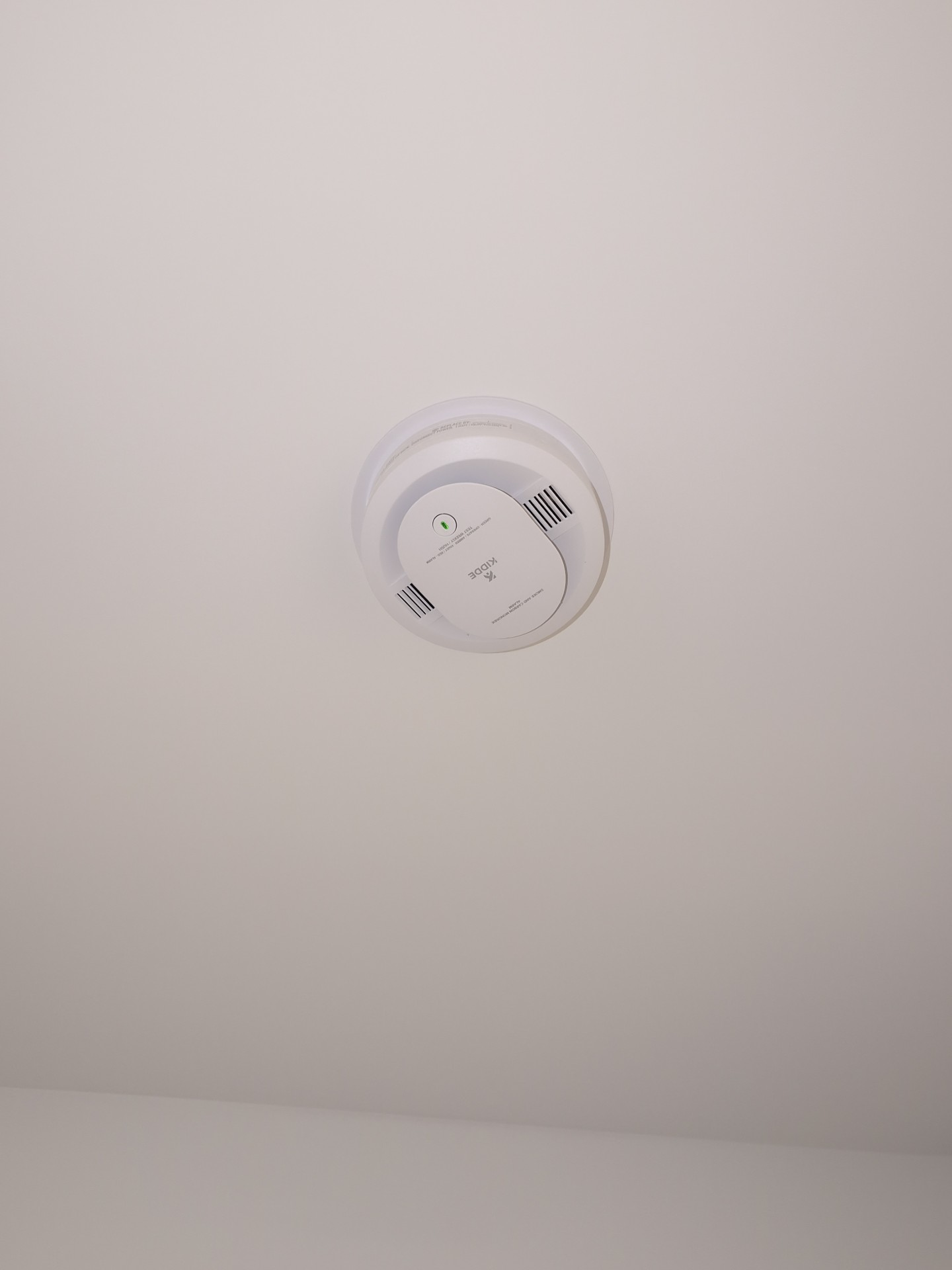
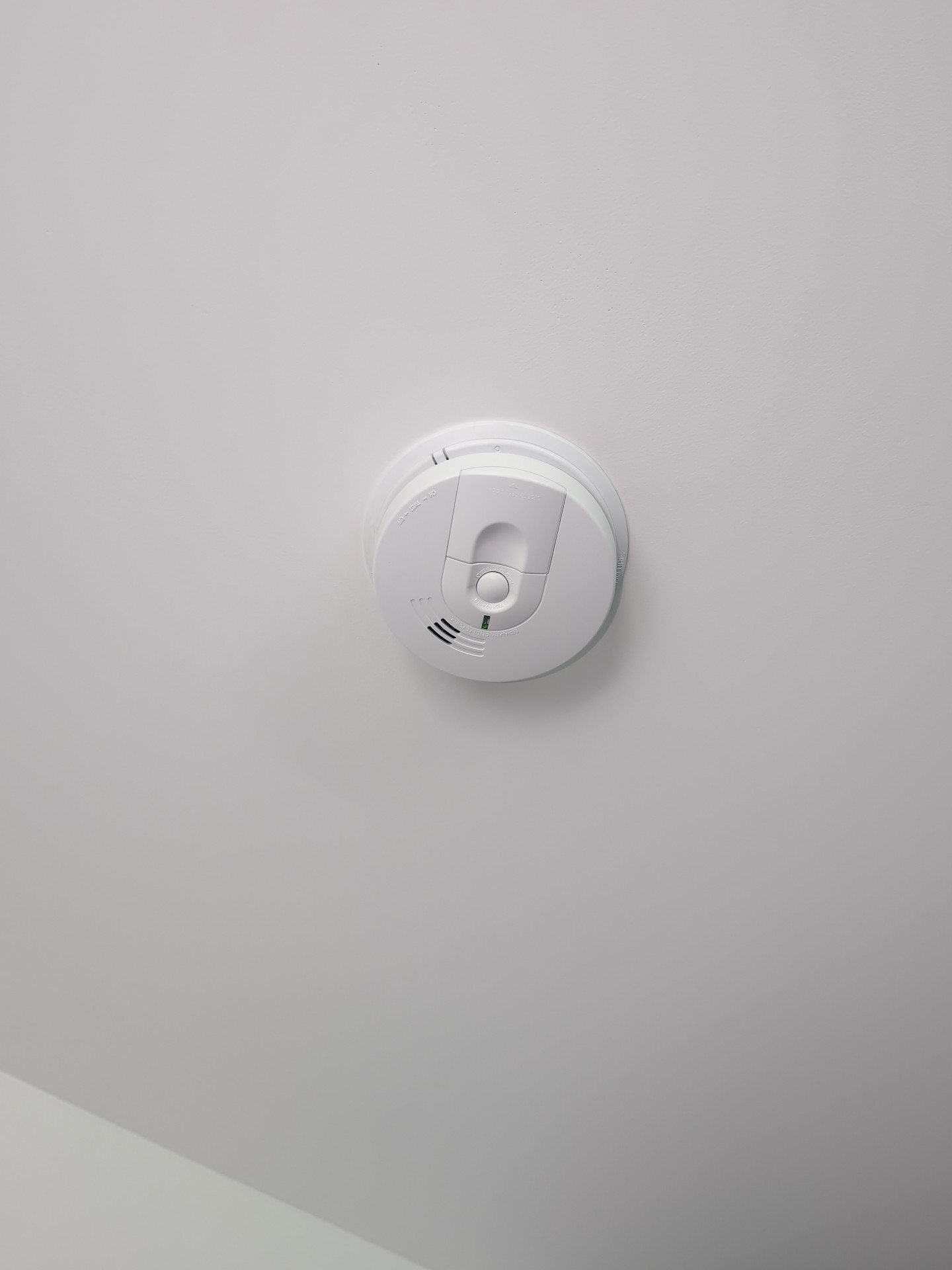
Carbon Monoxide Detectors
Carbon monoxide detectors were present and were tested in accordance with the Connecticut Standards of Practice for Home Inspections. These life-safety devices responded at the time of testing; however, no determination can be made regarding their ongoing reliability or remaining service life. Recommend retesting all carbon monoxide detectors on a monthly basis and maintaining them in accordance with the manufacturer’s recommendations to help ensure proper operation and occupant safety.
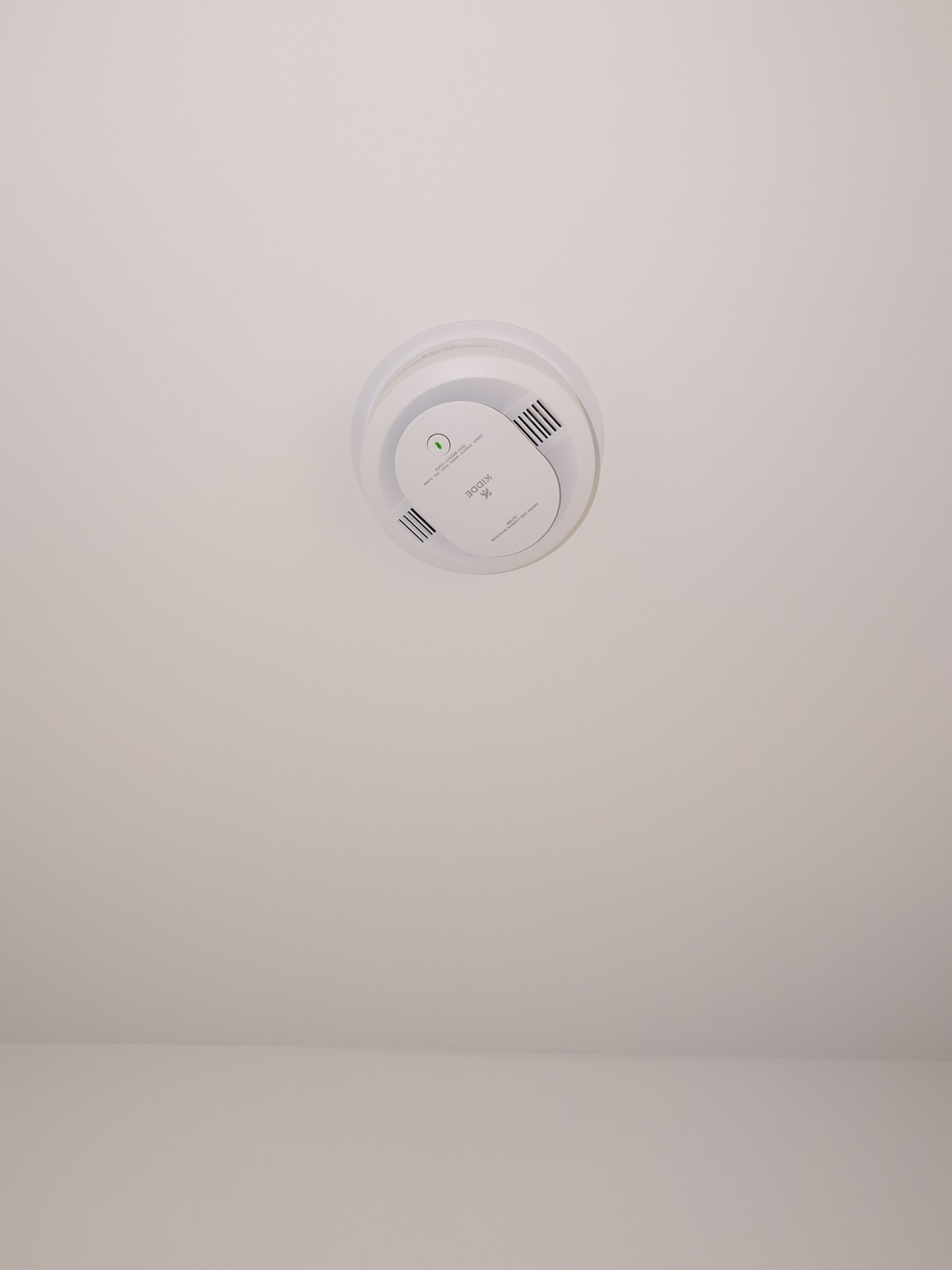
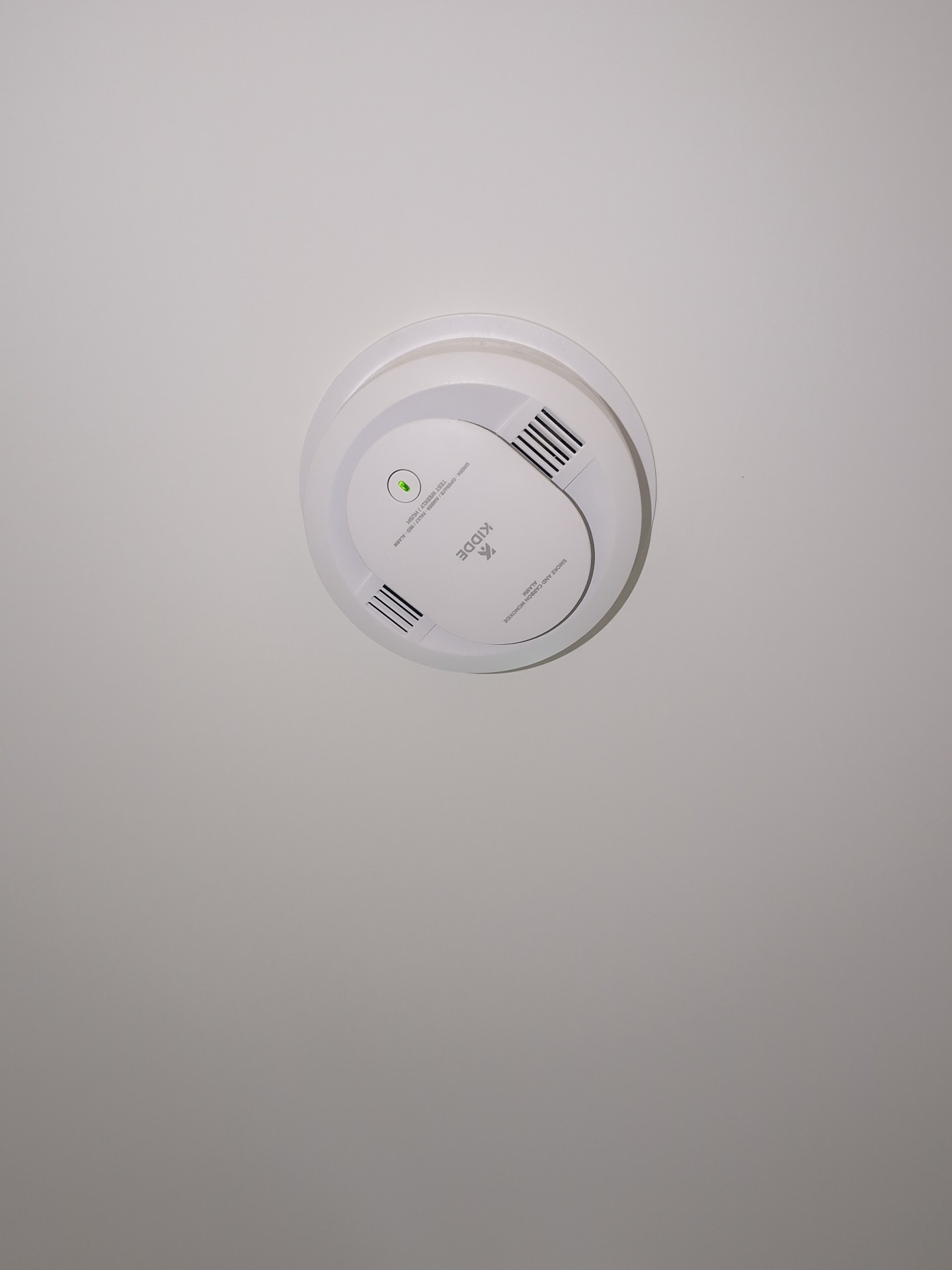
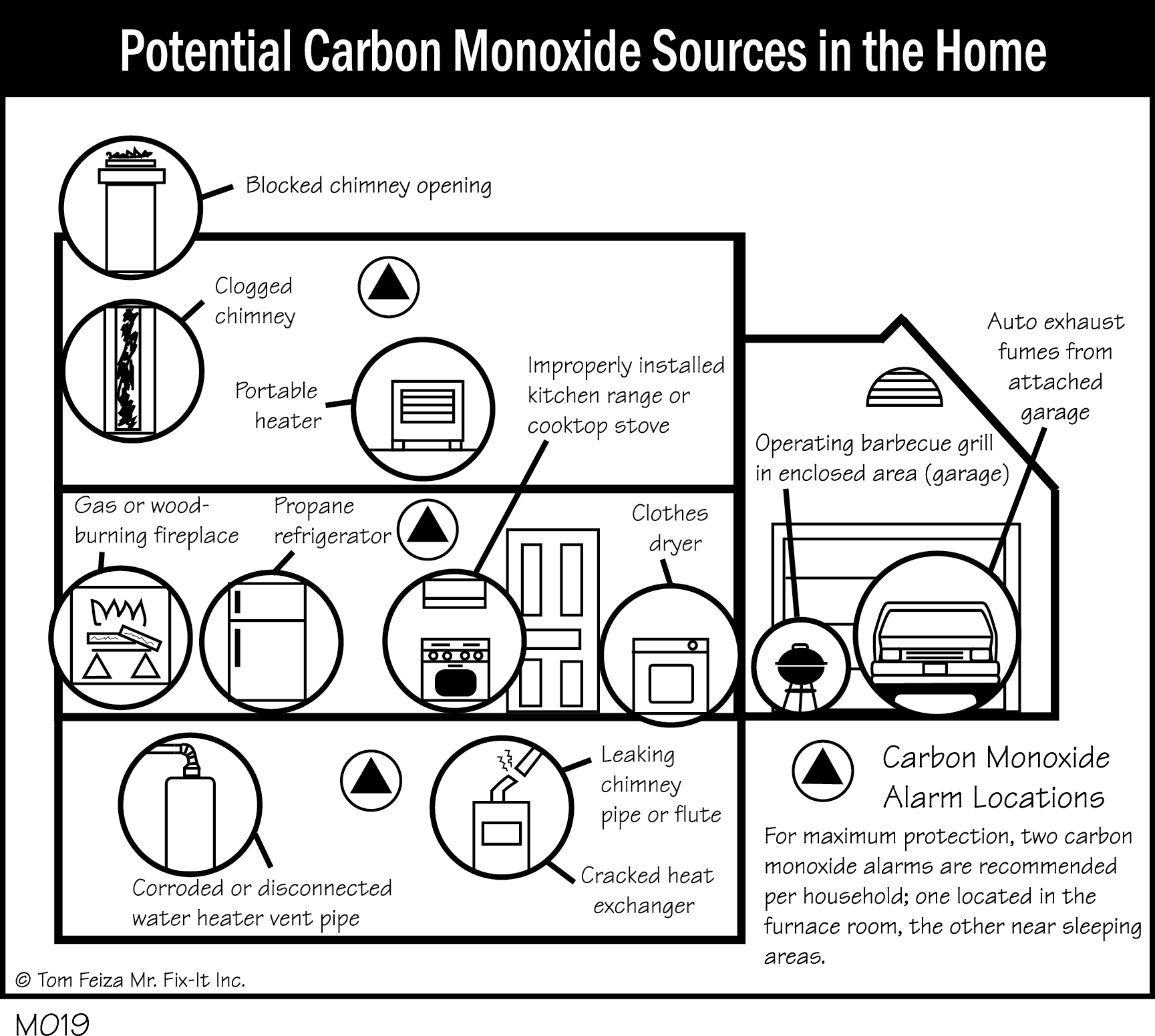 |
Electrical Section Footer
The electrical system of the home was inspected and reported on with the above information. While the inspector makes every effort to find all areas of concern, some areas can go unnoticed. Outlets were not removed and the inspection was only visual. Any outlet not accessible (behind the refrigerator for example) was not inspected or accessible. Please be aware that the inspector has your best interest in mind. Any repair items mentioned in this report should be considered before purchase. It is recommended that qualified contractors be used in your further inspection or repair issues as it relates to the comments in this inspection report.
Heating / Central Air Conditioning
Styles and Materials
Heat Type:Heat Pump Forced Air (also provides cool air)Hydro air coilsHydronic
Energy Source:Oil
Number of Heat Systems (excluding wood):One
Heat System Brand:BURNHAM
Ductwork:Insulated
Filter Type:Disposable
Filter Size:20x25
Types of Fireplaces:Solid FuelConventional
Operable Fireplaces:Two
Number of Woodstoves:None
Cooling Equipment Type:Heat Pump Forced Air (also provides warm air)
Central Air Manufacturer:TRANE
AC Tonnage (capacity):3 Ton (36,000 BTU)
The home inspector shall observe: permanently installed heating and cooling systems including: Heating equipment; Cooling Equipment that is central to home; Normal operating controls; Automatic safety controls; Chimneys, flues, and vents, where readily visible; Solid fuel heating devices; Heat distribution systems including fans, pumps, ducts and piping, with supports, insulation, air filters, registers, radiators, fan coil units, convectors; and the presence of an installed heat source in each room.
The home inspector shall describe: Energy source; and Heating equipment and distribution type. The home inspector shall operate the systems using normal operating controls. The home inspector shall open readily openable access panels provided by the manufacturer or installer for routine homeowner maintenance. The home inspector is not required to: Operate heating or cooling systems when weather conditions or other circumstances may cause equipment damage; Operate automatic safety controls; Ignite or extinguish solid fuel fires; or Observe: The interior of flues; Fireplace insert flue connections; Humidifiers; Electronic air filters; or The uniformity or adequacy of heat supply to the various rooms.
Heating Equipment
An oil-fired U.S. Boiler Company model #V8H3WE-T cast-iron wet-base hot water boiler, serial #65826270, was installed and appeared visibly leak free and functional when tested at the time of the inspection. Based on the rating plate information, the boiler was manufactured in November 2021. This boiler supplies heated water to one Hydro-Air heating zone serving the basement air handler, which is further divided into multiple heating zones through the use of electronically controlled zone dampers within the ductwork system. The boiler also supplies domestic hot water through an internally installed tankless coil water heating system.
Features and benefits of a cast-iron wet-base boiler system include durable cast-iron heat exchanger construction, relatively quiet operation, strong heat retention characteristics, and long service life when properly maintained. Wet-base boiler designs are generally more energy efficient than older dry-base systems because the combustion chamber is surrounded by water-backed cast iron sections which improve heat transfer efficiency. The Hydro-Air delivery system allows heated air to be distributed through ductwork while electronic zoning can improve comfort and energy management by directing heat only to selected portions of the home as needed. The integrated tankless coil provides domestic hot water without the need for a separate storage-type water heater.
The typical service lifespan of a properly maintained cast-iron oil-fired boiler is approximately 25–35 years, although longevity can vary significantly depending upon installation quality, maintenance history, water quality, combustion efficiency, and operating conditions. Recommend annual servicing, cleaning, and combustion tuning by a licensed HVAC technician to help maintain safe and efficient operation.
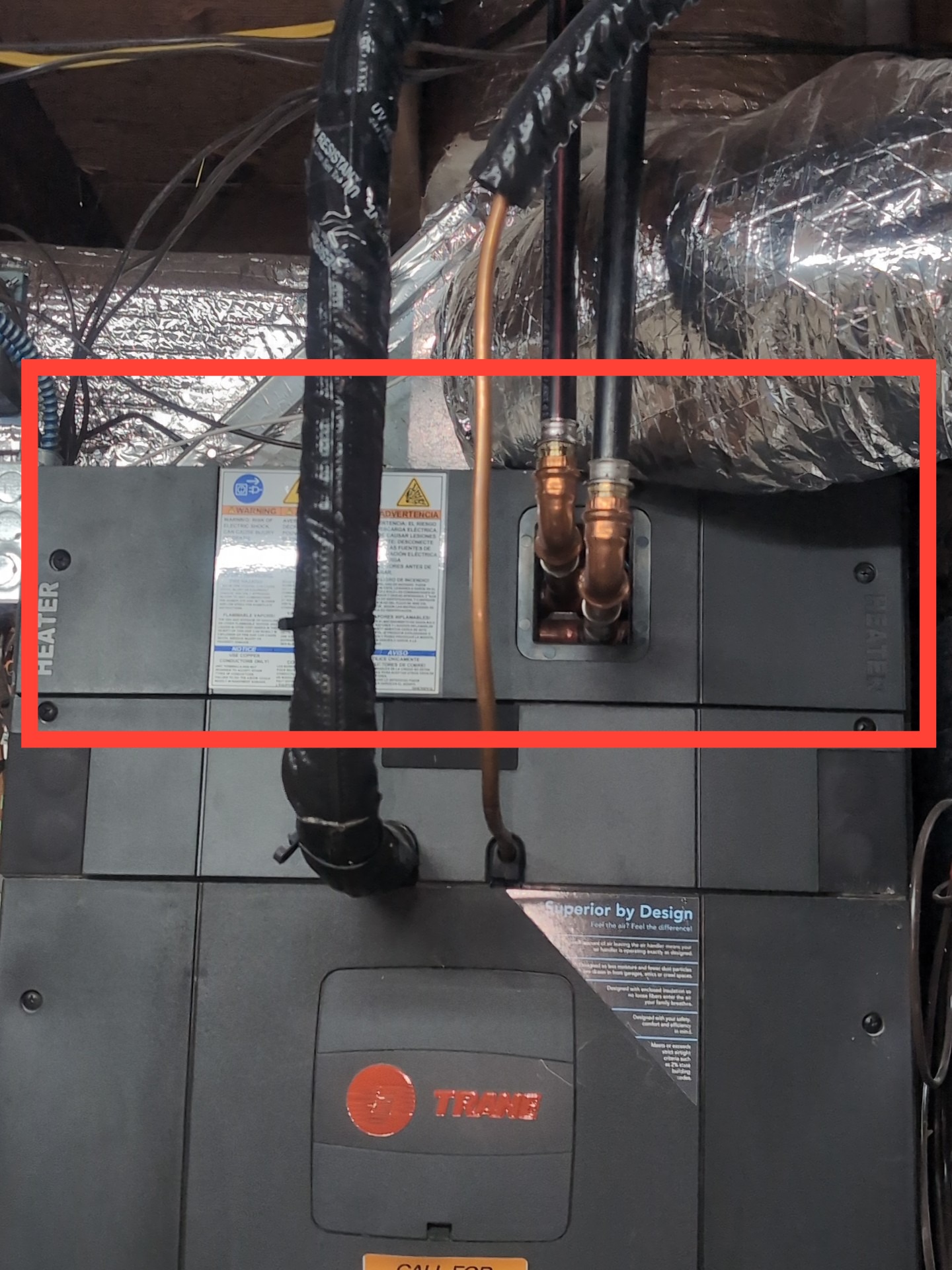
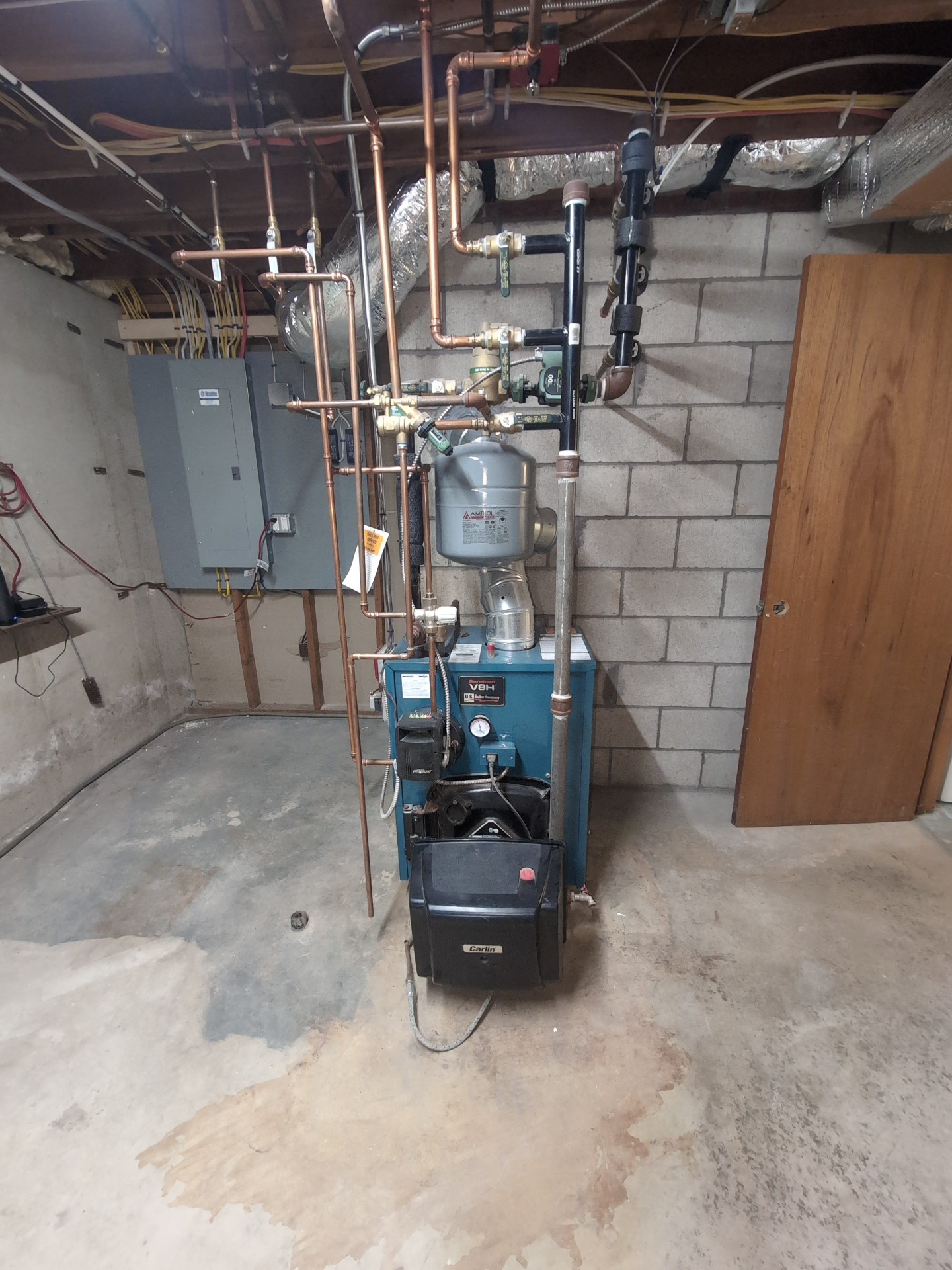 | 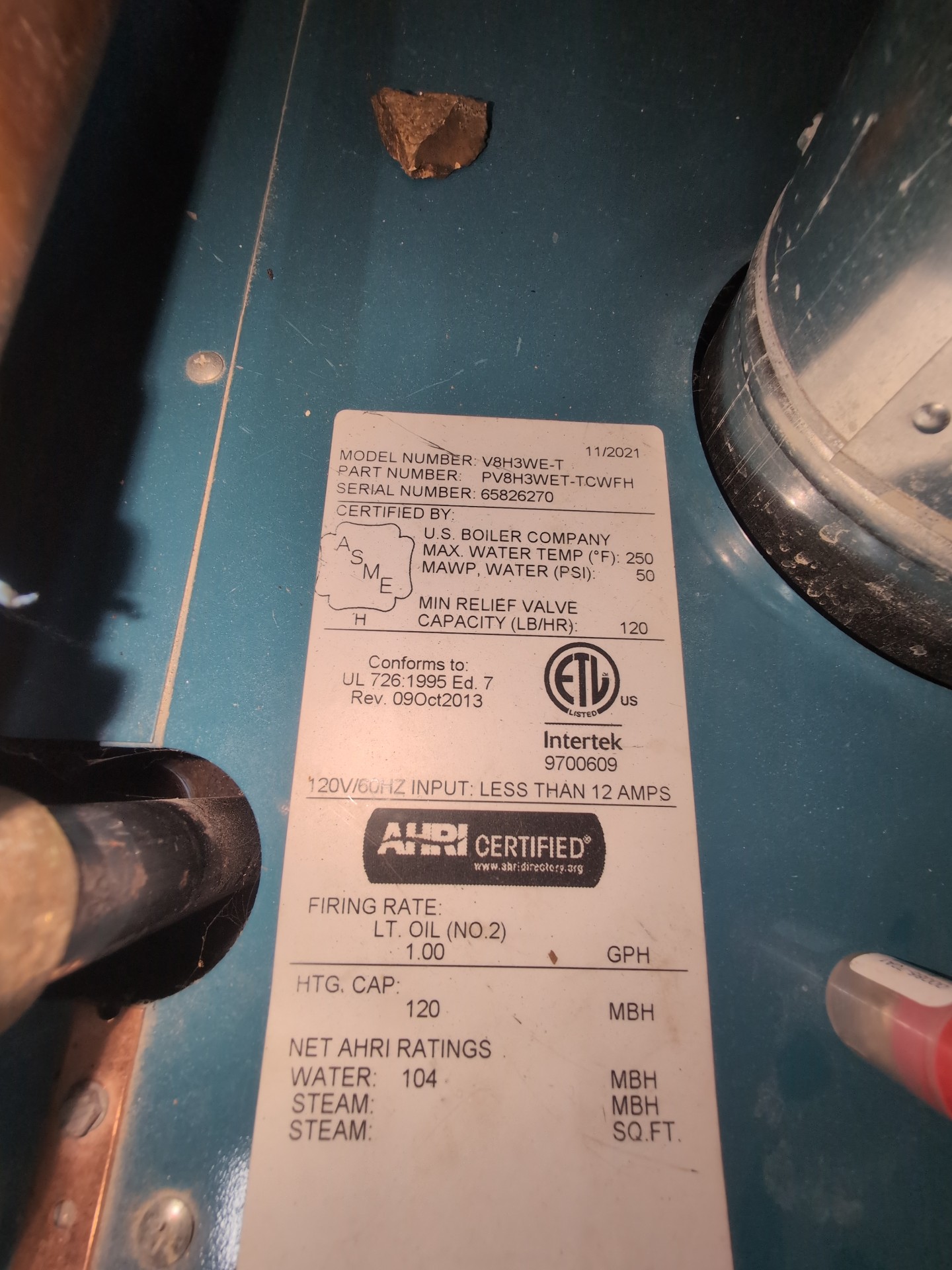 | 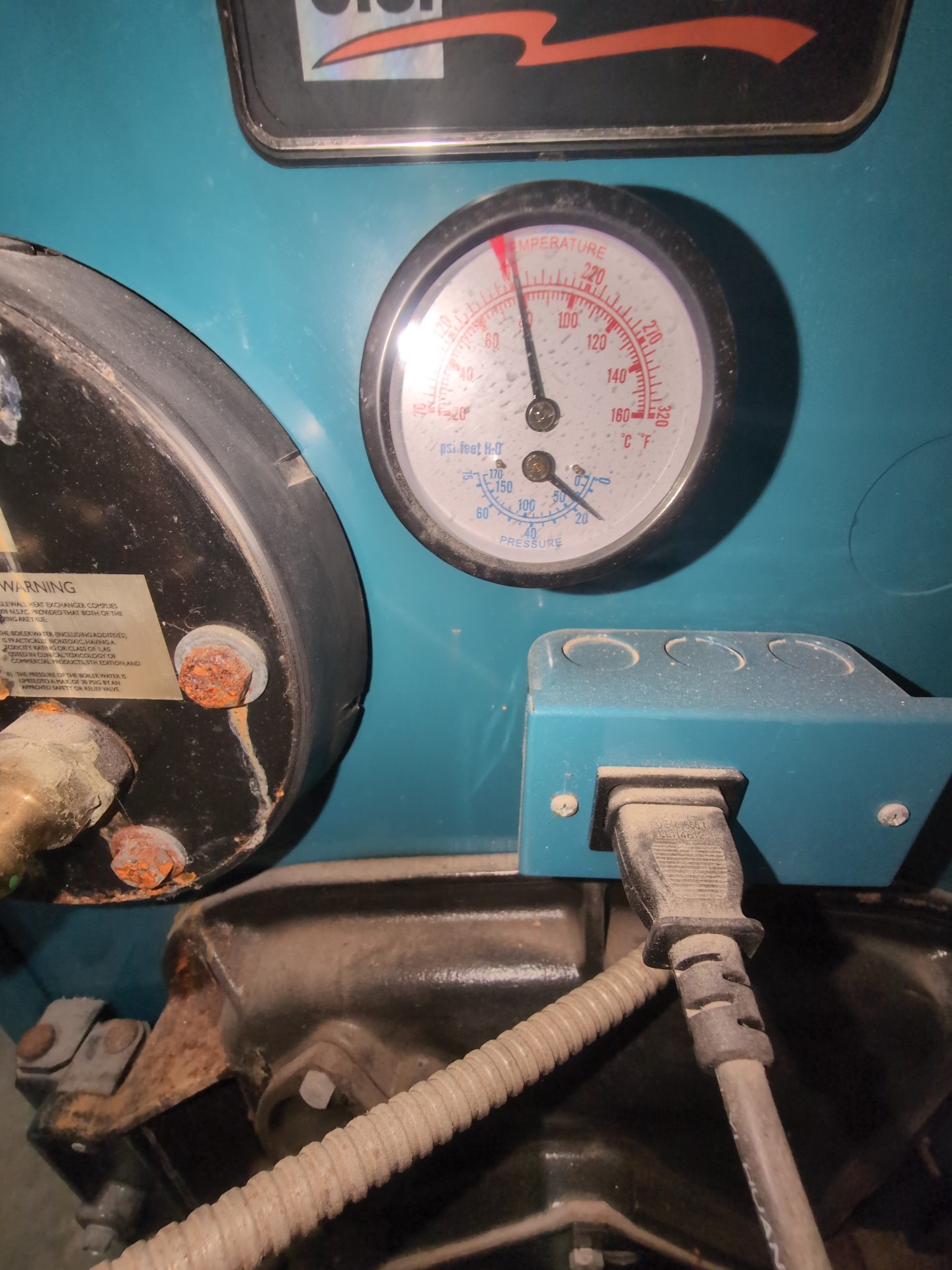 |
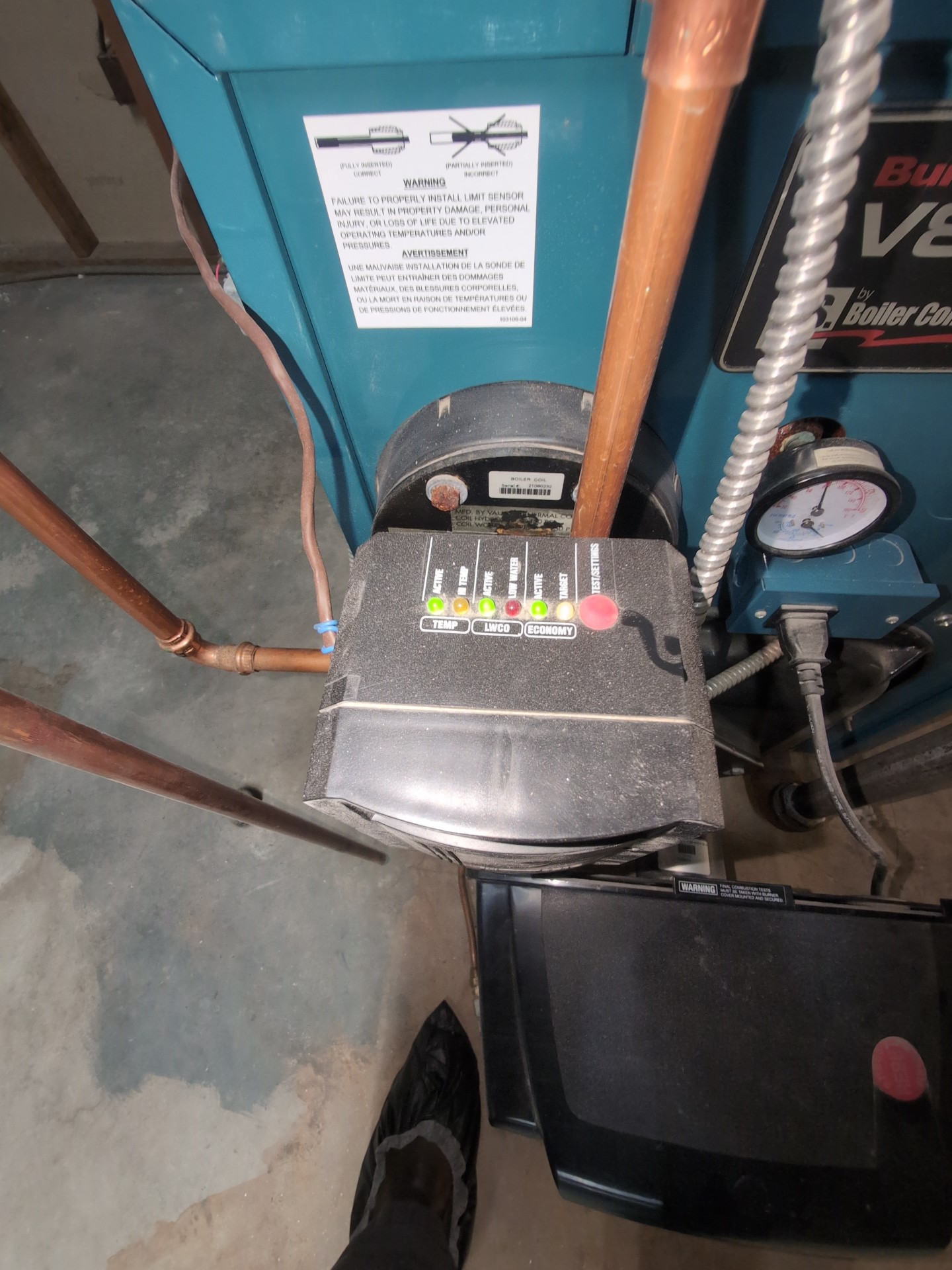 | 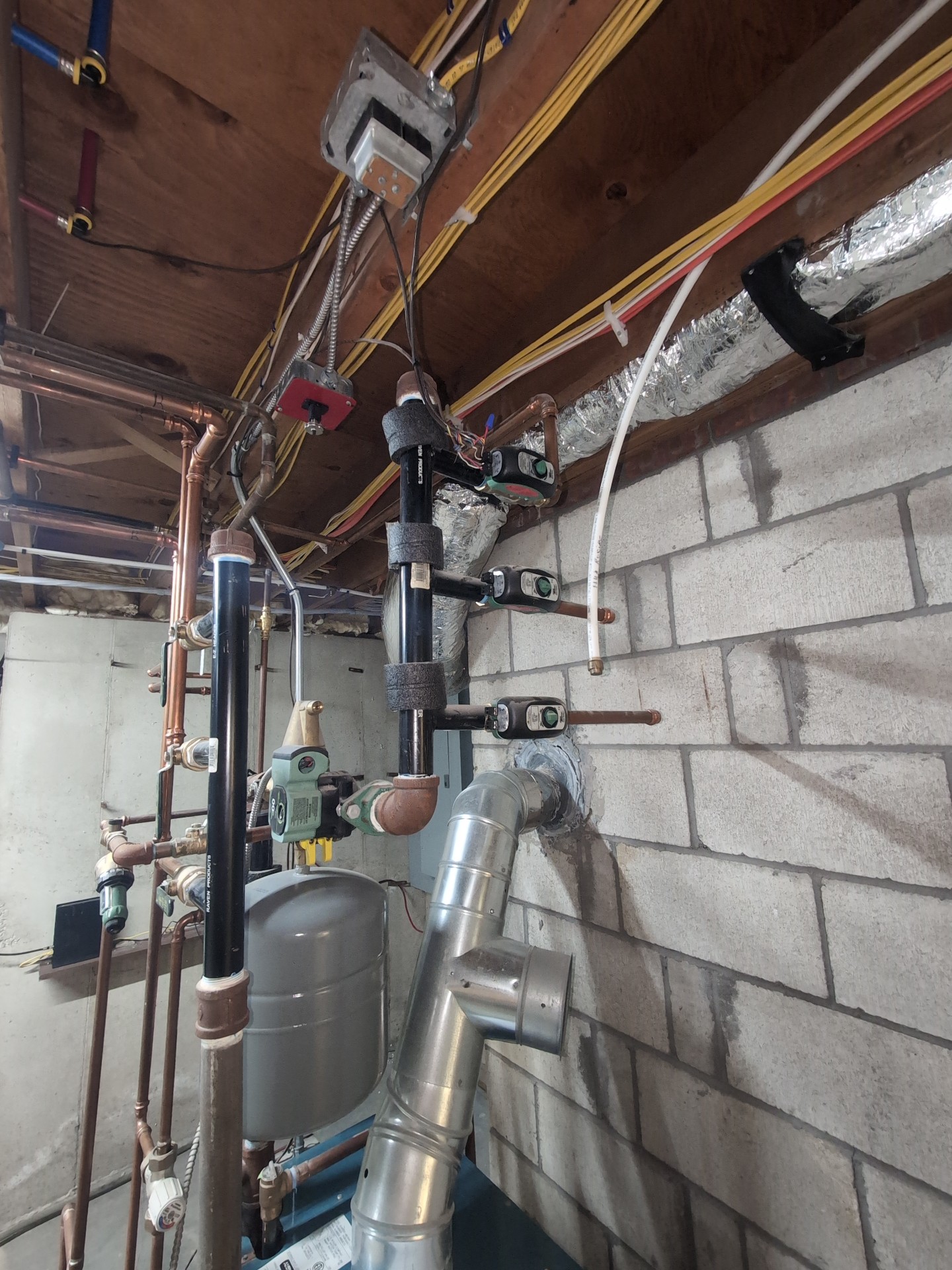 | |
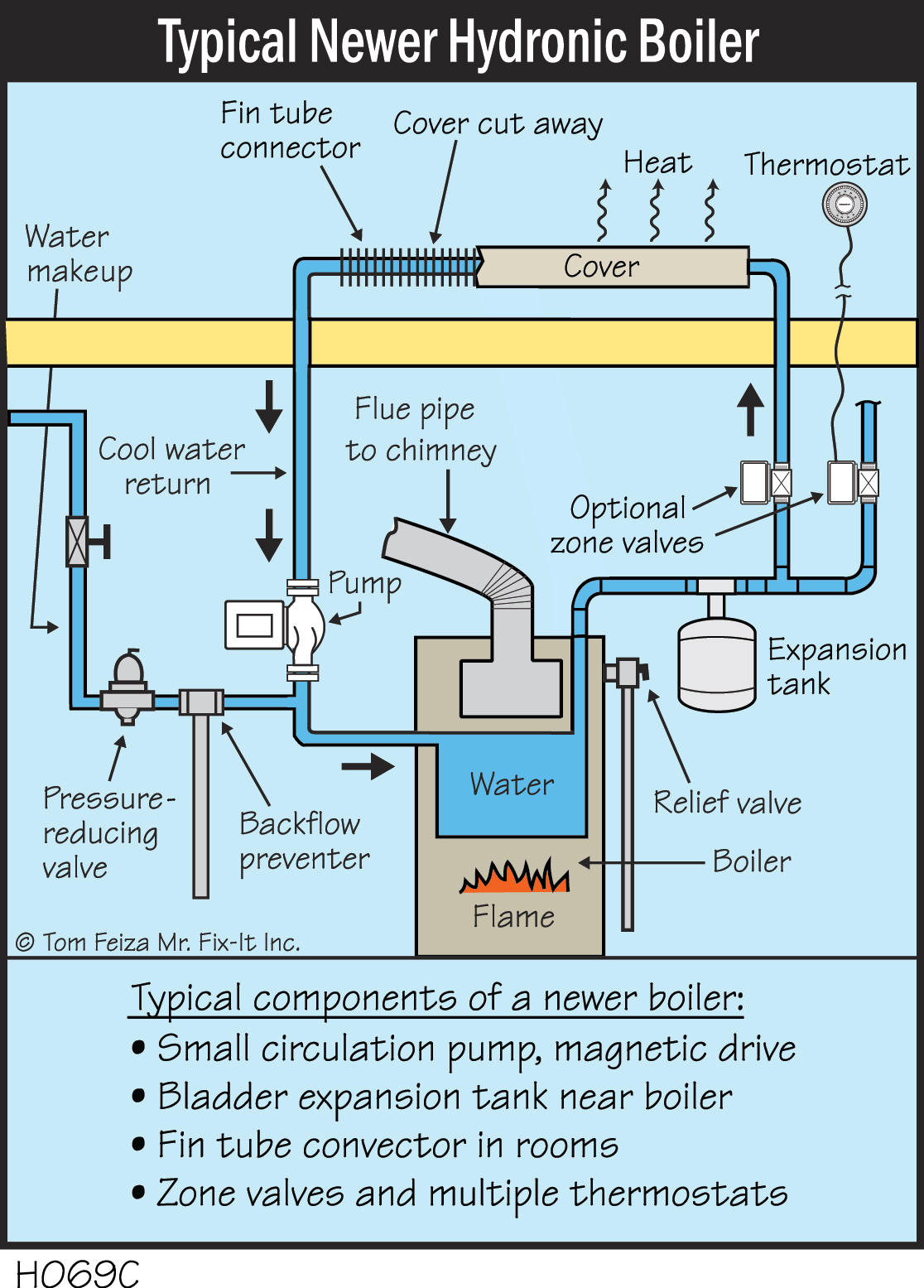 |
Oil-fired hot water boilers should be professionally serviced on an annual basis, ideally prior to the start of the heating season. Regular maintenance helps ensure safe operation, optimal combustion efficiency, extended equipment lifespan, and reduced fuel consumption.
Typical recommended annual service by a qualified oil burner technician includes:
- Cleaning and vacuuming the combustion chamber and heat exchanger surfaces
- Replacement of the oil burner nozzle
- Replacement of the oil filter and pump strainer (if equipped)
- Inspection and adjustment of burner electrodes
- Inspection of fuel lines for leaks or deterioration
- Combustion efficiency test and burner adjustment using a combustion analyzer (checking draft, CO₂/O₂ levels, smoke number, and stack temperature)
- Inspection and cleaning of the flue pipe and chimney base (as needed)
- Verification of proper operation of safety controls (primary control, cad cell, high-limit aquastat)
- Inspection of the circulator pump(s), zone valves, and expansion tank
- Testing of the pressure relief valve and verification of proper system pressure (typically 12–18 PSI when cold in most residential systems)
- Bleeding of air from hydronic zones if necessary
Routine annual maintenance is essential for safe and efficient operation and should be performed by a licensed heating contractor experienced in oil-fired equipment.
Boiler (Visible Condition and Disclaimer):
The boiler was visibly leak-free at the time of the inspection. Only readily accessible and visible components were inspected. No dismantling of equipment was performed. Note that boilers and associated components can fail, leak, or develop operational issues at any time, even if no deficiencies are apparent at the time of inspection. This inspection represents a limited visual evaluation only, and future performance cannot be predicted.
A Trane model #4TWV0X36A1000AB heat pump condenser, serial #241141M0JF, was installed at the home. This type of system is designed to provide high-efficiency heating and cooling by transferring heat rather than generating it directly through combustion. Based on the model information, this is an inverter-driven heat pump system utilizing variable-speed technology designed to improve energy efficiency, indoor comfort, humidity control, and quieter operation when compared to conventional single-stage systems.
Features and benefits of this style of heat pump system include improved energy efficiency, more consistent indoor temperatures, quieter operation, reduced temperature swings, enhanced humidity removal during cooling operation, and lower operating costs under many weather conditions. Variable-speed compressor technology allows the system to modulate output based upon heating and cooling demand rather than operating strictly at full capacity only.
This system operates in conjunction with an indoor air handler containing a Hydro-Air hot water heating coil. During cooling operation, the outdoor heat pump condenser circulates refrigerant to the indoor air handler evaporator coil where heat and humidity are removed from the indoor air and distributed through the home’s ductwork system. During heat pump heating mode, the refrigeration cycle reverses, allowing the outdoor unit to extract heat energy from exterior air and transfer it indoors through the air handler.
The Hydro-Air hot water coil provides supplemental or auxiliary heat through heated water supplied by the oil-fired boiler system. Heated boiler water circulates through the hot water coil installed within the air handler while the blower fan distributes warm air throughout the ductwork system. This dual-function arrangement allows the home to benefit from the efficiency of the heat pump during milder weather conditions while utilizing the boiler-fed Hydro-Air coil for additional heating capacity during colder outdoor temperatures when heat pump efficiency naturally decreases.
When properly configured, this type of hybrid heating arrangement can provide improved comfort, operational flexibility, and energy efficiency throughout varying seasonal conditions. Recommend annual servicing and maintenance of both the heat pump and boiler/Hydro-Air systems by licensed HVAC professionals to help maintain safe and efficient operation.
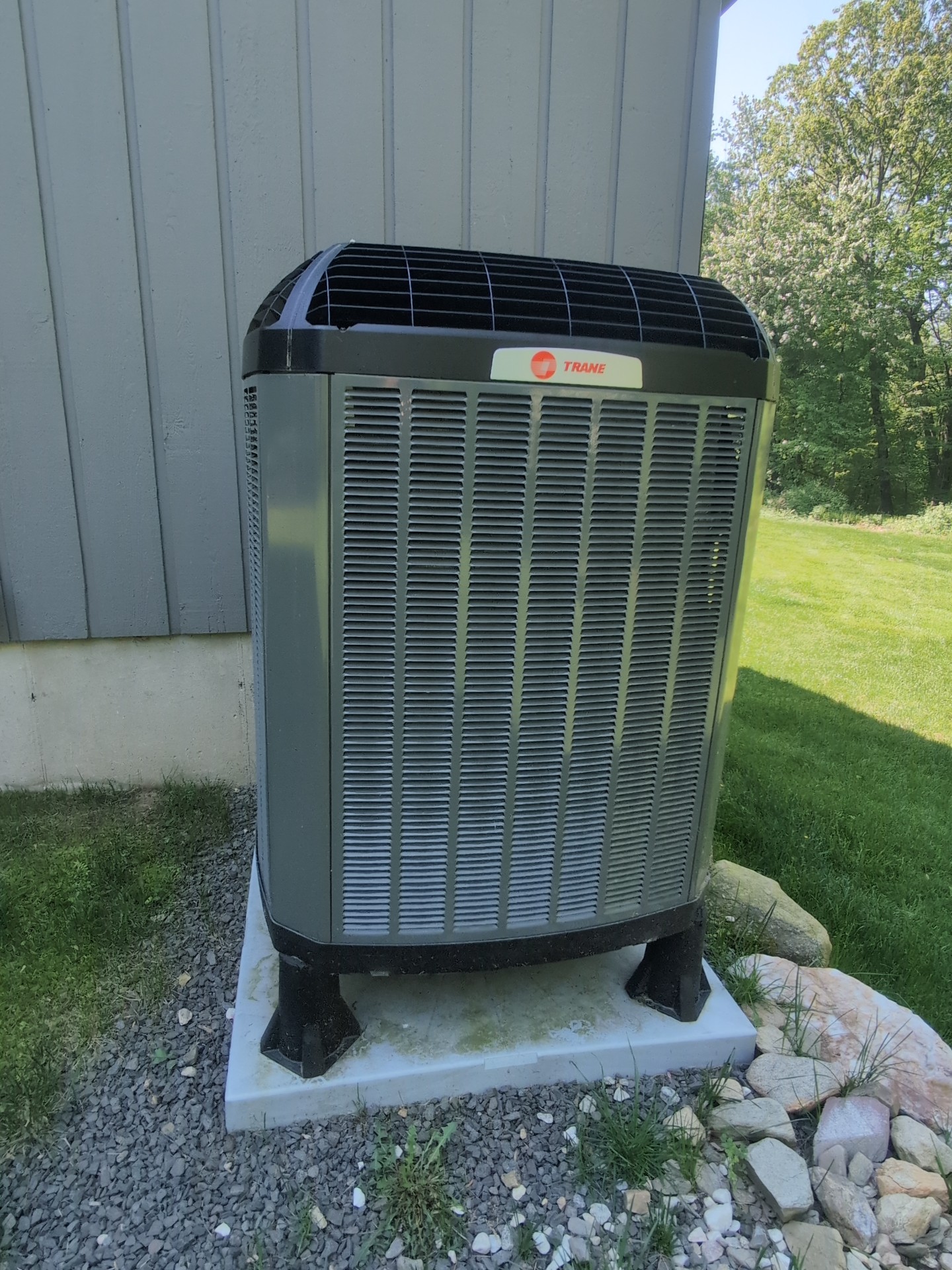 | 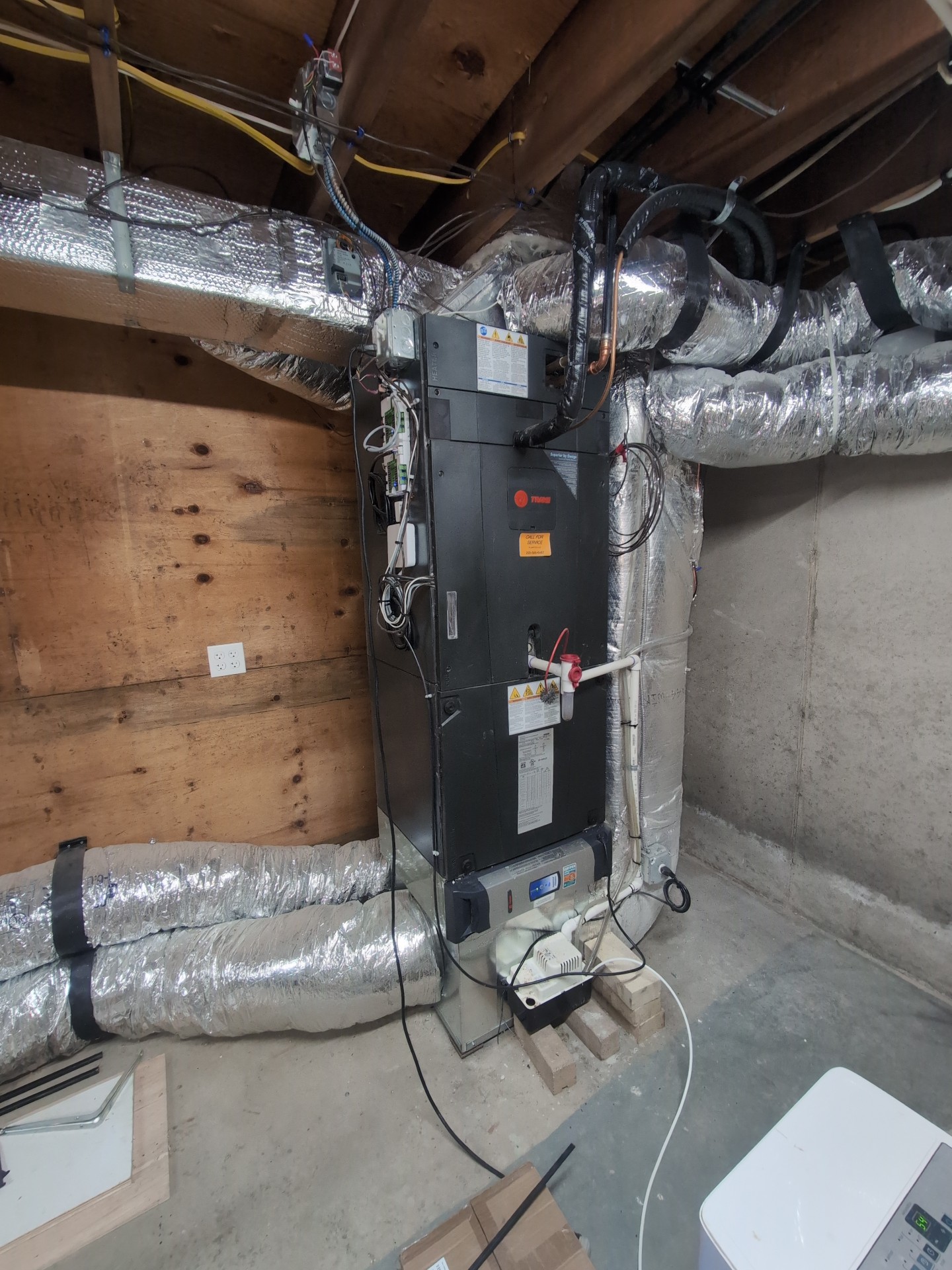 | 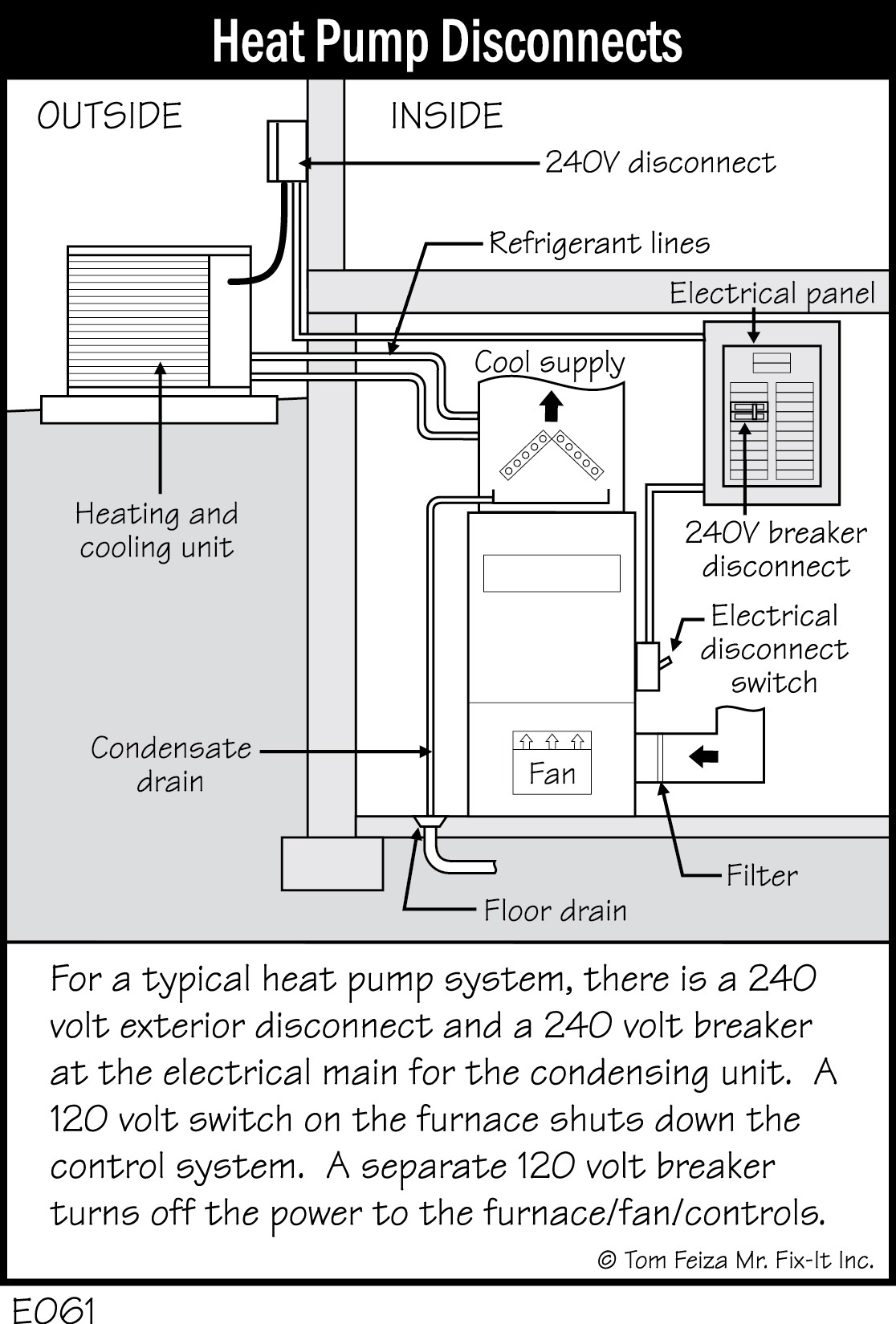 |
Normal Operating Controls
The thermostat was tested and found to be operating correctly in heating mode at the time of inspection. The system responded appropriately to temperature adjustments, and the equipment activated and cycled off as expected. Note: Functionality was limited to basic operation and response. This does not constitute a full evaluation of the HVAC system’s performance or efficiency.
Safety Controls
I highly recommend the installation of a furnace emergency kill switch installed at the entry into the unfinished basement area or at the top of the stairs leading to the finished basement area. I did not see one present on the day of the inspection and recommend a licensed electrical contractor for installation.
An emergency shutoff (kill switch) for a boiler is an important safety feature. The switch allows the heating system to be quickly and safely shut down in the event of an emergency, such as a gas odor, electrical malfunction, overheating condition, or fire. Having an accessible kill switch enables occupants or service personnel to stop furnace operation without needing to access the unit itself, which may be located in a confined or hazardous area.
Emergency shutoff switches also assist emergency responders and service technicians by providing a clear and immediate means of disabling the system before performing repairs or responding to unsafe conditions.
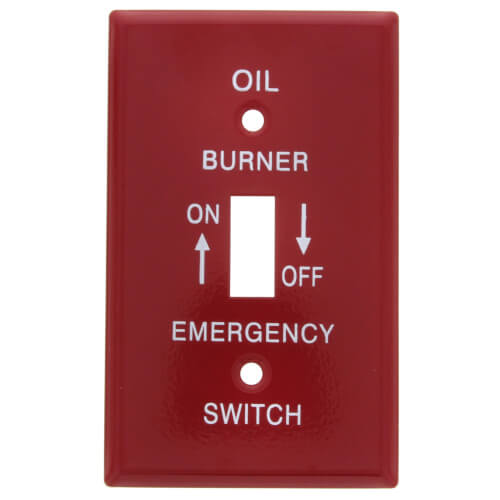
Distribution Systems (including fans, pumps, ducts and piping, with supports, insulation, air filters, registers, radiators, fan coil units and convectors)
Replacement of the HVAC system's air filter is recommended at the intervals specified by the manufacturer, typically every 1 to 3 months depending on filter type, system usage, and household conditions (e.g., pets, allergies, dust levels). A clogged or dirty filter can reduce airflow, decrease system efficiency, strain the blower motor, and negatively impact indoor air quality. Regular filter changes help maintain optimal performance, extend system lifespan, and ensure healthier air circulation throughout the home. Recommend establishing a filter replacement schedule and using filters that meet the system’s specifications.
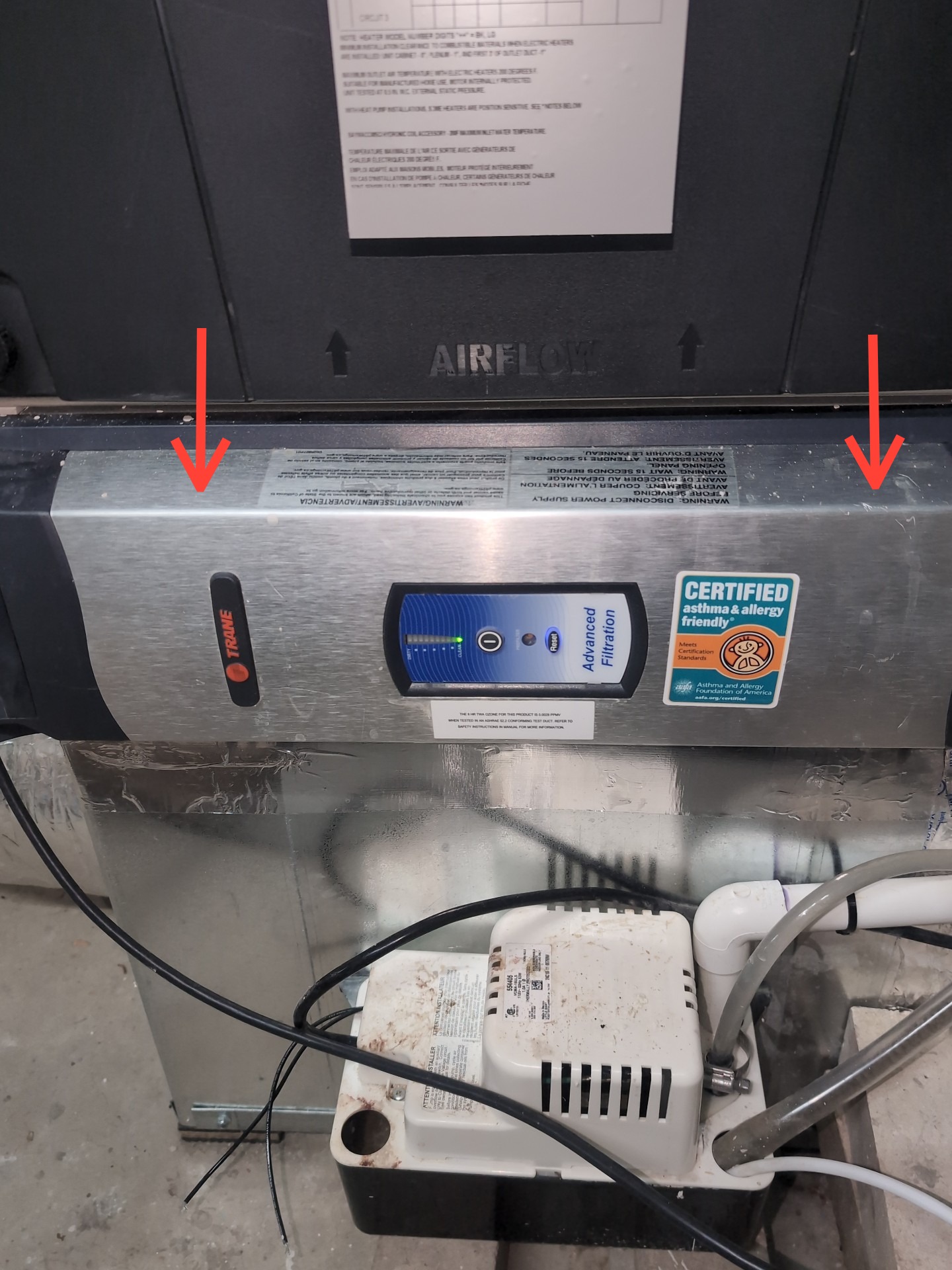
I recommend that all ductwork be cleaned and sanitized by a licensed duct cleaning professional prior to moving into this home. Each year, the average house collects 40 lbs. of dust, dirt, and allergens. This pile-up adds weight to your ducts and pollutes the air you breathe with irritants like dust mites. According to the EPA indoor levels of dust mites are higher than outdoor levels. Dust mites may be the most common trigger of year-round allergies and asthma. This means your home traps allergy and asthma aggravators until you get them out. Cleaning the air ducts is a great way to get rid of dust mites and get back to fresher breathing. However, be sure to research what air duct cleaning methods a company uses. Some air duct cleaning methods use chemical sealants to clean air ducts. This can lead to more irritation once the sealants break down over time and start circulating back into our air ducts. Be sure the company uses a powerful HEPA-filtered vacuum to clean ducts, furnaces, evaporator coils, blowers, and vent covers.
I recommend insulating with foam pipe insulation all exposed near boiler supply and return piping for energy efficiency purposes.
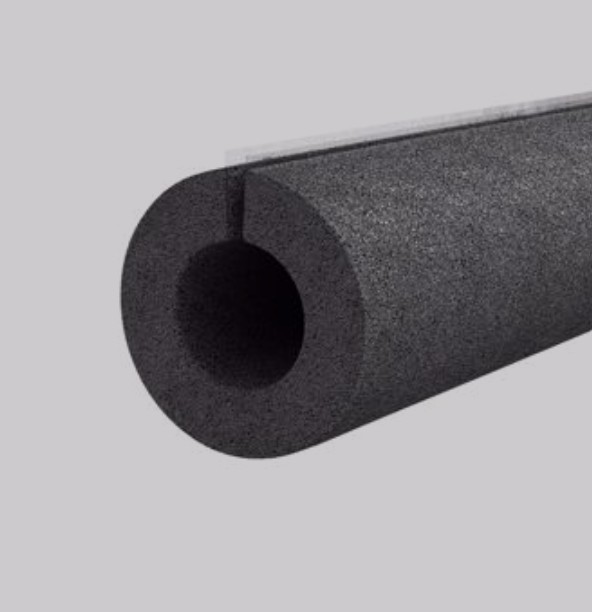
Presence of Installed Heat Source in Each Room
No visual issues noted.
Chimneys, Flues and Vents (for fireplaces, gas water heaters or heat systems)
The boiler flue pipe did not appear to be fully inserted into the chimney breech connection at the time of the inspection, nor did it appear to be properly secured with sheet metal fasteners/screws. Improperly installed or unsecured flue piping can allow combustion gases, including potentially hazardous carbon monoxide, to escape into the living space or mechanical room area. Loose or improperly connected flue components may also negatively affect proper draft and combustion performance of the heating appliance. Recommend further evaluation and correction by a licensed oil burner technician or qualified HVAC contractor to help ensure safe and proper venting of combustion gases.
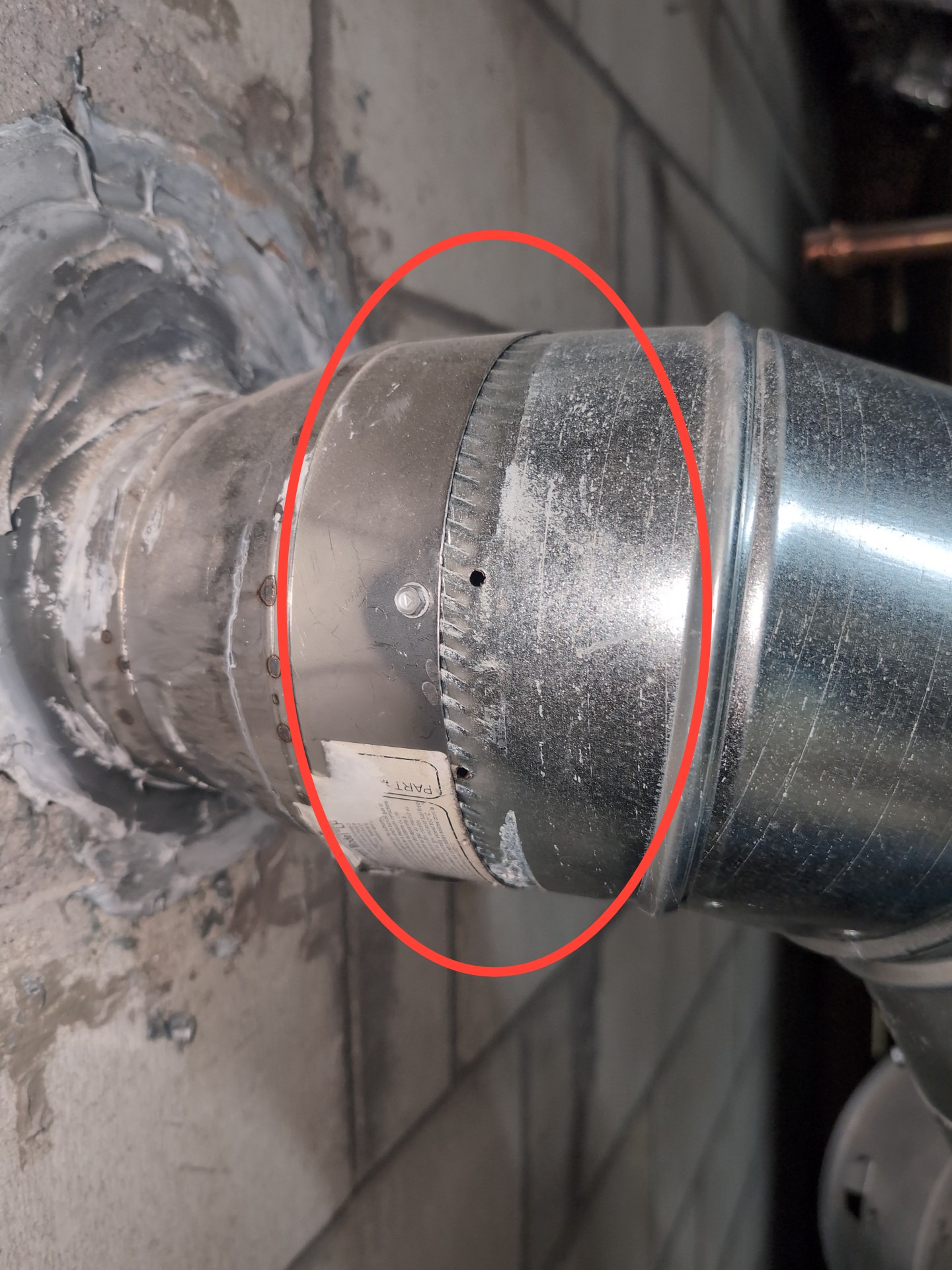
The oil burner technician’s combustion test hole in the boiler flue pipe was not sealed at the time of the inspection. An open test port can allow combustion byproducts, including potentially hazardous carbon monoxide and soot, to escape into the unfinished basement area. Recommend sealing or properly plugging the test hole with an appropriate metal bolt or approved plug fitting. Further evaluation and repair by a licensed oil burner technician or qualified HVAC contractor is recommended to help ensure proper and safe venting of combustion gases.
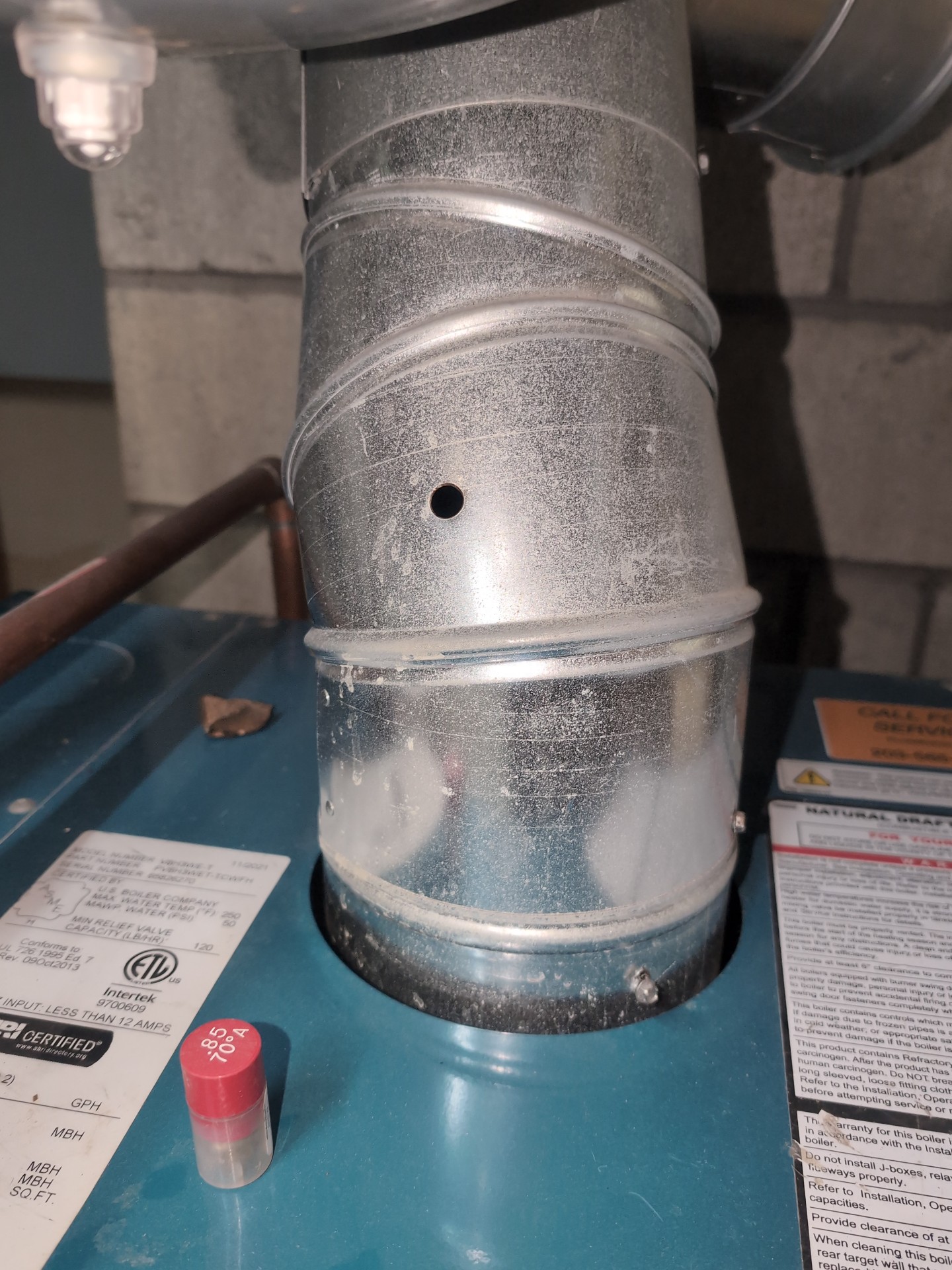
No visual issues noted at the exterior brick chimney. Monitor semiannually and perform proactive maintenance as needed.
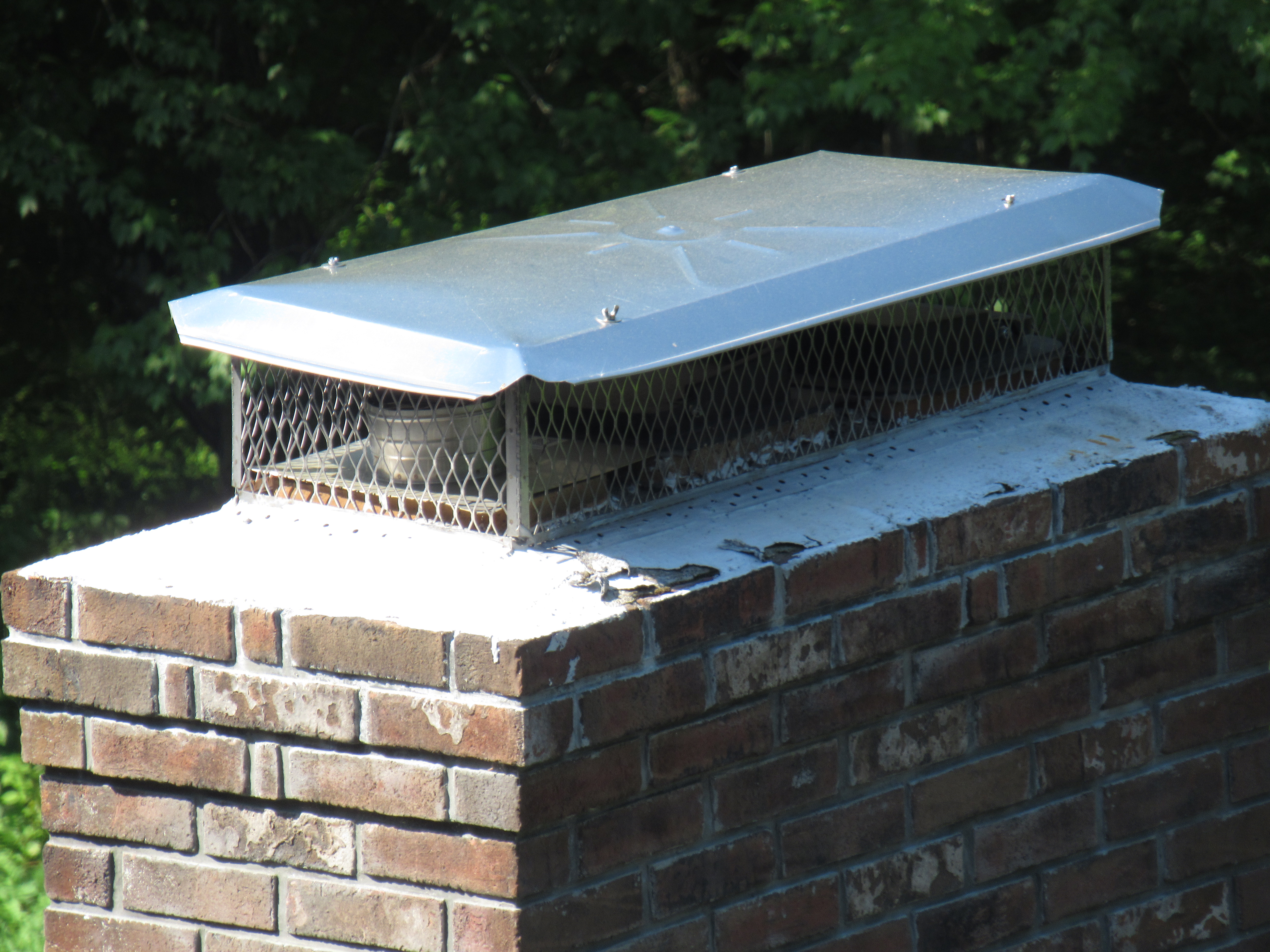 | 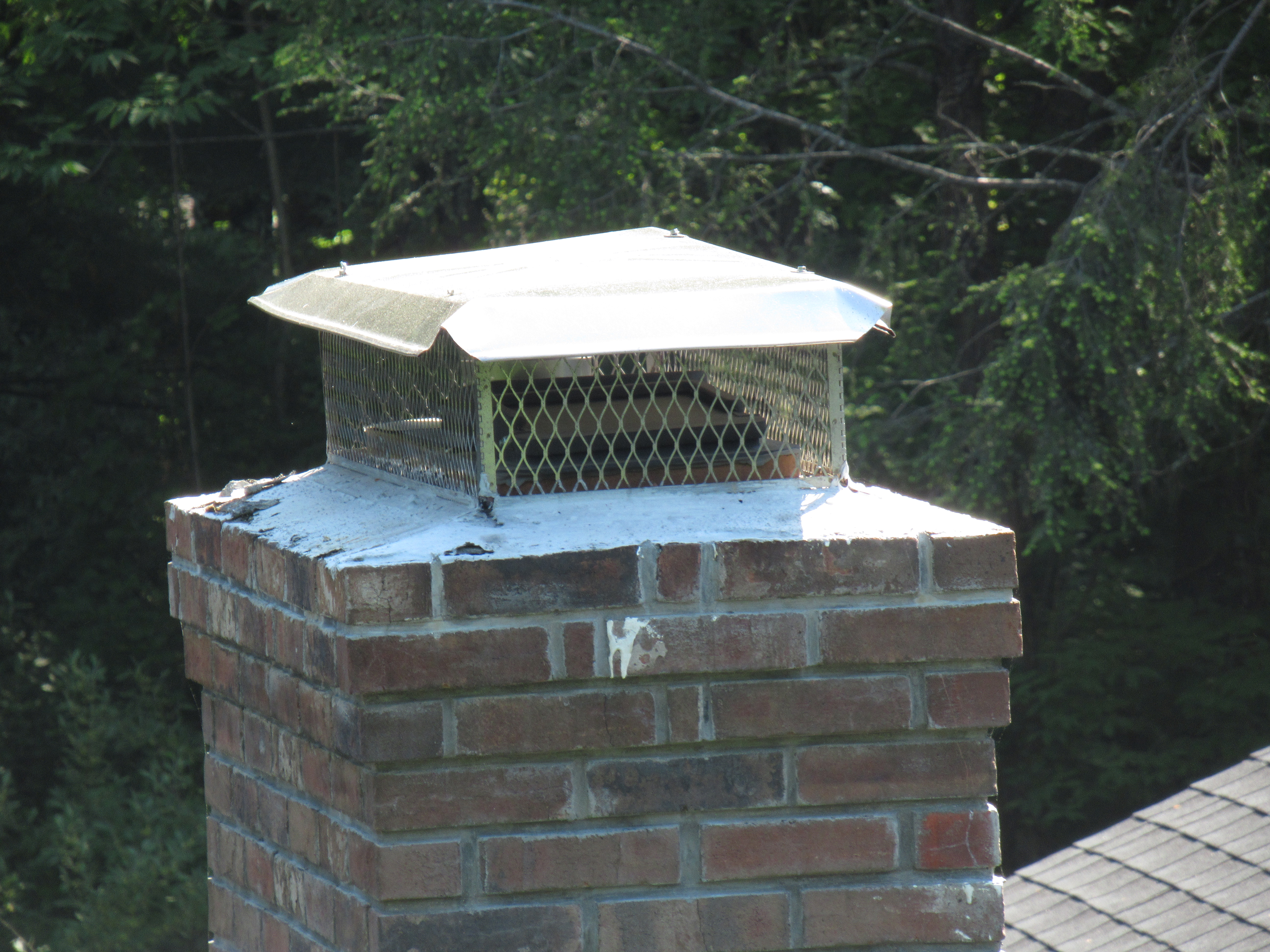 |
Proactive exterior chimney maintenance: Periodic exterior inspection of the chimney structure is recommended, including close evaluation of the chimney crown and the mortar joints between masonry bricks. These components are the primary defense against water intrusion into the chimney structure.
The chimney crown is designed to shed water away from the flue and masonry below. If cracked, deteriorated, or improperly sealed, water can penetrate into the chimney assembly. Likewise, deteriorated or missing mortar joints allow moisture to enter the masonry system. In climates subject to freeze-thaw cycles, absorbed moisture can expand during freezing conditions, leading to spalling bricks, mortar joint failure, structural instability, and potential flue liner damage.
Unchecked moisture intrusion may also contribute to interior staining, deterioration of adjacent framing members, and accelerated chimney degradation.
Recommend periodic evaluation and maintenance by a licensed masonry contractor or chimney specialist to identify early signs of cracking, mortar deterioration, or crown defects and to perform timely repairs such as tuckpointing, crown sealing, or rebuilding as necessary. Proactive maintenance helps extend the service life of the chimney system and reduce the likelihood of more costly structural repairs.
Solid Fuel Heating Devices (Fireplaces, Woodstove)
The chain damper in the living room fireplace was fully functional when tested at the time of the inspection.
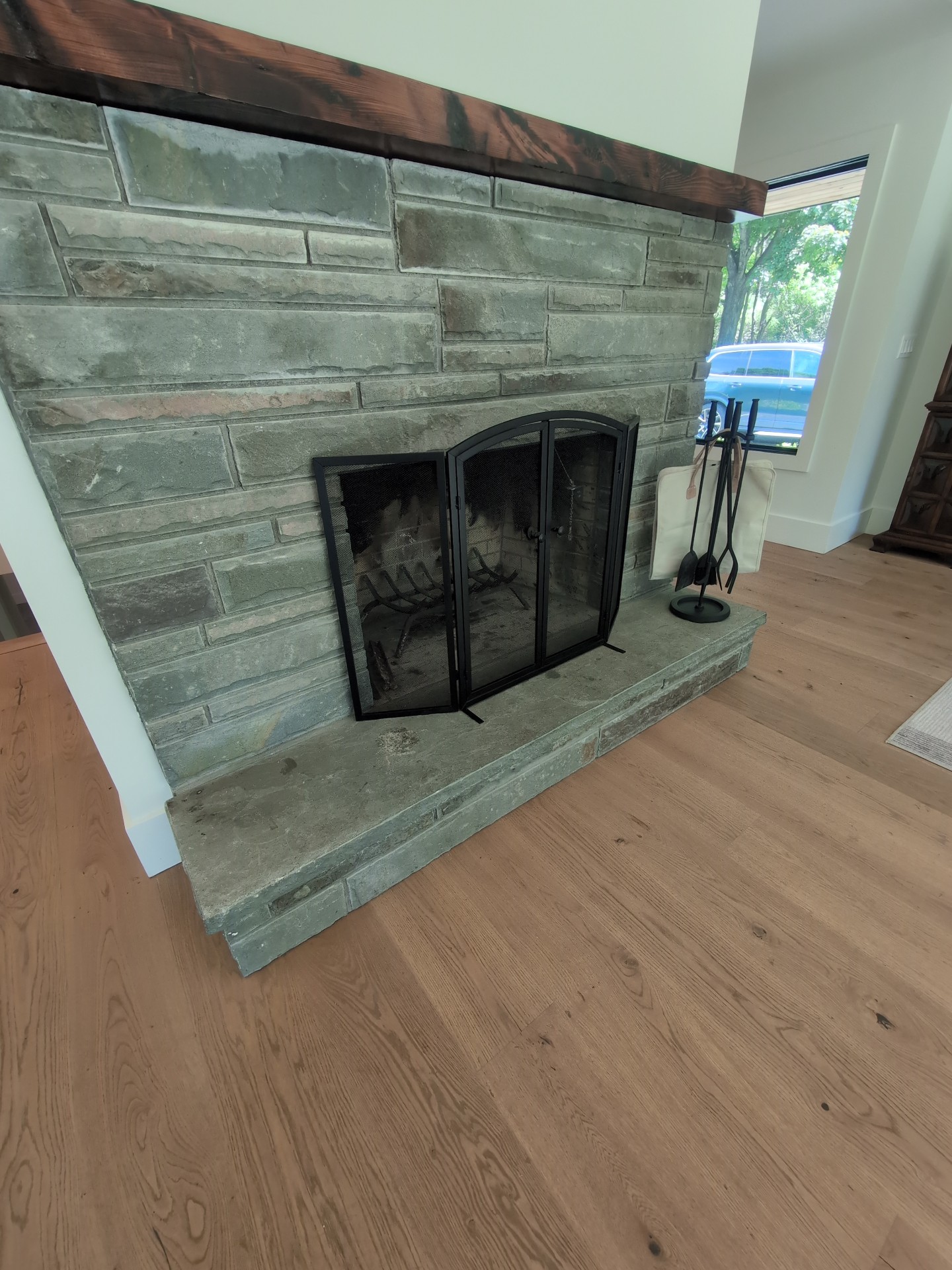 | 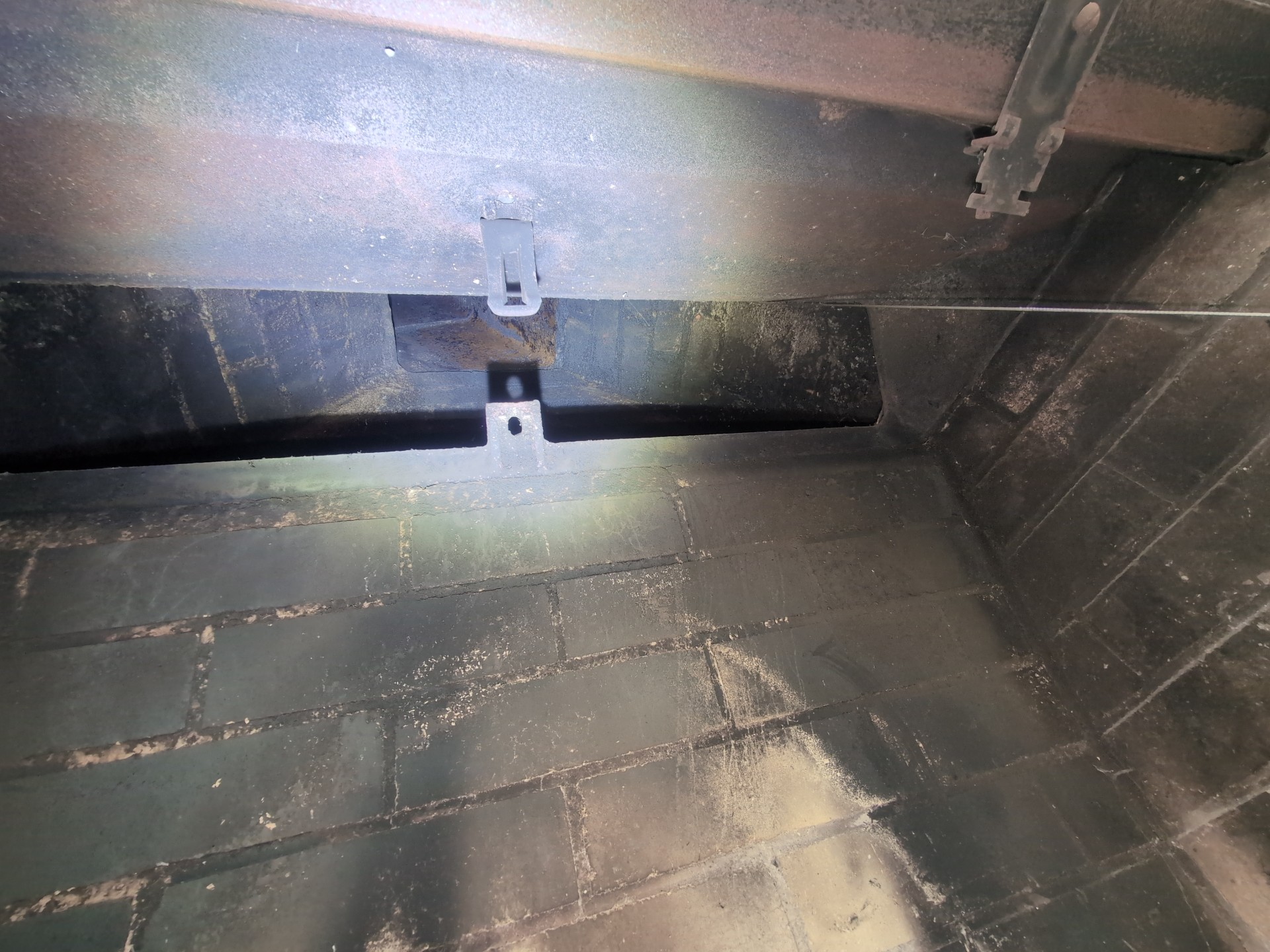 | 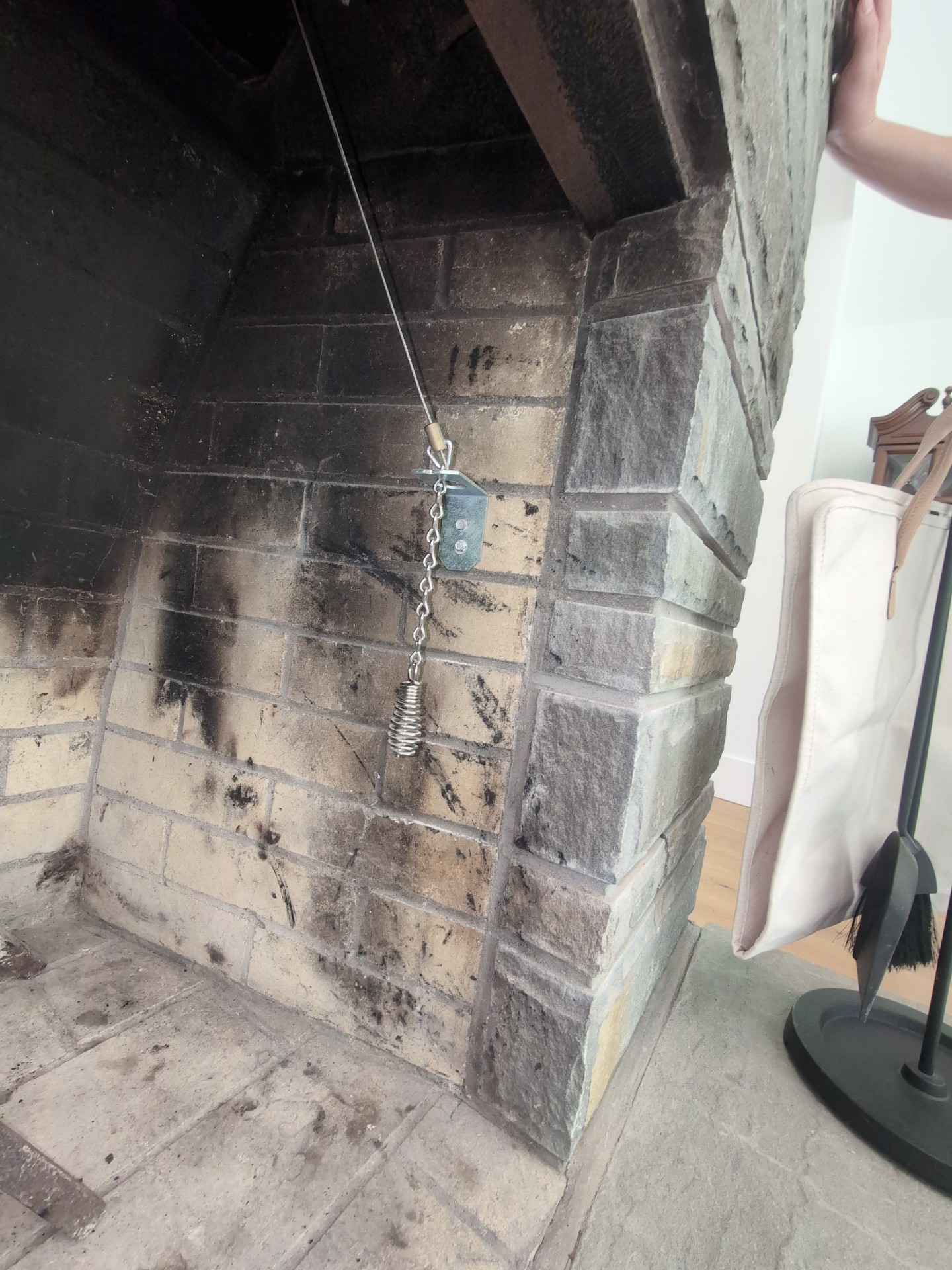 |
The chain damper in the finished basement family room fireplace was fully functional when tested at the time of the inspection. If you plan on utilizing this fireplace be sure to have a properly sized ember screen installed or an appropriately sized tempered glass firebox enclosure.
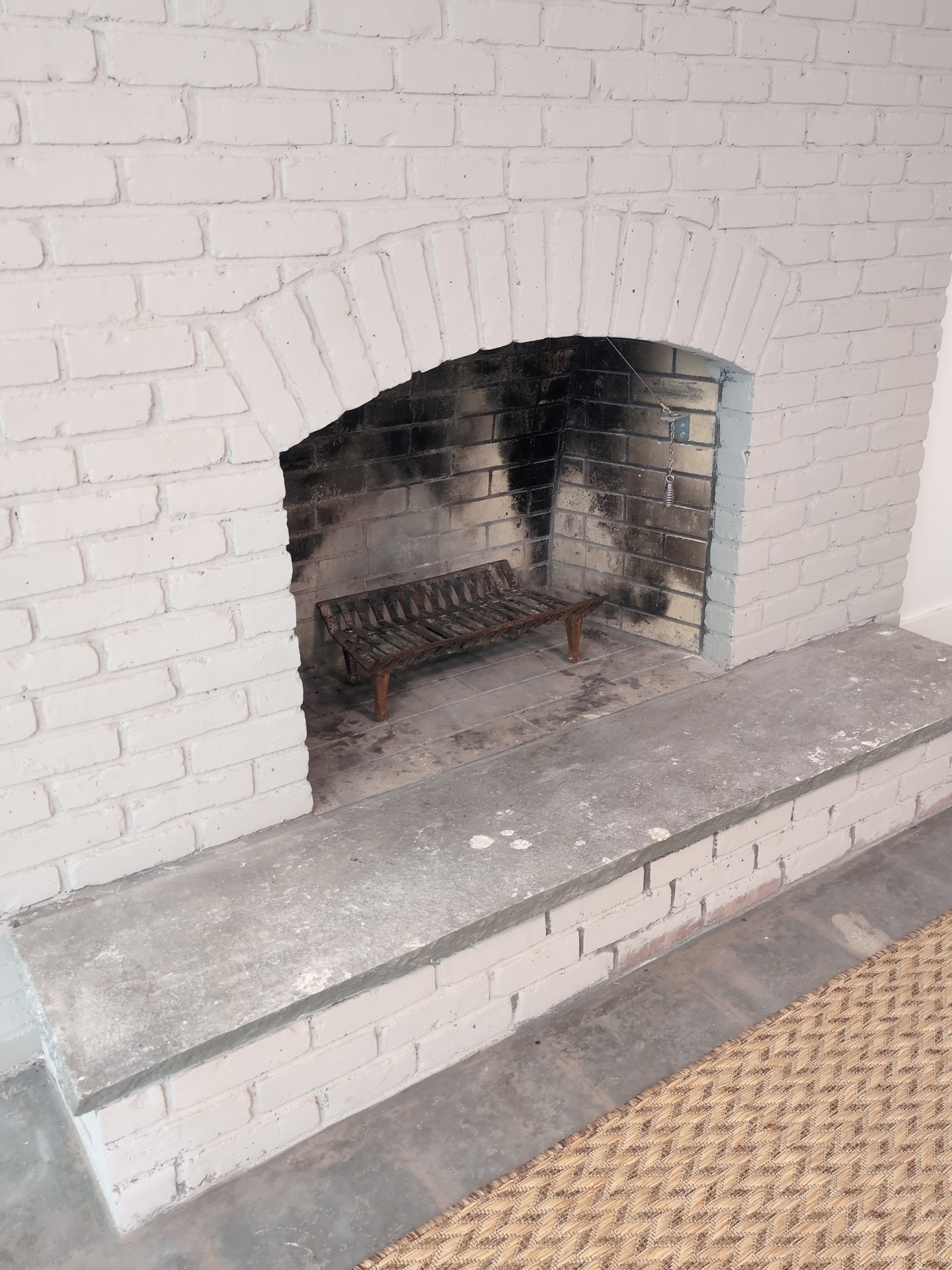 | 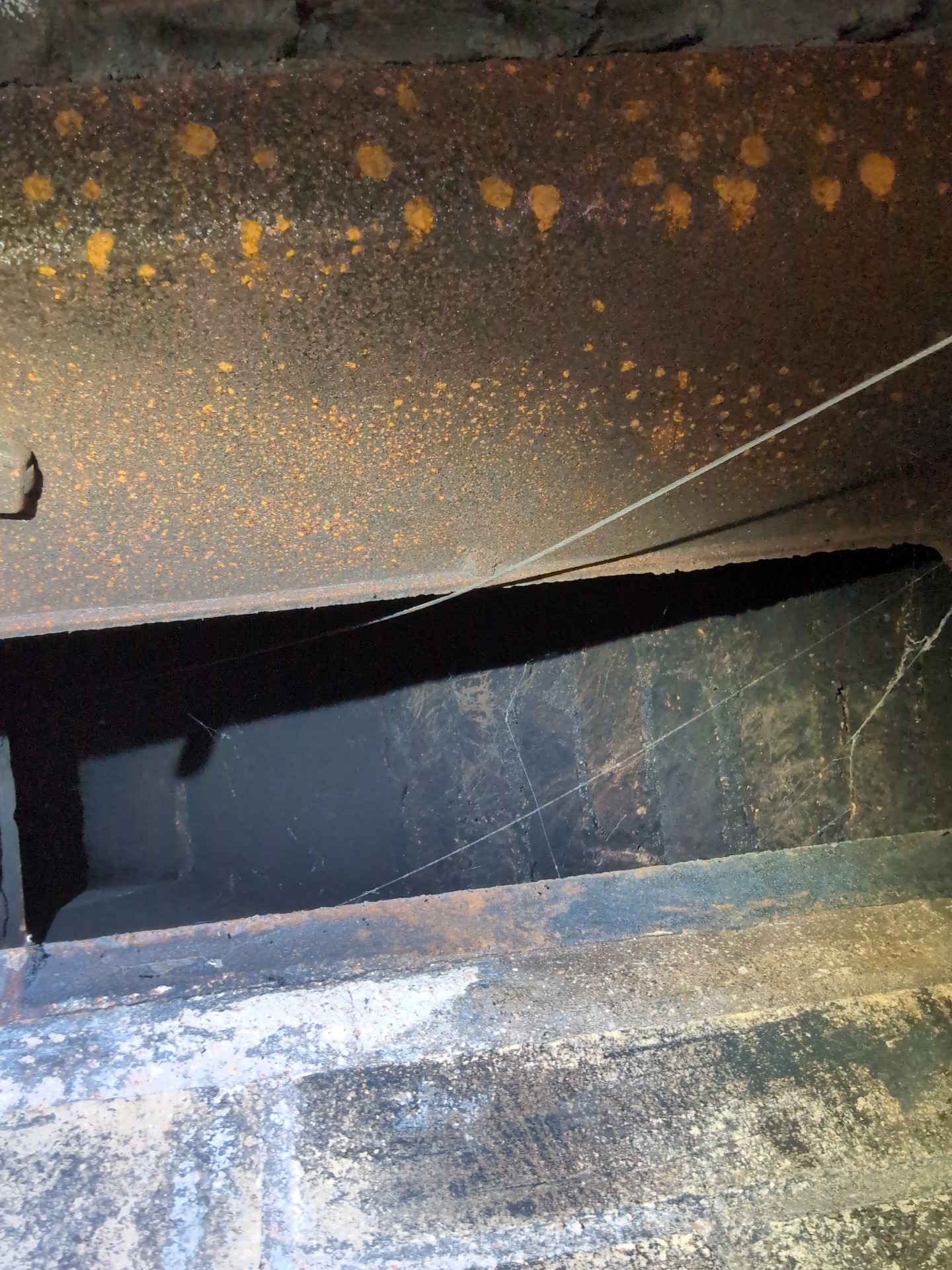 |
The National Fire Protective Association (NFPA-211) ( as noted In a brochure published by the Chimney Safety Institute of America) highly suggests that a level 2 inspection be performed upon "the sale or transfer of a property". This inspection is to be performed on fireplaces, chimneys, flues or other venting systems, by a Certified Chimney Sweep. We recommend that you consult with your Attorney to determine if the seller will have this inspection performed prior to closing. For additional information contact the Chimney Sweep Safety Institute of America at www.csia.org. Home inspection scope is hearth, hearth extension and damper only.
Woodburning Chimney Maintenance: Wood-burning fireplace chimneys require routine inspection and maintenance to help ensure safe operation, proper draft, and to reduce the risk of chimney fires and carbon monoxide intrusion.
Recommended Chimney Maintenance Items:
- Annual chimney inspection by a licensed chimney professional or chimney sweep.
- Annual chimney cleaning to remove creosote buildup and soot accumulation.
- Inspection of chimney liner for cracks, gaps, deterioration, or improper sizing.
- Inspection of chimney crown for cracking or deterioration that could allow water intrusion.
- Inspection and repair of mortar joints and brick masonry, including tuckpointing where needed.
- Verification that chimney flashing is properly sealed at roof intersections to prevent leakage.
- Inspection of chimney cap and spark arrestor to help prevent animal entry, debris blockage, and ember escape.
- Inspection of damper operation to confirm proper opening, closing, and sealing.
- Removal of obstructions such as bird nests or debris that may restrict proper draft.
- Monitoring for signs of moisture intrusion, staining, or efflorescence at chimney surfaces.
- Burn only properly seasoned firewood to help reduce creosote formation.
- Avoid burning trash, treated lumber, or other materials that can damage the chimney or produce hazardous fumes.
Routine professional maintenance helps improve fireplace safety, prolong chimney service life, and reduce the likelihood of fire or ventilation hazards.
Cooling and Air Handler Equipment
A Trane 3 ton capacity (36,000 BTU) central AC heat pump condenser was installed at the right exterior of the home. Based on the rating label this unit was manufactured in March 2024. This unit was fully functional at the time of the inspection. Central AC / heatpump condensers have a typical user lifespan of 15-20 years based on service. Annual service and tune-ups is recommended by a licensed HVAC technician.
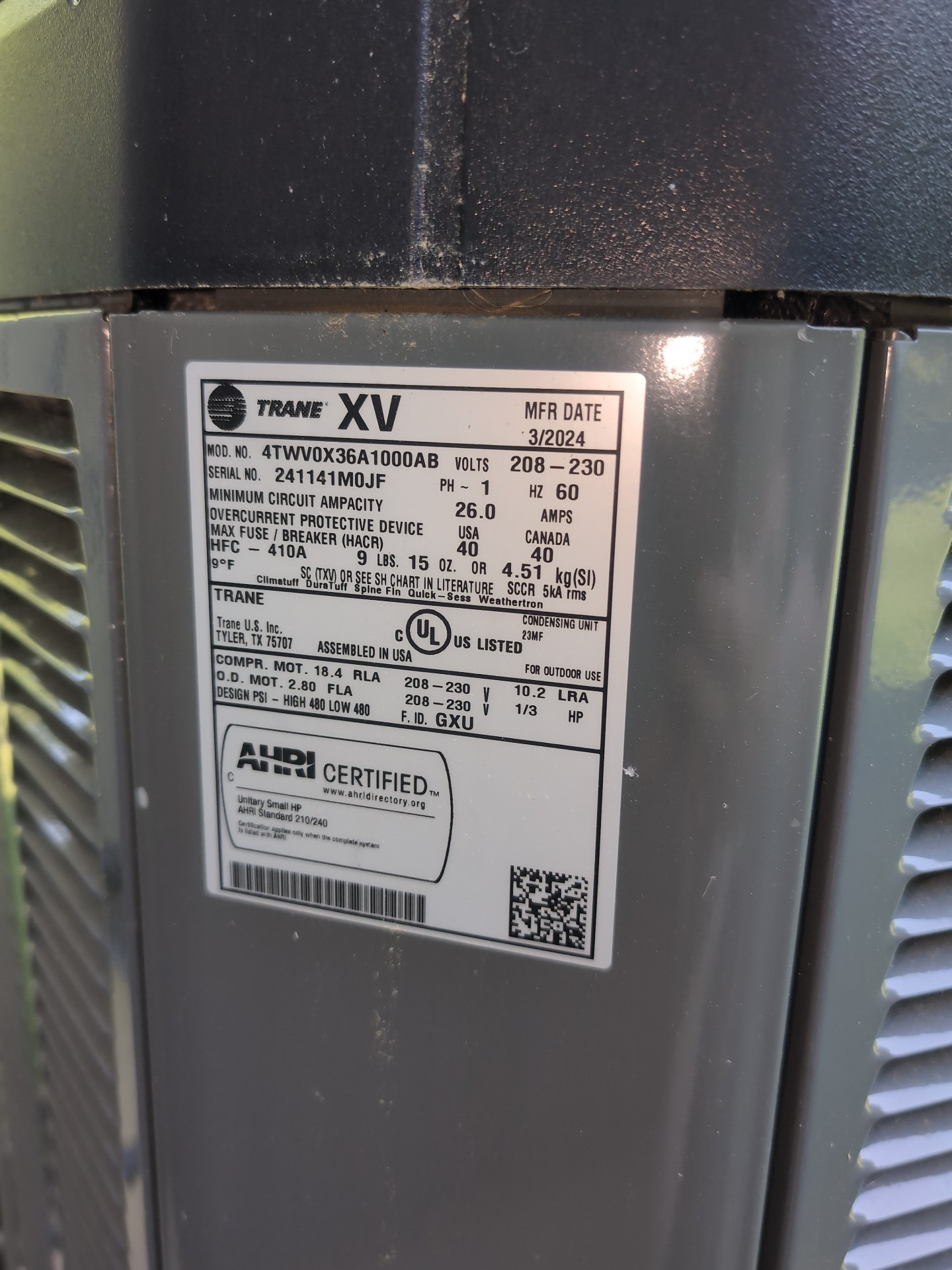
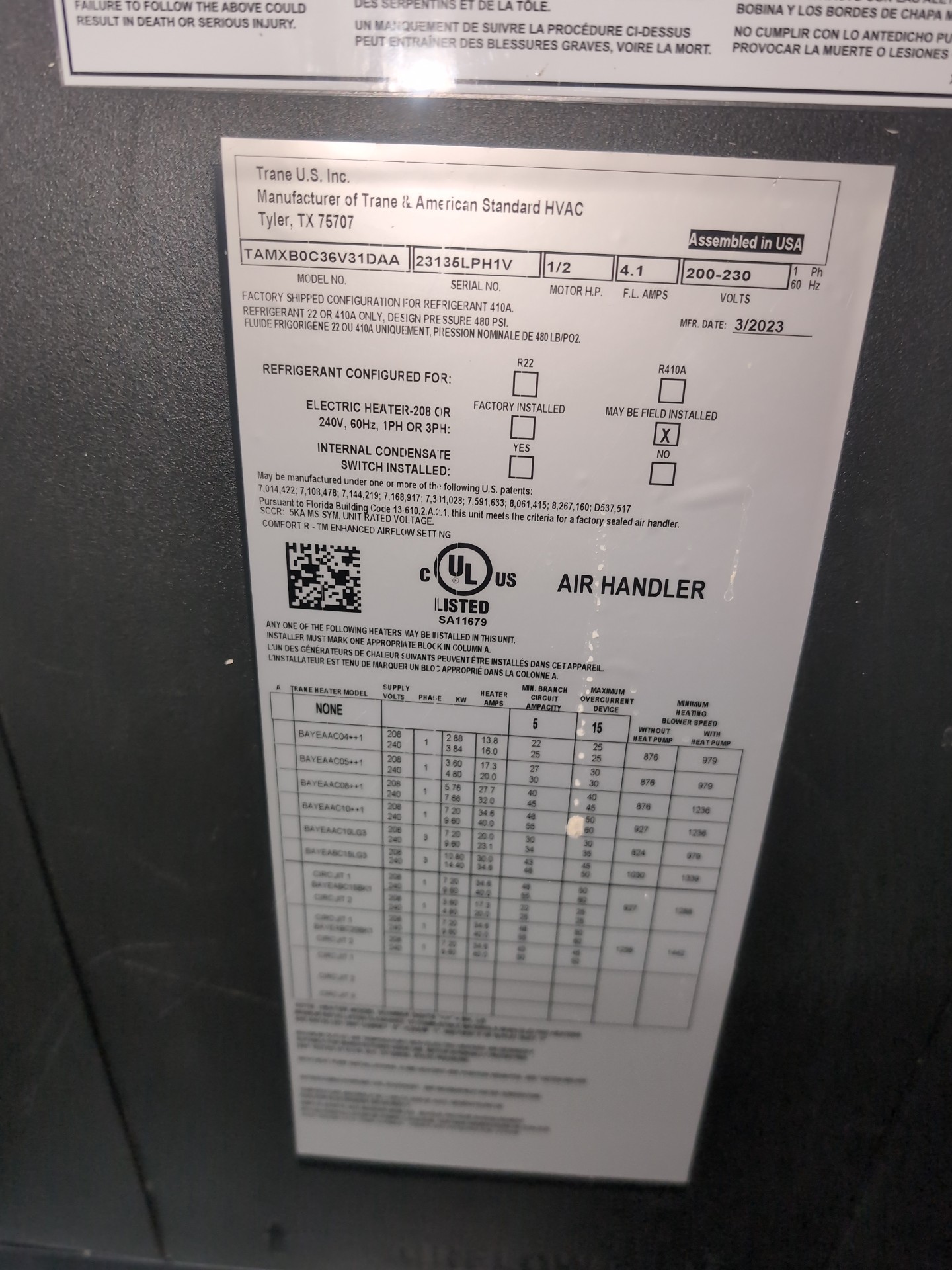
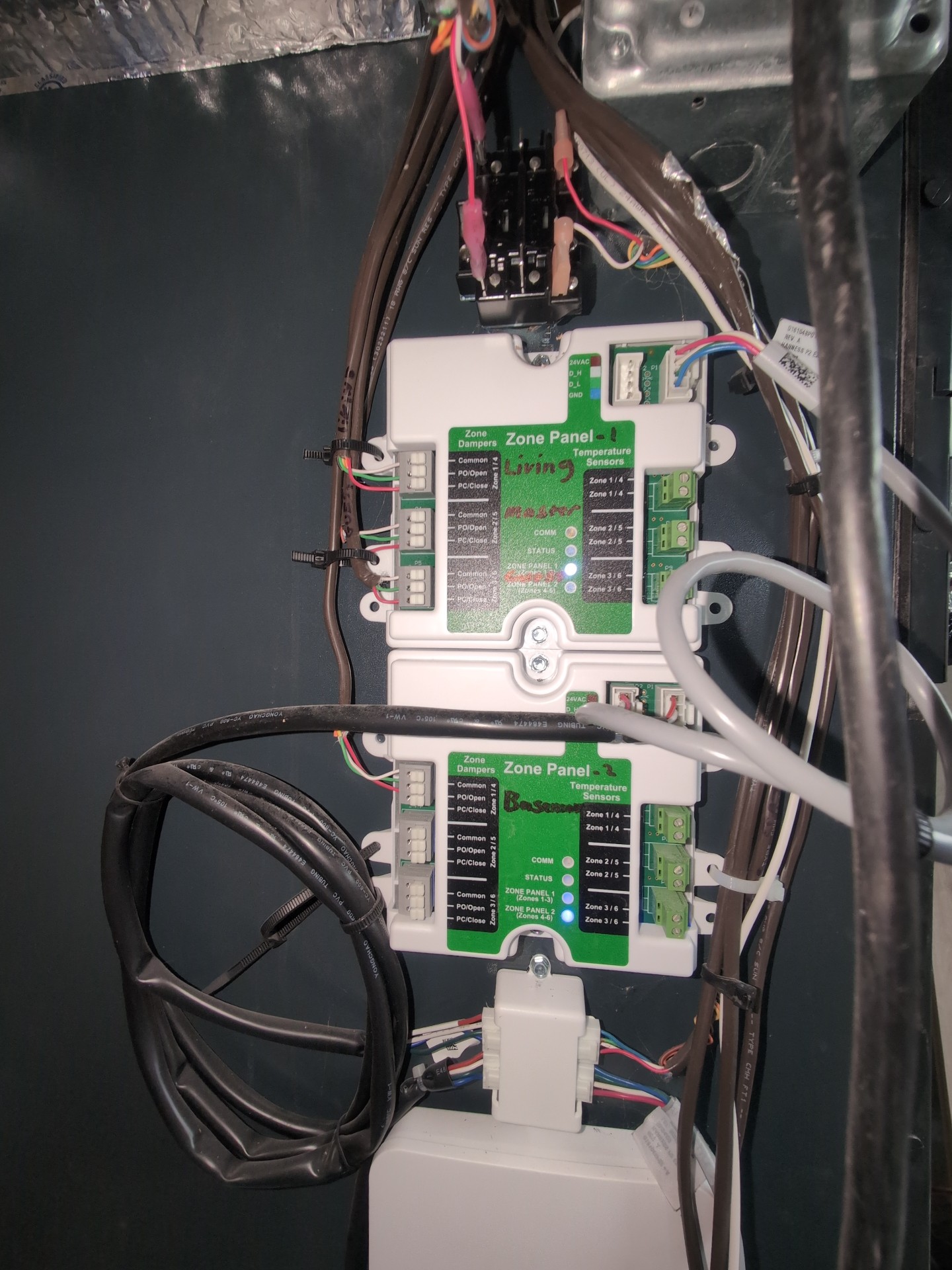
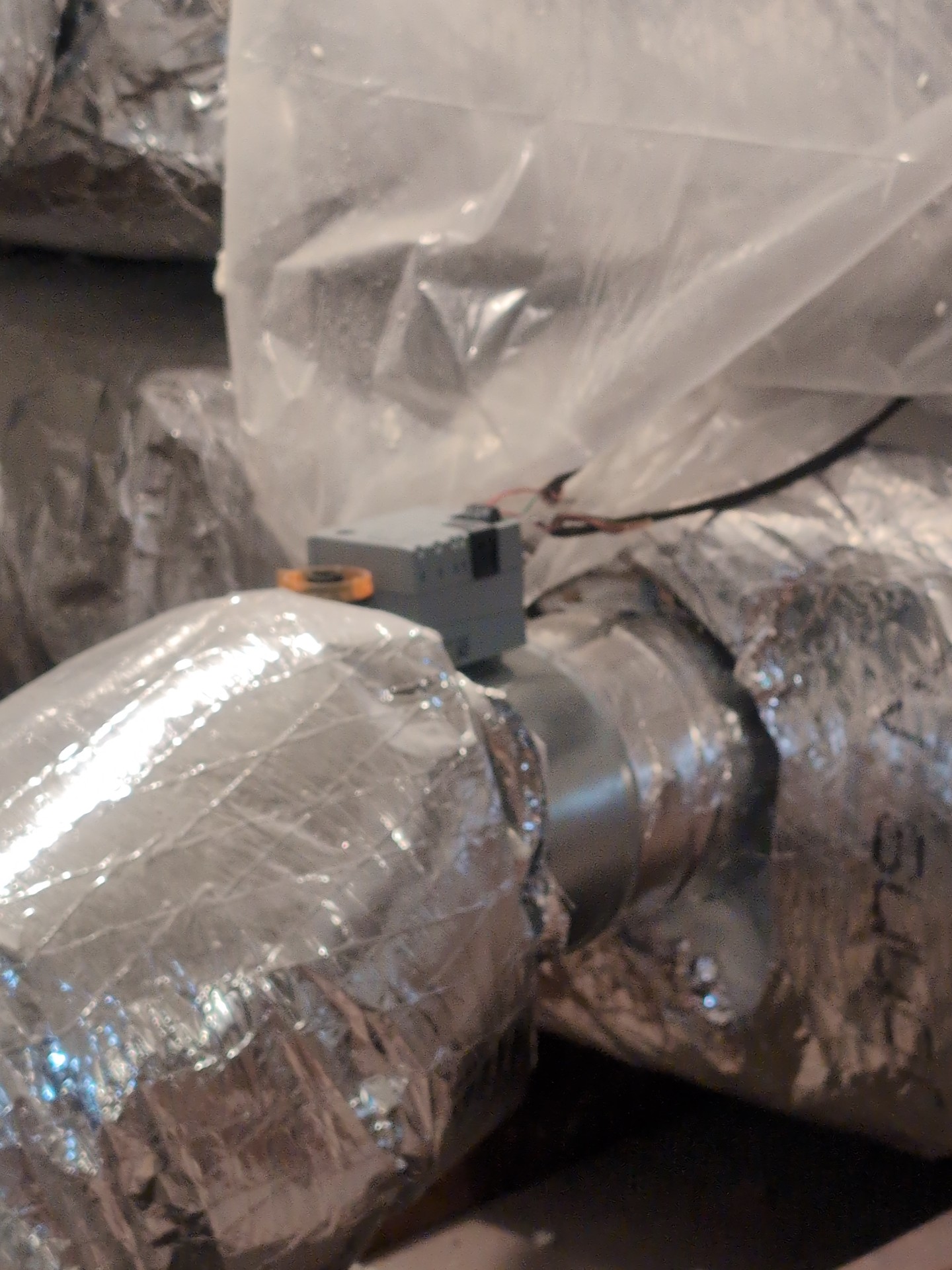
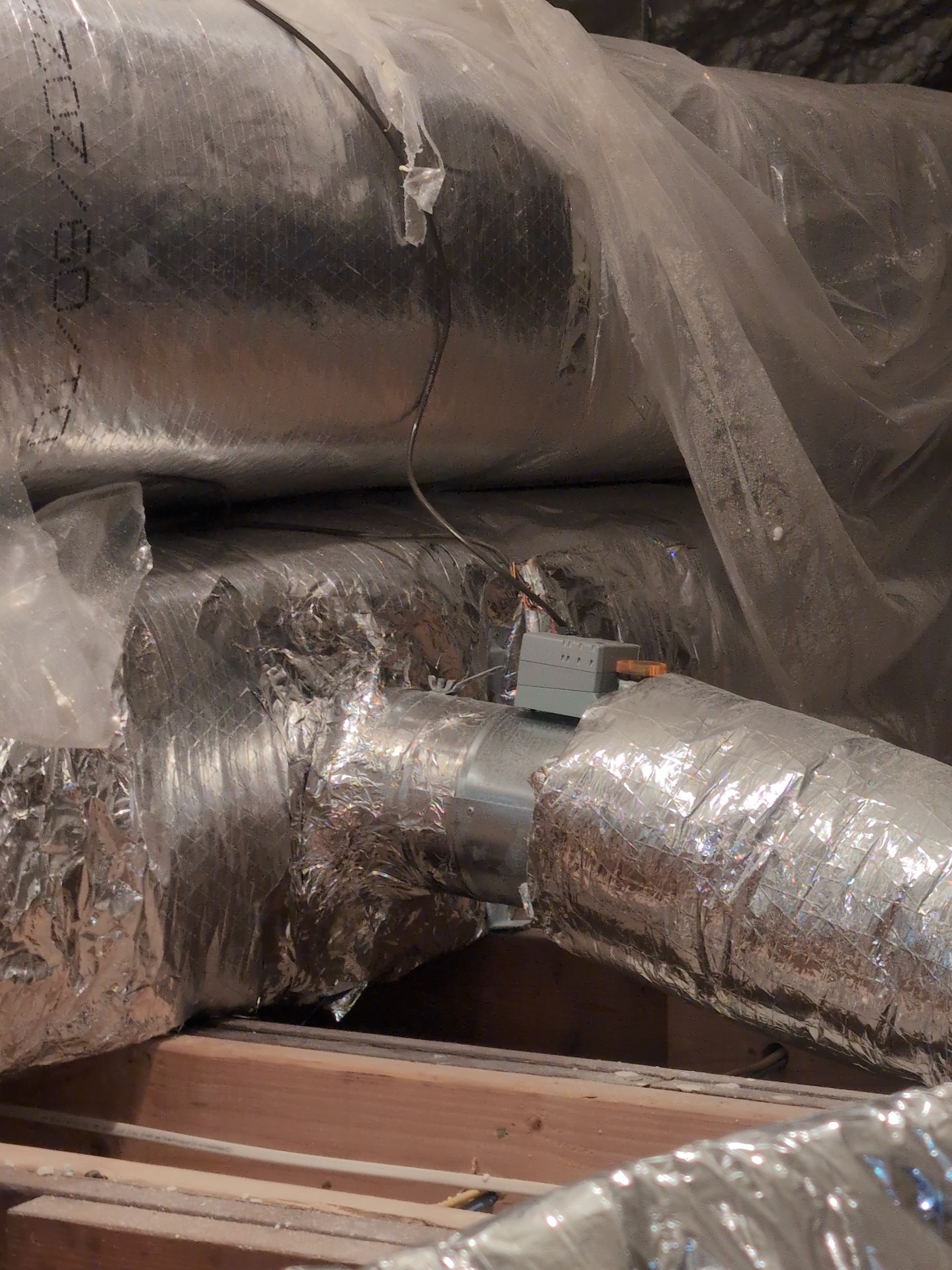
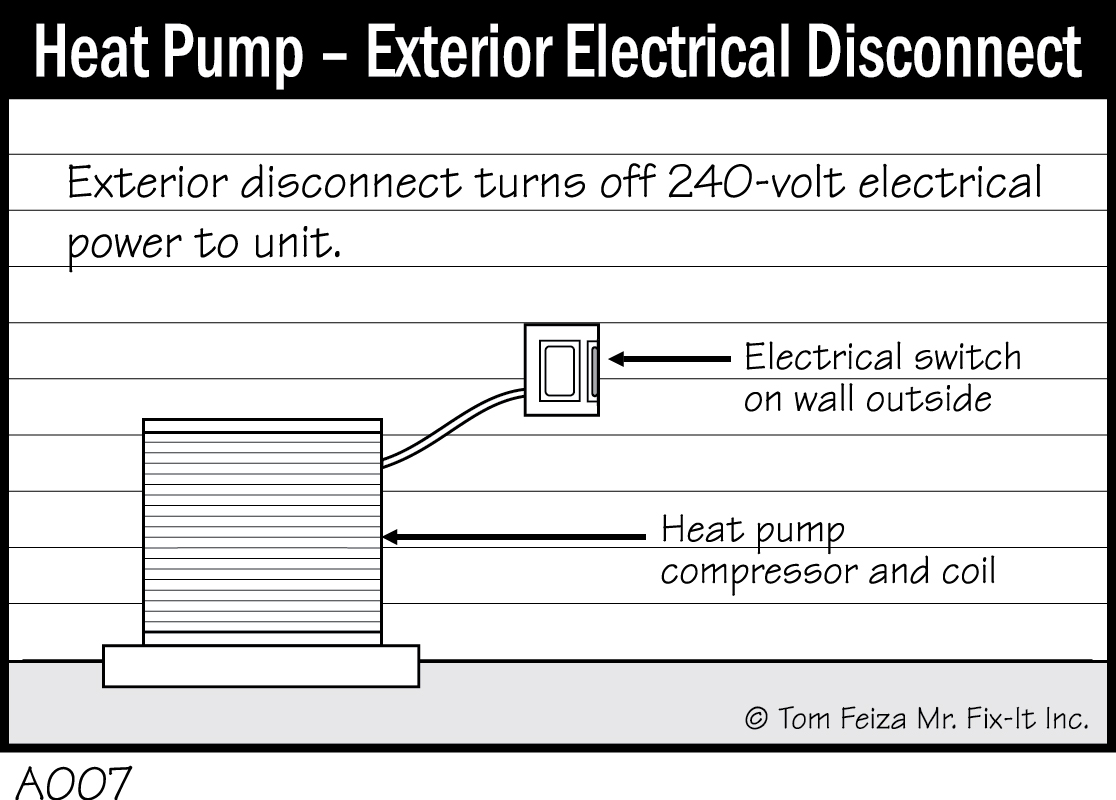 | 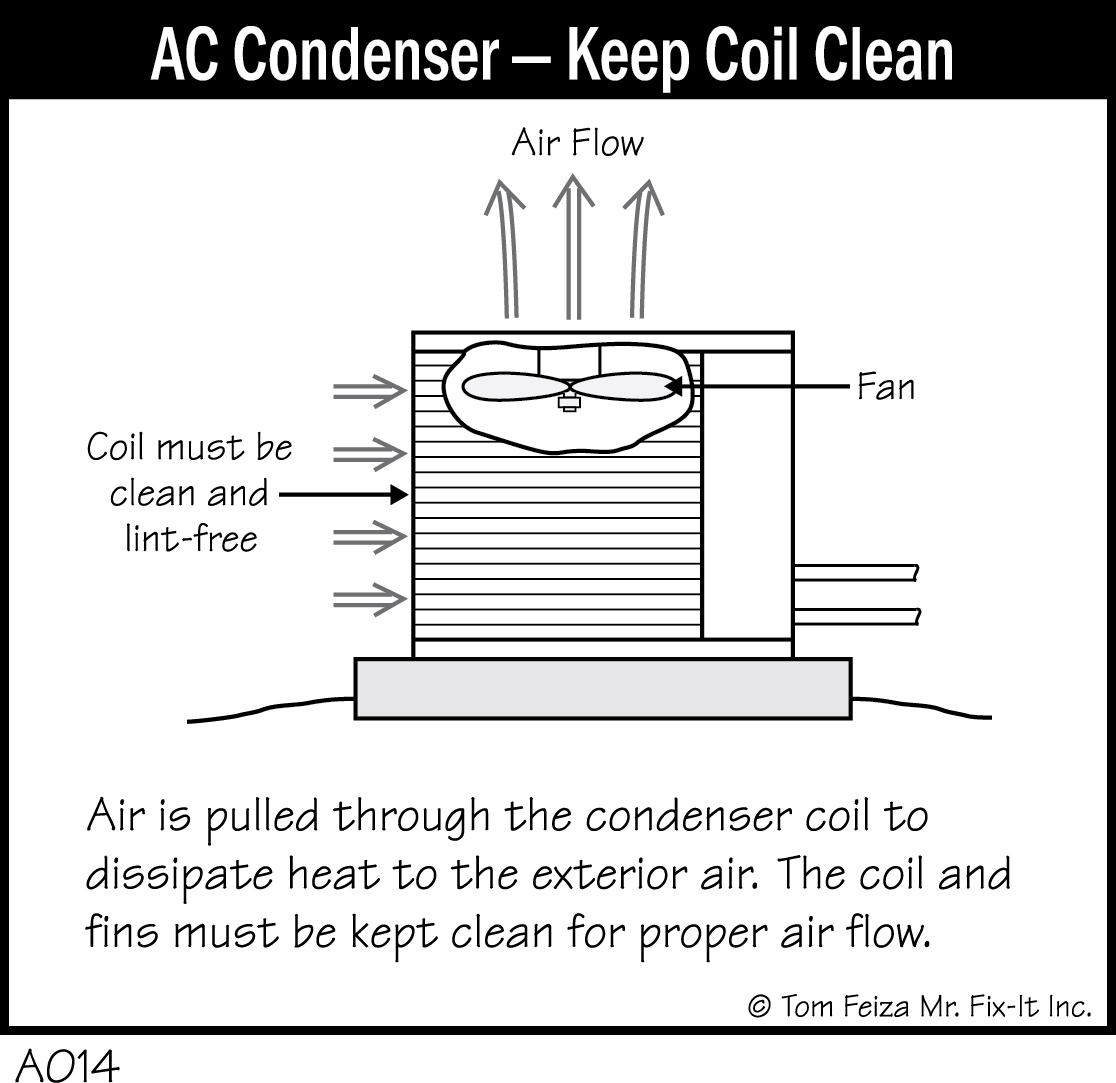 |
Typical Service Items for a Central Air Conditioning System:
- Annual professional tune-up by a licensed HVAC technician before cooling season.
- Clean or replace air filters every 30–90 days (more often with pets, allergies, or high dust levels).
- Clean the outdoor condenser coil to remove debris, dirt, and pollen that reduce efficiency.
- Clean the indoor evaporator coil (as needed) to maintain proper heat transfer.
- Clear and treat the condensate drain line to prevent clogging and overflow; check condensate pump if installed.
- Verify refrigerant levels and check for leaks; low refrigerant can damage the compressor.
- Inspect electrical components, including capacitors, contactors, relays, and wiring.
- Check and clean blower fan assembly for dust buildup that restricts airflow.
- Inspect and tighten all accessible refrigerant line connections; check insulation on suction line.
- Test system startup, temperature differential, and thermostat operation to confirm proper performance.
- Lubricate motors (if applicable)—modern units are often sealed and maintenance-free.
- Inspect ductwork for air leaks, loose connections, or deterioration.
- Check the air handler drain pan for rust, leaks, or microbial growth; ensure float switches (if equipped) are functioning.
- Verify outdoor unit clearance, ensuring at least 12–24 inches of open space on all sides.
Routine maintenance like this helps extend system lifespan, maintain efficiency, and prevent unexpected breakdowns during peak cooling season.
Typical service items for "Hydro" air handlers:
Recommended maintenance for HVAC air handlers with evaporator (cooling) and hydro-air (heating) coils includes:
- Annual professional HVAC service
- Inspect and clean evaporator (A/C) coil
- Inspect and clean hydro-air heating coil
- Replace air filters every 1–3 months as needed
- Inspect and flush condensate drain lines and drain pan
- Verify blower motor operation and check amperage draw
- Inspect refrigerant lines for proper insulation and leaks
- Inspect hydronic piping, circulators, and zone valves for proper operation
Routine maintenance helps maintain efficiency, proper airflow, and overall system longevity.
Normal Operating Controls
The thermostat was tested and found to be operating correctly in cooling mode at the time of inspection. The system responded appropriately to temperature adjustments, and the equipment activated and cycled off as expected. Note: Functionality was limited to basic operation and response. This does not constitute a full evaluation of the HVAC system’s performance or efficiency.
Presence of Installed Cooling Source in Each Room
No visual issues noted.
HVAC Footer
The heating and cooling system of this home was inspected and reported on with the above information. While the inspector makes every effort to find all areas of concern, some areas can go unnoticed. The inspection is not meant to be technically exhaustive. The inspection does not involve removal and inspection behind service door or dismantling that would otherwise reveal something only a licensed heat contractor would discover. Please be aware that the inspector has your best interest in mind. Any repair items mentioned in this report should be considered before purchase. It is recommended that qualified contractors be used in your further inspection or repair issues as it relates to the comments in this inspection report.
Plumbing System
Styles and Materials
Water Source:Well
Water Filters:Water SoftnerWhole house conditioner
Plumbing Water Supply (into home):Poly
Plumbing Water Distribution (inside home):CopperPEX
Washer Drain Size:2" Diameter
Plumbing Waste:PVC
Water Heater Power Source:None (Boiler only)
Water Heater Capacity:Tankless
Manufacturer:BURNHAMU.S.Boiler
Water Heater Location:Basement
The home inspector shall observe: Interior water supply and distribution system, including: piping materials, supports, and insulation; fixtures and faucets; functional flow; leaks; and cross connections; Interior drain, waste, and vent system, including: traps; drain, waste, and vent piping; piping supports and pipe insulation; leaks; and functional drainage; Hot water systems including: water heating equipment; normal operating controls; automatic safety controls; and chimneys, flues, and vents; Fuel storage and distribution systems including: interior fuel storage equipment, supply piping, venting, and supports; visual leaks; and Sump pumps. The home inspector shall describe: Water supply and distribution piping materials; Drain, waste, and vent piping materials; Water heating equipment; and Location of main water supply shutoff device. The home inspector shall operate all plumbing fixtures, including their faucets and all exterior faucets attached to the house, except where the flow end of the faucet is connected to an appliance.
The home inspector is not required to: State the effectiveness of anti-siphon devices; Determine whether water supply and waste disposal systems are public or private; Operate automatic safety controls; Operate any valve except water closet flush valves, fixture faucets, and hose faucets; Observe: Water conditioning systems; Fire and lawn sprinkler systems; On-site water supply quantity and quality; On-site waste disposal systems; Foundation irrigation systems; Spas, except as to functional flow and functional drainage; Swimming pools; Solar water heating equipment; or Observe the system for proper sizing, design, or use of proper materials.
Plumbing Drain, Waste and Vent Systems
All accessible plumbing fixtures throughout the home were operated during the inspection. No visible leakage was observed at any of the exposed drainage, waste, and vent (DWV) piping located in the basement area at the time of inspection.
Disclaimer: This evaluation is based on a limited visual inspection under normal operating conditions. Hidden or intermittent leaks may not be detectable during the inspection. Ongoing monitoring is advised, especially after periods of extended use.
PLEASE NOTE- Sewer Scope Septic: You may want to consider having the main septic system drain line video scoped from the interior of the home to the septic tank connection in the yard. I am unable to visually report on the interior condition of this piping. The potential for tree root intrusion and drainage pipe deterioration could be present. A licensed septic or sewer specialist is recommended and further due diligence should be considered.
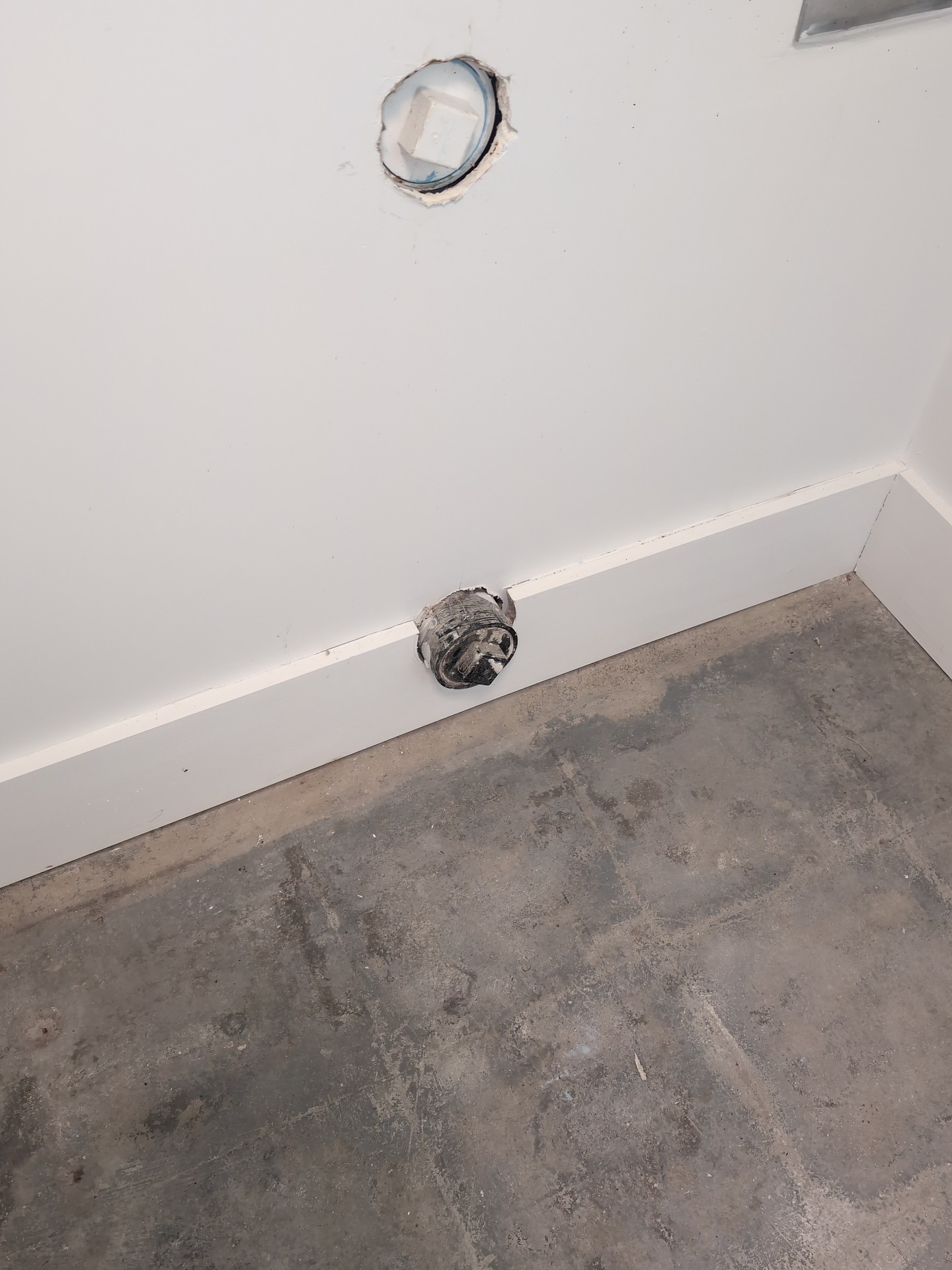
The central air conditioning condensate drain line discharged into the home’s plumbing drain system. Although the discharge hose was configured with a trap arrangement, this type of connection is generally not recommended. Improper condensate connections to sanitary plumbing drains can create the potential for sewer gases, bacteria, or drain odors to migrate back toward the air handler or living space if the trap dries out, becomes blocked, or is improperly configured. Additionally, direct or improper connections may create cross-contamination concerns and could contribute to condensate drainage issues or backups under certain conditions.
Recommend further evaluation by a licensed plumbing or HVAC contractor. Improvements may include installation of a proper indirect waste connection with an approved air gap or alternative discharge arrangement in accordance with current accepted installation practices and the authority having jurisdiction.
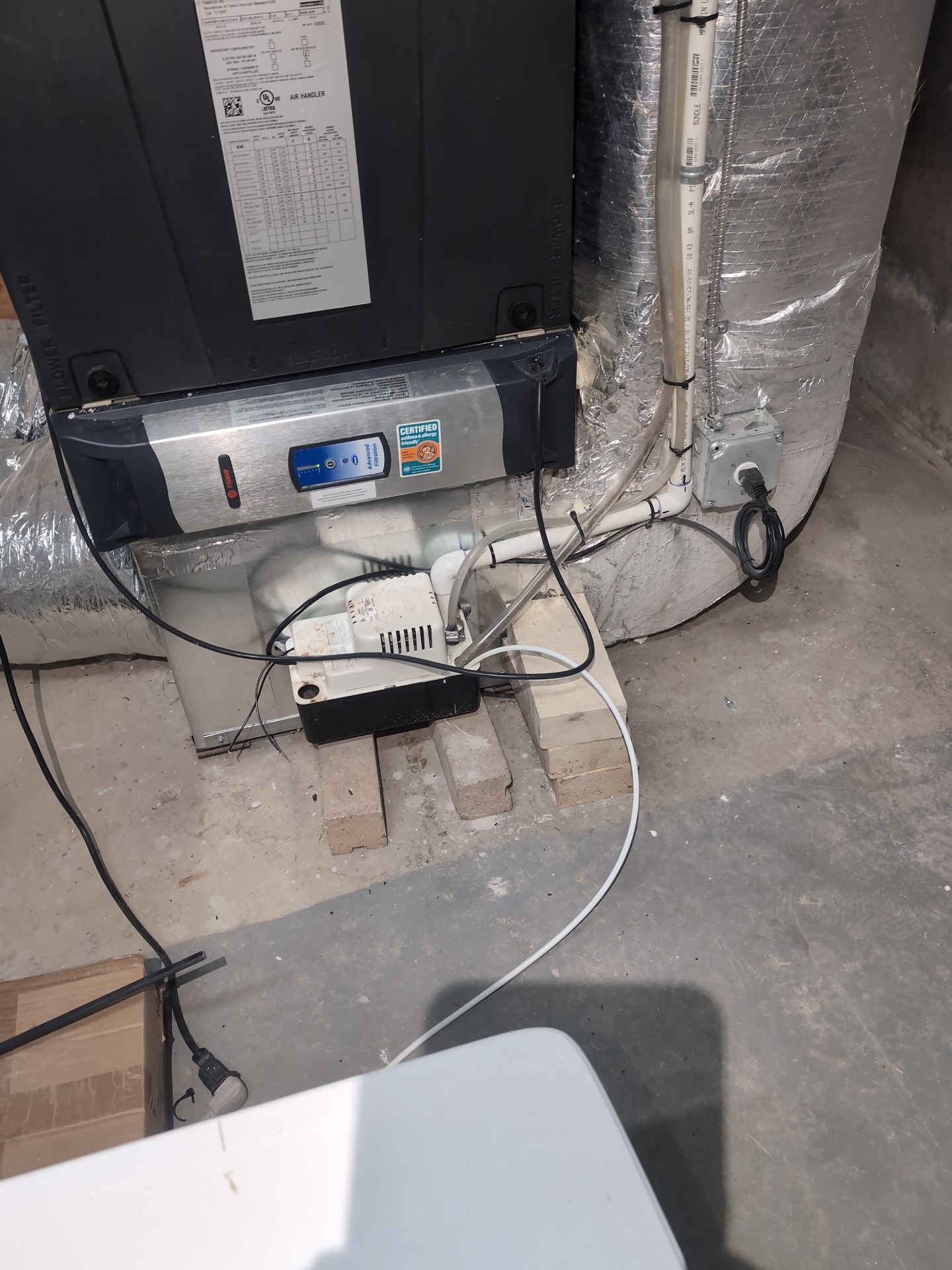 | 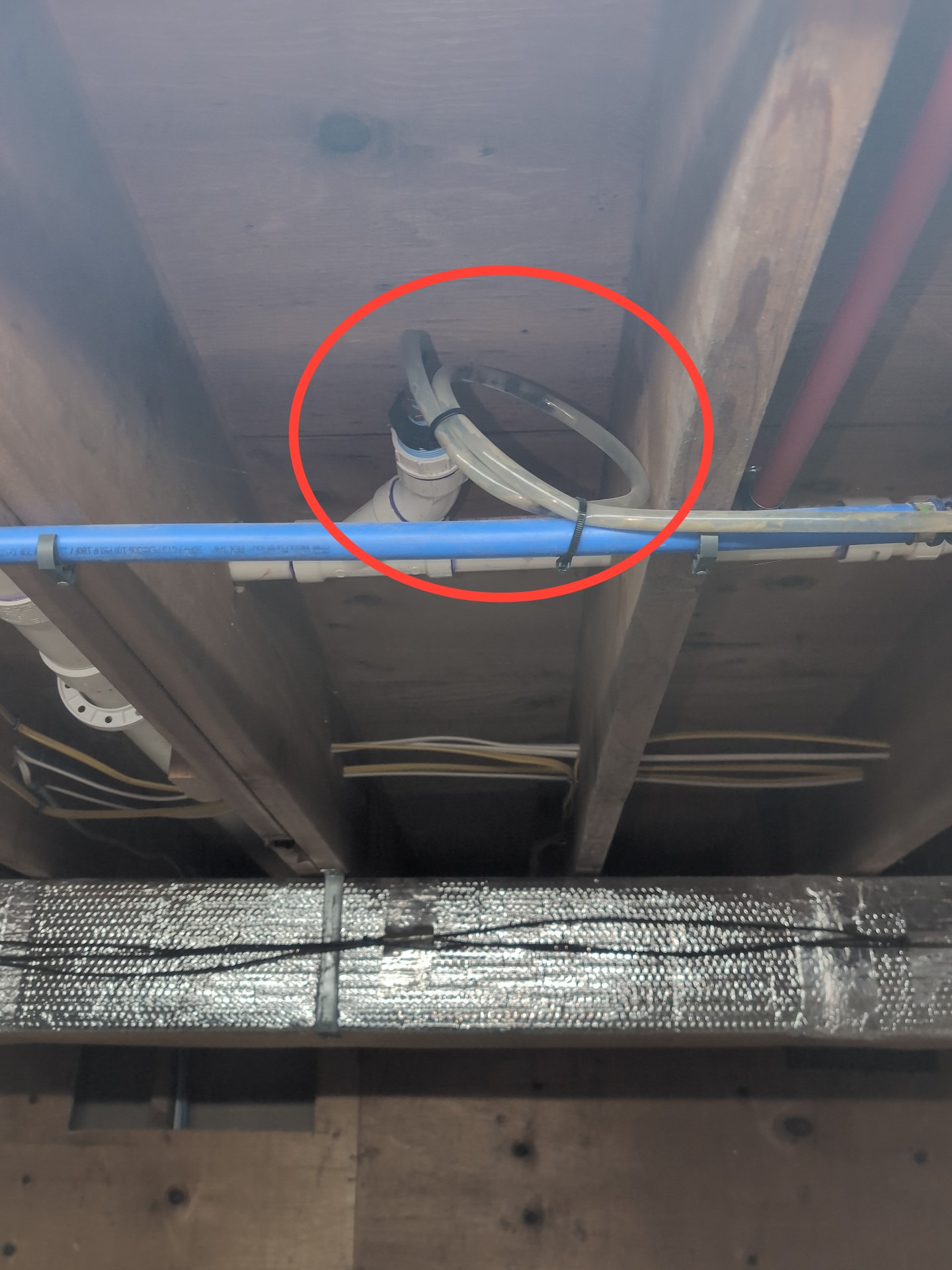 |
Plumbing Water Supply, Distribution System and Fixtures
The home's water supply piping was inspected at visible and accessible areas, and no active leaks were observed at the time of the inspection.
Disclaimer: Portions of the piping system are concealed behind walls, ceilings, and floor finishes and could not be inspected. No representation is made regarding the condition of non-visible piping. Recommend ongoing monitoring and routine maintenance by a licensed plumbing professional as needed.
The water stream discharging from the primary bathroom bathtub filler spout/aerator was irregular and sprayed outside of the tub basin at the time of the inspection, resulting in water puddling on the floor beneath the faucet area. Continued water discharge outside of the tub enclosure can contribute to floor deterioration, moisture damage, and possible microbial growth if not corrected. Recommend further evaluation and repair or replacement of the tub filler spout/aerator by a licensed plumbing contractor.
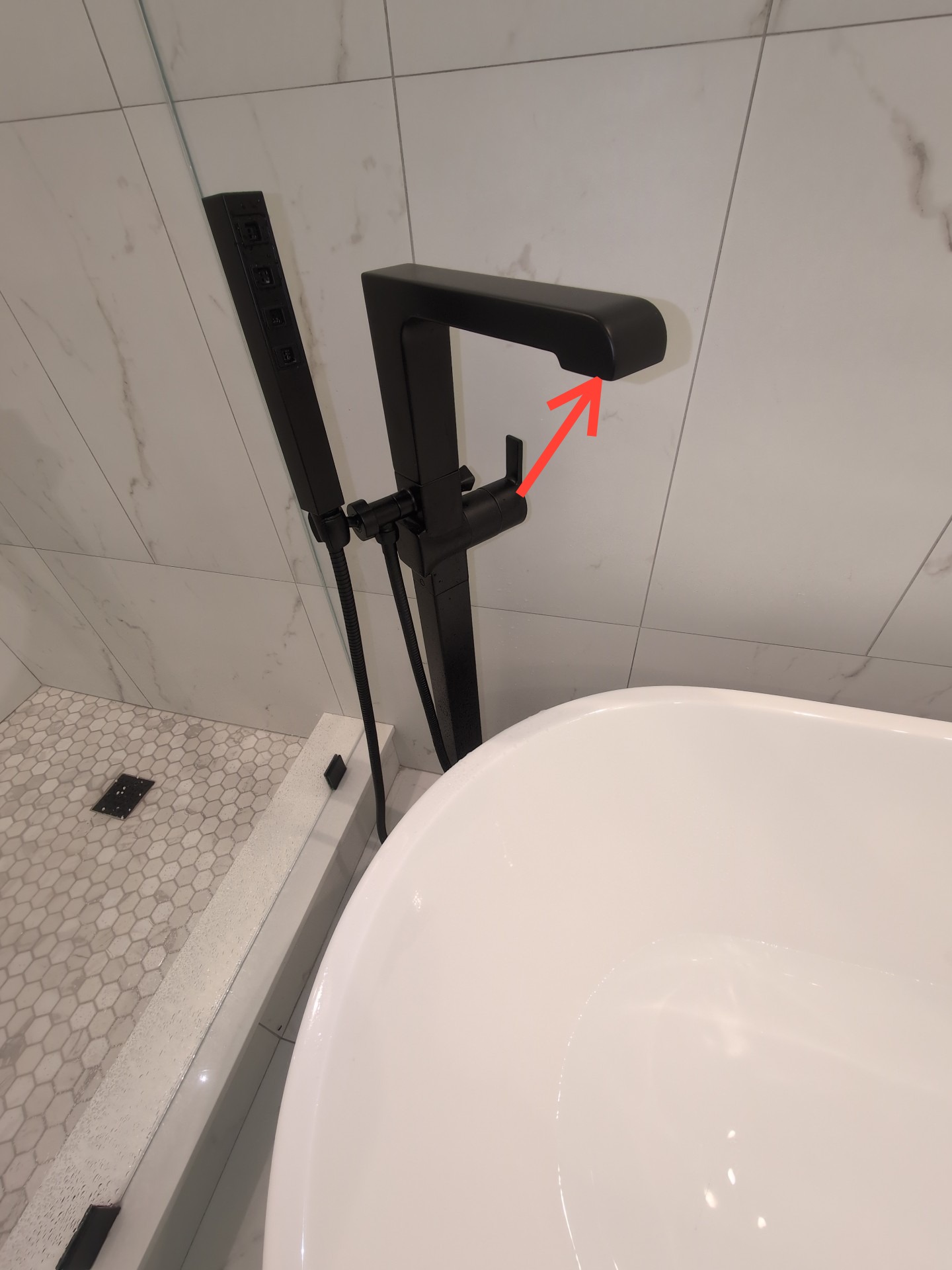 | 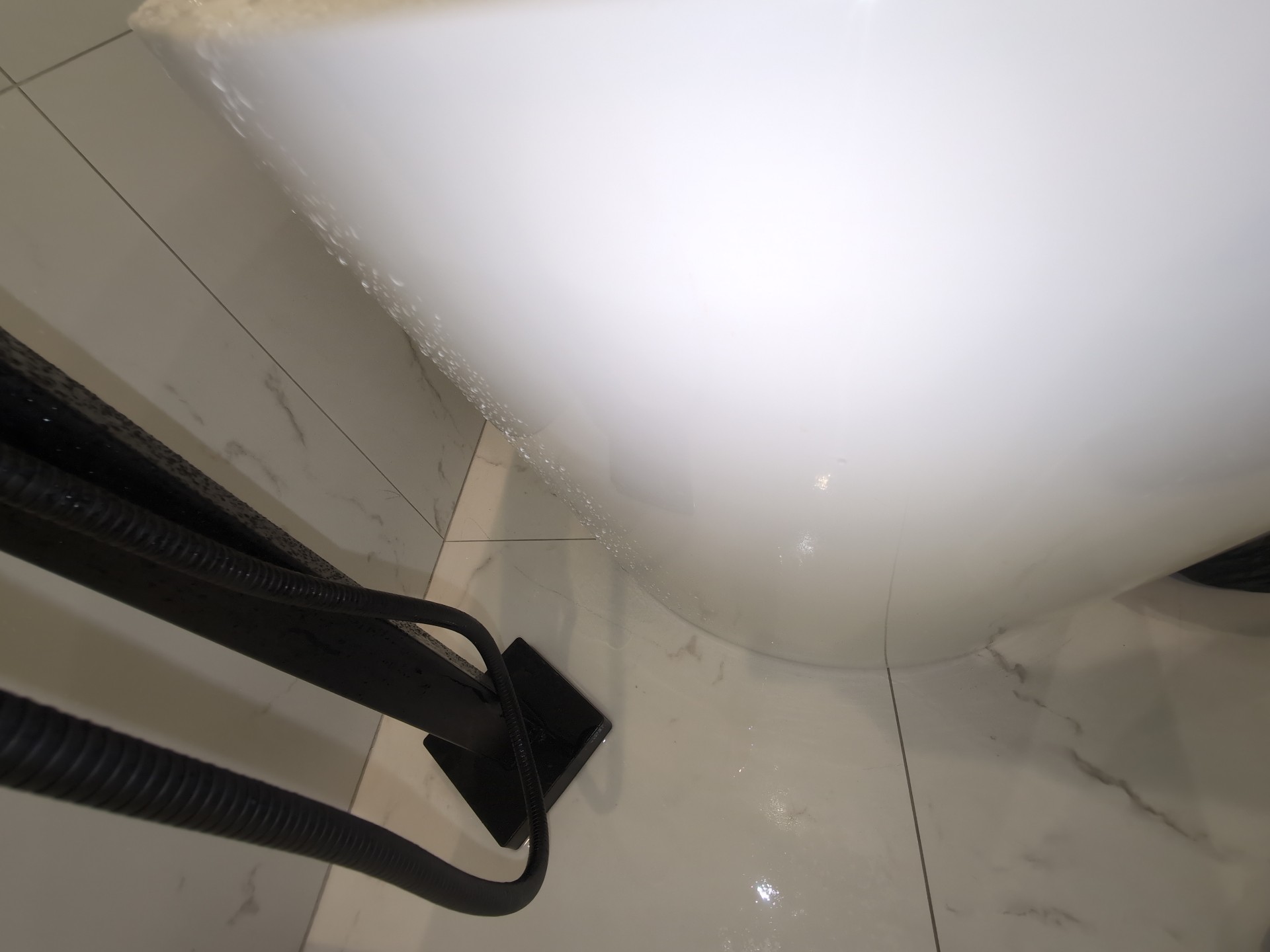 | 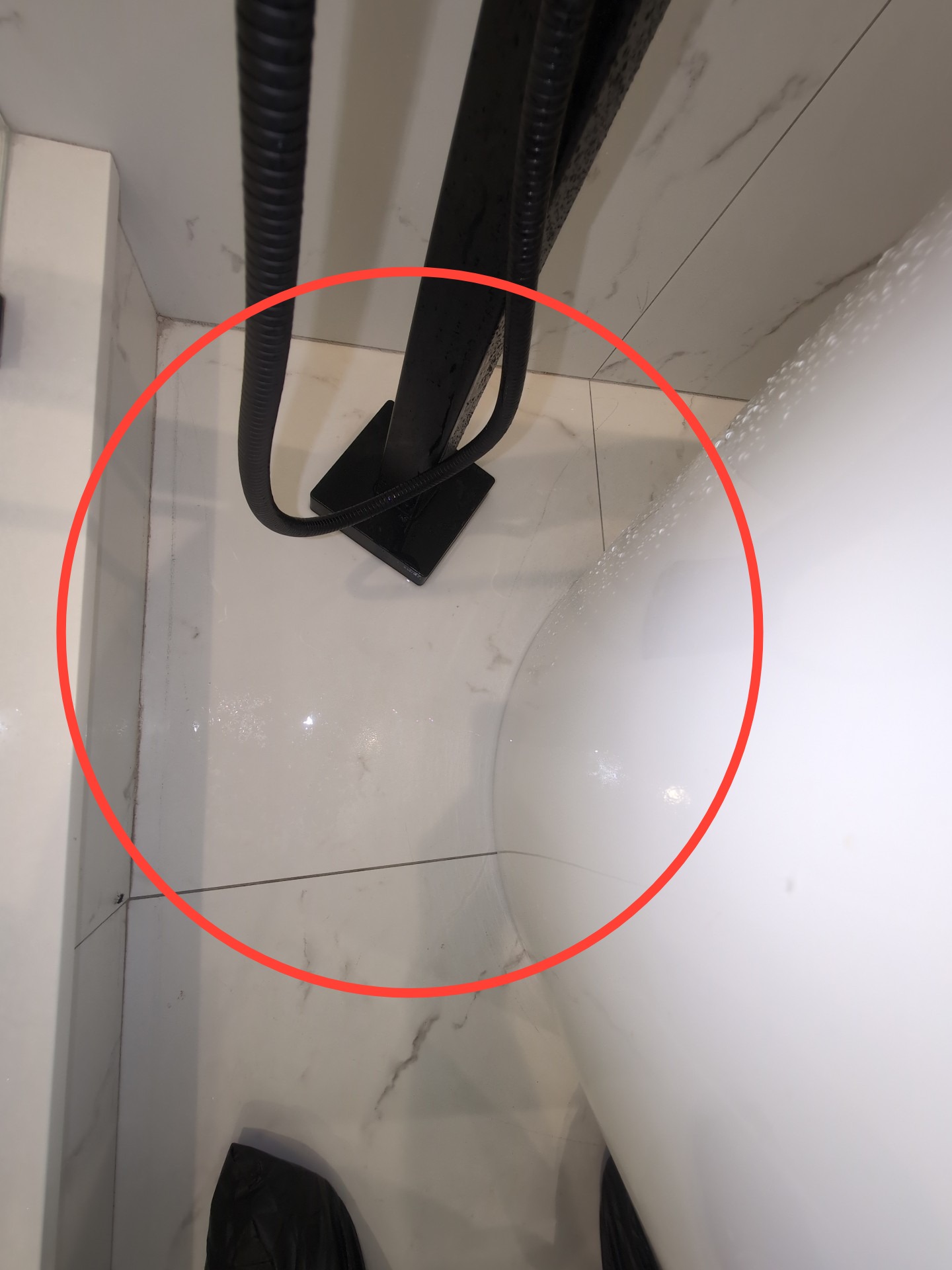 |
The acrylic slipper tub located in the primary bathroom appeared loose or unstable at the floor connection when pressure was applied at the front skirt during the inspection. Movement at a tub base can contribute to stress cracking, plumbing leakage, damage to surrounding finishes, and premature deterioration if not properly secured and supported. Recommend further evaluation and repair/re-securement as needed by a licensed plumbing contractor or qualified bathroom remodeling contractor.
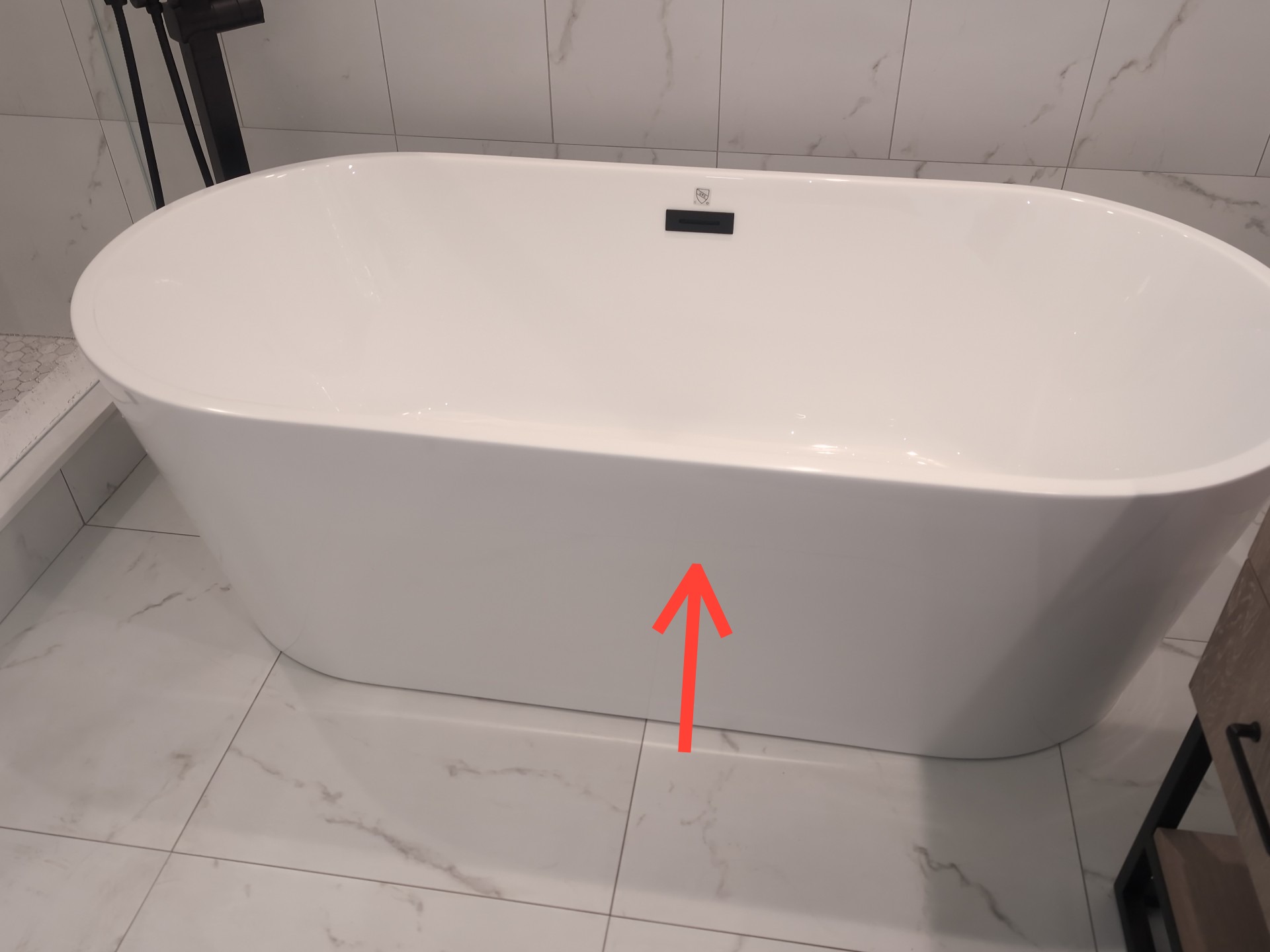
The vanity base in the powder room was not securely attached to the wall and appeared loose at the time of the inspection. Additionally, a gap was present between the rear countertop edge and the wall surface due to the lack of a backsplash or properly sealed joint. This condition may allow water intrusion behind the vanity and wall finishes during normal use, potentially contributing to deterioration of cabinetry, wall materials, and possible concealed microbial growth over time. Recommend further evaluation and repair by a licensed contractor, which should include properly securing the vanity base and sealing or installing an appropriate backsplash or waterproof caulking joint at the countertop-to-wall connection.
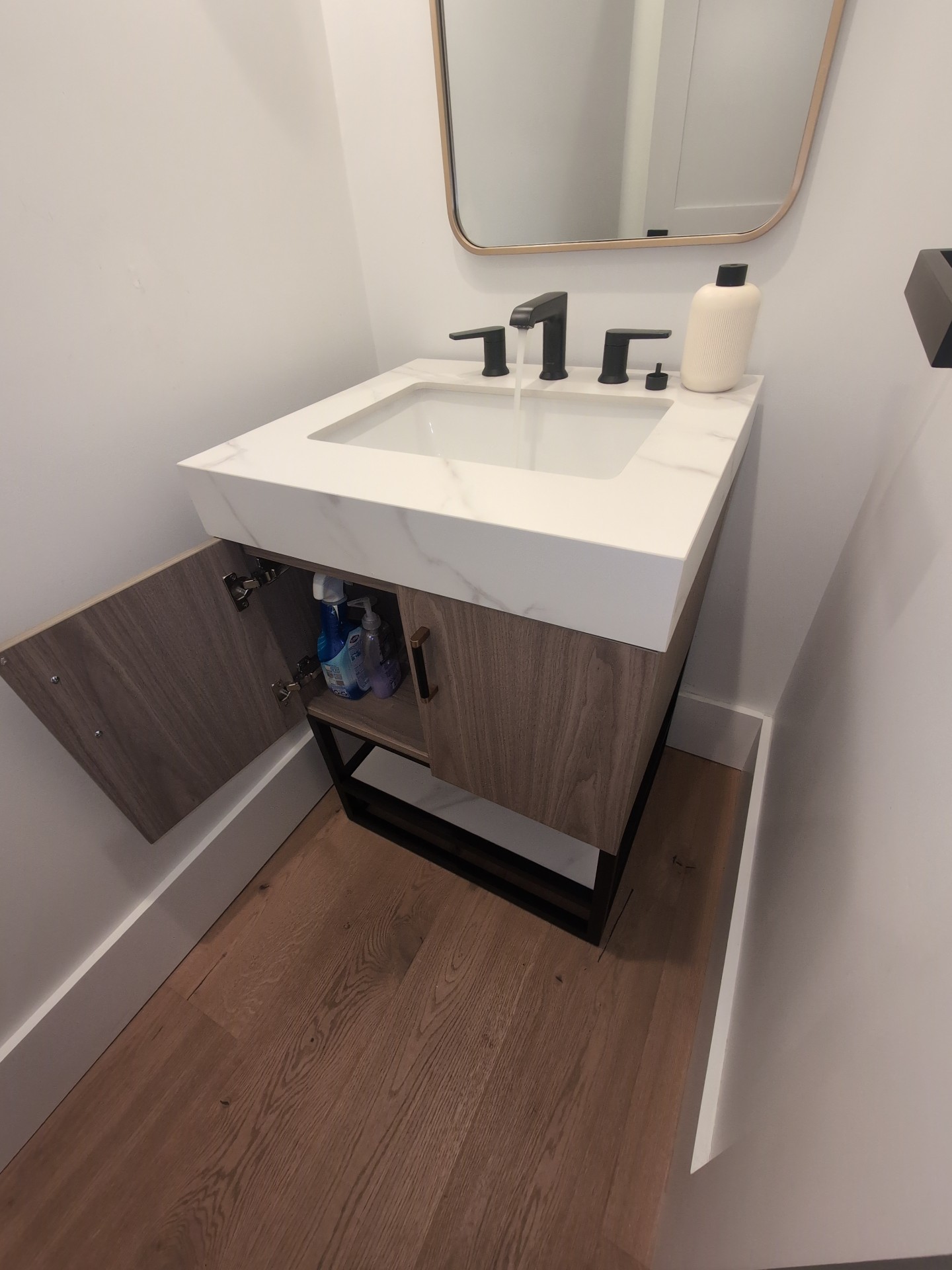 | 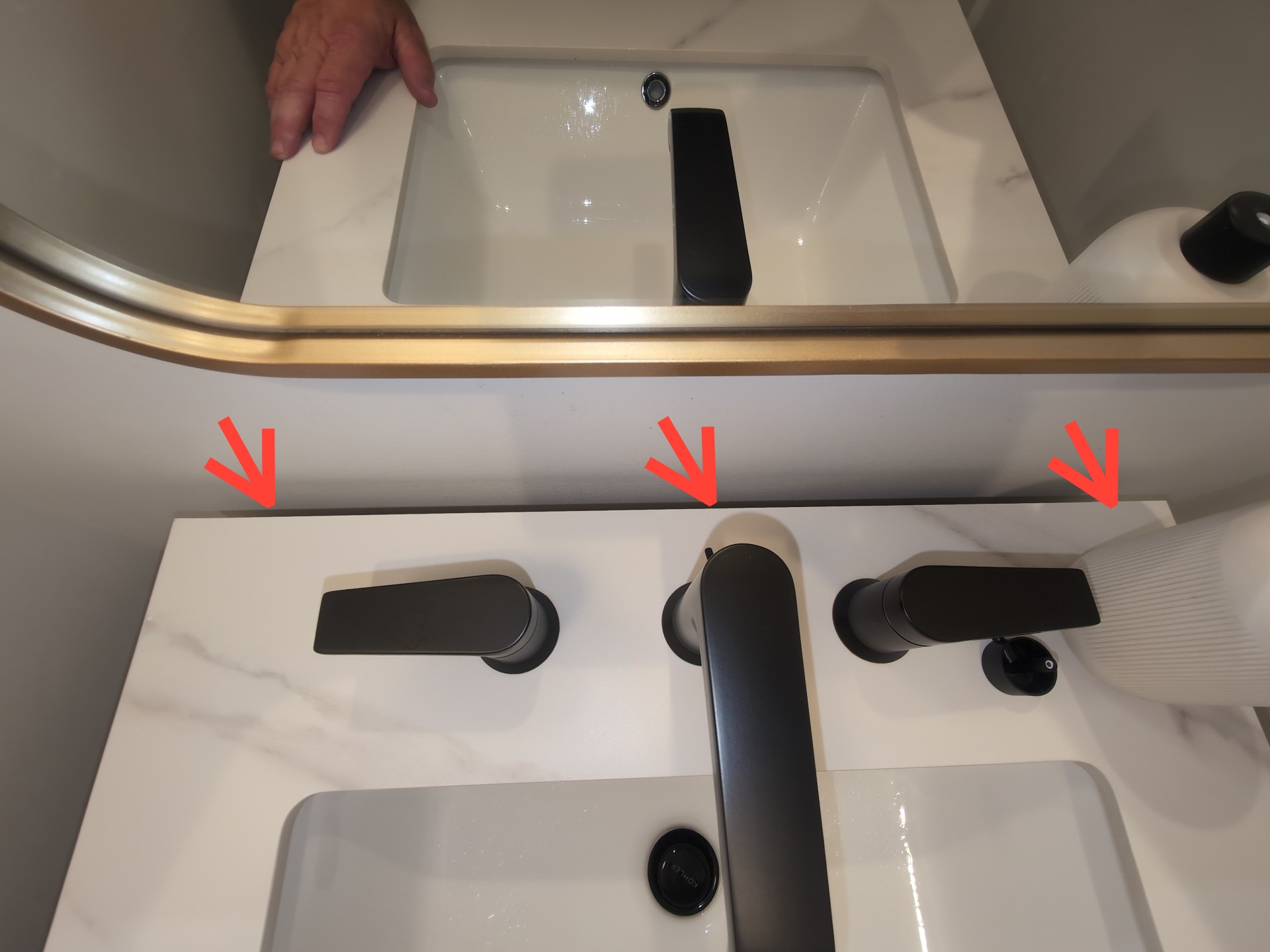 | 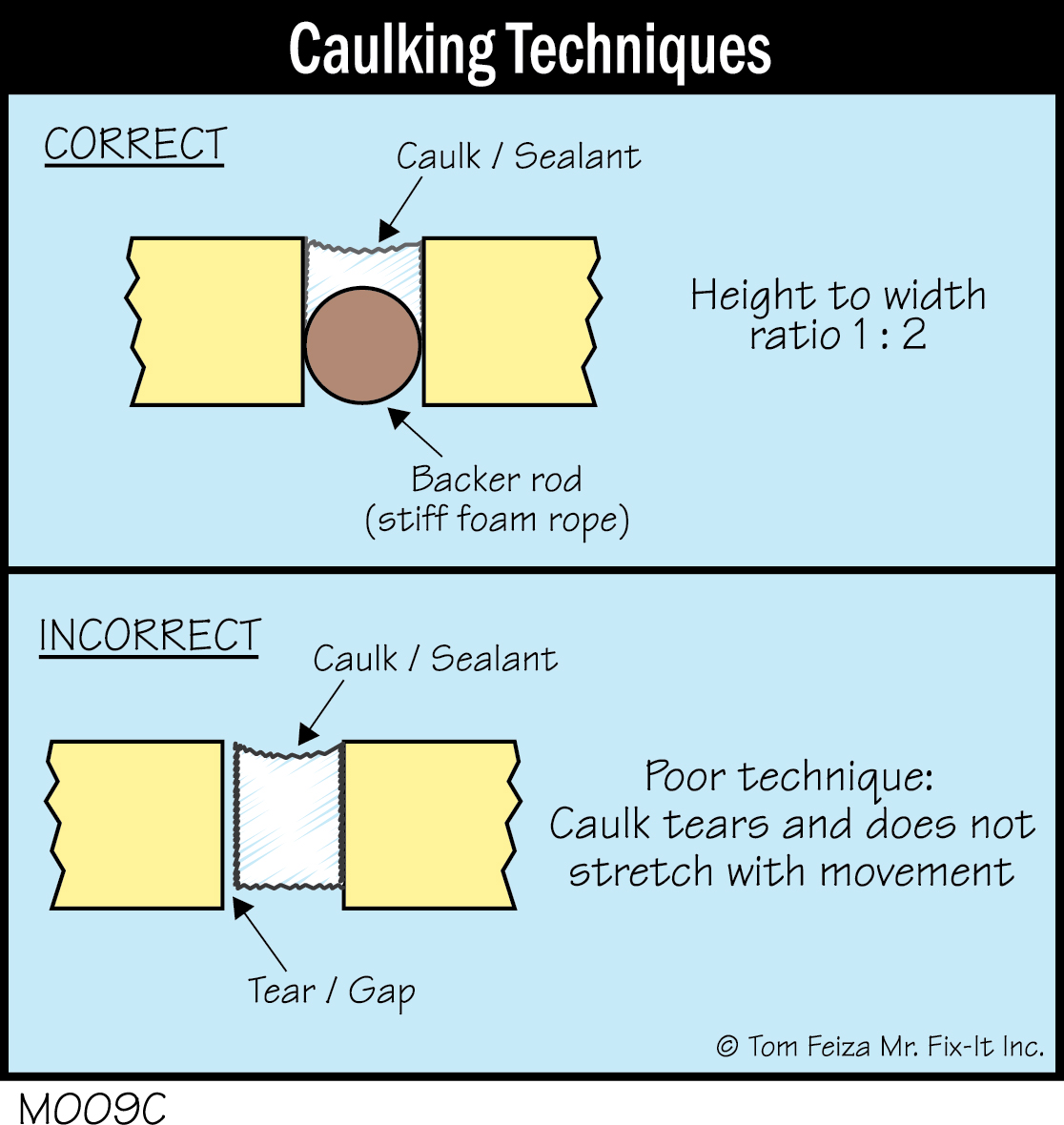 |
A gap was present between the rear countertop edge and the wall surface in the primary bathroom due to the lack of a backsplash or properly sealed joint. This condition may allow water intrusion behind the vanity and wall finishes during normal use, potentially contributing to deterioration of cabinetry, wall materials, and possible concealed microbial growth over time. Recommend further evaluation and repair by a licensed contractor, which should include properly sealing or installing an appropriate backsplash or waterproof caulking joint at the countertop-to-wall connection.
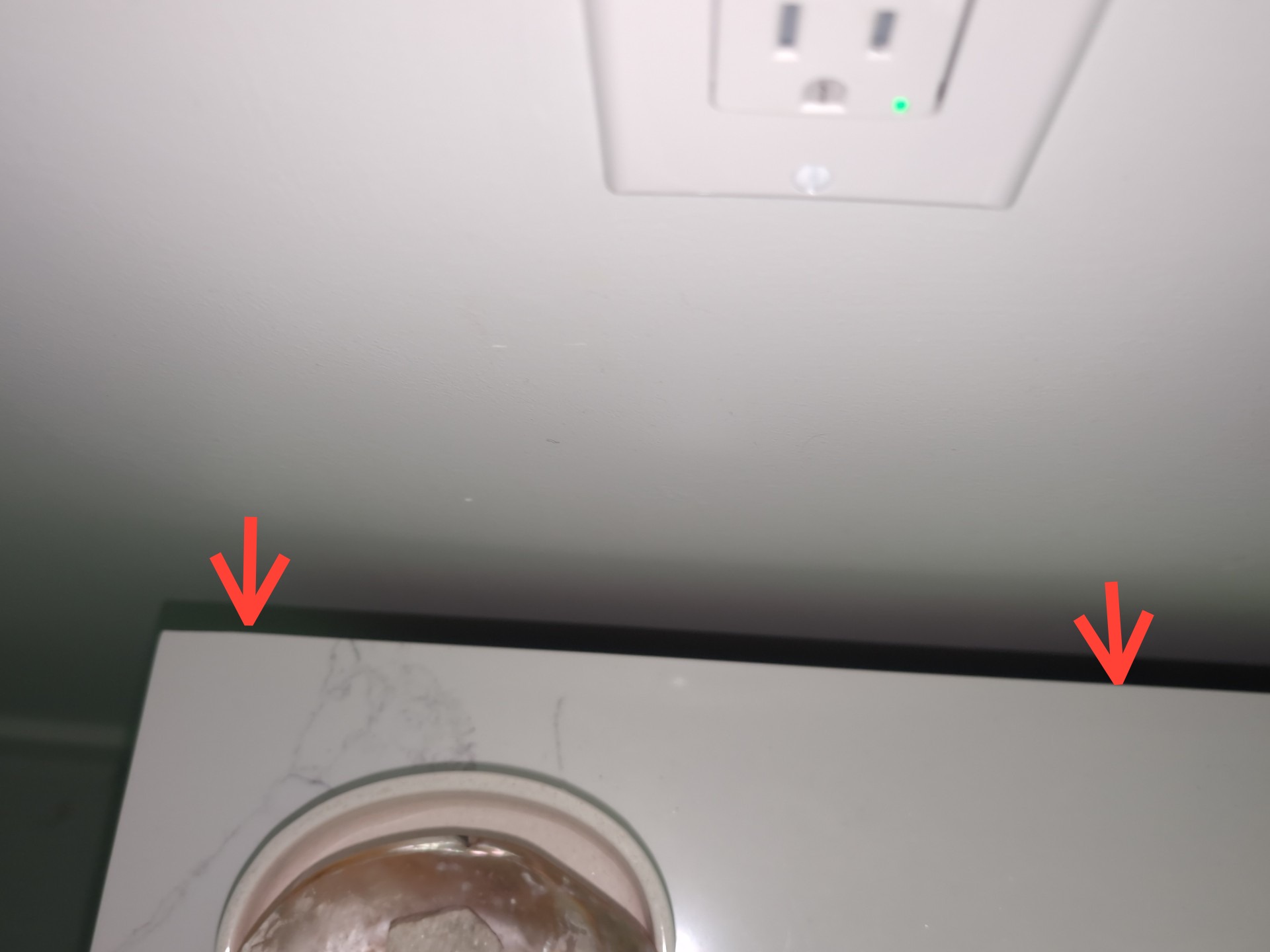 | 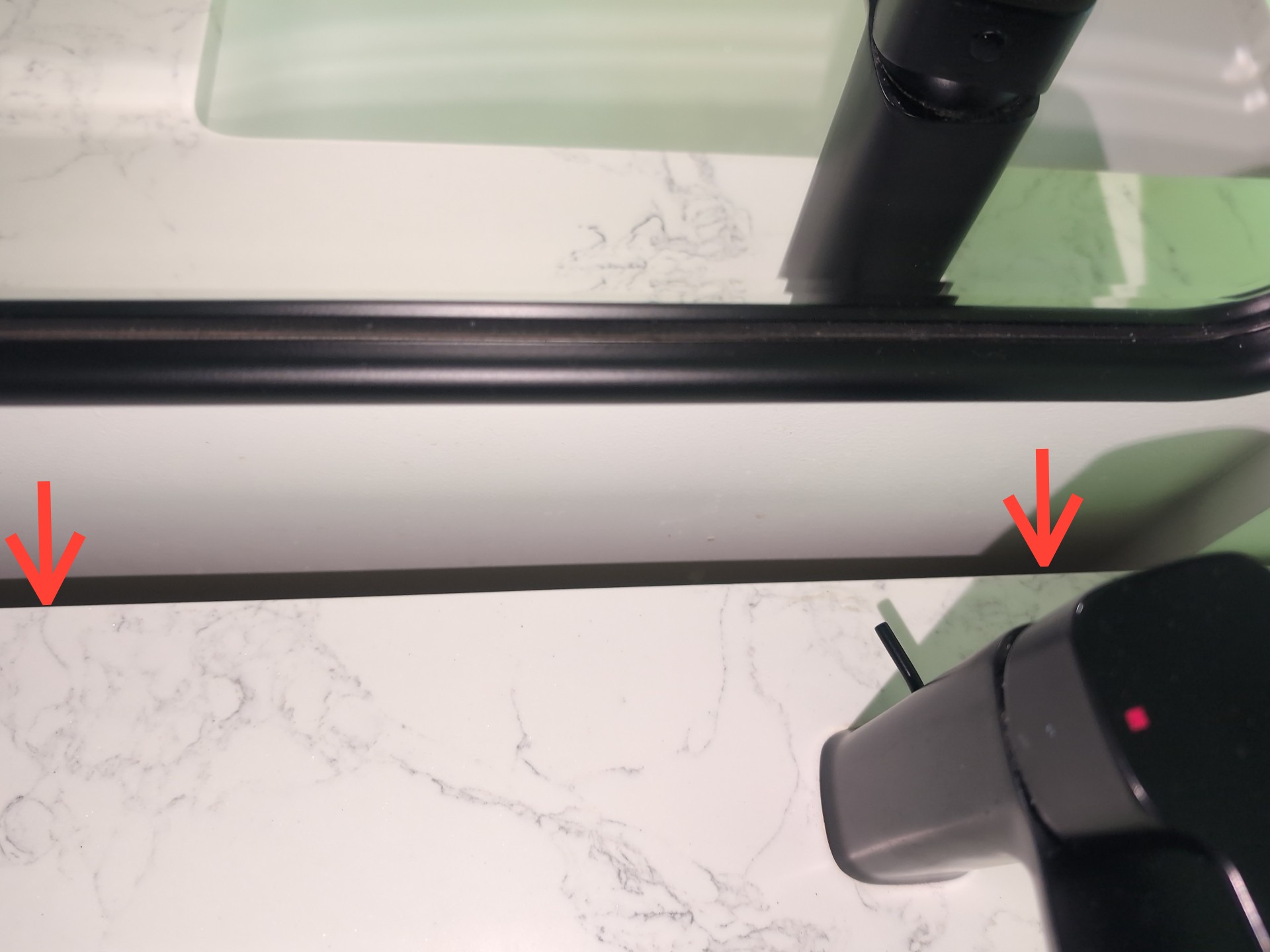 | 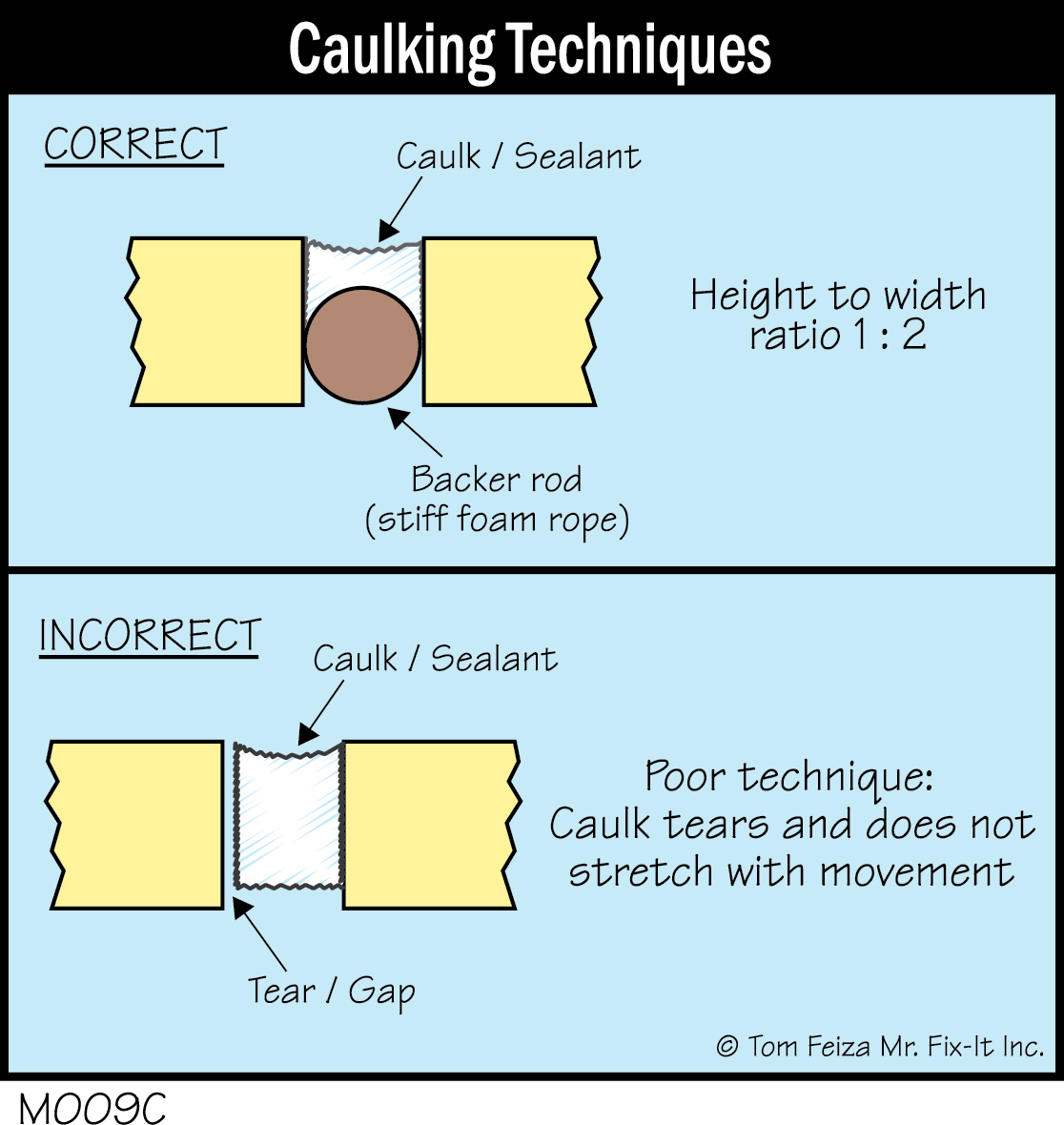 |
A gap was present between the rear countertop edge and the wall surface in the basement bathroom due to the lack of a backsplash or properly sealed joint. This condition may allow water intrusion behind the vanity and wall finishes during normal use, potentially contributing to deterioration of cabinetry, wall materials, and possible concealed microbial growth over time. Recommend further evaluation and repair by a licensed contractor, which should include properly sealing or installing an appropriate backsplash or waterproof caulking joint at the countertop-to-wall connection.
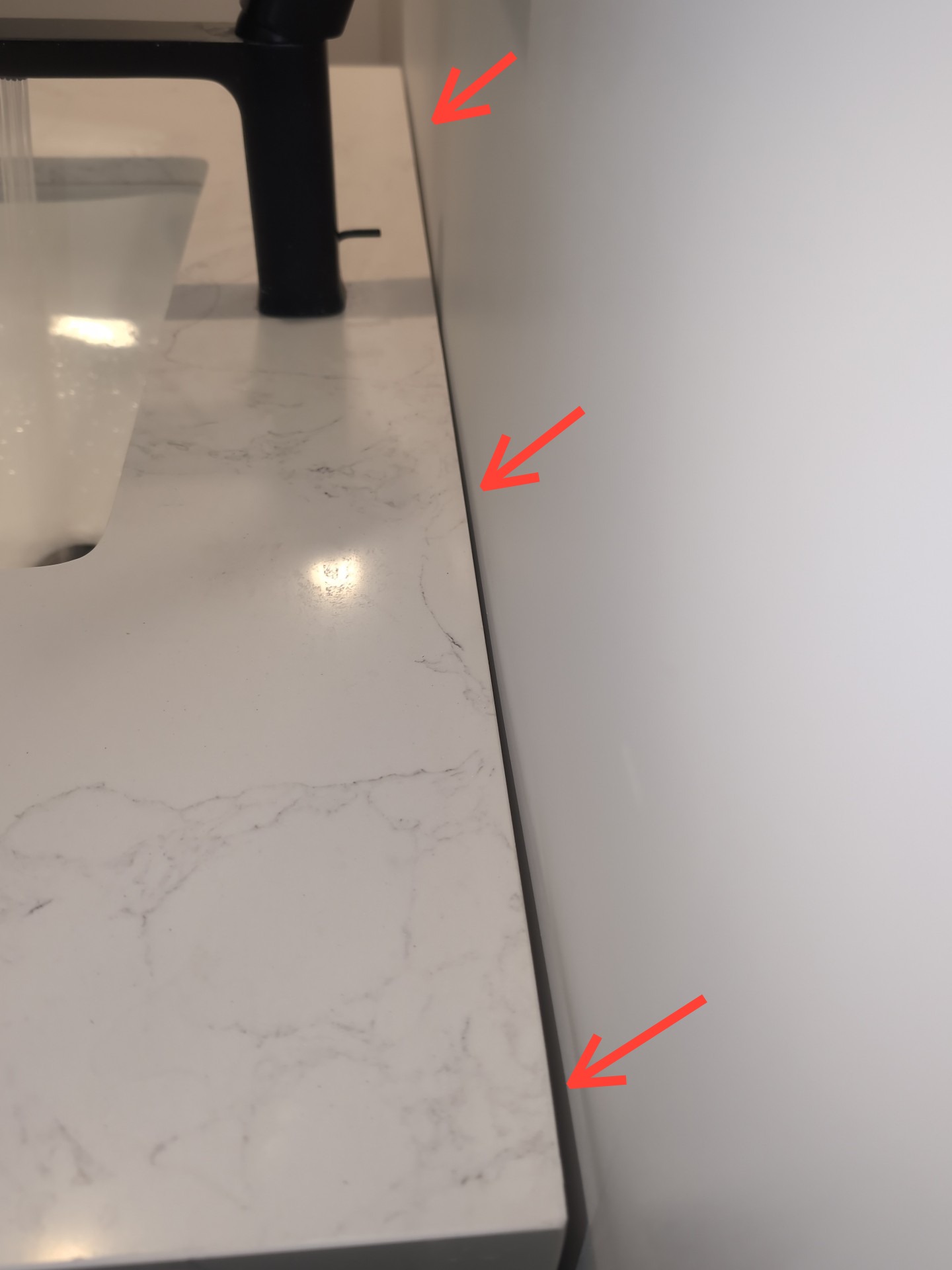 | 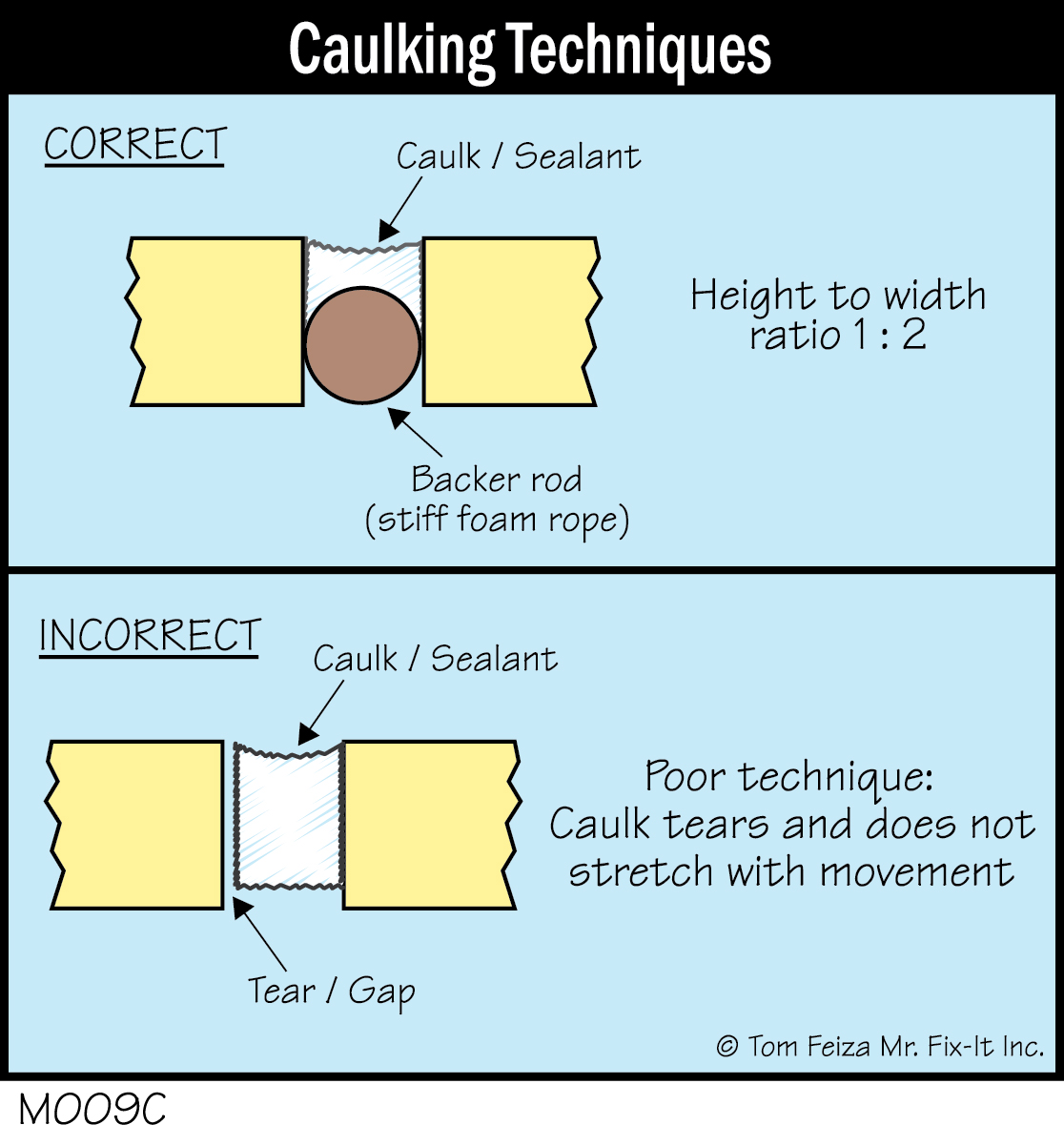 | 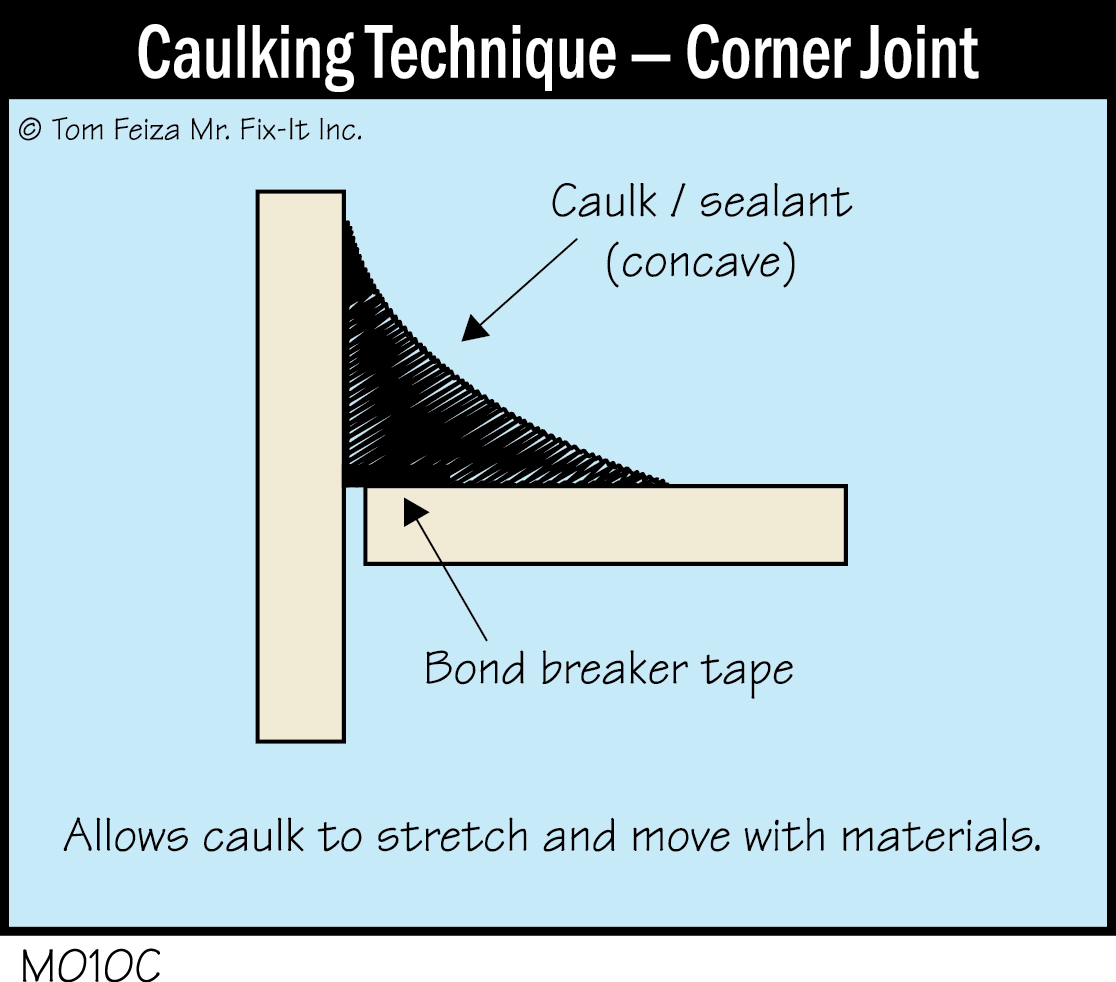 |
Hot Water Systems, Controls, Chimneys, Flues and Vents
A tankless coil water heating system was installed within the oil-fired boiler and supplies domestic hot water to the home for bathing and general plumbing fixtures. In this type of system, domestic water passes through a heat exchanger coil installed directly within the boiler block where it is heated by the boiler water before being distributed throughout the home. Unlike a conventional storage-type water heater, this system does not store large amounts of domestic hot water but instead heats water on demand as it passes through the internal coil.
A thermostatically controlled mixing/tempering valve was also installed at the boiler piping. This valve blends extremely hot water leaving the tankless coil with cooler incoming water to help regulate and stabilize the domestic hot water temperature delivered to fixtures. Tempering valves help reduce the potential for scalding while also allowing the boiler to maintain higher internal operating temperatures for improved hot water production and boiler efficiency.
Features and benefits of a tankless coil system include elimination of a separate storage tank, reduced equipment footprint, relatively simple mechanical operation, and the ability to provide continuous hot water so long as the boiler remains operational and adequately sized for demand. However, hot water production capacity may be somewhat limited during periods of high simultaneous water usage when compared to larger indirect or standalone water heater systems.
Recommended maintenance items include:
- Annual servicing and cleaning of the oil-fired boiler by a licensed HVAC or oil burner technician
- Inspection and testing of the mixing/tempering valve for proper operation and safe water temperatures
- Periodic flushing or descaling of the tankless coil where hard water conditions exist to reduce mineral buildup
- Inspection for leaks, corrosion, or scaling at piping and boiler connections
- Verification of proper boiler operating temperature and aquastat control settings
- Combustion testing and flue inspection for safe operation
- Monitoring for reduced hot water flow or inconsistent temperatures which may indicate coil scaling or valve issues
Routine maintenance is important to help maintain efficient hot water production, prolong equipment lifespan, and reduce the potential for leaks or premature component failure.
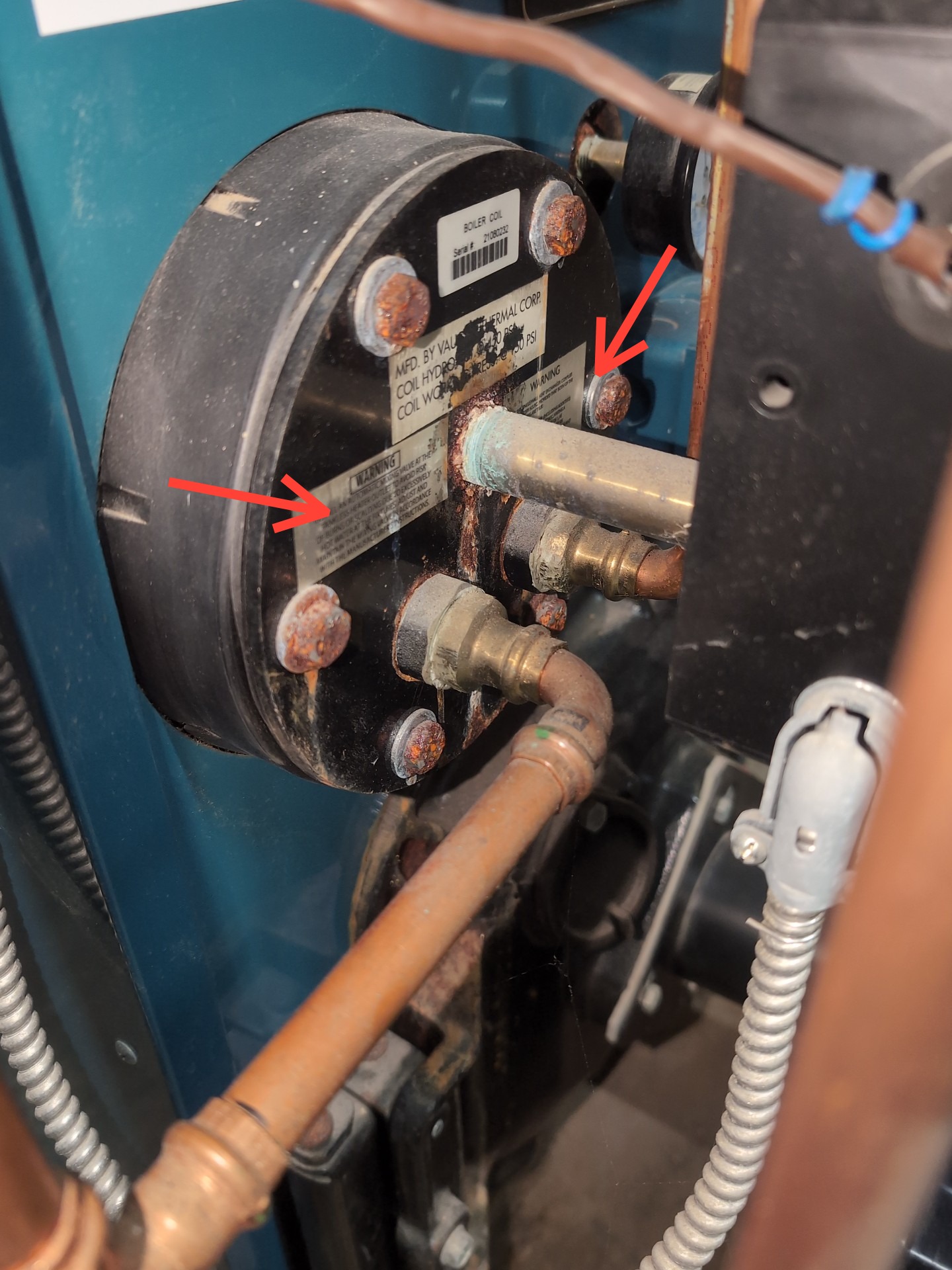
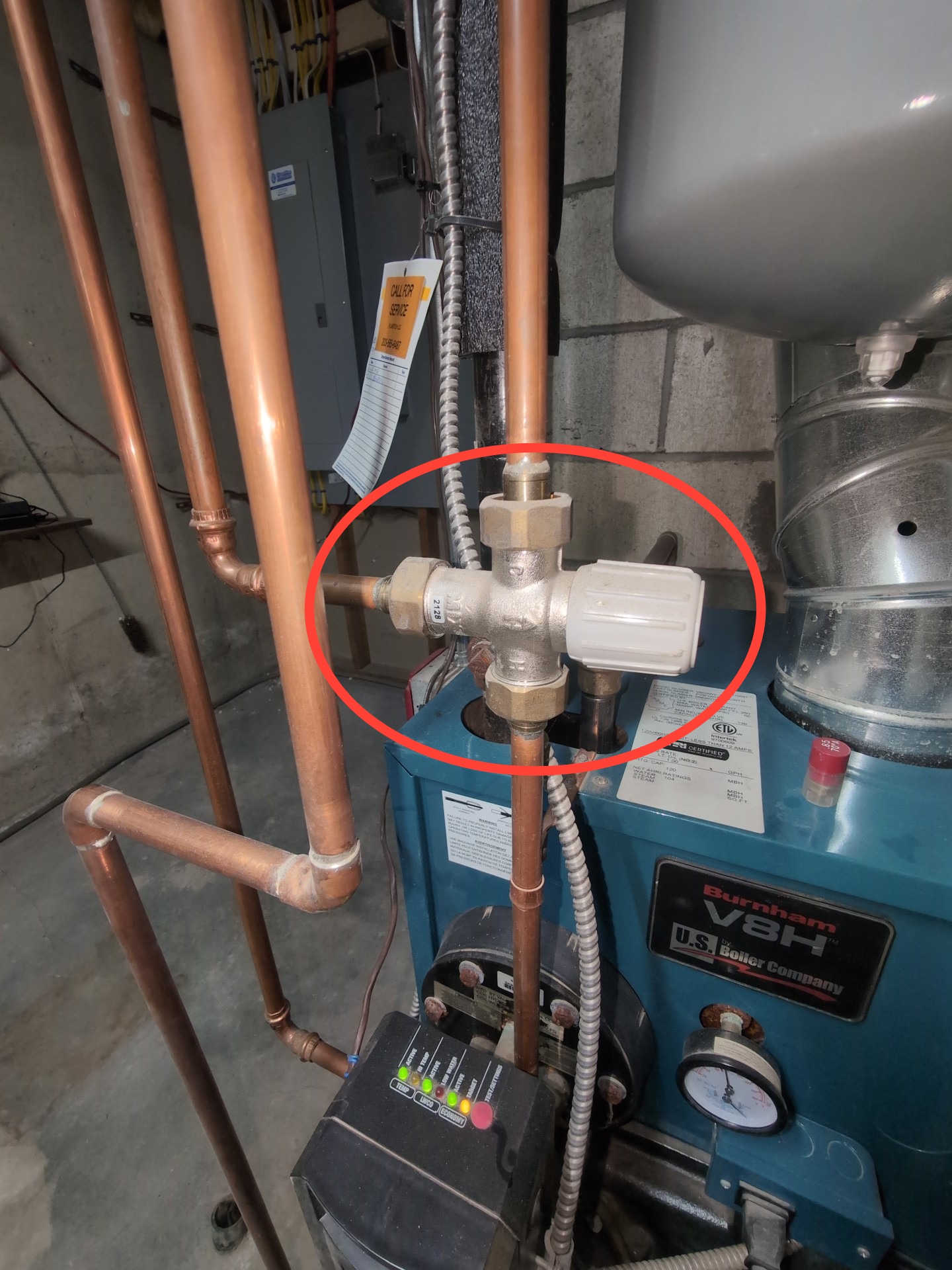
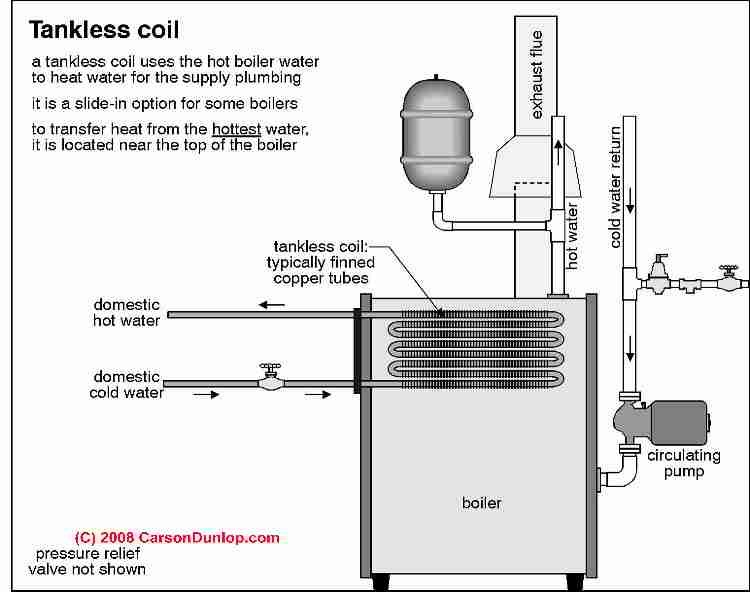 |
Water Heater – Temperature Setting
The thermostatic mixing valve should be set to no higher than 120°F. This setting is recommended by the U.S. Department of Energy and safety organizations to reduce the risk of scalding injuries, particularly for children and elderly occupants, as hot water above this temperature can cause burns in just a few seconds.
In addition, keeping the water heater at or below 120°F can help reduce energy consumption and slow mineral scaling or corrosion inside the tank or heat exchanger, extending the appliance’s service life.
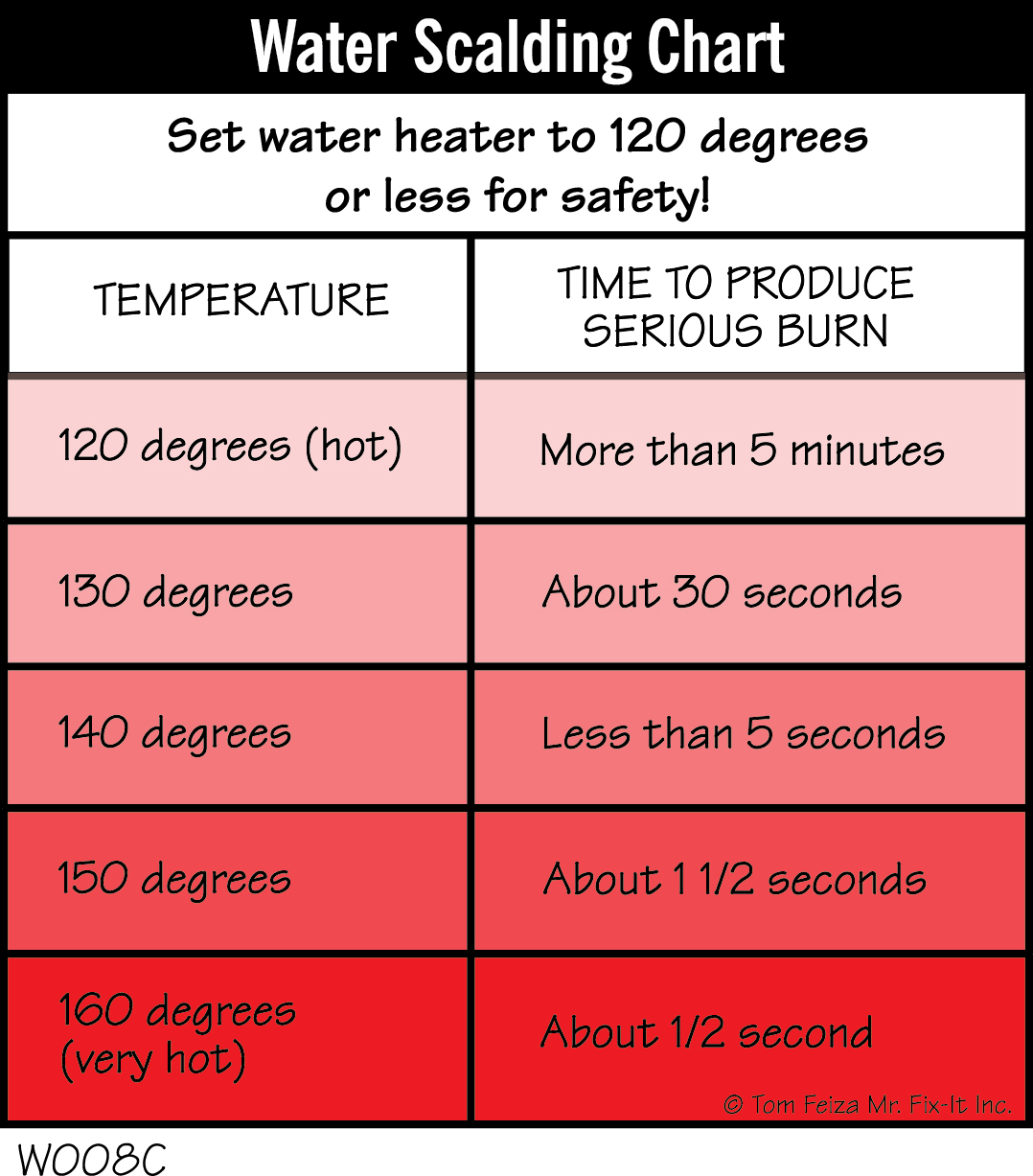
Main Water Shut-off Device (Describe location)
The main water shut off valve to the house is located at the well water storage tank located in the unfinished basement area.
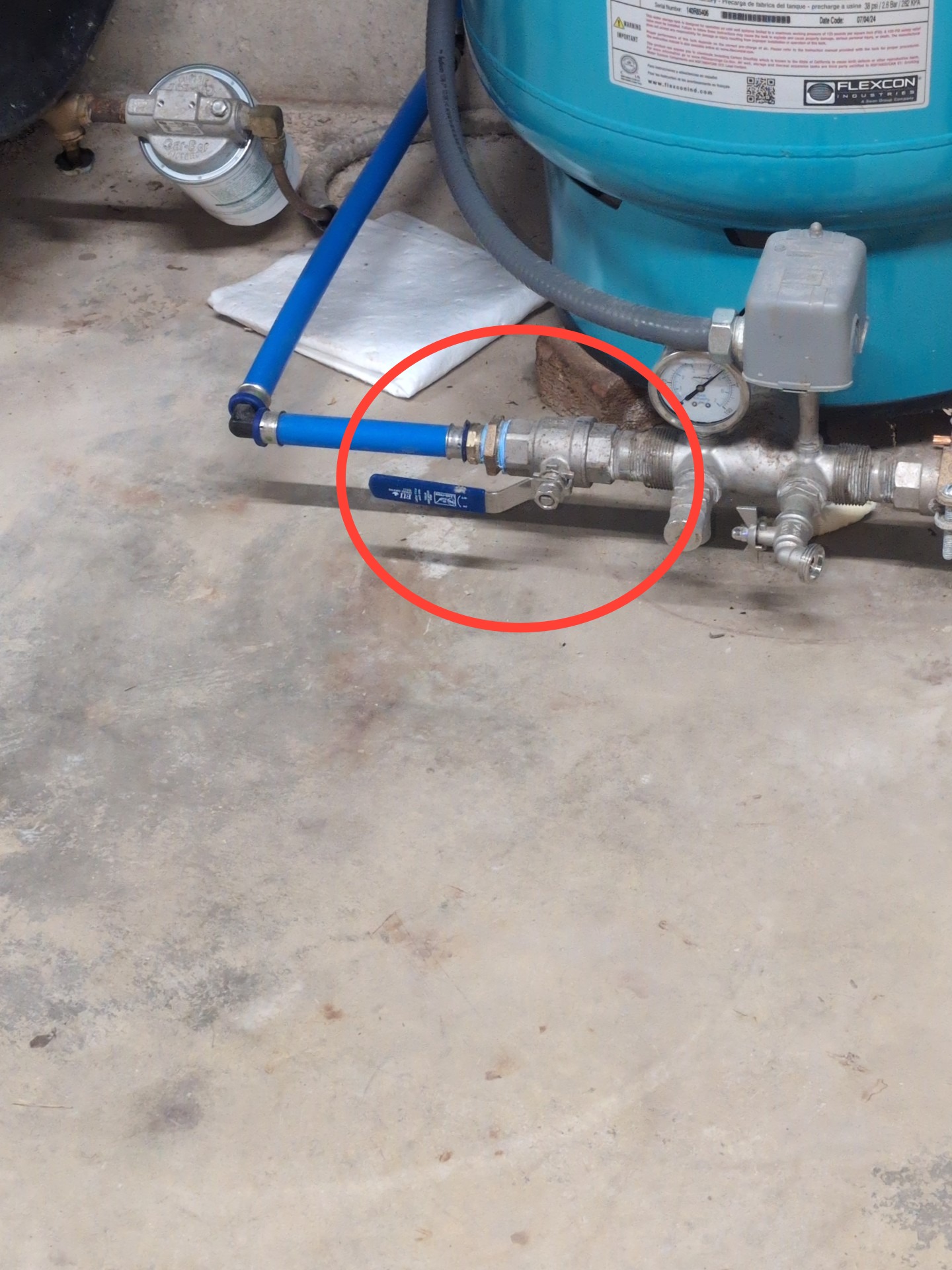
Fuel Storage and Distribution Systems (Interior fuel storage, piping, venting, supports, leaks)
A 275 gallon vertically oriented 12gauge steel fuel oil storage tank was installed against the front foundation wall in the unfinished basement area. No visible leaks were noted on the day of the inspection. I recommend annual re-inspection for tank integrity and possible leaks by a licensed oil company technician.
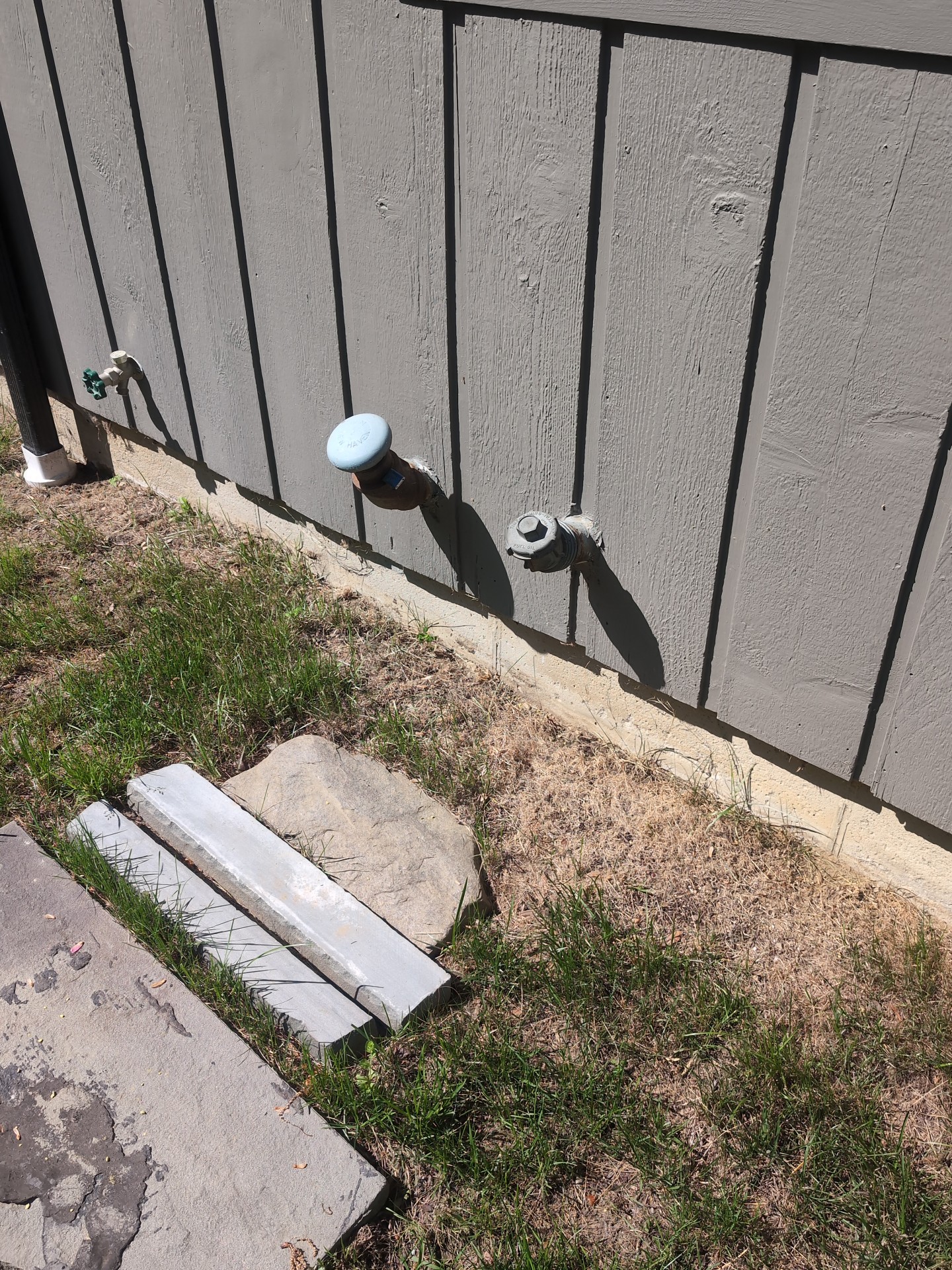 | 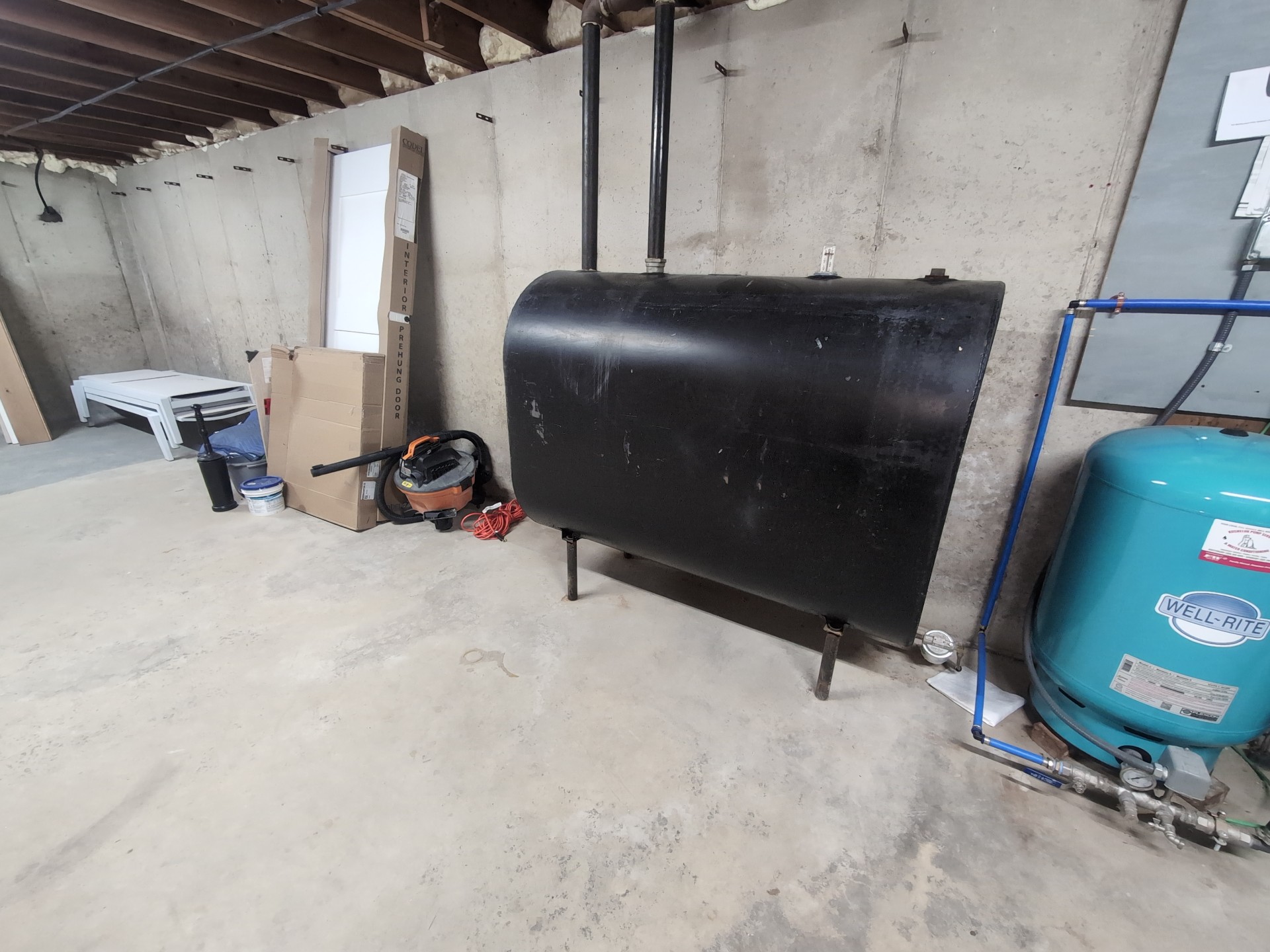 | 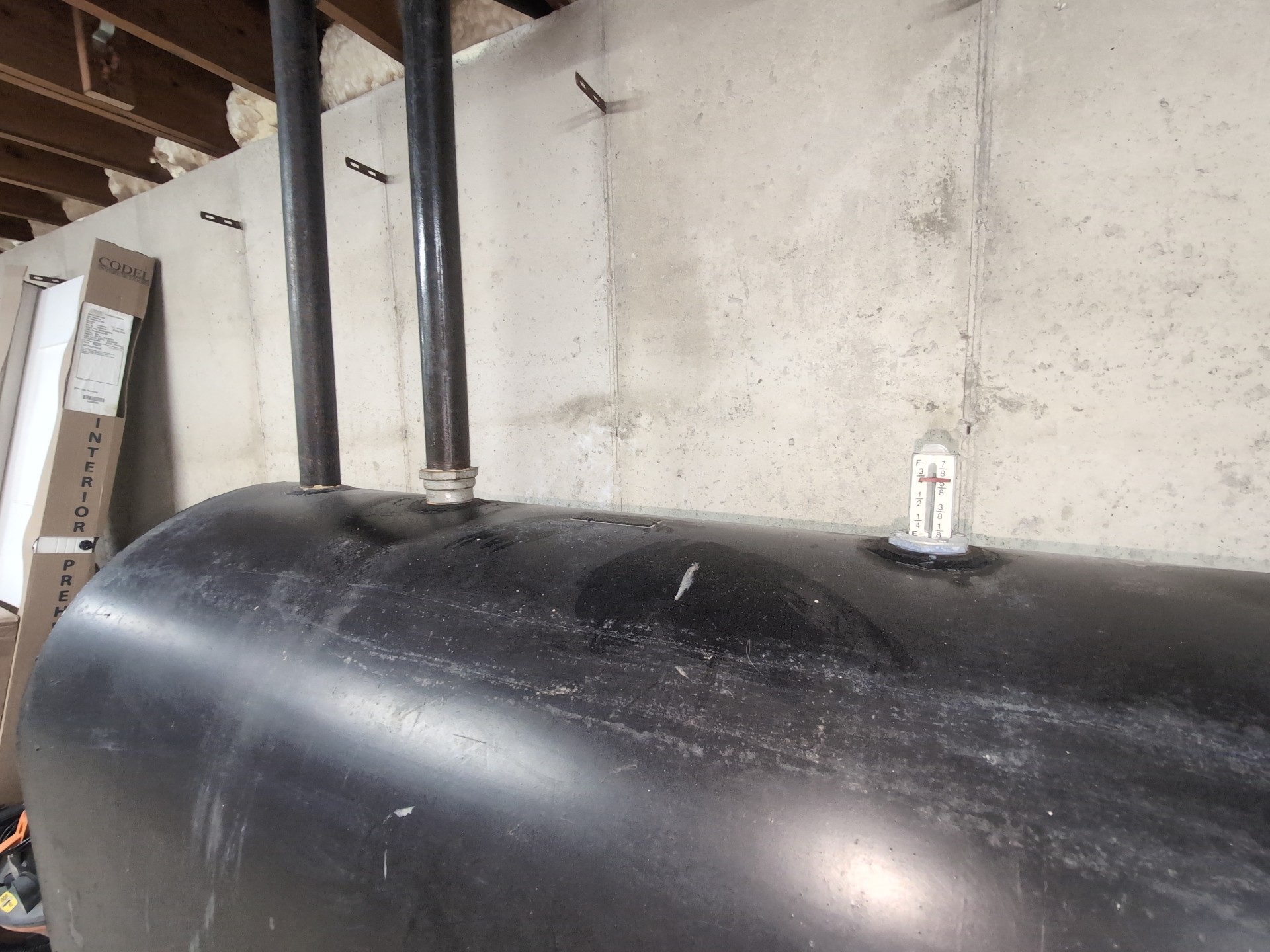 |
A 12-gauge steel oil tank that's connected at the tank bottom can last around 25 years however, the lifespan of an oil tank can vary depending on a number of factors, including:
- Tank type: Buried oil tanks typically have a shorter lifespan than above-ground tanks.
- Tank quality: Older tanks are often made of heavier gauge steel, which can help prolong their life.
- Tank maintenance: A well-maintained tank can last longer.
- Tank location: Indoor tanks can last longer than outdoor tanks.
I recommend annual inspection by a licensed oil company technician or oil tank testing specialist.
I am told by the listing agent that a previously installed underground fuel oil storage tank was removed from this property and that soil samples were reportedly obtained at the time of removal to test for the presence of petroleum hydrocarbons/contamination. Recommend obtaining and retaining all available documentation related to the tank removal, including permits, closure reports, soil test results, remediation documentation if applicable, and approvals from the authority having jurisdiction. This documentation may be important for future real estate transactions, insurance purposes, and disclosure requirements when transferring ownership of the property to a future buyer.
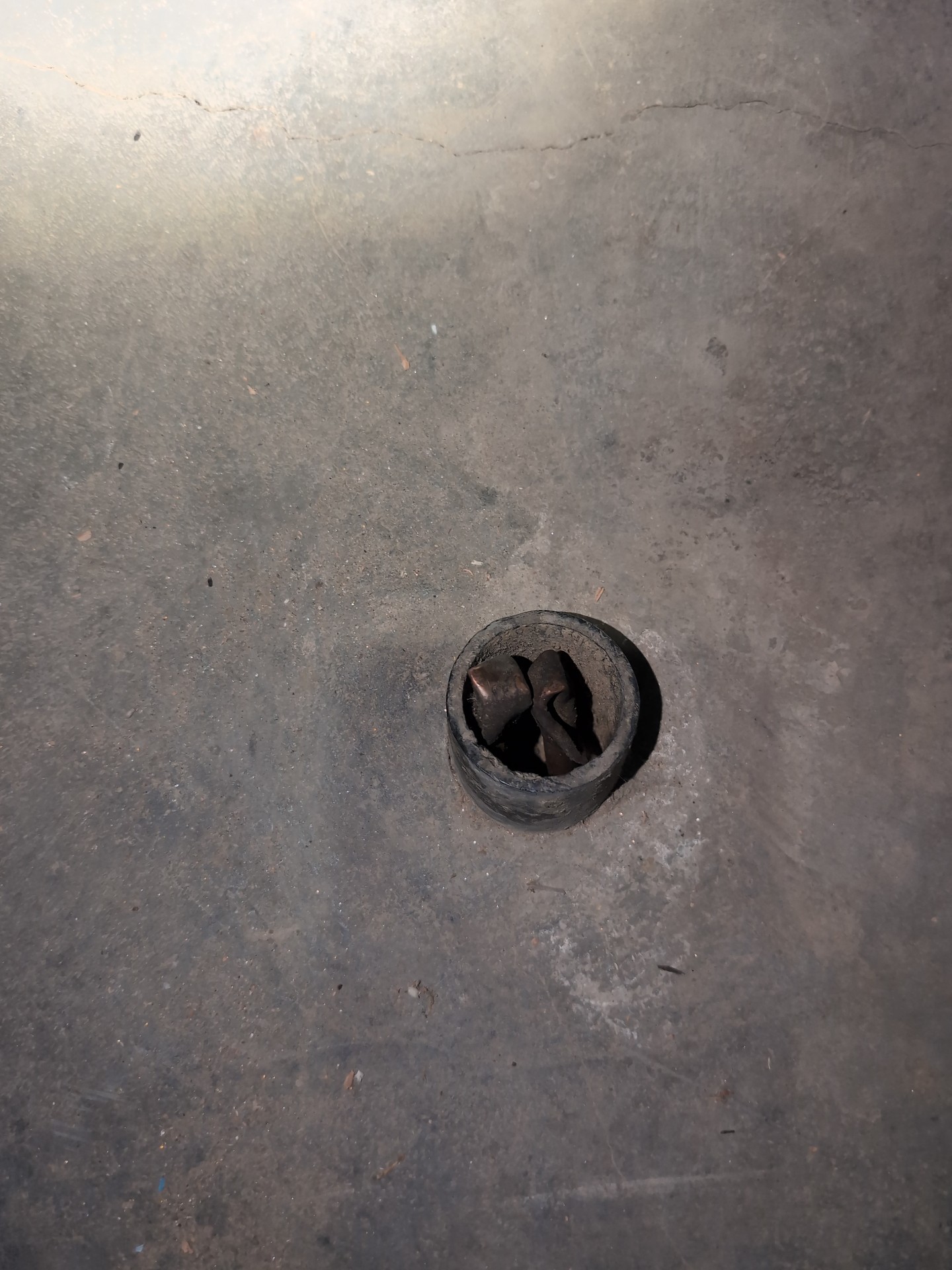 | 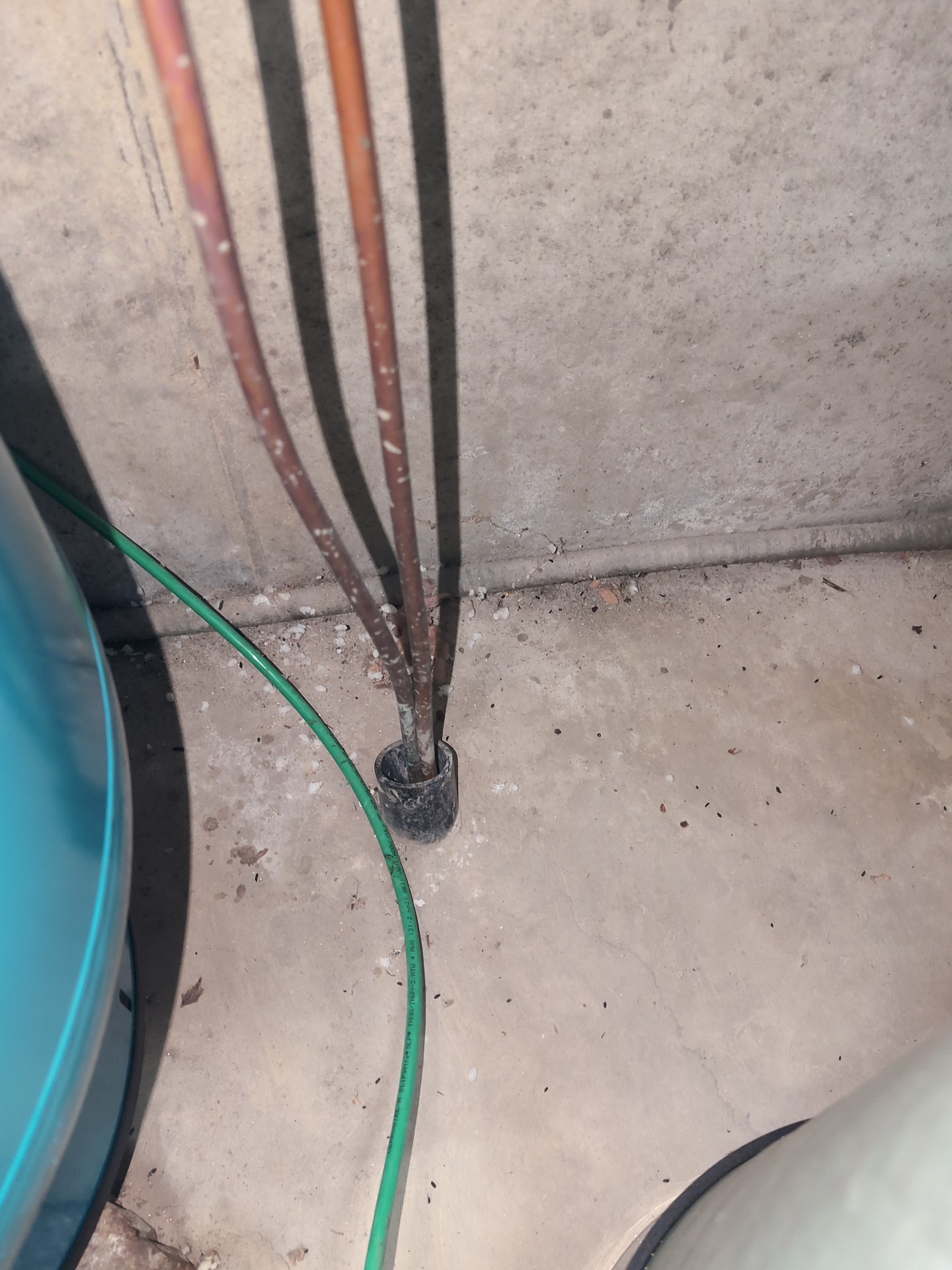 | 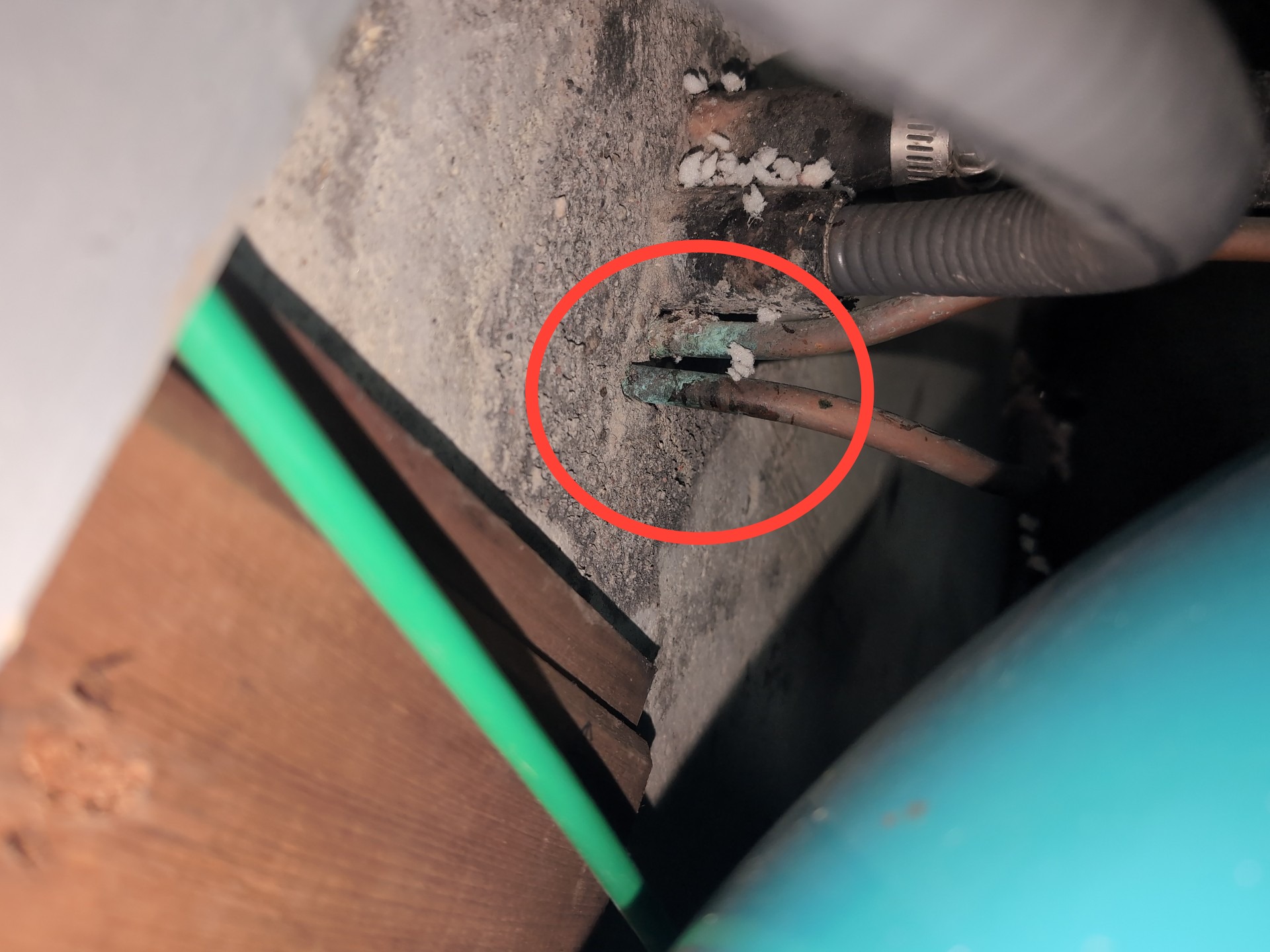 |
p20p231.jpg) |
Main Fuel Shut-off (Describe Location)
Fusible oil safety shut off valves were located at the bottom of the fuel oil storage tank, as well as within 15 inches of the boilers oil burner.
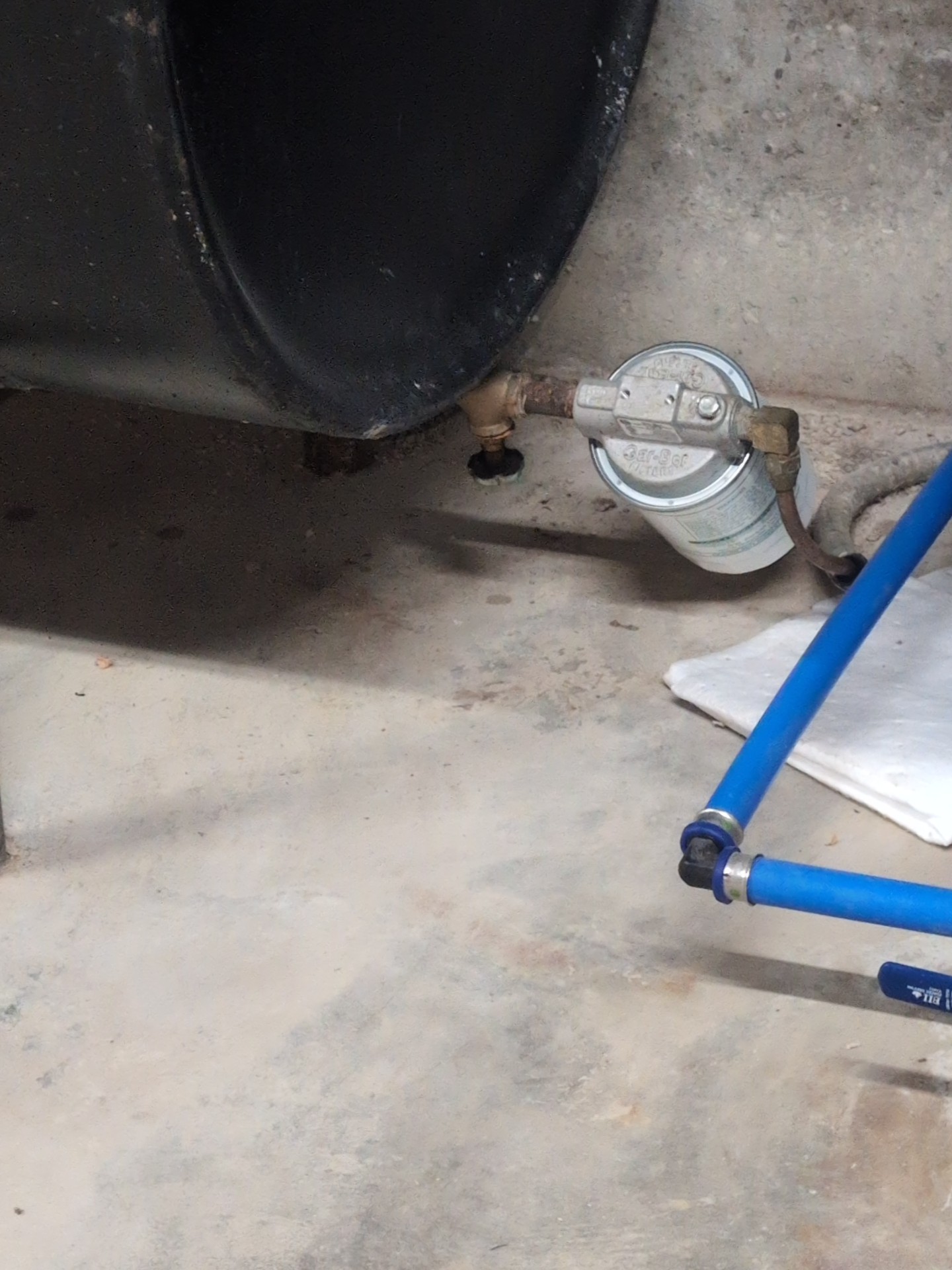 | 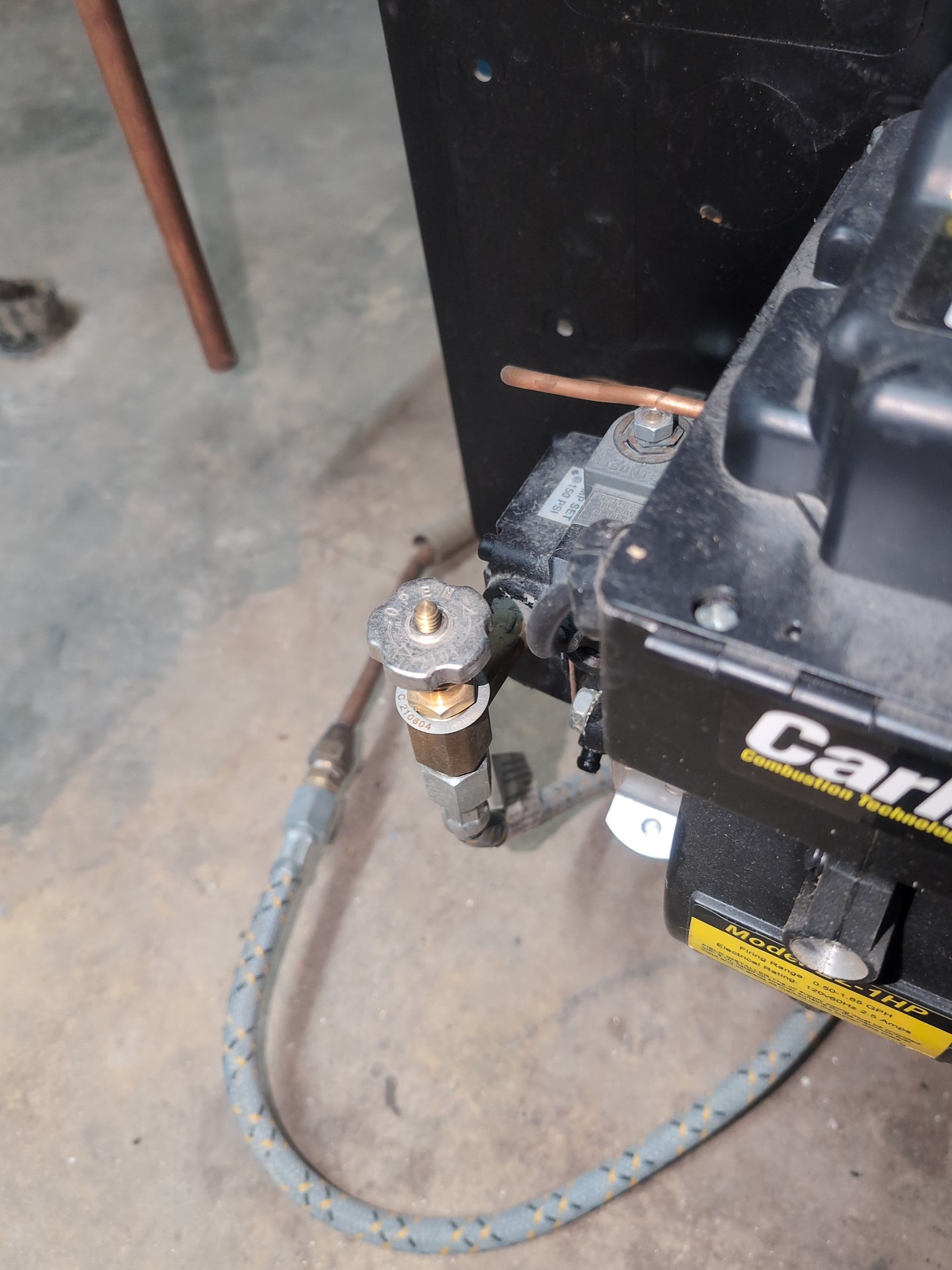 |
Plumbing Section Footer
The plumbing in the home was inspected and reported on with the above information. While the inspector makes every effort to find all areas of concern, some areas can go unnoticed. Washing machine drain line for example cannot be checked for leaks or the ability to handle the volume during drain cycle. Older homes with galvanized supply lines or cast iron drain lines can be obstructed and barely working during an inspection but then fails under heavy use. If the water is turned off or not used for periods of time (like a vacant home waiting for closing) rust or deposits within the pipes can further clog the piping system. Please be aware that the inspector has your best interest in mind. Any repair items mentioned in this report should be considered before purchase. It is recommended that qualified contractors be used in your further inspection or repair issues as it relates to the comments in this inspection report.
Structural Components
Styles and Materials
Foundation:Poured concrete
Method used to observe Crawlspace:No crawlspace
Floor Structure:2 X 10Wood joists
Wall Structure:Not visible
Columns or Piers:not visible
Ceiling Structure:2X8
Roof Structure:Not visible
Roof-Type:Gable
Method used to observe attic:From entryInaccessible
Attic info:Scuttle hole
The Home Inspector shall observe: structural components including foundations, floors, walls, columns or piers, ceilings and roof. The home inspector shall describe the type of Foundation, floor structure, wall structure, columns or piers, ceiling structure, roof structure. The home inspector shall: Probe structural components where deterioration is suspected; Enter under floor crawl spaces, basements, and attic spaces except when access is obstructed, when entry could damage the property, or when dangerous or adverse situations are suspected; Report the methods used to observe under floor crawl spaces and attics; and Report signs of abnormal or harmful water penetration into the building or signs of abnormal or harmful condensation on building components.
The home inspector is not required to: Enter any area or perform any procedure that may damage the property or its components or be dangerous to or adversely effect the health of the home inspector or other persons.
Foundations, Basement and Crawlspace (Report signs of abnormal or harmful water penetration into the building or signs of abnormal or harmful condensation on building components.)
No structural issues noted at the time of the inspection.
White efflorescence (powder substance) on poured concrete foundation wall indicates moisture is in contact with the masonry. This does not necessarily indicate that intrusion will occur. I recommend checking the gutters and the downspout drain lines for proper operation. Also, a water proofing paint could be applied to the interior side of the block if necessary. Efflorescence is found on many homes without water intrusion occurring inside the home. But, it should alert you to the possibility that future steps may be needed.
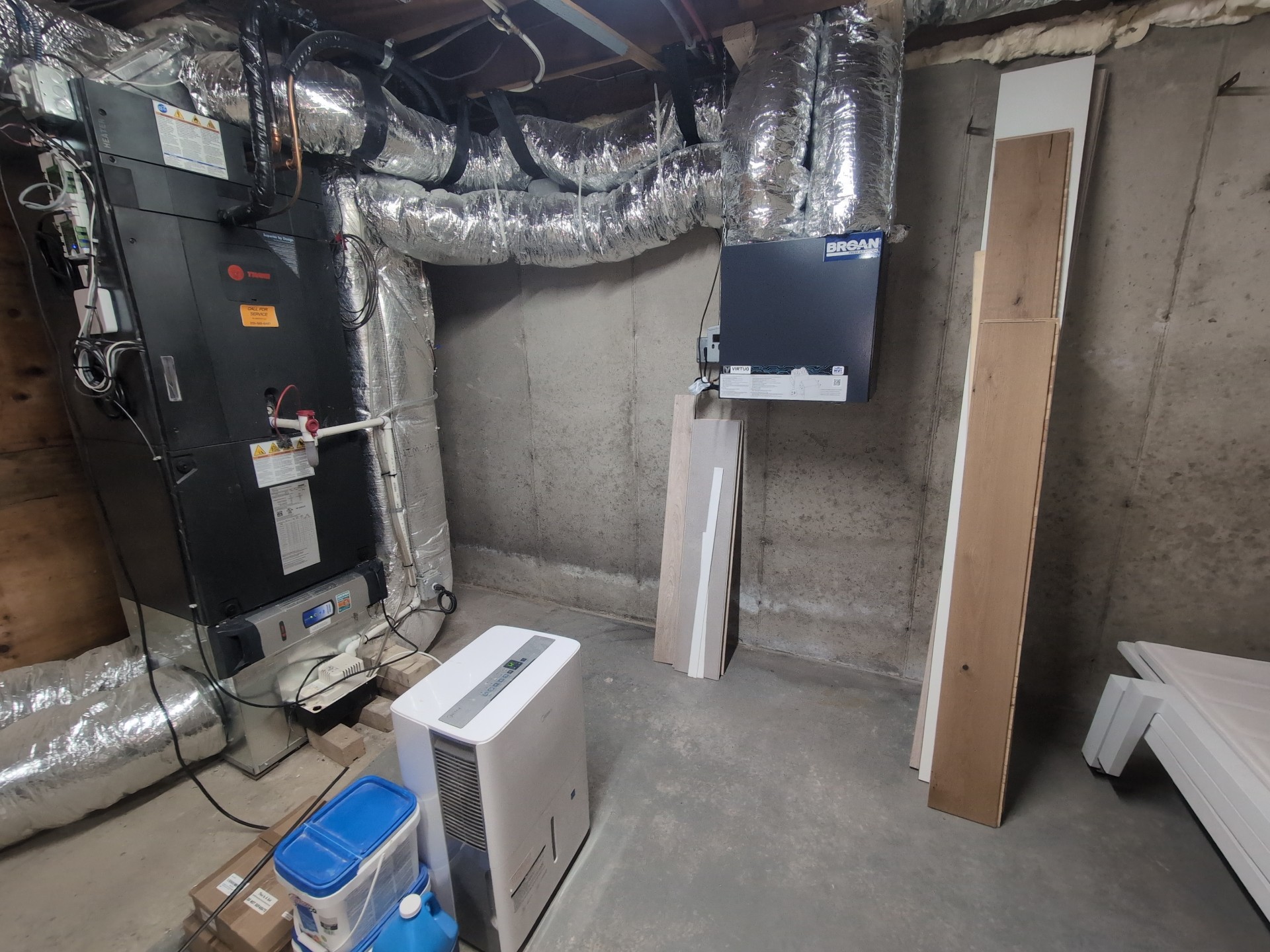 | 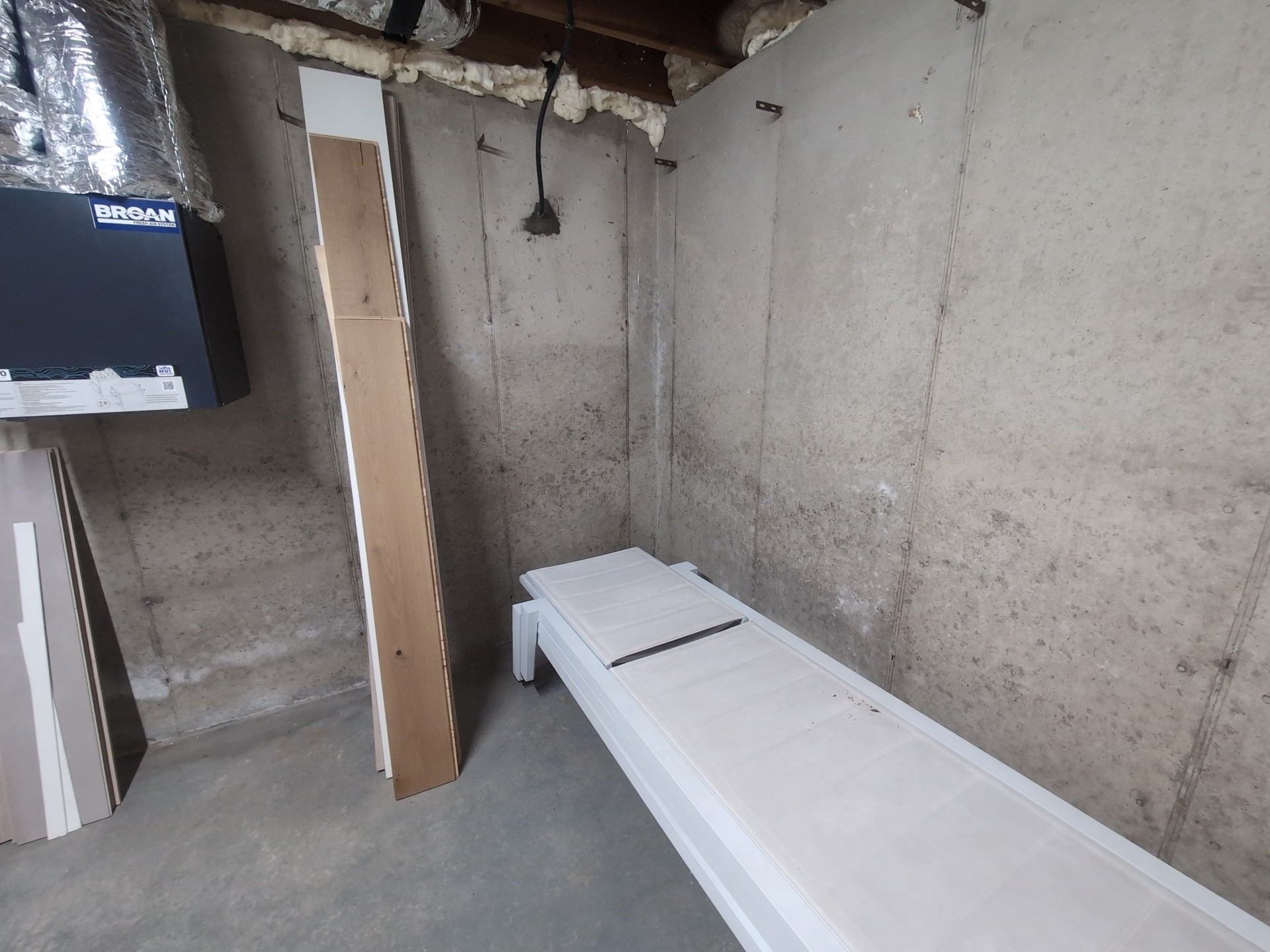 | 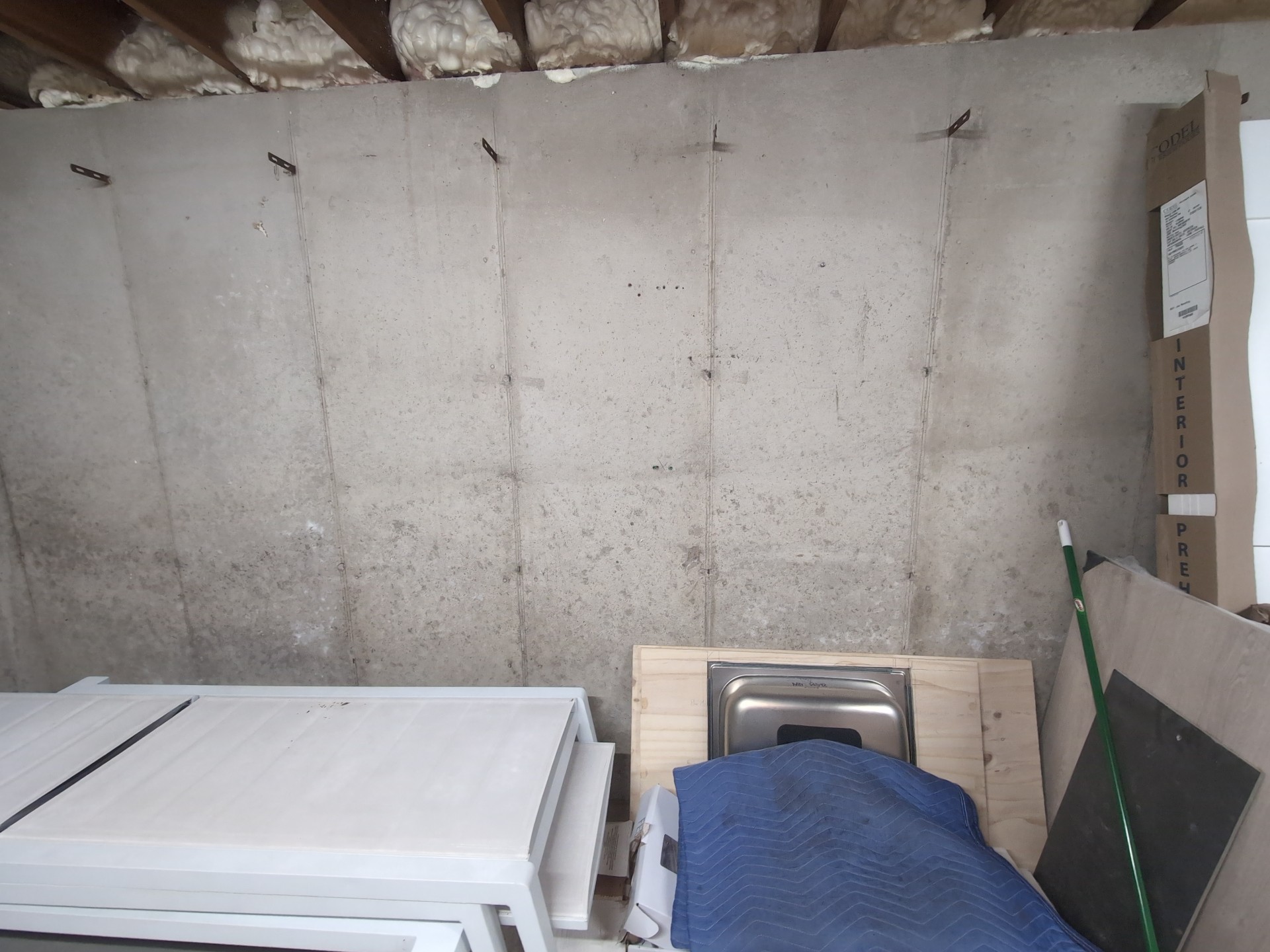 |
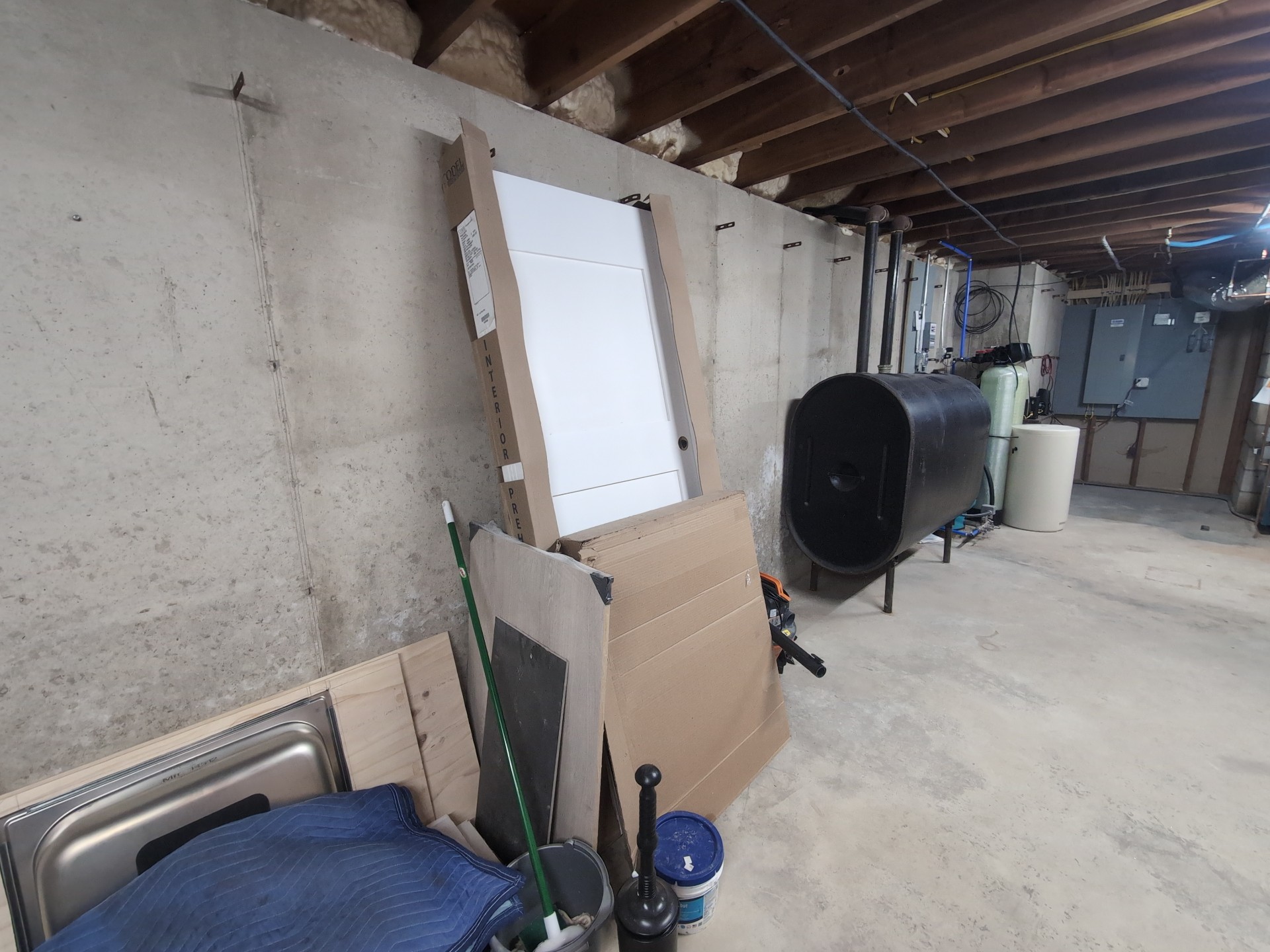 | 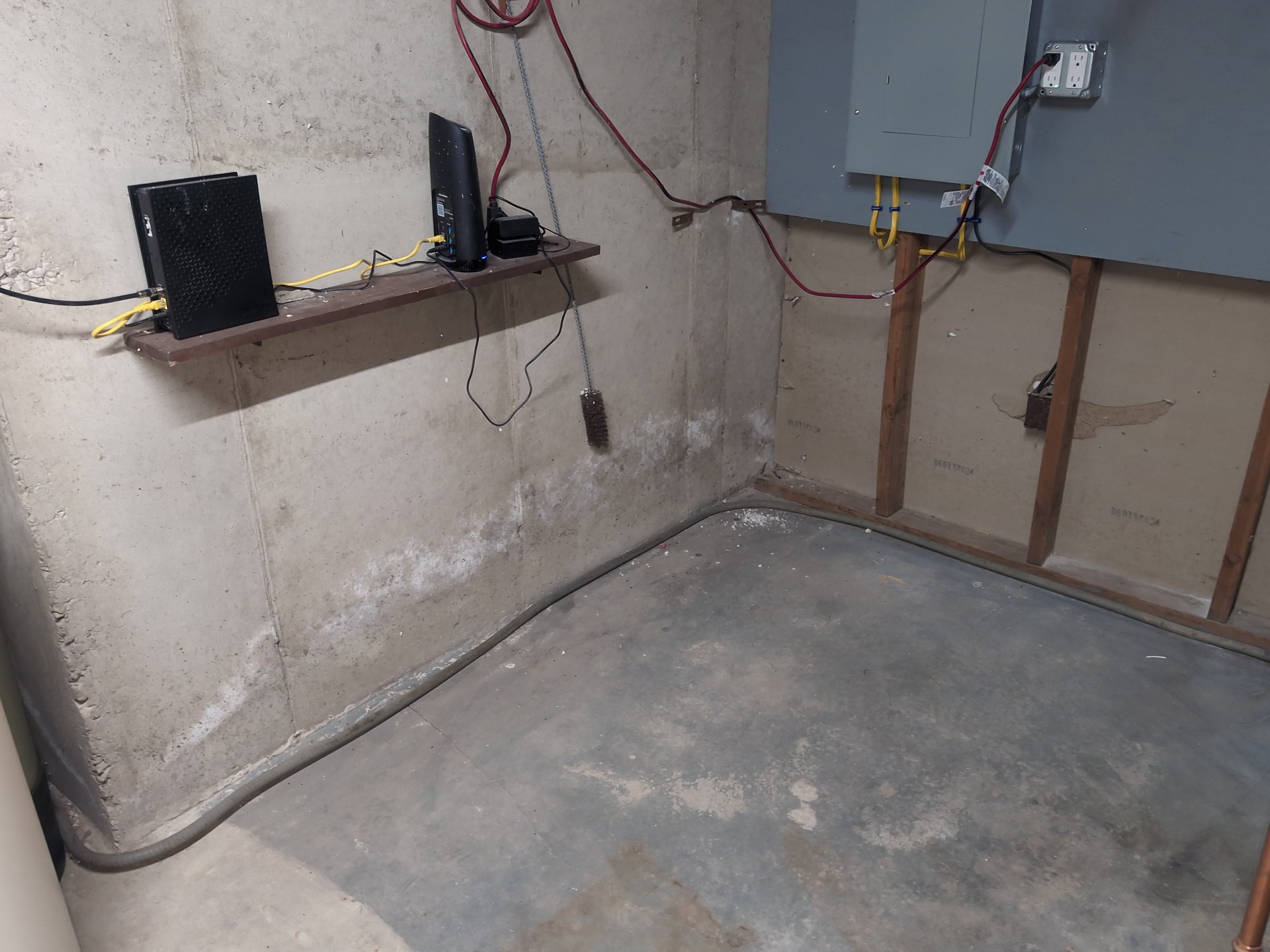 |
Walls (Structural)
Most of the walls are covered and structural members are not visible. No obvious problems discovered. I could not see behind these coverings.
Columns or Piers
None visibly present
Floors (Structural)
No visual structural issues were noted at the time of the inspection.
Ceilings (Structural)
No visual structural issues were noted at the time of the inspection. Due to the lack of flooring installed in the attic area I was only able to view ceiling structure from the scuttle hole entry and not all areas were viewable at the time of the inspection due to the installed ductwork present in this area.
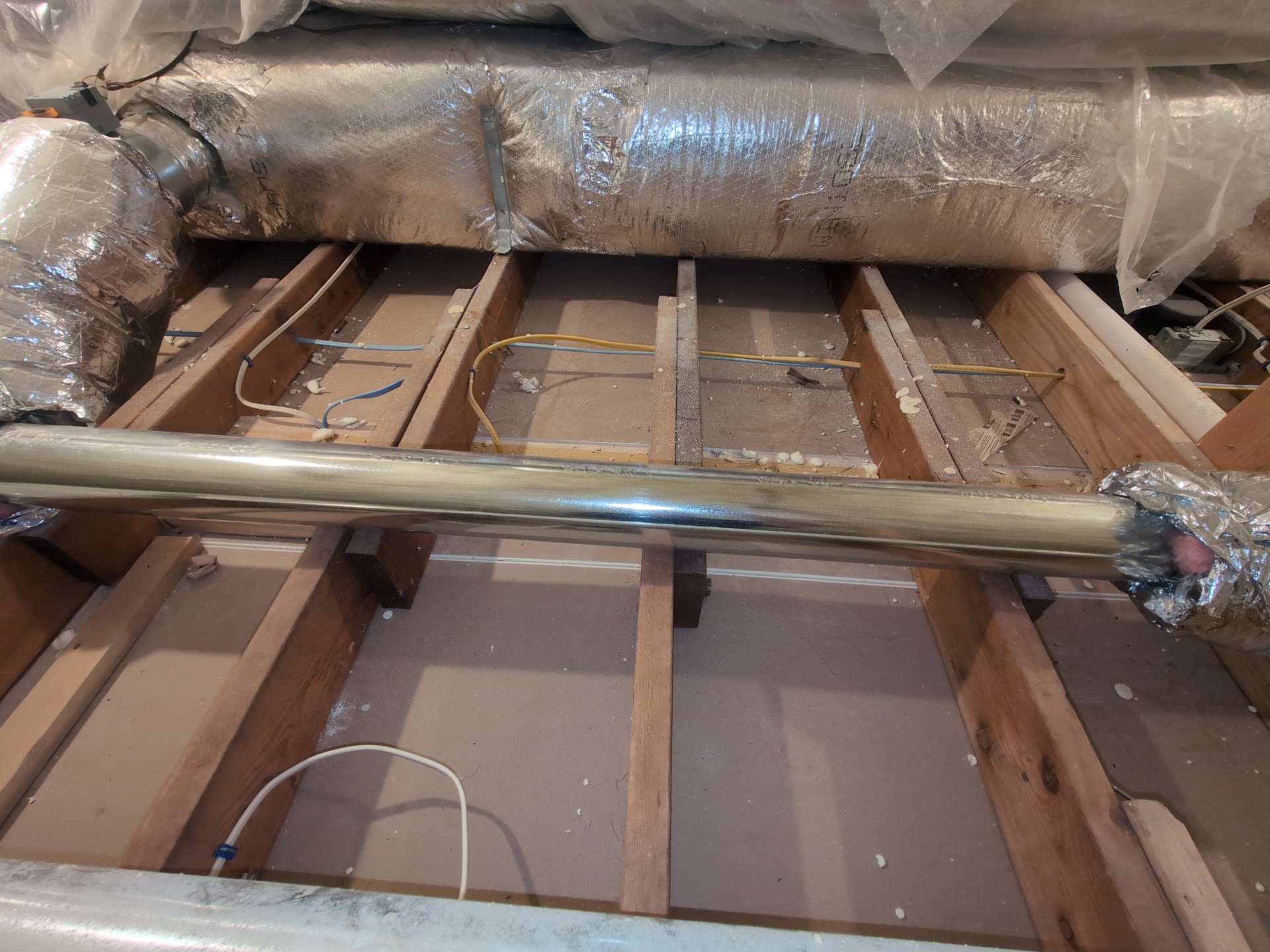
Roof Structure and Attic
The underside of the roof deck was not visible for inspection due to the installation of open-cell spray foam insulation applied directly to the roof sheathing. As a result, the roof structure—including framing, fasteners, and potential moisture or pest issues—could not be evaluated. Spray foam insulation can limit visibility of developing roof leaks or concealed damage. No determination can be made regarding the condition of concealed components, and issues may be present but hidden. Recommend ongoing monitoring and annual roof surface evaluations to detect early signs of moisture intrusion or degradation.
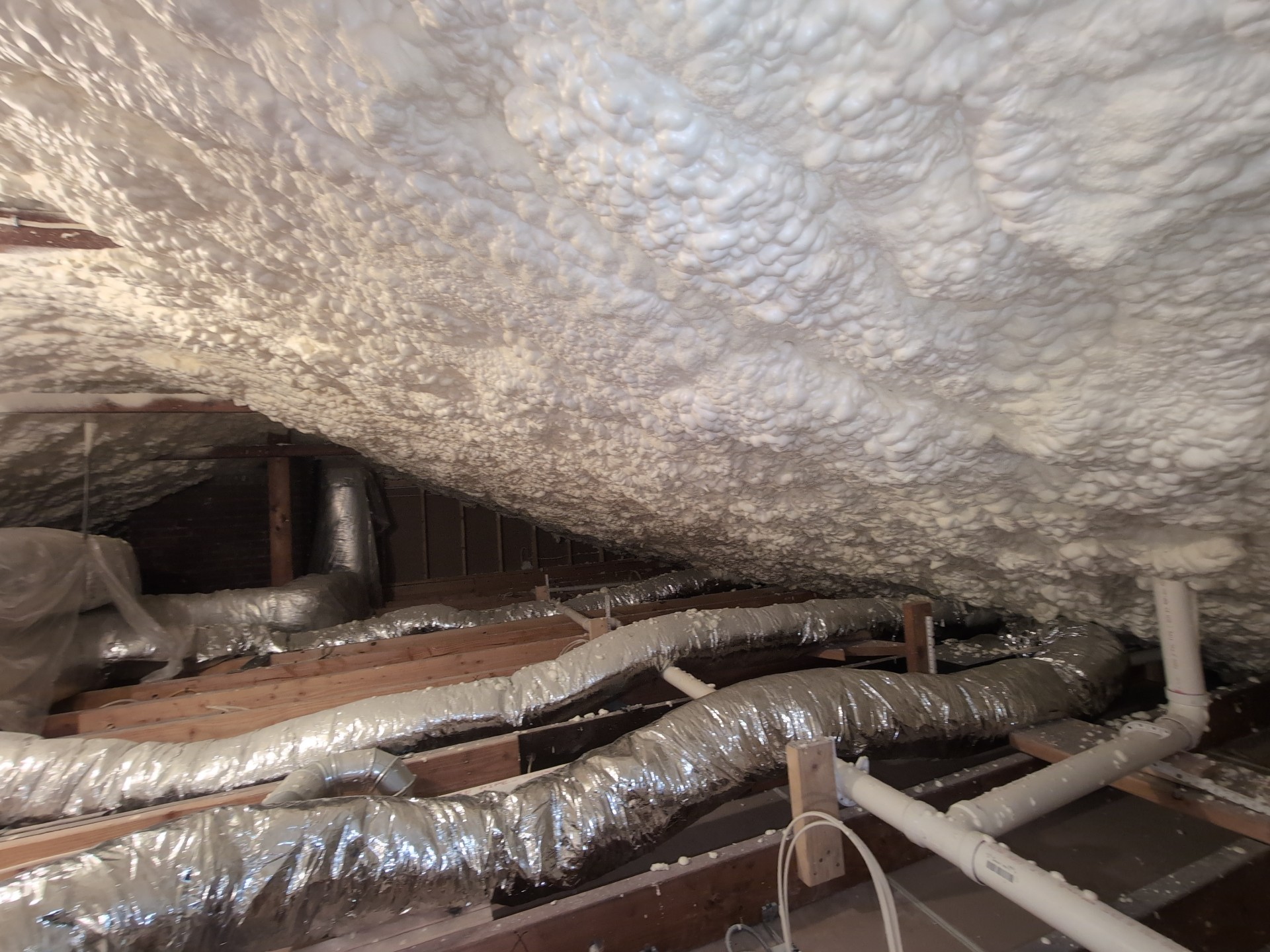 | 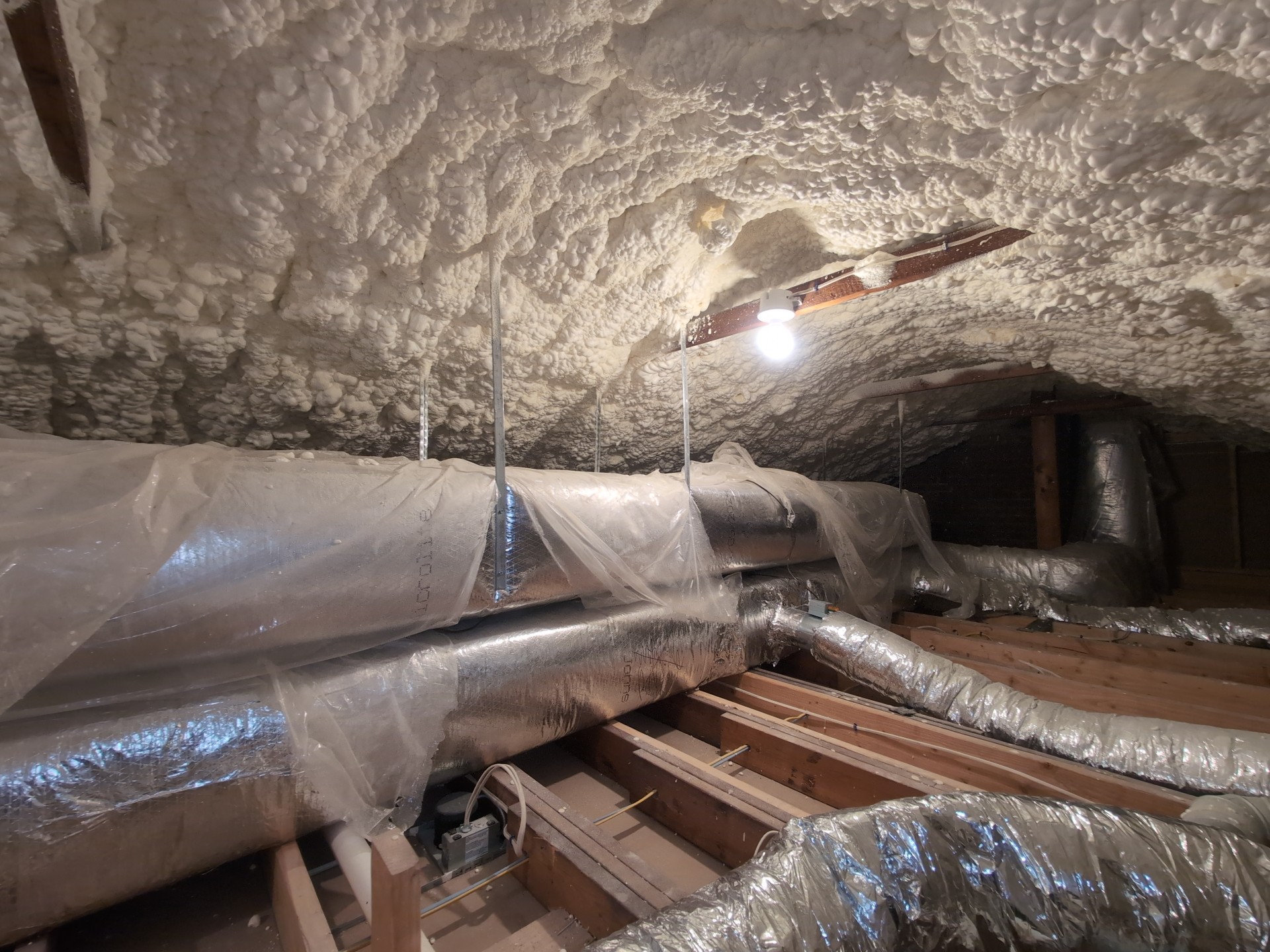 | 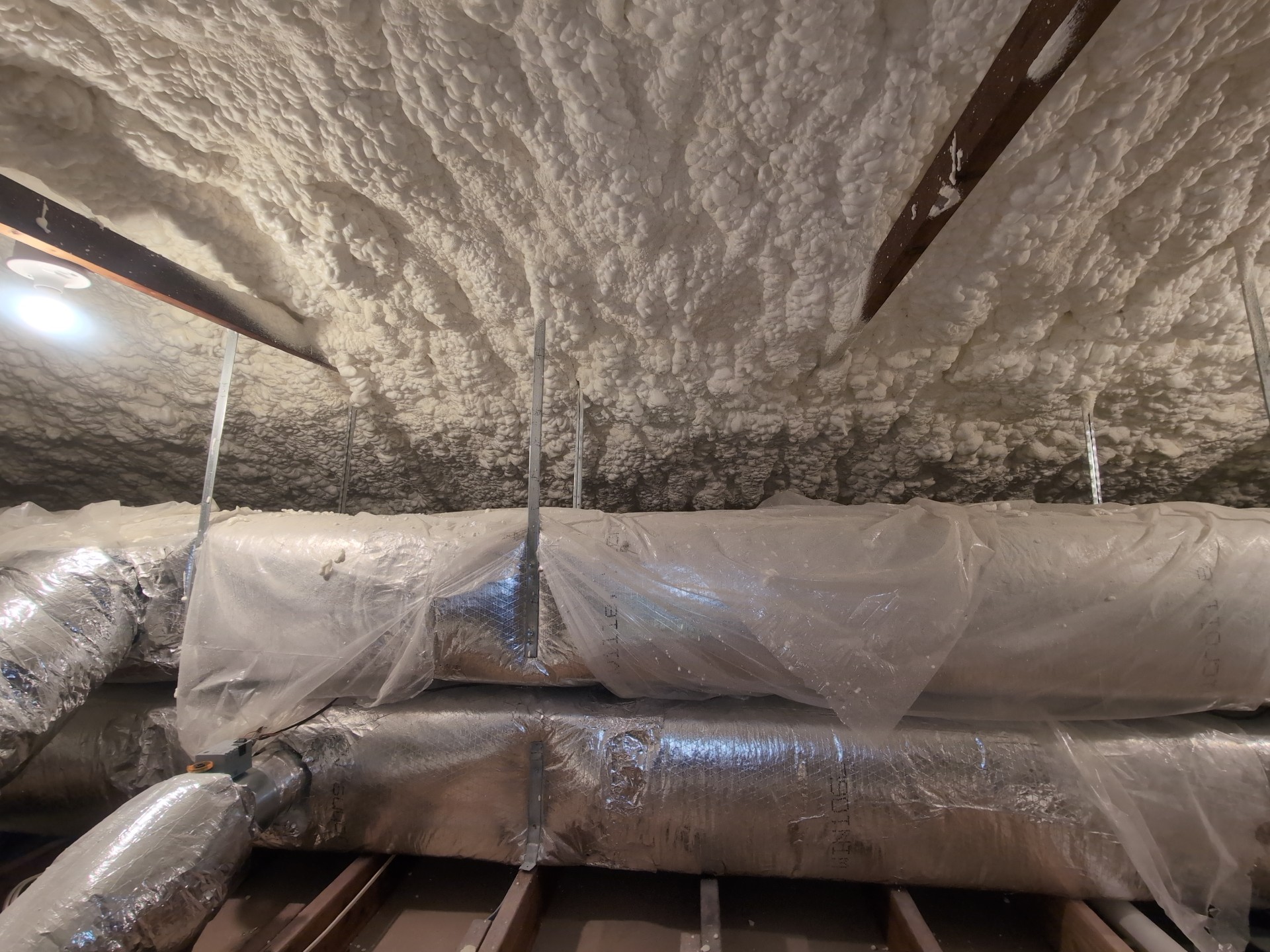 |
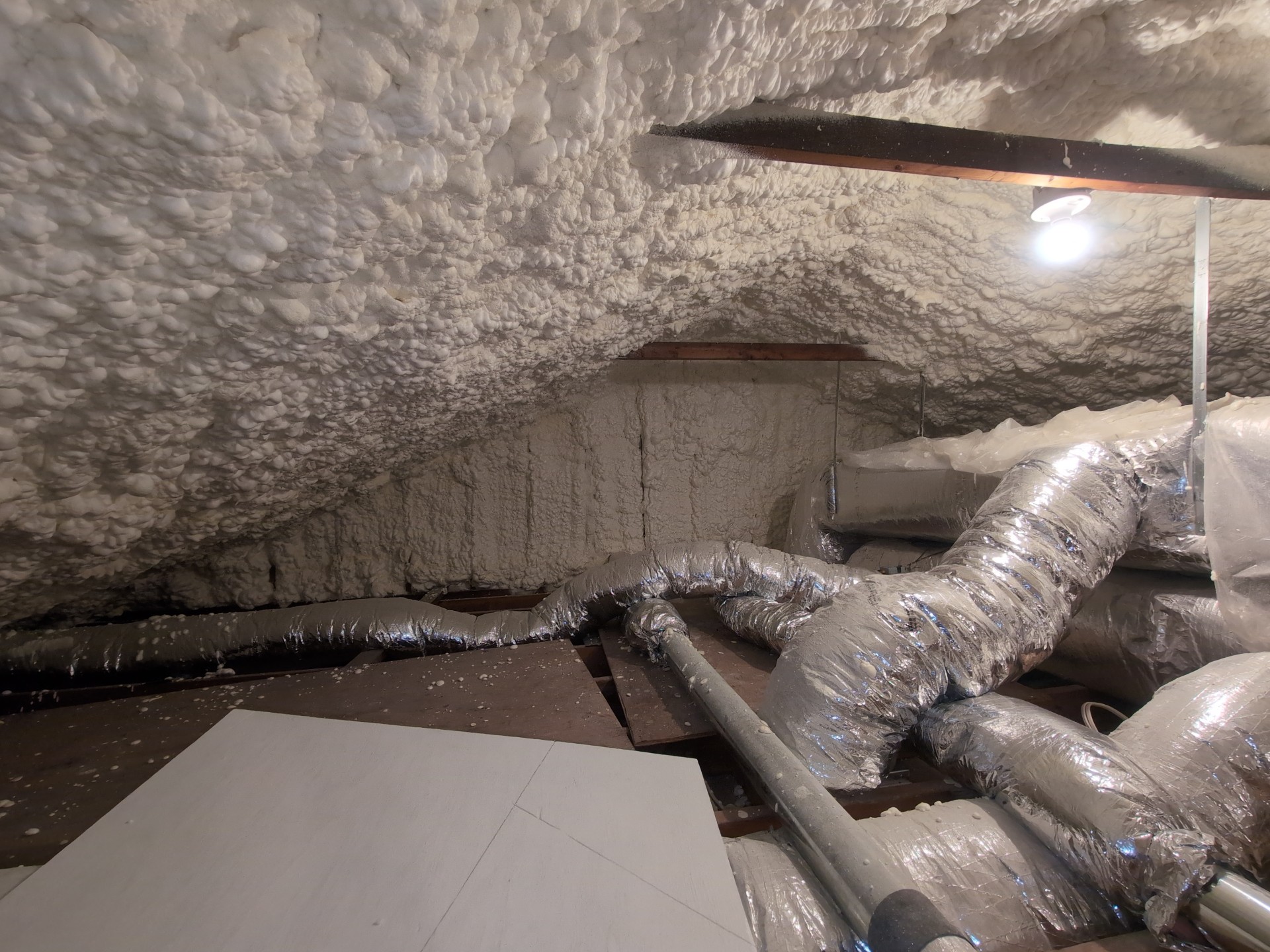 |
Structural footer
The structure of the home was inspected and reported on with the above information. While the inspector makes every effort to find all areas of concern, some areas can go unnoticed. Please be aware that the inspector has your best interest in mind. Any repair items mentioned in this report should be considered before purchase. It is recommended that qualified contractors be used in your further inspection or repair issues as it relates to the comments in this inspection report.
Insulation and Ventilation
Styles and Materials
Attic Insulation:spray foam
Ventilation:None: conditioned attic space
Exhaust Fans:Fan
Dryer Power Source:220 Electric
Dryer Vent:Flexible Metal
Floor System Insulation:NONE
The home inspector shall observe: Insulation and vapor retarders in unfinished spaces; Ventilation of attics and foundation areas; Kitchen, bathroom, and laundry venting systems; and the operation of any readily accessible attic ventilation fan, and, when temperature permits, the operation of any readily accessible thermostatic control. The home inspector shall describe: Insulation in unfinished spaces; and Absence of insulation in unfinished space at conditioned surfaces. The home inspector shall: Move insulation where readily visible evidence indicates the need to do so; and Move insulation where chimneys penetrate roofs, where plumbing drain/waste pipes penetrate floors, adjacent to earth filled stoops or porches, and at exterior doors.
The home inspector is not required to report on: Concealed insulation and vapor retarders; or Venting equipment that is integral with household appliances.
Insulation in Attic
Attic / Roof Deck – Open-Cell Spray Foam Insulation (Features & Benefits)
Open-cell spray foam insulation was installed along the underside of the roof deck, creating a conditioned (unvented) attic assembly. This type of insulation expands upon application, filling gaps and adhering to framing and sheathing surfaces.
Features:
- Air-Sealing Capability: Expands to seal cracks, joints, and penetrations, significantly reducing uncontrolled air leakage.
- Vapor Permeable: Allows moisture vapor to pass through, which can help the assembly dry if incidental moisture is present.
- Continuous Coverage: Conforms to irregular surfaces and framing, minimizing voids and thermal bypasses common with batt insulation.
- Sound Attenuation: Open-cell structure helps reduce airborne sound transmission.
- Lower Density Material: Softer, lighter foam compared to closed-cell, with typical R-value around R-3.5 to R-4 per inch.
Benefits:
- Improved Energy Efficiency: Reduced air leakage leads to lower heating and cooling loads and improved HVAC performance.
- Enhanced Comfort: More consistent interior temperatures with fewer drafts and hot/cold spots.
- Conditioned Attic Space: Mechanical systems and ductwork located in the attic operate in a more stable environment, improving efficiency and longevity.
- Reduced Risk of Condensation at Air Leaks: Air sealing helps limit warm, moist air from reaching cold surfaces.
- Potential for Better Indoor Air Quality: Limits infiltration of dust, pollen, and outdoor pollutants.
Inspector Note: Because open-cell foam is vapor permeable, roof leaks may be less immediately visible and can travel before becoming apparent. Periodic monitoring of the roof covering and attic areas is recommended.
Recommendation:
No deficiencies were noted with the visible installation. Continue to monitor roof coverings and interior ceilings for any signs of leakage, and maintain proper operation of the building envelope and ventilation strategies as applicable.
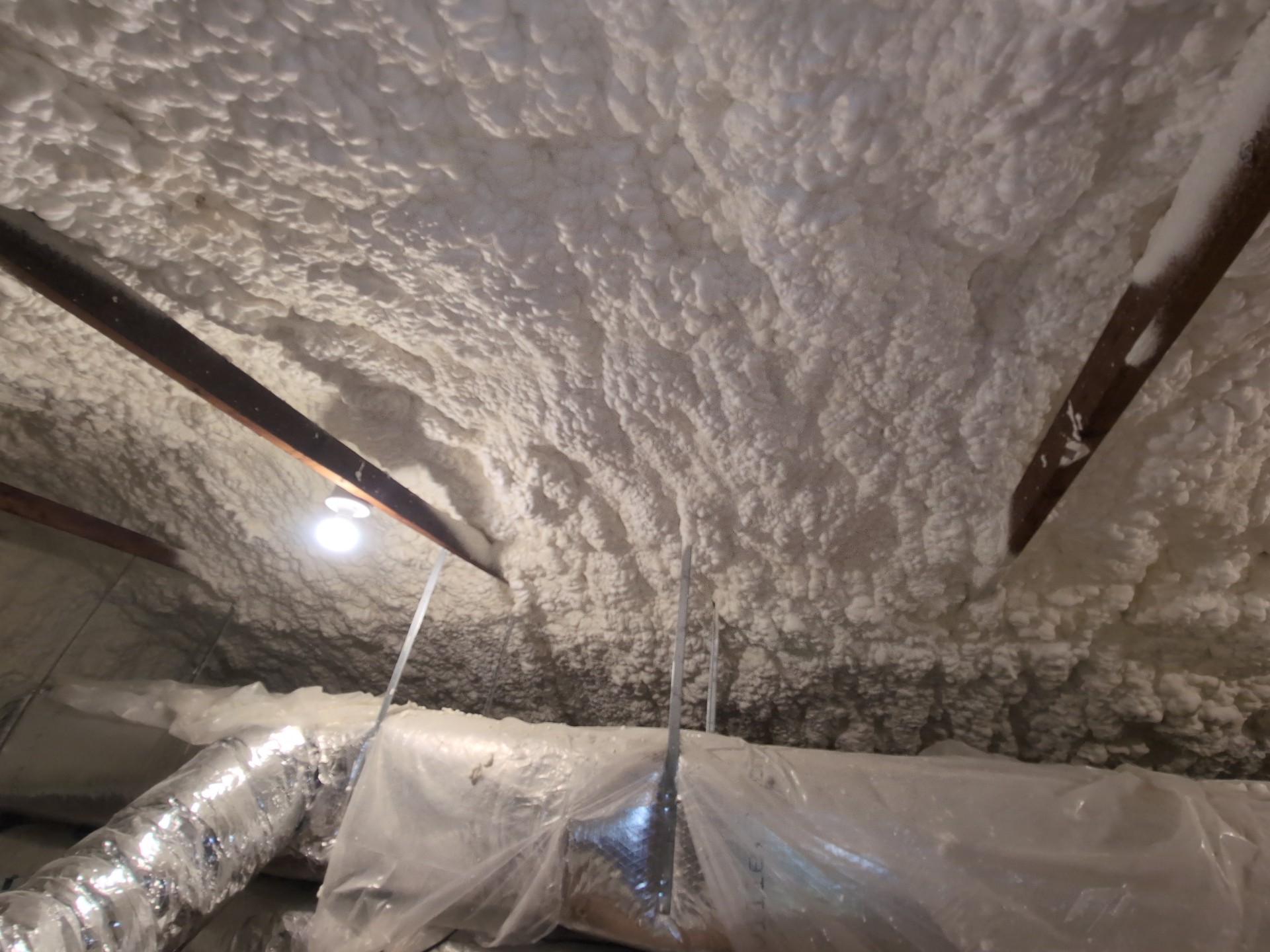 | 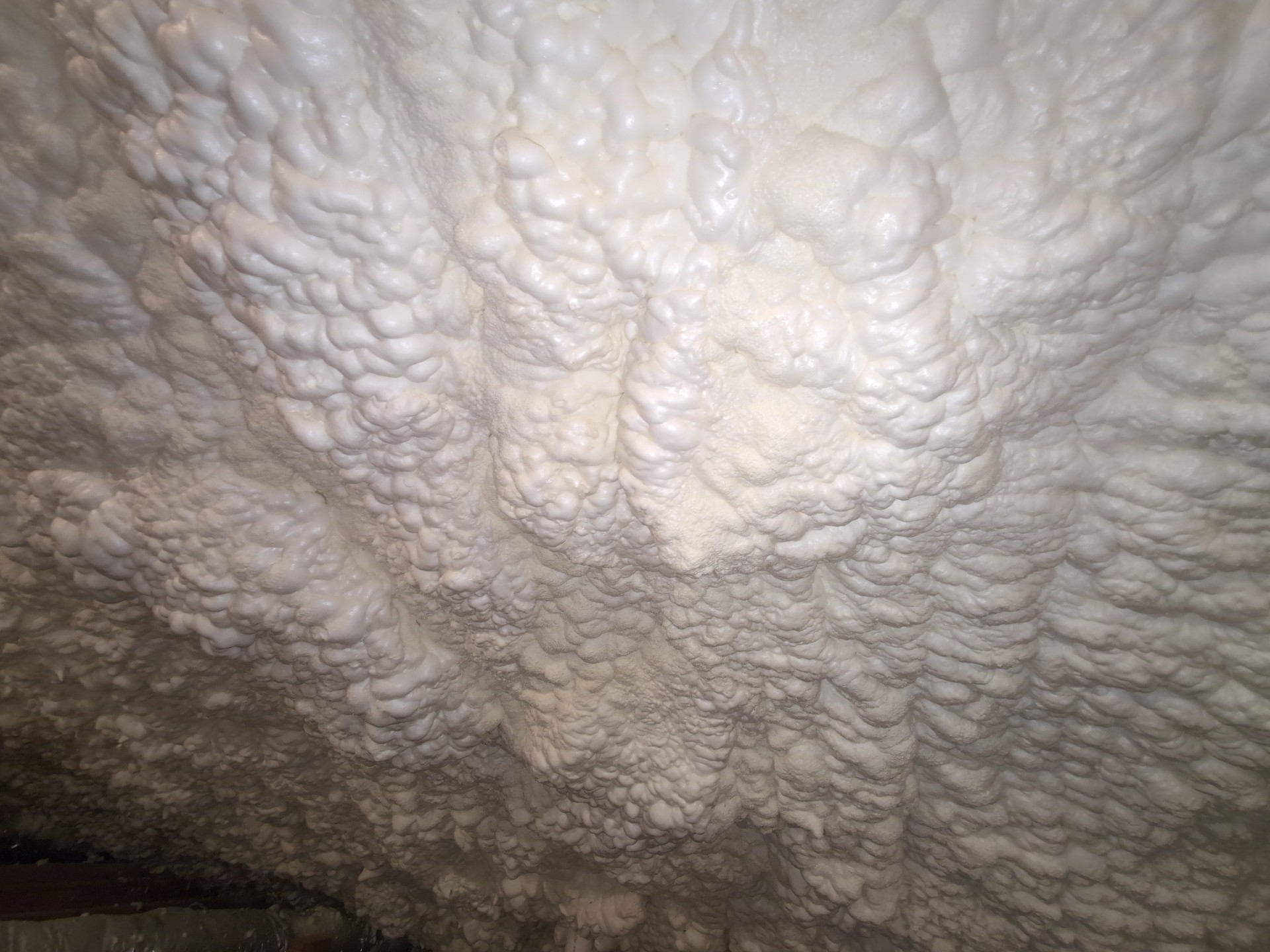 |
Insulation in the attic was a sprayed foam type. Many types of sprayed foam insulation are required to have an ignition barrier installed to help reduce the spread of fire. I recommend that before the expiration of your Inspection Objection Deadline, you consult with the current owner or a qualified contractor to discuss the possible necessity for- and options and costs for installation of- an ignition barrier (if not previously installed).
Insulation Under Floor System
The rim joist areas within the unfinished basement had been insulated with spray foam insulation at the time of the inspection. Spray foam insulation at rim joists is generally considered an effective method of reducing air infiltration and improving thermal performance in an area commonly associated with heat loss and air leakage. Benefits of spray foam insulation include improved energy efficiency, reduced drafts, moisture resistance, and assistance in limiting condensation potential at the band/rim joist areas. No additional insulation at the underside of the floor framing may be necessary depending upon the intended use and conditioning of the basement space; however, insulation needs can vary based upon homeowner preferences, energy efficiency goals, and overall basement conditions.
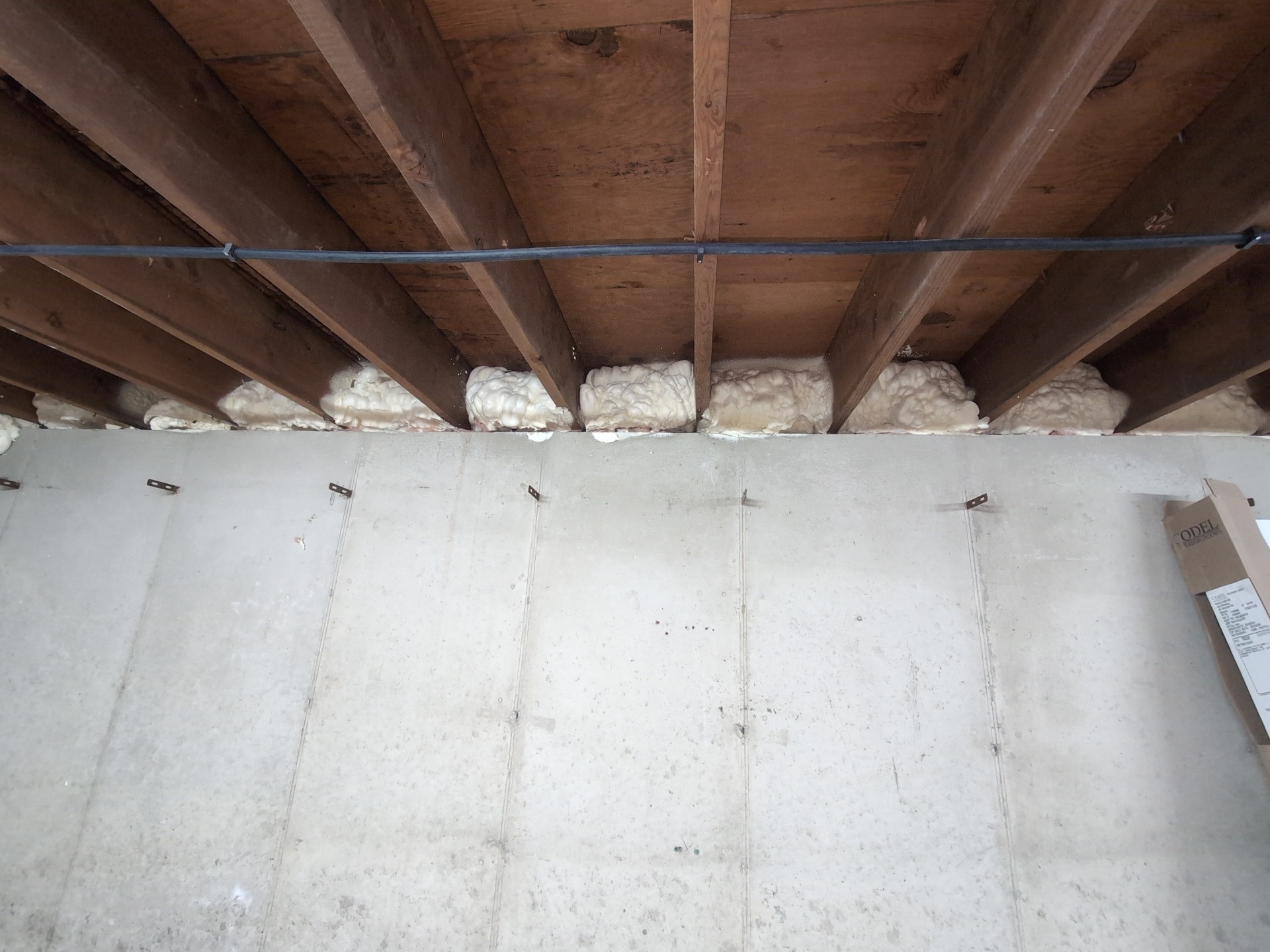
Vapor Retarders (in Crawlspace or basement)
I recommend maintaining basement relative humidity levels at or below 45% to help prevent mold growth, musty odors, and moisture-related damage. This can be effectively achieved by installing a permanently mounted dehumidifier equipped with automatic draining capabilities. Proper humidity control is especially important in below-grade spaces to preserve indoor air quality and protect building materials.
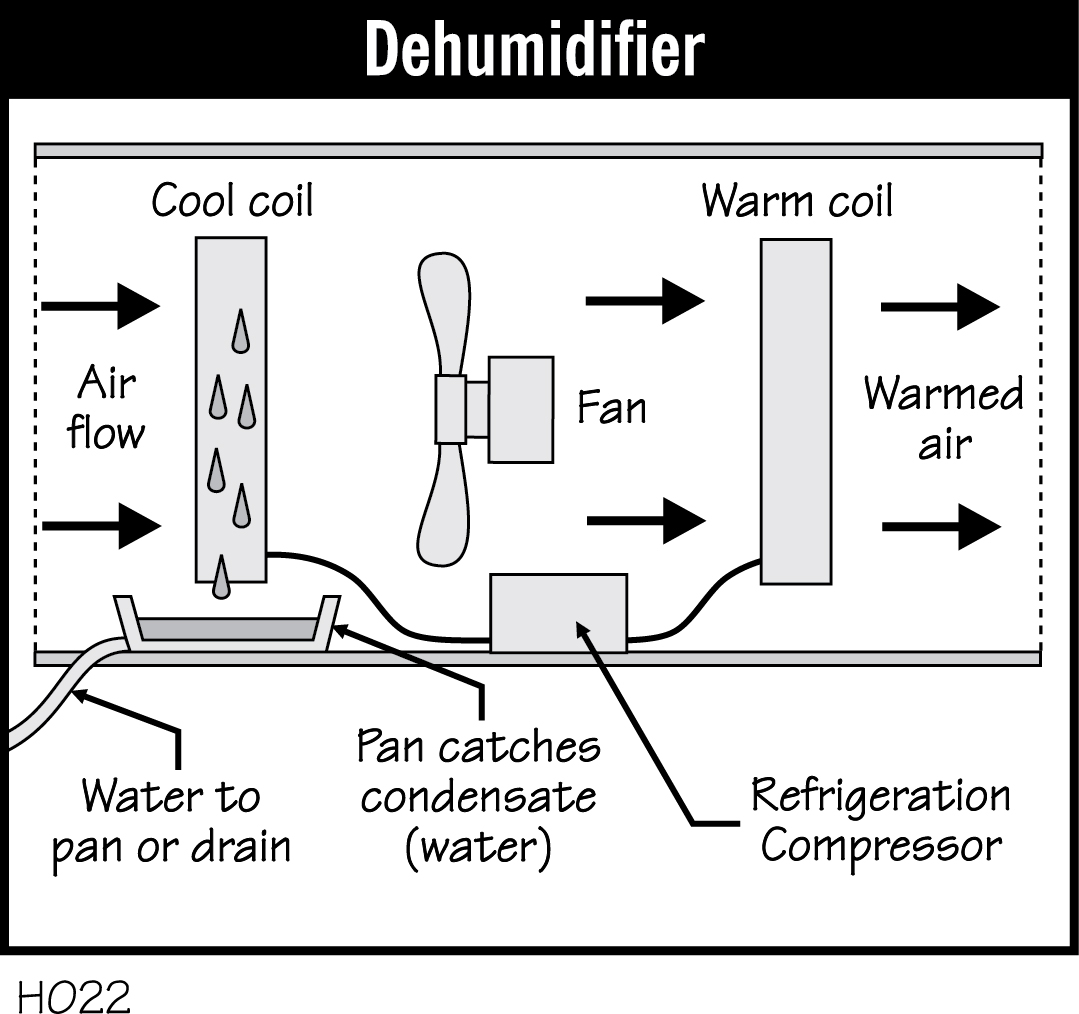 | 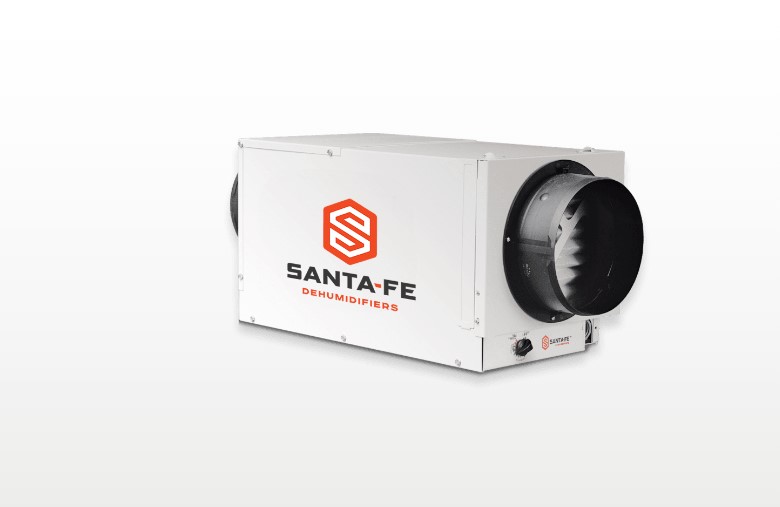 |
Ventilation of Attic and Foundation Areas
Attic – Ventilation / Conditioned Space
No passive ventilation (soffit, ridge, or gable vents) was noted in the attic areas. This is consistent with the installation of open-cell spray foam insulation on the underside of the roof deck. When spray foam is installed in this manner, the attic is reclassified as conditioned space rather than unconditioned attic space.
Explanation:
- In a traditional attic, passive ventilation (soffit/ridge vents) is required to remove heat and moisture buildup.
- With closed-cell spray foam applied to the roof deck, ventilation is intentionally eliminated. The foam creates an air and moisture barrier that controls condensation, stabilizes attic temperatures, and improves energy efficiency.
- This design effectively brings the attic into the thermal envelope of the home, which can enhance comfort and reduce heating/cooling loads.
- Proper installation should comply with local building codes, and in some cases, additional fire protection or ignition barrier coatings may be required.
Real Estate Transaction Note:
The lack of passive ventilation in this attic is intentional and consistent with this type of insulation system. No issues were observed at the time of inspection. Buyers should be aware that this design requires no traditional attic venting but does rely on the long-term integrity of the spray foam installation. Future modifications (such as roof replacement or HVAC changes) should take this design into account.
Venting Systems (Kitchens, Baths and Laundry)
I recommend replacement or vacuuming out of the dryer vent piping annually as lint collects and becomes a fire hazard. I recommend a duct cleaning specialist.
Insulation & Ventilation: Other
A Broan-NuTone model #B130E65RT Energy Recovery Ventilator (ERV) was installed at the home. This system is designed to improve indoor air quality by continuously exchanging stale indoor air with fresh outdoor air while helping to minimize energy loss associated with ventilation. The unit is part of the Broan AI Series utilizing VIRTUO™ Air Technology designed for automatic airflow balancing and energy-efficient operation.
An ERV system operates by exhausting stale, humid, and contaminant-laden indoor air from areas such as bathrooms, laundry rooms, and living spaces while simultaneously bringing filtered fresh outdoor air into the home. Unlike a basic exhaust-only ventilation system, the ERV core transfers portions of the heat and humidity energy between the outgoing and incoming air streams. During colder months, heat and some humidity from the outgoing air are transferred to the incoming fresh air to help reduce heating loads and improve comfort. During warmer humid months, portions of the humidity load are transferred outward to help reduce air conditioning demand.
Features and benefits of this ERV system include:
- Continuous fresh air ventilation for improved indoor air quality
- Reduction of indoor humidity, odors, airborne contaminants, and stale air accumulation
- Improved overall comfort and reduced condensation potential within tightly constructed homes
- Energy-efficient ECM fan motors with reduced electrical consumption
- Integrated MERV 8 filtration for removal of dust, pollen, lint, and airborne particulates
- Automatic airflow balancing and self-adjusting VIRTUO™ technology
- Quiet operation and compact installation footprint
- Improved ventilation performance while helping reduce heating and cooling energy losses compared to traditional ventilation methods
Typical recommended maintenance items include:
- Cleaning or replacement of air filters approximately every 3–6 months depending upon usage and environmental conditions
- Annual cleaning of the ERV core in accordance with manufacturer recommendations
- Inspection and cleaning of exterior intake and exhaust hoods
- Inspection of condensate drains and tubing if equipped
- Verification of balanced airflow and proper fan operation
- Cleaning of interior components and fan assemblies as needed
- Annual servicing by a qualified HVAC or ventilation contractor
Proper operation and routine maintenance of the ERV system can significantly improve indoor air quality, occupant comfort, and overall building performance, particularly in newer or tightly sealed homes.
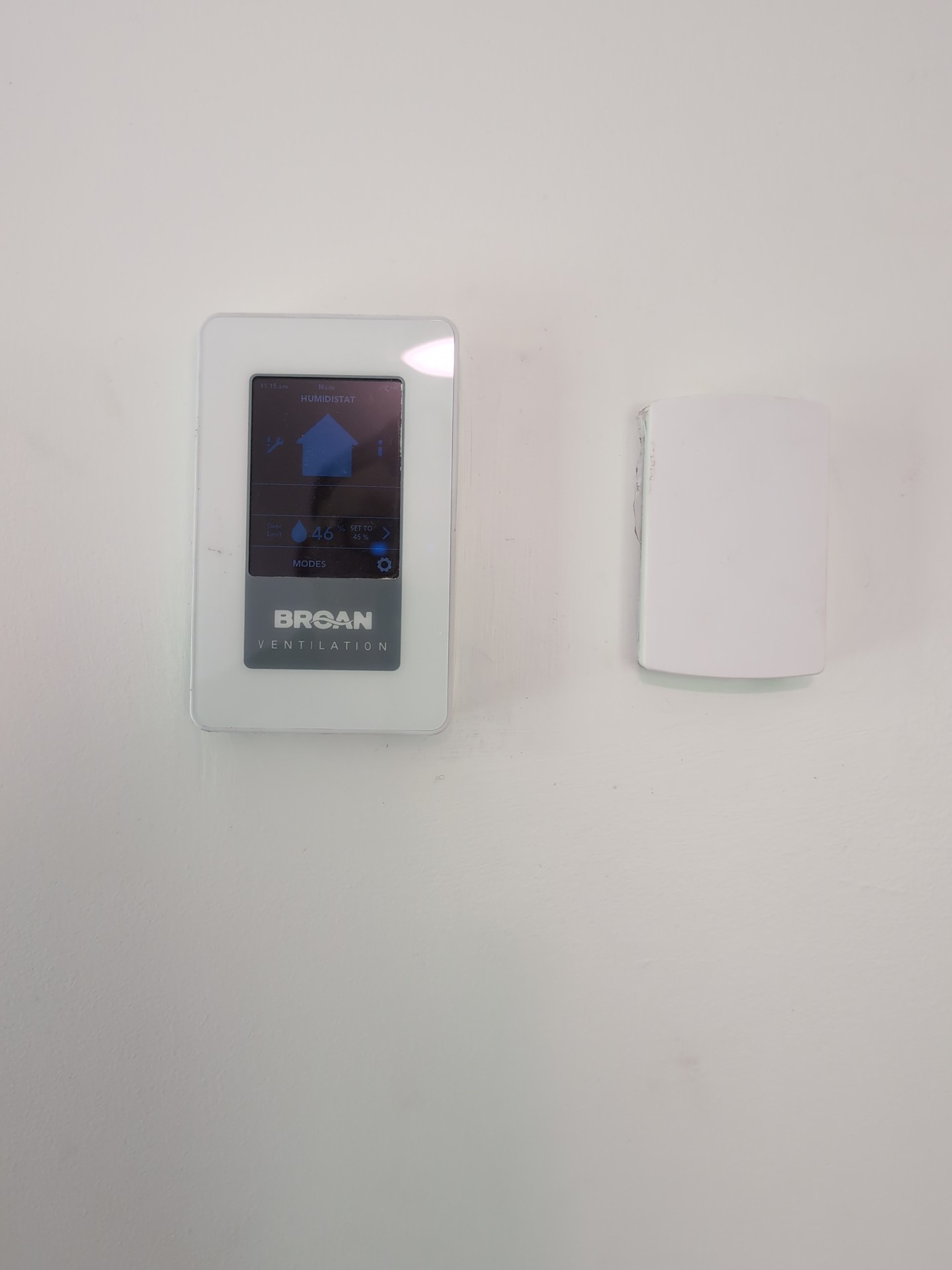
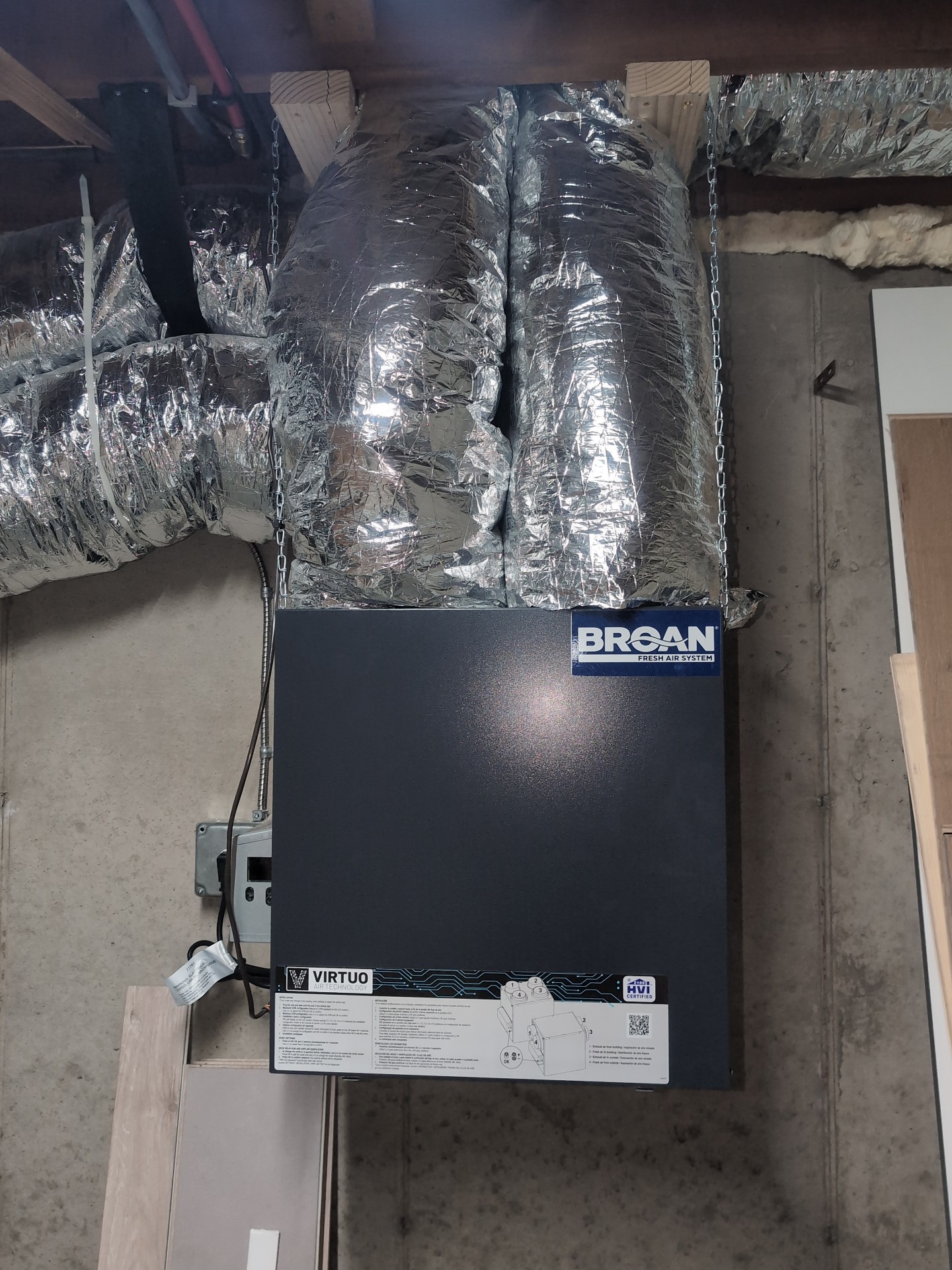 | 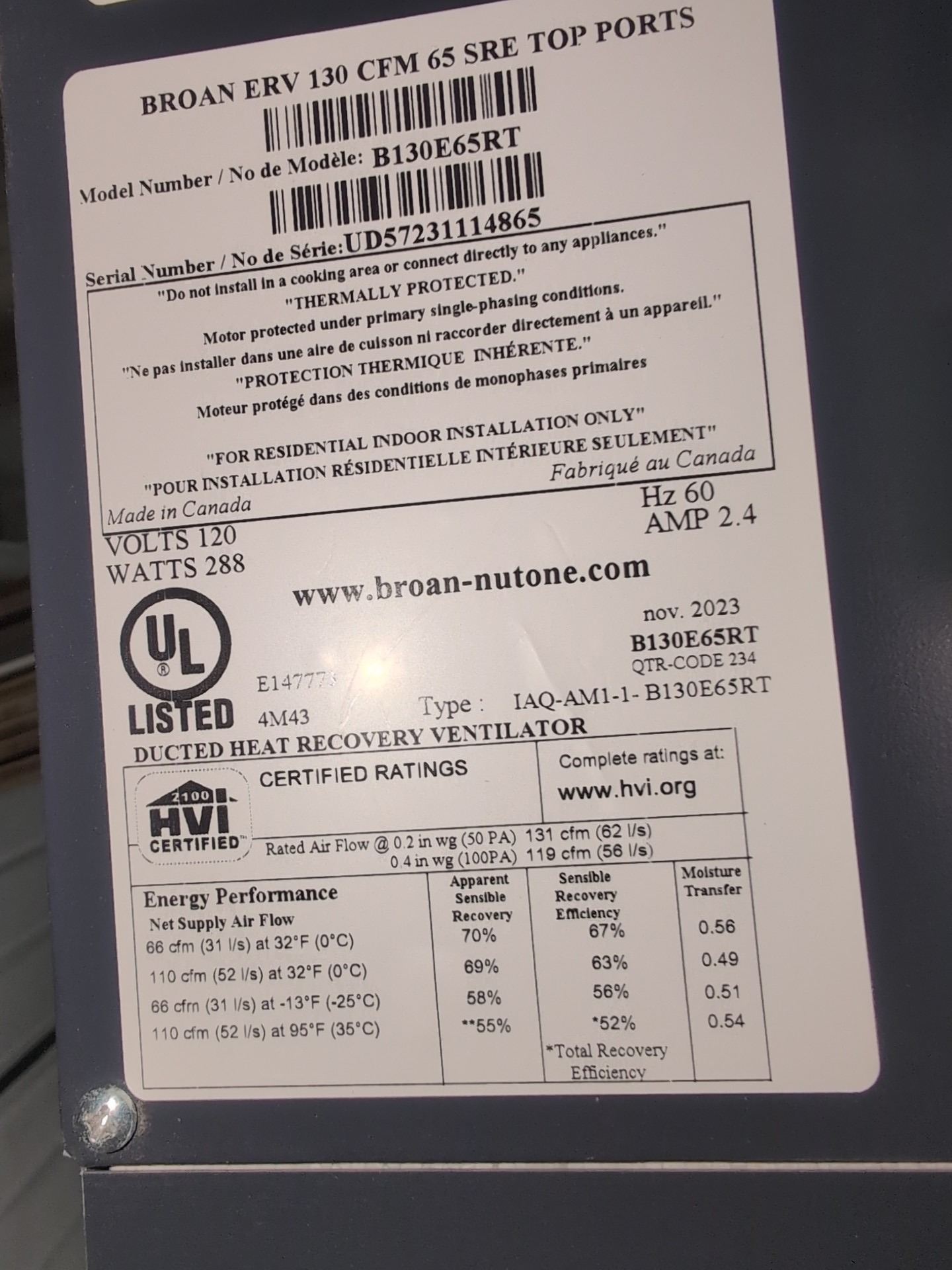 | 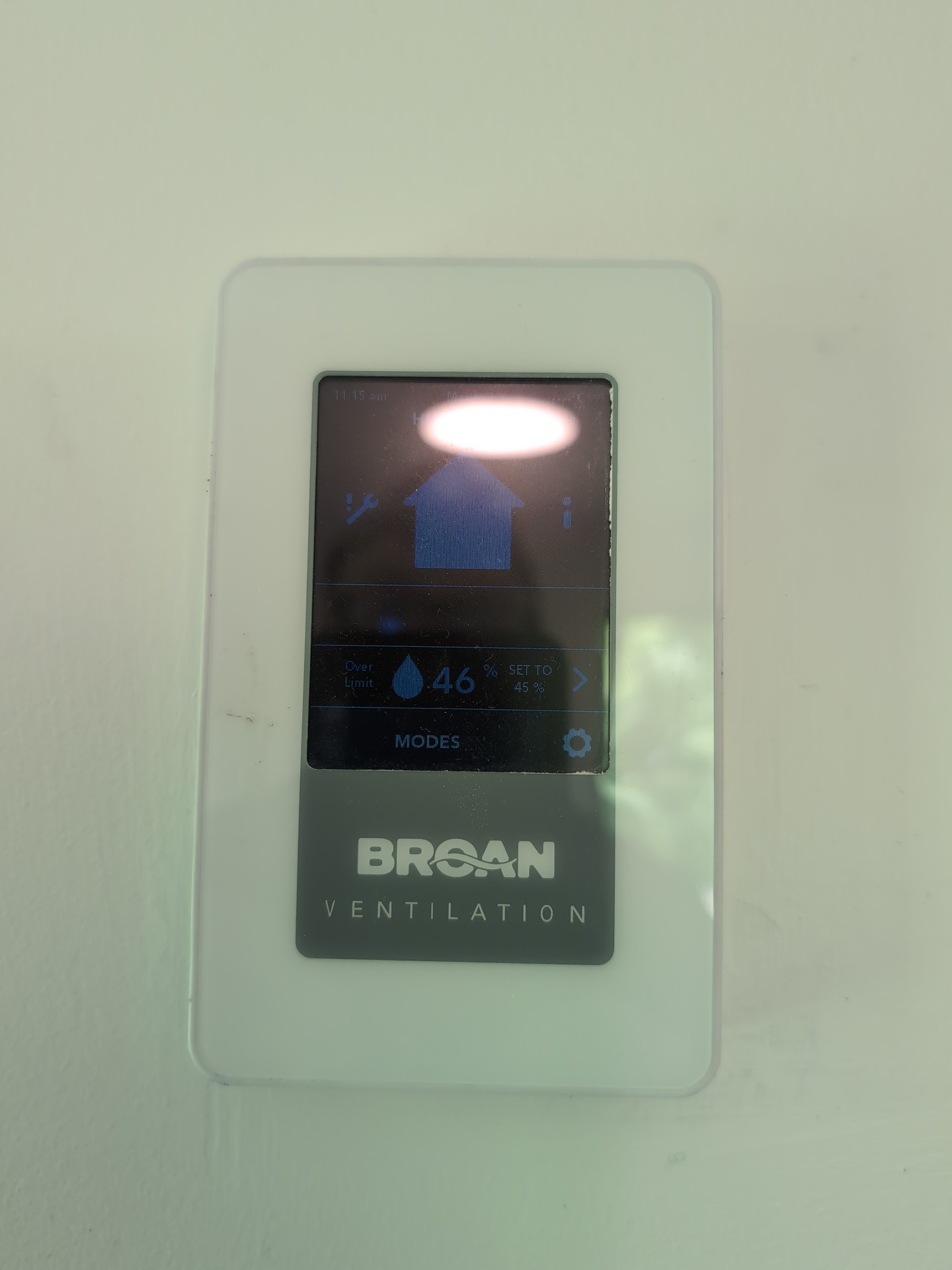 |
Insulation & Ventilation Footer
The insulation and ventilation of the home was inspected and reported on with the above information. While the inspector makes every effort to find all areas of concern, some areas can go unnoticed. Venting of exhaust fans or clothes dryer cannot be fully inspected and bends or obstructions can occur without being accessible or visible (behind wall and ceiling coverings). Only insulation that is visible was inspected. Please be aware that the inspector has your best interest in mind. Any repair items mentioned in this report should be considered before purchase. It is recommended that qualified contractors be used in your further inspection or repair issues as it relates to the comments in this inspection report.
Interiors
Styles and Materials
Wall Material:Gypsum BoardTile
Floor Covering(s):Hardwood T>ile
Interior Doors:Wood
Window Types:Thermal/InsulatedCasement
Window Manufacturer:PELLA
Cabinetry:Wood
Countertop:Quartz
The home inspector shall observe: Walls, ceiling, and floors; Steps, stairways, balconies, and railings; Counters and a representative number of installed cabinets; and A representative number of doors and windows. The home inspector shall: Operate a representative number of windows and interior doors; and Report signs of abnormal or harmful water penetration into the building or signs of abnormal or harmful condensation on building components.
The home inspector is not required to observe: Paint, wallpaper, and other finish treatments on the interior walls, ceilings, and floors; Carpeting; or Draperies, blinds, or other window treatments.
Ceilings
Staining was noted at the corner joint adjacent to the left foundation wall within the finished basement sheetrock area at the time of the inspection. No visible active moisture intrusion was noted during the inspection and the condition appeared cosmetic in nature only at this time. Rust staining at drywall corner bead materials can sometimes occur from past minor moisture exposure, condensation, or deterioration of metal corner components. Recommend monitoring and further evaluation/repair as needed by a qualified contractor, including refinishing of the affected area if desired.
Walls
The visible areas of the interior walls were in good condition at the time of the inspection, with no significant defects such as cracks, damage, or staining observed. Recommend routine maintenance, including occasional repainting and monitoring for signs of moisture intrusion or settlement-related movement, to help maintain their appearance and integrity.
Finished basement wall areas were checked with a Tramex moisture meter in an effort to detect signs of concealed moisture between the finished sheetrock wall surfaces and the concrete foundation walls. No elevated moisture readings were noted at the time of the inspection within the areas tested. It should be understood that moisture conditions can vary over time depending upon seasonal groundwater levels, humidity conditions, weather events, and hidden conditions not visible at the time of the inspection.
Floors
The visible areas of the floors were in good condition at the time of the inspection. No significant issues such as damage, excessive wear, or unevenness were observed. Recommend routine maintenance, such as regular cleaning and monitoring for any signs of movement, moisture intrusion, or surface wear, to help preserve their condition.
Steps, Stairways, Balconies and Railings
No visual issues noted.
Counters and Cabinets (representative number)
The countertops and cabinets were firmly attached to the walls and were in good condition at the time of the inspection. Recommend routine maintenance such as cleaning surfaces with appropriate products, checking for loose hardware or hinges, and re-sealing countertop surfaces (if applicable) to maintain their appearance and functionality over time.
Doors (representative number)
All interior doors were fully functional when tested at the time of the inspection. Doors opened, closed, and latched properly. Recommend ongoing monitoring of door operation, as seasonal changes or settling may affect alignment over time.
Windows (representative number)
The vanity base blocks the window in the primary bathroom making it nonfunctional. This is FYI only and in order to make the window functional, the vanity base will need to be changed in size.
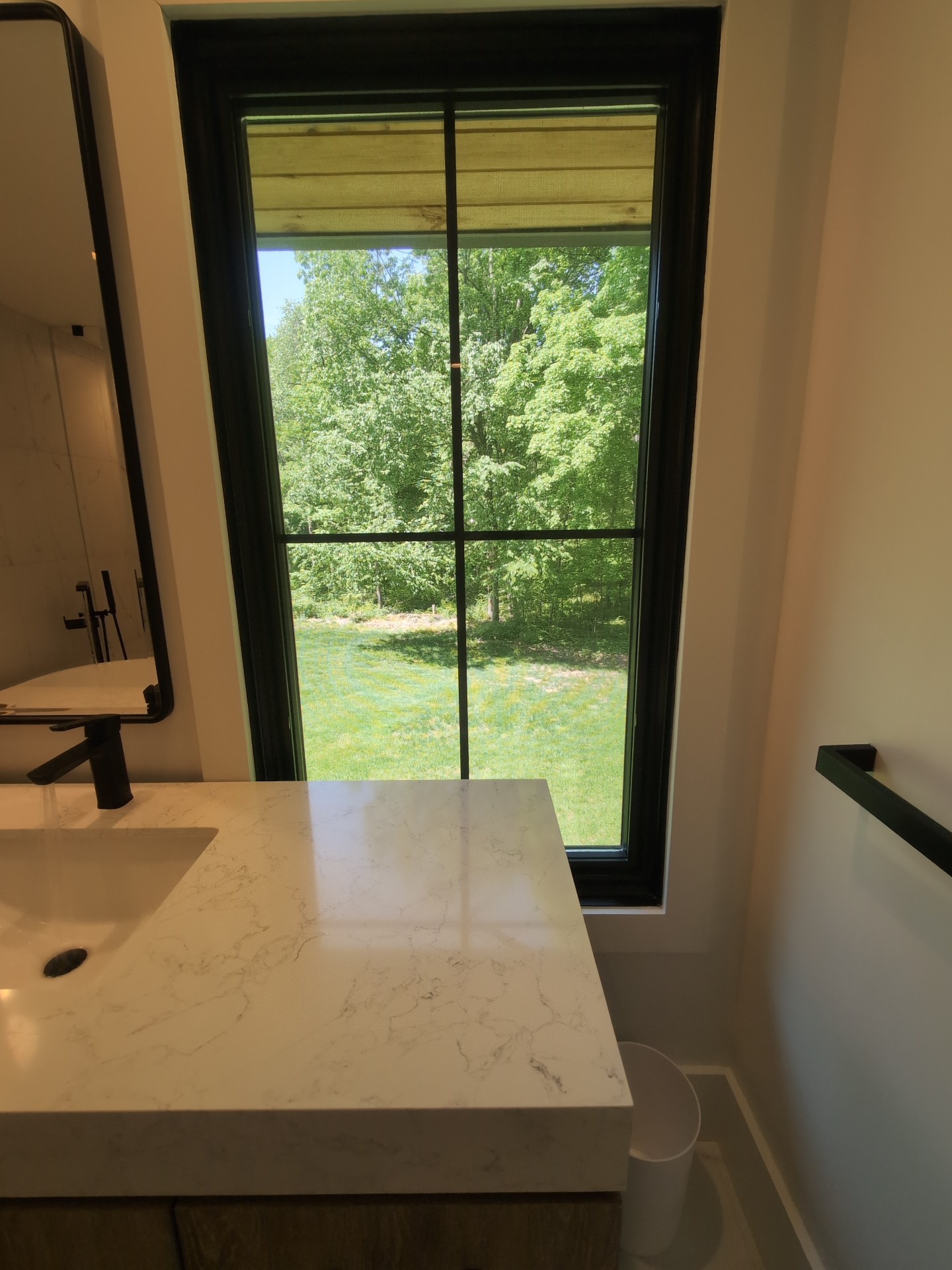 | 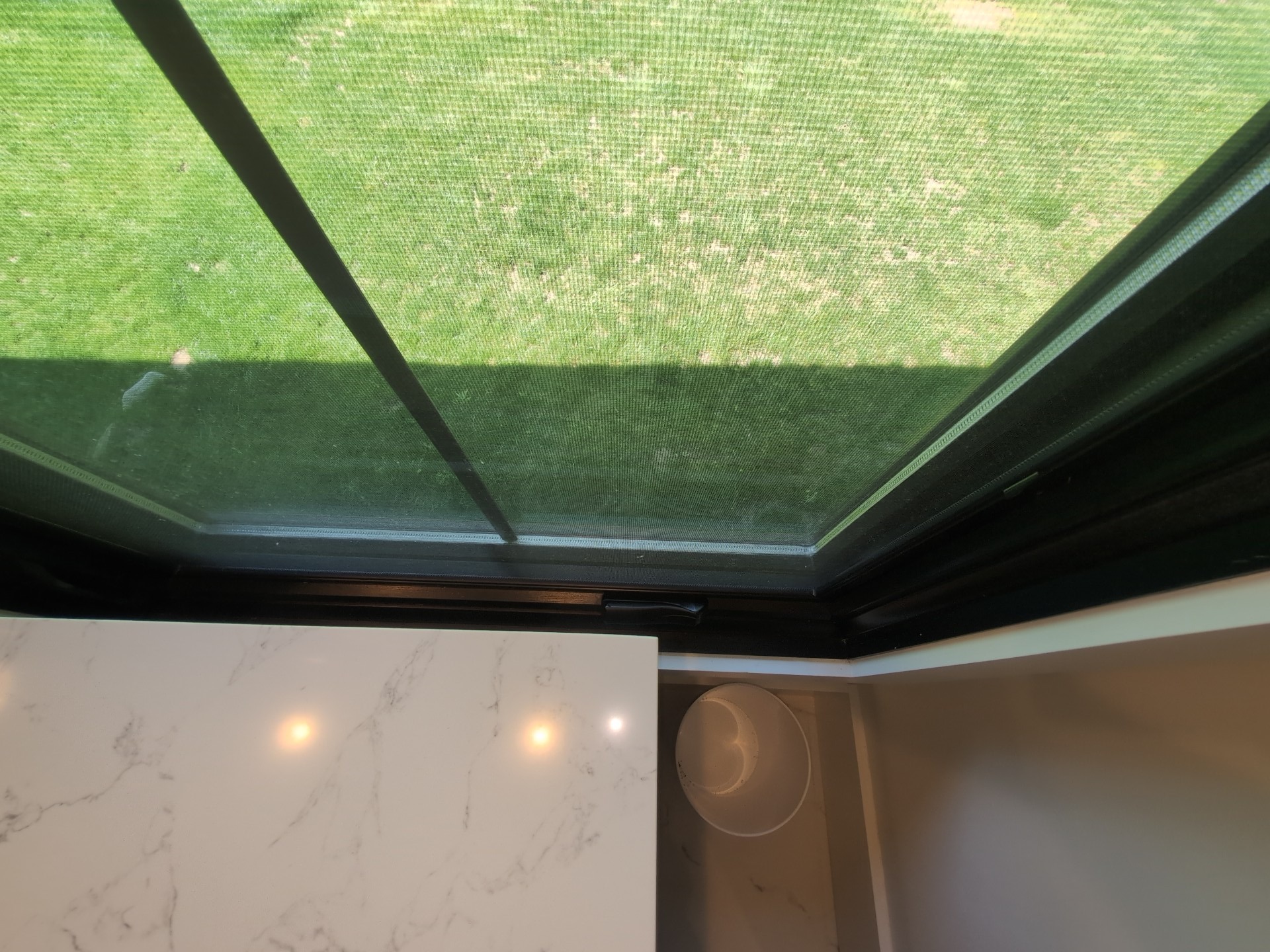 | 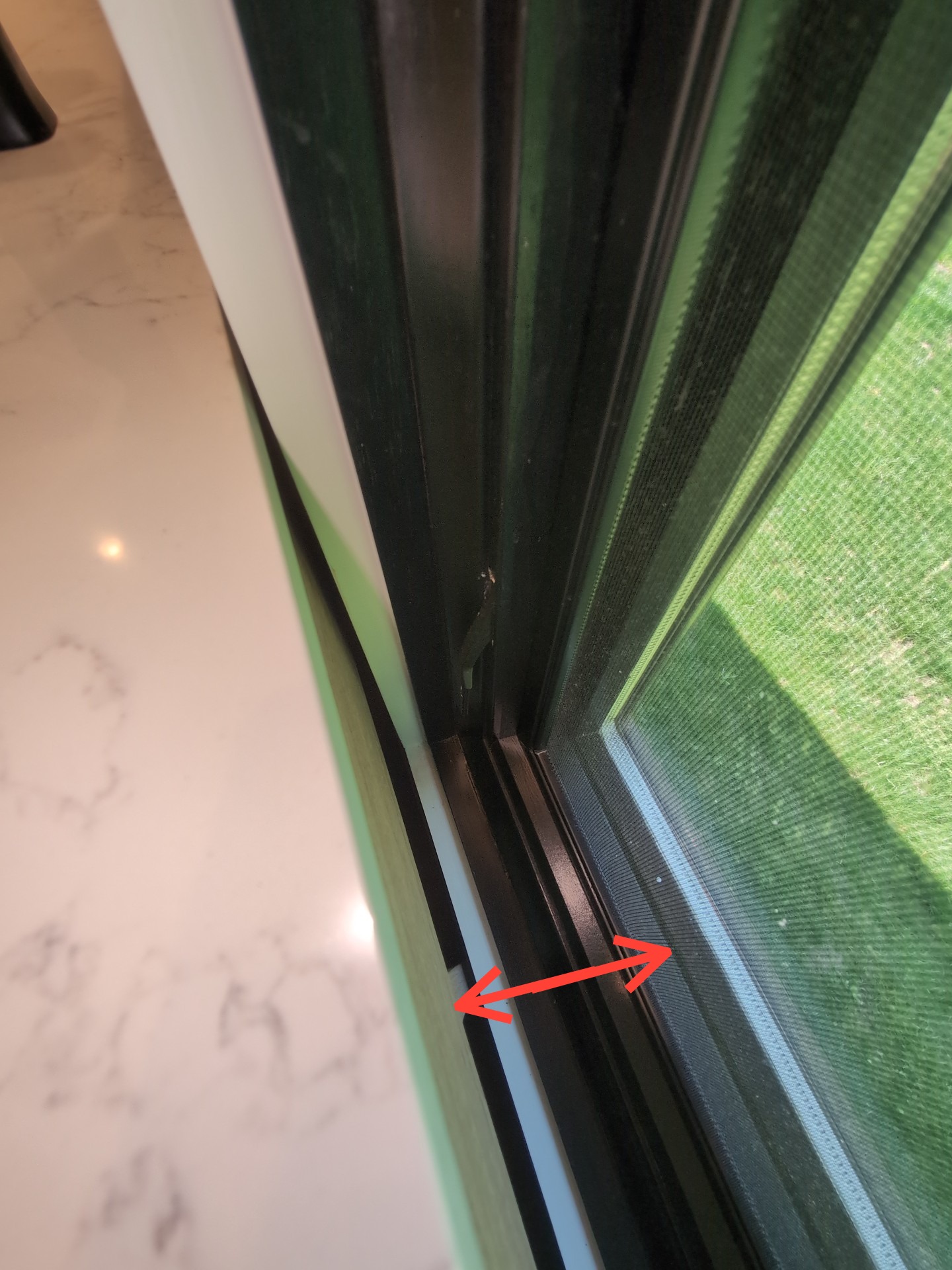 |
The locking mechanism hardware was missing at these two windows at the time of the inspection, rendering the windows nonfunctional from a proper locking and securing standpoint. Missing window hardware may affect security, weather resistance, and proper operation of the window assemblies. Recommend further evaluation and installation of appropriate replacement hardware by a licensed window contractor or qualified window repair specialist.
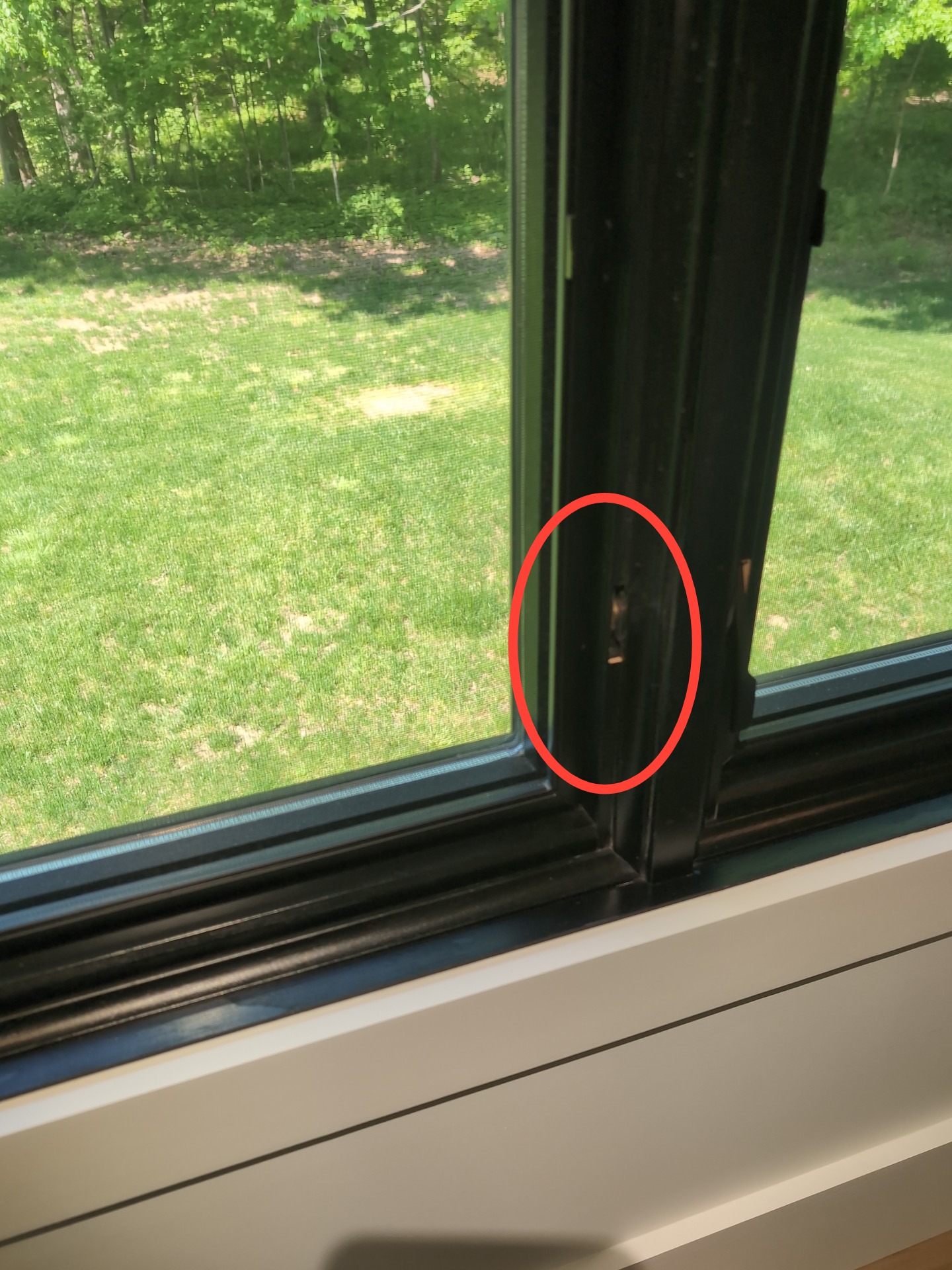
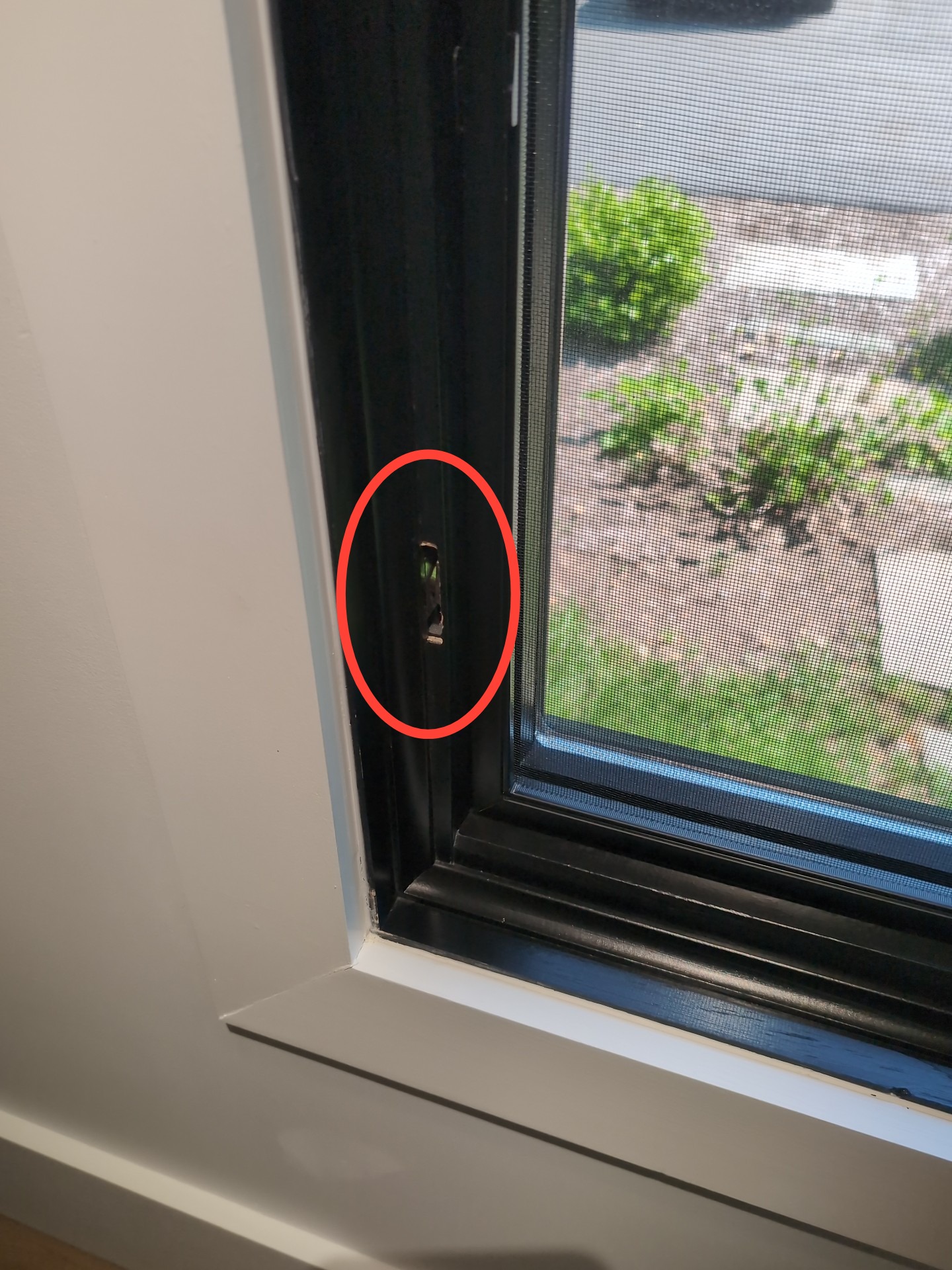
Interior: Egress
I recommend purchasing an appropriate length portable egress ladder, teaching all occupants how to utilize it, and storing it in an easily accessible primary bedroom location for use in need of an emergency. This is a suggestion only.
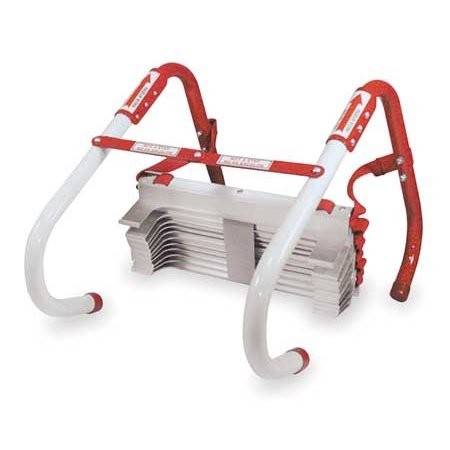
Interior Section Footer
The interior of the home was inspected and reported on with the above information. While the inspector makes every effort to find all areas of concern, some areas can go unnoticed. The inspection did not involve moving furniture and inspecting behind furniture, area rugs or areas obstructed from view. Please be aware that the inspector has your best interest in mind. Any repair items mentioned in this report should be considered before purchase. It is recommended that qualified contractors be used in your further inspection or repair issues as it relates to the comments in this inspection report.
Environmental Testing
Mold (Indoor air quality)
Suspect mold/fungal growth was visibly noted on the underside of the rough floor framing within the unfinished basement area at the time of the inspection. A tape lift/sample was obtained and is being submitted to an independent laboratory for further evaluation and confirmation of the suspected microbial growth.
If laboratory analysis confirms active mold/fungal growth, recommend development and implementation of an appropriate remediation protocol in general accordance with current Institute of Inspection Cleaning and Restoration Certification (IICRC-S520) Standard and Reference Guide for Professional Mold Remediation. Remediation should be performed by a licensed mold remediation contractor familiar with mold remediation requirements and proper containment, cleaning, and post-remediation verification procedures. Additionally, moisture sources and contributing environmental conditions should be identified and corrected to help prevent recurrence.
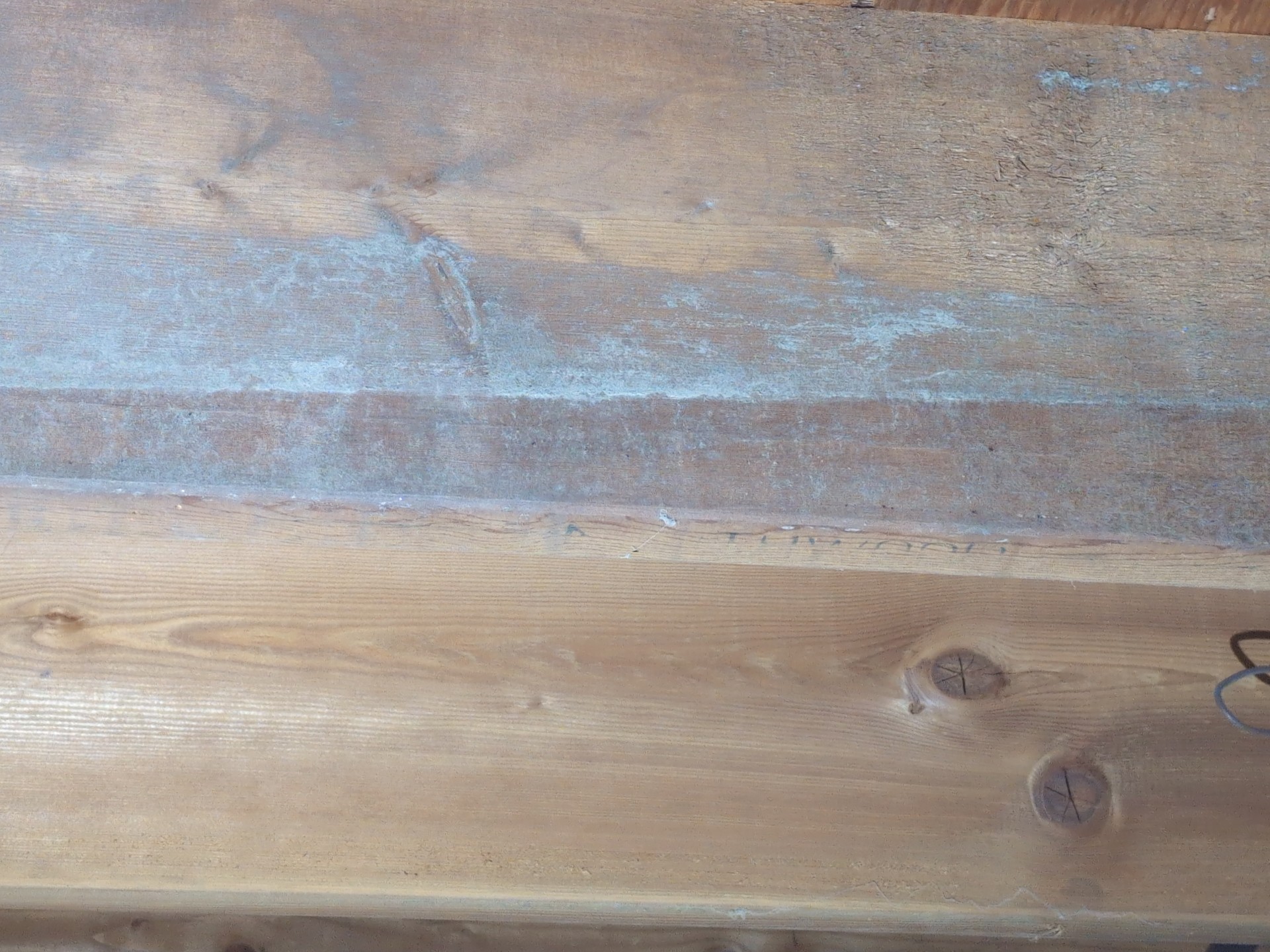 | 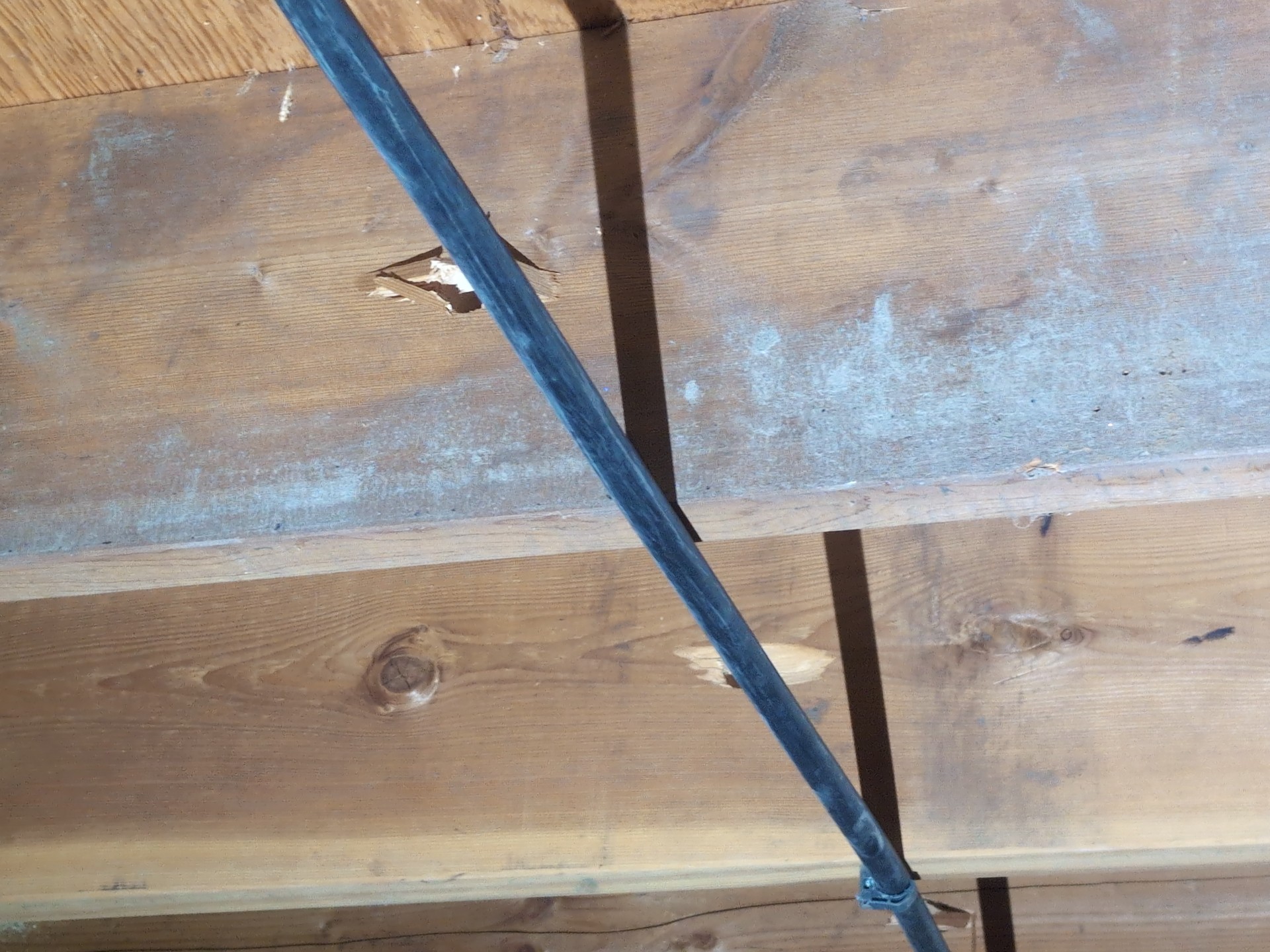 | 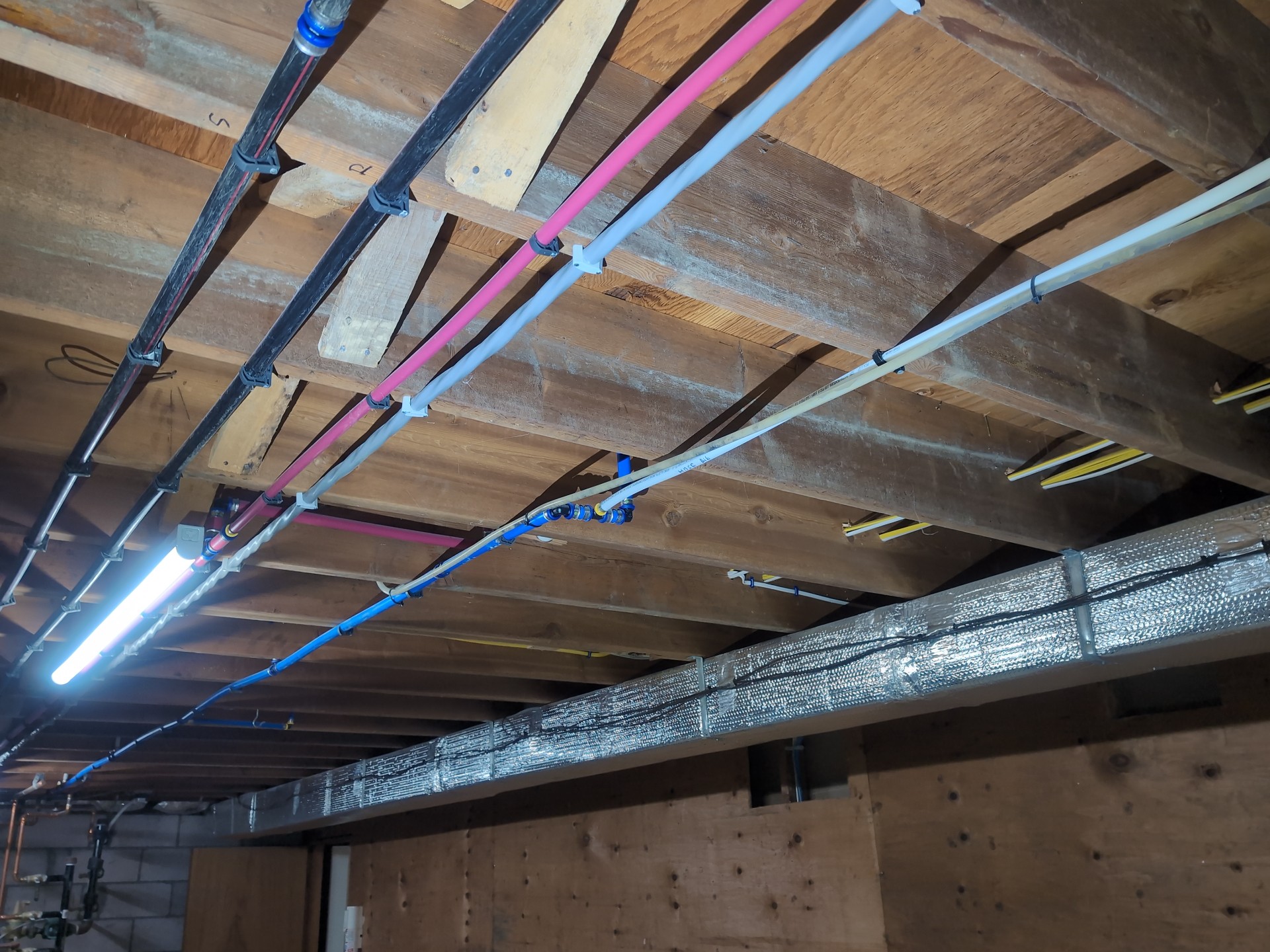 |
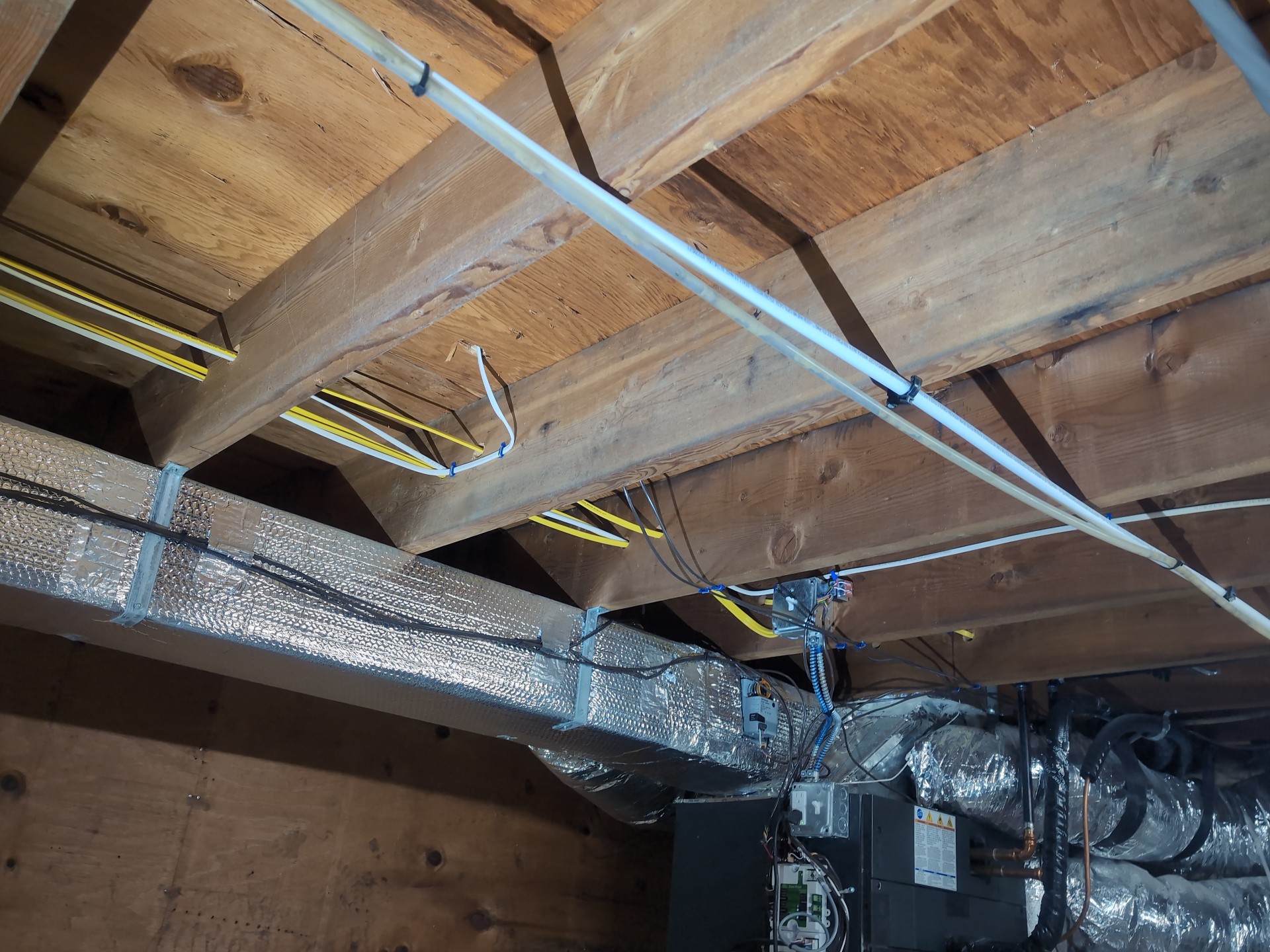 | 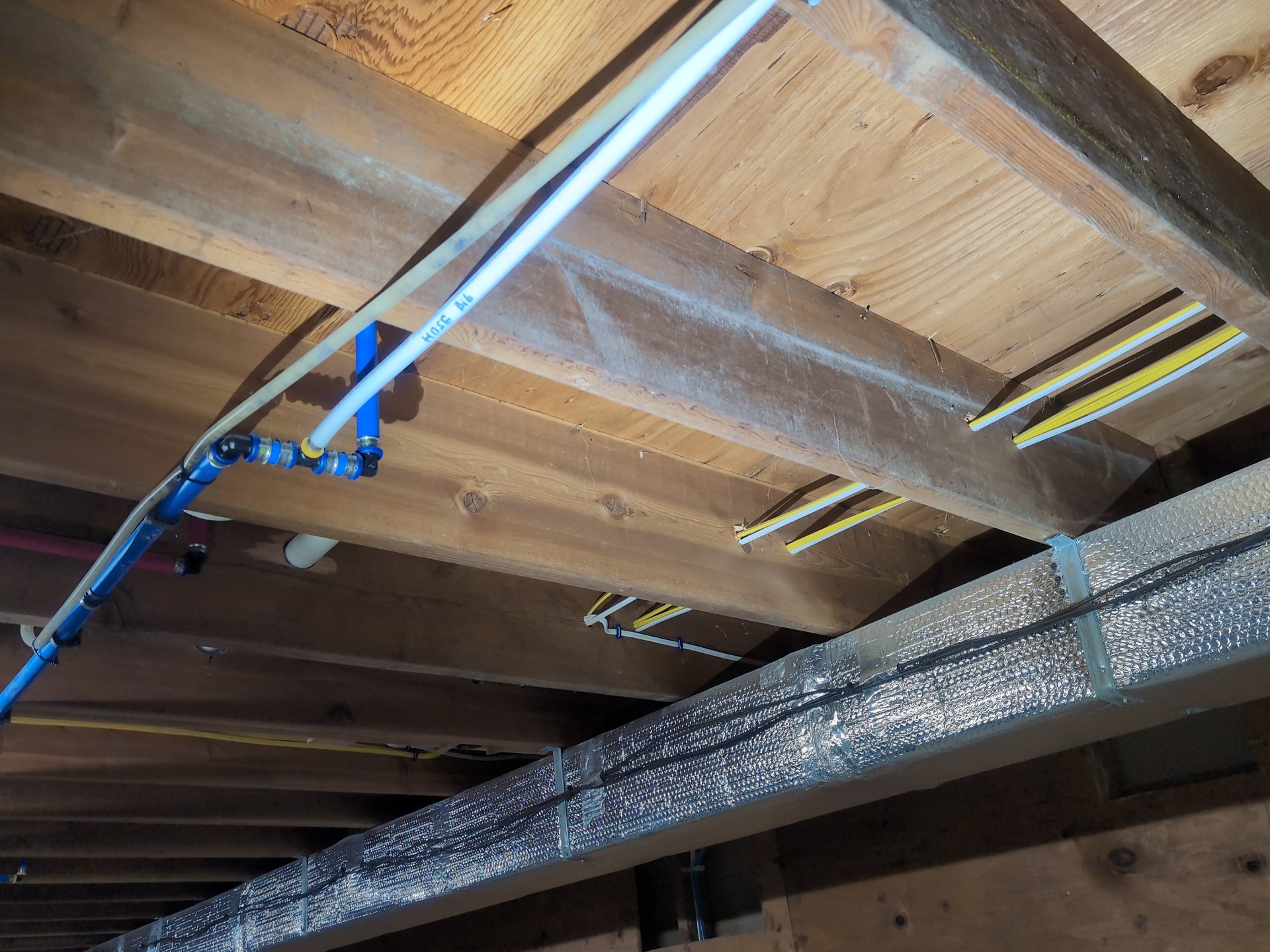 | 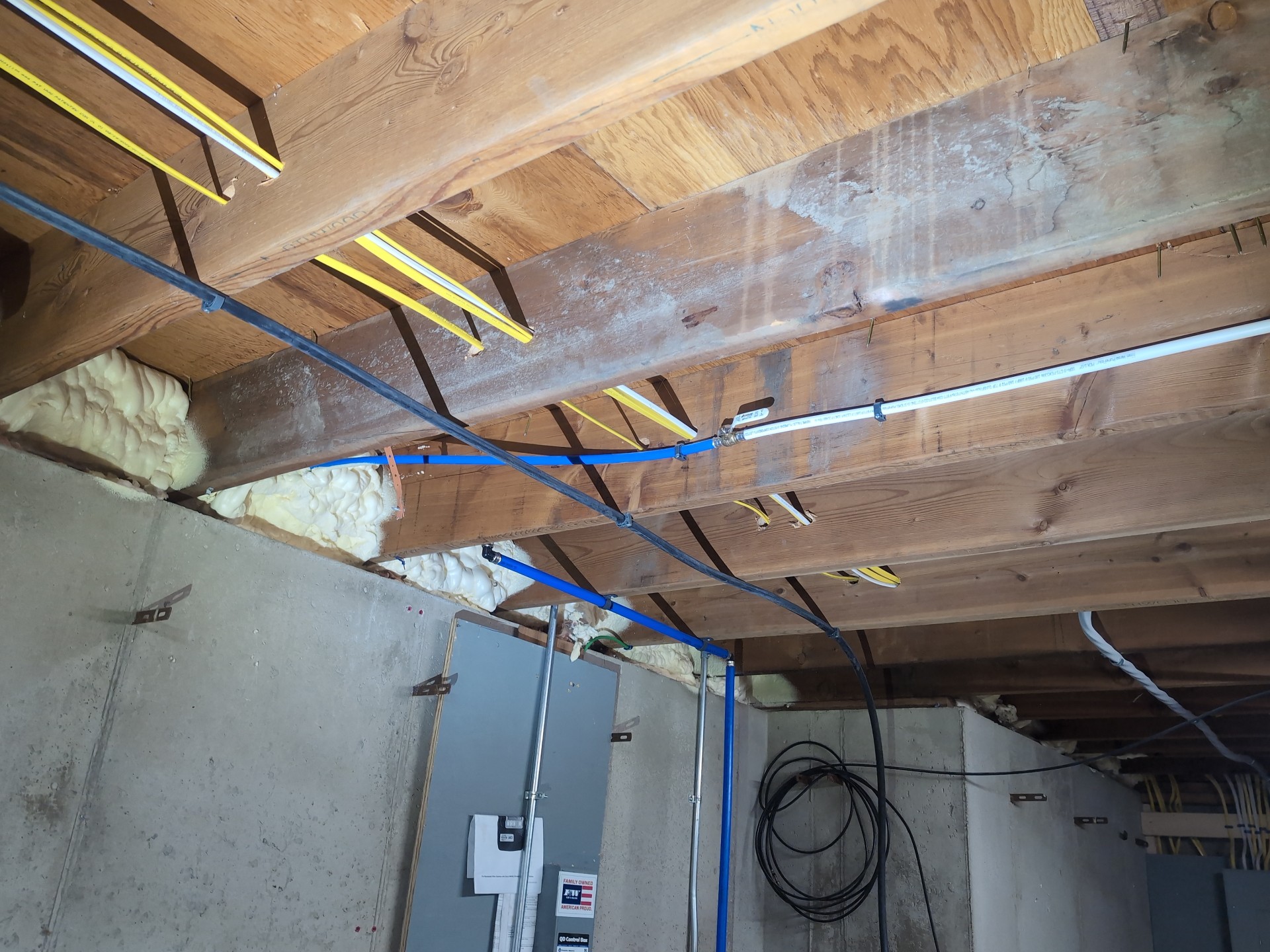 |
Suspect mold/fungal growth was visibly noted on the underside of the stairs leading to the finished basement area as well as on the drywall surfaces within this confined area at the time of the inspection. A tape lift/sample was obtained and is being submitted to an independent laboratory for further evaluation and confirmation of the suspected microbial growth.
If laboratory analysis confirms active mold/fungal growth, recommend implementation of an appropriate remediation protocol in general accordance with current Institute of Inspection Cleaning and Restoration Certification (IICRC-S520) Standard and Reference Guide for Professional Mold Remediation. Remediation should be performed by a licensed mold remediation contractor utilizing proper containment, cleaning, removal of impacted materials where necessary, and post-remediation verification procedures. Moisture sources and environmental conditions contributing to the suspected microbial growth should also be identified and corrected to help prevent future recurrence.
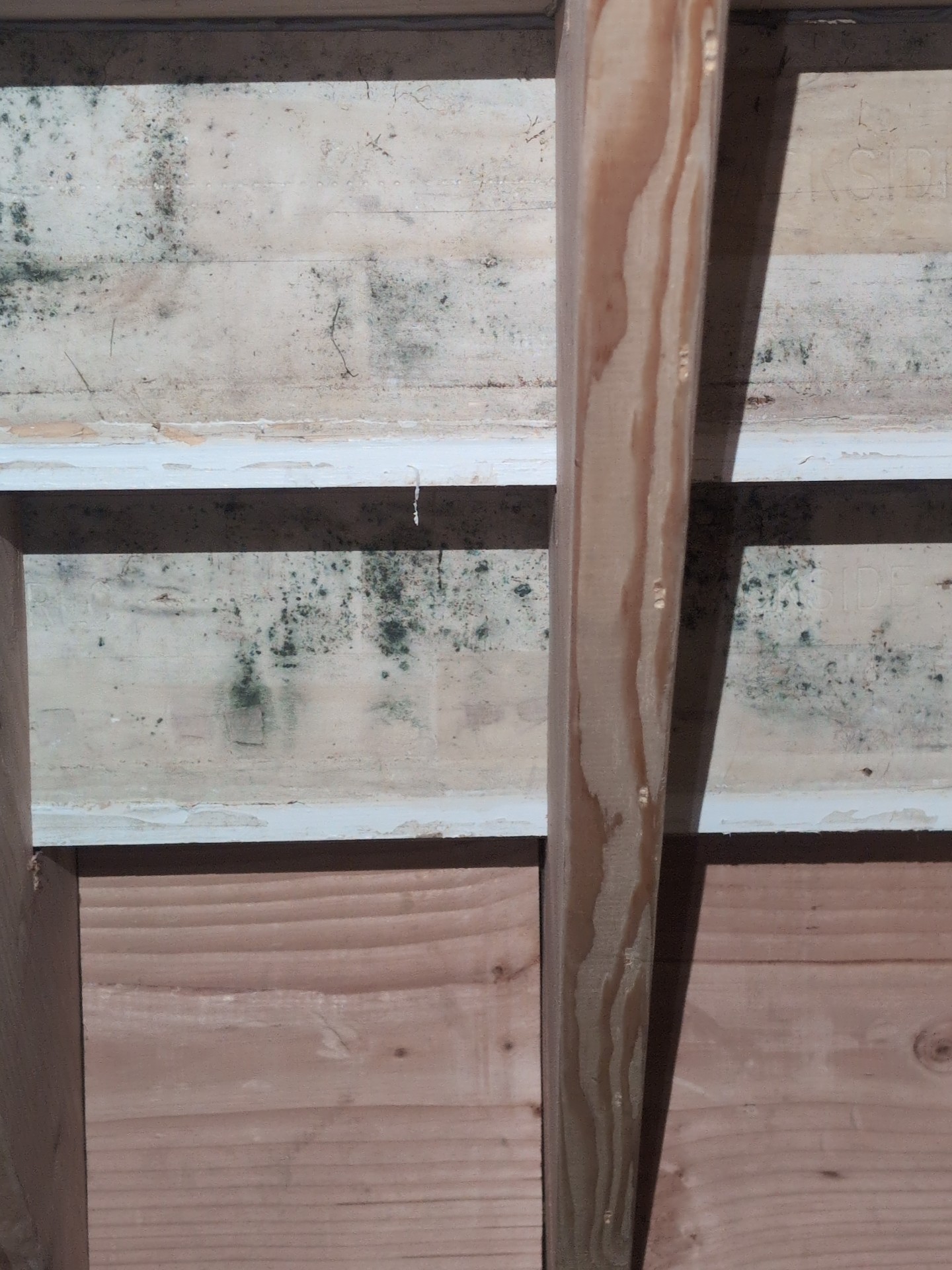 | 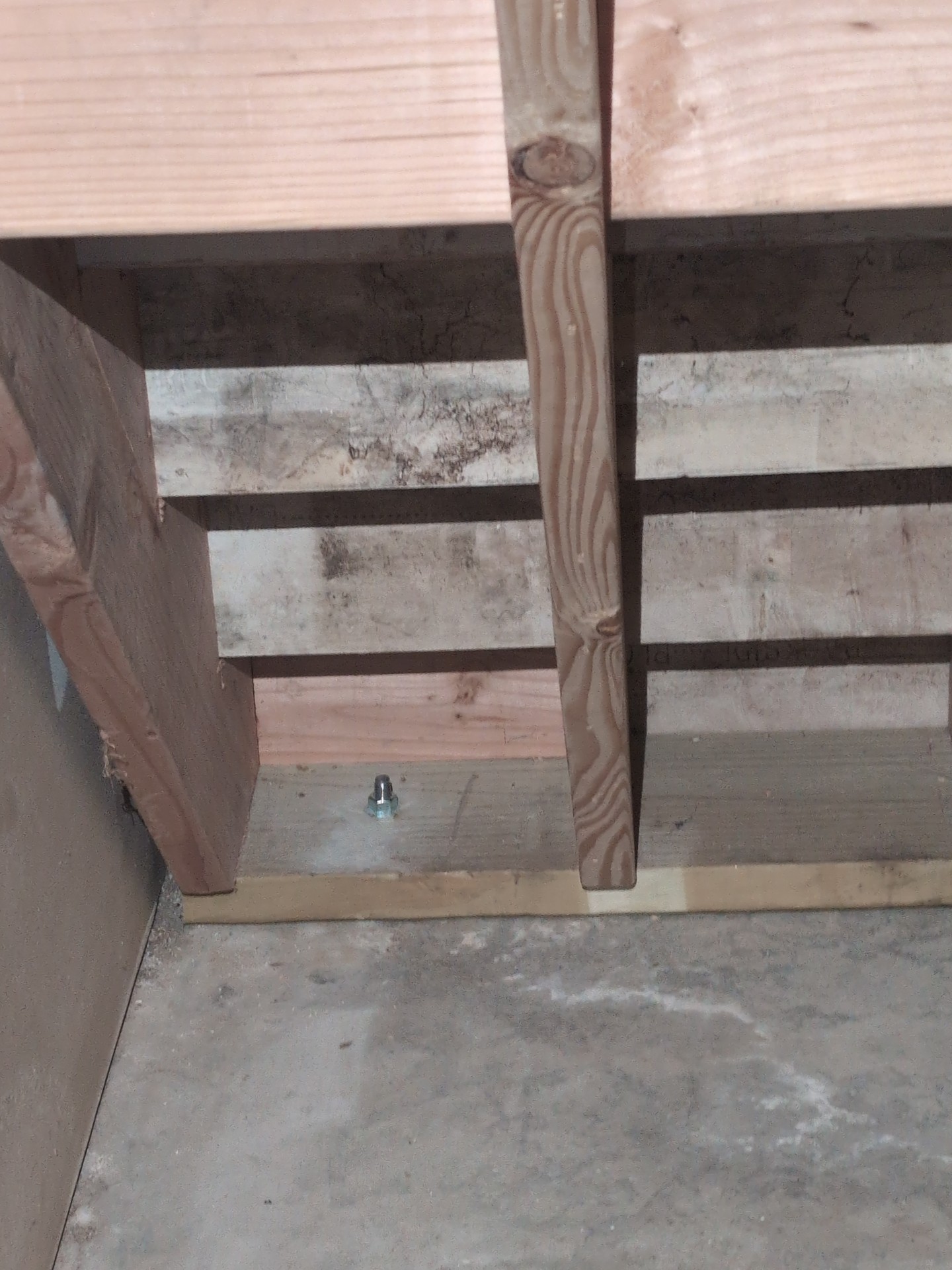 | 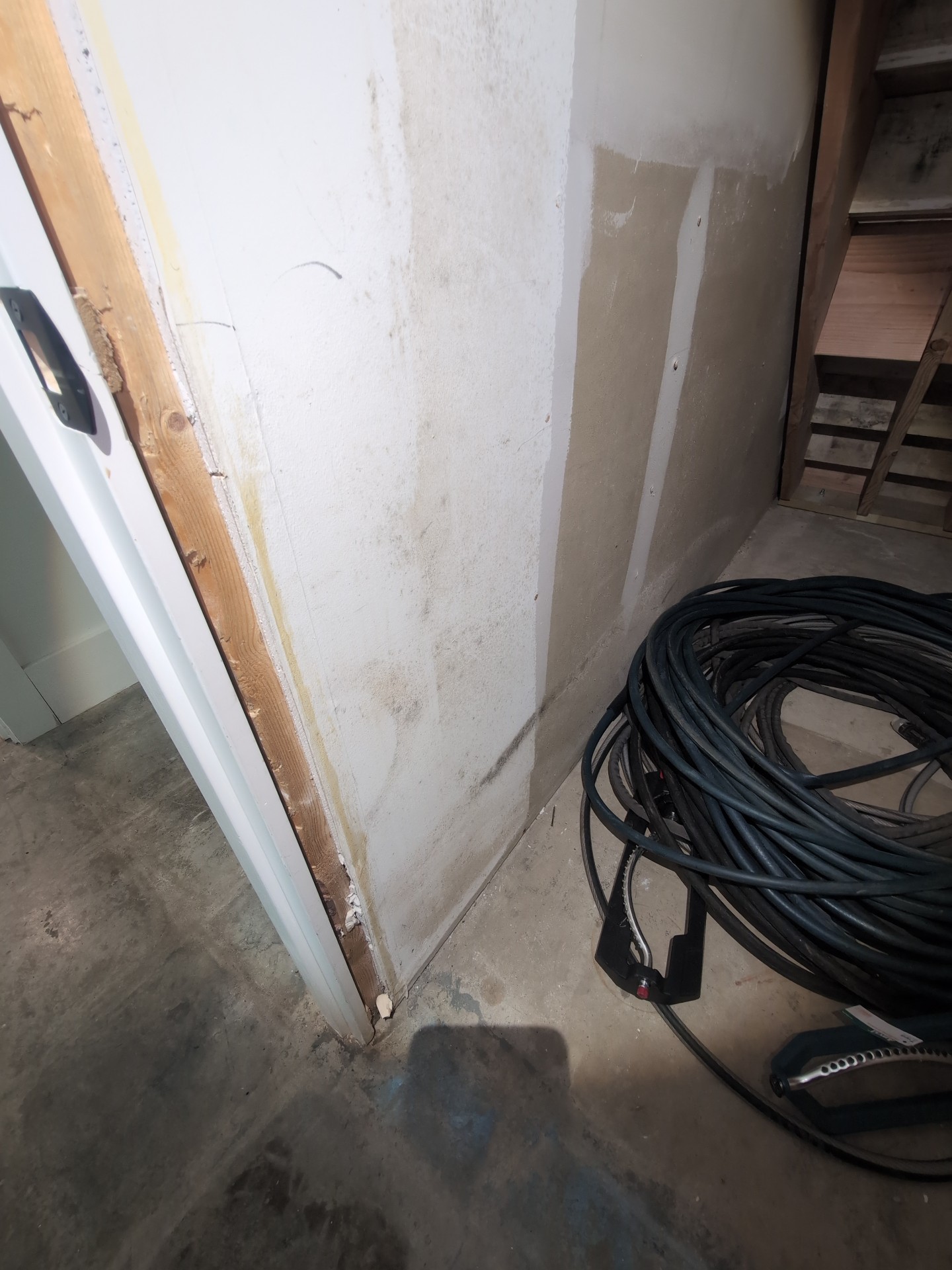 |
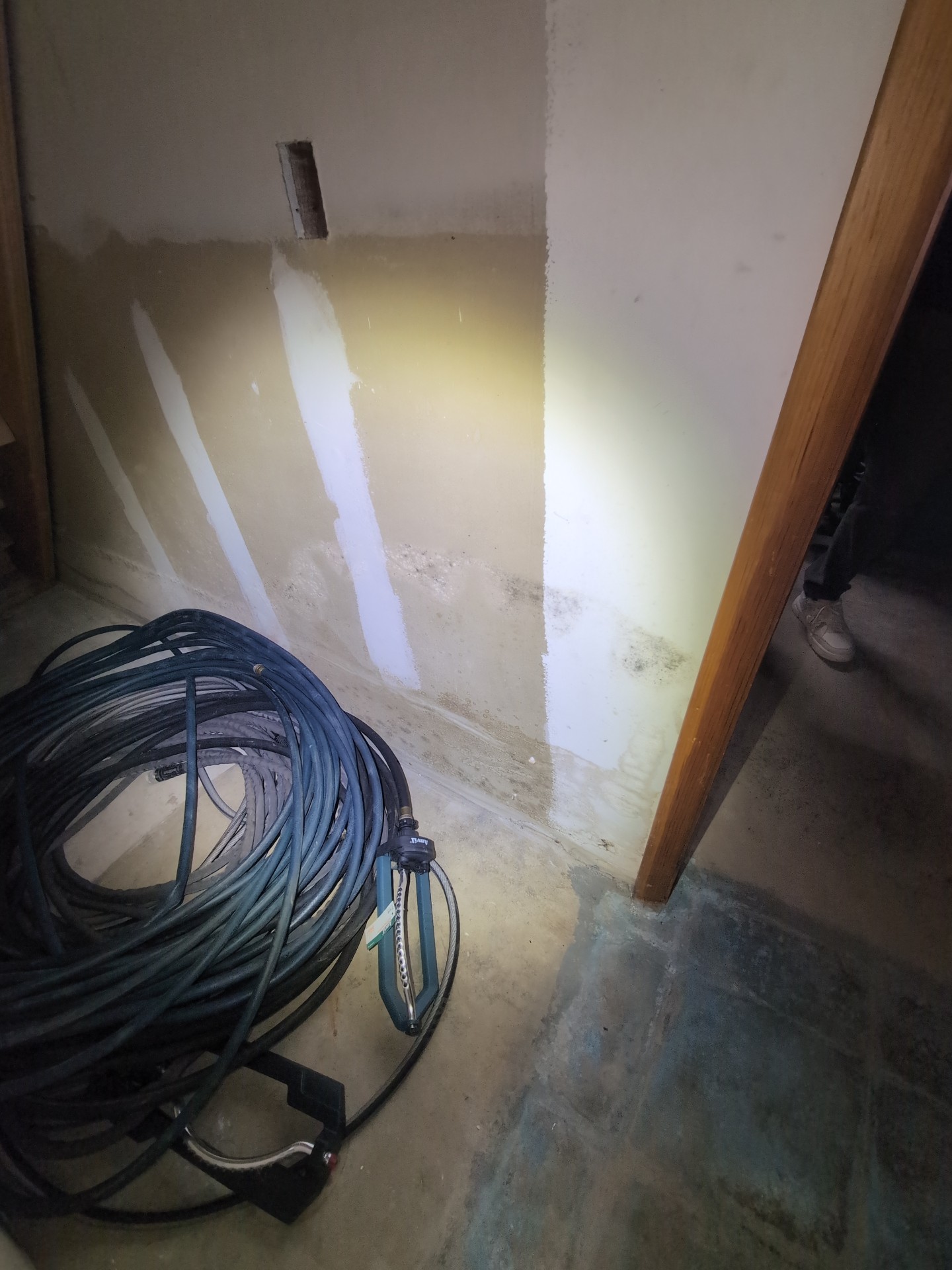 | 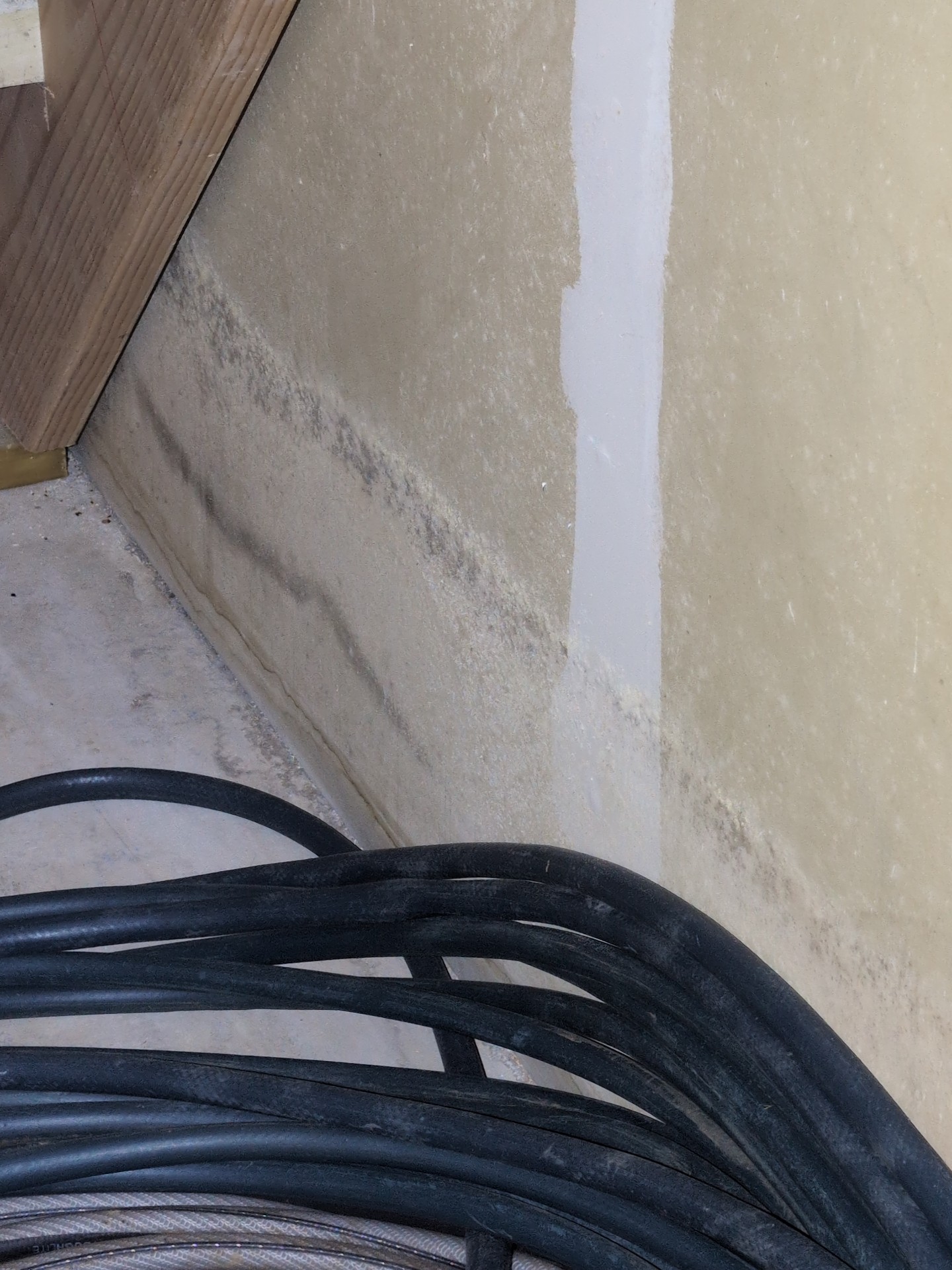 |
Radon
There was no Radon Gas reduction system installed. We are testing for Radon Gas levels in air and will report after canisters are retrieved and processed by the laboratory. A separate report will be posted once results are known. Radon gas canisters were deployed at approximately 12:00 noon.
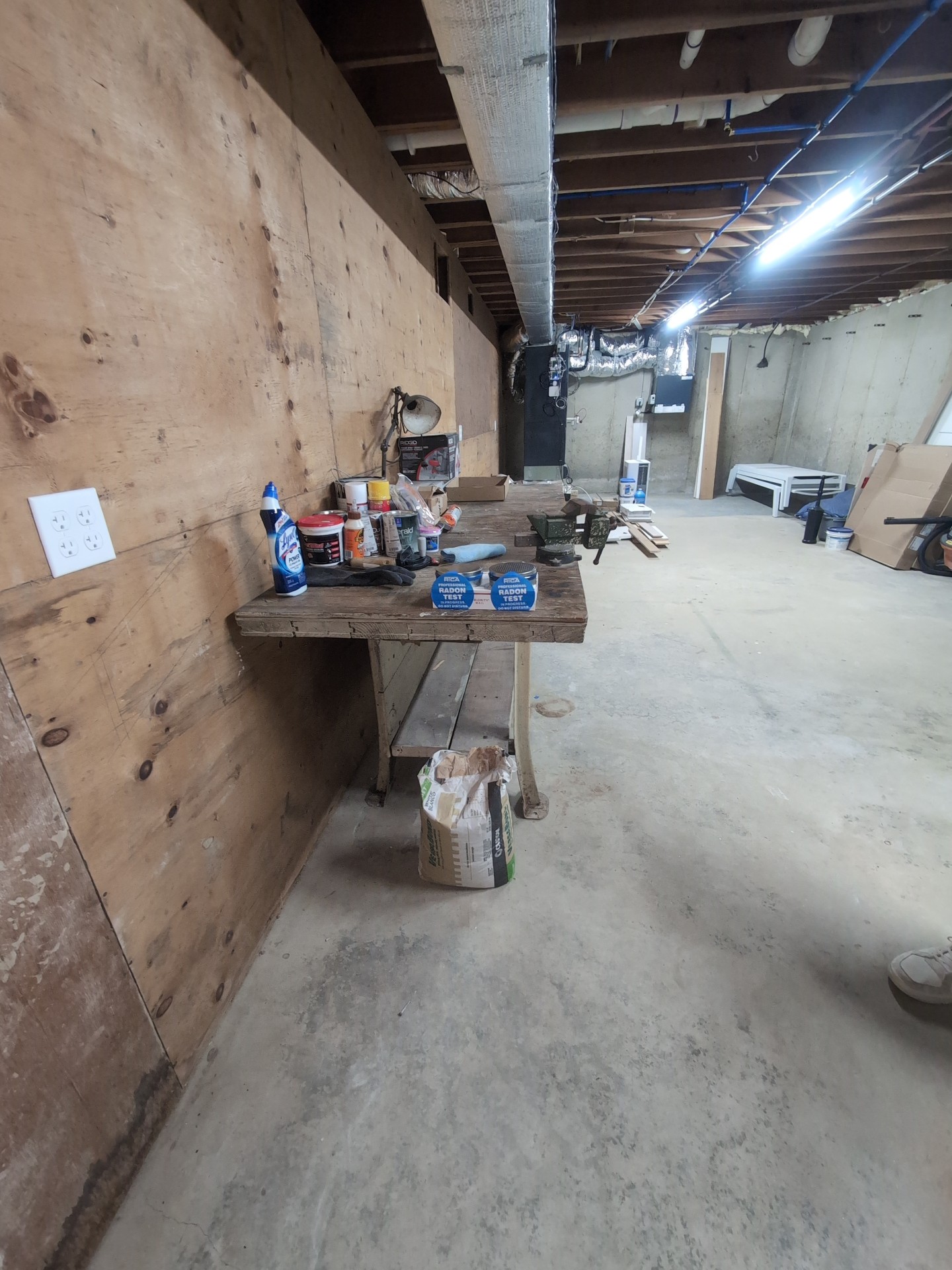 | 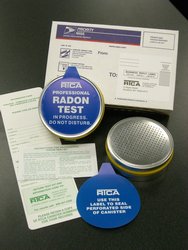 |
Built-In Kitchen Appliances
Styles and Materials
Dishwasher Brand:LG
Disposer Brand:NONE
Exhaust/Range hood:UNKNOWN BRANDHauslane
Range/Oven:FRIGIDAIREFRIGIDAIRE
Built in Microwave:NONE
Trash Compactors:NONE
Hot Water Dispenser:None
The home inspector shall observe and operate the basic functions of the following kitchen appliances: Permanently installed dishwasher, through its normal cycle; Range, cook top, and permanently installed oven; Trash compactor; Garbage disposal; Ventilation equipment or range hood; and Permanently installed microwave oven.
The home inspector is not required to observe: Clocks, timers, self-cleaning oven function, or thermostats for calibration or automatic operation; Non built-in appliances (washers & Dryers); or Refrigeration units. The home inspector is not required to operate: Appliances in use; or Any appliance that is shut down or otherwise inoperable.
All installed kitchen appliances (including but not limited to the oven, cooktop, dishwasher, exhaust hood, disposer, built in microwave, & trash compactor) were found to be powered on and responded to basic controls at the time of inspection. However, they were not tested under full operational load or through complete cycles.
Disclaimer: The inspection is limited to a visual assessment and basic function check in accordance with the states Standards of Practice. Appliances were not tested with dishes, or food, and no evaluation of internal components, performance under load, or temperature accuracy was performed.
Recommend confirming full functionality during the final walk-through, and referring to seller disclosures or service records where available. Future service or replacement may be needed at any time.
Dishwasher
Operational at the time of this inspection. PLEASE NOTE: we recommend re-testing at the time of the pre-closing walk through.
The dishwasher drain hose did not perform a high loop to create a trap under sink. I recommend repair as necessary.
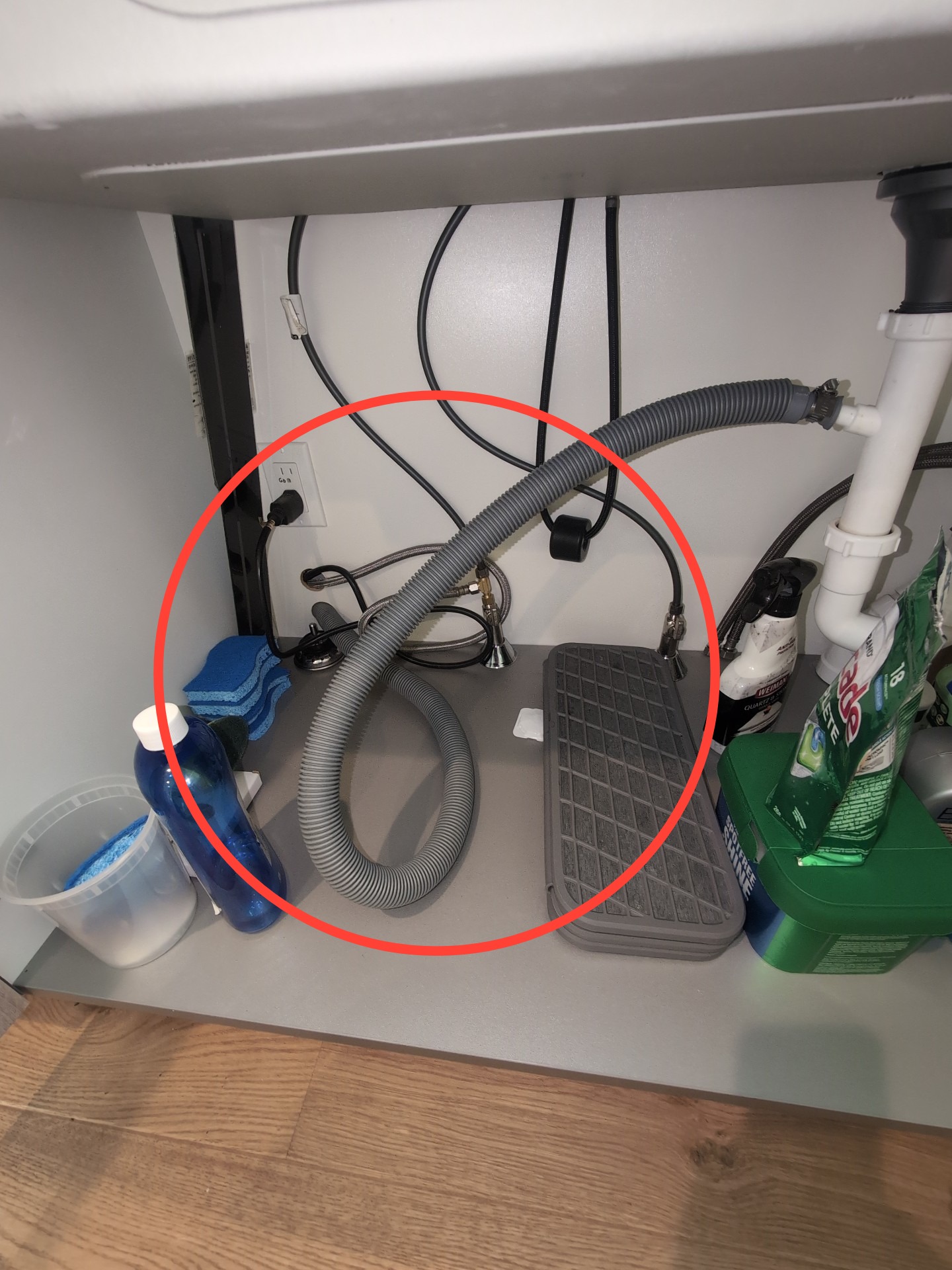 | 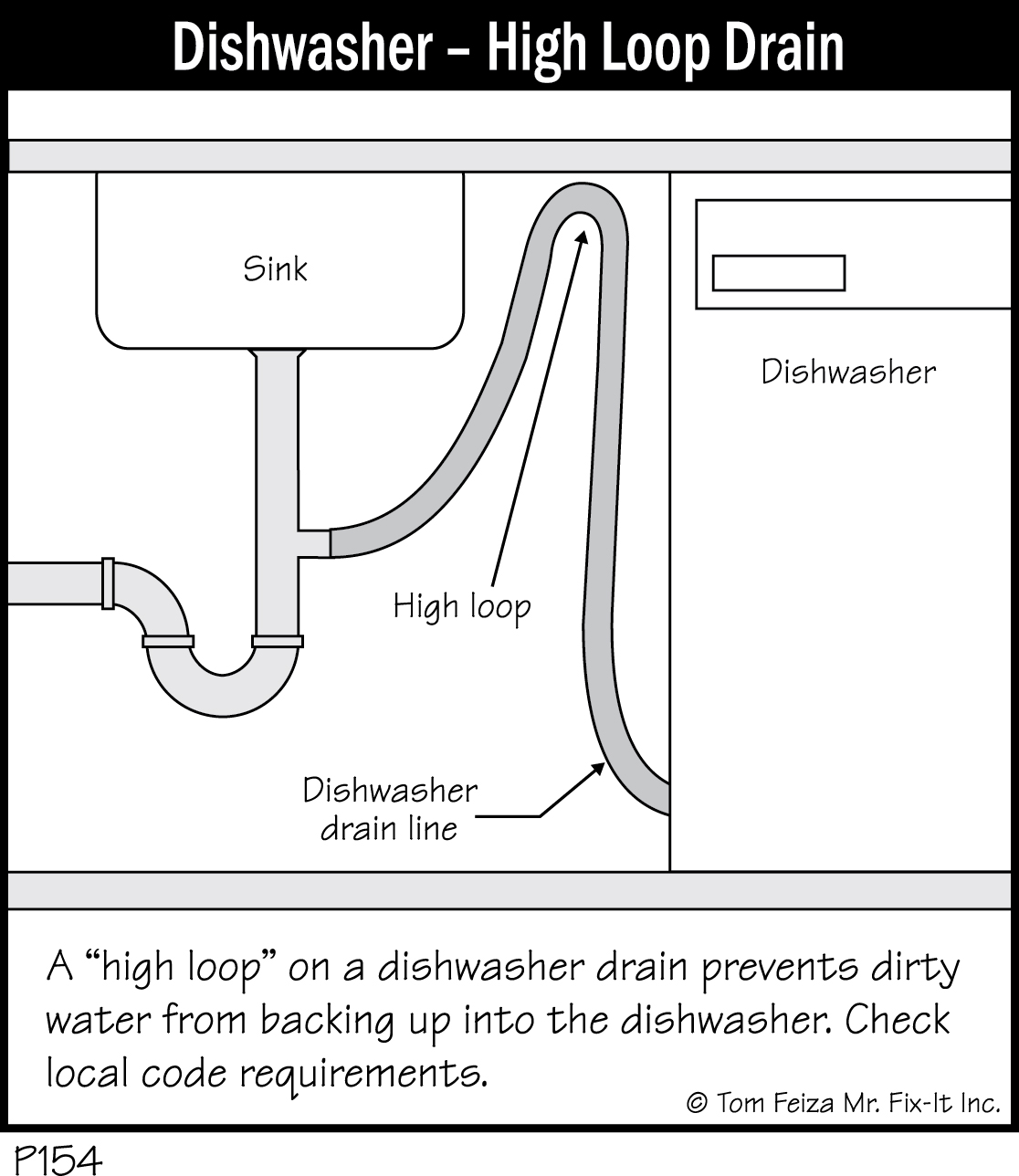 |
Ranges/Ovens/Cooktops
The induction cooktop was not tested at the time of the inspection as no induction-compatible cookware was present within this unoccupied home. Induction cooktops require magnetic/induction-ready pots or pans in order to activate and operate properly. Recommend bringing an induction-compatible pot or pan with you during the pre-closing walk-through in order to verify proper operation of all cooking elements prior to closing.
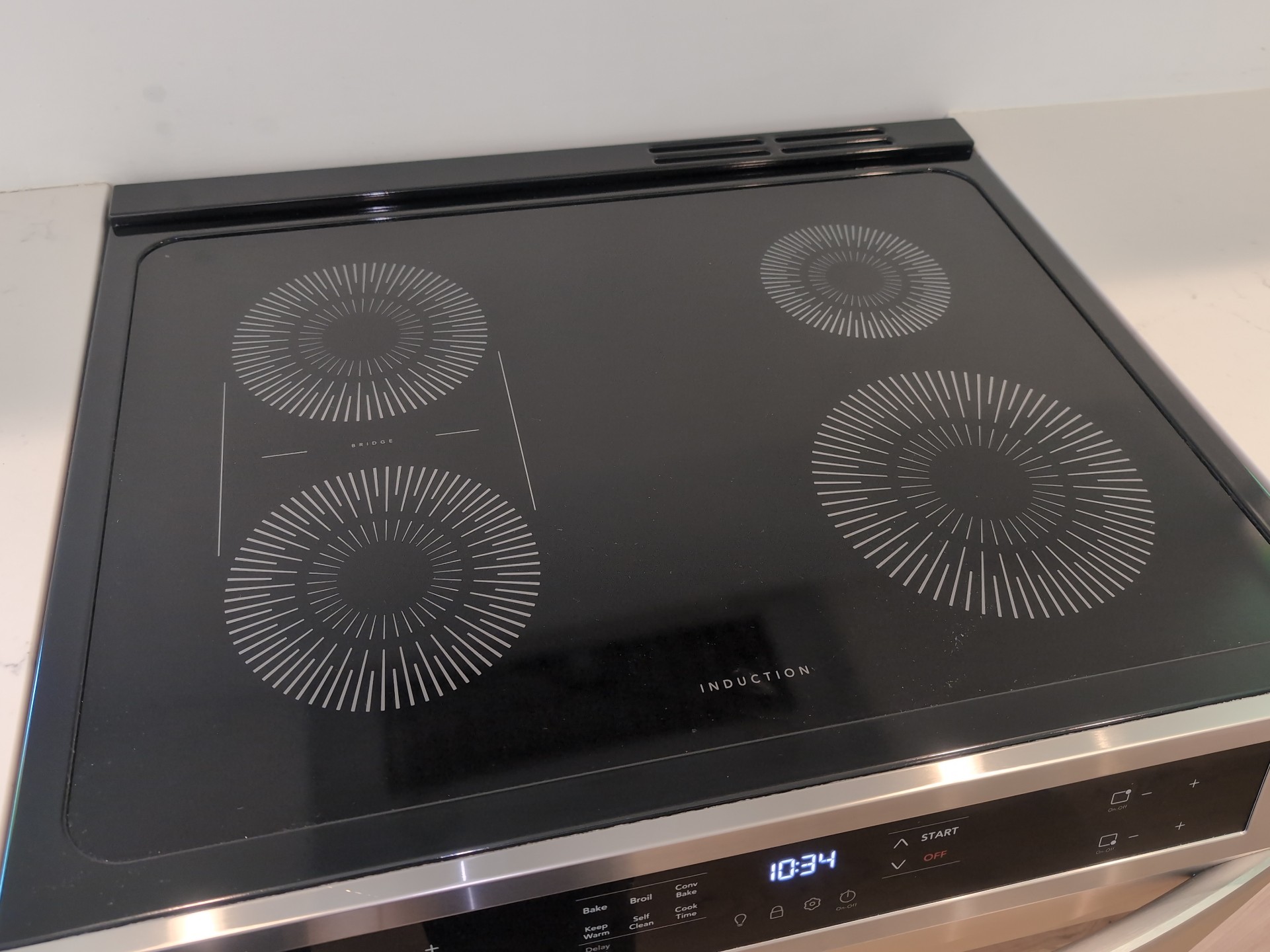
The oven was operational at the time of this inspection. PLEASE NOTE: we recommend re-testing at the time of the pre-closing walk through.
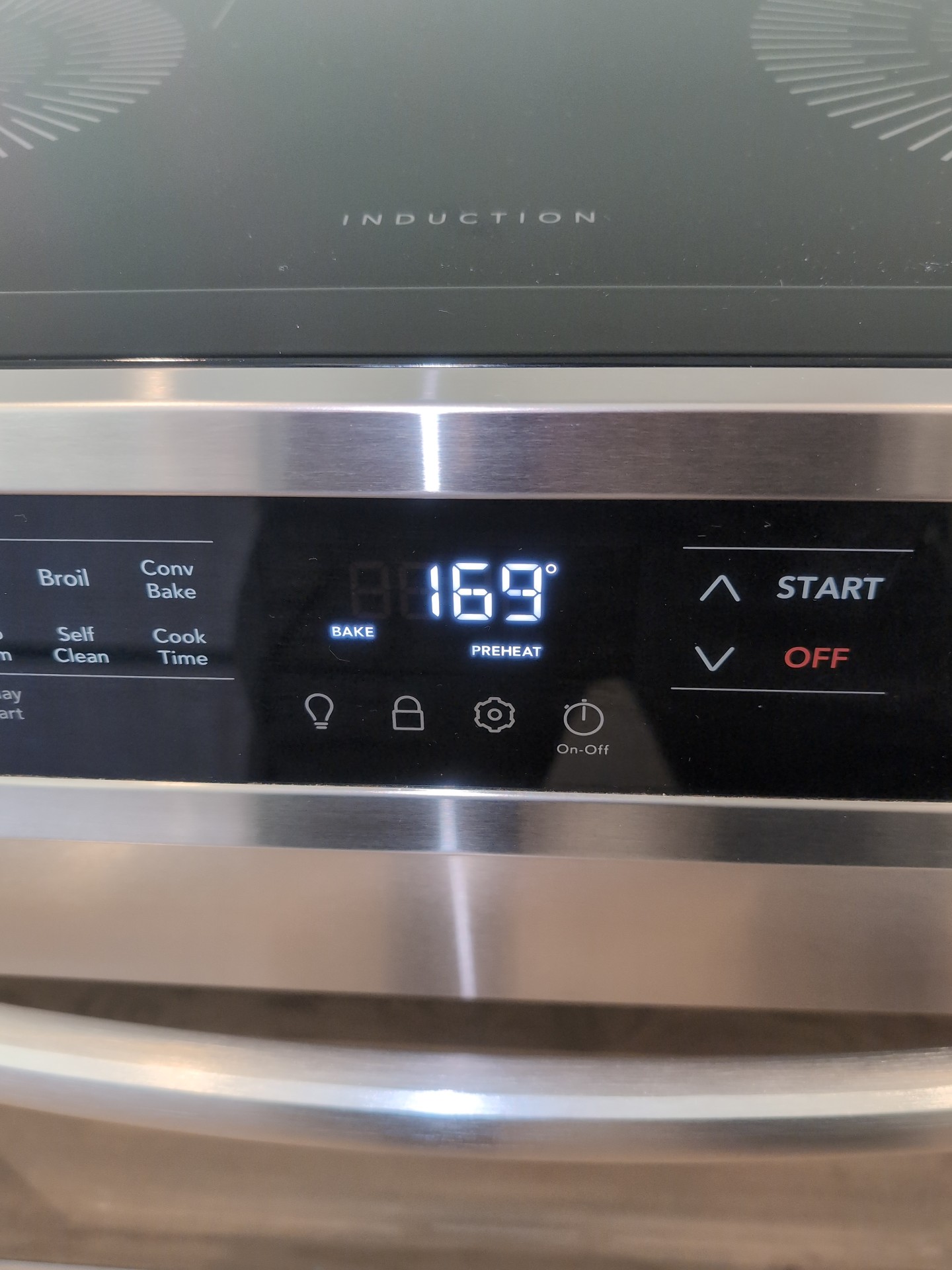 | 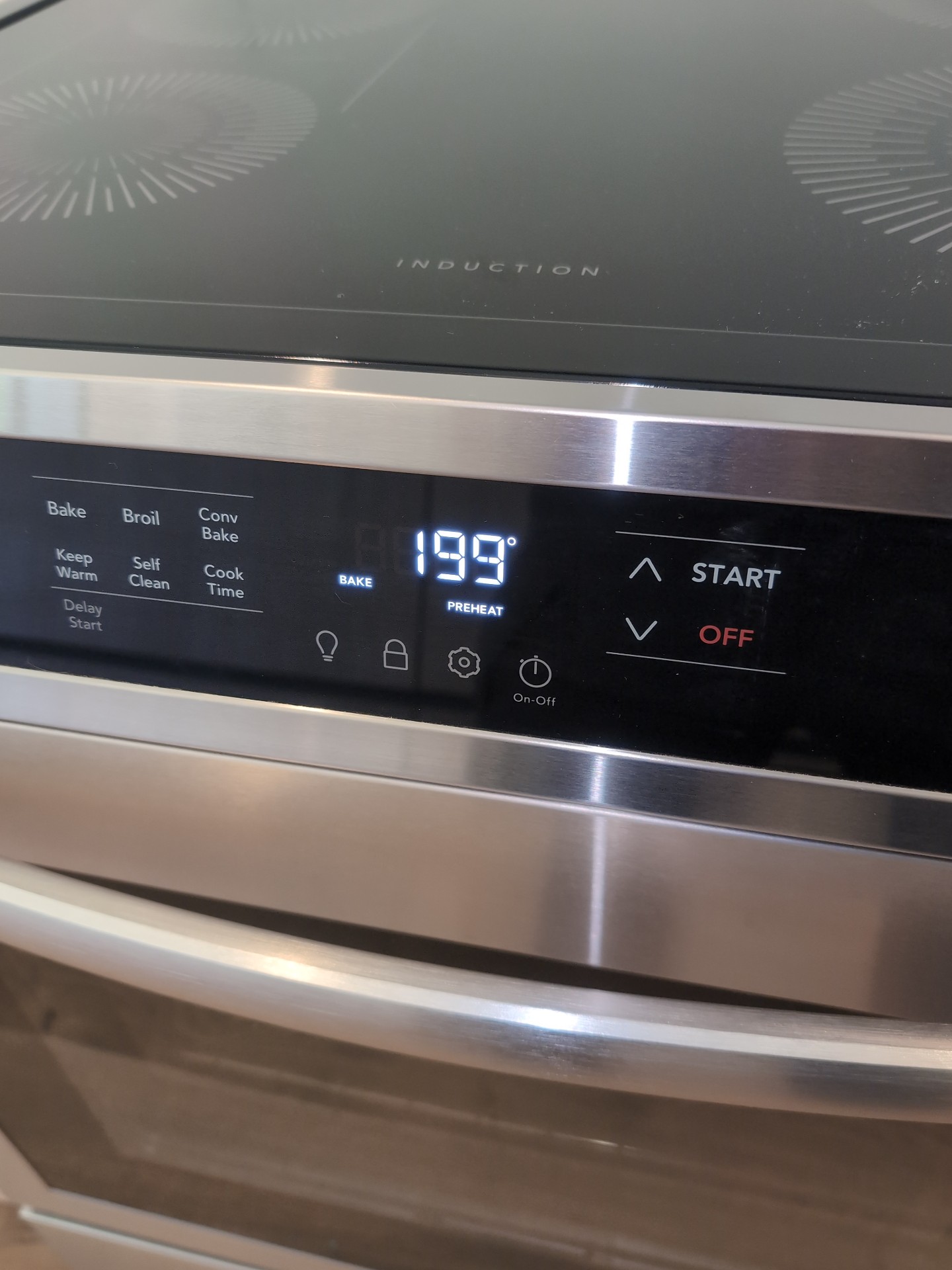 |
Range Hood (s)
The kitchen exhaust vent hood was operable when tested; however, the control buttons did not remain engaged in the selected position and required continuous manual pressure in order to operate the unit. This condition suggests defective or worn control switch components. Recommend further evaluation and repair by a licensed appliance repair technician or qualified appliance specialist.
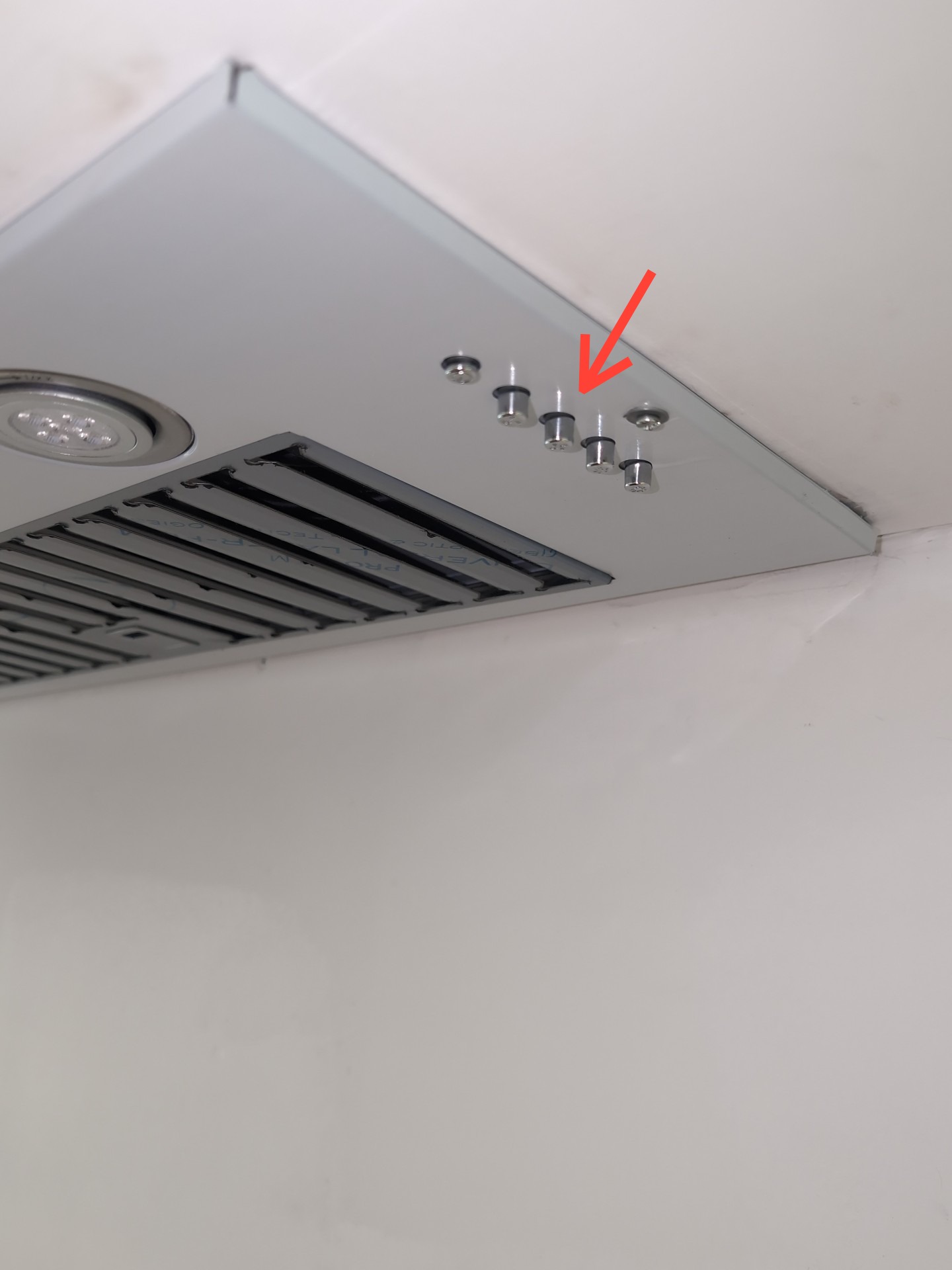
Washer / Dryer
Both the washing machine and dryer were run through short cycles and were found operable on the day of the inspection. I highly recommend re-testing at the time of the pre-closing walk through for proper operation
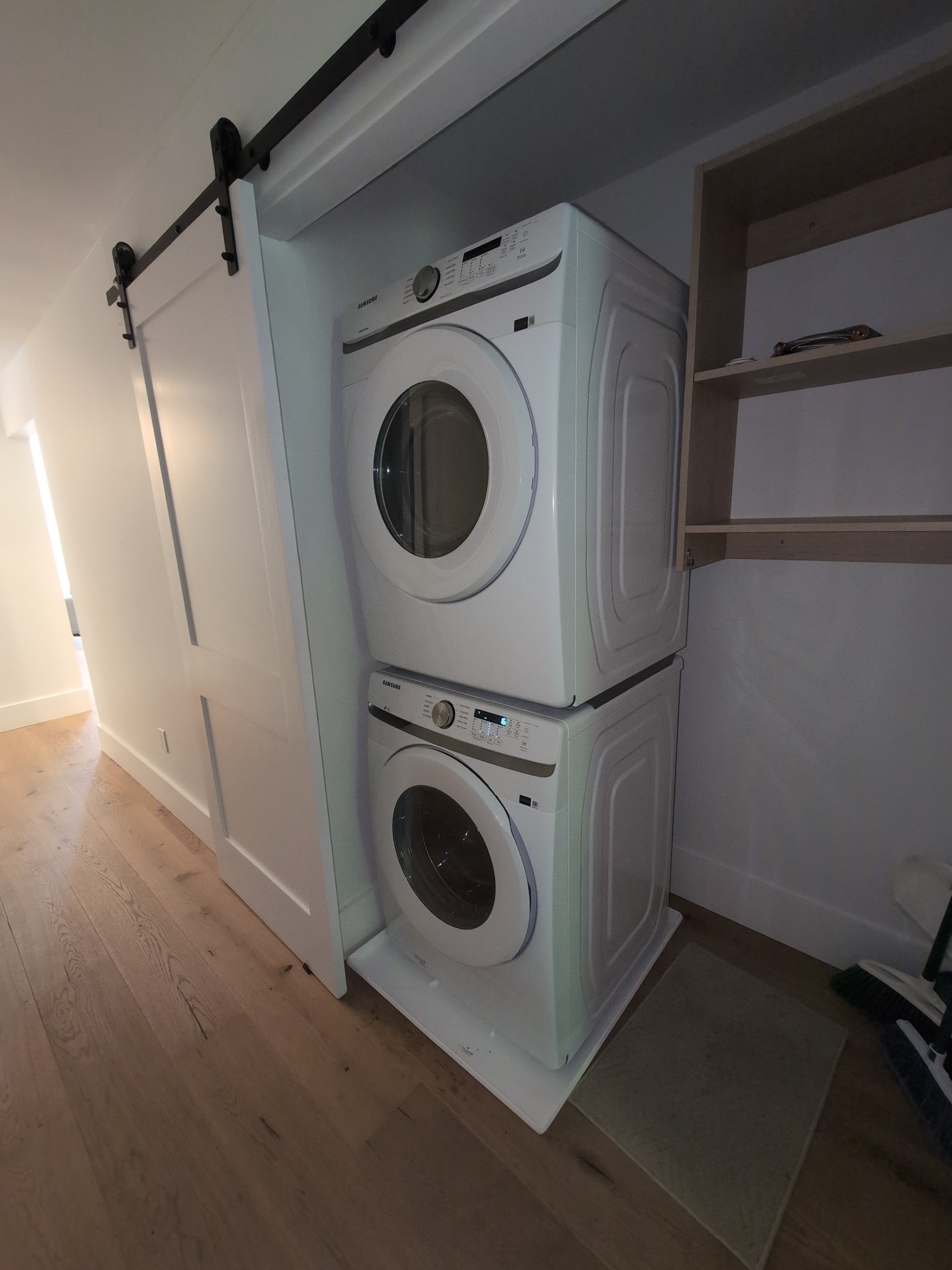
I recommend replacement or vacuuming out of the dryer vent piping annually as lint collects and becomes a fire hazard. I recommend a duct cleaning specialist.
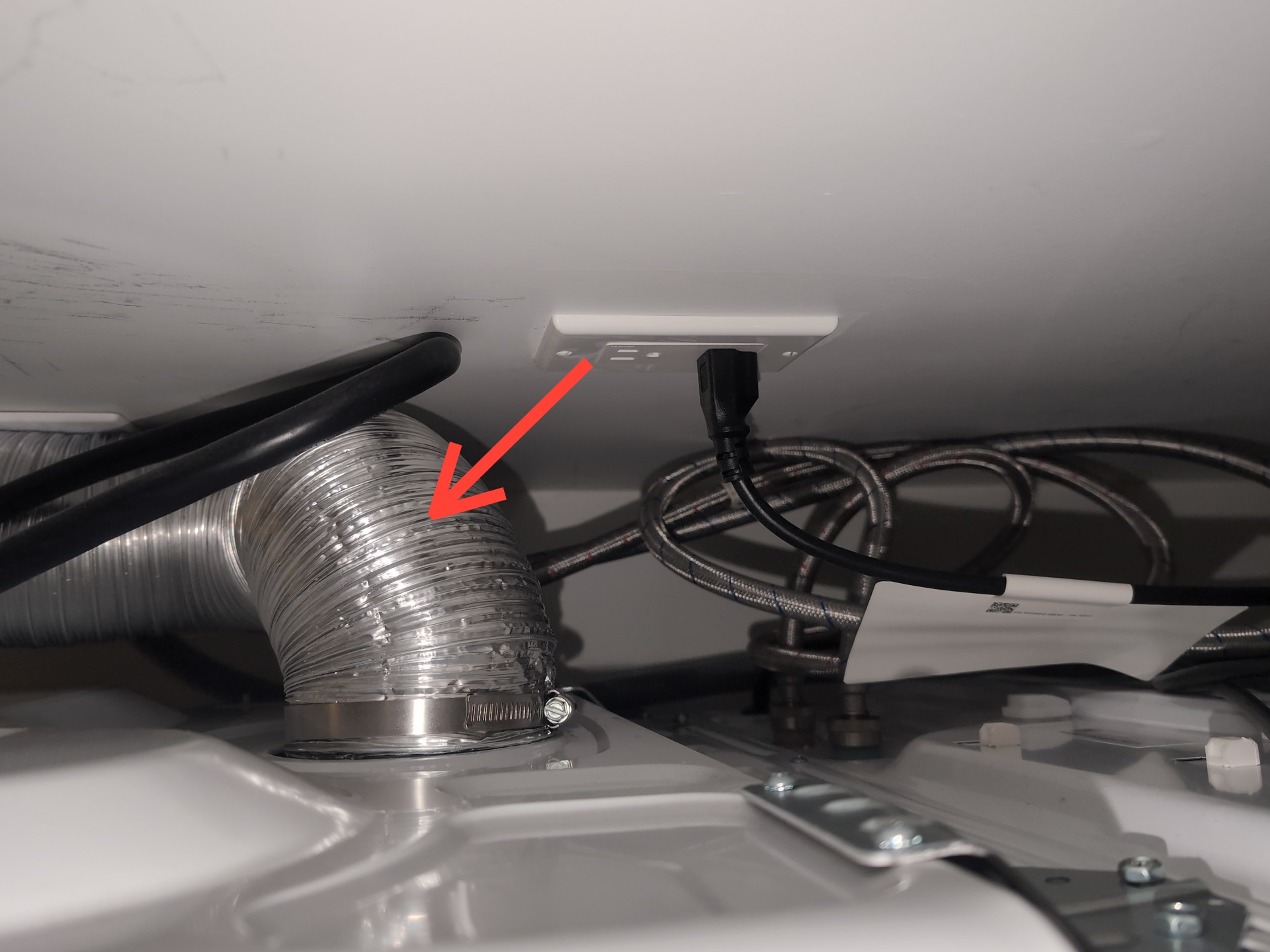
Built-In Appliance Footer
The built-in appliances of the home were inspected and reported on with the above information. While the inspector makes every effort to find all areas of concern, some areas can go unnoticed. Please be aware that the inspector has your best interest in mind. Any repair items mentioned in this report should be considered before purchase. It is recommended that qualified contractors be used in your further inspection or repair issues as it relates to the comments in this inspection report.
Water Systems & Wells
Well Pump and Equipment
The wellhead is located at the front yard just beyond the detached garage. Typically, we like to see the well casing minimum 12-18 inches from ground level however, the well casing did have a sealed vermin proof Installed.
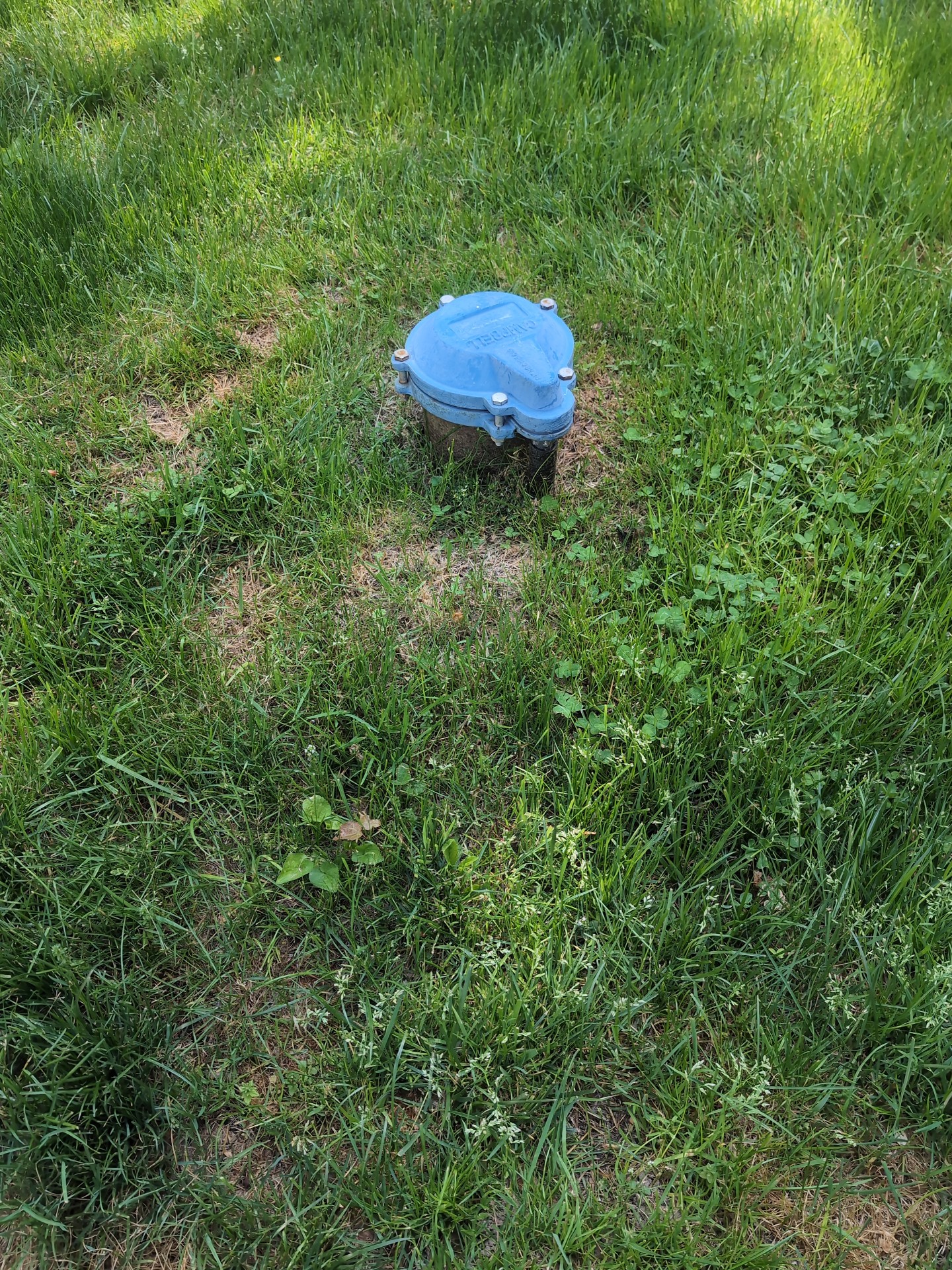
An Flexcon pre-pressurized well water tank was installed and is designed to store and regulate water delivered from a well pump, ensuring steady water pressure and reducing pump cycling. It consists of a steel tank that contains:
- An internal bladder or diaphragm that separates air from water.
- Compressed air on one side of the bladder.
- Incoming well water on the other side.
Basic Operation:
- Pump Activation: When water is used in the home, pressure in the tank drops.
- Pump Turns On: Once the pressure reaches the pump’s cut-in level (e.g., 30 or 40 psi), the pump turns on and sends water into the tank.
- Bladder Expands: As water fills the tank, it compresses the air on the other side of the bladder, increasing pressure.
- Pump Turns Off: When pressure reaches the cut-out level (e.g., 50 or 60 psi), the pump shuts off. The compressed air then pushes water into the plumbing system as needed.
Maintenance Tip: The air charge in the tank (typically 2 psi below the pump’s cut-in pressure) should be checked periodically with a tire gauge and adjusted with an air pump when the tank is empty.
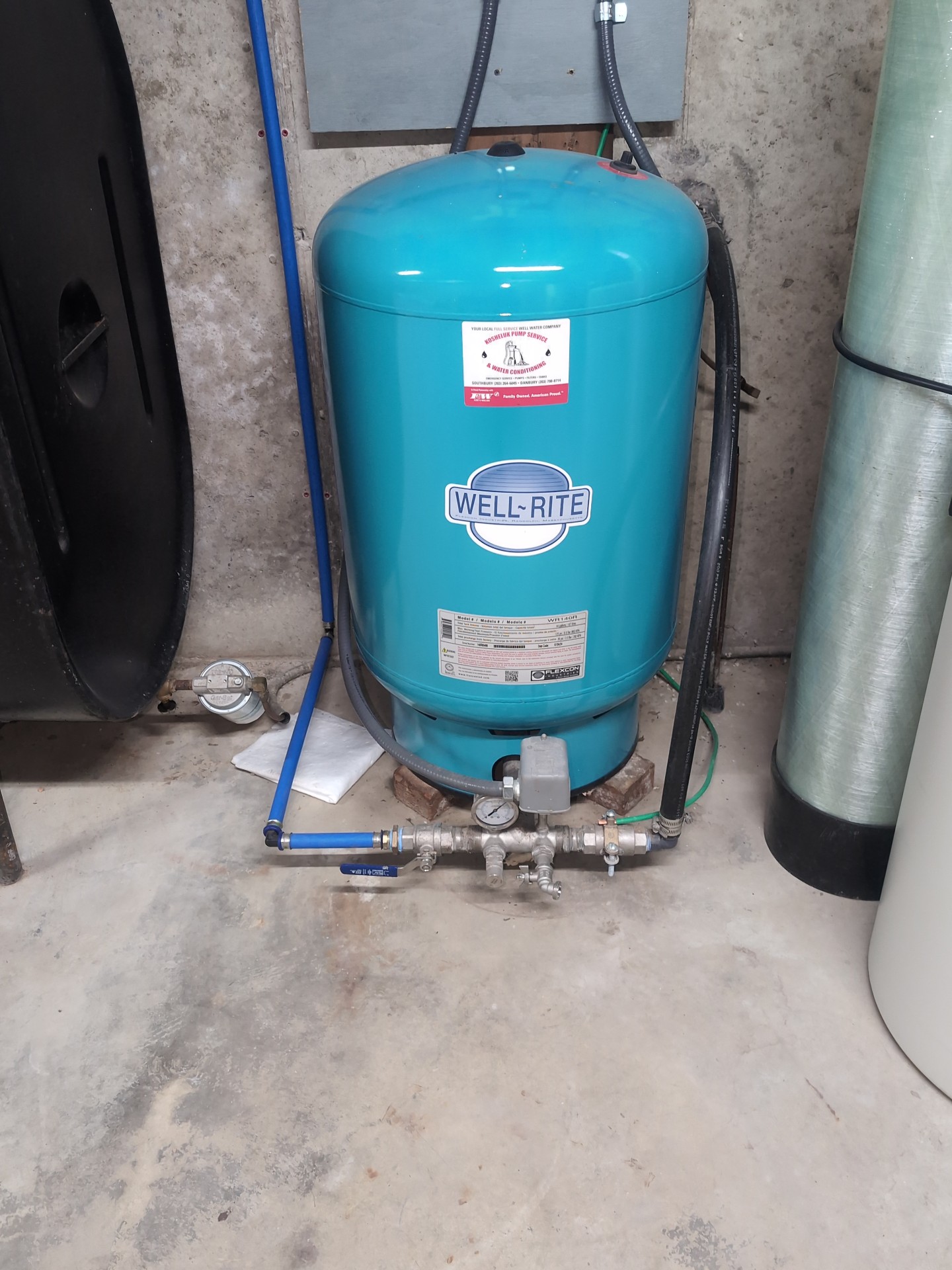 | 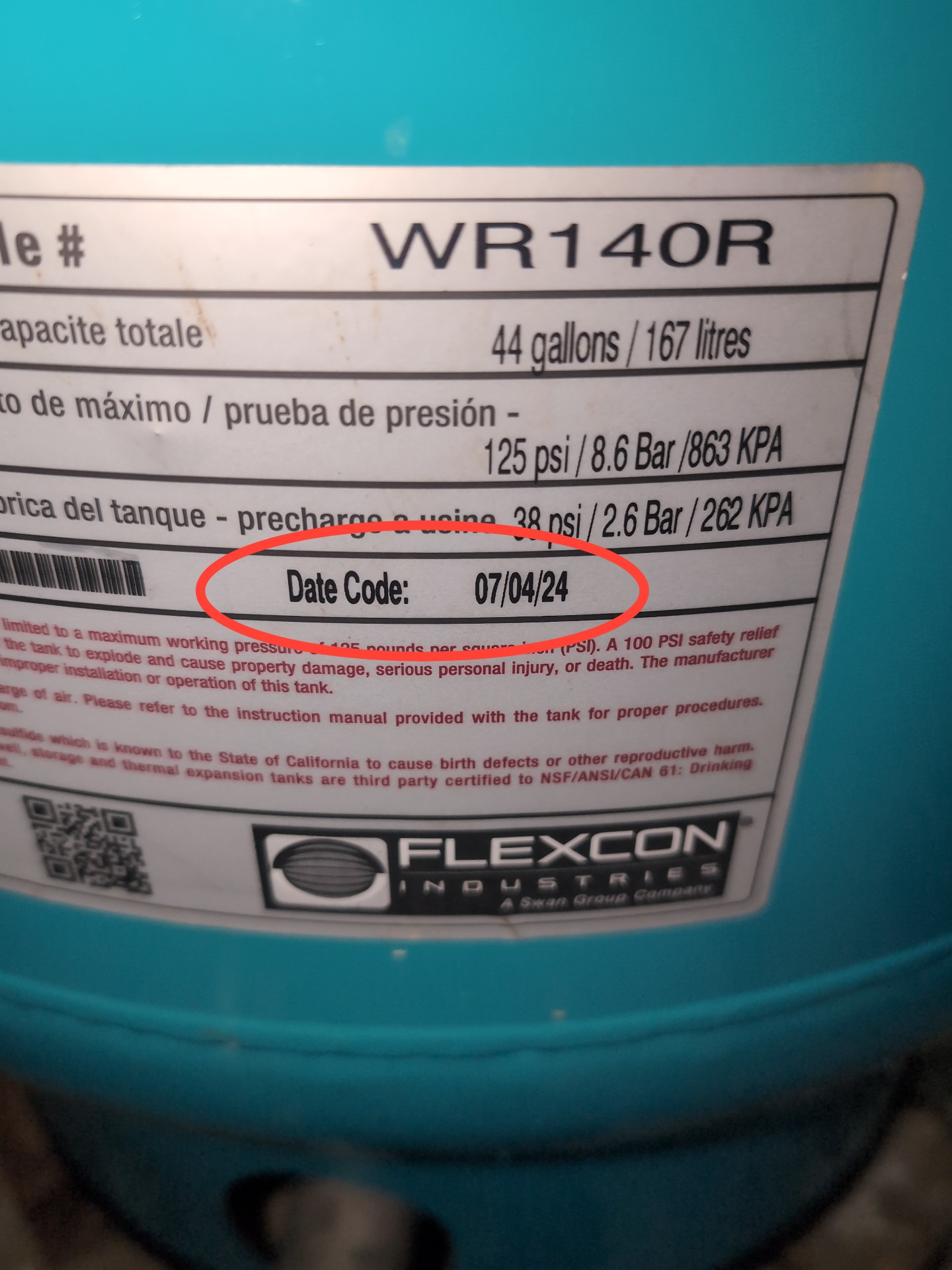 | 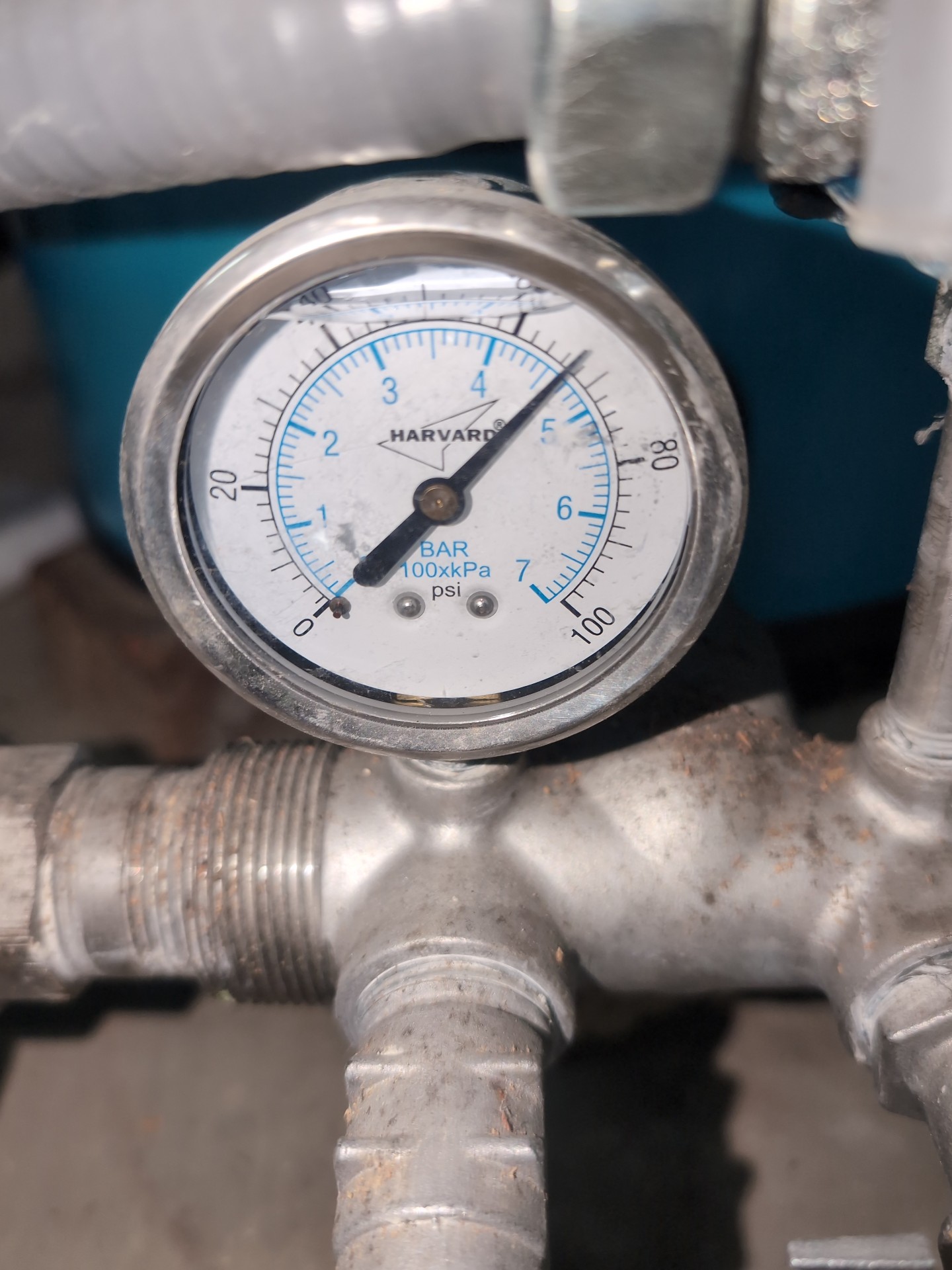 |
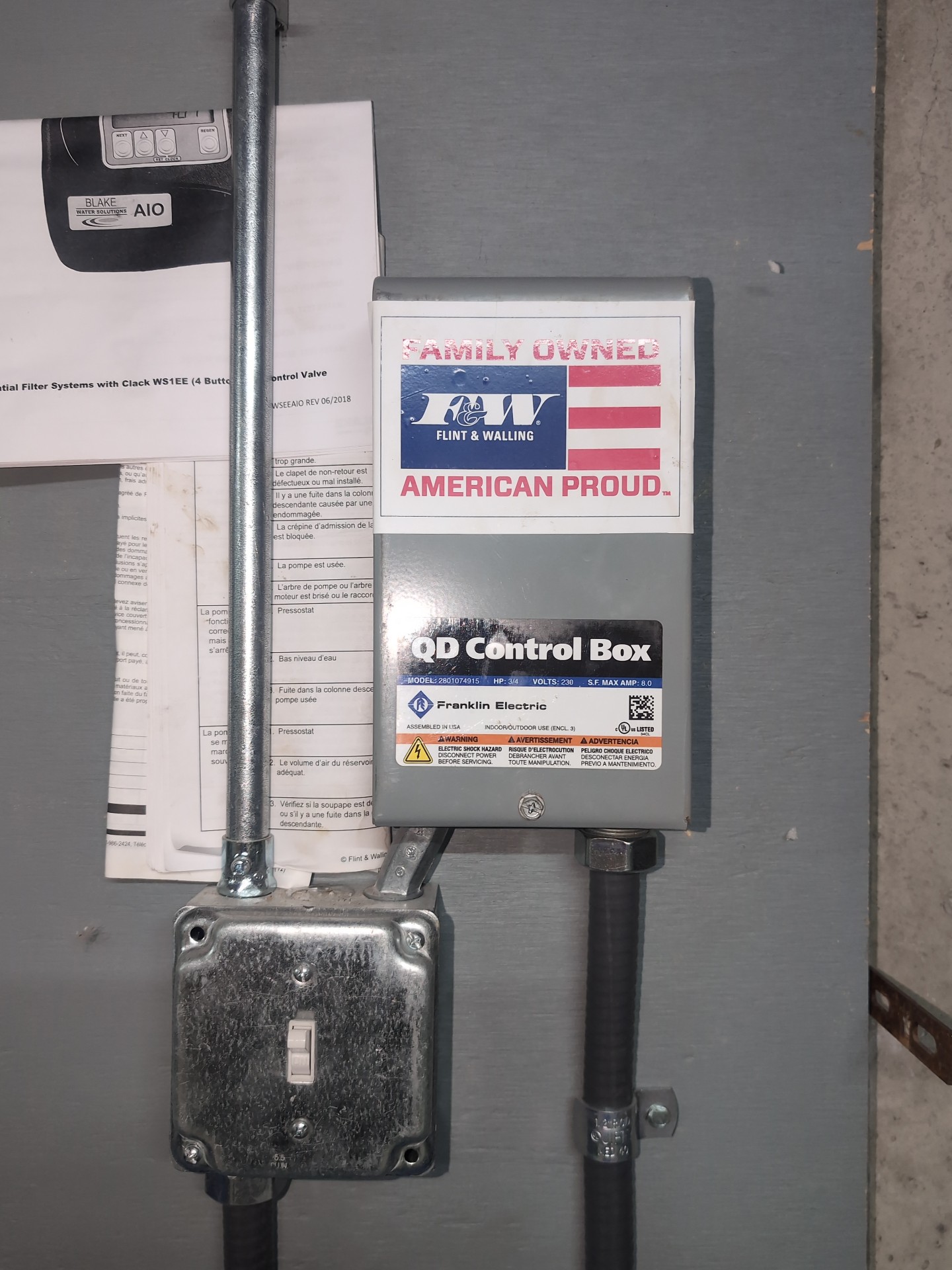 | 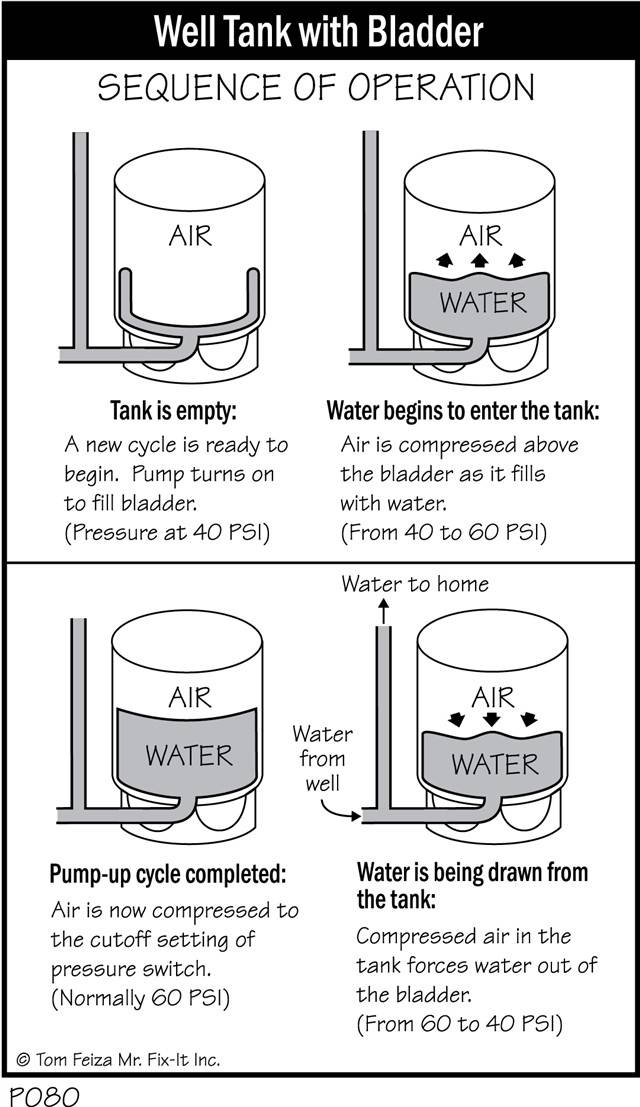 |
Filters and Conditioners
A double-tank (twin-tank) water softener system was present and appeared to be professionally installed. This type of system is designed to provide a continuous supply of softened water to the home, even during the regeneration cycle. Unlike single-tank systems that must go off line to regenerate, a double-tank water softener has two resin tanks that work in tandem:
- One tank actively softens the incoming water while the other remains on standby.
- When the active tank becomes saturated with hardness minerals (primarily calcium and magnesium), the system automatically switches to the standby tank.
- The saturated tank then regenerates using a brine solution, flushing the hardness minerals out of the resin media and preparing it for the next cycle.
- This alternating operation allows for 24/7 soft water availability, which is particularly beneficial in larger homes or where water usage is high.
Regular maintenance is essential for proper performance, including:
- Monitoring salt levels in the brine tank and re-filling as needed.
- Periodic cleaning of the brine tank and injector.
- Annual servicing by a water treatment professional.
The system was not tested during the inspection. I recommend confirming maintenance history and operational status with the seller or a licensed water treatment specialist.
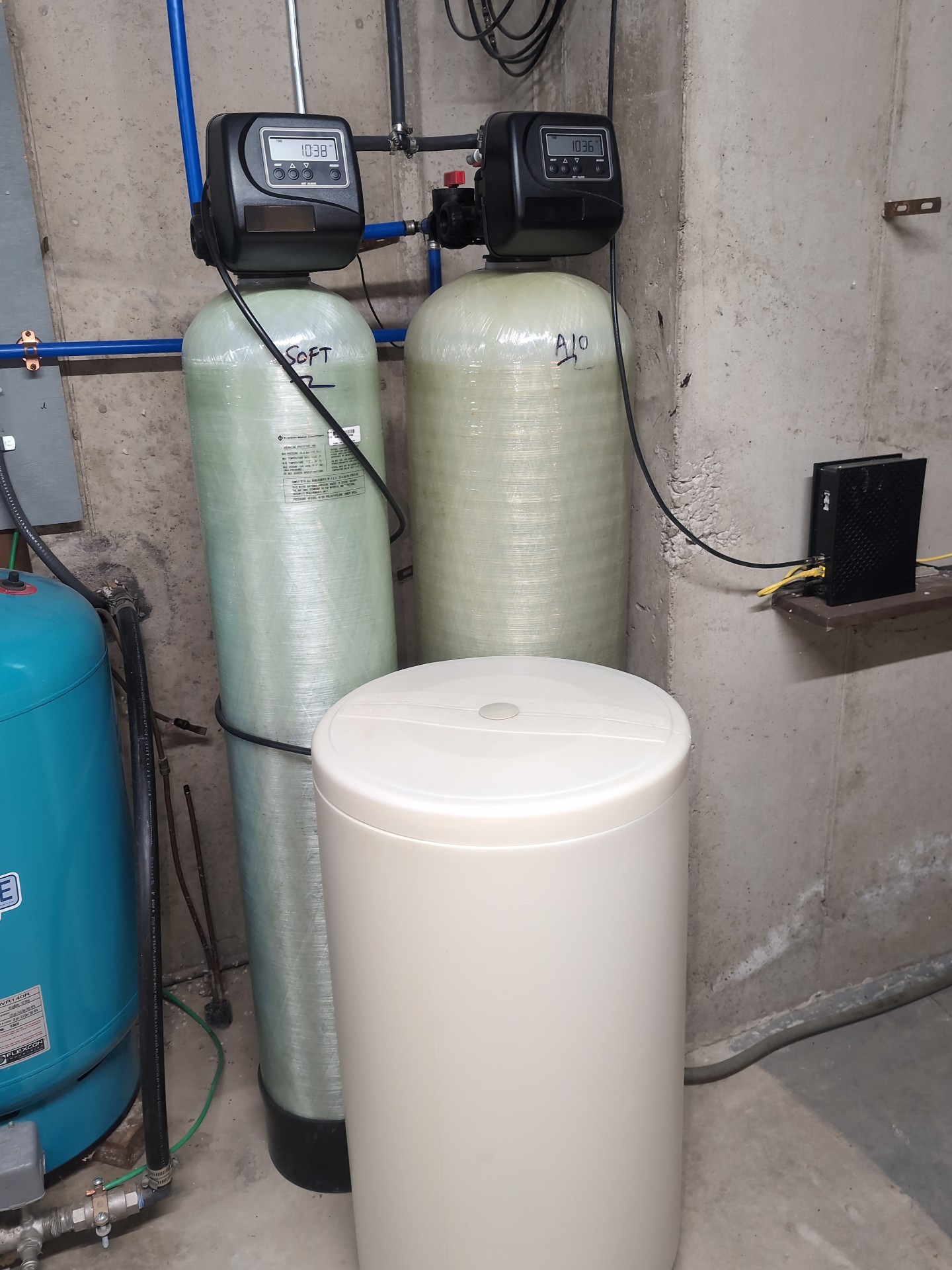 | 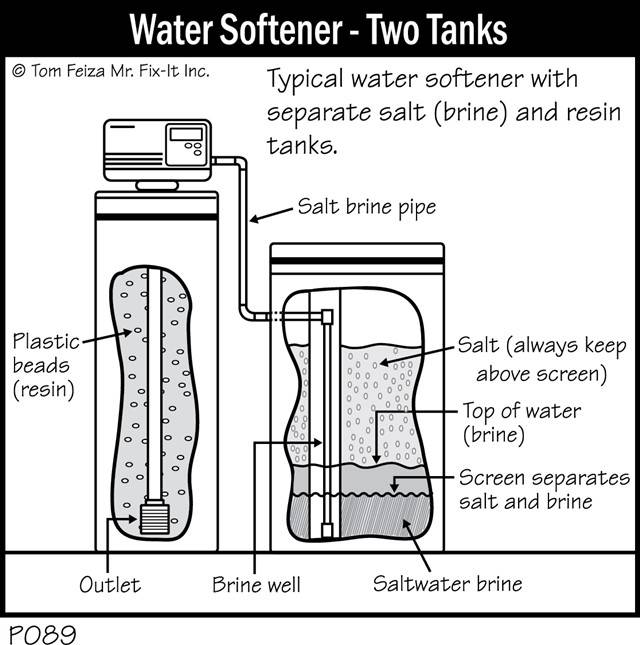 |
An unknown floor mounted media type water filter was installed in this home. I recommend asking the current owner what type of filter/conditioner this is.
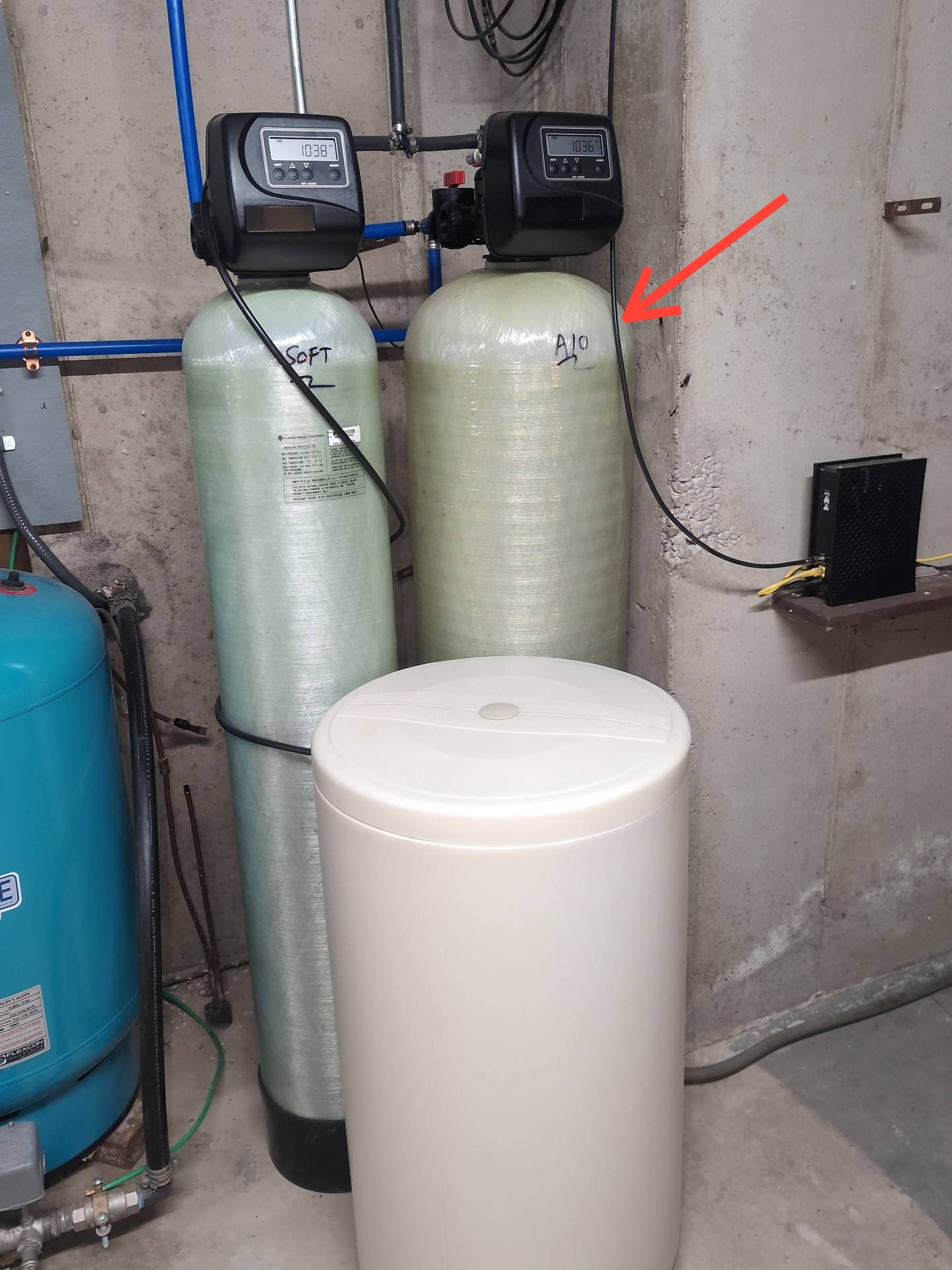
Well Water – Potability Testing
A Phoenix Environmental Laboratories "Connecticut" potability water quality analysis is being performed on the well water serving this property. This laboratory analysis typically includes testing for key health-related and aesthetic parameters such as:
- Bacteria: Total coliform and E. coli
- Nitrates and Nitrites
- Metals and Minerals: Lead, copper, iron, manganese, sodium, hardness, and others
- General Chemistry: pH, alkalinity, chloride, sulfate, fluoride, turbidity, and total dissolved solids
- Lead
- Arsenic
- Uranium
A separate laboratory report with specific results will be provided once testing is complete.
Recommendation: Review the final water quality report carefully. If contaminants are detected above acceptable levels, consult with a qualified water treatment specialist for recommendations.
(Real estate transaction note: Buyers should ensure the final potability test results are satisfactory prior to closing, as water quality may affect both health and property value.)
Septic System
Styles and Materials
Septic Tank:Not Inspected (Below ground)
Septic Field
This inspection did not access the septic fields or determine their location. For a more detailed inspection, I recommend you contact a septic specialist and have them look for junction boxes and "video scope" the septic field locations.
Video inspection can reveal critical hidden issues, including:
- Cracked or collapsed pipes
- Root intrusion
- Blockages or improper slope
- Saturated or failed leach fields
- Evidence of backflow from the absorption area
Identifying these issues early can help avoid costly repairs or system replacement. Because septic systems are buried and not visible during a general inspection, video scoping provides essential information about the system’s actual condition.
Since this is part of a real estate transaction—confirm system functionality, age, and permit records with the local health department. Ask the seller for any maintenance and pumping records.
Visible Inspection of Inside Tank
This property is served by a private septic system. No visual inspection of the septic tank, distribution box, or absorption field was performed, as these components are typically buried and not part of a standard home inspection.
It is important to note that visible inspection of the septic system by a qualified septic professional is strongly recommended as part of the real estate due diligence process. A visual inspection can help identify:
- Cracked or deteriorated tank walls or baffles
- Signs of tank overfilling or backup
- Evidence of sludge accumulation or lack of recent pumping
- Structural damage to distribution boxes or visible pipe work
- Early signs of absorption field failure (e.g., surface effluent, odors, or soggy soil)
Because repairs or replacement of septic systems can be very costly, a visual inspection, in combination with system pumping and optional video scoping, provides a more complete understanding of the system's condition prior to purchase.
I strongly recommend that a licensed septic specialist perform a full system evaluation, including tank pumping and visual inspection, prior to closing. Ask the seller for service records and system permit documentation, if available.
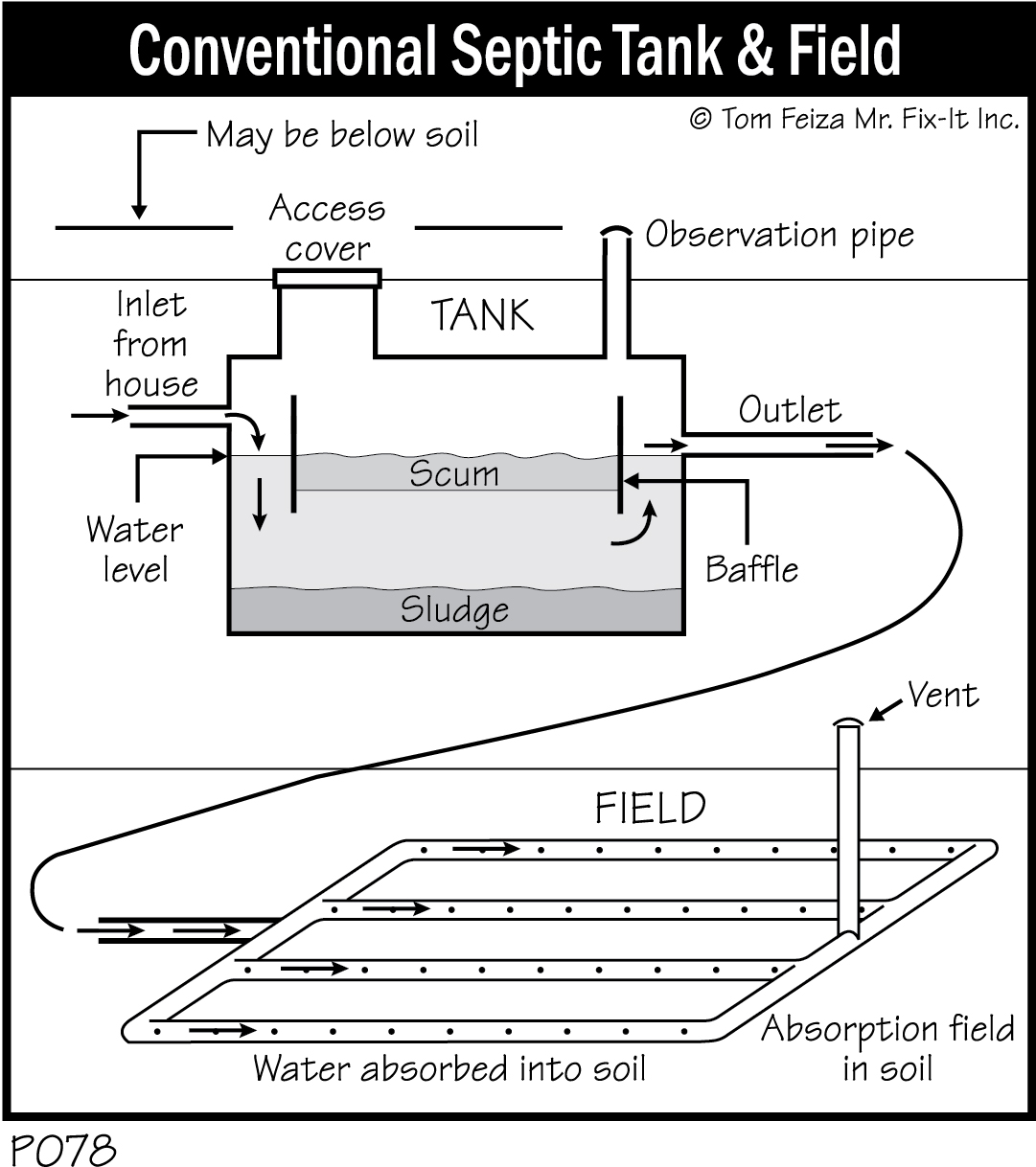
I recommend the use of single ply, "septic safe" toilet paper that does not contain any Aloe. Aloe makes toilet paper float which will eventually make it's way into the absorption fields which will hinder their effectiveness. Feminine hygiene products as well as pre moistened wipes should NEVER be flushed into the septic system. I highly recommend the use of BIOCLEAN septic system additive on a regular basis to keep bacteria levels at their peak. Tank inspection and pumping is recommend every 2-5 years based on the # of household members.
Home Warranty Information
"How to Operate your home": Digital owners manual and service guide
Please click on hyperlink and save it to your desktop, laptop, or HomeBinder, for your free digital version of "How to operate your home" which is my free gift to you for choosing me as your home inspector! "How to operate your home"

Mechanical and appliance systems warranty
PLEASE NOTE: I highly suggest consideration of purchasing an appliance / mechanical system warranty if offered by your Agents real estate company or privately on your own. Typically, a home warranty is a year-long, renewable home service plan that helps with the cost to repair or replace parts of a home’s systems and appliances. It’s not homeowners insurance, but acts as a complement to it – protecting things that your insurance doesn’t. Your home systems and appliances, like your water heater and oven, will break down over time, and sometimes, things just stop working, no matter how old they are. It happens. Typically, appliances and mechanical systems fail when a change in ownership occurs and that’s where a home warranty comes in. We highly suggest purchasing a budget-friendly warranty solution for covered household appliance and mechanical system breakdowns. American Home Shield website or call 877-381-4181
Free Home Binder Subscription
Longs GCS LLC provides all of our clients with a free lifetime subscription to HomeBinder, a digital home management platform designed to help you organize, track, and maintain every important aspect of your property. Approximately 4 hours after we publish your Home Inspection report, You will receive an email with a link to access your HomeBinder. HomeBinder allows you to store appliance and equipment information, receive maintenance reminders, keep repair records, upload documents, and manage all home-related data in one secure location. This service is intended to simplify long-term homeownership and ensure that important information is readily accessible when needed.
HomeBinder Assistant is an additional feature that delivers automated maintenance reminders, tailored recommendations, and practical guidance to help you stay ahead of routine home care tasks. It serves as a virtual home management assistant, ensuring you never miss essential maintenance that can extend the life of your home’s systems and reduce unexpected repair costs.
This complimentary lifetime subscription is provided as part of Longs GCS LLC’s commitment to offering continued support and added value well beyond the day of inspection.
HomeBinder is the EASIEST way to store all of your home’s documents.
- It is online platform where all of a home’s information can be securely stored. Automatically pre-loaded with a home’s inspection report.
- Only available from authorized partners like us
- Get maintenance reminders and product recalls based on your specific home
- Free forever.
HomeBinder Assistant is the EASIEST way to get your home utilities setup and get the BEST deal in your area
- It is a Thank You gift from us
- HomeBinder assistant will do all of the research for you
- Gather the best deals in your area
- Expect a call a day or two after your home inspection to get things setup
- HomeBinder will be available for the duration of your homeownership journey to help you.
Pre-Closing Walk Through Information
Guide
Pre-closing Walkthrough Inspection Guide:
You must make a final pre-closing inspection of the premises! This is done by the buyer to insure that it is being delivered free of leaks or damages, with all appliances working, with all built-in appliances remaining, and basically in the same conditions that you contracted to buy. It is ABSOLUTELY ESSENTIAL that you perform this inspection!
Longs GCS Corp., or the inspector, will not entertain any claims or complaints from those who fail to perform a careful pre-closing inspection.
Many conditions in the building will change subsequent to the time of the inspection report. Equipment may fail, leaks may occur, noted conditions may worsen. High winds or lightning, can damage roofs and exteriors. Systems seasonally limited, i.e. central a/c or swimming pools in winter, heating systems in summer, must be activated by the seller, if temperatures permit, so you can functionally check them. Exterior surfaces, roofs, grounds, covered by snow, water, or leaves must be checked again. Wood destroying insects are not generally active in winter.
All household appliances that remain, kitchen fixtures, plumbing fixtures, lighting, heating or cooling zones, must be operated at the pre-closing inspection if seasonally permitted. Check for leak damages, water in the basement, insect infestations, and broken windows. Check areas such as: items described in the report as “at the end of their useful life”, floors beneath carpeting or area rugs, closets that are now emptied, attic and garage free of storage, walls and floors formerly covered by furniture. Removed shelving, TV brackets, or hung pictures may leave unacceptable holes in walls.
Remember that certain systems and equipment are beyond the scope of a home inspection report. Examples are: Low voltage systems such as intercoms, telephone wiring & devices, satellite dishes, security systems, antennas, remote control devices, or specialized water treatment equipment, household appliances, fire or lawn sprinkler operational checks, filters, and mitigation systems. Have them checked by the appropriate specialist.
We recommend that you bring a digital or video camera to the walkthrough to document any problem or changed condition found so that you can protect your interests at the closing. If you have any misunderstanding or non-comprehension about the need of performing this inspection, call or ask us. If you have any doubts about your ability to check things, hire a professional. Our rate is 50% of the base inspection fee as shown on your paid invoice.
About Mold:
It’s a slimy and sticky, purple, brown black, and orange. It lives outdoors and indoors. There are thousands of varieties, some tubular, some hairy, some beneficial, some toxic. Half a million will fit on the head of a pin.
Mold can damage your home, pocketbook, and health. To grow indoors, mold spores need organic materials (like wood or drywall) for food, moisture, and spaces with poor ventilation. All of those are common conditions in homes and buildings.
Moisture accumulates in basements, crawl spaces, wall and ceiling cavities, when roof or plumbing leaks, poor grading and roof drains, or foundation cracks occur. “Control the water & dampness and you control the mold.”
Mold likes young, or renovated older, houses that are more thermally efficient and breathe less. Mold can grow anytime, especially in poorly maintained houses and buildings. Protect your family’s health and investment against mold with these twelve steps:
1. Wash mold off hard surfaces and dry completely.
2. Replace affected absorbent materials such as ceiling tiles or carpeting and padding.
3. Fix leaky plumbing, gutter problems, ceramic tiles, and other sources of water identified in your report.
4. All bath and clothes dryer vent ducts must be to the exterior and the ducts cleaned periodically.
5. Remove and replace flooded carpets and drywall.
6. Improve the level of natural or mechanical ventilation in the attic, the non-heated basement, or crawl space.
7. Make sure that all vent louvers screens are intact.
8. Operate dehumidifier in the basement year round.
9. Clean and sanitize the air duct system. Clean the A/C coil and humidifier periodically. Change the furnace and A/C filters regularly.
10. Keep A/C, dehumidifier, and refrigerator drip pans clean.
11. Maintain indoor relative humidity to 35% in summer and 50% in winter. Measure humidity levels with a simple hygrometer available at hardware stores.
12. Consider making the basement and crawl space heated, conditioned spaces. Then reduce natural venting (close vents or windows) to keep mold spores out.
Useful websites with mold & IAQ info : www.health.state.ny.us; www.epa.gov; www.acgih.org
SUBPART 197-5 NEW YORK STATE STANDARDS OF PRACTICE FOR HOME INSPECTORS Section 197-5. 1 Definitions
(a) Alarm Systems: means installed or freestanding warning devices including, but not limited to, smoke detectors, carbon monoxide detectors, flue gas and other spillage detectors and security equipment.
(b) Central Air Conditioning: means a system that uses either ducts to distribute cooled and/or dehumidified air to more than one room of a residential building or pipes to distribute chilled water to heat exchangers in more than one room in a residential building, and which is not plugged into an electrical convenience outlet.
(c) Component: means a readily accessible and observable aspect of a system such as a floor or a wall, but not individual pieces such as boards or nails where many similar pieces make up the component.
(d) Dangerous or Adverse Situations: means situations that pose a threat of injury to the home inspector including, but not limited to, those situations in which the home inspector is required to use special protective clothing or other safety equipment.
(e) Decorative: means a component or part thereof that is ornamental and not required for the proper operation of the essential systems and components of a home.
(f) Dismantle: means to take apart or remove any component, device, or piece of equipment that is bolted, screwed, or fastened and that a homeowner in the course of normal household maintenance would not dismantle.
(g) Engineering, Practice of: means as that term is defined in Education Law, title VIII, Article 145, Section 7201.
(h) Engineering Study: means a study requiring engineering services.
(i) Functional Drainage: means the operation of a drain whereby a drain empties in a reasonable amount of time and does not overflow when another fixture is drained simultaneously.
(j) Functional Flow: means a reasonable flow at the highest fixture in a dwelling when another fixture is operated simultaneously.
(k) Further Evaluation: means the examination and analysis by a qualified professional, tradesman, or service technician beyond that provided by the home inspection.
(l) Household Appliances: means kitchen and laundry appliances, room air conditioners, and similar appliances.
(m) Inspect: means to visually examine any system or component of a building in accordance with these Standards of Practice, using normal operating controls and opening readily operable access panels.
(n) Installed: means attached or connected such that the installed item requires tools for removal.
(o) Normal Operating Controls: means homeowner operated devices such as a thermostat, wall switch, or safety switch.
(p) Observable: means able to be observed at the time of the inspection without the removal of covering, fixed, finished and or stored materials.
(q) Observe: means the act of making a visual examination.
(r) On-site Water Supply Quantity: means the volume of water that is available for domestic use.
(s) Operate: means to cause systems or equipment to function.
(t) Primary Windows and Doors: means windows and exterior doors that are designed to remain in their respective openings year-round.
(u) Readily Accessible: means available for visual inspection without requiring the home inspector to remove or dismantle any personal property, use destructive measures, or take any action which will likely involve risk to persons or property.
(v) Readily Operable Access Panel: means a panel provided for homeowner inspection and maintenance, which has removable or operable fasteners or latch devices in order to be lifted, swung open, or otherwise removed by one person, and its edges and fasteners are not painted in place. The panel must be within normal reach and not blocked by stored items, furniture or building components.
(w) Recreational Facilities: means spas, saunas, steam baths, swimming pools, tennis courts, playground equipment, and other entertainment or athletic facilities.
(x) Report: means a written document setting forth findings of home inspection unless otherwise specified in these regulations.
(y) Representative Number: means for multiple identical components such as windows and electrical outlets, one such component per room. For multiple identical exterior components this term shall mean one such component on each side of the building.
(z) Roof Drainage Systems: means gutters, down spouts, leaders, splash blocks, and similar components used to carry water off a roof and away from a building.
(aa) Safe Access: means access free of any encumbrances, hazardous materials, health and safety hazards such as climbing and/or standing on other than the ground and/or floor which may jeopardize the inspector.
(bb) Safety Glazing: means tempered glass, laminated glass or rigid plastic.
(cc) Shut Down: means a piece of equipment or a system is shut down when the device or control cannot be operated in a manner that a homeowner would normally use to operate it. If the safety switch or circuit breaker is in the "off" position, or the fuse is missing or blown, the inspector is not required to reestablish the circuit for the purpose of operating the equipment or system.
(dd) Solid Fuel Heating Device: means any wood, coal, or other similar organic fuel burning device including, but not limited to, fireplaces whether masonry or factory built, fireplace inserts and stoves, wood stoves (room heaters), central furnaces, and any combination of these devices.
(ee) Structural Component: means a component that supports non-variable forces or weights (dead loads) and variable forces or weights (live loads).
(ff) System: means a combination of interacting or interdependent components, assembled to carry out one or more functions.
(gg) Technically Exhaustive: means an inspection is technically exhaustive when it involves the extensive use of measurements, instruments, testing, calculations, and other means to develop scientific or engineering findings, conclusions, and recommendations.
(hh) Under Floor Crawl Space: means the area within the confines of the foundation and between the ground and the underside of the lowest floor structural component.
(ii) Unsafe: means a condition in a readily accessible, installed system or component, which is judged by the Home Inspector to be of significant risk of personal injury during normal, day to day use. The risk may be due to damage, deterioration, improper installation or a change in the accepted residential construction standard.
(jj) Water Supply Quality: means the quality of a residential building's water supply based on the bacterial, chemical, mineral, and solids content of the water.
Suggested Seasonal Maintenance Schedule:
Spring:
- Clean out gutters and downspouts. Check for sagging or misaligned gutters and leaders. Flow test with a hose any underground pipes. Clear the underground piping as needed.
- Check the grade at the foundation for any settled areas that can pond water
- Check and clear storm drain inlets and catch basins.
- Check exterior surfaces and chimneys for cracks and dried out caulking.
- Drain out humidifiers, clean and disinfect them. Leave dry until the heating season.
- Service air conditioners. Clean filters on unit air conditioners.
- Check flashings around chimney and roof stacks, vents, skylights, for sources of leaks.
- Check vents, louvers, and chimney for broken screens, bees nests, insects, and squirrels.
- Cut back shrubbery from contact with house walls and trim. Maintain at least 12” clear space to the walls to dispel moisture that causes paint failure and decay.
- Check painted surfaces for peeling and paint failure.
- Open outside hose bibs at the interior shut off valve.
- Fall:
- Clean out gutters and downspouts. Repair sagging gutters.
- Have the heating equipment serviced and tuned.
- Close the outside hose bibs from the interior shut off valve, open the hose spigot to drain the water back inside the heated envelope of the building. Drain exterior water lines and hose spouts.
- Have the lawn sprinklers drained and winterized.
- Check for loose, damaged, or blistering roofing.
- Cut back tree limbs growing on or over the roof.
- Check exterior caulking at window/door frames, corner boards, and joints. Re-caulk to maintain water tightness.
- Check glazing putty around wood windows.
- Check weather stripping at exterior doors.
- Periodically:
- Check basement for water or dampness after wet weather.
- Trip out and reset circuit breakers and GFCI outlets.
- Check condition of lamp cords, extension cords and plugs. Replace at first signs of damage or scorching.
- If breakers trip frequently have checked by a qualified electrician.
- If you experience slight tingling shock from handling or touching any appliance, disconnect the appliance and have it repaired. If lights flicker and dim, or if appliances go off and on unnecessarily, call an electrician.
- Check siding and trim for damage, looseness, warping, or decay.
- Draw off sediment from the water heater tank.
- Check for leaks at faucets, traps, valves, or sewer cleanouts
- Clean around heating equipment, remove combustibles and lint.
- Clean out the clothes dryer vent duct of lint.
- Check bathroom tile joints, tub grouting, and caulking. Insure that all tile joints are water tight to prevent leaks and damages.
- Clean wood burning fireplaces and stoves, and their chimney flues.
- Check and replace batteries in smoke/heat detectors and carbon monoxide detectors.
Signed Contracts

Longs GCS LLC Home, Bldg., & Environmental Inspections
914-260-8571
www.longsgcs.net
New York & CT State Inspector License No. New York: HOI-16000170132 Connecticut: HOI-652
chris@longsgcs.net