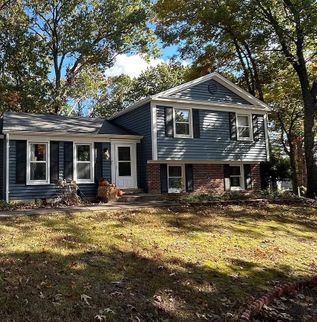

Matt Shiff, VA State License #3380002221
The Scope and Purpose of a Home Inspection
Purchasing property involves risk
The purpose of a home inspection is to help reduce the risk associated with the purchase of a structure by providing a professional opinion about the overall condition of the structure. A home inspection is a limited visual inspection, and it cannot eliminate this risk. Some homes present more risks than others. We cannot control this, but we try to help educate you about what we don’t know during the inspection process. This is more difficult to convey in a report and one of many reasons why we recommend you attend the inspection.
A home inspection is not an insurance policy.
This report does not substitute for or serve as a warranty or guarantee. Home warranties can be purchased separately from insuring firms that provide this service.
A home inspection is visual and not destructive.
The descriptions and observations in this report are based on a visual inspection of the structure. We inspect the aspects of the structure that can be viewed without dismantling, damaging, or disfiguring the structure and without moving furniture and interior furnishings. Areas that are concealed, hidden, or inaccessible to view are not covered by this inspection. Some systems cannot be tested during this inspection as testing risks damaging the building. For example, overflow drains on bathtubs are generally not tested because if they were found to be leaking, they could damage the finishes below. Our procedures involve non-invasive investigation and non-destructive testing, which will limit the scope of the inspection. We follow the InterNACHI standards of practice which can be found at the following link: https://www.nachi.org/sop.htm.
This is not an inspection for code compliance.
This inspection and report are not intended for city / local code compliance. During the construction, process structures are inspected for code compliance by municipal inspectors. Framing is open at this time, and conditions can be fully viewed. Framing is not open during inspections of finished homes, limiting the inspection. All houses fall out of code compliance shortly after they are built, as the codes continually change. National codes are augmented at least every three years for all disciplines. Municipalities can adopt and phase in sections of the codes on their timetables. There are generally no requirements to bring older homes into compliance unless substantial renovation is being done.
This is just our opinion.
Construction techniques and standards vary. There is no one way to build a house or install a system in a house. The observations in this report are the opinions of the home inspector. Other inspectors and contractors are likely to have some differing opinions. You are welcome to seek opinions from other professionals.
The scope of this inspection
This inspection will include the following systems: exterior, roof, structure, drainage, foundation, attic, interior, plumbing, electrical, and heating. The evaluation will be based on limited observations that are primarily visual and non-invasive. This inspection and report are not intended to be technically exhaustive.
Your expectations
The overall goal of a home inspection is to help ensure that your expectations are appropriate for the house you are proposing to buy. To this end, we assist with the discovery by showing and documenting observations during the home inspection. This should not be mistaken for a technically exhaustive inspection designed to uncover every defect in a building. Such inspections are available, but they are generally cost-prohibitive to most homebuyers.
Your participation is requested.
Your presence is requested during this inspection. A written report will not substitute for all the possible information that can be conveyed verbally by a shared visual observation of the conditions of the property.
How to Read This Report
Getting the Information to You
This report is designed to deliver important and technical information in a way that is easy for anyone to access and understand. If you are in a hurry, you can take a quick look at our "Summary Page” and quickly get the critical information for important decision-making. However, we strongly recommend that you take the time to read the full Report, which includes digital photographs, captions, diagrams, descriptions, videos, and hot links to additional information.
The best way to get the layers of information presented in this report is to read your report online, which will allow you to expand your learning about your house. You will notice some words or series of words highlighted in blue and underlined – clicking on these will provide you with additional information.
This report can also be printed to a PDF file and printed on paper as desired.
Chapters and Sections
This report is divided into chapters that parcel the home into logical inspection components. Each chapter is broken into sections that relate to a specific system or component of the home. You can navigate between chapters with the click of a button on the left-side margin.
Most sections will contain some descriptive information in black font. Observation narrative, done in colored boxes, will be included if a system or component is found to be significantly deficient in some way or if we wish to provide helpful additional information about the system or the scope of our inspection. If a system or component of the home was deemed to be in satisfactory or serviceable condition, there might be no narrative observation comments in that section, and it may simply say “tested” or “inspected.”
Observation Labels
All narrative observations are colored, numbered, and labeled to help you find, refer to, and understand the severity of the observation. Observation colors and labels used in this report are:
- Major Concern:Repair items that may cost significant money to correct now or in the near future, or items that require immediate attention to prevent additional damage or eliminate safety hazards.
- Repair:Repair and maintenance items noted during inspection. Please note that some repair items can be expensive to correct such as re-finishing hardwood floors, but are considered simply repair items due to their cosmetic nature.
- Recommended Maintenance:These are repair items that should be considered "routine home ownership items," such as servicing the furnace, cleaning the gutters or changing the air filters in the furnace.
- Due Diligence:Observation such as a buried oil tank that may require further investigation to determine the severity and / or urgency of repair.
- Monitor:Items that should be watched to see if correction may be needed in the future.
- Improve or Upgrade:Observations that are not necessarily defects, but which could be improved for safety, efficiency, or reliability reasons. These are often items which reflect changes in building codes or standards.
- Limitations:Conditions present at the time of inspection which limited the scope of this visual inspection
Summary Page
The Summary Page is designed as a bulleted overview of all the observations noted during the inspection. This helpful overview is not a substitute for reading the entire inspection report. The entire report must be read to get a complete understanding of this inspection report, as the Summary Page does not include photographs or photo captions.
Summary
Major Concerns
No major concerns were noted during this visual inspection.Repairs
- G-2 Grounds:
Top of Wall Loose
The cap stones on the retaining wall are not glued. On sections of the wall that are used as steps, these stones must be safely secured to prevent a trip hazard. Recommend repair by qualified person.
- G-3 Grounds:
Gate Difficult to Open
The gate was difficult to open and close. Recommend repair hinge or post as needed by qualified person.
- RCG-2 Roof, Chimney, and Gutters:
Missing Kick-out Flashing
Kick-out (or diverter flashing) is a crucial component that redirects rainwater away from a vertical wall-roof intersection and into a gutter. It prevents water from running behind siding, which often leads to severe rot and damage
- RCG-5 Roof, Chimney, and Gutters:
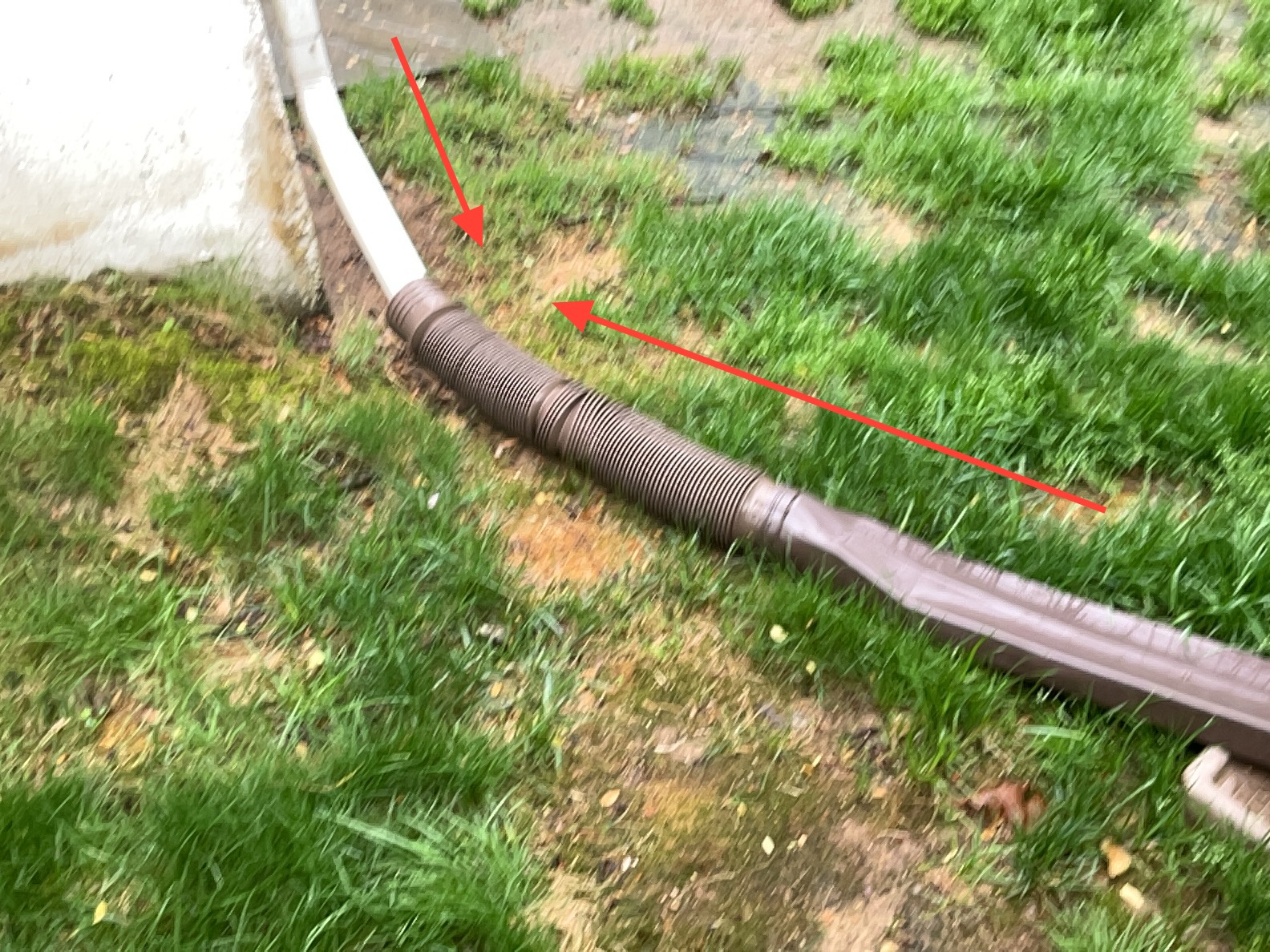
Improperly Sloped
The gutters are not properly sloped to drain. This can lead to pooling water near the foundation. Repair as needed so the gutters are reliably collecting and shedding water.
- E-1 Exterior:
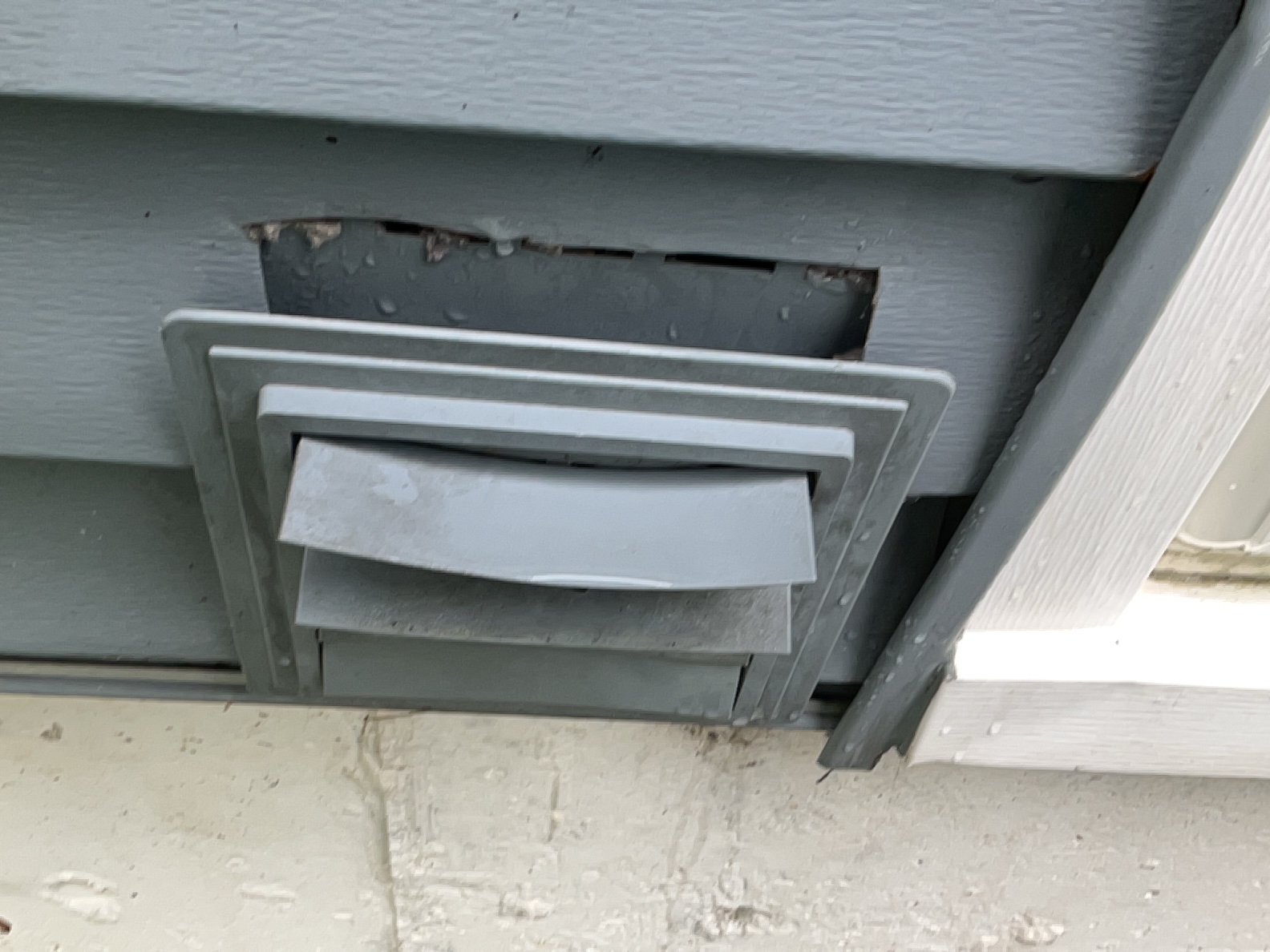
Vent Cover Loose
Exterior cover for the dryer vent was loose. Recommend vent be properly secured and sealed against water intrusion.
- E-2 Exterior:
Deteriorated Caulking
Deteriorated caulking was noted around the exterior door. Caulking around doors is essential to seal gaps, acting as a barrier against air infiltration, moisture, and pests, which improves energy efficiency, prevents water damage, and enhances comfort. Recommend ensuring all exterior doors are properly caulked by qualified person.
- E-3 Exterior:
Loose Exterior Outlet
One or more exterior outlets were loose. Recommend securing by qualified contractor to prevent water intrusion and potential shock hazard.
- E-4 Exterior:
Exterior Light Not On
One or more exterior lights did not turn on at the time of inspection. This could be due to damaged or missing bulb, or light may be on a sensor. Recommend confirming operation with seller prior to close and repair as needed.
- DPB-1 Decks, Porches, and Balconies:
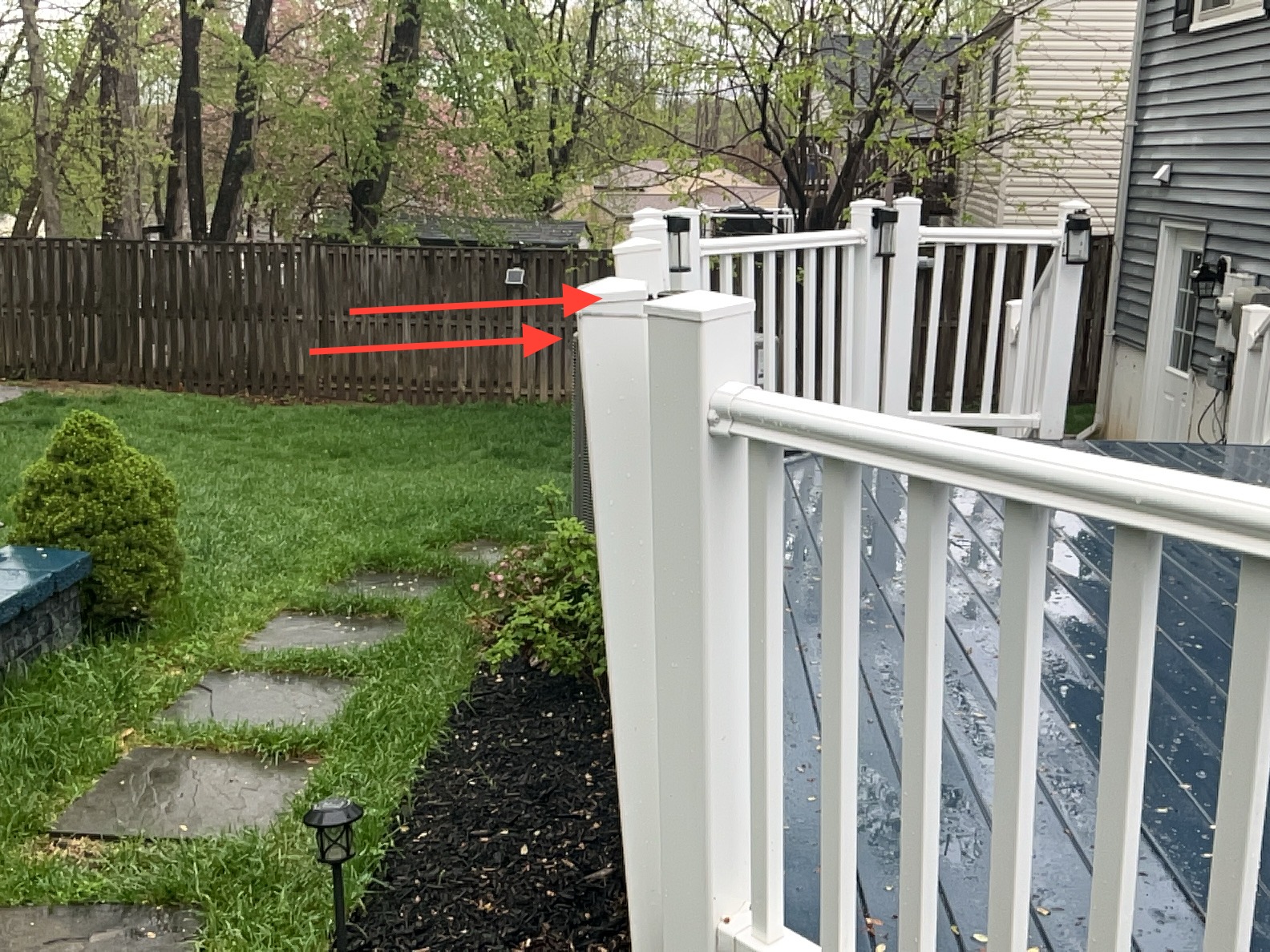
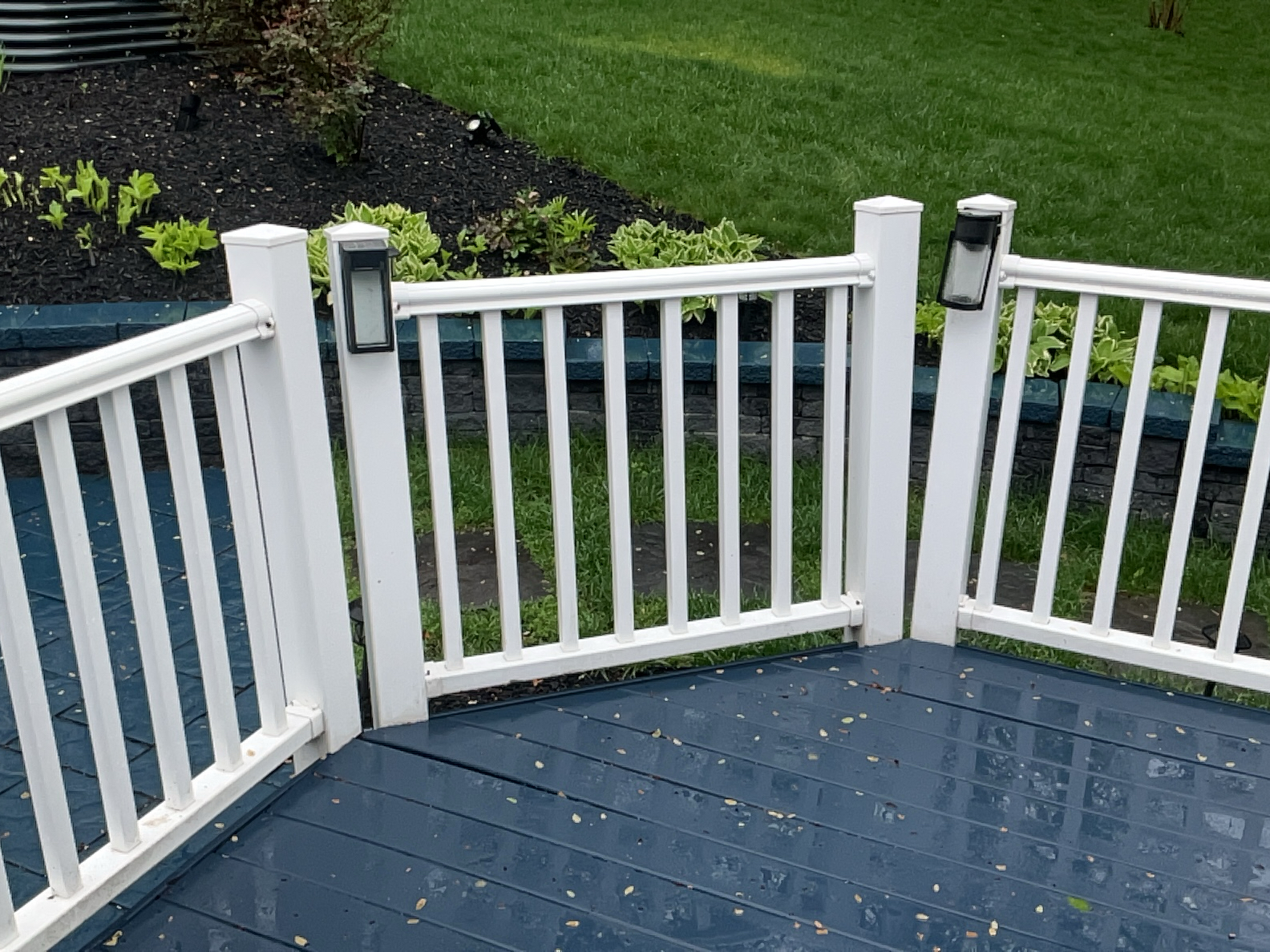
Loose Guardrail
The guardrail is loose and may not be adequately stiff to prevent a falling adult. Recommend repair as needed by qualified contractor.
- DPB-2 Decks, Porches, and Balconies:
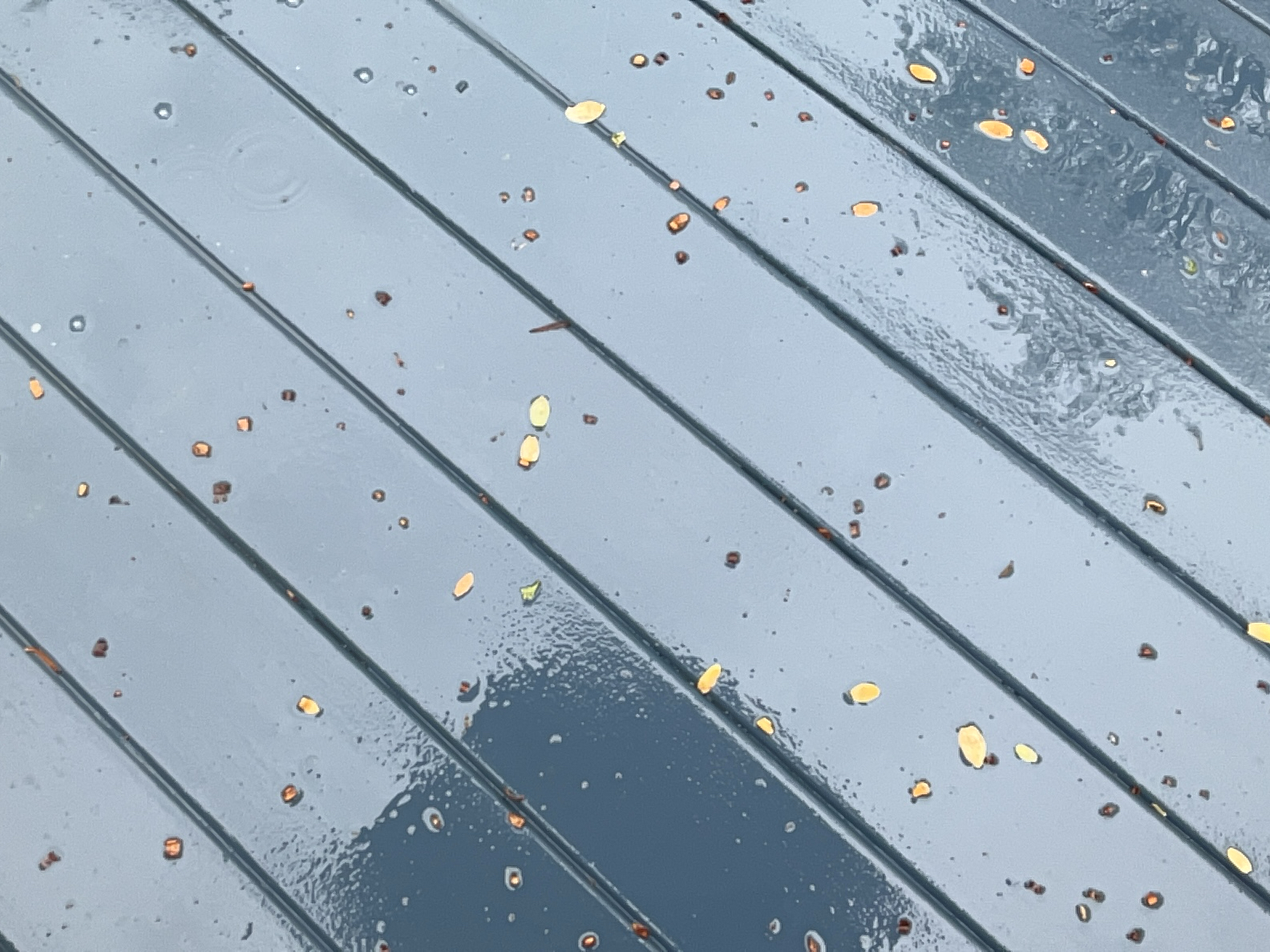
Inadequate Gaping
Fixing inadequate deck board spacing is critical to prevent buckling, warping, and cupping caused by natural moisture-driven expansion. Proper gaps, typically 1/8th to 3/16th inches, ensure water drainage, prevent mold growth, improve airflow, and make cleaning easier, ultimately increasing the deck's longevity and safety. Recommend board spacing be improved by qualified deck contractor.
- C-3 Crawlspace:
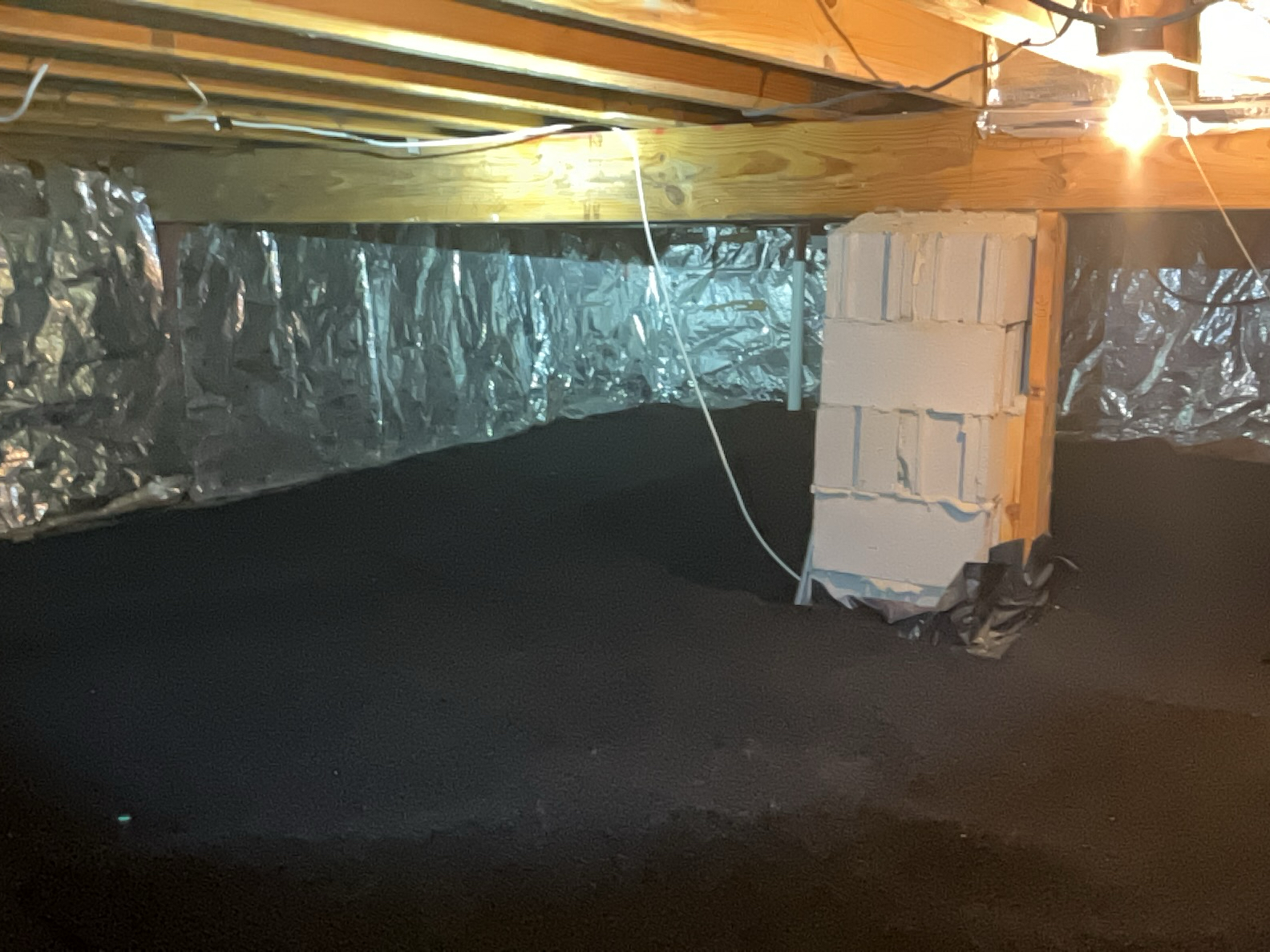
Incomplete Insulation
The insulation in the crawl space is incomplete and requires repair. The seams on the wall insulation should be taped. Recommend repair by qualified foundation/insulation contractor.
- C-4 Crawlspace:
Bio-Growth
Minor to moderate levels of bio-growth were noted in the crawlspace. Recommend that wooden joists and beams be cleaned with an antimicrobial agent and that steps are taken to control moisture levels in the crawl space.
- HZ1-3 HVAC Zone 1:
Incorrect Size
The air filter for the furnace is not correctly sized and is allowing air to bypass the filter. Install the proper sized filter or consult with a qualified HVAC contractor as needed.
- WH-1 Water Heaters:
TPRV Discharge Too High
The discharge tube for the water heater is installed too high off the ground. A temperature pressure relief valve (TPR) should have a discharge pipe that extends to within 6 inches of the floor to prevent scalding if the valve discharges overheated water.
- ES-1 Electric Service:
Missing Screws
The electrical panel is missing proper screws to secure the dead front cover. Install the appropriate blunt screws to properly secure the cover.
- ES-2 Electric Service:
Electric Panel In Closet
The location of the electric panel is not to modern standards as electrical panels should not be located inside a clothes closet. Moving the electric panel to a more desirable location is recommended or discontinue use of this space as a closet.
- B1-2 Bedroom:
Wall Contact
Wall contact was noted at the door. Recommend installing door stopper to prevent damage to the wall.
- B1-3 Bedroom:
No Smoke Detector
No smoke detector in bedroom. Modern standards recommend smoke alarms in all bedrooms, in all hallways outside bedrooms, and at least one on each floor of the building.
- B2-2 Bedroom (2):
No Smoke Detector
No smoke detector in bedroom. Modern standards recommend smoke alarms in all bedrooms, in all hallways outside bedrooms, and at least one on each floor of the building.
- B3-2 Bedroom (3):
No Smoke Detector
No smoke detector in bedroom. Modern standards recommend smoke alarms in all bedrooms, in all hallways outside bedrooms, and at least one on each floor of the building.
- LR-2 Living Room:
No Return on Railing
The ends of the handrail should return to the wall to prevent clothing or accessories from catching on the end of the railing and creating a trip hazard.
- RR-2 Rec Room:
Nail Pop
Nail pops were noted in the ceiling. This can sometimes be from one time framing shrinkage or settlement, or it can be more persistent from seasonal movement of the house framing. Recommend repairing these nail pops and then monitoring for signs of on-going movement.
- RR-3 Rec Room:
No Return on Railing
The ends of the handrail should return to the wall to prevent clothing or accessories from catching on the end of the railing and creating a trip hazard.
- UR-1 Utility Room:
Unsecured Outlet
The outlet for the dryer is loose and needs to be properly secured. Recommend repair by qualified contractor.
- UR-2 Utility Room:
Manometer Not Functioning
The manometer on the radon vent is not functioning. The fan is on but there is no reading. This device provides a visual reference that the fan is operational. Recommend it be repair or replaced as needed by radon mitigation installer.
- B-2 Bathroom:
Toilet Not Caulked
The toilet has not been caulked to the floor. Recommend sealing the front and sides of the toilet to the floor to help secure. Leave the back uncaulked so if the toilet leaks water has an escape route.
- B-3 Bathroom:
Wall Contact
Wall contact was noted at the door. Recommend installing door stopper to prevent damage to the wall.
- B22-2 Bathroom (2):
Accordion Drain
Accordion drain pipe used to drain this sink. These are prone to clogging. Recommend replacing with smooth wall pipe by qualified plumbing contractor.
- B22-3 Bathroom (2):
Missing Caulk
The counter is missing caulk where it meets the wall. Recommend caulking this area to help prevent water seepage down the wall.
Recommended Maintenance
- RCG-3 Roof, Chimney, and Gutters:
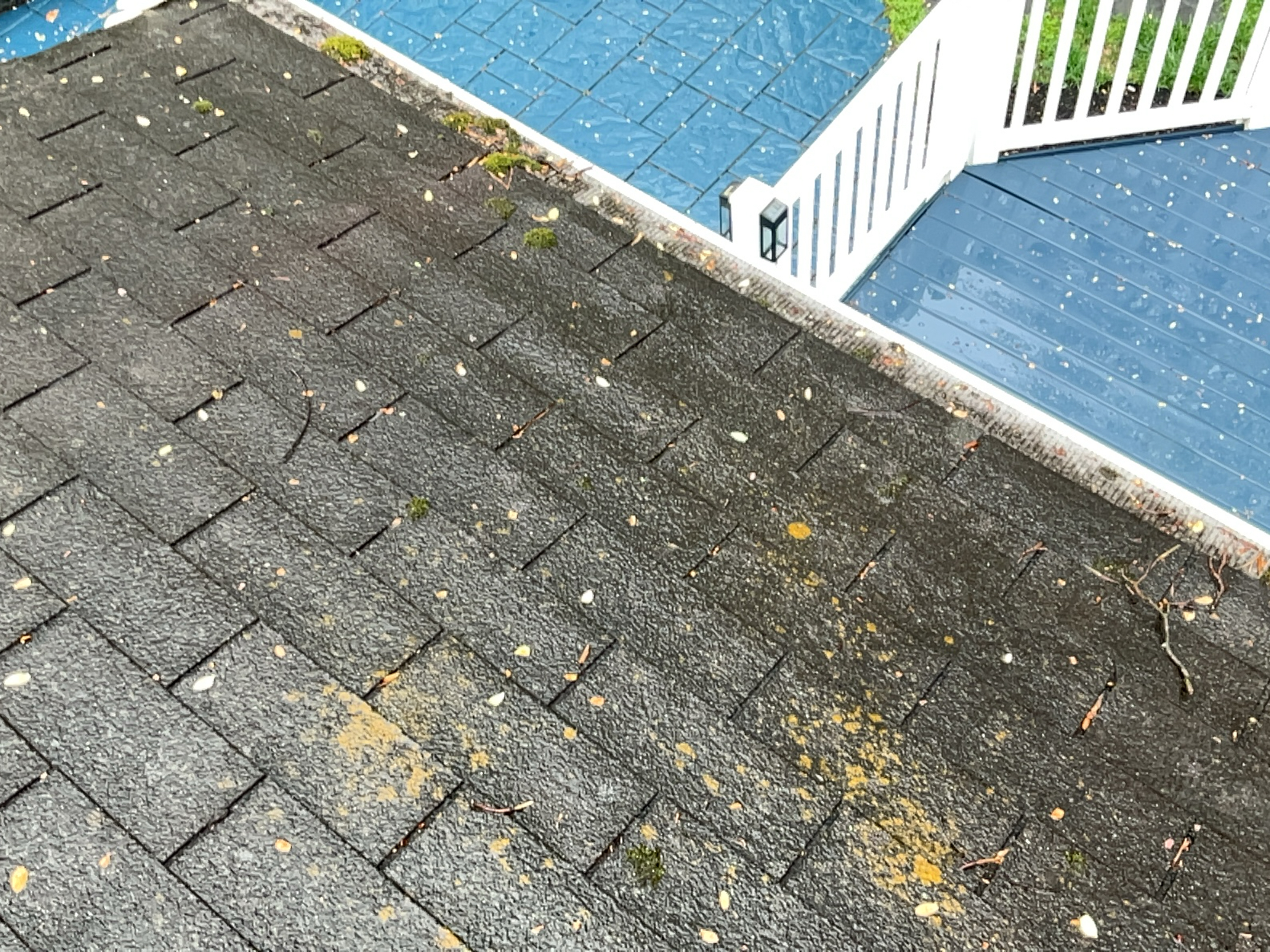
Moss on Roof
Moss and lichen growth was noted on the roof. The presence of moss will accelerate the deterioration of a roofing material. Recommend the roof be cleaned and treated with a moss inhibitor. Zinc or galvanized strips at the peak and ridge lines can also be effective to prevent additional build-up of moss afterwards.
- HZ1-4 HVAC Zone 1:
Older Unit
The system is at or approaching the end of its typical service life. The unit functioned normally today, but I recommend having the system serviced by a qualified HVAC contractor. The design life of a furnace system is typically15-20 years. This unit is old enough that replacement or updating could be needed at any time.
- B22-4 Bathroom (2):
Object in Drain
There was an object in the drain preventing the drain from closing. Remove for proper operation.
Due Diligence Items
- A-2 Attic:
Possible Vent to Attic
There appears to be a plumbing vent which terminates in the attic. Area was inaccessible to get a closer look. Recommend further investigation by a plumbing contractor to determine if this is an active vent and poses any potential issues. Active plumbing vents need to terminate outside the structure to prevent releasing sewage gasses into the attic.
Items for Monitoring
- G-1 Grounds:
Typical Cracks
Typical cracking was noted on the driveway. Regular sealing of small to moderate cracks can minimize water penetration and prolong the life of the driveway.
- FSD-1 Fuel Storage and Distribution:
Above Ground Oil Tank
Oil tank appeared in satisfactory and functional condition. Recommend routine monitoring of the tank and oil lines by a qualified professional during annual service.
Improve Or Upgrade Items
- ES-3 Electric Service:
White Wire as Hot
The white conductors inside the electric panel at the breakers are not correctly identified as hot or ungrounded conductors. These should be painted or taped black or red for correct identification and improved safety. I would do this in the context of other electrical repairs or upgrades.
- B1-4 Bedroom:
No Door
There was no door installed for the closet. Add as needed.
- B2-3 Bedroom (2):
No Door
There was no door installed for the closet. Add as needed.
- B3-3 Bedroom (3):
No Door
There was no door installed for the closet. Add as needed.
Home Inspection Report
Grounds
Address Identification
Drainage and Site
Driveway, Walkway and Flatwork
Window & Stairwells
Grounds, Trees, and Vegetation
Exterior Stairs
Retaining Walls
Fences and Gates
Outbuildings
Roof, Chimney, and Gutters
General Roof Photos
Roof Materials
Gutters and Downspouts
Roof Penetrations
Chimneys
General Comments
Building Characteristics, Conditions, and Limitations
Style of Home: Split Level
Type of Home: Detached
Approximate Square Footage: 1200
Approximate Year of Construction: 1981
Attending Inspection: Buyer and Agent
Occupancy: Unoccupied
Animals Present: No
Weather Conditions: Light Rain
Approximate Temperature: 70
Ground/Soil Surface Conditions: Wet
Grounds
Address Identification
Address Identification: Address Numbers Present and Well Displayed
Drainage and Site
Clearance to Grade: Functional
Downspout Discharge: Above Grade
Site Description: Moderate Slope
Driveway, Walkway and Flatwork
Driveway Material: Asphalt
Walkway Material: Concrete
Patio Material: Pavers
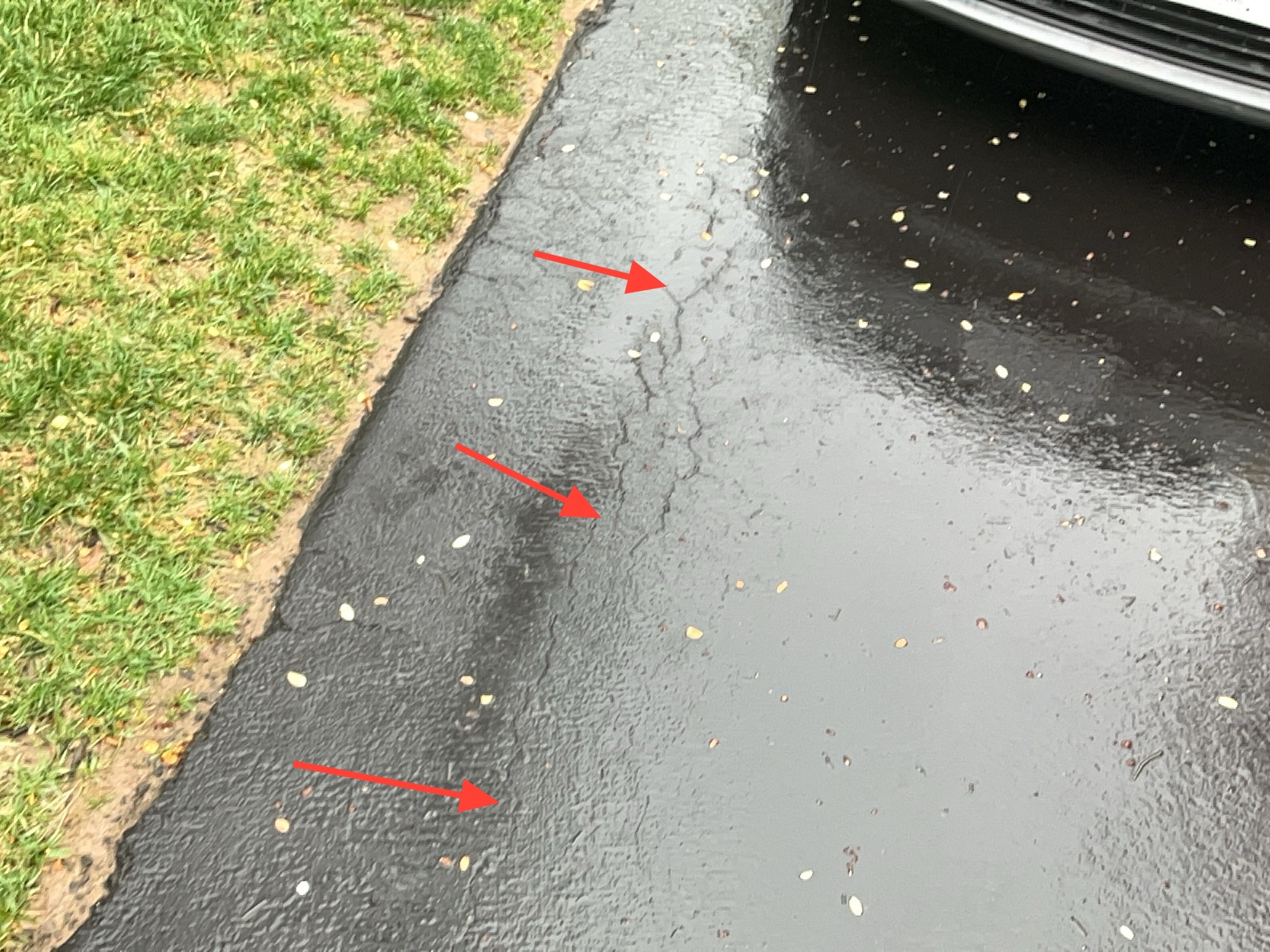
Common Observations: Driveway (Typical Cracks)
Typical Cracks
Typical cracking was noted on the driveway. Regular sealing of small to moderate cracks can minimize water penetration and prolong the life of the driveway.
Window & Stairwells
Window/Stairwell Present: Present
 None Noted
Grounds, Trees, and Vegetation
Trees/Vegetation in proximity to home: No
Exterior Stairs
Exterior Stairs: Simple Landing Noted
Retaining Walls
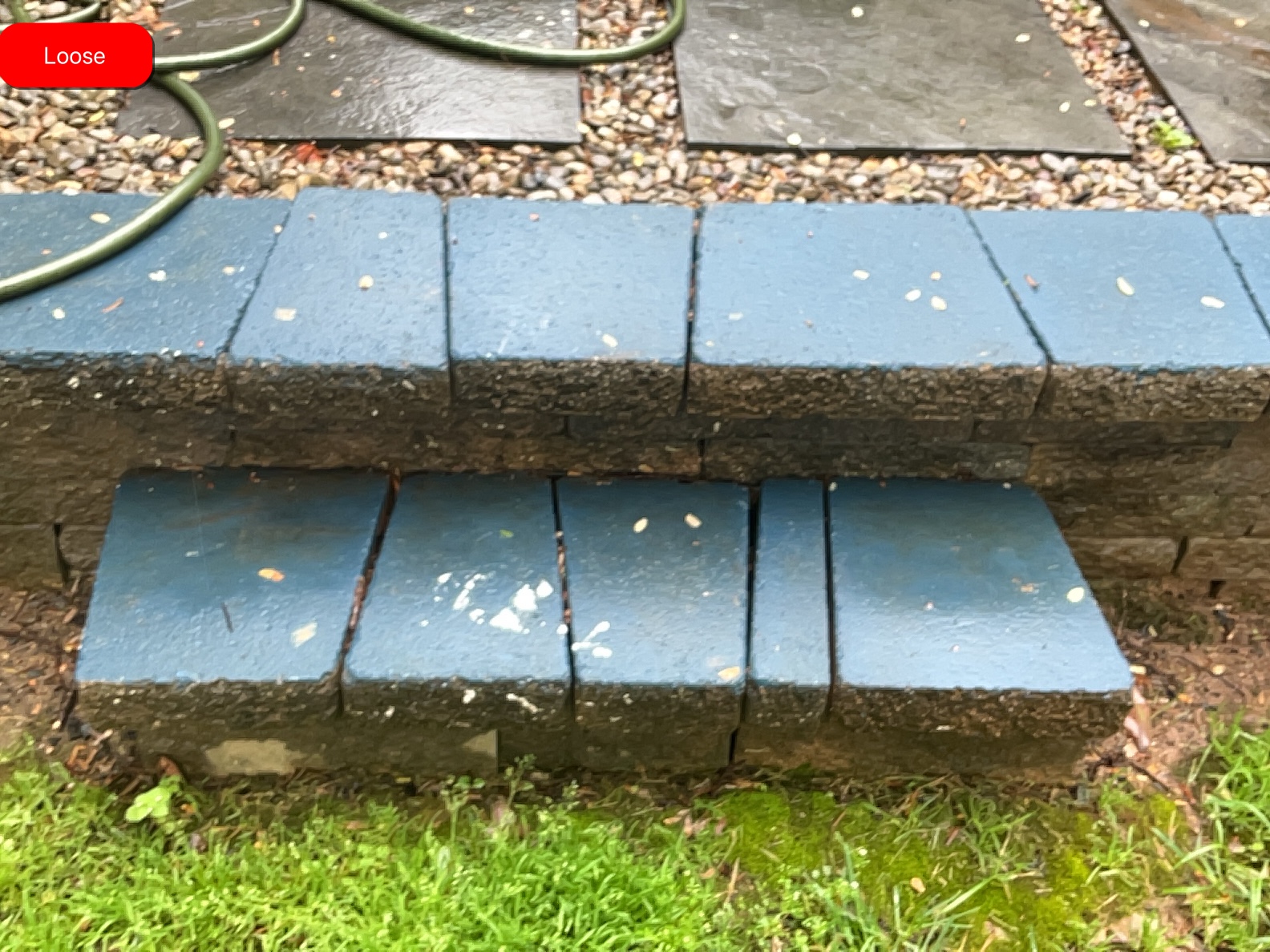
Retaining Wall Material: Manufactured Block
Top of Wall Loose
The cap stones on the retaining wall are not glued. On sections of the wall that are used as steps, these stones must be safely secured to prevent a trip hazard. Recommend repair by qualified person.
Fences and Gates
Exterior Fencing: Present
The property has a fencing system in place. Inspection and evaluation of fencing is outside the scope of a home inspection. If the fencing system is important for your use of this property, I recommend a self-examination to see how it will meet your needs. Inspector may make some cursory comments about fencing as a courtesy.
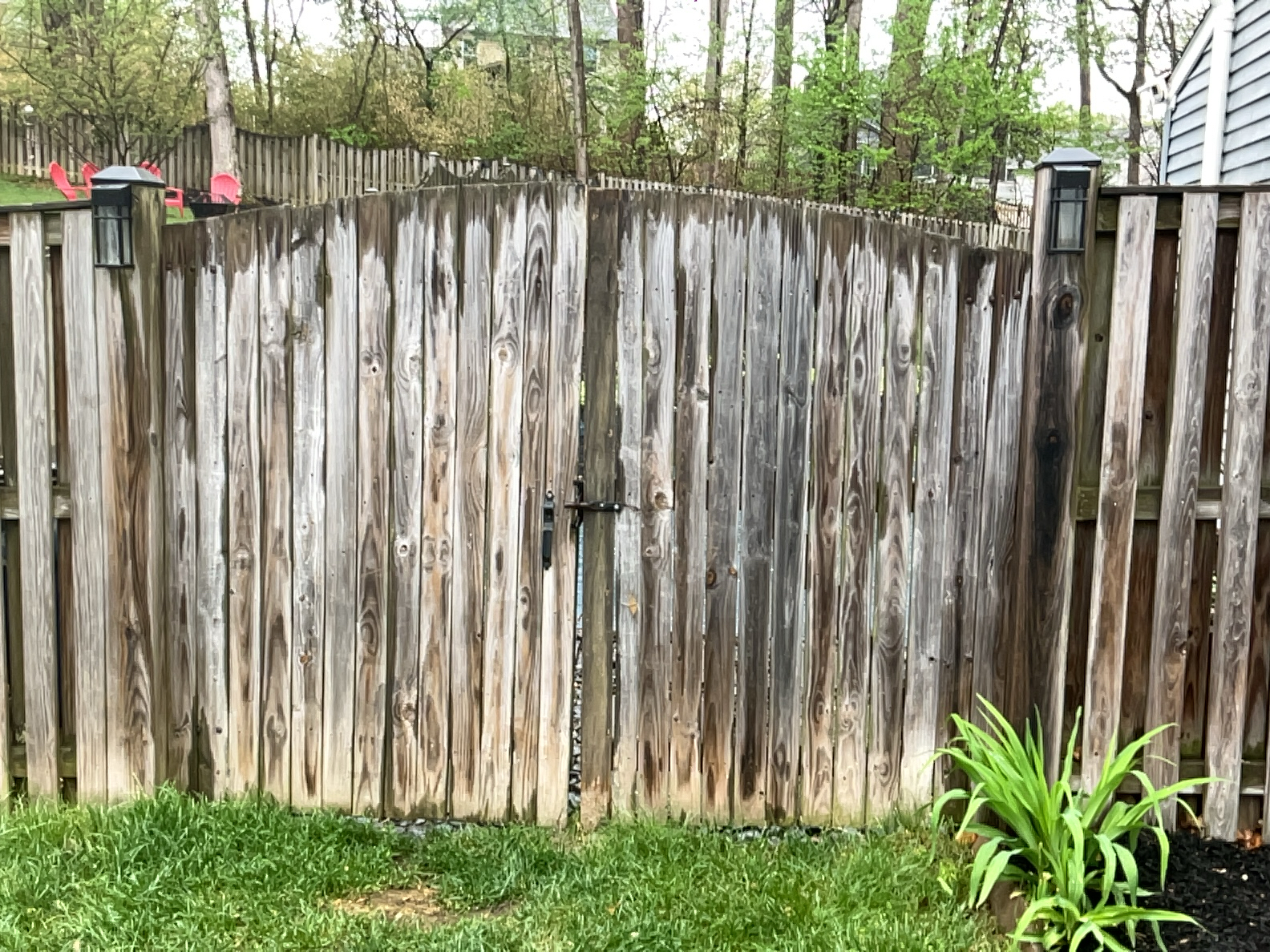
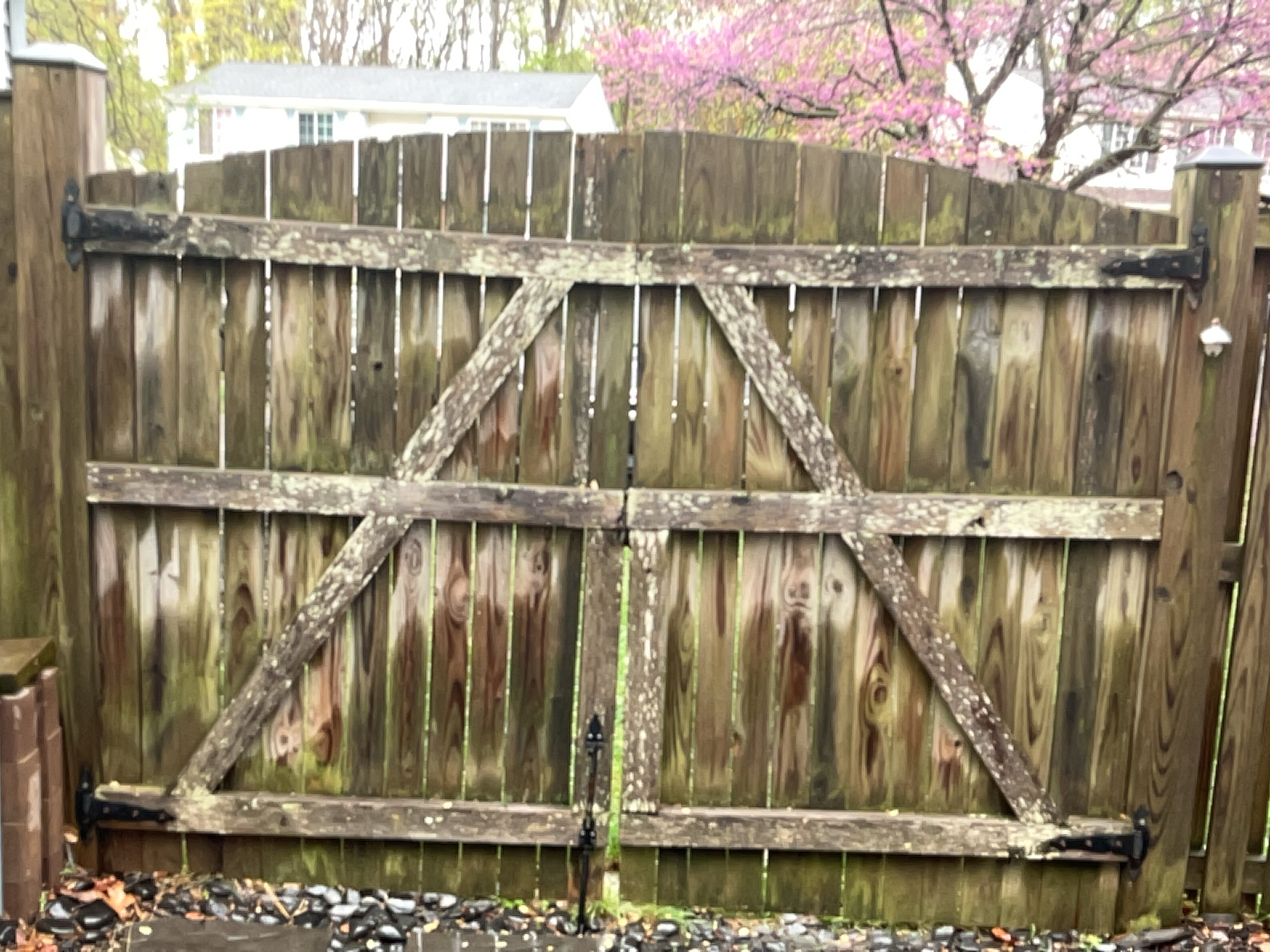
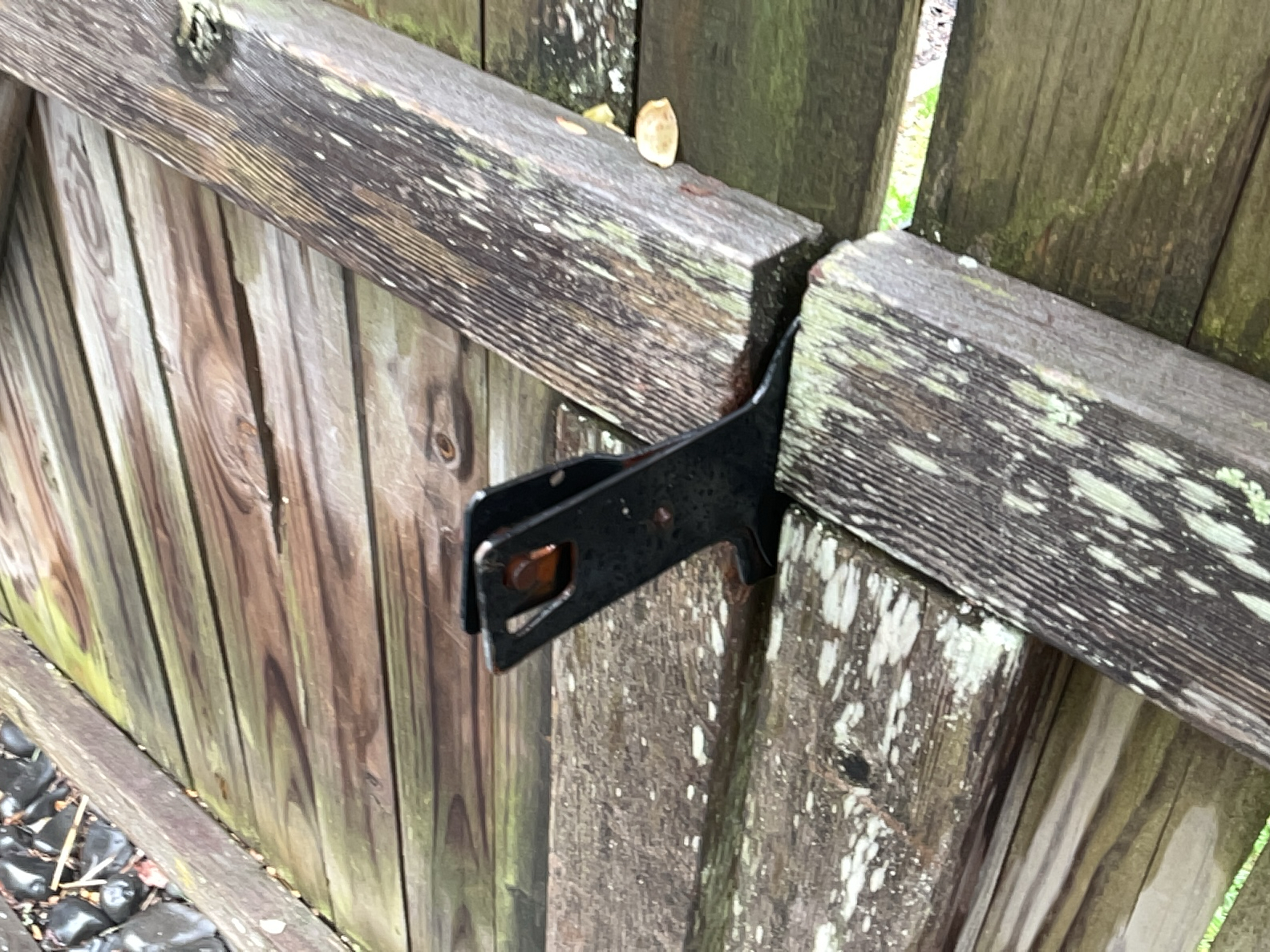
Exterior Gates: Difficult to Open/Close
Gate Difficult to Open
The gate was difficult to open and close. Recommend repair hinge or post as needed by qualified person.
 |  |
Outbuildings
Not Inspected
Roof, Chimney, and Gutters
General Roof Photos
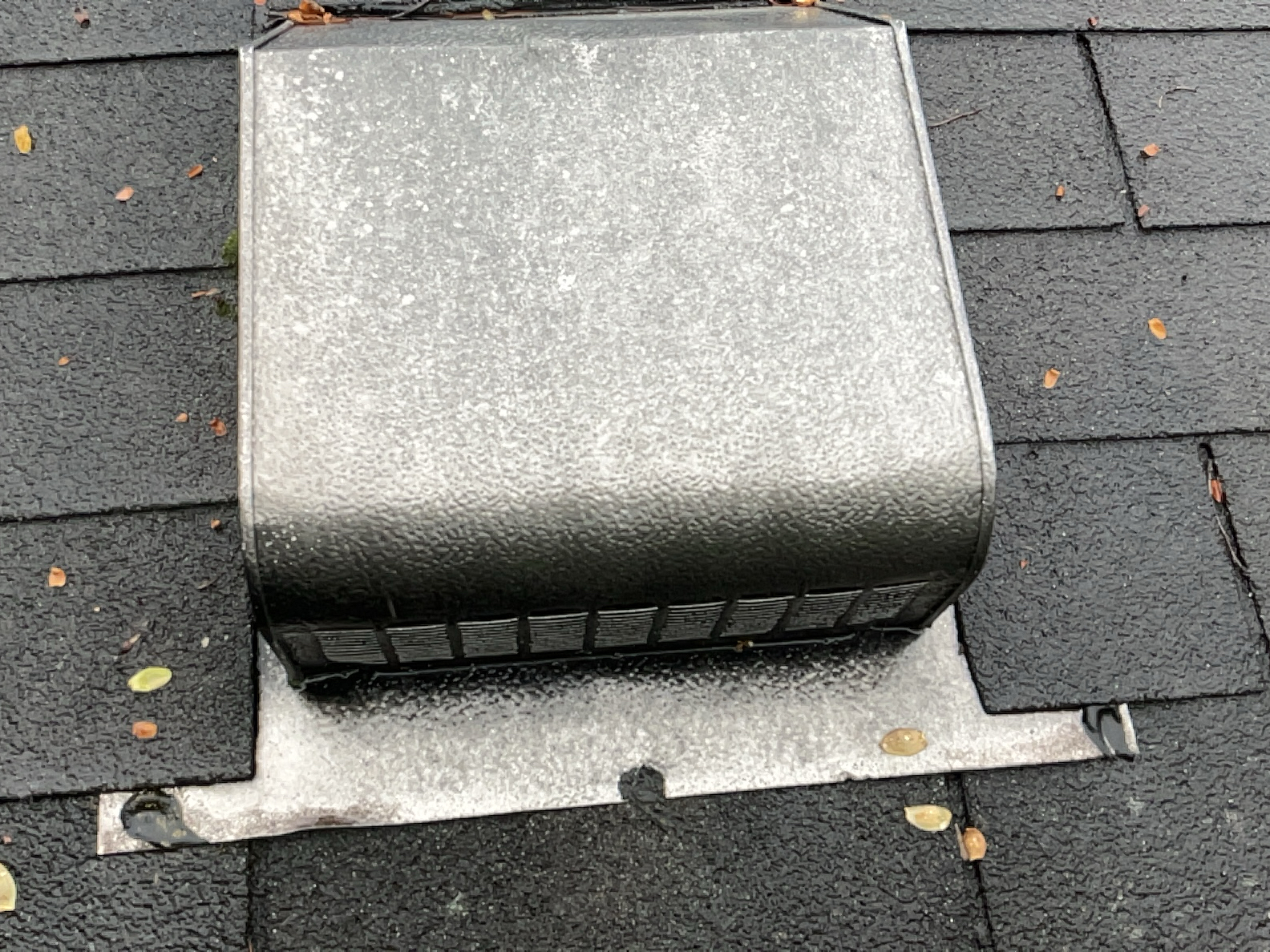
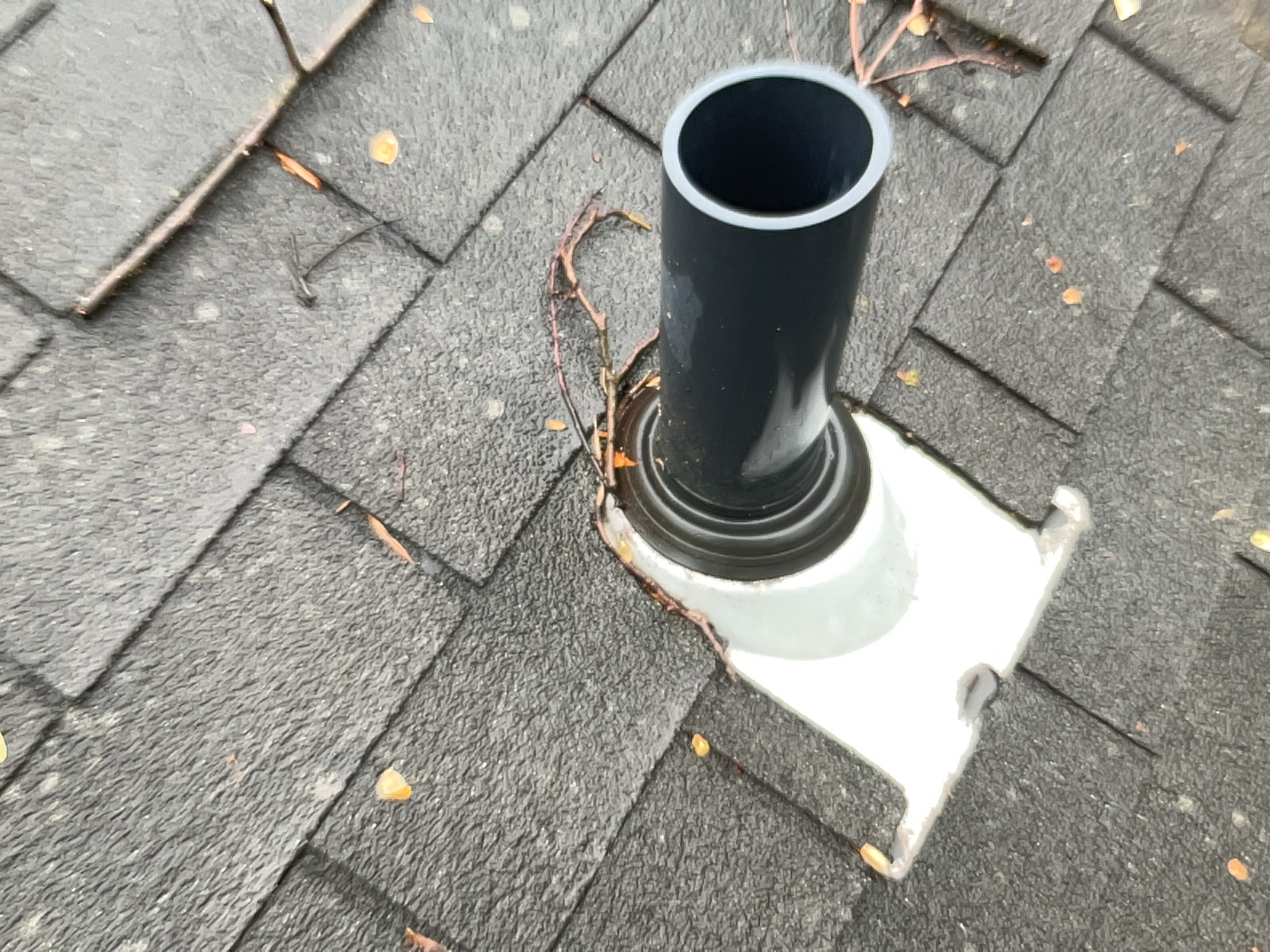
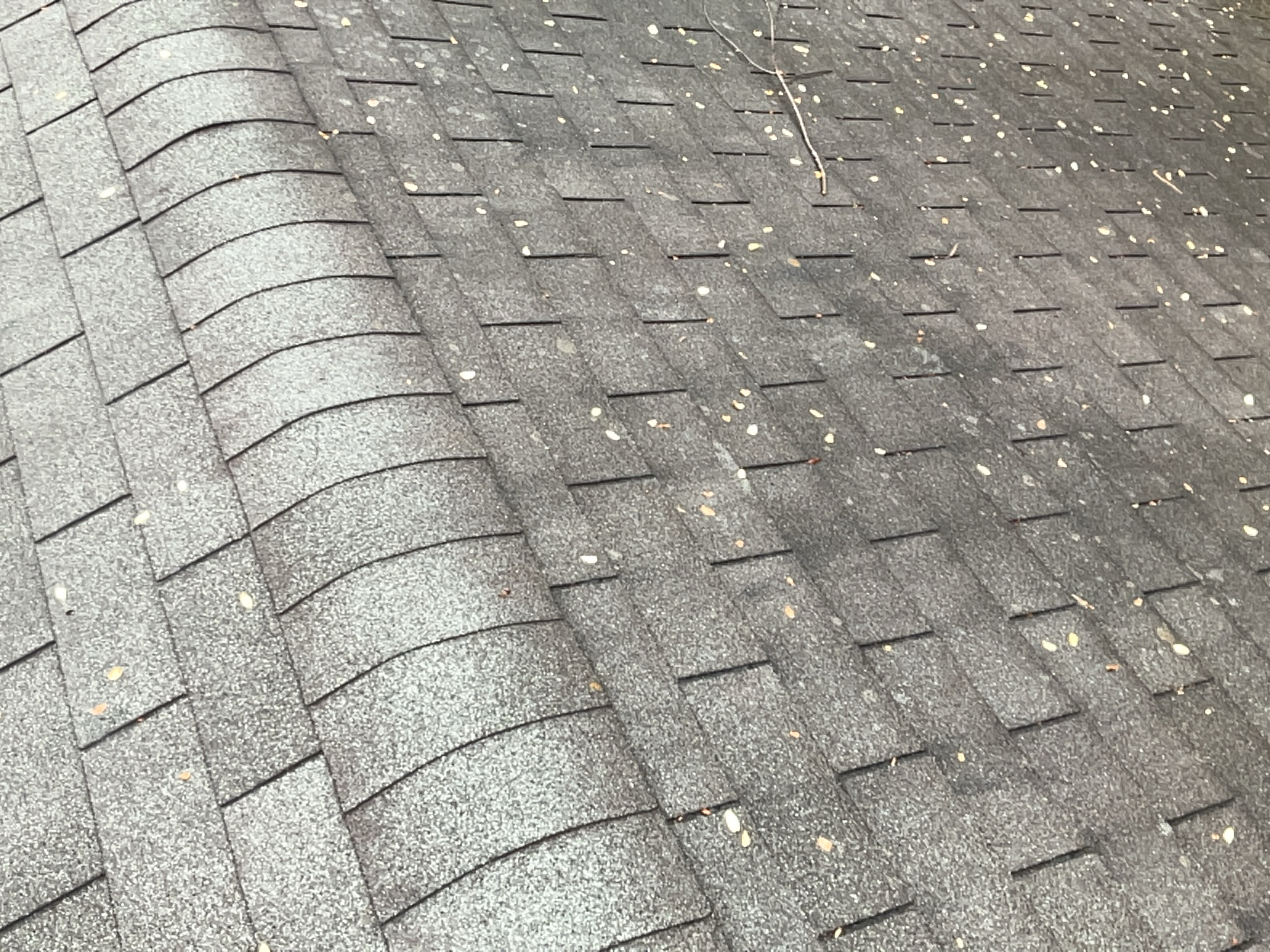
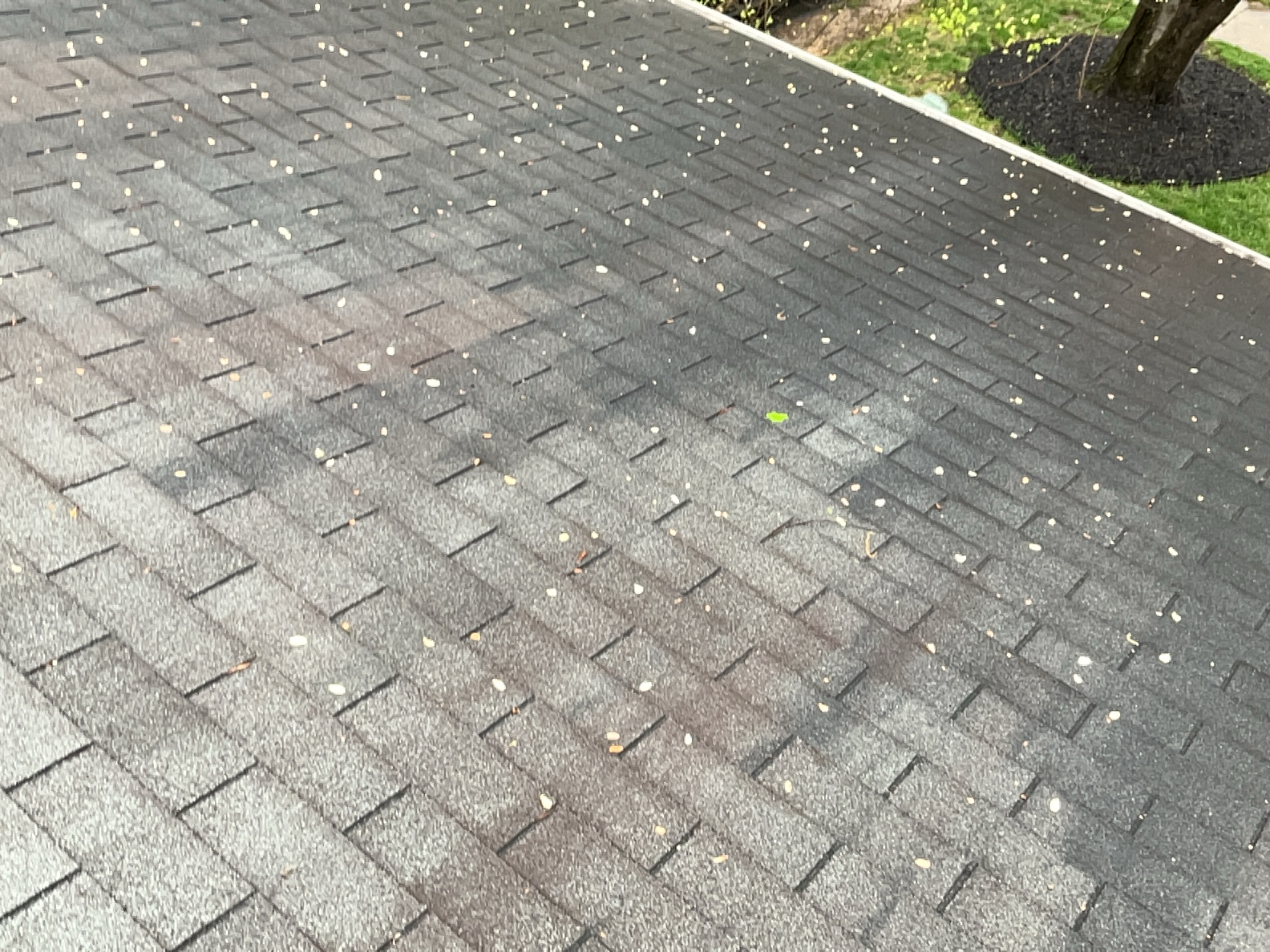
General view of roof and components.
 |  | |
Roof Materials
Method of Roof Inspection: Walked on Roof
Roof Style: Gable
Roof Covering Materials: Three Tab Composition Shingle
Three Tab Composition Shingle
Composite or "Asphalt" shingles are the most popular roof coverings. They are called “composition” because they are a composite of a fiberglass reinforcement mat that is coated with asphalt and mineral fillers, which adhere to the fiberglass. The asphalt forms a waterproof barrier. Ceramic granules, or “gravel” are embedded in the surface of the asphalt top to provide additional durability. The life expectancy of these composite shingles are usually 20-25 years.
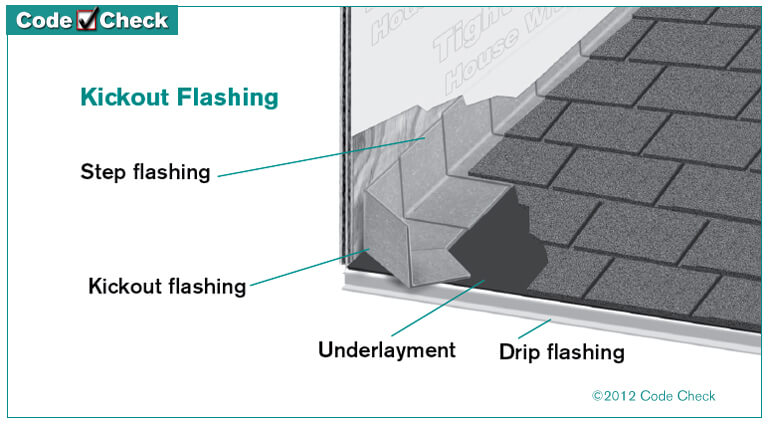
Flashing : Missing Kick-out Flashing
Common Observations: Moss
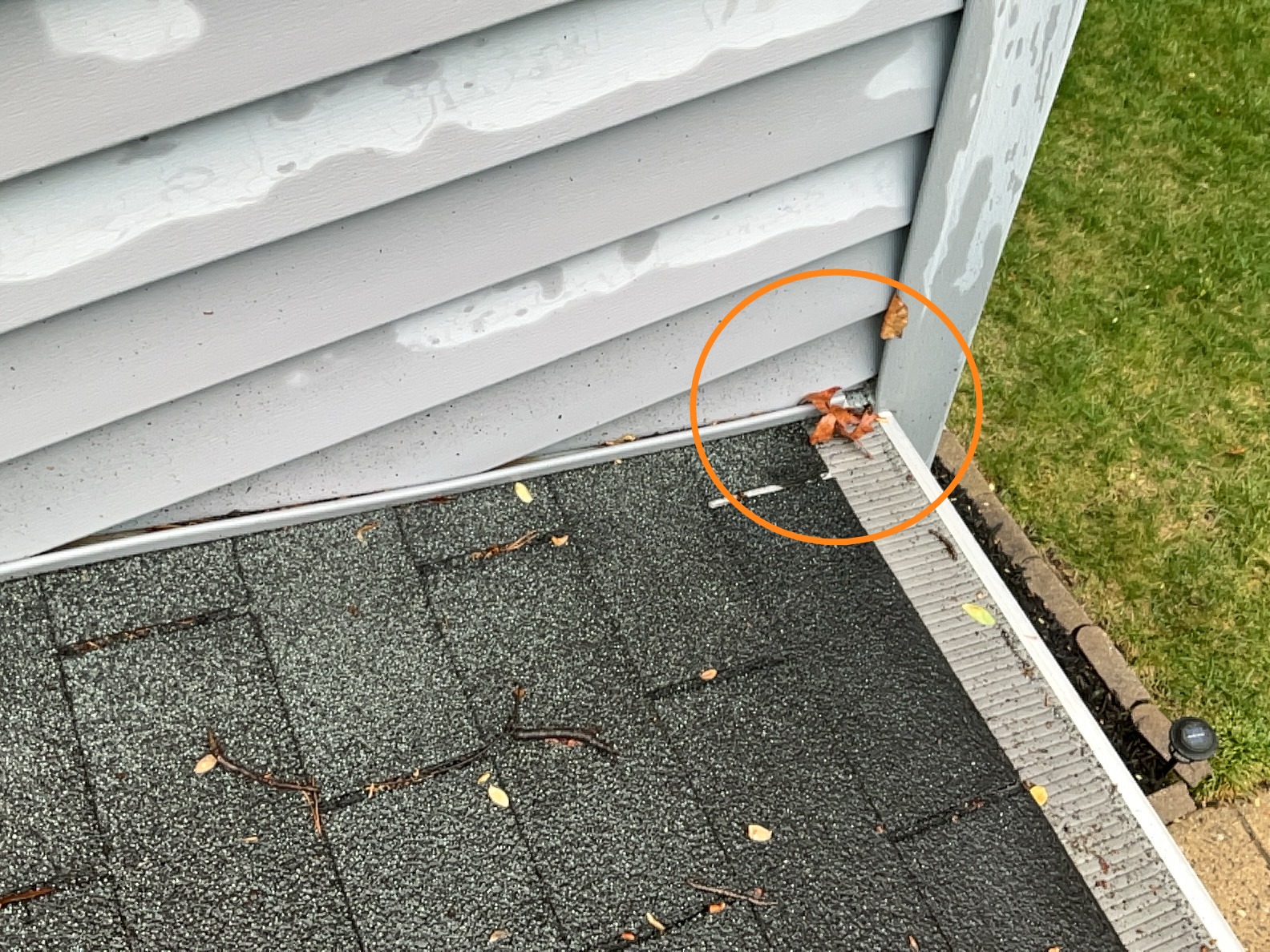
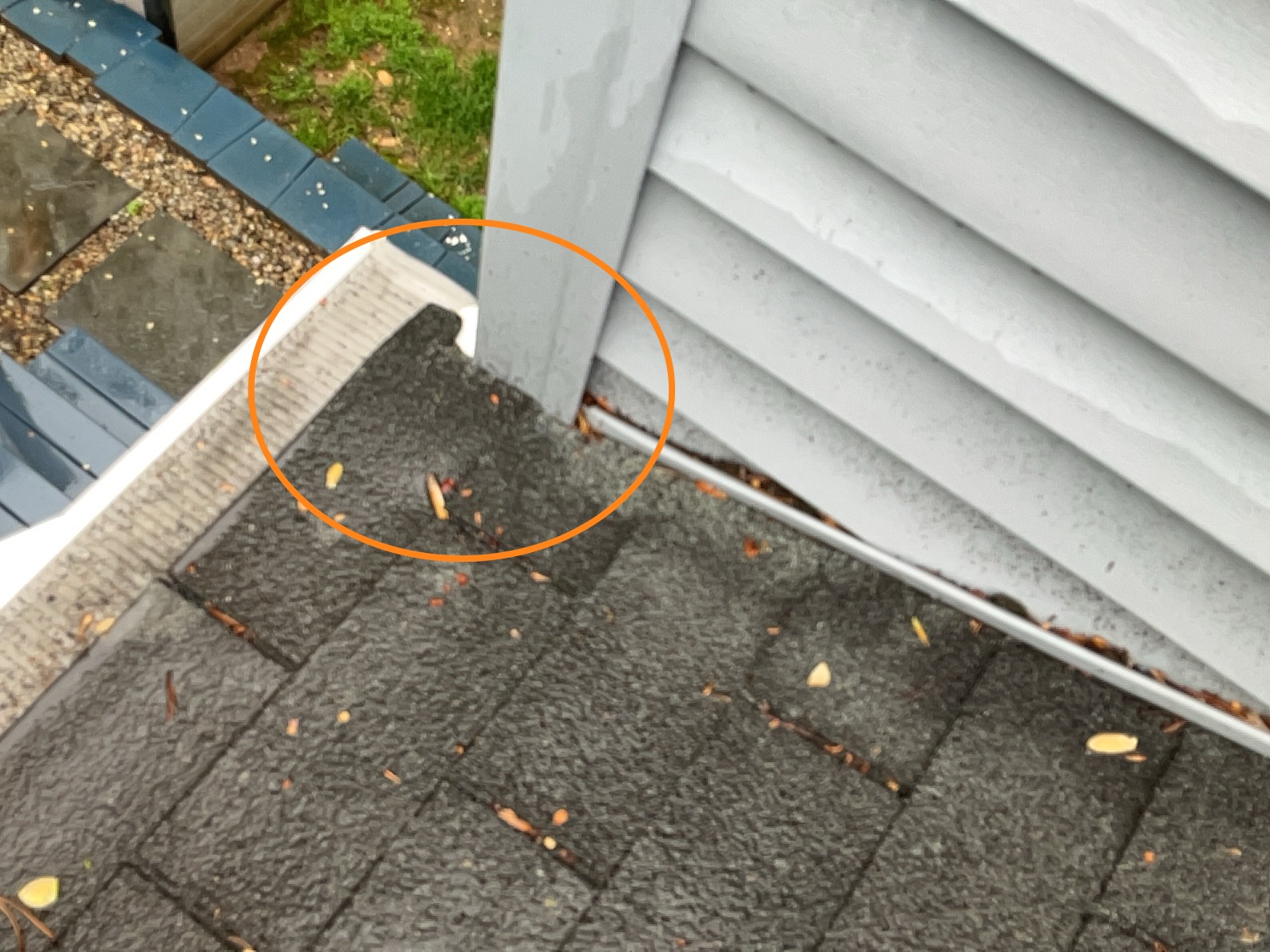
Missing Kick-out Flashing
Kick-out (or diverter flashing) is a crucial component that redirects rainwater away from a vertical wall-roof intersection and into a gutter. It prevents water from running behind siding, which often leads to severe rot and damage
Moss on Roof
Moss and lichen growth was noted on the roof. The presence of moss will accelerate the deterioration of a roofing material. Recommend the roof be cleaned and treated with a moss inhibitor. Zinc or galvanized strips at the peak and ridge lines can also be effective to prevent additional build-up of moss afterwards.
Gutters and Downspouts
Gutter and Downspout Materials: Aluminum
Common Observations: Improperly Sloped
Improperly Sloped
The gutters are not properly sloped to drain. This can lead to pooling water near the foundation. Repair as needed so the gutters are reliably collecting and shedding water.
Roof Penetrations
Roof Penetrations: Plumbing Vent, Exhaust Vent
Chimneys
None Noted
Exterior
Siding and Trim
Trim Material: Vinyl, Wood
Siding Material: Vinyl
Exterior Vent and Exhaust
Vent Cover Loose
Exterior cover for the dryer vent was loose. Recommend vent be properly secured and sealed against water intrusion.
Eaves
Characteristics: Soffit Vents Noted
Exterior Doors
Exterior Door Styles: Solid Core
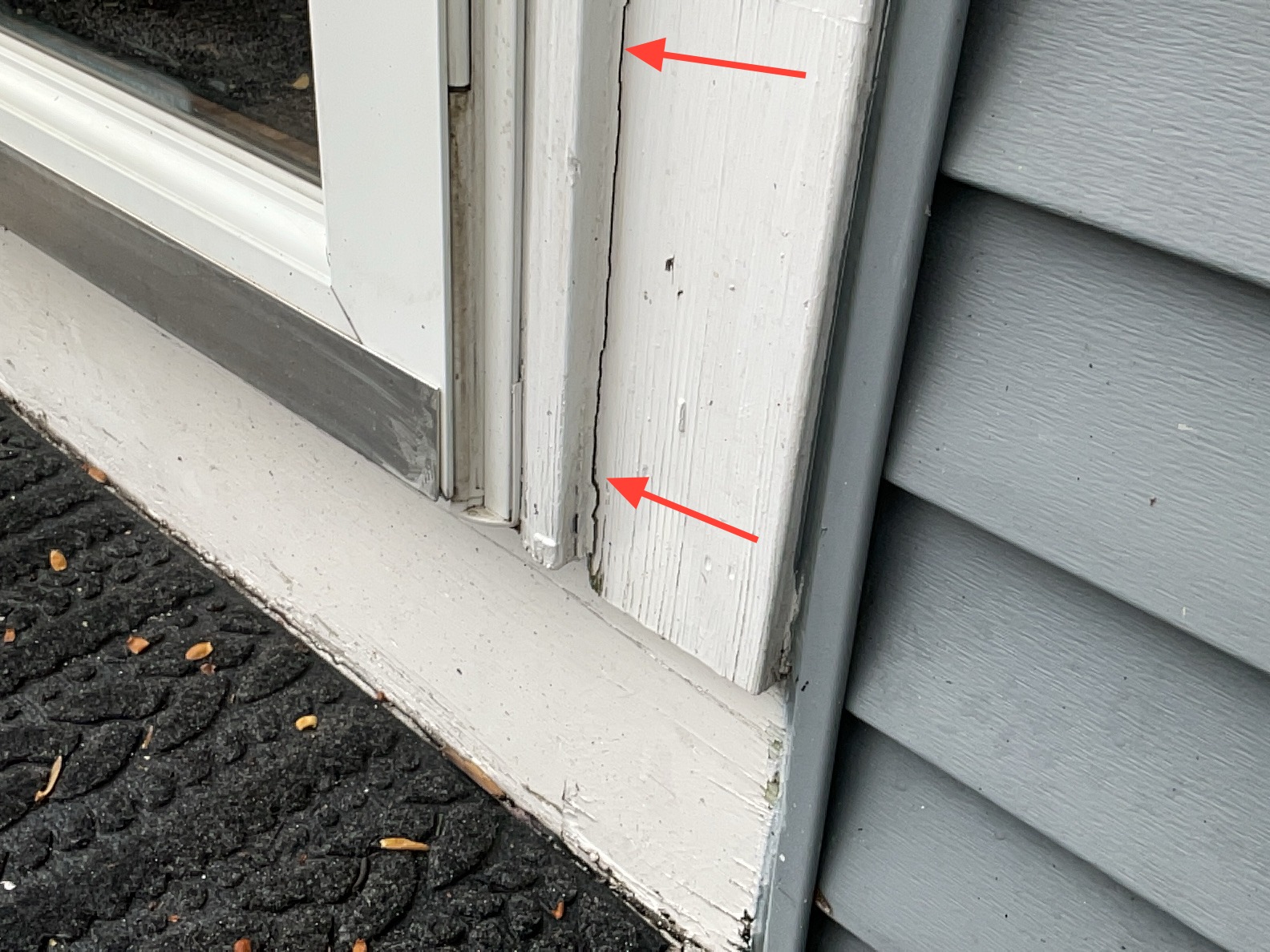
Deteriorated Caulking
Deteriorated caulking was noted around the exterior door. Caulking around doors is essential to seal gaps, acting as a barrier against air infiltration, moisture, and pests, which improves energy efficiency, prevents water damage, and enhances comfort. Recommend ensuring all exterior doors are properly caulked by qualified person.
Exterior Windows
Window Frames: Vinyl
Electrical
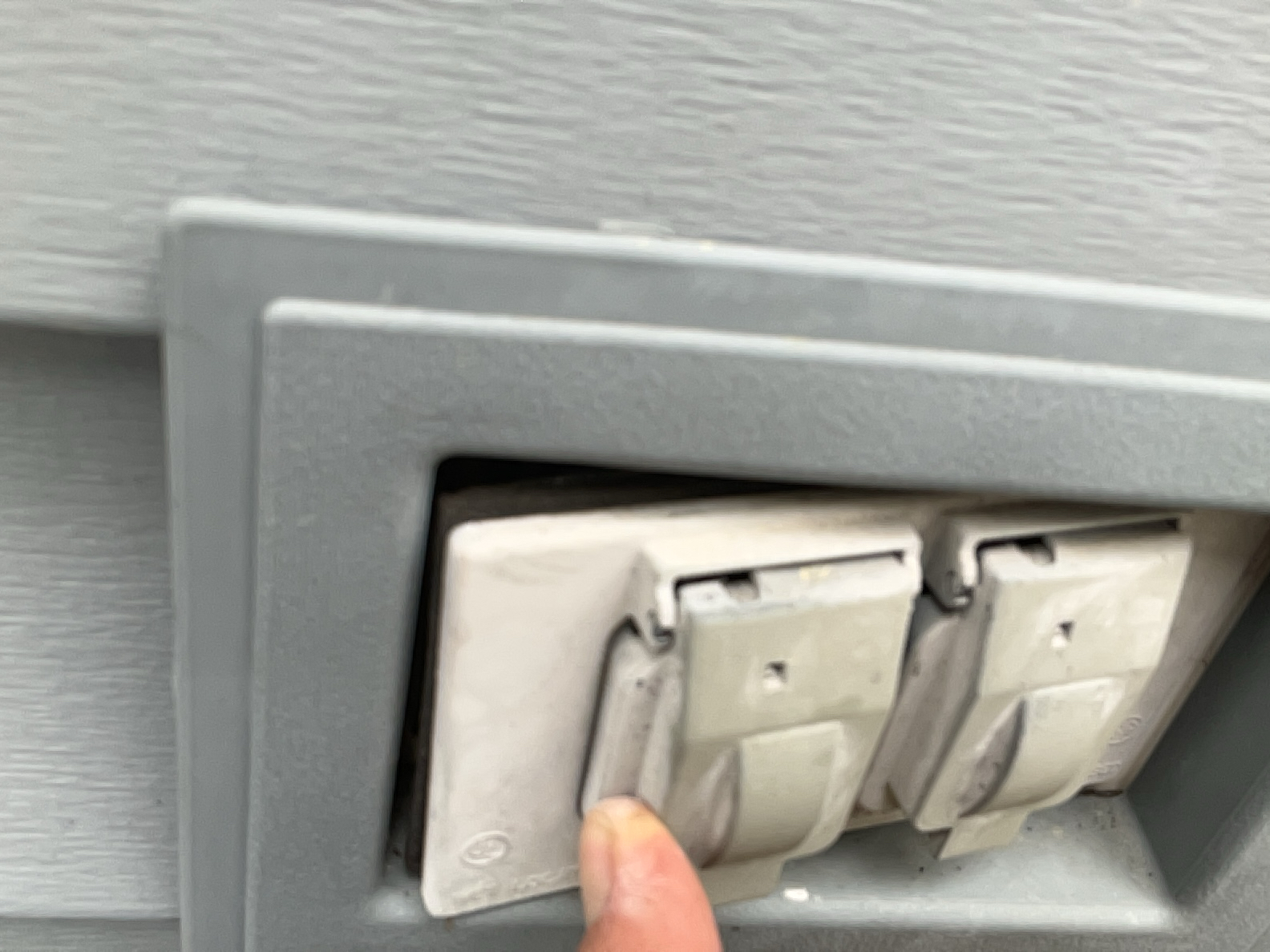
Loose Exterior Outlet
One or more exterior outlets were loose. Recommend securing by qualified contractor to prevent water intrusion and potential shock hazard.
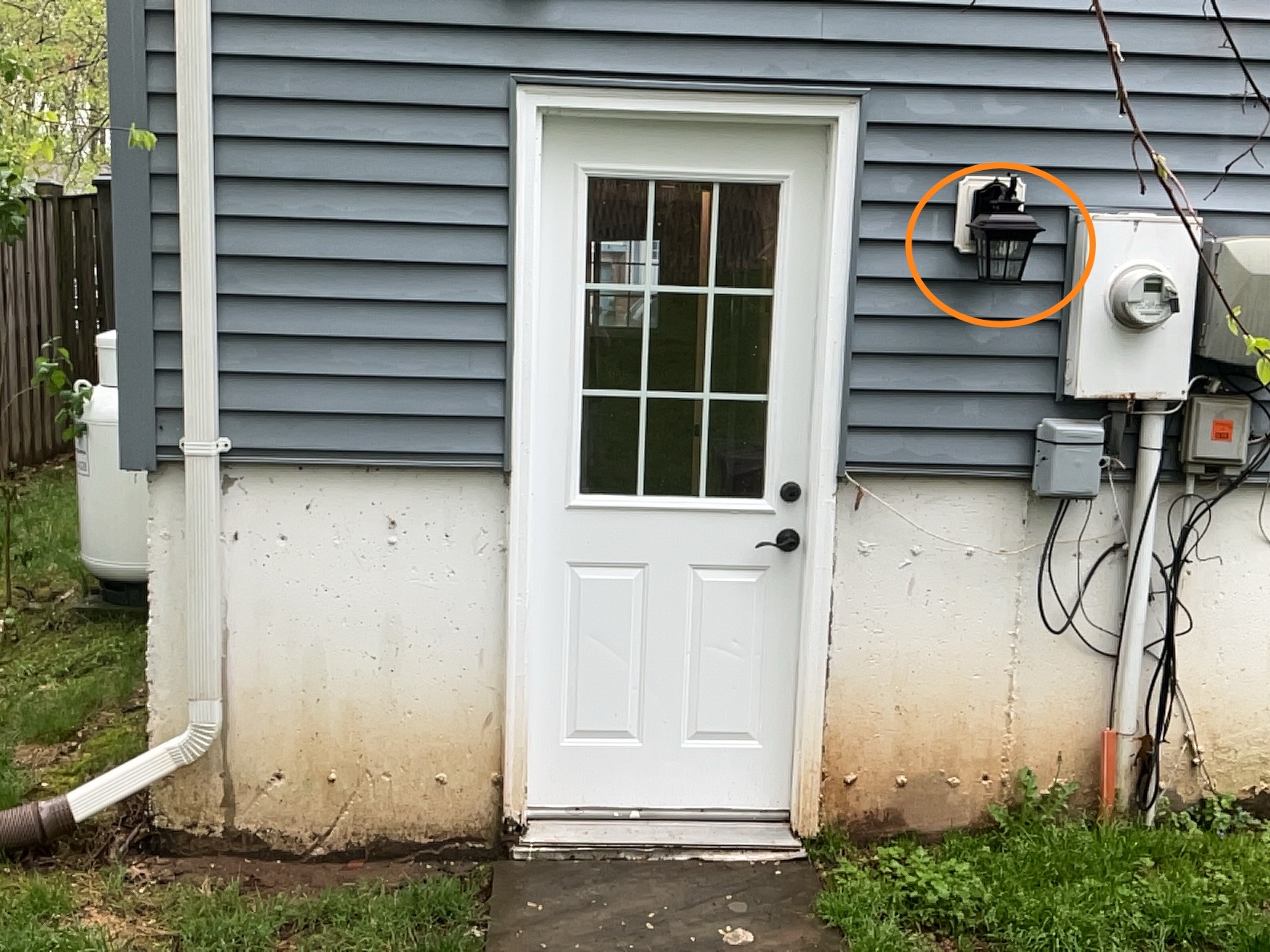
Exterior Light Not On
One or more exterior lights did not turn on at the time of inspection. This could be due to damaged or missing bulb, or light may be on a sensor. Recommend confirming operation with seller prior to close and repair as needed.
Decks, Porches, and Balconies
Present
Ledger Board
Structure: Not Visible
Posts, Beams, and Footings
Type: Not Visible
Deck Structure Not Visible
Access to underneath the deck is limited or not accessible. Deck components such as the ledger, flashing, posts, and beams have not been inspected.
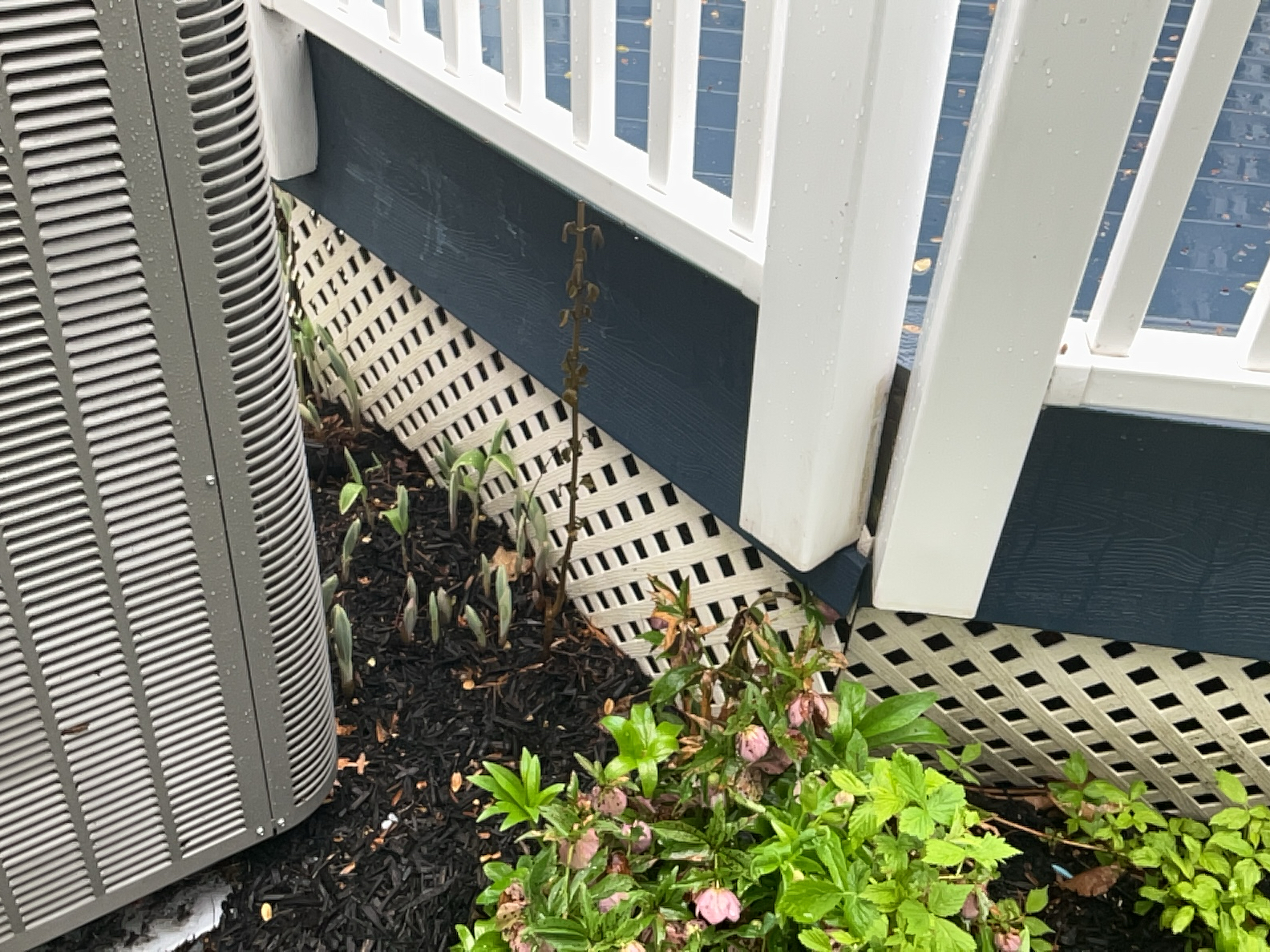
Guardrail
Material: Plastic
Stairs
Exterior Stairs: Present
Decking Material
Type: Composite
Inadequate Gaping
Fixing inadequate deck board spacing is critical to prevent buckling, warping, and cupping caused by natural moisture-driven expansion. Proper gaps, typically 1/8th to 3/16th inches, ensure water drainage, prevent mold growth, improve airflow, and make cleaning easier, ultimately increasing the deck's longevity and safety. Recommend board spacing be improved by qualified deck contractor.
Crawlspace
General Photos
General Photos
 |  |  |
 |  |
Access
Method of Inspection: Crawled
Access Location: Interior Hatch
Visual Inspection Limitation
During inspection of the crawlspace every effort is made to inspect the entire space. Visual inspection of crawl spaces is difficult and limited as access is often restricted by pipes, ducts, and sub-floor insulation as well as limited height and space clearances.
Vapor Barrier
Vapor Barrier Material: Encapsulated
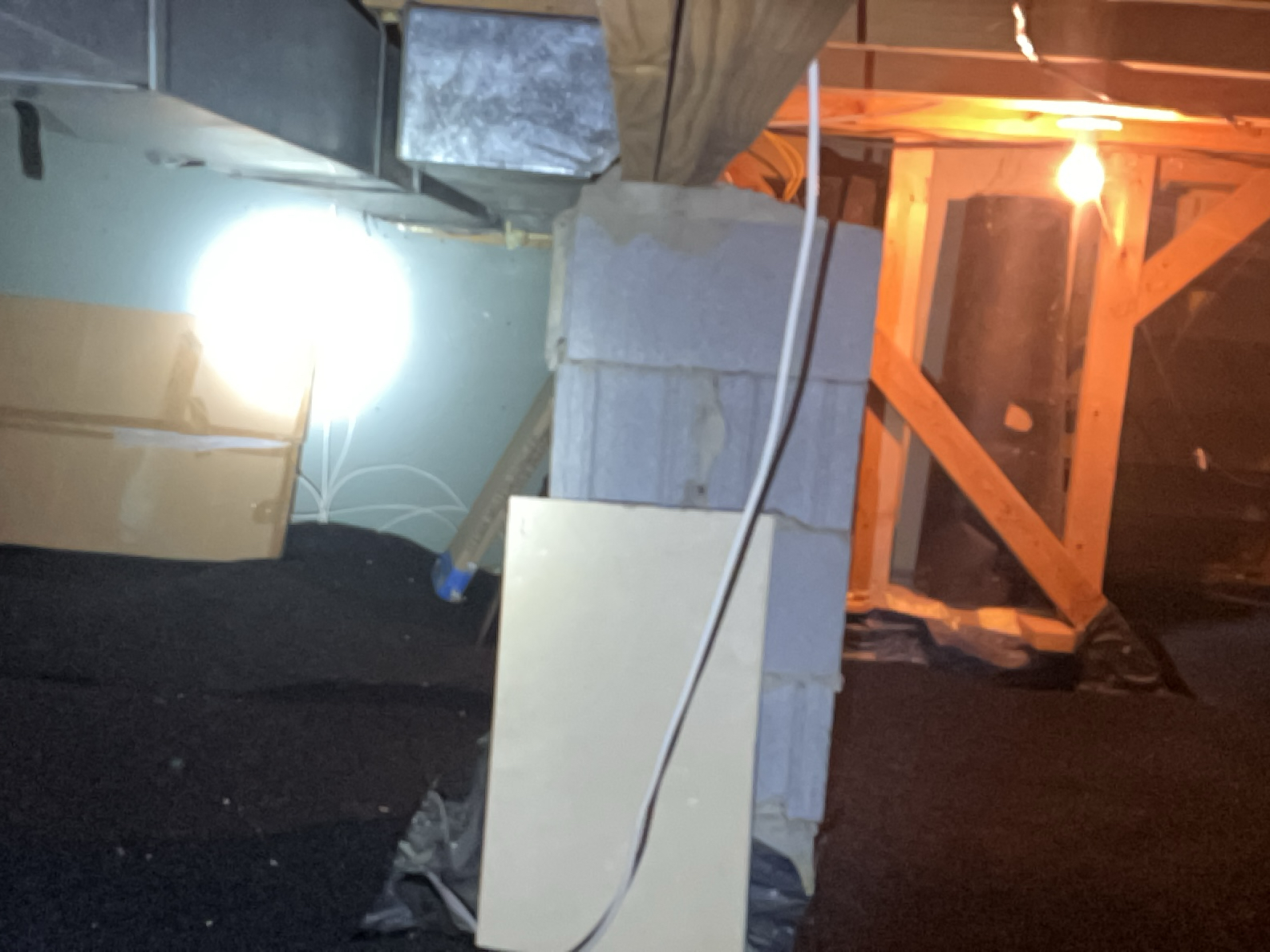
Encapsulated Crawl Space
An encapsulated crawl space is a sealed, dry, and conditioned area created by lining the floor, walls, and piers with a heavy-duty, reinforced polyethylene barrier that is 10 - 20 mil in thickness and sealing all seams. This process transforms a vented, damp crawl space into a clean, humidity-controlled environment, often incorporating a dehumidifier to prevent mold, pests, and structural rot.
Ventilation
Ventilation Method: Encapsulated
Structure
Walls: Poured Concrete
Posts, Beams, Joists & Footings: Posts (Block)
Subfloor and Insulation: Subfloor (Plywood)
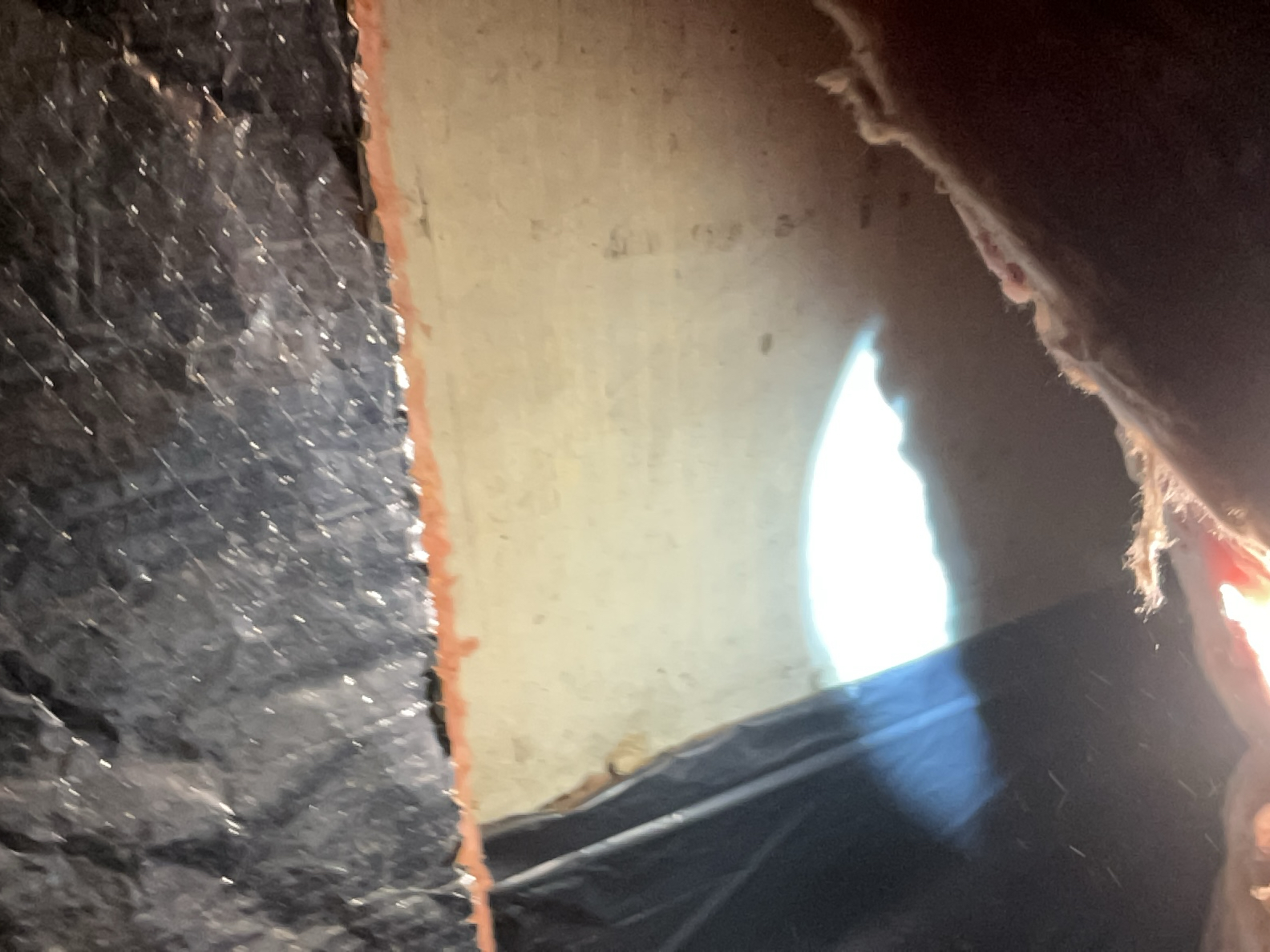
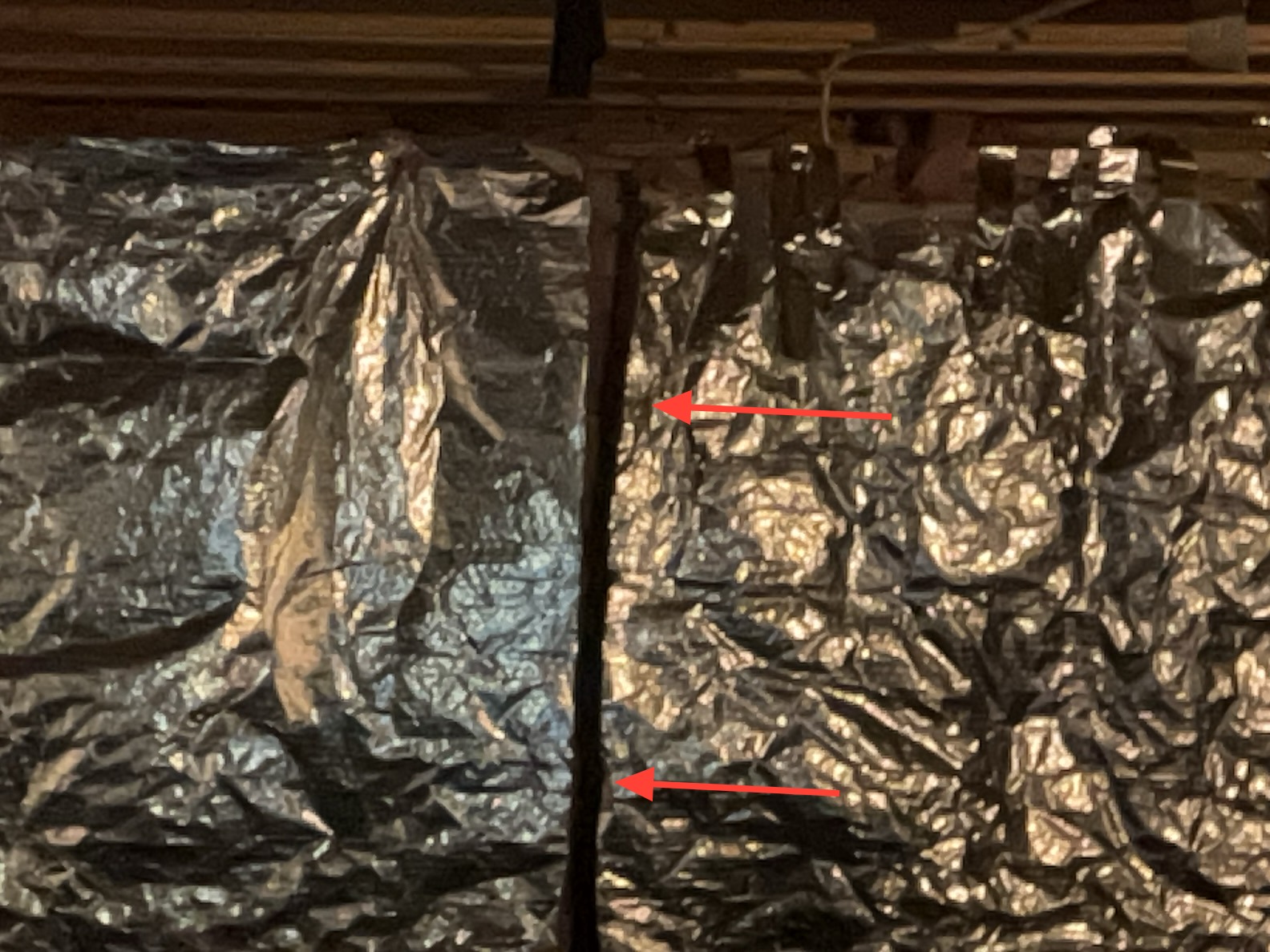
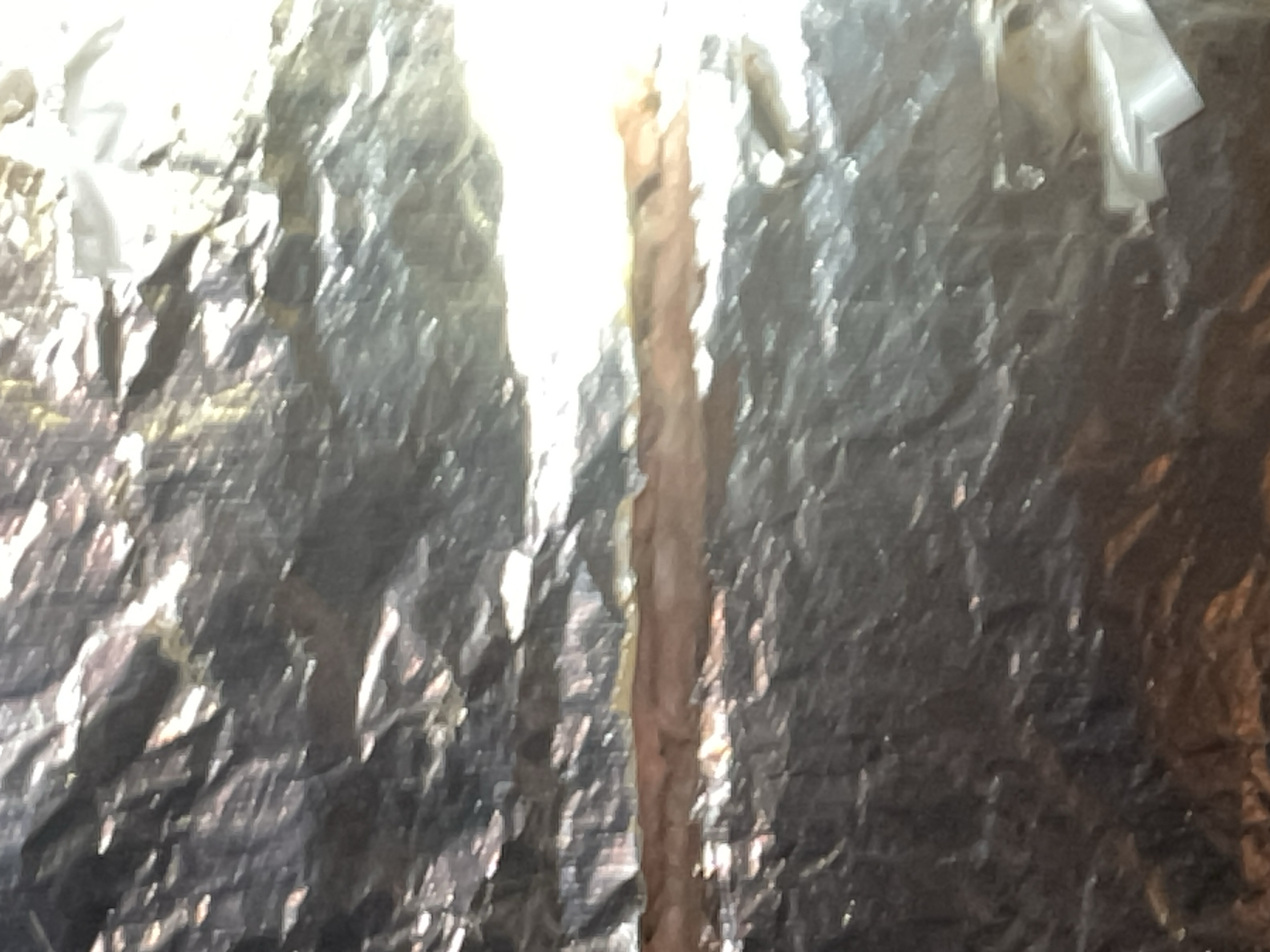
Incomplete Insulation
The insulation in the crawl space is incomplete and requires repair. The seams on the wall insulation should be taped. Recommend repair by qualified foundation/insulation contractor.
 |
Moisture Conditions
Bio-Growth
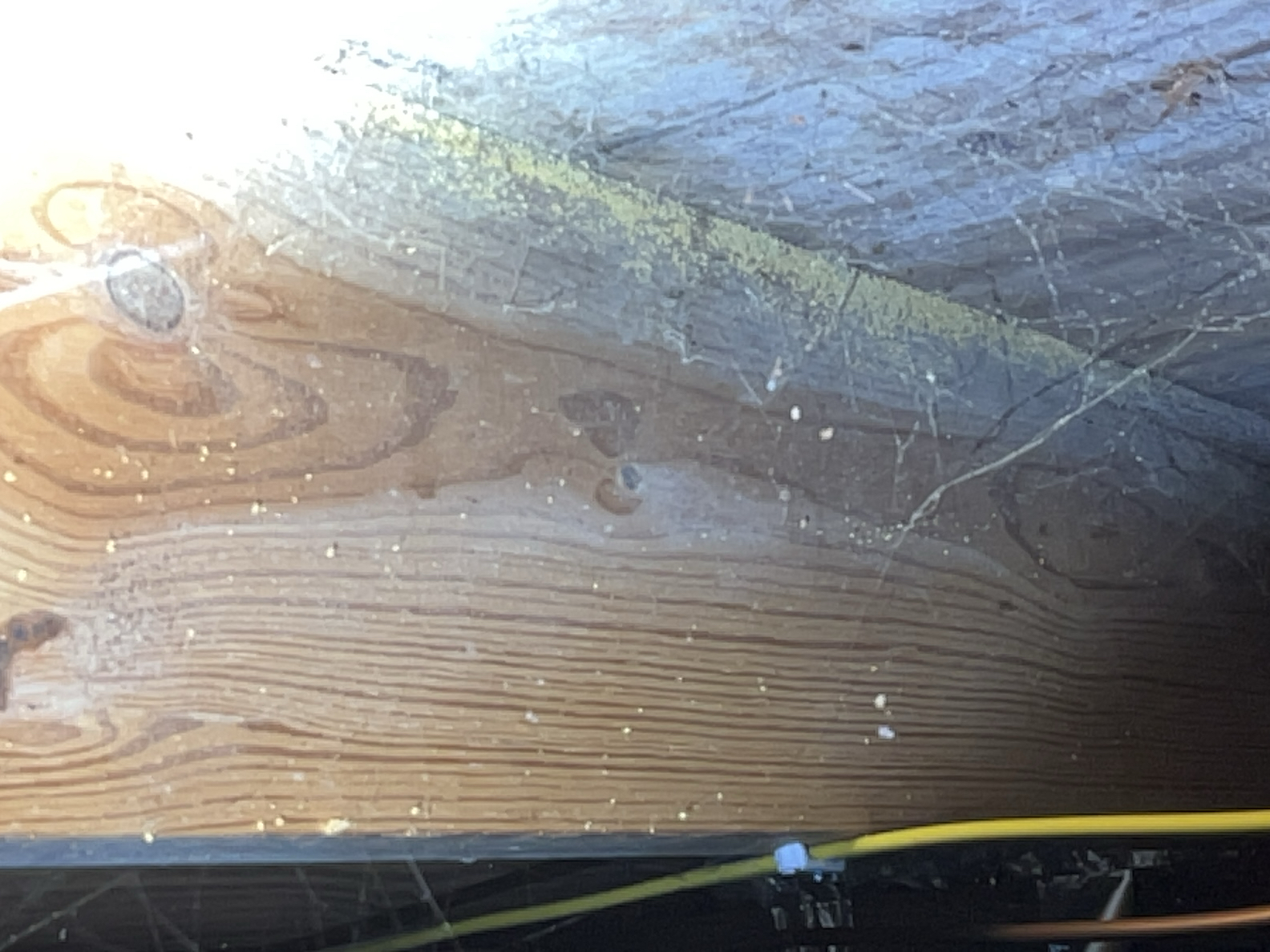
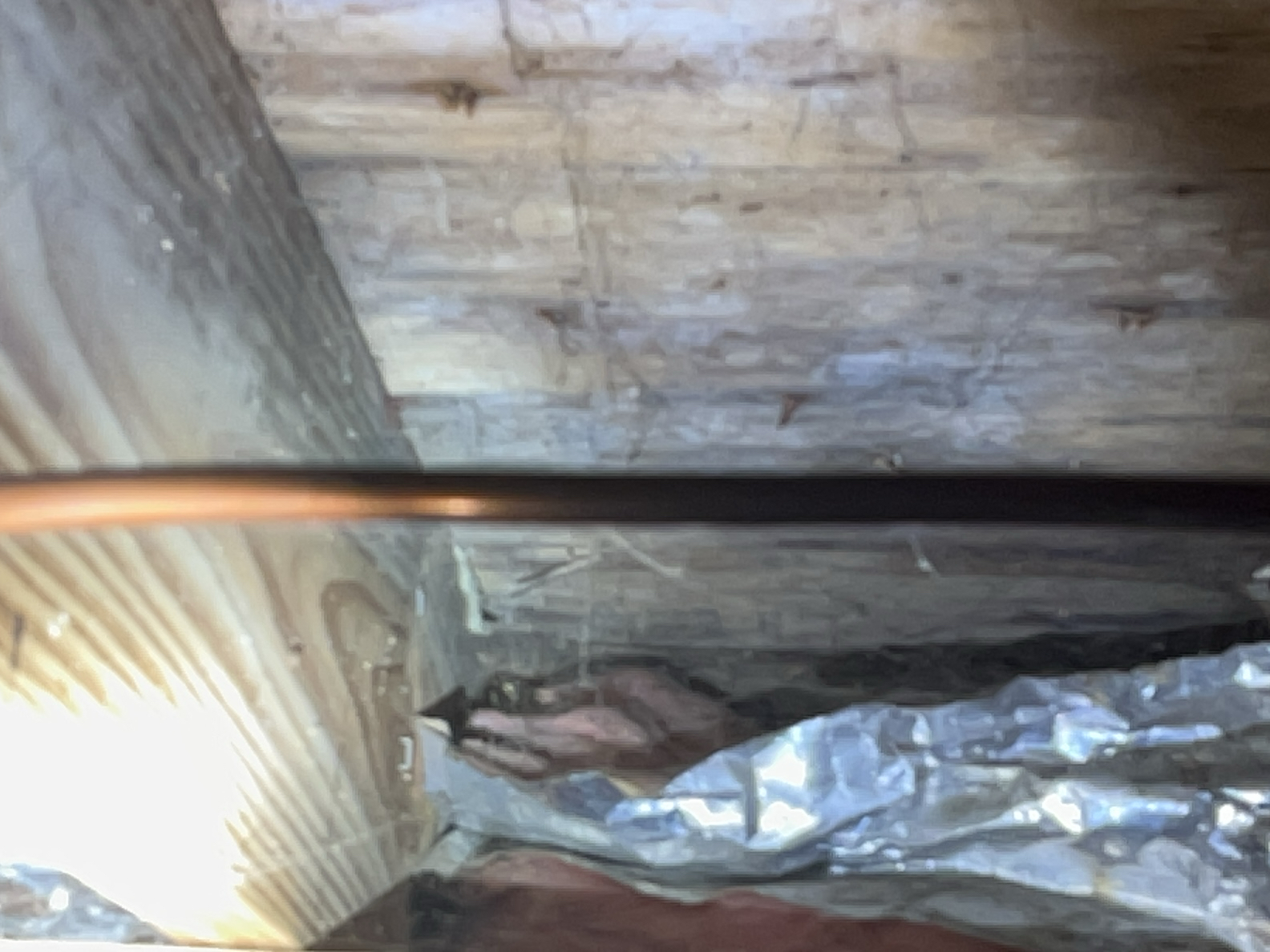
Bio-Growth
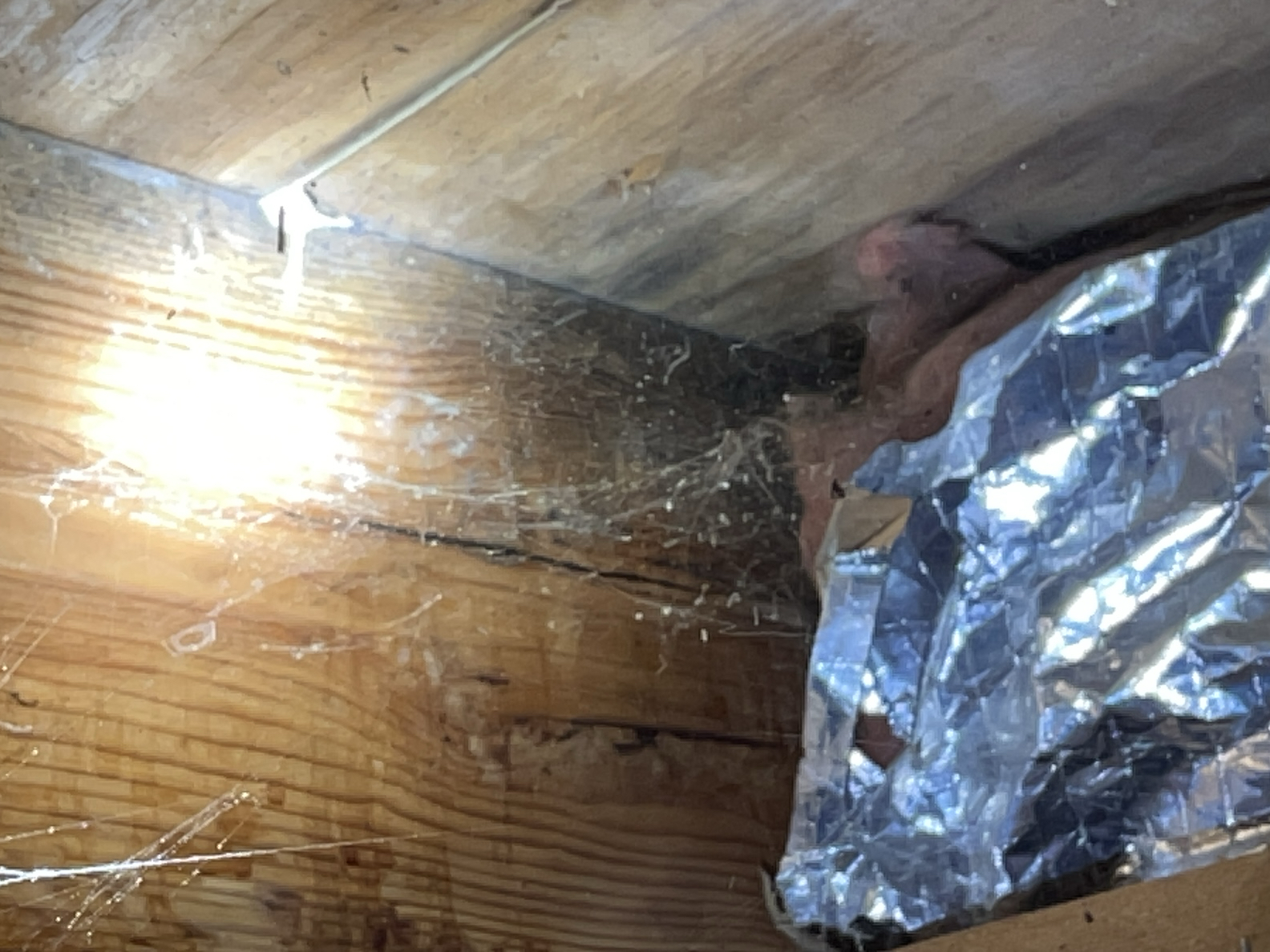
Minor to moderate levels of bio-growth were noted in the crawlspace. Recommend that wooden joists and beams be cleaned with an antimicrobial agent and that steps are taken to control moisture levels in the crawl space.
 |  |  |
Fuel Storage and Distribution
Oil Storage
Active Above Ground
Above Ground Oil Tank
Oil tank appeared in satisfactory and functional condition. Recommend routine monitoring of the tank and oil lines by a qualified professional during annual service.
Propane Storage
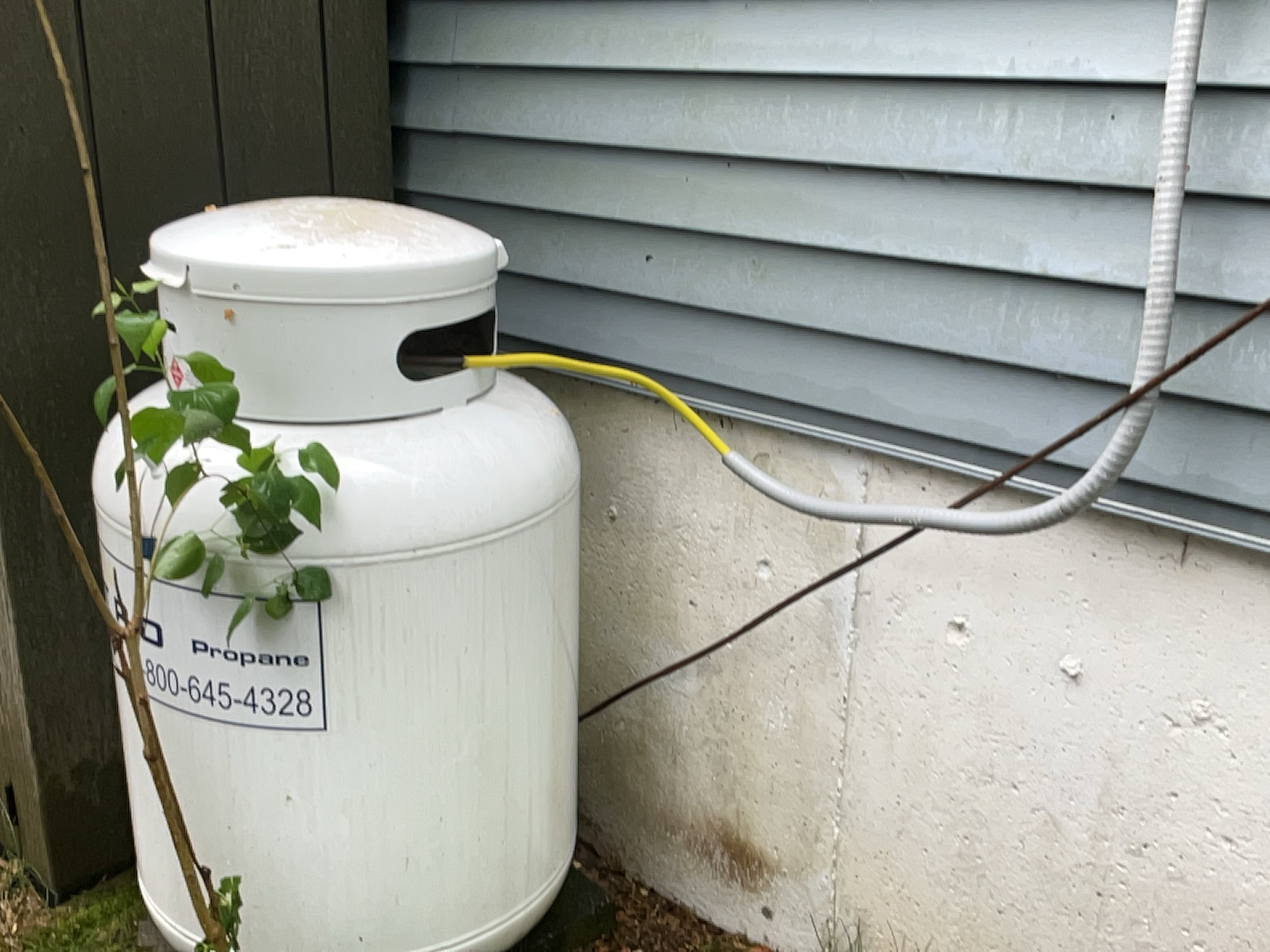
Storage Type: Above Ground Tank
Tank Location: Right Side of House
Shutoff Location: At Tank
Gas Meter
None Noted
Fuel Piping
Gas Piping Materials: Copper
HVAC Zone 1
General
About HVAC
Most HVAC (heating, ventilating and air-conditioning) systems in houses are relatively simple in design and operation. They consist of four components: controls, fuel supply, heating or cooling unit, and distribution system. The adequacy of heating and cooling is often quite subjective and depends upon occupant perceptions that are affected by the distribution of air, the location of return-air vents, air velocity, the sound of the system in operation, and similar characteristics. I recommend getting the HVAC system inspected and serviced every year. And if you're system has an air filter, be sure to keep that filter cleaned.
Split System
The air conditioning system is a split system in which the cabinet housing the compressor, cooling fan and condensing coils was located physically apart from the evaporator coils. As is typical with split systems, the compressor/condenser cabinet was located at the home's exterior so that the heat collected inside the home could be released to the outside air.
Cooling Equipment
Location: Rear of House
Energy Source/Type: Electric
Year Built: 2024
Heating Equipment
Location: Utility Room
Energy Source: Electric
Heating Method: Forced Air
Year Built: 2006
Incorrect Size
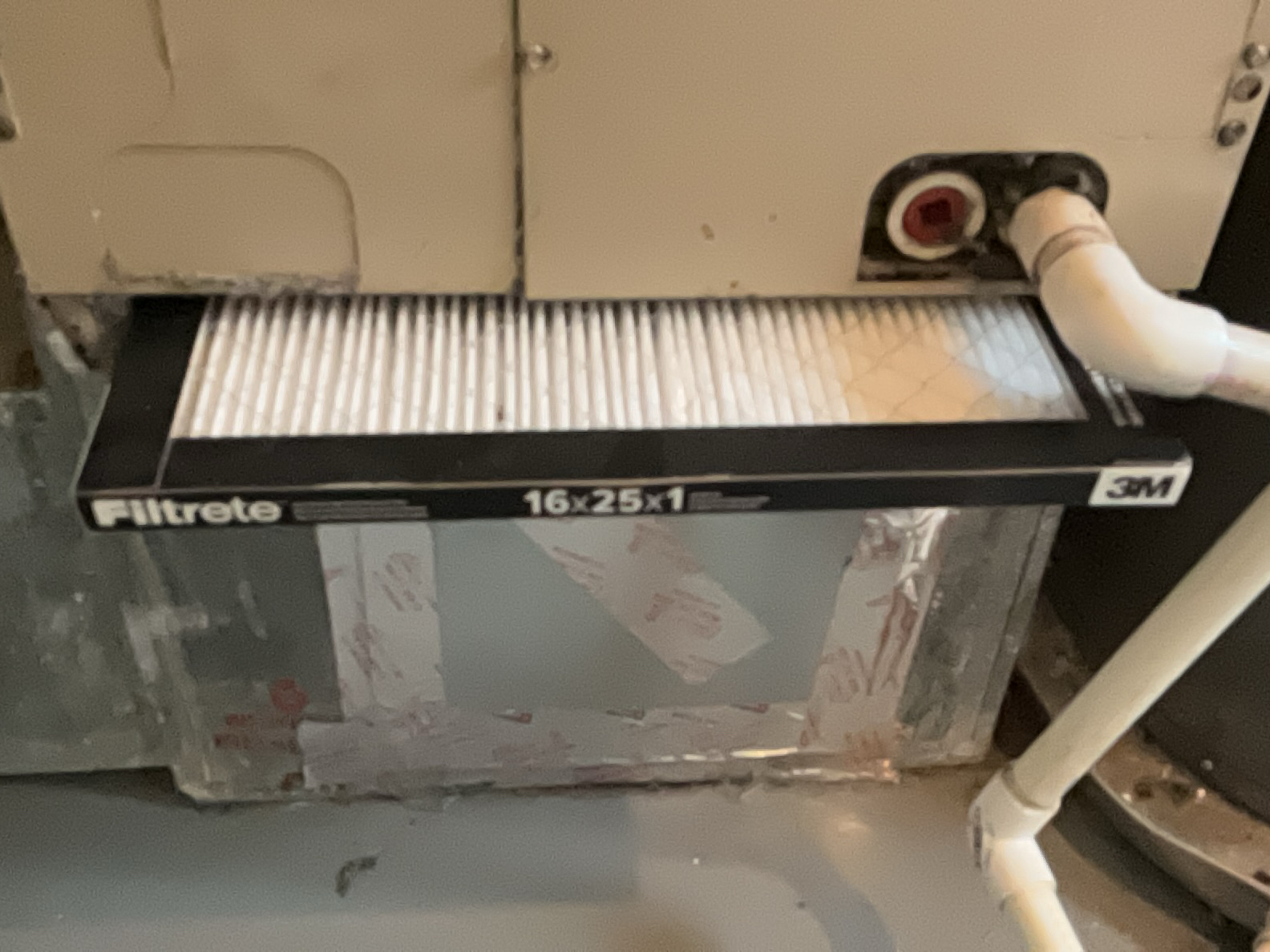
The air filter for the furnace is not correctly sized and is allowing air to bypass the filter. Install the proper sized filter or consult with a qualified HVAC contractor as needed.
Older Unit
The system is at or approaching the end of its typical service life. The unit functioned normally today, but I recommend having the system serviced by a qualified HVAC contractor. The design life of a furnace system is typically15-20 years. This unit is old enough that replacement or updating could be needed at any time.
Operating Controls
Location: Living Room
Type: Digital
Functional At Inspection: Yes
Distribution Systems
Distribution Method: Forced Air/Ducts
Heat Source in Each Room: Present
Temperature Differential: Functional
Plumbing
Water Service Supply
Water Supply: Public Water
Supply Pipe Material: Copper
Water Pressure: Water Pressure Tested
Water Pressure Tested
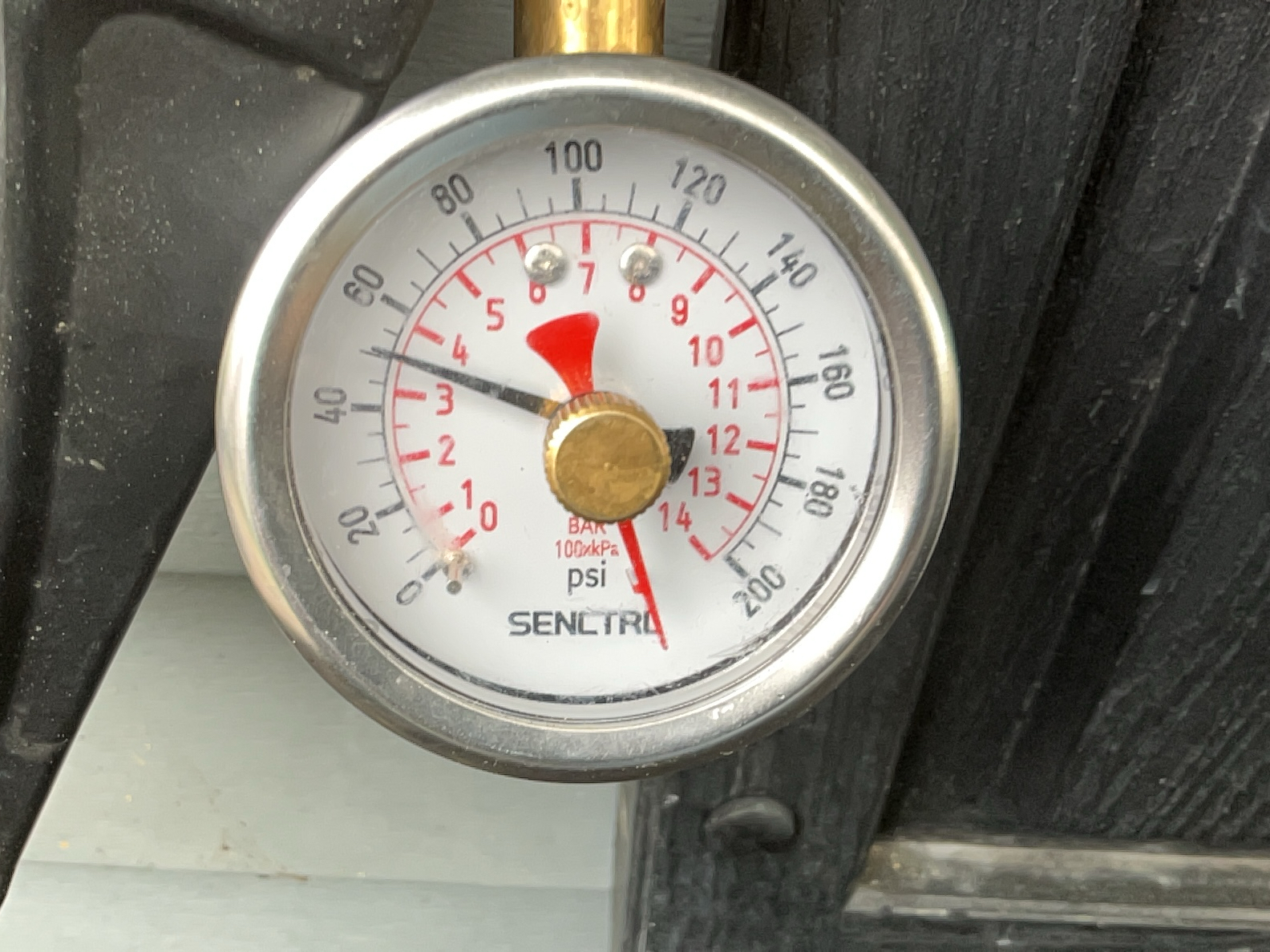
This shows the water pressure test during the inspection. Generally, "normal water pressure" should be between 40-80 PSI.
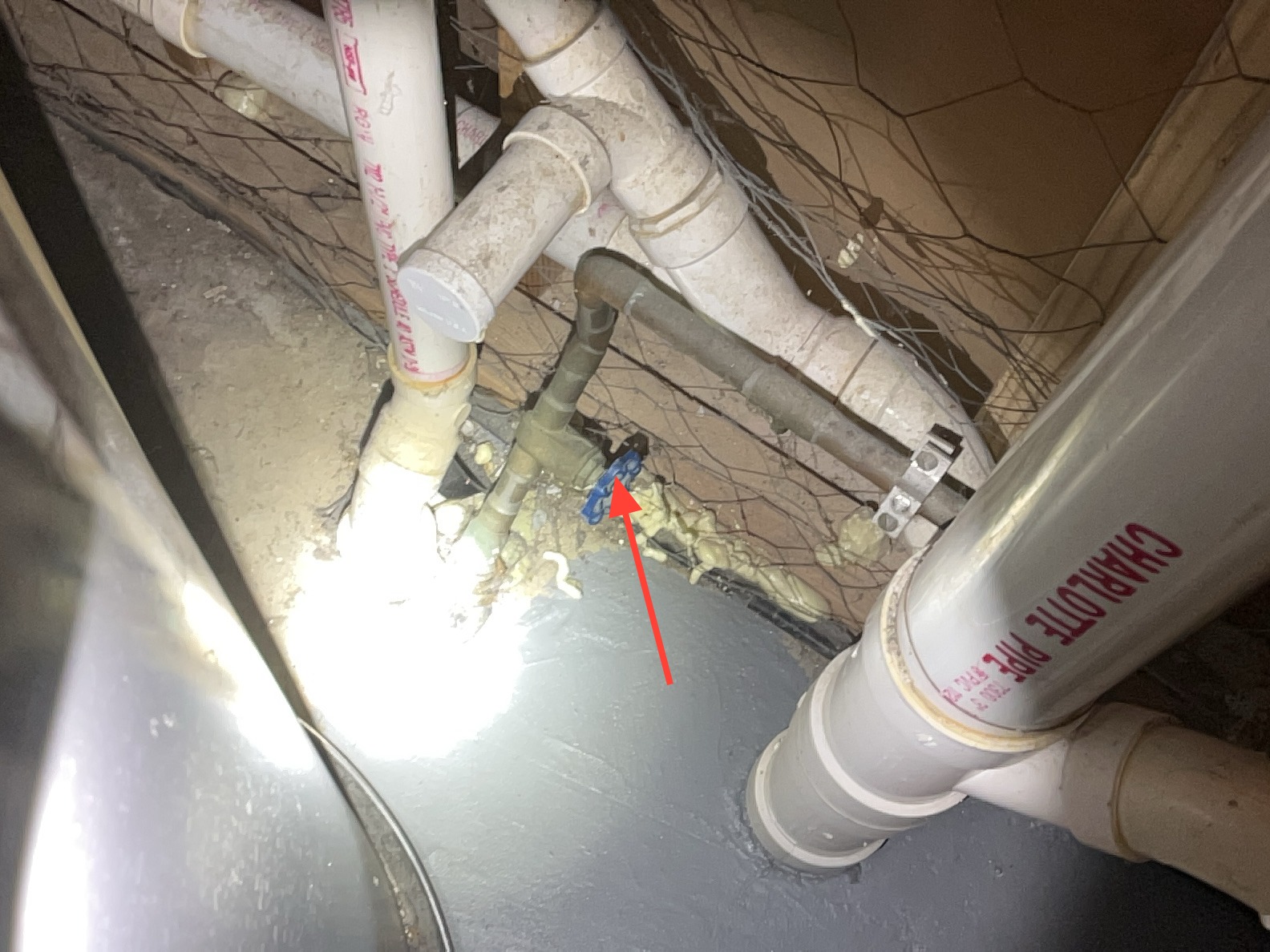
Main Water Shut Off Location: Water Shut Off Location
Water Shut Off Location
This shows the location of the main water shut off..
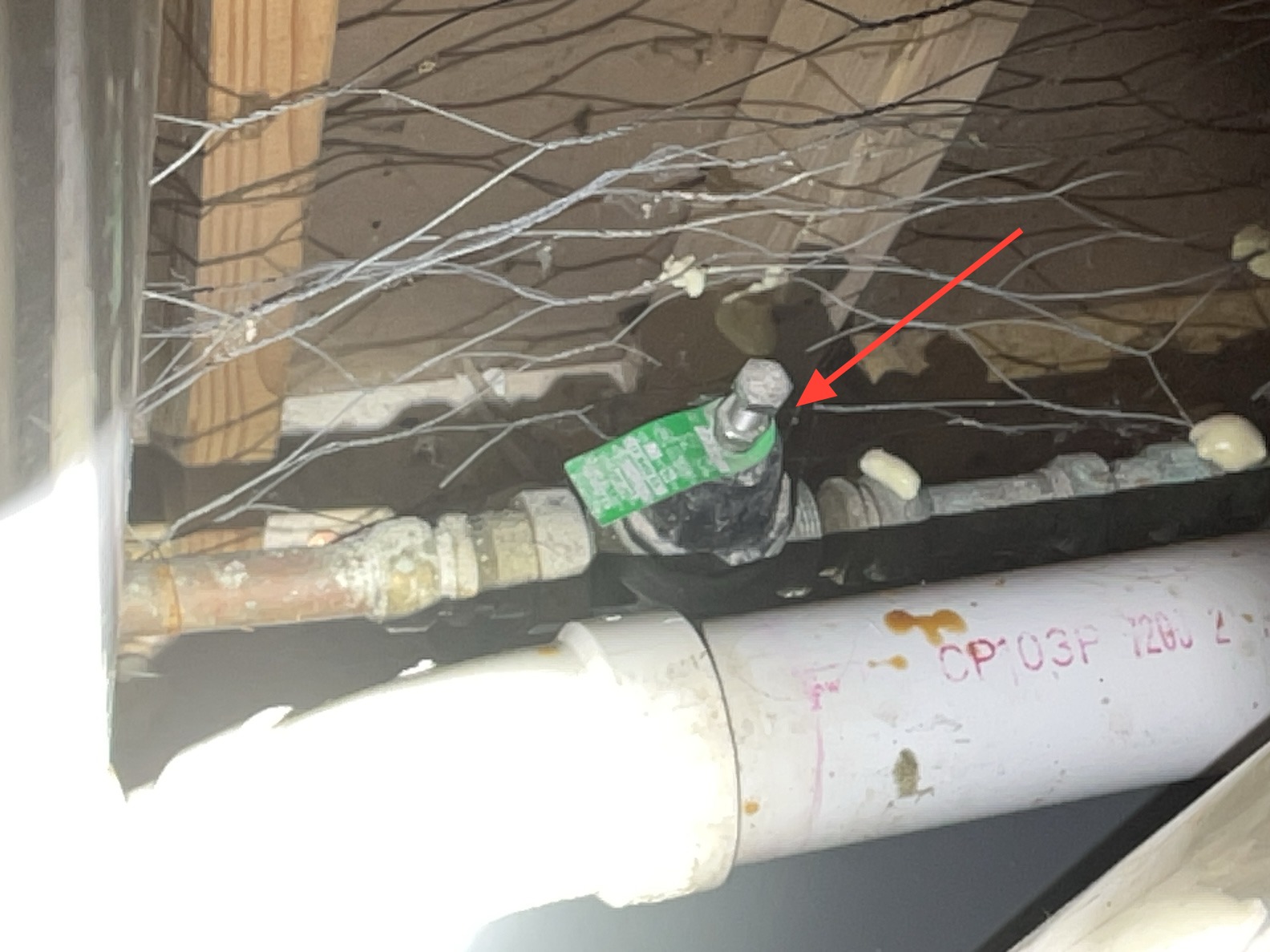
Pressure Reducing Valve: Present
Pressure Reducing Valve
This house has a pressure reducing valve to control the water pressure.
Distribution Pipe
Supply Pipe Materials: Copper
Functional Flow: Acceptable
Waste Pipe and Discharge
Discharge Type: Public Sewer
Waste and Vent Pipe Materials: PVC
Sump Pumps and Drains
Floor Drain: None Noted
Water Heaters
Water Heater
System Type: Tank
Size: 50 gallon
Year Built: 2021
Energy Source: Electric
Drain Pan: Present
Expansion Tank: Present
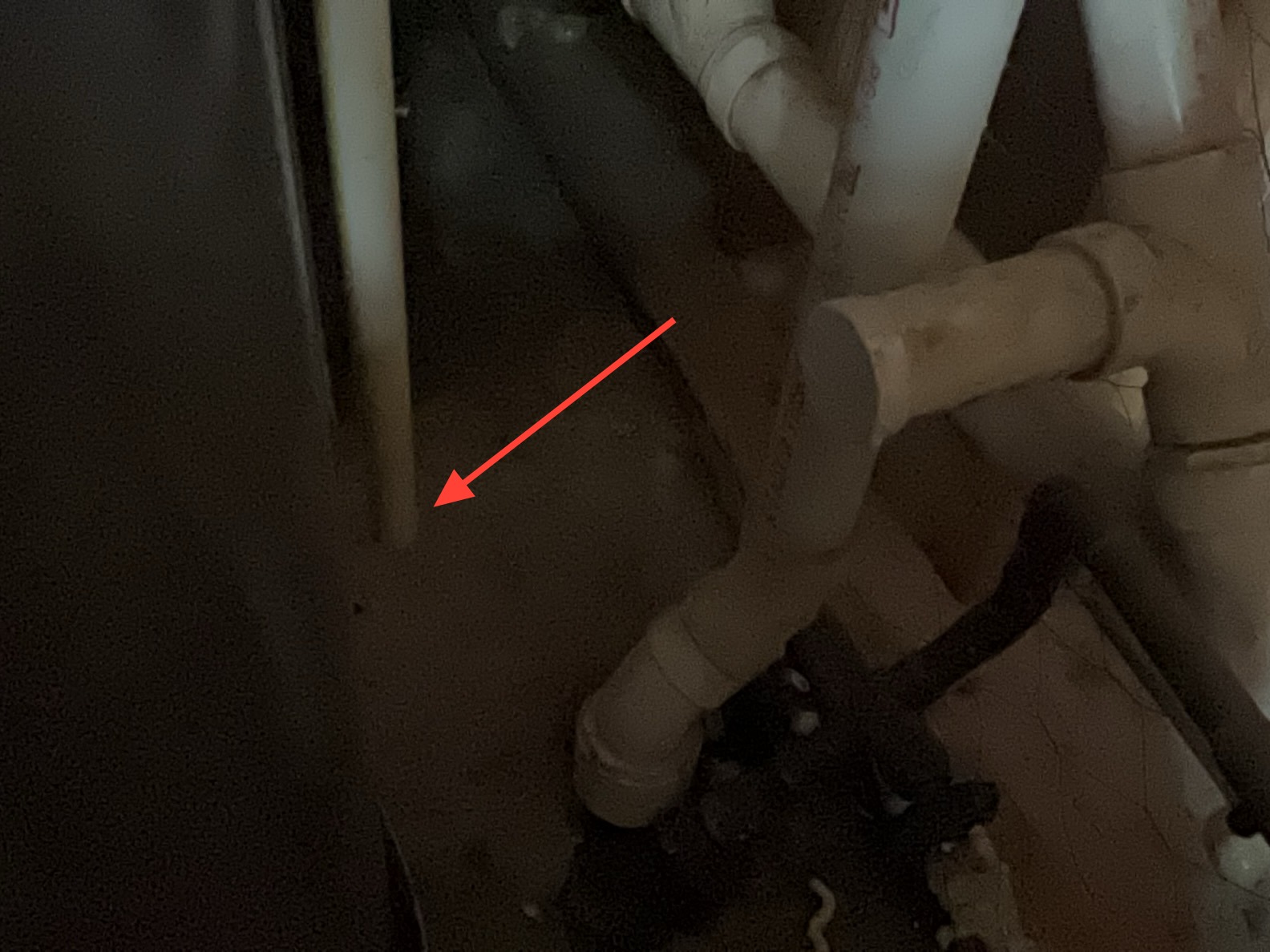
Relief Valve and Overflow: Terminates Too High
TPRV Discharge Too High
The discharge tube for the water heater is installed too high off the ground. A temperature pressure relief valve (TPR) should have a discharge pipe that extends to within 6 inches of the floor to prevent scalding if the valve discharges overheated water.
Water Temperature
Average Water Temperature: Testing Note
Water Temperature
The water temperature was tested multiple times at various fixtures during the inspection, and had an average reading of about 120 degrees. Recommend the water heater be set to 120 degrees. This temperature kills most microbes and is comfortable to most people. Temperatures over 140 degrees can cause scalding in a few seconds.
Electric Service
Electric Service
Service Entrance: Below Ground
Meter Base Amperage: 200
Electric Service Equipment
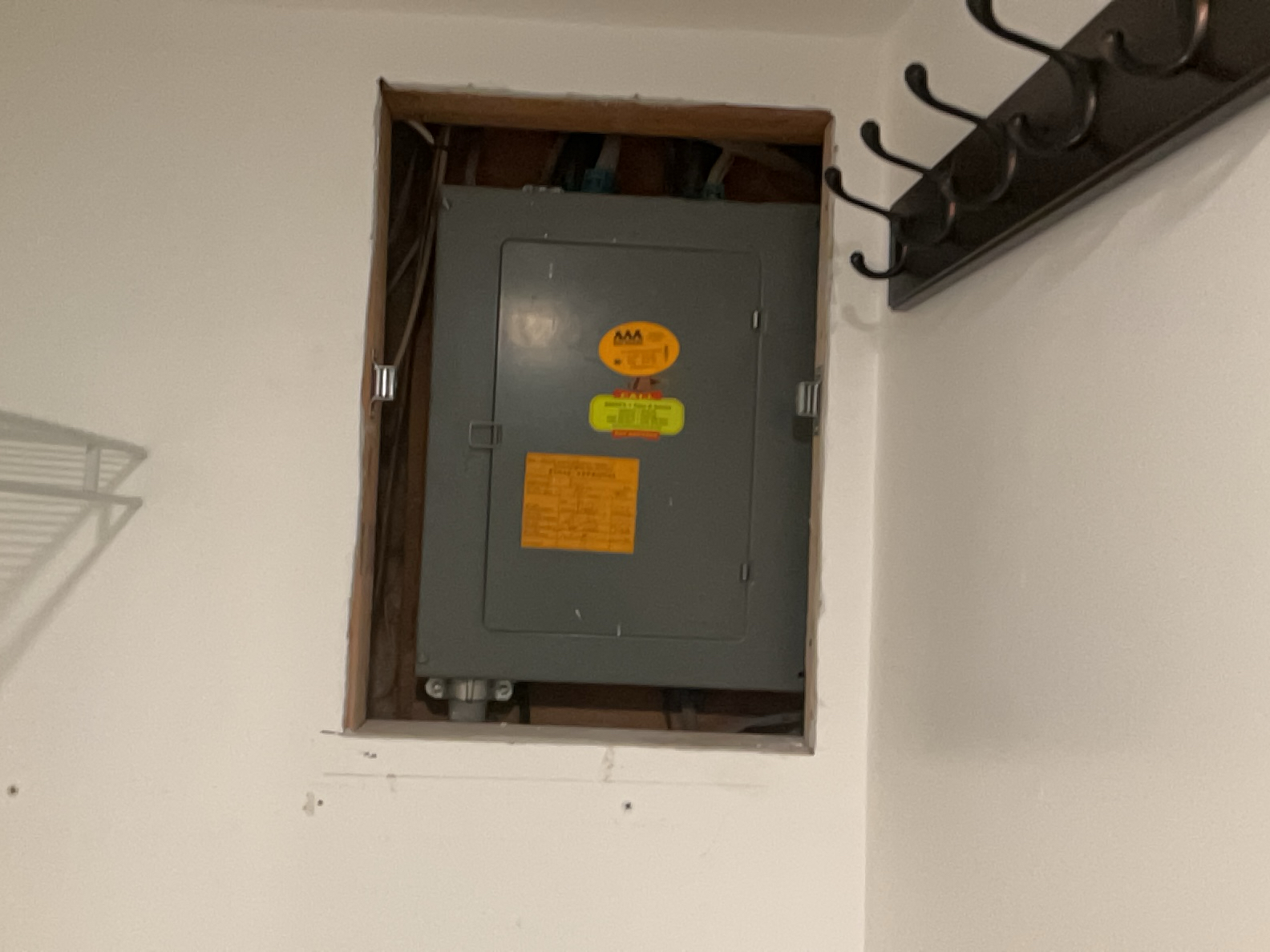
Main Electric Panel Location: Closet
Main Panel Amperage: 200 amps
Electric Service Amperage: 200 amps
Overcurrent Protection Devices: Breakers
Wire Material: Copper, Multi-strand Copper
Wiring Method: Non-metallic Sheathed Cable
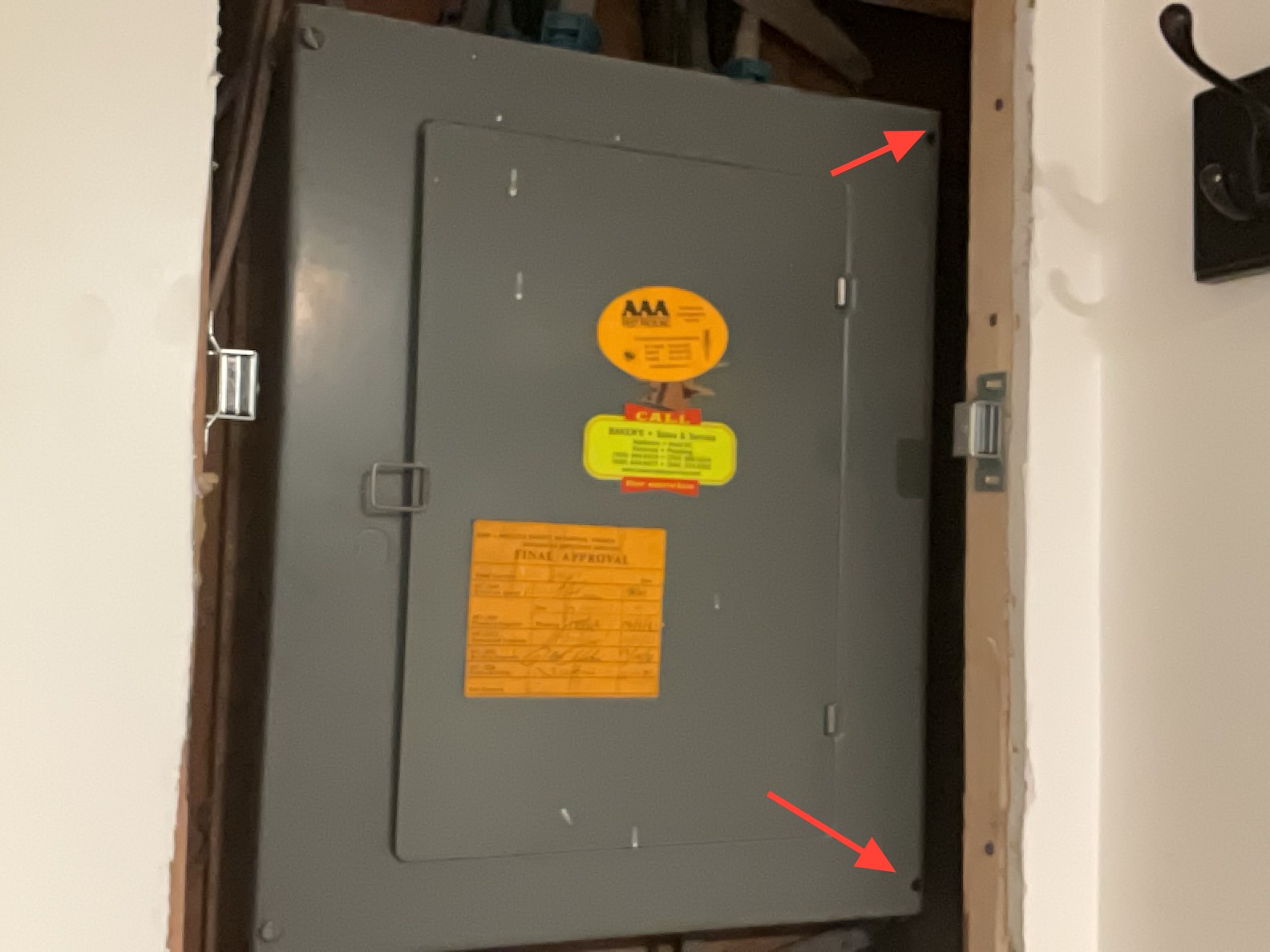
Missing Screws
The electrical panel is missing proper screws to secure the dead front cover. Install the appropriate blunt screws to properly secure the cover.
Electric Panel In Closet
The location of the electric panel is not to modern standards as electrical panels should not be located inside a clothes closet. Moving the electric panel to a more desirable location is recommended or discontinue use of this space as a closet.
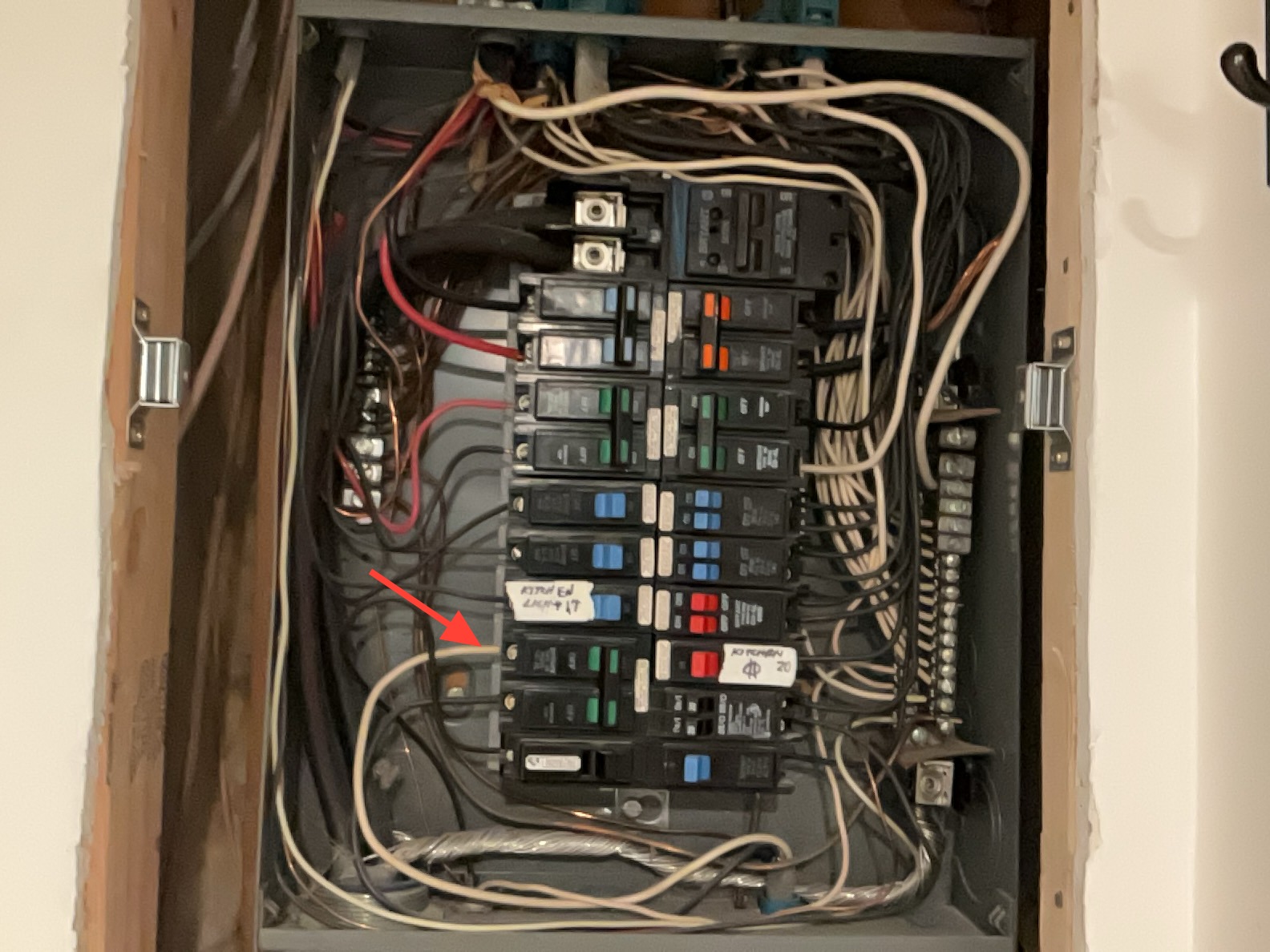
White Wire as Hot
The white conductors inside the electric panel at the breakers are not correctly identified as hot or ungrounded conductors. These should be painted or taped black or red for correct identification and improved safety. I would do this in the context of other electrical repairs or upgrades.
Sub Panel
Sub Panel Location: None
Garage
Garage General
Garage Type: None
Attic
General Attic Photos
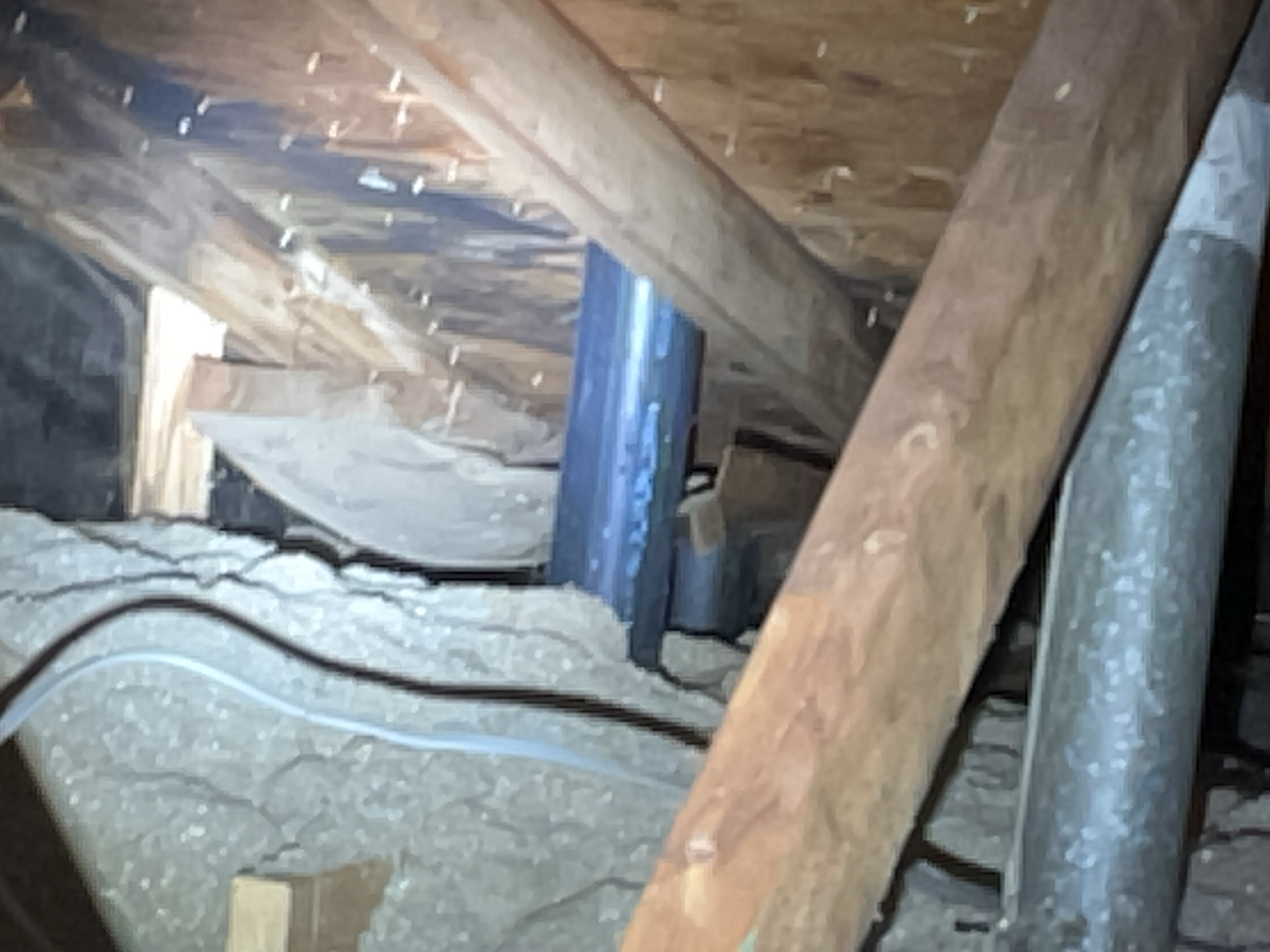
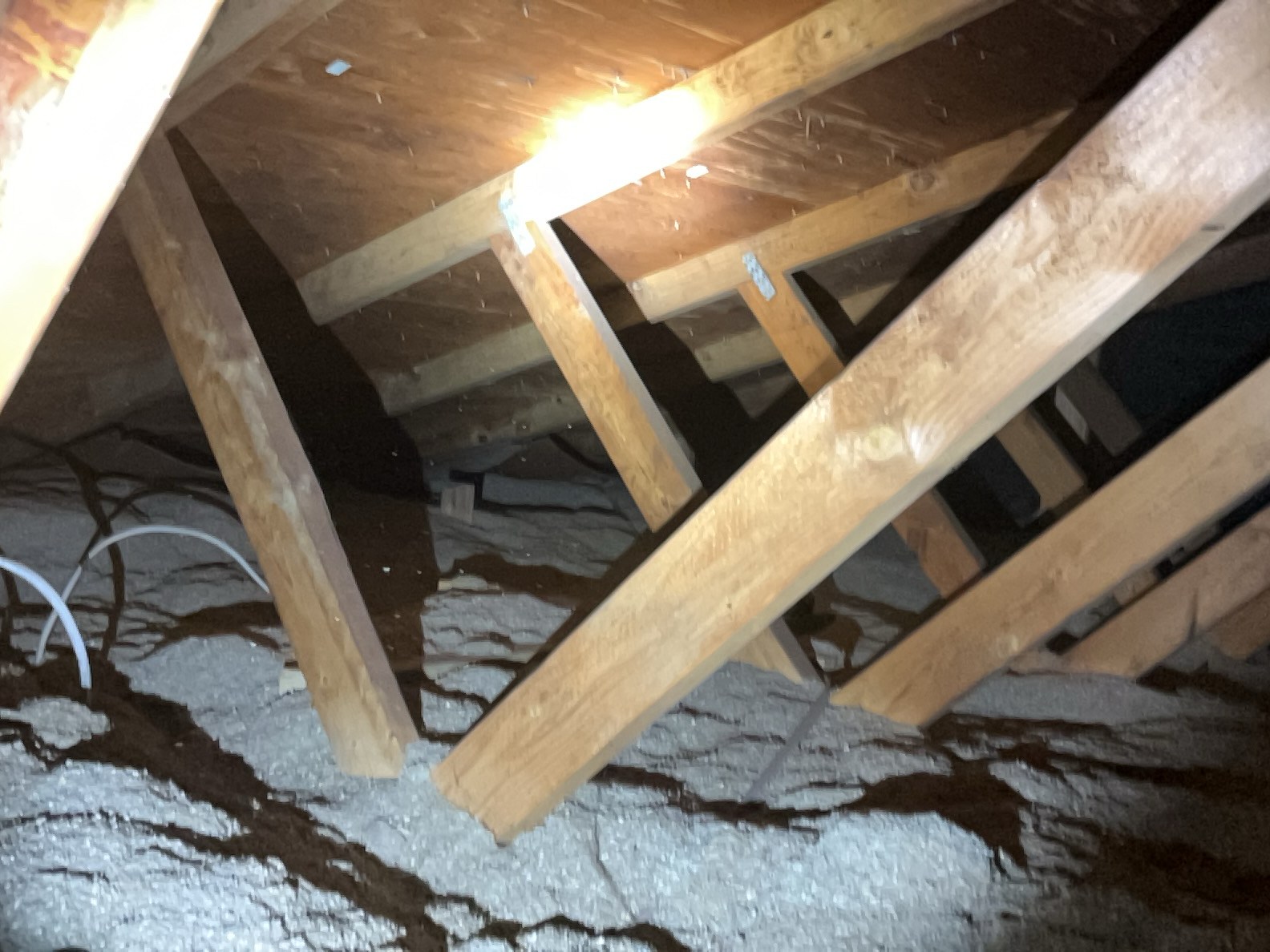
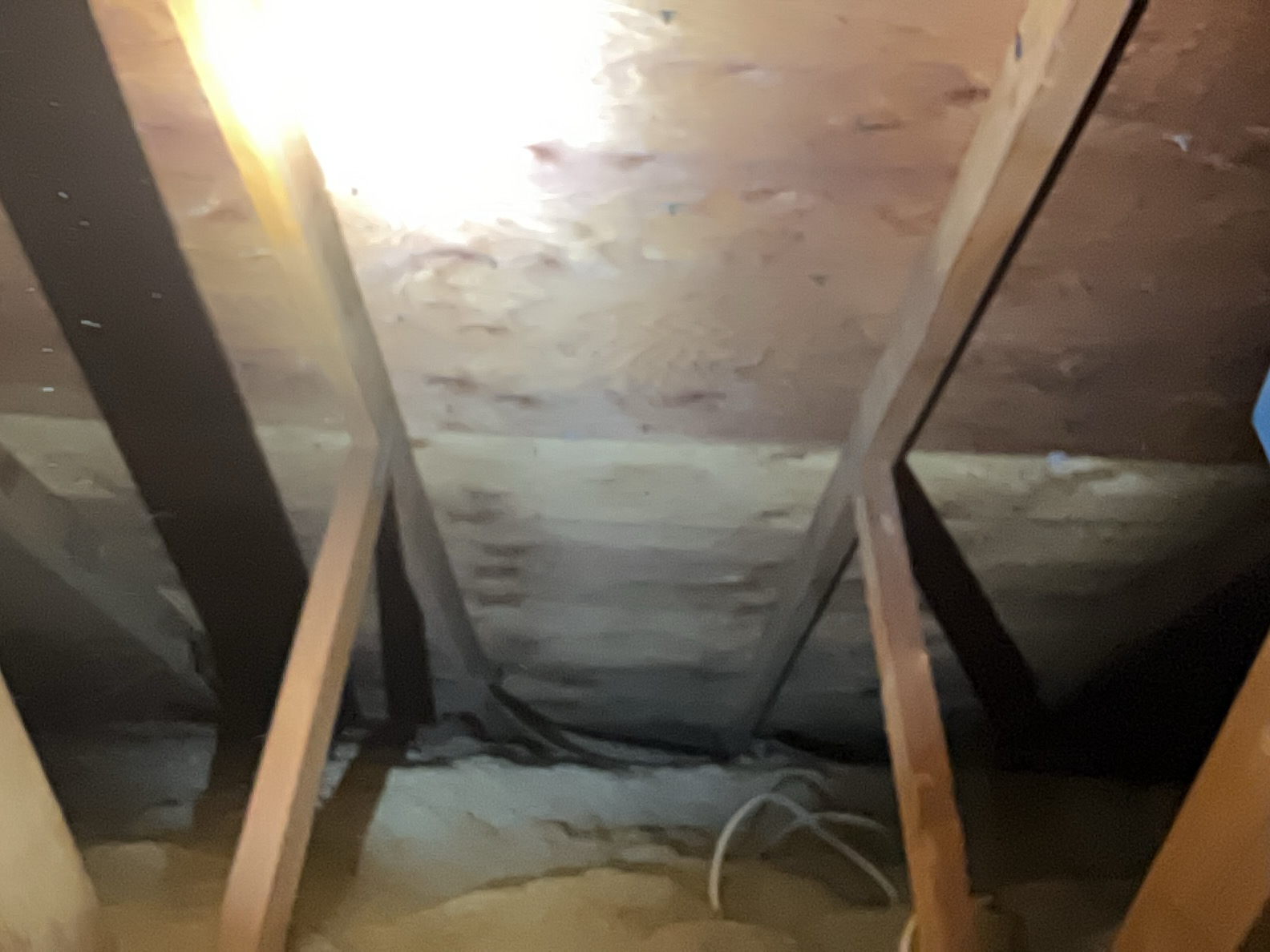
General Attic Photos
 | ||
 |
Structure
Framing: Trusses, Plywood sheathing
Plumbing
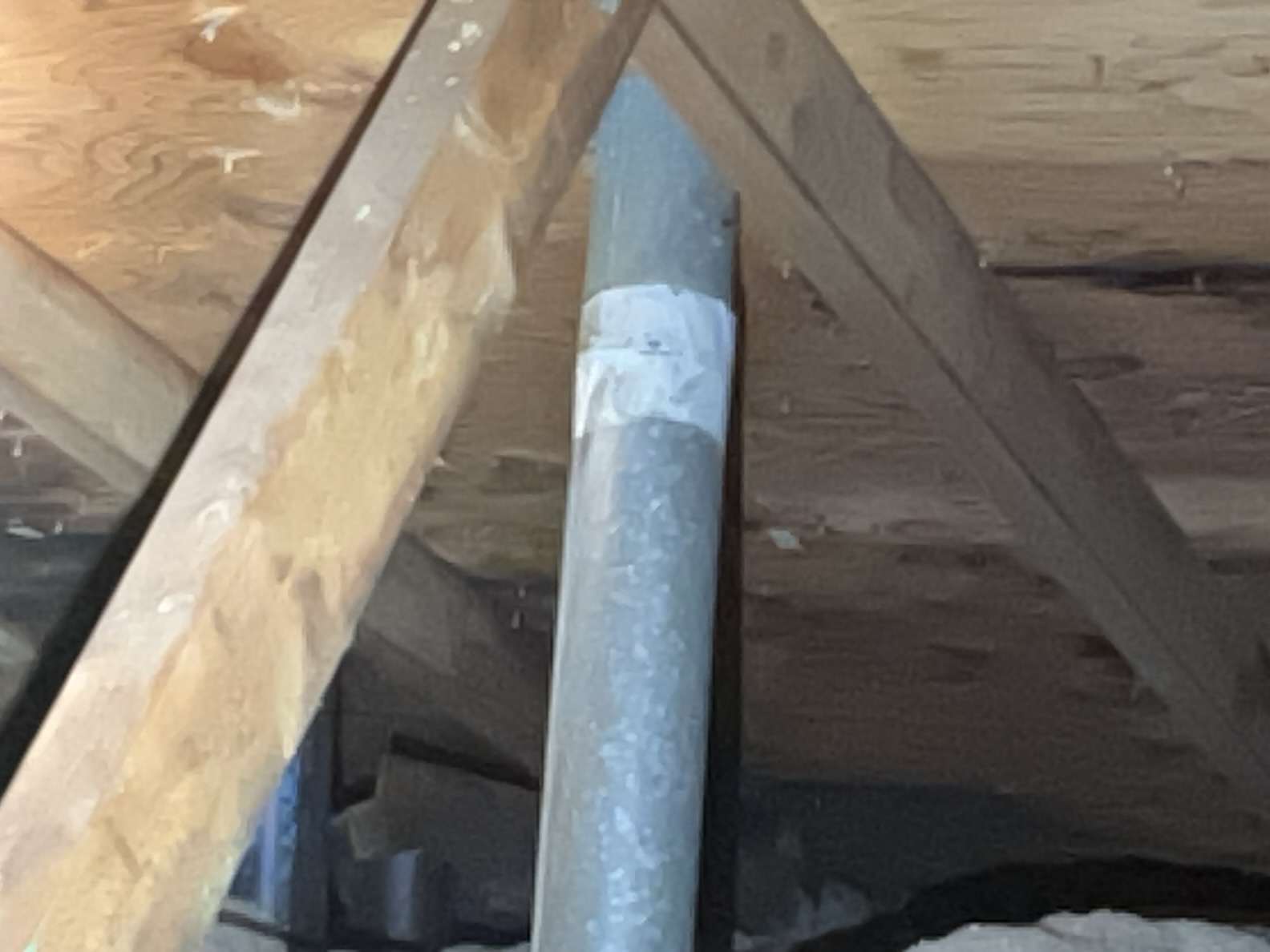
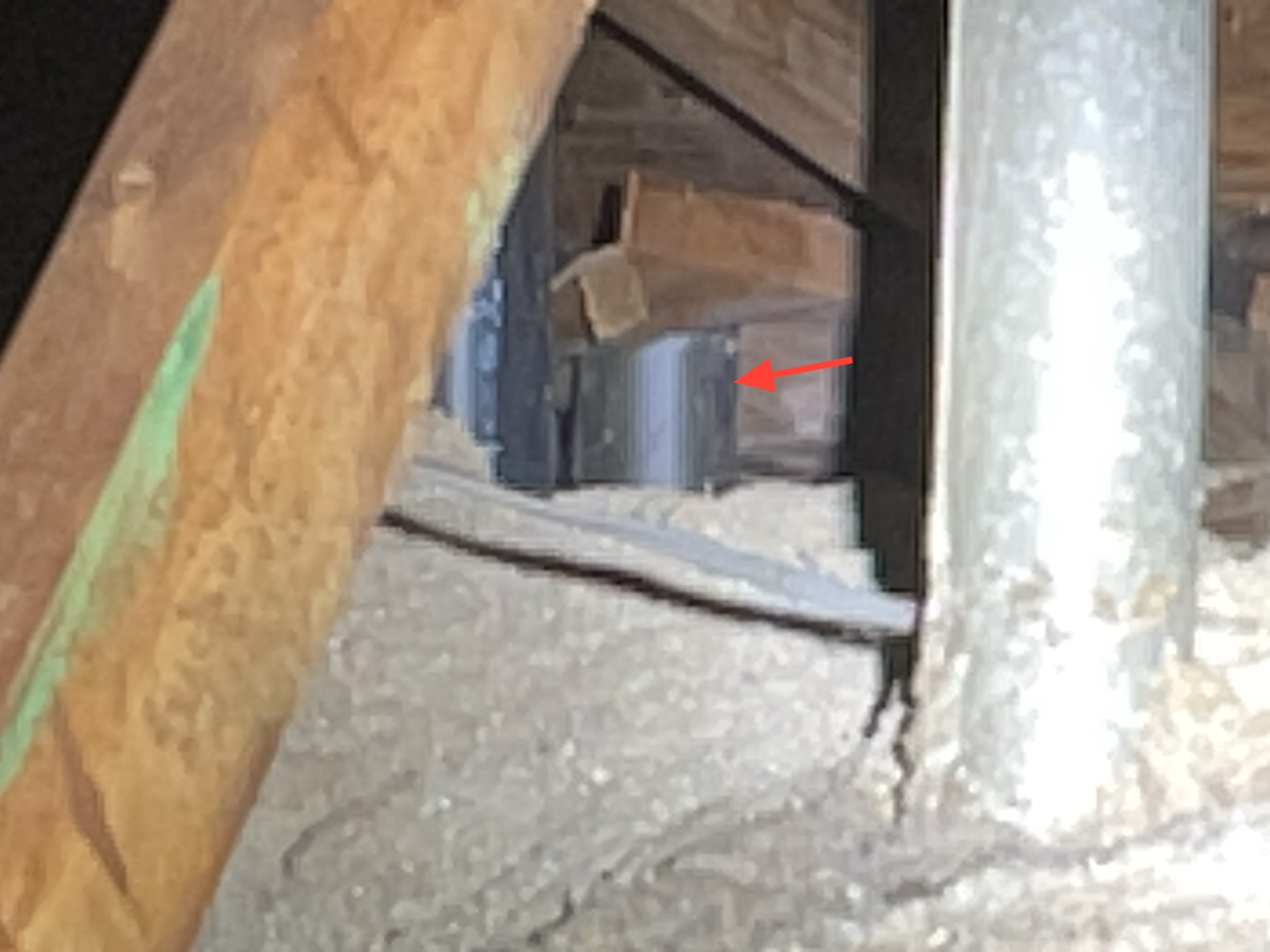
Possible Vent to Attic
There appears to be a plumbing vent which terminates in the attic. Area was inaccessible to get a closer look. Recommend further investigation by a plumbing contractor to determine if this is an active vent and poses any potential issues. Active plumbing vents need to terminate outside the structure to prevent releasing sewage gasses into the attic.
Venting
Venting Condition: Functional
Insulation
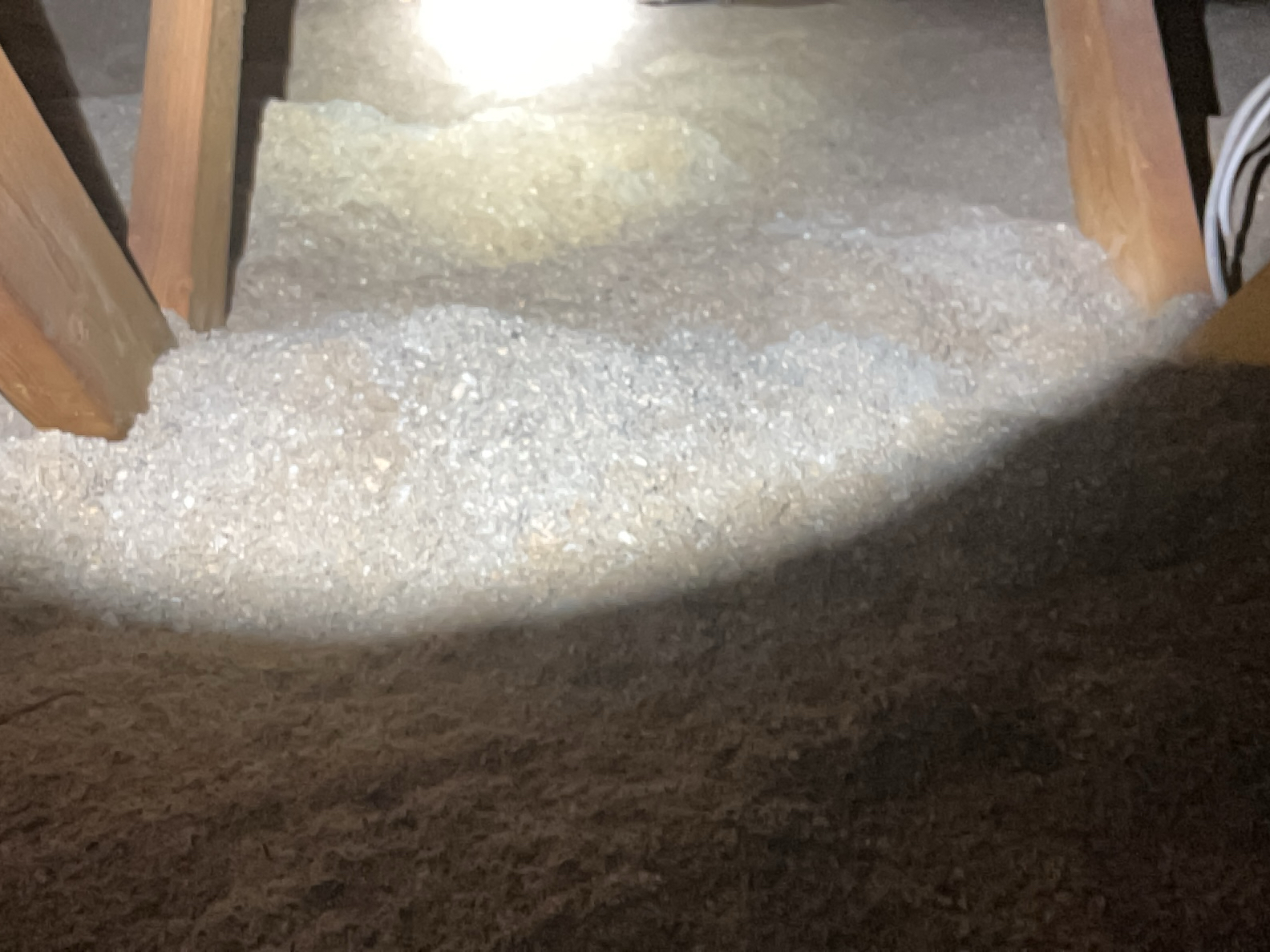
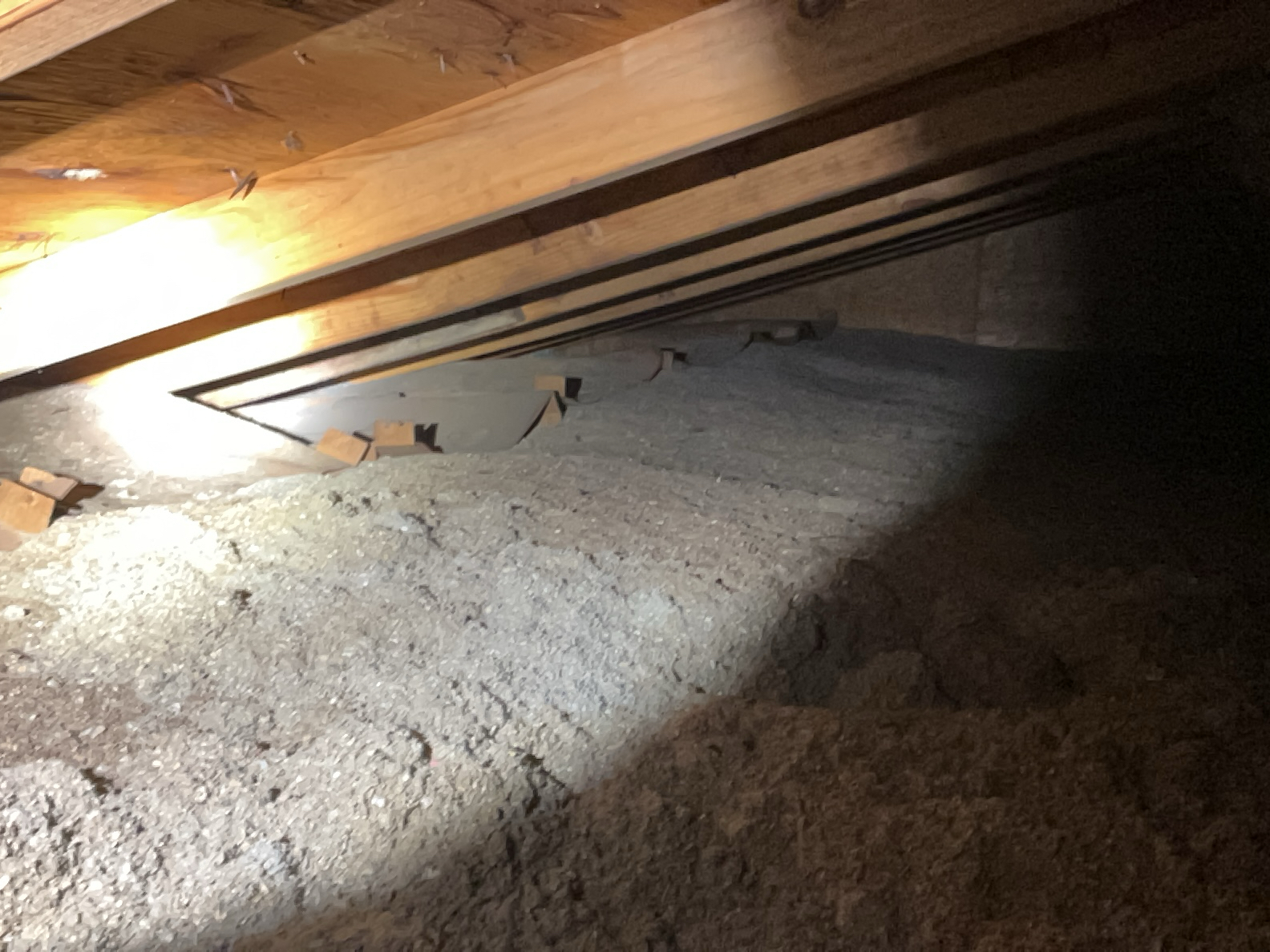
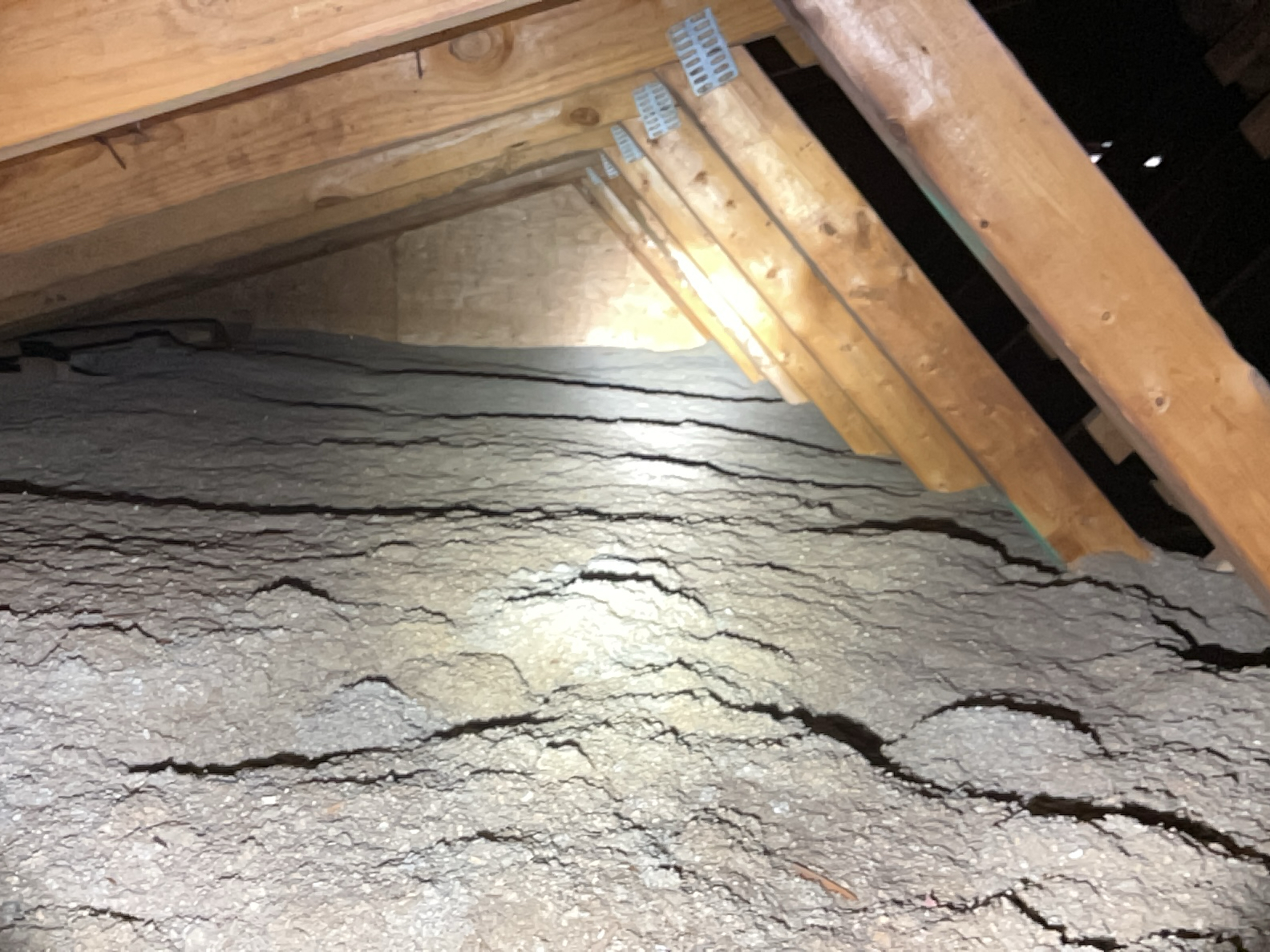
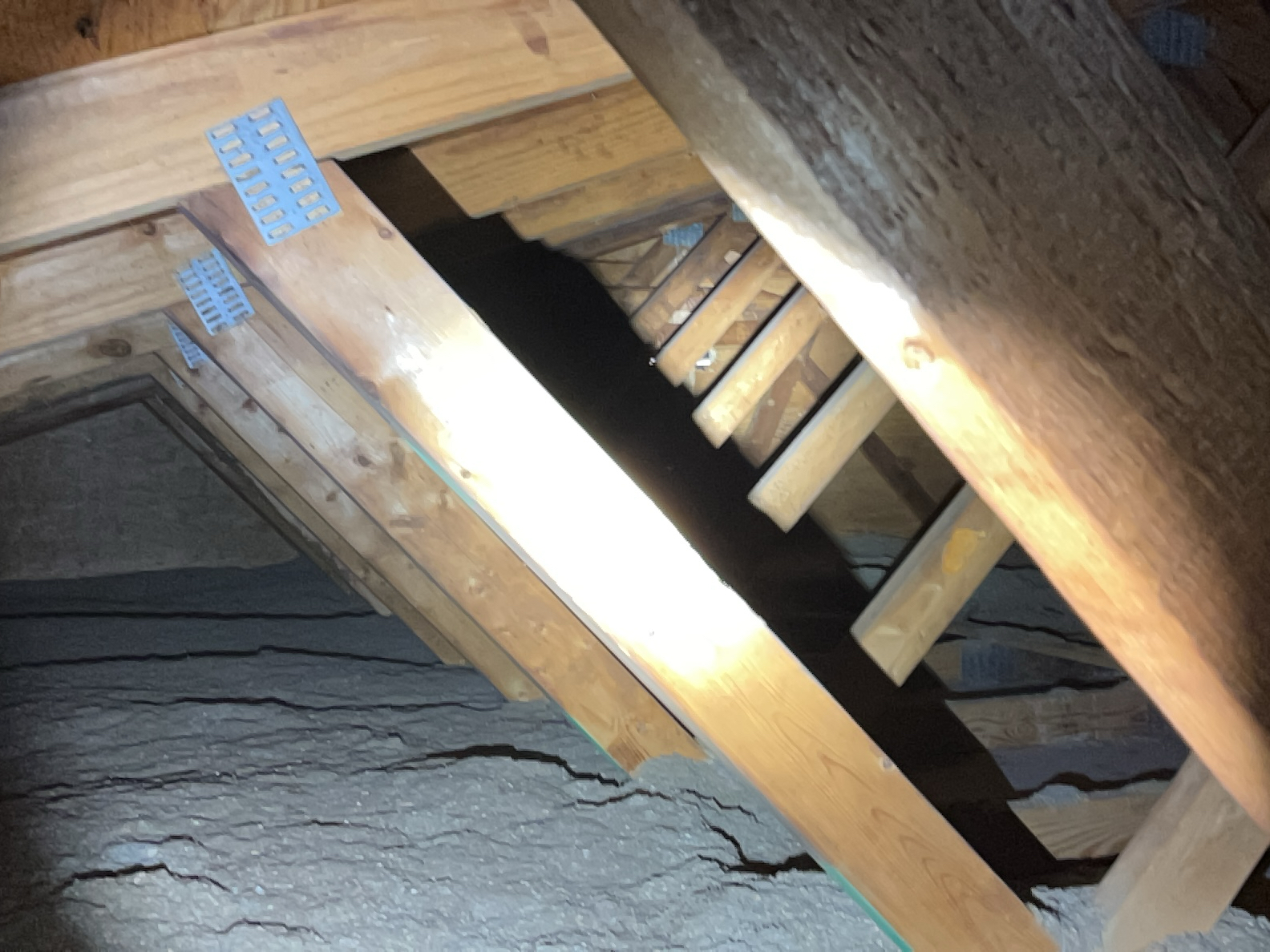
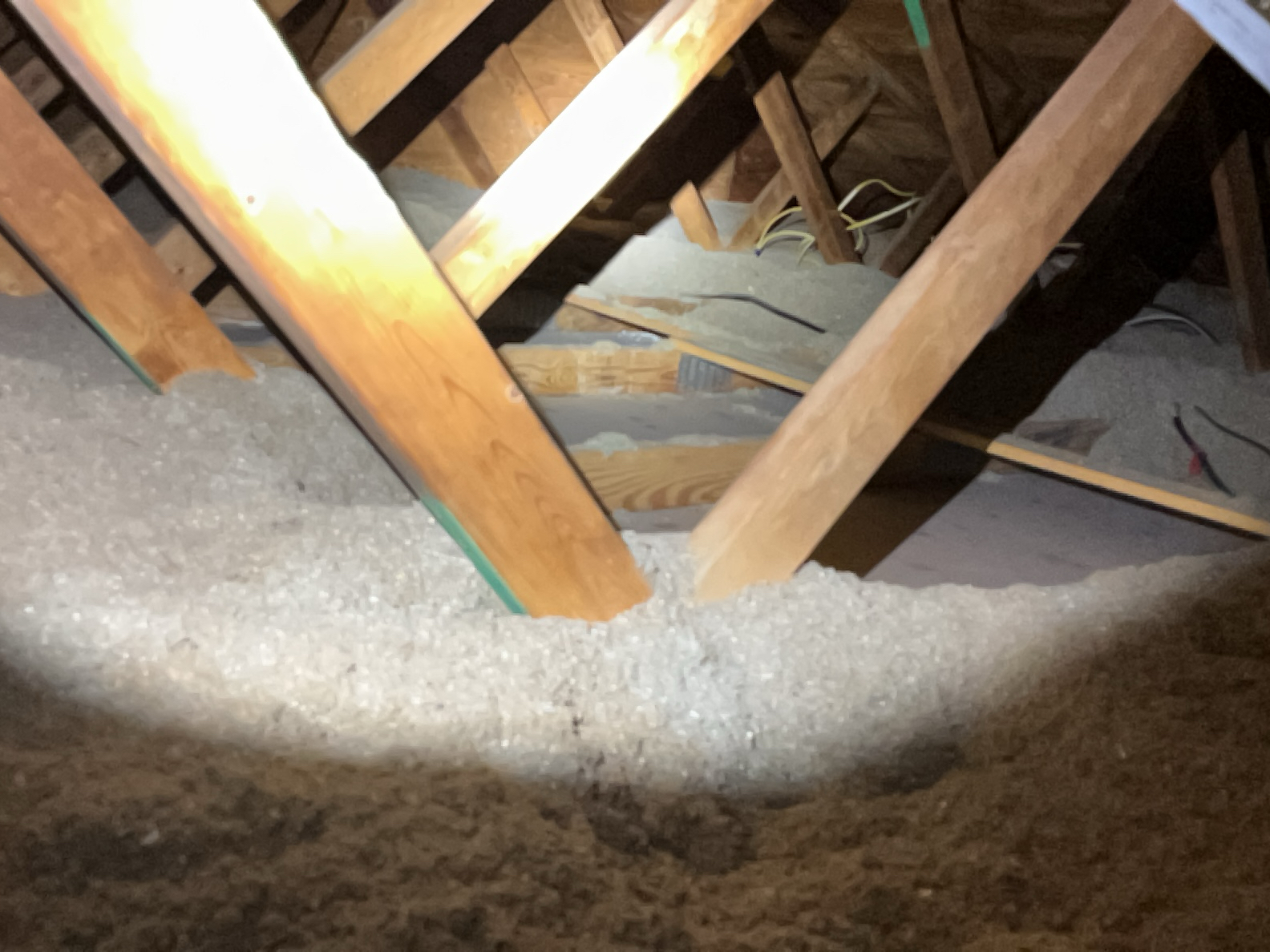
Insulation Type: Cellulose
Attic (2)
General Attic Photos
General Photos
 |  |  |
 |
Structure
Framing: Trusses
Venting
Venting Condition: Functional
Insulation
Insulation Type: Cellulose
Structure and Basement
Foundation
Building Configuration: Basement
Foundation Type: Poured Concrete
Framing
Wall Framing: Dimensional Lumber
Wall Sheathing: Not Visible
Floor Framing: Dimensional Lumber
Sub-Floor Material: Plywood
Ceiling Framing: Dimensional Lumber
Basement
Type: Finished
Bedroom
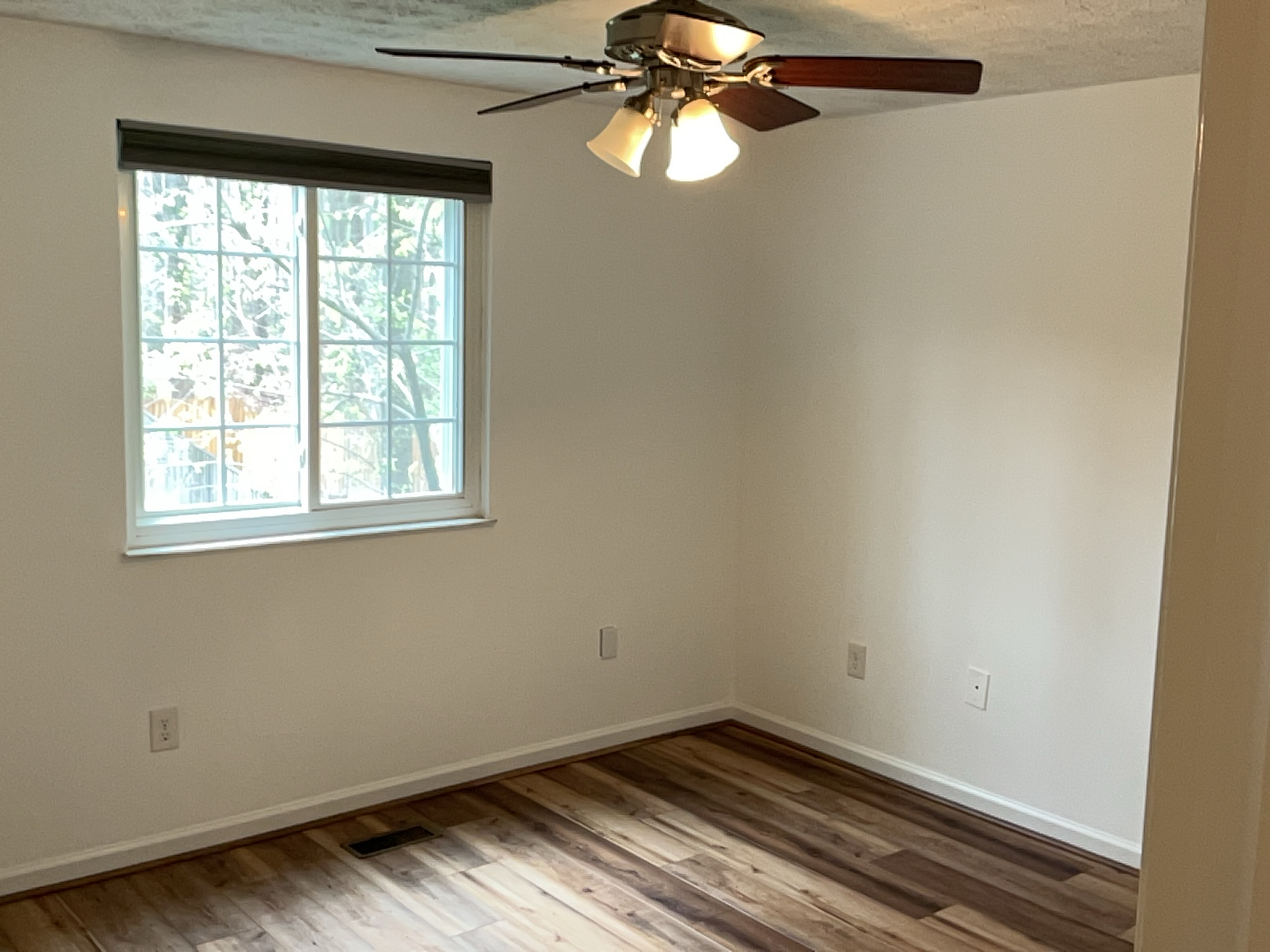
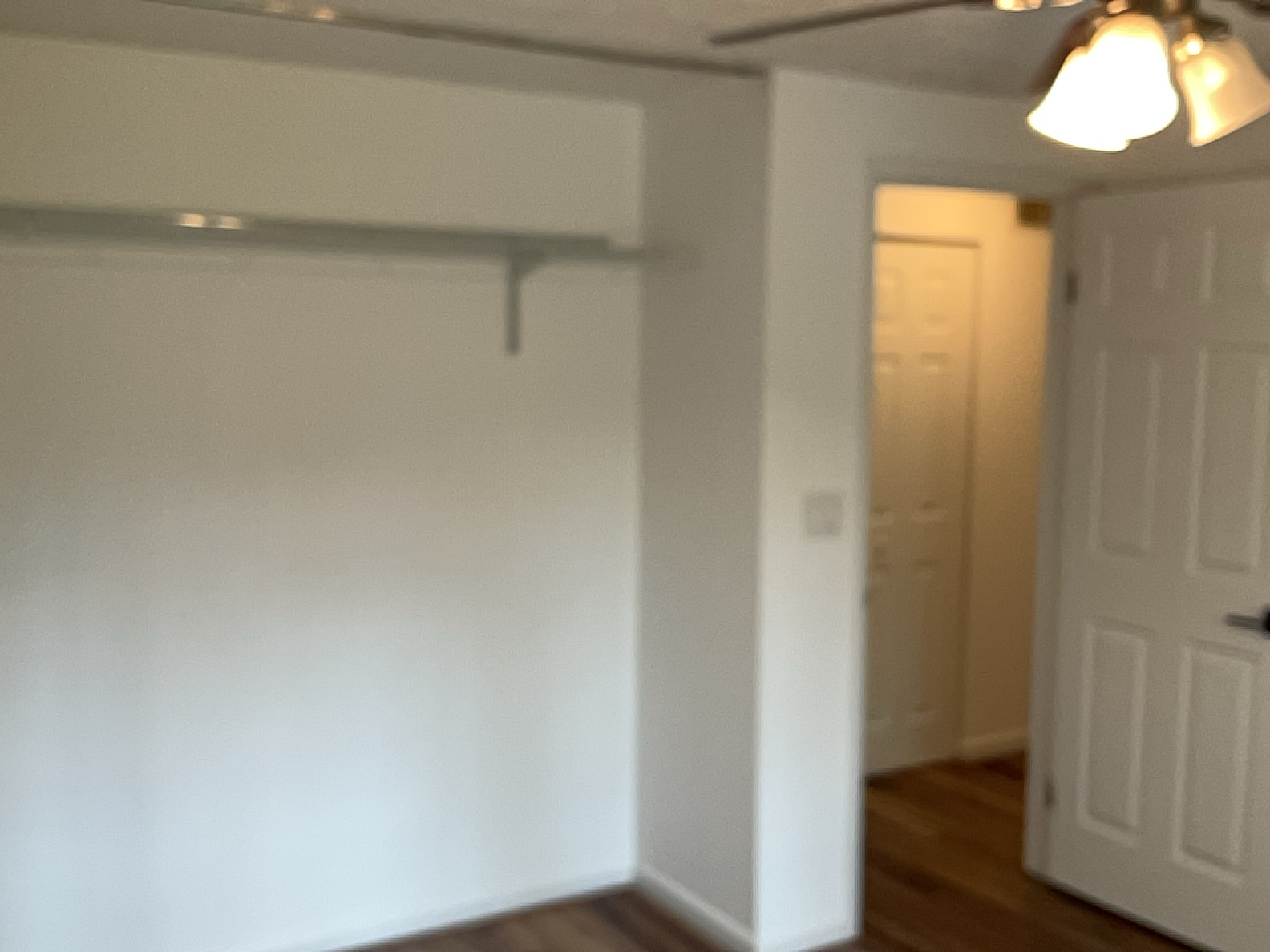
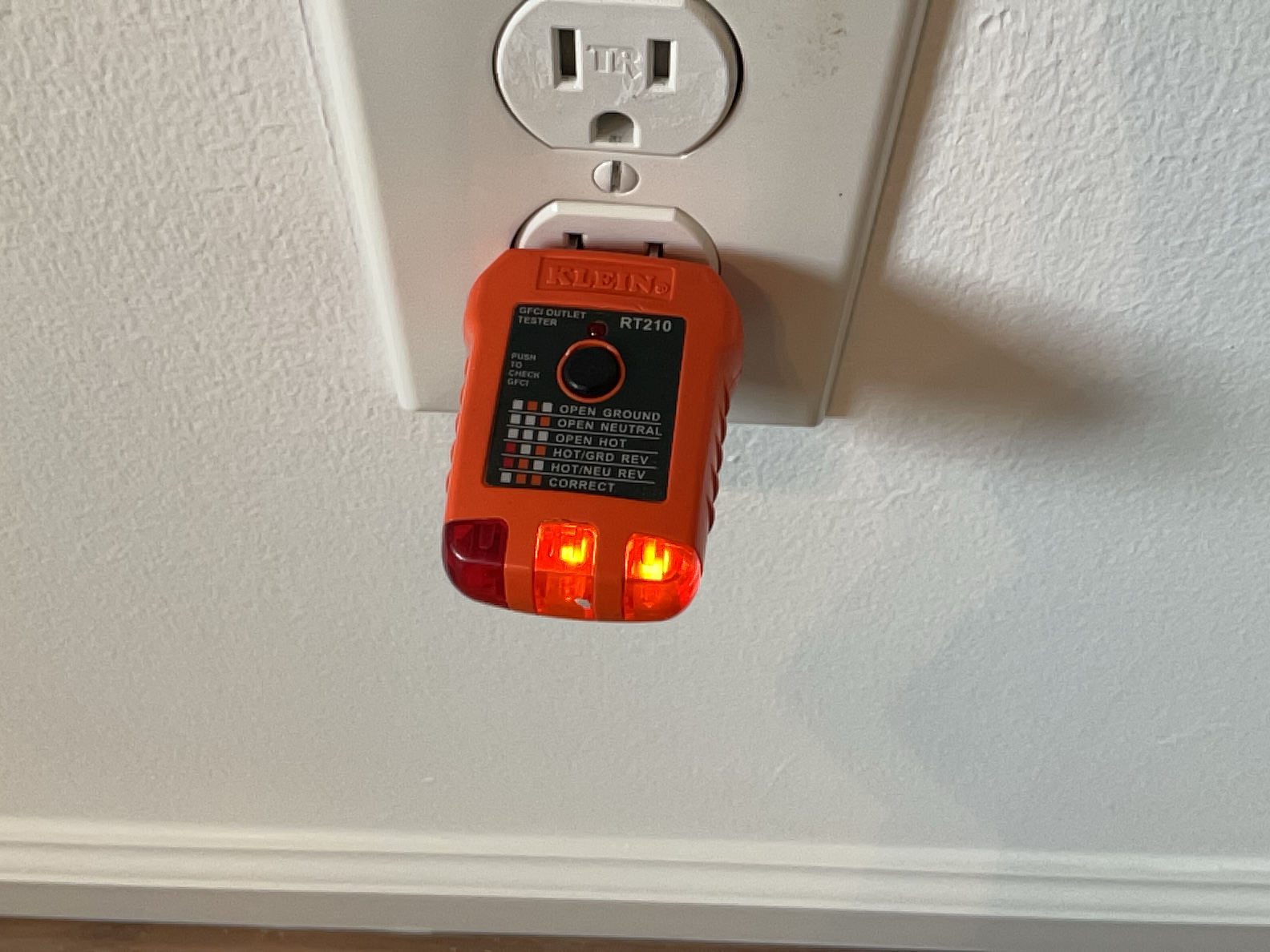
General View
General Photos
 |  |  |
Finishes
Wall and Ceiling Materials: Drywall
Doors
Interior Door: Hollow Core
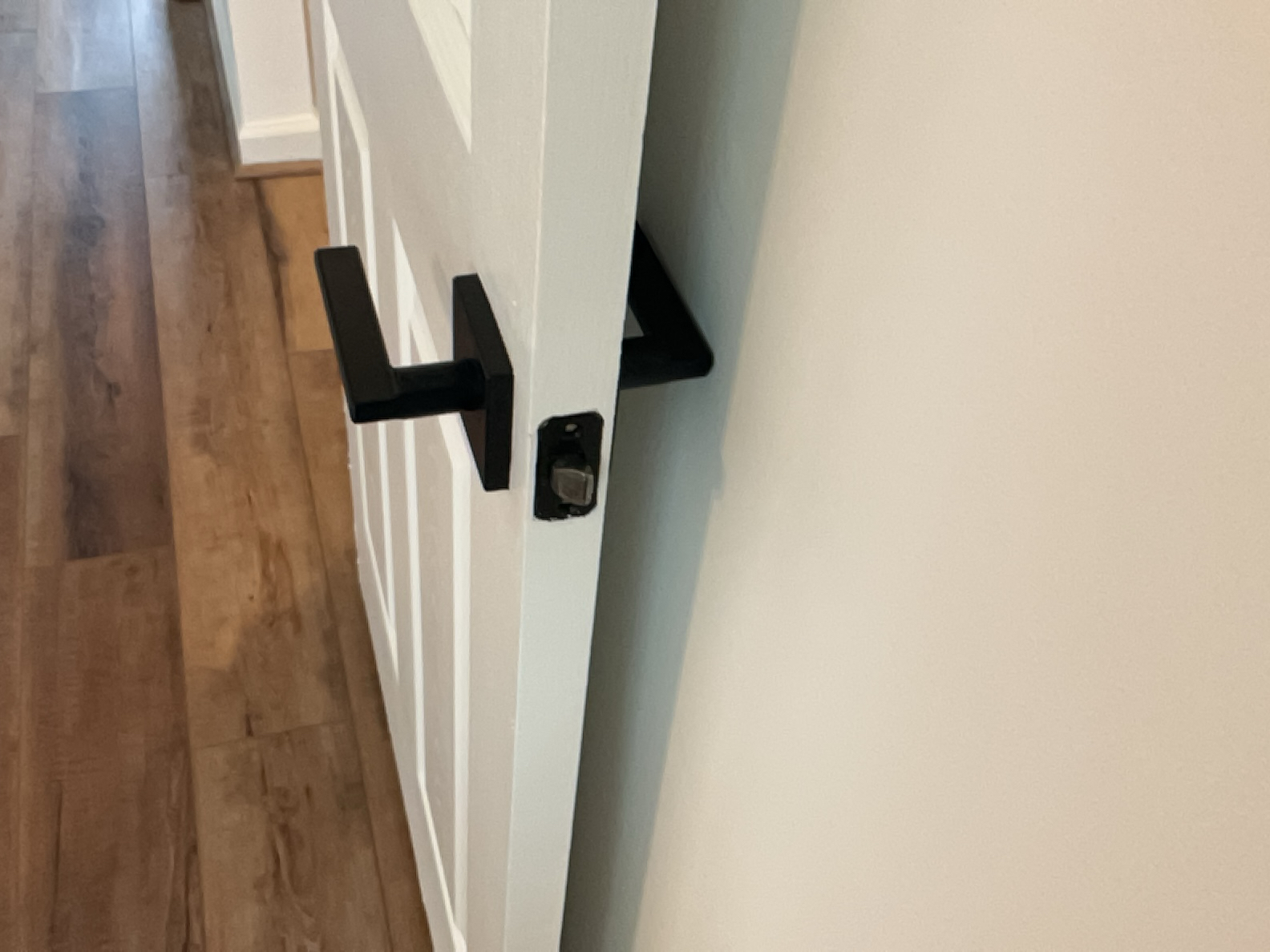
Wall Contact
Wall contact was noted at the door. Recommend installing door stopper to prevent damage to the wall.
Windows
Window Style: Sliding
Window Glazing: Double Pane
Window Frame: Vinyl
Electrical
No Smoke Detector
No smoke detector in bedroom. Modern standards recommend smoke alarms in all bedrooms, in all hallways outside bedrooms, and at least one on each floor of the building.
Floors
Floor Materials: Vinyl Plank
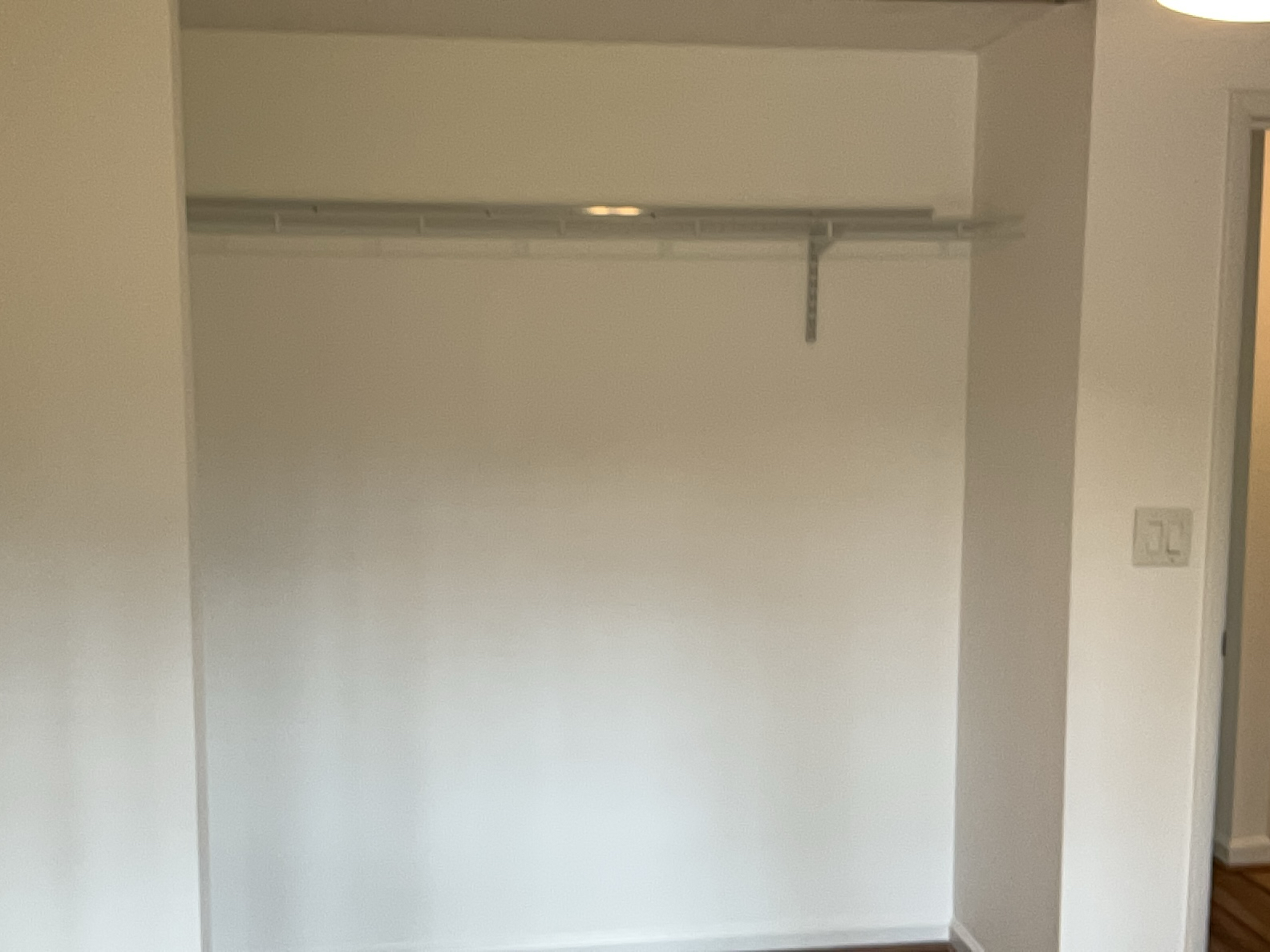
Closet
No Door
There was no door installed for the closet. Add as needed.
Bedroom (2)
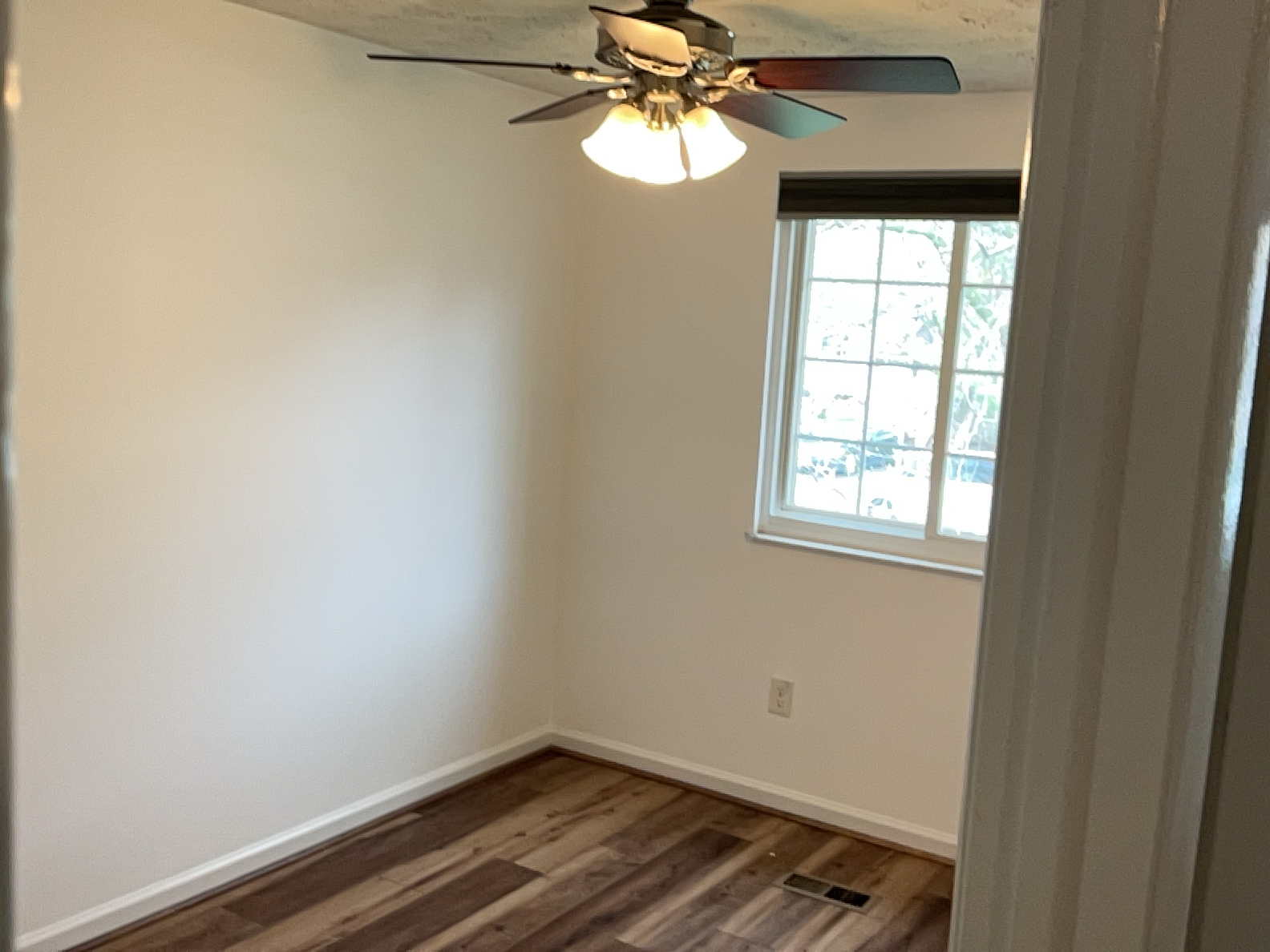
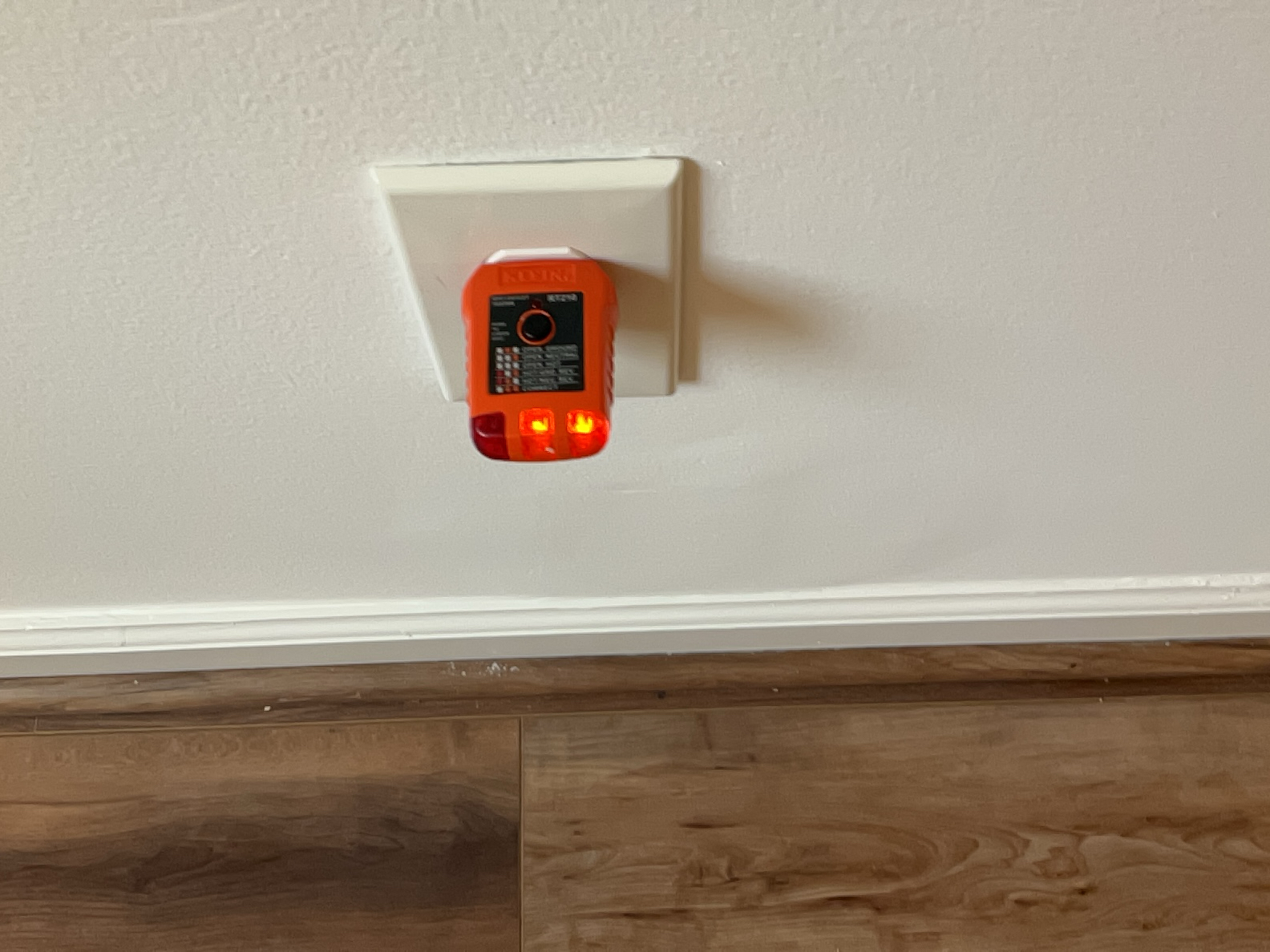
General View
General Photos
 |  |
Finishes
Wall and Ceiling Materials: Drywall
Doors
Interior Door: Hollow Core
Windows
Window Style: Sliding
Window Glazing: Double Pane
Window Frame: Vinyl
Electrical
No Smoke Detector
No smoke detector in bedroom. Modern standards recommend smoke alarms in all bedrooms, in all hallways outside bedrooms, and at least one on each floor of the building.
Floors
Floor Materials: Vinyl Plank
Closet
Closet: Present
No Door
There was no door installed for the closet. Add as needed.
Bedroom (3)
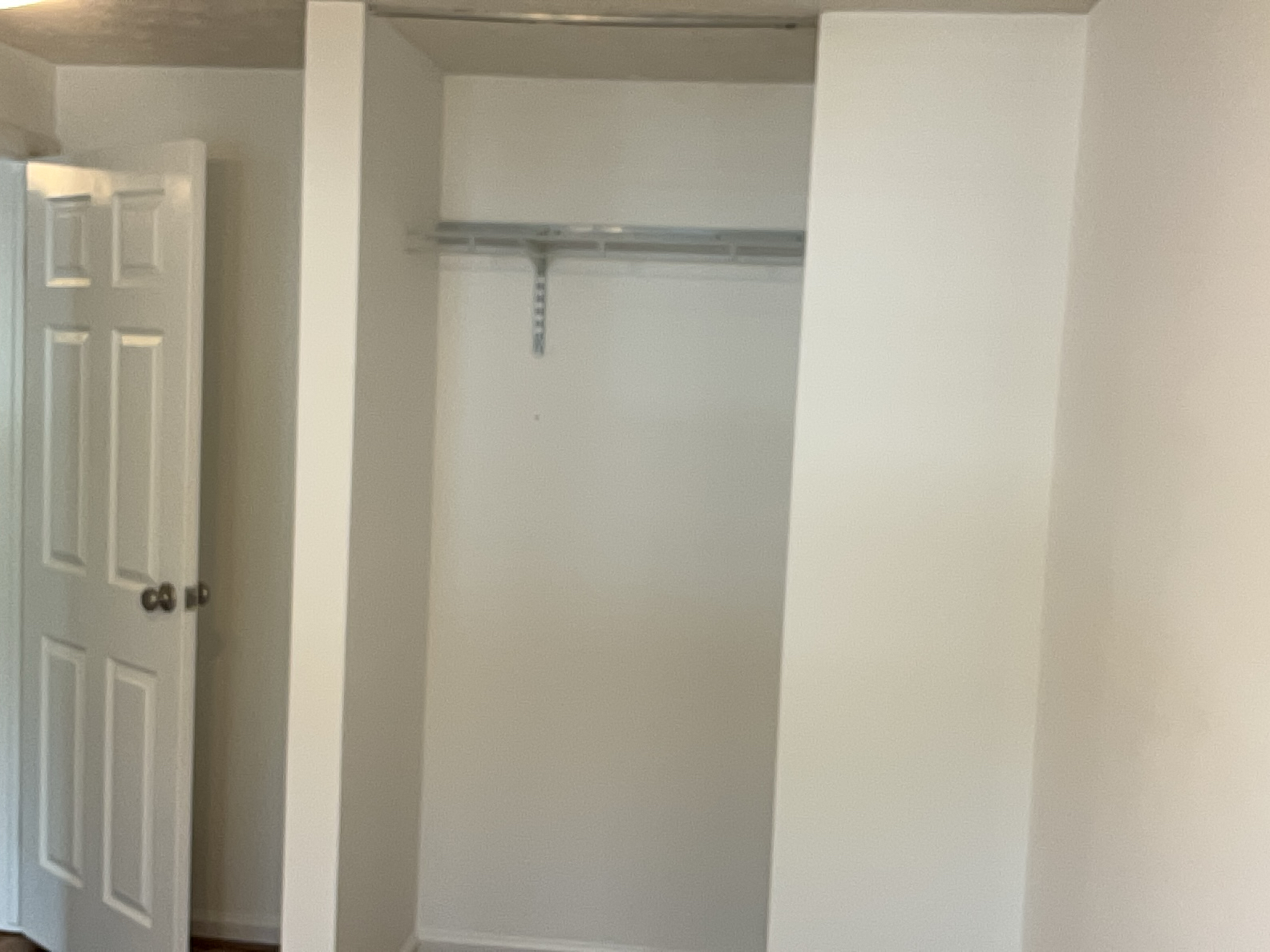
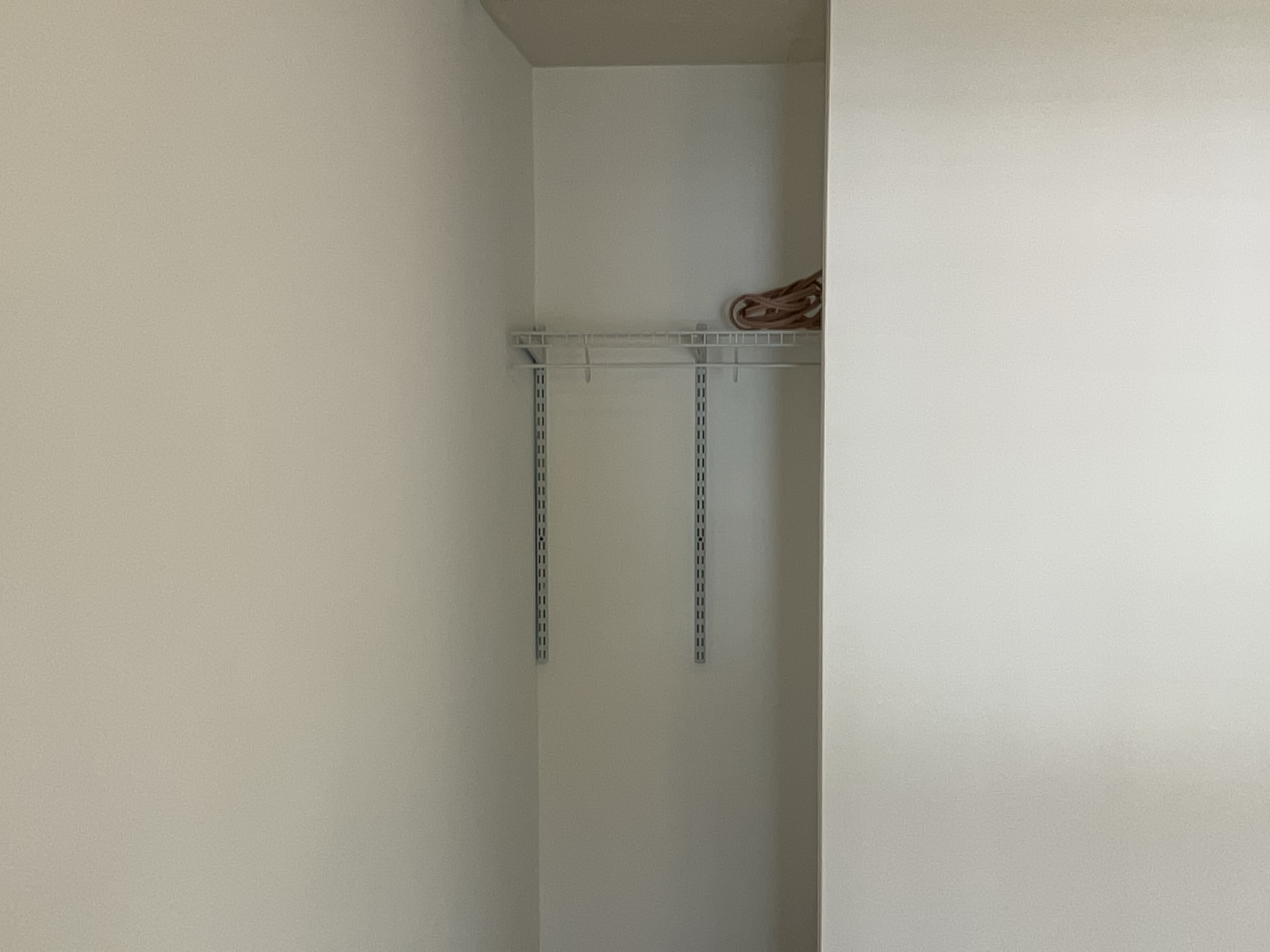
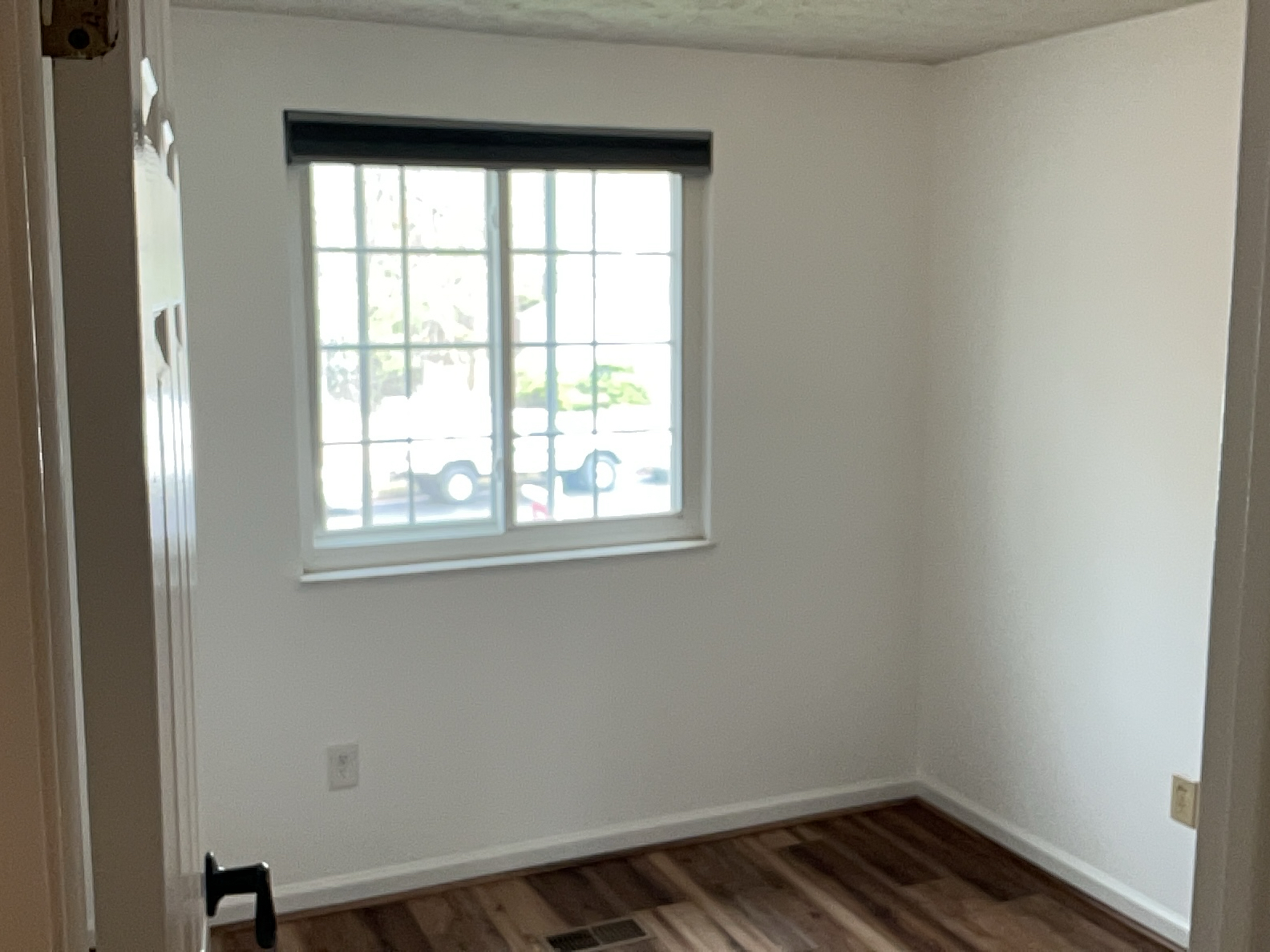
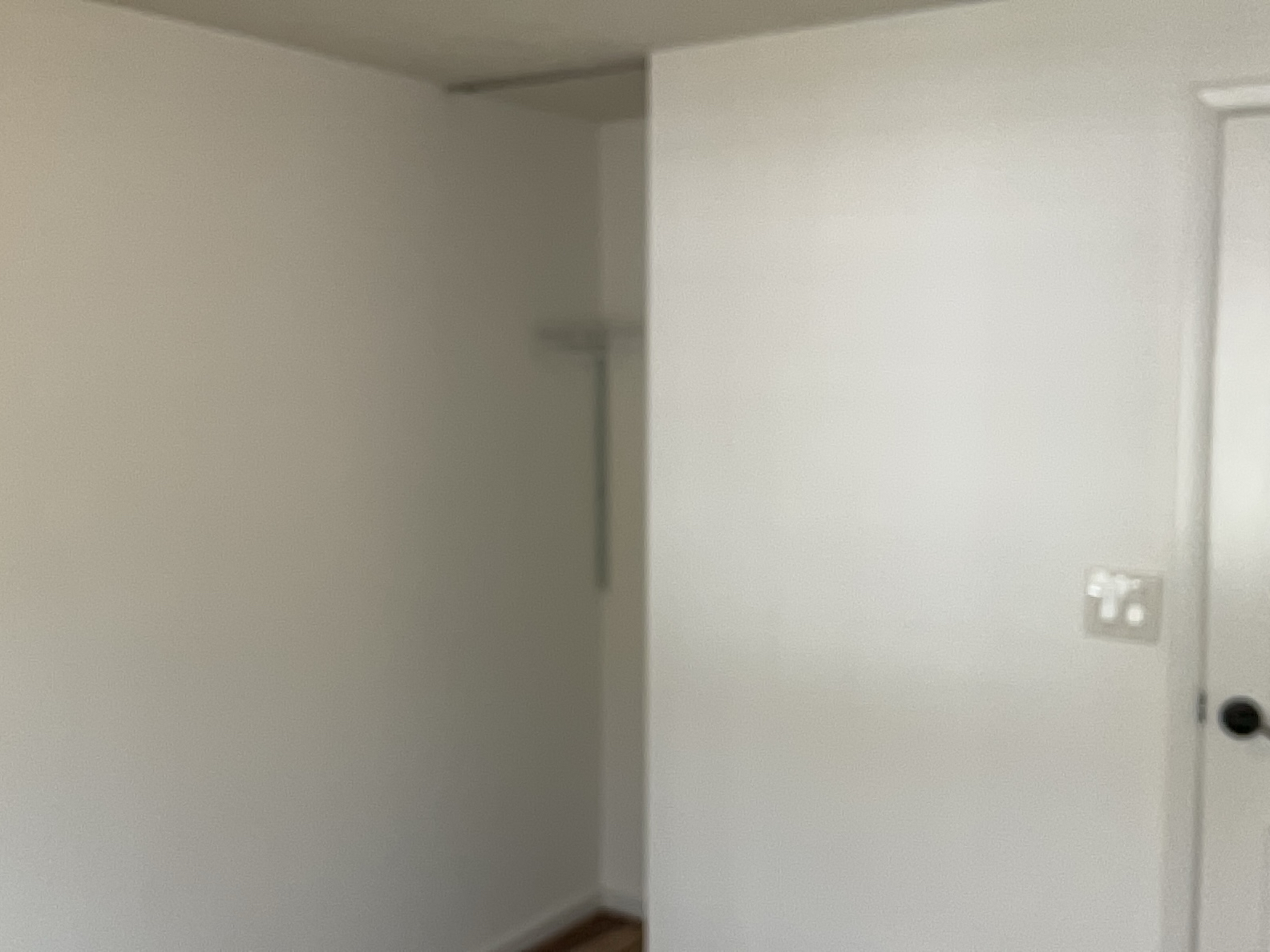
General View
General Photos
 |  |
Finishes
Wall and Ceiling Materials: Drywall
Doors
Interior Door: Hollow Core
Windows
Window Style: Sliding
Window Glazing: Single Pane
Window Frame: Vinyl
Electrical
No Smoke Detector
No smoke detector in bedroom. Modern standards recommend smoke alarms in all bedrooms, in all hallways outside bedrooms, and at least one on each floor of the building.
Floors
Floor Materials: Vinyl Plank
Closet
Closet: Present
No Door
There was no door installed for the closet. Add as needed.
Living Room
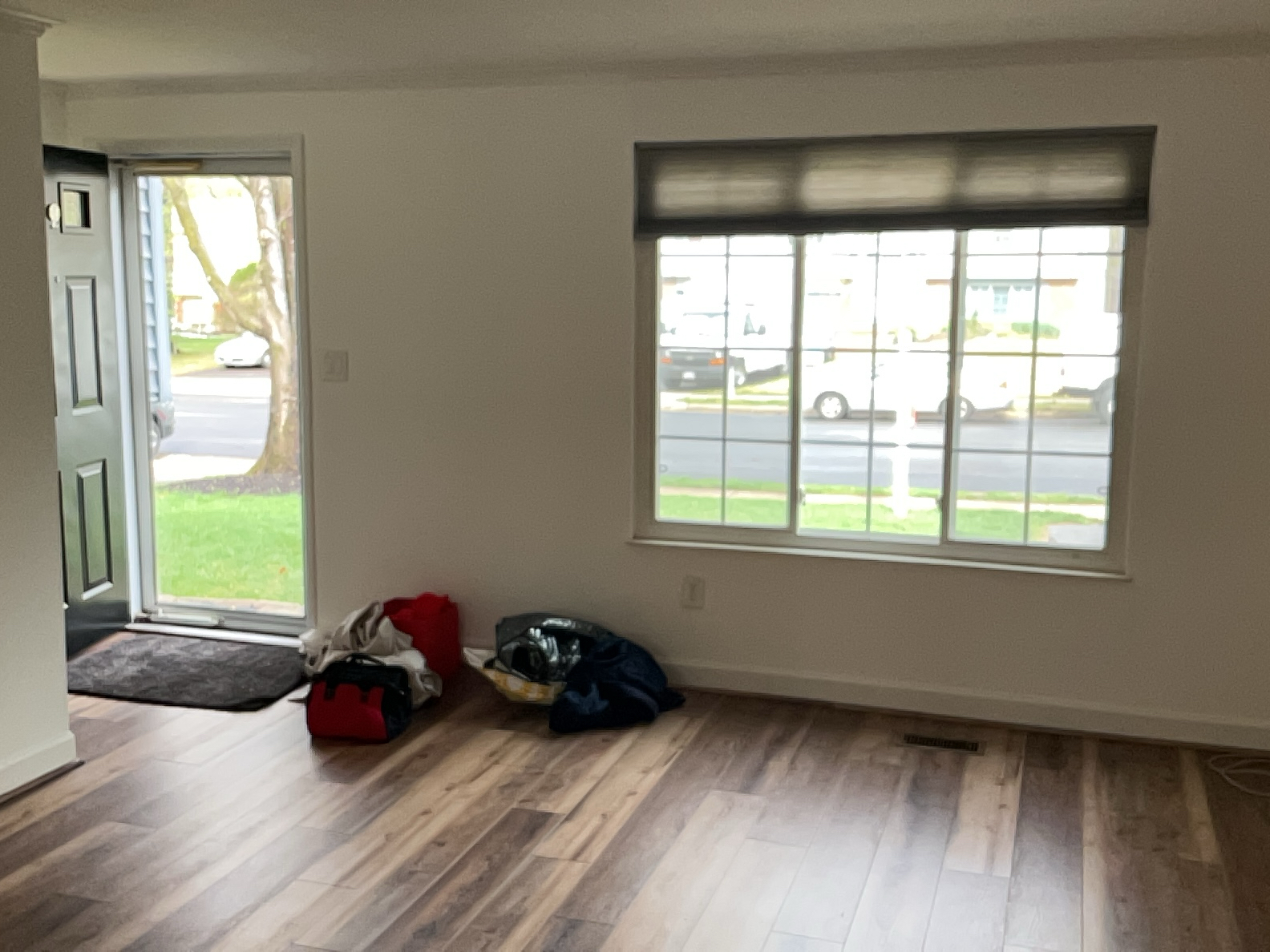
General View
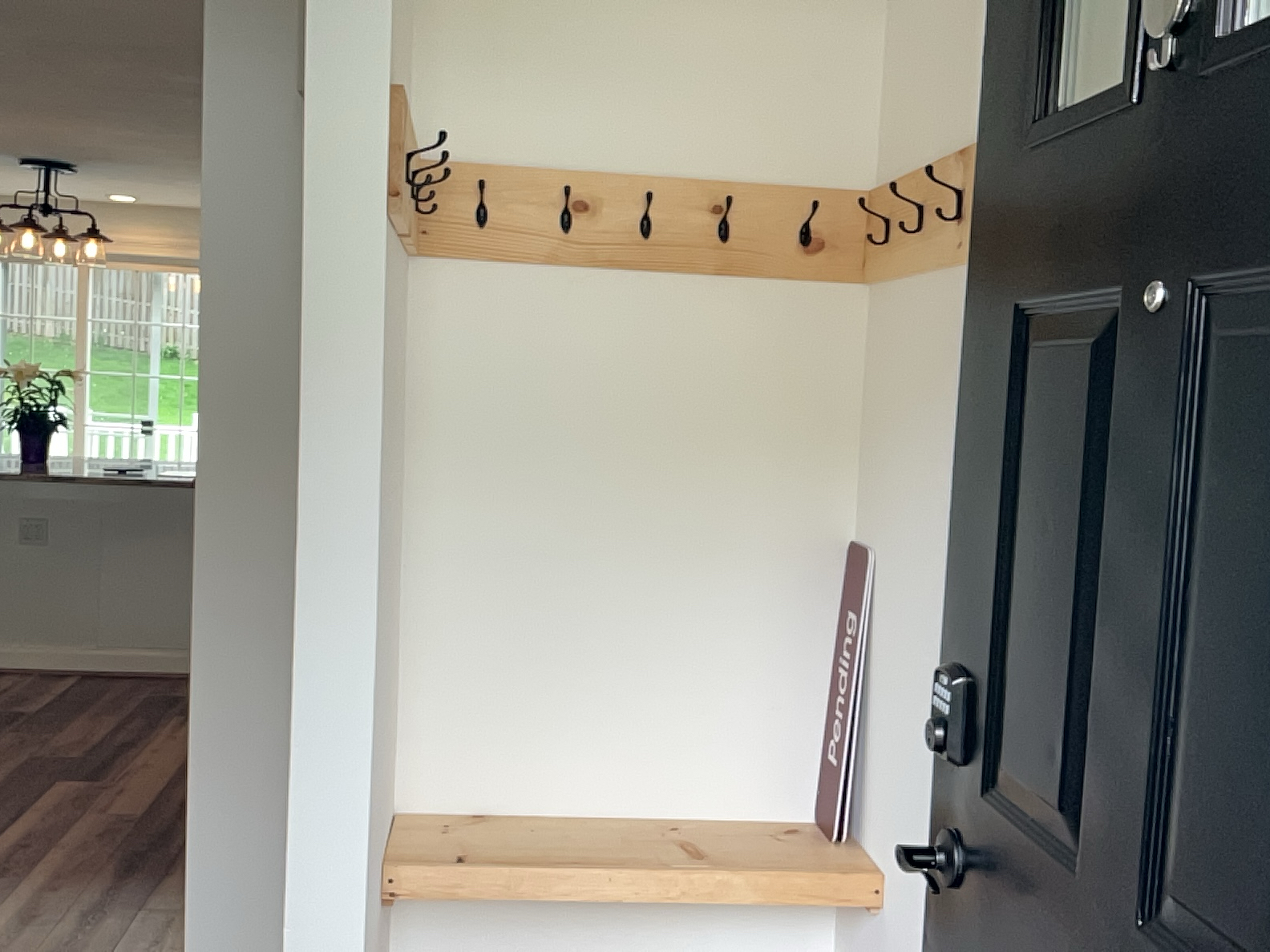
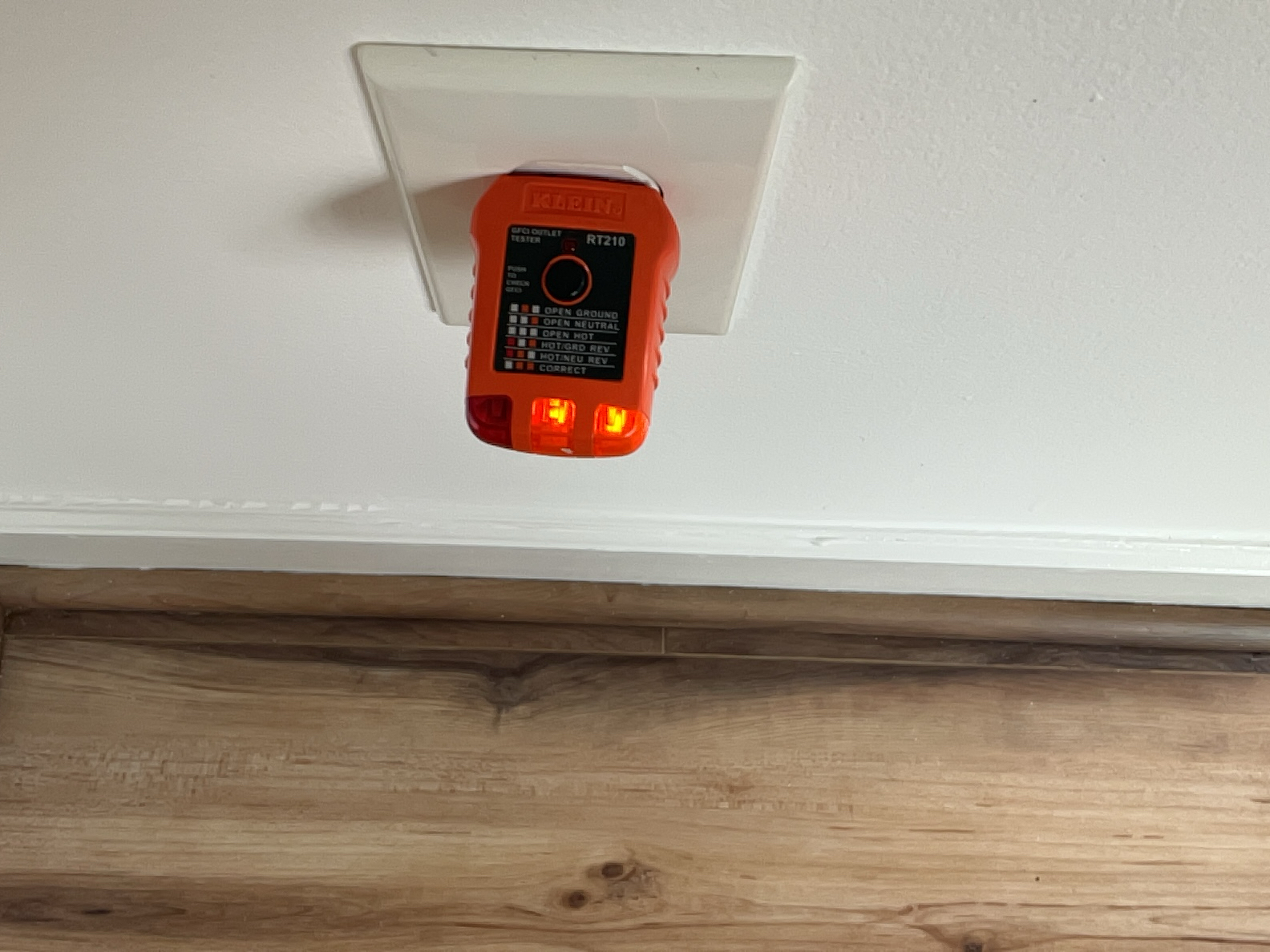
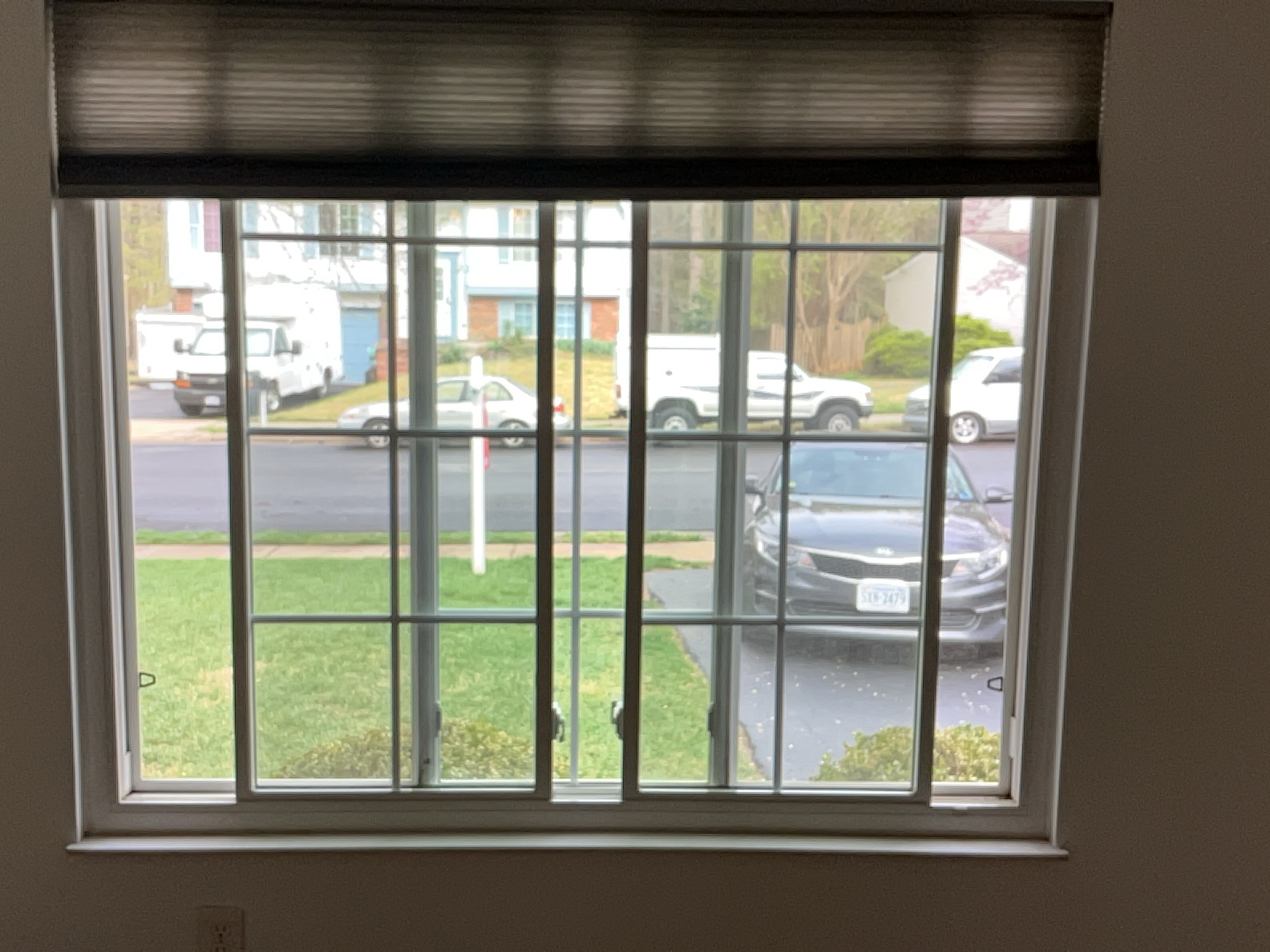
General Photos
 |  |  |
 |
Finishes
Wall and Ceiling Materials: Drywall
Doors
Exterior Door: Functional
Windows
Window Style: Sliding
Window Glazing: Double Pane
Window Frame: Vinyl
Floors
Floor Materials: Vinyl Plank
Stairs and Railing
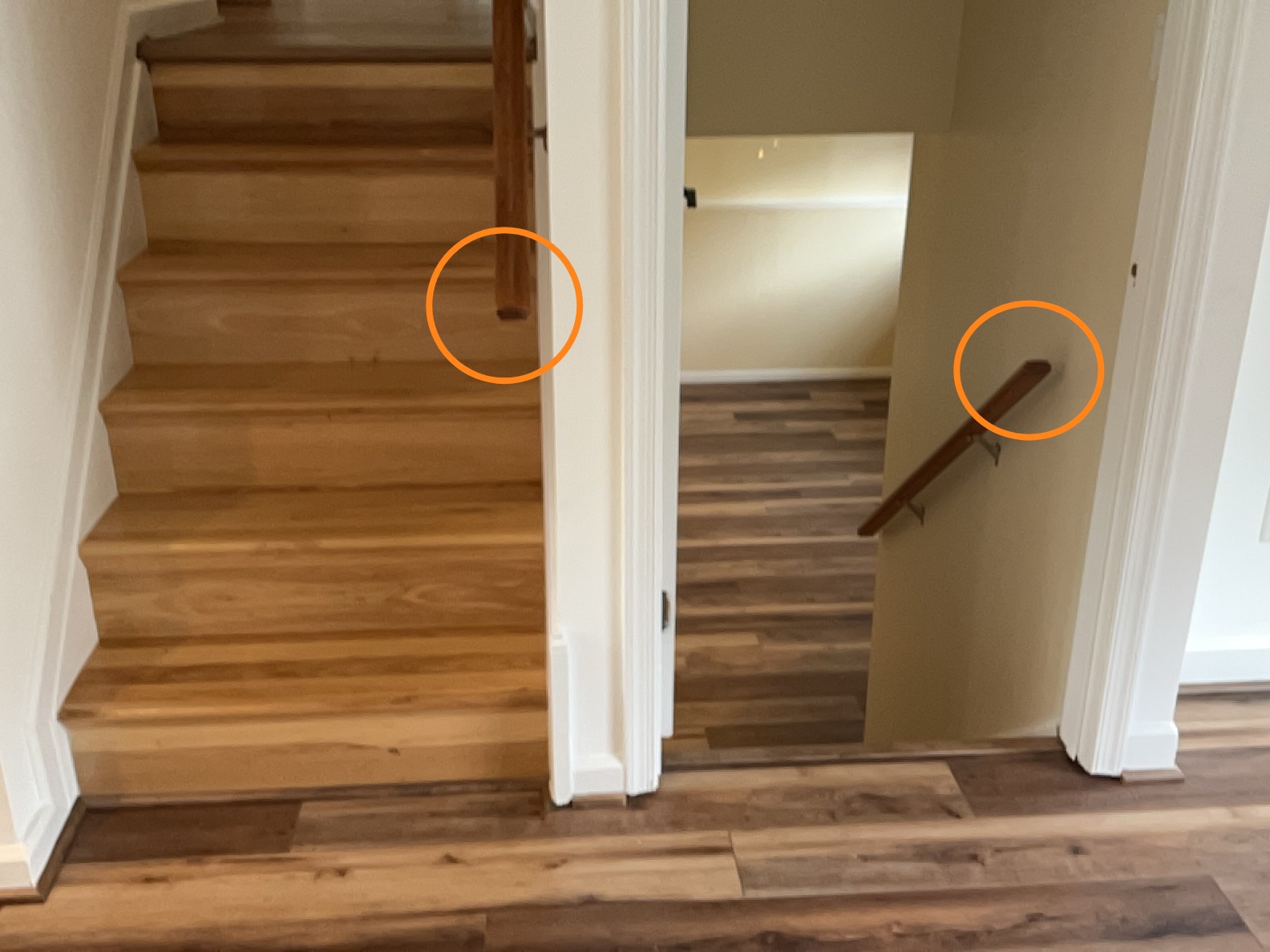
No Return on Railing
The ends of the handrail should return to the wall to prevent clothing or accessories from catching on the end of the railing and creating a trip hazard.
Rec Room
General View
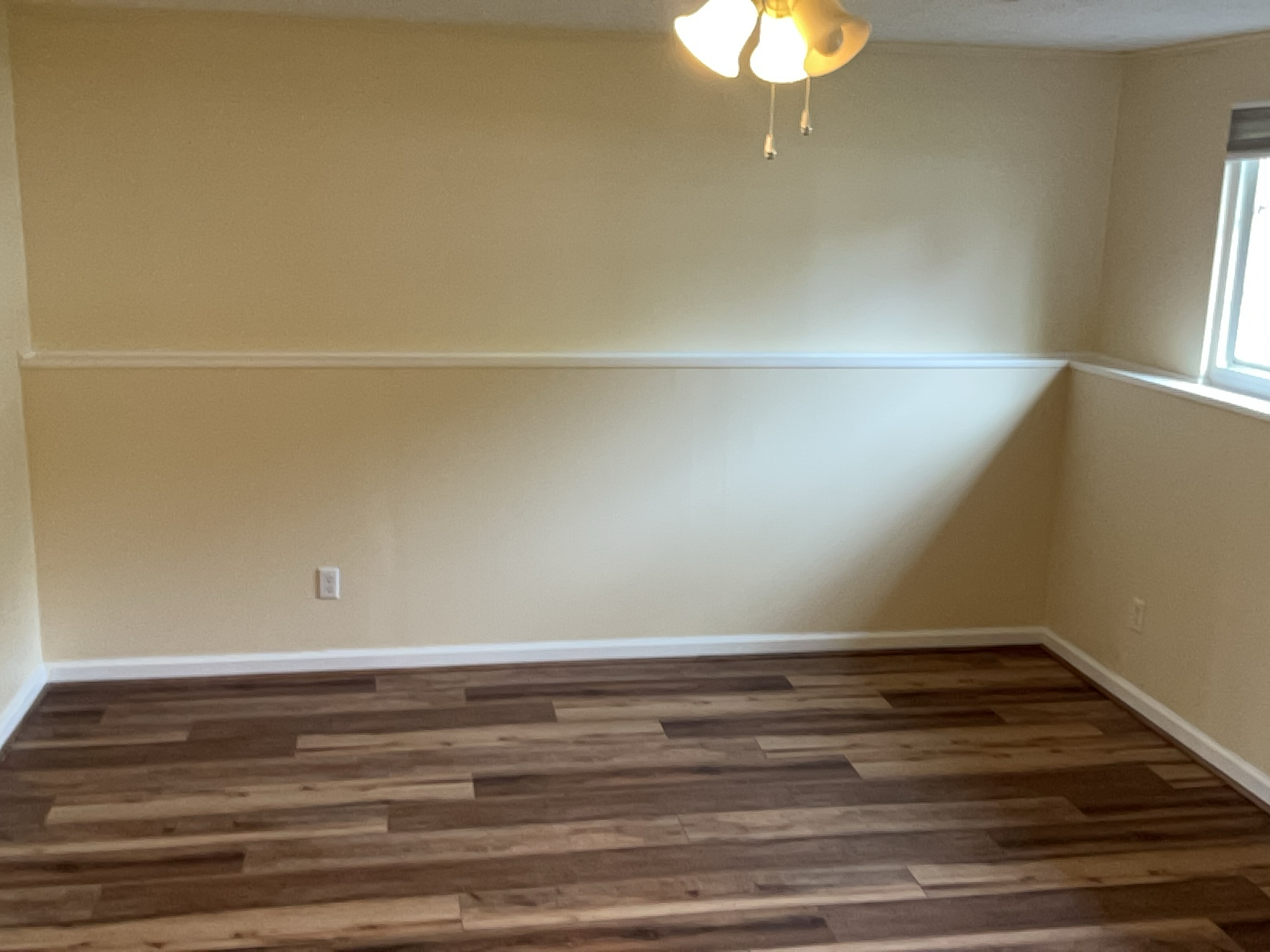
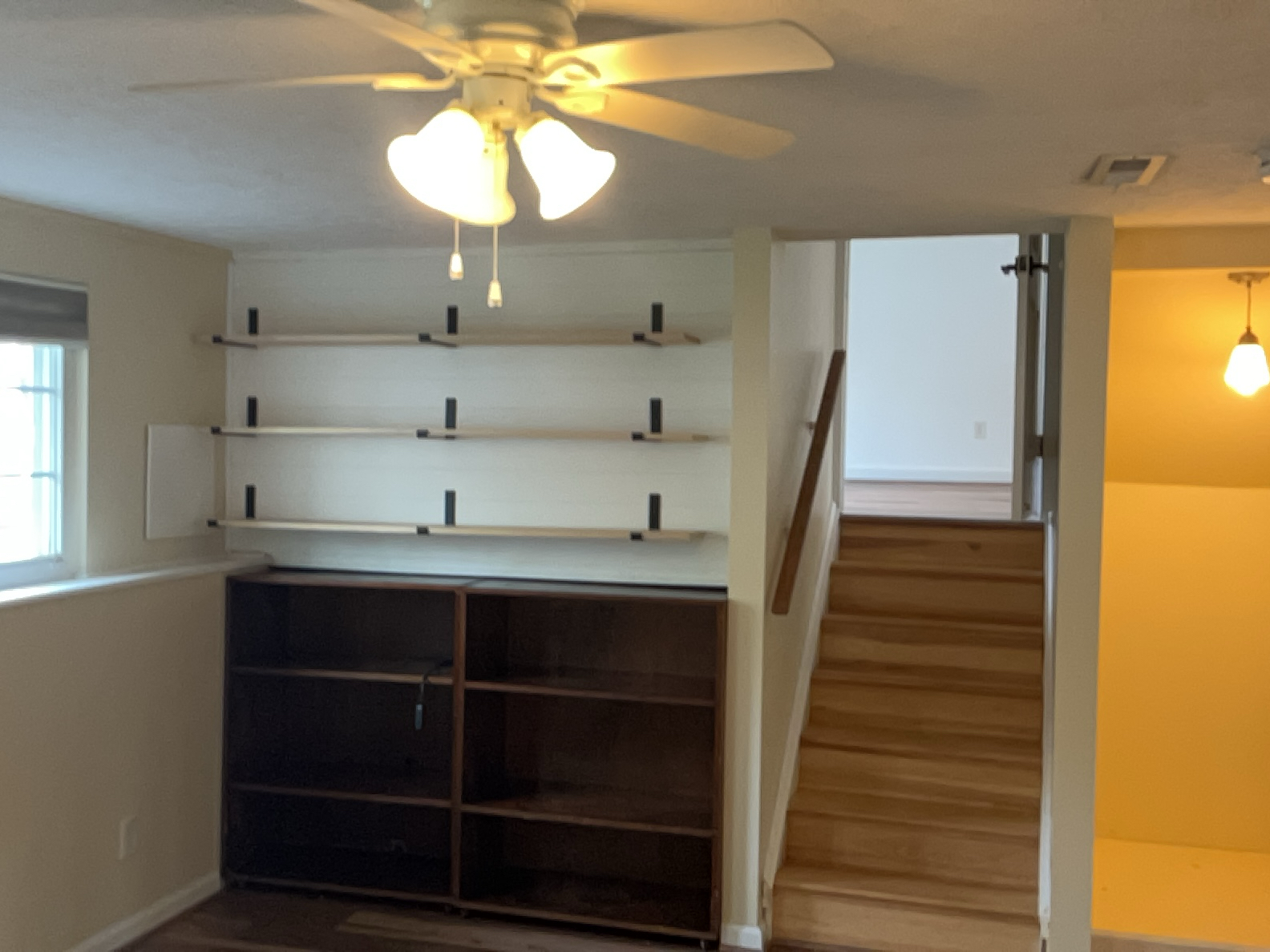
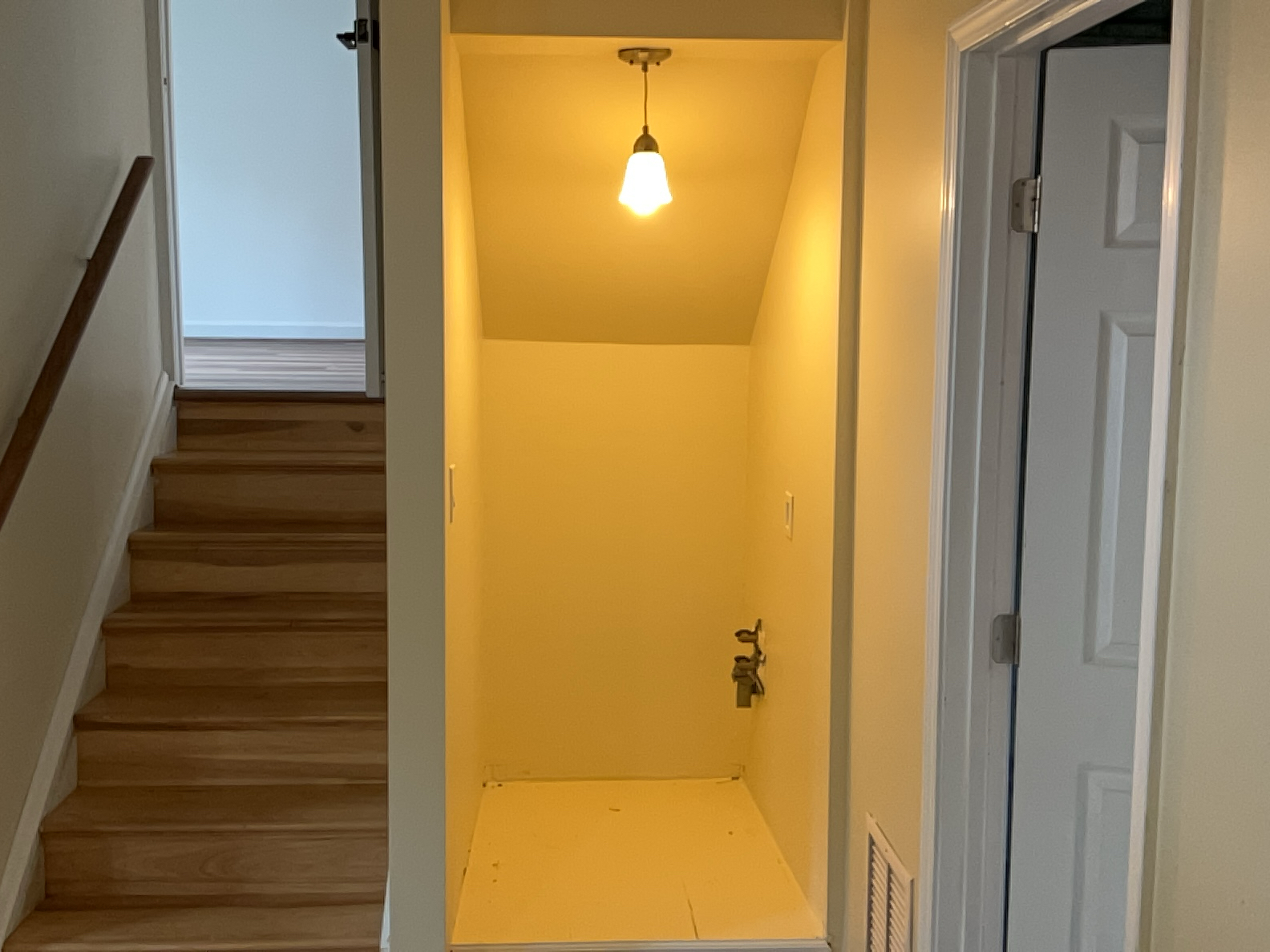
General Photos
 |  |  |
Finishes
Wall and Ceiling Materials: Drywall
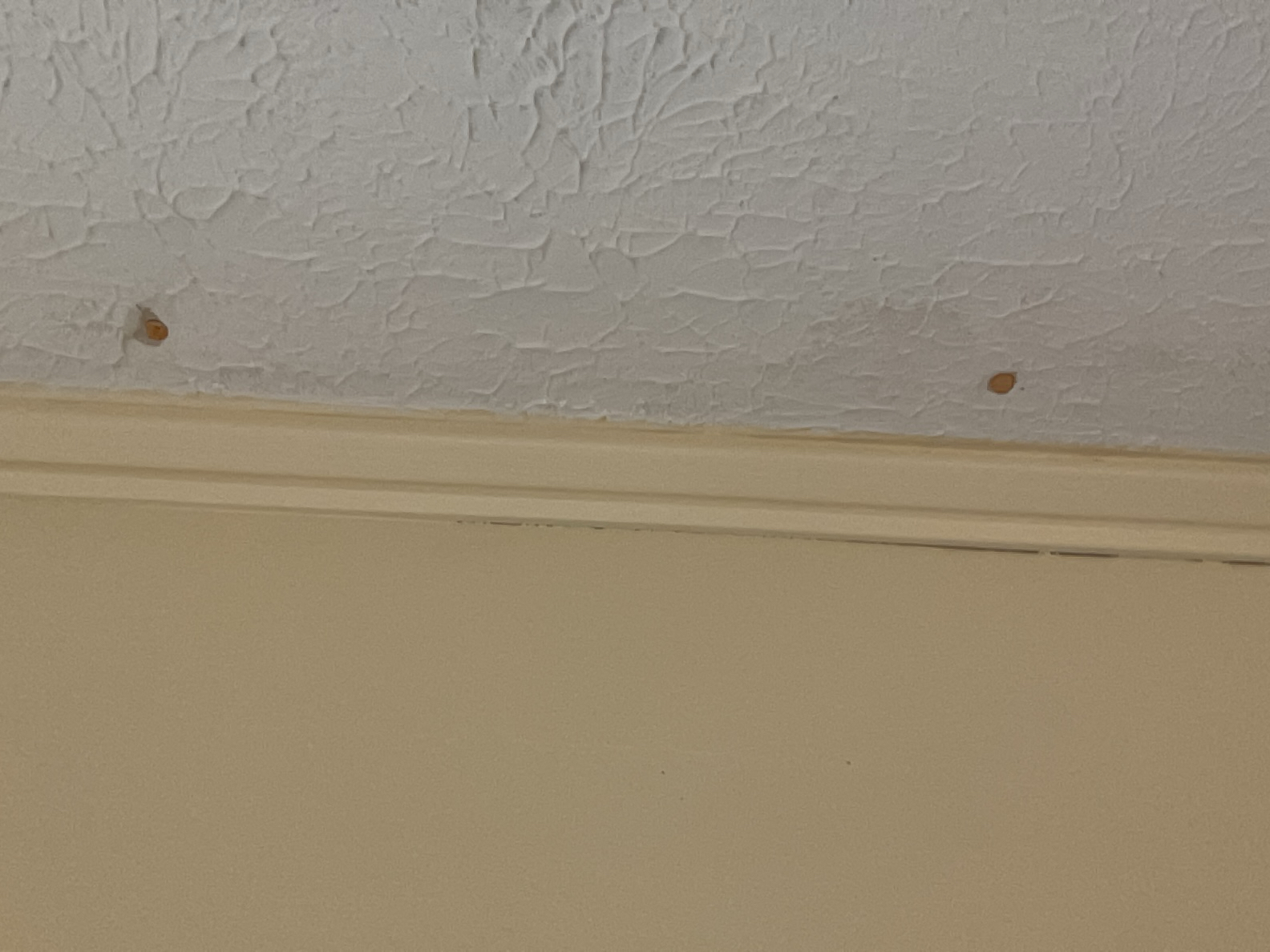
Nail Pop
Nail pops were noted in the ceiling. This can sometimes be from one time framing shrinkage or settlement, or it can be more persistent from seasonal movement of the house framing. Recommend repairing these nail pops and then monitoring for signs of on-going movement.
Windows
Window Style: Sliding
Window Glazing: Double Pane
Window Frame: Vinyl
Floors
Floor Materials: Vinyl Plank
Stairs and Railing
No Return on Railing
The ends of the handrail should return to the wall to prevent clothing or accessories from catching on the end of the railing and creating a trip hazard.
Utility Room
Electrical
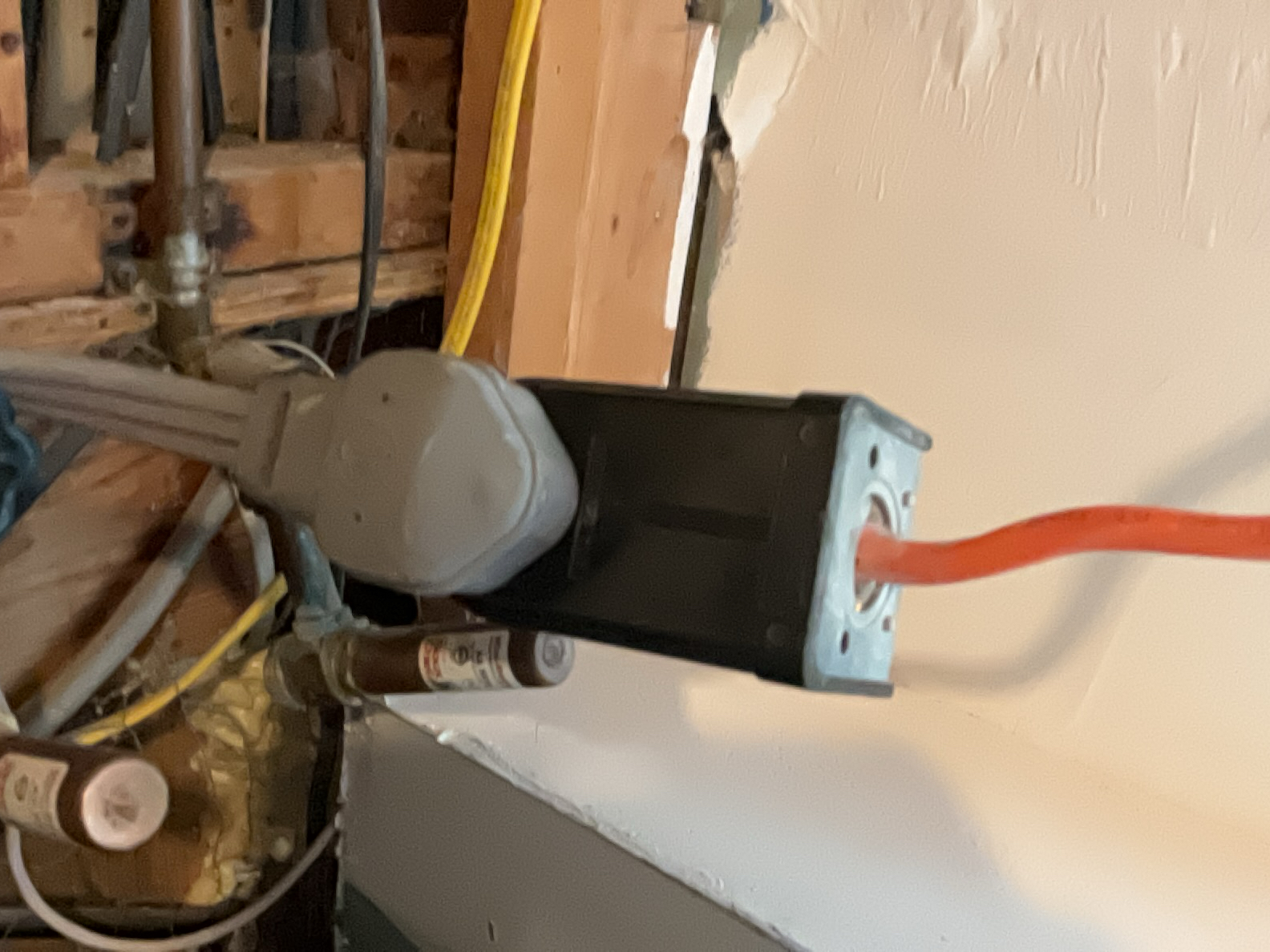
Unsecured Outlet
The outlet for the dryer is loose and needs to be properly secured. Recommend repair by qualified contractor.
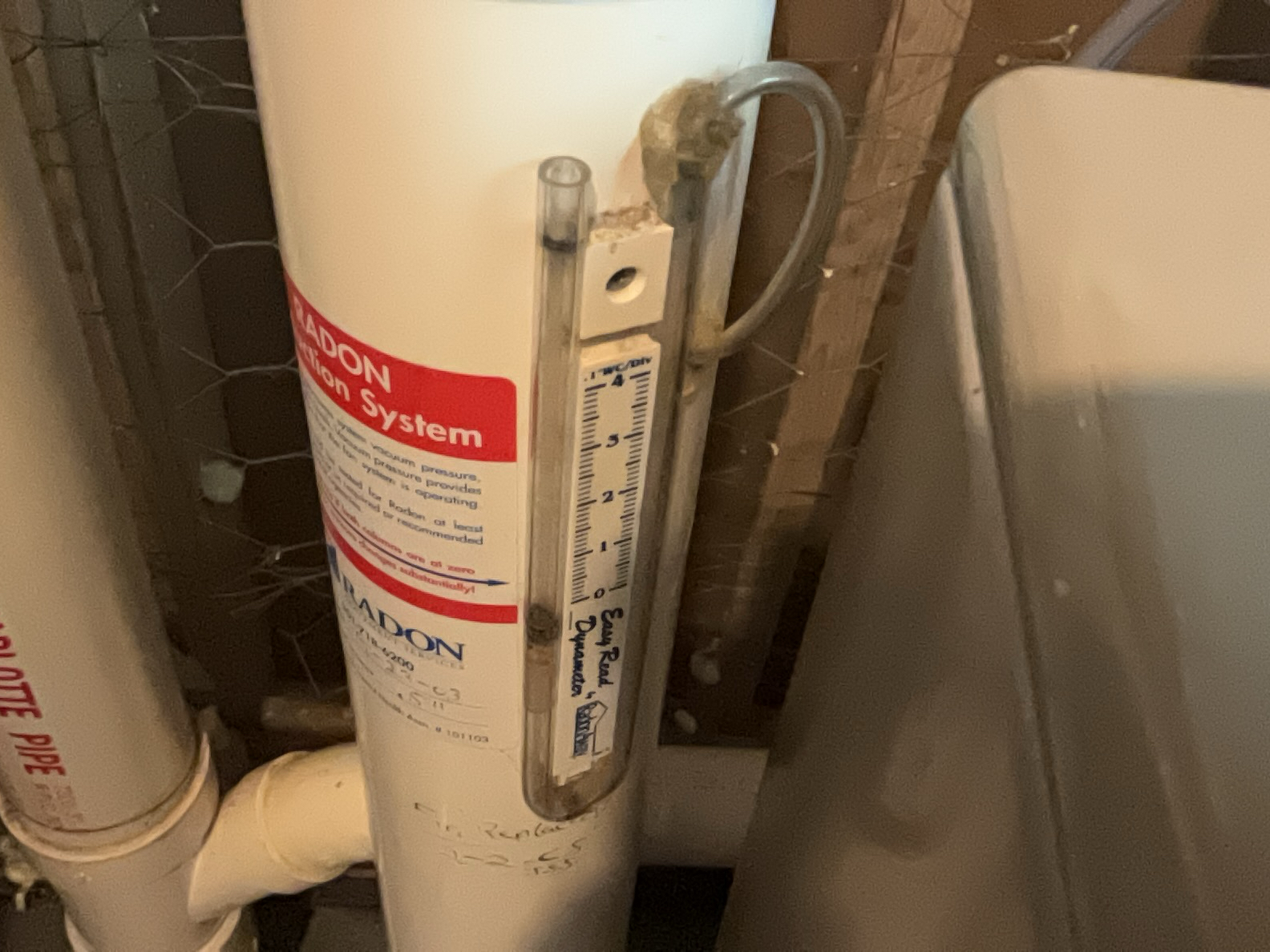
Manometer Not Functioning
The manometer on the radon vent is not functioning. The fan is on but there is no reading. This device provides a visual reference that the fan is operational. Recommend it be repair or replaced as needed by radon mitigation installer.
Bathroom
General Photos
General Photos
Sinks and Cabinets
Condition: Functional Condition
Toilet
Condition: Not Caulked
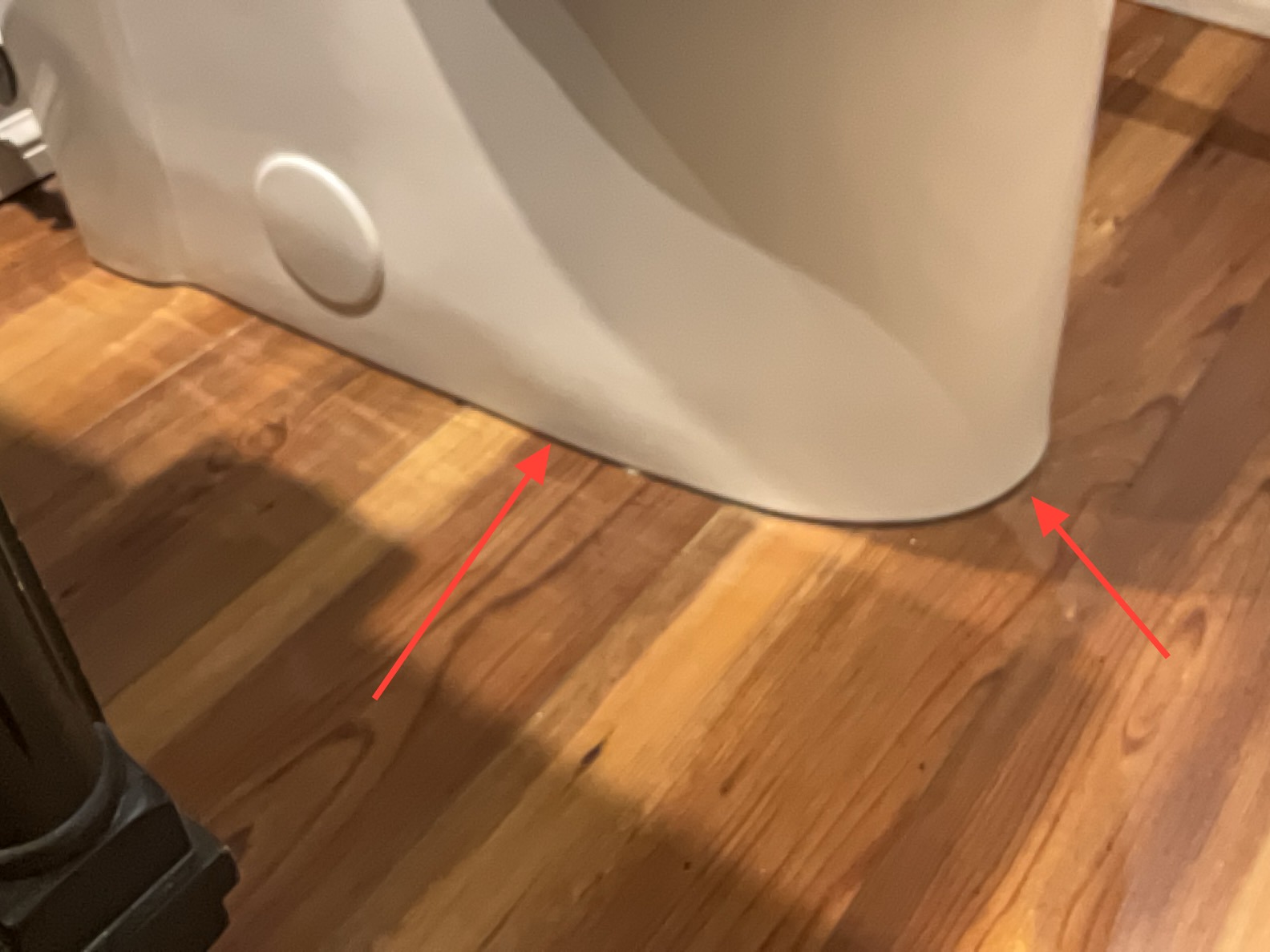
Toilet Not Caulked
The toilet has not been caulked to the floor. Recommend sealing the front and sides of the toilet to the floor to help secure. Leave the back uncaulked so if the toilet leaks water has an escape route.
Bathtub/Shower
Shower/Bath Condition: Functional
Ventilation
Ventilation Condition: Bathroom Fan Operated
Electrical
Lights and Outlets: Functional, GFCI Protected
Doors
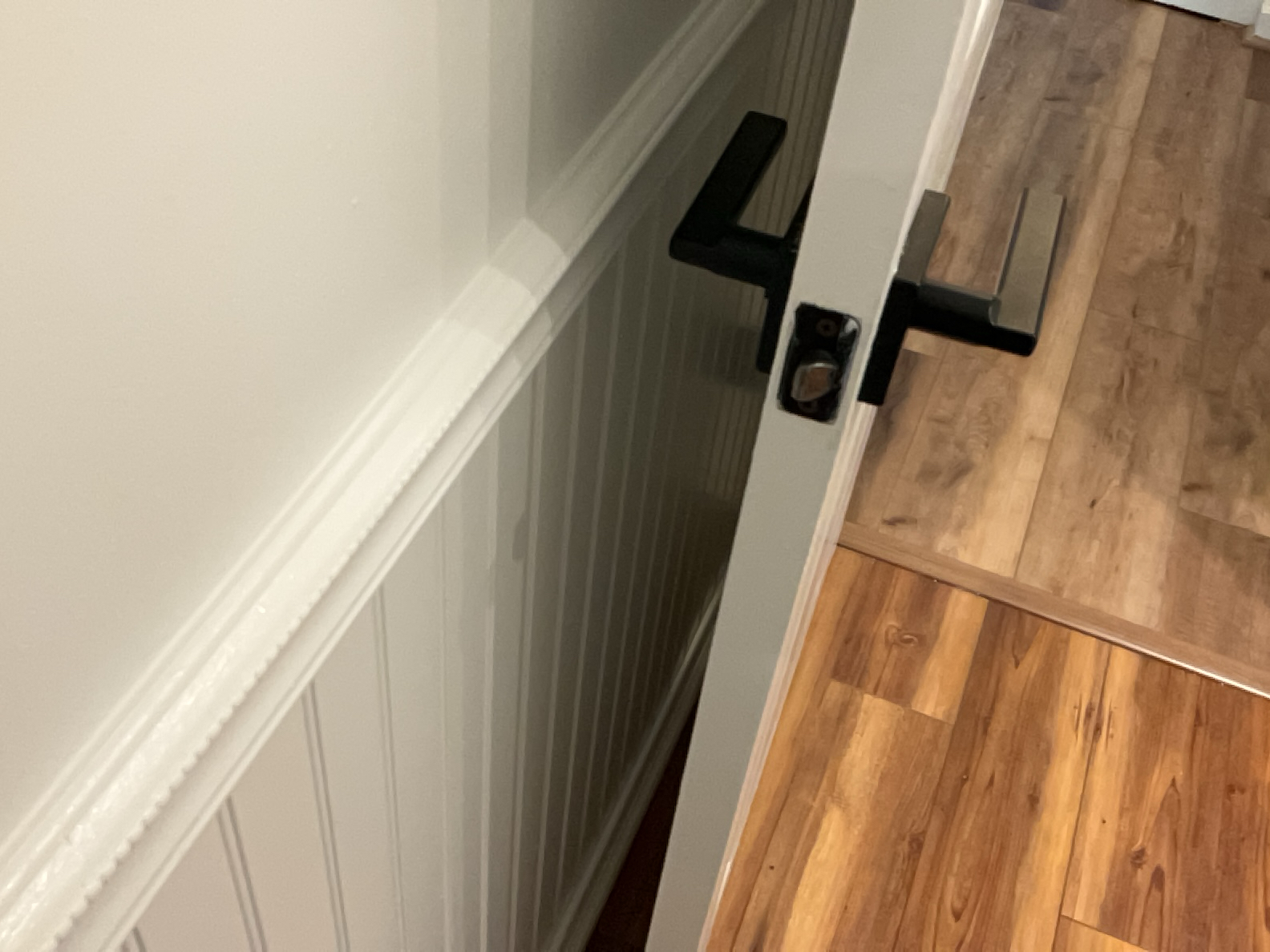
Wall Contact
Wall contact was noted at the door. Recommend installing door stopper to prevent damage to the wall.
Floor
Floor Material: Laminate
Bathroom (2)
General Photos
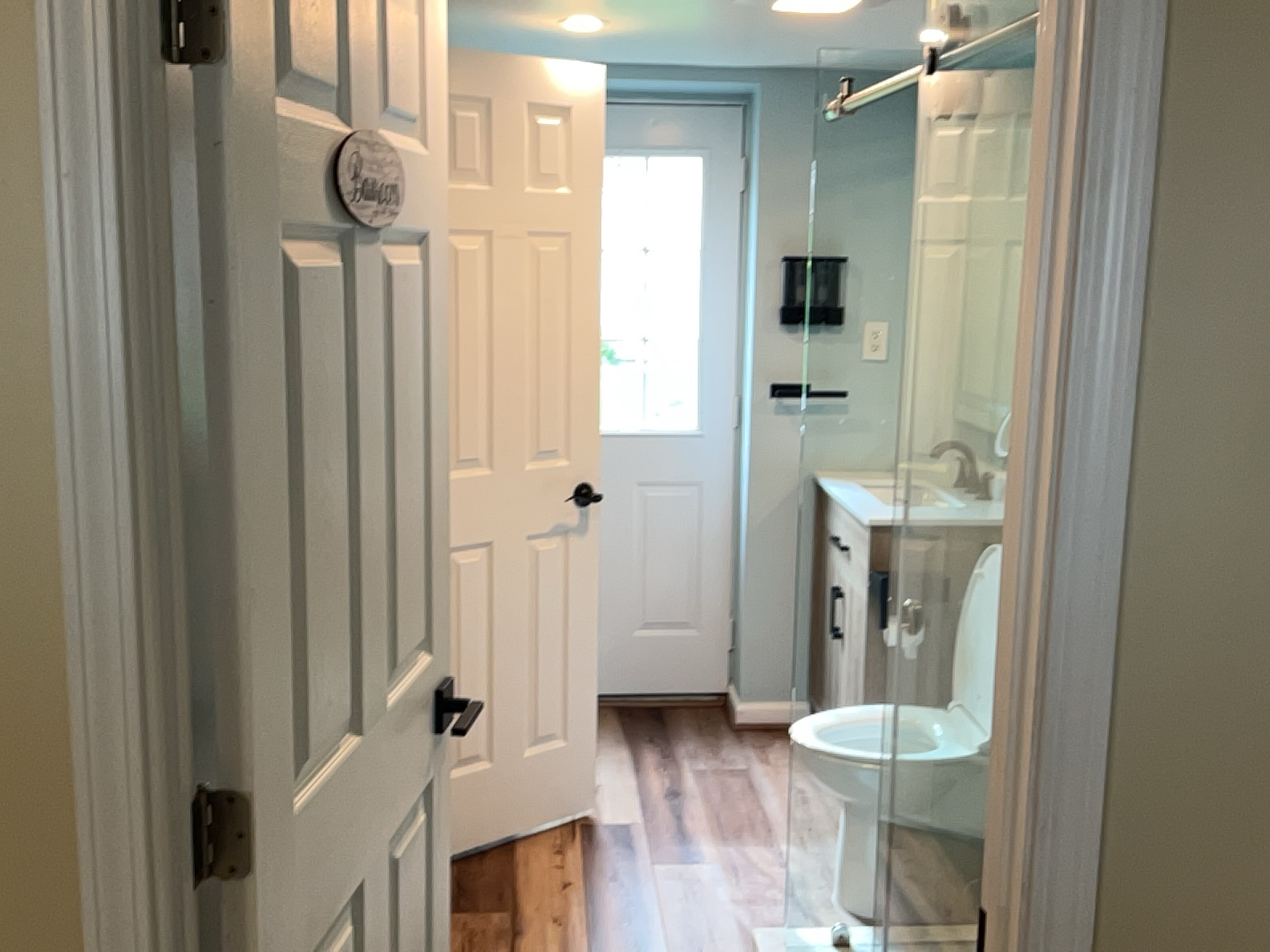
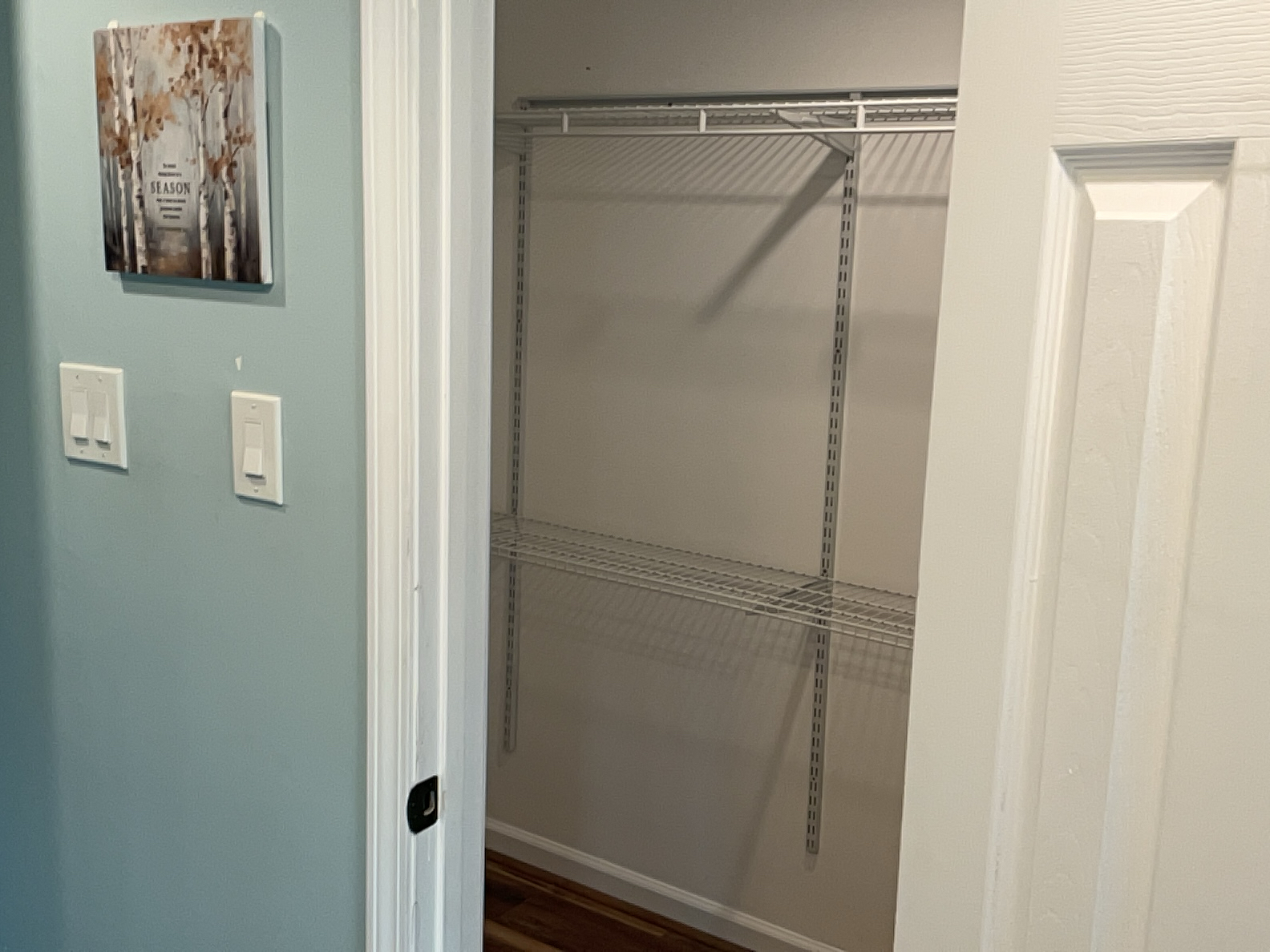
General Photos
 |  |
Sinks and Cabinets
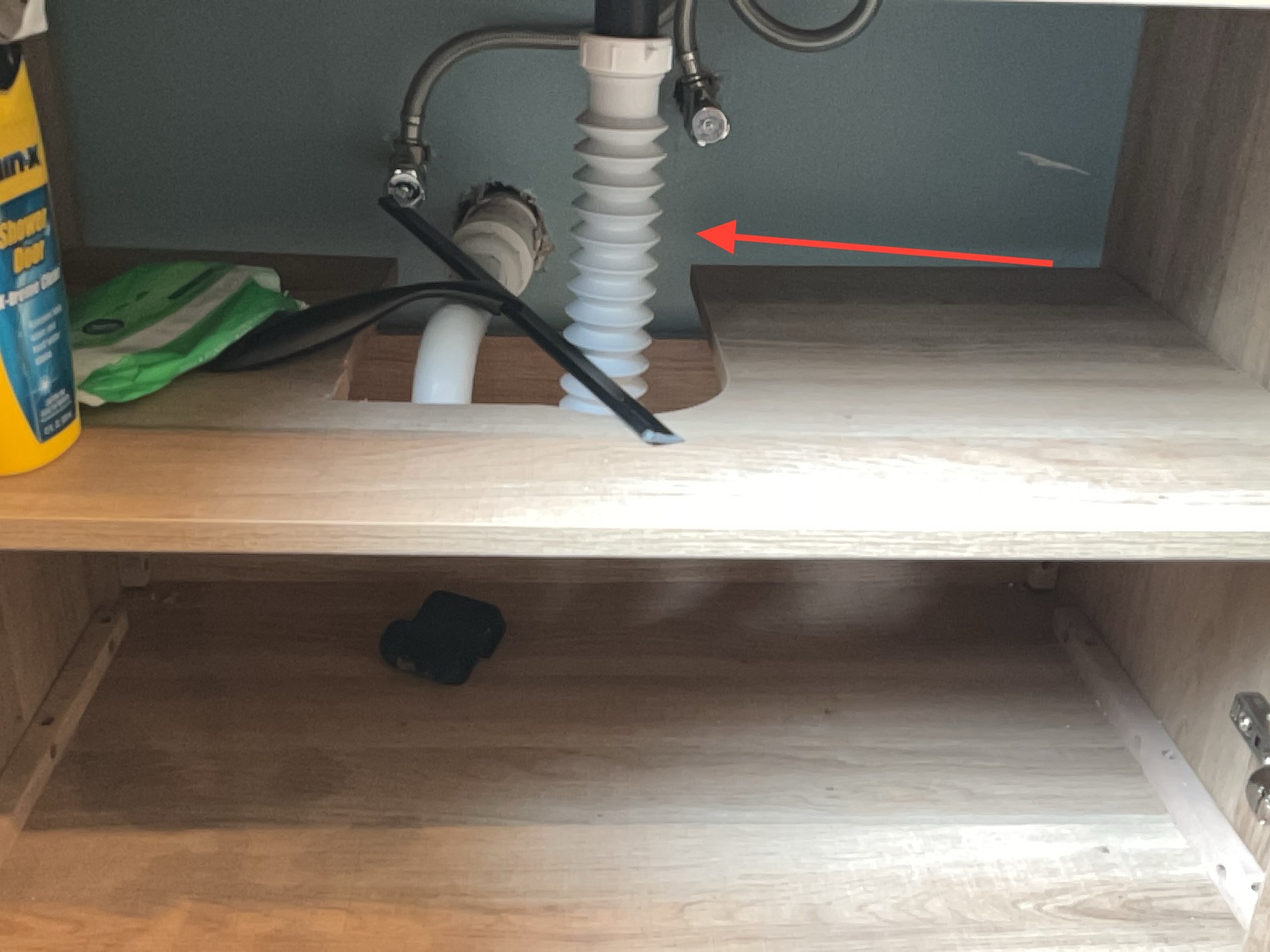
Accordion Drain
Accordion drain pipe used to drain this sink. These are prone to clogging. Recommend replacing with smooth wall pipe by qualified plumbing contractor.
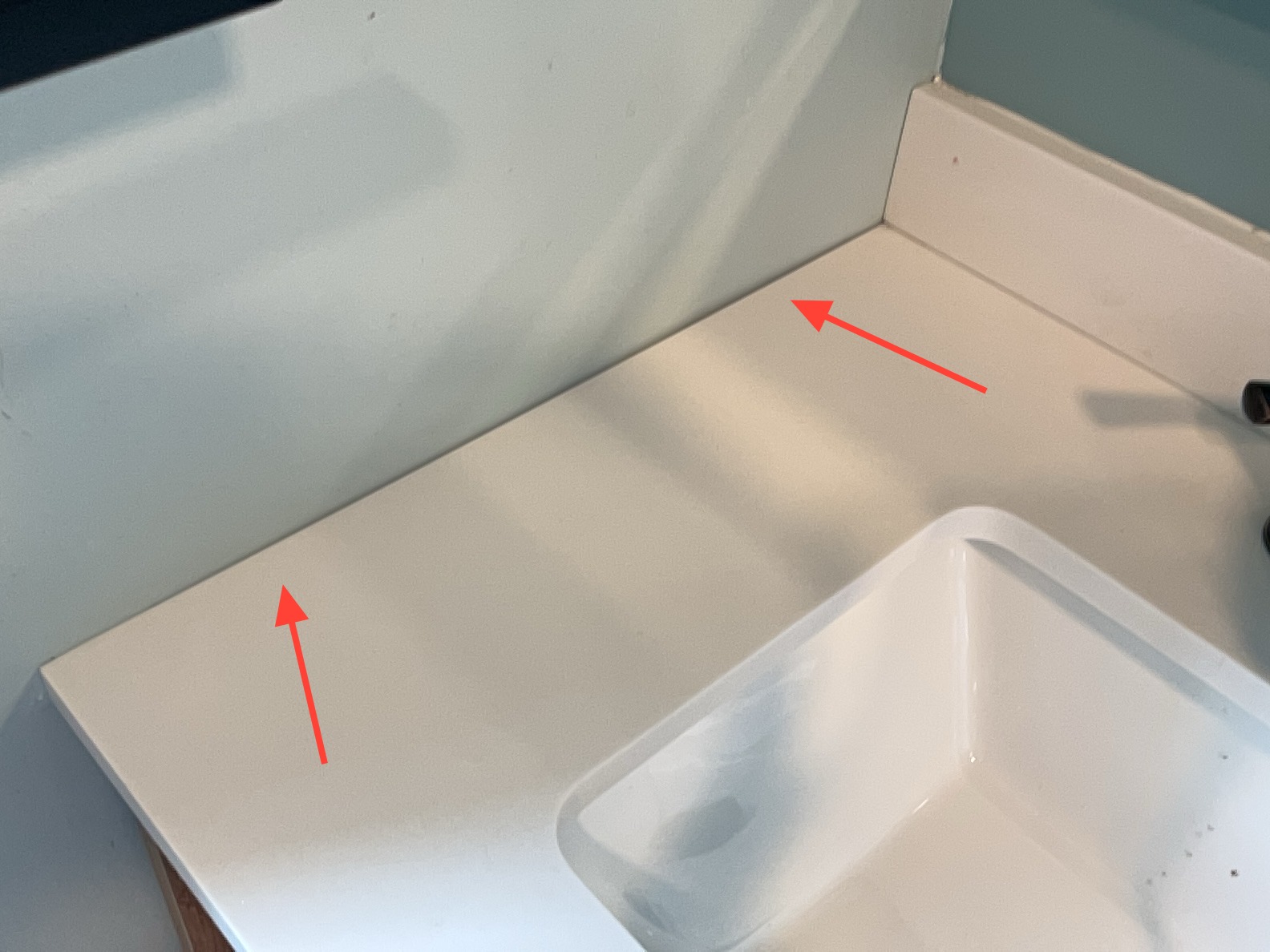
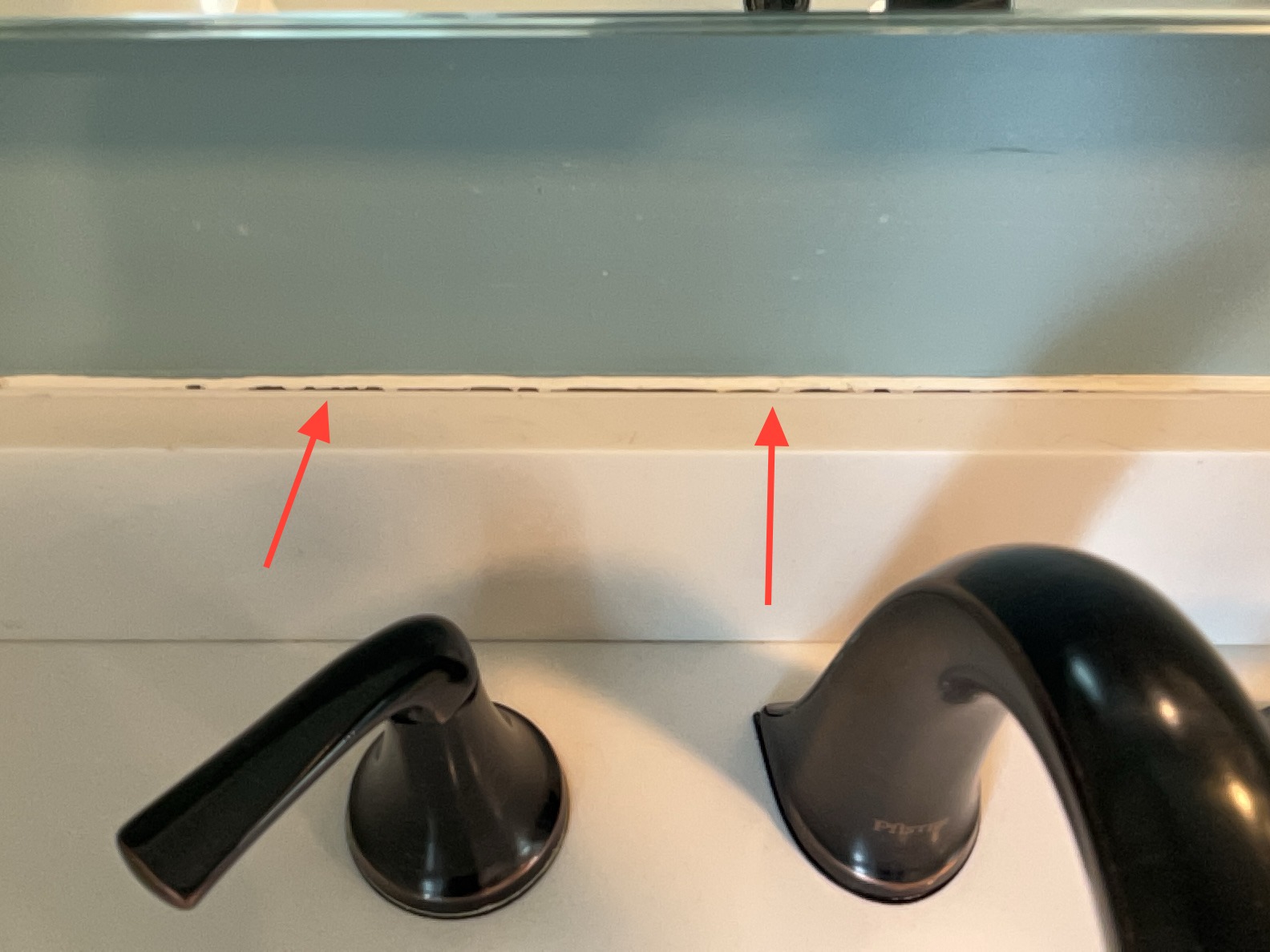
Missing Caulk
The counter is missing caulk where it meets the wall. Recommend caulking this area to help prevent water seepage down the wall.
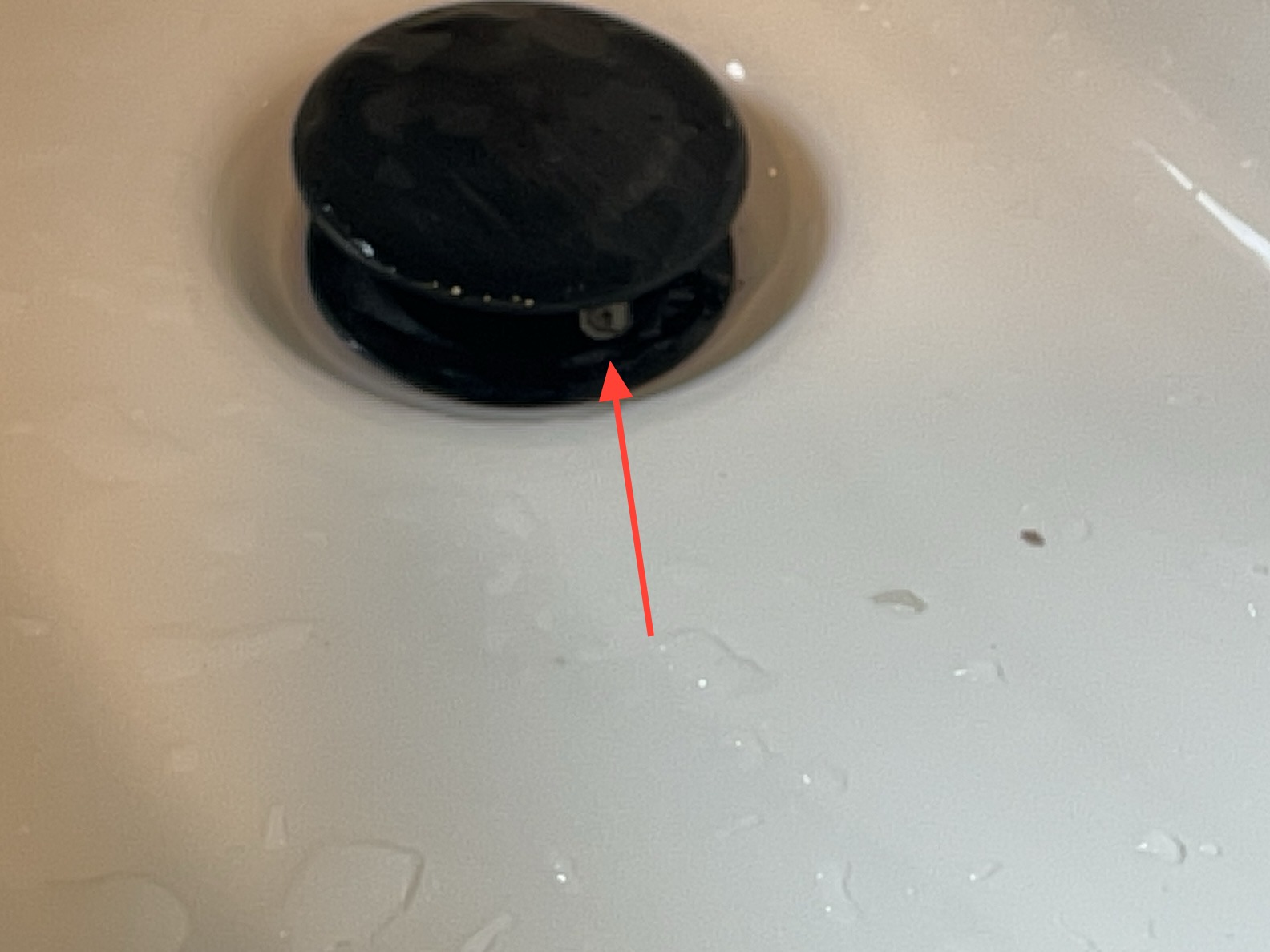
Object in Drain
There was an object in the drain preventing the drain from closing. Remove for proper operation.
Toilet
Condition: Functional Condition
Bathtub/Shower
Shower/Bath Condition: Functional
Ventilation
Ventilation Condition: Bathroom Fan Operated
Electrical
Lights and Outlets: Functional, GFCI Protected
Floor
Floor Material: Vinyl Plank
Kitchen
General Kitchen Photos
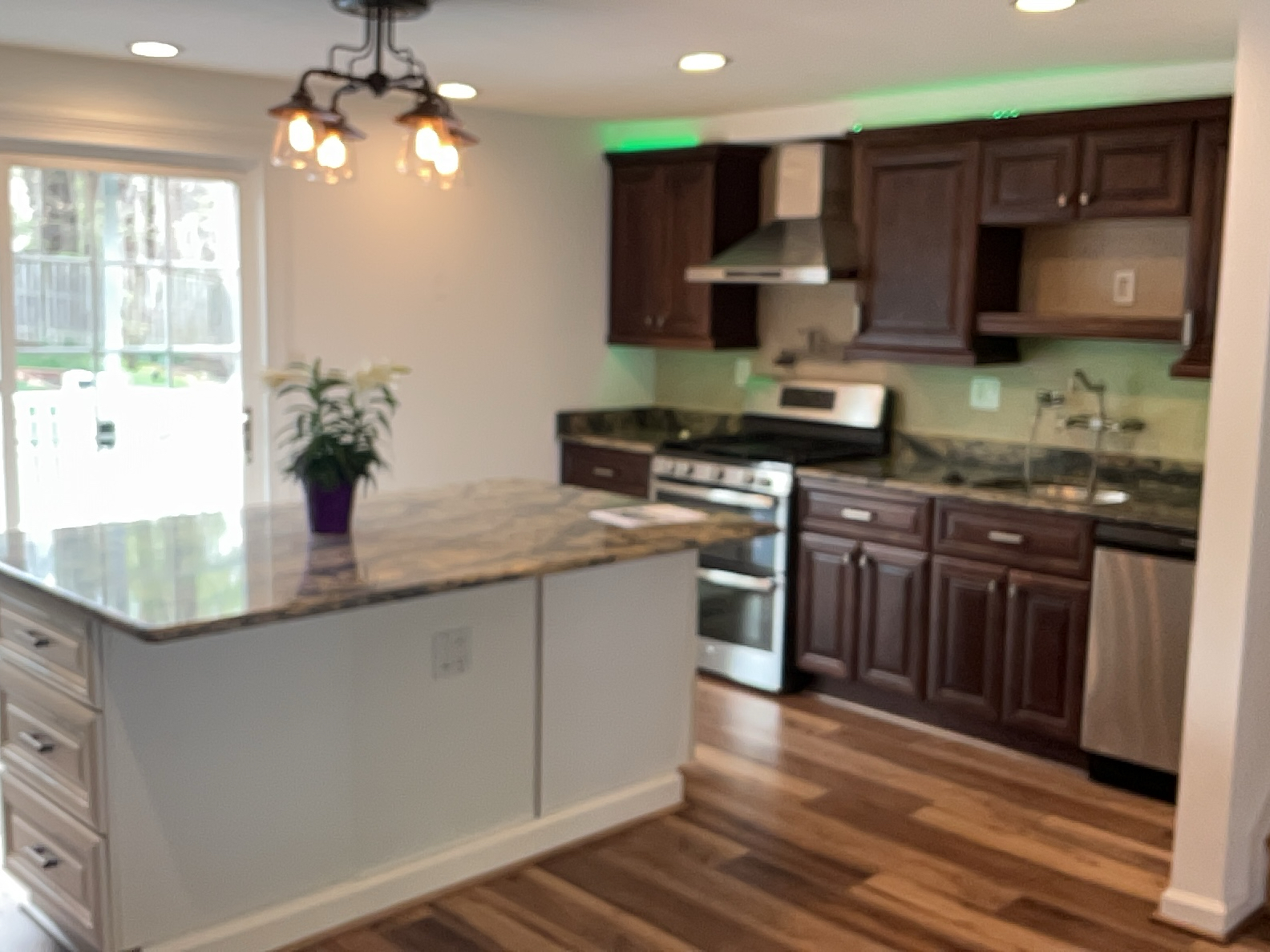
General Photos
 |  |  |
 |  |  |
Sinks and Faucets
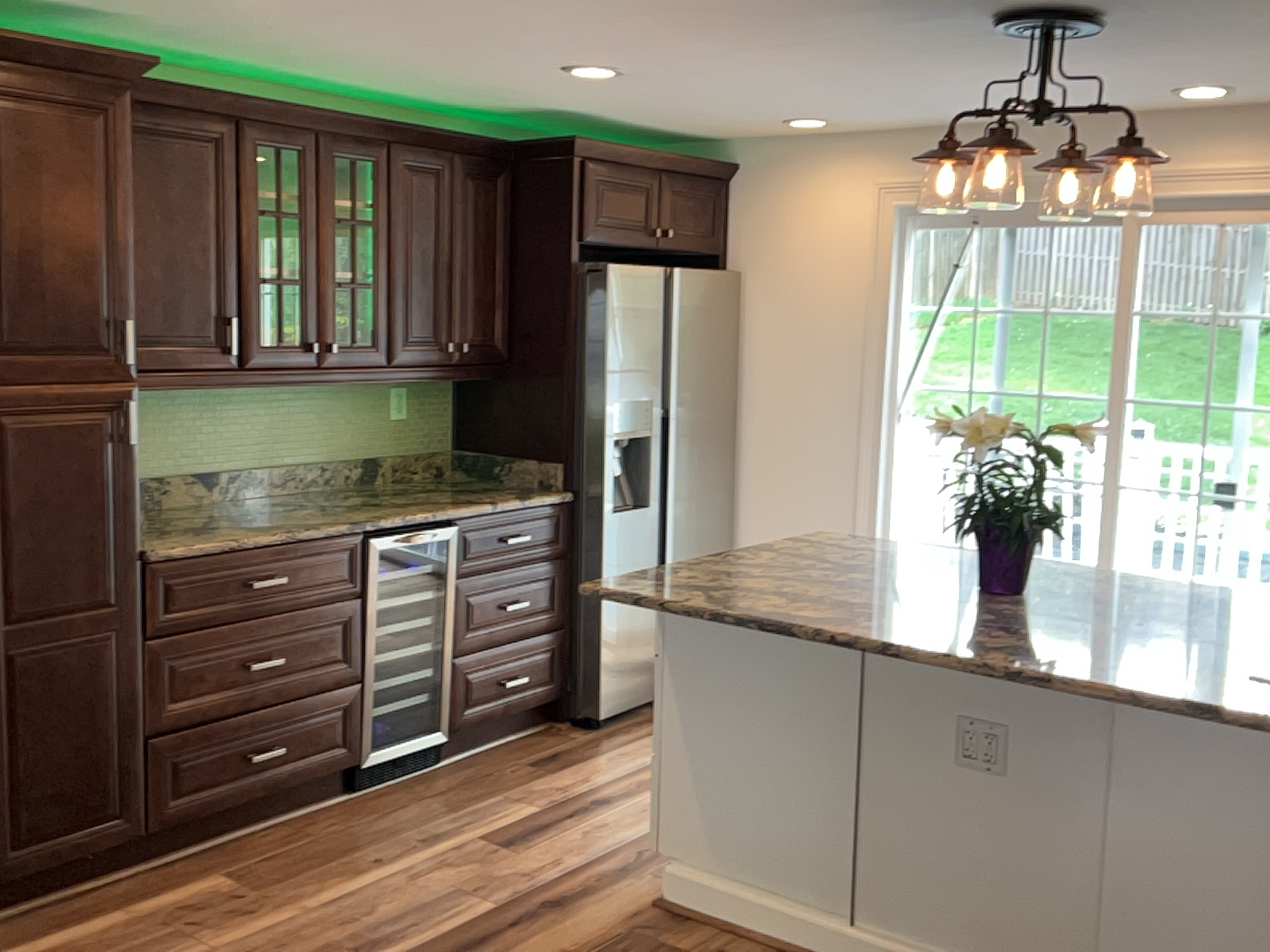
Condition: Functional
Cabinets and Countertops
Condition: Functional
Disposal
Condition: Operational
Dishwasher
Condition: Functional
Ventilation
Condition: Exterior Vented
Ranges, Ovens, and Cooktops
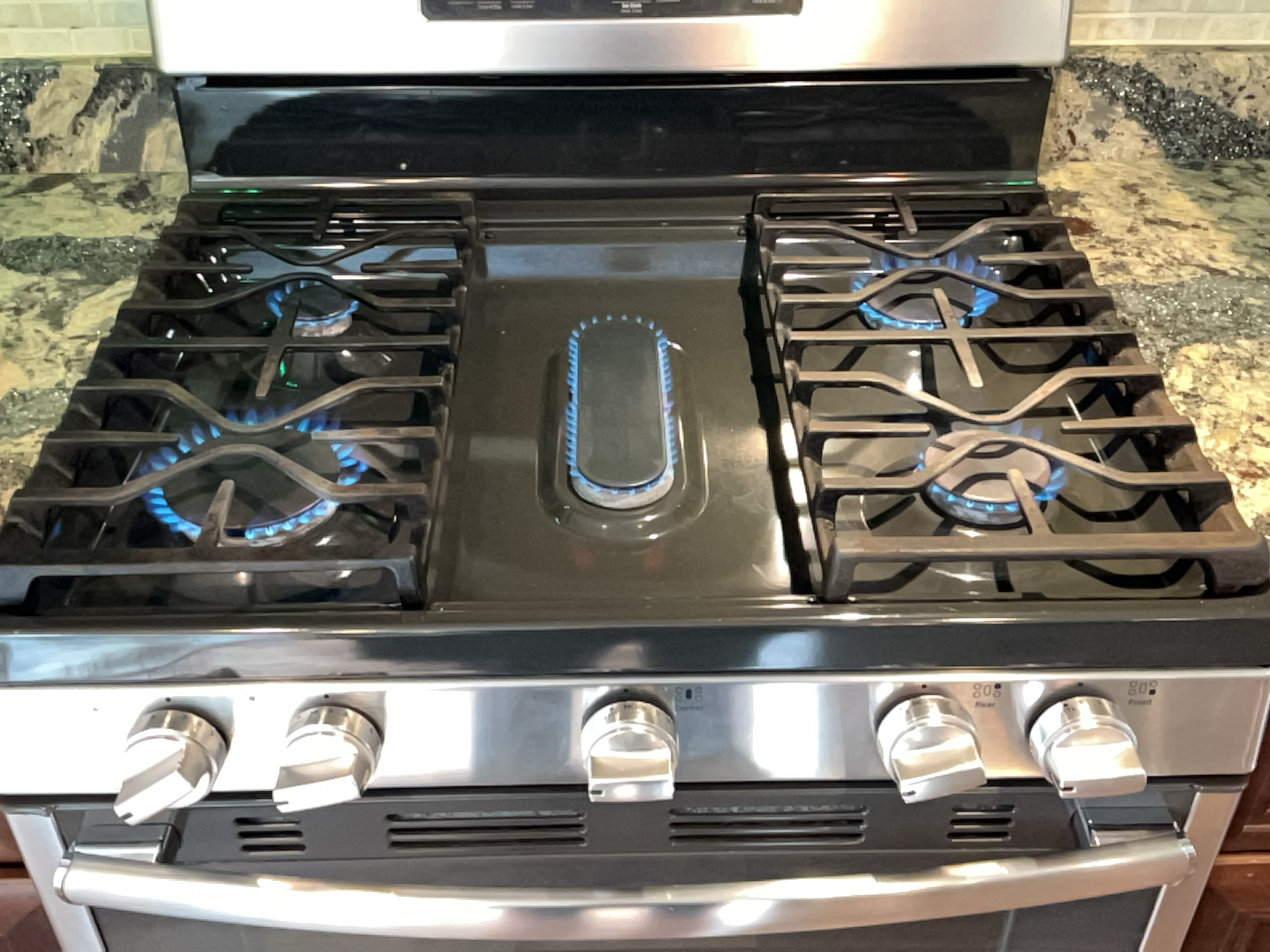
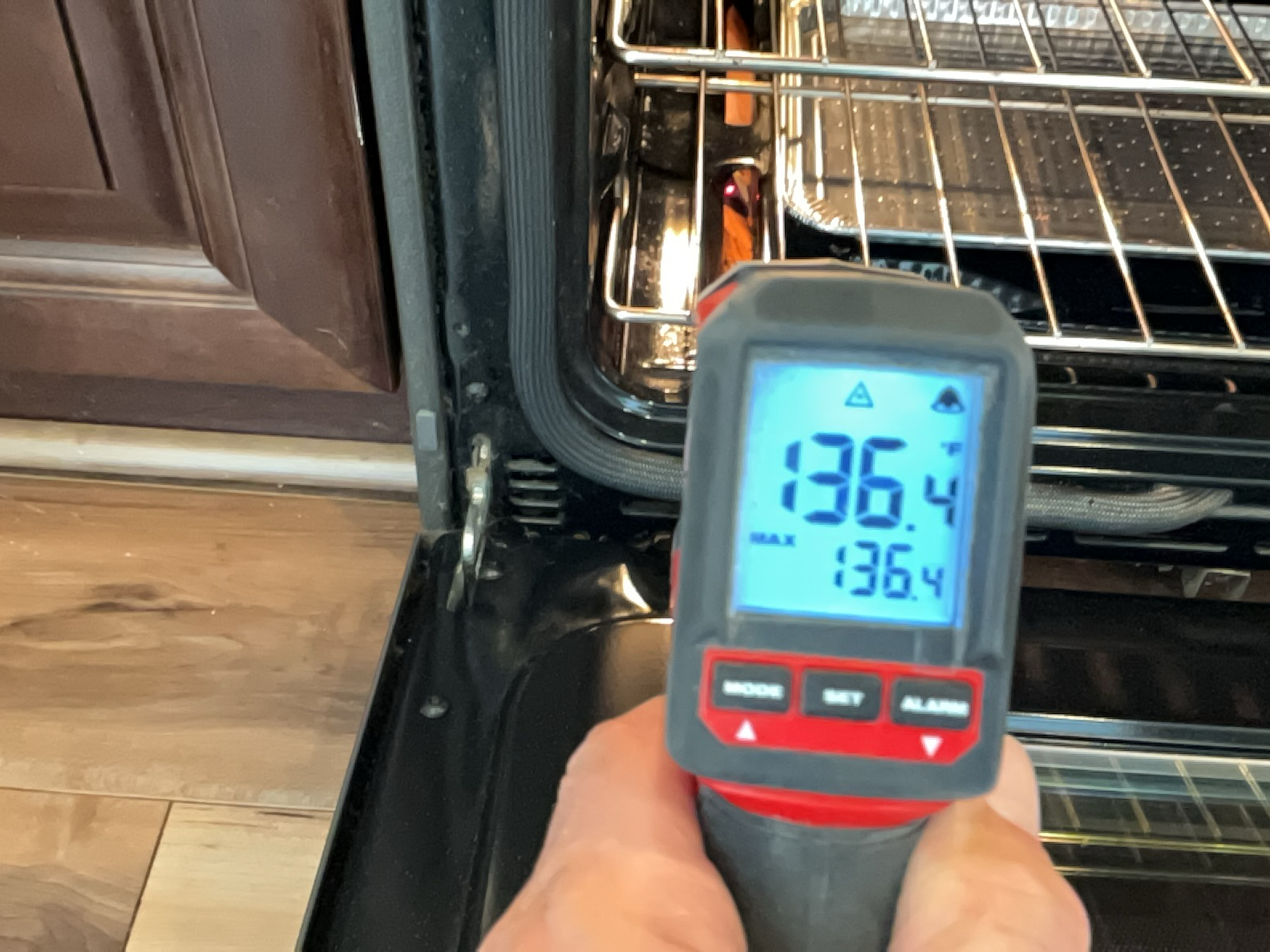
Ranges, Ovens, and Cooktops: Gas, Tested
Refrigerators
Condition: Operating, Ice Maker Tested
Floors
Floor Material: Vinyl Plank
Electrical
Lights: Functional
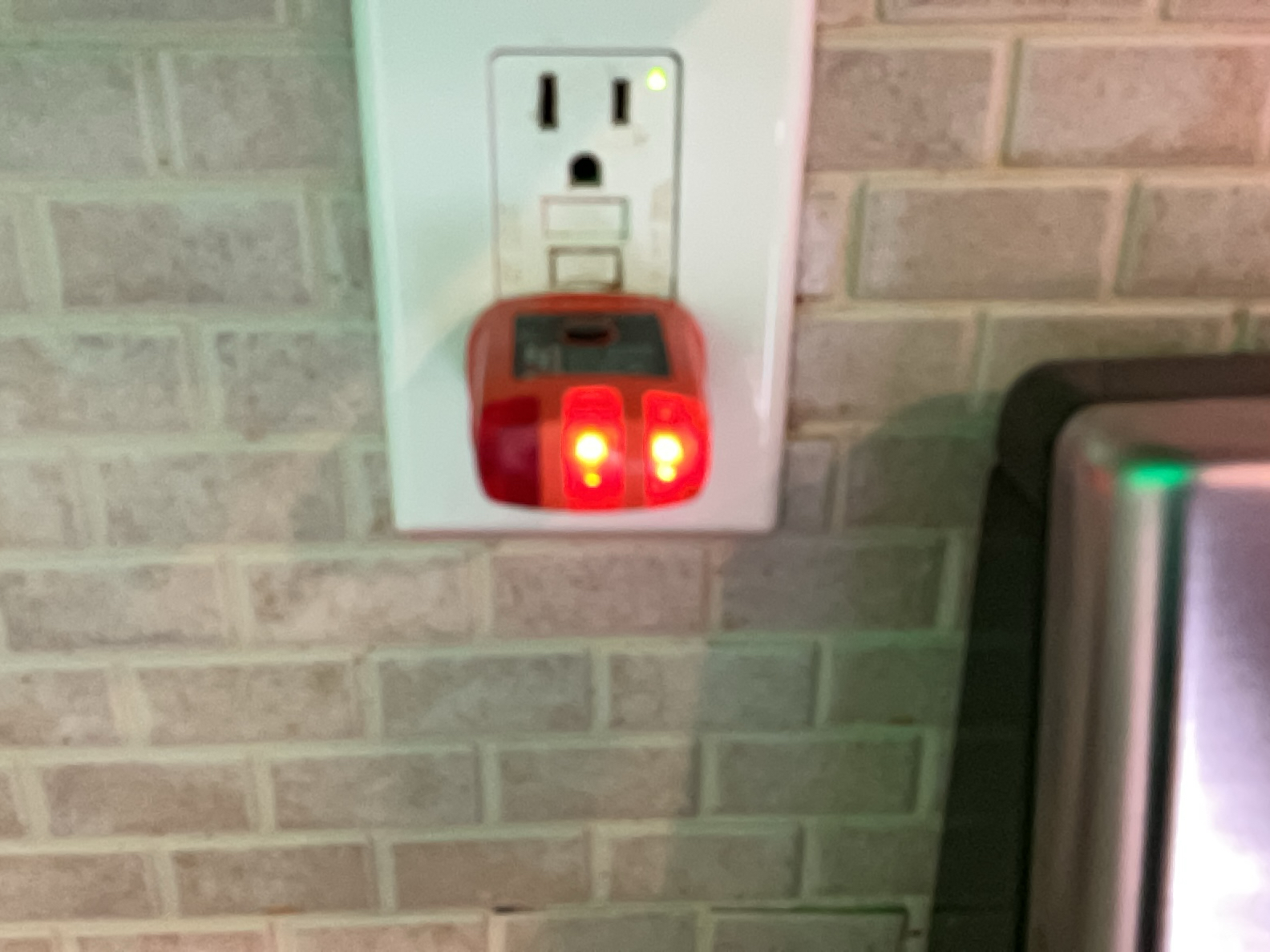
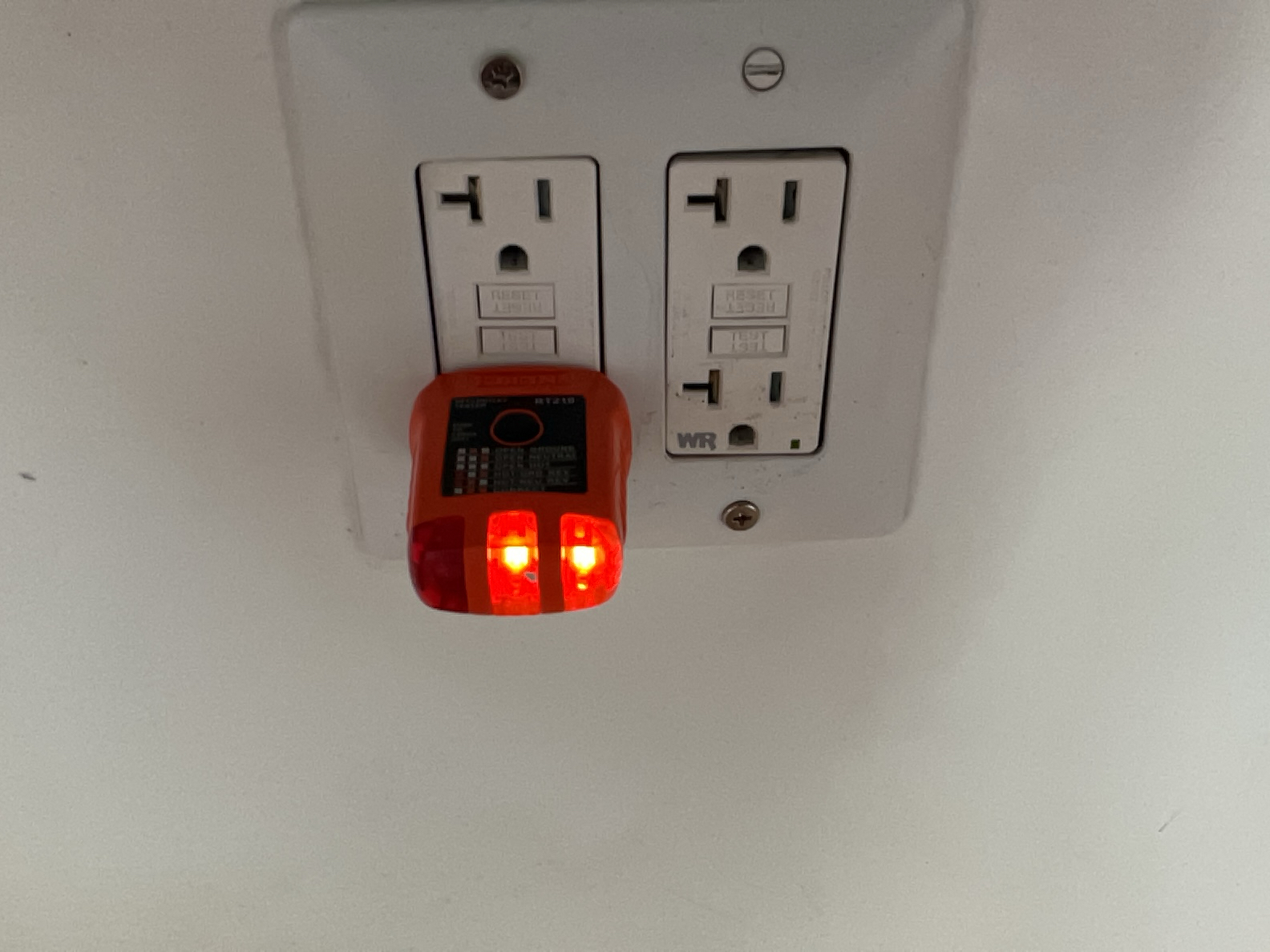
Outlets: Tested, GFCI Protected
Check out Procedure
Check Out List
Oven: Off
Lights: Off, Client and Realtor Still In House
Heating and Cooling: Restored to Pre-Inspection Temperatures
Water: Water off at all fixtures
Appliances: All appliances off
Signed Contracts

Dogwood Home Inspection
540-270-2501
www.dogwoodhomeinspection.com
matt@dogwoodhomeinspection.com
VA State Inspector License No. 3380002221